Aaron Kamath, Co Head of the Tech, Digital and Commercial Law Practice at Nishith Desai Associates, reflects on a legal journey shaped by curiosity, rigorous academic training and close engagement with emerging industries. In this conversation, he discusses the evolution of his practice in India and internationally, the influence of advanced study in the United States, and his work at the intersection of technology, media and intellectual property law. The interview explores how lawyers must think beyond traditional boundaries, balance ethics with innovation, and remain rooted in first principles while advising on artificial intelligence, fintech, ecommerce and digital regulation.
What initially drew you to the legal profession? After more than a decade in practice, does that original sense of curiosity and intellectual engagement still guide your work today?
My early interest in law was shaped by a mix of curiosity and storytelling. As a student, I spent a fair amount of time reading John Grisham novels and watching legal dramas on television, which introduced me to the idea of law as both analytical and narrative driven. What appealed to me most, even then, was the process of interpretation, reading between the lines, constructing arguments, and finding alternate ways to approach the same problem. That inclination toward analytical thinking and questioning assumptions eventually translated into a serious interest in pursuing a legal degree. More than a decade into practice, that curiosity has not diminished; if anything, it has become more central to how I work. Each new business model or regulatory shift presents fresh questions rather than settled answers. Clients’ new and evolving business models require you to constantly test first principles and adapt them to new contexts. That ongoing intellectual engagement is what continues to motivate me.
Over the course of your career, you pursued two master’s degrees (LLMs) and also worked toward becoming dual-qualified. How did you balance these academic commitments alongside the demands of professional practice, and what motivated you to take that path?
My decision to return to academics was largely driven by timing and intent. I pursued my first Master of Laws degree at Jindal Global Law School during the COVID-19 pandemic, alongside working as a lawyer. With lockdowns and travel restrictions in place, it felt like the right moment to go back to the books and revisit the theoretical foundations of business and commercial law. Balancing practice and coursework were demanding, but it was also energizing, and it gave structure to weekends that might otherwise have blurred into the workweek. In 2023, I took a sabbatical to pursue a second Master of Laws degree at UC Berkeley, California which was a very different and deeply immersive experience. Living and studying in the Bay Area placed me at the heart of global innovation and technology discourse. I had the opportunity to learn from leading academics and practitioners and to study subjects such as crypto regulation, fintech, telecommunications, and disruptive technologies at advanced levels, alongside U.S. constitutional law and legal history. Preparing for and passing the bar exam in the U.S. was one of the most challenging journeys of my life, both intellectually and personally. Post my academic break, working out of the firm’s Silicon Valley office in Palo Alto allowed me to witness the AI revolution at close quarters. Engaging with founders and investors who speak the language of ideas and innovation proved perspective-shifting, an experience I carry with me as I look to the road ahead.
Your practice spans technology, media, IP and commercial law, culminating in your leadership role at Nishith Desai Associates. What factors shaped this trajectory, and what attracted you specifically to these intersecting areas of law?
My trajectory into technology, media, and commercial law was less pre-planned and more the result of early exposure to how law operates in spaces that are still being defined. While I entered law school with an interest in disputes, my internships introduced me to technology and IP-driven work, where the questions were often novel and the answers far from settled. At the time, this was a relatively niche practice area in India, which meant there was significant room to think, build, and shape positions rather than rely on established templates. What drew me in was the way these areas sit at the intersection of law, business strategy, and innovation. The advice required is rarely purely legal; it demands an understanding of how products are built, how markets function, and how regulations respond to change. Over the years, the practice has expanded from traditional IT and media into digital platforms, consumer protection, telecom, fintech and blockchain, e-commerce and social media, privacy and cybersecurity, and AI. Being part of a practice that grows alongside innovation has made the work both challenging and deeply engaging.
Alongside your practice, you have written articles for renowned publications and spoken at global conferences, what prompted this move into thought leadership in the TMT space?
A significant part of my work has involved engaging with tech policy, including stakeholder discussions and submissions to regulators on issues such as foreign investment in e-commerce, e-wallet regulations, data protection, gaming, and AI regulation. Beyond day-to-day practice, staying current with legal and regulatory developments is essential, particularly in fast-moving sectors. Clients often come to you not just for answers, but for perspective and early issue-spotting. Knowing the law is the bare minimum; understanding where it is headed is what adds value. Writing for international publications (such as Journal of Innovation, iGaming Business, IPBA Journal) has been a way to deepen my own understanding of regulatory and industry developments, sharpen my thinking, and improve clarity in communication. I was also given the opportunity to speak at global conferences, across India and in Singapore, Dubai and Chicago. I also conduct webinars and guest lectures for young lawyers and law students, which keeps me connected to first-principles learning.
How do you see your practice evolving in the future?
Looking ahead, a large part of my practice will continue to focus on future-facing business models and anticipated regulatory change. Clients are looking for a combination of strategic, legal and regulatory advice taking into account global legal frameworks that they already deal with in other markets. Softer aspects such as ethics and reputational risks are also relevant to consider. Emerging areas such as AI, digital assets and Web3, and data-driven products will require lateral rather than mechanical thinking. AI itself will also change how legal services are delivered. AI is a tool to assist decision-making, not replace it. Used thoughtfully, it can enhance efficiency in research, issue-spotting, and contract review, allowing lawyers to focus more on judgment, strategy, and problem-solving. That said, maintaining quality control and professional accountability will remain non-negotiable.
Apart from your legal work, you have also been active in public speaking and community welfare initiatives. Can you tell us about your experiences outside your work commitments?
A good work-life balance is important and is sometimes more talked about than achieved. I believe that instead of being a sliding scale of time spent at work, work-life balance is the quality of time spent in one’s personal and professional life. Public speaking is something that I embraced from my primary school days, as a way of building confidence and expressing myself. From giving speeches in school assemblies, to winning moot courts and debates in law school, to speaking at conferences and workshops as a lawyer, I have always felt comfortable on stage. I started my journey was a toastmaster a few years ago and this helped with finer aspects such as structuring speeches and voice modulation. I have also volunteered at social welfare initiatives such as assisting with a cardiac health check-up camp and clothes donation drive. It brought me a sense of satisfaction to lend a hand to the community.
With the depth of experience you have built, what guidance would you offer to aspiring lawyers and young professionals navigating the legal profession today, particularly those interested in emerging and interdisciplinary fields?
My advice to young lawyers is to stay grounded, especially in an environment filled with new-age jargon and access to AI tools. I have been privileged to have worked with some of the best legal minds in the industry. This has helped me grow as a professional, of course coupled with effort from my side. Three bits of advice that I most commonly give to law students and young lawyers is (i) Learn from your immediate surroundings: observe and absorb as many positive attributes that you can from senior lawyers that you work with and against, including the way they analyze the law, draft, manage their teams and handle clients; (ii) Don’t get pigeon-holed too soon: broad-base as much as possible in the first few years rather than aiming to specialize in a niche area of law at an early stage, and (iii) Question everything: Ask questions (within reason) of your colleagues and clients to get the best understanding of things, revisit provisions of law that you may have already read several times as new thoughts can arise, and don’t go with “standard language” or “market practice” unless you really understand it and can justify it.
Ramana Deshmukh is a disputes lawyer and a Dual Qualified Solicitor in both India, England and Wales. His practice focuses on commercial litigation, arbitration, and cross border dispute resolution, with substantial experience before the Supreme Court of India, the Bombay High Court, NCLT, and NCLAT. Trained in the demanding environment of the Bombay Bar, he has developed a meticulous approach to drafting, strategy, and courtroom advocacy, with structured training support from LawSikho contributing to his qualification journey. His dual qualification enables him to navigate matters involving Indian and English law with equal confidence, assisting businesses and individuals in complex domestic and international dispute.
What early influences shaped your decision to pursue law and drew you toward litigation and dispute resolution?
My decision to pursue law was fundamentally driven by a desire to help people navigate complex and often stressful situations. I was drawn to the law’s power to protect rights and provide a voice to those who need it most. The field of litigation and dispute resolution, in particular, appealed to me as it is the frontline where these principles are put into action. It offers the unique opportunity to advocate for individuals and businesses, crafting compelling arguments not just to win a case, but to achieve a just and tangible outcome that positively impacts their lives and livelihoods. This drive to make a real-world difference is what solidified my commitment to this profession.
What formative experiences in your initial years at the Bombay High Court and your early associate roles, shaped your approach as a disputes lawyer?
My initial years were a steep and invaluable learning curve. I was fortunate to gain hands-on experience from the very beginning, handling a diverse range of matters from summary suits and execution applications to complex arbitrations and corporate litigation. Early exposure to the procedures of the Supreme Court of India, Bombay High Court, City Civil Courts, NCLT, and NCLAT taught me the importance of meticulous preparation and procedural precision. Working on these matters taught me that half the battle before a court of law is won by a well-drafted pleading. It further taught me that while it is extremely important as an attorney to ensure your client’s case is put forth to the best of your ability, an even more important lesson was the duty to remain fair to the court as its officer. Lastly, starting my journey in the Bombay Bar and having the opportunity to brief and work alongside its stalwarts has had an immeasurable impact on shaping my skills in drafting, research, and courtroom advocacy.
Was there a specific case, mentor, or defining moment that strengthened your commitment to litigation and dispute resolution?
While working with and learning from esteemed senior advocates has been a continuous source of inspiration, a particularly defining moment was a case where I represented thirty shop owners before the Bombay High Court. They were facing eviction, and the matter was of immense personal significance to them. We drafted and argued a Civil Revision Application, successfully securing interim protection that prevented their eviction. Seeing the direct and positive impact of our legal intervention on the lives and livelihoods of so many people was profoundly rewarding. That experience reinforced my belief in the power of litigation to protect rights and deliver tangible justice, strengthening my resolve to build a career in this field.
What inspired you to pursue qualification as a Solicitor in England and Wales, and how did the LawSikho support your preparation?
The inspiration to become a dually qualified lawyer came from observing the increasingly global nature of commerce and law. Many commercial contracts and international arbitrations are governed by English law, and I wanted to equip myself with the expertise to advise clients on cross-border disputes seamlessly. This qualification provides a broader perspective and a distinct advantage in navigating multi-jurisdictional legal challenges. For my preparation, platforms like LawSikho were instrumental. They provided a structured curriculum, comprehensive study materials, and mock examinations that were crucial for tackling the rigours of the Solicitors Qualifying Examination (SQE) while managing a demanding professional schedule.
As a dually qualified professional, what are the responsibilities and also challenges you face, and what has been one of your most demanding matters so far?
As a dually qualified professional, my primary responsibility is to offer clients a holistic legal strategy, especially in matters with cross-border elements. This involves understanding the interplay between Indian law and English common law principles. The main challenge is the constant need to stay abreast of legal developments in two major jurisdictions, which requires continuous learning and dedication. One of my most demanding cases involved advising an NBFC in a complex appeal before the Supreme Court of India. The matter concerned securing assets worth more than a hundred crores outside a liquidation estate. The high stakes, intricate legal questions, and the privilege of briefing multiple senior advocates made it an exceptionally challenging and enriching experience.
How do you approach navigating international commercial disputes, and what unique considerations arise when handling matters that intersect multiple legal systems?
My approach begins with a thorough analysis of the contractual framework, focusing on the governing law and jurisdiction clauses. The next step is to build a clear strategy based on a comparative understanding of the applicable legal systems. Unique considerations are plentiful, including navigating conflict of laws principles, understanding the nuances of enforcing foreign judgments or arbitral awards, and managing different procedural rules for discovery and evidence. Cultural differences in negotiation and litigation styles also play a crucial role. Effective collaboration with local counsel in foreign jurisdictions and maintaining clear, transparent communication with the client about these complexities are key to successfully managing such disputes.
How does your dual qualification contribute to your work in commercial litigation and arbitration, and how do you view the future of arbitration in India?
My dual qualification is a significant asset in my practice. It provides me with a deeper understanding of the common law principles that underpin many international commercial contracts and arbitration agreements. This allows me to offer more nuanced advice. It enhances my ability to strategize effectively in cross-border disputes and gives clients greater confidence. I am very optimistic about the future of arbitration in India. With continued legislative support, a pro-arbitration stance from the judiciary, and the growth of arbitral institutions, India is well on its way to becoming a preferred seat for international arbitration.
How do you envision the future evolution of your practice in the coming years and what resources do you use to stay ahead and informed?
In the coming years, I aim to deepen my specialisation in international commercial arbitration and complex cross-border litigation, leveraging my dual qualification to serve a global clientele. I am also keen on developing expertise in emerging areas where law and technology intersect, which present new and exciting legal challenges. To stay informed, I rely on a mix of resources, regularly reading updates from Indian and international law journals. I am a firm believer in continuous education, supplementing my knowledge by reading at least one judgment a day and staying aware of major constitutional rulings from the apex court. A nominal subscription to online legal publications pays multi fold dividends in this regard.
What practical advice would you offer students aspiring to pursue dual qualifications like yours?
My primary advice would be to first build a strong and robust foundation in your home jurisdiction. Practical experience is invaluable and will provide the context for your international qualification. Secondly, be very clear about your motivations. A dual qualification is a significant commitment of time and resources, so ensure it aligns with your long-term career aspirations, whether that’s in international arbitration, cross-border transactions, or another specific field. I would also recommend thorough research into which jurisdiction best complements your practice area. Finally, seek out mentors who have already walked this path. Their guidance can be invaluable in navigating the process and making the most of the opportunities that a dual qualification offers.
In this in depth conversation, Nabin Bhandari, Founding and Managing Partner at Bhandari Law and Partners, Nepal, reflects on a career shaped by early conviction, international education, and institutional leadership. From discovering a natural inclination toward law in childhood to pursuing a Master’s degree in International Business Law in Brussels, and from entering Nepal’s evolving corporate and arbitration landscape to leading one of the country’s top ranked corporate law firms, he shares thoughtful insights on building a globally oriented legal practice from Nepal.
Before law became your calling, how did your early experiences quietly shape the decision to pursue this path?
To be very honest, my inclination toward law began far earlier than most people realize. As early as Class Two, whenever teachers asked what I wanted to become in the future, my answer was almost instinctive: a lawyer and a politician. At that age, I did not fully understand the profession, but the idea of advocacy, public life, and standing up for rights had already taken root in my mind.
Ironically, I entered the legal profession almost unknowingly. Law was part of my environment—my father is a lawyer, and my sister is also a lawyer. After completing my +2 (Grade 12), I felt a strong need to step out of that familiar shadow. Believing that I should explore something different, I chose to pursue Chartered Accountancy and successfully completed my CPT examination.
However, that experience became a turning point. While accounting sharpened my analytical skills, I gradually realized that I was disconnected from what truly motivated me. I missed the interpretative, argumentative, and human elements that law offers. That realization made it clear that law was not merely a family influence, it was my passion. Returning to the legal field felt less like a career shift and more like coming back to a long-held dream.
Today, law is not just my profession; it is the passion I consciously chose and continue to work on every single day.
Entering practice in 2015, when corporate law and arbitration were still finding their footing in Nepal, what initial struggles did you face?
Entering legal practice in 2015, at a time when corporate law and arbitration were still evolving in Nepal, my experience was shaped more by opportunity and discipline than by visible struggle.
I was fortunate to begin my career at Pioneer Law, one of the leading corporate law firms in Nepal. Working at such an institution gave me early and in-depth exposure to corporate law, regulatory frameworks, and commercial practice. I remain deeply grateful to the firm and, in particular, to my mentors there, who played a crucial role in shaping my professional foundation. The environment encouraged learning, responsibility, and precision qualities that continue to guide my practice today.
One of the most important lessons I learned during those years was the value of hard work. I worked long hours, often day and night, not out of compulsion but out of a genuine desire to gain experience. I actively sought additional work and responsibilities, believing that exposure was the most valuable asset at an early stage of practice. Because I was working within a strong institutional framework, I did not immediately perceive my early years as a struggle. However, that period demanded sustained effort, discipline, and consistency qualities essential for long-term growth in the legal profession.
With respect to arbitration, the field was still relatively underdeveloped in Nepal when I began practice. While corporate law had clearer structures and precedents, arbitration required a more proactive and self-driven approach. I continue to work toward specialization in arbitration, investing time in learning, training, and gaining practical exposure. It remains an area of focused professional development for me.
Currently, I serve as the Founding and Managing Partner of Bhandari Law and Partners, one of the leading corporate law firms in Nepal. The firm was originally established by my father as a chamber based practice under the name Bhandari Law Chamber. The firm was based in Beni, Myagdi the western part of Nepal. In 2023, I undertook a comprehensive restructuring of the firm, introducing institutional reforms and rebranding it as Bhandari Law and Partners to reflect a modern, full-service corporate law firm model. The firm started its operation from Kathmandu, Nepal.
The firm has since been recognized by international ranking directories such as Legal 500, IFRL 1000 and other various international ranking institutions as a leading law firm in Nepal. Taking on the responsibility of Managing Partner at a relatively young age has been both challenging and demanding. It requires balancing client expectations, team management, strategic growth, and professional standards while continuing to evolve personally as a practitioner.
Overall, the early phase of my career taught me that success in a developing legal market does not come from avoiding challenges, but from embracing responsibility, maintaining discipline, and continuously striving to learn.
How did your time studying international business law in Brussels transform your understanding of legal practice beyond national boundaries?
My time studying International Business Law in Brussels, Belgium, was a defining experience that fundamentally transformed how I understand legal practice beyond national boundaries. I pursued a Master’s degree in International Business Law at the University of Brussels (Université Libre de Bruxelles), primarily because the program itself was highly specialized and among the most contemporary international business law courses offered by foreign universities at the time.
A key strength of the program was its faculty, composed largely of practicing lawyers from leading international law firms. Learning directly from practitioners allowed me to bridge theory with real-world application and gain insight into how complex cross-border legal issues are handled in practice.
Every subject was taught from a comparative legal perspective, covering European Union law, UK law, and U.S. law. This approach trained me to analyze legal problems beyond the confines of a single jurisdiction and to appreciate how different legal systems address similar commercial and regulatory challenges.
The academic environment itself was truly international. The university selected only 40 students each year, representing nearly 33 different countries. Engaging with peers from diverse legal backgrounds exposed me to the reasoning, legal culture, and problem-solving approaches of multiple jurisdictions. In effect, I was learning not only from professors, but from 33 distinct legal systems simultaneously.
Beyond academics, I had the opportunity to visit international law firms, observe their operational structures, and understand how global legal practices are managed. I also participated in international conferences, where I engaged in discussions with practitioners from various jurisdictions. These interactions deepened my understanding of cross-border transactions, dispute resolution, and international arbitration in a practical, real-world context.
Overall, studying in Brussels reshaped my legal mindset from thinking as a national practitioner to approaching law as a borderless profession, where adaptability, comparative analysis, and international perspective are essential.
What was that one defining moment in your career that shaped the direction of your practice ?
There was no single defining moment that shaped the direction of my practice. From a very young age, I was deeply passionate about the legal profession, and my career path has largely followed a straightforward drive by that long-standing commitment to law.
However, one experience in the early stage of my career played a significant role in shaping my professional maturity. At the beginning of my practice, I founded a law firm with a few partners and worked tirelessly to build the institution. I invested four years of my productive time and effort but also my full professional commitment into developing it. Unfortunately, circumstances eventually required me to step away from the law firm that was created from the ground up.
While challenging, that experience proved to be a valuable lesson. It taught me the importance of institutional structure, choosing the right team, alignment of values, and resilience. Rather than diverting me from my path, it strengthened my resolve and clarified how I wanted to build and lead a legal practice in the future.
In that sense, my career has not been shaped by a single dramatic moment, but by a combination of early passion, lived experience, and lessons learned through challenges, all of which continue to guide my approach to practice today.
In a career marked by high-stakes arbitration, which dispute was the most interesting to you that you’d like to share with our readers?
There have been several arbitration matters in my practice where the final awards were genuinely surprising. These cases reinforced an important lesson: while arbitration is firmly grounded in law, outcomes are often shaped just as much by facts, case strategy, and tribunal dynamics.
Although confidentiality prevents me from discussing specific disputes in detail, such experiences have significantly strengthened my respect for arbitration as an effective dispute resolution mechanism. They have also sharpened my analytical judgment, strategic planning, and ability to approach each case without assumptions.
Ultimately, the most interesting arbitration disputes are those that challenge your expectations and deepen your understanding of how law, facts, and strategy intersect in real world dispute resolution.
Transitioning from practitioner to managing partner, what were some responsibilities and challenges you faced along the way and how did you navigate them?
Transitioning from a practitioner to a Managing Partner brought with it a fundamental shift in responsibility. As the head of the firm, the most significant challenge is ultimate accountability. Regardless of the strength of the team, the Managing Partner remains answerable to clients for the firm’s work, outcomes, and professional standards. Ensuring consistency, quality, and client confidence requires constant oversight and leadership.
Another key challenge has been manpower retention, a concern faced by most law firms, particularly in developing legal markets. Law firms naturally function as training institutions, and team composition often changes over relatively short periods of time. As lawyers develop greater competence and professional confidence, many choose to explore new opportunities, which is a normal and healthy aspect of professional mobility within the legal sector.
While law firms must continuously strive to improve mentorship, workplace culture, and compensation structures, retention is also shaped by broader economic realities and market conditions that are often beyond the firm’s direct control.
To navigate this challenge, I have focused on building an institutional culture that emphasizes long-term professional development rather than short-term incentives alone. This includes offering clear career progression, sustained mentorship, meaningful responsibility, and exposure to high-quality work. When lawyers can see a future within the firm and feel valued as part of its growth, retention becomes a shared objective rather than a unilateral expectation.
Overall, the transition from practitioner to Managing Partner has required balancing leadership, client responsibility, and institutional development shifting from individual legal performance to building a sustainable and credible legal institution.
How does the arbitration and corporate legal landscape in India differ from Nepal, and what has been your experience handling matters involving Indian entities?
The arbitration and corporate legal landscapes in India and Nepal differ significantly, largely due to the scale and maturity of their respective economies. India has a much larger and more diversified economy, which is reflected in the complexity, volume, and sophistication of corporate legal work. In contrast, Nepal’s economy is relatively smaller, and while corporate law practice is steadily developing, it is still in a growth and consolidation phase.
In Nepal, corporate legal practice is evolving, with increasing awareness of compliance, governance, and structured transactions. However, the scope and scale of matters remain comparatively limited.
Similarly, arbitration practice in Nepal is predominantly construction centric, with commercial and investment arbitration still emerging areas. In India, arbitration, particularly international arbitration, is far more developed, supported by a larger pool of trained practitioners, institutional frameworks, and extensive exposure to cross-border disputes.
India handles a significant number of international and cross-border arbitration matters, whereas Nepal currently has fewer practitioners with sustained exposure to international arbitration. This highlights the need for Nepal to develop a stronger base of international arbitration professionals to meet future demand.
From a practical standpoint, I have had experience handling corporate and dispute-related matters involving Indian entities, particularly in cross-border transactions and contractual disputes. These matters often require navigating differences in regulatory frameworks, commercial expectations, and dispute resolution mechanisms. Working with Indian clients and counterparties has underscored the importance of precise contract drafting, choice of law and jurisdiction clauses, and strategic dispute planning at an early stage.
A critical issue affecting both jurisdictions is the non-recognition of Nepalese arbitral awards in India. Despite substantial trade and commercial engagement between the two countries, India has made a reciprocity reservation under the New York Convention and has not notified Nepal as a reciprocating territory. As a result, arbitral awards rendered in Nepal are not enforceable in India. By the same principle of reciprocity, Nepal could also decline enforcement of Indian arbitral awards, although this would not serve the broader commercial interest.
This issue requires institutional dialogue and policy-level engagement between the two countries. Resolving it would significantly enhance cross-border trade, investor confidence, and the effectiveness of arbitration as a dispute resolution mechanism between Nepal and India.
For aspiring lawyers in Nepal aiming for international arbitration, what common myths about success do you believe need to be challenged?
One of the most common myths among aspiring lawyers in Nepal is the belief that international arbitration is beyond their reach due to limitations of nationality, jurisdiction, or exposure. As a result, many Nepalese lawyers confine themselves to domestic arbitration, even though the legal skills required for international arbitration are not fundamentally different.
It is true that Nepal has a smaller economy and, consequently, a stronger concentration of domestic arbitration practice. However, this should not discourage lawyers from pursuing international arbitration. On the contrary, it underscores the importance of adopting a broader, international perspective. International arbitration may appear challenging, but it is not inaccessible. With the right training, discipline, and commitment, Nepalese lawyers can compete effectively on a global stage.
Another misconception is that international arbitration requires extraordinary credentials or foreign nationality. In reality, the field values competence, preparation, and credibility over nationality. What is essential is continuous learning through specialized training, exposure to international practice, and engagement with global arbitration communities.
Aspiring lawyers must think beyond immediate geographical limitations and develop an international mindset. By investing in education, building networks, and gaining exposure to cross-border work, Nepalese lawyers can establish themselves in international arbitration practice despite the challenges.
Ultimately, success in international arbitration is less about where you come from and more about how prepared you are to think, work, and operate globally.
Looking ahead, how do you see the future of your practice and arbitration culture evolving in the years to come?
Looking ahead I am optimistic about both the future of arbitration practice and the broader arbitration culture in Nepal. Nepal has strong potential to develop as a credible arbitration jurisdiction, particularly in the area of international arbitration. However, realizing this potential depends largely on the availability of well-trained and qualified arbitration professionals and increased exposure to international standards and practices.
For arbitration to evolve meaningfully, there must be progressive reforms to Nepal’s Arbitration Act to ensure it aligns with global best practices. Legal reform alone, however, is not sufficient. Nepal also needs to invest in developing a strong pool of internationally qualified arbitration practitioners who can handle complex cross-border disputes with confidence and credibility.
Equally important is the role of the judiciary. Judges dealing with arbitration-related matters must receive specialized training to ensure a consistent, arbitration-friendly approach. A progressive and supportive judiciary is essential for building trust in arbitration as an effective dispute resolution mechanism.
If these elements legislative reform, professional capacity-building, and judicial support come together, Nepal has the potential to emerge as a reliable and respected hub for international arbitration in the region.
Born into a family of scholars and shaped by rigorous academic training, this in-depth interview traces the journey of Dr Neeti Shikha, Senior Lecturer and Programme Leader at the University of the West of England. Spanning Indian institutions, international universities, and public policy bodies, her career reflects a sustained commitment to legal academia, research, and institution building. From early influences rooted in intellectual integrity to advanced research at UCL and a PhD focused on corporate governance and legal transplantation, the conversation explores how academic leadership, mentoring and digital legal education intersect in a global academic career.
What early experiences or influences inspired your interest in law and academic research?
I was born into a family of academics, with both my parents holding PhDs, and this profoundly shaped my early relationship with learning. Education was never treated as instrumental or transactional in our household but as a way of life grounded in discipline, intellectual honesty, and sustained effort. My parents came from modest beginnings and built their academic careers purely through hard work, which instilled in me a deep respect for rigour, perseverance, and the pursuit of excellence. From an early age, I internalised the idea that knowledge demands commitment and that intellectual integrity matters as much as success.
I was always driven by an inner quest for knowledge and a deep curiosity about justice, politics, and social change. These instincts became more sharply defined during my university years. Participation in mooting and engagement with student movements and legal debates exposed me to the living nature of law and its role in shaping social and political outcomes. Engaging with questions around rights, governance, and institutional power made me increasingly inquisitive about how law operates both doctrinally and in practice. That phase transformed law from a subject into an intellectual vocation.
Mooting in particular played a formative role in developing my research orientation. Preparing arguments required deep engagement with legal principles, comparative reasoning, and policy considerations, and it trained me to question assumptions, test rationality, and think critically under pressure. This experience resonated strongly with a principle I continue to value deeply, often captured in Gandhi’s words about living as if one might die tomorrow but learning as if one were to live forever. The idea that learning is continuous and ethical, rather than finite or instrumental, has stayed with me throughout my academic journey.
Over time, I came to appreciate that academic research and the serious study of law require sustained commitment to questioning, reflection, and critical thinking. While many of these qualities were shaped early through my upbringing, they were honed through practice, failure, dialogue, and intellectual discipline. Equally important was the role of peer learning. I consistently found that my strongest academic growth occurred when I was surrounded by intellectually curious, hardworking, and ambitious peers. Engaging in deep discussions, collective problem solving, and shared inquiry reinforced my belief that scholarship is not a solitary pursuit but one that is strengthened by the company of thoughtful and committed people.
Together, these early influences shaped not only my interest in law but also my commitment to academic research as a disciplined, ethical, and collaborative pursuit of knowledge.
How did your Master’s at UCL and PhD at NLU Jodhpur shape your perspective and impact your journey?
My Master’s studies at UCL were genuinely life changing and intellectually transformative, shaped by an academically rigorous and research led learning environment that combined substantive legal depth with a clearly articulated pedagogic philosophy. The programme was delivered by leading scholars and practitioner academics, including Dan Prentice, Graham Penn, Arad Reisberg, and Iain Fletcher. Their teaching consistently engaged students with first principles, policy rationales, and the broader institutional and economic implications of legal regulation. The presence of practitioner academics ensured that doctrinal analysis was continuously tested against real world commercial and regulatory realities, creating a learning experience that was intellectually demanding, practically relevant, and deeply formative.
The design of the programme placed deliberate emphasis on independent learning, critical engagement, and intellectual autonomy. At Master’s level, students were expected to take responsibility for structuring their own learning, developing original arguments, and engaging critically with complex bodies of scholarship. The curriculum and assessment regime required analytical depth, synthesis, and evaluative reasoning rather than descriptive reproduction. This approach significantly shaped my intellectual maturity and strengthened my capacity for advanced legal reasoning. Access to UCL’s world class library and research resources enabled sustained and intensive engagement with primary and secondary materials, particularly in the period following the global financial crisis, when debates around banking failure, regulatory reform, and systemic risk were actively shaping both academic discourse and legal practice.
The international and professionally diverse student cohort further enriched this experience. Many peers brought prior experience from legal practice, financial institutions, regulatory bodies, and public policy roles across multiple jurisdictions. Engaging with such diversity sharpened my comparative perspective and deepened my understanding of how legal systems operate across different institutional and cultural contexts. Informal study groups and sustained peer discussion became an important site of intellectual exchange, allowing complex legal problems to be examined from multiple angles and reinforcing the value of collective reasoning.
My doctoral research at NLU Jodhpur further consolidated my scholarly identity and commitment to academic inquiry. Under the mentorship and encouragement of Justice Mathur, I undertook doctoral research in company law and corporate governance that studied and assessed the influence of legal transplantation on Indian corporate law. Focusing on the Companies Act 2013 at a time when it was evolving from proposed legislation into enacted law, my research critically reassessed the limits and consequences of legal transplantation, particularly the influence of UK company law on Indian corporate regulation. The evolving legislative framework required sustained methodological rigour, conceptual adaptability, and close engagement with comparative legal theory.
The PhD experience confirmed that academic life is intellectually demanding and often solitary. It requires discipline, self motivation, and resilience, particularly when pursued alongside teaching commitments. Conducting doctoral research in parallel with full time academic responsibilities demanded careful organisation and sustained focus. Above all, this period reinforced the importance of intellectual honesty, critical self reflection, and long term engagement with ideas. These experiences continue to shape my approach to research, teaching, and policy engagement, and underpin my commitment to rigorous and socially engaged legal scholarship.
What inspired you to pursue an academic career, and how has your role evolved from Indian institutions to international academia?
Teaching has always been the core of my academic identity and the source of my deepest professional fulfilment. It is one of the few activities I can engage in continuously, even for extended hours, without experiencing fatigue. In my early career, my only hesitation about pursuing academia was whether it would be financially sustainable within the Indian context. With strong family support and a consciously simple lifestyle, that concern gradually receded, allowing me to commit fully to academic life. What continues to draw me to teaching is its immediacy and meaning. The classroom feels like a space of intellectual energy where learning emerges through dialogue, experimentation, and shared curiosity.
A significant influence on my academic vocation was witnessing my father’s lifelong commitment to his students. Many of them went on to become leading scholars and professionals across the world, and observing the long term impact of his mentorship shaped my own understanding of education as a relational and enduring endeavour. Teaching, for me, has never been limited to content delivery but has always been about shaping intellectual confidence, ethical engagement, and independent thinking.
My academic role in India was broad and institutionally embedded. It involved teaching large cohorts, designing and revising curricula, contributing to institution building, delivering executive education, and engaging in policy oriented and doctrinal research. This phase required adaptability, leadership, and a strong sense of academic responsibility, particularly within resource constrained and rapidly evolving educational environments.
My transition to international academia marked an evolution rather than a rupture. Teaching internationally has involved working with smaller and more diverse student cohorts, engaging with digitally mediated learning environments, navigating structured quality assurance frameworks, and deepening my immersion in research culture. These contexts have demanded greater emphasis on reflective practice, student centred learning, and alignment between teaching, research, and institutional standards.
Despite these contextual shifts, the essence of my academic work has remained constant. Teaching, mentoring, peer learning, and continuous self evolution continue to define my professional life. Across Indian and international institutions, academia has represented for me not merely a career path but a lifelong commitment to learning, intellectual growth, and contribution to the scholarly community.
What motivated your transitions across institutions, disciplines, and countries, and how did you navigate the move to the UK?
My transitions across institutions, disciplines, and countries have consistently been guided by a desire to undertake work that is institutionally meaningful and socially consequential. Rather than pursuing mobility for its own sake, I have been drawn to roles where academic labour extends beyond individual teaching or publication and contributes to building programmes, shaping policy, and strengthening institutional capacity. At several points in my career, this has meant stepping into formative or founding roles, often within institutions undergoing transition or growth.
In India, this orientation took shape early in my academic career. At NLU Jodhpur, I was closely involved in institution building during a formative phase of the university’s development. In 2011–12, I set up the Centre for Comparative Commercial Law, creating a platform for research, curriculum development, and international collaboration. Through this work, we established academic partnerships with UK based centres at a time when internationalisation in Indian legal education was still evolving. This experience shaped my understanding of academic leadership as something grounded in vision, continuity, and sustained relationships rather than short term outputs.
Alongside institution building, I remained an active researcher and was deeply engaged in policy oriented work with government institutions. Much of this work found its way into policymaking and regulatory thinking, which I found particularly fulfilling, as it demonstrated the capacity of rigorous academic research to inform real world governance. During this phase, I also worked extensively in executive education and leadership training, which further deepened my understanding of how law operates in practice. One particularly formative experience was training senior leadership following the Indian government’s decision to corporatise the Airports Authority of India. I was among the first to train over thirty airport directors for their transition into corporate governance roles. That experience brought home the reality that corporate governance is not merely about formal rules, but about how responsibility, accountability, and decision making are internalised within institutions.
This combination of research, practice, and institutional engagement culminated in my work at the Indian Institute of Corporate Affairs under the Ministry of Corporate Affairs. I served as the founding head of the Centre for Insolvency and Bankruptcy and was entrusted with launching and delivering India’s first Graduate Insolvency Programme. When I joined, the programme existed only as a brief conceptual outline. Launching and delivering it required building the academic framework, admissions processes, institutional partnerships, and national outreach from the ground up. Working with a very small team, but supported by leading figures from government, industry, and the professions, we developed a programme that has since sustained itself across multiple cohorts. That experience was one of the most demanding of my career and fundamentally reshaped my understanding of academic leadership, resilience, and institutional responsibility.
My move to the UK was both a professional and deeply personal decision. As a mother to a young daughter who was six at the time, I was seeking an environment that would allow me to sustain academic excellence alongside care responsibilities. The UK higher education system has been transformative in this respect. It is built on institutional trust and professional autonomy, where contribution is assessed through integrity, quality, and outcomes rather than visible presence or long working hours.
Earlier in my career, there were moments when professional demands left little room for care responsibilities, including times when I had to leave a very young child unwell in order to meet inflexible expectations. These experiences were not individual failings, but reflections of systems that are still evolving. By contrast, the UK system places trust in academics, and in turn, academics work consciously to honour that trust. The ability to structure work with autonomy, to have genuinely protected time, and to pursue research without constant administrative overload has fundamentally changed how I experience academic life.
Being able to contribute fully and responsibly to my institution, while also remaining deeply engaged in my daughter’s life, is something I value greatly and regard as a marker of a sustainable and ethical academic career. Across all my transitions, what has remained constant is my belief that academic work must be intellectually rigorous, institutionally responsible, and human in its design. Whether in India or the UK, in law schools, business schools, or policy institutions, my motivation has been to help build academic environments that trust people, value ideas, and allow scholars to thrive as whole individuals.
As Programme Leader for the Online LLM at UWE, what does this stage of your journey represent in terms of growth, responsibility, and influence?
Leading the Online LLM at UWE represents a deeply meaningful stage of growth for me, particularly at a time when online education is shaping the future of higher education globally. Having earlier co-designed India’s first bilingual public policy programme, Lok Niti, I was acutely aware of both the promise and complexity of digital learning. This role challenged me to design an inclusive programme that welcomes learners from non-law backgrounds while maintaining academic rigour.
The responsibility lies in ensuring that what we design today remains relevant for legal professionals even a decade from now. The influence is significant, as I now work with a truly global cohort of students. Personally, progressing from lecturer to senior lecturer and programme leader in the UK has been humbling and reaffirmed my belief that growth should be measured through learning and contribution, not titles. I am particularly excited about developing innovative digital pedagogy and responsibly integrating AI into legal education.
What challenges have you faced in managing the multiple roles and responsibilities throughout your career, and how did you overcome them?
Like most academics, I have always balanced multiple roles including teaching, leadership, advisory responsibilities, and policy engagement but the most significant challenge has been managing all of this alongside motherhood. Serving on advisory boards and contributing to institutions beyond my home universities has been both a responsibility and a privilege, allowing me to give back to spaces that shaped me.
At the same time, being a single working mother, especially after moving to the UK, required deep personal adjustment. What helped me was discipline, organisation, and clarity of priorities. The UK system has allowed me to live fully as both a mother and a professional, without guilt dominating either role. Today, I value balance over perfection and have learned that meaningful work and meaningful family life can coexist when guided by structure, gratitude, and purpose.
How do you approach mentoring and supporting students beyond the classroom, and why is it meaningful to you?
For me, mentoring beyond the classroom is essential, particularly in today’s high-pressure environment shaped by competition and social media. I have seen students arrive at top institutions burdened by expectations, identity crises, and fear of failure. I approach them with empathy rather than judgment, because I remember how vulnerable that phase of life can be.
Many of my students have gone on to succeed in diverse fields and helping them discover their direction has been deeply fulfilling. Mentorship is about unlocking potential and helping students see possibilities beyond conventional paths. I believe the biggest injustice is untapped talent, and if I can help students gain confidence, clarity, and purpose, that is the most meaningful reward I could ask for.
What legacy do you hope to leave through your contributions to law, education, and policy, and what roadmap would you suggest for students aspiring to public policy careers?
I do not think of legacy in a grand or monumental sense. What matters more to me is whether my work has made a meaningful and sustained contribution to how law is taught, researched, and connected to society. My teaching, research, and policy engagement have always been oriented towards helping students and practitioners think more deeply, critically, and ethically about law’s role in shaping the future.
My research agenda is deliberately future focused and interdisciplinary. Working across disciplines has consistently required me to learn new intellectual languages and rethink legal problems from broader institutional, economic, and social perspectives. I have written books on commercial law and public policy, and I am currently working on my seventh book, which focuses specifically on insolvency laws and is scheduled for publication in 2026. Across these works, my endeavour has not been to produce static doctrinal texts, but to promote reflective and forward looking engagement with law. I hope that these books have, even in small ways, influenced how students and scholars think about governance, accountability, and systemic risk.
In my teaching, I have sought to make learning engaging, practice oriented, and intellectually demanding. I encourage students to question assumptions, challenge the status quo, and develop the confidence to think independently. If students leave my classroom with curiosity, ethical clarity, and strong critical thinking skills, I consider that my most meaningful contribution.
One principle that underpins both my teaching and mentoring is the importance of cultivating a healthy mind. Just as a healthy diet is essential for a healthy body, I believe that thoughtful and sustained reading is essential for a healthy mind. I often tell students that reading good books matters deeply, not only for acquiring knowledge but for shaping intellectual character. Learning from the best books and ideas becomes part of one’s academic identity and professional integrity.
At the same time, I emphasise that learning cannot be confined to textbooks alone. The future belongs to those who can think, adapt, and respond to complexity. The capacity to learn, unlearn, and relearn is increasingly vital, particularly in public policy contexts where uncertainty, competing values, and long time horizons are the norm.
For students aspiring to careers in public policy, I recommend building strong foundations in law or economics, alongside comfort with data, numbers, and empirical reasoning. Formal qualifications matter, but skills such as problem framing, evidence based analysis, patience, and ethical judgment matter even more. Public policy is not about speed or visibility, but about discipline, humility, and sustained commitment to the public good.
I am also mindful that each generation engages with work and purpose differently. Today’s students often seek balance, wellbeing, and meaning alongside professional achievement, and this should be understood as a strength rather than a limitation. Hard work remains essential, but so does mental health, reflection, and a sense of purpose. In an increasingly digital and fragmented world, remaining connected to people, communities, and shared social goals will be one of the defining challenges of the future.
This is why I place strong emphasis on peer learning, dialogue, and service oriented thinking. Engaging with others, contributing to society, and grounding professional ambition in broader social responsibility are central to sustaining both intellectual depth and personal resilience. If my work can help students develop not only analytical rigour but also reflective judgment, balance, and a commitment to serving society, that is the legacy I would hope to leave.
Rooted in conviction rather than legacy, this interview traces the inspiring journey of Varsha Singh, Founder and Lead Counsel at Lexvent Partners, who chose law not as a career option, but as a lifelong calling. From a background in management studies to pursuing both LLB and LLM from Campus Law Centre, Delhi University, she reflects on the early motivations that shaped her path and the courage it took to step into independent practice. Through stories of her challenging criminal and constitutional cases, and mentoring aspiring judges, the conversation offers a deeply personal insight into what it truly means to stand for justice, empathy, and substance in the legal profession.
Maam, before establishing yourself as an independent counsel, what were some of the early instances that motivated you to pursue law?
I was earlier a management student by background. After my graduation, I did a PGDM and honestly, I had no family legacy in law. As I said, no inherited chamber, no legal surname, and no readymade network. But one thing remained constant. I had an unshakeable thought since very early childhood that law would be my everything one day, even when I did not even know what law actually was. I did not understand what the Constitution was. I was a management student and I never knew how courtrooms looked. I was always driven by the idea of justice.
I was not aware of how I would achieve it, but I grew up observing people around me who often suffered, not because they were wrong, but because they were unaware of justice and unaware of their rights.
At that time, I thought of pursuing an MBA, because when people complete their graduation, that is what they generally think of. That was the largest thought churning in my mind.
So I thought of doing law. I had not even taken admission anywhere else. I was clear that I would only do law from Delhi University. That was the only thought I had, that one day I would go to Campus Law Centre and pursue law. That was the only thought in my mind in the year 2010.
I appeared for the entrance examination, and by God’s grace, I cleared it in my very first attempt at Campus Law Centre. I took admission there, and while I was pursuing law, the same thought continued to guide me.
I then completed my LLB from Campus Law Centre and later my LLM from Campus Law Centre as well. Since childhood, my mother used to say that when I was four or five years old, I would always say that one day I would become a lawyer.
That thought also stayed in my mother’s mind. When I completed my MBA, she would often say to me, why do you not go and do law?
It was also my father’s dream. I lost my father when I was four years old, so it was his dream as well.
I was very clear that if I ever chose law, I would do it only from Campus Law Centre. That was the only thought I carried. It has been an amazing and inspiring journey, especially because many people aspire to this path but are not able to complete it. While everyone around me saw management as a safe path, I saw law as my calling. I was working in career coaching in Allahabad, so management was a safe option for me. But even at that time, I saw law as my calling.
It was not a career choice. It was a hundred percent conviction. I knew because I had only one thought in my mind. I knew that one day I wanted to stand in court, not just to argue, but to make someone believe that truth still has a voice.
That inner fire, born out of a sense of fairness and empathy, is what brought me into law. Even today, that same conviction drives every case I take, every student I mentor, and every initiative I lead. That is the only thought I carry.
I would like to really ask you what were the initial experiences after you completed your law, that laid foundation to your practice and helped you in every role building your journey?
If I look back, Anshi, every stage of my career became a stepping stone, from my days as a law student at Campus Law Centre to assisting my seniors and coaching students. I learned that law rewards those who are patient, consistent, and disciplined.
When I was pursuing law, I had only one thought. I prepared seriously for the judicial service examination. The judicial service examination curriculum is hundred percent exhaustive. I wrote more than sixteen mains and six interviews, and I gave my hundred percent.
Alongside this, I was also engaged in practice. I worked under my senior, who is now practising in the Supreme Court. That phase taught me that law is the only profession that can truly make you passionate, because you want to change someone’s life, and your decisions can directly impact someone’s life, especially in the judiciary.
During that time, I developed strong drafting skills. Whenever I drafted well, my senior would always appreciate my work. Those moments stayed with me. I also learned immensely from the seniors I worked with. They taught me humility, respect for the process, and the true value of preparation. They emphasised how important it is to prepare your case thoroughly, to be clear on every fact, and to be well versed with judgments.
All of this helped me in my early court practice. It also played a significant role in shaping my journey and building the foundation of who I am today.
I would really like to ask you what was that one turning point in your career? That inspired you to embrace your own potential and step into independent practice, because everyone has that one point?
There comes a moment in everybody’s life when a person realises that growth demands courage. Growth always demands courage, the courage to stand alone, to argue your own case, and to take responsibility for every word you say in court. This is very important. I had immense respect for my mentors, but I also knew that one day I had to carve my own identity.
That leap of faith from assisting to leading was my turning point. I had always been assisting, and now I wanted to lead. I realised this on the first day I argued independently. I felt fear, definitely, but I also felt freedom. The freedom to take my own decisions, to present my own points, and to obtain relief from the court. That freedom becomes addictive.
It is very important. Judges are very cooperative because the best legal minds should come before the court, and that encouragement adds to the confidence. That freedom, once experienced, becomes addictive. Absolutely, ma’am. Even the younger generation today has many opportunities, and the judiciary also supports them in many ways.
Now coming to the next part, after you established your chamber, of course it would not have been easy. There would have been initial struggles or setbacks. What would you say was the first breakthrough in your practice that gave you confidence?
I was a full time expert in judicial service examination preparation. When I started my own practice, I began in Delhi, and now I am practising in Lakhimpur Kheri while also handling cases in Delhi.
I had more dreams than resources because I come from a very humble background, where there were no godfathers, only grit. My early breakthrough came when I represented a client on a pro bono basis. She said to me, “Madam, I do not have faith in justice.” She was a woman facing domestic violence. That one sentence was worth more than any judgment. Soon after, I decided to take up her matter fully. For me, it went beyond money.
That early experience gave me confidence and shaped my vision. I realised that sincerity, honest representation, and respect for the profession truly matter. Those moments validated my belief that honesty, preparation, and empathy can outshine privilege. This is something I always tell people. You have to be honest. You have to be prepared. Once you are honest and prepared, the rest lies in the hands of the judges and on the merit of your case, and even the client understands that.
You have navigated different cases in criminal and constitutional law and various other areas. What has been that one most challenging case that you would say was difficult also, but it gave. A lot to learn, also learn. So what was that one case?
It is very important to mention one of my toughest cases. I cannot name the case. The entire family was wrongly accused. Multiple family members were implicated, and criminal litigation was initiated against them.
The entire dispute was essentially a civil dispute, but it was deliberately given the colour of criminal litigation for the purpose of dealing with property issues. A chargesheet was prepared, even though my client was completely innocent and there was nothing substantial in the case diary. The police report itself lacked evidence and clearly reflected that the alleged incident had not even taken place. It was a false narration, as the FIR had been lodged by a female member of the family.
I had to take the matter before the High Court to challenge the chargesheet. It was a family dispute, and initially, even mediation did not seem possible. However, I undertook multiple mediation efforts between the family members, and finally, we succeeded. It was a very difficult case.
There are certain cases where disputes appear criminal in nature but are actually rooted in civil disagreements. As lawyers, we should always encourage that such disputes be resolved through amicable settlement, preferably through mediation. There are cases which are technically non compoundable, but if both parties agree and the matter originates from a civil dispute, then as lawyers, we should encourage families to settle amicably. What ultimately matters are family values.
Often, people forget this, and the attitude of revenge takes over. As a lawyer, I do not encourage that mindset. I always try to pursue amicable settlement wherever possible.
That particular case was one of my toughest. There are many such cases I could discuss, but what is required in such matters is not only legal skill, but also emotional courage. Emotional courage to stand firm and to give the best and most honest opinion to your client. That case taught me that being a lawyer is not about defending the popular side, but about standing for the right side.
I always call the parties for mediation and ask them to resolve their disputes. That experience reaffirmed my belief that justice often begins with a lonely voice, and I was proud to be that voice.
That is an important learning. Every person, every lawyer, every student, and especially every first generation lawyer faces invisible tests. There are months with no cases, no income, and a lot of self doubt. There are moments when you feel that litigation may not be your path, but every challenge becomes your teacher.
I made it a habit to read every single day. I ensured that I would not sleep without reading. I focused on building networks and staying grounded. These struggles are not signs of failure. Those early struggles taught me that they are chapters of strength, preparing me for bigger battles ahead. The same applies to every student and every first generation lawyer.
Maam, from early beginnings to leading your law firm and mentoring judicial aspirants also, what is your vision for the future, future of your practice and future of yourself?
My vision is to create spaces where young minds, especially those who come from small towns like the one I come from, can dream without fear. I come from a small town where people dream, and I was fortunate to receive the right mentorship.
I am associated with Delhi University Law, where, in my part time role, I mentor students preparing for the judicial service examination. I have been mentoring students for the last eight to ten years.
I always tell students that preparing for the judicial service examination will not stop them. It is not going to limit their growth. Three years of practice is mandatory, and young lawyers can be full time practitioners while also being part time experts in judicial service preparation.
I want to create a strong foundation. The goal is very simple. Every student should know that their background does not define their future. Their effort does.
Our firm is open to taking bright and brilliant minds, especially first generation lawyers. I am a first generation lawyer myself, and if I could do it, anyone can do it.
At last, my advice would be this. Do not be afraid to be first. You do not need a surname in law. You need substance. Read the law as if it is alive, not merely as sections, but as the story of real people. Be patient. Success in law does not come overnight. It comes through countless days of silence, study, and sincerity. And remember, one day your struggle will become someone’s inspiration.
Saswati Soumya Sahu is a Partner at ANB Legal and the Founder of the Law Offices of Saswati Soumya Sahu. With a practice focused on data protection, AI governance, and the regulation of emerging technologies, she advises clients on complex compliance, technology contracts, and cross border privacy frameworks. In this interview, she reflects on her journey from early legal influences to building an independent practice, navigating high stakes technology matters, and pursuing dual qualification, while also sharing how structured upskilling through LawSikho supported her professional transition and contributed to shaping future ready legal strategies at the intersection of law, innovation, and public policy.
Before your legal career took shape, what were the instances that first drew you to the field of law?
My journey into law began during my school years in Odisha, where I worked closely with remote villages to understand their grievances regarding water quality as a child scientist. Pursuing BBA LLB at Symbiosis Law School deepened this, as moot courts and research papers exposed me to tech-law intersections like cyber privacy, blending my science background with legal rigor. These experiences shifted my focus from pure business to law as a tool for ethical tech innovation. Early internships at Odisha Human Rights Commission and other corporates revealed how contracts safeguard ideas, solidifying my commitment. Family encouragement, seeing law as empowerment in a changing India, propelled me forward. Ultimately, law’s blend of intellect, ethics, and impact on society drew me in irresistibly.
In the initial phases of your career what were the experiences or pivotal moments that helped shape your career trajectory and laid foundation to your specialisation?
Post-graduation, my first role at DSK Legal involved due diligence for fintech mergers, exposing me to data-heavy contracts amid India’s digital boom. A turning point was advising a health-tech startup on HIPAA-like compliance during COVID, where I drafted their first policy, highlighting gaps in Indian law that sparked my privacy specialization. Mentoring juniors at ANB Legal built my tech-law acumen, as we navigated IP disputes. Pivotal was a client consulting project, handling global patient data flows, which fused health-tech with GDPR principles. These honed my drafting skills for shareholder agreements and cease-and-desist notices. Publications in leading newspapers on DPDP Act early drafts cemented my niche. Each experience layered practical expertise onto theory, steering me toward AI governance and cross-border privacy.
What was that turning point when you felt ready to build your own independent practice?
The turning point arrived in 2022 after leading a high-stake transaction, where I single-handedly structured privacy warranties saving the client millions in liabilities. Exhausted by firm hierarchies limiting my client vision, I realized my 7+ years across law firms and startup consulting equipped me for independence. A key trigger was turning down a general counsel offer to pursue NCA qualification, freeing me to blend Indian and Canadian expertise. Mentoring at IDIA and judging competitions built my personal brand, with inbound queries overwhelming my bandwidth. Launching Adtech Law Ace blog and Linkedin insights on AI ethics generated freelance leads, confirming market demand. At 30, with a Symbiosis network and fintech certification, I felt primed to scale impact on my terms, prioritizing tech startups underserved by traditional firms.
In your early days in independent practice, who was your first significant client, and what stayed with you from that experience?
My first significant client was a US-based startup scaling social network services amid DPDP Act rollout. They approached me via LinkedIn after my post on cross-border data transfers. I drafted their comprehensive privacy policy, vendor agreements, and AI consent frameworks, ensuring HIPAA-GDPR alignment. The project spanned 3 months, involving iterative audits that uncovered legacy data risks. What stayed was their trust, founders credited my work for securing funding without compliance hiccups. It taught resilience; late-night revisions amid tight deadlines mirrored startup chaos. Most enduring was the human element: protecting patient data ethically fuelled my purpose. This win validated solo practice, spawning referrals and reinforcing client-centric drafting over billable hours.
What was the moment that pushed you to look beyond the traditional path and work toward becoming dual-qualified in India and Canada?
A 2022 cross-border dispute at one of my clients’ involving Canadian patient data flows violating PIPEDA, exposed India’s regulatory silos against global norms. Advising on remediation, I saw dual qualification as essential for seamless India-Canada tech bridges, especially post my tech law diploma. A personal nudge came from a Symbiosis alum in Toronto sharing NCA success stories, amid my growing clients with North American ties. Canada’s progressive AI laws contrasted India’s evolving DPDP, pushing me beyond my limits. Gigs from Canadian startups sealed it. Preparing via LawSikho, I envisioned serving diaspora firms. This pivot transformed challenges into a competitive edge, enabling holistic privacy advisory across jurisdictions.
How did LawSikho support your transition and growth when you were preparing for your NCA qualification?
LawSikho was my anchor during NCA prep, offering structured courses that mapped Indian expertise to Canadian syllabi. Their live mentorship sessions dissected core subjects via practical hypotheticals and self practice exams mirroring the examination pattern and expectation. Access to recorded lectures and doubt-clearing forums fit my schedule, letting me study post-client calls. Notably, their NCA-specific bootcamp simulated exams, boosting my pass confidence. Networking connected me to dual-qualified mentors for strategy tips. Post-clearance, their freelancing team refined my pitches, landing Canadian compliance gigs. LawSikho’s blend of rigor, community, and applicability accelerated my transition from specialist to global practitioner.
Clearing the NCA exam is a major milestone. As your work evolved, what helped you refine your approach and build consistency and quality in your professional identity?
Post-NCA, consistency stemmed from a ritual: weekly deep dives into judgments on privacy, applying them to client briefs. Refining quality involved templates for privacy impact assessments, iterated from consultancy projects’ learnings, ensuring precision across 50+ matters. Linkedin posts recapping AI rules built my voice, garnering 5K+ views and feedback loops. Starting Pune Legal Hackers fostered peer reviews, sharpening cross-border arguments. Certifications in AI Ethics from University of Finland and Fintech Law from LawSikho standardized my deliverables. Quarterly audits of past work maintained excellence. This disciplined evolution crafted a reliable identity: the go-to for tech-privacy fusion, blending empathy with expertise.
What has been one of the most challenging matters you handled across your diverse technology and privacy practice, and how did you navigate it?
The toughest was a 2024 data breach for a Mumbai fintech, exposing 100K user profiles amid IT Rules scrutiny, risking fines. Clients panicked over multi-jurisdictional fallout (GDPR, CCPA echoes). I navigated by leading a 48-hour war room: forensic audit, drafting breach notifications, and cease-and-desist to vendors. Collaborated with ethical hackers for root-cause analysis, then restructured data flows with pseudonymization. Key was stakeholder alignment, weekly updates calmed investors. Precedents guided defenses. Outcome: zero penalties, fortified policies. It honed crisis mode, emphasizing proactive governance over reactive fixes.
How do you envision the future of your practice as technology, AI Governance, and global privacy laws continue to evolve?
My practice will pivot to AI governance hubs, advising on India’s anticipated Digital India Act alongside EU AI Act harmonization for startups. Expect explosive demand in health-adtech for bias audits and explainable AI contracts. I’ll expand to dual-qualified mediation for cross-border disputes, leveraging NCA edge. Vision includes mentoring via webinars on DPDP 2.0. Tech integration like AI-drafted clauses (with human oversight) will streamline services. Global collaborations with Canadian firms for Indo-Pacific data pacts. Ultimately, shaping ethical tech-law policy through thought leadership, ensuring innovation thrives compliantly. The future is borderless, niche-dominant practice.
Many young lawyers aspire to build a global career. What simple, honest advice would you share about staying consistent and growing in the legal field?
Start a niche early, pick one like privacy or AI, master it via 100 drafts before diversifying. Consistency trumps talent. Block 2 hours daily for upskilling (judgments, certifications) despite chaos. Build LinkedIn relentlessly, post weekly insights, comment thoughtfully, aim for 500 targeted connections yearly. Seek discomfort: freelance first, cold-pitch 10 founders weekly, learn from rejections. Network beyond law, tech meetups yield clients. Track wins in a journal for pitches; quantify impact always. Rest and recharge, burnout kills trajectories. Honest truth: global careers demand grit over glamour, persist 5 years, rewards compound. You’re your best investment, own it unapologetically.
Yuvika Johri, Partner at Neuberger & Partners, Toronto, reflects on an evolving path toward international criminal defence. Shaped by early exposure to criminal litigation in India and strengthened through legal education and practice across the United States and Canada, this conversation explores how global training, mentorship, and courtroom experience have informed a principled and compassionate approach to criminal advocacy across jurisdictions.
As a dual-qualified lawyer in India and Toronto, what initially motivated you to pursue an international legal practice? Was this always part of your vision, or did it evolve over time?
I initially did not intend to pursue further studies beyond the five-year law program at Symbiosis Law School, Pune. At the time, the prospect of continuing my education felt daunting. However, during my third year of law school, I had the opportunity to work in the chambers of Adv. Satish Mane Shinde. This experience marked my first exposure to criminal law, and I found the field immediately compelling.
As my studies progressed, I gravitated increasingly toward criminal law related courses. Over time, my interest deepened into a clear desire to specialize in this area. By my fifth year of law school, I decided to apply to universities abroad.
My decision to study overseas was driven by a desire to challenge myself personally and professionally. It represented an entirely different way of life and learning. I was introduced to new pedagogical approaches, including the Socratic method, and had the opportunity to engage with individuals from diverse cultural and legal backgrounds. Many of my close friends today are lawyers and judges practicing in different countries, and I believe I was ultimately seeking a more holistic legal and life experience.
In the formative years of your career in India, what experiences laid the groundwork for your transition into international practice, particularly in criminal law?
While working with senior lawyers in India, I was exposed to a wide range of criminal matters rather than a narrow subset of offences. My experience spanned white-collar crime, domestic violence, human trafficking, and sexual offences. I assisted in representing both large corporations and individuals facing criminal charges. Each client came with a unique background and story, and I found criminal law to be a deeply humanizing area of practice.
Meeting individuals who were wrongfully accused or who had simply found themselves in the wrong place at the wrong time left a lasting impression on me. These experiences shaped my perspective and reinforced my commitment to criminal defence.
When I later moved to the United States, I did so with a strong sense of purpose. I was not starting from a blank slate. I already knew the kind of lawyer I wanted to become. The mentorship I received in India played a significant role in shaping that clarity. The question for me was no longer whether I wanted to practice criminal defence, but how to become a good criminal defence lawyer.
Several factors contributed to my success. I was highly motivated and eager to learn, and I consistently sought out opportunities to work with lawyers whenever possible. Early exposure to serious and complex criminal matters allowed me to remain open-minded and adaptable in my practice. For instance, a significant portion of my current work involves defending individuals charged with sexual assault. This is an area I was already familiar with from my early career in India.
Additionally, I had been attending court regularly since my third year of law school, shadowing lawyers during trials and motion hearings. As a result, the transition into practice abroad felt far less abrupt.
When you transitioned to the U.S. as a Research Associate, how did you navigate differences in legal systems and procedural frameworks?
The transition was challenging and involved a steep learning curve. My LLM program at the University of Minnesota, Twin Cities was instrumental in helping me develop strong research skills and understand the complexities of the U.S. legal system, particularly its multi-jurisdictional structure.
Unlike India and Canada, criminal law in the United States is largely governed at the state level, resulting in significant variation from one state to another. Each state has its own trial courts, Courts of Appeal, and Supreme Court. In parallel, there is the federal system, which includes district courts, circuit Courts of Appeal, and the U.S. Supreme Court, with federal crimes pursued by agencies such as the FBI and DEA.
I studied in Minnesota and later worked in California and Texas, where procedural practices differed significantly. Even legal citation standards varied from the Bluebook to the Greenbook. While initially overwhelming, mentorship played a critical role during this period. Having senior lawyers to consult made a substantial difference.
Going through these challenges strengthened my research abilities considerably. Understanding foundational principles became essential, particularly distinguishing between state crimes such as assault or sexual offences, and federal crimes involving interstate activity or federal jurisdiction.
How did your experiences as a Legal Fellow with the Office of the Public Defender in Atlanta and as a Research Associate at the Center for Human Rights and Constitutional Law in Los Angeles shape your understanding of justice?
Both roles profoundly influenced my approach to criminal defence. At the Center for Human Rights and Constitutional Law, I worked on a project addressing the use of solitary confinement in California prisons. This involved examining the psychological and constitutional implications of prolonged isolation, including anxiety, self-harm, and long-term mental health deterioration. As a criminal defence lawyer, these realities are deeply relevant, and much of my work focused on the policy and constitutional aspects of such practices.
Later, at the Office of the Public Defender in Atlanta, I was directly involved in courtroom litigation, including client meetings, motion drafting, trial preparation, and second-chairing murder trials. Working with low-income clients exposed me to systemic issues such as poverty, homelessness, and longstanding inequities within the criminal justice system. Spending time with clients in the Fulton County Jail, Atlanta, and witnessing heartbreaking courtroom moments reinforced the importance of zealous and compassionate advocacy.
Together, these experiences gave me a holistic understanding of justice, both at the individual level, and within broader systemic frameworks.
How did observing litigation from a judge’s perspective during your clerkship influence your advocacy today?
Clerking provided invaluable insight into how judges perceive cases. Judges observe not only written submissions but also counsel’s conduct toward court staff, clerks, and court reporters. They prepare thoroughly for hearings and appreciate well-prepared, professional advocacy.
As lawyers, we are officers of the court, and our role is to assist the court in reaching just outcomes. Judges value concise, well-written submissions provided in advance. Additionally, judges observe lawyers beyond the courtroom, including through professional social media platforms, which underscores the importance of maintaining professionalism at all times.
How do you compare criminal law practice in Canada and the United States?
Sentencing is one of the most significant differences. While sentencing is individualized in both jurisdictions, it is generally harsher in the United States. Some U.S. states retain the death penalty, which has been abolished in Canada.
Substantively, criminal law is similar across jurisdictions, but procedural differences are notable. For example, in the U.S., arraignment occurs early in the process, and accused persons are asked to enter a plea of guilty or not guilty. In Canada, arraignment typically occurs on the trial date. Jury trials are also far more common in the United States, with additional mechanisms such as grand juries. In Canada, jury trials are available primarily when the Crown proceeds by indictment.
Another distinction is the use of polygraph evidence. In Atlanta, I saw cases where charges were withdrawn following polygraph results, something that is not accepted in Canada, where such evidence is considered unreliable.
Charter applications also differ. In Canada, even where a rights violation is established, the court must assess whether the violation was prejudicial before granting a remedy. However, this is not the case in the United States.
How has your global legal education informed your current practice?
Although I do not engage in cross-jurisdictional practice and currently practice exclusively in Ontario, my international education required adaptability and reinforced my understanding of common law principles. While there are shared foundations across jurisdictions, the differences are equally instructive and have shaped my approach to advocacy.
What advice would you give to aspiring lawyers seeking an international criminal defence career?
Students should first decide whether an LLM or a JD aligns with their goals. I chose the University of Minnesota, Twin Cities for its criminal law specialization and selected courses that balanced theory with practical application, including a jury trial simulation course.
I later pursued a JD because I wanted deeper, more rigorous training. This was a decision that I am grateful for, given the intensity and breadth of the program.
Young lawyers should focus on mastering the basics, never stop learning, seek mentorship, and engage in continuing education. Identifying a niche within criminal law such as sexual assault, domestic violence, DUI, or firearms offences can also be beneficial.
Networking is especially important for foreign-trained lawyers. Punctuality, professionalism, and initiative matter greatly. If opportunities do not exist, create them. I completed multiple internships during my studies, which allowed me to gain hands-on experience and build meaningful professional relationships.
How do you maintain balance while handling emotionally demanding criminal cases?
Maintaining balance is essential. My dogs, painting, and cooking provide important outlets outside of work. I also enjoy strength training which helps with my mental and physical health. I am fortunate to have a strong support system, including family and spousal support. Supportive colleagues and fellow lawyers also play a crucial role. Burnout is real, and acknowledging the emotional toll of this work is vital to sustaining a long-term career in criminal defence.
Grounded in values of responsibility and accountability, this conversation explores the journey of Anuj Anand Malik, Founder of AMA Legal Solutions, a legal professional shaped by early life lessons and courtroom realities. From formative experiences in litigation and research to the challenges of establishing an independent practice, the interview reflects on resilience, credibility, and leadership in law. It also examines how structured systems and technology can strengthen client trust, improve efficiency, and expand access to justice, while offering thoughtful guidance to young lawyers navigating independence with integrity.
How did your early life experiences shape your sense of responsibility and inclination toward law?
Some of my earliest memories are of listening more than speaking, observing how decisions, words, and integrity shape lives. Responsibility was never taught to me as a concept; it was lived daily around me.
My grandfather, Late Adv. R.C. Malik, former Comptroller and Auditor General (Ex-CAG), taught me a lesson that has stayed with me throughout my life that helping someone at the hour they need you the most helps them believe in the law, and once that belief is built, justice finds its way. He believed that power must always come with accountability and that the law exists to protect, not intimidate. Watching his life taught me that dignity in profession matters more than titles, and that the true purpose of law lies in service. That belief gradually transformed my inclination toward law into a lifelong commitment.
In your initial internships and early legal exposure, what were the most formative lessons you learned about litigation, research, and courtroom realities?
During my initial internships and early legal exposure, I learned very quickly that litigation is built on preparation, discipline, and perspective. Courtroom practice is far more nuanced than academic learning. Research must be thorough, arguments must be precise, and timing often matters as much as content.
One of the most formative lessons was understanding the importance of learning from seniors. Feedback in chambers and courtrooms, even when firm or direct, should always be taken as constructive guidance rather than criticism. Seniors offer insight shaped by experience, and absorbing that feedback positively plays a crucial role in developing courtroom maturity, professional judgment, and long-term credibility as a lawyer.
What were some of the practical or professional struggles you faced while transitioning from a young law graduate to an independent legal professional?
The transition from a young law graduate to an independent legal professional came with its share of challenges. I always had a strong desire to build something of my own, and that ambition brought with it long working hours, financial uncertainty, and the constant pressure of establishing credibility from the ground up.
In the initial phase, there were no shortcuts managing clients, handling documentation, conducting research, appearing in court, and building trust all had to be done simultaneously. Balancing learning with responsibility was demanding, especially when resources were limited and expectations were high. What helped me through this phase was consistency showing up every day, putting in the work, and staying committed even when progress felt slow. Those early struggles taught me resilience, discipline, and the value of persistence, shaping not just my professional journey but also the mindset required to build and sustain an independent practice.
Was there a defining moment or turning point that gave you the confidence to establish AMA Legal Solutions?
Yes, there was a defining moment that reshaped my understanding of legal practice. I realized that while clients place immense trust in the legal system, their anxiety often stems not from the law itself, but from uncertainty and lack of communication. When clients are kept informed, their faith in the process remains intact even during difficult phases.
That realisation stayed with me and became the foundation of AMA Legal Solutions. I felt a responsibility to build something that prioritizes clarity, structure, and consistent communication alongside strong legal representation. Establishing the firm was not merely about independence; it was about creating a system where law works transparently with people, preserving their trust at every stage of the legal journey.
What were the biggest challenges you faced while setting up the firm’s legal strategy, operations, and compliance systems?
One of the biggest challenges was building a structured legal system while ensuring that professional ethics and compliance were never compromised. Setting up legal strategy alongside operational workflows required balancing growth with responsibility every process had to align with regulatory standards, confidentiality obligations, and long-term sustainability.
Another major challenge was creating internal systems that supported lawyers rather than burdened them. Standardizing documentation, case tracking, and client communication demanded foresight and discipline, especially in an environment where informal practices are common. Establishing these foundations early was demanding, but it was essential to build a firm that operates with clarity, accountability, and consistency at every level.
How did your role evolve from being a practicing lawyer to leading and managing a multidisciplinary legal team?
My role evolved through a conscious shift from focusing solely on individual legal practice to building and managing the firm as a whole. In the early years, I was directly involved in every aspect of legal work drafting, research, court appearances, and client interactions. As the firm expanded, I had to adapt and evolve, moving from execution to leadership and strategic decision-making.
Managing a multidisciplinary legal team required me to develop skills beyond advocacy, including mentorship, delegation, and operational oversight. It also pushed me to explore new opportunities integrating technology, strengthening client engagement, and expanding service offerings while ensuring that the firm’s core legal values remained intact. This evolution has been essential in building a sustainable, forward-looking legal practice.
How do you balance technology-driven initiatives with legal practice, and how has tech reshaped efficiency and access to justice in the legal sector?
Technology entered our journey from lived frustration. I remember juggling WhatsApp messages, emails, and calls just to give clients basic updates. That chaos made me question why legal communication should be so difficult?
This led to the creation of the AMA Legal Solutions App, a platform designed for better client communication and structured legal workflows. Clients can track their case progress, receive updates, and ask queries, while lawyers benefit from organized case management and reduced administrative stress.
For us, technology is not about replacing lawyers, it’s about helping them practice law better.
What is your long-term vision for AMA Legal Solutions and the legal ecosystem you hope to help build in the coming years?
My long-term vision for AMA Legal Solutions is to build it into a globally respected legal institution that delivers structured, ethical, and accessible legal services across jurisdictions. We have already taken meaningful steps in that direction by establishing our presence across four states in India and setting up one international office, and this is only the beginning.
In the coming years, I aim to expand our legal services worldwide by building cross-border capabilities, collaborating with international legal professionals, and adopting technology that enables seamless client support regardless of geography. Equally important to this growth is our commitment to free legal aid ensuring that access to justice is not limited by financial constraints. At a broader level, my vision is to contribute to a legal ecosystem that is interconnected, transparent, and future-ready where clients receive consistent legal support across borders, and where legal guidance, whether paid or pro bono, remains accessible, ethical, and impactful.
What advice would you give to young lawyers who aspire to build independent practices while staying ethical, resilient, and informed?
There will be moments when progress feels invisible. Don’t let those moments define you. Focus on learning, integrity, and patience.
My advice to young lawyers is to first focus on building strong foundations. Master your fundamentals, respect the institution of law, and never underestimate the value of discipline and preparation. Independence in legal practice does not come overnight; it is built through consistency, patience, and credibility earned over time.
Stay ethical even when shortcuts seem tempting, and treat every piece of feedback from seniors as an opportunity to grow. Be resilient during slow phases and self-doubt, because those moments often shape your character more than success does. Simultaneously, stay informed and open to change technology, new practice areas, and evolving legal frameworks are not threats but tools. If you combine integrity with adaptability and long-term thinking, an independent practice will eventually find its footing.
Smita Choudhary’s journey in intellectual property law is a compelling narrative of resilience, innovation and global perspective. From working across multiple jurisdictions including India, Dubai and Saudi Arabia to building a patent practice LAWIANS LLP, focused on biotechnology, engineering, sustainability and emerging technologies, her career reflects the evolving nature of modern patent law. In this conversation, she speaks candidly about navigating international patent systems, creating a flexible and inclusive work culture, building a green technology driven IP practice and adapting to disruptions such as AI and COVID.
Ma’am, you are currently based in Saudi Arabia. How has that particular environment helped you flourish and nurture yourself as a patent attorney and in starting your own law firm?
It is a very interesting question, and I am glad you have asked this as the very first question. See, Saudi Arabia, do not take it as a location term. If we remove that country name, the work is the same. The patent culture, the work of a prosecutor, the work of a litigator, or being an advisor or a legal technical expert. The work will always be the same.
It works like a brick. You just have to adjust it in the form of where you want to create a building. When I first moved, yes, of course, it was very difficult to find ground here for a working woman who is over 35 and already has an established journey. Again, to regenerate the journey in the field of patent advocacy and the law field, which is a very challenging one, because when we are below 35, we are very challenging, smart, and everyone is welcoming.
But after that, so many responsibilities come up related to your family, your husband, your kids, and then the office. So they expect that this kind of employee has to be available 24 by 7 on one call. But that does not change your passion to work on it. So it was difficult in nature.
But one of my reference friends, we were working together in Dubai, referred me to one of the law firms that was working and looking for a patent advisor in the biotech and pharmaceutical industry. So it was one of the open lights for me that, okay, let us work together and start establishing our own law firm in the meantime, because there were many patent applications that were willing to directly file in the Indian Patent Office. Being an Indian patent agent and a registered one, I thought that let us start our own so that any India filings for my foreign clients in the Middle East would not have to go to another third associate and then add on to the pricing.
We could have our own in-house filing team and the portfolio management team so that we could help them in patent preparation starting right from the search analysis, then the patentability test, then drafting, and thereafter filing. Sometimes this helped me as an in house origin, where you have a patent from the scratch level.
Now you do not need to go to another party to make a search, then to another party for drafting, and then for reviewing. Then we will file in the UAE or Saudi Arabia. I was aware of this, and still I am aware of the UAE filing pattern and how the drafting should be, and the Saudi Arabia filing pattern, how the specification should be drafted, what the claims should be, how many claims should be there, and what the drawing pattern should be, and which things we have to protect and which things we are not supposed to protect here.
I was aware of this. So drafting in my own in-house teams, like a biotech team, a mechanical team, an IoT based team, and a software based team, helped me in making this portal successful.
You worked in India, then moved to Dubai and then to Saudi Arabia. These are different jurisdictions. How did you acquaint yourself with them? How did you manage the move and build the name of your law firm? How did you come up with the concept?
Actually, it is a very nice journey, and my only answer will be that I faced many rejections. I was rejected everywhere.
Once you face failure and rejection, you can work on your faults. It means that it tells you where you are lacking and what you need to do for the next jump. This was the first thing I learned. I used to give lots of interviews.
I was rejected just because I was overqualified. I was rejected just because they did not have patent facilities. I was rejected because they already had someone with an Arabic background and knowledge of the Arabic language. So language was one of the issues, and they rejected me. I was rejected because I was a mother. I had a full time job and I could not devote myself fully to the company. So they rejected me, saying that I needed to work after 6:00 PM or 7:00 PM. So these were the points.
I pointed out each and every rejection and took it as a challenge, that let us make a good, environmentally friendly office so that whether you are 20, you are 16, you are 18, you are 30, or 50 or 70, you can work.
You can take your own time whenever your free time is there or your working schedule is there. Like every animal has a working time, they hunt at that time. Likewise, we ladies, kids, students, entrepreneurs, or internship holders work at different time periods.
In between, COVID was a big boom for us. COVID gave us full wings to work at our respective time periods. You were not only bound to work from nine to five. You could work whenever you were ready. So this was the plus point. I thought that let us hit the iron. I thought that we would create a good environment.
Everyone would be welcomed. If they have skill and education, even a little bit of skill, I would not tell them that this is the job you have to do. You have to do business development, or you have to do drafting, or you have to do analysis. You need to tell me what area you want to work in.
If you love analysis, go for it. Do research analysis. Do patentability searches. Make a good FTO report. Bring uniqueness into that. If you like writing and drafting, work for the drafting team. If you are good at convincing the examiner, go for the prosecution team. If you want to go for High Court work, go for litigation.
So I wanted the intern to tell me, or the people who were coming into my field, to tell me that, ma’am, this is what I want to work on. Because I was not the one to scrap and make them a sculpture. They were already built. I just had to place them in a beautiful place, like, okay, you handle this department, you handle that department.
There were no bondings and no limitations. I just gave free wings and a free canvas to develop talent and develop more strategic planning. Some interns and employees came to me knowing nothing, but they really wanted to work in IPR. So what I planned was to get them educated and trained by people who were already in the business and providing training to enter this field, like one of my colleagues, or you can say she is my co patent lawyer as well.
She trains interns. Ms. Gauri Waghmare trains interns in patent drafting, search analysis, landscaping, and how to make a response to the First Examination Report. So with three to four weeks of training, you come to us, take the business, and start working. This is how we have developed a good team to work on it.
Creating such a free space is truly remarkable. How did you develop this mindset, moving from biotechnology to patents and then shaping this journey with the idea of giving people the freedom to work on their own terms, even after COVID, when not everyone could understand this concept? How did this journey begin, and what led you to this approach?
You know, being a lawyer, you will understand which is your best part and which is your best time. If you want to draft or write something, or you want to do some research on articles or sections for the next day’s hearing or presentation, you need a smart space. You need a completely silent space where you can say, okay, this is my time. Maybe I am happily working from 4:00 AM to 7:00 AM in the morning. That is the time. Maybe 2:00 AM to 6:00 AM. Maybe 11:00 PM at night, like that. You need to find your own time zone when you are most happily active and doing your work, because I know that if the kitchen is dirty, if the bed is dirty, or if the laundry is dirty, I cannot concentrate. I have to cook. I have my kids. I cannot keep them hungry and start working, because when I start working, my son will immediately say, mama, I am hungry. That means I have to fulfill that demand before I open my laptop.
There was an incident when I was cooking for my three year old kid. My client called me, and my son picked up the call. He was very small at that time, three years old. He said, do not disturb my mama, she is cooking for me. You can call after 15 minutes. He said this in his own toddler language. My client happily said, okay, I will not disturb mama. I was unaware of this. Sometimes, when I was in the washroom, he would say that my mama is in the washroom. I later realized that he had said this to a client. After some time, my client called me again after one hour. He said that your assistant picked up the call and told me not to disturb you, so I am not disturbing you. Are you free? Can we talk? These kinds of things created a good relationship with my client. He understood that Smita is a family person and has kids to take care of, so he would not disturb me during that time. Likewise, the client became my family. The first thing I learned was to establish trust.
This all started in December 2020. I was working with one of the IoT based companies, RPMA Networks, in Dubai. It was an engineering based team with AI, and at that time AI was booming. AI related inventions were already germinating and happening.
In that process, we had a team of engineers who were very knowledgeable in the fields of communications, software engineering, and computer science. I was from a core biotech background. I told my boss that since I am from biotech, I would not understand the technology and that I would need an engineering team. They would help me understand what the technology is, how it is distinguished from the prior art, what the invention is, what we are going to claim, and what will make it suitable for IoT based vehicles that are connected to each other. I asked them to give it to me in a proper flow chart for drafting.
They had the technical knowledge and technical language, but I was there like a brick. I arranged each paragraph and each claim according to my drafting regulations for the complete specification. I started with IoT, which I was completely unaware of. I wrote the language exactly as dictated by the inventor. Whatever he said, I drafted it. Luckily, the first draft was filed in the UAE, and within 12 months, we moved to the USA via PCT. There were four patents lined up for drafting, and all were accepted. We made a few adjustments to the claims, and once they were qualified and granted, they were accepted by the examiners.
The UAE Patent Office also accepted the decision of the US Patent Office. This gave me full confidence to start more work. It gave me motivation to move ahead. I was working continuously, and because of COVID, we had reduced salaries and I was completely working from home.
Then my senior told me that they were closing the innovation department. They said they did not have a job for me, but I would be half paid and could do as much as I wanted. I realized that this was the point where I needed to start my own journey. At the same time, I was attending interviews and exploring opportunities with different law firms.
One of my favorite inventors messaged me saying that he had a few inventions and patent applications in India, along with some new mechanical engineering related inventions, and asked if I could help him. He was very senior and was the first person who told me, Smita, why do you not start your own practice? You are such a good draftsman. I told him that I am from biotechnology and that I only know patent rules, regulations, and drafting techniques. If he provided the engineering language, I could draft for him.
He was around 55 or 60 years old and said that he was old school. He told me that he would dictate and I could write. Even the drawings were made on graph paper, like traditional engineering drawings. I said, okay, no problem, we will find an expert who can do it for us. That is how we started the journey. We would sit together for two to three hours, drafting, doing searches, and working through the inventions. We filed in the UAE, and later we developed a mechanical team because we had more mechanical inventions coming in. I realized that we needed a pure mechanical engineering team.
Then Amit came to me and said, ma’am, I want to work out of the box. I do not want to work the way traditional law firms work. I told him that I understood what he wanted and that he had the space to do it. Our first invention came in, and what we learned was that in traditional law firms, whatever material you get, you draft it and file it, and then later deal with objections, more examination reports, more responses, and more costs. This becomes very hectic, and inventors often lose their motivation during the process.
I decided to cut that approach out. As a new patent lawyer, I chose to work in my own way. I drafted in a manner that the examiner could clearly understand what the claims were about, what the subject matter was, and how it was different from the prior art. As a result, we only received formal objections, such as removing ambiguous terms or adjusting wording and claim numbering. That was it. The application was accepted, published, and granted shortly thereafter.
This helped me understand that if you put 80 to 90 percent of your effort into drafting and reviewing before filing, it reduces the prosecution burden. The examiner is happy, and the inventor is happy. The inventor then comes back to you with more work. This is how our journey started.
You have also worked in climate change and sustainability related patents. How did you build your practice around green technology and how do you stay updated globally? So how is this green technology supporting the whole cause and how have you built your practice around that?
Exactly. You have to be very open, cautious, and observant of the market and what is happening, just like a cat or a dog. Have you ever seen a pet cat or a pet dog? They are very cautious and always alert. Who is coming? Who is going? Which car has passed? Who has come?
They sense it and they smell it. So be like an animal and sense the surroundings. Five years ago, when artificial intelligence was emerging and COVID was taking over, at the same time climate change was also becoming evident. You may remember that the skies became cleaner, the roads were clean, and fresh water systems improved.
New fish started appearing in ponds. You must remember these things happening and showing up as positive after effects of COVID. Parallelly, since Dubai is a very welcoming city, it was embracing artificial intelligence on one side while also balancing sustainability.
Sustainability means whatever we have now, we have to preserve it and also bring more business so that we can sustain ourselves for the next 10 or 20 years. During COVID, we truly understood the value and meaning of sustainability. We realized that more sustainability related projects should come so that we can survive well for the next 20 to 30 years.
This was the lesson of that time period when the pandemic happened. If you study the culture, environment, and temperature of the UAE, you will understand that it is very hot. So projects were initiated to create fresh water. We were working on water conservation. Artificial lakes and fountains were created, which helped develop algae. Wherever you see algae and green areas, it indicates fewer harmful bacteria and cleaner water.
My inventor, Mr. Sarfraz Dairkee, said that he had an innovation that could help clean these artificially made ponds and lakes. If you visit these areas, you will see many lakes, ponds, and artificial swimming areas created in front of villas, but they require proper cleaning.
If you go to an open, natural lake or pond, it gets cleaned automatically because the water is not stagnant. The bacteria are healthy and everything functions in a balanced microbiological manner. This is not the case with artificially generated water bodies. So this device was developed to help address climate related challenges. They wanted clean and fresh water for swans and ducks.
In this way, one climate change related invention was developed, which we filed in the UAE. It was well accepted and granted, and it is now being monetized and produced. It is being purchased by different malls. If you go to the Dubai Mall, my inventor’s device is already there, cleaning fresh water. If you visit certain lakes, the device is already installed and cleaning stagnant water.
The second project we worked on was a greenhouse to protect plants. In high temperatures, small and tender leaves cannot flourish or sustain themselves in an arid environment. So we created a greenhouse atmosphere that allows plants to grow even in such conditions. This was another climate change related initiative.
Another invention was related to buildings. If you visit big cities like the UAE, Saudi Arabia, Dubai, Riyadh, or Jeddah, you will see high rise buildings made of glass. When these glass surfaces are exposed to sunlight at temperatures of 78 to 80 degrees, carbon emissions and carbon footprint increase, causing pollution.
Around 2022 or 2023, Apple released a video highlighting how they were making products with reduced carbon footprint and aiming for sustainability and zero carbon emissions. My client said, Smita, I have also developed something similar. It is a shield device that can be installed on building window frames to reduce temperature impact and make the environment calmer.
He is a very innovative inventor and has developed many useful inventions. Near airport areas, you will see high rise glass buildings that reflect sunlight into pilots’ eyes during flights. A solution was needed for this. He suggested making buildings greener by developing green plants on top of them, which would reduce sunlight reflection.
This invention focuses on adapting buildings to arid environments and reducing pollution for people working there. Many workers in warehouses and construction sites work at temperatures reaching 80 degrees while maintaining electricity and building structures at great heights. The heat is unbearable and survival becomes difficult.
So we developed helmets designed to keep their heads cooler while working. Although work is restricted between 12:00 PM and 3:00 PM, even after 10:30 or 11:00 the temperature remains difficult to manage.
These are the kinds of climate change related projects we work on. The best part I learned from the UAE and Saudi Arabia is that local innovators are deeply knowledgeable about their environment and understand what kind of devices are useful for their region. We have worked on these inventions from the scratch level.
This is how we actually started.
You have worked nearly two decades now in IP, patents and a variety of changes you have seen in innovations and in different kinds of technologies.You have witnessed many disruptions in patents over decades. How do you see the future of patents in the next decade? Especially after COVID.
Exactly. Very strong question. Why? Because disruptions are not happening only now; they have also happened in the past with patents. Since 1970, so many disruptions have occurred because technology and innovation are such things that they develop, and people think they will stop.
No, it keeps happening. There is no finish. It keeps happening again and again, just like our RBCs get a new life after every 21 days. Innovation is happening after every 21 days. So you can see that since 1970, many innovations, disruptions, and challenges have been faced.
When I started my patent practice, I found that stem cell related inventions were very challenging to get granted by the Indian Patent Office. Patents related to pharmaceuticals, if they do not show efficacy and a synergistic approach, do not get accepted. Patents related to microorganisms were accepted later. Patents related to semiconductors, devices, or software require a lot of hardware disclosure, more paperwork, and more lab work. So this was always there. It was never hidden or vanished. It is evolving, and it is evolving in a more challenging manner.
Even now, disruptions exist in the form of AI. I will tell you, being in patent practice, and with many patent practices abroad in Singapore, the USA, the UK, and Germany, they will tell you that AI is a very helpful tool that can assist you. I tell my inventors not to type anything about their new ideas on ChatGPT or Google, because these are monsters for them. They are like cookies for them.
They will eat your idea. After two days, the same idea can be filed by some other company because this becomes food for them. We are feeding them. By the time you are thinking whether to file or not, whether to search or not, which agent or attorney to go to, or which law firm to approach, a third person may already have filed it. I always tell people to write their idea in a diary and come to me. I will search for you. We will do a prior art search and a patentability search, and then we will tell you whether it is eligible or not.
AI is there, but it is not going to disrupt everything. It is going to help in a smarter manner. Plus, patents will become more impactful and stronger, and everyone will need them. Even your voice and face recognition need protection. They have to be copyrighted because we use digital signatures and even our voice as a password. Nowadays, in medical facilities, by listening to your voice, they can even tell what you are suffering from. This kind of advancement is coming.
So more intellectual property rights related developments will happen in the next 10 to 20 years, and on an enormous scale. Everyone will look forward to reserving, preserving, and protecting their personality, intellect, and ideas. Technology is becoming very strong, and the stronger it becomes, the stronger, more evolved, and more adaptive we have to be. We have to adapt. This is Darwin’s theory of evolution.
Just like that, we have a theory of evolution in patents. It will keep evolving. Today we have AI. After some days, maybe we will look for something else. I saw one example recently. I was watching a reel where a person went to a shop and asked ChatGPT what to buy, and on the other side, the shopkeeper said that a person has come to buy certain things. Everything was happening automatically.
It feels like we have lost that charm of thinking for ourselves. Earlier, you would go to a shop and buy what you knew you needed. Now ChatGPT tells you that you do not have milk, eggs, or vegetables, so you should buy them. It even informs the shop that this person has come to buy these items. So this is happening.
But common sense will always be there.
I really would request you to share some insights or your advice to the young professionals because they are always a little skeptical about how to choose what to choose, where to go, whom to approach, or maybe how to understand which subject or which particular area do I want to enter?
Yeah, sure, sure. It is part of life. You know, my husband says that wherever you go, you start talking about patents and innovation everywhere. When I am having a coffee at Starbucks, I will tell you why it is costly. I have even told myself why iPhones are costly, because these are special patents.
Since Apple cannot do everything, it has taken licenses from Qualcomm and other companies to provide all the 3G and 4G technologies for the chips. So if you cannot do that, you have to hire. And if you hire someone, it will be costly. So patents play a big role.
It is not bad. It is a very nice thing. I say that it is like your mother in law. You cannot ignore her, and you cannot live without her. You have to sustain her, you have to adjust with her, and you have to face it.
Smita Choudhary’s journey in intellectual property law is a compelling narrative of resilience, innovation and global perspective. From working across multiple jurisdictions including India, Dubai and Saudi Arabia to building a patent practice LAWIANS LLP, focused on biotechnology, engineering, sustainability and emerging technologies, her career reflects the evolving nature of modern patent law. In this conversation, she speaks candidly about navigating international patent systems, creating a flexible and inclusive work culture, building a green technology driven IP practice and adapting to disruptions such as AI and COVID.
Ma’am, you are currently based in Saudi Arabia. How has that particular environment helped you flourish and nurture yourself as a patent attorney and in starting your own law firm?
It is a very interesting question, and I am glad you have asked this as the very first question. See, Saudi Arabia, do not take it as a location term. If we remove that country name, the work is the same. The patent culture, the work of a prosecutor, the work of a litigator, or being an advisor or a legal technical expert. The work will always be the same.
It works like a brick. You just have to adjust it in the form of where you want to create a building. When I first moved, yes, of course, it was very difficult to find ground here for a working woman who is over 35 and already has an established journey. Again, to regenerate the journey in the field of patent advocacy and the law field, which is a very challenging one, because when we are below 35, we are very challenging, smart, and everyone is welcoming.
But after that, so many responsibilities come up related to your family, your husband, your kids, and then the office. So they expect that this kind of employee has to be available 24 by 7 on one call. But that does not change your passion to work on it. So it was difficult in nature.
But one of my reference friends, we were working together in Dubai, referred me to one of the law firms that was working and looking for a patent advisor in the biotech and pharmaceutical industry. So it was one of the open lights for me that, okay, let us work together and start establishing our own law firm in the meantime, because there were many patent applications that were willing to directly file in the Indian Patent Office. Being an Indian patent agent and a registered one, I thought that let us start our own so that any India filings for my foreign clients in the Middle East would not have to go to another third associate and then add on to the pricing.
We could have our own in-house filing team and the portfolio management team so that we could help them in patent preparation starting right from the search analysis, then the patentability test, then drafting, and thereafter filing. Sometimes this helped me as an in house origin, where you have a patent from the scratch level.
Now you do not need to go to another party to make a search, then to another party for drafting, and then for reviewing. Then we will file in the UAE or Saudi Arabia. I was aware of this, and still I am aware of the UAE filing pattern and how the drafting should be, and the Saudi Arabia filing pattern, how the specification should be drafted, what the claims should be, how many claims should be there, and what the drawing pattern should be, and which things we have to protect and which things we are not supposed to protect here.
I was aware of this. So drafting in my own in-house teams, like a biotech team, a mechanical team, an IoT based team, and a software based team, helped me in making this portal successful.
You worked in India, then moved to Dubai and then to Saudi Arabia. These are different jurisdictions. How did you acquaint yourself with them? How did you manage the move and build the name of your law firm? How did you come up with the concept?
Actually, it is a very nice journey, and my only answer will be that I faced many rejections. I was rejected everywhere.
Once you face failure and rejection, you can work on your faults. It means that it tells you where you are lacking and what you need to do for the next jump. This was the first thing I learned. I used to give lots of interviews.
I was rejected just because I was overqualified. I was rejected just because they did not have patent facilities. I was rejected because they already had someone with an Arabic background and knowledge of the Arabic language. So language was one of the issues, and they rejected me. I was rejected because I was a mother. I had a full time job and I could not devote myself fully to the company. So they rejected me, saying that I needed to work after 6:00 PM or 7:00 PM. So these were the points.
I pointed out each and every rejection and took it as a challenge, that let us make a good, environmentally friendly office so that whether you are 20, you are 16, you are 18, you are 30, or 50 or 70, you can work.
You can take your own time whenever your free time is there or your working schedule is there. Like every animal has a working time, they hunt at that time. Likewise, we ladies, kids, students, entrepreneurs, or internship holders work at different time periods.
In between, COVID was a big boom for us. COVID gave us full wings to work at our respective time periods. You were not only bound to work from nine to five. You could work whenever you were ready. So this was the plus point. I thought that let us hit the iron. I thought that we would create a good environment.
Everyone would be welcomed. If they have skill and education, even a little bit of skill, I would not tell them that this is the job you have to do. You have to do business development, or you have to do drafting, or you have to do analysis. You need to tell me what area you want to work in.
If you love analysis, go for it. Do research analysis. Do patentability searches. Make a good FTO report. Bring uniqueness into that. If you like writing and drafting, work for the drafting team. If you are good at convincing the examiner, go for the prosecution team. If you want to go for High Court work, go for litigation.
So I wanted the intern to tell me, or the people who were coming into my field, to tell me that, ma’am, this is what I want to work on. Because I was not the one to scrap and make them a sculpture. They were already built. I just had to place them in a beautiful place, like, okay, you handle this department, you handle that department.
There were no bondings and no limitations. I just gave free wings and a free canvas to develop talent and develop more strategic planning. Some interns and employees came to me knowing nothing, but they really wanted to work in IPR. So what I planned was to get them educated and trained by people who were already in the business and providing training to enter this field, like one of my colleagues, or you can say she is my co patent lawyer as well.
She trains interns. Ms. Gauri Waghmare trains interns in patent drafting, search analysis, landscaping, and how to make a response to the First Examination Report. So with three to four weeks of training, you come to us, take the business, and start working. This is how we have developed a good team to work on it.
Creating such a free space is truly remarkable. How did you develop this mindset, moving from biotechnology to patents and then shaping this journey with the idea of giving people the freedom to work on their own terms, even after COVID, when not everyone could understand this concept? How did this journey begin, and what led you to this approach?
You know, being a lawyer, you will understand which is your best part and which is your best time. If you want to draft or write something, or you want to do some research on articles or sections for the next day’s hearing or presentation, you need a smart space. You need a completely silent space where you can say, okay, this is my time. Maybe I am happily working from 4:00 AM to 7:00 AM in the morning. That is the time. Maybe 2:00 AM to 6:00 AM. Maybe 11:00 PM at night, like that. You need to find your own time zone when you are most happily active and doing your work, because I know that if the kitchen is dirty, if the bed is dirty, or if the laundry is dirty, I cannot concentrate. I have to cook. I have my kids. I cannot keep them hungry and start working, because when I start working, my son will immediately say, mama, I am hungry. That means I have to fulfill that demand before I open my laptop.
There was an incident when I was cooking for my three year old kid. My client called me, and my son picked up the call. He was very small at that time, three years old. He said, do not disturb my mama, she is cooking for me. You can call after 15 minutes. He said this in his own toddler language. My client happily said, okay, I will not disturb mama. I was unaware of this. Sometimes, when I was in the washroom, he would say that my mama is in the washroom. I later realized that he had said this to a client. After some time, my client called me again after one hour. He said that your assistant picked up the call and told me not to disturb you, so I am not disturbing you. Are you free? Can we talk? These kinds of things created a good relationship with my client. He understood that Smita is a family person and has kids to take care of, so he would not disturb me during that time. Likewise, the client became my family. The first thing I learned was to establish trust.
This all started in December 2020. I was working with one of the IoT based companies, RPMA Networks, in Dubai. It was an engineering based team with AI, and at that time AI was booming. AI related inventions were already germinating and happening.
In that process, we had a team of engineers who were very knowledgeable in the fields of communications, software engineering, and computer science. I was from a core biotech background. I told my boss that since I am from biotech, I would not understand the technology and that I would need an engineering team. They would help me understand what the technology is, how it is distinguished from the prior art, what the invention is, what we are going to claim, and what will make it suitable for IoT based vehicles that are connected to each other. I asked them to give it to me in a proper flow chart for drafting.
They had the technical knowledge and technical language, but I was there like a brick. I arranged each paragraph and each claim according to my drafting regulations for the complete specification. I started with IoT, which I was completely unaware of. I wrote the language exactly as dictated by the inventor. Whatever he said, I drafted it. Luckily, the first draft was filed in the UAE, and within 12 months, we moved to the USA via PCT. There were four patents lined up for drafting, and all were accepted. We made a few adjustments to the claims, and once they were qualified and granted, they were accepted by the examiners.
The UAE Patent Office also accepted the decision of the US Patent Office. This gave me full confidence to start more work. It gave me motivation to move ahead. I was working continuously, and because of COVID, we had reduced salaries and I was completely working from home.
Then my senior told me that they were closing the innovation department. They said they did not have a job for me, but I would be half paid and could do as much as I wanted. I realized that this was the point where I needed to start my own journey. At the same time, I was attending interviews and exploring opportunities with different law firms.
One of my favorite inventors messaged me saying that he had a few inventions and patent applications in India, along with some new mechanical engineering related inventions, and asked if I could help him. He was very senior and was the first person who told me, Smita, why do you not start your own practice? You are such a good draftsman. I told him that I am from biotechnology and that I only know patent rules, regulations, and drafting techniques. If he provided the engineering language, I could draft for him.
He was around 55 or 60 years old and said that he was old school. He told me that he would dictate and I could write. Even the drawings were made on graph paper, like traditional engineering drawings. I said, okay, no problem, we will find an expert who can do it for us. That is how we started the journey. We would sit together for two to three hours, drafting, doing searches, and working through the inventions. We filed in the UAE, and later we developed a mechanical team because we had more mechanical inventions coming in. I realized that we needed a pure mechanical engineering team.
Then Amit came to me and said, ma’am, I want to work out of the box. I do not want to work the way traditional law firms work. I told him that I understood what he wanted and that he had the space to do it. Our first invention came in, and what we learned was that in traditional law firms, whatever material you get, you draft it and file it, and then later deal with objections, more examination reports, more responses, and more costs. This becomes very hectic, and inventors often lose their motivation during the process.
I decided to cut that approach out. As a new patent lawyer, I chose to work in my own way. I drafted in a manner that the examiner could clearly understand what the claims were about, what the subject matter was, and how it was different from the prior art. As a result, we only received formal objections, such as removing ambiguous terms or adjusting wording and claim numbering. That was it. The application was accepted, published, and granted shortly thereafter.
This helped me understand that if you put 80 to 90 percent of your effort into drafting and reviewing before filing, it reduces the prosecution burden. The examiner is happy, and the inventor is happy. The inventor then comes back to you with more work. This is how our journey started.
You have also worked in climate change and sustainability related patents. How did you build your practice around green technology and how do you stay updated globally? So how is this green technology supporting the whole cause and how have you built your practice around that?
Exactly. You have to be very open, cautious, and observant of the market and what is happening, just like a cat or a dog. Have you ever seen a pet cat or a pet dog? They are very cautious and always alert. Who is coming? Who is going? Which car has passed? Who has come?
They sense it and they smell it. So be like an animal and sense the surroundings. Five years ago, when artificial intelligence was emerging and COVID was taking over, at the same time climate change was also becoming evident. You may remember that the skies became cleaner, the roads were clean, and fresh water systems improved.
New fish started appearing in ponds. You must remember these things happening and showing up as positive after effects of COVID. Parallelly, since Dubai is a very welcoming city, it was embracing artificial intelligence on one side while also balancing sustainability.
Sustainability means whatever we have now, we have to preserve it and also bring more business so that we can sustain ourselves for the next 10 or 20 years. During COVID, we truly understood the value and meaning of sustainability. We realized that more sustainability related projects should come so that we can survive well for the next 20 to 30 years.
This was the lesson of that time period when the pandemic happened. If you study the culture, environment, and temperature of the UAE, you will understand that it is very hot. So projects were initiated to create fresh water. We were working on water conservation. Artificial lakes and fountains were created, which helped develop algae. Wherever you see algae and green areas, it indicates fewer harmful bacteria and cleaner water.
My inventor, Mr. Sarfraz Dairkee, said that he had an innovation that could help clean these artificially made ponds and lakes. If you visit these areas, you will see many lakes, ponds, and artificial swimming areas created in front of villas, but they require proper cleaning.
If you go to an open, natural lake or pond, it gets cleaned automatically because the water is not stagnant. The bacteria are healthy and everything functions in a balanced microbiological manner. This is not the case with artificially generated water bodies. So this device was developed to help address climate related challenges. They wanted clean and fresh water for swans and ducks.
In this way, one climate change related invention was developed, which we filed in the UAE. It was well accepted and granted, and it is now being monetized and produced. It is being purchased by different malls. If you go to the Dubai Mall, my inventor’s device is already there, cleaning fresh water. If you visit certain lakes, the device is already installed and cleaning stagnant water.
The second project we worked on was a greenhouse to protect plants. In high temperatures, small and tender leaves cannot flourish or sustain themselves in an arid environment. So we created a greenhouse atmosphere that allows plants to grow even in such conditions. This was another climate change related initiative.
Another invention was related to buildings. If you visit big cities like the UAE, Saudi Arabia, Dubai, Riyadh, or Jeddah, you will see high rise buildings made of glass. When these glass surfaces are exposed to sunlight at temperatures of 78 to 80 degrees, carbon emissions and carbon footprint increase, causing pollution.
Around 2022 or 2023, Apple released a video highlighting how they were making products with reduced carbon footprint and aiming for sustainability and zero carbon emissions. My client said, Smita, I have also developed something similar. It is a shield device that can be installed on building window frames to reduce temperature impact and make the environment calmer.
He is a very innovative inventor and has developed many useful inventions. Near airport areas, you will see high rise glass buildings that reflect sunlight into pilots’ eyes during flights. A solution was needed for this. He suggested making buildings greener by developing green plants on top of them, which would reduce sunlight reflection.
This invention focuses on adapting buildings to arid environments and reducing pollution for people working there. Many workers in warehouses and construction sites work at temperatures reaching 80 degrees while maintaining electricity and building structures at great heights. The heat is unbearable and survival becomes difficult.
So we developed helmets designed to keep their heads cooler while working. Although work is restricted between 12:00 PM and 3:00 PM, even after 10:30 or 11:00 the temperature remains difficult to manage.
These are the kinds of climate change related projects we work on. The best part I learned from the UAE and Saudi Arabia is that local innovators are deeply knowledgeable about their environment and understand what kind of devices are useful for their region. We have worked on these inventions from the scratch level.
This is how we actually started.
You have worked nearly two decades now in IP, patents and a variety of changes you have seen in innovations and in different kinds of technologies.You have witnessed many disruptions in patents over decades. How do you see the future of patents in the next decade? Especially after COVID.
Exactly. Very strong question. Why? Because disruptions are not happening only now; they have also happened in the past with patents. Since 1970, so many disruptions have occurred because technology and innovation are such things that they develop, and people think they will stop.
No, it keeps happening. There is no finish. It keeps happening again and again, just like our RBCs get a new life after every 21 days. Innovation is happening after every 21 days. So you can see that since 1970, many innovations, disruptions, and challenges have been faced.
When I started my patent practice, I found that stem cell related inventions were very challenging to get granted by the Indian Patent Office. Patents related to pharmaceuticals, if they do not show efficacy and a synergistic approach, do not get accepted. Patents related to microorganisms were accepted later. Patents related to semiconductors, devices, or software require a lot of hardware disclosure, more paperwork, and more lab work. So this was always there. It was never hidden or vanished. It is evolving, and it is evolving in a more challenging manner.
Even now, disruptions exist in the form of AI. I will tell you, being in patent practice, and with many patent practices abroad in Singapore, the USA, the UK, and Germany, they will tell you that AI is a very helpful tool that can assist you. I tell my inventors not to type anything about their new ideas on ChatGPT or Google, because these are monsters for them. They are like cookies for them.
They will eat your idea. After two days, the same idea can be filed by some other company because this becomes food for them. We are feeding them. By the time you are thinking whether to file or not, whether to search or not, which agent or attorney to go to, or which law firm to approach, a third person may already have filed it. I always tell people to write their idea in a diary and come to me. I will search for you. We will do a prior art search and a patentability search, and then we will tell you whether it is eligible or not.
AI is there, but it is not going to disrupt everything. It is going to help in a smarter manner. Plus, patents will become more impactful and stronger, and everyone will need them. Even your voice and face recognition need protection. They have to be copyrighted because we use digital signatures and even our voice as a password. Nowadays, in medical facilities, by listening to your voice, they can even tell what you are suffering from. This kind of advancement is coming.
So more intellectual property rights related developments will happen in the next 10 to 20 years, and on an enormous scale. Everyone will look forward to reserving, preserving, and protecting their personality, intellect, and ideas. Technology is becoming very strong, and the stronger it becomes, the stronger, more evolved, and more adaptive we have to be. We have to adapt. This is Darwin’s theory of evolution.
Just like that, we have a theory of evolution in patents. It will keep evolving. Today we have AI. After some days, maybe we will look for something else. I saw one example recently. I was watching a reel where a person went to a shop and asked ChatGPT what to buy, and on the other side, the shopkeeper said that a person has come to buy certain things. Everything was happening automatically.
It feels like we have lost that charm of thinking for ourselves. Earlier, you would go to a shop and buy what you knew you needed. Now ChatGPT tells you that you do not have milk, eggs, or vegetables, so you should buy them. It even informs the shop that this person has come to buy these items. So this is happening.
But common sense will always be there.
I really would request you to share some insights or your advice to the young professionals because they are always a little skeptical about how to choose what to choose, where to go, whom to approach, or maybe how to understand which subject or which particular area do I want to enter?
Yeah, sure, sure. It is part of life. You know, my husband says that wherever you go, you start talking about patents and innovation everywhere. When I am having a coffee at Starbucks, I will tell you why it is costly. I have even told myself why iPhones are costly, because these are special patents.
Since Apple cannot do everything, it has taken licenses from Qualcomm and other companies to provide all the 3G and 4G technologies for the chips. So if you cannot do that, you have to hire. And if you hire someone, it will be costly. So patents play a big role.
It is not bad. It is a very nice thing. I say that it is like your mother in law. You cannot ignore her, and you cannot live without her. You have to sustain her, you have to adjust with her, and you have to face it.
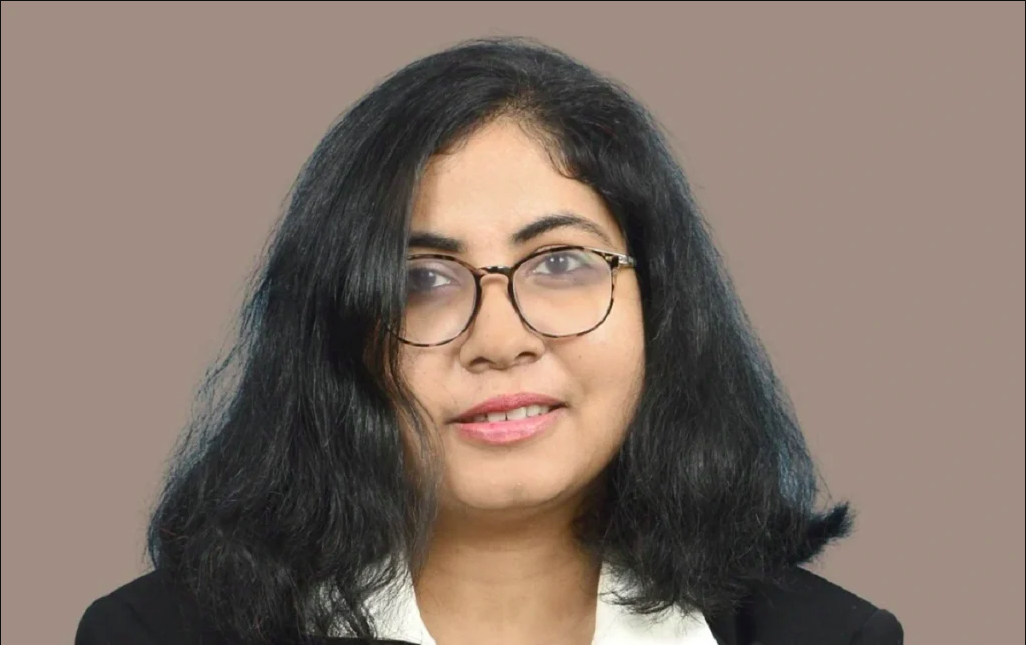

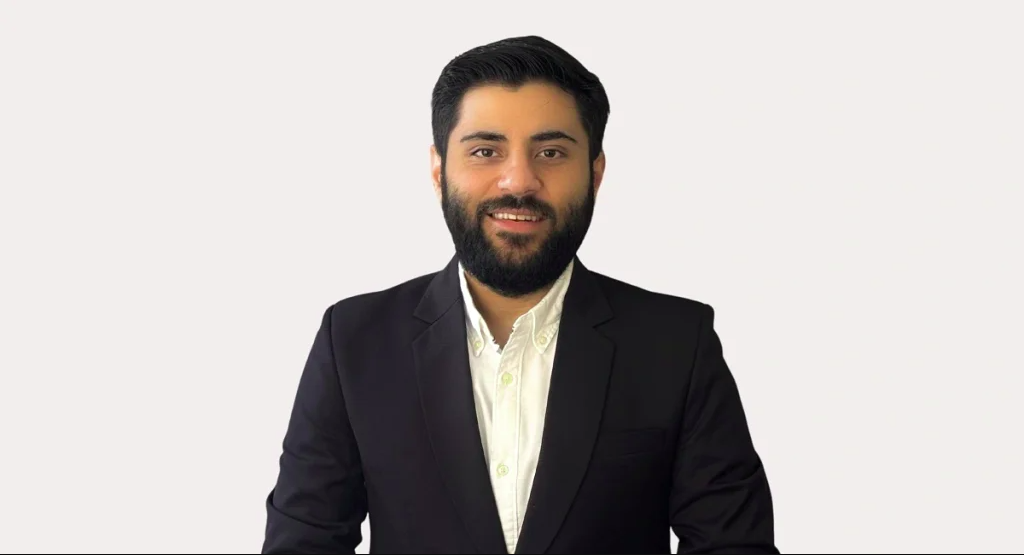


 Allow notifications