Author: Aashish Ahuja

  • Suhail Mathur, NLUD graduate, on writing a bestselling book and becoming a cricket commentator

    Suhail Mathur, NLUD graduate, on writing a bestselling book and becoming a cricket commentator

    Suhail Mathur graduated in law from National Law University, Delhi,  batch of 2014. He is currently engaged with a reputable international law firm. He is also the author of the bestselling book The Bhairav Putras, and has been ranked as one of the top 50 Indian authors to follow.

    In this interview, he talks to us about:

    • His experience at NLU, Delhi and his decision to pursue law.
    • His view on internships.
    • His decision to write a book and the challenges he faced as a first time writer.
    • His experience as a cricket commentator.


    What prompted you to consider law as a viable career choice? If not law, what other options would you have considered for your career?

    I wanted to become a film director. But film direction and other related courses all happen to be postgraduate degrees. So I was wondering what other avenues I could explore. During my school days, I was a member of the debating forum, and was extremely passionate about it. So I eventually realized that pursuing law would be the best course of action, as is provides adequate intellectual stimulation, keeps you on your toes and pushes you to keep thinking out of the box. Moreover, the fact that your victories or your losses were not yours alone but were also shared by your client was greater motivation to work harder.


    Describe your experience at NLU, Delhi as an undergraduate law student. Any memorable incidents you would like to share?

    My experience at NLU, Delhi was quite pleasant. We shared a fantastic rapport with our professors and seniors. I’m still in touch with most of them and we keep meeting from time to time. There were only two batches, and everyone knew each other by name. It was a closely knit community. There is a lot of activism now, which wasn’t the case during our time. The campus also possesses a greater degree of gender sensitivity now. The college atmosphere was better during our time.


    What activities were you a part of in college?

    I was heavily into debating. I participated in the Oxford format of debate, which was a rarity since most of the students participated in Parliamentary debates.  I was perhaps the only one who debated in the Oxford style. I participated in 6-7 debating competitions, and I won all of them. Other than that, I would make short films and student films during my tenure whenever we had a session break. I wrote my bestselling book The Bhairav Putras during my time at law school. Since we had fewer classes in the 4th and 5th years, I could actively indulge in creative pursuits. In my 5th year, I also ventured into cricket commentary for Star Sports and Airtel’s mobile application.


    How did you decide to write your first book The Bhairav Putras? What were the challenges you faced as a first-time writer?

    On a lighter note, I always saw authors from IIMs and IITs writing books, and thought that it was high time that an NLU student also did the same. But to be really honest, you need to have the passion to write. Merely wanting to write doesn’t suffice; you need to be skilled as well. I had been in my school’s editorial board and I used to write and direct a lot of plays. There was a point when I was making short films and they were being circulated among friends and family. I realized that all that I was trying to do was tell a good story and if that story were told in the form of a book, it would reach a larger audience.

    History and mythology are two things I am passionate about, and I was very clear that when I write a book, it should be a culmination of both. My book is predominantly a historical thriller with loads of adventure and a dash of mythology.

    As far as challenges are concerned, the challenges are not in writing a book;  they lie in finding a good publisher. When I wrote my book, I got eighteen contracts from publishing houses. Some of the publishing offices were asking me to pay to get published, and I was very clear that I wouldn’t do that. I would rather not have my work published at all than pay. Eventually, Red Ink Publishers came on board, they brought out the book with a huge print run, and the book did exceedingly well. The book is currently in its fourth edition, and it’s been the number one best seller on Amazon eight times and for sixty consecutive weeks it was on Amazon’s bestseller list.
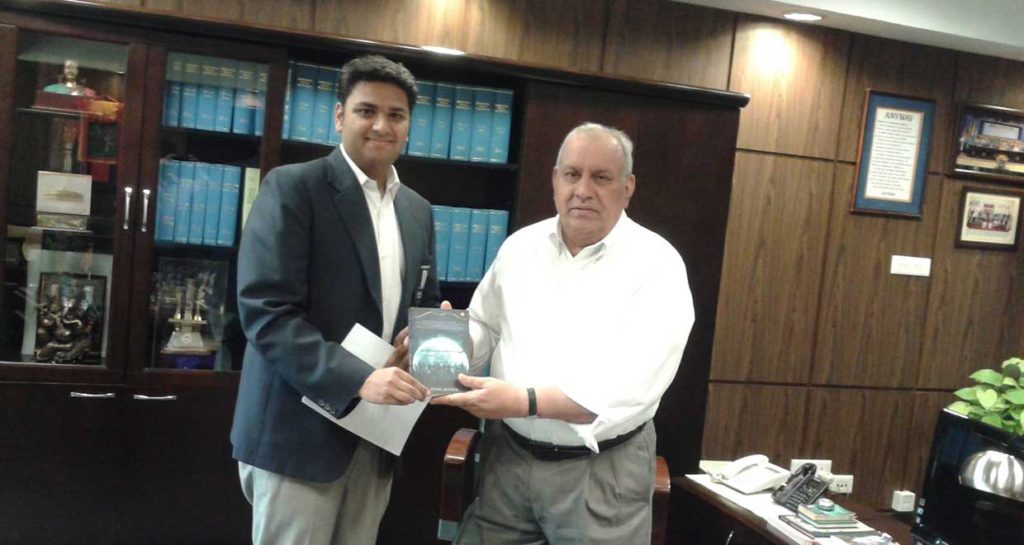
     

    suhail-mathur-2

    How does one get their book published?

    If you actually want to write a book, you should first go to a literary agent. When my book did very well I was invited to a lot of literary festivals, and I came to know that young authors weren’t being given their due by literary agents. Being an author myself, I wanted to change that. So I started the company, “The Book Bakers”, where we help authors get published and undertake editing, cover designing and marketing work for books. We currently deal with 45-50 publishing houses pan India which includes all the major publishing houses.

    Recently, The Great Khali, the WWE wrestler, collaborated with us on his autobiography, which we placed on Penguin India. I love to work with first-time authors and have helped many of them.

    Many times it happens that if you send out a book directly to a publisher, they may not read it with as much interest because they get thousands of scripts on a daily basis. But a script sent by an agent is better received since as they think it has passed a preliminary test of quality.

    Also, we guys don’t send it to the editorial and submission IDs but to the personal IDs of the individuals looking at different genres of publishing, whether it’s literary fiction, commercial fiction or non-fiction. It becomes much more streamlined and straightforward, and also helps the aspiring authors. I am very accessible on Facebook, as well as on our e-mail ID which is thebookbakers@gmail.com. People are free to write to us and we are always willing to help them.


    How did you manage the time to write a book?

    The thing is that if you have the passion, zeal and dedication to pursue your interest, you will manage to do that. At no point did I write the book in class or in my hostel. I wrote the book only on weekends at home. I finished writing The Bhairav Putras within the 50-60 days that stretched over a year. You have to see how to find time for both the things because you don’t want your law school’s studies to suffer in this. You need to keep your passion and profession side by side, and that’s how you make a perfect mix.

    One of the things I am quite saddened about is that in the legal sphere, the people at the top of the ladder are quite narrow-minded in their conceptualization of a lawyer. On various occasions, they ask me why I wish to continue with  law now that I am a successful author. But what these guys fail to understand is that they are undermining themselves in the process. They are undermining the ability of a lawyer to engage in multitasking. You could be a top corporate lawyer, a good writer, and also a successful literary agent. When people in other occupations and professions can be writers in their concerned fields successfully, I don’t see why lawyers can’t, and that mentality needs to change.


    suhail-mathur-1

    How was your experience when you were interviewed by various news channels? Do you have a PR agent? How did you ensure good publicity for your book?

    In India it was a great thing that a law student was debuting with mythological and historical fiction. So the response that I got was splendid. The very famous legal magazine Lex Witness partnered with us as our official legal magazine partners, for which we thanked them in the trailer and the book. They covered me in three of their issues, including a preview, interview, and a review. The prominent online portal Infibeam was my official online partner, and we had a very successful outing with them too. People showed a lot of encouragement in that aspect.

    I received endorsement blurbs from several known personalities as well. Ajit Agarkar has been my favourite cricketer and I got in touch with his wife, Mrs. Fatema Agarkar and she was very sweet. She got me in touch with Ajit and he wrote an endorsement blurb for my book. My college Vice Chancellor, Professor Ranbir Singh, Professor Sucheta Mahajan, Mr. Amrit Mathur, Mr. Mayank Austen Soofi, and many more wrote endorsement blurbs for my book, which meant a lot to me as a first time writer.

    To ensure good publicity for your book you must, foremost, have a good product with you. Then you need to sell that product. If you are making a good product and not selling it well in the market, then nobody is going to know about it. It was important for the people in the legal field to know what a student of law was capable of doing, because not only did that promote me, but also my college. The first batch had not yet graduated from my college at the time and therefore garnering positive publicity for my alma mater was important to me. It reflects well on my college’s credentials as well as mine.

    The Book Bakers has actually revolutionized the entire system of marketing and PR these days. Most of the PR was earlier confined to social media. Now we have tied up with television channels and radio stations, cinemas, metros, newspapers and magazines, and that’s the kind of PR we are willing to give to our authors and other authors who may want to market their book. Seeing a book trailer on a TV channel is unprecedented, and if people want to do that, we are giving them that opportunity. It’s very important to stand at the place where you are, and have a vision for the future. One must set targets for oneself; think about where they want to see themselves five-ten years down the line and work towards that goal.


    How did you become a cricket commentator for Star Sports and Airtel’s mobile application? Being a lawyer why did you decide to become a cricket commentator?

    Cricket has always been a passion and I always loved watching the game. When I was in the 4th standard I was invited by Indian coach, Mr. Anshuman Gaekwad, to meet the entire team because he was very impressed with my knowledge of the sport. Back then I wanted to write a book on cricketers, describing their personal likes, and get an insider’s view of their lives. I actually met the Indian team on the first day of the Delhi Test match in which Anil Kumble took ten wickets. Mr. Gaekwad sent Mr. VVS Laxman along with me to meet every cricketer and gave me an India cap for my cricket knowledge. I went on a cricket show called “Stumped” and was later invited by Mr. Harsha Bhogle for an hour long chat. And all of this happened when I was just nine years old! Mr. Sunil Gavaskar, who also shares the same date of birth as mine, 10th July, sent a hand written birthday wish to me. People really encouraged me at that point in time, and so the interest was always there. I always used to do commentary at home for fun whenever a match was on, and finally, Mr. Raman Bhanot and his organization, which ties up with the Star Sports and Airtel, provided me with an apt opportunity. Whenever there was a match, I used to do cricket commentary and covered the Ashes, India’s tours to South Africa, New Zealand, the Asia Cup and IPL. It was a great experience and I cherish that a lot and had it not been for my law firm job, I would have continued with this for a longer period of time.


    Is it crucial to participate in various competitive activities in a law school? What was your experience in this regard?

    It’s good to take part in moot courts, debates, and other co-curricular activities as it helps in building self-confidence. The ground reality at law firms  is that they do concentrate on a person’s marks more than anything else. It’s disappointing because it’s necessary for lawyers to have a well-rounded personality. The change needs to start from the law firms’ end, in the way they recruit and filter candidates, rather than the students’ end, because law students are doing wonderfully well in their student life.


    You chose to work at a top law firm. Why not litigation? How did you prepare for your interviews?

    I have always wanted to work for a law firm. Litigation never interested me much. All my internships with law firms have been challenging and rewarding in equal measure. They were great learning curves. I knew that I wanted to eventually work at a law firm and my time interning with some of them just bolstered my conviction further.

    When you are going for an interview you need to know the basics. But what do the basics encompass? Do you consider contract law, criminal law and CPC? There is no definition of what the basics comprise. It is not possible to remember everything about the law and asking the candidates vague questions is unfair. Students are taught the rudiments in their first year but it is impossible to assimilate and retain that information throughout your graduation. There need to be better defined parameters when law firms are testing potential candidates.

    I am generally high on my confidence and possess the ability to convince people. I really worked hard at my internships as well. I had certain achievements under my belt, and I had also worked at the firm and done well as an intern, so there was no reason why I can’t do the same once I actually joined the firm. These are the things you really need to play on. You need to play on your strengths and these were my strengths. Some people sit down and go through each and every book of law and make themselves perfect so that they face no issue while answering questions at interviews.

    The law firms need to select based on the person’s personality and their ability to interpret the law effectively. I hadn’t done any extensive reading right before my interviews, but just played on my strengths with confidence.


    How was your experience as a junior lawyer in a law firm? Did you acquire any important skills while working there?

    I had a great time working there. It is a challenging role to work in a law firm. The idea is to work as much as you can. If there is no work, you begin to stagnate and that’s not a very good thing. If you are getting an opportunity to work, you should take it up, and that’s how you learn more. Also, you will create a good impression in the firm. There is a world of difference between when you are interning and when you are working as a lawyer. As an intern, you are supposed to give out information to the lawyer, but as a lawyer, you are supposed to interpret that information given. So what I learnt was how to interact with the clients when we went for discussions, and how we must convince them.


    What are your views on the desirability of foreign law firms entering the Indian market?

    There are so many law firms abroad and they have been waiting for so many years to enter the Indian market. I just want to tell Indian law firms that if you believe in yourself, let foreign competition come in. You already have a head start in terms of your presence in the country and knowing its laws. The international firms would of course be hiring Indian lawyers but they are the ones who are at a disadvantage because they are entering a new field while the Indian law firms are the established players. So why not help many more law aspirants secure good jobs. I always feel a little saddened when I see a law student not getting placed. There were some very talented people in my batch who couldn’t make the cut, and I felt very bad. When you have made it to a National Law University or a reputed law school, then that should be reason enough for people to trust you and your ability. It’s actually a wrong mindset to continuously prevent foreign law firms from entering the market. If there is globalisation happening all over the world, then why not let foreign players come over here as well!


    Do you think having family members or mentors with a legal background helps in this profession?

    I don’t have anyone in my immediate family who is in the legal industry. I don’t see my lineage as a shortcoming. If there are no lawyers before me, why not be the first one in the family! I don’t consider it to be a disadvantage or a disadvantage. From college, we gave our interviews and came through the hard way. But the process is probably simpler for students with lawyers in their families because they have contacts. I see a lot of lawyers get ahead in their jobs because their parents are partners at the firm.


    What would be your message to our readers?

    You must have set goals and have the ability to complete them but everything isn’t as rosy as it seems. At law school, everyone will tell you to do great internships in order to secure a job. But this isn’t a foolproof plan. One needs to be realistic and only then can one tackle the challenges in this profession better. Also continue with your creative pursuits and don’t limit yourself as a lawyer. There is certainly more to a lawyer than what law firms would tend to make out of them. I balanced my legal work, agency work and my writing and if you divide the time you can achieve success. I have recently signed a three book deal with Om Books International, a noted Indian book store chain which operates abroad as well . If you are passionate about something then the legal work can co-exist with other creative pursuits. Never give up hope, but be realistic too. People will tell you a lot of things and at the end of the day, I believe it is your luck that is going to take you places more than merit. If it was based on merit alone, then a lot of people who are deserving would have got the opportunities they didn’t get. I feel that I was deserving as well as lucky, and am thankful to God for the same.

  • Divyakant Lahoti, Advocate on Record, on quitting law firm and setting up independent practice

    Divyakant Lahoti, Advocate on Record, on quitting law firm and setting up independent practice

    Divyakant Lahoti graduated from University School of Law and Legal Studies (GGS Indraprastha University, Delhi) in the year 2008. At present he is a third generation lawyer, an Advocate on Record, a dedicated and driven lawyer with an LL.M. qualification in International Commercial Law earned at King’s College London and experience within a wide range of settings.

    In this interview he talks to us about:

    • His experience working with Justice R.C. Lahoti, Former Chief justice of India.
    • The procedure to apply in King’s College, London.
    • Why he specialized in International Commercial Law and IPR.
    • The biggest hurdles in his early days of independent practice.


    How would you like to introduce yourself to our readers?

    I am a third generation lawyer and an Advocate on Record. Since my childhood I was sure that there is no other enterprising and satisfying career option than law. From the early days of my childhood, my career aspiration was to become a true lawyer having a sound knowledge of socio-legal disciplines and related proficiencies so as to make a positive impact on society by taking up a responsible position in the legal practise. My father Justice K. K. Lahoti’s hard work yet smooth-sailing lifestyle as an advocate and then as a High Court Judge appealed to my childhood dreams. My perspective on life changed when I closely observed my father work as an advocate in his office attached to our house. I could closely observe an advocate’s profession and his life. What drew me to this profession was the respect one earns and the satisfaction one derives from advising his clients and securing them justice. Both as an advocate and later as a judge, in my father I saw live-in-action honesty, integrity and devotion to duty, giving me an opportunity to imbibe these rare qualities.

    My entrance into this profession began after pursuing 5-year LL.B. (Honors) from my alma mater University School of Law and Legal Studies (GGS Indraprastha University, Delhi) in the year 2008. My quench for specialised legal knowledge persuaded me to attain an LL.M. from King’s College London, one of the top universities in the World.


    How did you go about your application to King’s College London (KCL)? How different was the study environment in that university?

    In a fiercely competitive environment, the only thing which looks simple is the procedure to apply. You need only three things at that time – an IELTS (International English Language Testing System) Score of 7.5 and above out of 9, a Statement of Purpose (SOP) and Curriculum Vitae (CV) along with the Application Form. However, each of them requires days, if not months, of preparation and persistence –to revise, review and refresh.  IELTS is easy to crack for those who are fluent in English and had English as a medium of instruction in their school and/or college. A few days of preparation is good enough to score the benchmark. The problem lies in drafting, structuring, tailoring and reviewing the SOP and CV. The entire labour lies in presenting a SOP and CV that can stand out and catch the eye of the University who is screening thousands of such equally good and well written SOPs and CVs. However, the procedure keeps on evolving and students are advised to read the updated procedure and policy before applying to the law school.

    One can choose a particular area of expertise which is taught by leading practitioner(s) in that field. The advantage of being taught by such Professors/Practitioners, who are considered authorities in their fields of law, is to provide the student with root information along with innovative and problem solving methods with a focus on a comparative and international outlook.

    At King’s College, the LL.M program offers a wide range of modules that enables the student to grasp a thorough knowledge of the increasingly important areas of law and their concepts and application. King’s College London is a place which is inspired and instructions are imparted by leading experts and the student receives outstanding cultural, research and career opportunities in the very heart of London.


    Which one would you say is better – LL.M from abroad or from India?

    Well, that’s a matter of personal choice coupled with the budget of the student. One of the key reasons for me to pursue LL.M. abroad was its duration of one year. Now, many leading Colleges in India are offering LL.M. programmes of one year. Since this duration gap is bridged, the second question that comes to mind is the quality of education and the expenses for pursuing such a course from India or abroad. Undoubtedly, going abroad is more expensive because of the high College Fee, rent for accommodation and living expenses. The student needs to choose the university wisely depending on multiple factors like the area of specialisation, the professors imparting the specialised knowledge, the university ranking and job prospects after completing the course.

    I personally believe that any College, which has an intellectually rich faculty, a formative environment and rigorous campus discipline on one hand and is collaborative on the other, together with the student’s passion and commitment, is an ideal recipe for success and accomplishment. A graduate from a mediocre college may shine and reach the pinnacle of his profession while a student from a leading college may find it tough to earn even a comfortable living. It all depends on how the student capitalises on the given opportunities during the course and develops himself as a professional. Of course, learning in a good educational institution and from good faculty do have their impact.


    Please share your experience working with Justice R.C. Lahoti, Former Chief Justice of India.

    Learning from, and working with, a living legend is a dream come true. I had the golden opportunity to work with him, on various arbitration and opinion matters, after his retirement as the Chief Justice of India. I have not only learnt the art of advocacy but also lessons of life from him. Success in your profession gives name and power but the qualities of character give a good name and reputation. A gentleman professional is respected and remembered. Such success can be reached by different paths but not by changing paths along the way. According to him, reading spiritual, motivational, inspirational books and biographies/autobiographies is an essential source to augment the knowledge and improvise one’s own personality.

    As a student and then in the early years of my professional career, I had the opportunity of living with Justice Lahoti as a family member. I have closely watched his routine and working style. Working and reading are his passion. He reads a lot, both literature and law. He is an early riser. From the morning till late in the evening, he is busy studying, preparing for arbitration matters which are coming up, dictating orders and awards, and checking and reviewing the dictation well before circulating the same to fellow arbitrators and parties. He has earned recognition for his oration. His speeches and social lectures, cultural and educational event are also prepared by him in advance. The lessons which I have learnt from him are: (1) work is worship; (2) it is never too late to learn; and (3) if you have accepted an assignment, put your heart into it; never compromise on anything less than the best.


    What are the basics of a legal notice and how can one learn to draft one?

    A Legal Notice is the first step to set the civil justice system into motion. Drafting a legal notice is an art and needs the same skill as drafting a suit. It demands legal knowledge, expertise and experience. You need to understand the entire factual background, evidence in hand, the need of the client and the law(s) involved. Once this preparation is done, then the lawyer must proceed to draft the legal notice. A notice is a way which lays down the foundation for future attacks or defence. The tenor and tone of the notice should be proper – not too aggressive. A properly drafted Legal Notice or its reply can avoid litigation or the same could help the parties settle the matter through mediation at a pre-litigation stage or can assist the court in adjudicating the matter. On this subject, one of the must-have books for every lawyer is Mogha’s Law of Pleadings in India.


    How did you decide to specialize in International Commercial Law and IPR?

    In this growing economy, it is indispensable to keep abreast with latest developments in  financial and commercial law to deal with the changing market conditions. Needless to say, to practice law in the corporate and commercial markets today demands niche and specialist knowledge, robust common sense, analytical and problem solving skills with the ability to deliver pragmatic solutions to the clients. Moreover, LL.M. in International Commercial Law provides an impetus for developing the ability to understand, analyse, and solve complex and unprecedented problems. In a corporate and commercial environment, a close proximity with leading legal systems is sine qua non which can be gained by pursuing specialisation course(s). Specialization in IPR was out of sheer interest. I was awarded the Microsoft IPR Scholarship during my graduation for authoring an article on copyrights. Thereafter, I studied an Advance Course on Copyrights and Trademarks from the World Intellectual Property Rights Organisation (WIPO). Pursuant thereto, WIPO had offered me a full scholarship to pursue a 2-year course in Specialisation in IPR from the University of South Africa (UNISA) and WIPO which I completed in the year 2011.

    The knowledge gathered from these specialised courses is immensely helpful in advising clients, and drafting commercial contracts.


    Describe your experience at Luthra&Luthra Law Offices. What led you to shift from the corporate sector to Independent law practice?

    Luthra and Luthra had provided me with an action packed litigation experience, be it 2G or Defence Scam, from heavy stake commercial arbitrations to high profile telecom litigation. Under the able guidance of Mr.Rajeev Luthra, Mr.H.S. ‘Bobby’ Chandhoke, Mr. Siddhartha Datta and Mr. Manu Yadav, I sailed smoothly through the pressures of strenuous and complex litigation. Irrespective of such work pressure, the environment in the firm was always conducive, cordial and friendly. I have made many friends for life at this place and learnt many lessons of professionalism and client interaction. Indeed, it is a Tier 1 Law Firm which values the work and sincerity of its members and also feels concerned for their life and career.

    The Firm gives you the necessary skills and experience to commence an independent legal practise. However, what you would require is to hone your entrepreneurship capabilities. It was a well thought of decision to switch from a leading Law Firm to open up your own firm, though it is a life changing event as it comes with much heavier responsibilities which are all on your shoulders. One of the major advantages of going independent is that there are more opportunities to appear and argue the matters yourself before the Court/Tribunal and make yourself a brand. Such an opportunity is rare in leading law firms where there is a tendency to engage senior advocates even for simple issue(s).  Moreover, in an independent practise, you tend to handle more clients simultaneously unlike in a firm where you would be assigned limited matters/clients. Undoubtedly, there is more flexibility in an independent practise as compared to working in a firm. You are the master of your own time and have the choice of choosing the matters to involve yourself. However, in the initial years of practice, you tend to do whatever comes your way to sustain a living. Once you are established, then you have an option to do or refuse to do certain matters or develop a specialised area of practice.


    divyakant-lahoti-1

    What do you think are the biggest hurdles and challenges in the early days of independent practice?

    One of the biggest hurdles, in setting up your own independent practice, is to have an office, with the amenities and library, preferably near the Court Complex. The purpose of having an office close to the court would be to ensure that you reach the court on time and travel time is minimised so that you can use that time in more productive and meaningful work. The next step is to pitch yourself by informing your friends, acquaintances and your professional colleagues that you have started your own independent practice and your services are now available for private clients. Then, hiring a suitable clerk who has reasonable knowledge of court procedures and filings.

    Establishing your own brand, among the clients and court-rooms, is the foremost real task. An independent practice encompasses not only getting new clients but also retaining them and recover your outstanding fees from them. It is a challenge in itself. A lot of productive time is wasted in recovering the professional fee which is also important or else, your labour is wasted. Another hurdle is running around different courts and forums for the matters listed on the same day. To overcome this hurdle, the only possible solution is to engage competent junior lawyer(s) who are willing to prepare and argue the matter, if the need arises, before the court.


    What would be your message to our readers?

    There are ample opportunities for every lawyer and youngster who should strive for such opportunities and excel. The profession offers humongous prospects for those who are willing to sacrifice their comfort and leave their complacency to make their mark in this field. Due to the changing economy, the chances of young lawyers are enhanced as new chambers are being opened up or existing chambers are merging resulting in larger clientele, bigger premises and pooling of resources such as libraries. These chambers are looking for enterprising younger lawyers who can whole-heartedly devote their expertise and time for productive, qualitative and quantitative work.

    However, youngsters are advised to do their research on such chambers/firms, make enquiry into the status of the lawyers/partners of the chamber/firm and the kind and amount of work they are handling. Some of these chambers may not offer good prospects. For those who are looking forward to litigation practise, it is indispensable for them to join such chambers which have matters regularly before the courts/tribunals so that they can gain experience in court crafts and the art of advocacy from their seniors apart from learning necessary drafting knowledge, the art of cross-examination and the art of addressing judges.

    After choosing the right chamber/firm, the next step is to enhance the ability to communicate.  The objective is to make the Judge understand the case. Youngsters should practice speaking up clearly with modulation. Simultaneously, they should also be able to present the case to the Court/Forum lucidly and with brevity in a humble way, eschewing irrelevant facts and irrelevant arguments.  Undoubtedly, courtesy towards the Judge and court manners, including wearing clean and presentable robes, are of paramount significance.

  • Anurag Parihar, Founder and Chief Executive officer, on providing an online e-learning platform for lawyers

    Anurag Parihar, Founder and Chief Executive officer, on providing an online e-learning platform for lawyers

    Anurag Parihar graduated from MATS University in 2014. At present, he is the founder and chief executive officer of Rostrumlegal.com. RostrumLegal.Com is an online e-learning platform for lawyers, law students and anyone who wants to learn law. The company operates with a vision to deliver professional legal education to millions of people from around the world at affordable costs.

    In this interview he talks to us about:

    • Biggest challenges to start a business.
    • How to protect a great idea.
    • How to obtain a domain name.
    • Online courses helpful in starting a business.

    What are the biggest challenges to starting a business?

    I think taking the first step is the biggest challenge. I always say this to people that every tom, dick or harry in this world has one or two business ideas which can be worth millions of dollars but no one dares to materialise those ideas. I think each one of us have experienced that moment in life when, after hearing a news about some cool startup, we say that “I had a similar business idea, I should have given it a try…” Taking the first step is a real big deal in starting any kind of business.

    There are lot of other things, like commitment towards studies or the job, and pressure from family and friends, which prevent us from taking risks. If you think that your idea can create an impact in changing the way people live their lives, you should definitely give it a try.

    How can I protect my great idea?

    It might sound a bit hilarious but from my personal experience both as a law student and an entrepreneur I would say that ideas are the only form of intellectual property which cannot be afforded any legal protection. Also, you cannot sue anyone or claim a compensation for stealing your ‘great idea’. In fact, stopping someone from pursuing the same kind of business as yours can prove to be unlawful and anti-competitive.

    If you have a great business idea in mind and you have fully convinced yourself to start your journey to become the next Steve Jobs or Elon Musk of the industry, it would be a very good thing to share and discuss your idea with as many people as you can to take positive inputs to start. A suggestion from an unknown fellow passenger in a local train can also prove to be helpful in realising your billion-dollar dream!

    Once you have started or when you are already in the business, you can utilise a lot of legal routes to protect the things which are important to your business. Those things can be your logo, the name of your business, software codes, designs or your secret fried chicken masala (it’s better not to spill such secret)!

    How can I obtain the domain name I want?

    I think choosing the right domain name for starting a website or a blog is really important to create a good online presence. Domain names can be very crucial if the business is targeting online users. To choose a domain name one should keep in mind that it should be a unique web address. Also, at the same point of time it should be very general to the industry you are doing your business in. Following this suggestion can help businesses or blogs to get organic traffic from search engines. This can be really helpful in contributing towards the growth of the business especially in early days. The perfect example for such type of domains can be housing.com or conferencealerts.com.

    There are a lot of websites which sell domains and provide other web hosting services. It is advised to go with a big brand and since these service providers sometimes offer great deal on domains and hosting packages, one should do a proper research before buying to crack the best deal. Also, it should be noted that setting up an ecommerce store or a blog is very easy, there are several articles available on the web which can help you in learning to do so.

    How much should I capitalize my business with at the beginning?

    The amount of investment needed while starting the business completely depends on the type of business. Some types of businesses can be started at the cost of very small or zero investment. A YouTube channel or a Facebook page sharing funny posts to make people laugh can be turned into a profitable business, the cost of starting such things is practically nothing. A small e-commerce website or a blog, publishing articles on topics like 10 things to not, can be started at a cost of less than 5000 Rupees.

    On the other hand, there are lot of capital intensive businesses, like a restraint or a manufacturing company, which can require a lot of investment at the beginning itself. A business can be started either with no money or with a lot of investment but it is very important to plan the budget and the source of income for a long run to manage some of necessary spending in future.

    Where can I get money for my business?

    Investment is a very important ingredient for growth or expansion of a business. There are a lot of options available for entrepreneurs to raise funds. Some of the important sources include an angel funding, or a funding from a venture capital fund. Two of these are can be simply differentiated by the amount of money they invest in your start up. The former is an investing company often managed by few people known as angel investors who invest significantly less amount of money when compared to venture capital funds which are usually giant corporations managing a huge pool of money. There are lot of schemes run by government and various public and private sector banks which offer collateral free loans to small and medium scale companies on a lucrative interest rates.

    There are other creative options to raise money like crowd funding where a startup can raise money from general public by simply posting their business plan on crowdfunding website and offering exclusive launch benefits to the investors. There are a lot of competitions which select infant startups and provide them with mentorship and a small amount of initial funding. There are a lot of startup incubators which look for promising early stage startups.

    The amount of money available as compared to the requirement of startups is very less. Only one in a 100 startup is able to attract investors to provide funding. Not only the business idea, but a lot of factors contribute in making a startup attractive to the investors. And, last but not the least, the revenue generated by the business is also an important source of funding.

    How should equity be divided among co-founders of a startup?

    I think that this is the toughest question in the interview and also one of the most confusing decision an entrepreneur has to take in his life.The equity can be divided by looking into various factors like the type of responsibilities each founder has. Such responsibilities can include the development of the product, investing initial capital, formulating and refining the business idea, marketing, business development etc. Sometimes it is good to take advice from a third party who is close to all the founders, knows the business and is not interested in the business of the company.

    It is also important for the founders to enter into a founder’s agreement which decides the share of equity each founder gets and also enlists the responsibility of each of the founders. The agreement should also accommodate plans to include team members and investors who will join the company in future. There a lot of articles, blog posts and tutorial videos which can be referred to gain a clear understanding on this area.

    What online resources are helpful for learning more about starting a business?

    Several types of free resources are available, both online and offline, to learn about the ways of doing business. Just ask google if you are stuck on something and you will surely find the solution to your problem.

    There are a lot of websites like Forbes, Tech Crunch and Entrepreneur who publish a lot of articles on important issues. Also, there are lot You Tube channels who publish videos to help entrepreneur. I would recommend following ‘Google for Entrepreneurs’. It is also advised to know about the life of entrepreneurs and other type of leaders. One can also watch movies and read books to get inspired!

    I would recommend people to watch my latest favourite movies ‘Steve Jobs’ (2015) and ‘The Big Shorts’ (2015). Also,If you are looking for a step by step guide to start a business, you can read ‘The 100 Dollar Startup’ by Chris Guillebeau.

  • Kunal Marathe, CEO of Author’s Empire India, on pursuing his career in law

    Kunal Marathe, CEO of Author’s Empire India, on pursuing his career in law

    Having written columns, articles and short stories for various publications, Kunal Marathe’s first novel was released in January 2011. Now at 26, he is the CEO of Author’s Empire India and has authored two books. More than twenty titles including fiction, non-fiction and poetry have been published under his company’s aegis. Magic Magic is the third book authored by him.

    At present he is studying law from Indore Institute of Law.

    In this interview he talks to us about:

    • His decision to write a novel and the challenges faced as a first time novelist.
    • How to create an impressive book trailer.
    • How to find a publisher.
    • His decision to pursue law.

    How did you decide to write your first novel? What were the challenges that you faced?

    Frankly speaking, I didn’t write my first novel because I had a story that forced me to write. Rather, I wrote because writing a novel was something I always wanted to. I had a dream of becoming a writer since when I was in school. It was all I ever wanted.

    Challenges – there were many. I can write a book on them. Unfortunately in India, when someone dreams of taking writing – or any other art – as his career, it’s never easy. When I started drafting the story of my first novel; I was working in Hotel Taj, Mumbai. I used to work till 12 at night, and then, sit in an open library of Fort area all night to complete my novel. It was tough balancing the job, writing, and then those long traveling hours in Mumbai local. But that was just the beginning of the challenges. In writing and publishing industry, actual challenges begin after you get published.

    Tell us something about your upcoming novel ‘Magic Magic’.

    Magic Magic is a unique novel – it’s a blend of magic and romance, something that is uncommon for the Indian market. It’s the first book of the series that would revolve around Sikandar, a gifted magician.

    The novel has been written by two authors – Mr. Anil Samotiya and I. We have tried to keep it lighthearted, something the young Indian readers prefer. Though Magic is the center theme of the novel, romance and humor are the major elements.

    If I want to write a novel, how would I go and find a publisher?

    Today in the world of Internet, finding and approaching publishers is not a tough job – however, getting your manuscript selected by them is! Penguin Random House, Rupa Publications, Harper Collins and Westland are some of reputed names. Generally one has to send a synopsis of the novel, along with few sample chapters and a cover letter to the publishers as the first step of submission. However, each of them has some special guidelines, which can be found on their official websites.

    In case one fails to get his/her manuscript accepted by the publishers, he/she can opt for paid publishing in which the writer pays to the publisher to get the book published. My publication, Author’s Empire had stopped function around one and half years ago due to some financial issues. However, we have resumed our publishing process and any author can contact us for traditional publishing or paid publishing by simply dropping an email at authorsempire@gmail.com

    How can I learn to create an impressive book trailer?

    What I have seen especially in India is that 99% of the book trailers being released by the authors are immature works. Never do that. Making an impressive book trailer is a time and money consuming work.

    Book trailers can be cinematic; like the one of Magic Magic shown below. Or they can be work of graphics or animation, etc. What you need to understand is that a book trailer is NOT the blurb or synopsis of the book. Many writers simply use the lines from the blurb of the book and form them into the trailer. A book trailer should rather be something that would attract the readers. It’s a medium of marketing – something to compel the reader to buy your book and read it after being watched.

    Here’s the link for book trailer of Magic Magic: http://youtube.com/watch?v=q0lywxhODZY

    http://youtube.com/watch?v=q0lywxhODZY

    What prompted you to study law despite of writing and publishing being your professional background?

    I am studying law not as a career option, I am happy with my current profession – writing and publishing. I am studying law because it has always fascinated me. I guess every citizen should study law – in a college or with the help of good law books. Having the knowledge of law protects you, and it gives you strength to serve your nation and society by acting against the wrong and supporting the right causes.

    From where are you studying law?

    I had many options in Indore, my hometown. I chose Indore Institute of Law. I was told that they are the best in the city, which proved out to be true. Since I also have writing and publishing to look at, I need constant support from my college to complete the projects and cover the course when I fail to attend some classes. And the professors – and even the Executive Director, Mr. Gaurav Basant Jain – at Indore Institute of Law have always been extremely helpful.

     What would be your advice to our readers?

    I would like to keep it short. For those who are studying law, please study it to understand the law completely, not just to get a job! And for every single reader of this marvelous portal, I request you all to read my upcoming novel – Magic Magic, which is available on Amazon.in here.

    The Link is: http://www.amazon.in/Magic-Novel-Anil-Samotiya/dp/9383865008/ref=sr_1_1?s=books&ie=UTF8&qid=1459810499&sr=1-1&keywords=magic+magic+a+novel

  • Nakul Bhatnagar, Senior Consultant, on recruiting for various roles in the legal sector in India and across Asia

    Nakul Bhatnagar, Senior Consultant, on recruiting for various roles in the legal sector in India and across Asia

    Nakul Bhatnagar graduated from Cardiff University, U.K. in 2011. At present, he is a Senior Consultant at Aquis Search with responsibility for private practice and in-house legal recruitment services in India. He recruits for various roles in the legal sector in India and across Asia. He is interested in connecting with potential clients who have talent acquisition requirements and professionals looking for their next career challenge.

     In this interview, he talks to us about:

    • His experience at Cardiff University.
    • How interns can get positive feedback in limited time.
    • What law firms look for in potential candidates.
    • His advice on CV building.

    Most of our readers are young lawyers and law students. How will you introduce yourself to them?

    I am a lawyer by training and legal recruiter by profession. I was born and raised in New Delhi and spent almost all my life here. Post class XII, I pursued the B.Com (Hons.) course from Delhi University and after having dabbled in very different fields in the industry, I decided to pursue Law. I completed my LL.B from Cardiff University, U.K. in 2011 and after having worked with a few organisations (including a law firm and a trade law counsel). I made the switch to legal recruitment in 2014 and joined an Indian legal recruitment firm. I am currently working as a Senior Consultant with Aquis Search – Asia’s leading executive search firm with offices in prominent Asian cities. I focus on legal and compliance recruitments, across junior and mid-levels in India and the Middle East.The story continues…

    Having done B.com, what motivated you to choose law as a career? Or did it just happen?

    Doing law was a rather calculated decision for me and I believe I found inspiration to do law from the most unusual places. During my college days, I was actively following the Indian independent music scene and briefly performed in a rock band myself. Not to mention, I was a very confused child and tried my hand in so many different fields to try and come to a career conclusion – I interned in places like design studios, ad agencies and a music / events company as well. Post my graduation, I was pretty much convinced that I wanted to take up music management and for a year, I worked with a company which promoted independent original music, managed artistes and organized live concerts & festivals. During this time, I had the good fortune of interacting with musicians and a few lawyers who introduced me to several new concepts like Copyright, Performance Rights and Digital Rights Management. I was quite intrigued to see how the law worked with something as basic as a song or a performance. It was something that I never thought could work so well in an ecosystem that seemed completely disconnected. I started researching on what options I may have and I decided to try and pursue law. Not to mention, my father is a lawyer by training himself and always encouraged me to pursue a career in the field. Little did I know that the adventure was just beginning!

    Describe your experience at Cardiff University.

    The experience of studying at a foreign university was surreal. The methodologies, the faculty, course structures and support offered were very beneficial to every law student. Cardiff, being one of the top law schools in the U.K., was possibly the biggest learning experience for me. Constant development every step of the way, studying there made me the person I am today. Studying in Cardiff gave me immense exposure to global standards of legal education and a connection to a worldwide network of prominent lawyers. An additional advantage of studying there was that the University is recognized by the Bar Council of India and the transition of practicing in India was never tough. Many Indian students who graduated from there have moved back and are successfully practicing here (even as Partners at leading law firms).

    How do you say interns can get positive feedback in the limited time they have?

    Internships are probably the most valuable experience any budding lawyer can get. In one way or another, they are the stepping stones for a career in law. They show you the practical side of the profession and how the application of the law goes much beyond the course books.

    Pro-activity is possibly the most valuable skill that an intern needs to posses. Try and be actively involved with the partner / associates that you are working under. Remember, they get interns every month and recall value is definitely scarce. You have to make the jump out of the page for them to remember you. Especially final year students; if you wish to work with the firm post law school, you will have to walk the extra mile for them to offer you a PPO or a recommendation.

    Having worked in the legal recruitment industry what are the challenges you have faced?

    Challenges are as wide in this industry as any other. The point of working in a niche can work as an advantage and a challenge as well. The advantage of being a lawyer has helped me work my way into legal recruitment. I can understand the work that one does and has done in the past and how that experience can work well for a potential opportunity that one may be looking for. It is of utmost importance for recruiters to look at both sides of the spectrum. One needs to understand the needs of the lawyer looking at a potential job as well as the recruiter, looking to hire talent for his firm. The gap needs to be filled perfectly or it could pretty much lead to issues for the firm, as well as the young lawyer.

    Acquiring talent is a big task for any recruiter. Opportunities, whilst being seasonal, are usually always prevalent in the market. It is the right talent that can be scarce at times. Firms are usually very sure of the qualities that they want in a lawyer (law school, practice areas, experience wise). Getting them the perfect fit is the mark of a good recruiter. We have to remember that the level of trust, shown by a firm looking to hire and a lawyer looking to be placed, are utmost in a recruiter. Challenges are a part of everyday life but, just like any profession, they can be overcome.

    What do law firms look for in potential candidates?

    Here we go! (If I had penny for every time I was asked this question… you know how it goes.)

    Let’s get it straight. Firms are looking for someone who is with them for the long haul. Period! Firms (especially the big ones) in India are built on the core values of their name and legacy. They are looking for professionals who can be nurtured into taking that name forward.

    Professionally, the story isn’t very different from any other profession. A strong educational background, the ability to work hard and with a team, diligence, communication skills and of course, patience. The transition phase (especially the first 6-9 months) maybe tougher but the reward has its own charm.

    Strong on technicals – the main point of focus. For example; a prospective corporate lawyer should have the acumen for numbers, financials and a strong eye for detail and along with this good knowledge on topics like Contract Law, Sale of Goods Act, Company Law, SEBI Regulations, FEMA, FDI Regulations etc. Similarly, a professional, looking to build a name in the disputes practice needs to be aware of everything around him in the legal environment. Be prepared with important sections of the CPC, CrPC, Constitution, landmark judgments and recent developments in the legal biosphere.

    The basic quality that every lawyer needs to possess (and I cannot stress this enough!) is the eye for detail in everything that they read or write. Till date, I have seen so many professionals who are not proficient with drafting and tend to omit so many errors; it’s possibly one of the biggest grey areas for any law firm looking to hire. You need to start from the bottom of the food chain everywhere. Your firm will want to know everything that you are capable of.

    What advice would you give to law students / professionals interviewing for law firms?

    The one piece of advice that would be the most important (for lawyers across levels);KNOW YOUR CV. Know every word of every line of what you have put on there. For freshers, your internship details are of utmost importance. Know the names of the Partners / Associates that you worked under, the teams, the kind of work and your involvement. For laterals, any transaction / matter that you worked on, your contribution to the same and everything that you have put on your resume. You need to have your CV on your fingertips; if it is on your CV, get ready to be questioned. Keep yourself abreast with all legal developments in the market, especially the ones with a connection to any phrase mentioned on your CV. Apart from academic qualifications; your extra curriculars go a long way in determining your achievements. Moot courts, debates and other activities are equally important to show your development during law school.

    Apart from that, know what is happening in the market and of course, know the firm that you are interviewing with. You need to know details about key partners, latest deals and general structure of the firm as questions can be fired from any direction. You need to assure your interviewer that you are the right choice and your knowledge about the firm makes you want to be there. This is about going that extra mile to show your appreciation for their time and consideration. People always look for that spark that would separate you from the others. Be confident in what you answer and do not hesitate in accepting that you may not know something out of the plethora of questions, it is only natural. Be sure to tell them even if you don’t know or are unsure. Be sure to make a note of it and tell them you can research and get back to them with a sure answer. Surety goes a very long way. Be sure of yourself and what you know and you’ve already won half the battle.

    What must a law student do to get hired in a top-tier law firm? Any advice on CV building that law students must keep in mind?

    Before I answer that, we really need to address one thing for young lawyers and everyone else reading. The mentality of a ‘top-tier’ brand is changing in this ever evolving legal market of ours. Whilst top-tier firms still do rule the roost and deservedly so, many firms operating on a smaller scale (only in terms of number of people) are bringing in meaty work and good clients. These firms (bracketed as mid-sized or boutique firms) are coming up with a strong force and several of them have been started by and employ alumni from leading firms. In terms of quality of work, people employed and even pay-scales, they are very competitive with all other firms and will be a force to reckon with in the near future.

    Let’s face it; cut throat competition in the market as of now, is more than it has ever been. With more than 70,000 lawyers graduating every academic year, securing an interview can turn out to be quite a harrowing process. Most firms hire graduates directly from campus or make offers to their star interns. Firms that do come on campus will look for someone whose CV jumps right out of the page to catch their attention. Hence, building a strong CV is the first stepping stone to this process.

    On CV building, we need to remain concise. Academics are the foremost factor that people tend to look at on your resume. Your grades need to be consistent and will be considered on priority. Along with grades, a few other factors that may help go a long way:-

    Moot Courts – The first insight into a Court environment, the basic reason and intention of organizing moots is to help students develop their research and oratory skills. You should try to actively be a part of inter / intra college moot court competitions. The skills that are put to task here are the ones you need the most in this profession and one can develop them very well.

    Research Papers / Publications – Your knowledge on the latest developments in the profession are yet another tool in your artillery. Your knowledge on the information gathered here could easily be one of the biggest advantages in the interview

    Organisational Skills –The committees that you were a part of during college, the activities that you took part in. These show a sense of team work which every young professional can use to his / her advantage.

    How is the legal landscape in India changing viz a viz the talent needs?

    The landscape has changed hugely over the past few years since I have been following it. People are beginning to focus more on the person, rather than their pedigree (which has always been the growing trend). Firms are seeing severe competition in the market and of course, last year was probably one filled with the biggest surprises (and shocks for some) in the industry. Reasons like these alone, are completely twisting the landscape. Since any change can be positive or negative, depending on the perspective, the industry has learnt to adapt with its growing needs. Firms are getting bigger, business is on the constant rise and people are needed. At this point of time, hiring at the senior level is becoming more strategic and there is definite preference for those having their own book of business and good reputation and relationships in the industry. Another interesting point to note is that, at the junior and mid levels, firms are also investing heavily in BD and internal trainings.

    Lastly what are your plans for future? What advice would you give to law students wishing to work in the same sector as you?

    After having dabbled in so many sectors myself, I feel I found my niche in the legal recruitment business. The plan is to learn and grow with the system which is growing every step of the way. I am glad to have found a platform like Aquis Search, as it is the only search / recruitment firm in the legal and compliance industry in India has with an international network – in both the in-house and private practice space. I am happy to be able to leverage my network and relationships to hopefully bring a positive change in the Indian legal ecosystem.

    Guys, success and failure are a part and parcel of the game. Trust me, I’ve been there. Everyone is prone to mistakes and the best part is that it’s never the end of the world. Getting a law firm job or not shouldn’t be on your final list. The profession that we are in, is one of constant growth and learning. One literally can never stop learning here (even if it feels like things are stagnant). Keep making mistakes, learn from them, equip yourself better and move on. The recruitment business is on very similar lines. I feel that my experience in law practice has equipped me with the knowledge to be a decent legal recruiter. For anyone wishing to work in the same field, I’d only say that keep your eyes and ears open. Most importantly, build the best network that you can (a network is what makes or breaks a recruiter). You should enjoy being an all-round people’s person. The work is all about the trust that you gain with your clients and candidates alike so, keep the lines of communication flowing because after all, professionals are trusting you with their careers on the line.

    Lastly, as a lawyer or a recruiter, never lose hope. Be confident in your professional abilities and start! The world is out there. Good luck!


  • Hormaz Daruwalla, Equity Partner, Khaitan and Co., on a career in taxation law

    Hormaz Daruwalla, Equity Partner, Khaitan and Co., on a career in taxation law

    Hormaz Daruwalla graduated from University of Bombay in 1987. He started his career as an Advocate with Crawford Bayley& Company, handling cases pertaining to indirect tax under Mr Dadi Engineer.

    In the year 1992, Hormaz started his practice as a Counsel at the Bombay High Court and joined the Chambers of Senior Advocate Mr Atul Setalvad.

    Hormaz is well respected and is a specialist in the fields of customs, central excise, service tax, foreign trade policy, special economic zones, anti-dumping, VAT and other local levies. He is particularly sought for his opinions generally on law and on the subjects he specialises in. His experience in advising clients on issues pertaining to indirect tax litigation, structuring, planning and other related issues makes him a popular lawyer among corporates. What makes him special is his ability in arguing cases before different fora including the High Courts and the Supreme Court of India.

    In this interview, he talks to us about:

    • Importance of Indirect taxation as a subject for law students.
    • Is specialisation a good thing in today’s professional world.
    • What does it take to be a good indirect tax lawyer.
    • Steps to prepare for a difficult case.

    Most of our readers are young lawyers and law students. How will you introduce yourself to them?

    I am just one of them but only have been around a bit longer. The challenges they face today, I face too. The excitement and energy they feel, I experience too. Over the years the choices I’ve made based on my thinking has determined who and where I am in my personal life as well as my professional career today. I don’t regret the choices I made but will always say I could’ve done better though.

    Were you always clear about your career plans considering you pursued commerce and went on to graduate in law from University of Bombay?

    I started with the LLB course at the Government Law College, Mumbai in 1984. At the same time, I also enrolled for the Company Secretaries course of the Institute of Company Secretaries of India. In 1987, I completed the LLB course, enrolled for the LLM course and was in my final group of the Company Secretaries course. During this period there was only one thing that I was certain about, which is that I wanted to become a Counsel. I had no clue of what subject of Law I would, if at all, specialise in. In those days we never had an opportunity to test, check, see and feel the subject you would make a career of. There were no internships as we have them today, but all I had was an open mind and the determination to work hard to become a Counsel. Those were the days when one had to appear in matters in Court and one needed a certain basic understanding of the working of the system. Working in a Law Firm would be the best training ground to get that basic understanding.  My batch mate and good friend Rohan Shah, now Senior Partner at Economic Law Practices, who had articled at Crawford Bayley & Company told me about a vacancy there. Their Senior Partner, Mr Dadi Engineer was a leading expert in Central Excise and Customs Law and needed the services of an Advocate Assistant. So I joined Crawford Bayley & Co and I remember the monthly remuneration used to be Rs 1,680/- (and this was before ‘tax deduction at source’ days).Indirect Tax was something new to me as the LLB course did not teach us even a word about it. I didn’t know if I’d like it or have the affinity for it or be able to cope with it or had the aptitude for it. But, as I said, nothing else mattered other than getting an opportunity to get on my race track to become a Counsel.

    What responsibilities you were entrusted with in Crawford Bayley & Company?

    My three years in that Crawford Bayley & Company was perhaps one of the most important periods in my professional career. It is here that I learnt a lot of what I know today. Those were the basics and the fundamentals. The systems, organisational skills, planning processes and most importantly my thinking process on issues of Law, were all formed at this stage. Under Mr Engineer I learnt to draft replies to notices and appeals. I soon started appearing before Departmental Officers and even the Customs, Excise and Gold (Control) Appellate Tribunal as it then was. Mr Engineer gave me a free hand at appearing and drafting. During this time I also got a great deal of experience in giving legal opinions on issues pertaining to Indirect Tax, as also structuring of businesses. But I must mention one thing that I practiced then which I am very glad I did and from which I have abundantly benefited, i.e. I have never said no to any kind of work given to me. This is something that I would always advise students and lawyers at least in the early years of their career.

    Please share your experience with Senior Advocate Mr Atul Setalvad.

    At the end of three years, I started as a Counsel in the Chamber of Senior Advocate Atul M Setalvad, as Junior to Senior Advocate Darius B Shroff. Atul Setalvad was a father figure to all of us. Atul (he insisted we all call him by his first name) was known for his crisp, concise, lucid and extremely effective drafting. He had the ability of breaking down extremely detailed and confusing issues into short, crisp and simple issues and he would get to the heart of the matter within no time.“Get your facts right first” he would say. Then study what the Law is, then apply the Law to the set of facts and only then look for authorities and precedents. He would be critical of people, who had such an obsession for precedents, that no sooner than you state a problem they rush off to look for a precedent. He also taught us never to argue the unarguable. This and much more is what I learnt in that Chamber. More importantly, it was a great place to learn lessons in honesty, integrity and humility. The skills and abilities that I acquired at Crawford Bayley & Company got honed, polished and further refined in this Chamber. I continued as a Counsel until October 2014 and during this period I appeared with the same enthusiasm and preparation before the junior most officer of the Excise and Customs Department as I would when I appeared before the Hon’ble Supreme Court of India.

    What was it that moved you to join Khaitan & Co after many years of being a Counsel?

    Khaitan & Co has an Indirect Tax Team of over 15 people spread over Mumbai, Delhi, Kolkata and Bengaluru.  The Firm wanted the benefit of my experience of appearing before the Supreme Court and the High Courts in high-value matters.  As I had this expertise, it was a good choice for me. Over the last one and a half years I have enjoyed working with the team and appeared in matters before the Supreme Court, various High Courts and the Customs, Excise and Service Tax Appellate Tribunal.  I am thoroughly enjoying every moment with people more wonderful than I can imagine and having the best of both, Court work as well as Chamber practice.

    At Khaitan & Co we have the best of cultures and I needn’t stress more but only say that it’s a respectable law firm based on values of fairness, integrity, diligence and responsibility and part of its ambition statement is “Earn we should but with dignity and pleasure.” Wow!

    How important is Indirect Taxation as a subject for law students?

    Sixty percent of all Government revenues at the Centre are from Indirect Taxation. That will give you an indication of how important the subject of Indirect Tax is in today’s environment. Every business, profession or calling today experience challenges and problems with taxation and in particular Indirect Taxation. Indirect Tax is becoming the biggest single cost for most businesses and if they can save a couple of percentages on that, that’ll mean a lot of money to add to their profits.  With the negative list regime under Service Tax, there is hardly any activity that does not involve taxation. Corporates are constantly seeking advice and assistance on issues of taxation, which issues are getting more complicated by the day. Every amendment, even if for the purpose of simplification, poses further issues. As I see it, whichever subject of law that a young lawyer may pursue as a career, a basic understanding of Indirect Taxation is an absolute must.

    Which field of law will you advise law students to pursue?

    Over the years I have met many law students and young lawyers who find the subject of taxation per se boring. To them I say, “It’s all in your head”, which is a fact. Students today have such good opportunities to test what they would be best at and internships are fantastic opportunities to get over these mental blocks. Very often a student may have a special liking towards a certain subject and may have the aptitude and affinity for that subject. The student may also be indifferent or have a dislike towards another subject. This indifference or dislike is mostly due to ignorance and lack of exposure in the right manner to that subject of law. I would say to such a student to not waste his internship opportunity on the subject he knows, he has a liking, aptitude and / or affinity for, but instead use the opportunity to actually intern in a subject that he is wary about. This way he can get a more accurate and correct picture of the subject and can then make a learned decision about his career choice. The different subjects in this field of law are vast and varied. It is only the person himself who needs to decide his choice of subject. It would be rather foolish for anyone else to make this choice for him. I would advise the student, in making this choice, to necessarily have an open mind free from blocks and prejudices caused mainly by lack of knowledge about a subject. His decision will ofcourse be guided by his own likes, dislikes and which will be in line with his character and attitude. And I say that he will be successful in anything he does so long as he has the right mental attitude and is prepared to work diligently an thirdly of course he must enjoy what he does.

    Do you think specialisation is a good thing in today’s professional world?

    It does not matter really whether one specialises or has a general all round practice. What is important though is that you can equally excel in any subject of law that you may choose. I would say that ofcourse today is the age of specialisation whether it is in the medical profession or in our legal profession.  At Khaitan & Co too, which is the best full-service law firm, each area of practice is handled and headed by specialists in that particular area of law.

    I feel that very often, like it happened to me, a young lawyer may not specialise out of choice but may find himself guided into a particular subject and before he knows it, he is branded as  a specialist in that subject. It is that branding that ensures that he gets work only relating to that particular subject of law which further confirms his specialisation.

    How can one gain expertise in Indirect Tax? What does it take to be a good Indirect Tax lawyer?

    Indirect Tax is a subject that is very volatile as well as dynamic. This requires the practitioner to constantly be appraised of the changes happening almost every day. A lazy attitude in this regard will only mean instant death, so to speak. Only his constant updating of knowledge and information and ofcourse repetition can ensure expertise in this field. This I would say will also be true for any other practice area, but it’s more so true for Indirect Tax. The student or young lawyer desiring to take up Indirect Tax as his area of practice must necessarily be prepared to read a lot of material whether it is the constant changes or Government policies or Court decisions.  And remember, there are no free lunches!

    What has been your strategy to deal with errors and mistakes?

    The first step I believe one needs to take to deal with errors and mistakes is to admit and acknowledge them. Unless this happens, one can never go any further.  Once acknowledged, the next step is to understand how and why the mistake happened. This will enable the person to eliminate the cause and consequently future mistakes. Mistakes are a very vital part of the learning process, one must understand that the day you stop making mistakes you stop learning and you stagnate.

    What steps do you take to prepare for a difficult case?

    Preparing for a difficult case is something that I have learnt to enjoy and believe me in this profession and in the subject of Indirect Tax one can get ample opportunities for such enjoyment. To start with one needs to meet the client and listen to him carefully and attentively while he tells you all about his case. This is something where many people lack. Make copious notes and perfectly understand the facts. The next stage would be to study the various provisions of law that are applicable to the facts and then understand and set out precisely what issues arise in the matter. The wheat needs to be separated from the chaff, so to speak. It is only then, after breaking up the entire case into bits and getting to the heart of the issue, that one can start figuring out a solution or answer to the issue. The answer could be either a practical one or found in interpreting the law in a particular manner by application of well-founded principles or a mix of both. The last stage would be to support the submissions by authoritative references or Case Law as applicable.

    What are the preferred legal issues you like to work on? Do you have any hobbies that help you unwind after a long day at work?

    As I said I stopped having any preference for any particular kind of legal issues. What interests me though are issues that have an impact on public at large. I have always said to the tax collector “Tax if you must, but only with the authority that you may have and with the dignity that is expected of you”. In the same breath, I also say to the tax payer “Pay your taxes honestly and avoid if you pay your taxes only within limits a decent citizen would”. There is a fine line between tax avoidance and tax evasion and many a tax avoidance schemes can very well fall within the category of tax evasion. My advice to clients has always been to keep litigation to the minimum.

    All said and done, I thoroughly enjoy what I am doing now at Khaitan & Co, but do really miss what I used to do many years ago in often appearing for NGOs in environmental matters. I do try to pursue my passion for the outdoors with an occasional trek or hike and I always look forward to a long walk in the evenings to help me unwind.

    What are your views about the upcoming GST regime?

    The GST regime is something that has attracted a lot of speculation. I wouldn’t want to add to this. Though I will say that it is a brilliant move in the right direction made by the previous Government and we all eagerly await it’s coming into effect, I don’t see it happen in the near future.  When it does come into effect, it will have many advantages to businesses. However, in the initial years all prices will shoot up considerably and will take considerable time to stabilise. Although there might be provisions for rationalisation of the tax, as I said earlier any change in the law substantive or procedural will bring up a new series of litigation which will continue for several years until settled finally. This may be good news for young lawyers.

    What would be your parting message for your readers?

    Start getting lucky and courageous in your career.

    You might wonder what I am talking about but I do not subscribe to the conventional dictionary meaning of “luck” which is “Success or failure apparently brought by chance rather than through one’s own actions.”  I would think this is an apt definition of “gambling” but not of “luck”.  But I do subscribe to what the great Roman Philosopher Seneca had to say.  He said, “Luck is what happens when preparation meets opportunity.” Opportunities come by every person in equal amounts but it’s only the one who is prepared and ready for it, who can actually see them and make good use of them. It is he who is “lucky”.  The truth is, we make our own luck and the difference between lucky and unlucky people is their level of preparedness; not only of everything else but most importantly prepared with the right mental attitude.

    Everything is constantly changing; that’s inevitable.  Change will happen whether you like it or not.  Don’t be afraid to make choices.  The wiser thing to do is to model your choices around the change to your advantage or else the change may not be to your liking.

    As far as getting lucky is concerned, start preparing for it by developing the right mental attitude.

    Get up, Get going and Good luck!


  • Akshay Saxena, Associate, Seth Associates and Legal Consultants, on law school experience at IMS Noida

    Akshay Saxena, Associate, Seth Associates and Legal Consultants, on law school experience at IMS Noida

    Akshay Saxena graduated from IMS Law College, Noida in 2015. Presently, he is an Associate at Seth Associates & Legal Consultants, Noida.

     In this interview he talks to us about:

    • His experience at IMS Law College.
    • His remarkable experiences during the internships.
    • A few tips on managing high grades.
    • Status of cyber crime in present scenario.

    Given that most of our readers belong to legal fraternity, how would you introduce yourself to them?

    Hello to all the readers & viewers, I am Akshay Saxena.  I graduated from IMS Law college, Noida in 2015 and I am an Associate at Seth Associates & Legal Consultants, Noida.

    What motivated you to choose law as a career?

    My Father is a lawyer and he is my Idol from the very first day. He did not put pressure on me to pursue anything. He set me free to choose whatever I wanted to do.  I used to admire my father and his work, his skills and secondly I had no other plans after my 12th in my mind. I wanted to make my career in law so I started preparing for CLAT but eventually I couldn’t score much and as I did not want to waste my year so I took admission in IMS Law College.

    How was your experience at IMS Law College? What were your hobbies during your tenure in law school?

    First of all being a Non- NLU student it is very difficult to survive in the legal fraternity. I was a Non – NLU student and it was difficult for me to stabilize myself in this field. But I was aware from the fact that if I work hard and if I keep going without losing hope I will definitely achieve what I want. And coming back to the experience in my College, I used to be the student who was full of energy and was very active and quite known among the faculty. I started participating in debates, seminars, workshops etc. My hobbies were playing cricket and Pool/Snooker. I had a huge friend circle in my college and I used to spend my time with my friends.

    What were your areas of interest during your graduation? How did you go about developing expertise and knowledge in these areas?

    During my graduation I was very much fond of studying Arbitration & Conciliation, Indian Penal Code, Contract, Intellectual Property Rights. I started studying more and more about the core law subjects like Crpc, CPC, Evidence and IPR. When I started reading Arbitration & conciliation somehow I started developing interest in that area and used to study articles related to that. And then in the next semester I had the subject IPR after which I decided to focus on IPR and build my career as an IP lawyer preferably. I used to read books and articles on IPR and started gathering knowledge about this area. Talking about developing expertise and knowledge in these areas came when I realized that it is high time now for me get serious about my career and when I had to choose one area I chose IPR and Cyber.

    What are your thoughts on activities like mooting and debating? What skills do law students acquire by engaging themselves in such activities?

    Mooting and debating are the best platform for a young talent to show their skills in front of many people. Mooting is an experience of a lifetime. One gets immense exposure and experience about the court proceedings. I remember the day when I first started preparing for my first Moot which was “XI All Delhi-NCR Moot Court Competition 2013” in Delhi University, I was very much tensed as I had to research on various issues/Judgments and making memorial and compiling all the relevant things together and one has to prepare for & against as well because you never know on what stance you will be asked to argue in front of High Court Judges. As I was the Researcher in my first moot competition which doubled my worries but my mentor Ms. Surabhi Guleria who gave us confidence and self belief because of which my team ended up winning the Competition. That win gave me ample amount of confidence and then I participated in “1st National Moot Court Competition held in Sharda University 2014”and later my team was declared as winner. I was the speaker in that Moot competition. Mooting & debating gives a person a great confidence to brush up their skills and to acknowledge their positive points and negative points. Mooting and debating is an extra-curricular opportunity for a law student to practice their legal advocacy skills. Mooting and Debating develops group work skills, the skill of argument, the skill of making reasoned judgments and self confidence.

    Any remarkable experiences during your internships that shaped your career?

    First of all let me tell to all the readers and law students that internship plays a very vital role in gathering professional ethics, court proceedings, and the work environment in a law office/chamber. I remember the day when I got the opportunity to meet Mr. Salman Khurshid and I gave a brief to him about the case, plus during Internships every law student gets to see the lifestyle of a lawyer. I witnessed Mr. Harish Salve arguing in the Supreme Court on my first visit to the Supreme Court of India during my internship. During internship I got the opportunity to draft some PIL’s and legal notices which was very interesting and gave me a lot of knowledge and enhanced my research skills altogether. Internships gave me a slight insight of the working environment of a law firm & chambers, which eventually helped me after I joined the current firm as an Associate.

    Share with our readers a few actionable tips on managing high grades.

    Practically law is entirely different from what we learn or read in our college. Whereas to score high marks and good grades one must acquire good knowledge of Sections/Articles/Case laws and everything becomes easy when you read a case related to a particular section. It is difficult to score high marks but not an impossible task. A law student should learn the basic concept rather than mugging up the whole Bare-Act. It becomes easy when a student knows the basics of the subject and if a student has doubts regarding anything he/she should consult his faculty. Read as much as you can, be aware of the latest amendments and pay attention in your class when your faculty teaches you something, well that helps a lot.

    Please share your experience with Advocate Karnika Seth.

    Well it is my pleasure to work with Adv. Karnika Seth. She is a well known cyber lawyer and a cyber expert. It has not been much time since I joined her office but in such a less time I have worked on various cases related to cyber crime and got to learn the basics. She is a great mentor and whenever she assigns some work to me she always make sure that I put my efforts in right direction and always keeps backing her associates which inspires and motivates us to work hard. She never scold or raise her voice if the work she assigned is not upto the mark, she would rather show the right direction and right way to deal with the problem.  Working with the top cyber lawyer gave me an exposure and enhanced my skills. Since she has published numerous books on Cyber crimes/ child pornography etc, it becomes easy for us to consult anything and everything from her regarding any problem related to cyber law and a lot more she is very well versed of the fact that how to get quality work from her associates. She keeps sharing her experience with us and keeps encouraging the young/budding lawyers. So far my experience of working with Advocate Seth is tremendous and full of knowledge. As she also deals with IPR matters, she assigned me some Trademark cases and set me free to handle the case  on my own and gave me the opportunity to appear in TMR hearings which drew my interest towards IPR and I am very much satisfied with the kind of work I am doing with her.

    How did your appointment at Seth Associate and Legal Consultants take place?

    Well Adv. Seth used to speak and give knowledge on the Cyber-laws at various different forums. So she was invited once in my college to give us some knowledge about the cyber laws and cyber crimes, so I knew her since then. It was my last semester and as my final year result came I sent across my CV to her email id and within three days I got the reply and she asked to present a synopsis on any legal topic of my choice and eventually I chose “Cyber crimes” and sent that synopsis to her and then she called me for personal interview and this is how my appointment at Seth Associates and Legal Consultants took place.

    Many law students aspire to secure a job. What do you think most are doing wrong, from your observation?

    As far as my observation is concerned the thing which many law students do wrong during their academics is not doing internships. I would suggest every aspiring law student to do as much internships as they can, in the same area in which they wish to start their career, because internships gives a very deep knowledge and experience to a law student. It becomes easy for a recruiter to appoint you in their firm if you had done internships in the same area as it won’t be difficult for the law students to start working in a firm. During college days every law student must choose their preferred area in which they wish to get expertise and then scrutinize the firm and start applying in the same. The law students should keep this in mind that failures and rejections are the part of a life, for a student rejections are basically the hurdles which makes or breaks the confidence, it is upto you whether you make it or break it. Do not lose hope keep trying and never give up.

    And when you are interning somewhere keep asking for work from the concerned person as it will bring you in notice of the people working with the firm and try to intern with a same firm twice it will make you familiar with the associates and partners, it will help you get a PPO(May be).

    Keep your resume short, simple and up to the mark. Mention your work experience; mention your qualities and your achievements.

    What is the status of cyber crime in present scenario?

    In present scenario the cyber crimes are increasing day by day. The world of Internet today has become a parallel form of life and living. Public are now capable of doing things which were not imaginable few years ago. The Internet is fast becoming a way of life for millions of people and also a way of living because of growing dependence on these machines. Cyber crimes have been reported across the world. It is now amongst the most important revenue sectors for global organized crime.  After introducing the cyber law in our country the cyber crimes are becoming less but still some of the cases are their which changes the public mind about the people of our country. Through cyber law many people got arrested and they are now also behind the bar. After seeing so much safety the people are not creating much violence about this. Because of cyber crime many people had suffered and mainly the rich people and the girls. Therefore Cyber crime system requirements in India are being increasing day by day as per the crimes are increasing. At present there are so many cases of cyber crimes pending in the court and the people are waiting because of the lack of lawyers for cyber crime. So there is a need of cyber lawyers who can support the people and provide them a good assistance and status in the society. There are many cases of hacking other’s account, spreading virus in others system through email, etc. and through this many people are suffering from cyber crime. We as a lawyer need to take up the challenge against cyber crimes and help the people who have been suffering from such crimes. I am sure that our country will definitely come up with some more strict laws in accordance to stop the cyber crimes.

    What should be your advice to our readers?

    I would say keep up the good work, keep reading articles, keep learning and never lose hope. Everyone should believe in themselves and wait for the right moment.

    “BE A LEARNER”


  • Nitika Marya, Vahura, on recruiting junior lawyers

    Nitika Marya, Vahura, on recruiting junior lawyers

    Nitika Marya graduated from University Institute of Legal Studies, Panjab University, Chandigarh in 2013. She did her internships with D.P. Ahuja & Co ( Patents & Coprights Attorney) in Kolkata, Lenovo- legal department, Gurgaon, SPS Bhullar, Punjab & Haryana High Court and also assisted Sivana with their contracts- a Recruitment Company in Muscat.

    At Vahura, Nitika is specifically responsible for recruiting junior lawyers with an experience of 0 to 3 years in the Delhi-NCR region and also looking into Candidate engagement and Assesment. 

    In this interview, she talks to us about:

    • Her experience at University Institute of Legal Studies, Panjab University.
    • Primary professional ethics she follows.
    • Unconventional start to her legal profession.
    • Other fields a corporate lawyer can try apart from joining law firms.

    Most of our readers are young lawyers and law students. How will you introduce yourself to them?

    I am a consultant at Vahura, a specialized legal talent search partner and a People’s person. I love networking and learning more about people from different backgrounds and have always been a sports person and a health freak. I have learnt from the experiences and situations in life and focused on developing myself into a better person with every passing day. I like to focus on being positive and healthy and working hard in the areas of my interest. I always want to be curious in my life.

    Please tell a bit of what motivated you to pursue law as a career.

    I was always interested in exploring the nexus between law and the Government Services. I always wanted a career in the Defense Services and an opportunity to work with the JAG Department had always been the reason behind my choosing a legal education and career. I had an opportunity to witness the value of a strong legal education and the impact it could have on an individual and societal level. Thanks to my uncle who was a Sessions Judge in the Panjab and Haryana High Court – someone who influenced me greatly and has been a role model to me in my entire life.

    Tell us about your college life at University Institute of Legal Studies, Panjab University.

    I really immersed myself fully into the college experience. I was chosen to be the Class representative and was genuinely interested in my education and believed in the need for practical. I was always a volunteer for field work on a number of projects that included issues like drug abuse and rehabilitation. I was not a keen orator however but never shied away from expressing my opinions. I always participated in all the extracurricular activities and as is the case with most college students, I travelled extensively with my friends.

    Did you find that your law school education had prepared you sufficiently for the many tasks you were required to execute during your internships and later at your job?

    There was very little assistance with respect to recruitments in its own way though it made me very independent. The pressure of seeking my own opportunities helped me refine my research skills and organizing abilities, which is something I have carried into my career. In a sense, law school made me very self sufficient.

    What is your take on working at a smaller law firm in early years of career rather than working at a very big law firm?

    If you’re looking for greater professional exposure and independent experiences, it’s always good to work in a smaller law firm. A smaller firm provides its employees a more diversified profile of work and encourages an attitude that is increasingly less dependent on external guidance. Spending time in a smaller law firm invariably leads to greater confidence, post which is good for someone to explore other opportunities.

    What are the primary professional ethics you follow while at work?

    I try to reflect the clients and the candidates I interact with, ensuring that I am well prepared for all discussions and negotiations. Etiquette is important and I always like to ensure that I have a complete understanding of what works where. I like to think that I should strike a balance between confidentiality and transparency wherein I never over sell or attempt to make an opportunity or a profile seem like something it is not. I like to call a spade a spade and by doing so, I earn the trust of whoever I am working with – something which is very valuable to me.

    Why is there an unconventional start to your legal profession (joining Vahura)?

    As I mentioned earlier, I always wanted to get into law because of my interest in Defense. As I continued to research opportunities in the law, I realized that there were very few resources and people who could offer guidance to young law students, particularly those interested in a more holistic perspective that looked beyond the already existing, conventional choices. I wanted to act as a bridge between students and the system and my work at Vahura allows me to do just that. You could say that it’s a way of reinterpreting the age that if you want to change the system, you have to be a part of the system and with Vahura, I interact closely with legal professionals and the industry, gaining insights into its working every day.

    What gets you to wake up every day?

    I’m excited about my work. Vahura offers me the opportunity to meet people who are interesting. I love my colleagues and the time I spend with them at work is precious. I feel like I’m getting closer to bridge the gap between professionals and students– a purpose that initially led me to Vahura.

    What is the best thing about your present job?

    I love meeting people. Vahura has given me opportunities to organize and speak at various platforms like IDIA where I have the chance to interact with young law students who are seeking answers to questions regarding their career and educations. I also look forward to meet my colleagues everyday. I also love organizing events and Vahura allows me to be in the forefront of interesting, curated experiences such as the Private Commercial Mediation Conclave – a conference co-hosted by the Centre for Advanced Mediation and Practices. I have some great memories from the Vahura – IDIA football tournament held every year where members of law firms from across the country meet up to play against each other, in the name of a good cause. I have spoken to SSB Army aspirants about my experiences taking the entrance exams and recently spoke to the IDIA scholars about preparing for the civil services exams.

    I feel like I’ve evolved as a professional and as a person I’ve become more confident and less shy of my abilities. I am always curious and feel like Vahura pushes me to learn more and more about myself.

    What are the other related fields where a corporate lawyer can try their hand apart from joining law firms and corporate houses?

    Government services and the Defense offer a range of options – there are always opportunities in JAG and the Civil Services. In addition, there are a number of Start Ups and smaller firms that are constantly looking for enthusiastic, young lawyers who are hungry to learn more and work hard on the job. Big law firms and corporate houses needn’t always be the answer and if anyone is interested, I would always be happy to speak to them one on one to discuss their concerns and answer their queries.

    What would be the one misconception you’d say you’d always held about real life legal work till the time you were an intern but changed once you started working as a lawyer?

    At an internship I always assisted the Senior. I have now understood that I need to make my own decisions with respect to my career and my life.

    What would be your parting message to law students who want to be successful in law?

    I might be repeating myself however it is very important to always stay faithful to what you want to do. Even if what you want is not a majority opinion, that’s fine and this could still mean that you have opportunities ahead. You do not always have to go to a big law firm or corporate but you can always join a startup etc. and find yourself the way Vahura helped me find myself.


  • Kavya Nagaraj, Associate, Tatva Legal, on drafting legal due diligence report

    Kavya Nagaraj, Associate, Tatva Legal, on drafting legal due diligence report

    Kavya Nagaraj graduated from National Law University, Jodhpur in 2013. During college, she was on research work and has penned down a number of paper for various seminars. She also has an excellent series of internships with a mix and match of law firms and corporations. Soon after graduation, she joined Tatva Legal and at the time of this interview worked as an Associate there.

    In this interview she talks to us about:

    • Legal due diligence report and drafting of the same.
    • Drafting skills one must acquire.
    • Challenges faced while drafting an agreement.
    • How can one learn to draft a legal opinion.

    Tell us about a legal due diligence report and drafting of the same.

    Due Diligence is a broad spectrum of investigative procedures in relation to an acquisition of a company’s shares or of assets in a commercial context, a joint venture project, a debt transaction, a financing transaction, the issue of securities or other general pre-contractual inquiries.

    The legal due diligence report is a standard, detailed / brief (depending on the client preference) report comprising of particular sections relating to a detailed review of the target company and its business.

    Every Law Firm has a unique style of drafting, be it agreements or reports. In my experience of drafting one, the legal due diligence report consists of particular sections detailing the target company’s mechanism. To name a few sections, the report will include: general corporate, borrowings / lending, agreements, licenses, real estate, insurance, personnel, intellectual property etc.

    The main agenda is to get a clear picture of the activities of the target company, relating to the transaction and how it affects the client.

    What complexities are faced while preparing a due diligence report?

    During the process of conducting a due diligence of a target company, the lawyers representing the company and the client will have series of discussions in which the complexities, be it minor or major can be resolved amicably. If any such complexity is not resolved, the parties may decide to drop the transaction.

    Sometimes a transaction drops solely because a company would not have complied with all the rules and regulations which are necessary for a transaction. For that reason, Due Diligence is now finding deserved place in Indian Statues. Mandatory provisions have been introduced for conducting due diligence. This definitely makes it easier to both the parties in conducting a due diligence and completion of a transaction.

     How can one acquire drafting skills?

    One can be good at drafting only by experience. In my opinion, everybody has a unique style of drafting because of the language used, way of expression etc. So, one should be able to give the reader a clear picture of what they want to express or convey in an agreement. Being a lawyer, you tend to read a lot of agreements / contracts / opinions etc., which are involved in a transaction. Gradually, one will have an idea about what an agreement will consist of, which would help in drafting one on their own.

    What is the difference between corporate due diligence and due diligence relating to property?

    Corporate due diligence is related to a Company, LLP, Partnership Firm, a Promoter etc. whereas, the due diligence relating to a property is an investigation regarding the marketable title of such property, which is being dealt in a transaction. Property due diligence involves tracing of title from the beginning, examination of the revenue records and the permissions obtained by the concerned authority in relation to the property. The conclusions will be given accordingly.

     What is the difference between corporate legal team and litigation?

    There is definitely a big difference between the two. Corporate legal team will mostly focus on the corporate transactions like due diligence, drafting, review of agreements, providing legal opinion etc., whereas, a litigation team focuses on the process involved in a lawsuit, like the trial, hearing, legal action etc.,.

    In my opinion, both the teams work in a totally different manner. I have had a wonderful experience with the litigation teams during my internships. Right now, I am working with a corporate team. The work and the effort involved in both the teams are enthusiastic in their own way.

     What challenges are faced while drafting an agreement?

    Lawyers draft numerous agreements. The kinds of agreements we draft can vary from a simple two page agreement to an incredibly complex hundred-page tome.Of course, the complexity of an agreement depends on the type of the transaction.

    The main thing to keep in mind while drafting is ‘clarity’. A poorly drafted agreement increases the likelihood of litigation, and makes it a liability to all the parties involved.

    Lawyers who draft agreements should develop a drafting system, one that ensures that all key provisions are actually included. They also need to know how the key provisions should be crafted.

    One should be up-to-date on the current law and best practices regarding the transaction and should be aware of the range of strategic and tactical options so that he/she can advise the clients on the pros and cons of each.

    It is important to manage the clients’ expectations, i.e., what the client wants to see in an agreement; and should avoid unnecessary provisions which are out of context; and should ensure that the agreements achieve the clients’ purposes and are enforceable under the law.

     What are the common agreements you often draft?

    Sale Deed, Agreement to Sell, Lease Deed, Mortgage Deed, Development Agreement, Power of Attorney, Termination Agreement, any other agreement, as per the requirement of the client.

    How can one learn to draft a legal opinion? What challenges are faced while drafting?

    Legal opinions are used in a variety of situations. It is basically an opinion from the Lawyers expressing the legal conclusions or legal analysis of a particular transaction or a matter which is relied on by the addressee of the opinion.

    A legal opinion solely depends on the preference of a client. It may be needed for some transactions and for some it may not be necessary. The client specifically mentions about a particular area in which they need clarity on; the opinion given by the lawyers will depend on that.

    A legal opinion consists of an outlook on whether certain transaction documentation is valid and enforceable in a particular jurisdiction and complies with the local law of that jurisdiction. It may also be regarding satisfaction of certain conditions precedents in the transaction documents and will usually be required by the lenders to give them reassurance that the legal effect of lending in the transaction concerned is what they expect it to be.

    Drafting of a legal opinion, again, differs from firm to firm. A draft of a legal opinion might include particular sections namely: the background, documents examined, scope of the opinion, the opinion, assumptions and qualifications.

    The addressee of a legal opinion will be expected to and will actually rely on the accuracy of the opinion for the purposes of evaluating the legal risks of the transaction or the project. If the opinion subsequently turns out to be inaccurate or misleading in any way, the addressee of the opinion may be entitled to bring an action against the law firm issuing the opinion. A firm’s liability will depend on the wording of the opinion, however, it is for this reason that opinion will only be given after appropriate procedures have been completed by the firm in question and will usually expressly include certain assumptions and reservations upon which the opinion is made.

    What to keep in mind while drafting a legal opinion? Can you give some high top tips to draft a legal opinion?

    It is important to keep certain factors while drafting a legal opinion.

    The basic factor is the applicable law. One should have a clear cut idea about the law which is applicable to the particular transaction and should be able to identify the issues in compliance of the same.

    Identification of legal risks is also equally important so that the addressee would consider further and evaluate.

    Nowadays, because of advancement in technology, the clients would have already done a research on the basic issues and the law before offering the transaction to a law firm. So, it is inevitable for the lawyers to make an extra effort in giving flawless opinion regarding the transaction.


  • Rajesh Singh, Legal Advisor, on pursuing a career as a Managing Partner of R&S Associates

    Rajesh Singh, Legal Advisor, on pursuing a career as a Managing Partner of R&S Associates

    Rajesh has more than 19 years of versatile and enriching international experience advising corporate clients, CEOs, management members, boards, and business heads. He has worked in the role of General Counsel (South Asia) at 3i Infotech, Associate General Counsel at Capgemini. He has been legal adviser at senior levels in various MNCs, SMEs, and SSIs. He has been instrumental and trusted adviser in various assignments dealing with M&As, NeGP(PPP), international arbitration, dispute resolutions, Private Equity, M&A integrations issues, Labour unrest and unions matters, various matters at Ministry/EOW/Custom/DRI/ Authority, Company formation and registration (Singapore, ME & other Asian countries), data protection/privacy laws, Antitrust/Competition laws, litigations and advisory services for his organization in association with Amarchand&Mangaldas, DLA Piper, DH Law, JayeshAshar, Somandy and Associates,  Little and Company and so on.

    In this interview he talks to us about:

    • His decision to pursue law.
    • His views on career choices.
    • His experience as a corporate lawyer.
    • His advice to go for higher studies.

    How would you introduce yourself, given that most of our readers are law students, law aspirants or professionals in the legal arena?

    For my fraternity, I am one of their fellowship members consistently learning to strike a differentiator when had to compete with each of you at any stage of my life. When it comes to consolidating my energy, effort, and experience, I would like to be called as an astute corporate lawyer with 2 decades of exposure to fortunate opportunities of some international experience. My consolidation of knowledge primarily came from legal-advisory exposures on various corporate and legal activities that governed various businesses, industry, and geography, for the sake of brevity coined as “LexAdvisory”. Today, individually gaining core expertise in all aspects of LexAdvisory is practically not possible for an individual, so it is important to have a team of experts to stand behind an individual under the umbrella of an international advisory firm, like mine RSAA GLocalLexAdvisory Group….remember this is just a beginning.

    You are a B.Com graduate from the University of Mumbai. How did you decide to pursue LL.B.?

    To be frank, in those days of my initial career, my intention was to be part of management hence had immediately done Diploma in Business Management from Indian Merchant Chambers. I had no path to have a career in law. My work, assignments, and some personal and organizational challenge compelled me to do law, further to add, my attitude to have control over the assignment. I found, major snag was legal issues and challenges surrounding the assignment, so completed my law with my employment…

    How well did your experience in Mumbai prepare you for a life of academic prestige and professional success?

    Now, at this stage, after meeting law aspirants from various parts of globe, including the rural, remote and less fluent English speaking areas, I believe being in Mumbai or any similar city will always be to your advantage as the exposure to real-life incidents, ready infra, and occasions of deliberations always going to be a rich experience. Major change in me happened when I started working for global MNCs, because the perspective of life, changes when you enter into a multi-cultural environment. It grooms you differently, by influencing your thoughts, communication, stature, and appearance. It gives a different outlook to yourself and imbibes things to see the world through glass of multi-cultural professional approach, knowledge composition, and personal attitude towards clients (including internal clients) and also “Altitude”, I coined a new personal feature because I felt a point of difference in opinion of astute lawyers of different country not due to legal knowledge but the point of reference from where they see the applicability and feasibility, due to our respective knowledge-peak heights achieved in our respective legal jurisdiction or cultural and environmental sphere each of us belong to; or society that we belong that either regarded smaller issues in one country as high while another country discarded it low, e.g., Data protection laws are different from different countries and seriousness varies accordingly.

    What were the influences on your decision to pursue MBA in Human Resources? Why didn’t you opt for MBA after graduation?

    I was holding all portfolios jointly in a corporate support function and to pursue  highest qualification in Human Resource would help me count as qualified all round. During those days, I was dealing with massive industrial and personnel issues which were unnecessarily chewing away my time. I felt I lacked in understanding issues of management and personnel and at many times could not authoritatively provide solutions to blue-coloured and white-coloured differences. My intention was to stand as an adviser to the management board to tackle all corporate and legal issues; personnel issues were bothering me. I could not stand differentiator in my personal view while convincing management with a workaround was not making me happy.

    What are your views on career choices other than mainstream corporate or litigation streams such as teaching, etc.?

    Today, the corporates have started eying on lawyers to move in the business stream and contribute to business growth and expansion due to their legal analysis, meticulous practice, and advisory skills, taking risk stands minimized at the decision level itself far away to reach this stage but the world is progressing towards the same. Alternately, every individual should get involved in other streams of a career like teaching, etc., may be after gathering some work experience at corporate, law firms and independent practice because that will help relating knowledge with reality and make teaching more attractive and attentive for law students. The legal field itself is so broad that there is no need to move outside the legal stream.

    You have been a corporate lawyer for most of your career. What prompted you to take up corporate law? Share with us any experience which helped you to shape your career choices.

    In my view, corporate lawyer enjoys the power to advise business heads and largely is in a position to influence a decision of management wherever legal and compliance issues are a concern. Surprisingly, amateur corporate counsel also gets an opportunity to advise business heads in most of the corporate structure due to our ability to understand the law better than them and also professional independence is given in our day to day activity. It is your personal inquests and quests that helps you to choose the legal area that you would like to specialize in. The majority of corporate work largely deals with contract drafting and managing litigation in most of the organizations. Few organizations do have an opportunity to go into IPR, M&A, IPO, Financial Arrangements, etc. I have been fortunate to get all of these opportunities at strategic and compliance level, making my knowledge-base versatile, penetrative and probing.

    What falls within the scope of your responsibility? Tell us about a typical work day.

    In addition to above, as managing partner of international law firm, typical work day goes on strategic and management decision to structure the organization, improve the quality of service, monitor the vision and mission, inculcate good practices, motivate the team to support clients and give spontaneous advice to management or CEOs or Managing Directors of the organizations identified as a core clients. In personal observation supervise crucial and critical litigation to get appropriate knowledge and experience to tackle proceedings legally and administratively.

    What is the most challenging or stressful part of being a Partner at one of the most successful law firms in the country? Is it easy to have a work-life balance?

    Obviously, stress is part of your life be as an associate or as a partner because success of a law firm depends on how your conduct is with your client?; what knowledge and experience that you can bring to the pleadings, drafting and arguments? Besides, the challenge of face value in the court, unheard urgencies, few seconds to decide your interim success or failure may discourage your client to count on you even if you have the best army to succeed in a long run. All set and done, if you love your work, you can enjoy the challenges and heal your frustration through your internal mingling and by a sip of tea/coffee or by breathing out the failure and breath in the next moment to move towards your next achievement. Many times, time does not permit you to enjoy your success or cry on your failure as the clock of cyclic success and failure is so much inconsistent that you cannot carry one emotion for long.  Work-life balance is not a myth; you can achieve if you can start your day early and follow a disciplined method to retrieve your information and knowledge.

    What kind of effort should a young associate put into work to get it appreciated? What distinguishes an associate from a partner when it comes to work?

    There is no limit or difference in the effort; your contribution decides your fate and success as an associate. More the partner relies on your work and effort; the less the partner will supervise the associate work. Almost everything is expected to be done by the Associate under guidance and supervision of Sr. Associates, Partner or Sr. Partner. Largely, the scope is drafting, analyzing facts, and research the relevance to withstand weakness and strengthen merits of your matter.

    How important would you say are business development skills at such higher roles in a corporate law firm?

    Knowing the business is very advantageous at any stage of your career, because as a corporate lawyer, the more you know your business higher is the chance of bringing an appropriate solutions or advice. The business heads or management appreciates such corporate lawyer who can bridge law and business on a platter in such a way that both corporate lawyers and business can understand their perceptions and perspective. Besides business skills, the corporate lawyer should also work towards improving its Interpersonal skills, simplified and crisp communication skills. Team Spirit plays a vital role in large. And complex assignments as a collaboration of work is crucial to complete the larger picture as expected by the management within an expected timelines and quality.

    When you hire lawyers under you, what specific skills and profile do you look for?

    Already covered above, to broadly mention, drafting, knowledge seeker, independent in thoughts, out of box thinker, ready to work with right attitude, have excellent and simplified method of communications, ability to demonstrate and express his thoughts in clean and clear way, negotiation skills, etc

    If I want to be a legal advisor how would I go?

    Every aspirant should identify and understand legal and statutory compliance of the industry that you are focussing on. Gather relevant knowledge, team of business and legal experts working on challenges of the Industry, and form part of a forum that can either influence industry legislation or influence legislators by your thoughts, suggestions, recommendation, and actions. Once you have initiated in the above manner, invest your time to peruse legislation affecting such industry and observe live court proceedings in this regard. Peruse case laws and FAQs available on the websites of court and authority (you can refer various other means to get case research materials), to understand regular challenges faced and dealt by that Industry. This kind of development will help you to mature your understanding in respect of business nuances, court’s perspective (Ratio decidendi of the decision taken by various courts or counter arguments placed by other pleaders to understand the strength of your pleadings) and market dynamics. Focus one industry at a time. Target another similar industry, which is logically a business extension of the industry you focused on e.g. ITeS to IT, BPO to LPO, IT to Software Technology then Mobile Technology. Similarly, the logical expansion, in the process of knowledge gathering, is to experience litigation through Business Contracts by way of handling disputes under Alternate Dispute Resolution (eg Arbitration or mediation forming part of Contract; you can further deep dive in this area covering domestic and international arena of every country your organization operates its business); further to add, Contracts, generally, branches out to various legislation or points out to foreign legislation by way of its terms and conditions, hence, review of such clauses should be analysed in the light of such legislation to assess the risk and recommend mitigation plan or compliances there under.

    What would be your advice to students who wish to go for higher studies?

    Industry or legal area focussed diplomas or courses will help recruiter acknowledge your intent to practice in particular industry and legal areas. In India, degree in law, master degree in business administration (if you intend to practice as an in-house corporate lawyer) or master degree in law for practice in court; and any other diploma or courses will always be an added advantage. The student should work during their studies to ensure that business and practical sense is developed while studying and most of the reading will settle in your mind as your wisdom or knowledge.

    What would be your message to our readers who are budding lawyers and law students?

    Budding Lawyers and Law Students should be sincere, hardworking, knowledge seeker, opportunist, aggressive in work and humble in approach and communication; ethical and professional in conduct and approach, good listener, preach what you practice, and finally should have ability to convey your thoughts. Never believe that what you lost after your sincere attempts are the last opportunity for your life.

