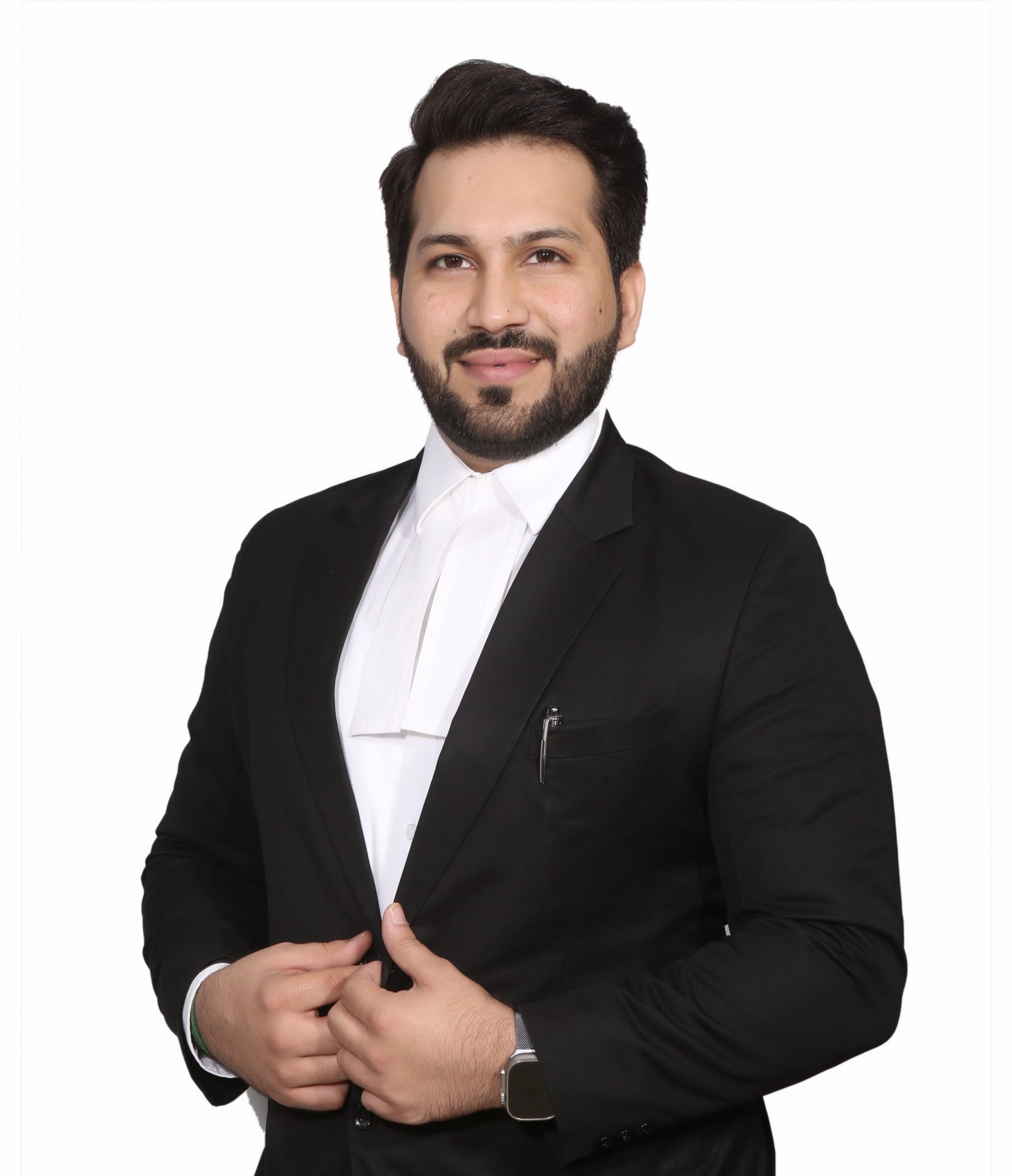
Author: Anshi Mudgal

  • “To handle a wide range of cases effectively, a litigator must develop a robust set of core skills that transcend subject matter.” – Nishank Tyagi, Advocate on Record at Supreme Court of India.

    This interview has been published by Anshi Mudgal and The SuperLawyer Team

    Being an AOR today with nearly a decade of experience, what initially motivated you to pursue law as a career? Was there a defining factor that guided this decision?

    If I was to sum up my decision to opt for law, I would say that I was running away from engineering and landed up at law school. Law was not the obvious choice for me initially. I was a science student in school and my parents wanted me to prepare for competitive exams and pursue engineering as engineering was the obvious choice for all science students, however, very early on in 11th standard in school, I realized that it was not my cup of tea. I wanted more than just a simple 9 to 5 desk job. I wanted a career which would make me look forward to work everyday and also give me an opportunity to serve the society and that is how law, especially litigation became the obvious choice for me.

    In your early years, you worked with various lawyers and law firms. What were some of the experiences that laid the foundation for your practice, and how did you deepen your understanding of law during that period?

    I consider myself extremely fortunate to have worked with some of the greatest minds in the field of litigation very early on in my career. After completing law, my focus was to learn the complexities of litigation and understand the world of Trial Courts. I had initially joined the chamber of Mr. Ratan. Kumar Singh, Senior Advocate where I learned about arbitration and commercial litigation which was an enriching experience. Later, I joined BAV Partners where I got to work with Mr. Vibhor Garg, whom I deeply regard as he gave me ample opportunities to appear before various courts in Delhi. Mr. Garg encouraged me to argue matters independently and to cross examine witnesses whenever required which honestly laid down the foundation of the litigator that I am today. I also worked at a prestigious law firm like Dentons Link Legal where I saw the more organized and structured side of litigation and arbitration and handled some high-stake matters under the guidance of Mr. Atul Sharma and Mr. Ravi Varma who are both luminaries of the legal fraternity. 

    What challenges did you face being a first-generation lawyer?

    Just like any other profession, litigation also has its share of challenges and being a first-generation lawyer sometimes puts that extra burden on your shoulders, however, I am a firm believer that first generation lawyers should stay away from these negative debates of “insider-outsider”. Thinking too much on these lines will put you in a negative loop and divert your focus from important things. Rather than focusing on other people’s plate, one should put their head down and focus on improving core skills that a litigator requires. At the end of the day consistency and hard work can beat any kind of legacy.

    After almost five years in the legal industry, you took the step of establishing your own practice with Adel Legal. What inspired this decision, and what initial hurdles did you face in setting up your firm?

    From day one of me joining litigation, I was absolutely clear that someday I will set up my independent practice/firm. Though it always confused me as to what should be the timing of going independent and how much experience would be enough to go independent. Later, I realised that there is no straight jacket formula to this and everyone has their own circumstances. I knew that as I progressed in the world of law firms, both remuneration and responsibilities would increase but my risk-taking capacity would decrease. Hence, I thought the sooner the better for me and decided to take this calculated risk of going independent with just 5 years of experience.

    Having represented a wide range of clients, including banks, government entities, and foreign corporations before diverse judicial forums, what do you consider the most critical skills a litigator must develop to handle such varied cases effectively?

    To handle a wide range of cases effectively, a litigator must develop a robust set of core skills that transcend subject matter. Analytical & Strategic Thinking, Oral & Written Advocacy, Interpersonal & Negotiation Skills are important to name a few. A litigator must have a good sense of judgment and he must know when to push aggressively versus when to negotiate or settle. Also, litigation is adversarial and often high-stress. The ability to maintain focus, motivation, and composure through long, contentious cases is essential.

    With your experience in arbitrations under international institutions such as ICC, SIAC, and LCIA, how do you see the role of international arbitration evolving for Indian practitioners and clients in the coming years?

    I am extremely positive about the role of international arbitration evolving for Indian practitioners and clients in the coming years. Practitioners need to stay abreast of legislative reforms, institutional rules changes, and emerging jurisprudence. Indian parties are very active users of foreign arbitration institutions for international contracts. At the same time, there is increased demand for India‑seated or Indian institutions to handle international arbitrations, which reflects growing trust in domestic institutions. The Supreme Court and High Courts have increasingly issued pro‑arbitration judgments, pushing back against unnecessary judicial interference in arbitral awards, enforcing foreign awards.

    Having represented the Government of Delhi before the Delhi High Court, what has been one of the most challenging cases in your practice, and how did you approach and handle it?

    Handling Government litigation often involves chasing various departments, officials and civil servants for the required instructions, which is an additional challenge. I had recently worked on a case where government land worth hundreds of crores right in the heart of south Delhi had been encroached upon and even sale deeds were executed which were used to claim title over the said land leading to loss of revenue for government authorities. However, with the correct strategy and timely instructions, we were successfully able to defend the possession of the government authorities over the said land. 

    How has been your experience of working as Jail Visiting Advocate with the Delhi High Court Legal Services Committee?

    I got empanelled as a Jail Visiting Advocate with the Delhi High Court Legal Services Committee in the year 2022. I visit various jails in Delhi every week and interact with prisoners to know their grievances and ensure that they get the required legal help and adequate representation before the High Court of Delhi and Supreme Court of India. I file bail applications for under trial prisoners and file appeals on behalf of inmates who have been convicted by trial courts. I have closely experienced the working of jails and have tried to contribute in making lives better for the prisoners. Overall, it has been one of the most satisfying experiences of my career.

    What resources or methods do you rely on to stay updated with the latest legal developments, and what advice would you give to students aspiring to enter litigation? What habits should they build early in their careers?

    One doesn’t need subscriptions of any legal database or fancy website to stay updated on legal issues. The website of the Hon’ble Supreme Court and various High Courts are good enough to keep you updated about the latest judgments and legal trends. But one must develop the habit of reading.

    I consider myself a student of law and still learn from my mistakes, so I am not sure what advice I can offer but I can list down couple of mistakes I made in my career and would request my young friends joining litigation to avoid the same if possible:

    • Not doing enough internships with litigators and Judges.
    • Not networking enough from the very beginning.

    I learnt it the hard way but the above mistakes can be avoided. Be Patient: Litigation takes time to pay off.

    Becoming an AOR is a significant achievement. Could you share your journey towards this milestone and the responsibilities it brings to your role?

    The Supreme Court of India conducts the AOR examination every year and the syllabus and study material can be found on the Supreme Court’s website. Preparation for the AOR exam was a learning curve, however, since I had been in practice for many years, that experience along with a solid strategy helped me sail through in my first attempt. Becoming an AOR and representing clients before the Supreme Court of India is a matter of great pride for me, but it does come with its share of responsibilities. The Supreme Court Rules and various landmark judgments of the Apex Court define the duties and responsibilities of an Advocate on Record. The Supreme Court only recognises AORs for the purposes of filing and an AOR can be held accountable for anything filed under his name and signature. But the biggest perk is that you get to file cases and represent clients from all parts of the country before the highest court of the land.

    Balancing multiple responsibilities as an AOR and as the founder of your own firm can be demanding. How do you manage to strike a balance between professional commitments and personal life?

    This is one challenge almost all litigators face in their lives, however, with effective time management one can easily wrap up work in reasonable working hours. I personally believe in putting in effective working hours and leaving office by 7pm and encourage associates at our firm to do the same. Unfortunately, at a lot of law firms working till late hours has become the new trend. I personally do not support or encourage that working style. Even in high-pressure environments, one should try to maintain core working hours and stick to them. Dinners with family, workouts, or personal hobbies should be treated as non-negotiable meetings.

    Get in touch with Nishank Tyagi –

  • “If you pursue the field of litigation over the time span of 15-20 years, the odds of your success are more provided you remain honest, hardworking and dedicated” – Akshat Gupta, Managing Partner at Law Green.

    This interview has been published by Anshi Mudgal and The SuperLawyer Team

    Sir, you have extensive experience in civil and criminal disputes, arbitration and various other areas. What initially drew you to law, and how did you develop your specialization in dispute resolution and corporate advisory?

    If I reflect back on my journey as an advocate, I think the initial seeds were sown during my school days at Salwan Public School. Although I come from a science background, I was greatly influenced by my teachers at Salwan Public School who taught me social science and environmental studies during the initial days. At a very young age, I had developed strong views on critical topics such as caste reservation, women emancipation, global warming etc. Later on, Amity Law School propelled me further on my path towards social awakening where law was taught not only as a discipline but as a tool for bringing social change. I was greatly influenced by my professors who taught us subjects like Political Science, Law, Poverty & Justice and Jurisprudence which added fuel to the fire of my curiosity about this fascinating field. The turning point in my life was my internship experience with veteran leader of the Bar, Mr. R.N.Vats, Advocate, and time that I have spent in his chambers just kept sucking me into the field of law like a black hole even though initially I started my career in the corporate field as a management professional but eventually since my calling was always law so I went back to his chambers to master the essentials, understand the rudiments and get a solid foundation. As far as developing specialization in dispute resolution and corporate advisory is concerned, destiny has a role to play in it. It is a rule that if a lawyer’s diary permits, he must not say no to any brief which calls upon him. Following this principle and given my prior corporate experience and extensive network owing to my IIM roots, I started getting a lot of work initially in corporate advisory through my colleagues and friends. I was also lucky to get support from like-minded, hardworking, accomplished and brilliant colleagues from the Bar like Dr.Amit George & Mr. Sushant Singh, Advocate, who recognized and acknowledged my talent at an early stage of my life and entrusted me with complex briefs which required meticulous preparation and attention to detail which helped me develop my specialisation in dispute resolution over the time.

    After completing your law degree, you transitioned into management and HR leadership with prominent organizations before returning to law. What motivated these career shifts, and how have these experiences complemented your legal practice?

    Although, I always had a strong inclination towards the field of law but my curiosity and desire to explore other walks of life, while I was still young, led me to pursue the field of business management, when the life presented me with an opportunity to specialise in human resources from the Indian Institute of Management Ranchi. My experience at IIM Ranchi was a game changer for me, giving me much needed corporate and international exposure.  

    Interdisciplinary studies and holistic view about different areas of human knowledge is essential in shaping world view as law is a field which requires an open mind not having a myopic view. Very often the written code and precedents may blind us and seemingly show a dead end, but creative interpretation is necessary to do justice while at the same time respecting the code. This is why law is such a dynamic field and poses intricate challenges before jurists and lawyers all the time. The underlying motivation for me was to keep learning and growing my perspective and widen the lens through which I see the world. My experience in leadership roles with prominent organizations has led me to understand and appreciate the bottom-line pressures and regulatory challenges which businesses face while achieving corporate objectives in an ethical and legal way which has in-turn helped me to think more practically about law and regulations rather than focus on theory. My corporate experience and exposure has helped me to find innovative solutions for my clients to resolve business disputes often by way of mediated settlements in a faster way not requiring prolonged litigation. 

    Your practice spans dealing in sectors like FMCG, automobile, construction, and more. What are the major regulatory challenges you encounter today, particularly in the automobile sector, and how do you advise companies to navigate them?

    The automobile sector is one sector which has a strong lobbying with the government when it comes to aligning national policies with domestic interests. Unfortunately, the entire ecosystem and infrastructure, roads etc. are still lacking and not conducive to pave the way for future technologies and international players to enter the market. If we have to provide high class mobility for a billion and a half Indians, our automobile sector needs to buckle up. The world is miles ahead and our automobile sector is lagging behind facing immense pressure from environmentalists and lawmakers. Another aspect is safety concerns on Indian roads and fast changing regulations, emission standards which constantly require upgrading technology to meet the changing demands. There are several sectors aligning closely with automobile sector and dependant on automobiles for survival including spare parts industry, oil and lubricants (where counterfeiting and trademark infringement is rampant), tyres, auto-insurance & loans (our courts are filled with accident claims and cases of loan defaults), e-taxi/cabs services etc. which pose unique legal challenges of their own. The second hand automobile market has its own qualms and now there are new big players in automobile rentals and second-hand sales who have entered the market and disrupted the scene. Second hand sale of luxury/ultra-premium vehicles is on the rise and inter State pricing differential helps in cost arbitrage and savings for the customers due to lower regulatory life of diesel vehicles in certain states. We have seen a rise in the number of consumer disputes against automobile companies. Very often, the contracts with dealers and distributors, service providers etc. are loosely worded without delineating properly the liabilities which arise out of “deficiency in service” beyond standard warranties. Moreover, there are emerging service aggregators who are going to dominate the auto-service sector in the near future and they are likely to plead intermediary immunity in cyber space. From the legal and regulatory standpoint, it is important to have proper demarcation between different business verticals providing connected services, revisit standard warranties and business contracts and implement a robust 100% compliance approach. Litigation is unavoidable in this sector, however, when it dawns it is important to pursue the cases diligently with coherent strategy keeping in mind long term implications in such a dynamic environment. The electric two-wheeler space is buzzing with emerging players and keeping litigation costs low early on is a challenge especially when India is a vast country and finding adequate legal representation in remote areas still remains a challenge as proceedings are dominated sometimes by local language which is a barrier in itself. 

    Balancing a wide-ranging practice that includes litigation, arbitration, advisory work, and pro-bono work, how do you manage competing professional demands while maintaining personal balance?

    Although we lawyers have the liberty to work from home, from what I have seen in the legal industry, balancing competing professional demands and maintaining personal balance is the biggest challenge in life of all accomplished lawyers and even the senior-most lawyers in the fraternity struggle with this. A healthy mind dwells in a healthy body so maintaining physical health must take priority for anyone who wants to pursue this field with passion. Over the time, I have realised the importance of maintaining balance and spending time with family and pursuing hobbies which although initially is difficult to maintain in this profession but over the time with experience and clever self-management hacks coupled with prioritizing techniques can help solve this problem to a large extent. Having a schedule and following a routine is thus important which helps divide time between competing demands. From what I have learnt from senior members of the Bar, being a lawyer is all about staying in balance which is a constant struggle.

    For young lawyers and professionals aspiring to specialize in litigation and corporate advisory, what key skills, experiences, or interdisciplinary knowledge would you recommend prioritizing early in their careers?

    It is important to develop the skill to question everything and think critically but patience and tenacity are key virtues required in this profession which can be acquired early on by following a spiritual path from the very beginning. Further, reading religious scriptures (without becoming a fundamentalist) also helps in developing virtues of patience and diligence. I recommend reading literature in human psychology and how our understanding of the functioning of the human brain, habits and behaviours is used in modern business landscapes as a marketing and business strategy to advance corporate interests. This coupled with critical thinking is useful in separating truth from lies in this modern world of instant broadcast. Besides, it is absolutely essential to have good command over the English language and develop computer skills which can enhance your productivity and speed in a firm environment. Legal research and drafting are two pillars of litigation that go hand in hand and one complements the other. These are the basics which will give you impetus to start with confidence in your journey.  

    Reflecting on your multifaceted career spanning legal practice, HR leadership, and advisory roles, what guiding principles or lessons have shaped your success, and how would you advise the next generation to approach complex legal and organizational challenges?

    There are certain guiding propositions which I strongly believe in which have helped me carry on and prosper in this profession. The most important is that when I took the decision to enter litigation, I strongly believed and I still do, that there is no Plan “B”. I will not turn back at all and I will die as a lawyer. This approach has helped me stay firm to my resolve to pursue litigation even amidst personal adversity. 

    The second principle which I strongly believe in is that if you pursue the field of litigation over the time span of 15-20 years, the odds of your success are more than the odds of failure provided you remain honest, hardworking and dedicated to learning from mistakes. I have seen lawyers struggling with even basic English language in the beginning but over the time span of 5-6 years they have mastered the ability to navigate court systems and procedures with ease and that’s only because they kept on going. 

    The third most important principle is to remain content with steady progress and growth. Very high ambitions can soon turn into disappointment. As they say Courts are not meant for unjust enrichment but only compensation for loss, similarly litigation being the profession which commands highest standards and respect can help you earn a decent livelihood but if you want to become rich then go do some business or take up some other career path. With time though, sincere and dedicated lawyers do become rich but their motivation is not to earn money which is rather a natural consequence which flows from being a trusted advisor. 

    As far as approaching complex legal and organizational challenges is concerned, my advice would be to sit, live and breathe with files as long as you can and just keep going at it till the complexity dissolves. In the early stages of my legal career amidst the hustle, I specifically made time to read and analyse case files in silos which helped me in understanding the facts properly and then apply legal principles to a given set of facts. It is important to take charge and lead the brief from the front. 

    There is nothing which you can’t do or understand. If others can do it, you can also do it, you just need to believe in yourself and keep your confidence high. When you are genuinely stuck just reach out and seek help from your mentors and seniors at the Bar. Bar is a very resourceful asset and my experience has been that members of the Bar are not competitive rather co-operative. I have learnt how to tackle complexity extensively from fellow colleagues and senior advocates over morning walks, informal discussions etc. but most importantly from court room experiences. There’s a saying in courts that if you absent yourself from courts for more than three consecutive days, then a lawyer is considered dead. So, make it a habit to visit courts daily and interact with members of the Bar where the maximum learning happens.  

    Get in touch with Akshat Gupta –

  • “In global data protection, it’s not just about conflicting opinions, it’s about reconciling overlapping laws, operational realities, and evolving expectations.” – Daniella Sankar, Independent Data Protection Consultant.

    “In global data protection, it’s not just about conflicting opinions, it’s about reconciling overlapping laws, operational realities, and evolving expectations.” – Daniella Sankar, Independent Data Protection Consultant.

    This interview has been published by Anshi Mudgal and The SuperLawyer Team

    With over two decades of legal experience across aviation, manufacturing, IT, banking, and more, what first drew you to specialize in data protection and privacy law?
    In 2016, I had the privilege of working with a mentor who saw potential in my analytical approach and encouraged me to explore data protection more deeply. At the time, privacy was gaining global traction with the GDPR on the horizon and organizations beginning to grapple with what responsible data stewardship truly meant. What intrigued me wasn’t just the regulatory complexity, but the human dimension: how we protect dignity, autonomy, and trust? 

    How did your law degree at The University of the West Indies, Cave Hill Campus, Barbados shape your worldview and influence your approach to international data protection and cross-border compliance?

    Studying law in Barbados gave me a strong foundation in critical thinking and comparative legal analysis. I was surrounded by students from across the Caribbean (from The Bahamas to Guyana) and our coursework often involved comparing legal systems from the UK, India, and the US. It was a diverse, intellectually rich environment that encouraged me to look beyond borders and see law not just as a set of rules, but as a tool for societal transformation. That exposure shaped my global mindset and continues to guide my work today; whether I’m advising on GDPR compliance, India’s DPDPA, or data protection frameworks in the Middle East. I approach cross-border compliance not merely as a technical exercise, but as an opportunity to bridge cultures, align values, and foster global accountability. Legal compliance is more than a regulatory requirement. It’s a step toward building trust, empowering communities, and strengthening institutions.

    You’ve advised organizations on GDPR, DPDPA, and other global privacy regulations. What are the biggest challenges multinational companies face in harmonizing compliance across jurisdictions?

    When it comes to legal compliance, the saying “too many cooks spoil the pot” doesn’t quite capture the complexity. In global data protection, it’s not just about conflicting opinions, it’s about reconciling overlapping laws, operational realities, and evolving expectations. The most pragmatic approach for MNC’s is to anchor their framework in the highest standard (typically the GDPR) and then layer in jurisdictional nuances across your operations. It sounds simple, but implementation requires careful calibration. MNCs need to weigh time, cost, enforcement risk, the litigious nature of data subjects, and the reputational impact on their brand. These factors, when considered together, help determine their compliance priorities. This juggling act is one of the greatest challenges for multinational organizations. And it doesn’t end once the framework is built as keeping up with changing requirements, new enforcement trends, and emerging technologies is a continuous process. Compliance isn’t static; it’s a living, evolving discipline.

    After more than a decade in inhouse legal roles, you transitioned into independent consulting and later established your own practice. What motivated this shift, and how did it change your perspective?

    I reached a point where I wanted to change both professionally and personally. I had gained significant experience across aviation, manufacturing, IT, and banking, but I felt the pull to work more closely with small and medium-sized businesses that often can’t afford large legal teams but still need strategic guidance to transform their operations. Independent consulting gave me the freedom to support these organizations across industries, helping them build privacy programs from the ground up. It also allowed me to take better care of my health and spend more time with my family :something the corporate pace rarely permitted. Along the way, I’ve realized that data protection compliance is still viewed by many as a luxury rather than a necessity. It’s not always a top priority, especially for growing businesses. That’s where I bring added value not just through privacy expertise, but by integrating my cross-functional skills in contracts, intellectual property, and operational risk. I offer clients a holistic view of compliance that’s practical, scalable, and rooted in their business realities.

    In your diverse practice, what has been one of the most challenging cases for you, and how did you navigate it?

    Everyone uses templates and guidelines today but preparing for GDPR compliance before 2018 was a very different story. There were no ready-made toolkits, no plug-and-play solutions. Crafting documentation meant starting from scratch interpreting the law line by line, understanding its intent, and translating best practices into operational reality. It was challenging, especially under tight timelines and high-stakes environments. Time-sensitive projects always come with pressure, but I’ve learned to navigate the magnitude with focus and resilience. A few grey hairs later, I’m proud to say I’ve pulled through and helped organizations build privacy programs that are not just compliant, but meaningful.

    You’re deeply involved in privacy training and awareness programs. What’s the most common misconception employees or leaders have about data protection? How do you see AI reshaping legal compliance and data protection practices in the near future?

    One of the most persistent challenges in data protection is that many people still struggle to grasp the basic concept of personal data. Culturally, there’s a long-standing comfort with sharing information in many countries (photos, medical details, contact numbers) with service providers, often without a second thought. So when it comes to implementing data protection compliance within organizations, employees may not fully understand what they should avoid or why it matters. 

    That’s why education is critical. It’s not just about rules, it’s about understanding the reason behind the law and the consequences for both the individual and the organization. Leaders, too, often underestimate the importance of compliance. Some assume regulators won’t enforce the law, so they question the need to invest in privacy programs. What they miss is the long-term brand value that privacy compliance can bring. That’s trust, credibility, and resilience.

    AI is reshaping the compliance landscape. It introduces new challenges especially around automated decision-making and data ethics but it also brings precision and efficiency. Many data breaches stem from human error, and AI can help reduce that risk by handling repetitive, high-volume tasks with consistency. When used responsibly, AI becomes a powerful ally in building smarter, more secure privacy frameworks.

    While designing and implementing data protection policies and internal controls, what are the most critical factors organizations should keep in mind? 

    Policies should be written in clear, accessible language to ensure all employees can easily understand and apply them. They must be reviewed annually to remain relevant and effective. Updates should reflect current industry trends as well as internal insights and lessons learned. To reinforce understanding, training should be used to animate policy content, thus transforming written guidelines into meaningful, memorable practices.

    How can data privacy be effectively embedded into day-to-day operations rather than treated as one-off compliance exercises?

    Embedding data privacy into daily operations starts with applying core protection principles consistently, regardless of one’s role or department. When privacy is treated as a shared responsibility, it naturally becomes part of business-as-usual. One-off compliance exercises may check legal boxes, but they rarely build lasting habits or cultural awareness. By integrating privacy into everyday activities ..step by step, day by day…it becomes second nature to staff and strengthens both trust and compliance.

    You’re passionate about mentoring young legal professionals. What key qualities should future privacy leaders cultivate to thrive in a rapidly evolving regulatory environment?
    Future privacy leaders must embrace adaptability by welcoming new challenges, evolving technologies, and diverse ways of working. Flexibility isn’t just a skill, it’s a mindset that allows them to navigate shifting regulations and organizational cultures with confidence. Equally important is respect. Privacy is a collaborative field, enriched by voices young and old, technical and legal, strategic and operational. Every colleague brings a unique ingredient to the pot and leaders who listen, learn, and uplift others will build stronger, more resilient privacy cultures.

    With data protection laws expanding globally, what major trends do you foresee shaping privacy compliance over the next five years, and how do you see your practice evolving?

    Over the next five years, AI will be one of the most transformative forces in privacy compliance. Its rapid adoption will pose significant regulatory and operational challenges, especially around transparency, accountability, and lawful processing. Initially, many practitioners may struggle to keep pace with the evolving tools and frameworks. But as familiarity grows, AI will become an ally streamlining meticulous tasks such as maintaining records of processing activities, comparing cross-border legal requirements, and conducting compliance assessments. Those currently take up a lot of my time, so I’m especially keen to explore how AI can reduce administrative burden while enhancing accuracy and consistency.

    Get in touch with Daniella Sankar –

  • “For those aiming to work at the intersection of law, technology, and project management, legal knowledge and comfort with technology become essential.” – Ritesh Kumar Mohanty, Director at Deloitte, Kuala Lumpur, Malaysia.

    “For those aiming to work at the intersection of law, technology, and project management, legal knowledge and comfort with technology become essential.” – Ritesh Kumar Mohanty, Director at Deloitte, Kuala Lumpur, Malaysia.

    This interview has been published by Anshi Mudgal and The SuperLawyer Team

    With over 15 years in the legal services industry, what initially drew you to this field, and how has your journey from initial years evolved to leading practice at your current company shaped your professional outlook?

    From my childhood, law was almost a family tradition. My grandfather, my father, and my uncle were all lawyers. Growing up surrounded by legal discussions and a home office full of clients made it natural for me to follow that path. I never doubted that I would become a lawyer. On the way I adapted a bit and embraced tech along with solving legal issues for my clients.

    You completed your LL.B from India and an LL.M from the University of Leicester. How did studying law in both India and the UK shape your perspective, and what aspects of each system have influenced your approach to legal practice?

    After my LL.B in India from Madhusudan Law College at Cuttack, I wanted to broaden my horizons. I first considered Australia, but a friend encouraged me to go to the University of Leicester. It turned out to be the best decision. I immersed myself in arbitration, met amazing mentors like Camilla Anderson and Martin Hunter, and gained an international perspective that I still have with me. I spent a lot of time studying and preparing for the vis moot competition at Vienna, although I don’t regret it a bit, but I wish I had networked more and built more contacts. I advise youngsters who reach out to me before embarking on their masters journey to spend more and more time networking with people and building those meaningful relationships. I wish someone would have told me this. While you won’t realize the power of networking in your 20s, it will certainly come to your aid in your 40s when you are in a leadership role and your friends are all leaders at various organizations across the globe.

    Having worked across diverse industries telecom, technology, automobile, and banking what common industry specific challenges do clients face in contract management and eDiscovery, and how do you navigate these challenges?

    As a legal services professional our role is always industry agnostic but in all the major industries like telecom, tech, banking, and automotive, clients often struggle with large amounts of data. This is where we become a bridge between law and tech. I use technology to simplify that complexity. It’s about making things clear and efficient so they can focus on their business rather than the legal maze. My other area of focus has always been on Contracts Lifecycle Management and I see a lot of clients across industries struggling to manage their contracts. I have developed a deep expertise in Contracts Lifecycle Management (CLM) helping clients streamline their contracts by creating standard playbooks, doing industry benchmarks and helping them with preferred and fallback positions.

    Your international experience spans the US, UK, Canada, and Southeast Asia. How have differences in culture, legal frameworks, and business practices across these regions influenced the way you manage cross-country teams and navigate work in diverse jurisdictions?

    Working in the US, UK, Canada, and Southeast Asia taught me that while legal frameworks differ, people and culture drive action. The US focuses on clients and results. The UK puts importance on governance and structure. Canada mixes process with teamwork, while Southeast Asia values relationships. Managing teams across countries means adjusting communication styles, decision-making processes, and delivery methods. For instance, I find a balance between being efficient and respecting hierarchical norms in Asia. These experiences improved my ability to switch between frameworks, honor cultural differences, and still achieve globally consistent results. This skill is essential when handling matters in multiple jurisdictions.

    As Director of Forensic and Financial Crime, you lead operations, client management, and business development. How do you balance the strategic aspects of growing the practice with the day-to-day demands of execution, and what does a typical day in your role look like?

    My role is really about balancing two worlds including driving the growth of the practice and delivering for clients. On any given day, I might be working on market strategy in the morning and then jumping into a client call by the afternoon and taking a Global call in the evening. The key is prioritization and making sure the team feels empowered so both sides run effectively. By God’s grace, I’ve been fortunate to be part of some very large, even unicorn-level matters in both eDiscovery and CLM, and I’ve navigated the deep lanes of execution along the way. But what truly shaped me was the shift into strategy and that only comes with experience and tenure. I’ve learned that being perfect at one thing will take you far, but to move further you need to embrace imperfection, broaden your scope, and take risks. One of my mentors once told me, you are not an avenger, you will not get a single chance to save the world, you are a common man, make sure you do small things and do them well every single day. This has remained with and has shaped how I look at leadership and growth. 

    You’ve been at the forefront of integrating technology, including GenAI-powered review solutions and accelerators, into legal processes. What role do you see technology playing in reshaping contract lifecycle management and eDiscovery over the next few years?

    For me, technology isn’t just a tool anymore, it’s central to how we provide legal services. With NavigAite ( a GenAI tool developed by my team), for example, I’ve seen how GenAI can change reviews by making it faster, more accurate, and easier for clients. It goes beyond just spotting PII or privilege. It helps teams build facts, create timelines, and make decisions with confidence. In CLM, GenAI is taking away the tedious tasks of clause extraction and risk checks. This allows people to concentrate on negotiation and strategy. I often tell clients that the real change is moving from tools that support to platforms that actively guide outcomes. What excites me the most is seeing teams that were once doubtful now asking for more demos. They can feel the difference. That’s when you know technology is changing how we work. It is a matter of time that embracing tech will no more be an option, it would become a necessity for survival. 

    Having handled high-stakes matters such as global outsourcing contracts and multi-jurisdictional cases, what has been your most challenging project so far, and how do you navigate the pressures that come with such complex work?

    Interestingly, my most challenging project wasn’t a large one; it was a 4 day long review which literally decimated my brain into pieces. The client was pushing us hard, and we had to adapt every few hours. It taught me that change management is crucial in our field. If you can handle constant shifts, you can handle anything. Handling changes while balancing risks is key to our profession and someone who masters this, is poised for success. Sometimes you will be in a situation where you feel “that’s it, I am done” but remember everything changes and it changes for good, just hang in there and have some patience.

    For young professionals aspiring to build a career at the intersection of law, technology, and project management, what skills and mindset should they prioritize to succeed in today’s globalized legal services environment?

    For those aiming to work at the intersection of law, technology, and project management, building a diverse skill set is key. Legal knowledge is essential, but being comfortable with technology is also important, especially in AI, contract tools, and data analytics. Strong project management and client engagement skills set good professionals apart from great ones. In terms of mindset, curiosity, adaptability, and resilience are must-haves. The industry is changing quickly, so the ability to learn, unlearn, and relearn is crucial. I often advise young professionals to focus not only on technical skills but also on understanding the business side, knowing how legal solutions contribute to business results. I follow this 80 and 20 rule where in your early years 80% is your subject matter knowledge and 20% is your soft skills, but if you don’t focus on the 20% early in your career, it will be extremely difficult to adapt when you move into senior levels where the 80 becomes 20 and the 20 becomes 80. Soft skills are equally important to hone along with other aspects. Focus on listening, drafting business emails, elevators pitch, speaking with confidence and being persuasive at an early stage.

    With all the responsibilities at work, how do you balance your personal life with it? What activities do you undertake to maintain work life balance?

    Balancing work and personal life in our industry is never easy, but I’ve found it comes down to being fully present where I’m needed. With my son, I make it a point to be there during his taekwondo sessions; with my wife, I support her creative journey; and when it’s time to work, I give it my all. For me, work-life balance doesn’t mean shutting off at 6 PM or ignoring calls on weekends, it’s about knowing when to prioritize work and when to prioritize family. I’m also a foodie, and that keeps me energized. I’m always looking forward to the next meal, where I’ll eat, and who I’ll share it with. It sounds simple, but it gives me daily motivation. The same applies to vacations, I always apply for my next one right after I return. Having something to look forward to, whether it’s a meal or a trip, keeps me positive, focused, and more diligent in my work.

    get in touch with Ritesh Kumar Mohanty –

  • “Today, businesses operate in an environment where regulatory frameworks and expectations are rising faster than internal systems can adapt.” – Anandini Purohit, Founder & Partner at Simpli Counsel.

    This interview has been published by Anshi Mudgal and The SuperLawyer Team

    With over 14 years of experience in corporate and banking litigation, what initially motivated you to pursue law as a career, and what early experiences strengthened that decision?

    My interest in law was sparked quite early, I was drawn to the way legal frameworks shape real-world outcomes. I found the intersection of reasoning, language, and impact particularly compelling. What truly cemented my decision, however, were my early internships and court visits during law school. Watching senior advocates argue complex matters and observing how legal strategy could influence the course of businesses and individuals made me realize that this was a profession where intellectual rigor meets tangible change.

    In your early years with law firms, what experiences shaped your understanding of banking laws and guided you toward this specialization?

    In my formative years at leading law firms, I had the opportunity to work closely on recovery actions and regulatory compliance matters for major banks. My involvement with corporate recovery teams gave me a ground-level understanding of how financial institutions operate, where the friction points arise, and how legal intervention can create both risk mitigation and strategic advantage. These experiences naturally drew me toward banking, corporate and financial litigation,  a field that demands precision, meticulous research, commercial awareness, and long-term perspective.

    Having worked extensively with banks, corporates, and financial institutions, what do you see as the most pressing challenges businesses face today in managing disputes and compliance?

    Today, businesses operate in an environment where regulatory frameworks and expectations are rising faster than internal systems can adapt. Disputes often arise not just from contractual breaches but from operational gaps, inadequate documentation, and ever-evolving regulatory landscapes. The most pressing challenge I see is the lack of proactive legal risk mitigation & management. Many entities still view legal strategy as a reactive tool rather than an integrated business function, which leads to avoidable disputes, compliance lapses, and reputational risks. As the saying goes ‘prevention is better than cure’.

    You’ve also advised on digital and social media laws, as well as data privacy. How do you see these evolving areas influencing the future of corporate legal practice in India?

    Digital regulations and data privacy are no longer niche concerns, they’re becoming central to corporate strategy. With the Digital Personal Data Protection Act and increasing regulatory oversight, companies must build data governance and responsible handling into their core structures. Social media presence, influencer marketing, and tech platforms are creating entirely new legal questions around liability, consent, intellectual property and reputation. I believe corporate legal practice in India is at an inflection point where traditional commercial law will increasingly overlap with technology, media and communication laws, and lawyers will need to re-equip and upgrade constantly.

    What inspired you to establish Simpli-Counsel, and how does your approach to advising startups, Gen Z entrepreneurs, and corporates distinguish your consultancy?

    Simpli-Counsel was born out of a simple observation: many startups, Gen Z founders, and even established businesses need practical, clear, and commercially aligned legal advice — not just legalese. After years of working with large institutions, I wanted to build a consultancy that bridges structured legal strategy with the agility that modern businesses require. Our approach is deliberately collaborative and solutions-oriented. We focus on simplifying complex legal frameworks so that founders and business teams can make informed decisions swiftly, without feeling overwhelmed by jargon or legal process.

    Looking back, what has been one of the most complex or high-stakes matters you’ve handled, and what were your key learnings from it?

    One of the most challenging matters I’ve handled involved a multi-jurisdictional recovery action for a consortium of banks against a large corporate borrower. The case involved layered security structures, parallel insolvency proceedings, and regulatory sensitivities. Navigating this required not only deep legal analysis but also constant coordination between stakeholders across jurisdictions. My key takeaway was the importance of strategic clarity and communication — aligning diverse teams behind a coherent legal roadmap can often make the decisive difference in complex disputes.

    In your transition from working with established law firms to building your own consultancy, what have been the biggest challenges and most rewarding aspects?

    The transition from structured law firm environments to building my own practice has been both demanding and deeply fulfilling. The biggest challenge has been stepping out of established institutional systems and creating operational, branding, and business development structures from the ground up. But the reward has been immense: the freedom to shape a practice aligned with my values, the ability to work closely with clients as strategic partners, and the joy of seeing the building something authentic and future-oriented.

    Data privacy is becoming increasingly critical. What practical advice would you give startups and entrepreneurs on mitigating legal risks early, especially in this domain?

    Startups often underestimate data protection until they face a regulatory hurdle or breach. My advice is: embed privacy-by-design early on. Map what data you collect, define clear consent processes, implement basic security hygiene, and assign responsibility for compliance. Even simple steps like robust terms of service, privacy notices, and access protocols can dramatically reduce risk. More importantly, build a culture of respect for data & privacy — because in today’s world, trust is currency.

    What vision do you hold for the future of your practice, and what guidance would you offer younger professionals aspiring to build careers in data privacy and banking law?

    My vision for Simpli-Counsel is to build a modern, agile legal advisory practice that combines deep subject expertise with empathy for how businesses actually function and not how they should. I see tremendous opportunities at the intersection of corporate, technology, and regulation, and want to help clients navigate this evolving landscape with clarity and confidence.

    For young professionals, my advice is twofold: develop strong foundational legal skills, and stay curious about emerging areas like fintech, data privacy, and digital laws. The future belongs to lawyers who can blend legal acumen with strategic foresight and adaptability.

    Beyond your legal career, you are passionate about heritage crafts, travel, and fitness. How do these interests help you maintain balance and perspective in your professional journey?

    Law can be an intense profession, and for me, travel, heritage crafts, and fitness offer grounding and perspective. Exploring crafts connects me to India’s rich cultural fabric, travel fuels my curiosity and adaptability, and fitness keeps me focused and energized. These interests remind me that while our work is serious, our growth is richer when we remain open, balanced, and inspired by the world beyond our desks.

    Get in touch with Anandini Purohit –

  • “For me, law has always been more than a profession; it’s a way to create meaningful change.” – Pooja Dua, Founder of Law Chambers of Pooja Dua.

    This interview has been published by Anshi Mudgal and The SuperLawyer Team

    Ma’am, you have extensive experience in litigation, arbitration, and white-collar crime. What initially drew you to law as a career? How has your approach evolved over the years?

    I was drawn to law by a deep interest in how it shapes society and protects rights. From the start, I saw it as more than just statutes, it’s about people, justice, and creating real impact. Over the years, my approach has evolved from simply arguing cases to offering holistic solutions. Handling complex disputes in arbitration, construction, corporate matters, and white-collar crimes has taught me to blend legal strategy with commercial insight and human understanding. Today, I focus on resolving conflicts in a way that is not only legally sound but also practical and aligned with my clients’ broader goals.

    Having completed your law degree, what motivated you to focus on arbitration and alternative dispute resolution, and how did your education shape your career trajectory?

    My interest in arbitration and alternative dispute resolution grew during law school, but it truly took shape during an internship with BHEL, where I was first introduced to the practical side of arbitration. Seeing how complex commercial disputes could be resolved more efficiently and collaboratively outside traditional courts left a deep impression on me. This experience, combined with my Advanced Diploma in ADR from NALSAR, strengthened my resolve to pursue this field. It taught me to view disputes not merely as battles to be fought but as challenges to be resolved strategically, with solutions that balance legal precision and business realities. That foundation has shaped my career path, enabling me to build a strong practice in construction arbitration, commercial disputes, and complex contractual matters, where I focus on delivering outcomes that are both effective and commercially viable.

    You founded your own practice, handling complex and high-stakes matters. Which early experiences laid the foundation for establishing your independent practice, and what challenges did you face in building it?

    My early work in litigation and arbitration, particularly before High Courts, tribunals, and arbitral forums, laid a strong foundation for building my independent practice. A pivotal part of this journey was my longest professional association with H&A Associates, where I had the privilege of working under the guidance of Mr. S.W. Haider, one of the finest mentors one could have. His mentorship and insight shaped my understanding of complex legal strategy and advocacy at a very early stage. During this period, I gained vast experience handling high-stakes disputes, including those involving major government authorities such as Indian Railways, NHAI and CPWD. This experience gave me the confidence and capability to establish Law Chambers of Pooja Dua. Although building an independent practice came with challenges from creating a strong client base to managing multifaceted matters each milestone strengthened the firm’s foundation. Today, it stands as a multi-specialty practice known for handling intricate disputes with legal precision, strategic foresight, and client-centric advocacy.

    Your practice spans both domestic and international arbitration, particularly in infrastructure, construction, and industrial projects. How do you navigate the strategic and procedural differences between domestic and international arbitration?

    Domestic and international arbitrations may share the same foundation, but they demand very different approaches. In domestic matters, especially in infrastructure and construction disputes, the focus is on procedural efficiency and aligning with Indian laws and judicial precedents. International arbitration, on the other hand, brings in added layers different institutional rules, cross-border legal issues, cultural nuances, and enforcement across jurisdictions. My experience in both has taught me to adapt quickly and plan strategy from the outset, ensuring the process is not only legally sound but also practical and commercially effective for my clients.

    Having handled a variety of cases, could you share a particularly challenging dispute or arbitration, and how you approached dealing with such a high stake matter?

    One of the most challenging matters I handled was a multi-crore construction arbitration against a government authority, involving complex technical issues, strict contractual timelines, and significant financial exposure for my client. The stakes were extremely high both commercially and reputationally. My approach was to go beyond pure legal strategy: I collaborated closely with engineers and technical experts, dissected every contractual clause, and built a case theory that combined legal strength with technical clarity. Anticipating and countering the other side’s arguments well in advance proved crucial. Ultimately, our meticulous preparation and strategic advocacy led to a favourable award, reaffirming my belief that success in high-stakes disputes lies in deep preparation, multidisciplinary collaboration, and a solutions-oriented mindset.

    In an era of rapidly evolving commercial, technological, and regulatory landscapes, how do you stay ahead in advising clients on emerging legal challenges, and what trends do you foresee in dispute resolution and commercial law?

    In today’s fast-changing commercial and regulatory environment, staying ahead means thinking beyond the present. I focus on continuous learning tracking legal developments, technological shifts, and global best practices and aligning that knowledge with my clients’ evolving business needs. The future of dispute resolution will be shaped by specialisation, digitisation, and stronger institutional frameworks. We’re moving toward faster, tech-enabled processes, AI-assisted case management, and a more collaborative approach to resolving cross-border disputes. I believe the next decade will redefine how law interacts with business and my goal is to help clients not just adapt to these changes but use them as an advantage, turning legal foresight into strategic strength.

    For young lawyers aspiring to specialize in arbitration and corporate disputes, what key skills or experiences would you recommend prioritizing early in their careers?

    For young lawyers aspiring to build a career in arbitration and corporate disputes, my biggest advice is to focus on the fundamentals, strong research, precise drafting, and clear communication but never lose sight of the bigger picture. This field is about more than just legal knowledge; it’s about strategic thinking, commercial awareness, and the courage to take ownership of complex problems. Seek out every opportunity to observe proceedings, assist in drafting, and work closely with mentors. Those experiences will shape you far more than textbooks. My own journey was deeply influenced by the mentors I learned from, and that guidance was invaluable. Most importantly, stay curious and resilient. Arbitration is a constantly evolving space, and those who keep learning and adapting will find themselves not just practising law, but shaping it.

    Beyond your professional work, you are engaged in advisory roles with foundations, universities, and industry clients. How do you view the role of pro bono work and community engagement in a high-pressure legal career?

    For me, law has always been more than a profession; it’s a way to create meaningful change. My involvement with NGO’s and various universities allows me to use my legal skills beyond the courtroom, whether it’s empowering women, raising awareness about rights, or mentoring young lawyers. I also remain closely connected to Amity Law School, Noida, my alma mater, by engaging with students and contributing to alumni initiatives, something that allows me to give back to the institution that laid the foundation for my career.

    Alongside this, I work closely with real estate developers, industry leaders, and major brands on long-term retainers, advising them on projects that shape urban landscapes and impact lives at scale. Balancing high-stakes commercial mandates with community-focused initiatives keeps me grounded and reminds me why I chose this profession, to serve, to protect, and to make a difference. These diverse experiences not only add purpose and perspective to my work but also make me a more strategic and empathetic lawyer.

    Looking back at your career so far, what key lessons or principles have guided your practice in complex litigation, arbitration, and white-collar crime, and how would you advise the next generation of lawyers to approach similar challenges?

    Looking back, one of the most important lessons my career has taught me is that there are no shortcuts in law,  success is built on unwavering commitment, deep preparation, and continuous learning. Whether dealing with complex litigation, high-stakes arbitration, or white-collar crime matters, I have always approached every case with integrity, precision, and perseverance. Equally crucial is the ability to look beyond statutes — to understand the human, commercial, and strategic dimensions that shape every dispute.

    My journey, from working under the exceptional mentorship of Mr. S.W. Haider at H&A Associates collaborating with legal firms like Panda Law, and ultimately establishing Law Chambers of Pooja Dua, has reinforced the value of resilience, curiosity, and purpose at every stage. Each experience has contributed to the lawyer I am today and strengthened my belief in the transformative power of the law.

    To the next generation of lawyers, my advice is simple: master the fundamentals, seek out mentors who challenge and guide you, stay curious, and always remember that the law’s ultimate purpose is to serve and deliver justice. Embrace challenges as opportunities, not obstacles, and let hard work and integrity be the cornerstones of your practice. If you do that, you won’t just succeed, you’ll help shape the future of the legal profession.

    Get in touch with Pooja Dua –

  • “To be a lawyer is to fight for justice, stand for truth, and give strength to those who cannot fight for themselves.” – Dr. Milap Narayan Chopra, Deputy Government Counsel, Government of Rajasthan.

    This interview has been published by Anshi Mudgal and The SuperLawyer Team

    Your academic credentials span law, commerce, business, and company secretaryship, culminating in a Ph.D. in Law. How has this multidisciplinary education shaped your approach to legal practice, especially at the intersection of law, business, and corporate governance?

    From the very first day of my law school, I carried a clear ambition to become a world-class corporate lawyer being inspired by Jim Carrey’s story, who wrote himself a $10 million check for “acting services rendered” and carried it as a reminder of his vision and by the mid-1990s fulfilled that vision through belief and intense hard-work. Motivated by this, I wrote my own paper slip in 2010 to myself; “Dr. Milap Chopra (Gold Medallist), B.Com., LL.B. (Hons), CS, MBA, LL.M., Ph.D.” and carried it in my wallet as a visualization and constant reminder of my ambition to become a world-class corporate lawyer. With that goal in mind, I carefully structured my academic and professional journey. Alongside my law degree, I pursued the Company Secretaryship (CS) course, completing both simultaneously to strengthen my understanding of corporate law and governance. I interned at India’s leading-top law firms including Amarchand, JSA, AZB, Anand & Anand, among others, gaining exposure to top-tier corporate practice across the metro cities. Throughout the academic journey of law school, I consistently maintained meritorious performance, ultimately graduating as the Gold Medallist and batch topper of Institute of Law, Nirma University.

    Yet destiny had a different plan. During the last semester of law school, my father, himself a practicing lawyer at the Bikaner Sessions Court, was elected as the First Citizen of Bikaner i.e., the Mayor of the city. He encouraged me not to take up a corporate job or join a law firm, but to pursue litigation. Respecting his guidance, I set aside the offers of a job I had received and began practice at the Rajasthan High Court, Jodhpur, as an associate in the chambers of Shri Mahendra Singh Singhvi, Senior Advocate. That experience was not just training or learning; it was an immersion into the craft of litigation, teaching me the temperament, discipline, and holistic approach required for meaningful legal practice. I am deeply thankful to God for that turn of events, because it helped me realise that true legal practice requires temperament and an inbuilt nature — qualities essential for anyone who wishes to pursue litigation meaningfully. Law is not just a profession; it is a noble calling. It remains unique in its ability to serve the public interest at large, where one’s work can directly benefit society through precedents, judgments, and observations/outcomes.

    After starting practice at the Rajasthan High Court, Jodhpur, I enrolled for Masters in Law at the prestigious Government Law College, Bikaner. This required remarkable dedication as in the first year, I travelled overnight every Tuesday from Jodhpur to Bikaner to give my six exams of the first year on every Wednesday; however, destiny had other pivotal moments as well, a life-threatening road-accident during that period became a blessing in disguise which forced me to pause and reflect, doctors advised me to pursue a desk job, and for a short while, my unfulfilled corporate dream seemed to materialize and I got the opportunity to work with the PwC at Gurugram, one of the world’s Big Four Consultancy firms wherein I soon realised I was not made for the corporate world. My temperament fit litigation, not a corporate desk. During my PwC days, I also pursued an MBA, completing it under tough circumstances, often writing three back-to-back exams of three hours each on weekends, as leave was nearly impossible in corporate life. That job experience further strengthened my resolve to practice at Jodhpur and added yet another dimension to my academic journey.

    Through it all, one firm belief and that paper slip has always guided me that extra qualifications add extra dimensions to one’s legal career. That conviction drove me to explore law, commerce, business, and company secretaryship, before finally pursuing a Ph.D. in Law. Today, this multidisciplinary foundation allows me to approach issues at the intersection of law, business, and corporate governance with a rare balance- offering solutions that are legally sound, commercially viable, & ethically responsible. And, finally, in July 2024, after 15 long years of academic and career journey, I added the “Dr.” prefix to my name, completing the journey I had envisioned on that first day of law school on a slip of paper. Through belief, conviction, hard work, and the courage to dream, every challenge i.e., exams, travel, job, courtroom battles, became part of the story. That slip was never just a piece of paper; it was a promise to myself, a compass that guided me to become the well-qualified lawyer I aspired to be, and a reminder that dreams nurtured with patience and perseverance truly come alive and I hope that anyone who reads this feels inspired to keep their own slips of hope alive.

    Pursuing CS and Law simultaneously is both ambitious and demanding. What advice would you offer to students who are considering this path? Are there any specific strategies or resources that helped you manage both effectively and could benefit others looking to do the same?

    Pursuing Company Secretaryship alongside a law degree is ambitious and demanding, but immensely rewarding if approached with purpose and discipline. From the very start of my law school, I aligned every step i.e., internships, academics, and extra qualifications with my goal of becoming a world-class corporate lawyer.

    My advice would be to treat both the programs as complementary, not competing. Law builds your legal reasoning and litigation skills; CS gives deep insight into corporate governance, compliance, and business operations. Today, modern litigation often involves complex corporate matters, and understanding both legal and corporate dimensions allows a lawyer to craft strategic, holistic solutions.

    Ultimately, my journey shows that combining CS and law not only prepares you for corporate practice but also enriches litigation skills. A modern litigating lawyer increasingly needs to understand business structures, governance frameworks, and compliance requirements to provide nuanced advice, anticipate challenges, and craft effective legal strategies. For students willing to embrace the challenge, the payoff is a multidisciplinary foundation that sets them apart and equips them to thrive in both courtroom and corporate boardroom settings.

    In your role as Deputy Government Counsel for Rajasthan, you’ve managed cases across diverse departments like Transport, Tourism, and Water Resources. Could you share a particularly challenging case or policy issue you handled, and how you approached its legal complexities?

    As Deputy Government Counsel for Rajasthan, one of the most challenging aspects has been handling cases that cut across diverse departments, from Transport and Tourism to Water Resources, Higher and Medical Education. Each case brings its own legal complexity, but the real challenge often lies in creating a channel of cooperation among multiple officers in charge of different departments and ensuring that a timely, coherent reply is filed before the Hon’ble Court. Unlike private practice, here you appear from the respondent’s side, where the responsibility is not only to defend but also to uphold the policies and decisions of the State.

    In matters like appointments, recruitments, examinations, policy changes, or large bunch-transfer cases, the pressure can be immense because of the far-reaching implications for both the government and the public at large. That is why I believe success depends on three things: having a good team of associates, valuing the effectiveness of court clerks or munshi’s, and maintaining proper updation of files and continuous monitoring of case status. These seemingly small practices are actually the backbone of timely and effective representation before the Court.

    My multidisciplinary background in law, commerce, business, & corporate governance has helped me approach these issues with a structured, solution-oriented mindset. Rather than being daunted by the complexity, I focus on building cooperation, managing deadlines under pressure, and ensuring that the State’s position is presented in a legally sound, precise, and persuasive manner. In many ways, these challenges mirror the lessons I’ve carried since law school that discipline, teamwork, and a holistic outlook are key to navigating the most demanding cases.

    What inspired you to establish Law Compass LLP? What were some of the early challenges you faced in building the firm, and what long-term vision do you hold for its role in the Indian legal ecosystem?

    The inspiration to establish Law Compass LLP came from my belief that the legal profession is not only about advocacy but about navigating people toward the best possible solutions. That’s why our firm carries the tagline: “Navigating you to the best possible legal solution.” As a co-founder, along with my Jaipur-based partner, Pranjal Singh, and our Delhi-based partner Siddharth Acharya, Advocate-on-Record, we envisioned a practice that offers clients both litigation and non-litigation expertise under one roof. Our diverse backgrounds allowed us to position Law Compass LLP as a one-stop solution for multifaceted client needs.

    The early challenges were the ones most young firms face i.e., building trust, managing resources, and delivering consistent results while ensuring timely compliance. But my multidisciplinary journey, coupled with our team’s strength in corporate law, governance, and litigation, gave us the foundation to bridge gaps effectively. We worked consciously on building a system that valued teamwork, proper updation of files, responsiveness, and a client-first approach, even under the extreme pressures that litigation often brings.

    What sets us apart is our functioning model. We focus not just on winning cases but on ensuring effective, time-bound relief, transparent communication, and value-driven fee structures. Like the big law firms in India, we are building a culture of professionalism, research-oriented strategy, and holistic solutions, but our boutique size allows us to remain nimble, personalized, and accessible. In this way, we hope to complement the Indian legal system by reducing delays, improving efficiency, and delivering justice in a way that clients find both approachable and dependable.

    Our long-term vision is to make a meaningful difference in the Indian legal ecosystem by providing solutions that are legally sound, commercially practical, and socially responsible. We aspire for Law Compass LLP to grow into a boutique firm that is known not only for legal excellence but also for its role in strengthening trust in the system itself — making the law work better for those it is meant to serve.

    You’ve represented a wide range of clients from banks and PSUs to co-operative societies and educational institutions. When handling government-related matters, what unique challenges arise, and how do you tailor your strategy to ensure effective and compliant representation?

    When it comes to government-related matters, the challenges are very different from private representation. The most unique difficulty lies in the volume of cases and the strict timelines within which replies and arguments must be prepared. The pendency of cases directly impacts the smooth functioning of governance, so the responsibility of a government counsel is not only professional but also systemic.

    To handle this, I firmly believe in the strength of a structured ecosystem which includes an effective court clerk/munshi, a reliable team of associates, regular updation of files, complete coordination with the OIC’s and constant monitoring of case status. Every stage i.e., from gathering factual reports, to preparing replies, to filing in the registry, to finally arguing with a well-prepared note ensuring that no matter goes unheard before the Hon’ble Court. For this, the cause list has to be noted with precision every single day, and it is the duty of a government counsel to make sure that not a single case is missed being represented. Even one lapse can have serious consequences for governance and public interest. Without that structure, government litigation can easily get derailed under its own weight.

    Fortunately, under the able leadership of our Hon’ble Chief Minister Bhajan Lal Sharma ji, the State of Rajasthan has made government-side litigation comparatively smoother and more systematic. We regularly hold meetings with the Officers-in-Charge (OICs) to review pendencies, address bottlenecks, and ensure that the State’s representation before the Hon’ble Rajasthan High Court is effective and timely. This cooperation between counsel and departments allows us to tailor our strategy in a way that is both compliant and efficient, ensuring that justice is not delayed for the people we ultimately serve.

    With such a strong academic foundation, do you believe that continuous scholarly engagement should be a part of every legal professional’s journey? How has your own academic work enriched your practice?

    Absolutely. On the very first day of my law school orientation, Senior Advocate Shri P.M. Thakkar told us that “a lawyer is always a student” that one must remain in constant learning mode, curious to know the “why” and committed to finding solutions through knowledge. That message struck me deeply. Inspired also by Jim Carrey’s story, I wrote on that slip of paper (which I have carried since my first semester) that I would remain a learner till the last day of my life.

    That conviction has shaped my journey. Even after completing my Ph.D. in Law, I regularly enroll in online courses, workshops, and other academic engagements. Today, my scholarly pursuits have come full circle, I now travel across institutions to deliver lectures, judge moot court competitions, and being a government counsel participate in government meetings and each of these experiences further refines my practice.

    For me, scholarship and practice are not separate but complementary. Continuous learning sharpens my arguments, broadens my perspective, and keeps me adaptable in a fast-changing legal landscape. In essence, my academic work has not only enriched my practice but also kept me aligned with the belief that law is a living discipline and to practice it meaningfully, one must always be willing to learn, unlearn, and relearn.

    Balancing a high-pressure legal practice with deep engagement in social leadership roles such as Founding Trustee of BEST Foundation Trust, Vice Chairman of JITO Youth Wing etc. is no small feat. How do you manage this balance, and what continues to motivate your commitment to social transformation alongside your legal career?

    Balancing law with social leadership has never felt like a burden; it has always been a calling. Two incidents, in particular, have shaped this approach for me.

    The first comes from my political legacy. My father, a deeply honest politician, always taught us that if society has given us everything, we must find ways to give back. That value has been a guiding principle in my life. With this conviction, I founded the BEST Foundation Trust “Better Education for Social Transformation”. Through this initiative, we work to make education accessible and meaningful by paying the school fees of underprivileged students, providing scholarships to meritorious ones, and creating opportunities for educational growth etc.

    The second defining moment was far more personal. During a life-threatening road accident, I was in a coma for 67 hours, and I lost a dear friend in that tragedy. That experience shook me and instilled a deep realization that we only have one life and the only way to honor it is by living with purpose & making a positive difference in society.

    So, even while managing the pressures of a legal practice, I consciously dedicate time and energy to social causes, supported by an effective team. What keeps me motivated is the belief that law and leadership must go hand in hand, one upholds justice in the courtroom, the other nurtures transformation in the community.

    You’ve been actively involved in initiatives focused on youth empowerment and educational access. What advice would you offer to aspiring legal professionals who wish to follow a path like yours? What mindset and resources do you believe are essential for building a meaningful legal career today?

    My advice to aspiring legal professionals is simple yet profound; always stay curious, always stay disciplined, and never forget to ask yourself the basic question: “Why Me?”

    Whether you are arguing before My Lords, preparing for a job interview, or even praying to God to fulfill your dreams, just pause and ask, why should this relief, this opportunity, or this blessing come to me? If you can honestly satisfy yourself with an answer, if you have worked hard enough to justify it, then trust me — it will be you.

    In my own journey, this mindset has been a compass. From managing rigorous studies in law, CS, MBA, LL.M. and Ph.D., to working with top firms, to practicing in court, to representing the State of Rajasthan as Government Counsel and even balancing social leadership, the “Why Me?” principle has kept me grounded and accountable. It pushes you to prepare better, to think deeper, and to act with integrity.

    So, to young professionals — build your career not just on ambition, but on clarity of purpose, a commitment to continuous learning, and the courage to answer that “Why Me?” every single day. That’s what transforms a legal career into a meaningful journey.

    Finally, what guiding motto or philosophy has carried you through your legal journey? And looking back, what inspired you to pursue a career in law in the first place?

    My guiding philosophy has always been that law is not merely a profession, but a noble calling; a lifelong duty to the Constitution and to society at large. A lawyer is entrusted with the privilege of defending rights, upholding justice, and ensuring that the rule of law prevails over fear, power, or influence.

    The inspiration to pursue this path came at a defining moment in my eleventh standard, when I had to choose my stream of study. At that time, the choices were clear — science for engineers, biology for doctors, commerce for accountants. Unsure of where I belonged, I asked my father what I should pursue. His answer changed the course of my life. Looking at my extrovert nature, my speaking skills, my temperament, and the qualities he believed reflected a good lawyer, he said to me:

    “You should become an Advocate and prepare for CLAT which has only recently been introduced. And then he said something that stayed with me forever: A lawyer is not just a professional, he is the guardian of rights and the defender of the Constitution. Law is supreme; it bows before no one, and neither can a true lawyer ever be bowed or broken. To be a lawyer is to fight for justice, to stand for truth, and to give strength to those who cannot fight for themselves. If you truly wish to live a life of meaning and difference, become a good lawyer because a good lawyer can never be silenced, never be tamed.” 

    Those words struck me to the core. They gave me a vision of law as a higher calling, a life of service through justice. And from that day onwards, I knew this was the journey I was meant for. As a strong believer in karma, destiny, and God, I have also realized that one must remain calm, patient, and consistent. If your deeds are sincere and your conviction unwavering, everything else eventually falls into place. Life has its own rhythm, and faith in that process gives you the strength to persevere even through the toughest trials.

    Looking back now, every academic pursuit, every courtroom battle, every social initiative I have undertaken has been guided by that conviction. For me, the practice of law is not just about winning cases — it is about carrying forward a legacy of courage, compassion, and constitutional duty. That is the motto that continues to carry me forward.

    get in touch with Dr. Milap Narayan Chopra –

  • “AI is certainly going to play an important role in compliance and investigations, but I don’t see it as something that will completely take over.” – Guneet Gudh, Principal Associate at Panag & Babu.

    This interview has been published by Anshi Mudgal and The SuperLawyer Team

    You have built a distinguished career as a Financial Crimes & Corporate Governance Lawyer. What initially drew you to this specialisation, and how did your academic background shape the perspective you bring to your practice today?

    I grew up around conversations on business and decision-making, so questions of accountability and systems were never abstract for me; they were part of daily life. That naturally drew me toward financial crimes and governance, because I could see how one weak link could impact an entire organization. My academic journey from JGLS to experiences at LSE and Augsburg University gave me the global perspective I needed. It taught me to look at compliance and governance not just as rules to follow, but as tools to build trust and resilience. That mix of early exposure and academic grounding still defines the way I practice today.

    In your experience across developed and emerging markets, what are the most striking differences in investigative and compliance strategies? Which international best practices could be effectively localised for India’s evolving landscape?

    I would challenge the notion that the differences in compliance approaches lie solely between developed and emerging markets. In my experience, the real distinction is not geographical; it stems from the ethics, priorities, and compliance mindset of an organisation’s leadership. When leadership is genuinely committed to integrity and transparency, even jurisdictions with evolving regulations can foster proactive and effective compliance. Conversely, where leadership is indifferent or evasive, even the most advanced regulatory systems can be rendered ineffective.

    That said, India can certainly benefit from selectively adopting global best practices, such as strengthening internal controls, conducting sharper and more independent compliance audits, and leveraging technology-driven tools for real-time monitoring. However, these mechanisms only achieve their purpose when reinforced by strong leadership and a well-equipped legal and compliance ecosystem that recognizes compliance not merely as a shield against penalties, but as a foundation for building sustainable trust.

    Looking toward the next decade, how do you envision the fusion of technology, governance, and cross-border regulation reshaping compliance practice, especially with the rise of AI and digital investigation tools?

    AI is certainly going to play an important role in compliance and investigations, but I don’t see it as something that will completely take over. The human element, the judgment, experience, and ethical grounding that specialists in this field bring, remains irreplaceable. Complex financial crime matters often involve nuance, intent, and context that no algorithm can yet fully grasp. It will take AI time to reach that stage.

    That said, I view AI as an additional strength in the lawyer’s toolkit. It can help sift through vast volumes of data, spot unusual patterns, and accelerate processes that once took weeks. But at the end of the day, AI is a supporting hand, not the lead investigator. The control, the strategy, and the interpretation still rest with the human professional.

    Right now, there is a tendency to overstate AI’s capabilities, almost treating it as magic. But in reality, it is just another tool, powerful, yes, but still a tool. I compare it to how Microsoft Office transformed law practice in the 1990s. Back then, it didn’t replace lawyers, but it fundamentally changed how we worked and made us more efficient. I believe AI will do the same; it will make us sharper and faster, but it won’t replace the human expertise at the core of the legal practice.

    The surge in online fraud, cyber-enabled financial crimes, and digital payment scams has created new challenges for regulators, corporates, and law enforcement alike. From your perspective, what gaps still exist in India’s current framework to address these threats, and how can legal practitioners play a proactive role in combating them?

    Online fraud is one of the fastest-growing risks, not just for individuals but for corporates and financial institutions. The sheer speed and cross-border nature of these crimes often outpaces traditional investigative and regulatory tools. While India has made strides with measures like the RBI’s fraud monitoring systems and the CERT-In framework, the ecosystem still faces gaps in coordination, reporting, and accountability.

    One of the biggest gaps is siloed response—banks, fintechs, law enforcement, and regulators often act reactively and in isolation. A more integrated framework, with real-time intelligence sharing, is urgently needed. Another issue is underreporting; many organisations hesitate to disclose fraud incidents out of fear of reputational damage, which only perpetuates vulnerabilities.

    Lawyers in white-collar practice can contribute significantly here: by advising corporates on robust fraud-prevention policies, ensuring compliance with reporting obligations, and guiding internal investigations that meet both legal and regulatory standards. Beyond that, we can help bridge the gap between technology and law—working with forensic experts, fintech players, and regulators to shape practical frameworks that keep pace with evolving digital threats. 

    As an established lawyer in governance, investigations, and white-collar matters, how do you mentor the next generation? What skills or tools do you recommend for them to thrive in today’s rapidly shifting regulatory and technological terrain?

    Mentorship, to me, is first and foremost about giving young lawyers the confidence to keep going and ensuring they don’t give up when the work feels overwhelming. This is a demanding field, and in the early years, it’s easy to doubt yourself. Sometimes the best role a mentor can play is simply to reassure them that discipline, consistency, and patience will carry them through.

    Beyond that, I see mentorship as preparing young lawyers not just for today’s challenges but for tomorrow’s uncertainties. I encourage them to cultivate adaptability, strategic thinking, and clear communication, because in white-collar practice, clients look to you as a trusted advisor, not just a lawyer. I also urge them to embrace technology – mastering data analytics, digital forensics, and regulatory tech platforms is no longer optional.

    Most importantly, I remind them that tools and trends will keep changing, but ethics, resilience, and statutory grounding never go out of fashion. Regulatory landscapes will shift, but if you stay curious, disciplined, and grounded in the law, you’ll be equipped to thrive at the intersection of law, business, and technology.

    Finally, what is your long-term vision for your practice as a Financial Crimes & Corporate Governance Lawyer? And how do you manage the demands and pressures of such an intense field while maintaining personal well-being?

    For me, discipline always tops the list. Without discipline, nothing else really sustains. Over time, discipline creates habits, and those habits make it easier to do the workday in and day out. In the early stages of your career, when you’re putting in long hours and truly immersing yourself, that consistency shapes you into a stronger professional. It’s like practice in any field—the more you repeat, the sharper you get.

    I also believe the right mindset matters just as much. Keeping the outlook of a leader, taking ownership, thinking ahead, and combining it with the endurance of an athlete helps you enjoy the journey rather than just endure it. This is not an easy profession, but when you bring discipline, habits, leadership, and endurance together, the work becomes something you grow with, not something you burn out from. That’s what keeps me motivated and makes the practice rewarding.

    Get in touch with Guneet Gudh –

  • “Navigating emerging frameworks means staying grounded in first principles – think accountability, data principal rights, and purpose limitation for instance.” – Kriti Trehan, Founder of Data & Co(Law & Policy Advisors).

    This interview has been published by Anshi Mudgal and The SuperLawyer Team

    You’ve worked extensively across sectors like AI, social media, e-commerce, education, and gaming. What early experiences shaped your decision to specialize in technology and regulatory law?

    I think the best way to describe it is that a series of decisions brought me to where I am today. My love of political science as a subject sent me down the path of reading law, and my desire to be the prime minister of India one day (among many other professions – across creative and public interest fields) brought me to public policy. Tech was always fascinating to me – one example that comes to mind is how I’d watch product launches and service upgrades, and visualise the journey from the present moment to a future with Irona-esque devices or Tony Stark’s Jarvis assistant. But I was also acutely cognisant of the need for an inclusive regulatory discourse surrounding technology, one that ensures a seat at the table for a cross-section of diverse perspectives. 

    My early mentors played a formative role in equipping me with the tools to understand this space and build my own voice. While tech public policy was still in its experimental stages as a profession in India, I worked on complex questions surrounding intermediary liability and safe harbour, net neutrality, and privacy. The perfect storm of innovation, impact, and uncertainty reinforced for me the need for thoughtful, future-facing tech regulations. And I realised that I loved the interpretation of law, but I was even more excited about understanding the answers to the underlying questions – of intent, of timing, of form, and of substance – and within that context ensuring that the perspective and agency of the individual remains front and centre. 

    How did your LL.M in Public International Law from LSE broaden your legal perspective, especially in navigating global tech policy? 

    LSE gave me a bird’s-eye view of how legal norms are constructed, contested, and negotiated across jurisdictions. It trained me to think beyond domestic legislation and consider global frameworks, power dynamics, and geopolitical context – skills that are essential in tech policy today. Studying international humanitarian and human rights law also deepened my own appreciation of “harms” and what they might mean in the digital world. It taught me to ask not just “is this legal,” but “is this just,” especially when advising on emerging technologies. That normative framing continues to guide my work across borders today. 

    What I am most grateful for, however, is how LSE opened up a whole new and vibrant world – of people, experiences, and contexts – that I may have read about in the past but got to actually immerse myself in-person. It impressed upon me just how numerous and diverse perspectives on a single issue can be, and how essential it is to make space for them in building the policy ecosystem of tomorrow. 

    Having worked with top law firms and major companies, what inspired you to launch Data & Co, and what is your vision for the future? 

    When I thought of my next steps, the answer was quite straightforward – I wanted to focus on the subject matter that I love – of public policy as it applies to the technology sector. Granted that this is work I’ve done for the past 11 years, but I wanted to now thoughtfully and intentionally design my focus. I’m building Data & Co to be a trusted advisor across the spectrum of regulatory stakeholders – businesses, governments, special interest groups alike – as well be a thought leader on emerging policy challenges particularly for fast moving regulatory topics like in AI, digital payments, privacy, online safety, and consumer interest. 

    Candidly, Data & Co is my professional passion project. I feel inspired to strengthen evidence-based thoughtful policy research on some of these issues, while also collaborating closely with stakeholders for cross-pollination of ideas and building a more resilient and sustainable policy ecosystem. I launched Data & Co to bridge legal nuance with public policy strategy, and to make the approach to compliance not just a checkbox, but a tool for responsible innovation. 

    A big part of my vision is to invite young minds to this work – new ideas always spark novel answers to complex problems, and that is invigorating. So at Data & Co we welcome young people to share their thinking, and be involved and productive members of the policy discourse. 

    Given your experience advising both Indian and international clients, how do you navigate evolving regulatory frameworks particularly in the area of data privacy when legal standards are still emerging and often ambiguous? 

    I treat ambiguity as an opportunity for proactive strategy rather than passive compliance. Navigating emerging frameworks means staying grounded in first principles – think accountability, data principal rights, and purpose limitation for instance. It also means scenario-planning for multiple outcomes, building privacy-by-design muscle early, and engaging constructively with regulators. My approach is typically layered – assess risk, weigh policy direction, and align with business goals, which includes maintaining the interest of the individual customer. I also find it helpful to reiterate that in navigating privacy, building and maintaining trust with data principals is crucial, and using that as a yardstick when exploring emerging regulations can be quite instructive. 

    With laws like India’s DPDP Act and the growing global focus on AI governance, what guiding principles should companies follow to ensure ethical innovation and long-term regulatory compliance? 

    I’d go back to the first principles I just mentioned. Transparency, user agency, privacy-by-design, and fairness should be embedded into product and data practices, not retrofitted after the fact. The global AI and privacy regulatory landscape may differ in specifics, but the overall direction is often informed by similar imperatives – that of protecting consumer interest. This means inculcating practices of explainability in clear and simple language, i.e. how and why personal data is collected, and how decisions on/ from/ for that personal data are made. 

    I also recommend, as a good hygiene practice, to build internal accountability structures. In doing so, cross-functional collaboration and clear documentation go a long way – in both ensuring compliance and building user trust. 

    You have helped clients through unexpected regulatory shifts. Can you share a specific example of managing a challenging case in relation to global technology regulations? 

    As public policy professionals, our goal is to work towards limiting instances of unexpected regulatory changes, and contribute constructively to the dialogue. However, every now and then there are surprises that we help our clients navigate. My goal, as the first step, is to understand what is happening, why, who it is intended for, and how it impacts my client. To do all of this, I work closely with cross-functional partners internally within my client organisation and simultaneously with regulatory stakeholders as well as peers in the industry to gain their perspectives. 

    In situations like these, I personally find clear prioritisation to be incredibly helpful – what is business-critical versus good-to-have. I think it is also essential to manage expectations with honesty, and partner productively with internal and external stakeholders. And I also use these opportunities to remind myself that agility is as important as knowledge. 

    As a woman leading at the intersection of law, tech, and policy fields traditionally dominated by men, what key challenges and leadership lessons have shaped you, and what advice would you have for others facing similar paths?

    One lesson that’s stayed with me is that while credibility is earned, confidence must often be self-issued. Early on, I had to make my peace with being the only woman, or the youngest voice, in many rooms, and to back myself even when others didn’t because of my gender or age. I advocated for inclusion and diversity in these rooms. I learned to speak up not just when I was certain, but also when I was curious. Leading now, I try to build spaces that are collaborative, inclusive, and intellectually honest. I learn from people with shared and different experiences alike, and acknowledge struggles – of the glass ceiling, of imposter syndrome, of credit-theft – that we’ve all been through. 

    My advice? Be audacious in your ideas and generous with your platform, especially for others trying to find theirs. The only way we’ll succeed in making the profession more inclusive is we intentionally make space for diverse perspectives. 

    Balancing a demanding legal practice with personal life can be challenging. How do you manage the pressures of a multifaceted career while maintaining your well-being and finding time for reflection? 

    I believe that as human beings we are the sum total of all our experiences, which includes work and leisure. I am wildly protective of both my boundaries and my ambition. 

    I have a mentor who used to tell me that outside of breaks or holidays from work, it is really important for us to find small moments of joy on a daily basis. On some days, that means logging off to cuddle with my dog (Data, my firm’s mascot), and on other days, it’s about saying no to a project that doesn’t align with my purpose. I also recognise that it is not pragmatic to believe that I can achieve mathematical balance on each day, and so I listen closely to my body and mind. I travel, read and keep myself creatively stimulated through writing, dance or art, which then translates into a fresh mind for work. The converse is also true – my creative pursuits are often informed by work imperatives! 

    And beyond that, just super tactically, I approach my time with structure and planning. I find blocking time on my calendar very helpful to visualise how I am spending my day/ year, and I remain flexible about tweaking it on the go. My goal, ultimately, is less about balance, and more about (upon reflection) my time as having brought me joy. 

    Get in touch with Kriti Trehan –

  • “Litigation tests your character before it builds your career.” – Akhil Hasija, Advocate-on-Record at the Supreme Court of India.

    This interview has been published by Anshi Mudgal and The SuperLawyer Team

    The field of law is intellectually stimulating but undoubtedly comes with its own set of challenges. What initially inspired you to pursue a career in law, and what continues to drive your passion for this profession?

    During my school days, even though I was a backbencher, I was deeply committed to my studies and consistently ranked among the top five students. In 12th grade, my sole focus was to score well in the board exams. At that stage, I didn’t have the right exposure or mentorship to guide me through structured career entrances like CLAT, so I missed that opportunity. But in hindsight, I believe everything unfolded as it was meant to.

    My journey into law began soon after, and it felt like a natural progression. What initially inspired me was the intellectual challenge the field presents—law requires critical thinking, structured reasoning, and a constant engagement with real-world issues. I was drawn to its power to bring order, resolve disputes, and protect rights.

    What keeps me passionate today is how dynamic and impactful the profession is. No two matters are ever the same. Whether I’m drafting arguments, interpreting statutes, or strategizing for a client, there’s always something new to learn and contribute. The sense of purpose that comes from knowing my work can help individuals, shape policies, or uphold justice is incredibly fulfilling. Law constantly challenges me to grow, not just as a professional but as a person. That’s what keeps me inspired every single day.

    After completing your law degree, what motivated you to pursue a Master’s in Corporate and Business Law from Gujarat National Law University? Why did you choose this particular specialization and institution?

    Before pursuing my Master’s, my journey as a first-generation lawyer was rooted in curiosity and a hunger to learn through experience. With no mentors in the field, I gravitated naturally toward litigation. My first internship was under Hon’ble Mr. Justice Aniruddha P. Mayee, who was then an Advocate-on-Record at the Supreme Court and is now a sitting judge of the Gujarat High Court. Observing his sharp advocacy and structured thinking left a lasting impression on me. It was there I discovered the energy and depth of courtroom practice, and I knew litigation was my path.

    Being a hands-on learner, I expressed a desire to continue training under him. He encouraged me to first build a strong foundation at the trial court level, and referred me to a boutique litigation firm in Jangpura. For nearly three years, I balanced my law school schedule with intensive training at the firm, gaining invaluable exposure to real-world practice.

    Later, I decided to pursue a Master’s in Corporate and Business Law from Gujarat National Law University. Having missed the NLU experience earlier, I was determined to learn in that ecosystem. GNLU’s academic rigor and national stature gave me the perfect platform to complement my practical litigation background with a solid corporate legal framework.

    In the early stages of your legal career, what were some formative experiences that deepened your understanding of the law? How significant do you believe was the role of mentors or seniors during this phase?

    In the early stages of my legal career, what truly deepened my understanding of the law was being exposed to its ground-level application. Working closely at the trial court level, I learned that law is not just about theory or interpretation; it is about people, timing, and precision. I saw firsthand how a strong cross-examination or a well-crafted written submission could influence the outcome of a case. This practical immersion gave me a sense of how justice is pursued step by step.

    One particularly formative experience was learning to draft under tight deadlines in live matters. I understood the value of clarity, accuracy, and urgency. No classroom could have replicated that intensity.

    Mentors played a critical role during this time. Their guidance was not limited to legal advice; they taught me how to carry myself in court, how to listen, when to push, and when to hold back. Their trust in giving me real responsibilities early on helped build my confidence. Being corrected in real time and then being encouraged to do better was more valuable than any textbook. These early lessons laid the foundation not just for my knowledge of law but for how I practice and perceive it to this day.

    You have represented constitutional writ petitions involving sensitive issues, such as the rights of transgender and sexual minority prisoners. What inspired you to take on such complex matters? How do you approach the legal, ethical, and emotional dimensions of cases that receive widespread media attention?

    Yes, I’ve always been deeply driven by causes rooted in social justice and constitutional values. My journey into such complex and sensitive matters began in 2020, when I filed a PIL in my own name before the Delhi High Court, seeking protection of attorney-client privilege in virtual communications during the COVID-19 pandemic. The court issued directions to the Bar Council of India, following which the BCI requested the government to specify secure apps for confidential communications. That experience showed me how a focused legal intervention can protect fundamental rights, even in emerging digital contexts.

    Shortly after, I was approached by a legal correspondent who brought to my attention a disturbing gap, the complete absence of data regarding transgender in the NCRB’s prison statistics. This struck a chord with me. I filed another PIL arguing that in a system where transgender persons are neither acknowledged on paper nor provided with basic facilities in jails, their dignity and identity are systematically denied. I sought urgent judicial intervention to include “third gender” as a separate category in national prison statistics.

    The Hon’ble Court took serious note, and the Union Government committed to including transgender persons in future jail data reporting.

    Cases like these require more than legal knowledge, they demand empathy, courage, and a strong ethical compass. I approach such matters with humility and responsibility, knowing that they affect real lives and attract public scrutiny. My role is not only to argue persuasively but to uphold the dignity of those whose voices often go unheard. Media attention never distracts me, it reminds me of the greater duty I carry as a lawyer committed to constitutional values and human dignity.

    After working with various Advocates-on-Record and Senior Advocates, what led you to establish your own independent practice? What were some of the initial hurdles you encountered, and how did you navigate those challenges?

    I was fortunate to work under some of the finest legal minds in the profession, who not only sharpened my understanding of the law but also instilled in me the discipline, ethics, and confidence essential for courtroom practice. The exposure I received, whether through detailed research, complex drafting, or closely observing strategic litigation, made me realize the kind of advocate I aspired to become.

    Eventually, I felt the urge to take ownership of my own matters and arguments. I believed that building an independent practice would allow me to grow beyond execution and step into strategic thinking, decision-making, and direct client advocacy. It was not an easy transition.

    One of the biggest hurdles was earning the trust of clients without the backing of a senior’s name. I had to prove my capability in every brief and every appearance. There were also financial uncertainties and administrative pressures that come with running your own practice. But I overcame them through consistency, networking, and staying deeply committed to every matter I took up, big or small.

    The challenges were many, but the sense of professional growth and personal fulfillment that comes with independence has made the journey deeply rewarding.

    As an AOR you represent both private and government clients, particularly in matters under the Electricity Act. What are some recurring legal or procedural challenges you face in this domain?

    As destiny would have it, my exposure to electricity and regulatory law began early in my career at one of the offices I worked in, where I had the opportunity to assist on matters for a panel representing electricity distribution companies before the Delhi High Court. That experience sparked a genuine interest in the regulatory framework under the Electricity Act. I gradually took on more responsibilities, working closely on drafting, strategy, and regulatory filings. Recognizing my growing familiarity and aptitude for the subject, the panel encouraged me to formally associate and handle matters independently. That marked the beginning of my journey in this specialized field.

    Electricity law is a unique blend of legal, technical, and regulatory dimensions. One recurring challenge is navigating the procedural overlaps between forums such as the State Commissions, the Central Electricity Regulatory Commission, and Appellate Tribunal. Each has its own timelines, jurisdictional nuances, and compliance obligations. Another frequent hurdle is the technical complexity of issues, including tariff computations, grid code compliance, and power purchase agreements, which often require a detailed understanding of engineering and finance concepts.

    To overcome this, I make it a point to engage regularly with technical experts and stay updated on evolving regulatory guidelines and judicial precedents. Whether I represent government utilities or private players, I approach each matter by balancing legal strategy with technical clarity. This intersectional understanding is what helps deliver real value to clients in this challenging yet intellectually rewarding area of law.

    What has been one of the most challenging cases you’ve handled so far? Could you share insights into how you prepared for it and managed its complexities?

    There have been several challenging cases in my journey, and each one, whether a high-stakes regulatory dispute or a sensitive constitutional matter, has tested my legal acumen in different ways. What I’ve learned is that no case is “simple” once you delve into its details. Every matter demands thorough preparation, a clear strategy, and a deep understanding of both law and facts.

    I approach complex cases by breaking them down systematically, starting with exhaustive legal research, understanding procedural nuances, and aligning the facts with the most persuasive legal framework. Often, the real challenge lies in navigating unpredictability, whether it is evolving judicial trends, stakeholder expectations, or tight timelines.

    Support from peers and mentors, along with constant self-discipline, has been critical. I believe the ability to remain calm under pressure, think logically, and communicate clearly both inside and outside court is what ultimately helps turn legal complexities into opportunities for impactful advocacy.

    What advice would you offer to young lawyers starting their careers? Are there specific habits, mindsets, or resources that played a key role in shaping your professional journey?

    My advice to young lawyers, especially those stepping into litigation, is to embrace patience and perseverance. This profession doesn’t offer immediate rewards but it promises lasting growth for those who are committed. In the early years, it’s easy to feel disheartened when you see peers in other fields earning more or progressing faster. But law, particularly litigation, is a long game. The knowledge, credibility, and client trust you build over time compound into something far more meaningful than just a paycheck.

    One habit that shaped my journey was showing up consistently, even when the work felt repetitive or unrewarded. Staying curious, reading beyond case files, and learning from seniors helped me sharpen both my understanding of the law and the courtroom. I also found it crucial to remain humble. This field rewards those who are open to learning every day.

    Litigation tests your character before it builds your career. But if you remain focused, disciplined, and honest in your work, the profession will eventually give you more than you imagined. There’s no shortcut, only the steady climb. And that’s what makes every milestone worth it.

    Being an AOR and balancing a demanding legal practice with personal life can be challenging. How do you manage your professional responsibilities while also making time for yourself? What do you do to unwind and stay focused?

    Balancing a demanding legal practice as an Advocate-on-Record with personal life certainly has its challenges, but I’ve come to believe that balance isn’t about doing everything; it’s about doing what truly matters with focus and intention. I’ve learned to manage my schedule by prioritizing what needs my attention most and creating small pockets of time for myself, no matter how busy the day is.

    To unwind, I rely on simple but grounding routines: spending time with loved ones, going for long walks, and staying physically active. I also make it a point to disconnect from screens and step away from work conversations when I’m off duty. That break, however brief, allows me to return to work sharper and more focused.

    For me, it’s not about achieving a perfect work-life balance every day, but about being present in whatever I’m doing, whether I’m in court or at the dinner table. That mindset keeps me centered. Over time, I’ve realized that sustaining a successful legal career isn’t just about how hard you work; it’s also about how well you care for your own well-being along the way.

    Get in touch with Akhil Hasija –