Author: Mukulika Baghel

  • Moiz Tundawala, Doctoral Candidate, on hurdles of being visually challenged, and plans for the future

    Moiz Tundawala, Doctoral Candidate, on hurdles of being visually challenged, and plans for the future

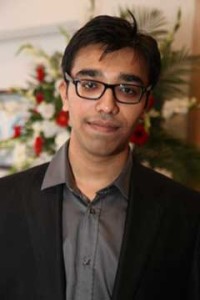
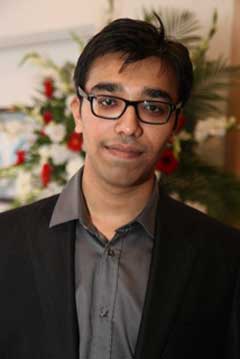
    Moiz Tundawala graduated from NUJS, Kolkata in 2005. He is currently pursuing his doctoral studies at London School of Economics.

    In this interview we speak to him about:

    • His routine, and how prepares for examinations
    • The shortcomings of the system in making education accessible to people with disability
    • Plans for the future

    Why did you decide to study law?

    In school my favourite subjects were history and political science. Never the less I wasn’t precisely sure what to do after my twelfth board exams. I had an offer of admission from the WB NUJS, and also Political Science in Xavier’s Calcutta. Eventually I decided to go for law primarily because I would get a wider array of choices. Looking at the courses on offer, I knew that the university would teach me the law of a diverse variety relating to the human engagements. As a result, I could avoid committing to anything particular and narrow down my career options. Now as things stand, I continue to still cater my interest in history and political science by aiming a specialization in legal history and public law. It all ended well for me and in retrospect, I think I made a pragmatic decision to go for law back in 2005 over Political Science that was been offered.


    What kind of study schedule did you follow?

    I am largely indisciplined when it comes to study schedules. It is just that I always let my interests and curiosity motivates me.


    How do you organise the entire activity of learning something, producing academic content and preparing for exams?

    I use a computer with a screen reading software called JAWS, and a scanner with another software called Kurzweil. I scan books, download articles and other materials, save them in different folders on the computer. I always make it a point to take notes in class, especially when I think that teachers are sufficiently well versed. To help produce academic content, am told there are softwares which do your in-text citations and build a bibliography. Am yet to try them though, but will hopefully do it very soon.

    On the substance side, I also make notes for every article, book and case that I read and deem important. While reading, I first look at mastering the core thesis and arguments, and then get down to focusing on matters of detail. Most important, is to keep writing, to oneself, for oneself, so that ideas are not lost, even if they be roughly developed.


    How did you write exams?

    When my sight started deteriorating, I started getting someone to write my papers. As in, I would dictate and the person would write. Second year of college onward, I switched to a computer.


    moiz-profile-picture-eAs a visually impaired student did you come across additional challenges, while studying in the law school?

    Yes, you keep coming across new challenges all the time. Most importantly, is getting access to the reading materials. Moving around in the library is also difficult. Asking for someone’s help to locate all the relevant books and the likewise. But, the folks in the NUJS library were extremely cooperative. Once I passed out due to deteriorating health, and they came up with an online electronic catalogue, which I think is very essential for a visually impaired student. Here in London, libraries are also sensitive to differential needs. I just have to write to them with the names of the books which I require, and the next time I go, someone from the staff fetches them for me. Mobility is another big thing. I have one regret looking back to my stint in NUJS, that I was not sufficiently confident to try moving around on my own. Had I been, law school would have been a much fun experience. Infrastructure will keep throwing difficulties, but I guess one must keep taking the initiatives to work around and also to get things done.


    Did you find the legal education system in general and your college in specific to be sensitive to the needs of the visually impaired students?

    The legal system as a whole is obviously not sensitive enough. The legal education in particular, is not sensitive at all because most important is to get materials in an accessible format, which is not available easily. Sadly, 90 to 95% of the books do not have an electronic edition yet. And scanning takes up a lot of your time and energy. Therefore, it goes without saying, this requires a lot of patience on your part. Every once in a while, if you are lucky, you do manage to get soft copies from here and there. My college was as co-operative as it could have been. They were the ones who encouraged me to switch to computer for the purpose of the exams. Library staff was also cordial and cooperative enough. Even teachers were sensitive to my requirements in the class. Especially, in my early days, some of them would just come up to me for a quick chat to figure out how I was getting along. This I think is very important. It is not always possible for a blind student who may find navigating the campus difficult to go to a teacher every time he or she is facing any particular issue. I was slightly daunted by the thought of reading so many cases and thick law digests. But, Dr. Sudhakar, a visually impaired professor of international law in NUJS, wisely advised me not to bother so much about all that, and that things would keep falling into place gradually. The knowledge that someone who has faced similar issues and has still ended up doing so well for himself really helped at that time.


    Would you encourage visually impaired high school students to pursue law?

    Yes, I would definitely encourage all the visually impaired school students to pursue law. As the system needs you more than you need the system. If law interests someone, come along, and do the legal system a favour. Enlighten other persons about the diversity within the society, the different problems which people confront, and the amazing things they are capable of doing in spite of all they go through. And yes, if you are not so sure what you want to do, law is sometimes a safe option.


    How can other visually impaired students increase their academic performance? Do you have any suggestions for this?

    I have nothing more to add apart from my own experience. Reading with vigour, and more importantly, thinking imaginatively. Furthermore, I think that if the teacher is good, paying attention in class would also be enough.


    What are your future career plans?

    Well am still not sure about it. At this moment, I am engrossed in my doctoral studies. There is still a lot of time to decide. But yes, a career in academics and research perhaps would be my preference. But I do not wish to rule out law practice altogether.


    What message would you like to share with our readers?

    Nothing apart from wishing all the visual impairments and other disabilities students, freedom from fear and inhibition and imaginative discernment.

  • Jeet Shroff, Associate, Allen & Overy, on judicial clerkship, and an LL.M from Harvard

    Jeet Shroff, Associate, Allen & Overy, on judicial clerkship, and an LL.M from Harvard

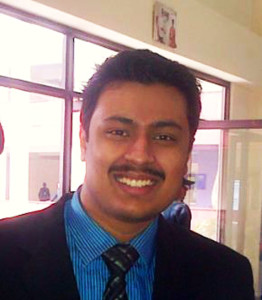
    Jeet Shroff graduated top of his class from GLC, Mumbai in 2010. Soon after graduating he joined AZB Partners as an Associate. In 2012 Jeet joined Harvard Law School where he pursued a general LL.M. and served as Senior Editor on the Harvard Business Law Review.

    He has now joined Allen & Overy’s international arbitration practice at its Hong Kong office.

    In this interview we speak to him about:

    • Studying at Harvard
    • Getting recruited at firms
    • Judicial clerkships


    jeet-shroffHow would you like to introduce yourself to our readers?

    I graduated from Government Law College, Mumbai in 2010. At GLC I won the Y.V. Dalal Prize ’10 awarded for the best graduating student and the Best Student Prize for the years 2006-07, 2007-08 and 2008-09. I had also served as student-editor of the GLC Law Review for all five years, won several national moot court competitions and assisted with the editing of Wadhwa’s commentary on Insurance Law. I interned with judges at the Bombay High Court and at the Supreme Court, with a senior counsel at the Bombay High Court and worked as a Para-legal at AZB & Partners, Mumbai while at law school. After graduating from GLC I accepted an Associate position at AZB where I worked on matters involving M&A and post M&A disputes, general corporate advisory, securities litigation and international arbitration.

    In 2012 I joined Harvard Law School where I pursued a general LL.M. and served as Senior Editor on the Harvard Business Law Review. I will now be joining Allen & Overy’s international arbitration practice at its Hong Kong office. I publish regularly in leading newspapers and journals in the country. My academic interests include the Legal Profession & Ethics, Corporate Governance, Corporate Social Responsibility, International Arbitration, Constitutional Law, Judicial Review and Constitutional Design Theory.


    Why did you decide to study law?

    I wanted to be a lawyer since my final year in school; but I wasn’t confident enough to pursue it because I had a terrible stammer and I was very bad at public speaking. When I got good grades in the 10th ICSE Board, I didnt have the confidence to back myself for a career in law. My parents wanted me to be a doctor and I went with their vision. I actually appeared for the Maharashtra medical entrance examination and thankfully, I did so badly that I would only have gotten a paid seat in a dental college in Aurangabad. My father wanted me to reappear for the exam. But by then I was sure I didn’t want to do medicine.So I decided to take up what I liked doing. I hadn’t appeared for any of the N-school entrance examinations and I could only apply to Mumbai law schools because they took you on the basis of the 12th HSC Board results where I had done fairly well. I lost my stammer in my second year at GLC after exposing myself repeatedly to public speaking in the moot court eliminations at GLC in my first year.


    What were your areas of interest during your graduation?

    I didn’t have any areas of expertise as such. GLC doesnt have any concentrations. I was deeply interested in Constitutional law and politics. I followed it up with moot court participation, law review membership, authoring articles, interning with judges at the Bombay High Court and the Supreme Court and generally reading up on it over and above course-work. That apart, I was interested in traditional court litigation, securities litigation and corporate disputes. I pursued an internship with senior counsel Mr. Janak Dwarkadas at the Bombay High Court, which I would rate as amongst my best experiences so far. That internship really inspired me to consider a career as an arguing counsel. Finally I was lucky to get placed at AZB where I ‘grew up’ in a sense because I spent my last year as student and the first two years as a full-time practitioner there and I think those years really shape you and teach you the crucial skills you need to imbibe when you have just started.


    What was your motivation behind doing an LL.M. abroad?

    I didn’t think the LL.M. in India would be of much use to me. It’s not as rigorous. It’s a two year program which I think is too long even if you aim to become an academic. And it’s not rated highly in comparison with foreign LL.M. degrees which are now par for the course given the volume of Indian lawyers that spend a year studying aborad. My motivation behind the LL.M. was to experience academic life at a top institution, acquire a US / UK degree which may have its uses in the future, qualify to practice in another jurisdiction and if possible, land a job with an international firm. I was looking to spend a year experiencing a different life and I hoped that this would in turn broaden my horizons and allow me to experience a different culture. I felt it would help me grow, professionally and personally.


    When did you decide that you wanted to do a Masters?

    I decided in my third year at GLC. I hoped to land a scholarship and in fact I turned down an offer from NYU in 2010 because it didn’t come with funding. I took loans to finance the LL.M. eventually.

    It is financially taxing and people question its efficacy given the cost. But if you plan to be a lawyer and if you are keen on studying further for whatever reason, the LL.M. is your degree of choice. That said, I can now think of other degrees that may be more useful for lawyers transitioning to a career in say policy-making, academia or management. But for lawyers with a thirst for further studies, I think there isn’t a substitute for the LL.M.


    How did you choose the universities that you applied to?

    I applied to the top LL.M. programs. That included Harvard, Columbia, Oxford, NYU, Stanford and Yale. These colleges pick themselves. They are acknowledged as top choices for the LL.M. and most are Ivy League as well. To this list I would add Chicago, U.Penn, Cambridge and LSE. I didn’t apply to a larger number of schools because I was working and simply didn’t have the time.


    Did you decide on a course first or the University first?

    I’d say I picked the University first because I wanted to pursue a general LL.M. with a focus on arbitration law, corporate law and constitutional law. Harvard, Oxford, NYU and Yale have excellent courses in each of these areas. Stanford and Columbia are better known for corporate law but since that was an interest area I sent out applications to these two as well. If I had had a specific focus such as say environmental law, I might have applied to Berkley as my first choice but I wanted the flexibility of a general LL.M. with the option of creating my own course structure and choosing how much I would take on in which semester.


    What did you study at Harvard?

    I pursued a general LL.M. with a focus on corporate transactional law, international arbitration law and constitutional law. I split my three semesters between these three areas. My course choices were a result of my interests. I wanted to learn US Corporate Law and litigation so I took up a course on Delaware litigation taught by Chancellor Strine of the Delaware Court. I wanted to try and work in the international arbitration space, hence a course on arbitration. And I have a deep interest in Constitutional law and politics which informed my decision to study the 14th Amendment and the Comparative Politics of Law by Duncan Kennedy.


    Tell us about the faculty and facilities.

    I’d rate my year at Harvard as the best one I’ve had so far. It was a vibrant, fulfilling, fun and demanding year that went a lot faster than any of us in the program might’ve wanted or anticipated. Its thrilling to take courses by professors who are that driven and that accomplished. The campus is beautiful and Cambridge town is very very student friendly. I’d do it all over again, despite the cost and the present exchange rate of the US Dollar.

    The faculty at Harvard is sterling. Although you take a restricted number of courses (a maximum of 27 credits), you have a chance of much wider faculty interaction because of your LL.M. paper. There are Research Assistantships that you can take up and there is the option of doing courses in other Harvard schools as well. The facilities are top class. The Law Library is an iconic building, stacked with books on every topic from every country. You are encouraged to use every facility on offer and there is a genuine sense of pride in how the library is organized and run. The recently constructed Wasserstein Center is obscenely well equipped for any conceivable student / academic need. But I think it’s the attitude that set Harvard apart. It was fantastic to be part of a culture that was incredibly open and liberal, intellectually engaged, so passionate and driven and yet, unfailingly courteous and polite.


    How was the Indian fraternity over there?

    The Indian community at Harvard isn’t that cohesive. There are too many of us to really feel the need to be tight-knit. The LL.M. batch had twelve Indians, the second highest number from any single country after China which contributed sixteen LL.Ms.


    How is the recruitment for overseas students?

    US recruitment for LL.Ms was poor in 2013. Most people landed temporary foreign associate positions – not permanent US attorney positions. Indians did particularly badly with only one student securing a foreign associate position with a top US firm. Of the seven who were looking for law firm jobs, only three managed to secure them. Unless you have over four years of work experience or a personal connection with a law firm partner, I suspect two factors determine your placement chances: 1) How much India work there is at that point in time, which is determined by the volume of big-ticket India deals and which in turn seems to be affected by the state of our economy; 2) Whether vacancies have arisen in the limited number of associate seats allocated for India-lawyers in top US firms. Connections and contacts always help, and in fact could be decisive in a market which isn’t too India-educated or India-enthused. Positions in New York’s dispute-resolution practices are hard to come by for any non-US lawyer.


    How was the academic schedule?

    The US LL.M. is a very flexible program. You can decide how rigorous or otherwise your year will be. I had a very rigorous year indeed – I was doing the maximum number of course credits allowed, editing a journal, serving as Research Assistant, authoring a Long Paper, applying for jobs and travelling the West Coast, New England and New York. Fortunately, I never felt overwhelmed because I had a great support network of friends.


    What about the accommodation?

    I stayed at North Hall which is one of the costlier on-campus dorms because it’s a hotel turned into a campus accommodation. It proved to be a good choice. Cambridge winters can be brutal and we found ourselves in the midst of one of the worst snowstorm in recent years. By the time Snowstorm Nemo was done with us, we had snow almost reaching the first storey of our dorm building. North’s heaters kept us warm and safe. It helped that many LL.M.s chose to live in North, turning it into the de facto LL.M. hub.I formed some close, lifelong friendships with my fellow residents there.


    Does the institute offer any scholarship?

    No, Harvard doesn’t have LL.M. or India specific scholarships. Most Indian students struggle to find adequate funding or scholarships. Inlaks, Sekhsaria and Tata scholarships offer partial and complete financial aid but it’s an uphill task.


    What does a paralegal’s role entail?

    (Jeet has worked at AZB & Partners as a paralegal for a while.)

    I’m not sure what role other para-legals played but as a para-legal I was given the opportunity of being involved in matters full-time and was basically treated as a semi-associate. The idea was to make use of the fact that I was at GLC and could attend office on a full time basis for the entire duration of the year save two breaks of six weeks. So I would end up doing research, drafting, client calls, counsel briefings as well as filing, making lists, indexing etc. I was very lucky that my internship with Mr. Dwarkadas led to my stint at AZB which in turn led to a placement at AZB once I graduated.


    Is the practice of hiring paralegals widespread in the Indian legal industry?

    I’m not sure what the trend is but I had certainly not heard of Paralegals until I joined AZB. I think it’s a great position and it’s especially useful for GLC students. Unlike N-schools, we are located ten minutes away from the Bombay High Court and from all the law firm offices, the college timings are 7 am to 10:30 am and its a two semester as opposed to a trimester system. All of this really helps GLC students work on a full-time basis even while we are still in our third/fourth year of law school and it’s the only way we can narrow gap with the N-schools which admittedly are far superior in terms of their teaching, batch quality and public perception. So as a GLC alumnus, I am a big supporter of this trend. It augurs very well for students from my college and I think firms might gain from it as well. If you have someone you have trained for one or two years before making her an associate, you already have someone who understands how a law firm works, has made all the connections with the seniors and partners and can integrate very easily.


    How was your experience as a judicial clerk?

    I clerked only with one judge at the Supreme Court actually. I clerked with two judges at the Bombay High Court. I think the most important thing I learnt through the clerkships was to understand how a judge’s mind works, what the pressures of the job are and what they are looking for. If you are a first generation lawyer, you tend to be a bit starry-eyed about the judicial office. I think the clerkships helped me place judges in perspective. If I do argue before a court, hopefully those stints might help me be a better counsel. I did them at the time because I was curious about how judges work.


    How can a law student apply for a judicial clerkship?

    The Supreme Court has a straight-forward application process where you send your CV through your college and the Registry places you with a judge who is willing to mentor a trainee. At the Bombay High Court too there is a similar process.

  • Tushar Kr. Biswas, Doctoral Candidate, NUJS, on getting published, and his passion for academia

    Tushar Kr. Biswas, Doctoral Candidate, NUJS, on getting published, and his passion for academia

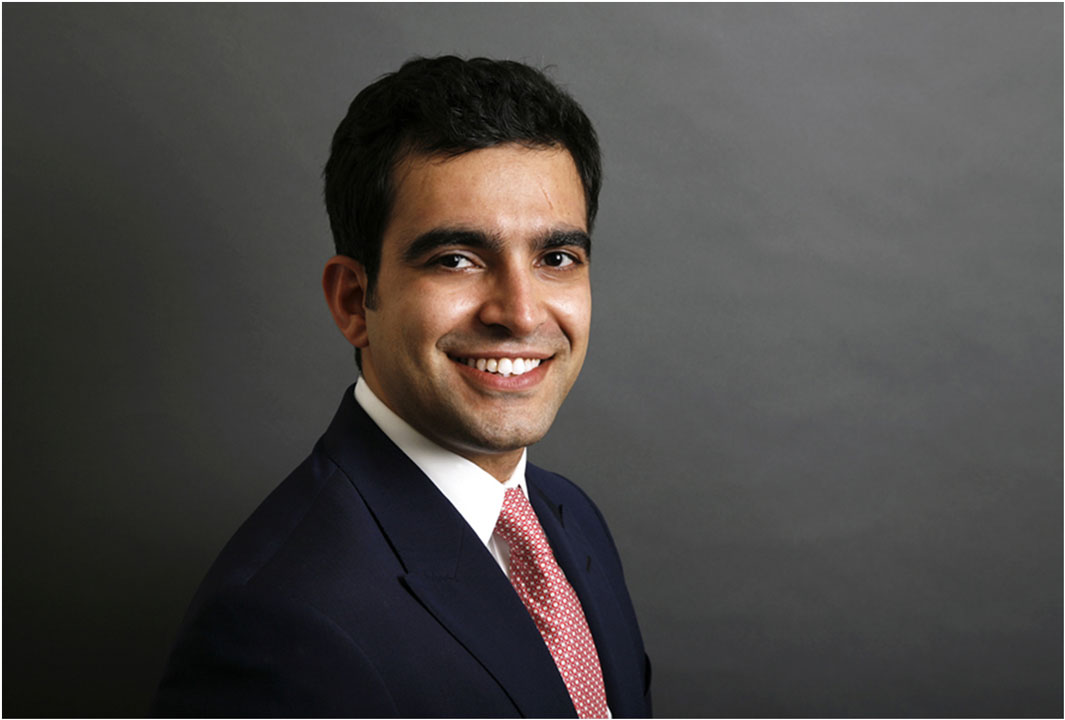
    Tushar Kumar Biswas is presently a Ph.D candidate at West Bengal National University of Juridical Sciences, Kolkata. He has numerous books and publications to his name, he therefore speaks to us about the importance of research in a lawyer’s life. He tells us how to identify a field of law to write upon and how to go about the tough task of finding and chosing a publisher for your book.

    Key takeaways:

    • How to select area of interest before starting to write
    • How to choose a publisher for your book
    • Importance of co-authorship
    • Importance of publications in legal career


    How would you like to introduce yourself to our readers?

    I am a PhD Candidate at the West Bengal National University of Juridical Sciences, Kolkata. I have studied at the International Academy for the Arbitration Law, Paris and The Hague Academy of International Law, Netherlands (Private International Law session). I am a member of the Young International Council for Commercial Arbitration (ICCA) and the Young International Arbitration Group (YIAG). I am a former Visiting Fellow at the Jindal Global Law School, Haryana, NCR Delhi.


    Why did you want to study law?

    I do not have direct descendants who are lawyers as my father is a teacher and grandfather was a doctor by profession. One of our close family associates who is a renowned lawyer motivated me to study law. To be honest, when I started to study law, little I knew that the horizon of the legal profession is so vastly expanded and there are numbers of things one could do which perhaps may not be possible in other professions.


    What were your areas of interest during your graduation?

    During my graduation, I developed interest in number of areas such as human rights law, information technology law, constitutional law and international commercial arbitration. I kept on reading a lot in these areas and subsequently wrote a number of articles in various world reputed journals. What interested me more is the conflict dimension of various and seemingly divergent branches of law, whether we are talking about human rights or commercial law.


    Did you do any internship during your graduation? Did you receive any assistance regarding this from your college?

    Yes, I did a number of internships right from lawyers’ chambers to the legal department of a company. I got assistance from the University only once and the rest of the time I applied on my own and got through.


    What was your motivation behind doing an LL.M.?

    I have done my L.L.M primarily to gain more knowledge of some specific fields that were of interest to me. However, it was also at the back of my mind that opportunities follow from every higher degree. I knew that this would open up an avenue for getting into academia without jeopardising other opportunities. I also got to learn a lot about legal research tools and presentation techniques in a way that complemented the research and practice skills I had developed through prior studies and work experience.


    Tell us about the process of getting published.

    As a student, I gradually started to gain interest in legal writing and was successful in publishing some articles. I frequently used to visit Prof. D.N. Bannerjee (Founder-Chairman of Central Valuation Board) who first generated the idea of writing a book. We had planned to co-author a book on property law, but eventually I started writing on my own.


    When did you start writing? How much time did it take?

    I started writing the book during my L.L.M studies. It took more than three years of full time effort to complete the task.


    Please give us the highlights of your best work.

    I have written a ‘Guide book on Good Governance for Law Institutes in India’ pursuant to my long standing association with the Institutes of Rural Research and Development (IRRAD). I had the opportunity to publish articles in some of the world reputed law journals such as International Company and Commercial Law Review, Sweet & Maxwell, London; International Arbitration Law Review, Sweet & Maxwell, London; International Sports Law Review, Sweet & Maxwell, London; Asian Journal of International law; Asia-Pacific Journal on Human Rights and the Law, Martinus NIJHOFF Publishers, (Leiden-Boston); The Computer Law & Security Review – The International Journal of Technology Law and Practice (Elsevier); Commonwealth Law Bulletin, London, the flagship publication of the Legal and Constitutional Affairs Division (LCAD); Journal of Medicine and Law, World Association for Medical law (WAML), Israel; Computer and Telecommunications Law Review, Sweet and Maxwell, London.

    I also got invited to join the team of authors for ‘European Encyclopaedia of Private International Law’ and presently I am editing a book on ‘Arbitration Law from Comparative Perspectives’.


    How did publishing affect your legal career?

    A career in law is all about research (if I am allowed to say so). If one can establish oneself as a researcher by publishing quality writings, it surely will have a positive effect in securing jobs not only in academia but also in other fields. Having said that, I want to see a day when the question is reversed, young lawyers are asking the question will we be able to keep on writing if we get into the job? The value of legal research exists independently devoid of other considerations.


    How do you identify and decide on a topic or area of law to write on?

    The identification process varies. For writing an article, one may choose to look at the conflicting decisions of various courts/tribunals in any particular area or conflict in theories and even one may consider doing situation analysis. Some may choose to write in an area where already plenty of works have been done and there is still scope of development whether from a different angle or same angle. At the same time, once sufficient knowledge is acquired, one may go for inter-disciplinary research.


    Is it a good idea to find a co-author?

    It depends. If you find someone who operates in your field, you may choose to do so, but the co-author must have the same sense and same understanding about the intended work. These can prevent any potential conflict. At the same time, there are some inherent practical risks of having a co-author such as the free rider problem.

    I wrote this book alone. However, I would not mind working with a co-author in near future.


    How does one find a publisher, and at what stage of writing?

    That’s a very good question. Finding a good publisher and convincing that publisher about the whole work is perhaps one of the most difficult tasks, especially if you are an emerging writer or just beginning your writing activities. This is because, unlike an established writer, the publishing house and more importantly the targeted audience would probably not know you.

    In order to find an appropriate publisher, one needs to do some initial research. However, it is also judicious to keep in mind the best available alternatives because there may be situations where your priority may not work out. One can approach the publisher either before finishing writing or after the completion of writing. However, if you are an emerging writer, it is always advisable to approach the publishers before you finish writing to alleviate avoidable risks.


    How did you choose one publisher over another?

    Well, it depends primarily upon the field of law you are writing on. There are some publishers who operate only in some selective fields and others may be operating in multiple fields. For example, if you choose to write on ‘Arbitration Law’, then probably ‘Kluwer Law International’ is the best known name in the legal world. Similarly, if you write on some other area, there you may choose to find some other reputed publishers operating in that field. However, merely choosing the best publisher is not enough. What is important is to deliver quality writings in the targeted field.


    Is there any success mantra that you follow which you would like to share with our readers?

    Dedication and hard work matter. From the point of view of a writer or a legal researcher, it is equally important to develop analytical skill along with these two elements mentioned earlier. However, in order to achieve success, it is important to analyze the constraints of getting success.


    Please find here a detailed article on how to get an ISBN Number.


  • Aishvary Vikram, Winner, BCI Moot, 2013, on being a 4th generation lawyer, his mooting experience, and plans for the future

    Aishvary Vikram, Winner, BCI Moot, 2013, on being a 4th generation lawyer, his mooting experience, and plans for the future

    Aishvary Vikram is a fifth year student of School of Law, KIIT University, specializing in comparative constitutional law. His team was adjudged  the best team at the 29th All India Inter University Moot Court Competition, 2013,  where he bagged the award for best speaker. He has participated in seven moots at the state and national level.

    In this interview he speaks to us about:

    • How to start preparing for moots
    • How to draft memos
    • His internship experience


    Why did you want to study law?

    Law was never my first preference but ultimately it became my last choice. For a science student there have traditionally existed only two career choices after class 12, either engineering or medicine. Despite being the 4th generation in my family with a formal training in law, I never got the opportunity to see the law in motion. My great grandfather was a lawyer who later became an MLA but I never got to meet him; my grandfather was a judge but his death prevented me from benefiting from his experience once I had joined law school; my father studied law but never practiced it, so I never got a chance to see what the practice of law is. People usually study law to enter into practice seeing their parents or relatives, and later end up in law firms. Or they are inspired by great legal luminaries, or fictional characters such as Alan Shore or Danny Crane (From the Boston Legal TV series), or at best they want to serve society. This was however not to be my story. I gave the entrance exams for law due to my father’s continuous insistence. Not being able to get through CLAT, I appeared for KLSAT and joined KIIT.


    What internships have you done so far? Did you receive any assistance regarding this from your college?

    My track record with internships is really poor. Lost in my own ideology to learn from internships rather than collecting certificates, I have spent a lot of time at BHU, the Allahabad University and the faculty of law library for which certificates were however not provided. Nevertheless, I have done a total of seven internships. Out of these internships, one was under an NGO in my first year, two in a district court in my second year, two in High Courts in my third year, one under Prof. Faizan Mustaffa, Vice Chancellor of the NALSAR in my fourth year and the last under a senior advocate in the Hon’ble Supreme Court in my fifth year. The college has always provided us with great assistance in getting internships and now it has opened various programs to provide internships to the students in accordance with the fields they are interested in.


    Which internship experiences will be right at the top and why?

    I have very little to say about my internships due to my inexperience. I find myself an incompetent person in this regard. However, as a piece of advice I would like to say that I have always disliked the working style in law firms due to the non-participatory nature of work where one is only asked to find the law and given no opportunity to relate it to the facts. Sitting on a chair the whole day and finding material is like being Google, which has never interested me (this is my personal opinion and people reading this, are free to discard it).
    aishvary-vikram


    Tell us about your mooting accomplishments.

    The first page of the BCI moot chapter started with a phone call from my friends Nitesh Ranjan and Navneet Sahey. Both were in college and were planning to take part in the 29th BCI Moot court competition. Unfortunately their third team member Satyabratha Das was at home, planning to come a little late due to her internships. The 29th Bar Council Moot was something I never planned for. Really, being in the fifth year, people don’t do this moot at this stage. But no other team was ready to do this moot as our vacations had just ended and the date for the open challenge was not suitable. So we made a plan to do this moot just to pass a month, as very little was there to study and our friends were not back from their internships. After the problem was released, we realized that it is far more difficult to research. We had actually done many moots earlier, but for the first time we realized how tough it is to research for four moot problems in a month. We divided the four problem in three groups— Nitesh Ranjan, the lead researcher was to deal with the first problem with Neha Tripathi, an additional researcher provided by our college, Navneet Sahey was to deal with the second problem with Vikash Chandra Shukla, another additional researcher, and I was to deal with the third and the fourth problem. This is how our memorials were prepared. The biggest contribution to our success was from our friend, Abhinav Gupta, who not only assisted us in drafting but did the formatting of the moot memorials, even though he was the convener of the First KIIT Conference on Intellectual property rights and Bikash Shaw, who was always there with us online, downloading the cases even when we were in MITS giving our orals. This moot was more than a moot; it was a litmus test for the bond of friendship we have. Knowing the fact that only participants will get the certificate, our friends as our additional researchers were always with us. The moot experience in terms of orals was extremely good. The teams we faced were well prepared. In preliminary rounds we faced Christ Law College; in he quarters we faced BHU; in the semis we faced NLSIU and finally we faced NLU Bhopal. All the teams were excellent and well prepared. This success wouldn’t have been in our hand if our lead observer, Akshay Rajpurohit was not with us. From printing the compendium, compiling it to bringing snacks and cold drinks, he was always there with us.


    What factors do you think contributed to this success?

    My senses are too weak to see the whole picture of support and contributing factors towards my success. My words of appreciation about their contribution would be such a small  description of their help that it will be an insult to the sources. Therefore, without specifically narrating all the assistance I got, I will generally thank my teachers and friends for always assisting me and my parents for always holding my hand.


    What separates a great memo from an average memo?

    I will give due credit to my law professors for this, as unlike traditional law universities, our professors have always prepared a course structure taking into consideration laws and practices of different countries to the extent that it doesn’t affect the basic structure. Specifically our Constitutional Law general and specialised papers conducted by Prof. Kumar Kartikeya has taken a further step by incorporating not only the foreign principles or case laws referred to by the Indian judges but has designed the structure in such a way so as to give us a short idea of the constitution in four countries, namely US, Australia, India and unwritten constitution in UK. Due to this comparative approach it was easier for us to research and find case laws and statutes in various countries. If one refers to our memorial, specifically the third and the fourth memorial, one would find foreign case laws and doctrine, which I failed to find in the memorials of other teams in the semi-finals and finals.


    Speaking skills or knowledge of law, what is more important?

    It is important to marry the two. The knowledge of law is like an armour which one may use to protect his case while, speaking skills are a spear to rupture the judges’ sarcasm and leave a long time impression on a judge’s mind.


    When you get the problem, what is the first thing you would do?

    Read it (I believe this satisfies this question literally), but on a purposeful note, one should read the problem until he is aware of the purpose of each and every single line. It may happen that a part of the problem may seem to be introduction, but later on one realises that even though the particular fact instigates no law finding but, is of peculiar importance to support the formulation of arguments or argues on the basis of the fact.


    Share your formatting secrets. 

    A mooter must prepare multiple arguments amalgamating reason and logic. Prepare multiple arguments, so that you may never run out of options. Using rational and convincing arguments with the spirit of law is of utmost importance. Instead of quoting a number of case names or details of the cases and presenting a thesis, one must try to formulate reason, practical and theoretical as to why his argument must be accepted by the court. I have seen people whose memorials consist of hundreds of cases and thousands of authorities but lacks reason or logic. Merely taking a particular statement from various books without knowing the reason or its relevance is of no use. If one may cast a look on best memorials in international moots, one will find my observations true.


    Why is mooting important? 

    Actually, I have not yet tasted the flavour of advocacy so I hardly know how it will contribute to my skills as a lawyer. Mooting has been an accident for me. When a colleague could not make it to a moot, my best buddies Vikash Shulka and Abhinash Barik approached me and convinced me to moot with them. So from the first year itself our mooting started and slowly it engulfed me in its charms and beauty. From first year till now, we have done a number of moots. The incentive to start off my mooting carrier goes to my friends but the continuation of this goes to my seniors and my parents who were always there to help me and always motivated me to carry this extra load.


    What is your opinion on your intra-college mooting system? 

    The intra moot court system in our college is really good. Thanks to my friend Abhinash Barik, my teachers, Asst. Prof. Kasturi Bhagat and Asst. Prof. Kumar Kartikaya whose imaginative thinking has brought various changes to the system of mooting. There is no favouritism, nor can anyone dominate the moot court society and this includes the Director as well. The moot court competitions are divided into two segments, all national moots except the Bar Council of India and B.R Sahany moot are allotted according to the results of the intra moot court competition and the international moots and the two moots listed above, are open to open challenge. The transparency and student welfare is the fabric of our moot court society, which leaves me with no comments for improvement.


    If I have never mooted in my life, but I want to, how should I get started?

    Getting started is really simple as there is no competitive written exam which one needs to qualify to call oneself a mooter. Trying out for national or international moots is also mooting, but continuing the academic practice of mooting is very difficult, as there is always a tilt towards running away from the extra burden a student has conferred upon oneself. Every attempt may not bear a fruitful result and add to that, the extra burden of college good reputation which is a constant pressure for the team, which may bring efficiency but in many cases forbids creativity. One has to have a strong determination if he so intends to enter into the arena of mooting and use his creativity, as judges in various moot courts are not always looking for the case laws in support but the extent of artistry and understanding of law that has been put to the problem. Further, one thing must be really clear before one even attempts to call himself a mooter that mooting is not always among the equals, there is no Article 14 application here. It has always been between students irrespective of their institution, quality of teachers and extent of their support, the year in which one is, no consideration is given to these facts. The thing which every mooter possesses is the moot problem, the library and his creative mind which one has to solely amalgamate and, support of teacher may serve as a catalyst but can never be the basic foundation.


    How important is the role of a researcher in a moot team vis-à-vis the speakers?

    Well, in our team, all were researchers seven days prior to the moot and it is only after the preparation of the memorials that we decide who all will be the speakers. The role of speakers and researchers are equally important but I also feel that speakers have a slight edge above the researcher in oral presentations and in sharing the fame, if they so win a moot. There is no “I can do better or it’s not good for me” game in mooting, there is always “What is good for the team and who can better serve the team in orals.” It’s very rightly said that if one wants to travel faster he may run alone but if one wants to survive longer, walk with someone– try to apply this in mooting as well.


    What message would you like to share with our readers?

    My inexperience and little knowledge will to some extent make my views premature and short sighted but nevertheless, some of the things I learnt are:

    1. In moots don’t go for law in the strict sense, always try to use creativity and imagination, don’t see the judgement but look behind the judgement and try to focus on jurisprudence than on case laws.
    2. Prepare the brief and arguments and take notes of the judge’s name and para number to some extent, to show your level of preparation.
    3. Try to formulate multiple arguments for the same proposition.
    4. Avoid difficult words.
    5. Show respect for the judges but no flattery.
    6. Be confident and never emphasise on a wrong proposition for the sake of argument.
  • Nima Heydarian, Founder, Indianlawyers.net, on the need to modernise the legal industry and his passion for technology

    Nima Heydarian, Founder, Indianlawyers.net, on the need to modernise the legal industry and his passion for technology

    Nima Heydarian is a Controls Engineer in the Oil & Gas industry with an electrical engineering bachelor’s degree from Purdue University. He has been developing websites and applications on the side for the past eleven years. In 2010, he started a new business called “Heritage Law Marketing” focused on marketing the services of the attorneys based on their heritage background, international practice areas and languages that they speak. He has been developing an online marketplace through which one can reach out to Indian lawyers worldwide, Indianlawyers.net.

    In this interview, we speak to him abut:

    • His project and its importance
    • The challenges faced by him
    • How lawyers will benefit from Indianlawyers.net


    nima-hHow did you decide to start a project related to the legal industry?

    I am Iranian. About seven years ago when I was in college I built the website, IranianLawyers.net, to list Iranian lawyers and help them connect with the Iranian community. I built the website as a hobby and completely free of charge. At the back of my mind, I also believed that this could one day be a serious business because I would be addressing a very real need in the market. Also lawyers of other ethnicities are a demographic largely overlooked by the larger legal marketing firms.

    From the beginning my goal was to turn Heritage Law Marketing into a large legal marketing firm so I had to build a solid platform and a set of the tools focused on long term growth. That required time and a decent amount of investment neither of which most senior electrical engineering students have. I graduated college in December 2009 and started the business in March 2010.


    To anyone who’s never come across ‘Indianlawyers.net’, how would you describe it?

    It’s a directory of Indian attorneys around the world. We publish legal articles pertaining to the Indian community. We are working on a ranking system to rank Indian non-corporate law firms in India and elsewhere. We also plan to host various “Indian Legal” events around the world.


    Could you explain your business model to our readers in layman terms?

    Attorneys pay to be included in our directory and we help them connect with clients seeking their services. We also sell legal marketing services such as Adwords, SEO, Web Design, etc.


    What have been some of the challenges?

    The biggest challenge so far has been to stand out among the abundance of the legal directory websites that are out there. We are going to be much more than just a directory and need to do a good job of conveying that message to attorneys who get bombarded by ads from different directories every day.


    How did you go about creating the technology behind the product?

    I did as much of the programming myself to save money but for the more complicated and delicate parts of the script I hired the best programmer I knew from around the web. He wasn’t cheap but the results are obvious in how user friendly, fast loading, and solid the website is.


    What kind of growth has ‘Indianlawyers.net’ seen since its launch?

    I spent the first 3 years mostly building the platform so we didn’t have much growth during that time. Right now I am offering the listings to about 100 select attorneys free of charge to test features of the website, so that I can get feedback, and generate word of mouth advertising. I hope to have 100 attorneys listed with us by end of 2013.


    Any major learning you would like to share with our readers?

    Finding the right people and right team is much harder than it seems.

    What kind of lawyers would benefit from joining the portal? Why should they join it?

    Individual lawyers and small law firms would benefit the most because the legal clients we send to lawyer are mostly individuals, families and small businesses.

    How are you marketing Indianlawyers.net to lawyers?

    I am using a host of different methods right now including social media, article marketing, banner advertising, direct mail, print advertising, etc. I am trying to use as many weapons out of the book Guerrilla Marketing Weapons by Jay Conrad Levinson as possible.


    What message would you like to share with our readers?

    The legal industry in India is old and in need of modernization. Let’s work together and make it happen. I am happy to work with anyone else who is looking to leave an impact on the legal industry in India through the use of technology.