Author: Rounak-B

  • Pranav Khatavkar, Advocate, on legal research acumen, founding a law journal, and authoring a commentary on the Insolvency and Bankruptcy Code, 2016

    Pranav Khatavkar, Advocate, on legal research acumen, founding a law journal, and authoring a commentary on the Insolvency and Bankruptcy Code, 2016

    Pranav Khatavkar completed his B.B.A. LL.B. from Symbiosis Law School, Pune in the year 2015 and his area of specialization is business law (dispute resolution as well as advisory). In pursuance of the same, he has obtained additional qualifications in Mergers & Acquisitions, Investment Laws and Corporate Finance from ASCL Law School. He has also obtained the Securities Intermediaries Compliance (Non-Fund) Certification and Issuers Compliance Certification from National Institute of Securities Markets. Further, he has completed a summer school on International Financial Law and Regulation from the London School of Economics and Political Science, United Kingdom (LSE).

    Pranav’s stellar academic and research credentials are evident from his publications in nationally and internationally renowned journals like Symbiosis Student Law Review, Plebs Journal of Law, International Journal of Legal Sciences and Research, World Journal on Juristic Polity, International Journal of Law and Legal Jurisprudence Studies and International Journal of Legal Research. He has also penned India’s first commentary on the Insolvency and Bankruptcy Code, 2016.

    Pranav also has a very well rounded internship exposure. He has interned at prestigious law firms such as Juriscorp, Trilegal, Economic Laws Practice, Lakshmikumaran&Sridharan and the then AmarchandMangaldas Suresh Shroff& Co. (Now known as Cyril AmarchandMangaldas). He is also the only candidate from his batch to have secured an internship at India’s capital markets regulator (i.e. Securities and Exchange Board of India) and India’s banking sector regulator (i.e. Reserve Bank of India).

    He is also the founding editor of International Commercial Law Review and the erstwhile President of the India Chapter of Network for International Law Students.

    In this interview, he speaks about:-

    • His law school experience
    • Role of grades in one’s career
    • Attending a summer school at the London School of Economics and Political Science
    • His decision to become a commercial lawyer
    • His experience of penning India’s first book on the recently enacted Insolvency and Bankruptcy Code, 2016 and founding a law journal.
    • Pursuing additional qualifications and clearing the compliance module offered by the National Institute of Securities Markets in the first attempt.
    • His take on the All India Bar Examination(AIBE) and enrolling for Bar Hacker.


    HOW WOULD YOU LIKE TO INTRODUCE YOURSELF TO OUR READERS?

    Professionally speaking, I am an independent legal professional based out of Mumbai specializing in commercial law (litigation as well as advisory). I am also retained as a Counsel at M/s Synlitigators. Otherwise, I am an unassuming person experiencing life as it unfolds itself to me.


    PLEASE TELL US SOMETHING ABOUT YOUR TIME AT LAW SCHOOL.

    Law school for me was a period of tremendous personal and professional development. I was shaped by my experiences. My primary and only focus during my law school days was to find a practice area to specialize in. In pursuance of the same, I read several books, engaged in industry oriented research, networked with people from the industry, pursued additional qualifications and interned at different places. My experiences allowed me to tap into a catena of perspectives that helped me arrive at a decision regarding my practice area and simultaneously build a network.


    HOW IMPORTANT A ROLE DO YOU THINK GRADES PLAY IN SHAPING ONE’S CAREER?

    In my opinion, grades assume relative importance (largely in the short term) which depends to a great extent on the set of circumstances you find yourself in. I believe grades play an important role in the following circumstances:-

    While applying for jobs as a fresher – Majority of the top law firms and companies (including quite a few mid-tier ones) (I collectively refer to them as “companies”) that recruit law graduates either through college placements or otherwise often enlist grades as one of the several criteria while short listing candidates for a job. As unfair as it may sound to other candidates who don’t have impressive grades but shine in other aspects (many of them actually do), companies have a valid reason to do this. Companies are also fully aware of the fact that grades don’t necessarily reflect a candidate’s merit and ability but they still use that as a criterion to shortlist candidates simply because they do not have the time and the resources to review each job application on merits as their primary concern is running the company and generating revenue. Recruitments are only one of the several aspects that come into the picture while running a company. Companies in order to reduce their time and effort in recruitments, use grades as a yardstick to shortlist candidates. Furthermore, seen from the viewpoint of the company, ultimately, they are going to make an investment of their time and money in you if they hire you. Hence, by using grades as a yardstick, they also gauge your consistency and motivation to perform. So if you are keen on working with a good company, then, yes, grades are important and especially if you come from a law school that does not feature in the popular rankings. Yes, companies also look at the ranking of your law school. While answering this question, I am categorically excluding those candidates who have strong industry connections using which they often get placed at top companies. I am addressing the concerns of the larger pool of unconnected candidates here.

    While applying for the LL.M. Program – Candidates who are keen on pursuing the LL.M. Program especially from well-established international universities need to have good grades. Since these are primarily academic institutions, it is obvious that they would demand stellar academic credentials from the applicants. Further, even National Law Schools (which I believe are the only places that offer a decent LL.M. Program in India as of date) select candidates for the LL.M. Program on the basis of their performance in the Common Law Admission Test (CLAT) that is designed only for the LL.M. applicants. So with respect to further education, academic performance is very important.

    I conclude this point by saying what I said earlier in this answer. Grades assume relative importance largely in the short term which is further dependent on your set of circumstances at the relevant time. As far as your job prospects as a fresher are concerned, look at your grades as an access pass to enter the job market. Once you are in, then you are on the same footing with everybody else in the market. In order to differentiate yourself then, you have to only focus on delivering results. This applies even to those candidates who secure jobs through references. Ultimately, the industry evaluates you on your individual merit and credence irrespective of your background and connections.

    As far as the long term is concerned, your grades don’t necessarily matter. Then it is only your work that largely speaks for itself. Nevertheless, seen from a holistic perspective, your long term also comprises of several short terms (including your short term time duration as a fresher wherein your grades matter which might influence the subsequent short terms and ultimately your long term if you were to connect the dots). Sounds contradictory and confusing, doesn’t it? Believe me, it’s not.

    To clear this apparent contradiction and confusion, I will just say that you should try your level best to get good grades but at the same time not get bogged down if you aren’t able to achieve the desired score. Give it your best shot and leave the rest to the circumstances. Remember – circumstances no matter how good or bad they appear to be, always change. Nothing stays. Control what you can, manage what you cannot.
    pranav-khatavkar-2

    HOW WOULD YOU DESCRIBE YOUR SUMMER SCHOOL EXPERIENCE AT LSE? WHAT MADE YOU DECIDE TO CHOOSE IT AND WOULD YOU RECOMMEND IT TO OTHER LAW STUDENTS AND LEGAL PROFESSIONALS?

    I wanted to enhance my understanding of the jurisprudential foundation of Indian financial law. Since Indian financial law draws heavily from its British counterpart, I attended a summer school at LSE to study UK financial law and regulation. I had a fabulous time studying at LSE and exploring UK generally. I also learnt a great deal about myself and became more independent. I would certainly recommend attending LSE’s summer school to all law students and legal professionals (subject to your feasibility).


    WHY DID YOU ELECT TO BECOME A COMMERCIAL LAWYER? WHAT KIND OF WORK DO YOU DO?

    I support my decision for becoming a commercial lawyer (focusing specifically on commercial litigation and arbitration) on the basis of two averments. First, this field is dynamic and vibrant. Every matter exposes you to a new jurisprudential or a practical aspect of commercial law that you cannot fathom otherwise. Hence, the scope for learning is actually unlimited. Second, there are tremendous growth prospects in this field as there is a huge demand for legal professionals who demonstrate a sound understanding of the legal aspects of business and commerce. Once established, sky is the limit.

    After graduation, I worked at a mid-size law firm for a year before migrating to individual practice. My work now largely involves the following:-

    • Representing banks, financial institutions and corporations before the Bombay High Court, Debts Recovery Tribunal and Debts Recovery Appellate Tribunal.
    • Drafting pleadings and applications in law suits and researching on different aspects of corporate/commercial and bankruptcy law.
    • Advising and representing clients in commercial arbitrations.
    • Advising clients on pre-litigation strategy and procedure.
    • Briefing counsels in various litigation and arbitration proceedings.


    HOW WOULD YOU DESCRIBE YOUR EXPERIENCE OF HAVING INTERNED AT THE TOP LAW FIRMS AS WELL AS THE GOVERNMENT ORGANIZATIONS TOO WHERE YOU HAVE GAINED A WORK EXPERIENCE?

    (Pranav has interned with Juris Corp, Trilegal, Economics Laws Practice, Lakshmikumaran & Sridharan and Amarchand Mangaldas Suresh Shroff & Co, now Cyril Amarchand Mangaldas, on the one hand as well as with the Reserve Bank of India and the Securities Exchange Board of India on the other.)

    I interned at law firms specializing in commercial law firms with the primary intention of exploring the practical aspects of commercial law and subsequently taking a call with respect to narrowing down on a practice area. My law firm internships gave me an opportunity to work on a variety of commercial law matters (research as well as drafting). My internships at SEBI and RBI gave me a first-hand exposure to financial regulation. My overall internship exposure gave me tremendous insight in terms of industry operations.


    WHAT IN YOUR OPINION IS THE APPROPRIATE WAY FOR ONE TO CHOOSE HIS/HER AREA SPECIALIZATION WHILE AT LAW SCHOOL? WHAT VALUE ADDITIONS DO THESE DIPLOMAS AND ADDITIONAL QUALIFICATIONS OFFER?

    (Pranav has secured diplomas in Corporate Finance, Securities Law, Investment Law and Mergers & Acquisitions. In fact he had pursued his diploma degrees at a fairly early stage of his law school tenure when most others remain undecided about where they want to go.)

    I will first answer the last part of your question that broaches the value additions offered by these diplomas. The academic structure of most of these diplomas offered by other reputed institutions is usually designed after consulting industry experts; for e.g. the Business Law Diploma offered by iPleaders. Although I haven’t done the course as of now, but on the basis of the reviews that it has received and more importantly on the basis of my perusal of the sample study material that is available in public domain, I can say that the insights one will gain after doing a course like this, will certainly benefit him/her in practice which I believe is what ultimately matters.

    With all due respect to the prescribed law school curriculum, I am constrained to say that it is largely theoretical rather than being practical. While I don’t dispute the importance of theory, but I do emphasize the importance of putting theory to practice and therefore recommend a more practice oriented curriculum. Practice not only tests the veracity of theory, but also brings to light issues which have not been previously considered by theory. The investment of money and more importantly the time in law school should yield returns in one’s career. Hence, I recommend pursuing additional qualifications while managing the law school curriculum to expand one’s horizon.

    I believe, a law student should select his area of specialization on the basis of the following considerations:-

    • Existing and estimated growth rate.
    • Demand-supply specifics from an industry standpoint.
    • Existing and prospective competition one can or will encounter.

    pranav-khatavkar-1


    YOU ALSO HAVE A FAIR SHARE OF LEGISLATIVE DRAFTING AND RESEARCH EXPERIENCE. HOW WILL YOU DESCRIBE YOUR EXPERIENCE WITH THE SAME?

    (Pranav was awarded the Best Contributor Award for making concrete recommendations to the Prevention of Sexual Harassment of Women at Workplace Bill, 2010 as a part of Legislative Analysis Project undertaken by a Member of Indian Parliament from the Upper House, Government of India, Mrs. Vandana Chavan)

    My limited legislative experience exposed me to the issues surrounding regulation and governance. I saw the law from the law maker’s eyes and got an iota of an idea of the considerations that influence the law making process. The insights that I derived then, armed me with tremendous perspective on interpretation of laws and more importantly discerning the legislative intent.


    WHILE ATTENDING LAW SCHOOL, YOU ALSO TOOK THE INITIATIVE TO ATTEND SEVERAL WORKSHOPS AND TRAINING PROGRAMS. WHAT WAS YOUR MOTIVATION BEHIND PARTICIPATING IN THESE WORKSHOPS AND TRAINING PROGRAMS?

    My primary motivation behind attending these workshops and training programs (I collectively refer to them as “programs”) was to first gain industry insights and second build a professional network. I attended these programs at the Bombay Stock Exchange and Institute of Company Secretaries of India’s Centre for Corporate Governance Research and Training. These workshops largely covered the practical aspects of securities law, debt restructuring and banking law.


    YOU HAVE AN ENVIABLE TRACK RECORD OF EXTRACURRICULAR ACTIVITIES (BOTH WITHIN AND OUTSIDE LAW SCHOOL). HOW DID YOU KEEP A BALANCE BETWEEN EXTRACURRICULAR ACTIVITIES AND LEGAL STUDIES?

    (Pranav was a Core Committee Member of the Corporate Law Cell of Symbiosis Law School, a Pro Bono Legal Aid Volunteer for Helping Hands, a Non-Governmental Organization and the Founder& erstwhile President of the India Chapter of Network for International Law Students)

    When it comes to pursuing extra-curricular activities, time management is the key. One has to intelligently allocate his/her time to all activities that he/she intends to pursue. I used to keep a diary (and I still do) to plan and execute my itinerary for the day. This helped me to keep a track of my time and navigate my day smoothly. Extracurricular activities were a welcome break for me from my usual academic routine as a law student then. I saw it as an opportunity to network and step out of my comfort zone.


    YOU HAVE AN IMPRESSIVE RESEARCH PROFILE AS THE SAME IS EVIDENT FROM YOUR MULTIPLE PUBLICATIONS IN REPUTED LAW JOURNALS. WHAT ACCORDING TO YOU ARE THE MOST IMPORTANT ASPECTS OF AUTHORING RESEARCH PAPERS AND HOW DID THEY ACTUALLY HELP YOU IN YOUR CAREER?

    (Alongside publishing in reputed law journals such as Symbiosis Student Law Review, Plebs Journal of Law, International Journal of Legal Sciences and Research, World Journal on Juristic Polity, International Journal of Law and Legal Jurisprudence Studies and International Journal of Legal Research, you have also published three blog posts on the iPleaders Law Blog. Please comment as to whether any specific reason inspired you to write particularly for the named blog.)

    I believe that academic research is the best way to expand one’s understanding of a particular subject. It’s almost like completing a mini-Ph.D. on the subject. The hours that you spend doing literature review and empirical research refine your interpretation and research skills, something which all lawyers need irrespective of their field. Further, it helps you gain expertise in a particular sector; something which both employers and academic institutions appreciate. Lastly, it does add a line in the publications section of your CV. The best part, however, is the immense joy you feel if someone else cites or relies upon your research in his/her research. It makes you feel that your efforts have truly fructified.

    As far as my blog posts on the iPleaders Law Blog (“Blog”) are concerned, I chose to publish my blog posts on the Blog because of its fantastic readership and subscription. The quality of blogposts that are published on the Blog is of a superior quality and practically relevant. Further, in the light of the market standing of I-Pleaders, any association with them is certainly beneficial. Hence, I chose the Blog to publish my articles.


    WHAT PROMPTED YOU TO FOUND A JOURNAL SPECIFICALLY FOCUSING ON COMMERCIAL LAW?

    (Pranav has founded the law journal International Commercial Law Review while managing his job at the same time as well as secured top legal professionals and academicians to be part of the Advisory Board of the Journal.)

    Peer contribution provides tremendous insights and fresh perspective. This has been my primary motivation behind founding the ICLR. I look at ICLR as a platform where one can put forth his/her ideas and at the same time get recognised for the value additions that he/she makes. Lastly, legal editing has always been a pleasure and a privilege for me. The kind of intellectual enrichment one gets through legal editing (or any type of editing for that matter) cannot be reduced to words.

     

    pranav-khatavkar-3

    YOU HAVE ALSO RECENTLY AUTHORED A BOOK TITLED COMMENTARY ON THE INSOLVENCY AND BANKRUPTCY CODE, 2016 (DECODING THE LAW OF INSOLVENCY AND BANKRUPTCY) WHICH IS THE FIRST BOOK IN INDIA ON THIS SUBJECT. PLEASE COMMENT ON THAT.

    I had been following the Insolvency and Bankruptcy Code, 2016 (“Code”) since it was a Bill as I knew that this Code would be a complete game changer once implemented. While I did not have any ambition to set a record by writing the first book on the Code, I will say that it happened rather intermittently. So, once the Code was passed by the Parliament (i.e. on 11th May 2016), I foresaw a demand for some intellectual material on the Code (since you cannot rely only on the Bare Act). Before I undertook the task of penning the book, I made some enquiries myself. I asked around if any book has come up or whether any book is coming up to which everybody replied in the negative. So, that’s where the thought to pen the book set in. I thought that if nobody had written or was writing a book on the Code then why could I not do it myself. At least, that way, I knew I was setting a foundation by providing some literature on the Code for everyone’s benefit. This was my impetus to penning the book.

    I penned this book while being employed at my erstwhile workplace. Managing my job and penning the book was indeed a task for me. I had to comply with the publication deadline and underperforming at work or taking a leave from office wasn’t an option that I had kept open for myself. So, I burnt the midnight oil. I mean literally. To be honest, there were several occasions while penning the book when I did not know as to where I was headed or what my effort would result into. I had to sacrifice time with family and friends. This caused a lot of upheaval and discontent amongst them. I still persisted nevertheless as I knew I had to comply with the publication deadline come what may. Then came a time when I let go all worry and anxiety with respect to the result and thought of focusing only on penning the book and more importantly the content. I realized deeply that I can only control my inputs and not the result. I was mentally prepared to face both praise and humiliation with respect to my book. Thankfully, it was received well and it got decent reviews.


    WHAT ACCORDING TO YOU SHOULD A LAW STUDENT CONCENTRATE ON DURING HIS/ HER TIME IN LAW SCHOOL IN ORDER TO BECOME A GOOD LEGAL PROFESSIONAL AFTER GRADUATING FROM LAW SCHOOL?

    A law student’s first priority in law school should be to find a practice area at the earliest. I have earlier in this interview enlisted the criteria one should consider while zeroing down on a practice area. Once you have identified your practice area, 50% of your job is done. The remaining 50% of your job is to refine your knowledge and skills with respect to the practice area of your choice. Second, time management is the way ahead. I have seen many law students (including many of my batch mates) totally waste their time doing counter-productive activities. While I do not judge them, as it is a matter of personal choice, I do say that what you sow is what you reap (cause and effects). The law is infallible. You can’t do the same thing over and over again and expect different results. Third, learn to look at the larger picture. I have seen many law students remain stuck up over trivial things and completely miss out the larger scheme of things which is nothing but their own long term career interests.


    AFTER GRADUATING, YOU COMPLETED THE ENTIRE LEGAL COMPLIANCE MODULE OFFERED BY THE NATIONAL INSTITUTE OF SECURITIES MARKETS. WHAT PROMPTED YOU TO ENROLL FOR THIS AND HOW DID YOU MANAGE TO CLEAR THIS MODULE IN THE FIRST ATTEMPT WHILE MANAGING YOUR JOB?

    Commercial law does not operate in isolation. There are several other areas of law and finance that intersect. In order to bring about a more balanced approach while pursuing a career in commercial law, I chose to pursue the legal compliance module offered by the National Institute of Securities Markets (NISM). Pursuing the module gave me exposure to the legal and financial compliances applicable to the issuers and the intermediaries in the securities markets. You don’t have to be super intelligent to clear the NISM examination. All that it takes is preparation and practice. I used to study over the weekends and appear for mock examinations during the weekdays (before and after office hours at home).


    YOU RECENTLY CLEARED THE ALL INDIA BAR EXAMINATION (AIBE). WHILE PREPARING FOR THE SAME, YOU ALSO ENROLLED FOR THE BARHACKER PROGRAM OFFERED BY iPLEADERS. HOW WAS YOUR EXPERIENCE WITH BARHACKER? WOULD YOU RECOMMEND IT TO OTHER AIBE ASPIRANTS?

    Many people assume that since the All India Bar Examination (AIBE) is an open book exam, it can be cleared without any preparation. In reality, it’s otherwise. Although the AIBE is an open book exam, people often forget that it is a time bound examination and most of the questions that are asked are application based rather than being direct. Also, the syllabus is vast. For e.g. in the AIBE that I appeared in i.e. AIBE IX, the Environmental Law component was valued for only 5 marks. What this actually meant was all that acts, rules and regulations covered under the Indian Environmental Law would carry 5 marks out of which the Bar Council of India can ask a question on anything and I mean anything under the scope and ambit of Indian Environmental Law. Like this, there were other areas of law that more or less carried proportionate weightage in the paper except for Cr.P.C and Contract Law (which are again vast subjects). Statistically speaking, about 37% candidates failed the AIBE in 2012. So, it certainly isn’t an easy examination. Like any other competitive exam, you need to prepare and practice over and over again in order to crack it in the first attempt.

    Many newbie lawyers who join the legal profession get caught up with office work which leaves them with no time to prepare for the exam. That’s exactly where a course like BarHacker adds value. The course has a result oriented approach and team iPleaders ensures that you are equipped with the best tools to clear this exam. If you religiously follow their tips, techniques and study methods, chances are that you will clear the AIBE in the first attempt. I give full credit to BarHacker for my AIBE result and, yes, I recommend this course to all AIBE aspirants.


    WHAT FINAL PIECE OF ADVICE DO YOU WANT TO PASS ON TO THE READERS?

    Believe in yourself and make the most out of every moment. Use your time wisely and never lose sight of your goals.
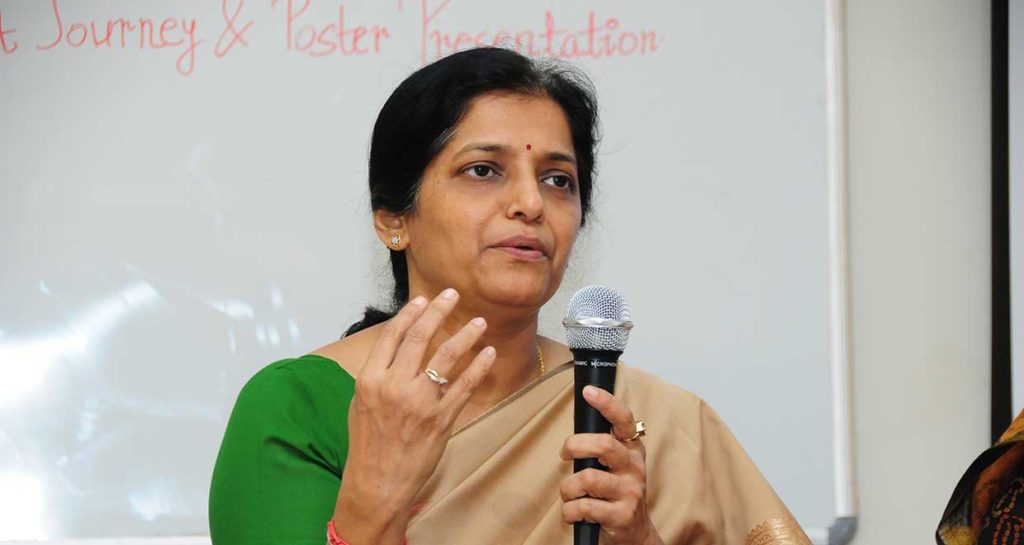
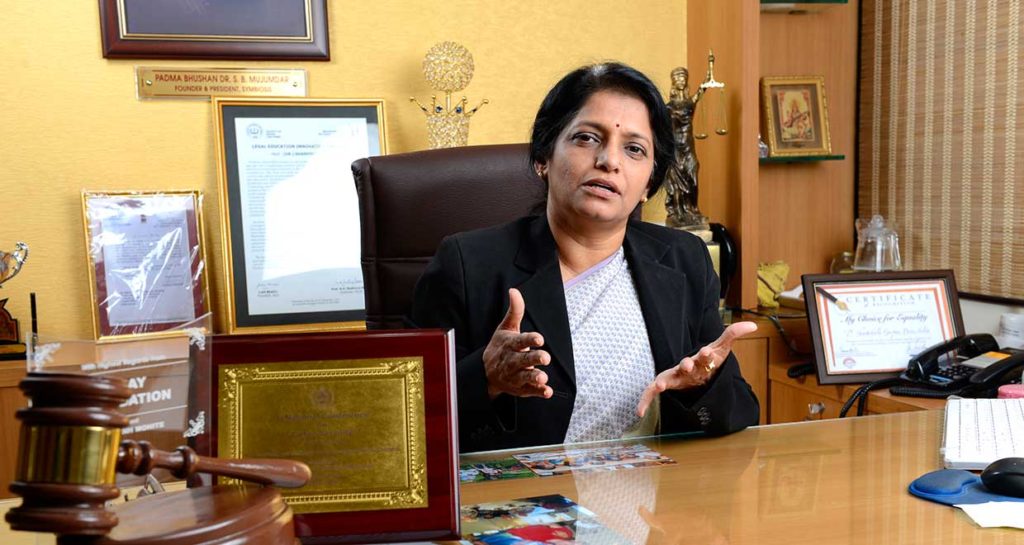
  • Shashikala Gurpur, Director, SLS Pune on choosing academics, securing scholarships and higher education

    Shashikala Gurpur, Director, SLS Pune on choosing academics, securing scholarships and higher education

    Dr. Shashikala Gurpur graduated in law from Mangalore University in 1988, she is currently the Director of Symbiosis Law School, Pune and Dean of Faculty of Law, Symbiosis International University. Dr. Gurpur is a recipient of the Fulbright Fellowship as well as the Legal Education Innovation Award of SILF-MILAT in 2011, in addition to being the recipient of many other such prestigious accords since then.

    Dr. Gurpur had been the winner of many distinctions and awards which she received throughout the length of her law studies. Today, she holds the reputation of having held office as member of the Law Commission of India and having taught at the National University of Cork, in addition to having co-authored two academic books and carried the role as constituent of Editing Boards of various foreign/ international journals.

    In this interview, Dr. Shashikala Gurpur will be talking about

    • Choosing law and academics and a professional line
    • Legal education in India today in a comparative context
    • Community Legal engagement in SLS Pune and beyond
    • Contemporary professional prospects and requirements


    How do you feel about receiving Lexis Nexis’ 100 Legal Luminaries Of India?

    Thank you, I feel that sincerity and hard work always get noticed and honoured. I dedicate this honour to my parents, mentors, my family, the team, students and management of SLS, Pune as well as the institutes and the generation of students I have been engaged with.


    How would you like to introduce yourself to our readers?

    The choice of law as an educational avenue is I believe a deep calling unto healing the evils of society and to serve the mission of justice. So, praise yourself if you have made that choice. However, getting into a good law school requires planned preparation right from high school itself. I had completed my high school education in vernacular medium at a municipal school; my primary school was strongly national with the undertone of largely Gandhian values. While still in my early childhood and college years, I had already gotten a taste of politics and implications of communal violence, untouchability and feudalism.  A particular sensitivity to nature and society were cultivated in me from my household and ancestry. My paternal grandfather was a herbal healer for no fee. My maternal grandfather was a village chief. My maternal grand uncle ran a tribal residential school. My father ran a one person justice mission preventing and resolving disputes and protecting the meek. Nevertheless, taking the route of law and legal education was actually thrust upon me by my family property mired in litigation.


    gurpur-maam-picture-1

    You have taken lectures and seminars at famous institutions abroad. What must be done so that our own legal education system can be at par with global standards?

    At the present moment, the gap seems to be narrowing. Legal education systems in the advanced law schools of the world are profound in corporate, qualitative higher education as well as in prioritizing knowledge creation and student transformation, but the top Indian law schools are also nearly there now. In India, constant check should be maintained to see that the gap between ideal and real remains adequately compensated. Changes are on the anvil. Our different strata or tiers must be uniform. The top and the bottom in the ranking band of the west have one to three percent difference. In India, the top ten have a total of 45% difference in scores.


    Your vast experience in legal education in India and abroad must have brought in new ideas for SLS Pune. How would you describe the environment that the institution fosters?

    SLS Pune inculcates the values of hard work, fraternity, excellence and public service. When we received the prestigious Herbert Smith Freehills Community Engagement Award this year, for an institutional body such as our own with the overarching erroneous perception as an ‘elite’ law school, it felt the same as winning an Olympic medal. At SLS Pune, we always have close monitoring of quality and excellence. We believe in fostering human and national development using legal education as a tool. Our university’s vision and mission and our Founder’s life and philosophy stand as testimony and inspiration to that end.


    Which among the following do you think is important for instilling legal knowledge – practical knowledge and/or theoretical knowledge?

    A judicious mix of both with competency, courage and collaboration along with profound core ability to stand up and defend would seem to be the perfect requisites for a holistic legal personality.


    gurpur-maam-pic2

    A strong alumni community being one of the most crucial factors behind an institution’s success, how closely do you think SLS Pune works with the alumni and in what ways?

    Every year, we arrange a meeting of our alumni at least twice. They even engage as employers, work buddies, mentors, teachers, clinical trainers, mock judges, advisors, and role models, moot and overall mentors. They consider the institute as their friend in need as well as an extended family.


    What is your opinion on start-ups and new business ventures as an alternative to traditional litigation and corporate jobs?

    Start-ups throw up great possibilities as well as provide better time allocation for quality work-life balance, in addition to enhancing innovation. At SLS Pune itself, we have had an Entrepreneurship Cell created just recently in the year 2014. We have at least a dozen start-ups created in the last three years and a host of alumni specialising as start-up consultants. This year, with support from the university as well as from the Symbiosis Institute for Business Management (SIBM), we are hoping to further scale up such efforts.


    What message or advice do you want to pass on to those who are passionate about vocations in human rights and policy research as opposed to landing corporate jobs?

    It depends very much on how you hold on to this work over the years and what skills you acquire. My advice would be that you develop a profound array of skills and abilities and that you maintain your deep passion and drive towards such aspirations.


    How did you choose to pursue a career in academics over practice? How would you advise law graduates and lawyers about this comparatively less charted path?

    I had made this choice by compulsion, by reason of being a first generation lawyer in a farming family and the first female graduate in generations. Women were not encouraged in education or career in my ancestral past despite being owners of land and the existence of a matrilineal culture. Another reason was that my aspiration of practicing/choosing litigation had already gotten fulfilled by the time I graduated by way of my engagement in our familial property disputes, which were settled out of court due to my informed initiative. We have a dearth of proficient teachers nowadays. Quite apparently, the law school demand has gone up in recent years, hence teaching now pays reasonably well. On the other hand, the value of teaching has always had a manifold yet discreet effect in shaping the generations of legal leaders.


    What according to you are the necessary skills the lawyers of tomorrow need to possess in order to make a mark in the practice or to place a job in the current scenario?

    To carve out a niche for oneself, especially in the present scene, one must be possessing competencies in several areas, predominantly in thinking out of the box, possessing problem-solving capacity, oral and written communication abilities, research skills and advocacy skills. The right internship is ultimately about aligning opportunity with one’s career/professional goal and not simply accounting for association with top names in one’s CV. True mentorship is what can help you to change or transform yourself.


    How do you think a law student can build up his or her profile to attain scholarships or get admissions at the premier universities abroad?

    Build your profile in accordance with the criteria of the respective universities/institutions of your choice. Ensure academic excellence with a minimum 3.5 CGPA. Be among the top ten to fifteen percent students. Enrich your CV, indicating profound legal engagement. Show research experience with a minimum of five standard publications. These will win you scholarships which may ultimately help reduce the cost of your LLM programme.


    How do you manage your academics and work life balance? What keeps you motivated to keep working for the betterment of your institution and the legal profession?

    Well, let me confess here that I was quite often thrown completely off balance! The X-factor you mention would be definitely taking one’s job as a service to humanity and the nation (and in my case to my loving son and my students). In brief, it is about seeing the universal mother’s manifestation in every deed and seeing dharma or balanced order as an unfinished endeavor of justice.


    Please share with us an experience from your life that makes you feel that it was definitely of utmost worth in choosing law as a profession and teaching as a career?

    In the early days of my career, I spent 50% of my time helping the poor to get access to justice. I introduced students to community based law reform. One especially memorable instance of our reach-out efforts was when we guided an agrarian worker woman to admit her intelligent daughter to a college; she would later scale to a much higher social status as a competent business woman. When the poor and helpless look up to you as credible source of support, when a gleam of truth touches upon you as you journey with your students in class to a higher level of learning, when the alumni of your institution write and recall such inspiring moments, and when you see your junior colleagues or students surpassing and outgrowing your achievement, those are the times when you can fully appreciate the legal profession for what it is and what it is capable of achieving today, and I have experienced all of these moments.


    What message do you want to pass on to the readers (aspiring lawyers, legal professionals or anyone related to the law)?

    Take your work in the form of a service to your fellow human beings and as contribution to the greater universal design. Align your life’s overall purpose with what you do as a profession and always keep the spirit of dharma or duty burning in your heart.


  • Aloy Das Mahapatra on interning abroad, working at Bose & Mitra & Co. and Scorpio Marine Management (I) Pvt. Ltd. and setting up an independent practice

    Aloy Das Mahapatra on interning abroad, working at Bose & Mitra & Co. and Scorpio Marine Management (I) Pvt. Ltd. and setting up an independent practice


    Aloy Das Mahapatra is an alumnus of Symbiosis Law School Pune, a constituent of Symbiosis International University. Having graduated from law school in 2013, he has worked in Bose & Mitra & Co. and Scorpio Marine Management (I) Pvt. Ltd. in the field of marine law. During his law school days he got opportunities to intern abroad which he undertook successfully. Apart from that he has a fair experience of leadership skills too while he was heading the Disciplinary Committee in Symbiosis Law School Pune. He has completed four grades of the violin curriculum from the Associated Board of the Royal Schools of Music, London and takes pride in calling himself a music enthusiast. Starting under the tutelage of Mr. Amitava (Raja) Majumdar (a notable practitioner in India and abroad in maritime law) at the Band I law firm Bose & Mitra & Co., he can currently be described as an independent advisor in the maritime law based out of Mumbai, India.

    In this interview he talks about –

    • His college experience
    • His take on internships and opinion on co-curricular and extra-curricular activities
    • His interest in the maritime law
    • His Indian and foreign internship experience
    • His experience of working at Bose & Mitra & Co. and as an independent advisor


    HELLO ALOY, WE FROM THE TEAM SUPERLAWYER WOULD LIKE TO THANK YOU FOR PROVIDING US A CHANCE TO INTERVIEW YOU ON THE SUPERLAWYER PLATFORM. HOW WOULD LIKE TO INTRODUCE YOURSELF?

    I’m a maritime lawyer with a keen interest in the business aspect of the legal practice. I’m presently trying to effectively shape a transition to the commercial side of global trade. As to my law school background, I graduated in the 2008-2013 batch of Symbiosis Law School, Pune and I pursued the B.B.A, LL.B dual degree programme. If you were to digress from law a bit, you’d find me exploring the latest hot joints in the city –when it comes to food, I am passionate about it to another level. On weekends, when I’m free, you’d probably find me playing badminton or swimming with my mates – I thoroughly enjoy playing a lot of sports.


    TELL US SOMETHING ABOUT YOUR COLLEGE EXPERIENCE.

    I don’t think mine would be any different from that of most students at Symbiosis. I learned as much outside of my class as I learnt while inside it. It was the first time that I had actually moved away from home and, looking back, I think it was a sum total of all my experiences there that played a significant role in moulding me into the person that I am today. I was fortunate to have a lot of friends, not just from law school, who became my family there. In law school, I was associated with the Disciplinary Committee and I had a chance to learn a lot of life skills while heading the team there. The team was fabulous and I forged close friendships with most of them. If I had a chance, I’d perhaps relive my life there, but I’m also conscious of the fact that each phase of live is meted out in the perfect dose; so yes, it’s time to move on.


    YOU HAVE UNDERTAKEN INTERNSHIPS AT RENOWNED LAW FIRMS WHILE IN LAW SCHOOL. DO YOU THINK THAT INTERNING AT BIG FIRMS MATTER AND HELPS ONE IN THE CAREER?

    I think a lot depends on not just one’s ability and interest in a field but also how well one fits into a particular setting, so the firm could be big or small or whatever but if it’s not the perfect fit then what’s the point? I tried several lines till I was able to identify a stream that I associated with most – shipping. Accordingly, most of my internships were in that stream. For me, it fit well. Thus, coming to your point, if you can make your mark and if what the organisation does aligns with your interest, then go ahead and jump right in. There’s no point beating around the bush. If you’re not sure, intern in as many different places as you can till you find your perfect fit. Just to be sure, however. it’s imperative to be guided by the age-old advice that, as a young lawyer, take whatever comes your way and do not develop a preconceived restriction for yourself.


    THOUGH YOUR INTERNSHIPS HAVE BEEN BALANCED THROUGHOUT, THERE SEEMS TO HAVE BEEN A PERSISTENT TILT TOWARD MARINE LAW. WHEN DID YOU REALIZE THAT MARINE LAW IS THE AREA WHERE YOU CAN EXCEL?

    My first internship with Bose & Mitra & Co. was when I really thought maritime law was a line I could do well in. Dealing in a subject that was not taught in college and yet getting to grips with it easily was what kind of set the deal straight for me. My father had worked in shipping for at least the entire length of my life till then, so there were shipping terms and concepts that I had heard for years and was aware of which perhaps gave me an edge in dealing with matters. Apart from this, the international nature of the line appealed to me. You get to work with people all over the world on a daily basis and play a significant role in global trade. The relevance of what I did really strike me as I realized the impact the shipping industry has on one’s daily life. All this ultimately culminated in an interest to pursue a career in shipping.


    YOU HAVE INTERNED TWICE AT BOSE & MITRA & CO., THE FIRM THAT IS BEING CONSIDERED AS A TOP TIER LAW FIRM IN INDIA IN THE MARINE LAW SECTOR. HOW WILL YOU DESCRIBE THE EXPERIENCE OF THE SAME? HOW DID IT BENEFIT IN SHAPING YOUR CAREER?

    Bose & Mitra & Co. does top quality work in maritime law and I always maintain that it’s the best learning experience that one can get in that field in India. Pretty much every major shipping company, not only in India, but also in the world, are its clients. Right from the first day, you are thrown straight into quality work. They expect you to pick up fast and know your matters inside out. I was also fortunate to have some of the best seniors mentor me. The Managing Partner too will himself hear you out if you have a relevant point to make and spurs you on to be more involved in matters if you show interest. You’re expected to contribute and are encouraged to discuss and pick up as much as you can in the duration of your internship. As I said earlier, for me, it was the perfect fit – so working there opened doors to a host of different opportunities that may not have come up if I were pursuing something else.


    aloy-das-mahapatra-2


    HAVING INTERNED OVERSEAS UNDER RENOWNED LAWYERS IN TWO VERY PROMINENT ORGANIZATIONS, HOW WILL YOU DESCRIBE THE EXPERIENCE OF THE SAME?

    So, in shipping, you have to make your perspective international. There are no two ways about it. You could be acting for Singaporean clients who are shipping Arab crude from Houston to South Africa and they, in turn, might have a dispute with some party in the UK. An internship at Stephenson Harwood, London gave me a chance to work in an international setting and deal with shipping matters from all over the world. Stationed in London, I was at the hub of global maritime law. Most international shipping contracts are governed by English Law and to have gotten a first-hand experience in dealing with it, worked wonders in developing, further, the international perspective that I refer to. Similarly, I also had a chance to work with a barrister Mr. Brian Dye, who is associated with the Essex Court Chambers. With him, my focus was to get a first-hand experience in an international shipping arbitration. I had a chance to work on a cargo contamination dispute and attend the arbitration proceedings at the famous Baltic Exchange. Both these experiences gave me a chance to develop further a global mindset to approaching problems in shipping.


    HOW BENEFICIAL DO YOU THINK FOREIGN INTERNSHIPS ARE? WHAT ARE THE BENEFITS YOU BELIEVE YOU HAVE REAPED FROM THE TWO INTERNSHIPS THAT YOU UNDERTOOK IN ABROAD?

    This would really depend on what line one is pursuing. I cannot comment about other streams, but at least in maritime law an international experience (and I do not mean just an internship- one could be doing very relevant international shipping work sitting in Mumbai) would really expose one to a lot and help one understand better the relevance of shipping to everything. Apart from this, if one has a chance, why not? It’s always great to get a global exposure and get out of one’s shell, deal with people from multiple nationalities, get a completely different insight into another way of thinking. Both experiences gave me a fantastic awareness into the workings of foreign firms and chambers in the field of maritime law. As mentioned earlier, they were very useful in developing the international perspective that one has to have in this field.


    PLEASE SHARE WITH THE READERS ABOUT HOW YOU SUCCESSFULLY LANDED THOSE HIGH-PROFILE INTERNSHIPS.

    I just worked really hard during my internships. Raja Sir, the Managing Partner at Bose & Mitra & Co. and my mentor was privy to how I planned on making a career in shipping. He suggested that I get an exposure to the workings of a foreign law firm and the proceedings in an international arbitration. Through his enviable network, he was able to organise these stints for me. They were great experiences and I am grateful to him for them.

    A SUBJECT LIKE MARINE LAW IS NOT A PART OF LAW SCHOOL CURRICULUM. IN THAT CASE, HOW DID YOU LEARN THE SAME LAW KINDLY ADVICE THE READERS ABOUT HOW TO GET INTO THIS PARTICULAR FIELD OF LAW.

    Get involved with work. When I come to think of it, most of the law that I learnt was by applying the same to practical situations in internships. So, you really learn by doing. Agreed, not all schools have a maritime law curriculum, but I don’t think that makes a difference to the practical side of learning it. Also, as with any other stream of law, keep reading and updating yourself on developments in the field. It’ll be important to be in sync with not just Indian law but also with English law and sometimes Singapore Law. The only way to really get into this field would be to first try and secure an internship in the field and then see if one can fan that spark into a flame.


    MARINE LAW IN INDIA IS QUITE OLD, WHICH MEANS THE LAW IS NOT THAT EFFECTIVE TO DEAL WITH NEWER CHALLENGES. WHAT IS YOUR OPINION ON THE SAME?

    We are fortunate to have a learned judiciary that keeps the general best interest in mind. A lot of maritime law in India has also developed from precedents such as the MV Elisabeth case where the Supreme Court made international conventions applicable as common law. The decisions delivered by the courts have developed maritime law to global standards. In fact, it is my opinion, in shipping at least, that the judgments of Indian Courts are delivered as fast as, if not quicker than, foreign courts. Even now, there are steps being taken to make a comprehensive legislation that will take into account the situations of this day and age. Till then, the multiple inter connected legislations in maritime law will have to be referred to, by taking into account the specific facts and circumstances of the case.


    PLEASE SHARE WITH READERS YOUR EXPERIENCE AT BOSE & MITRA & CO. AND SCORPIO MARINE MANAGEMENT (I) PVT. LTD.?

    Both experiences were unique in their own way. As a Junior Associate at Bose & Mitra & Co. I had a chance to do a lot of shipping litigation work – both in courts and multiple arbitrations. I cannot stress enough the importance of working well in teams – especially in marine law. Litigation is unpredictable, but litigation in maritime law is even more so – an American client can give you instructions late night to move court in respect of a ship that will enter port early in the morning. Time is of essence and to be able to share the work effectively and coordinate with multiple parties will really lead to success. Bose & Mitra & Co exposed me to all this. Apart from this, we also worked on a lot of advisory work as well.

    Scorpio Marine Management (I) Pvt. Ltd. is essentially the Indian arm of the global Scorpio Group – a behemoth in the shipping industry. I worked there as a Shipping Claims Analyst in the Legal Shipping Claims team based in Mumbai. I was extremely fortunate to have excellent seniors and mentors there as well. The Scorpio experience allowed me to gain experience in dispute prevention rather than just dispute resolution. It threw me into a very enriching international experience. A regular day involved dealing and interacting with lawyers and people the world over and advising the company in various situations. It also was partly responsible for setting the tone to my aspiration of moving into the business side of things. It pushed me to get a commercial perspective while dealing with matters.

    All in all, when I look back, I can safely say that both were excellent experiences, helping me lay the foundations for my career.


    HOW DOES IT FEEL TO BE AN INDEPENDENT PRACTITIONER/ ADVISOR IN THE FIELD OF MARINE LAW?

    Trying out a short stint on my own before business school and getting a better understanding of the business side of shipping was important to me. I really wanted to get a first-hand experience in building something from scratch. It’s given me a chance to do a lot more than just legal work. In a way, it is shaping my business development skills, organisational understanding skills and generally understanding the commercial reasoning behind decisions. I am fortunate to have a few very senior people in the shipping industry who are mentoring me and giving me this exposure before I embark on a business education. Of course, I am no longer involved in high profile collision, piracy, oil-spill matters, but I am getting a chance to be my own boss and work on smaller advisory matters. And at the same time, I am getting an exposure into the management side of things in the shipping industry.


    aloy-das-mahapatra-3


    NOW THAT YOU HAVE DECIDED TO UNDERTAKE MBA, WHAT INSPIRED YOU FOR THE SAME?

    As I mentioned before, my interests and ambitions were gradually getting inclined towards management of businesses. I remember when I was in school, I really wanted to do something of my own. By deciding to do an MBA, in my own way, I am trying to give shape to this dream. My experience at Scorpio too was crucial in understanding that there is a lot more to business than only what lawyers dealt with. I wanted to get involved in all of it and to be able to do that, getting a formal business education was vital, at least for me. What the future holds only time will tell. Someone said it best when he said that if you have a plan for your life, what is guaranteed is that it won’t go as per that. So, I can really comment on the rest as and when things shape up.


    APART FROM THE SUCCESSFUL CAREER THAT YOU HAVE, YOU ARE A MUSIC ENTHUSIAST AND A SPORTSMAN. HOW DO YOU THINK THE EXTRA-CURRICULAR ACTIVITIES HAVE HELPED YOU IN MAKING WHAT YOU ARE TODAY WITH REFERENCE TO THE EXTRAORDINARY ACHIEVEMENTS YOU HAVE IN MUSIC AND SPORTS?

    Music enthusiast – true; sportsman – not so sure. I’m not as much of a sportsman as I am a person that likes playing a lot of sports. I’m not sure that would qualify as a “sportsman” so to speak. I think working well in teams is vital in life. I don’t have years of experience, but if there is one thing I’ve learnt in the course of my work it’s that you’ll get a lot more done better with a team than without one; and playing team sports only helps in developing a general ability to deal with various types of people. Maybe not consciously, but unconsciously just playing with ten other teammates trains the brain to think in cohesion with a common purpose. Unfortunately, my professional football stint came to an end after a major injury in the beginning of my fourth year. My inclination towards music has, fortunately, not met with the same fate. I’ve completed four grades of the violin curriculum from the Associated Board of the Royal Schools of Music, London. Presently, I play the guitar and am dabbling with the djembe. I think playing a stringed instrument really helps in developing an analytical mind. Trying to get the right note on the neck of your violin or the fretboard of your guitar sort of trains the brain to think a certain way, I guess.


    HOW IMPORTANT ROLE PUBLICATIONS AND COMMUNITY SERVICE PLAY ACCORDING TO YOU IN SHAPING ONE’S CAREER?

    I’ve never been an extraordinary over achiever, so for a question like this I’d just say be involved in anything that echoes well with who you are and the zone you come from. If you’re going to do community work with an intention to “build a profile”, then that’s pointless. If you feel strongly about something, get associated with a cause. I work with an organisation that deals with gender equality and women’s health, but I’m realistic about what I can and cannot do with them. I help them in ways in which I think I can be useful. I don’t do as much field work with them but I do the research and paperwork for them. Personally, I feel, this won’t perhaps scream out as a super achievement in community work. Nevertheless, I do it because I think it’s a way in which I can be more effective in dealing with a cause for which I feel strongly about. As to publications, again, they scream laurels on your CV, but if you can’t have a free flowing talk about it, then it seems you’ve done it just to see your name in print. If you’re really passionate about a subject, then research all you can on it and write as much as you can. It’ll only help.


    THERE IS AN INCREASINGLY TRENDING BELIEF AMONG THE YOUNG LAW GRADUATES OF TODAY THAT IN SPITE OF WHATEVER THEY MAY HAVE ACHIEVED IN THE ENTIRE DURATION OF THEIR RESPECTIVE LAW SCHOOL TENURES THEIR PROFESSIONAL WORTH IS ULTIMATELY DEEMED REDUNDANT IF THEY HAVE NOT IN THEIR POSSESSION AN LLM FROM AN IVY LEAGUE INSTITUTE. WHAT IS YOUR VIEW ON THAT?

    Maybe I’m not in sync with the current thought processes of students but this is a first. Education is always great. A wise man I look up to once told me education always pays you back with interest and it’s not just monetary. To beat yourself up, however, because you don’t have an Ivy League specialisation is a little extreme for me. Additionally, what really matters is the quality of the education that you want in the stream that you’re interested in. So, if its maritime law, you’ll usually hear of people going for their masters to University of Southampton in the UK or Tulane University in the US. Neither of the schools is an Ivy League institute. So, what it burns down to really is what one wants and whether a school can provide what that individual expects from an institute.


    WHAT FINAL PIECE OF ADVICE WOULD YOU LIKE TO PASS ON TO THE READERS?

    I’m hardly in a position to dish out advice, really; but for your law school student readers, I’ll just suggest this – follow your gut. Make the most of college and soak in all that your institute has to offer. Sound everyone out – seniors, mentors, guides, etc. Still, ultimately do what you have to. Once you do that, have the conviction to follow through, and when you trip, get up, brush it off and move forward. You only have yourself to blame if you don’t make it.

  • Prathamesh Joshi, faculty at Symbiosis Law School Pune on teaching law at college, completing CS and his opinion on co-curricular activites

    Prathamesh Joshi, faculty at Symbiosis Law School Pune on teaching law at college, completing CS and his opinion on co-curricular activites

    prathamesh-joshi_1

    Prathamesh Joshi, Assistant Professor at Symbiosis Law School, Pune has been teaching law for two years now. He is a professor of Contract Law and Code of Civil Procedure Code. He is loved among his students for his unorthodox way of teaching. He is also an alumnus of Symbiosis Law School, Pune having pursued his LL.M in Business and Corporate Law from the same college. He has also successfully completed his CS in 2016. Apart from teaching, he is very enthusiastic about games and sports, especially football.

    Hello Prathamesh, the Superlawyer Team wants to thank you for giving us the chance to interview you. How would you like to introduce yourself to our readers?

    I am Prathamesh Joshi. I have been teaching law in Symbiosis Law School, Pune. I specialise in Business and Corporate Law and teaching law is my passion. I have also cleared my Company Secretary course successfully in 2016.


    People throw a typical glance at those who study or practice law in today’s time as all lawyers are necessarily branded and stereotyped as self-serving in some way. Despite chances of facing such a situation, what are the factors that had motivated you to choose law over other profession?

    Since I am from a commerce background, I understood the necessity for corporate compliances. Through this sector I can serve the nation by contributing to the economy through my theoretical and practical knowledge in the corporate sector.


    How will you describe your law school experience?

    I had a very decent law school experience. My LLB days were fairly good as I did well in almost everything. My LLM days were very good as I studied in one of the premier law schools and was able to take part in many activities such as football, drama and so on. Coming to academics, I performed very well and I was able to strike a wonderful balance in every aspect.


    During the course of study, a student’s interest keeps on changing from time to time. I believe you have experienced the same as a student and see your own students experiencing the same. What is your take on it? How should one choose a particular field of law to pursue and make a career on it?

    Yes, students’ interests keep changing and are part and parcel of the legal education as students come across various subjects which they wouldn’t have ever before. My favourite subjects were Criminal Law and Constitutional Law but, as I stated earlier, I chose Corporate Law as it facilitated by vision to serve and contribute to the nation.

    prathamesh-joshi_2


    Having done LLM, how relevant do you find the same when it comes to a reality check? Do you think LLM has helped you in a positive way in making you who you are today? Kindly elaborate.

    LLM is very helpful as it dwells into the intricacies which are involved in a particular field of law. It has definitely helped me because the curriculum was designed in such a way that it gave me an opportunity to learn various aspects and gain maximum knowledge. The subject I studied was contemporary Business and Corporate Laws.


    In the current situation, people often go out to the foreign countries for pursuing masters in law. What according to you prompts people to take the foreign route for pursuing LLM?

    As far as going abroad is concerned, in my opinion, there is no large gulf between the education provided abroad and in India. Important specialisations such as Corporate, Criminal, Constitution, IPR and so on are provided in many universities across India with high quality. It is the experience which prompts majority of the students to go abroad.


    You are possibly the only professor who has completed CS but is still a professor of law. What’s your take on CS?

    Despite me completing my CS, I still identify as a law professor because of the belief within myself and my family as well as various third persons such as my students that I should continue to teach in law. CS as a profession opens a lot of doors and provides many opportunities such as teaching, working in private and public sector and so on. Most of all, the Course provides you with a lot of practical knowledge in addition to the theoretical knowledge.


    Many people consider CS to be an excellent value addition to their CV. Many people believe that CS is the key to a good corporate job. What do you think on this point? What should be the objective (aim) of the student if he/ she want to pursue CS?

    The reasoning of the people is legitimate. Earning money as a prime motive is legitimate and there is nothing wrong with it despite many criticisms of that notion. This should not be the only motive however. Finding ways to perform well and making efforts to strive for excellence shall ensure that success and money would follow. Interest in the subject and excellence should be the aim.


    Having been into teaching for some time now, how will you describe your experience of the same? Did you come to teaching after thorough planning or did it come coincidentally?

    The teaching profession was planned in advance because of my passion to serve.  My experience in teaching has been a very good one. I have received positive feedback on my rather orthodox way of teaching, which is linking up various themes and topics in order to make a strong point across to the students. Students’ being good listeners has also been a contributing factor.

    prathamesh-joshi_3


    Some people believe and opine that mooting, authoring research papers are a kind of skill development exercise and without these one will not have a good career (will not get a good job post graduation). What’s your take on this point?

    Of course, mooting and authoring research papers are important part of a law student’s life as they will help in minimising mistakes, but his should not be at the cost of academics. You should be able to strike a balance between both aspects because along with theoretical knowledge, logic and reasoning (can be mastered through mooting) is also necessary.


    What has been your happiest Day as a law student and law professor?

    Worst Day as a law student and law professor – none in specific, but I have faced a bad day where I was not able to deliver a proper lecture and couldn’t do enough justice.


    Despite being a professor in a law school, you still don’t miss even a single match of your favourite football team, Bayern Munich’s match. How do you maintain your work-life balance? What other hobbies do you have?

    The key for this is panning out well before hand and striking a balance among all the necessities. Teaching and being among students themselves act as a stress buster. Other than football, I am a big lover of music and I play the mouth organ too.


    Is there any parting piece of advice you would like to pass on to the readers, especially the students.

    I only have a simple piece of advice. Be diligent in everything you do, strike a balance and plan in advance all the things which you want to do and enjoy college to the fullest. Strive towards excellence and success will follow.

  • Dr.Atmaram Shelke on the experiences of being a professor of law and working with Ram Jethmalani

    Dr.Atmaram Shelke on the experiences of being a professor of law and working with Ram Jethmalani


    Dr. Atmaram Shelke is a professor at Symbiosis Law School, Pune, a constituent of Symbiosis International University. He is a Ph. D. He is one of the most knowledgeable professors in Symbiosis Law School, Pune. In this interview he talks about

    • The experiences of being in teaching field and the subjects that he prefers to teach
    • The skills that students need to imbibe to be a good researcher
    • Teaching experience at Ostfalia University, Germany
    • Experiences of working with Ram Jethmalani in his research project of “Handbook on IPC”
    • Being a part of Nani A. Palkhivala’s book review project.

    HOW WOULD YOU LIKE TO INTRODUCE YOURSELF TO OUR READERS?

    I am Dr. Atmaram Shelke, working at Symbiosis law school Pune, constituent of Symbiosis International University as a professor. I am also a recipient of two gold medals for standing first in LL.M. at Symbiosis International University (India).


    WAS TEACHING YOUR PASSION SINCE CHILDHOOD?

    Teaching has always been my passion. My father was also a teacher. In the second year of my LL.B. course, I used to take tuition for my classmates, juniors and even for a few seniors. So, teaching was always a passion and plan. Therefore immediately after my LL.B., I completed LL.M. and joined Symbiosis Law School, Pune.


    YOU COMPLETE TEN YEARS OF TEACHING (IN SYMBIOSIS) THIS YEAR, HOW HAS THE EXPERIENCE BEEN SO FAR? WHAT ACCORDING TO YOU IS UNIQUE ABOUT SYMBIOSIS AND ITS STUDENTS?

    It has been a wonderful experience. The students in Symbiosis are well informed about the current affairs and the latest developments in the field of law. So, the challenge that we as professors face is it that we have to cite current cases and go beyond the books. Also, in Symbiosis, there is a lot of emphasis on research and creation of knowledge.


    ANY SPECIAL OR MEMORABLE INCIDENTS IN YOUR TEACHING CAREER THAT YOU WOULD LIKE TO SHARE WITH US?

    Yes, there are many such incidents. Students thanking me for all the help I have given them through my teaching always gives a special unmatchable feeling. I think gratitude shown by students is the biggest award for any teacher.


    atmaram-shelke_2

    ANY MAJOR CHALLENGES THAT YOU FACED IN YOUR ROLE AS A PROFFESSOR SO FAR?

    As I mentioned earlier, students show a lot more interest when current cases are being discussed and are used as examples to explain the concepts. So, we have to constantly update ourselves. I think that is one challenge which every law teacher faces.


    AT A PERSONAL LEVEL WHICH SUBJECT DO YOU PREFER TEACHING AND WHY?

    I prefer Constitutional Law, Administrative Law, Intellectual Property (IP) law and Information Technology (IT) Law. I prefer Constitutional Law because it is the base for other laws. Constitutional law and Administration Law both are logically developed subjects. There is lot of scope for analysis and criticism in both the subjects. IP & IT are evolving subjects. There are many challenges with regards to IP & IT. I have keen interest in IP and IT law subjects; therefore I even choose them for my Ph.D. research.


    WHAT SKILLS SHOULD ONE DEVELOP TO WRITE GOOD RESEARCH PAPERS AND ARTICLES?

    Writing skills and analytical skills are the pre-requisites for a good researcher. A good researcher should also have the quality to read and grasp important points, understand and comment (upon) apart from the ability to infer from the available data or material.


    YOU HAVE VISITED OSTFALIA UNIVERSITY IN BRUNSWICK, GERMANY AS A VISITING PROFESSOR UNDER THE DAAD “NEW PASSAGE TO INDIA” PROGRAMME IN 2014. KINDLY ELABORATE ON THE EXPERIENCE

    Ostfalia is a wonderful university. I had delivered lectures on Indian Legal System and challenges posed by Cyberspace. I had commented on problems posed by cyberspace in general and lacunae in Indian and German Laws. The presentations and discussion with professors there were well appreciated.


    AT THE OSTFALIA UNIVERSITY, DID YOU OBSERVE ANY DIFFERENCES BETWEEN THEIR CURICULLUM AND OURS?

    I think there is more emphasis on research and less spoon feeding. Students are given material at home; maximum lectures are written and copy of that is given to the students. The curriculum is basically research oriented.

    atmaram-shelke_3


    YOU WERE A PART OF NANI A PALKHIVALA BOOK REVIEW PROJECT, KINDLY ELABORATE ON THE WORK THAT YOU DID  THERE.

    This project was given by Nani A. Palkhivala Trust to SLS, Pune. I was one of the members of this project and I am proud to say that I have received Nani A. Palkhival Trust Gold Medal for standing first in LL.M. We have revised and updated the book written by Nani A. Palkhivala and submitted it to the Nani A. Palkhivala Trust.


    YOU WERE ALSO A PART OF SENIOR ADVOCATE RAM JETHMALANI’S RESEARCH PROJECT ON “HANDBOOK ON IPC.” WHAT HAVE YOU GOT TO SAY ABOUT IT?

    This project was related to a book to be written by Adv. Ram Jethmalani on famous criminal cases. I was privileged to work with Adv. Ram Jethmalani sir. He is a true intellectual. I have learnt many things while working with him. We often used to meet and discuss with him about the project’s progress.


    WHAT FINAL ADVICE WOULD YOU LIKE TO  GIVE TO ALL THE LAW STUDENTS WHO ARE READING THIS RIGHT NOW?

    A law student always needs to be curious. It is the duty of law students (including the professors) to ensure that the rule of law is maintained. Primarily, it is duty of professor to research and guide judiciary, executive and legislative authorities and bring everybody on track as, whenever there is any wrong action, first reaction is from academics. We (Law professionals) have to work as a pressure group for justice in a democratic system; we shouldn’t just criticise the agents of justice system but also guide them. Law students should be the torch bearer and show the right path to society, legislatures, judiciary and government.

  • Md. Kaleem Mohiuddin on his experience at law school, journey on career building and choosing litigation over corporate companies

    Md. Kaleem Mohiuddin on his experience at law school, journey on career building and choosing litigation over corporate companies


    Md. Kaleem Mohiuddin graduated from the University of Nagpur with a degree in law in 1994, subsequently working under a Senior Advocate for a short span. He then started practicing independently in civil as well as criminal cases and is currently Additional Public Prosecutor for Additional Assistant Sessions Court, Karimnagar.

    In this interview Mr. Kaleem Mohiuddin talks to us about:

    • His time at law school
    • His journey in career building
    • His interest in civil law
    • Choosing litigation over Corporate companies


    CAN YOU PLEASE INTRODUCE YOURSELF?

    I am a first generation lawyer in my family. I graduated in law from Nagpur university in 1994. I didn’t choose law for any specific reason, it happened to me. Currently I am a practicing lawyer in the district and session court of Karimnagar, Telangana. I used to represent clients in both civil as well as criminal cases. In 2015, I got appointed as an Additional Public Prosecutor for Additional Assistant Sessions Court, Karimnagar for three years. I am presently representing police cases as well as other civil cases.

    WHAT DO YOU THINK, FROM YOUR COLLEGE LIFE, HELPED YOU THE MOST TO BECOME WHAT YOU ARE NOW?

    I am glad I pursued my legal education from University of Nagpur for the practical exams that we had for 200 marks unlike other universities with no such similar weightage. The marks for practical exams were divided equally between thesis writing and the rest for participating in Moot Court, working for Legal aid camps, attending Lok Adalats and visiting courts to see proceedings under the guidance of a practicing advocate. Now, without this particular examination, I wouldn’t have been aware of crucial things like Lok Adalats and importance of legal aid camps. Also, I made a thesis on Relevance of Facts in Indian Evidence Act. The number of sections it contained not only made it confusing but also interesting. For this reason, I think it is very important for law colleges to have curriculum which includes practical exposure and the students should take advantage of it and gain as much knowledge as they can.

    CAN YOU BRIEF US ABOUT YOUR JOURNEY AFTER ACQUIRING A DEGREE IN LEGAL STUDIES?

    Before started practicing independently in 1996, I was as a junior advocate under Advocate E. Jaggareddy. Within a period of six months of working and learning under him, Mr. Jaggareddy had other engagements, thus he could rarely come to the office which made other junior advocates show up irregularly to the office. Irrespective, I used to be in the office every day and would attend the proceedings of all the cases taken up by us. I used to work hours together flipping pages of numerous books and files and study deeply, putting things together to find loopholes in cases. Judges who had not been so polite to be otherwise, started appreciating me and that is when I felt so encouraged and my confidence level got boosted up.

    YOU SAID, YOU USED TO REPRESENT BOTH CIVIL AND CRIMINAL CASES, WHICH ONES DO YOU FIND MORE APPEALING?

    I find civil cases interesting; it is not just because the office that I worked in dealt with civil cases but also because I find civil cases challenging. In civil cases, you have to prepare the case yourself but in criminal cases you only get to defend. Pointing out mistakes is an easy task but creating a proper case is not.

    WHAT IS THE EXPERIENCE OF BEING A PUBLIC PROSECUTOR LIKE? WHAT WOULD BE THE BEST PART OF BEING AN ADVOCATE?

    I feel privileged to work for the state. Earlier, I used to represent the accused, while now I represent the complainant. The best part about being an Advocate and especially working for the state is the feeling that you get when you help providing justice to a needy person.  Rendering services to the needy helps you feel better too. The immense satisfaction at that you can aid in providing justice to the person whose rights have been wrongfully infringed is something that can’t be expressed. As I have said, law happened to me, I am glad that it did. It makes me grow every day.

    DID YOU EVER CONSIDER BECOMING A JUDGE? CAN YOU ALSO GIVE A REASON BEHIND IT?

    I personally would not want to become a judge. The scope for development decreases as you become a judge. You definitely have a huge duty upon yourself to analyze the issue with reasoning and give your judgment, but the opportunity of applying appropriate laws and fighting is lost.

    WHAT IS YOUR OPINION ON LOK ADALATS?

    I think Lok Adalat system is very important in a country such as India where the number of cases is really high. It is, in fact, one of the very important things that Indian judiciary was in need of because it can be conducted at suitable places, arranged at a short notice and can be conducted in local languages. It helps in dispensing a lot of cases in very less time; also, it is the best supplementary forum for victims for satisfactory settlement of their disputes. I too have settled a lot of cases in Lok Adalat.  Lok Adalat has the competence to deal with a number of cases like Matrimonial disputes, Family court cases, Partition claims, Damage cases, Motor vehicle compensation claims, etc. It advances equal access of justice to all.

    ARE THERE ANY CHANGES THAT YOU WANT TO SEE IN INDIAN LAWS OR LEGAL SYSTEM?

    The way Indian judiciary is working for the justice of citizens is commendable. There are few things that should be taken care of. Filling of vacancies at the earliest is needed; also the inadequacy of staff and judges should be considered and taken into account. I would also want to see few changes in procedural laws. Civil Procedure Code was drafted in 1908 when we were under the British rule. The time has changed, we have become independent but we still are following the same old laws. Amendments have to be brought and a time should be fixed for the disposal of cases because there are numerous provisions in Indian laws that could be used by litigants with mala fide intention and cases are prolonged unnecessarily. Compensation procedure should be included in procedural law for long litigation.

    DO YOU THINK MORE LAW STUDENTS SHOULD TAKE UP LITIGATION THAN GOING FOR CORPORATE WORK? WHY?

    One should do what appeals to him, but looking at the present trend of law students preferring corporate world over litigation I think students should give themselves a chance to go fight a case in the court. With the kind of infrastructure, practical skills and exposure that law schools are providing now-a-days, students are lucky enough to have such facilities and they should be able to take up litigation which is not a very difficult task to them. One might not get cases in the very first days but one can definitely work under a senior lawyer, dedicate a year for understanding the procedure, making good social relations, networking and learning things. Corporate world might be amazing but so is practicing in a court. Practicing makes you feel that you are an integral part of the society. Also, students should take up the task of making a good image of advocates in the society. The other thing that I see is that most of the people think that one could earn more in corporate world, which isn’t true. One can earn enough by practicing before a court. After all, the satisfaction that you get is above anything else.


    WHAT ARE THE TIPS THAT YOU WOULD GIVE OUR READERS, LAW STUDENTS?

    I think students should have thorough knowledge of all the acts. One should be a regular reader and should take care about the appearance. You are not a common man, you are an Advocate. Know as many things as you can, appear decent because the major part of your profession is to provide guidance to others. Maintaining good relations with others is another important thing. Be cool and friendly. When you deal with a case, hear the client very carefully, understand the legal issue and go through the Acts. Refer precedents and get a good command over procedural laws. Don’t be an independent practitioner right after graduating from law school. Join an office under a senior Advocate. Choosing the right office and right person to work under is very important. Do not think of earning at the first instance. Develop your communication skills and network. Be positive in your profession. 90% of the society would talk about the negative aspects of your profession, but law is the best profession in the current scenario. After all, the best part about life is being satisfied and that is something that you can acquire by becoming a lawyer and helping people. Also, do not think of earning money. Money is a part of life and not life itself. Follow the right path, learn things, money will follow. Before anything, develop individuality.

  • Alladi Venkatanarayana, retired advocate on internships, higher studies and litigation

    Alladi Venkatanarayana, retired advocate on internships, higher studies and litigation

    img-20160816-wa0002

    Advocate Alladi Venkatnarayana (retd.) hails from a small town in Andha Pradesh, known as Nellore, but settling in Chennai in later years. He is a graduate of the Madras Law College in Chennai, now known as the Dr. Ambedkar Government Law College. Having initially worked under an experienced lawyer in his early days, he would later start working on cases in his individual capacity. Today, his experience in the field of litigation remains unmatched and he is considered a specialist in matters concerning contracts.

    In this interview he talks about:

    • Litigation practice and what to expect to expect in connection to it
    • Evolving and developing one’s preliminary knowledge in the legal industry
    • Judiciary and its various achievements through the years
    • Acing the Supreme Court Advocate-on-record examination
    • How students may plan their respective careers while still in college

    HOW WOULD YOU LIKE TO INTRODUCE YOURSELF TO OUR READERS?

    Hello everyone, this is Alladi Venkatanarayan. I am a retired Senior Advocate of the Supreme Court of India. I hail from a family with a prior legal background. My grandfather, Mr. Alladi Krishnaswamy Iyer was one of the 5 draftsman of our Indian Constitution. Post retirement, I still attempt to keep to the practice of continuously reading various legal journals and books so as to remain updated.


    WHAT ARE THE SKILLS REQUIRED TO BECOME A LITIGATING LAWYER ACCORDING TO YOU?

    Like most people would say, I would say the same, you need to have great communication and argumentative skills. However, I would emphasise also to students to concentrate on the various legal provisions that they should already know or are now learning thoroughly, such as provisions of the Evidence Act, Civil Procedure Code, Criminal Procedure Code and other such important Acts. Having a thorough hold over these subjects gives you the edge over other lawyers. It may even help you in getting an edge over an opposite counsel who has better communication skills than you.


    DO ADDITIONAL QUALIFICATIONS LIKE LLM, MBA, CA, CS, DIPLOMAS HELP IN GETTING THE JOB OR GETTING PROMOTED?

    I wouldn’t say no, but then, in all my years of experience, I have observed that additional qualifications only give you a higher platform to launch yourself on, but from there how much further you would go depends entirely on the the manner in which you make a mark in all the works that you undertake. However, if a person has interest in pursuing a particular subject area within the legal discourse then there is no harm; higher education always adds to your CV which in turn helps you get positioned in a more established practice.


    PLEASE ADVISE STUDENTS PLANNING A CAREER IN LITIGATION AS TO SOME OF THE DO’S AND DON’TS THAT WOULD BE REQUIRED TO BE OBSERVED?

    As far as my experience goes, I can tell you that litigation isn’t going to be as easy as a corporate job. You will face a lot of bumps in the first stages of your career, but later on you would also be able to realise that all those bumps had been helping you to make yourself  better at the various stages of the litigation career i.e. pleading, drafting, etc. It doesn’t matter, all you need to do is just keep learning and keep improving your knowledge day by day and you will definitely establish yourself quite easily. Also, as I mentioned earlier, your basics should be quite strong with respect to the relevant Acts, Sections and Procedures.


    WHY SHOULD ONE CHOOSE LAW AS A CAREER OPTION?

    Personally, I chose law because I couldn’t get into any other stream (laughs). There was certainly always however a kind of pull towards that field right from my very early days in childhood. I always was intrigued by the various ongoing socio-political issues in those days and felt that I would excel at legal studies. For a person to choose law, there can be end number of reasons like good money, reputation, but the most important factor is your personal interest. If you are interested in law, then you should choose law as a career. You will never have the fear of job safety. Becoming a lawyer also gives you the great satisfaction of being able to  help people in dealing with their issues . Also, the gratitude that they show you is invaluable.


    HOW SHOULD ONE WORK IN ORDER TO CRACK THE S.C. ADVOCATE ON RECORD EXAMINATION?

    I would suggest to the people who are taking the test to first practice for some time in lower courts, so, while you are engaged in advocacy work, you learn a lot of things that you would eventually be tested upon. So, that helps a lot. Like my answer to many other previous questions, your basics should be strong with regard to the Civil procedure code, Evidence Act, etc.


    HOW WOULD YOU ADVISE A LAW STUDENT IF ONE HAS TO START PREPARING FOR A CAREER WHILE IN COLLEGE?

    Most students start freaking out after a year or so into their college life when they realise that they have no clarity with regards to what they are going to do after they complete their under-graduation. I would suggest them to just wait until they get interested in a particular subject, to wait until they complete classes of all major subjects of laws and then pursue the one that made  them think the most, the one that they felt intrigued by the most.


     img-20160822-wa0000 WITH RESPECT TO THE LAW SCHOOLS AT THE PRESENT TIME, DO YOU THINK THAT THEY ARE PREPARING THE STUDENTS ENOUGH FOR THE ACTUAL REAL LIFE PRACTICE IN COURTS?

    I think that they are. As far as I know , all the top league law schools are imparting the students with enough basic practical knowledge. The rest can always be learnt by experience in internships and working after the imparting of the degree in courts.


    SINCE INTERNSHIPS PLAY A VITAL ROLE IN SHAPING A STUDENT’S CAREER, WHICH PLACES WOULD YOU SAY ONE SHOULD IDEALLY INTERN IN ORDER THAT THEY MAY ADD WEIGHT TO THEIR CV?

    I think it depends a lot on which field of law they are interested in. As for students who wish to go into litigation, you must first start from the district court and then gradually move on to high court. This is because, at district court level , the various lawyers that you work under will have the time to explain those basics which you otherwise would not be aware of. Court room behaviour, the way you plead, can all be better learnt at district court.


    A LOT OF STUDENTS PREFER A CORPORATE JOB OVER LITIGATION; WHILE INTEREST MAY BE ONE OF THEIR REASONS, THE FEAR OF UNCERTAINTY IN ANY CAREER OTHERWISE IS ALSO A MAJOR ONE. WHAT DO YOU HAVE TO SAY ABOUT THIS?

    That is quite true, but this was the scenario when I had completed my graduation.  This is not scenario now; things have changed. There is no such kind of uncertainty any more really. You can always excel easily here as long as your basics are strong. I keep repeating this because, now-a –days most students have no good grip over these aspects and get affected badly due to this.


    SO, HOW WAS THE EXPERIENCE WORKING IN A COURT FOR THE FIRST TIME? DID YOU GET THE FEELING OF BEING THE LONE ONE DROWNING IN THE SEA?

    I won’t say I felt as if I was lost in the sea because I had already been working under a lawyer before. So, that helped me in knowing the procedure of the courts  beforehand.  However, I was also very eager to take my chances with fate. The lawyer under whom I worked had after a long period entrusted me with a case, so I was rearing to have a go and prove my worth.


    ANY ACHIEVEMENTS THAT YOU FEEL OF THE JUDICIARY ARE UNDERRATED?

    Not many , I think many judgements of the judiciary are quite well appreciated in the legal field but only in the cases which have garnered media attention would the people really follow up and read the judgments in entirety. So, mostly it is the legal fraternity alone that remains alerted to all the legal developments, significant apparently or otherwise, and I don’t remember any judgement that could be termed as underrated.


    YOUR VIEWS ON THE LEGAL EDUCATION BEING IMPARTED AT SCHOOL LEVEL IN OUR COUNTRY?

    At urban level, I think it is being imparted quite properly and sufficiently. At rural level , it is not being done properly. At the rural levels, even basic education is not being imparted properly, so legal education is a far off thing .


    WHAT WOULD BE YOUR PARTING MESSAGE/ADVICE TO OUR READERS WHO ARE ALL MOSTLY BUDDING LAWYERS?

    To all the readers, I hope and pray that you become the best at what you do and achieve great heights in your respective legal careers. Also, never get disheartened by failures in the beginning, keep going no matter what. Always stay aware of latest legal developments at national level as well as at international level. I would also urge you to keep the reputation of our profession at great heights.

  • Arush Sengupta, counsel based out of Delhi on college experience, CGPA and career on litigation

    Arush Sengupta, counsel based out of Delhi on college experience, CGPA and career on litigation

    img-20160819-wa0007_1

    Arush Sengupta is an alumnus of Symbiosis Law School Pune, Symbiosis International University who graduated in the year 2012. Currently working under Mr. Anil Shrivastav, Advocate on Record at Supreme Court of India, he can be best described as a practicing counsel based out of Delhi.

    In this interview he talks about –

    • His college experience
    • The importance of CGPAs and co-curricular activities in shaping one’s career
    • His take on litigation
    • Preparing to shape one’s future career while still being in college.

    How would you like to introduce yourself to our readers?

    Arush Sengupta, SLS Pune Batch of 2007-12, currently pursuing litigation in New Delhi.

    What is your work profile like?

    I work under Mr. Anil Shrivastav, Advocate on Record at the Supreme Court and have been exposed to a wide variety of matters under his guidance and supervision. My work profile involves assisting him with research, drafting and framing of arguments in matters at the Supreme Court, High Court of Delhi, the Central Administrative Tribunal and the National Green Tribunal, among others. The issues we deal with range from disputes arising out of rules governing government servants to border disputes between states, and a number of things in between.  While most of this is in the capacity of a junior, on occasion there are briefs which my senior lets me handle with a great degree of independence and autonomy which exponentially increases the rate of development of one’s skills. Additionally, I try to freelance and get my own matters and clientele, which is challenging work with uncertain outcomes but integral to the process of becoming an independent practitioner.  Out of the latter category, an interesting matter that I am currently engaged in arises out of discrepancies in export documentation under the Customs Act wherein a senior official has been implicated by the CBI and various proceedings connected with it are underway at diverse forums, ranging from the CBI Court to the Rajasthan High Court. Taking up this matter has resulted in fantastic learning, since I got familiar with several laws and procedures that I was not previously aware of.

    What would you say sets SLS, Pune apart from the other law schools in the country?

    I suppose strictly in terms of academics there would be not much to choose from between a set of similarly ranked institutions. However SLS did not provide accommodation within the old campus on SB Road, and consequently we started living independently in the city from the day we landed in Pune. In retrospect, this made a massive difference since we were exposed to the legal aspects of day to day living such as rent agreements, motor vehicle rules and so on. Every now and then one had to deal with the friendly neighbourhood policemen when music at house parties got too loud or when bikes on the way home from the said parties were too fast. If one was fond of such activities invariably the need for finding loopholes in attendance rules, exam rules, etc. would arise. While we were in college it was all part of the fun and games associated with student life out of one’s home town, but I realise now that these experiences equipped a lot of us with problem solving skills, the ability to think on our feet and  familiarized us with the patterns and systems of various laws, rules and regulations. All these soft skills gained inadvertently have helped me immensely and I daresay that had we been a part of a regular residential campus these experiences would have been hard to come by.

    How much do moots, research paper publications impact one’s employability or desirability?

    These activities are very helpful. Perhaps, the value addition that takes place from participating in a moot or writing a research paper is not immediately tangible; except for those who apply for higher studies after college. However, mooting helps in developing public speaking skills, framing logically consistent arguments and the ability to research on tricky topics and obscure points of law. Paper publications create awareness of issues which may not be covered in great depth in the mainstream curriculum. At the very least, mooting and paper publications would definitely help students who have participated in these activities approach real life cases and legal issues with confidence. Personally I draw from my mooting experiences when it comes to figuring out where to look for relevant material or applying arguments and analysis to different matters. Interacting with fellow students, teachers and legal professionals at inter-college moots and other similar events is a good way of getting to know people from the legal fraternity and my inter-personal skills improved as a result of these interactions.
    img-20160819-wa0003

    Do additional qualifications like LLM, MBA, CA, CS, Diplomas help in getting the Job or getting promoted?

    Yes they do. All other things being equal, additional academic qualifications help to distinguish a resume’ from others to a great extent. The potential of an added degree or diploma is maximized if it largely compatible with the areas of interest and work experience on the resume’.

    What will be some challenges faced by freshers and how can they grow within the profession as a lawyer?

    On the basis of my limited experience, I would say that a big challenge is to cope with the sheer magnitude of the legal profession in terms of the number of areas of specialization that one can opt for, the levels and rungs of the court structure, the breadth of knowledge that is required (and should ideally be aspired to for its own sake also) as well as the seemingly innumerable channels of being recruited. It is difficult to make optimum career choices on being faced with such a wide range of options, especially since the information available about the various dimensions of the profession is at times skewed and prone to a high degree of subjectivity, especially for first generation lawyers. As is said often, there is no uniform and standardized method of achieving success as a lawyer. Common questions like whether one is better suited for law firms or litigation, what area of specialization to opt for, whether an MBA is preferable to an LLM in certain cases and so on; are best answered keeping in mind one’s unique strengths and weaknesses rather than on the basis of the conventional wisdom of the day.


    Tell us about your internship experiences. How did you choose your internships? How early did you apply? Are there any things that an applicant must keep in mind?

    I never had an overwhelming preference for any one dimension or branch of the legal profession, so the motive behind my internships was to explore as many different kinds of work environments as I could so as to be able to decide what suited me best. I did 5 internships, at Sanderson & Morgan-a prominent law firm in Kolkata, Price Waterhouse Cooper (Kolkata), under Advocate (Justice) Sandip Mehta at the Rajasthan High Court, at APJ-SLG Law Group- a firm specialising in WTO legislations and international trade in Delhi and finally under my current senior, Advocate Anil Shrivastav at the Supreme Court. I really enjoyed my stint with APJ since I am fascinated by international trade, the WTO and other aspects of international trade and economics and laws relating thereto. However I concluded that it might limit the development of my skills if I entered full time into such a niche branch of law at the very outset, especially without a relevant post grad degree; since the level of academic know how required seemed to be marginally greater than in other branches of the legal profession. That being said it is a field I would be interested in entering at some stage in my career, upon becoming qualified to do so. My final internship under Mr. Shrivastav was also very fruitful since he constantly encouraged me to think and form opinions about a case independently and even allowed me to draft and frame arguments for certain matters, which are responsibilities that seniors are usually hesitant to entrust interns or even associates with. After graduation, I also worked at the chambers of Sr Adv Tilak Bose in Kolkata and as an associate at the firm R.L. Gaggar & Co, which allowed me to gain an insight into the difference between practicing as a litigating lawyer and working at a law firm. Applicants should keep in mind that it is equally important to experiment and get exposed to different kinds of work environments and at the same type keep looking out for places which might have potential for longer term employment and strike a balance between the two.

    How important is a CGPA for recruiters to assess students? How did you maintain a balance between a good academic record at university and your extracurricular activities?

    The CGPA is actually a good indicator of a student’s performance as far as corporate recruiters are concerned since it provides an indication of the academic merit of a potential employee in relation to his entire peer group, as opposed to isolated grades or percentages. This is true especially in the phase immediately after college, when applicants for entry level posts have no substantial work experience to speak off. However it is by no means the only criterion used to select candidates and a good track record vis-a-vis moots, paper presentations, internships and so on also help strengthen one’s candidature for recruitment. Later on, prior work experience becomes a more important factor. Most litigating professionals on the other hand believe, with plenty of justification; that real learning begins after college so it is relatively less of a determining factor if one opts to work at the chambers of a senior after college. Coming to the second part of the question, while my grades are not abysmal, I could have probably balanced co-curricular activities and academics much better than I did. For everyone in law school who is as into moots, MUNs and debates as I was, there will sometimes be at least a slight trade off between grades and pursuance of co-curricular activities, unless you happen to be one of those rare geniuses who excel at absolutely everything. However I wouldn’t exchange the skills and experience I gained from taking part in these events for a few extra decimal points on the final mark sheet, and to the best of my knowledge the same would hold true for most people who pursued similar interests. Most of us who spent a lot of time debating or mooting and MUNing have been fairly well rewarded for the value addition that took place as a result.

    What has been the driving force behind choosing litigation over a well-paying corporate job?

    I enjoyed taking part in moot courts, debates and MUNs in college so in a way a career in litigation is a natural extension of that since it involves elements of public speaking, framing arguments and researching on various issues to a far greater extent than a corporate job. I also feel that the best way to utilise a five year undergrad law degree is to be working in the courts as a practicing advocate. Despite the initial phase of struggle with low pay that it usually involves, it maximises the potential for professional growth. However this opinion is purely personal and subjective and others may have equally or even more compelling reasons for opting for law firms, companies etc. Also, I haven’t ruled out an MBA later on. If I eventually do one, I will re-assess my options since at that stage I could look at corporate jobs beyond the somewhat limited spheres of a legal officer or an executive in a company secretarial role.

    img-20160819-wa0002

    The alumni of any college are often regarded as one of the reasons behind the institute’s success. An active alumni base being of utmost importance, how closely does SLS work with the alumni and in what ways?

    We have a very active alumni network, with frequent reunions and alumni meets. Outside the formal channels too, we have a strong alumni network and I have found seniors and even batchmates and juniors to be extremely helpful and supportive. As far as working closely with SLS goes; from helping students during moots to assisting graduates who are new in the profession with career choices and decisions, the alumni plays an important part in ensuring that the transition from law school to the legal profession is smooth. The legal profession can be intimidating for newcomers and it is always comforting to have people one was at college with as your colleagues in the profession.

    Lastly, do you have any suggestions for students on how to deal and pick from the pandora’s box of legal specializations?

    In as much as choosing an area of specialisation goes I would say keep an open mind and keep learning about various spheres of law. It is important to go beyond the surface if one is to make an informed decision in this regard. For instance, when we first entered college, a lot of people were fascinated with IPR laws and wanted to explore career options in the field. However some of them later discovered that patent laws involved dealing with complicated industrial designs, chemical compounds and other things which require one to be comfortable with physics, chemistry and so on in addition to just the law. On the other hand, tax is a subject that many people find distasteful in college because it is assumed to be a lot of maths, but now I see a few of my friends as well as seniors in the profession who practice tax law and find it fascinating as well as lucrative.

    How would you advise a law student if one has to start on to preparing for a career while in college? Any parting words of wisdom to our readers?

    I will repeat that there is no fixed or ‘one-size fits all’ way in the legal profession, so there is a strong case to be made for assessing your strengths, weaknesses, areas of interest and then moulding your career accordingly. For example, sports law (often coupled with sports management), media law and laws relating to international relations and global governance are emerging fields and involve work in spheres that many people are inherently passionate about and even though they may not yet be conventional areas of practice, I see colleagues do really well at these because they were already interested in the subject matter. Some of my seniors have advised me to not limit myself in the initial stages and gain diversity of work experience, because only thus can one get a grasp of the full spectrum of opportunities that a career in law affords. This approach has worked for me, and I would recommend it especially to those who are inclined towards litigation.

  • Saptarshi Banerjee, counsel at Calcutta High Court on litigation after graduation

    Saptarshi Banerjee, counsel at Calcutta High Court on litigation after graduation

    saptarshi_pic-1


    Saptarshi Banerjee is an alumnus of School of Law, Christ University, Bengaluru who graduated in the year 2013. During his college days he was interested in many things, few of them being Chess, Politics of India. Like a Bengali,he is quite fond of the trademark and Quintessential Bengali “Adda” and is a connoisseur of food, especially anything that is deep fried. Unlike many others, he was part of various cells and committees of his college in order to satisfy his interest in multiple law subjects. From an early stage of his career he has had an intention of joining litigation. Starting under the tutelage and watchful eyes of Advocate Ratnanko Banerjee, currently he can be described as a practicing counsel based out of Kolkata.

    In this interview he talks about –

    • His career in litigation
    • His work experience
    • His take on litigation and life
    • His future career plan

    HELLO SAPTARSHI, BEING A LAWYER, I GUESS YOU ARE NOT ALIEN TO THE CONCEPT OF THE SUPERLAWYER AND ITS READERS. HOW WOULD YOU LIKE TO INTRODUCE YOURSELF?

    For the purposes of this interview, let me introduce myself as an extremely surprised (pleasantly though) person as well as extremely humbled on being asked for this interview.


    TELL US SOMETHING ABOUT YOUR CHILDHOOD, SCHOOL AND COLLEGE DAYS.

    Oh! As a child I was someone whose guardians have been called innumerable number of times. The kind of child whose pranks and mischief are renowned subjects in the neighbourhood. Often, I was regarded as a rebel for my affinity with logic.


    DID YOU TAKE PART IN THE MOOT COURT ACTIVITIES?

    Yes I did. My first year was horrible and from second to my fifth year I have always been within the top five teams in our internals but believe it or not I could not go to any of the moots. I did get the runners up trophy in the Rizvi college moot in my second year but I had not been able to go for that either. It was my team that went and I researched. It’s most unfortunate and possibly one of the rare things in my life I would change, if I could live it again.


    13950848_10153911596963831_1640181886_o

    TODAY EVERYONE WANTS TO SEE THEMSELVES IN THE OFFICE OF RENOWNED LAW OFFICES AND MNC’S, WHAT MADE YOU CHOOSE LITIGATION? DID YOU GET ANY MOTIVATION FROM SOMEONE TO JOIN THE LITIGATION?

    Too many questions there! Yes I did have motivation. My maternal side of the family always wanted me to take up the mantle from my grandfather. They had tried it with my uncle, my mother, my elder brother and the result was never quite to their liking. I was their fourth attempt and I too had passed on the idea quite early. I like the profession but hated the big fat books from an early age. It was rather in the final year of school when my school counselor impressed with my analysis and my keenness at debating prompted the idea. And it was at this time that the idea stuck around with me. I too had my moments of wanting to repeat a Sachin Tendulkar or take up flying kind of ambitions but then law happened and I am very happy about it. In fact another major factor that drove me towards a career in litigation is my intent to join politics at a latter part of my life. I believe a successful career in law is an ideal stepping stone to a second innings in politics. Well the job thing was never really a factor; I did not even take my placements seriously. The one interview I sat for, I had clarified to them that I was not interested to continue unless they were involving me in real time litigation. In fact ever since the first day at law school, or rather from the first moment I decided to settle for law school, I knew I wanted to see myself arguing in that black robe before a judge. And also knowing full well that every word I speak can either make or break someone’s life, someone’s fortune.


    IF COMING TO LITIGATION WAS A PRE-DECIDED CAREER OPTION, HOW DID YOU PREPARE YOURSELF FOR THE SAME? WHAT ARE THE SKILLS THAT YOU LEARN BEFORE JOINING LITIGATION? WHAT ACCORDING TO YOU ARE THE ESSENTIAL SKILLS THAT ARE REQUIRED TO BECOME A LITIGATOR?

    There is no standard rule for litigation. No thumb rule at all. To me it’s a lifestyle and you better figure out your own set of lock and keys to that lifestyle. Fali Nariman in Before Memory Fades, gives a sound piece of advice for juniors at the bar. He advises one to think more on a matter than he reads up on it. Litigation is actually dealing with people and words. And every matter, every argument is slightly different from the others. It’s really who thinks of it differently and with more clarity. One cannot have a set rule for that.

    KINDLY TELL US ABOUT YOUR ENCOUNTER WITH THE BAR EXAM.

    That’s one exam I wouldn’t mind appearing for another time as long as time is not a consideration. It can be described as absolute circus, pure entertainment, invigilators quite insecure in front of the invigilated. It’s a classic example of how to waste time and public money because the people at the helm have to once in a while create the illusion of them being at work. Whether such work achieves the purpose or not is the least of their consideration.


    HOW IS YOUR WORK EXPERIENCE SO FAR IN LITIGATION? HOW ARE THE SCOPES OF LITIGATION AT THE PRESENT SITUATION?

    It is humbling, satisfying, intellectually stimulating but at the same time very grueling and at times ruthlessly heartbreaking. The scopes are as broad as they can get in a recession free industry, but one has to have the gut for it or should have parents to be able to pay for all the hardships. Whether you are successful here or not does not depend on the industry. It depends on how industrious one is and broadly speaking three other things.

    1) The senior you chose and if he/she believes that you are one of his/her responsibility

    2) The family you come from. Not because without one you are destined to fail but exactly because of the opposite. With one you are destined to be safe and sound for the rest of your life.

    3) Your own ability to fall back and get up on your feet. I don’t mean it in the romantic way that it sounds but more in the brute way that it is.

     14012582_10153911596898831_1492130915_o

    HOW WILL YOU DESCRIBE YOUR ASSOCIATION WITH THE CHAMBER OF ADVOCATE RATNANKO BANERJEE?

    I am very proud of my association with his chambers. He has been extremely kind to me and I find myself privileged to work under him. I have no hesitation in accepting how much I owe to him. Very honestly, he is a strict mentor, sometimes extremely scary. But during the few lighter moments that we share as a chamber I see that he does it mostly with a feeling of affection. He will make me feel like terrible news and sometimes I will actually in the heart of my hearts hate him for that. But I know that tomorrow if I do well and if I have it in me to do well at the bar, he will be proud.

    CONSIDERING THE HUGE PENDENCY OF CASES IN COURTS, HOW DO YOU THINK THE PROBLEM CAN BE MITIGATED, IF NOT SOLVED?

    I think it’s a downward slope, especially under the current political disposition. After the emergency this is the first time we hear so much clamor in the judiciary as well as in the media. It’s high time to speed up appointments throughout the judicial structure and encourage the use of technology in all departments. If this does not happen soon we will be at a point of no return. I am a firm believer of the fact that this country has gone through many upheavals and one of the few institutions that have held it up from breaking away is the Judiciary. No point in blaming certain individual judges. They come from within the collective that we are, and they are as good or as bad as we get. Sometimes slow, sometimes arrogant, sometimes even ignorant. But there has always been the will and the bar too has played a responsible part so to speak. But nowadays no one is paying attention to the need of speedy appointments. I say the bar associations have a responsibility and must bring the government down to its knee unless all courts have 95% of vacancies filled. Off course I am not advising that bar should influence appointments but the bar should indeed act as a pressure group to ensure that the courts are optimally functional. It’s not the battle of the judiciary alone.


    WHAT ARE THE CHALLENGES YOU FEEL IN WORKING AS A JUNIOR LAWYER IN KOLKATA HIGH COURT?

    Honestly money. And I think there is a strong contingent of old school believers who don’t expect a junior to do well unless he is five to seven years into the bar. So the first five years are a struggle.

    WHAT IS YOUR AVERAGE DAILY WORK-TIME LIKE?

    I am not as diligent as many. I survive. But when I am in full swing I am easily working fourteen to sixteen hours in a day. First, court then the chambers and finally your own research or your own drafting. You cannot neglect your independent work. In fact you hope that the independent work increases because that is what you are ultimately going to ride on.

    CAN YOU PLEASE SHARE WITH OUR READERS THE INTERNSHIPS YOU HAVE UNDERTAKEN DURING YOUR COLLEGE LIFE? HOW BENEFICIAL DO YOU FIND INTERNSHIPS UNDERTAKEN IN YOUR COLLEGE LIFE IN YOUR LITIGATION CAREER?

    I knew I would be in litigation and I knew I would start from Kolkata. Most people do not know of it so early and it makes sense for them to go out and try variety. But with my conviction in the things I wanted to do, I interned in Kolkata all through and all of them litigation based. I never sent out a single CV to any law firm. Much later in my life I have kind of toyed with the idea of trying something different but I could not give up on litigation. Let’s see what follows next. Because now I am also kind of open to the idea of trying at Delhi but I guess I will focus on building something in Kolkata first. But that too has to be a good lit based offer that can make me leave Kolkata.

    DO YOU HAVE ANY SPECIALITY IN YOUR PRACTICE? OR IS IT GENERAL PRACTICE?

    As a junior counsel you don’t have any expertise and you should not have a speciality. You must do everything. I certainly do. But yes more often you will find yourself more exposed to the branch your senior is an expert of and hence I do end up doing more commercial litigation than any other.


    FROM A LAW STUDENT TO LAWYER, HOW WILL YOU DESCRIBE THE TRANSITION?

    A lawyer is as much a law student just that he starts to learn the art of teaching himself.

    14010084_10153911596893831_923435706_n

    RAPID FIRE QUESTIONS –


    ANY RED-LETTER DAY IN YOUR CAREER SO FAR –

    Yes when I took up this matter pro bono for a govt employee who had superannuated under suspension and had a stiff situation at home. He himself was a heart patient and had a specially abled son and his medical expenses to take care off. The family of four was living out of an income of eight thousand rupees a month along with all the hostilities life had to offer them. His daughter had approached me through Facebook. With the help of a senior I did get him all his arrears which amounted to something around Rupees fifteen lakhs and that was huge for him. A month later he visits me with five thousand rupees and a box of sweets. Initially I declined the payment but later realised that it means a lot for him to be able to pay me that money and so I humbly accepted. Till now one of the best moments of my life.


    IS THERE ANY CASE THAT MADE YOU CHANGE YOUR PERCEPTION ABOUT LITIGATION AND ALSO ABOUT JUDICIARY?

    Yes the Hok Kolorob case. Having organised the students and having shared in their expectations it was most unfortunate to see and be a part of it the way the entire thing transpired. However I shall not say anymore on this because it involves a lot many other issues too.

    MOST CHALLENGING SITUATION OR CASE FACED –

    A case is not challenging as such based on the merits. At least for me as a lawyer, I believe that my case is my case and my client is my client. I have to do the best I can do with that. But the challenge is often in situations inside the courtroom and your ability to muster enough presence of mind to see the situation through. For example when you are supposed to be led by a senior and he gets caught up in another court. I have faced that challenge a couple of times and have fared decently. In fact on both occasions I got the orders my client was looking for.
    But yes the Hok Kolorob case and the ongoing Writ Petition of Calcutta Stock Exchange against SEBI are two matters that have given me insights I will treasure.


    ANY UNPLEASANT SITUATION –

    Many but not fair to float them in public space. Either I will have to blame an individual or I will have to end up explaining my own actions. Neither of which I enjoy. So I shall pass.


    DO YOU HAVE ANY PLAN OF PURSUING HIGHER STUDIES IN NEAR FUTURE?

    I always wanted to study in JNU may be get a masters in Political Science. But that’s more for the experience. I think student life in Delhi is worth the years that it takes.


    WHERE DO YOU WANT TO SEE YOURSELF 5 – 10 YEARS FROM TODAY?

    I don’t know. Honestly don’t want to think about it. I just want financial stability, a few opportunities to be able to contribute to the society and do cases that leave one with a sense of satisfaction and feeling of content. If I can do the above I am sure riches, glamour and luxury will follow in due course.

    ANY ADVICE YOU WOULD LIKE TO SHARE WITH THE READERS?

    If by readers you mean law students then I would really not want you to read this expecting to gain unforeseen insights. May be the trick is to understand that life as a lawyer is full of reality and chances. It’s not as funny as Vinny’s cousin but it surely is a lot of fun. It will disappoint you immensely if you take up this life expecting to consistently close like Alan Shore or Harvey Spectre. But if you let this life dawn upon you with a feeling that you do know a bit and there is still much more to know, you will enjoy the ride.