Author: Nirma University Chapter

  • Yogendra K. Batra, Retd. Commissioner of Income Tax , on teaching at ILNU and on building a successful career

    Yogendra K. Batra, Retd. Commissioner of Income Tax , on teaching at ILNU and on building a successful career

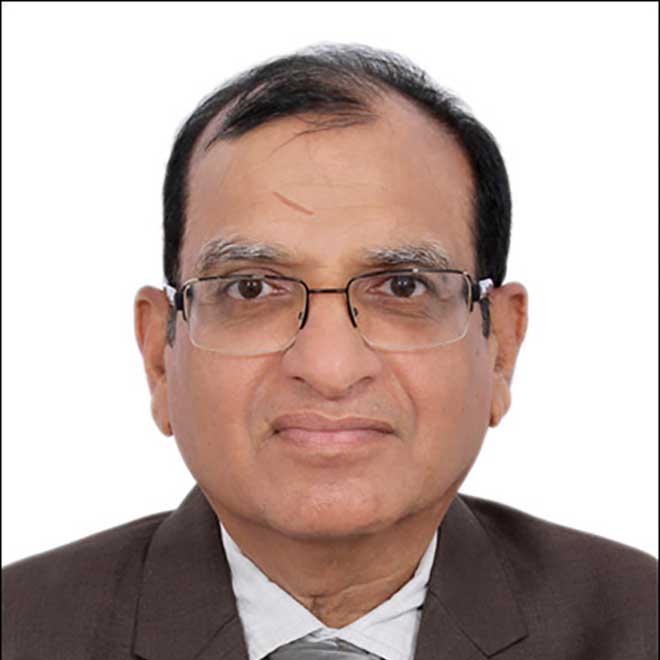
    Mr. Yogendra K. Batra retired as Principal Commissioner of Income Tax, Ahmedabad, in 2015, and is currently teaching at the Institute of Law, Nirma University, Ahmedabad. From heading all the top posts in the Income Tax Department to teaching undergraduate and postgraduate students, his expertise in the field of income tax law is unparalleled.

    In this interview he talks to us about:

    • His decision to join Income Revenue Services (IRS) over IPS
    • His views on the current tax laws in India and their implementation.
    • His decision to take up teaching post retirement and his experience thus far
    • His views on the Institute of Law, Nirma University, its teaching methods, and its students


    How would you introduce yourself to our readers?

    I consider myself a learner and seeker of knowledge and that is how I would like people to know me.


    Can you tell our readers a little about your illustrious career?

    I started my career as a Lecturer of Economics at DAV (PG) College, Bulandshahr, and subsequently joined SSV (PG) College, Hapur. In my pursuit for excellence, I kept preparing for Civil services and UP PCS exams. In 1983 I was selected in UP PCS (Accounts) and in 1984 I was selected for the Civil Services and obtained a rank of 206. I joined the Indian Revenue Service and after a training of almost twenty months at the Lal Bhadur Shastri National Academy of Administration, Mussorie and the National Academy of Direct Taxes, Nagpur I joined the Income tax Department in Delhi and in the very first year itself I was posted as the Assistant Commissioner of Income tax (Investigation Circle) wherein I was assigned the work relating to assessment of cases where search seizure operations were carried out. I also acted as Under Secretary, Tax Policy and Legislation under the Central Board of Direct Taxes and contributed to four financial bills (1991-1994). I retired as the Principal Commissioner of Income tax, Ahmedabad, in the year 2015. I have now taken up the role of teaching young minds and mentoring them in their pursuit of excellence.


    You chose the Income Tax Department over the Indian Police Service. What motivated this decision?

    I got the 206th rank in Civil Services Exams of 1983 and was more than eligible for Indian Police Services. I preferred Income tax (IRS) because I wanted a career free from political interference. Since I was a lecturer of Economics, the field of taxation was not unknown territory to me. I enjoyed every bit of my time at the Income Tax Department.


    Having chaired and headed almost all the top posts in the Income Tax Department, what are your views on the current tax laws and their implementation procedure in India?

    I started my career as Assistant Commissioner (Investigation Circle) in New Delhi. This was a very demanding and a very sensitive job considering my experience in the Department. Subsequently I was posted as Assistant Commissioner of Income Tax, Central Circle, Delhi, wherein I assessed group cases of big business houses. Subsequently I was selected as Under Secretary, Tax Policy and Legislation in the Central Board of Direct Taxes, the apex body of Income Tax Department. There I worked for more than three years and contributed to four finance bills, i.e. 1991 to 1994. Incidentally, these were the initial years of economic liberalization in the country and a number of amendments were made to the Income Tax Act. Then I came to Ahmedabad as Deputy Commissioner (nowadays, Joint Commissioner) and worked in various capacities. As Commissioner of Income tax I worked as Appellate Commissioner, Director of Income tax (Investigation), Commissioner (Audit), Commissioner TDS and Principal Commissioner.

    The Tax Laws in India have been simplified over the years.  The tax rates have been reduced and they are comparable to most of the developed countries. The tax regime in India is more taxpayer friendly now. However, a lot is required to be done on the administrative front. It is said that you cannot tax a person and keep him happy simultaneously. Therefore a lot of work is required to be done in order to educate taxpayers about the advantages of taxes and the ill effects of evading tax. A close review of the efforts made by the government on this through media and publicity has yielded desired results. The tax payers are gradually understanding their responsibility  and more taxes are being garnered through voluntary compliance.


    You opted to teach post retirement, despite receiving numerous offers from leading companies. How does this role fit into your overall career goals? How would you describe your ideal job?

    As I mentioned earlier, I am a seeker of knowledge, be it any profession or job I undertake. Teaching has always been close to my heart, since it gives me an opportunity to continuously learn, research and interact with the younger generation- the future of India. It gives me great pride to be a contributor, albeit a small one, in mentoring our future generation. As far as an ideal job is considered, I believe it is different for different individuals, varying according to their aspirations, priorities and specialties. For me, what I do is ideal, and therefore I do with full passion and commitment.
     

    How would you define good teaching? What do you think are the greatest responsibilities of a good instructor?

    I would like to call myself an educator instead of an instructor. An educator needs to be current in his/her subject, have clarity of concept and thought, be open to new ideas and developments in the subject. Above all, a good instructor should be able to generate interest and curiosity in a student.


    What are your views on the Institute of Law, Nirma University, and its students? What do you think about the pedagogical model being followed at the institute?

    The Institute of Law, Nirma University, is a professional institute where students get enrolled on the basis of their CLAT scores. These aspiring lawyers are well versed in the theoretical as well as practical aspects of the law. There are several specializations available, such as criminal law, taxation law, etc., so that the students can make an important career choice early on. Advocates, legal experts and judges are called for lectures so as to help students get acquainted with a hands-on experience of the vocation. Students are also provided with a state-of-the-art digital library so that they can hone their skills.


    From heading the income tax department to teaching undergraduate and postgraduate students, what are the things you enjoy, and what are the things you would like to to change about your current position?

    Nirma University is a pioneer institute which is grooming a generation of lawyers to come. The institute is improving its nationwide ranking continuously which indicates the high standards the university is constantly aspiring to. The institute is endowed with rich library resources, a dedicated faculty and an exciting campus. The curriculum has been designed immaculately so as to provide an excellent mix of theoretical and practical elements.  However, one must not lose sight of the fact that ultimately, it all boils down to the students’ performance and how they utilize the resources that are made available to them.

    My job as Principal Commissioner of Income Tax was quite different as compared to my teaching role. As a bureaucrat you have to perform your duties within a stringent framework of regulations. Teaching on the other hand, gives you room to innovate and experiment. There is nothing as such which I dislike about my present role. However, a lack of enthusiasm among the students worries me a lot.


    From your experience, what would be your suggestions to the new generation of students? How would you say their education and way of life is different from yours as a student?

    My only suggestion to them is to follow your passion. Identify your strengths and interests first, then set your goal and follow it with commitment and perseverance. The Universe will be at your doorstep- have the courage to ask for it, work for it and believe in yourself.

    This generation has a lot of opportunities, avenues and facilities made available to them, which we did not have in our time. However, they also have a lot more competition and struggle compared to us. Nevertheless, Darwin’s theory, survival of the fittest, is so far apt for all ages and generations. Since the students are in a professional institute they cannot behave like students of a regular college and settle for only routine understanding of any subject. The have to develop a desire for knowledge and have to read beyond what has been discussed in the class.


    Finally, what would be your suggestion or advice to anyone who aspires to have a successful career? What are the dos and don’ts for ensuring success in any field?

    There is no replacement of dedication, commitment and perseverance for anyone wanting to succeed in their career. Strive for excellence in whatever you do and you shall succeed. Give your 101% to what you do because a little bit extra effort makes all the difference. The following mathematical equation is proof that a little extra effort each day can go a long way.

    1.01365 = 37.8
    0.99365 = 0.03

    Students should read at least one case law a day because staying abreast with current affairs is absolutely essential for any lawyer.


  • Aditya Bhandari, Counsel, Reliance Jio, on internships and work experience as a corporate lawyer

    Aditya Bhandari, Counsel, Reliance Jio, on internships and work experience as a corporate lawyer

    Aditya Bhandari graduated from the Institute of Law, Nirma University in the year 2014.  His wisely chosen internships coupled with his interest and market scenario led him to grab a job at Reliance Jio Infocomm Limited which is a part of Reliance Industries Group. He is certainly an inspiration to young corporate law aspirants as he explains in this interview that internships play a vital role in shaping one’s career by exposing one to confront the challenges of practical aspects of that career and are as imperative as an Educational Institution itself. In this interview he tells us about:

    • His satisfactory working experience as an Assistant Manager in the Legal – Litigation team of Reliance Jio Infocomm Limited.
    • His strategy of choosing internships and thereby substantially enriching his practical knowledge.
    • How to choose a career stream and get successful regardless of the so-called NLU tag.

    Please share with us about your life journey so far and graduating from the Law School of Nirma University.

    I am currently working as an Assistant Manager in the Legal – Litigation team of Reliance Jio Infocomm Limited (part of Reliance Industries Group). I have graduated from Institute of Law, Nirma Univeristy (ILNU) in the year 2014. Growing up in Jodhpur (Rajasthan), I was always inclined towards the world of accountancy and since then I made my mind to study Financial Subjects and be a professional Chartered Accountant. However in my school days, I was expressive and had my own opinions about every aspect which was particularly not liked by my teachers (Though I enjoyed it). It was then when I realised that it is a quality of being assertive and argumentative which I could use in the other facets of my life. Though the act of argument leads a student into trouble when he does that with his teacher, or a child when he does that with his parents, but when the same is done by an advocate for his client, with all rigour and vehemence, it takes him to the pinnacle of the profession and that’s what makes one a good and great lawyer. Thus, my journey of being an advocate started from that very moment, and my instinct of being argumentative brought me to Institute of Law, Nirma University where my skills were honed and nurtured to the optimum.

    Why did you choose corporate law as your specialization course and how do you feel a confused law postulant should manoeuvre his/her area of study for a successful career thereafter?

    India, the largest and the youngest economy of the world had open its gate for the MNCs in the year 1991 when Dr. Manmohan Singh, the then Finance Minister of India put forth the LPG in the House. Since then India has become a hub for MNCs and it was then the corporate law came into prominence.

    During my internships, I had an opportunity to intern under the ages of Corporate Stalwarts. It was then when I realised that I wish to dip in the ocean of Corporate law as I could figure out it had immense career opportunities in the coming time. Thus the impact and the nature of work I had done during my internships helped me choosing Corporate Law as my specialization course.  As far as the second part of the question goes, in my opinion it relates back to classroom studies, internships coupled with the interest and market scenario. But one should understand that nothing comes easy in life so the choice of subject should be realistic and not driven by others. In the end, it’s the student who is the George and he should be able to ascertain which avenue is going to be fruitful for his or her life in terms of intellectual and financial outcome. Something which is opted or chosen by an individual on the basis of his/her instincts and interest will, in my opinion, would not lead to any confusion.

    How do you think the curriculum including specially the internships proved to be an indispensible factor in enhancing your knowledge about the practical intricacies of the field of law?

    The purpose and object of internships, which in my opinion is a great boon to the 5 year law students, is to acclimatise an upcoming advocate to the realities and pragmatic aspects of the profession, and to understand the difference between academics and the applicability of academics in the real world of law. It just works as pilot training process for the law students before they step into the real world of law. My internships were very fruitful in terms of exposure, amount of work and working for different areas of law. I did my internships with some reputed law firms and few corporate houses like Mulla & Mulla & Craigie Blunt & Caroe Limited, DSK Legal, Economic Law Practices and Reliance Industries Limited etc.

    My internship with Reliance Industries Limited was timed perfectly when I was in seventh semester of my 5 years law course where I had an opportunity to assist the legal eagles of India, It was a surreal experience seeing your mentors arguing in front of your own eyes for your own matters with your own assistance. This triggered my focus on corporate law and working for a corporate house and that’s where today I am.

    I must say, CHOOSE YOUR INTERNSHIPS WISELY!

    Please share with us your working experience until you decided to settle with Reliance Jio Infocomm Limited (Reliance Industries Limited Group) and how did it help in edifying your career?

    It has been a year since I joined Reliance Jio Infocomm Limited. I have previously worked with Thomson Reuters (TR) where my profile as an Associate in Corporate & Compliance Department was majorly related to Contract Review, Research and Drafting of Agreements. Work at TR offered me great intellectual freedom wherein I got several opportunities to handle projects solely and interact with the top managerial officers of TR’s leading clients globally (Multinational Financial Services Holding Companies International Law Firms).

    During my work at TR, I was awarded as the best employee of the month which motivated me to keep up with my hard work. It helped me in enhancing my way of working in a corporate culture.

    Please tell our readers about your current working experience at the Reliance Jio Infocomm Limited in Mumbai and other prospects of your career ahead.

    Working with a corporate giant which is second to none in the country is itself a matter of pride and satisfaction. You are not only working with the best of the professionals in the country but also you become a part of the system and mechanism which has been adopted by the company to continue to be at the top. Even the Fortune Global has recognized RIL as No.1 Indian Company by profit, which itself gives immense satisfaction to me as I am a part of the same. Reliance Jio Infocomm Limited (RJIL) is a company which provides telecommunication services having the largest infrastructure base.

    Talking about my profile here at RJIL as an Assistant Manager in Legal Department entails various responsibilities coupled with authority as well. I am taking care of Legal issues faced by the company ranging from big time arbitrations and the pettiest litigation matters. In my brief stint at RJIL, I have been fortunate enough to work with a dedicated team of intellectuals working in different fields such as Construction, Finance, Technical, and Marketing & Business Team. Being an advocate helps me to help the other teams with day to day operational issues faced by them. Also it is important to mention that since the company is in its project phase, we at the legal team work as a catalyst in the process of development of the project and bring it to the operational stage which in itself would bring a revolutionary change in the Telecom industry. The present project I am working on is a state of the art project relating to lightning fast internet services (4G) to be provided to the customers at an affordable price making the concept of Digital India a reality.

    What challenges have you faced during all these years of working and how it affected your career?

    Challenges are an integral part of any profession, personally for me, challenges make me strive hard. It makes me work with more proficiency. Talking about my challenges at work, the transition is initially difficult when you have to manage the different teams and have to bring them on a common platform. Every Human being is different in his own sense and dealing with them is a challenge in itself presently I am working in a manner where I have to deal with all the facets of the company be it Technical or Mechanical. One must never doubt his abilities as doubts have killed more dreams then the failure has and hence each and every challenge should be treated as a lesson and to come out winning from those challenges takes a lot of hard work and perseverance.

    Someone has rightly said that the biggest room in the world is a room for improvement and challenges channels your energy to improve yourself. I have always kept faith in my abilities and this is how I tackle challenges and convert them into opportunities.

    What would you like to explain to those aspirants who have been sceptical about working with a corporate entity and look at it as mere 9 to 6 desk job without any independence or additional learning?

    Profession of law is much more and over and above the word ‘job’. In my opinion any person who takes the profession of law merely as a job is not befitting for this profession. Further this is one such profession wherein one should inculcate the habit of leaving the watch behind and to work in the manner of 24*7.

    The only role a watch plays in a lawyer’s life is to show how prosperous a lawyer is and the more prosperous lawyer the more the working hours.

    The main distinction between a job and a profession is that of addition and multiplication. In a job, the emoluments as well as the quantum of work keeps on adding with every passing day. Whereas in a profession, it though remains stagnant for a particular gestation period but thereafter it multiplies and then sky is the limit.

    What would you like to tell to our young law aspirants when it comes to pursuing specialization in corporate law and following the career ahead in that stream?

    There should be a consensus of heart and mind when it comes to choosing any particular stream. If one is zealous and ready to toil hard in whatever field he chooses, he is bound to succeed irrespective of the stream he chooses. I would not deviate from the fact that the specialisation course keeps you focused and gives you an insight of the nitty-gritties of that particular stream.

    With regard to the corporate law, I would like to reiterate that there are immense possibilities, opportunities for young lawyers who are willing to work hard but not otherwise. It’s not a fancy job but requires lot of intellect and zeal and a go-getter attitude. So if you think you have these traits, corporate law is for you.

    Do you feel that not having the so called tag of an NLU ever proved to be a hindrance in your professional career?

    A lawyer is not bound or curtailed by any tags or nomenclature. I would not completely rule out the fact that the better the tag, the better the chances for an initial opening. However the profession of advocacy is a synonym of art of convincing, with the blessings of god and my elders, I never had to face any such difficulty and rather I would state that the tag of NLS proved to be an asset to me.

    In the end, what would you like to communicate to our readers?

    There is no mantra for success but for continuous hard work. One must choose the correct path in a correct way. This is for my reader friends to understand that you have chosen the career which is full of opportunities and learning. All it requires is hard work and fun when you are at it.

    It is very important for legal professionals or students to understand that Litigation or Corporate law are not the only options for their future career. Knowledge and dedication can take you to a level of sky high.
