Category: Associates, In-House Counsels and Advocates

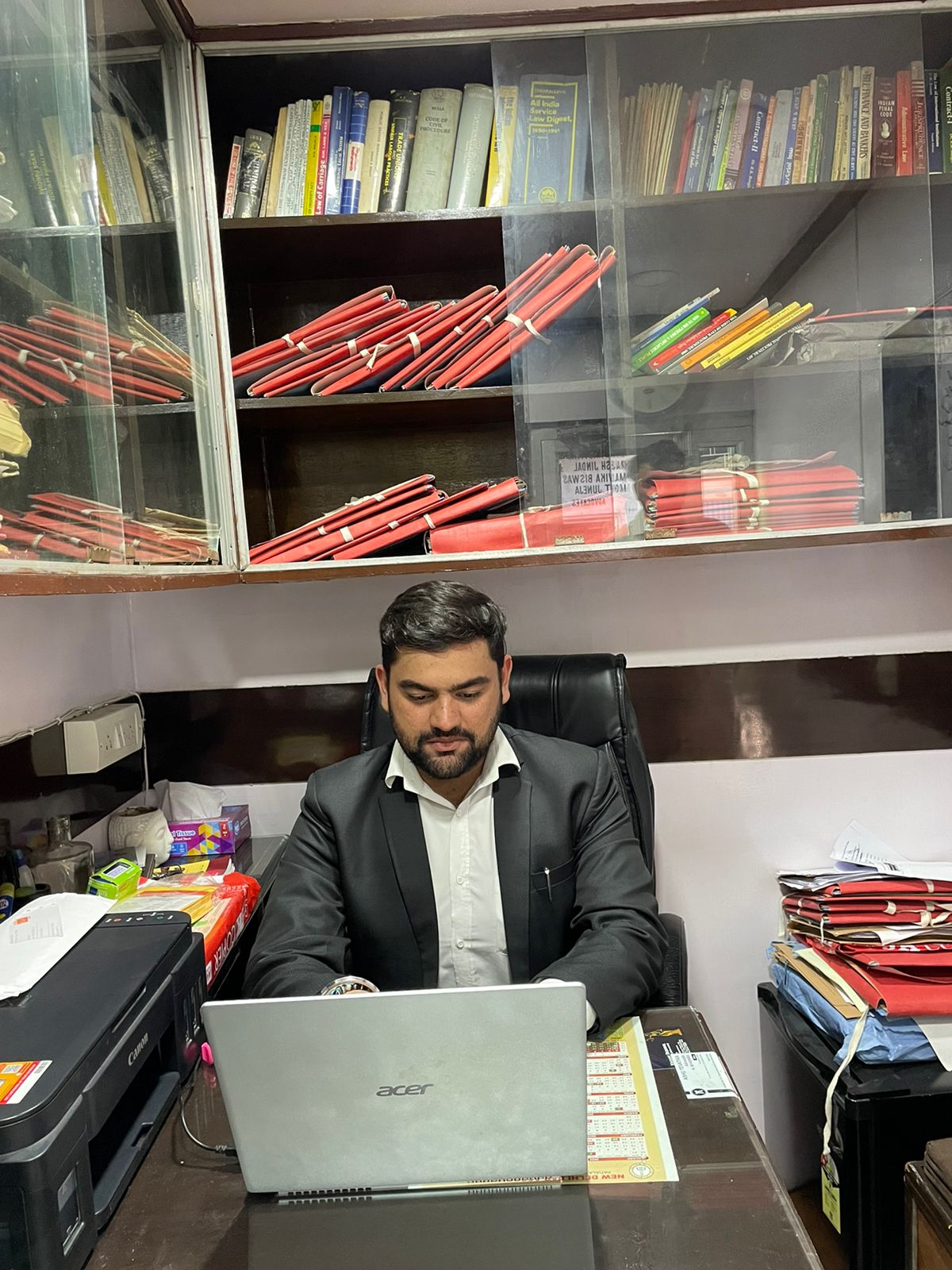
  • How to start your own Legal Practice and go for Legal Startup, You Tube channel: In conversation with Naman Mohnot, Advocate, Author and Legal Consultant

    How to start your own Legal Practice and go for Legal Startup, You Tube channel: In conversation with Naman Mohnot, Advocate, Author and Legal Consultant

    This interview has been published by Priyanka Karwa and The SuperLawyer Team

    Sir, could you please tell us the reason behind choosing Law as a career?

    Back in 2008, when I completed my matrix and got a merit, there was a presumption that every meritorious student should fight for IIT-JEE exams so at that point of time, without thinking anything, I started preparing for the same. Later, I realised that Physics, Chemistry and Maths were unfulfilling and the subjects did not align with my interests and then I realised that I am going somewhere in the wrong direction.
    Certainly, I have always had a passion for public speaking and debating; I have worked as a radio jockey and also acted in some serials, which gave me the push to pursue law as a career. Also, there was a thought somewhere in my mind that what I can do in my life which can be useful for some other person or society. Subsequently, I decided that being a lawyer this can be done and that was the turning moment for me to decide the Career in Law. Additionally my father has been the biggest factor behind my decision to pursue a career in law. He is a law graduate himself, but he never practiced as a lawyer due to certain reasons so I decided to take his vision forward. His guidance and support have been invaluable in my development, both personally and professionally. In addition to this, law provides a flexible and versatile career path with many opportunities. Finally, I believe that law is a noble profession that can help to bring a positive change to society.

    Why did you Choose to Practise and not join any Firm, especially when you got the PPO?

    Being a Graduate from NLU- Delhi, I was sure that I will get a decent placement but the Corporate Job never allured me, even though I have done internships in good law firms but those job roles never attracted me. Apart from that, I always wanted to come back to my home town Jodhpur and build something from here by staying close to my family. I do agree that joining a law firm would have been easier then starting my own practice but I always wanted to start something of my own. So, when I decided to start my own practice, I knew it will come with advantages and disadvantages. If I think about the disadvantages then I wouldn’t have been able to make it, I knew it’s either make it or break it. Anywhere you go you have to create your place, your identity, you have to give it time and then see the magic happen.

    How was your Law School Journey like?

    I was fortunate to have such an incredible learning experience in one of the best legal institutions like NLU- Delhi. During my time there, I was exposed to some of the best professors, resources, and experiences that helped to shape me both professionally and personally. A tier-1 city like Delhi has always given me location advantages due to which I was able to write certain books and acquired a deeper understanding of the law and get a better grasp of the legal system. Along with the academic excellence, I was able to build strong friendships and lasting memories that I will cherish forever.

    Being a first-generation lawyer, how difficult was it for you to start your own practice?

    Embarking on a career in law is not a simple undertaking, be it for a novice legal practitioner or one with a prior legal foundation. Generally, a lawyer with legal genealogy has the advantage of their family background, where they don’t have to make new associations since they have sound direction and solid networking.
    I started my professional excursion with a remarkable senior, mentor Mr. Farjand Ali sir who is now an Honourable Judge in Rajasthan High Court. He gave me the directions and chances to show up, address the Courts & argue the matters. During my 2 years journey, when I was assisting him, he has given me more than 750 plus cases to argue which is a remarkable figure for any junior. I was sufficiently fortunate to get a decent senior and coach which is a critical part in the professional journey in one’s initial years and that is the thing that makes or breaks you. Once he got elevated, he advised me to become independent and since then I am practising as an Independent Advocate. I am managing the Firm Legal Shots through which our team is providng multiple Litigation and Non Litigation Services across the Country.

    Share your Litigation Journey with our viewers?

    My litigation journey has been a great learning journey. I am learning each day. Every other case brings out a different experience. I am doing what I love and following my passion makes me satisfied at the end of each day. I am extremely thankful to the bench of the Honourable Rajasthan High Court which has given me recognition. There is a long way to go!

    We are curious to know more about Aapka Consultant.

    After graduating from the National Law University, Delhi, I decided to pursue my professional career journey from my native town – Jodhpur by starting something of my own as I always had this principle in my mind that ‘ Naam aur pehchaan bhale hi choti ho, magar khud ki honi chahiye’. This idea eventually culminated in the creation of our legal start up and I approached my sister Adv. Swati Jain and we this how Aapkaconsultant came into picture. Aapka Consultant provides a comprehensive range of online one-stop business services and solutions, utilizing a network of CAs, CSs, and lawyers. This start up helped me in bagging clients from all across the nation even after staying in a Tier-2 city like Jodhpur. We are continuously providing hassle-free business and legal support to clients all over India through our services. We strive to work together with our clients and handle their complete legal and compliance needs, allowing their leadership teams to focus on their essential priorities.

    What was your vision behind your YouTube channel i.e., Legal Shots?

    Legal Shots is my lockdown brainchild. During the first lockdown of 2020, an employer from Bhilwara approached me for a legal opinion and I consulted him via whatsapp voice note and after a few days I came to know that a lot of Bhilwara people are getting relief from that. Then I set out to take my work online, explore more and contemplate undertaking something new. I was guided by my brother cum mentor Mr. Rishab Jain, who is the founder of Labour Law Advisor. With a perspective to assemble awareness and decode the laws for the general population in an easy language, in a brief and compact manner.. We began our YouTube channel Legalshots. Our vision is to promote and disseminate legal knowledge and understanding among the people. Our goal is simple – to educate both laypeople and lawyers about relevant legal and social topics, in an effort to make the complicated simple for everyone. I wanted to provide a single platform to discuss all legal issues. Three years later, we now have a family of more than 310,000 subscribers and more than 1.5 Crore Views.

    Please tell us what inspired you to write your book and the number of books you have written yet.

    Growing up in a Hindi Medium School, I was always aware of my lack of fluency in English. But I was determined to improve my English, so I applied myself to the task, researching and writing a book. Unfortunately, when I submitted an article to an International publishing house, I was rejected and told that students like me were spoiling the name of prestigious institutions like NLU-Delhi. This moment became a trigger in my life, and I began to work even harder on my English. Through dedication and perseverance, I was able to improve my English. I was determined not to let my lack of fluency in English be a weakness. I took advantage of every opportunity to read more, write more and hone my language proficiency. This experience only spurred me on further, and I began to research and wrote my first book on ‘Law relating to Ragging’ foreword by Late Mr. Ram Jethmalani which was published by Universal Publications. Later I wrote “Judgments that shaped the Indian Jurisprudence”, Foreword by Late Mr. Arun Jaitley which was published by one of the World’s biggest publishers ‘Thomson Reuters’, and ‘Surrogacy & the Law’ foreword by Mrs. Maneka Gandhi & Mr. Salman Khurshid and Revised version of ‘Law related to Ragging’ foreword by former Hon’ble Chief Justice Mr. S.A. Bobde and the Journey is still going on.

    How do you manage  Practise, Startup, Youtube Channel and Authorship journey altogether?

    Establishing my own legal practice, launching a start-up, creating a YouTube channel and writing books has been an ambitious endeavour. However, through efficient teamwork and delegation, I have been able to make the process more manageable and enjoyable. I prioritize tasks and make daily to-do lists to remain organized and ensure that nothing slips through the cracks. I am also constantly learning more efficient approaches to save time and maximize efficiency. Having a routine, staying organized, and taking the necessary breaks are the key to maintain equilibrium between all the activities. Even though my days are busy, I love what I do and that is why I am able to keep everything in check. With the help of my teams in the respective departments, we are able to provide the highest quality of service to our clients and viewers.

    Coming to the last question, any advice you would like to give to the young Lawyers out there?

    One of the invaluable pieces of advice that I would suggest to emerging lawyers is that it is worthwhile to prioritize experience and practical exposure over earning money. In a prestigious profession such as law, patience and diligent hard work are integral components of success. The early stages may be taxing and challenging, but one should wait for the opportunities, that will inevitably come, to showcase their acquired knowledge and experience and where you can spotlight the aptitudes and experience that you have collected in all those years. Law is rewarding and complex due to continual changes.

    It is essential to focus on daily learning and stay up to date with the ever-changing jurisprudence. As a legal professional, you never cease learning. It is always evolving. There will be days where you may feel you are not accomplishing anything productive, but that is perfectly acceptable. Remember that the sun continues to rise even after witnessing unfortunate events on this planet, so why not YOU? There will always be a brighter tomorrow. So do whatever your heart says and keep going!

    Get in touch with Naman Mohnot

  • “Play the devil’s advocate and ask yourself the most difficult and uncomfortable questions that the opposing counsel may ask your client in court”- Aastha Chadha, Advocate.

    “Play the devil’s advocate and ask yourself the most difficult and uncomfortable questions that the opposing counsel may ask your client in court”- Aastha Chadha, Advocate.

    This interview has been published by Priyanka Karwa and The SuperLawyer Team

    What motivated you to choose law as a career? And how has been the journey so far for you?

    My grandfather was an eminent criminal lawyer and as a kid, my favourite place in the house was his residence office. So, although my exposure to the legal field was since childhood it was not the profession I had planned to join. After 12th I was preparing for my CA entrance and one of the subjects in the entrance exam was law. That was the first time I studied law as a subject and I fell in love with it. This is when I decided to pursue a law degree and later I went on to do my Master of Laws. My journey as a lawyer has been extremely enriching and rewarding. This profession has taught me discipline and made me a better listener which is really helpful in understanding constraints and offering the best possible solution within the constraints. It has taught me to take risks and once the risk has been taken, to pull it through with sheer hard work. 

    What were the challenges that you faced at the beginning of your career?

    The challenges I faced as a new lawyer while working as an associate for a firm were the same as everyone else; getting a meagre salary, working unearthly hours, not getting enough opportunities in court etc. However, in hindsight, it was a huge learning experience. Yet the real challenges started when I went independent. Starting your own practice is like moving out of the protective environment of your parental home for the first time and being left alone on the long road of life. You have to do everything starting from getting a new client, doing clerical work, and troubleshooting of all kinds totally by yourself and still present a confident, untiring demeanor to the outside world. Overall, a fight for survival.

    What is the most challenging case you have handled in litigation and what were your learnings out of it? 

    Matters both civil and criminal where the parties are related to each other are challenging to the extent that emotions override the brain and balancing the two is a continuous exercise. At times one party goes all out to wash the dirty linen in public while the other despite the litigation is more guarded in sharing the dirtier truth.

    Among various matters, what brings you the most challenging set of situations and how do you overcome them?

    Every individual case comes with its own set of challenges. But, if I have to generalize then I would say that there are different challenges associated with different fields of law. The risk of arrest/imprisonment in Criminal matters, and the overriding emotions in matrimonial matters are some of the challenges. Whatsoever the challenge may be, the only way to overcome any challenge is preparation. Preparation done in peacetime saves blood during wartime. So, the way is to take a bird’s eye view and then start work at the grass root level. Sit with your client, ask questions, and ask your client for both favourable and unfavourable evidence. Play the devil’s advocate and ask yourself the most difficult and uncomfortable questions that the opposing counsel may ask your client in court. 

    How do you ensure that your clients receive the best possible outcome? 

    The first and foremost thing is that I fully educate the client on the legal aspects so that we arrive at a common wavelength. A well-informed client is always better and I encourage him to challenge my point of view and ask the right questions. I always try to give the client a true and realistic picture. Once the client is aligned, we work out a strategy best suited for the case and execute the same. 

    Do you think the privacy protocols that were there long ago are not there now because these recordings of judges in the courtroom have been going viral lately?

    Important cases were making newspaper headlines even before digitalisation and virtual courts. I truly feel that privacy goes for a toss as soon as a matter goes to court. A person’s name gets undue adverse publicity as soon as one gets accused or a private matter reaches the court. The media trial begins much ahead of the judicial trial. An innocent person wrongly accused gets socially maligned all through the case even though he is ultimately acquitted of all chargesHowever, I also believe that the live streaming of court proceedings has made legal awareness accessible to lawyers, law students and even litigants and some short videos edited to sensationalise an otherwise educative court proceeding should not stop this wonderful endeavour of various courts.

    How useful do you think the idea of Metaverse would be in the legal industry?

    Like any other technology, it will change the way people think and behave. So, it will surely change the way the legal industry functions. It is a powerful tool which has the capability of changing the day-to-day working of the legal industry. The internet changed the world, the metaverse is much more immersive and collaborative, and it will surely open a floodgate of opportunities for legal professionals from contracts to copyright laws, cyber laws, and even estate planning. 

    What are your thoughts on the data protection bill, 2022 that arrived a few weeks ago?

    I feel that data privacy breach is one of the biggest concerns rather a threat that the world is currently facing and with our increased dependence on technology it is just the beginning. Therefore, I feel that the bill is definitely needed to curb the blatant misuse of the power the technology companies have over their users. Yet, I do have reservations about the exemptions given to the government and state agencies concerning the same. 

    You have been very vocal about Hindu Succession Act,1956 being patriarchal, why do you think so?

    Succession as a concept is extremely patriarchal. In India, Succession takes place according to the personal laws by which the person is governed. One such legislation that governs the majority of the population in India is the Hindu Succession Act,1956. While the Hindu Succession Act was enacted to make the law of succession more equal and while all of us celebrated when daughters finally got equal rights in the coparcenary property of a Hindu Undivided Family but there are still many changes that the law requires. There is a positive change in the way a woman gets her inheritance but no change in the way the woman gives her inheritance. With the evolution of society and women being earning members creating their own Estate, the inheritance law needs to evolve and not discriminate between the heirs of a man and a woman. Although equal rights of inheritance to daughters is surely a step towards equality, true equality in law and society can and will only be achieved when parents of women are also treated equally to the parents of a man. 

    What are the hurdles you have faced being a woman in the legal profession and what changes do you think have taken place in favour of women lawyers over the years? Also what message would you like to give to all the women who are struggling in their initial years as lawyers?

    The biggest hurdle that all women who want to become advocates face is the mental block that “Litigation is not for women”. I don’t know how many times I have heard this statement despite coming from a family of lawyers. Infrastructural shortfalls like lack of proper washrooms, etc., and not having enough women court staff are small but crucial hurdles that women face every day in Litigation. These problems become more prominent in courts outside Delhi. Also, a common mindset where there is a distinction between advocate and lady advocate or woman advocate. Although the term advocate is a gender-neutral term but somehow the term used for women is lady advocate and this is not just a spoken difference but the way your work is received. It takes a lot of victories to establish yourself.

    One pleasant change nowadays is that there are so many intelligent and hardworking women joining litigation and I am hopeful that the new generation of lawyers will have more women role models as seniors and designated senior advocates and hopefully advocate will become a gender-neutral term not just on paper but in reality.

    The only message I have for young lawyers in their initial years is do your job extremely well and close your ears to nay-sayers who say that you cannot make it in litigation for any reason one of which is if you are a woman.

    A lawyer sometimes is expected to do work apart from legal functions as well, what are your views on the same?

    Running a legal practice is like running a business where we have to do our marketing, networking, and administrative work apart from the core legal domain.  Also, there are times when the client’s expectations are beyond the legal domain. Therefore, in every assignment, both parties have different expectations and managing the expectations and being on the same page is critical. The mandate needs to be clear, unambiguous, written and signed by both parties. If any assignment over and above the mandate needs to be performed the same should be treated as a separate assignment and should be agreed to by the lawyer only if it is within the legal domain. 

    According to you, what networking strategies should be adopted by the first-generation lawyers specifically in corporate?

    Networking is essential for every lawyer irrespective of whether they are corporate lawyers or litigation lawyers.

    Lawyers not being allowed to advertise their work or solicit clients, referral is the only way to get work. Thus, reach out to as many people as possible so that your existence is known. Networking is a continuous process with no boundaries and is constantly evolving. I think in today’s time

    LinkedIn is a great platform where you can network with anyone across the globe. I have got clients through LinkedIn and also hired local counsels for outstation matters through this wonderful medium. 

    Other than LinkedIn, conventional tools include conferences,events, bar rooms, and social gatherings.

     Lastly, any 3 best pieces of advice for our young lawyers? 

    Firstly, Always read the bare act before reading any opinion on a pieceof legislation.

    Secondly, never go to court unprepared. Even if you have to take an adjournment you should know the file inside out. 

    And lastly, always adhere to the profession’s decorum, you never know who all are observing you. The best of opportunities very often come unannounced. 

    Any additional message that you would like to give to all the women who are struggling in their initial years as lawyers?

    The only advice apart from the advice above that I have for women in litigation is just don’t listen to people who say litigation is not for women and prove them wrong one victory at a time.

    Get in touch with Aastha Chadha-

  • “While there are challenges due to the unique nature of transactions in the real estate sector, I have come across many outstanding women lawyers in the field”- Shriti shah, Partner at Quillon Partners

    “While there are challenges due to the unique nature of transactions in the real estate sector, I have come across many outstanding women lawyers in the field”- Shriti shah, Partner at Quillon Partners

    This interview has been published by Priyanka Karwa and The SuperLawyer Team.

    Ma’am, as a conversation starter, our audience would like to know about your story of being a Lawyer.

    I didn’t start off wanting to be a lawyer. I took up commerce after Grade 12 and completed my graduation. I enjoyed accounting but I didn’t really see myself doing numbers. It was a very critical time of my career and I starting thinking what to do next – MBA or law or something else. I don’t have lawyers in my family so it was not an obvious choice for me. But I thought law college would be academically challenging and interesting. It really wasn’t until I joined Government Law College and started my articleship with Ms. Kalapana Merchant at a solicitor firm that I thought I would like the pace of law.  One of the things that I liked about my articleship was that it gave me a flavour of different streams of law i.e. corporate, intellectual property, real estate and financing . After graduating from law college and qualifying as a solicitor, I decided to focus on corporate law as it excited me the most. I have worked as a lawyer for about 15 years. Currently, I am a partner at Quillon Partners, a law firm which focuses on M&A and private equity.

    Being into the legal profession, you must have heard things like “real-estate is not for women”, what are your views upon this?

    While there are challenges due to the unique nature of transactions in the real estate sector, I have come across many outstanding women lawyers in the field. Fundamental changes introduced in the real estate laws by the Real Estate (Regulation and Development) Act, 2016 have led to greater transparency in the real estate sector and women lawyers no longer shy away from entering this sector.  

    Could you tell us about your struggles as a woman lawyer?

    There was a time when I wanted to focus on my family. I like to try different things – so I took up knowledge management (KM), business development and human resource which are very different and interesting roles. While knowledge management was nascent in 2011, law firms had started giving KM importance with several laws undergoing changes e.g. the Companies Act was completely revamped in 2013. During this time I also got an insight into Business Development.  Often different roles, help you to draw from one to the other. While I did KM, the corporate experience I had helped me and then when I went back to doing corporate law – the KM and Business Development experience helped me immensely. I still continue to be involved with the KM, BD and HR functions of the firm.   

    We see a lot more women lawyers now. However, as one progresses up the ladder of seniority, the scales start to tip with a decrease in the number of law firm partners being women. This landscape is starting to shift and many Indian law firms like international law firms are now working consciously towards inclusiveness and gender diversity. Personally, I have had very supportive seniors at Quillon Partners and they have been very encouraging. 

    Please shed some light upon your role as an M&A Lawyer.

    The role of an M&A lawyer varies from transaction to transaction depending on the kind of the transaction and who you are representing (e.g. buyer, seller, company). M&A lawyers have a versatile and extensive role throughout the transaction. All the legal mechanics of a transaction, including negotiating and drafting agreements to reflect a commercial deal, arranging finance and liaising with the client and their other advisors. Typically, in most transactions, it involves advising, planning, structuring, due diligence, drafting of the transaction documents, negotiations, obtaining regulatory approvals and finally closing of the transaction.  

    How do you see the M&A sector in the coming 5 years?

    Globally there was a dip on the deal street in 2022 due to several factors, including war and inflation. India seems very attractive to many global firms post Covid with investments in China taking a back seat. Mergers and acquisitions in India are expected to increase in 2023. The deal market is expected to be active in several sectors such are pharmaceutical, technology, infrastructure and healthcare. Therefore in-bound M&A investments are likely to increase. Out-bound foreign investments are also on a rise with the recent changes to the regulatory framework. India is expected to be a very attractive investment destination given the benefits of demographics, cost arbitrage, presence of large consumer market and democratic stability.

    Coming towards the end of the conversation, could you tell us three qualities which an M&A Lawyer must possess?

    Constant thirst for knowledge– legal technical knowledge is important but learning can’t stop with formal education. We have opportunities to learn new things in just about everything we do and from everyone we meet. It could be learning from a past deal, keeping oneself abreast with new laws, adapting to new technology, or learning people skills, it is a constant never-ending process.

    Being organised and structured – usually in most deals, time lines are tight and one needs to break the tasks and prioritize work streams in order to be able to service clients efficiently. Keeping an eye on the ball is key.

    Enjoy what you are doing – there are often personal sacrifices, sometimes long hours and only if you enjoy what you are doing, it’s worth it.

    Get in touch with Shriti Shah-

  • “Transforming from a student to a practitioner of law can be overwhelming as a lot of responsibility vests on your shoulders”,- Abhay Agarwal, senior associate, JSA

    “Transforming from a student to a practitioner of law can be overwhelming as a lot of responsibility vests on your shoulders”,- Abhay Agarwal, senior associate, JSA

    This interview has been published by Priyanka Karwa and The SuperLawyer Team.

    To start our conversation on a lighter note, we would love to know what made you choose law as a career option?

    Since my childhood, I was unsure of what career to pursue. The choices oscillated from being an economist, a journalist, an architecture and even a chef. Being a lawyer was never on the list. It was quite usual in our school for students with commerce background to take up chartered accountancy after 12th. However, in my quest to study something more versatile, I ended up taking law since law is multidisciplinary in character. Perhaps law is the only field in which, depending on one’s practice area, knowledge of other subjects such as economics, finance and even psychology is also essential. Hence, the decision to choose law.

    We would definitely like to know about the struggles you faced in your early years as a student and after you pursued law

    Being a first-generation lawyer that too from a non-national law school was challenging. Given that the law school was fairly new, we did not have a huge alumnus base and getting internships was a dauting task.

    While law school teaches you to read the law, it is only when you start practicing that you learn to apply law in different scenarios. Transforming from a student to a practitioner of law can be overwhelming as a lot of responsibility vests on your shoulders. Having said that I feel there is a huge disconnect between classroom teaching and practicing law. This gap can be bridged by doing more internships and gaining more practical exposure.

    It would be a pleasure for our readers to know about your first job as an Associate at Khaitan & co.

    Khaitan & Co. is one of the most prestigious and amongst the leading law firms in India. After several internships, I was fortunate enough to be offered a position at the firm’s Mumbai office. Given that the firm does voluminous deals with often very high stakes, the training which seniors at the firm imbibe to its juniors is impeccable.

    While at Khaitan & Co., I was involved in various high-profile matters such as public issuances of debentures and offshore bond issuances, some of which were also award winners. I had the privilege of learning from some of the stalwarts of the industry. The time spent at Khaitan & Co., and the relations made there is something which I would cherish forever. I am grateful to Khaitan & Co. for kickstarting my career.

    Since you specialize in Banking and Finance and Financial Services, would you like to elucidate about your role as an advocate in this field and the motivation that landed you in this sector?

    I am involved in advising a range of domestic and foreign banks and financial institutions, and Indian conglomerates, in a variety of domestic and cross-border financing transactions. A typical workday as a financing lawyer involves drafting and negotiating various financing documents, and advising clients from start to closure of the transaction. On the insolvency front, I have been regularly advising committee of creditors, the resolution professional and the resolution applicant.

    Being a debt lawyer opens up a lot of opportunities in foreign market particularly the United Kingdom. This was one of the motivations of taking up banking and finance as a practice. Further, lending and borrowing is essential for a growing economy like ours. Insolvency is a developing area of law with lots of potential for growth. This is one of the few practice areas which is not seasonal, and one can expect to be busy throughout the year.

    From your profile, it is quite evident that you have worked with some of the leading law firms in India, would you like to tell us about your journey so far

    As mentioned above, I started my career at Khaitan & Co. where I worked for about 3 years. Then I moved on to Cyril Amarchand Mangaldas where my stint was rather small of less than a year. I joined JSA in July 2019. JSA boasts of robust practice areas and has been consistently ranked as Tier-I for its debt practice, amongst others.


    Under the guidance of Ms Dina Wadia and Mr Soumitra Majumdar, I have been fortunate enough to work on some marquee and path breaking transactions. Contrary to the other firms I worked at, I have gained exposure to a broader range of transactions. In a profession such as ours where burnout and depression is on the rise, JSA has also taken various measures to ensure well-being of its attorneys.

    To wrap this conversation up, what advice would you give to the fresh Law graduates?

    Bear in mind that law is a noble and a very demanding profession. Being client-centric, one has to put client’s interests over his own. This could include sacrificing weekends and leisure time. There could be unrealistic timelines and the expectations are typically high.

    Having said that, it is important to have command over the language. The only way this is possible is to read (almost anything) regularly! One should articulate his thoughts and pen it down. This will develop analytical skills and improve clarity.

    Last but not the least, work hard, be motivated to learn and take up a (weekend) hobby.

    Get in touch with Abhay Aggarwal-

  • “There may be times when I fail or stagnate, but it doesn’t demotivate me”- Vaishvi Khare, IP Attorney | Corporate Lawyer| Media & Entertainment Lawyer

    “There may be times when I fail or stagnate, but it doesn’t demotivate me”- Vaishvi Khare, IP Attorney | Corporate Lawyer| Media & Entertainment Lawyer

    This interview has been published by Priyanka Karwa and The SuperLawyer Team

    So Vaishvi, what was your motivation behind choosing to pursue law as a career?

    Law as a career is a very zestful practice and you will learn something new on everyday basis. I firmly believe in acquiring knowledge and develop multifaceted skills from wherever it is possible. I did actually wanted to serve people in some way or the other and choosing a career in law was the answer to this! As, Henry Beecher said “A law is valuable, not because it is a law, but because there is right in it”. I therefore wanted to educate people on their rights and help them if they get stuck in any legal trouble.

    Please elaborate about the role of a Media and entertainment lawyer.

    As a media and entertainment lawyer, we have a crucial role in advising individuals, companies, and organizations in the media and entertainment industry on legal issues related to the creation, distribution, and exploitation of content. The responsibilities of a media and entertainment lawyer can include:

    Reviewing and negotiating contracts: This may include contracts for the creation, distribution, and exploitation of film, television, music, publishing, and other types of content.

    Advising on intellectual property issues: This may include trademark and copyright protection, licensing, and disputes over the ownership of content.

    Advising on regulatory issues: This may include advising clients on laws related to advertising, broadcasting, and telecommunication.

    Advising on talent representation: This may include advising on the negotiation of talent agreements and representing talent in disputes with their employers.

    Defending clients against lawsuits: This may include lawsuits related to defamation, invasion of privacy, and infringement of intellectual property rights.

    Advising on mergers and acquisitions: This may include advising clients on the legal aspects of mergers and acquisitions within the media and entertainment industry. Overall, Media and Entertainment attorneys are essential in guiding their clients through the intricate and often changing legal environment that surrounds the media and entertainment sector.

    We would also like to know about the  award you received for the outstanding Leadership Award in Law 2.0 conference and what it took to win that award?

    Law 2.0 Conference was held in Dubai, UAE from 16th to 18th December 2022 where in total six conferences were scheduled. I was awarded for the Outstanding Leadership Award in the Law 2.0 Conference. We also had an opportunity to connect with people from different sectors and learning their synergies. I was also a panellist for a panel discussion which was on “How to protect your brand in the Digital Space”. I would say as a result of my diligence and enthusiasm for the legal sector. I was the one who studied and kept up with my social life while I was attending law school. I firmly believe in striking a balance between my personal and professional lives, therefore when I was a student, I gave my coursework my all-out love and dedication, and when I was with friends, I had a blast. So work life balance is very important in today’s life. As a first-generation lawyer, I had a lot of challenges landing internships and starting my own business. I made a lot of mistakes, but in life you learn from them and become a better leader. Therefore, in my opinion, the reason I won is because of my passion, my willingness to learn new things, and my positive outlook.

    What do you like to do in your free time?

    Spending time with my family, my three dogs, and going on trips with them are some of my favourite things to do when I have free time. Due to my conviction that everyone should lead a healthy lifestyle, I often practise yoga and meditation. Additionally, I enjoy trying out different foods. I enjoy listening to new tunes, cooking, and watching movies and television.

    Given that you have expertise in IPR policies, what drawbacks do you see in our current IPR laws?

    According to me, these are some drawbacks to the current IP laws that are often discussed:

    1. Complexity and unpredictability: IP laws can be complex and difficult to navigate, especially for small businesses and individual creators who may not have the resources to navigate the legal system. This can make it difficult for people to protect their creations and to know if they are infringing on someone else’s rights.

    2. Slowing down innovation: IP laws can also slow down innovation by creating barriers to entry for new businesses and individuals who may be building upon existing innovations. This can result in a reduction in competition and progress in certain fields.

    3. Cost: Obtaining and enforcing IP rights can be expensive, which can make it difficult for smaller entities and individuals to protect their creations. This can lead to unequal protection of IP rights, where only those with the resources to afford the legal process are able to protect their innovations.

    4. Imbalance in power: The current IP laws often favor large companies and organizations over individual creators and small businesses. This can result in an imbalance in bargaining power, making it difficult for smaller entities to negotiate fair terms for the use of their creations.

    5. Limitations on access to knowledge and information: IP laws can limit access to knowledge and information, making it more difficult for people to build upon existing innovations and create new ones. This can result in a reduction in the flow of ideas and creativity, which is essential for progress and innovation. These are some of the drawbacks of current IP laws, and while they are important to consider, they are also challenges that can be addressed through ongoing efforts to reform and improve the IP system.

    In order to end this conversation, kindly tell us about the things which keep you motivated in your area of expertise.

    As I already mentioned that, the legal field can be intellectually stimulating, as it involves continuous learning and staying up to date with new developments and changes in the law. As a lawyer, I really enjoy learning and being able to help people with my knowledge and skills keeps me motivated. Also, my desire for success drives me to do well. What motivates me to keep going is the knowledge that my diligence and tenacity will enable me to experience more professional achievement. One way to do it, in my opinion, is to have the company’s goal and values coincide with mine. Knowing that my efforts are on the right track motivates me to exert greater effort. Success is therefore vital to me on a personal level as well as an organisational level. The growth of the company, which ultimately results in success and personal achievement, provides motivation. There may be times when I fail or stagnate, but it doesn’t demotivate me. On the other hand, I feel re-energized and ready to work harder. Regardless of the situation, what keeps the fire burning within me is the taste of achievement after a setback.

    Get in touch with Vaishvi Khare

  • Road Less Travelled: Journey of Advocate Lalit Suryavansi in the IPR domain

    Road Less Travelled: Journey of Advocate Lalit Suryavansi in the IPR domain

    This interview has been published by Priyanka Karwa and The SuperLawyer Team

    Being a science student, and then choosing law, what was the idea behind?

    Great Question. Though I am used to this question and answering this question every other day. Actually, this science and law cocktail was not planned. In fact, Law was something I never imagined I would be pursuing. I did my graduation and post-graduation in technological streams and happily started working as an Engineer.

    Barring a few things, I was satiate with my carrier. As destiny had other plans for me, one fine day, I felt something is not right about my job and the kind of work I was doing back then. I started looking for other options and got to know about Intellectual Property Rights and prior art searching. The domain looked different and exciting, so I decided to switch my path and get into Intellectual Property. So, this is how I get into Legal domain, and in this journey, I qualified the Patent Agent examination. Later, I felt like having formal qualification in law, which led me to pursue LL.B.

    Please enlighten our audience about the initial struggles in your career and how you managed to overcome them?

    I’d rather start with initial anxieties. As I started my career as an RF engineer, and I was letting go my 3-4 years of job experience for something new called Intellectual Property, which, at that point in time, people thought to be some sort of real-estate business related endeavor, I had lot of disquiet in my mind, and I was in dilemma about the decision I was going to make. Plus, the baggage of what people would say if I failed. But my heart had already accepted it, so it pushed to me to make a bold decision and take that plunge, which I did, and I am elated to say that I made the right decision at that point.

    Of course, there were struggles, but I was very passionate about what I was doing and loved it so much that struggles never felt struggles, they felt like challenges, for which I was determined to go any lengths.

    What are the most important considerations to keep in mind when dealing with IPR and registering patent issues?

    Over the years, I have realized that inventors are mostly concerned about the outcome, i.e., the grant of a patent, not about the events that come along the way of patent grant. I have experienced that most inventors, if not all, are interested in getting their patent granted, and they are either ignorant about the very-very important milestones that starts with patent application filing and end with patent grant/refusal.

    Let me give you a little more perspective, I believe prior art searching to be the most important thing in the patent proceedings, but inventors hardly show any enthusiasm to get it done. And those who consider prior art searching, they fail to understand why a prior art search is done at all, how it can contribute in shaping his/her patent application. Similarly, patent application or claims drafting is merely considered to be the patent agent job. Of course, it is as you are paying him/her, but I’d like advise that please do not recklessly depend on your Patent Agent and be actively involved in the events/proceedings—-Afterall inventions are inventors’ child, not Agents’. My intention is to make the inventors more inquisitive and interactive so that they know what is actually being done by their patent attorney, how the attorney is giving shape to claims, application, arguments, etc.

    IPR and other corporate sectors are evolving like never before, would you like to throw some light on the same? And according to you Lalit, what exciting opportunities it can create for our young lawyers?

    With government initiatives such as “Make in India”, “Self-reliant India”, push for innovations, and programmes like “Start-up India”, protection of innovations is seen as a necessity to compete in the market. With this patenting activities has increased many folds, and patent filing in India is rising at an unprecedented rate.

    As per the Economic Survey 2021-22, the number of patents filed in India has gone up from 39,400 in 2010-11 to 58,502 in 2020-21 and the patents granted in India have gone up from 7,509 to 28,391 during the same time. With so many numbers of patent filings, Patent Prosecution is rising, so is the Patent Litigation. Therefore, one can easily infer the prospects for young professionals.

    Lalit, as per your experience in the legal field, how do you see the legal industry coming up with new concepts and creating exciting opportunities?

    With the constant push for digitization, arrival of faster telecommunication technologies like 4G/5G, invent of communication platforms such as Zoom, Teams, etc., alike every other domain, Legal industry is also witnessing rapid transformation. Everyone is now aware how virtual courts have started, how virtual hearings has transformed the way hearings were taken. If I specifically talk about the Indian Patent paradigm, Indian Patent Office (IPO) too has segued from offline system to online system. With conversion of physical hearings into into virtual-call-based hearings, paperless patent application filings, mandatory online filings for Patent Agents, and many other such initiatives, IPO has put in place a lot of new concepts/systems. So, newer opportunities are coming along, we just need the right approach and right temperament to grab said opportunities.

    What can be some of the toughest considerations while someone from a non-legal background has to see before opting law as a career?

    For someone from a non-legal background, the toughest consideration would be the time window for success. To make a mark in this industry, one must possess the tenacity to climb every rung of the ladder that leads to the success. As they say, there is no shortcut to be successful—legal domain is no different or alien to this saying.

    Lalit, what is a typical day like for you?

    Well, a typical day is typically typical for me. I get up around 6 AM. Do my daily chores by 8 AM and leave for office by 8.30 AM. Commute to office, reach there by 9.30 AM, and get lost in the pool of matters waiting my arrival. Leave office at 6.30 PM, reach home around 8.30 PM where my son and my daughter (twins) remain armored to welcome me with the showers of anecdotes, complaints, happenings, and everything in between from their typical day.

    Could you highlight some of your success habits that enable you to meet your goal?

    Never say no attitude’ and ‘to remain grounded’ at all the times are some of the attributes which I think play pivotal roles in anybody’s success.

    Lastly, what advice would you give to someone starting out?

    Keep your mind, eyes, and ears open for anyone and everyone—you never know who might give you the piece of information that can change your life forever. One more thing, everything progresses at its own pace, so never feel frustrated/agitated if something is not happening at your whims/desires—time and destiny will certainly make it happen for you if you are honest and keen about it.

    Get in touch with Lalit Suryavansi-

  • Priya Udita, Associate Lawyer at Indus Law In a FireSide Chat With SuperLawyer On Key Elements Of Successful Corporate Legal Advisory

    Priya Udita, Associate Lawyer at Indus Law In a FireSide Chat With SuperLawyer On Key Elements Of Successful Corporate Legal Advisory

    This interview has been published by Prabhjot Singh, Priyanka Karwa and The SuperLawyer Team

    What motivated you to choose law as a career? And how has been the journey so far for you?

    I was born and brought up in Patna. My parents made sure that I get exposure in all disciplines early on, be it science, commerce or arts. It was in Class 12th, when I got interested in business studies and decided to pursue it further. While I was going my graduation (B. Com Hons.) from Symbiosis College of Arts and Commerce, I got fascinated by the multi-faceted workings of a company and developed a keen interest in commercial and corporate law. I can say that B. Com helped me discover my inclination towards law and cemented my conviction to pursue the legal profession

    Being a first generation lawyer, the journey was not easy at first. I remember during my LLB., I used to send out mails for internship and follow up tirelessly so that I can get internship at good law firms and as it is said, perseverance and patience are key cornerstones for success. I was able to get internship opportunities at leading law firms like DSK Legal, Shardul Amarchand Mangaldas and Lakshikumaran & Sridharan.

    I used these experiences to develop key skills like communication, analysis, drafting, and research and paved my way to IndusLaw. So, all in all, it’s been a great journey so far.

    What were the challenges that you faced in the beginning of your career?

    As I mentioned above, coming from a non- NLU college sometimes demotivated me when my application for internships used to get rejected. In my first year and second year of LLB., I faced this issue a lot. I realised getting good score/CGPA was not enough to secure opportunities. Then I got focussed and started working on my skills, writing articles and expanding my knowledge of the subject matter. This really helped me to score good internships.

    Further, I understand there is vast difference in the aspects of law that is taught in colleges and the work you do in law firms/courts or as an in-house. This results into a skill gap when you enter the workforce. This was another significant challenge for me. In my view, law colleges should curate a more industry focused curriculum and skills such as communication, drafting and networking –should be developed at the college stage only.

    What is the most challenging case you have handled in your journey so far and what were your learnings out of it?

    One needs to understand that law is a demanding profession, and whether you are working in a law firm or as an in-house counsel, or practicing law in court, each day comes with new challenges, and with each challenge, comes a new opportunity.

    I remember, I used to fear foreign exchange laws. I always felt that the laws were too complicated. However, I got a matter at my firm where I needed to understand the foreign exchange law and solve queries raised by the client. As challenging it was, it was really great experience to learn new things.

    See, in my view, it will be difficult to pinpoint one challenging case/matter. One needs to sometime fight the fear of unknown and accept it.

    But here is what I have learned from all the challenges –

    (a) read the laws – answers are always there;

    (b) ask where you have doubt – nobody is going to judge you;

    (c) understand the needs of the client first;

    (d) be prepared; and

    (e) always break down a problem to understand better.

    What do you believe are the key elements of successful corporate legal advisory?

    In my view, the law keeps evolving owing to business/market conditions and there is no straitjacket formula for being a successful corporate lawyer. But in general, based on my personal experience, some of the key skills in today’s scenario are:

    • Communication skill – both verbal and in writing, after reading number of cases and laws on a particular topic, the ability to concise the whole understanding in one paragraph;
      • Analytical mind – to be able to understand the problem/query of the client and break down into small pieces;
      • Having an open mind – one’s existing thought process/opinions should not cloud their opinion;
      • Observation skill – having an eye for detail and the ability to look beyond what is said;
      • Researching and networking skill;
      • Taking initiative and proactively participating;
      • Ability to put thoughts into action; and
      • Integrity – towards profession, organisation, colleagues.

    Priya, as per you, what are the best strategies and possible ways to negotiate with clients on some important issues?

    Strategies depend on the requirement or ask of the client and as such there is no best strategy to negotiate. But generally, a strategy should align with the business objectives and needs of your client and also to the best benefit of the stakeholders, both internal and external. One should strike a balance of needs to find a solution to a problem.

    Talking about work-life balance, there has been ample amount of discussion on health issues as a lawyer, what do you believe are the best practices to maintain the equilibrium?

    I understand that a good team of partners and colleague are crucial for a work-life balance. Further, one needs to understand its own strength and weakness. It is important to challenge yourself and work outside your comfort zone but at the same time, you should not stretch yourself too hard. Understand yourself and work on the skill. Health is equally important and therefore, it is really important to have a healthy lifestyle or a hobby.

    Some of the best practices: –

    • Have a hobby – paint, dance, play whatever you feel like. To this atleast thrice a week;
      • Read articles/ books/ listen to podcasts on themes other than legal topics ;
      • No phone near bed;
      • Have a cut off time;
      • Talk to senior if you feel the workload is too much;
      • Walk or do any physical exercise atleast thrice a week

    Lastly, you need to prioritize and take out time for these things for your mental wellbeing.

    Priya, how do you push through your worst times?

    Here are few things my parents taught me which I feel help me a lot:

    • nothing is constant in life, and whatever it is, it shall too pass;
      • we are very small in an infinite universe;
      • worst times are always there to toughen you up;
      • sometime you win and sometime you learn.

    Lastly, having family and friends helps you cope up during these times.

    Lastly, any advice you would give to someone considering a career in this field.

    Law is rewarding and at the same time demanding because of constant changes/updates. One needs to understand different practices of law before pursuing one. In my view, have different internships so that you get all types of exposure, be it litigation, consumer law, competition law, corporate, technology.

    Other than this –

    (a) publish articles,

    (b) work on developing your skill set,

    (c) start taking initiatives and responsibilities,

    (d) always read the laws and lastly,

    (e) don’t be afraid to make mistakes – always learn from them.


    Get in touch with Priya Udita-

  • Kanishk Khullar, Senior Associate at ASV Legal LLP, In a FireSide Chat With SuperLawyer On Important Tips For Drafting Documents

    Kanishk Khullar, Senior Associate at ASV Legal LLP, In a FireSide Chat With SuperLawyer On Important Tips For Drafting Documents

    This interview has been published by Prabhjot Singh, Priyanka Karwa and The SuperLawyer Team

    Was pursuing law planned or did it all happen by chance?

    I was thinking about the career choices available to me, after completing my 10th Boards Exams, when our school arranged a career counseling session for all 11th standard students of Frank Anthony Public School, where during the counseling session I was suggested by the counselor two career options first was Journalism and Second was Law, the later clicked in my mind as an ideal profession to pursue, because as a layman I use to view lawyer as a rationale person safeguarding the rights Individuals, and corporates without considering the fact that what is the public opinion formed upon against particular Individual and entity. Thus, this viewpoint attracted me towards taking law as a profession.

    Please enlighten our audience about the initial struggles in your career and how you managed to overcome them?

    Being a first-generation lawyer and that too from the non-NLU background itself ads up challenges to a lawyer’s initial days struggles, thus, it gets difficult to get a break even as an intern in Tier 1 Firms. On the other hand, there were many unexplored fields of law of which I had no idea, therefore, I made sure to get as much exposure as I can to various disciplines of law by interning with various practicing lawyers so that I could decide at the time of my graduation, that exactly practicing which area of law would suit my interests.

    Among all the specialisations, i.e. Insolvency & Bankruptcy, Drafting, Arbitration, Debts Recovery, Criminal related, Company law, etc., which one do you find the most interesting and challenging? 

    Among all the various fields I have been practicing in I have found practice in Debt Recovery matters to be fairly interesting and equally challenging as well, in Debt Recovery matter Banks have the recourse of taking remedy under both the SARFAESI Act and RDDB&FI Act, thus, it is interesting to represent a bank and assist the court to take over the possession of the attached property, further, suggesting the banks various steps available to them to recover outstanding amount in loans involving complex issues.  

    Subsequent to providing legal services to the bank I had shifted my focus towards protecting the rights of the borrowers and other affected parties as the said statutes are enacted for recovery of bad debts, at times recovery proceeding comes hard upon the rights of the affected parties, thus, while representing the Borrowers or other affected parties one has to pay attention to minute details of all compliance done by the bank as any non-compliance by the bank of various rules under either SARFAESI Act, RDDBFI Act, or Security Interest Rules can give a new life to the defense prepared for safeguarding the interest of the Borrowers and other affected parties.

    Kanishk, as you have mentioned Drafting as your core responsibility, What advice would you give to someone considering a career in legal drafting?

    Through all these years of drafting, I am able to make out that an ideal way to draft is to start with having all the correct facts in hand from the client as the client is the only master of facts, and make sure all dots gets connected and no gaps are left to surprise the counsel at the later stage, further, when all the facts are received, one should prepare points for arguments and defense chronologically so that the draft has flow like a storyline and no ambiguity get formed in the mind of the reader by a simple reading of the draft.

    How do you stay up to date on the latest legal developments?

    As a major part of my job is drafting one has to keep an update on the law so to keep an update on the latest developments in the legal field, therefore, I prefer to spend my money on buying subscriptions to legal news portals and online law journal instead of spending it on entertainment purposes. Other than that, I have to keep researching new judgments for the legal prepositions that occur during drafting matters, so keeping a check on legal developments is both habit and a necessity to me being a drafting counsel for time being.

    Any roadmaps that were followed by you, Kanishk and how do you consider the role of the same in this profession?

    The simple road map that I have followed is to build connections in person and on Linkedin, apart from it, whenever, I am at court I make sure that I build good connections with seniors and other colleagues lawyers greet them nicely whenever I come across them during the court proceedings as the same is a traditional and effective way of building connections in the legal field, further, I will suggest that always leave your jobs and internships on a good note with senior as you can get a client as well as job recommendations from your previous office and in this field the nature of the profession is such that anyone could be a useful link in dealing with a particular case at any point of time, thus, one should always try to thrive in developing healthy professional relations.

    How do you handle ethical dilemmas that may arise in your work? Could you highlight some ways to tackle the same?

    At times you have to have a client-centric approach, which may result in damaging your professional outlook, to tackle such a situation one has to adopt an out-of-the-box approach to maintain the ethical balance in your professional life so that you will be able to provide relief to your client without tempering the legal framework.

    Nowadays, people don’t have that zeal to pursue a career in law, what can be the reason for that apart from job security in corporate?

    Litigation as a career demands a lot of patience and persistence which is kind of lack behinds in today’s world where everyone wants instant gratification and results, only those who really have a passion for this profession and understand that justice takes time and it takes time to excel in this profession can sustain in this environment.

    Kanishk, as per you, what are the best strategies and possible ways you use to negotiate with creditors, as in debts recovery cases?

    Creditors specifically banks and financial institutions only aim towards recovering the amount which they had disbursed and which turns out to be a bad debt, thus, they are least interested in selling the mortgaged property as it itself is a time taking and expensive exercise for the bank, thus, a borrower may negotiate with the banks for paying off its debt till the time the auction of the mortgage gets final as the bank has a lower hand when it comes to recover bad debt and thus, the borrowers can try and insist the banks to settle for the less amount, although, the best time to negotiate with the banks and financial institutions to pay off the debts is during the last quarter of a financial year i.e. January, February and March as during this time the banks have pressure to close the bad debts account so that least NPA’s gets reflected on their balance sheets which will help the banks to get more incentives from Reserve Bank of India ‘RBI’. In other words, the fewer bad debts that get reflected in a bank’s balance sheets the more incentives a bank receives from the RBI.

    What is one piece of advice you’d give to our readers, who are looking for a career in the same profession?

    As, I have mentioned before in the above conversation, this profession requires a lot of patience and persistence, further, there is no limit to the amount of hard work you put in,

    The more effort you put into this profession in your initial days, the sweeter fruit will ripe for you later.”     

    -KANISHK KHULLAR

    Get in touch with Kanishk Khullar-

  • Adv. Lalit Suryavansi, Principal Associate at Khurana & Khurana, Advocates and IP Attorneys In Conversation With SuperLawyer On Dealing With IPR & New Opportunities In Legal Profession

    Adv. Lalit Suryavansi, Principal Associate at Khurana & Khurana, Advocates and IP Attorneys In Conversation With SuperLawyer On Dealing With IPR & New Opportunities In Legal Profession

    This interview has been published by Prabhjot Singh, Priyanka Karwa and The SuperLawyer Team

    Being a science student, and then choosing law, what was the idea behind?

    Great Question. Though I am used to this question and answering this question every other day. Actually, this science and law cocktail was not planned. In fact, Law was something I never imagined I would be pursuing. I did my graduation and post-graduation in technological streams and happily started working as an Engineer. Barring a few things, I was satiate with my carrier.

    As destiny had other plans for me, one fine day, I felt something is not right about my job and the kind of work I was doing back then. I started looking for other options and got to know about Intellectual Property Rights and prior art searching. The domain looked different and exciting, so I decided to switch my path and get into Intellectual Property. So, this is how I get into Legal domain, and in this journey, I qualified the Patent Agent examination. Later, I felt like having formal qualification in law, which led me to pursue LL.B.

    Please enlighten our audience about the initial struggles in your career and how you managed to overcome them?

    I’d rather start with initial anxieties. As I started my career as an RF engineer, and I was letting go my 3-4 years of job experience for something new called Intellectual Property, which, at that point in time, people thought to be some sort of real-estate business related endeavour, I had lot of disquiet in my mind, and I was in dilemma about the decision I was going to make.

    Plus, the baggage of what people would say if I failed. But my heart had already accepted it, so it pushed to me to make a bold decision and take that plunge, which I did, and I am elated to say that I made the right decision at that point.

    Of course, there were struggles, but I was very passionate about what I was doing and loved it so much that struggles never felt struggles, they felt like challenges, for which I was determined to go any lengths.

    What are the most important considerations to keep in mind when dealing with IPR and registering patent issues?

    Over the years, I have realized that inventors are mostly concerned about the outcome, i.e., the grant of a patent, not about the events that come along the way of patent grant. I have experienced that most inventors, if not all, are interested in getting their patent granted, and they are either ignorant about the very-very important milestones that starts with patent application filing and end with patent grant/refusal.

    Let me give you a little more perspective, I believe prior art searching to be the most important thing in the patent proceedings, but inventors hardly show any enthusiasm to get it done. And those who consider prior art searching, they fail to understand why a prior art search is done at all, how it can contribute in shaping his/her patent application. Similarly, patent application or claims drafting is merely considered to be the patent agent job. Of course, it is as you are paying him/her, but I’d like advise that please do not recklessly depend on your Patent Agent and be actively involved in the events/proceedings—-Afterall inventions are inventors’ child, not Agents’.

    My intention is to make the inventors more inquisitive and interactive so that they know what is actually being done by their patent attorney, how the attorney is giving shape to claims, application, arguments, etc.

    IPR and other corporate sectors are evolving like never before, would you like to throw some light on the same? And according to you Lalit, what exciting opportunities it can create for our young lawyers?

    With government initiatives such as “Make in India”, “Self-reliant India”, push for innovations, and programmes like “Start-up India”, protection of innovations is seen as a necessity to compete in the market. With this patenting activities has increased many folds, and patent filing in India is rising at an unprecedented rate.

    As per the Economic Survey 2021-22, the number of patents filed in India has gone up from 39,400 in 2010-11 to 58,502 in 2020-21 and the patents granted in India have gone up from 7,509 to 28,391 during the same time. With so many numbers of patent filings, Patent Prosecution is rising, so is the Patent Litigation. Therefore, one can easily infer the prospects for young professionals.

    Lalit, as per your experience in the legal field, how do you see the legal industry coming up with new concepts and creating exciting opportunities?

    With the constant push for digitization, arrival of faster telecommunication technologies like 4G/5G, invent of communication platforms such as Zoom, Teams, etc., alike every other domain, Legal industry is also witnessing rapid transformation.

    Everyone is now aware how virtual courts have started, how virtual hearings has transformed the way hearings were taken. If I specifically talk about the Indian Patent paradigm, Indian Patent Office (IPO) too has segued from offline system to online system. With conversion of physical hearings into into virtual-call-based hearings, paperless patent application filings, mandatory online filings for Patent Agents, and many other such initiatives, IPO has put in place a lot of new concepts/systems. So, newer opportunities are coming along, we just need the right approach and right temperament to grab said opportunities.

    • What can be some of the toughest considerations while someone from a non-legal background has to see before opting law as a career?

    For someone from a non-legal background, the toughest consideration would be the time window for success. To make a mark in this industry, one must possess the tenacity to climb every rung of the ladder that leads to the success. As they say, there is no shortcut to be successful—legal domain is no different or alien to this saying.

    • Lalit, what is a typical day like for you?

    Well, a typical day is typically typical for me. I get up around 6 AM. Do my daily chores by 8 AM and leave for office by 8.30 AM. Commute to office, reach there by 9.30 AM, and get lost in the pool of matters waiting my arrival. Leave office at 6.30 PM, reach home around 8.30 PM where my son and my daughter (twins) remain armoured to welcome me with the showers of anecdotes, complaints, happenings, and everything in between from their typical day.

    • Could you highlight some of your success habits that enable you to meet your goal?

    ‘Never say no attitude’ and ‘to remain grounded’ at all the times are some of the attributes which I think play pivotal roles in anybody’s success.

    Lastly, what advice would you give to someone starting out?

    Keep your mind, eyes, and ears open for anyone and everyone—you never know who might give you the piece of information that can change your life forever. One more thing, everything progresses at its own pace, so never feel frustrated/agitated if something is not happening at your whims/desires—time and destiny will certainly make it happen for you if you are honest and keen about it.

  • Aarzu Khattar, Advocate At Khaitan & Partners (SJK) Shares Her Knowledge On Client Counselling, Certain Aspects of Commercial Agreements & Opportunities In Arbitration

    Aarzu Khattar, Advocate At Khaitan & Partners (SJK) Shares Her Knowledge On Client Counselling, Certain Aspects of Commercial Agreements & Opportunities In Arbitration

    This interview has been published by Prabhjot Singh, Priyanka Karwa and The SuperLawyer Team

    What inspired you to choose law as a career? How has been the decision so far?

    My journey to choose law as a career dates back to the day when I accidentally met a judicial officer at one of my relative’s place. After interacting with him, I was fascinated by his personality and his love for the law. Immediately thereafter, out of curiosity, I researched about law. In great part, I wholeheartedly thank my mother, who motivated me to pursue law. Over the past few years, I gained first-hand experience by witnessing various court proceedings, which improved my procedural knowledge of the law hence, my overall journey has been incredible.

    What were the challenges that you faced in the beginning of your career?

    The insurmountable obstacle at the beginning of my career was my introvert nature. I overcame this by watching Suits, the famous American Legal Drama Television series. Another impediment was that I am a first generation lawyer with no Godfather in the profession. I overcame this by being consistent in my efforts. I sincerely believe that dedication and constant efforts are stepping stones towards success, hence, I ensured that I learn atleast one lesson of life/ practical application of law every day without losing hopes.

    How do you handle ethical dilemmas that may arise in your work? Could you highlight some ways to tackle the same?

    Answer – In order to address ethical dilemmas that arise at work place, I preach the principle of dispute avoidance. Ethical dilemmas occur in all facets of life and I believe it is essential to address them at a nascent stage so that majority of conflicts can be avoided. It is crucial to separate yourself from the problem and act neutrally.

    We lawyers do a lot of research in making our cases but the majority of the time, when an ethical dilemma comes, we skip the critical thinking and rush to make the judgment call. It is only at a later stage that we realise about the damage that has been done and that’s when we do the damage control exercise. However, if we look upon situations of ethical dilemma from a bird’s eye view, we can be a step ahead and act rationally.

    Ethical dilemma should not always been seen as something that brings negativity. It is a way to come up with more meaningful realizations.

    How far do you see the importance of Client Counselling?

    The importance of Client Counselling can be better understood by the quote from Lois McMaster Bujold – “The dead cannot cry out for justice, it is the duty of the living to do so for them”. Client counselling is an art that we, as lawyers learn as and when we interact with aggrieved litigants. When an aggrieved person approaches a lawyer and starts narrating their dispute, it is important for a lawyer to identify and segregate the who, what, when, where and simplify the dispute redressal mechanism for the Client.

    The Lawyer should listen to the Client without any mind-chatter and give their undivided attention to the Client. A good lawyer, by good counselling will always be able to get the best relief for their Client. Efficiently communicating with the Client is the bread and butter of a lawyer and it is important that the lawyers don’t think of the Client as a money-minting machine. While interacting with the Clients, we often have to wear the hats of a psychologist, while being in the shoes of a lawyer. Focus should be upon building connections with the Client, money will follow. Be like Harvey Spector from Suits, care for your Client and settle their disputes – be the best god-damn ‘Closer’.

    Aarzu, do you believe that somewhere the craze for litigation has been vanishing lately due to job security in corporate?

    Yes, I agree with you. Young lawyers don’t wish to continue into litigation for two main reasons, first and foremost, litigation is less rewarding in the initial years, not many seniors in the profession give good pay to sustain the expenses. Secondly and most importantly, one has to devote a lot of time in litigation as the incubation time for litigation is more as compared to corporate jobs in the legal fraternity.

    To quote Justice Joseph Story – “the law is a jealous mistress and requires long and constant courtship. It is not to be won by trifling favours, but by lavish homage”. Many young lawyers enter into the litigation entirely blinded by the charm of black coat and white collar band. However, the bitter reality is that more than 70% of young lawyers who enter into litigation, filled with confidence either leave or plan to leave litigation. Some of them have genuine responsibilities of family, others who are afraid to burn the midnight oil – leave litigation in peer pressure seeing their fellow friends earn good in corporate. Now, in litigation we are experiencing brain-drain. Hard-working and intelligent lawyers are leaving litigation to enter into the corporate arena.

    Our audience knows a little about commercial agreements, also is there a whole bunch of work in that segment, how interesting is that for any corporate lawyer?

    Commercial Agreements are fascinating to work in. Drafting of these Agreements commence at the stage when parties are negotiating, if the terms between the parties are not negotiated properly or when there is a grey area, the parties end up knocking the doors of the Courts. One must make the Agreements/ Contracts diligently after understanding the fulcrum of issues between the parties and must always identify the deal breakers.

    A good lawyer knows how to draft an air-tight contract, keeping in mind the intent of parties and leaves no grey area in it. One should draft well-articulated Contracts like Louis from Suits. He always captured the imagination and intent of the parties and drafted rock-solid contracts protecting the interest of his Clients .

    Between arbitration, contracts and agreements, liasoning, and civil matters, which sector will have more opportunities in coming times for lawyers?

    Human conflicts are relentless, so disputes are inescapable. Hence all the sectors will have nearly equal opportunities for lawyers in the coming times. However, the Indian Legal System is well known for delay in adjudication. It is a conventional fact that the Hon’ble Courts are over-burdened with pending cases and it is almost impossible to provide quick and efficient relief to the aggrieved parties, Alternate Dispute Resolution in India is an endeavour made by the legislators to attain the Constitutional Goal of achieving complete justice in India.

    In today’s era, we can see a constant increase in people resorting to various ways of Alternative Dispute Redressal Mechanism for resolving their disputes amicably. Even the intention of the legislature is to resolve the disputes amongst the parties. At any stage if the Hon’ble Court witnesses a chance of settlement amongst the parties, the matter is referred to any of the alternative ways of dispute redressal mechanisms i.e. Arbitration, Mediation, Conciliation, Negotiation or Judicial Settlement by Lok Adalat for speedy redressal.

    In many cases it is even mandatory to refer to any of these alternative ways of dispute redressal mechanisms at the pre litigation stage. For example, Section 12 – A of the Commercial Courts Act envisages a mandatory reference to mediation to attempt to resolve the disputes out of the court before a suit can be instituted. I am of the opinion that Arbitration sector will have more opportunities in the coming times.  

    Talking about work-life balance, there has been ample amount of discussion on health issues as a lawyer, what do you believe are the best practices to maintain the equilibrium? 

    I sincerely believe that a good laugh and 7 – hours of sleep is the best practice to maintain the equilibrium. However, people in the legal fraternity have a habit of overworking. Life is all about balance. One should know when to stop. If we keep on working in a monotonous routine, then we would not be able to perform efficiently and effectively in the long run.

    Apart from doing regular exercise and maintaining a healthy lifestyle, we need to find a hobby. Our profession is significantly serious in nature, if we don’t enjoy the journey, we will not have much good memories to share 5 years down the lane. Mind is the greatest asset for a lawyer and its important that we must find solace in our professional lives. Only then would  we be able to enjoy our personal lives and create an actual work-life balance.

    Few advices for our young law professionals?

    Explore all areas of law before you finally make a judgment call about your niche practice.

    Stop thinking about the opinion of the world, it’s all in your head and focus upon improving the quality of your work.

    It will not be easy. Grab every opportunity that you get. If that opportunity is not given to you, go and ask for it. Do not give up. It will be worth it.

    -AARZU KHATTAR

    Get in touch with Aarzu Khattar-