Your journey from college to becoming a Partner at Khaitan & Co. has undoubtedly been filled with challenges and achievements. Can you share with us some pivotal moments or challenges you faced during your college years and after graduation, and how you overcame them to reach where you are today?
A little-known fact about me – before joining law, I worked with Raell Padamsee as part of her theatre group. I moved into law subsequently. I graduated in law in 2005 from the Government Law College, Mumbai and since then it has been an exciting journey. I worked in one of the oldest law firms in India – Crawford Bayley in its Mumbai office. I had the opportunity to train under Mr. Sanjay Asher for almost 6 years which shaped my understanding, interest and aspirations in the field of corporate law. Subsequently, I moved to Delhi in 2012 and joined the then Amarchand Mangaldas Suresh A Shroff & Co., the unified firm. Subsequently, post the split in 2015, I continued with Shardul Amarchand Mangaldas & Co (SAM).
However, the most pivotal decision in my journey has been to take up the challenge and set up the private client practice which was relatively unknown at that time under the aegis of Shardul Shroff. This was unchartered territory for me as hardly any law firm had a dedicated private client practice at that time and there were no set precedents or background on this practice. We had to develop our own understanding of issues, create drafts and reach out to other limited experts in the field. Despite the initial struggles and the teething problems, I can proudly say that foraying into the private client practice has been the most significant professional decision I have made in my life. This practice has been both challenging and rewarding at the same time. After spending almost 12 years in SAM, I recently joined the private clients practice group in Khaitan & Co. This move was not easy given my long association with SAM but I am excited and raring to go and make this next journey even more memorable and fruitful.
I feel tremendous gratitude for the opportunities I have had and the support and guidance I received from Mr. Shardul Shroff. I am also confident that my association with Khaitan & Co. will only further my passion for the private client practice and give me a platform to take my journey to greater heights.
Your work often involves delicate matters related to family dynamics and wealth management. How do you approach building trust and rapport with your clients, especially when dealing with sensitive topics like family disputes or succession planning?
I treat every client as family. Most family matters need to be dealt with extreme sensitivity and confidentiality. You need to be a friend and confidant of your client first to enable them to trust you and open up to you. The legal aspect of these issues comes much later. Additionally, in a practice like this, the relationship does not end once the mandate has ended. The rapport that gets developed in these matters transforms into the relationship as there is a certain internal trust that gets built with the client. I continue to have a great relationship with most of my clients even if I am no longer advising them on legal matters and they keep reaching out to me for personal as well as professional assistance on other matters from time to time.
Besides your legal expertise, you seem to have a flair for writing and thought leadership. How do you balance your professional commitments with your passion for writing, as seen in your contributions to various publications?
The legal field is constantly evolving and the laws keep getting amended basis changing circumstances and other practical challenges. I feel that it is very important to be aware and keep oneself updated with the latest developments, especially in your area of expertise. It is equally important to create awareness amongst clients and peers as well. Therefore, while it is difficult to remove time and create a balance between professional commitments and making contributions, I look at these contributions more as a way of giving back to society, mentoring juniors, exchanging information amongst peers and generating business for my field of work. Further, given the nature of my practice, the reach of legal articles relating to succession planning, inheritance and wealth management is pretty wide.
Your involvement in setting up operations for foreign companies in India is impressive. What are some key challenges these companies face, and how do you navigate the regulatory landscape to ensure smooth transitions?
Most foreign companies are not aware of the regulatory regime in India and often question the requirement of providing documents/information. The regulatory regime in India is cumbersome to comply with in the initial stages of set up and the maximum time and effort is usually spent on collating the right documents/information from the foreign clients, explaining the submission criteria and requirements of the authorities and managing timelines. Fortunately, the current regime has streamlined a number of these processes, and it has now become easier to set up operations for foreign companies in India. Additionally, foreign clients are now more aware of the Indian system and are usually more cooperative now than before in supporting us in the set-up.
After dedicating more than 11 years to Shardul Amarchand Mangaldas & Co., you made the transition to Khaitan & Co. as a Partner. What motivated this move, and how do you envision your role evolving in your new firm compared to your previous experiences?
My 11 years in Shardul Amarchand Mangaldas were very fruitful and I am extremely thankful to Mr. Shroff for welcoming me into the firm. I have learnt a great deal from my experience in the firm and I take back fond memories of my time in the firm with me. I am very excited at this stage in my life and I am eagerly looking forward to my role in the Khaitan & Co. family. Khaitan & Co. has the largest private client practice in India and I intend to expand the practice to even greater heights and have an extended outreach in every corner of India through my association with Khaitan & Co. Mr. Haigrieve Khaitan is already very well known in this field and I am confident that with his support and guidance, my journey will be even more successful, enriching and rewarding than it has been so far.
As a Partner at Khaitan & Co., what do you find most rewarding about your role, and how do you foster a collaborative and supportive environment within your team?
The most rewarding aspect of my role in Khaitan & Co. is the confidence that the Khaitan family has reposed in me. They are always ready to support me, collaborate with me and have been extremely welcoming. They have done everything possible to provide me with a platform and resources that I can only grow to greater heights from here. The environment at Khaitan & Co. is one of extreme support and collaboration and I have naturally imbibed that thought process. The best aspect about Khaitan & Co., apart from its legal competence and a brilliant team, is its culture.
Beyond your professional endeavors, do you have any hobbies or interests that you’re passionate about? How do you balance your personal pursuits with your demanding professional commitments?
I am an out-and-out foodie and I love to try new places, new cuisines and new food items, be it a new restaurant, a new café or a new dhaba. I also love watching movies. Some of my food interests are shared by clients and colleagues as we try new places together. I try and watch a late night movie on most Fridays after a long week of work. Other than this, I enjoy playing table tennis and swimming.
For aspiring lawyers looking to build a strong foundation, what kind of internships would you recommend they focus on? Additionally, what are your views on gaining experience through internships with tier 1, tier 2, or tier 3 law firms?
I think it is very important to intern under different law streams such as litigation, corporate, banking & finance, competition etc. to figure out where your interest lie. If you don’t like what you do, you will never be able to do it for long. I also feel, tier 2 and tier 3 law firms provide an overall experience as most of them do not have segregated practice areas and one would be able to gain a lot of experience in these fields. So one should definitely do a few internships in tier 2 and tier 3 law firms before moving on to tier 1.
For students aspiring to specialize in private client practice or general corporate law, what advice would you offer to help them navigate the complexities of the legal profession and build a successful career in these niche areas?
Nowadays most law firms conduct webinars, training sessions and interviews on important topics under general corporate and private client practice. Additionally, there are lots of articles and publications that are authored by partners and other associates from various law firms. There is a huge library of material in the digital space on every aspect of these practices. Every aspiring student should read and grasp this material as it really helps them to get an understanding of the practice and it also creates an edge for them in interviews and interactions with other legal professionals. Most lawyers also take guest lectures in law schools and once should try and interact with these professionals to understand their approach and seek guidance from them. These few aspects can really help any student in generating an interest in the profession. This should of course be coupled with sincerity and hard work as there are no shortcuts in any profession.
We’d love to know more about your journey in the legal field. Can you share what inspired you to specialize in technology law and pursue a career in arbitration and corporate litigation?
My journey as a lawyer technically started in the year 2010, however, I have regularly interned at different offices since 2006-07 (even during law school). I started my career as a chamber junior to Ms. Manmeet Arora (who is now a Judge at the Hon’ble Delhi High). I can proudly say that I was trained by the best and the initial chamber training prepared me for what I was bound to do in my career. Later I moved to Luthra & Luthra Law offices (which it then was), progressing further to being a Partner at SAM and presently, I am a Partner at CAM. My journey from college days till date has been a roller coaster ride, with different experiences, ranging from doing the Aircel Maxis Spectrum Trial, to representing Tech Giants in almost all spheres, to recently being part of the much celebrated NN Global matter. My interest in Tech law grew with my inquisition towards small issues that we face on a daily basis. If you see, Tech and Arbitration are the two fields that are ever-evolving and I think that’s my inspiration.
As a “Future Star” in arbitration, could you tell us about a particularly challenging or interesting case you’ve worked on recently and what made it stand out for you?
In the order of ranking, the most challenging matters that I have been part of as a briefing Counsel would be HCC Ltd. Vs. UOI & Ors. 2019 SCC Onlibe SC 1520, where the 3-Judge Bench of the Supreme Court struck down Section 87 of the A&C Act, second would be Kal Airways vs. SpiceJet Ltd. & Anr. which is still a landmark on Section 9 A&C Act. Recently, I have argued a few important arbitration matters before the Delhi High Court, including HCC vs. NHPC, 2023 SCC Online Del 819, which decided an important question on bank guarantees and till what point the same have to be maintained in case the arbitral award is under challenge. This was special to me as recently I got a call from a Senior Counsel who told me that they relied on this judgment and got an order before the Rajasthan High Court. The next and very important issue on Section 28(2) of the A&C act which I argued before the Delhi High Court is NHPC vs JP Associates Ltd., 2023 SCC Online Del 3294, i argued on Section 31 and 28 (2) and got the award partially set-aside. As mentioned earlier, recently I have made submissions before the Supreme Court in the case of NN Global which put to rest the issue of stamping. Each case was challenging in its own way. The intricacies you learn from Senior Counsels and how you evolve and transform into arguing the same issues yourself is what stands out for me.
Being a member of the Steering Committee at IAMC, how do you see the landscape of international arbitration evolving, especially in the context of technology-related disputes?
I believe arbitration is one field that runs totally on stakeholder involvement. We as practitioners and arbitrators are constantly evolving the field and ourselves. Being part of an institution gives us the platform to get more ideas. The evolution of arbitration in the international context and specifically technology-related disputes has been increasing recently. I Have recently finished arguments in an arbitration where the underlying issue was the performance of an App designed in a particular way. While we still have time to see big tech-related disputes being referred to arbitration, we are taking baby steps towards it and the future is bright for the generation that is following us.
You’ve represented tech companies on issues related to intellectual property and regulatory frameworks. What, in your opinion, is the most exciting or challenging aspect of navigating the legal landscape in the technology sector today?
As I said earlier, the ever-changing nature of Tech is what is the most challenging part of it. While you learn to deal with one particular issue, you won’t even know that the same is obsolete and you have to move to learn the new version. The IP and regulatory framework issues that I have dealt with personally have also changes their nature and shape. Litigants are becoming smarter by the day and know how to navigate the entire ecosystem.
In your career, you’ve dealt with a wide range of disputes in infrastructure, real estate, and corporate matters. Is there a piece of advice you often find yourself giving to clients facing such diverse challenges?
My first advice to every client, whether it’s an infrastructure, real estate, tech or any other issue is to find out a way to settle the matter, so it is a win-win situation for all. Prolonged litigation is what each corporate now wants to avoid and that makes complete sense when it comes to business efficiency and cost benefit analysis.
Having worked on a variety of international commercial arbitrations, can you share some insights into the differences or nuances you’ve encountered in dealing with disputes on a global scale?
I have never found anything very different even while dealing with an international dispute. The ways and methods may be different, but the approach is the same. Yes, if I have to point out a few distinguishing factors, I would say the sophistication and systematic approach that is adopted internationally, is something we must even adopt in our domestic arbitrations.
Representing major tech giants in various matters is certainly impressive. Can you share a bit about the unique challenges or dynamics involved in handling cases for major social media platforms?
The most unique challenge that a lawyer faces in such cases is that any of your actions/reaction in Court will have a far-reaching impact on the entire industry. So whatever way you are presenting your case- pleadings, submissions or oral arguments, have to be well thought out and based on parameters that do not only do good for your client, but for the industry at large.
Given your extensive experience, what skills or qualities do you believe set apart successful lawyers in today’s competitive environment, and how can law students cultivate these attributes during their academic years?
The ability to keep yourself abreast with the latest changes to law, with knowledge of the first principles is what will set you apart. The learning will never stop but one tips I can give to youngsters is that they should be observant. The Red-car theory is something I always believe in. Never say no to any work that comes your way and dedicate yourself to the profession. During academic years, focus on bare acts and law journals. Once you start practising you will constrain yourself to the books that you will be using in your case, so today is the best time to read]
Many students contemplate between pursuing a career in litigation or opting for judiciary preparation. What factors should they consider when making this decision, and are there benefits to gaining experience in both areas early in one’s career?
I think if someone wishes to pursue judiciary, they should start visiting District Court in as many districts as they can. See what is happening in Courts and are you up for it. For litigation, similarly start early. Observe how trials are done, how lawyers argue, how they act in Court and how the judges react. By following this, one can totally connect with what they would want to do and develop the Rio interest accordingly.
Switching gears a bit, outside of the legal realm, what are your personal hobbies or interests that you enjoy in your free time?
I am a biker and a super bike lover. I love to ride early morning during weekends (if work permits). I also like listening to old songs and ghazals and to justify my surname, I have slight inclination towards poetry 🙂
Lastly, we’d like to know your perspective on mentorship. Have there been mentors or individuals in your career who significantly influenced your professional growth, and what lessons have you carried forward from them?
Mentors play a very important role in this profession. Whether some is teaching you with interest or you learn by just following them, the idea is to learn. The most important part of this mentorship is that no one will come and tell you that they are your mentor. You have to choose yourself and follow them. I am lucky to have many mentors in the profession, starting from Ms. Manmeet Arora (“it’s a people’s profession”), Mr. Gaurav Duggal (“anything is possible if you want”), Mr. RS Suri, Sr. Adv (“money isn’t everything”), Mr. Anirban Bhattacharya (“eat, sleep litigate”) and Mr. Tejas Karia (“build your team”). Each one of them I chose as my mentor and all of them at one point or another have taught me things that have helped me grow as an individual and a lawyer and they all continue to inspire me every day.
Could you introduce yourself and share a brief overview of your journey from college to becoming a Partner at Fox Mandal & Associates LLP?
I am Saurabh Bindal, a Partner at Fox Mandal & Associates LLP, heading the Disputes and Litigation practice of the Firm in Delhi. I did my Engineering and thereafter, decided to pursue Law from the reputed Indian Institute of Technology, Kharagpur, India. Thereafter, I started practicing in a reputed Intellectual Property Law Firm in National Capital Region. After a short stint at the Firm, I realized my calling to be a litigation and disputes Lawyer. Subsequently, I have worked with different Law Firms in the past in various capabilities.
In my current role, I render dispute resolution support to clients on issues relating to Arbitration law, Intellectual Property law, Privacy law, Information Technology law, Constitution, Company Law, Contract Law, Employment Law, Electricity Law, Insolvency and Bankruptcy Code.
I have eight books to my name and several publications in leading journals. I like to speak on different facets of law and have had the opportunity to represent my clients in different forums, in India and abroad.
With significant experience in diverse areas of law, including Arbitration, Intellectual Property, and Employment Law, what inspired you to pursue such a multifaceted legal career?
Well, you know, I firmly believe that the practice of law is based on continuous learning. I try to learn each day. The inspiration to learn is something that keeps me motivated in life. I have worked on different facets of law as that motivates me to grow. One must find a purpose in life. For me, I tend to believe now that my purpose was in the practice of law. Once, you start practicing law, you must be internally inspired to keep the channels of learning open.
As a Partner at Fox Mandal & Associates LLP, you lead the Alternate Dispute Resolution and Litigation practice. Could you share some insights into the challenges and successes you’ve encountered in this role?
The role I am currently engaged in is quite challenging. Each day there are new hurdles, and you have no other option but to live it up to them. As a leader, one must take everything as a part and parcel of life. In life, your failures become your teachers and your success your enemy. I believe it will be very difficult to point out every challenge faced by an individual in her or his role. However, after some point of time, with one’s hard work, every challenge a person faces in life sometimes becomes an opportunity to strive forward. The only insight I could share with the challenges faced by me in my role is that each challenge has taught me new ways to live a meaningful life.
Aside from being a legal expert, you’re also an author, having written several books on intellectual property law, arbitration law, and privacy law. What inspired you to delve into writing, and how does it complement your legal practice?
The person who brought me pen and paper was Dr Uday Shankar, a Professor at the prestigious Indian Institute of Technology, Kharagpur. It was he who asked me to assist him with a submission. When I look back, I give all the credit in my writing to him for his patience with me. He has been my friend, philosopher, and guide.
I would also like to give credit for my writing to Eastern Book Company. Eastern Book family, and more particularly Mr. Sumeet Malik has been very kind in holding my hands. Majorly, all my books are thoroughly reviewed by him personally and he has contributed much to my life.
You’ve been recognized as an expert public speaker. What’s your favorite topic to speak about, and do you have any memorable experiences or anecdotes from your speaking engagements that you’d like to share?
Like the practice of law, public speaking is also a lifetime learning experience. The more you do it, the more you learn about engaging the audience. I have been constantly trying to master the art. Each event I speak at, makes me realize that speaking in public is also an art, at which, I am just a novice.
Having worked with various law firms, including Desai & Diwanji and Singhania & Partners, what lessons have you learned throughout your career, and how have these experiences shaped your approach to legal practice?
I have only learnt that your hard work will get recognized in life. You will always have people around you to pray for you in life, if you are good. I have always maintained good relationships with every Firm I have left. It is a very important learning in life. This has certainly helped me in shaping my legal practice. A legal practitioner must deal with different clients and as an officer of the Court must assist the Court. I believe, my experiences in life have taught me how to interact with clients and make a long-lasting relationship with them. My work in all the past firms has also taught me that it is only your work which will define you.
Apart from your legal expertise, your profile mentions that you are an insightful writer. When you’re not writing legal pieces, do you have any personal writing projects or genres you enjoy exploring in your free time?
Frankly speaking, I used to read a lot of fiction. Lately, I don’t get time to read fiction and that is something that I miss.
As a lawyer with a keen interest in technology, what’s your take on the evolving landscape of privacy and data protection, and how do you think legal professionals can stay ahead in such a dynamic field?
Intersection of law and technology is always appealing. COVID-19 pandemic taught all the lawyers to accept that intersection. Privacy as a concept is relatively new to India. We are still to see the rules being made under the Digital Data Protection Act, 2023. For legal professionals, it will be my advice that to stay ahead in this dynamic field, they must embrace the change which the Act has brought to India. I am sure that there will be a lot of work which will flow from the Act as it has recognized right of individual to keep his digital data private and talked about the repercussions if sharing of such data leads to any breach.
As someone who has excelled in both professional and personal life, receiving accolades such as the India Business Leader Award and the Young Alumni Achiever Award, what advice would you offer to young legal professionals aspiring to achieve similar success?
My advice to young legal minds would be to read, write, laugh, and enjoy life. One must be passionate about her or his work. If law is something, that you are passionate about, I am sure that everything else will follow. It is only work that will take any person ahead in life.
Can you share a bit about your background and what motivated you to pursue a career in law, especially in areas like Corporate Criminal Liability and White-Collar Crime?
I completed my five-year integrated law degree from Panjab University, Chandigarh in 2012. I belong to a family of non-lawyers, but my sister, who is also a lawyer, inspired me to join the legal profession and showed me its various aspects. I did not have a clear career goal when I was young, unlike many of my classmates and the current generation of students. The only career options I heard from my parents were engineering or commercial airline pilot. Thankfully, my sister guided me towards the law field and helped me make a wise decision.
I started my legal career as a civil lawyer, focusing on Intellectual Property Rights, at the district court level. That was the stage where I discovered my true passion and direction in the law field. Later, I got the chance to work with HMJ Sanjeev Narula, who was then the standing counsel for various government bodies and also had his private practice. He mentored me at the Delhi High Court and exposed me to various fields of law including White-collar and corporate criminal matters. I gained valuable experience working for agencies like the Serious Fraud Investigation Office, Central Bureau of Investigation, the Enforcement Directorate, Directorate of Revenue Intelligence, and others.
When he was elevated, I changed my path and joined Luthra and Luthra. The firm gave me a different perspective and I started representing corporations and individuals instead of government agencies. I think your goals evolve over time, especially after you find out what you are good at or enjoy in the profession. Nowadays, as it has been for the last few years, the motivation that drives me is the intrinsic nature and complexity of an issue or a dispute, which challenges you to come up with creative solutions.
You’ve had a diverse legal career working in different domains such as international commercial arbitration, indirect taxation, and intellectual property rights. How did you develop expertise in these various areas?
I always liked the idea that a lawyer is a jack of all trades and master of none. I discovered early in my career that I had a curiosity to explore more than one area of law. This notion was reinforced when I worked with Mr. Narula on various matters involving different fields of law. His office had a wide range of work, and I got the chance to experience multiple aspects of law. I enjoyed working on new things as it kept my interest alive and my thinking sharp. So, it’s the opportunities that I got and the skills that I developed for them along the way that led to my diverse portfolio. I would say I am the opposite of today’s profession that requires specialization.
Could you describe some of the most challenging cases you’ve worked on, particularly in the context of corporate criminal liability and white-collar crime? What were the key takeaways from those experiences?
One of the most memorable cases that I recall is the series of petitions that challenged SFIO’s power to arrest for fraud under the Companies Act 2013 when it was notified. I was still working for the government then and SFIO had started taking action against individuals and corporations for committing fraud under the companies act after the notification of its arrest powers. It reminded me of the old days (company law board), when I used to assist Mr. Narula in the petitions filed by the government against Satyam computers. Those were the cases where SFIO had done thorough scientific investigation into the affairs of a company, but due to the lack of authority under the old companies act, the agency could only submit a report before the tribunal and seek civil remedies. This changed with the new companies act and especially in 2017, when the arrest powers were notified. SFIO then had broader powers, similar to those exercised by the Enforcement Directorate under the PMLA. With new powers came new challenges to those powers and we had to defend the SFIO’s powers before the Delhi High Court. Since the provision was new for the agency and for us, working with them to overcome the legal obstacles raised by the Petitioners gave us a lot of insight into how these agencies function.
You have extensive experience representing the Central Government. Could you share some insights into working on high-value matters related to sensitive issues, such as policy, treaty investment, and enforcement matters?
I had the opportunity to represent the government in various policy decisions, including its foreign trade policy, international trade protective measures (countervailing duty, safeguard duty – Anti-dumping), investment treaty arbitration matter et.al. One of the most fascinating and enriching learning experiences was when the government introduced the goods and service tax regime in 2016. At that time, I was still navigating my way around the existing indirect tax regime under the Central Excise act and the Finance Act. With the overall shift from a structure that was in effect for decades, it brought a lot of new challenges, ranging from interpretation to implementation to enforcement and so on. That was one of the moments when I witnessed the government and the judiciary being pragmatic and flexible in their approach with the sole aim to assist the assesses.
Then there was the most unique proceeding that the government initiated when Vodafone decided to initiate a second investment treaty arbitration against India, which was based on similar facts. This was the situation where the host country filed a proceeding before its own courts to restrain a foreign investor from proceeding with an arbitration under a Bilateral Investment Protection Agreement, which according to the host was nothing but an abuse of process. This was essentially my first encounter with issues arising out of international vis a vis domestic law – the overlap, comity of courts and the contours of investment protection agreements. Although the government did get the relief it sought – under the proceedings, despite the case being decided against it, the Delhi High Court rendered a judgment covering a lot of issues for the very first time.
One of the most intriguing issues in the enforcement aspect would be the power of agencies like the ED, DRI under the PMLA & Customs Act to record the statement of a person that can be used as evidence against them in a court of law. This is a tremendous power that is somewhat similar to the powers exercised by the Police under the CrpC, but the absence of similar safeguards in their parent statutes made it a very interesting aspect to work on.
Arbitration is one of your main areas of practice. What are some key considerations for businesses and individuals when choosing between domestic and international arbitration? How do you navigate the complexities of multi-jurisdictional shareholders’ disputes?
The reasons for choosing arbitration are constantly changing, but I have seen my domestic clients choose arbitration for a faster dispute resolution mechanism that promises them a quick resolution, especially when the courts are overloaded with their own backlog. However, these reasons are no longer valid as the post award proceedings before the courts cause significant delays that take years before there is any final determination on the disputes. On the international arbitration front, the demand is very simple: neutrality from a legal system that may favor one over the other.
The multi-jurisdictional disputes raise complex issues of jurisdiction, arbitrability of disputes, conflict of laws, enforceability across various legal systems that often become difficult to navigate. The sensible solution is to work with your domestic counterparts who can give you a better insight on the legal system prevailing in their jurisdiction, rather than trying to re-invent the wheel.
You’ve represented clients on a wide range of issues, including cybercrime and social media. Can you elaborate on the legal challenges and strategies associated with these areas, especially with the ever-evolving landscape of technology and privacy?
Cybercrime is a technical and dynamic phenomenon that poses a serious challenge to the law enforcement agencies. They need to be sensitized and equipped to deal with the various forms and manifestations of cybercrime, such as deep fakes, cyber hate, cyber terrorism, and cyber radicalization, which are constantly evolving and outstripping the existing legal norms and standards. They also need to collaborate and coordinate with other national and international authorities to effectively investigate, prosecute, and deter cybercrime, which often transcends the conventional boundaries and categories of the Indian Penal Code.
With your extensive experience in litigation, could you share some insights on how you approach complex contractual and commercial litigation, as well as constitutional matters?
To handle a complex contractual and commercial litigation, start by grasping the contractual relationship and the commercial transaction at the core of the dispute, along with the applicable legal principles and rules. Then pinpoint the main issues and disputes between the parties, and the potential remedies and reliefs that are available or sought. Based on the facts, evidence, and law, devise a clear and coherent strategy and argument to advance or defend the case. Most importantly, prepare and present persuasive and well-structured pleadings, submissions, and oral arguments, and counter the opposing party’s contentions and objections effectively. Moreover, if need be, explore and pursue alternative dispute resolution methods, such as negotiation, mediation, or arbitration, when appropriate and feasible, to achieve a satisfactory and cost-effective outcome. On the other hand, constitutional matters require identifying and raising the constitutional issues involved in the case, and analysing the relevant precedents and their applicability to the facts. The case also needs to be tested on the basic principles, such as jurisdiction, alternate remedy, delay, and latches, which may affect the admissibility and merit of the challenge. The level of difficulty and scrutiny of the challenge may vary depending on the facts of the case.
In your role as a Partner at your firm, you must provide valuable advice to your clients. What are the essential qualities and strategies you employ to provide practical and effective legal advice?
As a Partner at my firm, I have the responsibility and privilege of providing valuable advice to my clients on various legal matters. Some basic tenets that I stick to while doing that is to first and foremost listen and understand their needs, expectations, and concerns with the aim to identify the key points and issues that require consideration. I use my knowledge and experience to evaluate the strengths and weaknesses of their case. All of this is done to provide them clear and concise advice (sometimes frank) with accurate and relevant information – which includes explaining the legal principles and rules, the possible outcomes and consequences, and the pros and cons of different options and strategies.
Finally, as someone with a wealth of experience in the legal field, what advice would you give to fresh law graduates who are just starting their careers in the legal profession?
The legal profession is a diverse and dynamic field that offers various challenges and opportunities. You may need to try different options and acquire new skills before you find your ideal practice area or job. Don’t be scared to experiment with new things, especially in the initial year, and adjust to changing situations. You may discover new passions and interests that you never expected. You may not always get the guidance or support that you need, but you can always look for resources and mentors that can help you. Don’t wait for opportunities to come to you but try to create them yourself. Don’t depend on others to solve your problems but find your own solutions. There may be times when you may have to handle complex and sensitive issues and deal with a lot of information and documents. Be cautious and meticulous, reliability and consistency will take you a long way. Never forget, that the legal profession is based on relationships and ethics and requires a high level of integrity and courtesy. You need to be respectful and civil in your communication and respect the rights and views of others, especially your seniors.
You come from a family with a rich tradition of military service, yet you chose a different path as a lawyer. Can you tell us about the factors that influenced your decision to pursue a legal career, particularly in areas like intellectual property and media law?
Well I didn’t really choose a path of lawyer to be completely honest, life just in a way forced it upon me I believe. In my opinion I am a classic case of ‘Failure by-chance Lawyer’. Allow me to give some context to this. Yes, I do come from a family that has given three generations of Military personnel dating all the way back to my Great-grandfather to serve in the British-Indian Army. Naturally coming from a family where the only thing or people you know are Military personnels, it’s obvious that you would aspire for the same thing yourself.
So right after my graduation in B.com, I gave my CDS (Common-Defence Services) exams cleared that and went on for my SSB (Service Selection Board), and I was so sure that I was going into the Indian Army, but this is where my story changes because I got screened-out i.e. rejected, by the Indian Army. This was all happening in 2013, and after I got rejected by the Indian Army I had no idea what I was supposed to do next because there was never a ‘Plan-B’ in place. Now given my educational background I felt that the only options I had was either pursuing Chartered Accountancy (CA) or going for a Master of Business Administration (MBA), just like what all of my class-mates were doing. Thankfully, and this is something I really pride myself on is that during my B.com, I made some amazing friends one of whom is Shona Jacob, owner and proprietor of the hospitality brand “Love Made Edible” and she advised me to not to go along-with the herd, in-fact I still remember the word till this date that convinced me to be a lawyer which was “You have a very strong command over the English language, You should really thing about pursuing Law as a career”, and that where the idea to become a lawyer came from, by a friendly advice.
Thankfully, my score(s) at the time of graduating B.com were good enough to get me into ILS, Pune, in the three (3) year LLB course. Now, I had no idea what Intellectual Property law was, let alone media law when I got into law school. I had more affinity towards Family-Law and was convinced in 2013 that I would pursue Family-Law as a career, but here again thanks to a friend that was Disha Dewan who was also my batch-mate and daughter of Dr. Mohan Dewan of the Law firm R.K. Dewan & Co., I was introduced to the basic concept of what was Intellectual Property Law. Thankfully, ILS has a pro-discussion culture so my batch was always discussing and debating concepts of law and latest developments, and IPR happened to strike a chord with me primarily because of its fluid nature. While the Statute itself was set, the application and understanding(s) that stems from IP matters are extremely fluid and always subject to interpretation be it Trademark, Copyright, Designs etc, which was made more and more clear to me when I read judgments, specially those from the Delhi High Court. The type of IP Judgments that would come out from Delhi, it was like every day there is a new comment or understanding provided by the Courts in the field of IP. This great big puzzle that was known as Intellectual Property Rights was just so much fun that I knew that this is what I want to specialize in some day, and this speculation got further confirmed when I interned at ITAG, Kolkata and R.K. Dewan & Co.
As to Media Law, well that happened because of curiosity to put it simply. When you start understanding a subject and your basics start to get better, sooner or later you start to look at every area where the application of that subject may come. I had an interest in IPR and I would always wonder what other areas can IP have an impact in, and the immediate conclusion that came to me was ‘Films’. But my transition into Media Law didn’t happen until later in 2019, when Mr. Ameet Naik and Ms. Madhu Gadodia found me and decided to place a gambling bet on me to see whether an IP Specialist could transition over to becoming a Media Lawyer. One has to appreciate the similarities and the dissimilarities between IPR and Media Law, while IPR was fluid, Media Law was completely dynamic and it was always changing, and unlike IPR, Media Law does not have an identified set of law(s), if anything Media Law is more common law and equity based which makes the scope to interpret and apply the law(s) during a media dispute more wide and challenging in my personal opinion. The big puzzle which I was already use to solving in the field of IPR just got substantially bigger the moment I was introduced into Media Law because that ultimately also resulted in me being exposed to and working in matters concerning the laws of Arbitration, White Collar Crime, IT Law etc, it really just broadened my horizons and exposed to so many challenges which has been nothing but fun, frustrating at times, but fun nonetheless.
Transitioning from a Bachelors-in-Commerce to a law degree is quite a shift. What motivated you to make this transition, and how has your commerce background influenced your legal career?
Well I personally don’t think that the transition from B.com to Law was a very big shift for me because, while I was pursuing my B.com we were required to study the erstwhile Company Act 1956 (now 2013) and I was also pursuing an Advanced Diploma in Advertising and Marketing from my college (H.R. College, Mumbai) wherein we were introduced to concepts of “Trade Mark” and “Copyright”. So in a sense there was some minor exposure to subjects of law during my B.com which I think in hindsight did help somewhat. However, pursuing a career in law was definitely not in radar at any point in time while I was pursuing my graduation in B.com.
Funnily enough I think the three elements that motivated me to pursue a career in law and just go all in were “Dumb-Luck”, “Desperation” and “Disaster”, I call this the “3D” elements of my career and by no stretch of imagination is this a bad thing. In fact I believe that the best of things to come are a product of the bad times. For example, getting rejected by the Indian Army was a Disaster for me as I never had a second thought or plan about what I would do in case I never made it into the armed forces. My friends suggesting that I pursue law as a career was pure Dumb-Luck, and because I had no other plans my Desperation to excel at something made sure that law as a career worked for me. But above all else I think the reason why I stayed motivated to make law as a career for myself was because of my parents who never pressured or doubted me at any stage of my life or while I was pursuing law, it really is very important to have a good support system as it definitely makes things some-what easier.
I think for me personally my background in commerce didn’t really kick-in and started helping till I had made a transition into Media Law. The practice of Media Law has a substantial portion fixated on commercial transaction, liabilities and deal structuring. Thankfully because of my background in commercial subjects my ability to understand and cater to client’s whether it’s in financial transactions or disputes, substantially contributes towards the same. This is a personal opinion but I feel any Attorney today practising commercial laws who has a finance or a commerce background does indeed have a minor edge as compared to his/her colleagues who may not have had that type of a training prior to pursuing a career in law.
During your time in law school, you engaged in multiple internships in different cities. How did these internships shape your understanding of the legal profession, and how did they ultimately lead you to your current specialization in IP and media law?
Thankfully I had good seniors in law school with whom I was living with in the Hostel those days, and when you have access to your seniors you can discuss your queries with them and understand what others before you have either done right or wrong. While I was in ILS, Pune we had lectures from 7am to 11am, after that you had a substantial portion of the day left to you to choose what you want to do. I had two very clear options in front of me, either after classes I could participate in extracurricular activities or choose to intern in Pune itself and attend lower court proceedings and gain an understanding as to what is the practical side of the legal career. While both were equally good options, I had already done my fare-share of extra-curricular activities while pursuing my B.com, I wanted to do something different and so I chose the later option and chose to intern at law firms or chambers of practising Advocates while in Pune. During course breaks I would make it a point to intern in a different city which would usually either be Mumbai, Delhi or Kolkata.
I think when I look back during my time when I was interning what set me apart was the fact that I took an initiative. I would make it a point to go up to the Partners and Associates and introduce myself properly and take an active interest in learning about them, this resulted in familiarity which resulted in the team’s to remember me while assigning projects. Now the next part that came was always the most crucial part during my internships which was to always provide good solid work, which meant putting in extra effort than normal, but it’s effort that puts you in a different light than compared to the rest because the moment the Associate’s would take notice of my work or my ability to understand the subject I would always end up getting access to better work and more details from the Associates.
This process not only ultimately led me to get a Pre-Placement Offer (PPO) from R.K. Dewan & Co., but it also framed my way of thinking because I realised that it’s not enough to just work hard, you also need to know how and when to work smart. This same philosophy and work-ethic which I had moulded during my internship days was later on developed and which greatly helped into my professional career and it’s the same thing which also helped me when I transitioned from IP into Media Law. When one thinks about it, internships can be a great way to discover more about yourself at-least that’s what happened for me.
You spent a significant part of your career at R.K. Dewan & Co, where you worked with Dr. Mohan Dewan and Mr. Ameet Deshpande. How did your experiences there, especially in Pune, shape your early career and the skills you developed as a litigator?
Luckily enough I was always offered a repeat internship at R.K. Dewan & Co, during my law school which led to the team knowing me fairly well and they had a good idea as to my capabilities at the time. So when an opening came up in the Litigation Team, Dr. Mohan Dewan was very kind enough to actually ask me if I had any interest in joining them. Now I was sure I wanted to pursue a career in IPR, I just didn’t know at the time whether I would want to be litigator but sometimes in life you just have to take a leap-of-faith, and thankfully this leap-of-faith continues to pay off till date.
Working with Dr. Mohan Dewan and Mr. Ameet Deshpande, was like an introduction to a crash course of two very different subjects at the same time and you had to catch-up really fast in order to keep up with them. Dr. Mohan Dewan is very particular about what may be your concepts and thoughts when understanding a legal matter and he is equally that much invested when you are putting in words to paper. Likewise, Mr. Deshpande was very focused on the proper interpretation and application of the Civil Procedure Code that we would adopt for our litigation matters. My time in Pune and in New Delhi with R.K. Dewan & Co., was just a wealth of knowledge and experience at the time because unlike in Mumbai where there is a Counsel culture, Pune and Delhi do not operate in the same manner. I was responsible for drafting everything from top-to-bottom and I was expected to argue the as-well, I did not have a safety system like we have in Mumbai where experienced Counsels are engaged to assist in achieving the best possible outcome in a matter. It was very much a sink or swim type of situation, and thankfully I had seniors in the form of Dr. Mohan Dewan and Mr. Deshpande who ensured that I would never sink.
I think at the time while this was happening, I was not very appreciative of it but today when I look back how my career trajectory has been till now my entire core structure as a lawyer is substantially contributed to by Dr. Mohan Dewan and Mr. Ameet Deshpande, and how they took the effort to train as Litigators. In-fact its this very same training that has often come to my aid on several occasions when I’m assisting some of the best Arguing Counsels such as Mr. Ashish Kamat, Mr. Mr. Rashmin Khandekar or Ms. Megha Chandra.
You then made a transition to Khaitan & Co in Mumbai, where you worked with Partners in the IP-Litigation team. Could you share some insights into the challenges and learnings you gained during your time there, particularly in terms of working under pressure and delivering results?
My time at Khaitan & Co., was a very interesting and an important milestone in my career I feel. When the opportunity to work with the IP Team in Khaitan & Co, Mumbai, came along I was extremely excited because I got to work with some great partners such as Nishad Nadkarni, Adeesh Nargolkar and Smriti Yadav. All three (3) partners had different styles and diverse range of work, while Nishad had the most litigation matters with him, Adeesh would have technical matters before the IPAB (now dissolved) for trademark rectification or patent cancellations and Smriti would have IP Registration and Prosecution related matters, and the learning was vast and filled with opportunities which the Partners were always willing to provide and accommodate you with.
I think the first challenge I immediately faced was the fact that the Partners in Khaitan would force you to call them by their first name only which was a complete culture shock to me, and a pleasant one to add. In terms of the professional challenges that came my way during the Khaitan & Co, was the fact that I was provided with multiple opportunities to work not just in matters in Mumbai but with teams based in New Delhi and Kolkata as-well. This wide exposure allowed me to understand how each team would function and what were their basic requirements and how best to deliver, as per expectations.
Now naturally working with three Partners and multiple teams in different teams is an amazing exposure that also invites pressure for delivering the best possible outcome in the time-frame allotted. This will at times force an attorney to re-think his/ her usual course of strategy while working. Now pressure is not necessarily a bad thing because oftentimes the right amount of pressure makes one push beyond their standard limits and perform or achieve in a manner which was previously unexplored and which was the same thing that happened to me. Thankfully, I had some really great Reporting Partners, especially Nishad who would always remain calm despite including in those moments when I would make mistakes and he would have the presence of mind to not only let me know where I went wrong but what I could have also done to avoid it.
Your journey led you to Naik Naik & Co, where you transitioned from being an IP lawyer to a media lawyer. What prompted this shift, and how did it broaden your expertise in a wide variety of laws and matters?
I always thought that IP is connected to Media Law as they virtually have the same basic foundation. After spending some time working in IPR I just wanted a new challenge and wanted to try something new. Luckily, at the time Naik Naik & Co’s media Litigation team had an opening and my interview was taken by none other than Mr. Ameet Naik himself, which is very rare because he’s generally not involved in the interview process.
Mr. Naik at this point had the same question as why I would want to transition from IP to Media Law. He understood my reasons for wanting a new set of challenges and wanting to do something different and more than what I was already doing. I think it was the risk-taking factor that perhaps impressed Mr. Naik and Ms. Gadodia, and they were kind enough to offer me a position in Ms. Gadodia’s team.
The moment I was brought into Naik Naik & Co, the initial years had nothing to do with IPR, I was made to attend to matters before the Mumbai-MCA, Co-operative Society Courts, Magistrate Courts for Cheque Dishonour matters, Arbitrations for Media production companies. It was this wide range of work that allowed me to really expand my horizons beyond IPR and learn and work in subjects in which I hadn’t had the opportunity earlier. Every matter that deals with a different subject requires a different style of thinking be it in IPR, Arbitration, IBC, Cheque Dishonour Disputes and it was this exposure provided to me by Naik Naik & Co., and specially due to the faith of Mr. Ameet Naik and Ms. Madhu Gadodia, that I was able to expand my horizons and understanding of the various aspects of law. It’s no secret that work-culture of Naik Naik & Co., of throwing their Associates in the deep end for handling and attending to matters is actually the very thing that makes Naik Naik & Co., Associates so unique because the amount of exposure to work and pressure we withstand is second to none and which results in some of the best Associates getting trained from our firm.
You’ve been involved in some notable cases during your time at Naik Naik & Co. Can you share some key highlights or challenges you encountered while handling cases like Amitabh Bachchan’s Personality Rights John Doe Action or the “The Kerala Story” Pan India Litigation?
I have actually had amazing opportunities to be associated with some of the most unique cases handled by Naik Naik & Co., because of the vision that Mr. Ameet Naik has instilled in us. What most people don’t know is that the Amitabh Bachchan Personality Rights case did not happen over a course of a few days or months. In-fact the groundwork for the suit had begun during the Covid period. It was Mr. Naik who was the one who first understood that the legal framework and judiciary was ready and, in a position, to pass the first Personality Rights-John Doe order, and the only person on whose behalf we who could institute such a case who would be undeniable for this type of an action was Mr. Bachchan. This matter had Mr. Ameet Naik, very much involved with us and we were able to understand his plan of action as to how he wanted this particular case to be framed and what instances of third-party violations had to be highlighted before the Delhi High Court in order to maximise the chances of obtaining the desired result. This matter particularly for me was a great learning experience because not only was I put in a leadership role for attending to this matter but I was also led to understand the key requirements for a John-Doe style action and how important the structuring of a case was.
In contrast to the Amitabh Bachchan Personality Rights case, the Kerala Story matter which saw multiple litigations coming out in different territories in India was hands-on live master class experience on how to get prepared in a Suit in a matter of few minutes. The reason why I say this is because Media Law litigation is extremely volatile and dynamic and a Media Disputes Attorney will have a very short time to prepare for a case, usually just one day before the date of hearing because for some reason people just love filing last minute actions, but the Kerala Story litigation was just another level itself. In this matter I got personally see Mr. Ameet Naik argue the matter before the Kerala High Court (via VC) and before the Supreme Court before the CJI, what’s also unique is that while these matters were happening we were also getting notifications of multiple litigation proceedings being instituted in different High Courts in different States. All of these matters were just beautifully steered and handled by Mr. Naik and Ms. Gadodia, in which I had a front row seat to be involved and learn from the best, which has immensely contributed to my understanding and growth as a lawyer.
As someone who has progressed in the legal profession and gained recognition for your work, what advice would you offer to fresh law graduates who are just beginning their legal careers?
When I was starting my career as an IP Specialist in R.K. Dewan & Co., a lot of people shared their opinions with me on how starting your career in a specialization in a particular field as a very bad idea and how I would never get to learn enough. Then when I made the decision to transition from IPR into Media Law, I had to again hear the opinions of people who suggested that after having gained a specialization I would not be able to cope-up and work in general law. Both opinions, while valid, turned out to be wrong because I was able to prove that they don’t apply to me.
The reason why I share the above is because if there is a law student out there or a fresh graduate and if you are feeling the pressure of doing something safe or tried and tested then they should know that they don’t have to bend according to these so-called pundits’ opinions. No one can measure your ability or know the extent of your affinity towards a subject better than you alone. Have faith in yourself and be bold enough to take a risk with your career. There are no conventional or unconventional paths to take in law or in life, you are walking your own path alone and you alone can decide where you want it to lead you.
On that note let me leave you with Steve Job’s quote stated in 2005 during the Stanford commencement address “Stay Hungry, Stay Foolish”.
Dr Kabir Duggal is a Senior International Arbitration Advisor in Arnold and Porter’s New York office focusing on international investment arbitration, international commercial arbitration, and public international law matters, He is a graduate of the University of Mumbai (Gold Medal), University of Oxford (DHL-Times of India Scholar), NYU School of Law (Hauser Global Scholar), Leiden Law School (2018 CEPANI Academic Prize), and is currently pursuing an SJD Degree from Harvard Law School.
1. Your accolades and achievements are known to the world, the career trajectory you have witnessed is one everyone dreams of but only a few achieve apart from all these. What is something the media or the world at large doesn’t know about you?
I am delighted to be here. And very grateful for the kind words. I think two things that people don’t realise, and this is true for everybody, is that we need to be a little more sensitive and give ourselves a little more of a break. Second, there is a lot of hard/smart work behind the scenes but there is going to be a fair bit of failures. For every ten things you do, nine times the answers will be a ‘NO’ but the tenth answer might be a yes! So, you need to keep trying. Keep the good fight on!
Further, you need a little bit of the right time and right place and so we must not take for granted the opportunities. In India, in particular, there is so much talent. You need the opportunity to channel it and that sometimes is not fully within your control. But always try and grab opportunities whenever you can. CaRPE dIEM.
2. Let’s start from the beginning: why law out all the career choices available?
I got into law, unlike a lot of people today. Most people today get into law right after high school. I did not. I did the three-year course after I had an undergraduate degree. The decision to enter law was not one that I had taken lightly. This is what I encourage everyone to do: think about your skill set, think about things that make you happy and try to find a career that combines both of these. So I realised that I like speaking, debating, writing and I thought that that skill set fills itself nicely with the legal profession. When I got into law school, I realised – this is fun!
3.In your academic trajectory, right from GLC to Harvard, routing through NALSAR, NYU, Oxford, Leiden, you have been denoted as a scholar, rightfully so, what about academia or research kept you going?
As noted above, my decision to get into the law was a conscious choice. So I got into something I enjoyed, I mean no one is compelling me to do all this. I do it because I enjoy the process–getting to read things that are fun, getting to talk to people who are very smart. Different people can look at the same thing very differently. I think in Jain philosophy, it is the Anekantavada philosophy, where the same thing can be understood in so many different ways. I do feel particularly privileged to have been affiliated with some of the best universities and study with the best minds.
4. How has your experience before venturing into arbitration i.e as Judicial Clerk, Honorable Justice Sujata Manohar, Consultant, Development Research Group – At The World Bank Group, Legal Consultant To The Child Protection Unit – Unicef has shaped you and can you share an experience or two?
Justice Sujata Manohar is a pioneer, a truly remarkable person. She was able to study law at a time when women did not have equal opportunities (and this is true all over the world). She became a Supreme Court Judge but her humanity and compassion made her stand out. I look at her as a mentor and a role model even today. And if I can become half the person that she is, I will consider that a success.
My interest when I got into higher education was in the areas of public international law and in human rights. And that’s where UNICEF and the World Bank came in. And both of them were very different but very amazing experiences which are really hard to come by. You really do feel quite privileged to have had those opportunities. UNICEF began as an unpaid internship. It started off that way and became a two and a half year stint. In fact, they invited me to come back after my masters at Oxford and before I started at NYU.
While I was at NYU, the World Bank Group offered me a consultancy and that is how that position happened. Again another fascinating experience.
They were very different areas of law. One was looking at child rights and child protection while the other was looking at socio-economic rights in the developing world. This experience has been pretty remarkable because it exposed me to a wide range of areas within international law.
5. One of the most interesting observations we have noticed is you have kept human rights in the centre of your academics, what inspired the shift to arbitration?
My interest has always been in public international law. International arbitration, particularly investor-state arbitration, allows me to pursue my interest in public international law and human rights because the cases often involve an intersection between several areas of public international law. But, my interest in human rights still continues. I am part of a team that has created a global non-profit to increase access for arbitration lawyers from all over the world (https://letsgetrealarbitration.org/) and I work as a consultant for the UN office for Least Developed Countries.
6. How has your time at Curtis, Mallet-Prevost, Colt and Mosle LLP, Baker McKenzie, honed you in the arbitrator you’re today?
It’s been a very exciting journey to work on some of the largest and most prominent disputes. Every firm has a different culture. Every firm has a different way of looking at things. In the investor-state context, in particular, some firms focus more on state work, some focus more on investor work, some do a hybrid of both. So getting exposed to different people, different ways of doing things, I think challenges you and helps you appreciate things in a variety of different ways. Indeed, you can get very comfortable doing the same thing the same way every day. I think having something to challenge you helps you learn a different skill, a different way of doing things.
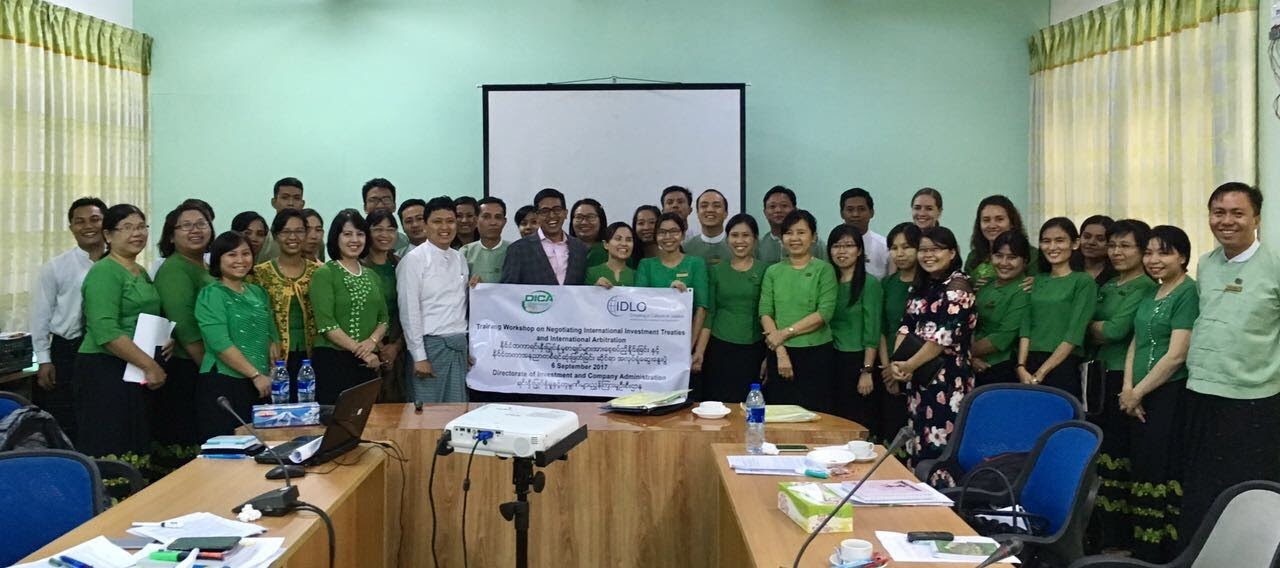
Undertaking training for the Government of Myanmar
7. Can you tell us about your PhD thesis on Investor-State Arbitration at Harvard as well as Leiden?
Investor-State Arbitrations, sometimes you call Investment Arbitration, is a specialised form of International Arbitration. This is arbitration between a foreign investor and a sovereign state. Your Respondent is always going to be a Country or a State and the Claimant is a foreign investor. Here the foreign investor alleges violations of international law that often arise out of investment treaties or (domestic) foreign investment laws. And the dispute is resolved before an arbitral tribunal. Some examples in India are like Vodafone which brought its case against India arising out of a tax measure. This was under the UK-India investment agreement. That would be one example. These are cases against the sovereign so by nature, they tend to be highly political and long-drawn. It’s a lot of fun but there is a lot at stake.
At Leiden, my focus was on evidentiary standards in investor-state arbitration. This is a fascinating topic because international arbitration seeks to avoid detailed rules of procedure and evidence. However, a tribunal is still bound by certain evidentiary rules. The process was to identify what principles of evidence could be derived from the general practice of states and from public international law that would bind tribunals. I was very privileged to receive the Academic Prize from the Belgian Arbitration Center for my research.
My current research at Harvard looks at the intersection of human rights law and investor-state arbitration. Investment disputes often tend to implicate human rights. For example, an investor may allege that a state policy implicates the right to fair and equitable treatment but the state may seek to justify its actions on human rights considerations. My research seeks to unpack this tension between investor protection and human rights.
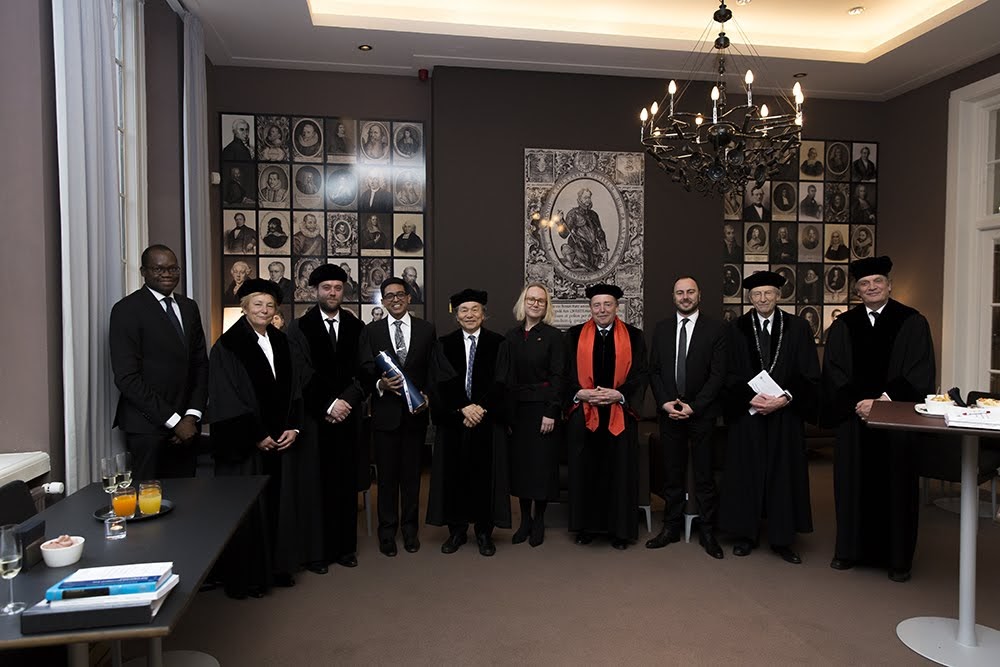
The image is following the Leiden Defense
8. You have been teaching at Columbia for nearly a decade now, and have taught at Madrid, Georgetown University, India, Harvard to name a few that pulled you towards it as given your qualifications you could have easily taken a corporate job or started practising given that you are qualified to practice in New York (U.S.), Washington D.C. (U.S.), England & Wales (Solicitor), Maharashtra and Goa (India)?
I have always wanted to teach. As of this year, I have completed twelve years of teaching. Indeed, when I had started some of the students at Columbia University were older than I was. I enjoy it. It is something that I enjoy. I am a big believer in people doing things that make them happy. If something makes you happy, go for it.
9. You are a part of the Rising Arbitrators executive board, Consultant for the United Nations Office of the High Representative for Least Developed Countries, Landlocked Developing Countries and Small Island Developing States (UN-OHRLLS), you have published over 40 articles and spoken at over 300 arbitration events across the globe, what inspires these endeavours?
Thank you, All these are things that are fun, I enjoy them. I like writing, speaking, and meeting new people. When you do something you enjoy, it does not seem like work. Some of these activities are also opportunities to make a difference and so I feel particularly privileged to have the opportunity to do so.
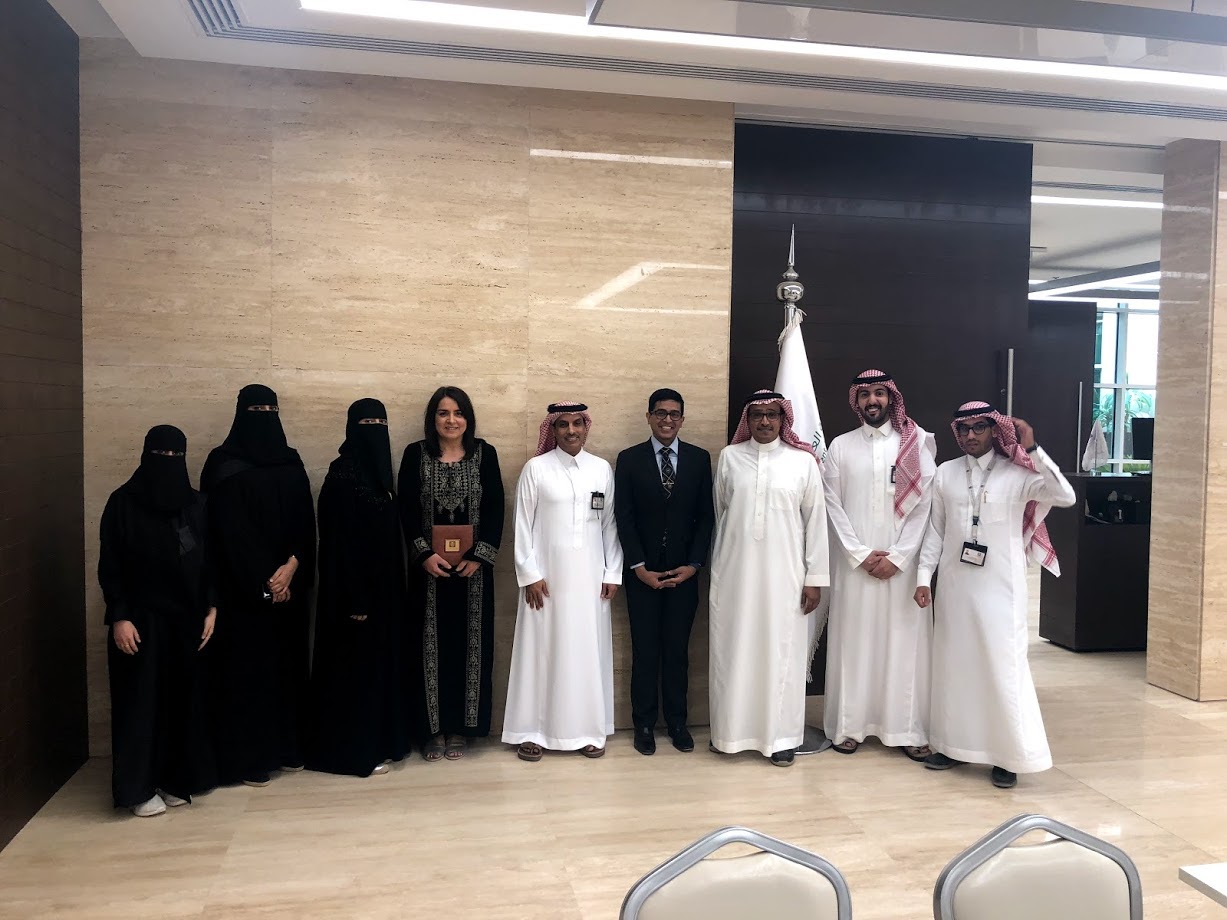
Undertaking a Government Training with Representatives from Saudi Arabia (which is my country of birth)
10. You started your journey as a law student in 2001, in GLC you have been part of this fraternity for 20 years now. What has changed for you in this passage of time?
When I went to law school there was only one national law school. NALSAR & NUJS had started and they still hadn’t had even the first set of students who had graduated. If we look at the legal landscape in India today it is very competitive. With the proliferation of law schools and people with ambition, it is a rather different reality.
Indeed, when I was in law school, there was some amount of stigma in studying law- “You can’t do anything. So, you’re doing the law.” So, I think that would be the biggest change. There’s a lot more dynamism. The law students are a lot more dynamic and are a lot more willing to be enterprising and that’s a good thing. We are seeing the market evolve as well– for example, we are seeing greater think-tanks, non-profits, academic avenues in India. All this is great for our profession. When I graduated, legal education was still in the nascent stages. I look at it now though, you have people who are very thoughtful scholars today; people who are really engaged. That’s good for India at large. The profession is in better shape than when I was in it. So I look at it as a good thing. It’s becoming quite similar to the American model- very competitive, but the people who get into big law, so to speak, have a very steady career path set for them.
11. How often have you been the only Indian in the room? Do you think silent racism towards Indians or Asians still persists or they’re still underrepresented in board rooms and classes?
I think this is a great question and is worth addressing. Does racism exist? The answer is yes. Does racism exist against Indians in the law field in the west? I think the answer to that is also yes. It may not always be direct or overt but it does exist. If we look at the United States, Indian Americans have done extremely well in business, science, technology, engineering. That has still not been the case for the legal profession. But hopefully, things will change and we should always strive to do two things. First, we should always be aware of the privileged position that we are in and we should try, whenever we see bad things happening, to stop it. We’re lawyers and we are in a privileged position to stand up to injustice. There are people who don’t have that, both in India and in the US, and it’s important for us to stand up for injustice (this can often be taking a stand against innocuous sexist or offensive stereotypes). The second point I would just mention is, last year in the US (although this is not unique to just the US), you looked at violence against African Americans and then Asian Americans, which really got us to reflect on the inequities that exist even in our profession. We, therefore, launched an initiative called REAL- Racial Equality Arbitration Lawyers and one of our goals there is to advocate and give access opportunities to people who otherwise don’t get it. We give a lot of scholarships to attend arbitration events which can often be very expensive. I would encourage the viewers to look at this if they’re interested in arbitration, these are put on our LinkedIn Page: https://www.linkedin.com/company/real-racial-equality-for-arbitration-lawyers. We are free to join the organization so if you are interested, consider signing up.
12. What are a few pieces of advice you’d like to give to students or lawyers who want to pursue foreign education through scholarships?
First, You need to start the planning process early. There will be an academic component and there will be an extracurricular component, both are important. Make sure you’re not doing one at the cost of the other. Sometimes you see people who have done like 15 moots, leadership positions in many organizations but grades are mediocre or you see people who’ve only focused on grades and done nothing else. So my suggestion is to find a good balance.
Second, have a nice consistent narrative to tell. Can your narrative change? Yes, it can. Tell it in a manner that’s interesting, that’s personable, but reflect a little bit on your story.
Third, pay particular attention to scholarships and see the requirements that they have as well as the deadlines.
Fourth, access your financial situation and make an individual assessment of whether or not it makes sense for them to pursue higher education if you have to take out a loan. Be prepared for the best and worst-case situation. Jobs outside India are few and far between and highly competitive.
Finally, consider the visa reality. This is probably one of the areas that are not within your control. This is increasingly becoming harder and harder, as countries are restricting immigration. So when you’re doing your pros and cons, you really need to factor in this reality.
13. It is known to us that apart from Hindi and English, you are fond of Urdu and have learned Spanish and Sanskrit as well, what are some of your favourite reads?
I think with time my interest has been becoming greater and greater in reading books on history. And my specific focus, not exclusive, but the specific focus has been on reading about different aspects of Indian history. When you don’t live in India this is one way to remain connected with your heritage. I am currently reading the Age of Wrath by Abraham Early that discusses medieval India (even though the book focuses on the Delhi Sultanate there is a very interesting discussion on the Vijayanagara empire as well).
14. In your opinion, how will pandemic change the way we perceive education? Do you think it has achieved the philosophy of the world being a big classroom?
The pandemic has definitely caused a lot of suffering. I will acknowledge that at the outset. Having said that, some good things have come out of it. And one good thing that has come out has been embracing technology. There is something to be said for in-person meetings but there’s something to be said for having opportunities like this where you can talk to people across time zones, across different countries. So, hopefully, post-pandemic, we keep some of this alive. The world has become a lot closer.
15. How does it feel to be a source of inspiration for so many people?
I am very grateful to hear this and am touched that people feel inspired. I believe that my journey has still just only started 🙂
16. What would be your parting advice to students and everyone dares to dream big?
Have a plan and go for it. Dream big and also be realistic. But there’s nothing wrong with aspiring. Take advantage of avenues around you. Avenues like Law Sikho didn’t exist when I was in Law School. Take advantage and be positive, failures will happen and that’s fine. To quote Kelly Clarkson- ‘What doesn’t kill you, probably makes you stronger. Therefore, take charge of your career.
Never Miss Out on Important Updates!
Subscribe to notifications and get instant alerts for everything that matters to you. Stay ahead with real-time updates!
Allow notifications
Enable notifications to get the latest updates, tips, and insights delivered straight to your device.
Click "Allow" on the browser popup to subscribe.
If the modal does not open automatically, then follow these steps.




 Allow notifications