You began your academic journey with a background in commerce and CS before pursuing your LL.B. What inspired this transition, and how did your early education shape your understanding of law?
Honestly, law wasn’t something I had planned from the beginning. I was sitting with my mother one day, completely confused about what to do next. I told her I wasn’t really interested in commerce, and she laughed and said, “Hamare ghar mein koi lawyer nahi hai, aur tumhara toh waise bhi ladai-jhagde ka dimag chalta hai — law kar lo.” It was said jokingly, but somehow it stayed with me. The very next thing I knew, I had taken admission in Madhusudan Law College.
Once I started studying law, I realised how naturally it connected with the way I think — questioning, reasoning, and standing up for what feels right. My commerce and CS background gave me a habit of thinking logically and paying attention to detail, which later helped a lot in legal drafting and understanding case records. Looking back, that light-hearted moment with my mother actually became the turning point of my life.
During your initial years of college and early practice, what key lessons or experiences prepared you for active litigation? Was pursuing litigation something you had always envisioned for yourself?
To be very honest, during college I was never one of those overly serious law students. I used to bunk classes quite often and sit under the neem tree with friends. I was very active in co-curricular activities- debates, events, organizing functions, but attending regular lectures was never really my thing. At that time, I hadn’t even imagined that I would actually take up litigation one day.
Things changed when I moved to Jodhpur in 2016. In 2018, I joined the trial court, and honestly, it was a tough beginning. I had no friends here, no contacts, and I didn’t know how I was going to find my place in a completely new professional circle. Those initial months: almost eight to nine, were all about learning by observing and surviving through small but meaningful experiences.
Later, I shifted to the High Court, and that’s when I realised that maybe this was exactly where I was meant to be. Looking back now, I feel choosing litigation was one of the best decisions I’ve made. It challenged me, shaped me, and made me value the strength that comes from starting all over again in a new city, purely on your own effort.
You have been practicing at the Rajasthan High Court across diverse areas such as commercial law, property disputes, arbitration, and criminal matters. How did you build versatility across these domains and manage all matters effectively?
Over time, I’ve handled a variety of matters, from commercial and property disputes to arbitration and criminal cases, but if I’m being honest, criminal litigation is my real zone. It naturally suits my personality. I’ve always been someone who believes in standing firm, not getting intimidated, and saying things as they are. That fearless side of me connected very well with the criminal side of practice.
In criminal law, you learn to read people, their behaviour, mindset, and what drives them. Understanding how a criminal thinks or reacts is not just about law; it’s about human psychology, and that’s what makes it so fascinating. It gives you a different kind of edge and maturity as a lawyer.
For female lawyers especially, criminal litigation adds a certain strength to your personality, it teaches you how to hold your ground in tough spaces. Over time, I’ve realised that while I enjoy working across different branches of law, criminal litigation brings out the most fearless and analytical version of me.
You have also been actively contributing as a pro bono lawyer. What motivates your involvement in public service, and how have these experiences shaped your understanding of access to justice?
I’ve always felt that the purpose of being a lawyer shouldn’t just be limited to luxury litigation or earning money. Somewhere, we tend to forget that the law was made for people who actually need its protection the most. Around my own neighbourhood, I’ve seen so many individuals who quietly suffer because they don’t even know their rights, they simply don’t have the awareness or resources to seek help.
That’s why I take my legal aid work very seriously. The Legal Services Authority often appoints me in such cases, and I consider it both a duty and an honour. One case that really stayed with me was an MTP (Medical Termination of Pregnancy) matter involving a minor rape victim from a very difficult background. She was completely unaware of the legal process, and time was crucial. Managing that case made me realise how powerful our profession can be when used with empathy and urgency.
At the end of the day, I truly believe that we become lawyers in the real sense only when we stand beside those who genuinely need us. The real purpose of this profession lies in restoring someone’s faith in the law. When people see that justice can actually protect them, their trust in the system grows stronger, and that trust, once earned, is the most meaningful reward a lawyer can ever receive.
As a panel advocate for the Rajasthan State Legal Services Authority, what has been one of the most challenging cases you’ve handled, and how did you navigate it?
Every legal aid matter has its own challenges, but one case that I will never forget was before a Division Bench. I was representing the respondent father in a matter involving a 9-month-old baby who had been given in adoption without informing the natural mother.
Even though I was appearing for the respondent, the case affected me deeply. When the court finally directed that the baby be handed back to the natural mother, the entire courtroom turned emotional. On one side stood the mother who had given birth, and on the other, the woman who had cared for the baby and nurtured her for months. Watching both of them break down was heart-wrenching.
That day reminded me that law isn’t always about right or wrong, sometimes it stands between two truths, two emotions, and two lives. Even the Hon’ble Bench remarked that while everyone felt the pain, law is law. That moment taught me that as lawyers, we must carry empathy with firmness, to feel the human side of justice while still upholding the legal one.
Alongside your legal practice, you have written articles for reputed publications on issues such as gender equity and the experiences of women in law. What inspired you to explore these themes, and how do you see the role of women evolving within the legal profession?
Whatever I’ve written so far has come from what I’ve actually seen and felt inside courtrooms, not from theory, but from daily experiences. I’ve seen how small things, which often go unnoticed, slowly create barriers for women in this profession. Everyone talks about gender equity, but very few actually address the uncomfortable truths behind it.
Through my writing, I’ve tried to reflect what many women advocates silently feel but don’t say out loud. These are thoughts that belong to all of us — I’ve just tried to put them into words. Because if we don’t speak, how will anyone know where the problem truly lies?
Yes, things are changing, but the pace is slow. Still, I genuinely believe that women are no longer just part of the legal system — we’re shaping it, questioning it, and giving it new meaning. And if my articles can make even one person pause and think about these realities, I feel I’ve done something worthwhile as both a lawyer and a writer.
You have represented clients before multiple forums, including the Rajasthan High Court, Commissions, and Tribunals, and have also appeared in various Public Interest Litigations. What is your perspective on the evolving scope of PILs and their significance for the legal community?
Public Interest Litigation, in its true sense, is a beautiful concept — it allows the court to hear those who otherwise have no voice. I’ve been fortunate to work as amicus curiae in matters like the Nari Niketan case and the suo motu matter related to stray animals, both of which dealt with genuine issues that directly impacted public welfare. These cases made me realise how meaningful PILs can be when handled with sincerity — they push real change, bring accountability, and ensure that the law reaches beyond individuals to society at large.
But the truth is, over time, I’ve also seen how this concept is being diluted. Many people now file PILs without proper groundwork or genuine cause — just to gain attention or to keep their names in circulation. Because of such misuse, even genuine petitions sometimes don’t get the seriousness they deserve. That’s the sad part — when the noise of the unnecessary hides the voice of the necessary.
As lawyers, we carry a responsibility to preserve the sanctity of PILs. If we treat it with respect and care, it can remain one of the strongest instruments of justice in our system. For me, being appointed amicus and working on causes that truly matter has been both humbling and grounding — it reminds me that law is at its best when it serves humanity, not headlines.
With experience spanning civil, criminal, and commercial practice, what moments have most shaped your perspective toward the practice of law?
When I look back, I feel even small incidents can shape your entire perspective as a lawyer. I still remember one moment from my early days in practice. I had just joined my senior’s office, and one day, my matter was listed before a Division Bench. I requested an adjournment because I didn’t have the file — the staff had taken it, assuming it wouldn’t be listed.
But the court refused and said, “No adjournment. Madam Borana, how long will you keep asking for adjournments?” For a second, I went blank. I said, “My Lords, I have no instructions to argue.” The Bench replied, “We’ll give you the file, you argue.”
That moment hit me hard. I gathered courage and said, “My Lords, it’s not that I don’t argue — I just never got the opportunity in your court. You may ask me any facts from the file, and I’ll answer.” That one push changed everything. Later, I realised the judges weren’t being harsh — they were motivating me. And interestingly, the same judge today appreciates my work the most.
That incident boosted my confidence and reminded me that sometimes the courtroom itself becomes your best teacher. Every tough moment, every unexpected challenge — they all prepare you quietly for what’s next.
What core principles have guided you throughout your career, and what advice would you offer to young lawyers aspiring to build an independent practice in the High Courts?
This profession tests you in every possible way, emotionally, mentally, and even morally. What has always guided me through it all are three simple principles: honesty, preparation, and patience.
Honesty — because in the end, the court can always sense your intent. Preparation — because confidence in the courtroom doesn’t come from personality alone; it comes from the hard work you put in behind the scenes. And patience — because growth in litigation doesn’t happen overnight. You have to show up every single day, learn, observe, and keep your calm even when things move slowly.
My advice to young lawyers is simple — don’t wait for confidence; build it through preparation and persistence. Read your files as if they’re your responsibility, not just your assignment. Respect the court, stay consistent, and never let rejections shake your foundation.
As for myself, I wish to continue strengthening my independent practice and focus on matters that hold both legal and human value. Law, for me, is not about fame or success — it’s about ensuring that justice is not just delivered but also felt.
Sir, you have extensive experience in civil and criminal disputes, arbitration and various other areas. What initially drew you to law, and how did you develop your specialization in dispute resolution and corporate advisory?
If I reflect back on my journey as an advocate, I think the initial seeds were sown during my school days at Salwan Public School. Although I come from a science background, I was greatly influenced by my teachers at Salwan Public School who taught me social science and environmental studies during the initial days. At a very young age, I had developed strong views on critical topics such as caste reservation, women emancipation, global warming etc. Later on, Amity Law School propelled me further on my path towards social awakening where law was taught not only as a discipline but as a tool for bringing social change. I was greatly influenced by my professors who taught us subjects like Political Science, Law, Poverty & Justice and Jurisprudence which added fuel to the fire of my curiosity about this fascinating field. The turning point in my life was my internship experience with veteran leader of the Bar, Mr. R.N.Vats, Advocate, and time that I have spent in his chambers just kept sucking me into the field of law like a black hole even though initially I started my career in the corporate field as a management professional but eventually since my calling was always law so I went back to his chambers to master the essentials, understand the rudiments and get a solid foundation. As far as developing specialization in dispute resolution and corporate advisory is concerned, destiny has a role to play in it. It is a rule that if a lawyer’s diary permits, he must not say no to any brief which calls upon him. Following this principle and given my prior corporate experience and extensive network owing to my IIM roots, I started getting a lot of work initially in corporate advisory through my colleagues and friends. I was also lucky to get support from like-minded, hardworking, accomplished and brilliant colleagues from the Bar like Dr.Amit George & Mr. Sushant Singh, Advocate, who recognized and acknowledged my talent at an early stage of my life and entrusted me with complex briefs which required meticulous preparation and attention to detail which helped me develop my specialisation in dispute resolution over the time.
After completing your law degree, you transitioned into management and HR leadership with prominent organizations before returning to law. What motivated these career shifts, and how have these experiences complemented your legal practice?
Although, I always had a strong inclination towards the field of law but my curiosity and desire to explore other walks of life, while I was still young, led me to pursue the field of business management, when the life presented me with an opportunity to specialise in human resources from the Indian Institute of Management Ranchi. My experience at IIM Ranchi was a game changer for me, giving me much needed corporate and international exposure.
Interdisciplinary studies and holistic view about different areas of human knowledge is essential in shaping world view as law is a field which requires an open mind not having a myopic view. Very often the written code and precedents may blind us and seemingly show a dead end, but creative interpretation is necessary to do justice while at the same time respecting the code. This is why law is such a dynamic field and poses intricate challenges before jurists and lawyers all the time. The underlying motivation for me was to keep learning and growing my perspective and widen the lens through which I see the world. My experience in leadership roles with prominent organizations has led me to understand and appreciate the bottom-line pressures and regulatory challenges which businesses face while achieving corporate objectives in an ethical and legal way which has in-turn helped me to think more practically about law and regulations rather than focus on theory. My corporate experience and exposure has helped me to find innovative solutions for my clients to resolve business disputes often by way of mediated settlements in a faster way not requiring prolonged litigation.
Your practice spans dealing in sectors like FMCG, automobile, construction, and more. What are the major regulatory challenges you encounter today, particularly in the automobile sector, and how do you advise companies to navigate them?
The automobile sector is one sector which has a strong lobbying with the government when it comes to aligning national policies with domestic interests. Unfortunately, the entire ecosystem and infrastructure, roads etc. are still lacking and not conducive to pave the way for future technologies and international players to enter the market. If we have to provide high class mobility for a billion and a half Indians, our automobile sector needs to buckle up. The world is miles ahead and our automobile sector is lagging behind facing immense pressure from environmentalists and lawmakers. Another aspect is safety concerns on Indian roads and fast changing regulations, emission standards which constantly require upgrading technology to meet the changing demands. There are several sectors aligning closely with automobile sector and dependant on automobiles for survival including spare parts industry, oil and lubricants (where counterfeiting and trademark infringement is rampant), tyres, auto-insurance & loans (our courts are filled with accident claims and cases of loan defaults), e-taxi/cabs services etc. which pose unique legal challenges of their own. The second hand automobile market has its own qualms and now there are new big players in automobile rentals and second-hand sales who have entered the market and disrupted the scene. Second hand sale of luxury/ultra-premium vehicles is on the rise and inter State pricing differential helps in cost arbitrage and savings for the customers due to lower regulatory life of diesel vehicles in certain states. We have seen a rise in the number of consumer disputes against automobile companies. Very often, the contracts with dealers and distributors, service providers etc. are loosely worded without delineating properly the liabilities which arise out of “deficiency in service” beyond standard warranties. Moreover, there are emerging service aggregators who are going to dominate the auto-service sector in the near future and they are likely to plead intermediary immunity in cyber space. From the legal and regulatory standpoint, it is important to have proper demarcation between different business verticals providing connected services, revisit standard warranties and business contracts and implement a robust 100% compliance approach. Litigation is unavoidable in this sector, however, when it dawns it is important to pursue the cases diligently with coherent strategy keeping in mind long term implications in such a dynamic environment. The electric two-wheeler space is buzzing with emerging players and keeping litigation costs low early on is a challenge especially when India is a vast country and finding adequate legal representation in remote areas still remains a challenge as proceedings are dominated sometimes by local language which is a barrier in itself.
Balancing a wide-ranging practice that includes litigation, arbitration, advisory work, and pro-bono work, how do you manage competing professional demands while maintaining personal balance?
Although we lawyers have the liberty to work from home, from what I have seen in the legal industry, balancing competing professional demands and maintaining personal balance is the biggest challenge in life of all accomplished lawyers and even the senior-most lawyers in the fraternity struggle with this. A healthy mind dwells in a healthy body so maintaining physical health must take priority for anyone who wants to pursue this field with passion. Over the time, I have realised the importance of maintaining balance and spending time with family and pursuing hobbies which although initially is difficult to maintain in this profession but over the time with experience and clever self-management hacks coupled with prioritizing techniques can help solve this problem to a large extent. Having a schedule and following a routine is thus important which helps divide time between competing demands. From what I have learnt from senior members of the Bar, being a lawyer is all about staying in balance which is a constant struggle.
For young lawyers and professionals aspiring to specialize in litigation and corporate advisory, what key skills, experiences, or interdisciplinary knowledge would you recommend prioritizing early in their careers?
It is important to develop the skill to question everything and think critically but patience and tenacity are key virtues required in this profession which can be acquired early on by following a spiritual path from the very beginning. Further, reading religious scriptures (without becoming a fundamentalist) also helps in developing virtues of patience and diligence. I recommend reading literature in human psychology and how our understanding of the functioning of the human brain, habits and behaviours is used in modern business landscapes as a marketing and business strategy to advance corporate interests. This coupled with critical thinking is useful in separating truth from lies in this modern world of instant broadcast. Besides, it is absolutely essential to have good command over the English language and develop computer skills which can enhance your productivity and speed in a firm environment. Legal research and drafting are two pillars of litigation that go hand in hand and one complements the other. These are the basics which will give you impetus to start with confidence in your journey.
Reflecting on your multifaceted career spanning legal practice, HR leadership, and advisory roles, what guiding principles or lessons have shaped your success, and how would you advise the next generation to approach complex legal and organizational challenges?
There are certain guiding propositions which I strongly believe in which have helped me carry on and prosper in this profession. The most important is that when I took the decision to enter litigation, I strongly believed and I still do, that there is no Plan “B”. I will not turn back at all and I will die as a lawyer. This approach has helped me stay firm to my resolve to pursue litigation even amidst personal adversity.
The second principle which I strongly believe in is that if you pursue the field of litigation over the time span of 15-20 years, the odds of your success are more than the odds of failure provided you remain honest, hardworking and dedicated to learning from mistakes. I have seen lawyers struggling with even basic English language in the beginning but over the time span of 5-6 years they have mastered the ability to navigate court systems and procedures with ease and that’s only because they kept on going.
The third most important principle is to remain content with steady progress and growth. Very high ambitions can soon turn into disappointment. As they say Courts are not meant for unjust enrichment but only compensation for loss, similarly litigation being the profession which commands highest standards and respect can help you earn a decent livelihood but if you want to become rich then go do some business or take up some other career path. With time though, sincere and dedicated lawyers do become rich but their motivation is not to earn money which is rather a natural consequence which flows from being a trusted advisor.
As far as approaching complex legal and organizational challenges is concerned, my advice would be to sit, live and breathe with files as long as you can and just keep going at it till the complexity dissolves. In the early stages of my legal career amidst the hustle, I specifically made time to read and analyse case files in silos which helped me in understanding the facts properly and then apply legal principles to a given set of facts. It is important to take charge and lead the brief from the front.
There is nothing which you can’t do or understand. If others can do it, you can also do it, you just need to believe in yourself and keep your confidence high. When you are genuinely stuck just reach out and seek help from your mentors and seniors at the Bar. Bar is a very resourceful asset and my experience has been that members of the Bar are not competitive rather co-operative. I have learnt how to tackle complexity extensively from fellow colleagues and senior advocates over morning walks, informal discussions etc. but most importantly from court room experiences. There’s a saying in courts that if you absent yourself from courts for more than three consecutive days, then a lawyer is considered dead. So, make it a habit to visit courts daily and interact with members of the Bar where the maximum learning happens.
Ma’am, you have extensive experience in litigation, arbitration, and white-collar crime. What initially drew you to law as a career? How has your approach evolved over the years?
I was drawn to law by a deep interest in how it shapes society and protects rights. From the start, I saw it as more than just statutes, it’s about people, justice, and creating real impact. Over the years, my approach has evolved from simply arguing cases to offering holistic solutions. Handling complex disputes in arbitration, construction, corporate matters, and white-collar crimes has taught me to blend legal strategy with commercial insight and human understanding. Today, I focus on resolving conflicts in a way that is not only legally sound but also practical and aligned with my clients’ broader goals.
Having completed your law degree, what motivated you to focus on arbitration and alternative dispute resolution, and how did your education shape your career trajectory?
My interest in arbitration and alternative dispute resolution grew during law school, but it truly took shape during an internship with BHEL, where I was first introduced to the practical side of arbitration. Seeing how complex commercial disputes could be resolved more efficiently and collaboratively outside traditional courts left a deep impression on me. This experience, combined with my Advanced Diploma in ADR from NALSAR, strengthened my resolve to pursue this field. It taught me to view disputes not merely as battles to be fought but as challenges to be resolved strategically, with solutions that balance legal precision and business realities. That foundation has shaped my career path, enabling me to build a strong practice in construction arbitration, commercial disputes, and complex contractual matters, where I focus on delivering outcomes that are both effective and commercially viable.
You founded your own practice, handling complex and high-stakes matters. Which early experiences laid the foundation for establishing your independent practice, and what challenges did you face in building it?
My early work in litigation and arbitration, particularly before High Courts, tribunals, and arbitral forums, laid a strong foundation for building my independent practice. A pivotal part of this journey was my longest professional association with H&A Associates, where I had the privilege of working under the guidance of Mr. S.W. Haider, one of the finest mentors one could have. His mentorship and insight shaped my understanding of complex legal strategy and advocacy at a very early stage. During this period, I gained vast experience handling high-stakes disputes, including those involving major government authorities such as Indian Railways, NHAI and CPWD. This experience gave me the confidence and capability to establish Law Chambers of Pooja Dua. Although building an independent practice came with challenges from creating a strong client base to managing multifaceted matters each milestone strengthened the firm’s foundation. Today, it stands as a multi-specialty practice known for handling intricate disputes with legal precision, strategic foresight, and client-centric advocacy.
Your practice spans both domestic and international arbitration, particularly in infrastructure, construction, and industrial projects. How do you navigate the strategic and procedural differences between domestic and international arbitration?
Domestic and international arbitrations may share the same foundation, but they demand very different approaches. In domestic matters, especially in infrastructure and construction disputes, the focus is on procedural efficiency and aligning with Indian laws and judicial precedents. International arbitration, on the other hand, brings in added layers different institutional rules, cross-border legal issues, cultural nuances, and enforcement across jurisdictions. My experience in both has taught me to adapt quickly and plan strategy from the outset, ensuring the process is not only legally sound but also practical and commercially effective for my clients.
Having handled a variety of cases, could you share a particularly challenging dispute or arbitration, and how you approached dealing with such a high stake matter?
One of the most challenging matters I handled was a multi-crore construction arbitration against a government authority, involving complex technical issues, strict contractual timelines, and significant financial exposure for my client. The stakes were extremely high both commercially and reputationally. My approach was to go beyond pure legal strategy: I collaborated closely with engineers and technical experts, dissected every contractual clause, and built a case theory that combined legal strength with technical clarity. Anticipating and countering the other side’s arguments well in advance proved crucial. Ultimately, our meticulous preparation and strategic advocacy led to a favourable award, reaffirming my belief that success in high-stakes disputes lies in deep preparation, multidisciplinary collaboration, and a solutions-oriented mindset.
In an era of rapidly evolving commercial, technological, and regulatory landscapes, how do you stay ahead in advising clients on emerging legal challenges, and what trends do you foresee in dispute resolution and commercial law?
In today’s fast-changing commercial and regulatory environment, staying ahead means thinking beyond the present. I focus on continuous learning tracking legal developments, technological shifts, and global best practices and aligning that knowledge with my clients’ evolving business needs. The future of dispute resolution will be shaped by specialisation, digitisation, and stronger institutional frameworks. We’re moving toward faster, tech-enabled processes, AI-assisted case management, and a more collaborative approach to resolving cross-border disputes. I believe the next decade will redefine how law interacts with business and my goal is to help clients not just adapt to these changes but use them as an advantage, turning legal foresight into strategic strength.
For young lawyers aspiring to specialize in arbitration and corporate disputes, what key skills or experiences would you recommend prioritizing early in their careers?
For young lawyers aspiring to build a career in arbitration and corporate disputes, my biggest advice is to focus on the fundamentals, strong research, precise drafting, and clear communication but never lose sight of the bigger picture. This field is about more than just legal knowledge; it’s about strategic thinking, commercial awareness, and the courage to take ownership of complex problems. Seek out every opportunity to observe proceedings, assist in drafting, and work closely with mentors. Those experiences will shape you far more than textbooks. My own journey was deeply influenced by the mentors I learned from, and that guidance was invaluable. Most importantly, stay curious and resilient. Arbitration is a constantly evolving space, and those who keep learning and adapting will find themselves not just practising law, but shaping it.
Beyond your professional work, you are engaged in advisory roles with foundations, universities, and industry clients. How do you view the role of pro bono work and community engagement in a high-pressure legal career?
For me, law has always been more than a profession; it’s a way to create meaningful change. My involvement with NGO’s and various universities allows me to use my legal skills beyond the courtroom, whether it’s empowering women, raising awareness about rights, or mentoring young lawyers. I also remain closely connected to Amity Law School, Noida, my alma mater, by engaging with students and contributing to alumni initiatives, something that allows me to give back to the institution that laid the foundation for my career.
Alongside this, I work closely with real estate developers, industry leaders, and major brands on long-term retainers, advising them on projects that shape urban landscapes and impact lives at scale. Balancing high-stakes commercial mandates with community-focused initiatives keeps me grounded and reminds me why I chose this profession, to serve, to protect, and to make a difference. These diverse experiences not only add purpose and perspective to my work but also make me a more strategic and empathetic lawyer.
Looking back at your career so far, what key lessons or principles have guided your practice in complex litigation, arbitration, and white-collar crime, and how would you advise the next generation of lawyers to approach similar challenges?
Looking back, one of the most important lessons my career has taught me is that there are no shortcuts in law, success is built on unwavering commitment, deep preparation, and continuous learning. Whether dealing with complex litigation, high-stakes arbitration, or white-collar crime matters, I have always approached every case with integrity, precision, and perseverance. Equally crucial is the ability to look beyond statutes — to understand the human, commercial, and strategic dimensions that shape every dispute.
My journey, from working under the exceptional mentorship of Mr. S.W. Haider at H&A Associates collaborating with legal firms like Panda Law, and ultimately establishing Law Chambers of Pooja Dua, has reinforced the value of resilience, curiosity, and purpose at every stage. Each experience has contributed to the lawyer I am today and strengthened my belief in the transformative power of the law.
To the next generation of lawyers, my advice is simple: master the fundamentals, seek out mentors who challenge and guide you, stay curious, and always remember that the law’s ultimate purpose is to serve and deliver justice. Embrace challenges as opportunities, not obstacles, and let hard work and integrity be the cornerstones of your practice. If you do that, you won’t just succeed, you’ll help shape the future of the legal profession.
You began your independent practice right after law school, at a time when structured platforms for women litigators, especially in criminal defense, were limited. What inspired you to take that bold step so early in your career?
While studying law I realised that in Mumbai there were few structured opportunities for young women who wanted to build a career in criminal defence. Starting my own practice straight after graduation was a risk, but I wanted to create the kind of ethical and professional environment I had hoped to find. With strong support from my family, particularly my father, I began with pro bono work and built it one brief at a time. Those early choices continue to define our commitment to transparency and high professional standards.
Having completed a decade in the profession, what initially motivated you to pursue law, and how did your experiences in law school deepen your understanding of the subject and shape your decision to take up litigation as a career?
In high school I was active in debate and attended a Youth Conference at the United Nations in New York. Those experiences sparked an interest in advocacy and public affairs. I once considered becoming a commercial pilot but soon realised I wanted a career that allowed me to think critically and work closely with people. By the time I completed my law degree, litigation felt like a natural fit.
Criminal defense, particularly white-collar crimes and complex litigation, is often regarded as one of the most demanding areas of practice. What drew you to this specialization, and how has your experience in this space evolved over time?
Litigation is demanding but deeply rewarding. In criminal defence, defending rights and ensuring due process is both challenging and meaningful. Some of the most intellectually engaging matters have involved clients who cannot pay, where the work is driven entirely by principle. The hours are long and the stakes are high, yet the practice remains fulfilling. Persistence is key to sustaining a career in this field.
You have handled high-profile and complex matters involving banking fraud, narcotics, and serious criminal charges. Could you share an experience that was especially challenging, and how you prepared yourself to handle it effectively?
Early in my career I learned that knowledge of the law is only one part of effective practice. Litigation is about people, strategy and navigating systemic realities. The unpredictable nature of the justice system taught me to create internal processes that bring order to a naturally chaotic environment. We built systems to manage complex briefs while staying client focused and transparent. These lessons continue to guide how our team approaches every case and every client. Because we are active litigators, we bring a trial-tested perspective to all our non-litigation work. Our courtroom experience sharpens the way we draft contracts and structure transactions, and our work in criminal defence makes us particularly attentive to compliance and risk. This combination of skills allows us to offer advice that is both practical and strategically sound.
As the founder and managing partner of Khemka & Associates, your practice has grown far beyond criminal defense into areas like consumer law, insolvency, family law, and cross-border matters. How do you manage these wide-ranging responsibilities while balancing your personal life?
Balancing a litigation practice with personal life is never simple. I have been fortunate to have the support of family and friends from the very beginning. A turning point came when my younger sister, who trained with us while still in law school, formally joined the practice. Her distinct skill set enabled us to expand confidently into areas such as arbitration, consumer law, insolvency and family matters. With a strong team culture and shared values we have been able to grow while staying true to our commitment to professionalism and client service.
You have also dealt with cases involving immigration law and cross-border issues. How have these experiences influenced your practice, and what unique challenges have you faced in handling such matters?
Cross-border matters require working across jurisdictions and cultures. My early international exposure helped me collaborate effectively with foreign lawyers, but the real challenge lies in understanding different legal systems, managing clients across time zones and coordinating procedures. These experiences have strengthened our ability to handle complex briefs and positioned us as a practice that combines local expertise with a global perspective.
Mentorship has been an important part of your journey, particularly in creating opportunities for young women lawyers. What values guide your approach to mentorship, and how do you envision the next generation of litigators evolving in India?
More young women are entering the legal profession, but those who stay the course in litigation, particularly in Mumbai, are still relatively few. Many leave for personal reasons or because of a lack of sustained professional support. At our firm we make mentorship a priority, passing on the values that define our practice: open communication, an insistence that no task is too small or too big, and a belief that consistent effort and hard work are irreplaceable. As technology transforms courts and practice management, it will be inspiring to see how the next generation of litigators shapes this changing landscape.
Having appeared before diverse forums ranging from trial courts to the Supreme Court and specialized tribunals, what key differences have you observed in the way proceedings are conducted in every forum, and how do you adapt your strategies to navigate these differences effectively?
Each forum has its own rhythm and expectations. Trial courts require agility and a deep command of procedure. Higher courts demand precision and a focus on legal principles. Specialised tribunals often call for technical expertise. Every judge manages their docket differently. Success, apart from the merits of the case, depends on quickly understanding these nuances and adapting advocacy accordingly. Clarity, professionalism and thorough preparation remain the constants across every forum.
Finally, after building an independent practice and establishing a recognized firm, what advice would you give to law students and young advocates who aspire to follow a similar path? What has been your source of motivation over the years, and how do you continue to stay inspired for the future of your practice?
Litigation has some significant barriers to entry and starting independently is not easy. Whether you begin on your own or under the guidance of a senior, the training demands focus, resilience and discipline. We are all human and we will make mistakes; the more you practise, the more you learn and the better you become. Patience is key. Over the years I have found motivation in building a practice that combines the rigour of an international firm with a commitment to accessibility. We take on matters across a wide spectrum, sometimes at reduced fees or even pro bono when circumstances require, while maintaining the highest ethical standards. This blend of professionalism and service continues to guide the future of our practice.
Having over a decade of experience now, what were the initial years of your practice like? What inspired you to choose law as a career, andhow did law school help shape the foundation of your professional journey?
It’s been 10 years in this profession, yet the early days feel like just yesterday, when I was practicing in Delhi and learning to navigate the world of black and white. It didn’t take long to realize that this profession is far more about practicality than pure theory. Knowing the law and mastering your case file is essential, but equally important is understanding the judge, not personally, but in terms of their courtroom approach: their patterns, reactions, and preferences. From the very beginning, I developed the habit of sitting in court and observing judges closely. That practice, simple as it may seem, has proven invaluable throughout my journey as an advocate.
I come from a small town in Haryana called Karnal, where I completed my schooling. After that, I pursued my law degree at Amity University, Noida. My legal journey began with a litigation office in New Delhi, where I practiced for almost four years. In 2018, I moved to Chandigarh to start my own practice. As a first-generation lawyer, it was important for me to establish my name in my hometown, where I felt more connected and grounded. It wasn’t easy, there were no set plans, and no one in my family had a legal background. It all started when a cousin suggested corporate law while I was preparing for my 12th boards in 2010. I gave the entrance exams, got selected at Amity, and the rest unfolded from there.
You began your career as an associate, handling a wide range of civil litigation and domestic arbitration matters. How did this early exposure influence your approach to complex disputes, and what key skills proved most valuable in the formative years of your practice?
In the initial years of my practice as an associate, I was fortunate to be exposed to a wide range of civil litigation and domestic arbitration matters. This diversity of work taught me very early on that no two disputes are ever alike. Each case requires a tailored approach in terms of a legal strategy. What shaped me the most was learning how to balance theory with practicality. The law may be uniform, but its application depends on the facts, the forum, and often the perspective of the judge or tribunal. Observing court proceedings, understanding patterns of arguments, and seeing how small details could shift the direction of a case gave me a very grounded view of dispute resolution.
As a first-generation lawyer, what motivated you to establish your independent practice? What vision did you have when you started, and how has it evolved over time?
As a first-generation lawyer, what motivated me most to establish my own practice was the desire to build something independent, driven purely by merit, hard work, and client trust. Starting out, I had no legacy to rely upon and that became my greatest strength. It pushed me to focus on credibility, consistency, and results from the very beginning. My initial vision was quite simple: to create a practice that delivered practical, solution-oriented advice rather than just theoretical legal opinions and dragging each and every client to Court even if it could be settled outside the court. That was when Hans Law Associates was established. Over time, that vision has evolved into building a full-service firm where teamwork, innovation, and long-term client relationships are at the core.
You have represented clients before the Punjab and Haryana High Court, consumer forums, RERA, and various tribunals. How has this diverse litigation experience enhanced your understanding of dispute resolution across different legal platforms?
Representing clients before the Punjab & Haryana High Court, consumer forums, RERA, and various tribunals has given me a broad perspective on how dispute resolution functions across different platforms. Each forum has its own procedure, pace, and expectations, for instance, the High Court demands sharp legal reasoning and precedent-based arguments, while consumer forums and RERA focus more on quick, pragmatic relief to aggrieved parties. Ultimately, this cross-forum exposure has made me a more versatile advocate, able to approach disputes not just from a legal standpoint, but from a strategic, client-centric perspective.
You have handled matters before the Haryana Real Estate Appellate Tribunal, the Haryana Real Estate Regulatory Authority, and several other tribunals. What unique challenges have you encountered in this specialized field, and how do you navigate them effectively?
Handling matters before the HREAT, HRERA, Pkl, and other tribunals has been both challenging and rewarding. Real estate law, especially under the RERA framework, is indeed a booming area of practice. With rapid urbanization and increasing consumer awareness, disputes in this sector are growing both in volume and complexity. The unique challenges I’ve faced include balancing the interests of buyers and developers, staying updated on any recent precedents as it is a very new law and most importantly, ensuring enforcement of orders. While RERA was designed to be consumer-friendly, practical hurdles often arise in execution. I’ve found that navigating this space requires not only sound legal knowledge but also adaptability and persistence. This blend of legal precision and pragmatic follow-through has allowed me to add real value to clients in this fast-growing field.
As a mediator at the Punjab and Haryana High Court, how do you see ADR evolving in India? In your experience, what advantages does mediation or arbitration offer compared to traditional litigation?
As a mediator at the Punjab and Haryana High Court, I have witnessed how Alternative Dispute Resolution (ADR) is rapidly evolving in India. With rising pendency in courts, ADR is no longer an alternative but an essential tool for timely and effective justice.
The recent “Mediation for the Nation” drive initiated by the Hon’ble Supreme Court reflects this growing recognition. By encouraging parties to resolve disputes amicably, the judiciary has underlined mediation’s role in reducing litigation, promoting harmony, and ensuring quicker resolutions. I myself have seen a rise in settlements after the said initiative.
In my experience, mediation preserves relationships and empowers parties to design their own solutions, while arbitration offers efficiency, confidentiality, and subject-matter expertise. Both provide speed, practicality, and satisfaction compared to traditional litigation that may take years. With institutional support and initiatives like Mediation for the Nation, ADR in India is poised to become a truly transformative mechanism for access to justice.
You have drafted agreements for a variety of clients, including music and production companies as well as professionals like psychologists. What key challenges do you see in the entertainment sector, and how can these be addressed proactively through careful contract drafting?
Drafting agreements in the entertainment sector brings its own set of unique challenges. Unlike traditional contracts, these often deal with creative rights, intellectual property, royalties, confidentiality, and moral rights, all of which can be highly sensitive and prone to disputes if not defined clearly. One of the biggest challenges is the ambiguity around ownership of content, whether it lies with the creator, the producer, or the platform. Another is the lack of awareness among artists and professionals about the long-term implications of exclusivity clauses, revenue-sharing models, and termination rights. Proactive solutions lie in clear, precise, and balanced drafting.
What advice would you give students aspiring to enter the legal profession, and what resources would you recommend to help them stay ahead in a constantly evolving field?
My advice to students aspiring to enter the legal profession is to focus on fundamentals and be patient enough to adapt. Courtroom practice teaches you quickly that law is not just about theory but about how you apply it in real, practical situations. Developing habits like observing proceedings, reading judgments daily, and sharpening communication skills goes a long way. It’s a never ending learning process. I see a lot of individuals backing out from the profession as it may not satisfy you monetarily but once you understand the responsibilities that come with it, I am sure we are ready to go a long way. I’d also recommend building a mentor network and learning from senior advocates and peers. In a constantly evolving field, the ability to keep learning, unlearning, and relearning is the best resource you can carry with you.
Balancing a demanding legal career with personal life can be challenging. How do you manage stress, maintain focus during high-stakes matters, and create balance between your professional and personal responsibilities?
Balancing a demanding legal career with personal life is indeed challenging, but I’ve learned that discipline and perspective makes the difference. During high-stakes matters, I manage stress by preparing thoroughly as confidence in your case reduces anxiety. I also practice detachment after court hours, giving time to family, fitness, and spirituality, which keeps me grounded. For me, balance isn’t about strict separation but about ensuring that both professional duties and personal responsibilities get the attention they deserve. This balance not only helps me stay focused but also makes me more effective in my practice.
With your specialization in real estate transactions and property registration, what initially drew you to this niche area of law, and how has your interest evolved over the years?
I have grown up in a family of lawyers, who are involved in this niche practice of law for the last 40 years. I am 4th generation in this side of practice. The environment, the discussions in family and social gatherings, watching of news roam around real estate and the law; the knowledge amongst citizens on the aspect of “how important is legal consultation before dealing in real estate transactions”; the growing real estate disputes in the family as well as in the market; the challenges faced by the citizens in the property registration process; the lack of future estate planning; etc., which gave me a good kick to enter into law, focus on this side and to scale up the practice to new boundaries.
Through your practice, you have often highlighted the gap between property registration and ownership rights. What are the most common misconceptions people have when dealing with property transactions in India?
From the very starting, I have strongly believed that people are unaware or ignorant of about the most important aspect when dealing with property transactions i.e. “Title Legal Due Diligence”. This is the “laying foundation”. The money which people pay to buy a property, what exactly is that money for – is it the physical structure or the land on spot? Practically speaking, for people these are the two aspects only but wait, that value is actually weighed from “title ownership documents” which people execute and get registered. And that’s the major misconception prevailing amongst people. Even law clearly says, “Buyers beware”. If there is a discrepancy in the documents, the value you paid for that property is nothing more than a zero.
Another related misconception is that people believe drafting a document when dealing with property is “basic and regular and can be drafted on a set performa”, but no, there is no set performa prescribed anywhere in law. Any such document is a “contract” amongst the parties which govern their transaction and has to be drafted on case-to-case basis and on specific circumstances surrounding the entire transaction, overall considering the law.
As the Founder of Legal Assist, a digital platform dedicated to property and business legal services, what inspired you to establish your practice, what were the key challenges you encountered in building it, and how do you envision technology transforming the future of property law practice?
Since many years now, the property registration appointment process has been made online, which is not only cumbersome but time taking too. It is not easy for a layman to take an appointment for registration. Further, we daily see the growing disputes arising in real estate transactions and business running. We further see the irregularities and unprofessional surroundings in the conveyancing field of practice of law.
All this triggered me to develop an online platform where I can render my knowledge on the issues circumventing the real estate industry & transactions, property registrations, business industry & transactions, to help them and to make them cautious of their legal rights, obligations and safeguards. The major key challenges were to not be able to cover “all aspects/ issues” since they are vast in nature and the other was to actually make people believe in “what are the most important aspects” in real estate and business transactions.
Technology today is the key source to research and development, a way by which people can now know, read, understand the aspects and issues in real estate and business transactions. Moreover, technology is the source to transparency and accountability, as by way of technology, things are not far away to come under one roof and better control of the government, assuring people more safety, trust and “ease of doing business”.
Your work involves complex areas such as estate planning, inheritance, wills, and succession disputes. What are the most pressing issues clients face in matters relating to inheritance, and how do you guide them through emotionally sensitive cases?
The most pressing issues I see are the disputes arising among the legal heirs after the death of deceased person who died intestate or without any future planning or without informing about his/ her assets to his/ her legal heirs and further, disputes arising in cases even where a deceased left a WILL/ any other testament.
Our approach of guidance is focussed initially on amicable settlement through mediation and consultation and if not this, by suggesting an equitable outcome, after considering the law from all four corners and the circumstances in hand, in a manner which rules out future disputes.
Estate and succession planning is often overlooked until a dispute arises. What practical steps do you believe individuals should take early to avoid future litigation?
Life is so uncertain these days. The most important aspect which I feel today is for a person to have a must is to initially have a broad family discussion amongst all members and align amicably whatever a person owns amongst his/ her family members. Then I believe in an equalization policy amongst members. If all the members accept this discussion, the family shall execute an Memorandum of Family Settlement incorporating the contents of such amicable understanding. Further, members, in such case or otherwise if family amicable understanding is not arrived at or possible, shall compulsorily make a testament/ WILL for writing down their wish in “clear terms” to be followed by each member after the death of the testator.
If there’s less tunning amongst the family members and the above aspect cannot be worked out, then the best possible way is to distribute the assets during the lifetime only so that the respective beneficiary holds the same without any claim or objection from others.
As someone who started with internships at leading law firms and later built independent practice, what lessons from those formative years still influence your approach to law and property related disputes?
Clear understanding of law and being upgraded with current legal precedents; using the tool of mediation and conciliation; not merely focussing on making money but alongside guiding the client with result oriented approach. However small the matter or dispute may be, 100% efforts and hard work shall always be put.
Property and inheritance laws are constantly evolving with new judicial precedents and legislative changes. How do you stay ahead of these developments, and what recent trends do you see shaping this field in India?
My approach is to give daily an hour or more in watching the news, studying current market scenarios, blogs, judgments. By this, I am able to incorporate and utilize this knowledge in my practice practically.
The upcoming centralized digitalized unique platform where property registration, all connected data such as data from Municipal Corporation/ Development Authority etc. will be inter-connectedly available and will be incorporated with ease of doing business policy of the government. The development of digital courts for NI Act cases, MSME Samadhan Portal, Pre-litigation process in commercial cases, Mediation Act, etc. are great initiatives of the government for early disposal of recovery matters. By such initiative and upcoming legal developments, people are becoming more aware about their rights and obligations.
With such a diverse practice covering real estate, inheritance, litigation, and consultancy, what advice would you give to young lawyers who want to build a specialized yet well-rounded career in property and succession law?
Thorough understanding of the real estate market and laws covering this industry is a must. The initial aspect is to be able to practically understand the “trends” of “disputes” in industry, thereby doing research in the light of actual circumstances and find out all the possible solutions to the problem and then picking up the best reasonable one. What is the best approach “practically” must be the concern always.
Your academic credentials span law, commerce, business, and company secretaryship, culminating in a Ph.D. in Law. How has this multidisciplinary education shaped your approach to legal practice, especially at the intersection of law, business, and corporate governance?
From the very first day of my law school, I carried a clear ambition to become a world-class corporate lawyer being inspired by Jim Carrey’s story, who wrote himself a $10 million check for “acting services rendered” and carried it as a reminder of his vision and by the mid-1990s fulfilled that vision through belief and intense hard-work. Motivated by this, I wrote my own paper slip in 2010 to myself; “Dr. Milap Chopra (Gold Medallist), B.Com., LL.B. (Hons), CS, MBA, LL.M., Ph.D.” and carried it in my wallet as a visualization and constant reminder of my ambition to become a world-class corporate lawyer. With that goal in mind, I carefully structured my academic and professional journey. Alongside my law degree, I pursued the Company Secretaryship (CS) course, completing both simultaneously to strengthen my understanding of corporate law and governance. I interned at India’s leading-top law firms including Amarchand, JSA, AZB, Anand & Anand, among others, gaining exposure to top-tier corporate practice across the metro cities. Throughout the academic journey of law school, I consistently maintained meritorious performance, ultimately graduating as the Gold Medallist and batch topper of Institute of Law, Nirma University.
Yet destiny had a different plan. During the last semester of law school, my father, himself a practicing lawyer at the Bikaner Sessions Court, was elected as the First Citizen of Bikaner i.e., the Mayor of the city. He encouraged me not to take up a corporate job or join a law firm, but to pursue litigation. Respecting his guidance, I set aside the offers of a job I had received and began practice at the Rajasthan High Court, Jodhpur, as an associate in the chambers of Shri Mahendra Singh Singhvi, Senior Advocate. That experience was not just training or learning; it was an immersion into the craft of litigation, teaching me the temperament, discipline, and holistic approach required for meaningful legal practice. I am deeply thankful to God for that turn of events, because it helped me realise that true legal practice requires temperament and an inbuilt nature — qualities essential for anyone who wishes to pursue litigation meaningfully. Law is not just a profession; it is a noble calling. It remains unique in its ability to serve the public interest at large, where one’s work can directly benefit society through precedents, judgments, and observations/outcomes.
After starting practice at the Rajasthan High Court, Jodhpur, I enrolled for Masters in Law at the prestigious Government Law College, Bikaner. This required remarkable dedication as in the first year, I travelled overnight every Tuesday from Jodhpur to Bikaner to give my six exams of the first year on every Wednesday; however, destiny had other pivotal moments as well, a life-threatening road-accident during that period became a blessing in disguise which forced me to pause and reflect, doctors advised me to pursue a desk job, and for a short while, my unfulfilled corporate dream seemed to materialize and I got the opportunity to work with the PwC at Gurugram, one of the world’s Big Four Consultancy firms wherein I soon realised I was not made for the corporate world. My temperament fit litigation, not a corporate desk. During my PwC days, I also pursued an MBA, completing it under tough circumstances, often writing three back-to-back exams of three hours each on weekends, as leave was nearly impossible in corporate life. That job experience further strengthened my resolve to practice at Jodhpur and added yet another dimension to my academic journey.
Through it all, one firm belief and that paper slip has always guided me that extra qualifications add extra dimensions to one’s legal career. That conviction drove me to explore law, commerce, business, and company secretaryship, before finally pursuing a Ph.D. in Law. Today, this multidisciplinary foundation allows me to approach issues at the intersection of law, business, and corporate governance with a rare balance- offering solutions that are legally sound, commercially viable, & ethically responsible. And, finally, in July 2024, after 15 long years of academic and career journey, I added the “Dr.” prefix to my name, completing the journey I had envisioned on that first day of law school on a slip of paper. Through belief, conviction, hard work, and the courage to dream, every challenge i.e., exams, travel, job, courtroom battles, became part of the story. That slip was never just a piece of paper; it was a promise to myself, a compass that guided me to become the well-qualified lawyer I aspired to be, and a reminder that dreams nurtured with patience and perseverance truly come alive and I hope that anyone who reads this feels inspired to keep their own slips of hope alive.
Pursuing CS and Law simultaneously is both ambitious and demanding. What advice would you offer to students who are considering this path? Are there any specific strategies or resources that helped you manage both effectively and could benefit others looking to do the same?
Pursuing Company Secretaryship alongside a law degree is ambitious and demanding, but immensely rewarding if approached with purpose and discipline. From the very start of my law school, I aligned every step i.e., internships, academics, and extra qualifications with my goal of becoming a world-class corporate lawyer.
My advice would be to treat both the programs as complementary, not competing. Law builds your legal reasoning and litigation skills; CS gives deep insight into corporate governance, compliance, and business operations. Today, modern litigation often involves complex corporate matters, and understanding both legal and corporate dimensions allows a lawyer to craft strategic, holistic solutions.
Ultimately, my journey shows that combining CS and law not only prepares you for corporate practice but also enriches litigation skills. A modern litigating lawyer increasingly needs to understand business structures, governance frameworks, and compliance requirements to provide nuanced advice, anticipate challenges, and craft effective legal strategies. For students willing to embrace the challenge, the payoff is a multidisciplinary foundation that sets them apart and equips them to thrive in both courtroom and corporate boardroom settings.
In your role as Deputy Government Counsel for Rajasthan, you’ve managed cases across diverse departments like Transport, Tourism, and Water Resources. Could you share a particularly challenging case or policy issue you handled, and how you approached its legal complexities?
As Deputy Government Counsel for Rajasthan, one of the most challenging aspects has been handling cases that cut across diverse departments, from Transport and Tourism to Water Resources, Higher and Medical Education. Each case brings its own legal complexity, but the real challenge often lies in creating a channel of cooperation among multiple officers in charge of different departments and ensuring that a timely, coherent reply is filed before the Hon’ble Court. Unlike private practice, here you appear from the respondent’s side, where the responsibility is not only to defend but also to uphold the policies and decisions of the State.
In matters like appointments, recruitments, examinations, policy changes, or large bunch-transfer cases, the pressure can be immense because of the far-reaching implications for both the government and the public at large. That is why I believe success depends on three things: having a good team of associates, valuing the effectiveness of court clerks or munshi’s, and maintaining proper updation of files and continuous monitoring of case status. These seemingly small practices are actually the backbone of timely and effective representation before the Court.
My multidisciplinary background in law, commerce, business, & corporate governance has helped me approach these issues with a structured, solution-oriented mindset. Rather than being daunted by the complexity, I focus on building cooperation, managing deadlines under pressure, and ensuring that the State’s position is presented in a legally sound, precise, and persuasive manner. In many ways, these challenges mirror the lessons I’ve carried since law school that discipline, teamwork, and a holistic outlook are key to navigating the most demanding cases.
What inspired you to establish Law Compass LLP? What were some of the early challenges you faced in building the firm, and what long-term vision do you hold for its role in the Indian legal ecosystem?
The inspiration to establish Law Compass LLP came from my belief that the legal profession is not only about advocacy but about navigating people toward the best possible solutions. That’s why our firm carries the tagline: “Navigating you to the best possible legal solution.” As a co-founder, along with my Jaipur-based partner, Pranjal Singh, and our Delhi-based partner Siddharth Acharya, Advocate-on-Record, we envisioned a practice that offers clients both litigation and non-litigation expertise under one roof. Our diverse backgrounds allowed us to position Law Compass LLP as a one-stop solution for multifaceted client needs.
The early challenges were the ones most young firms face i.e., building trust, managing resources, and delivering consistent results while ensuring timely compliance. But my multidisciplinary journey, coupled with our team’s strength in corporate law, governance, and litigation, gave us the foundation to bridge gaps effectively. We worked consciously on building a system that valued teamwork, proper updation of files, responsiveness, and a client-first approach, even under the extreme pressures that litigation often brings.
What sets us apart is our functioning model. We focus not just on winning cases but on ensuring effective, time-bound relief, transparent communication, and value-driven fee structures. Like the big law firms in India, we are building a culture of professionalism, research-oriented strategy, and holistic solutions, but our boutique size allows us to remain nimble, personalized, and accessible. In this way, we hope to complement the Indian legal system by reducing delays, improving efficiency, and delivering justice in a way that clients find both approachable and dependable.
Our long-term vision is to make a meaningful difference in the Indian legal ecosystem by providing solutions that are legally sound, commercially practical, and socially responsible. We aspire for Law Compass LLP to grow into a boutique firm that is known not only for legal excellence but also for its role in strengthening trust in the system itself — making the law work better for those it is meant to serve.
You’ve represented a wide range of clients from banks and PSUs to co-operative societies and educational institutions. When handling government-related matters, what unique challenges arise, and how do you tailor your strategy to ensure effective and compliant representation?
When it comes to government-related matters, the challenges are very different from private representation. The most unique difficulty lies in the volume of cases and the strict timelines within which replies and arguments must be prepared. The pendency of cases directly impacts the smooth functioning of governance, so the responsibility of a government counsel is not only professional but also systemic.
To handle this, I firmly believe in the strength of a structured ecosystem which includes an effective court clerk/munshi, a reliable team of associates, regular updation of files, complete coordination with the OIC’s and constant monitoring of case status. Every stage i.e., from gathering factual reports, to preparing replies, to filing in the registry, to finally arguing with a well-prepared note ensuring that no matter goes unheard before the Hon’ble Court. For this, the cause list has to be noted with precision every single day, and it is the duty of a government counsel to make sure that not a single case is missed being represented. Even one lapse can have serious consequences for governance and public interest. Without that structure, government litigation can easily get derailed under its own weight.
Fortunately, under the able leadership of our Hon’ble Chief Minister Bhajan Lal Sharma ji, the State of Rajasthan has made government-side litigation comparatively smoother and more systematic. We regularly hold meetings with the Officers-in-Charge (OICs) to review pendencies, address bottlenecks, and ensure that the State’s representation before the Hon’ble Rajasthan High Court is effective and timely. This cooperation between counsel and departments allows us to tailor our strategy in a way that is both compliant and efficient, ensuring that justice is not delayed for the people we ultimately serve.
With such a strong academic foundation, do you believe that continuous scholarly engagement should be a part of every legal professional’s journey? How has your own academic work enriched your practice?
Absolutely. On the very first day of my law school orientation, Senior Advocate Shri P.M. Thakkar told us that “a lawyer is always a student” that one must remain in constant learning mode, curious to know the “why” and committed to finding solutions through knowledge. That message struck me deeply. Inspired also by Jim Carrey’s story, I wrote on that slip of paper (which I have carried since my first semester) that I would remain a learner till the last day of my life.
That conviction has shaped my journey. Even after completing my Ph.D. in Law, I regularly enroll in online courses, workshops, and other academic engagements. Today, my scholarly pursuits have come full circle, I now travel across institutions to deliver lectures, judge moot court competitions, and being a government counsel participate in government meetings and each of these experiences further refines my practice.
For me, scholarship and practice are not separate but complementary. Continuous learning sharpens my arguments, broadens my perspective, and keeps me adaptable in a fast-changing legal landscape. In essence, my academic work has not only enriched my practice but also kept me aligned with the belief that law is a living discipline and to practice it meaningfully, one must always be willing to learn, unlearn, and relearn.
Balancing a high-pressure legal practice with deep engagement in social leadership roles such as Founding Trustee of BEST Foundation Trust, Vice Chairman of JITO Youth Wing etc. is no small feat. How do you manage this balance, and what continues to motivate your commitment to social transformation alongside your legal career?
Balancing law with social leadership has never felt like a burden; it has always been a calling. Two incidents, in particular, have shaped this approach for me.
The first comes from my political legacy. My father, a deeply honest politician, always taught us that if society has given us everything, we must find ways to give back. That value has been a guiding principle in my life. With this conviction, I founded the BEST Foundation Trust “Better Education for Social Transformation”. Through this initiative, we work to make education accessible and meaningful by paying the school fees of underprivileged students, providing scholarships to meritorious ones, and creating opportunities for educational growth etc.
The second defining moment was far more personal. During a life-threatening road accident, I was in a coma for 67 hours, and I lost a dear friend in that tragedy. That experience shook me and instilled a deep realization that we only have one life and the only way to honor it is by living with purpose & making a positive difference in society.
So, even while managing the pressures of a legal practice, I consciously dedicate time and energy to social causes, supported by an effective team. What keeps me motivated is the belief that law and leadership must go hand in hand, one upholds justice in the courtroom, the other nurtures transformation in the community.
You’ve been actively involved in initiatives focused on youth empowerment and educational access. What advice would you offer to aspiring legal professionals who wish to follow a path like yours? What mindset and resources do you believe are essential for building a meaningful legal career today?
My advice to aspiring legal professionals is simple yet profound; always stay curious, always stay disciplined, and never forget to ask yourself the basic question: “Why Me?”
Whether you are arguing before My Lords, preparing for a job interview, or even praying to God to fulfill your dreams, just pause and ask, why should this relief, this opportunity, or this blessing come to me? If you can honestly satisfy yourself with an answer, if you have worked hard enough to justify it, then trust me — it will be you.
In my own journey, this mindset has been a compass. From managing rigorous studies in law, CS, MBA, LL.M. and Ph.D., to working with top firms, to practicing in court, to representing the State of Rajasthan as Government Counsel and even balancing social leadership, the “Why Me?” principle has kept me grounded and accountable. It pushes you to prepare better, to think deeper, and to act with integrity.
So, to young professionals — build your career not just on ambition, but on clarity of purpose, a commitment to continuous learning, and the courage to answer that “Why Me?” every single day. That’s what transforms a legal career into a meaningful journey.
Finally, what guiding motto or philosophy has carried you through your legal journey? And looking back, what inspired you to pursue a career in law in the first place?
My guiding philosophy has always been that law is not merely a profession, but a noble calling; a lifelong duty to the Constitution and to society at large. A lawyer is entrusted with the privilege of defending rights, upholding justice, and ensuring that the rule of law prevails over fear, power, or influence.
The inspiration to pursue this path came at a defining moment in my eleventh standard, when I had to choose my stream of study. At that time, the choices were clear — science for engineers, biology for doctors, commerce for accountants. Unsure of where I belonged, I asked my father what I should pursue. His answer changed the course of my life. Looking at my extrovert nature, my speaking skills, my temperament, and the qualities he believed reflected a good lawyer, he said to me:
“You should become an Advocate and prepare for CLAT which has only recently been introduced. And then he said something that stayed with me forever: A lawyer is not just a professional, he is the guardian of rights and the defender of the Constitution. Law is supreme; it bows before no one, and neither can a true lawyer ever be bowed or broken. To be a lawyer is to fight for justice, to stand for truth, and to give strength to those who cannot fight for themselves. If you truly wish to live a life of meaning and difference, become a good lawyer because a good lawyer can never be silenced, never be tamed.”
Those words struck me to the core. They gave me a vision of law as a higher calling, a life of service through justice. And from that day onwards, I knew this was the journey I was meant for. As a strong believer in karma, destiny, and God, I have also realized that one must remain calm, patient, and consistent. If your deeds are sincere and your conviction unwavering, everything else eventually falls into place. Life has its own rhythm, and faith in that process gives you the strength to persevere even through the toughest trials.
Looking back now, every academic pursuit, every courtroom battle, every social initiative I have undertaken has been guided by that conviction. For me, the practice of law is not just about winning cases — it is about carrying forward a legacy of courage, compassion, and constitutional duty. That is the motto that continues to carry me forward.
Coming from a family deeply rooted in public service, what inspired you to chart a different path as a first-generation advocate, and how has your family’s background in public service influenced your perspective as a lawyer?
Since childhood I had seen my parents being posted at different places in the State of U.P. I soon also realized how demanding their work was. There were times when both parents found it difficult to even make it for school events like parent teacher meetings or the Annual Founder’s Day Programme. As I grew older and came close to choosing a career, I was certain that I did not want to join the administrative services as I found them to be very demanding, unpredictable and not free from external pressures.
I chose to study the law because I knew with it, I would be empowered, independent and in a position to make a meaningful difference. Initially like most joining an NLU I too had dreams of working in a law firm but that was extremely short lived and after having interned in Courts and seen advocates make submissions, I found litigation quite attractive. I still remember as a young intern having seen Late Mr. Fali Nariman argue a matter before the Supreme Court for an entire day- though I understood little of it then but it left a lasting impact on me which only got further cemented during the course of my subsequent litigation internships.
My family’s background in public service has significantly influenced my perspective of the law. Having heard accounts from my father of his experiences from the times when he was a City Magistrate in Allahabad (now Prayagraj) till he retired as a Special Secretary, and incidents from the time of my grandfather, who was the first Director General of Police U.P., I expected and continue to expect officers to have high standards in administration and in the discharge of their functions. Often these expectations have not been and are not met. I firmly believe in the separation of powers and the fact that the executive is primarily there to ensure the welfare of the people as per the law of the land and it should never exceed its jurisdiction or arrogate to itself powers which the law otherwise does not confer on it.
In the early phases of your career, what were the defining instances that shaped your understanding of the law, and which experiences do you still hold close to your heart today?
Law as we learn it in the classrooms is very different from how it is applied in Courts. Also, litigation is not just contingent upon the understanding of the law but in my opinion, it also has got to do with understanding of the process of the law or in other words how it unfurls in the courtroom and ultimately applies to real life situations in the form of an order or a decision. The proverb ‘There’s many a slip ‘twixt the cup and the lip’applies best to litigation. Often it happens that one comes across a brief and after perusing it thinks that it is simple enough in the sense that the law applicable is clear and there could be only one way it could be decided. However, often to one’s surprise the decision might be the exact opposite. The Court may have proceeded on a consideration which was not only not anticipated by the counsel but perhaps seemed least relevant.
An interesting incident happened with me early on in my practice. We had filed an application for recalling an ex-parte order of transferring the case from one district to another in favour of the wife. After a long and heated hearing the application for recall was dismissed and to my dismay without dealing with the main argument which I thought was the sheet anchor. However, the Hon’ble Judge was kind enough to tell me later that one can never get an order by fighting with the Court, no matter how meritorious one might think his/her case is, and the secret lay in calmly but repeatedly urging the Court to accept your point of view. What I also realized later was that it was always better to get a rough idea of the Judge’s view on the subject matter before one goes for the hearing, one should be prepared to the hilt and anticipate anything and everything and one should always while putting one’s case across be in a position to provide a plausible solution to the Court.
You have been empaneled with the Allahabad High Court Legal Services Sub-Committee. What are the different challenges involved in this role, and what responsibilities does it bring with it?
My work with the Allahabad High Court Legal Services Sub-Committee has essentially revolved around filing and appearing in matters, mostly criminal appeals and bails, of convicts and under-trials who have not been able to engage a counsel independently by their own means. The fact that this work not only directly affects the life and liberty of the litigants but also requires representation of underprivileged litigants makes it extremely sensitive. I always try to ensure that this work is done on a priority basis and is given equal if not more importance than other regular matters of the chamber.
What has been the most memorable or challenging case in your litigation career, and how did it shape your approach to handling complex legal disputes?
The most memorable case that I have worked on till now was a writ petition that we had filed before the Lucknow bench of the Allahabad High Court at the behest of the informant, in an FIR, challenging the transfer of the investigation from the State Police to the CBI.
In most cases it is the informant who seeks transfer of the case from the local police to the CBI and approaches the Court for such directions. However, in this case what we wanted was the exact opposite. The informant had lodged an FIR under the prevention of Corruption Act against an extremely high-ranking and resourceful individual involved in the administration of a State University. The State police had made significant progress and was at the verge of filing a chargesheet against the accused, though they had not been able to arrest the primary accused, and all of a sudden notifications were issued by the State and Central Government transferring the investigation to the CBI.
This transfer was not at the request of the informant.
The informant then preferred a petition before the Lucknow Bench of the Allahabad High Court praying for quashing of these notifications amongst other reliefs as he wanted the State police to complete the investigation which was anyway at its last leg. The petition, as drafted, addressed questions of Constitutional law ranging from Federalism to exercise of powers by the President and the Governor, the necessity for such action, its procedural and substantive limitations and internal procedures that had to be followed by the Ministries and Departments concerned.
It was a task to keep the petition getting listed and taken up on different dates because it was a race against time as the investigation had already been transferred to the CBI. This matter not only exposed me to engaging aspects of Constitutional law but also gave a glimpse of ingenious and crucial strategies advocates from both sides employ to anticipate the next move and to finally win. I became aware of several tricks of the profession which otherwise I was unbeknownst of. The petition was ultimately dismissed by the High Court and so was the SLP. Thereafter an interesting event occurred. Some months after the dismissal of the petition, the informant was arrested by a Central Government investigating agency in relation to some offence pertaining to marksheets of students of another State University. I believe the informant is still in jail and the matter in which he is now an accused is sub-judice.
I would say that in handling complex legal disputes my approach still remains mostly the same. One is required to research thoroughly, draft well, observe the benches and put one’s best foot forward. One however, in high stake matters, has to be weary and mindful, for the purposes of strategy, of what is happening around the matter especially if the matter is of a political nature or concerns important people. In such cases information and the timing of the information is extremely crucial and can make or break situations.
There is a lot of information and also misinformation and sometimes things seem to be pulling you in all directions and you really don’t know how to plan ahead. What is therefore required is to keep a level head, a fearless and extremely professional attitude towards things and perhaps the guidance of someone trustworthy who has more years than you behind him in the profession. One must always give one’s best with the resources at one’s disposal and not worry about the result.
The last and most important thing that I took away from this matter was that one should never take things personally and not have an emotional reaction to things. With this particular matter I was extremely fortunate to have the guidance and wisdom of my seniors from the bar at Lucknow and Allahabad. They guided me through what I think was a difficult terrain of dilemmas and decisions.
In your experience appearing before various courts and tribunals, what strategies or principles have you found most effective in managing high-stakes litigation?
In my opinion in high stake litigation, one has to be extremely mindful of time. Since these matters are extremely sensitive often due to the imminent threat and irreparable consequences. Even a few hours of delay can have disastrous consequences. Take the demolition of a property for example. There have been instances of petitions being heard while the local administration is already at the doorstep with bulldozers. One should be in a position to multi-task and move with lightning speed and take chances even if the odds don’t seem favourable.
I recall a matter in which a part of the house of a litigant was being demolished for the operationalization of an airport and the matter had been listed on some other future date. By the time that date would’ve come the authorities would have very easily and conveniently demolished the property. Given the immediate nature of the threat, after a short discussion with a colleague who was also a co-counsel in the matter, we decided to mention the matter before the Court and make a request for the hearing to be advanced to that very day and for it to be taken up.
We thought that the chances of success were rather slim and the Court would turn down the request but we still wanted to give it a shot. To our surprise the Court accepted the mention and summoned the file. What followed was a quick trip to the office of the Registrar and the section, written intimations to other counsels culminating in a stay order against the demolition.
Another important strategy in high stake matters, especially with voluminous paperwork, is to simplify the matter as much as one can for the convenience of the Court. Most Courts are burdened with work and often do not find time to go through hundreds of pages unless the matter is at the stage of final hearing. For the purposes of interim relief, I think it’s best to very succinctly put across the illegality in the impugned action at the start of the submission and then follow up with facts as and when they are needed. The strongest point which hits the core of illegality should be put across earliest, avoiding verbiage. Obviously, what that point is and how it has to be put across is a thing to be learnt over time. Hitting the nail on the head is crucial and arguments have to be honed and distilled for this purpose. I have had seniors tell me that if a petition has too many grounds then it essentially means that there are no grounds worth taking. I think the same applies to submissions.
I have also found that in some important matters the responding side may want to delay the interim relief on some pretext or the other. Delay often results in denial for all practical purposes. Therefore, one has to be vigilant and tie up as many loose ends as one can. Serving of advance notices wherever possible, getting matters listed early or peremptorily on the board or getting a time fixed for hearing on a given day, making mentions and in the odd event getting proactive directions from superior courts are some measures one can adopt to ensure effective prosecution of one’s case.
Having appeared before multiple forums, High Courts, Arbitral Tribunals, Consumer Forums, and Industrial Tribunals what strategies do you adopt to adapt your advocacy style depending on the forum?
Sun Tzu in the Art of War has said that “If you know the enemy and know yourself, you need not fear the result of a hundred battles….”. Court hearings are obviously not like battles and the Judge is never an enemy but it never harms one to know what one is going to be faced with. Therefore, I believe it is imperative to know and understand the turf before one gets onto it. Different forums have different ways of functioning and adopt different procedures of doing the same thing. It is therefore crucial that one understands the procedures of the place where one is appearing.
The second aspect would be to understand the manner of functioning of the Judge or what people call reading the judge or reading the bench. Some Judges are more inclined towards equity while some prefer the dead cold letter of the law and apply it as it is. Some prefer long drawn arguments while some prefer that one straightaway comes to the main point. One therefore has to mould the manner of argument as per the nature of the Judge. Understanding the nature of the Judge helps you structure not only the arguments but also the manner in which you would want your case to proceed and avoid possible pitfalls.
With over a decade of diverse practice and multiple empanelments, what professional values have guided you throughout your journey, and what advice would you give young aspirants on building a career like yours while balancing professional commitments with personal life?
I have always endeavoured to maintain my integrity and be honest with the Court. I have always advised litigants to adopt ethical means in the process of adjudication before the Courts and I don’t hesitate from saying that that has cost me work. I believe that at the end of the day it is a person’s integrity and reputation that matters most and as long as his/her conscience is clear nothing else really matters. Apart from joining a good chamber my advice to young aspirants would be to maintain a strong work ethic and to always keep their eyes and ears open as one learns most through observation. One must always keep the company of colleagues and seniors who are similarly aligned in their objectives and hold similar if not the same value system and imbibe not only knowledge and wisdom but also desired professional values. A good part of the initial years should be spent in learning and thereafter the focus should be on procurement of work. Since the journey of a litigating lawyer is long and arduous one should, as a matter of habit, definitely take out time for family, friends and oneself as work never ends.
What inspired you to pursue a career in law? Was there a particular moment, influence, or personal experience that drew you to the legal profession?
Since the time I learned to read and write, I have been a voracious reader. This passion led me to a deep interest in literature, history & political science. Everything I could lay my hands on, from William Shakespeare to Edgar Allen Poe to George Orwell and William Wordsworth to Arthur Conan Doyle, Oscar Wilde & of course Haruki Murakami. I was fascinated by how stories shape society and I was certain that I would either end up as a journalist chasing and breaking news stories or a writer churning out books and articles.
My family of lawyers, journalists and politicians encouraged me to develop my writing skills by reading. Contrary to popular belief, being a second generation lawyer is not always easy. In fact, like in my case, the bar was already set high by the rest of my family, and I knew that nothing less than excellence would be acceptable should I decide to join the legal practice and forge a career in law. However, my first choice was to be a journalist.
But one day during the Diwali/Winter break in my final year of studying for my Bachelor’s degree in Arts as I had made no plans to spend time in recreation with my friends, I decided to attend a cross-examination being conducted by my Advocate aunt when I watched her meticulously extract the truth with surgical precision from a witness on the stand with. The next day I requested my father, who had a flourishing legal practice in civil disputes and trial courts, if I could intern with him for a week. He agreed on the condition that I had to work even harder and put in more hours that week than the rest of the interns and not look at the clock. The first day I sat with him while he painstakingly drafted and re-draft a legal notice meticulously with the skill of what I could barely fathom. We must have spent close to 16 hours that first day, and much to my surprise, I was back again the next day where we spent another 16 hours, and I kept my word, I was the first to arrive and the last to leave. At the end of that week, I made up my mind to pursue a career in law.
Thus, Law wasn’t a detour, it was a logical conclusion of my evolution from being just a writer to being one who writes to ensure that justice is available to everyone in need of it.
What motivated you to pursue your master of laws degree (LL.M.) from Queen Mary University of London? What aspects of the program & institution aligned with your academic and professional goals? What are your key takeaways & experiences from your time there ?
If the degree of Bachelor of Laws was the foundation for my legal practice , my Masters in Law at Queen Mary, University of London was what built the edifice from which I could have a world view of international legal trends at and the ever widening scope that law provides to ensure a more equitable world. Out there I wasn’t analysing just the law in theory, but society and the way we function in relation to the law which gave me tools to further my learning.
Most of India’s statutes have either been drafted while we were a colony of the British or are based on laws in the U.K. In that sense Queen Mary offered me a historical mirror coupled with a modern lens, which made it ideal for my practice in Corporate & Commercial law. I chose Queen Mary because its LL.M. was famous for being both rigorous in theory and incredibly practical. It felt less like a classroom and more akin to partaking in real world legal scenarios. Three factors converged to create the perfect storm: In fact, prior to my LL.M. degree I had already been advising startups on Transactions, Litigation Avoidance advisory and Pre-Litigation when I realized that understanding international commercial law wasn’t optional anymore, it was the only means of raising India to the highest international standards. Second, London’s position as a global financial hub meant access to case studies that textbooks simply cannot replicate. Third, QMUL’s University’s faculty included practitioners who wrote the rulebooks on disputes and dispute avoidance.
My Master’s Degree in law laid an emphasis on comparative legal systems which proved invaluable to me now in my legal practice. Part of socialising and networking would regularly involve heated debates with faculty and peers which were our own version of the Oxford Union debates where we dissected existential legal conundrums faced in transactional agreements under Indian, English, American (Delaware), and Singapore laws. These were followed by a round of Hors d’oeuvres and drinks for which the lawyers who had failed to win the crowd would have to pay for it. The program’s real value wasn’t in the lecture halls but in the conversations that followed afterward. Late-night debates at the pub about whether certain aspects of media law really needed new legal frameworks, weekend trips with peers, faculty and chance encounters with renowned QCs & KCs.
These sessions taught me that Law isn’t just about a set of rules, it’s the art of predicting human behavior within social constraints. That became my mantra. Even my dissertation became the foundation for later advising several startups on their transactional and regulatory strategies. My London experience taught me that legal advice without commercial context is akin holding G.P.S. hardware with no connection to satellites and software, technically sophisticated, but practically useless. London offered something Mumbai could not at that time, proximity to the birthplace of commercial law and traditions that govern global transactions even today. London taught me two things: how to use the law with surgical precision and how to survive in a multi-cultural metro much akin to my own home city of Mumbai, with the only difference being that it wasn’t ‘Home’.
Queen Mary wasn’t just a campus; it was a court room without borders. I chose it for its emphasis on comparative commercial laws and of course, being in London, the commercial capital of the world was the icing on the cake. Every lecture was an eye opener to the world’s legal machinery and watching it in motion. We didn’t just study corporate and commercial law but we debated it with both present and future public policy influencers. It provided me with the opportunity to interact with vanguards and scholars of law and economic policy in our classrooms and campus. Of course, having such as alumni consists of stalwarts including India’s former RBI Governor Mr. Urjit Patel, Economist Pranoy Roy & Davidson Nicol, the former Under Secretary General of the United Nations makes it stand out even more.
Legal expertise without cultural fluency is like using complicated words with no proper context in an unrecognisable language. The LL.M. taught me to be multi-lingual in legal traditions essential for any lawyer serious about Start-up advisory in our globalized world.
In the early stages of your legal career, what experiences or matters significantly enhanced your understanding of the Law? Are there any pivotal moments that helped shape your professional trajectory?
If law school is your boot camp, then your initial few years of practice are akin to active combat duty. My father who was my mentor when I joined the profession has a saying: “Every mistake you make costs someone else money, time, or opportunity, so be extremely alert you may make new mistakes, but never repeat the old ones which you must use as a means of from your old ones which you must use as a means of enhancing your knowledge.”. Those words transformed how I approach every Start-up advisory engagement.
Every lawyer has that one case or a few early on in their career that serve as their trial by fire. Mine involved a tech Start-up whose founders had structured their equity like a Rom-Com love triangle, complicated, dramatic & destined for disaster. As we worked towards reconstituting the documentation, one thing was clear to me, ‘Startup Law’ (as people have labelled it) isn’t about preventing problems, it’s about creating efficient solutions for smart people who often make predictable mistakes. That client taught me three things: First, documentation matters, but context matters more. Second, the best legal advice often sounds like business advice. Third, sometimes the best service you can provide to a client is talking them out of their own cleverness.
Another pivotal moment came during my first due diligence exercise for a Series A round. Thirty hours into document review, I discovered a licensing agreement that could torpedo the entire deal. The lead investor later told me that I didn’t just save them money, I saved them from becoming a cautionary tale. My (Late) Grand-mother, who was a highly respected and loved State Legislator once told me: Good lawyers know the law; great lawyers understand the story behind the enactment of that law. That’s when I realized that due diligence isn’t treasure hunting; it’s about defusing land mines. These experiences of multiple successful people shaped my philosophy: Be the lawyer who prevents a crisis, not one who profits from it.
One of my first major transactions involved a then small scale e-commerce startup with revenue in different jurisdictions and compliance documentation in none of them. It was like being asked to perform surgery with a plastic knife. We spent several weeks creating the legal infrastructure for them which in fact should have existed from day one. One of its founders later said, ‘We thought that legal documentation was trivial until we realized it was life support.’
You advise & litigate for several major government bodies as a Senior Panel Counsel for the Directorate of Revenue Intelligence (DRI)/GST Intelligence & Central Board of Indirect Taxes (CBIC) as well as Standing Counsel for the Central Board of Direct Taxes (CBDT), & Maharashtra Housing & Area Development Board (MHADA) AND being a legal advisor to several Start-Ups in the tech & media space on the other how has working across such diverse institutions influenced your legal approach? What have been some of the most challenging matters among them?
My experiences with government agencies and statutory bodies taught me to navigate bureaucracy not as an obstacle, but as a playing field where real business gets done. This perspective proves invaluable when guiding startups through regulatory approval processes. Of course, I have been blessed and privileged to have had the opportunity to work with some of the most intelligent, upright & hard-working officers right from the grass-roots level Inspectors & Superintendents to Legal Advisors/Officers from right at the top up to (Chief/Joint/Deputy) Commissioners, A.D.G., Deputy & Joint Directors, so I have to give them credit where it’s due. If I have to sit and name them all that in itself would be a fairly long list.
Diversity proves invaluable for Start-up advisory work. When advising media houses or fintech companies, It’s not just about understanding MCA, RBI, SEBI, SWA regulations, It’s about deciphering the Regulatory and counter party mindset, the concerns that keep regulators awake at night, and how policy gets translated into practice.
That lesson now translates directly into how I work with startups and media houses. I cannot count the number of times boot strapped founders have met me and said “We don’t need the paperwork, it’s fine, we trust each other” only to reappear a few months later realising that when disputes arise trust flies out of the window. My early career showed me that cross-checking every consent form, every signature, every assumption can mean the difference between smooth sailing and sinking fast.
Despite my LL.M. specialisation I never restricted myself to one particular area of practice, which is why I now am able to decipher matters ranging from Income Tax disputes, Customs act & GST related Writs, Appeals, Bail & Anticipatory Bail dealing with Tax Evasion, NDPS cases, Housing disputes & other laws. Working across government bodies is like playing five-dimensional chess with tax intelligence, urban planning, housing rights, anti-evasion laws being the pieces on the chess board. Each brief requires switching mental gear and watching details with varied legal lenses. I’ve argued tax evasion by breakfast and housing and society related issues in the second half.
Working with multiple statutory bodies is like being a legal anthropologist and a linguist, each institution has its own culture, priorities and rules, both written and unwritten. My empanelments read like a tour of some of India’s most fascinating legal statutes including The Black Money (Undisclosed Foreign Income & Assets) and Imposition of Tax Act, Finance Act & Income Tax Act under the CBDT, the Goods & Services Act, Customs Act & Narcotics & Psychotropic Substances (NDPS) Act under the CBIC & DRI and the Maharashtra Housing & Area Development Act, to name just a few.
Each case has been fascinating and just like fingerprints no two cases are alike but one of my most fascinating as well as challenging one has been a Writ Petition filed by one of the world’s largest manufacturers of automobiles having it’s parent company based in Germany who had sought to quash & set aside a $1.4 billion Show Cause Notice issued by the Office of the Commissioner of Customs based on investigations by the Directorate of Revenue Intelligence for wilful tax evasion misclassifying imported car parts to avail lower import duties. In that case, I was led by the Learned Additional Solicitor General (ASG) of the Government of India who used to regularly fly down from New Delhi to argue the case. It was like solving a Rubik’s cube while being blindfolded where every move in one dimension affects others. That case taught me that regulatory strategy isn’t merely about simple compliance or the lack thereof with statutory provisions which may appear uncomplicated but a complex choreographed play involving multiple issues which ought to be viewed from multiple angles to get a holistic picture and arrive at what requires to be followed in practice.
Another case involved the challenge to an incorrect and manipulated technical opinion given by a multi-national consultancy firm to a multi-national South Korea based conglomerate who imported electronic equipment worth billions of dollars under a wrong entry based on the aforesaid technical opinion.
Yet another case involved a challenge to a pivotal aspect of tax administration which involved the transfer of a group of cases from one Assessing Officer (AO) to another and was crucial in ensuring the smooth functioning between two different state jurisdictions of the tax administration where the Assessee raised objections to the change in jurisdiction.
The diversity proves invaluable for startup advisory work. When advising Start-ups and individual entrepreneurs, I don’t just have to understand and simplify regulations I have to understand the regulatory mindset, the concerns that keep regulators awake at night, and understand how policy has to get translated into practice.
My government litigation experience taught me to navigate bureaucracy not as an obstacle, but as a playing field where real business gets done. This perspective proves invaluable when guiding Start-ups through regulatory approval processes. It has helped me to represent my private clients in their attempt to bridge the gap between legal theory and public policy reality.
Each role brought with it unique challenges, serving on regulatory panels involves balancing innovation with protection, investigating financial irregularities requires detective skills which they don’t teach you in law school, and where policy advisory work demands thinking beyond individual cases to systemic implications.
Yet another challenging matter pertained to a multi-agency investigation into a scandal involving small individual investors on the one hand and a group of companies, whose interests ranged from real estate development to cattle rearing to broadcasting services. Over three years, multiple stakeholders, and countless sleepless nights later, we crafted a resolution that protected investors while preserving innovation incentives. The experience taught me that public service isn’t about serving the law, it’s about serving justice through the law.
The experience of working with government bodies and statutory bodies transformed my startup advisory practice. I don’t just help companies comply with regulations; I help them understand the ‘why’ behind the rules. When founders grasp regulatory intent, they can work smoothly within set boundaries rather than riding rough shod over the set perimeters. These roles have made me lawyer, policy analyst & virtual entrepreneur. When advising CBIC on procedural lapses or individual entrepreneur clients, I often have to translate complex regulations into implementable steps. That cross-sectoral experience honed both my legal acumen and empathy to various causes.
You’ve actively participated in pro bono matters & causes varying from human rights to animal welfare, including filing public interest issues before the hon’ble Bombay High Court. What drives you to take up such socially significant and often challenging cases? In your view, what role should pro bono work play in a lawyer’s practice? You’re also a legal advisor to Sanctuary Foundation and Fur-rida’s Animal and Rehabilitation Trust, NGOs dedicated to Animal Welfare & rehabilitation in Mumbai, how do you balance both out?
Pro bono work, for me, began as a calling of my conscience. As a lawyer when you only litigate on behalf of those who can afford it, you are not helping the cause of justice but only helping those who are already privileged. Pro bono work always reminds me why I became a lawyer: not to rake in the money, but to actively work towards changing our world for the better, using the opportunity to advocate for a better, fairer and more equitable society. Billed clients feed the body. Pro bono work feeds the soul.
But here, before I even begin to think of taking any personal credit I must mention that it was the elders in my family for instilling whose values instilled in me makes me give back to society. My Late grandfather, an industrialist paved the way by social and charitable work. My Late grandmother was a Mumbai City Legislator and later Maharashtra State Legislator from the 1990s to the early 2000s. My Late uncle, also a businessman, sacrificed his business interests to champion the causes of the common man and was well known as a vociferous advocate of causes who many felt were lost causes. Just the three of them were responsible for providing basic sanitation and piped water connections to lakhs of residents of informal settlements in underserved parts of (South) Mumbai and also later went on to build study centres and gymnasiums for the poorer class of citizens who could not afford these “luxuries” throughout (South) Mumbai.
I grew up watching my father put in the same dedication and hard work into his pro bono clients that he would into his millionaire clients and once (while I was very young) I asked him why he did this, he simply said, If I don’t, then who will? … and that rational question just stuck with me. My mother gave up a very promising career as a journalist to teach journalism, creative writing and conduct writing boot camps. My brother, now a high-profile Surgeon still spends days working pro bono and organising medical camps in rural Maharashtra where there is little to no expert medical facilities. Another uncle is a senior journalist who has covered some of the most ground breaking issues of the time, not stories about luxury but the ones that no one else dared to cover because he felt that someone had to take up such matters. Another aunt gave up her job as a Banker to teach children.
When the Covid-19 pandemic hit India people had to take recourse to the Covid vaccine as it appeared to be the only defence against it. However, some unscrupulous elements took advantage of the rush for the vaccine and started administering mere saline water and passing it off as the Covid Vaccine. When my aunt, and I heard of it we couldn’t ignore it. The idea that thousands of people were tricked into believing that they were being given the vaccine when in reality they were not, shook both of us. Our PIL on this issue wasn’t just about a legal remedy, it was about restoring public faith in the ability of the law in dealing with such unscrupulous elements.
What continues to drive me is the belief that law must serve those who can least afford it. If startups look to me for guidance on shareholder rights, ordinary citizens need me for something far more basic: the right to life and health. In my view, pro bono isn’t charity, it’s oxygen for the soul. It reminds us why we became lawyers in the first place. As William Scott Downey had aptly put it, Law Without Justice is a Wound Without a Cure.
Pro bono litigation is not mere work without purpose in monetary terms, it’s about priceless work for those who cannot afford to pay to get good legal representation. I believe every lawyer who has crossed 10 or more years of practice must dedicate a part of their practice to Pro Bono Litigation. Otherwise, we risk becoming mere paper pushers and money making soulless machines instead of custodians of real justice.
Once I found myself in the thick of a case involving a teenage boy who died after being detained and allegedly tortured by the police whilst in their custody. The boy, barely 17 years old from Mumbai’s Dharavi slum district, was accused of stealing a mobile phone. After being released from “routine police detention” in July 2018, he complained to his parents and siblings of his torture by the police while in their custody. Soon after his release, he developed a fever, and his condition deteriorated rapidly, and he tragically passed away within a week. The post-mortem report mentioned pneumonia as the cause of his death. To everyone but his family, the case was as good as closed. The family’s grief was not just raw, it was distrustful of the very system that swore to protect them and it was absolutely justified in refusing to take their child’s body for his last rites for nearly two years until the High Court ordered a second post-mortem. For those two years, the body lay unclaimed in a morgue, almost frozen in time. But the law did not forget him and nor did I.
I wasn’t new to litigation then, but here I learned something every statute book misses: law isn’t just about sections and precedents; it’s about instilling trust in those for whom laws are enacted. The Hon’ble High Court’s order was a pivotal moment it showed me about the compassion and kindness of judges and it showed me that you don’t need to have the loudest voice to tilt the scales of justice in favour of the helpless and restore faith in the judiciary. It also sharpened my skills in due diligence because when you’re digging through contradictory medical reports and hospital records, you learn how to scrutinize details like an auditor hunting for hidden liabilities.
Taking on that case was not about earning any fees as it was completely pro bono, it was the weight of my conscience which guided me to do so. That case became my personal reminder that law is not always swift, but it is relentless. Sometimes you carry files that weigh more than law books they weigh with grief, suspicion, and silence.
Another matter that shaped my formative years was one that involved a medical negligence case where a woman contracted Hepatitis C after a hysterectomy at a famous South Bombay hospital. A team of surgeons and doctors, one operating theatre, and a chain of negligence right from the top, it was a puzzle of medical protocol and accountability. For a young lawyer, it was baptism by fire. I spent nights reading medical manuals, learning how a surgery should be conducted, and finding out with what went wrong. What it taught me is that the devil truly hides in the documentation.
Pro bono cases also tend to surprise you and throw you into the deep end, no fees, minimal support, high legal stakes for those involved. But they also teach you to think creatively and advocate fiercely. They’re a bootcamp for both skill and conscience. Pro bono work teaches you humility: you are not always the smartest person in the room, sometimes you are the only person standing between injustice and justice.
Animal welfare law in India is like a crossword puzzle with half its clues missing. As advisor to Stranctuary Foundation and Fur-rida’s Animal Rehabilitation Trust, I have actively helped them get set up as well as look into internal policy and legal fine print. I’ve worked on matters involving animal cruelty, harassment from societies against members from using elevators or accessing common areas with their pets. These cases taught me that education is as vital as litigation. Sometimes, the law needs a lawyer often it needs an earnest storyteller. “Until one has loved an animal, a part of one’s soul remains unawakened.” – Anatole France
Pro bono work should be mandatory in every lawyer’s practice, not as a penance for making money, but as a training for making better decisions. Every PIL or Pro Bono Writ I advise on makes me a sharper commercial lawyer because it reminds me that law exists to serve, not the other way around. Plus, there’s practical value: Pro bono cases often involve cutting-edge legal questions that commercial clients pay premium rates to explore. It’s continuing education coupled with social service. My pro bono work began with the simple realization of the advice of my (Late) grandmother who told me: Corporate law pays your bills, but public service will reward you with a clear conscience and a good night’s sleep. When you spend your days crafting shareholder agreements and due diligence reports, you can lose sight of law’s fundamental purpose of protecting the vulnerable and ensuring fairness. Pro bono work keeps me honest.
Every time I review a startup’s employment policies, I remember the domestic workers whose rights I’ve advocated for. Every time I structure a complex transaction, I’m informed by cases where transparency could have prevented injustice. It’s enlightened self-interest: Better lawyers emerge from engaging with law’s moral dimensions, not just its commercial applications.
And oddly, these cases have made me sharper in my commercial practice. Start-ups come to me with messy equity structures, hidden liabilities, and co-founder disputes. I approach those files with the same rigor I did in the case of the boy’s family who allegedly died as a result of custodial interrogation, digging until the truth emerges from a metaphorical mountain of dirt and stones which seek to hide it. Pro bono makes your professional muscle stronger, because when you stand against the State or against a famous hospital with unlimited resources and a legal team the size of a small army for free, a mere shareholder squabble doesn’t scare you.
Why take up pro bono cases? Because the power of the law is meaningless unless it reaches those who most need it. The directing of a second post-mortem after a teen’s death or holding doctors accountable for medical negligence are milestones for society and for any lawyer involved in pursuing such cases.
Looking ahead, what is your vision for the future of your legal practice? How do you see your personal journey evolving within the legal field? In a profession that is both demanding and dynamic, how do you maintain focus, purpose, and mindfulness?
My future vision is to promote people to start building a hybrid practice where commercial matters fuel a strong public interest wing and not just something which has purely commercial motivation. Think of it as the Robin Hood model: charge the rich, fight for the voiceless.
The future belongs to lawyers who can speak three languages fluently: Law, business, and technology. I’m building a practice that serves as a bridge between these worlds, helping founders navigate not just current regulations but anticipate future ones.
As for purpose: I want my legacy to be measured not in my tangible assets, but in barriers removed, regulatory hurdles that no longer impede innovation because I found simple solutions, and compliance frameworks that enable rather than constrain entrepreneurial ambition. My goal isn’t to be the most famous lawyer or the richest one, it’s to be the one clients trust with their most important decisions because they know I’ll give them efficient solutions within the parameters of the law and not just some short sighted temporary balm for any problems that they could encounter.
The legal profession needs fewer disruptors and more steady ships. Staying focused requires principled pragmatism. When faced with ethical dilemmas, I ask not ‘What’s legally permissible?’ but ‘What would I want my family & friends to be told about me as a lawyer and a human?’ This compass has never steered me wrong. I see myself evolving into policy advisory roles, where law meets legislation. I mentor young lawyers and young law students, and I hope to use this to build a legal aid network where all of us endeavour to focus just 30% of our time and resources towards pro bono legal aid in india focussing on individual cases and causes ranging from human rights, prevention of domestic violence and animal welfare cases.
My five-year vision: Become the first and last go-to legal strategist for Tech & Media Entrepreneurs and Start-ups tackling challenges such as: Intellectual Property Protection, Transfer & Monetization, Data Privacy & Compliance, Fund-raising & Investor relations, Content Liability & Platform Responsibility, Technology Contracts & Partnerships, Regulatory & Policy Navigation and the biggest & most common one being: Dispute Prevention & Legal Crisis Management. These companies don’t need traditional lawyers; they need legal pioneers who can craft frameworks for technologies that don’t yet have regulatory precedents. Maintaining focus requires what I call ‘productive paranoia’ constantly asking ‘What could go wrong?’ not from anxiety, but from genuine curiosity. Mindfulness comes from remembering that every legal document I draft affects real people’s lives and dreams.
My endgame? To be feared by crooks, respected to be fair by counter-parties and of course, followed by puppies, especially the ones that have no place to call home.
Focus and mindfulness? I journal, I used to learn Salsa & Bachata, popular latin american dances, I also took up MMA and found that to be a great stress-buster, I spend time taking care of my dogs as well as feeding a few community dogs. I take breaks from the screen. “The law is a jealous mistress, but she respects a loyal one.”
I have one rule which most of my clients are already aware of: if it’s urgent I’ll be drafting and doing research even if it’s 3am or a holiday, but if it doesn’t need urgent redressal I stop working by 9 pm. Balance isn’t a luxury, it’s how I keep the fire burning without burning out.
Based on your extensive experience across sectors, what advice would you offer to young lawyers just starting out in the profession? Are there any particular resources or habits you would recommend to help them build a strong foundation?
Your law degree is just a learner’s license. The real exam begins in court. Try and read at least one interesting case law a day or at the very least. Argue (respectfully) with your peers. Your opponents and counter-parties are not your enemies. In litigation, your opponent is your adversary, but only inside the courtroom, they are your peers, your colleagues, your juniors and seniors outside the courtroom, treat them all with the same respect once your matter is over that you would want them to treat you with.
Even if you’re being appointed just for an adjournment, read the entire case, carefully, make sure if given the opportunity by the court, you answer correctly and confidently, most judges asking you about your case are providing you with an opportunity, they know they may lose time with a young lawyer, but they are trying to help you and not put you in a spot.
Your counter-parties are not your adversaries, you have a common goal, mutual co-operation and trust go a long way here, far longer than brow beating or one-upmanship. Write even when no one’s reading. Don’t confuse over-confidence with Confidence. But humility is better. Young lawyers often worry about the wrong things.
Here’s what actually matters: Master the fundamentals before chasing specializations. You can’t advise on complex M&A structures if you don’t understand basic contract principles. It’s like trying to compose symphonies before learning scales.
Your first five years will feel like everyone’s speaking Latin while you’re struggling with the alphabets, that’s okay, read and re-read. The lawyers who succeed aren’t the smartest ones, they’re the ones who can admit ignorance, ask better questions, and turn feedback into improvement rather than taking it personally. Clients hire lawyers to solve problems, not to demonstrate legal knowledge. Be solution-oriented, not statute-oriented.
Stop thinking like a student who merely asks for answers and start thinking like a strategist who helps clients navigate ambiguous situations. Law school teaches you what the law says; practice teaches you what the law means.
In start-up advisory, I’ve learned that founders and investors speak different languages, even when using the same words. ‘Aggressive timeline’ means ‘next week’ to founders and ‘next quarter’ to VCs. A founder once wanted to structure their Series A with several different classes of shares: one for each team member’s ‘unique contribution.’ We simplified to three classes and closed the round in half the time. Then there was the time that Start Up wanted to grant equity to advisors before clarifying their intellectual property ownership. We sorted IP first, advisory agreements second. One recent challenging due diligence involved a company with operations in four countries, three legal entities, and legal documentation that looked like abstract art.
Good legal advice feels expensive until you need it, then it feels cheap. My approach is preventive medicine for businesses, identifying potential complications before they become complications. Whether it’s crafting founder agreements that anticipate future disputes, structuring employee equity plans that scale with growth, or creating compliance frameworks that evolve with regulation, the goal is always the same: Build legal infrastructure that enables business success rather than constraining it. Benjamin Franklin said, ‘An ounce of prevention is worth a pound of cure.’ In startup law, an hour of careful drafting can prevent months and sometimes years of expensive litigation. Don’t aim to be the smartest/richest lawyer. Aim to be the one your client calls first when they need a solution.
Four Non-Negotiable Principles:
Understand not just legal implications but business consequences.
Sometimes the best legal advice is telling clients what they don’t want to hear.
Your career will be defined not by the cases you win, but by the problems you prevent and the trust you build. Be the lawyer people call not just when they’re in trouble, but when they want to avoid trouble altogether.
The moment you think you know everything is the moment you become dangerous to yourself, as well as your clients.
Essential Habits:
Read everything thrice, once for content, once for implications, and once again for good measure.
Make time for one pro bono brief, at least once a month.
When you aren’t reading, attend court like an obsession: watch, make notes, learn.
Kindness, not money, makes the world go round. Be Kind… Always, especially when you would not benefit. Be kind to those less fortunate than you, how you treat a clerk or a peon is a lot more telling of your character than how you behave in front of a Judge or a Senior Advocate. Be kind to people, be kind to animals.
You don’t have to be the biggest fish in the court-room or the negotiation table, remember piranhas bite more sharply (but remember, above all, Kindness)
With over a decade of experience spanning litigation, arbitration, and corporate advisory, what inspired your transition from an academic background in economics to a full-fledged legal career? What drew you to the practice of law?
Anyone who chooses to pursue a challenging or demanding field must first ask themselves a fundamental question about their motivation and commitment. For me, the transition from Economics to Law was shaped by a single, thought-provoking evening discussion with my mentor, who questioned me about my future career path while I was in the second year of my undergraduate program. Unlike many of my peers who found Economics dry and difficult subject to grasp, I had a different perspective. Economics not only deepened my understanding of fundamental commercial principles, such as demand and supply, but also sharpened my analytical thinking and ability to evaluate situations rationally. I truly realized that law was my calling when I began to understand how the legal system serves as a tool to help individuals identify and secure their rights, while safeguarding their interests.
You’ve represented clients in high-stakes civil and commercial disputes. Could you share one of the most challenging cases you’ve handled so far, what made it particularly demanding, and how did it shape your approach?
Maintaining the confidentiality of parties is essential to preserve their dignity and integrity. One such instance involved a family dispute where the daughter-in-law claimed rights over the assets of her mother-in-law based on a Memorandum of Family Arrangement executed among the family members. The mother-in-law and daughter-in-law were residing in the same house, while the son (and husband of the daughter-in-law) was living abroad.
The mother-in-law, who had inherited both movable and immovable assets from her deceased husband, was dependent on the court’s intervention to access and utilize these assets for her daily maintenance. However, due to the COVID-19 outbreak, court proceedings were delayed, disrupting the entire legal process. Eventually, through the intervention and mutual discussions facilitated by the legal representatives of both parties, a settlement was amicably reached.
The family settlement not only resolved long-standing disputes and differences but also brought much-needed relief to the family members, allowing them to move forward amicably in their respective lives. Personally, this case gave me immense satisfaction, as the elderly mother-in-law finally found peace and solace in her old age, gaining relief from what could have been an unending cycle of family disputes and disagreements.
This experience was one of the most significant family settlements I have been involved in, and it changed my approach to handling family disputes. Since then, I have consistently advised my clients to consider amicable resolution and mutual settlement wherever possible, rather than engaging in prolonged and indefinite litigation.
In your advisory work with startups on legal compliance and employment law, what are some of the common legal pitfalls you’ve observed? How do you tailor your guidance to meet the unique needs of early-stage businesses?
Each startup venturing into the development of its unique business model in today’s competitive market is not only driven by innovation but also holds confidential and proprietary data and information. At inception, the intent is almost always to build the business in an atmosphere of complete confidentiality and discretion. However, due to a lack of awareness regarding legal requirements and compliance frameworks, many startup founders inadvertently overlook key statutory obligations.
When a startup founder or their associate seeks legal advice, I make it a priority to first educate them on the bare minimum legal and compliance requirements necessary to establish their entity in a structured and compliant manner. I then advocate the importance of legal structuring to ensure smooth and sustainable business operations.
In my view, guidance is not a one-time exercise—it is a continuous process. However, the role of a legal advisor extends beyond merely offering guidance. Accessibility and consistent availability are equally critical in enabling early-stage businesses to remain legally compliant and to gradually manoeuvre independently with confidence. A legal advisor must act not just as a consultant, but as a reliable partner throughout the startup’s journey, ensuring that the foundation is strong and the business is equipped to navigate complexities on its own over time.
I firmly believe that it is an advocate’s professional and ethical responsibility to provide clients—whether a startup or an individual—with clear interpretations of the law, as well as a thorough explanation of their roles, responsibilities, rights, and duties. This, to me, goes beyond a moral obligation; it is part of our code of conduct as legal professionals.
Having worked both as an independent practitioner and within a law firm, how would you compare the dynamics, responsibilities, and client expectations in each setting? What motivated your decision to establish a law firm?
In my view, independent practice and firm practice are two sides of the same coin. As an independent legal practitioner, the focus is largely on litigation matters, including Alternative Dispute Resolution. On the other hand, firm practice generally offers a broader scope—you cater to both litigation and non-litigation matters.
That said, if a firm intends to maintain a more focused approach, it can adopt a boutique law firm model, which specializes in a limited set of core areas. This ultimately depends on individual choice and the vision one has for their practice.
At VR Law, we follow the boutique law firm model. We handle a mix of litigation and non-litigation work, such as general commercial litigation and contracts, while consciously narrowing our focus to ensure depth and quality. Our primary intention is to deliver optimum outcomes to our clients.
Now, if I were to compare firm practice with independent practice, I would say it’s not a matter of one being better than the other—they simply operate differently. In firm practice, there is more structured client interaction, compliance, documentation, and continuous updates to clients. It also requires being consistently aware of amendments, circulars, and procedures in order to provide prompt and accurate solutions.
Independent practice, of course, carries responsibilities as well, but compared to firm practice, the quantum of compliance and client management is relatively lighter. In the end, both have their own value depending on what a lawyer seeks in their professional journey.
Your legal practice spans a wide range of sectors from real estate to intellectual property catering to a diverse clientele. How do you keep yourself abreast of changing regulatory frameworks and sector-specific legal developments?
This is actually a tough one, but I believe there is one thing common to all lawyers—whether attorneys, counsels, or legal practitioners—and that is reading. Regardless of the format or medium we adopt in our daily routine, reading is a must. Like most budding and practicing lawyers, I make it a point to read or listen to the latest judgments, legal updates, circulars, or notifications.
There are times when professional or administrative responsibilities take over, and I may not be able to keep up on a daily basis. But I always make sure to go back, revisit, and update myself. Thanks to social media platforms and digital resources, access to legal updates has become much easier.
That said, I firmly believe that nothing can replace the bare act. I make it a habit to go back to the law itself—read the provisions, understand the legislative intent, and refresh my interpretation at regular intervals. What’s interesting is that each time you read a bare act, your understanding of a concept deepens, and your perspective evolves, allowing you to apply it in a more refined and effective manner.
Most importantly, I would like to share an advice given by my senior, Mr. Chaitanya Mehta (Managing Partner, Dhruve Liladhar & Co.) in the early years of my practice i.e.‘Whatever you read in life never goes wasted.’ This advice has always stayed with me and continues to guide my approach to learning and paving my journey as a lawyer.
You’ve contributed to legal education through seminars and guest lectures. What drives your commitment to academic engagement, and what is your idea to bridging the gap between classroom theory and real-world legal practice for aspiring lawyers?
As a first-generation lawyer, my curiosity and drive to learn have always pushed me to attend seminars and lectures that broaden my understanding of different areas of law. Over time, I realized that while these forums provide valuable insights, the information is often presented in a complex and highly technical manner. So, when I got the opportunity to conduct sessions myself, I made it a point to simplify the content, weave in real-life professional and personal experiences, and make it relatable for aspiring lawyers.
To bridge the gap between classroom theory and real-world practice, I focus on making law relatable and practical. Beyond seminars and guest lectures, I also got opportunities to mentor juniors/budding lawyers. Along with sharing case experiences, I encourage juniors to read and critically evaluate the law, and whenever possible, I give them opportunities to appear and represent clients.
This combination of theory, mentorship, and hands-on exposure not only motivates them but also builds their confidence as aspiring lawyers. For me, academic engagement is not just about transferring knowledge—it’s about empowering young lawyers to connect theory with practice and grow into confident professionals.
Looking back to your early years in the profession, what were some of the initial hurdles you faced as a young lawyer? Now, with a diverse practice in place, what vision do you have for your future and that of your firm?
The challenges faced as a young legal practitioner vary for each individual. When I began my career as an independent lawyer, I quickly realized that building a practice from scratch extended far beyond courtroom appearances. Key initial hurdles included:
Establishing a Professional Network: Building meaningful relationships with fellow colleagues, including senior counsels and peers, was critical to gaining credibility and support in the legal community.
Client Accessibility and Trust: Ensuring clients could easily approach me required consistent availability, clear communication, and regular updates on their cases to build trust and confidence.
Staying Updated with Legal Developments: Keeping abreast of the ever-evolving legal framework, including new provisions, amendments, and modifications, demanded continuous learning and adaptability.
Balancing Multiple Roles: As an independent practitioner, I had to manage not only legal work but also administrative tasks, client consultations, and providing well-reasoned legal opinions.
When I transitioned from my independent practice to establishing my boutique law firm, the scope of responsibilities expanded significantly. Beyond administrative duties, new challenges emerged such as :
Team Management: Leading a team of juniors, associates, and interns involved reviewing their work, discussing their perspectives on cases, assigning clients, and fostering a collaborative environment through team-bonding sessions.
Feedback and Growth: Providing constructive feedback to team members while also seeking their input was essential for creating a supportive and dynamic workplace.
Self-Evaluation: Continuously assessing my own performance and behavior as a leader and colleague ensured I maintained strong relationships within the team and the broader legal community.
Hurdles in a legal career never truly disappear; they evolve with time. However, these challenges become more manageable with a supportive team and a strong professional network. My vision for the future of my practice and firm is rooted in growth, collaboration, and excellence by Building a Resilient Team, Expanding Client-Centric Services, Contributing to the Legal Community and Personal and Professional Growth.
With the unwavering support of my family, colleagues, and team, combined with divine blessings, I was and am still able to navigate challenges and achieve my vision as a lawyer.
What advice would you offer to students aspiring to enter the legal profession? Are there any resources, reading materials, or experiences you would recommend to help them build a strong foundation?
Although I personally believe that I am still in the process of maneuvering and exploring the dynamics of legal studies and practice, I firmly believe that one must continuously focus on Learning, Reading, and Adapting.
Learning goes beyond textbooks—it is about broadening one’s knowledge through practical exposure, observation, and critical engagement with real-world issues. Reading, on the other hand, does not merely mean going through books, judgments, or case studies; it also means reading between the lines, evaluating facts, analysing circumstances, and interpreting the unstated aspects of a situation. Adapting is equally vital—it requires embracing the ever-evolving dynamics of law and thoughtfully adopting them into one’s practice.
One of the most important lessons I have imbibed and also share with aspiring lawyers is this: always place yourself in the situation first, and then prepare your legal framework. This approach not only safeguards the client’s interest but also enables a lawyer to anticipate potential challenges and assess the possible adverse implications of any act or deed.
Today, we are surrounded by umpteen sources of knowledge—both in print and digital media. Yet, the strongest foundation for any lawyer lies in the habit of reading bare acts thoroughly. This means not just skimming through provisions, but studying them holistically—from the long title, statement of objects and reasons, and definitions, to the substantive provisions, explanations, and even the repealing and saving clauses. At the initial stage, the significance of this practice may not be apparent. However, as one delves deeper into the subject, it becomes evident that every word in a statute carries its own weight, purpose, and interpretation.
With the growing judicial backlog in India, ADR mechanisms are increasingly being viewed as effective alternatives. How do you foresee the evolution of ADR in India, especially in light of recent legislative reforms and institutional developments?
Alternative Dispute Resolution (ADR), particularly arbitration, has fundamentally changed the
approach to dispute resolution in India. Increasingly, parties—especially in small and medium-sized businesses—are making it a practice to include arbitration clauses in their contracts, reducing judicial dependency and facilitating resolution through neutral third parties.
The enactment of the Mediation Act, 2023 has given further impetus to ADR by providing statutory recognition to mediation as a structured process, thereby enabling early resolution of disputes and further reducing the burden on courts but at a preliminary stage. Alongside this, the shift towards institutional Arbitration and Mediation is a development we should accept with open arms. Institutional mechanisms ensure greater consistency, procedural discipline, and credibility, in contrast to ad hoc practices which often lead to delays and inefficiencies.
That said, the evolution of ADR in India will require time and investment in capacity building— whether in terms of institutions, trained professionals, or awareness among litigants. Encouragingly, the interest of the younger generation of lawyers in ADR is growing rapidly. Coupled with legislative reforms and judicial support, these developments are poised to revolutionize India’s dispute resolution framework, making ADR a central pillar of justice delivery in the years ahead.


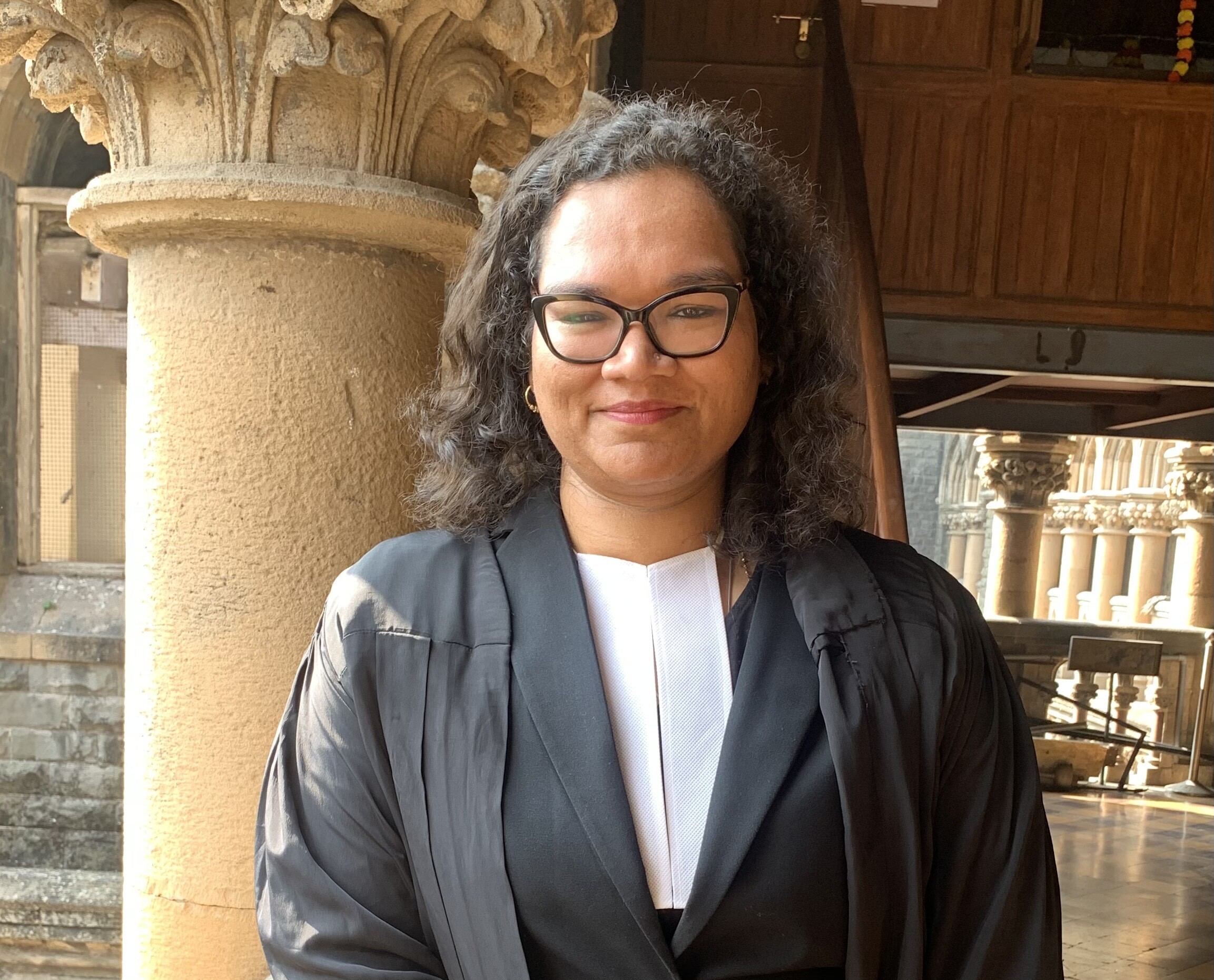


 Allow notifications