Could you please introduce yourself to our readers and share with us how you decided to pursue a career in law? What challenges did you encounter when starting your career, and how did you overcome them?
Hello, readers. My name is Sapna Patwa, and I am a former judge who served in the Madhya Pradesh judiciary for 8 years. Currently, I am practicing at the High Court of Madhya Pradesh.
My journey into pursuing a career in law has been a unique one, filled with challenges. Initially, after completing my undergraduate and postgraduate studies in commerce (M.Com), I got married, thereafter I took a break from academics to focus on raising my children. However, after a gap of six years, my husband encouraged me to continue my education, and it was his support and motivation that reignited my passion for learning.
In my first year of pursuing my LL.M, I became acquainted with the field of judicial services. Learning about this path sparked my interest, and from then on, I dedicated myself to prepare for it. Despite the challenges of balancing familial responsibilities and academic pursuits, I persevered with the unwavering support of my husband and mother.
The journey towards becoming a judge was not without any obstacles. Studying law after a significant gap presented its own set of challenges, but through determination and hard work, I overcame them. Additionally, preparing for the judiciary exams required immense dedication and focus, but with perseverance and the grace of the lord, I was able to successfully clear the Madhya Pradesh Civil Judge exam in my second attempt.
I am deeply grateful for the unwavering support of my family, especially my husband and mother, whose encouragement has been instrumental in my journey. As I continued to serve in the legal profession, I remained committed to upholding justice and making a positive impact in the lives of those I serve.
Your journey from a civil Judge to managing director at Legal House is inspiring. Can you share a pivotal moment or decision that led you to transition from the bench to advocacy and legal consultancy?
As a civil judge, I found that dispensing justice from the bench had its limitations. Working within the confines of the judiciary restricted my ability to reach out to a broader segment of society. Conversely, transitioning to advocacy and legal consultancy allowed me to assist a greater number of underserved individuals by being actively involved in the community. This realization prompted me to make the transition from the bench to advocacy and legal consultancy.
Your dedication to educating and guiding aspiring legal professionals is evident. What motivated you to become a guest lecturer and a mock interview panelist at Judiciary Gold, and how has this experience influenced your approach to practicing law?
My decision to become a guest lecturer and mock interview panelist at Judiciary Gold was driven by the challenges I encountered while preparing for judiciary exams myself. I struggled to find proper guidance and support during that time, and I realized that many others were facing similar difficulties. This motivated me to become a lecturer, so I could provide aspiring legal professionals with the guidance and support I wished I had received.
By sharing my knowledge and experiences, I aim to help them navigate the complexities of legal examinations more effectively. This experience has shown me the importance of mentorship and education in the legal profession. It has also deepened my understanding of the challenges faced by aspiring legal professionals and the need for adequate resources and support.
Engaging with students has not only allowed me to give back to the legal community but has also enhanced my own understanding of legal concepts and principles. Overall, my role as a guest lecturer and mock interview panelist has been a rewarding experience, benefiting both the aspiring legal professionals and myself.
As a former Judge, you’ve presided over numerous sensitive family law cases. Can you share a particularly challenging case that left a lasting impact on you and shaped your perspective on family law and justice?
As a former judge, I’ve dealt with many difficult family law cases that have shaped my perspective on justice. One case that stands out involved a bitter dispute between two parents over custody of their children. The hostility between them made finding a resolution incredibly challenging. Despite my efforts to encourage cooperation, their deep-seated emotions hindered progress.
What made this case especially tough was seeing the impact on the children caught in the middle. Their well-being was overshadowed by their parents’ conflict, which took a toll on their emotional health. Witnessing this reinforced the importance of prioritizing the children’s best interests in family law proceedings.
This experience deepened my understanding of the complexities of family law and the need for empathy in resolving disputes. It also strengthened my commitment to promoting cooperation between parents and protecting children’s welfare.
While cases like these can be emotionally draining, they remind us of the importance of our role in shaping the lives of those we serve, especially in family law matters.
Your involvement as a legal advisor for the All India Chief Life Insurance Welfare Association showcases your commitment to community service. How has this role allowed you to make a positive impact beyond the courtroom?
Being a legal advisor for the All India Chief Life Insurance Welfare Association (CLIA) fills me with pride. It’s a chance to handle various cases from all over India, which goes beyond just courtroom work.
Helping a larger community is incredibly fulfilling. By giving free legal advice to CLIA members, I not only inform them about their rights but also educate them on legal procedures and options. This knowledge empowers them to make informed decisions that can improve their lives.
This role allows me to make a real, positive impact on individuals and families. It’s rewarding to know that my work contributes to their well-being and empowerment outside of formal legal proceedings.
Overall, being a legal advisor for the CLIA lets me continue my commitment to community service and create meaningful change in people’s lives, beyond what happens in the courtroom.
Given your extensive experience, what advice would you give to young legal professionals aspiring to pursue a career in the judiciary or legal consultancy?
For young legal professionals aiming for a career in the judiciary or legal consultancy, here’s some advice. If you’re leaning towards becoming a judge, it’s important to intern in a court for around 2 to 3 years. This hands-on experience will give you a practical understanding of how to handle cases effectively. Remember, both fields offer diverse opportunities, so choose based on what aligns with your strengths and interests. It’s important to consider your own nature and abilities when deciding.
Starting Legal House was indeed a significant undertaking for me. Leaving my honorable post was not an easy decision, but it was my family’s encouragement and support that motivated me to pursue a career as an advocate. My husband played a vital role in helping me build a client base, while my son assisted me in establishing Legal House. Despite facing challenges, such as transitioning from a prestigious position to advocateship, their support made the journey possible.
Beyond your legal career, what are some of your personal hobbies or interests that you enjoy pursuing in your free time?
Outside of my legal career, I find fulfillment in exploring spirituality, which occupies much of my free time. Additionally, I enjoy cooking as a way to unwind and express creativity in the kitchen. These interests enrich my life beyond the realm of law and provide balance and fulfillment in my personal pursuits.
Reflecting on your journey from college, where you were a Gold Medallist in your LLM from NLSIU, to your current position as a Partner at Surana & Surana International Attorneys, could you share some insights into the key milestones and challenges you encountered along the way?
I am a first-generation lawyer and embarking on my legal journey as one in 1997, was the initial challenge, where I did not have the benefit of a well-trodden path or sage advice. My parents and my brother gave me their unwavering support in all my decisions. Guided by serendipity, I found myself at the National Law School of India University (NLSIU), Bengaluru, where I secured the Gold Medal in my LLM for the highest CGPA. During this time, I was also appointed as an MK Gandhi National Law Fellow, alongwith other eminent fellows. In 2003, I taught for a year in National Law University, Jodhpur. Prof. (Dr.) N.L. Mitra was the Vice Chancellor of the University at the time. His prudent counsel underscored the importance of perpetual research, continuous upskilling, and an unwavering commitment to staying abreast of dynamic legal developments, and this has held me in good stead throughout my professional trajectory. Teaching for a year was a pivotal advantage, providing me with a unique perspective and reinforcing the importance of continuous learning in the dynamic legal landscape. Most of my students at the time are now distinguished legal professionals.
In 2004, I joined Surana & Surana, immersing myself in intellectual property law within the firm’s IP practice. This marked the beginning of a deep dive into the nuances of IP as I navigated through diverse facets of intellectual property, gaining invaluable insights and practical experience that would prove instrumental in shaping my career trajectory.
In 2006 I commenced my independent practice with my spouse, focusing on intellectual property law and constitutional law before various High Courts and tribunals and as time passed, the briefs slowly trickled in. The practice of law before the courts are unparalleled – from the charged atmosphere of the courtroom to the swift thinking on your feet. The satisfaction derived from presenting compelling arguments, navigating legal intricacies, and securing favourable outcomes for clients was my driving force from 2006 to 2020. Intellectual property law is a multifaceted and dynamic field and the learning was challenging, every day, in the courtroom, observing the various senior counsels, and imbibing the wisdom of the bench.
At times when the family car was not available for my use, I started using the Metrorail, and then used it often for a swift and easy commute to the courts, significantly cutting down travel time, allowing me to optimize my schedule. In 2014, my daughter was born, putting me to the test of balancing my little one and my work. I worked from home for the first four months of the parenting journey and my office handled everything wonderfully. When my daughter was 5 months old, I appeared before the Intellectual Property Appellate Board in the matter of M/s Royal Classic Mills Pvt. Ltd v. The Polo Lauren Company, L.P., ORA/144/2007/TM/DEL/, and rushed back to my daughter waiting for me in my mother’s arms. Following this I slowly eased back into practice and resumed all my professional work by the end of the year. My continued professional journey, without a break, would not have been possible without the support of my family and my colleagues.
In 2020 I was appointed to the Intellectual Property Appellate Board (IPAB) and it was my privilege to serve along with other members under Chairman Hon’ble Mr Justice Manmohan Singh. We gave rulings in various matters concerning prominent brands such as RPG, HP, REDBULL, PAMESA, EVEREADY and several other renowned trademarks. His Lordship’s mentorship proved invaluable, providing guidance and insights into his professional journey in advocacy and adjudication that significantly contributed to my professional experience.
Post my tenure at the IPAB I am now Partner at Surana & Surana, and I lead the Intellectual Property Practice. Other than being engaged for IP litigation before the Delhi High Court, I advise, guide and mentor my practice colleagues on their corporate IP advisory to clients, IP legal strategy, IP audits, IP valuations, IP filing and prosecutions in India and various countries worldwide, PCT filings and MADRID filings, IP monetization, IP contracts & agreements, IP commercialisation and other legalities.
I am indebted to the eminent mentors who generously imparted their legal sagacity, illuminating my path with their professional insights. I did not have one single Guru, rather I am blessed to have learnt from all. Their tutelage through legal discussions, arguments and advice has been the lodestar guiding me through my journey. My family of friends support me unwaveringly.
Choosing law as my career has allowed me to inspire numerous individuals within my family and friends’ circles.
During my 23 + years of professional experience, I have traversed the journey of a law student from teaching to working as an advocate in a law firm to running an independent practice to becoming a Member in the IPAB and currently a Partner in a law firm leading the IP Practice.
Congratulations on your recent recognition as IP Woman Lawyer of the Year! How does it feel to receive such prestigious awards, and what impact do you think they have on the field of intellectual property law?
Thank you for your kind words. Receiving the IP Woman Lawyer of the Year Award, 2023 from INBA was truly an honor and a testament to the collective efforts of women in the field of intellectual property law.
The awards and recognitions I have received in the past year are:
IP Woman Lawyer of the Year, 2023, Indian National Bar Association (INBA)
Leading Individuals in IP in India by the Asia Pacific Legal 500
Leading Individuals in IP in India by the World Trademark Review (WTR) 1000
Leading Individuals in IP in India by IAM Patent 1000
Finalist – Copyright Lawyer of the Year, Women in Business Law Awards, 2023 (APAC)
Finalist – Patent Lawyer of the Year, Women in Business Law Awards, 2023 (APAC)
Finalist – IP Lawyer of the Year, Legal Insider Awards, 2023 (APAC)
Finalist – 2023 Lawyer Monthly Legal Awards
IP Star for India, 2023, ManagingIP
I am grateful for these honors and remain committed to furthering the advancement of intellectual property law with a focus on innovation, ethics, and inclusivity.
These awards serve as a powerful platform to showcase the achievements of women in intellectual property law, promoting gender diversity and inclusion in the legal profession. They inspire aspiring female legal professionals to pursue careers in IP law, breaking traditional stereotypes. Moreover, they bring attention to the field’s critical role in innovation, economic growth, and global competitiveness. By acknowledging excellence in IP law, these awards contribute to raising awareness about the strategic importance of intellectual property in various industries.
Throughout your tenure as a Member Judge at the Intellectual Property Appellate Board, could you reflect on a particular case that not only presented legal challenges but also left a lasting impact on your own understanding of intellectual property matters?
I can detail some cases for professional discussion for practitioners and academic interest for students during my IPAB tenure.
One is Eveready Industries India Limited v. Kamlesh Chadha, 2020(83)PTC575(IPAB), decision upheld by the Hon’ble High Court of Delhi in Mr. Sanjay Chadha Trading as Eveready Tools Emporium and Anr. v. Union of India and Anr., 2022/DHC/004457
In this matter Eveready Industries India Limited, incorporated in 1934 was using the Trademark “EVEREADY” since 1942 registration applied for in 1994. The Respondents has registered trademarks too and contended that the Trademark “EVEREADY” was their bonafide trademark and they adopted it with honest intention in 1985 regarding other goods. Acquiescence can be an issue, so was an assignment deed that had been executed between the parties.
The Bench determined that the term ‘EVEREADY’ qualifies as an invented word, absent from the English dictionary, and also serves as the corporate name for EVEREADY INDUSTRIES INDIA PRIVATE LIMITED. The adoption and registration of the trademark ‘EVEREADY’ in 1985 by the Respondents were deemed to be in bad faith, as no justification was provided for the use of this invented mark. The deceptive nature of the Respondent was further evident in their unauthorized utilization of other well-known marks like “HMT,” “DELUXE,” “CHAMPION,” “CRAFTSMAN,” and “AMUL,” as per documented evidence. Notably, there was a lack of consistent use of these marks, failing to meet the requirement for acquiescence over a continuous period of 5 years in the usage of a registered mark.
The above decision was upheld by the Hon’ble High Court of Delhi and EVEREADY was declared a Well-Known Mark.
Another matter is Sun Pharmaceuticals Ltd v. Macleods Pharmaceuticals Limited, ORA/66/2014/TM/MUM, decision upheld by the Hon’ble High Court of Bombay in Macleods Pharmaceuticals Limited v Union of India, 2023 SCC OnLine Bom 408
In this dispute, Sun asserted its trademark application for OFRAMAX, filed on August 30, 1989, and subsequently granted registration on May 13, 1994, within Class 5 for pharmaceutical goods. On the other hand, Macleods initiated its trademark application for the mark OFLOMAC on January 28, 1999, in the same class, and secured registration in 2005. Macleods argued that OFLOMAC resulted from combining its medicine name OFLOXACIN with the company name MACLEODS. They contended that Sun’s claim of using the trademark OFRAMAX since July 1991 lacked supporting documents, with invoices and statements only demonstrating usage from 2003 onward. The Bench held that Macleods’ trademark is deceptive, recognizing the potential for confusion with Sun’s mark. This was important to prevent any likelihood of confusion on the specific medicinal or pharmaceutical products.
This decision was affirmed by the Hon’ble High Court of Bombay.
The third case that comes to mind is Britannia Industries Ltd. V. Rakesh Kumar Jain, ORA/68/2013/TM/AMD, Order dated 23rd December, 2020, relied on by the Hon’ble High Court of Delhi in Britannia Industries Ltd V. Good Day Oral Care & Ors., CS(COMM) 572/2021, Order dated 5th November 2021.
It concerned the mark GOOD DAY, which was adopted in 1986 by Britannia and soon went on to become one of their most popular brands. The Respondent filed an application for GOOD DAY in 2010 in respect of Salt. The Bench held that the Respondent had no plausible explanation for adopting the GOOD DAY word and no evidentiary proof of usage claimed since 2005. GOOD DAY was declared as a well-known mark and the mark of the Respondent was ordered to be removed from the Trade Mark Register.
You are a part of the International Amicus Committee of the International Trademark Association. How do you see the role of international collaboration in shaping intellectual property laws globally, and what challenges do you foresee in the future?
International collaboration plays a crucial role in shaping global intellectual property laws by fostering consistency, sharing expertise, and addressing cross-border challenges. As a member of the International Amicus Committee at INTA, I get to witness firsthand the impact of collaborative efforts in providing valuable insights to courts and trademark offices worldwide. This exchange of expertise contributes to a harmonized approach in addressing intellectual property issues on an international scale.
However, challenges persist, including diverse legal frameworks, cultural differences, and evolving technologies. Bridging these gaps requires continuous efforts to build consensus and establish common ground. Additionally, staying abreast of emerging trends and ensuring inclusivity in decision-making processes are essential for effective international collaboration in shaping the future of intellectual property laws.
Balancing a role as a Professor of Practice at Christ University School of Law, NCR, New Delhi along with your legal practice must be demanding. How do you manage to stay engaged with both academia and the dynamic legal landscape?
During my early years of teaching, I had the pleasure of guiding students who have now progressed to senior positions in law firms and the corporate sector. I fondly reminisce about those teaching days and the sense of purpose it brought. Presently, I remain engaged in various academic initiatives, actively contributing to legal education through mentorship and guidance in institutions.
As a Professor of Practice at Christ University School of Law, NCR, New Delhi, I am offering a specialised course on IP Litigation. I maintain engagement through efficient time management, leveraging practical insights from my legal practice to enrich academic discussions, and staying updated on the dynamic legal landscape. This synergy allows me to contribute effectively to both education and the evolving legal field.
You’ve been involved in several IP cases. Can you share insights into some of your memorable casesfor academic interest, detailing the challenges faced and the strategies employed that led to a favorable outcome?
I can talk about some cases for professional discussion and academic interest.
In 2009, the matter of Maya Appliances Private Limited v. Jaipan Industries Limited, Suit (L) No 1036 of 2009 before the Hon’ble High Court of Bombay, was a question of design and trademark infringement of the plaintiff’s unique and registered leaf design and trade dress. The Respondent brought forth a registered design stating that they owned it and that their products were based on this design. We convinced the Hon’ble Court that the production of a design certificate owned by one Sairaj Industries only shows that the alleged design is owned by them. The Respondents neither described the relationship between them and the Sairaj industries, nor have produced any documents towards the same. Working on this case of the infringement of a registered design and establishing arguments was interesting.
Another case was that of Karthik Subbaraj G. v. Five Star Films Pvt. Ltd. C.S. No. 810 of 2015 before the Hon’ble High Court of Madras. The dispute was between the Director and screenwriter of the film Jigarthanda and the producer. As per the agreement of 2012 between both, the project was commenced and the move shot and released. The suit was filed seeking an injunction against the producer to prevent selling the remake rights of the movie in any language. No permission has been obtained from the Plaintiff for using it in other languages. The moral rights of the screenwriter, reproduction rights, remake rights vis-à-vis the terms of the Agreement were discussed in detail before the Court.
In Shiv Nadar Foundation v. Registrar of Trademarks C.A.(COMM.IPD-TM) 122/2021, the case was filed against the refusal of the logo mark SHIKSHA for education. The Hon’ble Court appreciated the composite nature of the mark and no other similar logos and struck down the Order of refusal.
As a member of the CII – IP Forum, FICCI – IP Council and a mentor at various institutions such as MAARG, the Founder Institute, how do you think the legal profession can contribute to fostering diversity and inclusion, especially for women in intellectual property law and as startup founders?
Engaging in collaborative efforts with industry forums such as CII and FICCI allows legal professionals to leverage collective influence, driving systemic changes that promote diversity and inclusion. It is imperative for the legal community to uphold these principles and actively contribute to dismantling barriers, thereby creating a more inclusive and representative landscape in intellectual property law and startup entrepreneurship.
To foster inclusivity, legal practitioners should actively promote equal opportunities, advocate for unbiased recruitment practices, support women re-entering the profession after a break for the family and support mentorship programs tailored to empower women in the intellectual property sector. Creating a conducive environment that embraces diverse perspectives not only enriches the profession but also contributes to a more innovative and equitable ecosystem.
When mentoring startup ventures, legal professionals can contribute by advocating for gender-neutral policies, offering legal guidance on inclusive corporate structures, and actively participating in initiatives that provide women entrepreneurs with access to legal resources.
I am also actively engaged in various intellectual property discussions, as part of the panel in various forums and conferences. I’ve served as a Speaker and Panel Chair at various CII, GIPC, WIPF and other events. With talks spanning from online gaming, IP litigation, generative AI, online platforms, performer’s rights, IP monetization to data protection, I have been able to contribute insights and share my perspectives.
Your work involves carving IP legal advisory strategies, performing IP audits, and coordinating IP valuations. What advice would you give to young professionals aspiring to specialize in intellectual property law, especially in the context of the evolving legal landscape?
Having just one degree or having multiple degrees specializing in a single domain is considered outdated or passé in contemporary times. In today’s dynamic and interconnected world, professionals are expected to adapt to a variety of roles and contribute across different fields. Combining expertise from various disciplines not only enhances problem-solving skills but also fosters innovation and creativity.
Employers and industries increasingly seek individuals with a broader range of knowledge and capabilities, transcending traditional disciplinary boundaries. Examples are the combination of law and an engineering or fine arts or a medical background. For instance, someone with a background in both law and technology might be better equipped to navigate the complex legal landscape surrounding emerging technologies.
For aspiring IP professionals in the evolving legal landscape, I recommend gaining diverse experience, staying updated on emerging trends in IP such as the protection of and infringement occasioned by the use of AI, especially generative AI, cybersecurity and IP, blockchain technology, gene editing, sustainable technologies, quantum computing, 3D printing, neurotechnology, IP of and in the hands of influencers and social media, cross border IP litigation, etc and developing a strong understanding of technology and business. Embrace continuous learning, engage in practical training, and build a network within the IP community. A strategic focus on carving innovative legal solutions will position you for success in the dynamic field of intellectual property law.
Additionally, cultivate a deep understanding of global IP laws, invest in honing negotiation and communication skills, and actively participate in industry events and associations. Embrace a proactive and client-centric approach, and leverage technology for efficient legal practice. Remember, adaptability and a passion for innovation will be key drivers of success.
Furthermore, seek mentorship from experienced professionals, explore interdisciplinary collaborations, and consider pursuing relevant certifications to enhance your expertise. Stay attuned to ethical considerations and emphasize integrity in your practice. Finally, contribute to thought leadership by publishing articles, attending conferences, and actively participating in discussions to establish yourself as a knowledgeable and influential figure in the intellectual property legal community.
Continuously build a strong professional network, both locally and globally, to foster collaborations and stay informed about industry developments. Be adaptable to changes in legal frameworks and technology, and proactively anticipate challenges to offer strategic solutions. Embrace innovation in legal research and leverage data analytics to enhance your practice. Ultimately, a holistic approach that combines legal acumen, business understanding, and a commitment to excellence will set you apart in the dynamic field of intellectual property law.
Having excelled in moot court competitions and representing India in international forums like the Afro Asian and Phillip C. Jessup Moot Court Competitions, how did your experience in moot court contribute to your professional development? Furthermore, do you believe participating in moot court competitions is essential for law students and how can it positively impact their growth and skills development?
Engaging in moot court competitions has been a pivotal aspect of my professional journey, contributing immensely to my development as a legal practitioner. Representing India in international forums like the Afro Asian Moot Court Competition in 1999 and Philip C. Jessup International Law Moot Court Competition in 2000 was a transformative experience that provided a multifaceted impact on my skills and outlook.
Participating in moots equipped me with the ability to carefully assess each argument, strategically position them before the bench, identify vulnerabilities in the opponent’s case, adeptly counter their points, skilfully address judges’ inquiries, and cultivate a respectful demeanour towards both the bench and opposing counsels. The experience also facilitated networking opportunities with students and legal practitioners from across India, expanding my professional connections.
When I was a student, the only international competitions that India used to participate in were the Philip C. Jessup International Law Moot Court Competition, Afro Asian Moot Court Competition, Stetson International Environmental Moot Court Competition, and Willem C. Vis International Commercial Arbitration Moot. Now there are so many more mooting opportunities for law students. Law students should actively involve themselves in external mooting as part of the extended curriculum for advocacy skills development, legal research proficiency, confidence building, understanding courtroom dynamics and networking opportunities
Beyond your legal pursuits, what are your personal interests or hobbies that you find yourself passionate about in your free time?
I find joy in quality time with my daughter, indulging in movies and meals with my friends, and making pencil sketches of people. Additionally, I am proficient in playing the mridangam and am a voracious reader of science fiction and mythic fiction. I would have ended up as a writer or a film director, had I not pursued law.
How do you view the above journey as a woman lawyer?
Yatechchā tatra mārgaḥ – where there is a will, there is a way. Balancing both the professional journey and personal life is a challenge for most of us, especially women litigators. However with good time management skills, the ability to plan and prioritise, hard work and a never-say-die attitude, anything is possible.
In the initial years of a legal career, how seniors treat you, with dignity or otherwise, is crucial. It’s up to individuals to quickly grasp the balance between work responsibilities, career growth, and specialization choices. Navigating these opportunities and challenges posed by seniors is common, and it’s recommended for upcoming lawyers to understand this early on. Dealing with uncertainties and potential disrespect becomes more manageable when comprehended early. As a woman lawyer, I had the chance to grasp and overcome these dynamics, and I appreciate the lessons, whether direct or indirect, taught by my seniors. Their guidance helped me shape my decisions and progress in my legal profession.
My 23 + year professional journey or that of any of my women colleagues’, cannot in the true sense be condensed in words. It involves hard work, dedication, sincerity, and a mix of challenges, opportunities, painful, sad, and happy days in both personal and professional realms. The power within, drawn from the Universe, empowers women to overcome challenges, face each day with positivity, and passionately pursue what brings personal and professional fulfilment.
Despite advocating for equality, empowerment, and equity, women often bear additional responsibilities. While these principles are on paper, their implementation can be challenging. The acknowledgment of exceptional women by you as a “Super Lawyer” underscores the extraordinary efforts made to navigate these challenges, providing a satisfying recognition of the exceptional work done by them and their leadership, integrity and dedication to justice.
So, here’s to the unsung heroines of the legal world, the women who every day turn legal briefs into power suits, make every objection a stepping stone to success, and put out board room legal chaos with their excellent strategy.
Sir, can you tell us about your background and what motivated you to pursue a career in Law?
My grandfather Prof. Krishan Datt did his law from Cambridge University, England. He was a barrister at Inner Temple (for more info, https://en.wikipedia.org/wiki/Inner_Temple) but after partition didn’t pursue a career in law and had a career as Professor in Economics in Punjab University, Jalandhar.
My father who was 1956 batch IAS officer, was posted in Churu district of Rajasthan, where I was born. I grew up watching my father deal with revenue cases as District Collector, hence interest for the subject of law naturally came up in me.
After my initial schooling from Mayo college, Ajmer and high school from St. Xavier’s School, Jaipur, I graduated in science and thereafter enrolled myself in Three Year Law Program at University of Rajasthan, Jaipur.
After completing your LLB and LLM, you briefly worked as a journalist before returning to the practice of law. What made you decide to make that switch?
After doing my LLB and before completing my LLM I cleared an examination conducted by the Times of India, New Delhi for the post of ‘Legal English Sub-Editor’. After pursuing this field for a few months, I decided to complete my Masters in Law and join advocacy. Thereafter I started working as an associate at a law firm in Jaipur and practiced law at High Court of Judicature of Rajasthan at Jaipur bench for four years (1991-1995).
Both legal journalism and advocacy require similar skill set, for e.g., command over law, articulation, critical thinking and reasoning, patience and perseverance. I found myself foraying into advocacy and hence came back to Jaipur.
You have worked as a judicial officer in various capacities. Can you tell us about some of the highlights of your career in this field?
People generally think that role of a judicial officer is confined to courtroom. But a judge wears many hats. The role of a judicial officer is quite diverse ranging from adjudication, to policy making and even administrative work. Apart from serving in judicial forums, I have worked at policy formulation level as Secretary (Law), Ministry of Law, Government of Rajasthan. Now as Director, RSLSA, Rajasthan High Court, I am involved in implementing schemes to provide legal aid across the State of Rajasthan. Hence, a career in judicial services is enriching one and now with good pay scales, it is becoming increasingly popular among law students.
I don’t think there are any highlights in the service tenure of a judicial officer because he is bound to deliver justice in whatever capacity he is sitting. There may be sensitive cases in which a specialised agency may have filed a chargesheet or media-focussed cases, whatever may be the case, he has to oversee the trial in an impartial and fair manner.
As the Director of the Rajasthan State Legal Services Authority, you are involved in executing the Legal Aid Program of Rajasthan High Court to provide free legal aid to destitute people throughout the State of Rajasthan. Can you tell us about this program and how it is making a difference in people’s lives?
The Chief Justice of the High Court of Rajasthan is Patron – in – chief as well as executive chairman of RSLSA. The State government in consultation with Hon’ble C.J.H.C. appoint Member Secretary and Director RSLSA for implementing the legal aid programs through funds allocated by the Central Government under NALSA Schemes. Any person having net income of less than 3 lakh per annum is entitled for legal aid in the State of Rajasthan apart from women, members of SC/ST community and children etc. I have personally seen cases in which a woman who is the recipient of legal aid by RSLSA, had got cost imposed on her by order of a court. The moot question is can a Court impose cost on recipient of legal aid and who will pay the cost imposed. This matter is pending at the policy level and soon it is hoped that recipients of legal aid will not have cost imposed upon them by courts.
Under the Lok Adalat schemes, we endeavour to ensure that speedy, legal justice is bestowed to the recipients especially under Bank recovery cases and cases of NI Act. In Rajasthan, in the last national Lok Adalat, the Hon’ble Chief Justice of High Court via e-conference interacted one to one with the local population of various districts and provided valuable input regarding disposal of cases including asking the courts to follow ratio propounded by Hon’ble Supreme court in Pranay Sethi Case and Pappu Devi Case.
You were instrumental in drafting and vetting the Rajasthan Protection from Lynching Bill, 2019, and the Bill on Honour Killing which was later passed by the Rajasthan Assembly. Can you tell us about your role in drafting these bills and how they are helping to tackle these issues in the state?
The drafting and vetting of these bills took place while I was posted as Secretary (Law) and later as Special Secretary in Ministry of Law, Government of Rajasthan. The drafting of the bill was undertaken by me as well as other members of Law Department on receiving the proposals from Home Department. Before any Bill Making process begins, the proposal would come from relevant department and then it goes for scrutiny to the home department. Afterwards it is sent for legal vetting to the Law department and finally financial vetting with the Finance department.
In Rajasthan there have been many untoward incidents of mob lynching such as the Pehlu Khan case and the Rakbar Khan case because of which need was felt to enact a separate legislation for mob lynching for providing not only stricter punishment to offenders but also relief and rehabilitation to victims.
Similarly, there were several cases of illegal diktats reported from Khap Panchayats leading to Honour killings in the State because of which the State Legislature passed “Rajasthan Prohibition of Interference with the Freedom of Matrimonial Alliances in the Name of Honour and Tradition Bill”.
The process of legal vetting of Bill involves examining the Bill on constitutional parameters, encouraging easy to understand drafting and preparing English and Hindi texts. As Secretary (Law & Parliamentary Affairs), I also used to attend Vidhan Sabha sessions whenever a Bill of critical importance was tabled.
You have also served as a member of the Board of Revenue for Rajasthan, where you heard land revenue cases and appeals against the orders of various authorities. Can you tell us about your experience in this role?
As Member, Board of Revenue for Rajasthan, I heard land revenue cases in single and division bench and heard appeals against the orders of Sub Divisional officer, District Collectors, Revenue Appellate authority and Divisional commissioners.
One interesting incident in the Revenue Board was that reference cases were filed by the government against persons who were allotted land prohibited under the Rajasthan Tenancy Act. Instead of acting directly against the Khaatedar, I ordered action to be taken against the revenue officials responsible for allotting such land. I also ordered inquiry and trial against persons poaching in Sariska Wildlife reserve resulting in protection of wildlife in Sariska Forest in Alwar district of Rajasthan.
On the administrative side, I was the inspecting officer for all the Tahsildar Courts and SDO Courts of the various district of Rajasthan. In the revenue board, our endeavour was digitalisation and computerisation of Land Revenue records thereby resulting in easy accessibility of such records to the general public.
Lastly, what advice would you give to young lawyers who are just starting their careers?
The avenues which have opened up in the field of Law today are immense. Today a fresh law graduate has many options. He can join judicial service or start litigation or join law firm depending on the area of his/her interest, or join PSU’s as manager (legal), become a prosecutor, join in-house or even go for vacation schemes in Magic Circles Law Firms. Whatever stream they venture into, they must have patience and perseverance. In the rural areas, the concept of toutism in the legal profession is gradually getting over as better and quality legal education is percolating down at the Taluka Level with the general public having more awareness regarding their rights. Create short term and long-term goals for yourself and keep. Don’t try to rush into things. Julius Stone talks about lawyer’s extraversion which means a good lawyer should not only know law but also other subjects like humanities, science, technology, anthropology, psychology etc., hence keep on reading things apart from law as well.
What inspired you to pursue law as a career option? Can you share your experience of studying at NLU Jodhpur?
Hello everyone, I hope everyone is well and safe. To answer this question, we need to look into my academic history. Basically, I am a student who belongs from a Humanities background. After the 12th, I was unsure whether to go for a normal BA or pursue some professional course. At that time, my father told me about the CLAT exam that is conducted by the National Law Universities every year. I took a year drop to prepare for the CLAT examination. Fortunately, I got NLU Jodhpur in the very first list. So there is no one in my family belonging to a legal background. In the year 2014, I started my legal journey when I stepped into NLU Jodhpur. It took me around six months to get accustomed to the Cosmopolitan environment in NLU Jodhpur. But as time passed, my seniors helped me a lot to familiarize myself with the nuances of the law and how to balance life so that I can manage sports and fitness along with Academics. I am very grateful to my seniors who helped me accomplish whatever I wanted and equally grateful to my juniors who motivated me to give my best. My journey at NLU Jodhpur is a very wonderful one, and I cherish my memories a lot. The initial days at the college were very difficult, but I got accustomed to that environment and made a lot of friends as time passed. A good institution teaches you to develop a wholesome personality and maintain a work-life balance. Every day you need to cope up with the pressure; you need to complete the assignment within the given deadline. This is the beauty of a good college which not only imparts knowledge but also imparts essential qualities that are very necessary for your professional career, especially as you grow on the professional ladder. I have always been a person who is heavily oriented towards sports and fitness. During my time at NLU Jodhpur, around 50-60% of my time was consumed by sports and fitness-related activities. Sports has a very unique tendency to develop a strong will and patience, which is very much required in the long course of life. I believe that sports and fitness are part of my lifestyle, and I cannot live without them, so every time I make my schedule, I try to ensure that these activities get enough amount of time. My typical schedule at NLU Jodhpur involved waking up right at 6 in the morning and stretching till 2 in the night. In this duration, I did my fitness-related activities. I then managed to go to classes, studying there and then again coming back to the hostel room and going to the sports complex to prepare for the game (badminton and cricket). After all this, I tried to ensure that I should read whatever was being taught in today’s class. So, in short, I am a person who is Law, Sports and fitness enthusiast.
Has judiciary always been your plan, or did you consider practicing in the court as well after your LLM in Criminal and Security Law?
Before deciding for myself whether I wanted to go into the judiciary, I explored each and every area which Law has to offer. I started interning with an NGO in my first year and then in subsequent years in the District and Sessions Court, and after that, I also worked as a researcher under advocates of Hon’ble Rajasthan High Court. I did some internships at tier I Law Firms as well. After exploring each and every area, I made an informed choice that I wanted to make a career in judicial services as a judge. I started my dedicated preparation at the end of the 4th year. Judicial Services Exam test you on the subjects that you have already covered in your Law School journey. So if you, as a diligent student, have paid enough attention in your classes, it will be very easy for you to crack this exam. After I completed my graduation in May 2019, I took admission in LLM to ensure that in case if I am not able to make it to the judiciary, I may have some good backup options in the academic field. So academics was never my first choice. I always kept it as a backup option, but I always say that it is a very noble profession and if you are interested in this field, you should pursue it. We require a lot of good teachers who can explain the finer nuances of the Law.
I wrote the Rajasthan Judicial Services Exam Prelims in March 2019, and I completed my graduation in May 2019. Immediately after my graduation, I gave the CLAT PG exam, where I secured an All India Rank 15. After this, my main focus was to clear the Mains of Rajasthan Judicial Services. RJS Mains was conducted in September 2019. Immediately after the Rajasthan Judicial Services mains, I shifted my focus towards Delhi Judicial Services Exam. The Prelims of DJS was conducted in the last week of September 2019 and Mains in the second week of October. In November 2019, I gave the Rajasthan Judicial Services Exam interview and simultaneously appeared for the NET exam. In December, I got this news that I have cleared the NET exam, and I am eligible for the post of Assistant Professor. Meanwhile, I was continuing with my LLM. Because of Covid-19, the interview of the Delhi Judicial Services Exam happened in December 2020. Meanwhile, I was also expecting the waiting list result of the Rajasthan Judicial Services Exam, which also got delayed due to Covid-19. In the Delhi Judicial Services Exam, I secured an All India Rank 68. Immediately after this, I got the news that I got selected in the waiting list of the Rajasthan Judicial Services Exam-2019. Right now, I am undergoing my Judicial training under the able supervision of the Honorable Rajasthan High Court and State Judicial Academy, Jodhpur.
Congratulations on clearing the first phase of your induction training and beginning your field training. How has the experience been so far? It feels to have three significant feats, clearing CLAT [UG-PG], NET [Law] and the Judicial Services Examination?
Thank you very much. The wishes mean a lot to me. During this training phase, I am learning a lot every day. It is an opportunity to learn practical concepts of the law. The law that we read in books and the law that we actually apply is very different. In order to give an experience of the practical world, State Judicial Academy time to time in different phases attaches us to different Judgeships throughout Rajasthan. During this field attachment, we get to learn about the Court functioning and how Judges manage the Dias. The experience till now is a very amazing one.
When I started to prepare for competitive exams, I always had this thing in mind: I want to complete the treble, and these treble stands were completed with my selection in Judiciary. So, it feels very amazing when you achieve what you have always wanted. I believe that this is a very rare feat, but I am not proud of it, and I want to keep this hard work going even in the subsequent stages of life because if you stop putting effort, you stop your own growth. This zeal to grow and learn is something that differentiates a human from an animal. I want to continue with this spirit throughout my life.
How did you prepare for the judicial services examination, and what factors did you take into consideration? Ideally, when should students start their preparation for the exam?
I am a person who always prefers self-study over coaching. Although self-study takes a good amount of time to understand the concepts compared to getting spoon-fed in the coaching institutions, I think it helps you in the long run because when you try to solve everything by yourself, your mind develops a habit to work a lot. But it differs from person to person whether he/she wants to prepare by doing self-study or want to join some coaching institution.
I started with reading Bare Acts of major laws and simultaneously reading standard commentaries on the subject. Multiple revisions are the key to understanding and remembering this vast course. Once you have covered all the major subjects, you can shift your attention towards the minor subjects and local laws. For Prelims, you should try to solve as many multiple-choice questions as possible and once you clear prelims, you can make a specific strategy for mains. The strategy involves going through the past year papers, understanding the exam pattern, and trying to develop the answer writing habit. You will realize the value of good content and standard commentaries at this stage because if you have good content in your mind, you will not encounter many problems while taking down that content on paper. After covering the course thoroughly, you can join some mock test series and give as many mocks as possible. This will develop your answer writing habit, and your mentor can focus on your stronger as well as weaker areas where you need to work. Every person has his own rules for success, and I hope during this journey you will also be able to find your own ways, which you can tell people later on.
If you want to succeed in competitive exams, then you need to be very disciplined, regular and patient in your approach. These are the qualities that are required from a judge and which will help you to clear any exam which you target. Also, there is a need to refrain from using any kind of social media during the preparation phase. I deliberately kept with myself a very normal keypad phone so that I could devote most of the productive hours to my studies and simultaneously focus on my fitness and sports-related activities. The major problem is our generation is wasting a lot of time using social media. I advise you as an elder brother that stops yourself from using social media for a year or two; believe me, when you come back, you will have a lot more followers than you expect.
While conducting interviews, interviewers find qualities like patience, sincerity, maturity and a skillful leader who can effectively manage the courtroom while imparting justice. Could you tell our readers about your experiences while appearing for the Rajasthan and the Delhi Judicial Services Interviews?
Interview is the third stage of this prestigious exam. The interview panel consists of Hon’ble High Court Judges. They already know that since we have cleared the mains exam, we are sound enough in law, so they want to test is whether you have those qualities required out of a judge. Patience, impartiality, ability to listen to the other side, acting on the spot, rational thinking, a reasonable mind, a commonsensical approach, and empathy are qualities that they look for. Apart from this, they will be testing you on the other aspects of life. The interview will not be restricted to the Law portion, but it will revolve around what you did in your college days, what are your interests and what you do in your free time. They will also be presenting to you some actual situations that how you will deal with those situations as a judge. My advice to all the aspirants is to be genuine before the panel, don’t try to give false answers or try to manipulate the panel because they already know whether you are speaking truth or lie. At least be true to yourself. If you don’t know about any questions, just say that I apologize; I don’t know. There is no need to get nervous before the interview; the panel ensures that you feel comfortable before them so that you can answer the questions in the best possible manner.
You are conducting and have been a part of several sessions highlighting the nuances of cracking judicial examinations. What would be your advice to people as a speaker on developing speaking and persuasive skills?
The profession of Law requires good oratory skills. Whenever you get a chance to participate in the events like Debates, Moot Courts, Court Room Exercises, do participate in them. As a judge or a lawyer, you will be heavily reliant on your oratory skills. Even if you are not good at speaking, don’t worry but try to work on your weakness each and every day because there is no such thing that cannot be accomplished. If you are dedicated, you can also develop good speaking skills, and good speaking skills come only when you have good content in your mind.
Along with this, the focus should also be on acquiring good content. Try to read the leading legal websites every day so that you can be aware of the recent developments. This habit will help you in other aspects as well like it will be helpful from the Mains Exam and the Interview Point of view. My advice to the students is always to develop a routine and strictly follow it every day.
Congratulations on your first authorship and its immense success. Have you ever considered taking up writing as a full-time career?
In April 2020, I released my first book in association with LawSikho on contemporary legal topics to help law aspirants clear different exams. I am very happy that this book turned out to be a big success. A lot of students regularly message me on Instagram and LinkedIn that, sir, your book really helped us. Such messages motivate me to help my community as much as possible continuously. I always have this thing in mind that once I achieve my goal, I will help the rest of the community to achieve their goals. During my preparation phase, I gathered a lot of material and then on some random day, I thought of compiling them in a Book Form. So, becoming an author was never a plan. It was totally out of my desire to help my fellow students to clear exams. I am happy that this book is still helping a lot of students.
With AIR-15 & AIR- 23 in CLAT PG 2019 and 2020, respectively, how did you manage to score so well, especially in your first attempt? What were the differences observed in the exam level while appearing for CLAT PG 2020 compared to your previous attempt?
More than the knowledge, I think that intrinsic motivation helps you achieve your desired goals. Motivation is something that helped me a lot to clear each and every exam in which I appeared. I started my journey with the CLAT PG exam, where I secured an All India Rank of 15 and in 2020, I gave that exam again to test myself on the new pattern and secured an All India Rank of 23. Since I was already in preparation mode, I did not encounter a major problem while preparing for the Judiciary as well as the CLAT PG, although you need to have a very different kind of approach and need to cover altogether different kinds of subjects. But as I already told you, if you are in rhythm, continuously studying, and in touch with academics, then there is no stopping you, and the same happened with me. As a result, I was able to clear the CLAT PG as well as the judiciary exams.
The major difference that I found in the 2019 and 2020 CLAT PG examinations was the kind of questions asked and their uncertainty. Until 2019 they had a very predictable pattern in which they focused on the major areas of the laws, and the paper had two essay type questions as well. According to me the paper pattern till 2019 was much easier. But in 2020, they made large scale changes in the pattern and started asking questions based on contemporary legal events. As of today, if you want to score a good rank in the CLAT PG examination, you need to be very much aware of the contemporary legal events, and that means not only what is going in the current scenario, but you should also be aware of the past of that particular topic as well as the chain of events that is related to the topic. If possible, try to find out the major case laws related to that particular topic. Now the strategy is to do a holistic study. For that, first, you need to cover the static part (that is, you need to be aware of the basic static concept), and then you need to make a building that consists of the contemporary developments surrounding that particular topic. For example, if we take the right to privacy, we need to start our study right from the 1950s when the first case related to privacy came before the Hon’ble Supreme Court and the subsequent cases till present. By studying in such a way, you will be able to learn everything related to a particular topic, what was the stand of the court earlier, and the current position.
You are currently pursuing PhD in Criminal law from NLU Jodhpur. What factors did you take into account while pursuing your PhD? Was there a convenience factor, or was it based on the competence of the University?
I never thought that I would be pursuing PhD someday. But you never know what the future holds for you. The Covid era gave me time to write research papers and blogs. Writing a research paper on various topics gave me an understanding of many topics and developed my interest in pursuing higher education. I was already doing my LLM, and the results of the Judiciary exam was getting delayed. So looking at the opportune time, I filled the PhD form of NLU Jodhpur and started preparing myself for the PhD interview round. I was exempted from writing a written examination since I had already cleared NET. Before the board, I explained my topic and ensured that I would be giving the maximum possible time to research-related requirements. Research papers and blogs helped me to prove that I am interested in academics. Based on this board selected me, and I started my PhD in January 2021.
You have always been enthusiastic about getting through the judiciary. You have interned under several advocates and also cleared the AIBE. How has your experience been in the field of litigation?
During my UG, I interned under several advocates at the District Court as well as High Court level. After exploring every field that Law has to offer, I decided to go for the judicial services examination. Litigation was never the first choice in my mind. I was always passionate about becoming a judge because I saw various Hon’ble High Court and Supreme Court Judges coming to the college for some seminars and conferences during my time at college. I was amazed by their charismatic personality and the kind of power and respect that society commands. Right from that day, I decided that I also wanted to be a judge, and I also wanted to give back to society in the best possible manner. But I advise each and every law student that before you choose any field, you should explore because until you explore, you cannot make an informed decision. It is very necessary that you take some litigation experience during your internship as well as you should also do judicial clerkship because this will help you decide whether you want to do litigation or whether you want to come on the other side of the dais.
You have been playing District and State Level Badminton Championships, as well as representing your club in cricket. Do extra-curricular activities help in maintaining one’s mental health? How do you make sure your mental health and work-life balance is maintained, considering your busy schedule?
For me, fitness and sports are always the first priority. I always try to develop my lifestyle so that I should be able to give around 50-60% of my time for sports and fitness-related activity, which is something I am doing right from my school days. So balancing academics and sports life was not a big task for me, but it becomes very hectic to manage both these things on some days. To cope with such situations is something I learnt at the college level. The main thing that sports and fitness teach you is having a strong will and patience to navigate difficult times. I think these are some intrinsic qualities that are required to clear any competitive exams. Although sports and fitness don’t directly impact success in competitive exams, they do play an indirect role.
What advice would you have for law students & young lawyers who want to step into the world of academia and judiciary?
Young students and aspirants, I want to say that you enjoy your college because these are the days where you will make memories and learn a lot of new things every day. Everything has a set time. Don’t try to rush things. Before choosing any field you should explore, you should intern under different organizations and different advocates. Then only you will be able to make an informed choice. Refrain yourself from using social media and use this time to develop some new hobby or if you already have some hobby, try to pursue it regularly. Clearing competitive exams takes a lot of time and effort. It is a long cycle, and you need to have a mental balance, and mental balance comes only when you are physically healthy. In the end, I want to say that by making your own path, don’t try to copy others. You’ll also be having your own rules for success. Have faith and confidence in your abilities.
This interview has been published by Isam Kabir and The Super Lawyer team. The Interview was taken by Raunak Chaturvedi and Ankita Sen.
We know you as a Judge and an Advocate. Would you like to share something else about yourself?
Definitely yes– a mother and a home manager too. I have many more aspects attached to my personality, apart from the abovementioned. I am a sitarist and a dholak percussionist by hobby. I also have some training in Sanskrit. In total, I know five languages. I am also a philosopher and love to write short pieces about the meaning of life and the mechanisms of the cosmos. I also love to cook and always keep trying new recipes.
I also have many ‘firsts’ attached to my name. I am the first woman in my family to become an Advocate and the first person to become a Judge. I am the first and, to date, the only woman in the entire Chaturvedi community to become a Judge. I am also the first woman from my ancestral village, Holipura (U.P.), to become an Advocate and the first person to become a Judge. In my in-laws’ family, too, I am the first person to become a Judge.
What are the pros and cons of being a second-generation Advocate?
The first problem of being a second-generation Advocate is that you have the first-generation Advocate, either your mother or your father, with you. They either keep guiding you so much that you are not able to apply your mind, OR they go silent totally, and you continue to act as their assistant merely.
The second problem is, if you are working with your first-generation Advocate, then you seldom get an opportunity to collect fees for your contributions. If you claim fees, your relations start growing tense immediately after that.
However, it is not that everything is wrong in being a second-generation Advocate.
You get a wonderful advantage by being a second-generation Advocate- a conducive atmosphere to work and learn amid the full-time guidance of your mother or father and their colleagues too!
My father being the first-generation Advocate in my case, I had the opportunity to avail myself of his guidance and work alongside his colleagues. I had a lifetime opportunity of witnessing the advocacy of many prominent and eminent Advocates who either got promoted to the positions of High Court Justices, Chief Justices or high-profile Government Counsels. My father himself was made the Assistant Solicitor General of India for Bombay High Court, Nagpur Bench.
What motivated you to take Law as a career?
Everyone in his youth wants to fight for justice and the truth. Those who get an opportunity do it in their possible ways through their protests. For me, the Courts were the best and meaningful place to fight for justice, and hence I adopted Law as my profession. Besides, after witnessing my father and his workings from birth, I had no interest in anything but advocacy.
Tell us about your experience working as an Acting President and a Judge at the District Consumer Disputes Redressal Forum.
I was the first lady Member appointed for the Kolkata Unit-II Forum. Within a few months of my joining, the then President and the male Member retired, and one new male Member was appointed.
As per the Statute, I being the senior Member, was under an obligation to discharge the duties of the President too.
This helped me gain the confidence of working independently while administering the Forum and taking care of all case-related matters with a prompt note of the decision.
I introduced the mentioning hour concept in my Forum and ensured transparent working in my Forum. The Department of Consumer Affairs appreciated me for my positive efforts.
One fascinating incident which occurred during my tenure was that when I was newly appointed, I observed that only the President was being provided with the facility of the Government car.
However, the Act clearly mentioned that all the facilities (except the honorarium) were the same for everyone, be it the President or the Members.
On objecting to this, I still remember the then President of my Forum saying, ‘Sheta toh apnar jonno noy, amra retired District Judges, tai amra gadi pabo. Apnader jonno na’, which if translated from Bengali means, ‘That (car) is not for you, we are retired
District Judges, that’s why we will get the car. Not for you (Members)’. I immediately made a representation before the Chief Secretary of the Consumer Affairs Department. He very readily accepted my interpretation of the statute and sent it to the Centre for being approved. Within a few days, the approval was done, and my letter became an Official Order. All the Members across the State of West Bengal were being provided with a car, and still are being provided with this facility, only because of my letter and interpretation of the law.
Advocate Anjali at Administrative Training.
Tell us about three challenges you faced for being the first female Judge from your family?
I can say I was newly married – just four years then. I was still in the process of striking a balance between my work and my family relations.
During my working period, my son was born in 2001, and my mother-in-law had a cerebral stroke which confined her into bed with her right side paralyzed.
To strike a balance between the working and the family responsibilities, I got one room of our flat converted into a nursing home with all the required medical gadgets installed, starting from a nebulizer to an oxygen support system and appointed trained nurses to look after her round the clock. She survived for almost 7 years after that.
I used to prepare her food myself before leaving for my Forum around 9.30 am. My father-in-law was great support after my leaving for the Forum till I returned in the evening or late in the afternoon after completing the days’ work.
On returning, I used to look after my son and my other family members too.
Tell us about your three challenging cases? What were the challenges you faced while working on them?
During my tenure, cases of medical negligence, electricity-related matters were in plenty.
While dealing with Medical Negligence cases, it was necessary to ascertain the real negligence factor and then pass the orders. Otherwise, any wrong order passed may deprive the complainant or put stigma against a doctor who is otherwise a one-man industry. Those were the days when patient parties also used to file cases for recovering their fees paid by putting illogical or false allegations against the doctors. Forums were then being considered as pro-consumers. So, it was a challenge to screen the cases, especially in medical negligence matters.
On one occasion, I had an excessive billing case against a famous telecommunications company. The bill amount was above Rs. 2 lacs (almost Rs.2.5 lacs) for one month, and the service provider claimed the correctness of his bill and insisted on the payment. I was bewildered to see such a heavy bill for a personal mobile connection.
In deciding this case, I first worked out with the then pulse rate charges and the talking time for which the bill was raised. It was observed that if the subscriber talked continuously, day and night, all through the month, even then, the bill would not have reached that figure.
The billing was done for national calls, and there were no international calls billed. This made my calculations easy. This fact was questioned during the case proceedings from the service provider with the doubt that should we consider it as an exercise by the service provider to raise exaggerated bills before half-yearly publishing of half-yearly unaudited results of the company to increase the receivables and thus the profitability to get a better share value in the market. Should we recommend enquiry into the billing affairs of the service provider? The message went clear to the service provider.
He returned on the next date with the affidavit that there has been a system error while generating the bills and that they are ready to correct the bill amount to read as Rs.2000/- against the bill raised of above Rs.2 lacs. He admitted that a few lacs of bills with that high figure had been generated, and they are ready to correct those also.
The matter was clear.
I insisted that they publish the stand being taken in the daily newspaper regarding the bills as submitted before us so that all those who have not come to the Forum are also relieved. In deciding this case, my B.Com studies helped to crack the problem.
Now let me take two examples from my initial years at the Nagpur High Court. Once a person had come to us regarding a matter about the Narcotic Drugs and Psychotropic Substances (N.D.P.S.) Act. The accusation was that he had been caught transporting drugs.
When my father argued the matter, the presiding Judge specifically asked for me to argue the case. When the Judge asked me to argue, I became tremendously nervous, as those were my initial days, and I was not very used to arguing such complicated criminal matters. Thus, I prayed to him for some time to prepare and argued to the best of my ability on the next date. However, due to the strong incriminating evidence, we could not win the case; it was a great experience for me.
Another such case had happened within a few days of my joining the Bar. It was a property matter. When my father went to argue, the presiding Judge asked my father to ‘sit down and let her junior argue’. I was up. Again, I did not know anything about the matter. His Lordship himself asked me to take a week to prepare and argue the matter again. What finally happened with that case has slipped my memory, but I had argued the case quite fiercely, as much as I remember.
After a few months from your appointment, your husband, Advocate Anurag Chaturvedi, also joined a different Forum as a Judge. Would you like to tell us about the three incredible events that you’ve had during that time?
We made history as both husband and wife being selected during almost the same period for different Fora.
We went to Delhi for our judicial training together. During the training sessions, we had the opportunity of interacting with retired Supreme Court Justices. We suggested a few Amendments in the Consumer Protection Act, 1986, to make it stronger. To our surprise, those recommendations were accepted, and the C.P. Act was amended in a very short span thereafter.
I was privileged to head the lady Members’ wing, and my husband was asked to lead the male Members’ group.
Advocate Anjali at Consumer Seminar.
Would you like to tell us about your experience of working as an Arbitrator for M.M.T.C., Kolkata?
It was quite interesting and not very difficult to work with them. Altogether it was a comfortable exercise at my end.
You have perfectly balanced your life between working as a Judge, an Advocate and a mother? What would be your advice for mothers who find it difficult to work as an Advocate?
Children are the gift of God. Almighty is always there with us to give us strength to rare them up. Balance your hours between family and work and let the child grow under your kisses and blisses.
This interview has been published by Isam Kabir and The Super Lawyer team. The Interview was taken by Raunak Chaturvedi and Ankita Sen
The following interview is an excerpt of a conversationwith Anurag Chaturvedi
You chose Law after graduating in science. What motivated you to take Law as a career option?
In our days, Law was the stream of study which could be pursued only after graduation, unlike Engineering or Medical, which were five-year courses and could have been pursued after completing 12th grade. Law was a three-year course to be pursued after graduation. When I joined the University of Calcutta, I joined Law in the 1st batch of this 5-year course, but by that time, I was already a graduate, by having a B.Sc.
And as regards joining the course, In my days, Law was considered a safe stream of study where everyone could pass out. But, at the same time, it was supposed to be a source of income at different levels in the working hierarchy- whether in Courts or outside and in the commercial arena.
How was your journey as a young advocate? How were your initial days different from budding advocates today? Can you give us three examples of the same?
My journey as a young Advocate was quite comfortable and encouraging too. In my family, I had my father, Mr K.C. Chaturvedi was an Honorary Magistrate of District Lakhimpur Kheri, U.P., from 1952-1959 and my maternal grandfather, Mr L.N. Chaturvedi as the Sessions Judge of the Balson Princely State and a series of other Advocates in the maternal family. So, I always had something to boast about with me.
My initial days were different from today’s budding Advocates in so far and so much that we never had Google Baba, and we had to depend on Boi Maa that is ‘Book Auntie’, in Bengali. For any query or rule or reference, we had to meddle with the books and circulars and the law journals, and we had to decide which portion was relevant and which was not.
This gave us an evaluating capability and has made us different from today’s budding lawyers. For every small thing, they use the Google search engine and accept the information without any exercise of mind for evaluation of the Law, its rule, and much more. Instead, input is accepted on their face value, outright.
Today’s lawyer fails to think of the relief immediately. In contrast, we immediately had the vision of striking at the possible relief in the case and drafting our cases to keep the end relief in prayer before the Ld. Courts.
Today’s lawyers find it difficult to some extent.
A seminar of Consumer Affairs, with the then Consumer Affairs Minister of West Bengal, Mr Naren Dey.
You started school in 1993. What legal formalities do we need to follow if we want to start a school?
One has to envision the nature and the class of school one wants to start.
School may be a Kindergarten / Primary / High / Secondary School.
Permission from the Board under which the school shall be recognized is necessary if it is other than a Kindergarten school. If one wants to have the school run under a Board other than the local State Board, then a No Objection is to be obtained from the local State Board only after which the other Board, like C.B.S.E. or I.C.S.E. shall entertain the application for recognition.
Teachers appointed should be on the guidelines of the Board to which the school gets affiliated to. The school has to have an internal guideline of rules and regulations for its students and also for its working staff and teachers. The position of a principal is mandatory. And there are many other formalities and requirements to be fulfilled for running a school.
How to undergo the transition from being under a senior to becoming an independent practitioner? Can you tell us about three things we need to prepare before starting our independent practice?
Seniors only talk of their successes and make young lawyers run with a file for obtaining adjournments or filing papers in the court and carrying briefs with the seniors going for appearances in cases.
To be a successful lawyer, one has to develop writing petitions, drafting cases and marking appearances whenever and wherever becoming possible. This will make them slowly and gradually indispensable to their seniors, who will entrust them with more work and help them grow into independent lawyers soon. To be a successful lawyer, one has to be punctual, hardworking and soft in his approach towards his colleagues. He has to be submissive and should learn to sell his talent along with his tears, which he shall have to swallow time and again to make him shine.
If someone wants to become a judge in a Consumer Forum, what preparation one needs to have to deliver his duties properly?
In whichever Court you work and discharge duties as a Judge, you have to have the reading skill and prompt decision-making ability. Because for many petitions coming, before passing the final order, one has to decide on Dias itself. One must have the patience to hear both the parties and should not try to make the third case of his own.
How was your experience as an Acting President of a Consumer Forum? Can you tell us about three remarkable instances?
It has been a remarkable experience. Three of my remarkable stints as the Acting President of the Howrah Forum may be noted as follows-
1. I looked after the administration of the entire forum and its finances too. And got Pending payments cleared through getting adequate budget sanctioned for our forum in time and gave relief to all service providers by getting their payments pending for more than three years to get released within three months of my taking responsibility.
2. Under my pen, I could make working guidelines for my forum.
3. I enforced punctuality, honesty and timely delivery of orders in my forum, clearing the pending backlog of cases and timely discharge of cases.
What critical component of this position as a Judge makes the work challenging?
Awareness of applicable laws and knowledge of any precedents or ruling from the higher courts’ hierarchy. As a Judge, one has to be neutral and must strike a balance between the convenience and the inconvenience of the case parties and ensure that an order is not passed on such impractical terms that it never gets executed.
How was your transition from being a Judge to becoming an advocate once again, and why did you leave your position as a Judge?
The transition from a Judge to an Advocate is never a happy journey. When you plead as an Advocate, and you know the relief to be given is not given, you get lowered not only in your own eyes but also before the clients. Unpleasantness in nature grows.
Seeing my working capabilities, the West Bengal Government wanted me to go to all those Courts where working needed an overhauling. They started transferring me. I had my responsibilities towards my ailing mother, so I decided not to leave her in her last days. I discontinued putting this fact on record after accepting few transfers.
You had a dynamic career; how do you summarize it in a few words?
Experience pays. It builds your confidence and makes you challenge-worthy.
What is your advice for young advocates who are planning to establish a successful legal practice?
Aim at Judiciary. It gives you satisfaction in working and the joy of discharging justice honestly.
Never Miss Out on Important Updates!
Subscribe to notifications and get instant alerts for everything that matters to you. Stay ahead with real-time updates!
Allow notifications
Enable notifications to get the latest updates, tips, and insights delivered straight to your device.
Click "Allow" on the browser popup to subscribe.
If the modal does not open automatically, then follow these steps.




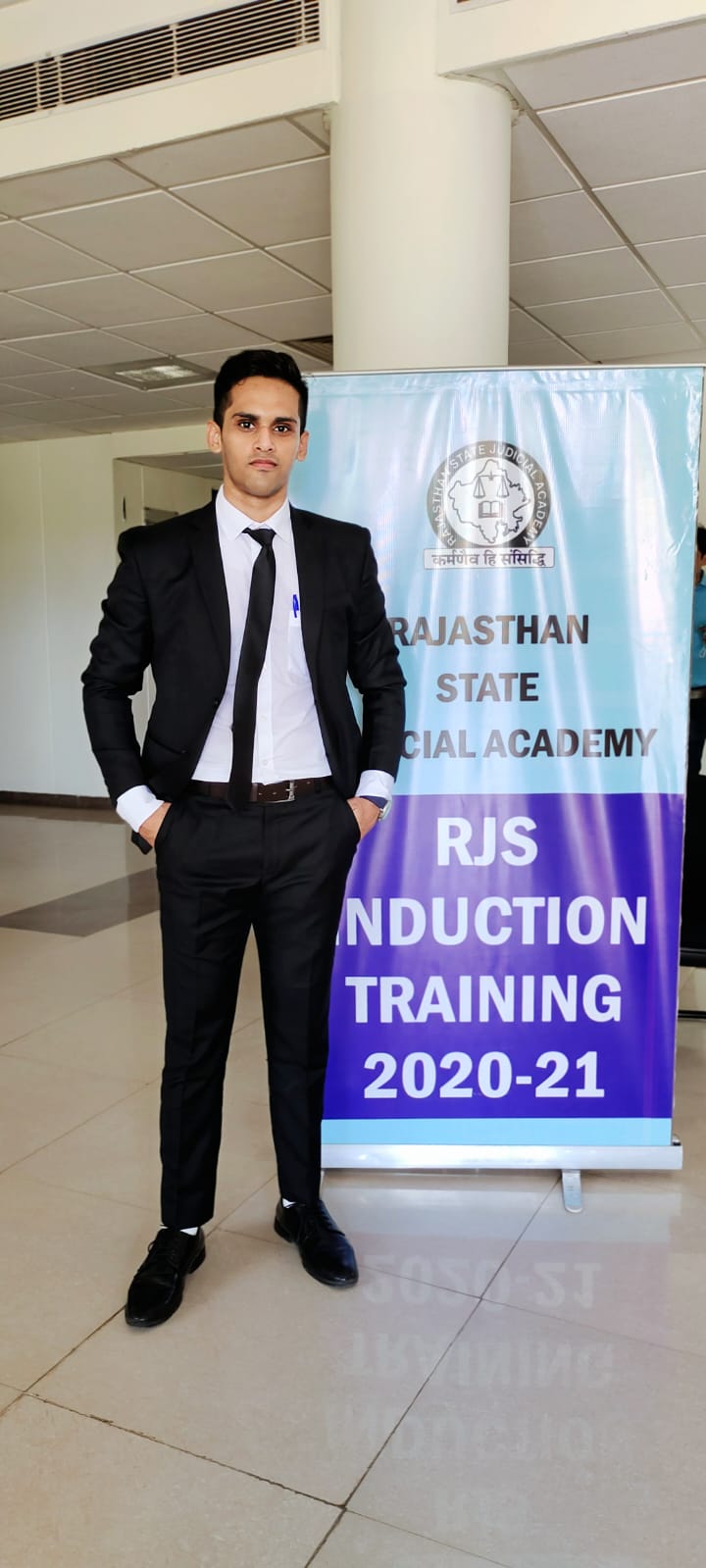

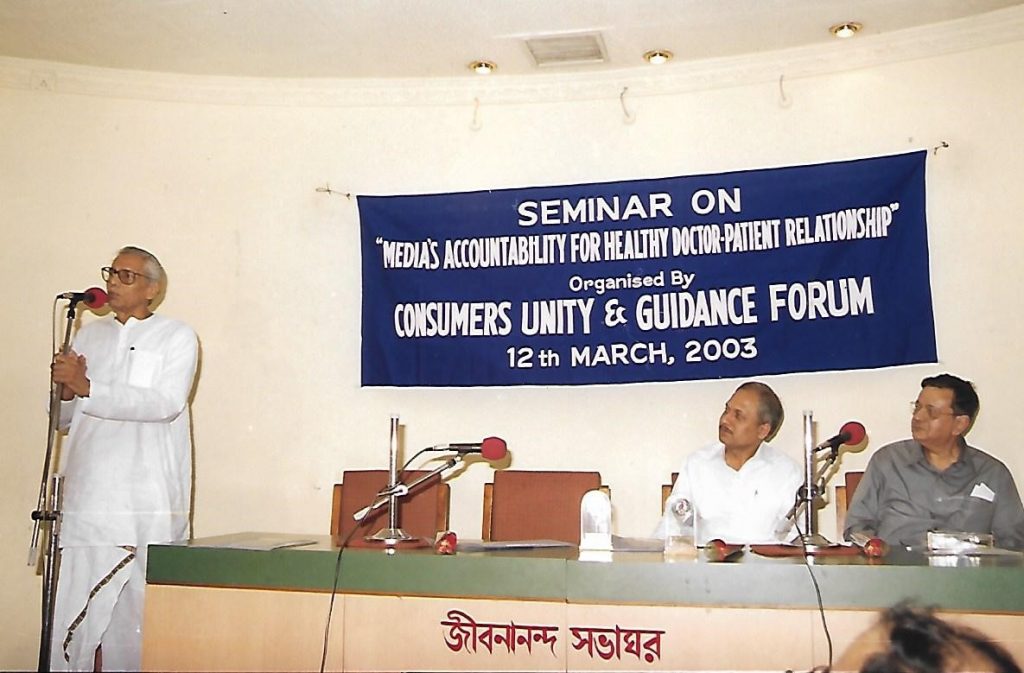


 Allow notifications