Category: Law Firm Knights

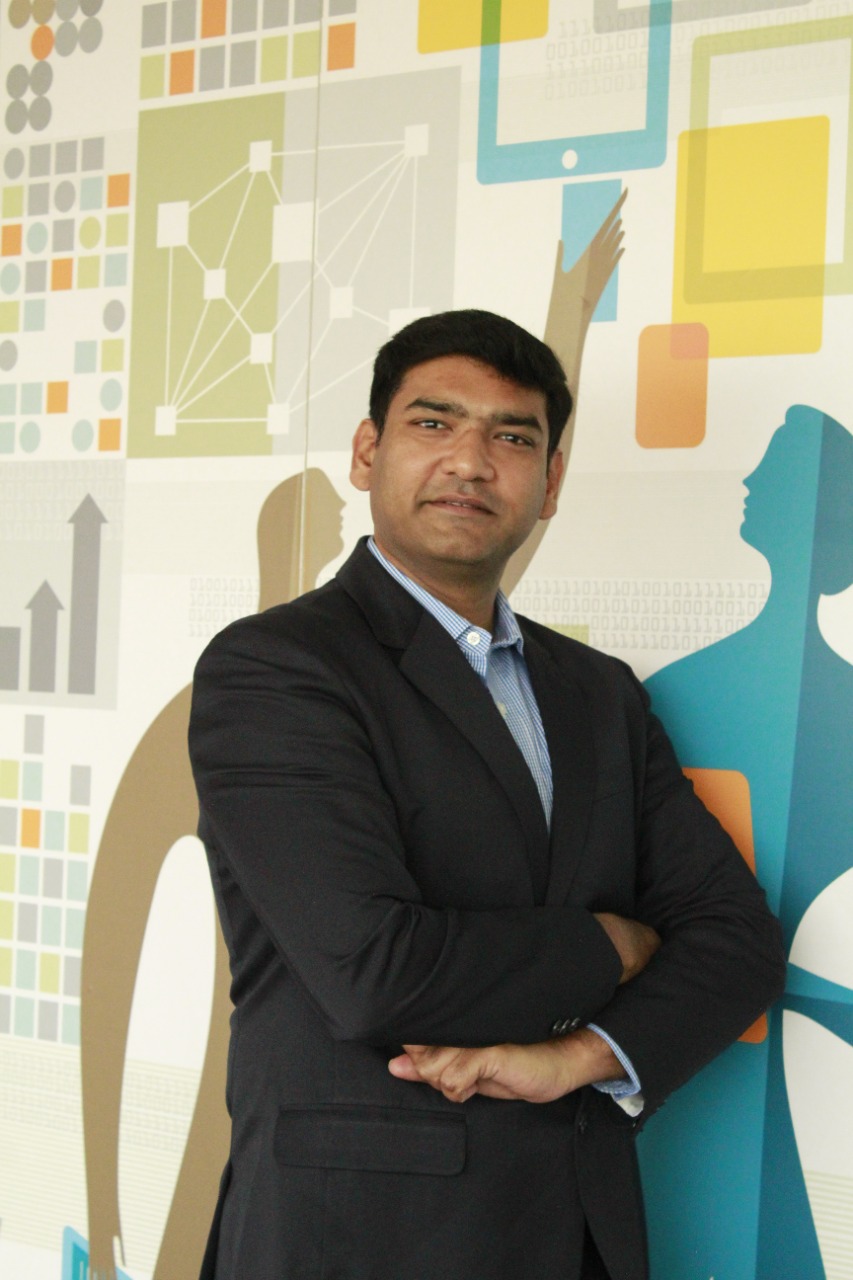
  • In Conversation with: C. Arun Kumar Reddy, Co-Founder & COO at SARN Legal

    In Conversation with: C. Arun Kumar Reddy, Co-Founder & COO at SARN Legal

    This interview has been published by Prabhjot Singh, Priyanka Karwa and The SuperLawyer Team

    Why did you study law, was it planned or all of a sudden you decided to study law?

    Well, I was always passionate about Law as a subject as from my childhood I was argumentative by nature be it with my parents or friends on any issue. I have always been putting myself in the shoes of others and think as to how I would handle the situation. It was crazy though, but I had lots of “If’s” and “But’s” in my responses.

    Sometimes people didn’t have responses to the questions I posed and that kind of triggered me to study Law. My well-wishers also pushed me to consider the legal profession going by my nature of asking questions for almost every question.

    Little did I know at that time that one also needs to have a solid mentor in the field to get that on ground experience and understand the practicality involved.

    How did you divert from taking Law as a profession to get on to the corporate world. What were the challenges that you faced in the beginning of your career.

    After my graduation I was at a juncture where I was to choose between Business Management and Law. I chose Law to fulfil my dream of being a lawyer though eventually I did my Business Management as well.

    I wanted to practice Law but since I was going to be the 1st generation lawyer in my family, I did not have a great mentor in that field, and we were in Hyderabad then. With not very active social media at that time, it was difficult for me to access Law firms in Mumbai and Delhi where you know big Law Firms were present. That was a big disappointment. But I was happy that I possessed the legal knowledge that I desired. I then decided to move towards corporate world to get experience and eventually be an entrepreneur.

    Since business also needs a practical exposure, I joined a Market Research co. so I can get the much-needed market exposure. What started as real world training, I went on doing extremely well and started climbing the corporate ladder swiftly. My very first job landed me in an MNC and climbing a corporate ladder at a faster pace made me to continue in that line. I quickly became the youngest Regional Manager handling South India in a span of 11 years getting promotions at an average of once every 2 years and that carried on till my last stint where I was heading Content Operations for Asia with offices in over 8 countries in yet another MNC.

    Lack of Experience was a huge challenge in my first job I got into a company with no experience while my batch mates were all experienced. So, there was a huge difference in my understanding and behaviour versus my peers who were already exposed to corporate world. It took 2 years for me to understand the nuances of corporate culture and understand how it all works and then there was no looking back.

    Though, I did have mentors in my corporate journey which really helped during this phase of my career.     

    Arun, do you think that for a first-generation lawyer, the journey becomes a little difficult? Please explain the same wrt to your own experience.

    Ans: Yes, to a great extent. At least during my time when I completed my Law in 1998, one needed to have that solid mentor or a senior who could train you. Law being a profession where the clients would come to an accomplished lawyer having a very good reputation of winning cases as the issues are usually dealing with one’s life and death. Be it civil cases where you are fighting for hard earned properties versus a family law case or a criminal case where lives are involved. So, no one would like to try out a lawyer who has just completed Law with no major cases to boast of.

    With almost no presence of social media at that time a lawyer’s profession was more physical in nature and one’s presence on the ground mattered a lot.

    The other challenge was the profession where the junior is expected to learn on his/her own. The senior lawyer may not have that time to train you unless you are kin of the senior. So, for a first timer to establish in the legal profession poses a big challenge but I am glad to say that things are changing now with a lot of Law Firms sprouting and opportunities are thriving for the deserved.

    It is also fascinating to see the newer generation of lawyers are well informed, tech savvy and deep rooted in their thoughts which matters a lot to be a good lawyer.

    How would you describe your previous experiences in the legal content and editing process, there has been a lot going around since post-covid in this sector, how do you see it creating new opportunities for individuals?

    Ans: India has been developing at an exponential pace with technology taking the lead. Thanks to the Central Government for pushing the Make in India and other tech initiatives. Though the legal content and editorial space is not untouched with this development but in my experience Covid has really given that boost in this area.

    Law has always been a traditional profession with Printed material taking the top rack. Gone are the days where one use to do manual editing of legal content, this has transformed into people including authors doing online editing/content updates. This is a huge change. Imagine bills/legislations passed by parliament getting signed by the President and the same being available online in a matter of 24 hrs. This has taken out obsolescence of content which hitherto was being circulated in the form of print in the market.

    The legal fraternity up till pre-covid was transforming at a rather slower pace. Covid has made this industry to re-think and adapt to technology which has changed the industry dynamics in a big way. From Legal Research to Content Sourcing to Content Enhancement to Online First, new strategies have sprung up in no time. AI based Analytical Solutions which are now available has played a huge role.

    This has also opened opportunities for youngsters from being a Legal Researcher to play a role in digitization. Of course, the western markets in this area are far too advanced compared to India. There is still a lot which needs to be done in India and there is a huge potential for technology in this space.

    Unfortunately, Indian Legal content is still quite unorganised and unstructured which poses a challenge to the tech cos to play in this area. Thanks to the recent and the upcoming Chief Justices of India who are well versed with technology and have been pushing hard to make courts paperless and make life simpler for the citizens.

    I am glad to state here that the digital transformation has now caught up pace in the legal industry and we are running against time as people have seen the need and are getting metamorphosed.

    The role of CEO/COO of any firm is challenging and full of hurdles, how do you manage your time and responsibilities for the same?

    While the responsibilities of a CEO/COO in any organization is similar but what matters is in what kind of a business ecosystem are you in. A start-up COO has different challenges compared to a COO of a larger well-funded and established Organization where processes are time tested and you already have a history of trials and errors.

    Again, the challenges varies when you are managing a multi country teams versus just single country/location teams. I am stating this with my experience where I have worked in MNC’s with multi nation presence to promoter driven companies. Handling Operations at the helm of these Organizations gave me very different learnings and experience.

    Irrespective of the size, I think one of the biggest hurdles is managing people. People are like the fingers of your hand. Everyone is different. So, you need to nurture everyone to be at a particular level. With people coming from different back grounds and having different IQ levels, its not easy. One needs to be organized and take care of your employees which is the key. Organizations are made of employees.

    I believe that everyone has the same 24 hrs, and one needs to accomplish all his/her duties, personal to professional in the same time so respecting time and utilizing it to the best is the key. I use my calendar quite effectively which ensures I do not carry a lot in my mind. Everything is jotted in my calendar from Private to Professional engagements.

    On the responsibilities, I don’t think everyone is cut to do everything in life. We all have our strengths and weaknesses, so ensure the job is done by the person who is best in that area rather than trying to do something which you don’t have that kind of expertise – Effective delegation and setting a strong process is my mantra.

    Trust and delegate and do what you are supposed to do. If everyone starts doing their own job that they are meant to do, you are bound to be successful. E.g., If a Sales guy gets into Operations, then who’s going to sell the product.

    I go with a philosophy that if I do someone else’s job then who’s going to do my job? While helping, supporting, collaboration are different which goes without saying in any organization whether it’s a small start-up or a large organization.

    How do you see digital transformation changing the way we deal with the legal industry?

    There is a huge role for Digital Transformation to play in the Legal Industry. We are far too behind in this area compared to our western counterparts. Undoubtedly, we have come a long way in transforming ourselves from a paper-based economy to a digital.

    A classic example being the currency transactions in India today stand at 40% digital mode. So, going digital is the buzz word and I think one good thing which happened due to Covid is that we have seen an electronic revolution in almost all areas and Legal is not untouched.

    We have seen Legal tech companies investing a lot in making Content more digital, analytical and tech enabled through AI driven technologies. I won’t go longer than a decade where I see a huge foray of digitization in the Legal industry with courts going completely digital and we trying to cut down on time and efforts taken today in submitting those bunch of papers and getting them verified at several stages.

    The current back log of cases which is hurting the basic rights of the citizens of getting justice on time can see a huge leap in the coming years.

    How do you see the Primary Law in India shaping up in the coming years.

    India is a large country and the biggest democracy in the world. We have by far the longest constitution in the world, so the laws are accordingly quite vast. We have close to 1300 Central Legislations which are referred from time to time.

    Similarly, there are host of Cases pertaining to Supreme Court and High Courts. Both these are referred regularly in the current set of cases and used immensely in the courts and by the lawyers. Be it Cases or Legislations they all have precedence values hence its essential that we have all these Cases and Legislations handy.

    All this can happen only through digitization and having effective analytical tools which can help a Lawyer quote relevant cases in the court and the corresponding Legislations and Provisions. Therefore, having an effective Primary Law content online is a need of the hour and I can see a lot of players today in the market competing to be no 1 in this space. Definitely, there is a huge potential in this area.

    I foresee a lawyer walking into the court with a simple Tab and referring to relevant Legislations/Cases and the Judge verifying the same through his online terminal linked to the Master Registry. No more attachments of papers/cases/book portions etc. It’s going to make the system faster, accurate and efficient.

    Being able to achieve so much at a young age, what motivates you in life and how do you manage stress in the legal industry?

    I did have a very good run in the corporate world. I became the youngest Branch Head in the country and later became the youngest Regional Manager managing Operations for 4 southern states of India and then went on to manage 2 facilities with over 1000 FTEs with P&L responsibility and then managed Operations for Asian sub-continent in the Legal Content side.

    Its been 27 years of corporate life which gave a completely different perspective to life and now I have ventured into my own Legal Services Co. which I am so happy to pursue where I am finally exploring my passion.

    The motivation has been to always keep going ahead without looking back into the past. I believe whatever was to happen in the past is done, there is nothing much we can do about it, be it good or bad memories, just move on with the learnings.

    I am also a staunch believer of destiny as I have come across stages in my life where I never wanted to do something, but the circumstances made me to take that decision which worked out very well for me. So, whatever happens it happens for our good and try moulding your plans accordingly rather than sulking about certain things which happened and was not designed by you.

    Stress in today’s world has become a commoner in almost every profession. So, it all boils down to how do you take things the way they are coming to you. You want to keep thinking and worrying about the situation or move and work on those situations. I believe on the later one and apart from that I take help of my hobbies here.

    I am a vivacious traveller both by road and going across the continents. Take frequent breaks and keep my mind off. Ensure the weekends are relaxed and am off work as I have experienced personally in my work life that it’s very important for a human to completely switch off your brain for some time, relax and energize it to be more productive. Else, the stress will exhaust you out and that’s not worth it.  

    Is AI and legal tech the future of the legal industry and do you think it is high time to adapt this transformation?

    100%, if we don’t transform, we will become obsolete. Look at the developed nations in the same area AI, NLP, Bots, Automation and unless the content is Technology enabled, we will not be able to make use of the volumes of historical data we have in this industry, and this is an industry where precedence has so much of value.

    Imagine a Judge passing on a judgement by looking at the past data, legislations and see which case and law are good law and which was an overruled case etc with a click of a button against referring to heaps of case papers. Analytics in the Legal space is the next in thing, and we need to quickly adapt to that else the law will keep getting complicated and due to the shear dynamism in the subject unless we have means to interpret tons of info. in split seconds, justice can’t be delivered on time.

    Remember we are dealing with humans here, so we need to be accurate and faster in this area and that can be achieved only through embracing technology

    Tell us something about your venture SARN Legal. What motivated you to start this and how does it work.

    Well, SARN Legal is a Legal Services Company with a unique offering to our clients. Let me give a quick background before talking about our USP. I have known founders of start-ups across the industries from health care to IT, Construction, Publishing, Edu. Tech, Hospitality and even Law Firms.

    During my discussions it came up that there is a need of Legal support while establishing an organization right from getting a co-founder’s agreement to drafting employee rules, appointment letters, contracts etc and after establishing the company, vetting client contracts, interpreting notices, legalities etc. and advising the founders on various legal matters. So, it had a long prone demand and the firms were depending on Law Firms and individual Lawyers to get these services. Since there is no fixed rate card for any of these services, I saw some of these start-ups have ended up paying huge sums to get these services.

    This was a pain point where a recently established company would ideally like to spend their funds more diligently on improvising their products, innovation, and technology. Almost everyone felt they had to pay an exorbitant fee for these services and each one had paid different rates for similar services.  

    So, we came up with a unique value proposition of introducing a subscription modal for Legal Advisory services at a very affordable rate where one gets a 20 hrs of dedicated legal counsel’s time every month at a nominal cost who would help them in all legal advisory matters. Basically, handle all non-litigation work for an organization. Be available for the companies all through the month. This is the USP which was liked by many firms.

    Apart from this there are host of other services (Automatic Contract Tracking, Content enhancement, Web scraping and Data mining, Legal Research, Provide dedicated Legal Resources on Contract, Publishing support to Authors etc) which can be handled by SARN Legal team who are well experienced and have worked in MNC’s in the past, so the teams understand and respect the clients time and one gets a swift response and an immediate attention.

    Another huge area which got addressed was the non-responsiveness of Lawyers especially during the day when the client wants them the most. We promise of a quick response time of 2 hrs so someone in SARN Legal team is always working for the client.

    With recession setting in, everyone is looking at cutting costs. With SARN’s highly skilled and experienced work force we also extend our support to existing Law Firms, Corporate legal teams to work for them as their extended teams, taking care of all their desk work. We also cater for Local and International Law Firms besides Corporates of all sizes where we provide all Para Legal Services at a rate which is at least 25% cheaper than their existing costs. We are getting a very good traction from these segments of the industry.

    At the end, I am glad I was able to make use of my corporate experience together with my entrepreneurial thought process and am able to support MSME segment and Law Firms both at a domestic as well as international level.

    What would be your advice for young people in this profession?

    My advice to the youngsters in the Legal profession would be to firstly be passionate about what you are doing and stay updated with latest laws, cases, be informative about what’s happening not just around you but, in the country, and possibly across the Globe.

    Very important, be tech savvy and transform your thought process to be more analytical and think differently as the industry we are all in is quite vibrant and there is no right or wrong answer for any situation.

    Be prepared to face situations which you probably have not envisaged about and voice out your thoughts. Do not fear of people on what they may think about you. Lastly believe in yourself and do what you think is right as at the end of the day when you look back you need to answer yourself as to what you have done in the past.

    You are measured by your success and not by what others perceive about you. Go out there and give your best, you will be successful.

                                                                            *********

    Get in touch with C. Arun Kumar Reddy-

  • In Conversation With: Dipti Srivastava, Senior Associate at Citadel Law Chambers, a tennis prodigy turned Corporate Lawyer, who is also an ardent researcher and writer

    In Conversation With: Dipti Srivastava, Senior Associate at Citadel Law Chambers, a tennis prodigy turned Corporate Lawyer, who is also an ardent researcher and writer

    This interview has been published by Sonali ParasharOjuswi Sahay, and the SuperLawyer Team


    You were a sportsperson during your higher secondary and secondary school competing at the national and international tennis circuit. You have represented and won medals for your state in all age categories and were top 15 in India at one point in time. How did a tennis prodigy become a lawyer?

    Becoming a lawyer for me happened by chance and enjoying the profession ended up being a blessing. It was due to too many injuries that I had to decide to get back to academics. Luckily for me, my mother being a lawyer herself (although now in the family business) was there to guide me through it. She knew the process and also had an idea as to how much time and effort would be required for me to excel in this field. Further, JGLS (my college) aided in the process as it provided me with the platform to be taught by excellent professors and also gave me access to ample opportunities to learn the nuances of law and hone my skills. 

    I always believe that it is important to strive to be the best at whatever one does. When I knew that this was not going to be possible in my tennis career (unfortunately, due to injuries), I had to make a choice and a very difficult one. It was a difficult transition, however, the never to give up attitude that I learned through my tennis career helped me through the process. I started to spend considerable hours in the library of my college and soon found myself enjoying the same. I had a revelation then that being a sportsperson, I gained and internalised very essential life skills of being disciplined, perseverant and hardworking. All of it aided in the transition process and till date helps me to strive to be a better lawyer each passing day of my life.

    You got a chance to attend Summer School at Somerville College, Oxford University to complete courses in International Law and Global Governance in pursuance of your LLB degree. How were you able to secure that opportunity? Please share the experience. 

    It was an opportunity provided in college and I was able to secure a position in it based on my grades and a Statement of Motivation that I had to write and submit. The Statement of Motivation had to contain my reasons/motivations to pursue these courses at Oxford University. 

    It was a very enriching experience. I must say that the teaching patterns used in such an esteemed institution are worth experiencing once in a lifetime for sure. We used to have the lectures given by subject matter experts in the morning hours and during the late afternoon hours, we used to have tutors teaching us the same matter with extensive classroom exercises making it very interesting. I felt that they made us engage with the subject to an extent that it ignited the motivation to do further research and acquire more knowledge in the said subject. I believe there is nothing more that one can ask as a student. 

    After your education, you moved back to Kolkata, your hometown. Many stayed back in Delhi or Mumbai for better opportunities and bigger pay packages. Was this a conscious decision to move back to your hometown? If so, why? How challenging was it?

    Yes, it was a conscious decision taken by me to move back to Kolkata after my studies. I had stayed out of home for too long due to my training, tennis tournaments and then studies. Therefore, this time around, I wanted to start in Kolkata itself and see where life takes me. Thus, to sum it up, the reason was simple. I wanted to live my life on my own terms and did not want the situation around me to determine the same.

    It was very challenging but with persistent effort, I did secure a position in HSA Advocates. I remember that day and it’s been more than 5 years since then that I continue to work with the same senior and team and it’s been a great learning experience so far. It’s also been very exciting to be a part of the growth story of Citadel Law Chambers where I get the exposure to practice all areas of law and not be limited to one. I truly believe if you are good at something, you will do well wherever you are. Opportunities and money will follow. 

    You have published articles in some reputed journals and forums including IBLJ and Mondaq. How did you get into writing? What are 5 essential practices one should start to become better at research and writing?

    I got into writing extensively when I was in law school. The seeds of it were sowed then and it continues to be a very essential part of my life. 

    The five essential practices to start would be: (1) read and write every single day. Such practice on a continuous basis will 100% show results; (2) gain comprehensive knowledge about all the databases that one needs to refer to for their respective subject matter; (3) learn the skills to know what to look where. This is a very important skill for a lawyer. There is no way around it; (4) technology has now become a very important part of our lives, therefore, to be better researchers, one should stay abreast of all the tools one can use to locate materials for their respective research; and (5) writing well is a skill that comes with time and with well-grounded research, therefore being persistent with the practices mentioned above would be extremely important.

    You cleared the Custom Brokers Examination under the Custom Broker Licensing Regulations. How did it help you in your corporate career? As per your experience, how would you advise someone preparing for this exam?

    My family is into the business of providing end-to-end logistic services (for two generations now) to importers and exporters which includes custom clearance services as well. Such services can only be provided by licensed customs brokers. Since this is a part of my family business I got first-hand experience of it during family discussions. I also gained practical knowledge of it with time. I also got to know that such service could only be provided by people who have sound knowledge about laws governing the logistics industry. Therefore, since I had completed law and the said business was a lot dependent on the laws governing the logistics industry, I decided to give the exam and continue the legacy. It really widened my knowledge base and also provided me with the opportunity to learn about laws governing logistics services in India. 

    Additionally, it helped me in my corporate career to understand the businesses of clients who were providing such services. To pinpoint, it came in very handy when a legal due diligence exercise was being carried out on a company which provided similar services. It made it much easier for me to discern the business-specific licences and consents required for such services. It also helped me while providing advisory services to clients on compliance requirements under food safety regulations for the import of processed goods in India.  

    The examination process was pretty rigorous. I had to sit for a written exam and thereafter an oral round which was taken by three IRS officers. One thing that I would like to mention for the people taking the said exam is that it is very important to solve question papers of past years (as many as possible) while preparing for such competitive examinations. It really helps to understand the type of questions which may be asked and the areas of law that one needs to concentrate upon. Further, the oral rounds are entirely on your confidence. It is important to know Customs Act in its entirety but it’s even more important to be confident and own up when you may not have an answer to a question in particular. Such officers really appreciate honesty rather than giving wrong answers.

    You worked on various corporate commercial, M&A, and banking finance transactions. Can you share some of the nuances in this practice area for law students and professionals who are not exposed to this area of practice? Why should they choose this area of practice?

    The nuances of these practice areas range from conducting legal due diligence for highlighting the red flags to preparing, negotiating and closing the documentation part for any transaction. It also includes providing advisory services which range from structuring a transaction/deal and advising on corporate actions taken by corporate bodies including corporate restructuring. 

    I believe the reasons for any student/lawyer to choose these areas of practice should be their knack for diligence and sound knowledge and interest in commercial laws. 

    Please share any two golden rules that you follow in your career which could be helpful for students and upcoming legal professionals.

    Two golden rules that I follow are (1) there is no substitute for hard work. As we all know “hard work beats talent when talent doesn’t work hard” (Tim Notke). Therefore, one needs to understand and internalise that there is no shortcut to the learning process and being perseverant is the key; (2) once you decide to be a lawyer, you need to understand that you have signed up to be a lifelong student of law, therefore reading and applying the law on an everyday basis is an important rule that one needs to practice. 


    Get in touch with Dipti Srivastava –

  • In Conversation With: Adarsh Himatsinghka, Senior Associate at ANM Global who specialises in Media, Entertainment & Gaming Laws

    In Conversation With: Adarsh Himatsinghka, Senior Associate at ANM Global who specialises in Media, Entertainment & Gaming Laws

    This interview has been published by Sonali ParasharOjuswi Sahay, and the SuperLawyer Team


    You are a young mind with great potential and are doing great in your field. What do you think about the axiom ‘Sometimes hard work does not pay off, but smart work does,’? And, do you think ‘Smart-work’ is the need of the hour to achieve the desired goals?

    First off, it’s a pleasure to be featured in this prestigious editorial, and I really appreciate the opportunity. Thank you for your kind words. I’m in agreement with that thought, and can very well relate to it. For me personally, “smart work” has always been the go-to approach when dealing with complicated and complex transactional matters as it helps you to think out of the box and achieve results in a more efficient manner. Having said that, it, in no way, suggests that “hard work” can be avoided or neglected.

    I don’t see the idea of working smart as an escape route from working hard, but both aspects need to be parallelly aligned as per the nature of the transaction and client requirements, in order to accomplish the desired goals. In a nutshell, one needs to know how to strike the right balance between “hard work” and “smart work”, as in my opinion nothing in life is achieved without putting in the shift and being honest about your work. In the present ecosystem and as a need of the hour, a good lawyer needs to be adaptive, versatile and dynamic which includes being capable of working smart and creatively, to represent clients in the most effective manner possible. 

    Let us start from the beginning, what drove you to choose law? What other career options would you have considered, if not law? 

    Since school, I felt like I had a knack for, and felt a natural inclination toward subjects like civics, social sciences, and history. That, coupled with the right push and support from my family, were all the ingredients I needed to be decisive, confident, and passionate about becoming a lawyer. Upon giving it a more detailed thought and research, I knew it wasn’t going to be a stroll in the park and would come with its set of associated challenges, but I decided to back myself up and embark on the journey to see where it would lead me.

    Funnily, I’m not very sure about what I would have done if not for becoming a lawyer, but I was really into outdoor sports since childhood and had the pleasure of representing the colours of my school and college in Football, so yeah, maybe I would have pursued a profession relating to sports, or even journalism for that matter.

    You are into the Media, Entertainment and Gaming Law. These areas of law are still fairly uncharted and unconventional if we were to compare them with the other fields. How challenging/exciting do you find the fields that you chose? Would you like to briefly talk about gaming law for our readers? 

    The Media, Entertainment and Gaming Law space is evolving and has successfully carved a niche for itself. Speaking about the challenges, first, it demands a lawyer to be consistently well versed with industry nuances & developments, along with building a practical problem-solving approach. Second, I feel a media lawyer needs to have a 360-degree perspective, an ability to play devil’s advocate, and understand the nature of transactions well to be able to tackle the issues in the field.

    I think the most exciting part about being in this sphere of law is the abundant opportunity available for a professional to make an impact and be able to stand out from the herd. As you rightly mentioned, the field is uncharted and unconventional which helps one define their own journey, be able to innovate, impose their personality, and largely control their own growth trajectory.

    I believe excellence and excitement are a direct consequence of being passionate about, and interested in what one does. Sure, the “Gaming Law” practice stems from the booming gaming industry, globally including in India, and the uprising of multiple gaming businesses which include real-money digital fantasy sports (Dream11, MPL, DraftKings), e-sports (F1, DOTA, FIFA), high engagement casual games (Pub-G, COD, Monopoly) etc., which have significant commercial and engagement impact on the consumers.

    Some of the facets of “Gaming Law” include contract laws, licensing, broadcast & streaming laws, intellectual property laws, data protection laws, sponsorships, marketing, athlete/gamer representation, tech and coding-related know-how etc.

    You have shown your interest in various areas such as Cryptocurrency and Stock Markets, Start-Ups and Early Age Ventures, Technology, Data Protection, etc. How did you develop your interest in such uncharted fields? There is also a lot of chit-chat about the entire cryptocurrency regime. What according to you is the future of Cryptocurrency?

    It is important to engage and be aware of developments in the aforementioned areas as all-encompassing discussions, issues, and talk can help an individual formulate a well-informed opinion on these subjects, which will have a significant impact in the near future, not just on lawyers but the masses in general. I’m positive about the adoption of Cryptocurrencies as an alternate means of investment since most cryptocurrencies have real-time use-cases with the objective of developing technologies for the future, however, it seems unlikely that cryptocurrencies will be treated as a substitute for fiat currency.

    There are some very interesting projects out there, which involve blockchain technologies, the digital metaverse, NFTs and DeFi platforms. It’s becoming a huge market with new generational investors pouring in, especially in India, wherein it is becoming more of a “trend” or “jump on the bandwagon” rather than an informed investment decision, which is dangerous since there is not enough knowledge available to the masses, or willingness to understand the nitty-gritty of the schemes they are looking to invest in. I think it is high-time, we see some regulations being tabled to better govern and develop such growing and uncharted fields.   

    You are the youngest Senior Associate at ANM Global Inc. law firm. How does that feel to you? How do you handle the work-life pressure? 

    It always feels good to be recognized for the work you put in, and I’m grateful to my colleagues, mentors and seniors for being a constant support and considering my candidature worth such an accolade. I believe that the journey has only begun, with a lot more to achieve, and keeping that in mind, I strive to work harder, with more vigour and continue to contribute to the firm along with my personal growth.

    Thriving in the legal profession can be taxing, and a lot of being able to deal with the work pressure involves identifying and working through one’s own strengths and being able to efficiently manage time and resources in hand. I feel it is very important to pay heed to your physical and mental capacities, and not end up over-exerting or burning yourself out. The key is to strike a fair balance between work priorities and personal space, along with being able to effectively communicate the same.    

    You have represented and advised the 1983 World Cup Winning Indian Cricket Team for the Film “83” starring Ranveer Singh; assisted and advised in setting up X1 Racing League in India, and GT20 Cricket League in Canada. Would you like to share your experience on such exciting projects?

    I feel fortunate to have been trusted with such projects early in my career and to be given a platform, by my seniors Mr Nidhish Mehrotra and Ms. Anushree Rauta, to contribute at such a level. It was an incredible experience, where I learnt a great deal and found myself inspired to excel and delve deeper into the industry of media, entertainment and sports. The opportunity to work with and represent absolute legends of the sport (of Cricket) is definitely one for the books and will be cherished by me for many years to come.

    Moreover, understanding the fundamentals from a legal standpoint in terms of building sporting leagues was quite an enriching experience, and I think the development of, and rise in the popularity of other sports (apart from Cricket) in India is extremely pleasing to witness, and with the success of IPL, ISL, UTT, PKL, et al, I hope there are many more sporting leagues that come up which will boost the sporting eco-system in India and provide a platform for the younger generation of athletes and sports personnel to show their mettle.      

    You have come a long way, and there are still more miles to clock. Would you like to share a glimpse of your life other than work? How would you like to inspire our readers to grow in their careers? 

    Thank you and I look forward to the journey ahead in these uncertain but interesting times to come. Apart from practising law, I’m extremely fond of solo backpacking, hiking, engaging in adventure sports, and exploring our beautiful country, which I firmly believe adds value and dimension to my thoughts and actions, and allows me time to switch off for a while. I also try to keep active by going for evening runs post-work or engaging in a game of football with some mates. It helps me to refuel and prepare for the upcoming day.

    Apart from the above, I love to spend quality time with my family and loved ones. My advice to all the readers and fellow professionals would be to, at all times, have a positive attitude, be dedicated to accomplishing tasks at hand, be honest about your goals, trust your instincts, and strive to achieve the right balance in life. Last but not the least, don’t forget to catch up on good sleep, it’s the most underrated form of therapy. 


    Get in touch with Adarsh Himatsinghka –