Category: Law Firms

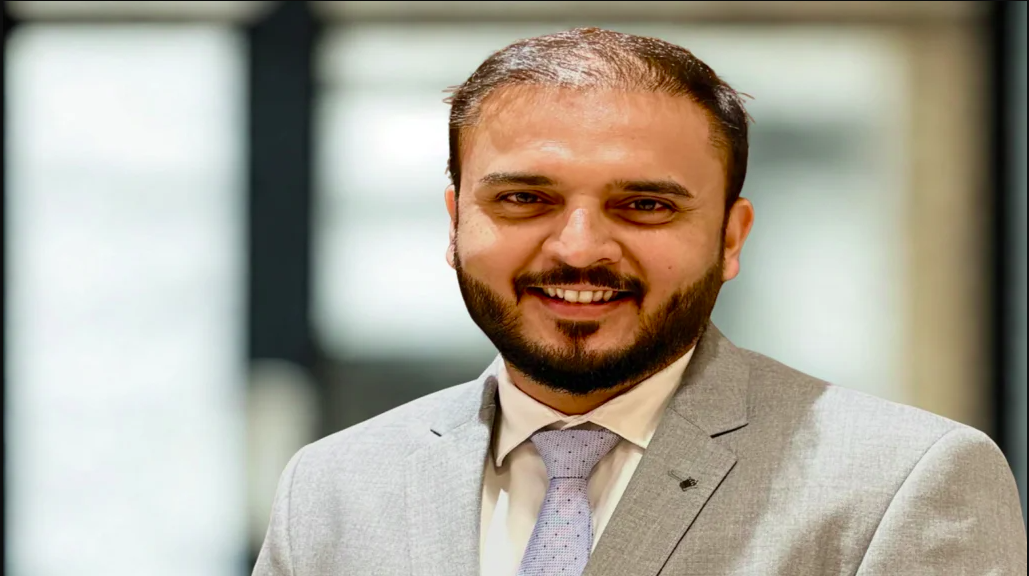
  • “The TMT field moves too fast, and the opportunities are extraordinary for lawyers who master the hybrid skillset.” – Roopam Verma, Partner at IRIS Legal.

    “The TMT field moves too fast, and the opportunities are extraordinary for lawyers who master the hybrid skillset.” – Roopam Verma, Partner at IRIS Legal.

    This interview has been published by Anshi Mudgal and The SuperLawyer Team

    Sir, you have built an impressive career spanning over 18 years across a top-tier law firm, a broadcasting company, a multinational IT consulting giant, and now as Corporate, TMT and Fintech Lead Partner at IRIS Legal. How has this diverse journey shaped your expertise, and what inspired your transition into private practice leadership?

    My journey at Khaitan & Co. gave me the essential foundation every lawyer needs, the ability to spot issues, conduct thorough research, and build watertight arguments. That big law firm environment teaches you precision and attention to detail.

    But the real transformation came in-house as Associate General Counsel at Capgemini and Senior Lead Counsel at Ten Sports. I discovered that being legally correct isn’t always the same as being commercially useful. You’re not just analyzing what the law says—you’re figuring out how to make business objectives happen within legal boundaries. I learned to ask different questions: How can we structure this deal so it actually gets done? What’s the smartest way to navigate regulatory requirements without stalling progress? It was a shift from binary yes-or-no answers to providing a menu of options with a solution-oriented mindset.

    After gaining this dual exposure, I returned to private practice with something unique to offer: not just legal expertise, but genuine understanding of how businesses actually operate. Now, as the Corporate, TMT, and Fintech Lead Partner at IRIS Legal, I bring that business-first perspective to everything I do. My clients get practical, informed advice that helps them achieve their goals. I’ll flag the risks that matter, but I won’t derail a good deal over theoretical concerns. At the end of the day, successful legal practice is about enabling business success, not preventing it.

    During your early years at Khaitan & Co, you worked on cross-border and domestic M&A, private equity, and joint ventures. Which experiences from that period continue to influence how you approach corporate and technology-driven transactions today?

    My Khaitan years were foundational in several ways. The cross-border work taught me to map regulatory complexity upfront rather than discover deal-breakers halfway through—crucial now in tech and fintech deals. Working with PE firms helped me understand commercial dynamics and evaluate legal structures through a risk-return lens. Joint ventures taught me stakeholder management across different corporate cultures—invaluable when working with multinational tech companies with different risk appetites and decision-making processes. Most importantly, that M&A training instilled rigorous due diligence and issue-spotting skills—the ability to quickly distinguish between genuine deal risks and ‘nice to have’ cleanups that can wait.

    You later transitioned into the media and entertainment space, handling high-stakes content acquisition and cross-border broadcasting deals. How did this experience broaden your legal skillset compared to traditional corporate and technology law?

    The transition to Ten Sports was a complete game-changer. I moved from the law firm hierarchy to reporting directly to the CEO, contributing in strategy discussions with brilliant minds from IIMs, IITs, and major financial institutions where business decisions happened in real time. We were doing creative cross-border structuring to establish global presence for a popular sport, coordinating with international firms across time zones on tight deadlines in a relentless, fast-paced environment.

    What made this particularly exciting was that broadcasting regulations in India were being completely redefined. Unlike traditional corporate work with periodic regulatory interaction, broadcasting required constant regulator engagement, anticipating policy changes, and building compliance into deal structures from day one. There were no established playbooks, so innovation was essential in structuring untested solutions.

    This experience fundamentally changed my approach—teaching me to think several moves ahead, build flexibility into structures for rapidly evolving frameworks, and integrate legal solutions with real-time business needs. Those skills have been invaluable in complex technology and fintech transactions where innovation often outpaces regulation.

    In your role at Capgemini, you managed various high stake legal portfolios, led complex software licensing and cloud transformation deals, and negotiations. What were some of the most challenging aspects of these negotiations, especially in the software and cloud service space, and how did you navigate them?

    As Associate General Counsel-North Americas at Capgemini, managing high-stake software licensing and cloud transformation deals required navigating multifaceted challenges under tight timelines while balancing cross-jurisdictional jurisprudence and business expectations across EMEA, APAC, and Americas—each with distinct data sovereignty and regulatory frameworks.

    Some of the critical negotiation points centered around licensee’s rights on original source code, ownership of developed IP, royalty and revenue split models, managing third-party and open-source components, establishing robust escrow mechanisms with clear release conditions, post-termination IP treatment including perpetual licenses and wind-down periods, the binding nature of revenue forecasts where clients wanted flexibility while we needed commitment, and structuring appropriate liability caps and indemnification with adequate representations and warranties.

    The key to timely deal closure was maintaining preparedness with legal alternate solutions to navigate negotiation impasses—whether through hybrid licensing models, phased implementations, or creative commercial structuring that addressed both parties’ underlying interests.

    With extensive experience in software, digital, IoT, and 5G technologies, what do you see as the most pressing legal challenges in the TMT sector today, particularly around cloud services, outsourcing, and cross-border data regulation?

    From my experience, the most pressing challenge is implementing the Digital Personal Data Protection Act, 2023 while preserving India’s competitive edge as a global technology hub. Organizations are navigating the delicate balance between data localization requirements, cross-border transfer mechanisms, and serving global clients across multiple jurisdictions. This becomes particularly complex in cloud and outsourcing contexts where Indian service providers must reconcile DPDP Act obligations with clients’ home country regulations—whether GDPR, CCPA, or sector-specific frameworks—often requiring sophisticated contractual architectures and sometimes separate processing environments.

    Secondly, there’s significant regulatory uncertainty around cloud services and emerging technologies. While DPDP Act rules are still being notified, sectoral regulators like RBI, SEBI, and IRDAI are issuing parallel guidelines, creating a complex compliance matrix. For cloud services, we’re seeing ambiguity around ‘significant data fiduciary’ classification, liability allocation between providers and customers, and critical information infrastructure obligations. In 5G and IoT, clarity remains limited on device security standards, edge computing liability, and supply chain security requirements.

    The key is building flexible compliance frameworks that adapt as regulations evolve, while ensuring legal rigor doesn’t stifle India’s innovation advantage. Success requires proactive regulatory engagement and translating regulatory complexity into pragmatic operational solutions.

    Having advised on M&A and strategic business transfers in technology and IP-driven sectors, what are the most critical considerations that companies and their legal counsel should keep in mind when structuring such deals?

    One of the most critical considerations is comprehensive IP due diligence that goes beyond ownership verification to understand value creation architecture. This means mapping registered IP, unregistered trade secrets, open-source dependencies with potential viral licensing obligations, third-party components, and ensuring proper assignment agreements exist for contractor and employee-developed IP. I’ve seen deals nearly collapse when acquirers discovered core technology relied on restrictively-licensed open-source libraries or that critical IP was personally owned by founders rather than the company.

    Equally important is analyzing transferability—whether customer agreements contain change-of-control provisions and ensuring data privacy compliance for cross-border transfers post-transaction under DPDP Act and GDPR. In IP-driven businesses, talent retention often matters more than IP, as innovation resides in people—structuring proper rebadging, enforceable earn-outs, retention bonuses, and non-competes while maintaining team morale is essential.

    The key lesson is that technology M&A requires legal counsel to think like business strategists and technologists, structuring appropriate representations and indemnities that fairly allocate IP-related risks.

    As a leader at IRIS Legal, you advise clients on both complex technology transactions and broader corporate advisory matters. Managing such a high-profile, demanding career alongside personal commitments can be challenging. How have you approached work-life balance, and what strategies have helped you manage both professional and personal priorities effectively?

    Work-life balance in demanding legal practice requires intentional strategies. At IRIS Legal, we’ve found several approaches effective.

    • First, creating clear time boundaries is critical. AI has made life significantly simpler by automating routine research and tasks, allowing us to work more strategically. When pressing deadlines or client emergencies arise, we put in the hours needed to deliver excellence. However, we encourage our team to leave early when there’s no immediate deadline—preventing burnout and maintaining long-term productivity.
    • Second, we’ve implemented a hybrid work model combining office collaboration for complex matters with focused, interruption-free time for deep work. Every day begins with a 15-minute priority discussion to align on what needs immediate attention versus what can wait—this simple practice brings remarkable clarity to otherwise chaotic days.
    • Finally, we leverage technology strategically — using AI extensively for research and routine tasks to free mental bandwidth for high-value, strategic work that truly requires our expertise. We also follow a 15-minute rule, prioritizing tasks that can be completed quickly to prevent small matters from accumulating into overwhelming backlogs.

    These strategies help us maintain high client service standards while preserving personal time and team well-being.

    Finally, what advice would you give to young lawyers aspiring to build careers in technology, especially those contemplating whether to start in a law firm or an in-house role?

    My advice is simple: in TMT, technology literacy is as critical as legal expertise. You need solid legal fundamentals, business acumen, and genuine tech fluency—not surface knowledge, but actual understanding of how tech such as AI models work, how cloud architectures function, how platforms handle data. I’ve seen talented lawyers struggle because they couldn’t grasp what their clients were building.

    I’d recommend starting at a specialized firm for 2-3 years to get breadth—exposure to how different companies handle tech governance, cross-border data flows, emerging tech compliance—then moving in-house to understand how legal advice translates into product reality.

    Staying current is non-negotiable. I follow AI researchers, read tech blogs as much as legal updates, and track policy developments constantly. When new regulations drop—which happens monthly—you need to understand both the regulatory requirements and technical implementation.

    The lawyers succeeding in TMT can walk into meetings with engineers and speak their language, then explain regulatory implications to the C-suite. The traditional ‘learn law first, industry knowledge later’ approach doesn’t work in TMT—the field moves too fast, and the opportunities are extraordinary for lawyers who master this hybrid skillset.

    Get in touch with Roopam Verma –

  • “What distinguishes an average lawyer from a great one is the latter’s ability to draft a legal document methodically and precisely.” – Priya Tandon, Senior Associate at AZB & Partners.

    “What distinguishes an average lawyer from a great one is the latter’s ability to draft a legal document methodically and precisely.” – Priya Tandon, Senior Associate at AZB & Partners.

    This interview has been published by Anshi Mudgal and The SuperLawyer Team

    Joining the field of law can stem from different motivations. What inspired you to pursue law, and how did your law school experiences shape your perspective and understanding of the profession?

    Like many other kids, my first exposure to law came with the movies. Law is an ever evolving combination of words, written in a manner that each and every word matters and has weight. For me, it was particularly intriguing to comprehend how mere words could wield such influence, to construct meaning from the given elements and to find solutions mostly in the shades of grey – there are no right or wrong answers. I am an alumnus of Jindal Global Law School, O.P. Jindal Global University, Sonipat. Jindal, a name reckoned with unparalleled academic excellence, was a truly innovative practical legal experience. It has a global outlook to curriculum – a carefully designed amalgamation of arts and law, offered through a combination of mandatory courses and multidisciplinary electives. Further, it has educators and students with diverse global experiences, the former having the flexibility leading to learning through thinking, questioning and engaging in meaningful discussions. Jindal fostered my understanding of law beyond silos, by equipping me with practical training and exposure in an overall dynamic space. From self-doubt, it helped me transform into someone who is not afraid to trust her instincts in driving solutions to complex legal problems.

    You started your career at a leading MNC in compliance and taxation. What were the most valuable experiences from that period, and how did they lay the foundation for your later work in providing end-to-end legal solutions on tax issues for major industry players across sectors like E-commerce, Liquor, Food and Beverage, Gaming etc?

    I accepted a Pre-Placement Offer from PricewaterhouseCoopers when I was still in my fourth year of law school. Therefore, immediately after my graduation, I joined their Governance, Risk and Compliance team. My job description required me to determine whether the internal controls and policies of Multinational Corporations were legally compliant, from a global standpoint. Despite a brief stint of only six months at PricewaterhouseCoopers, I believe that I learnt an extremely valuable lesson, which led me to secure and stand out at my subsequent job at AZB & Partners. I realised that a major hurdle in the practice of the legal profession is the flood of lawyers in the system each year – there is an apparent glut. The mantra to stand out, from what I learnt very quickly, is marshalling facts and figuring out the intricacies of how businesses function – both the granular details as well as the broad perspectives.

    What motivated your shift from corporate compliance to a law firm, and what differences did you notice in the work environments? How did you adapt to managing complex litigation strategies and representing clients before Commissioners of Income Tax, ITATs, High Courts, and the Supreme Court across India?

    My appointment at PricewaterhouseCoopers happened more by accident than by design, at the least expected time. Even though my job profile acquainted me with diverse areas of law at an international level, yet, I craved hands-on practical involvement in the application of law in intense adversarial set ups. This was the motivation with which I started applying to law firms, knowing fully well that the work there was expected to be more intense. As far as the work environments of both the places at which I have worked thus far goes, honestly, contrary to the popular opinion, I personally do not think that the same have been very different – fortunately for me, both the places have been marked with supportive supervisors, learning, flexibility, autonomy, open communication and work-life balance (for most part). In order to discharge the responsibilities that came with my new role with sincerity, I dove deep into the facts of briefs assigned to me and simultaneously, immersed myself in absorbing what I could about the nuances of the Indian tax regime/ Tax Treaties. Of course the “real-world” with no margin of error was daunting, more so, since I took up a highly specialized area, but nonetheless, being someone who had fought stubbornly for a spot at the most reputed law firm in India, I was determined to make the most out of the opportunity advanced to me.

    With over seven years specializing in Income Tax, International Tax, Transfer Pricing, Foreign Exchange, and Benami law, what has been one of the most challenging cases you’ve handled and how did you navigate it?

    For me, the fact that a case is significantly weak on facts or on a point of law will not by itself make it “the most challenging”. When it comes to taking a case to Court, there is always more than what meets the eye. It’s not just about reviewing documentation, drafting and arguing – it’s actually about all the behind the curtain strategizing and client management – balancing possible outcomes with client expectation every time the case is likely to come up. For me, the most challenging cases are the ones with an ostensible mismatch in the attainment of the said balance. In fact, even an unassuming case of assured balance may become a challenging one owing to certain unforeseeable circumstances, such as, delayed hearing on account of the opposite counsel or the Judge being on a leave, or on account of the case not being listed or taken up. There is no rigid or inflexible formula for ready application, so as to navigate a challenging case. Needless to state that when such a situation arises, which it will more often than you’d like, you will be constrained to think of creative solutions, trust your instincts and quickly follow through, irrespective of how outside your comfort zone it may be. It may not be in the fitness of things to allude to a specific instance of any case.

    You have authored several articles on contemporary tax issues, including Equalisation Levy, GAAR, Benami Property, etc. How has writing shaped your career, influenced your approach to complex legal issues, and contributed to policy discussions?

    I firmly believe that what distinguishes an average lawyer from a great one is the latter’s ability to draft a legal document methodically and precisely, in a manner that captivates the reader of such a document. The reader should not have any doubt about the observations advanced and its co-relation with the ultimate conclusion or the proposition sought to be canvassed. This is particularly true for those pursuing litigation, since very often, Judges base their decisions having regard to the content of the petitions, appeals, applications, submissions, etc. I believe that each time I write an article, it helps me enhance this precise skill. Of course, it’s a process – you come across a relevant contemporary issue or a topic you don’t quite know much about; you understand its context; you go over the related statutory provisions, precedents and scholarly works; you formulate your independent thoughts; and finally, you pen it all down! Each time I have done this, I have been exposed to the enormous gap between what the businesses are doing and the law as it is. This invariably opens policy discussions. Article writing assumes even more significance for entry-level associates, since a large part of their job profile entails churning out drafts. It goes without saying that it should be them who should be doing the reading, the thinking and the writing and not the nuanced Artificial Intelligence!

    While working with international entities and advising on transactional tax matters, how do you approach cross-border cases? What are the major challenges in handling matters like foreign exchange issues, M&A structuring, or international tax disputes, and how do you navigate them effectively?

    I believe that the underlying challenges and approach to each transaction or case is specific to its own set of facts and as such, the same cannot be generalised. Be that as it may, in my experience, the biggest challenge still seems to be the rather intricate regulatory compliances, both domestically and internationally. Since laws usually play a catch-up with the pace of dynamic businesses, the extent of applicability of existing laws on such businesses. always remains debatable and prone to future litigation. Further, with specific reference to the domain of tax laws, in cases where existing laws could not bring certain business models within the taxing net, retrospective amendments have been conceptualised and effectuated, consequently, adding to investor anxiety. I believe that one way to navigate this is to keep updated about the mechanics of disruptive business models and the manner in which such models are being looked at, globally. With the requisite background, the need of the hour is to engage with the policy makers so as to strike the requisite balance.

    As a woman litigator in a highly technical field, what challenges have you faced, and how do you balance mastering complex legal frameworks, devising litigation strategies, and mentoring the next generation of lawyers?

    Being a nuanced field, not many law graduates opt for tax law. What I noticed during my initial days of practice was that the litigation space, specifically, the tax litigation space, is dominated by a handful of lawyers. The percentage of women lawyers amongst this handful, is negligible. The trend seems to be improving as far as entry-level and mid-career level representation of women in litigation generally is concerned, where women seem to be matching, if not outnumbering men. However, effects of improvement are yet to be noticed in the tax litigation space. In my opinion, the strides made to ensure formalistic equality in many corporates and firms are laudable. This includes a supportive environment, with a clearly articulated policy on discrimination, harassment, flexible timings, maternity leave, etc. That said, in my experience, heightened scrutiny, specifically, outside these spaces, still continues to serve as a systematic barrier. It is up to the legal community to collectively work towards addressing this challenge. In my experience, one way to do this effectively, is to assume a mentorship role, offering insights, guidance and support to law students as well as organising and participating in periodical sensitisation trainings. Certainly, this would add meaning coming from women already assuming leadership roles.

    What advice would you give to law students or young lawyers considering a career in tax law and litigation, particularly in balancing technical expertise with advocacy and strategic client management?

    A couple of quick points here. First, as stated above, get your hands dirty figuring out the facts and how businesses function; understand risks. Second, whether you work for free or for a fee, marshal the facts and apply the law to create a positive impression. Third, which is an extension of the second, remember that preparation is key and hence, never appear before a Court unprepared, else, you will be doing a disservice to your client, the Court and the cause of justice. Fourth, know that networking is an integral part of the legal profession. You may have the best understanding of the law, but unless and until the client community reposes confidence in you, what is the worth of all the theoretical knowledge? Therefore, from day zero, network within the community – with your friends and associates across different fora in different parts of the country/ world. Keep in mind that most of the work is generated through references alone. So, be active on social media. Your network should know exactly what you’re up to. For this, post regular updates, write articles/ papers/ columns or participate in talk shows/ conferences/ seminars/ lectures. Fifth, have patience and perseverance – remember that giving up is not an option. Stay relentless and focus on building a quantum practice. Trust the process.

    Get in touch with Priya Tandon –

  • “I read somewhere that you only know about a subject matter, if you have the capability to teach on that topic even to a layman.” – Shivesh Aggarwal, Counsel at Trilegal.

    “I read somewhere that you only know about a subject matter, if you have the capability to teach on that topic even to a layman.” – Shivesh Aggarwal, Counsel at Trilegal.

    This interview has been published by Anshi Mudgal and The SuperLawyer Team

    Having graduated from NLU Jodhpur with a specialization in Business Law (Hons), what first motivated you to pursue law, and how would you describe your overall experience at law school?

    Definitely a great question to start with – as I feel whatever skills I have gained to move forward in my life originated during my stint at NLU Jodhpur. In terms of motivation to pursue law, just like most of us, I took CLAT in 2012 only with the hope of securing an additional safety net, although I was initially more inclined towards pursuing something in mathematics or accounts (as I’ve always had that weird fascination with numbers). However, by God’s grace, when I got through and was admitted to my super-welcoming university, I promised to myself to not disappoint whoever has sacrificed and/or cheered for me in my journey. I distinctly remember my mom’s eyes suddenly becoming moist at the railway station when I told her that it’s time for her to board the train back to our hometown and I need to head back to the campus to set up my room and start with my studies. I knew then that I don’t have an option to screw it up this time. There are times when you must win – and I thought that that time had arrived.  

    Without compromising on my grades, I participated in whatever competitions the university was offering and eventually realised my inclination towards research and mooting. I met the bestest of the people in the university who fortunately have now become family for me. Even today, me and my friends randomly reminisce about our time in college with loud and unstoppable cheers, whether we’re in the car, in a restaurant or even in a different country! I was also lucky enough to meet seniors who gave me all the right advice that I have kept with me till date. 

    If I have to sum up my journey at NLU Jodhpur, I will give any amount to go back and relive those 5 years from 2012 to 2017 – of course, with the same set of people.  

    Starting your career with one of the biggest firms is a remarkable achievement. What was your experience like in the early stages, particularly while working on matters involving gaming start-ups, credit services, and Aadhaar-related compliance? 

    I started with Luthra and Luthra Law Offices in July 2017. Initially, I would get a little scared especially when I would listen to those convoluted discussions amongst my seniors on a particular matter. But I knew I just had to hang in there and realised quickly that all this profession requires from you is time and hard work, and hence, I was all game for that. Also, as the only son, I had made peace with the fact that moving abroad to study and work was not an option and that I had to be around for my parents. It was my time to give back and their time to enjoy, although I believe there’s nothing a son/daughter can do to repay whatever his/her parents have sacrificed. 

    In terms of cases/matters, since it was mostly a corporate advisory and restructuring team, the kind of work that I would get was extremely challenging and thought-provoking. I remember working on detailed memorandums for gaming start-ups offering fantasy leagues and VR gaming to the public, which would entail studying their proposed new business in detail and thinking of everything under the sun that may become applicable to them then and even later. Similarly, as a first/second year associate, apart from assisting on standard corporate and commercial queries, I would be asked to research on business ideas which were fresh then with no market precedent, such as e-gold, loan services by fintech companies, Aadhaar-based authentication, informal credit scoring etc. All these turned out to be super helpful for me and invigorated me to assist clients with out-of-the-box ideas and solutions. 

    In fact, whenever a FEMA query would be assigned to me, apart from obviously reviewing the framework governing the subject, I would have a habit of opening the index of the FEMA Manual and reviewing the listed items closely and to go to the relevant regulations that would appear to even be remotely applicable. In hindsight, this exercise has helped me a lot in strengthening my basics of FEMA and has given me the confidence to address most of the complicated structuring scenarios quickly.  

    In your current role, you advise on cross-border transactions such as those by Japanese conglomerate in various sectors such as infrastructure, manufacturing and renewable energy. How do you address the differences in legal regulations across jurisdictions especially in upcoming sectors?

    It is always an enriching experience to assist and deal with clients from other jurisdictions such as Europe and Japan. Each client’s behaviour turns out to be different in terms of expectations from a law firm, deadlines, level of practical advice needed and their degree of preparedness for extreme circumstances. This assessment of clients’ requirements is something that one becomes aware of with time, after working with clients from multiple jurisdictions. In fact, if a matter is referred to by a foreign law firm, then our scope sometimes becomes limited to the requirements that the referring law firm may have, and all communications typically get routed through the firm. 

    With respect to the difference in legal regulations, the basic guiding principles likely remain the same (such as those governing commercial arrangements), they start differing depending on the sectors. For instance, sectors which are heavily regulated by the government such as defence, pharmaceutical, renewable energy, telecom etc. turn out to be fairly distinct from how they are regulated in other jurisdictions. Ultimately, we are required to focus on how the activities in the Indian territory (of a foreign company, its subsidiary or a standalone Indian company) will be governed, apart from other specific cross-border transactions (such as mergers, exports/imports, inbound and outbound investments etc.). 

    What inspired you to write on diverse legal topics, and how do you balance creativity with the demands of corporate law? Have insights from your writing shaped the way you approach your professional work? You have also published a poetry book on social issues. How has that influenced your urge to write professionally and at a personal level? 

    I believe writing really helps you understand the topic to its core, because you are required to take an additional responsibility for your understanding of the subject vis-à-vis the general public. It leaves very little room for any vagueness or conjectures, especially on settled areas of law. Further, writing on legal topics gives you an opportunity to also highlight areas of law which require attention of or clarification from the governmental authorities, with the hope that it would eventually reach the concerned official and necessary changes/clarifications would be made.

    I have also generally been fond of writing, even on non-law topics. It has gradually turned out to be therapeutic for me, especially during times when I wish to say something but not out loud. I mostly quote the following by Stephen King from his memoir: “Words create sentences; sentences create paragraphs; sometimes paragraphs quicken and begin to breathe.” It has just helped me really appreciate that writing (whether on a professional front or otherwise) can really assist you in making those invisible, super-minor but important changes in your professional field and the general world.  

    You advised a UAE-based advisory company in acquiring a partial stake in a manufacturing company in Hyderabad. What were the key legal and commercial considerations you had to balance while structuring this cross-border transaction?

    I think unlike a standard securities purchase transaction, this deal turned out to be convoluted given the already existing activities of the target Indian company (with diverse shareholders sitting in the company and the company being subject to multifarious licensing requirements under environmental, customs, labour and land laws). Firstly, the diligence itself took almost 3 months with the team working day and night just to gobble up thousands of documents and finally presenting the legal issues for discussion. Frankly, it became one of those deals which was dependent on resolution of a few legal issues as a condition.  

    Additionally, the transaction became murkier as we realised that the target company was also on the verge of insolvency. Hence, we were required to closely track the ongoing insolvency proceedings and keep a check on the timing of the transaction. We were also exploring if the client may rather wait it out and act as a resolution applicant once the target’s corporate insolvency resolution process commences. 

    What advice would you give to the younger generation of lawyers, and what resources would you recommend that can make a real-world difference in shaping their perspectives?

    I read somewhere that you only know about a subject matter, if you have the capability to teach on that topic even to a layman. My recommendation always is to never rush into giving answers on a particular query/subject (if time permits), but rather to understand the rationale behind introduction of the specific law/provision in the first place. Once the legislature’s intention is clear, it becomes much easier to remember the principle, and accordingly, advise the client towards the right goal. 

    In terms of resources, apart from keeping abreast with the latest legal developments, it is extremely important to be aware of the business and geopolitical climate. Hence, do not shy away from taking all necessary subscriptions of informative magazines and journals, and do treat them like your OTT subscriptions. It is always a delight to read comprehensive articles which analyse a sector, an issue, a governmental order, a court decision etc., in detail. Some of the magazines/platforms I strongly recommend are The Ken, Finshots, HBR and The New Yorker.  

    How do your personal hobbies help you maintain work-life balance, and what lessons from your non-professional pursuits have you been able to apply to your legal practice?

    Given the time that is required in our profession, it usually becomes difficult to manage personal hobbies with the incessant workflow. Hence, I have made peace with the fact that each day won’t permit me to pursue my hobbies to the extent I would want to. However, on all days, irrespective of the work pressure, I at least pull out 30-35 minutes for myself which are devoted towards something that I really enjoy because ultimately that is what all the work is for (i.e., to make myself capable to enjoy). 

    Through my non-professional pursuits, while I think I have with time realised the need to give importance to my hobbies without completely disregarding them because of work pressure, one important character trait that I have developed through my extra-curricular activities is resilience. For instance, on days when I go out for my exercises in the morning, as soon as I complete the goals for the day, it gives me a positive sense of achievement and that faith to keep pushing and to understand the power of ‘one more’. I have tried to apply the same principle even on the professional front to keep trying to push boundaries and becoming indefatigable (especially during pressure times). 

    What guiding motto or philosophy has consistently stayed with you throughout your journey, shaping both your personal and professional life? Looking ahead, what vision do you hold for the future of your practice and the kind of impact you aspire to create through your work? 

    I think the most important thing that I wish to communicate is to stay fit and healthy. In the end, nothing would matter if your body starts reacting instantly to fatigue and stress, which would make you gloomier and disheartened. By fitness, it is not only taking care of your physical health by exercising and eating healthy (of course, a chicken biryani or golgappa at calculated times won’t hurt), but also mental health. Try giving yourself at least those 15 minutes during which you acquire that void, and which transport you to a place that makes you smile (even though in imagination). 

    Secondly, keep exploring yourself and trying to acquire skills. If such a skill helps you both professionally and personally, nothing better. If you have INR 10,000, don’t rush logging into Amazon or go to a Rare Rabbit/Mango store, but rather consider investing that amount in learning a new skill. That decision would likely give you more returns than purchasing a new gadget or a piece of cloth. I learned of this concept called ‘autotelic’ as per which, at times, you need to do something for the sake of doing it. Try applying this in anything that you’re practising/learning, and you’d surely notice the magic of investing in yourself. 

    Lastly, never stop loving yourself and others and remaining grateful to your fate for giving you whatever you have today. This feeling has always helped me remain committed to my work, whatever the case may be. 

    Get in touch with Shivesh Aggarwal –

  • “The real shift ahead will be from treating privacy as a legal checkbox to making it part of core business strategy.” – Ankita Sabharwal, Managing Associate at Chadha & Chadha.

    “The real shift ahead will be from treating privacy as a legal checkbox to making it part of core business strategy.” – Ankita Sabharwal, Managing Associate at Chadha & Chadha.

    This interview has been published by Anshi Mudgal and The SuperLawyer Team

    Being in this industry with such diverse experience, what initially motivated you to choose law as a career, and what inspired you to specialize in Intellectual Property, Data Privacy, and Technology Law?

    As a child, I was always writing poems for school magazines. I still recall one incident when I shared an unwritten poem with a classmate, only to find it published under his name in the very next issue. I came home in tears, and that’s when my mother first introduced me to the concept of copyright. That moment sparked my curiosity about how law can protect creativity and original thought.

    Naturally, when I began my career, intellectual property became my first area of focus. Over time, as I engaged with clients and industries evolving rapidly in the digital age, I found myself drawn to the adjoining fields of technology and data privacy. It felt like a natural transition, broadening my horizon from protecting creative works to safeguarding innovation, digital assets, and personal data.

    Today, my work allows me to bring these threads together: using IP, technology, and privacy law not just as legal tools, but as enablers of innovation and trust in an increasingly interconnected world.

    You started your career at top-tier firms specializing in IP. What early experiences helped lay the foundation for your practice, and how did you navigate your way into such prestigious firms straight out of law school?

    When I first joined my law firm, most of my work was around intellectual property including litigation, opinions, and strategy. That’s when the GDPR had just come in, and suddenly everyone was talking about data privacy. I remember being really curious about it and actively looking for ways to get involved in those matters, even while my main focus was IP.

    What struck me was how naturally the two fields connected. On one hand, I was helping protect brands and creative works, and on the other, I was seeing how technology and privacy were becoming equally critical for businesses. That overlap made me want to broaden my horizon beyond IP, and it eventually set me on the path of building a practice at the intersection of IP, data privacy, and technology law.

    With years of experience across various domains in IP law, how do you approach complex IP disputes especially in the brand protection domain, and what are the key challenges in managing global IP portfolios?

    In IP disputes, whether trademarks, patents, or copyrights, I focus on aligning enforcement with the client’s long-term strategy and reputation. In brand protection, a recurring challenge is timing. Many businesses delay securing rights until the brand has grown or infringement has already occurred. The same happens with patents, where filings are often an afterthought instead of being integrated with R&D. Another common issue is skipping clearance searches, whether for trademarks or prior art in patents, which leads to avoidable disputes and costs. The key is to start early, secure strong and defensible rights, and stay proactive rather than reactive.


    You have advised clients on data privacy compliance under DPDP, GDPR, CCPA, and other international regulations. What are the major challenges companies face while ensuring compliance with these data privacy frameworks?
    One of the biggest challenges is procrastination. Companies know compliance is important but tend to delay it until there’s a breach or regulatory action, when it’s already too late. Another recurring issue is the way data is handled: it’s often scattered across departments, systems, and vendors without proper mapping or controls. Many organizations don’t even have a clear view of what data they collect, where it’s stored, or how long they retain it. Without that foundation, compliance with frameworks like DPDP, GDPR, or CCPA becomes patchwork. The real solution is to start early, streamline data handling, and embed privacy into day-to-day processes rather than treating it as a last-minute fix.

    What are the most critical considerations when drafting and negotiating technology contracts, licensing agreements, or cross-border data transfer agreements?

    For me, the most critical part of drafting or negotiating technology contracts, licensing agreements, or cross-border data transfer agreements is balance. On one side, you have the legal and regulatory requirements i.e., data transfer restrictions, liability, compliance with GDPR or DPDP, and so on. But on the other, you have the business reality: both parties want a workable, commercial arrangement that doesn’t get buried under red tape. I’ve seen that the real challenges often lie in the details, how data is actually handled day to day, who has access, how risks are allocated if something goes wrong. Cross-border transfers especially demand extra care, because you’re not just dealing with contracts but also with differing legal regimes and enforcement landscapes. So the key for me is clarity and practicality, making sure the contract reflects not just what looks good on paper but how the technology, data, and partnership will function in real life. That’s where the trust between parties really gets built.

    Having handled numerous brand protection, domain name disputes, and anti-counterfeiting enforcement cases, can you share one of the most challenging cases you’ve worked on and how you navigated it?

    While I can’t share client names, I can say I’ve handled everything from pharma to fashion to OEMs, and each sector brings its own unique challenges. One of the toughest situations I dealt with was a large-scale counterfeiting network spread across multiple jurisdictions. It wasn’t just about seizing counterfeit goods, it involved coordinating with law enforcement, navigating cross-border enforcement hurdles, and simultaneously managing domain name takedowns and online marketplaces. What made it challenging was the scale and speed at which counterfeiters adapt. Every time we shut down one channel, another would emerge. The way we navigated it was through a multi-pronged approach through legal actions, customs enforcement, online monitoring, and working closely with investigators. It taught me that brand protection today isn’t just about one-off enforcement, but about building a continuous, layered strategy.

    How has speaking at global conferences and publishing on technology and data privacy shaped your perspective and practice? What advice would you offer to students aspiring to enter this field, and what resources would you recommend to stay current?

    I still remember my very first global conference as a young attorney. I was so anxious, sitting in the audience, just trying to absorb everything and wondering if I would ever have the courage to stand on that stage. To look back now and see the journey from being an eager attendee to becoming a speaker is something that feels very special. Speaking at these forums and writing on technology and data privacy has given me incredible exposure. It has shaped the way I think and connected me with inspiring people from all over the world. More than anything, it has taught me that this field never stands still, and the best way to grow is to keep learning and sharing.

    For students who want to step into this space, my advice would be to focus on upskilling and to trust the process. Don’t feel pressured to be part of the rat race. Choose your own path, follow what excites you, and keep nurturing that interest. In the long run, it is passion and consistency that will set you apart. To stay current, I would suggest keeping an eye on regulatory updates, following thought leaders, and most importantly, engaging in conversations, because some of the most valuable insights come not from books, but from exchanging ideas with others who share your curiosity.

    As someone who oversees high-stakes matters, manages teams, and mentors the next generation of associates, how do you manage everything such as handling complex legal mandates, and what qualities do you value most in your team members?

    To be honest, I don’t think I do much! It’s the young associates who make it all possible. They come in with so much commitment, energy, and willingness to learn that managing high-stakes matters becomes a shared effort rather than a burden. My role is simply to guide and support them, but the drive really comes from their side.

    What I value most in my team is sincerity, curiosity, and ownership. These are qualities they already bring to the table, and they inspire me as much as I hope to mentor them. At the end of the day, it’s their dedication that keeps everything moving, and I feel fortunate to be surrounded by such motivated people.


    What emerging trends in AI, blockchain, or digital technologies do you see shaping the future of IP and data privacy law?

    I think the future of IP and data privacy law will be shaped by how we respond to technologies. With AI, the big questions are around authorship and ownership, who owns AI-generated outputs and the privacy risks that come from training on massive datasets. Blockchain adds another dimension: while decentralization is powerful, it raises real challenges for enforcement and even basic rights like data erasure.

    What excites me most is data privacy itself. It’s often seen as a compliance burden, but I see it as business-friendly. Strong privacy practices don’t just avoid penalties, they build trust, open up cross-border opportunities, and become a differentiator in crowded markets. The real shift ahead will be from treating privacy as a legal checkbox to making it part of core business strategy.

    Looking ahead, where do you see your practice evolving over the next five years, and what areas are you most excited to focus on?

    I honestly don’t know what life will look like five years from now, and maybe that’s the beauty of it. What I do know is that I want to keep learning, keep growing, and keep challenging myself to create a deeper impact through my work in IP, technology, and data privacy. But more than that, what excites me is the opportunity to create a path for others.

    As a first-generation lawyer, I know what it feels like to start without a roadmap, to rely on sheer hard work and belief. Over the next five years, I want to not only grow but also make sure that others like me, first-gen lawyers know they can dare to dream, carve their own space, and make it big. If my journey can inspire even a few to believe that it’s possible, that would be the most meaningful achievement of all.

    Get in touch with Ankita Sabharwal –

  • Navigating Complexity From Corporate Law to White Collar Investigations with Trust and Insight – Varij Sharma, Founder and Partner at Gravitas Legal.

    Navigating Complexity From Corporate Law to White Collar Investigations with Trust and Insight – Varij Sharma, Founder and Partner at Gravitas Legal.

    This interview has been published by Anshi Mudgal and The SuperLawyer Team

    You have worked with a Fortune 50 company and have over 17 years of experience across sectors like corporate and commercial law, white-collar crime, and investment fund-related issues. What has been your motivation behind pursuing these sought-after niche fields, and how do you make them simpler for people who are often uncomfortable discussing them? How did you build your name in this niche of the niche, and what continues to drive you?

    Initially, when I started off as a lawyer, my concentration in fact was that whatever I do, I must do it in the best manner possible. As a young lawyer, that was my motivation. And while growing up, every day, it was almost as if going to a warfront, if I can put it that way, facing new challenges.

    And as a corporate lawyer facing new queries, dealing with different and new expectations every day. But one thing that remained constant was that I used to set my own milestones and my only motivation was that I wanted to be the best at what I could be and first test myself.

    I used to set those expectations for myself. As far as trying to be a general corporate lawyer or a decent enough general corporate lawyer, since the very beginning, I never thought of compartmentalizing myself or restricting myself to a particular field. I think that was also because of my upbringing at Dua Associates and I must take the name of my first mentor, Mr. Salil Gulati, who himself was a general corporate lawyer and I used to report to him. The way he nurtured and mentored me, and made me understand the concepts of law in terms of how they are supposed to be applied, was invaluable, because typically what we do in colleges is much different from what you actually end up applying, or rather how you end up applying.

    Of course, academic education or being good at academics is very important, but at the same time, one should know how to apply it. So since day one, I feel that I had a great mentor and he was the one who inculcated this fact, or rather this idea in my mind, that we don’t need to be specifically focused on a particular practice area.

    As a general corporate lawyer, we are capable enough of advising on all aspects of a company, of a business generally. Progressing from that, when I started Gravitas, beyond simply following the general corporate trajectory, we started two new spaces for ourselves, litigation and corporate strategy. Over a period of time, what had also happened and what I also started realizing was that when you advise companies, when you advise businesses, as a lawyer, you hold a position of great trust and confidence. And when anyone actually approaches you, they don’t approach you with a specific task, at least an Indian client doesn’t. They don’t approach you for a specific task.

    It always tends to evolve into something more. So my concentration always was that I should hold that position of trust and confidence so that people would be able to talk to me about all of their issues, not just a specific project or a particular transaction, but whatever other troubles or problems they are facing.

    So over a period of time I also tried to develop a conversationalist in myself. And today, when I speak to my interns or juniors, I try to make them understand the value of conversations and how, by having those conversations, you can develop trust, and how other people may also see what sort of knowledge you carry and the different aspects you can actually advise people on. Slowly, taking from there, when I deal with our foreign clients or institutions, it so happens that ultimately all of these clients also tend to look for something more than just legal advice from their lawyers. They would want that if there is a project, then there should be something more that a lawyer actually brings to the table, be it project knowledge, financial knowledge, and so on and so forth.

    So I kept on, and I still am, looking at avenues to learn more and develop my knowledge—more holistic knowledge, touching upon not just legal aspects of a deal or a business, but also all other aspects which would otherwise impact a particular scenario.

    Be it a transaction, a project, or generally just a legal query. That perspective also actually helps you in providing the right answer to a problem from the perspective of your client. Because sometimes what happens is we lawyers tend to go into too much detail of legal aspects and ultimately we just sort of go around in circles and probably don’t answer a query that requires a practical solution. So yes, that also enabled me to understand, answer, and respond to queries in a much more effective manner, I would say.

    In India, lawyers often focus only on legal aspects, but clients frequently trust us with personal or even psychological concerns. How have you managed this balance while maintaining professionalism and ethics, especially with international clients who often rely heavily on their lawyers? Additionally, how do you guide your juniors in handling such situations, and what strategies have you found effective?

    Sure. Thank you. So, see, like I said, it was also a drive. I mean, when I started realizing the true meaning of becoming a lawyer, that it is not just hidden in a particular opinion that we give or in a document.

    Regardless of whether you are talking to institutions, there is always a human behind that institution also. I always try and spend time on that human aspect. I give people time. I try to understand where the people are coming from. Sometimes, I would say not just sometimes, most of the time, things are not how they appear to be. I always had the zeal to constantly look behind the curtains. Let me just put it that way. I always wanted to understand where this aspect was coming from, rather than just treating a query or a requirement that our clients would send to us, treating it just on the face of whatever was being sought.

    I would always spend time on that query, and I would just think, you know, okay, fine, if someone is asking me a particular question, where is this coming from? Why is this question being asked? I would spend time on that aspect, and when I would try and answer that query—and of course, this happened much later in my life because initially, the concentration, or rather the focus, always used to be just to be a lawyer.

    You know, one would just be overwhelmed with the fact that this is a job and ultimately I have to do well at it and all of that. But over a period of time and later in my career, and especially this transition actually happened when we started Gravitas Legal.

    We wanted the firm to have a structure. We had thought about what we want, how we want our clients and other people to see us, people who approach us for any sort of assistance. How do we want them to see us? So, it was the drive, I would say it was the drive. And I constantly kept on looking for those behind-the-curtains or behind-the-scenes reasons of why and what was emanating. At the same time, I realized that position of trust and confidence that I was just talking about—everybody seeks that. I don’t think it matters whether it is an Indian client or a foreign client, an individual client, or a small, medium, or large business. They would always want their counsel, their lawyer, to gain that position of trust and confidence.

    And that position of trust and confidence, no matter how sound we are as a firm ethically, or what sort of name we have, generally how people know us, that position of trust and confidence is always reserved for the individual you are interacting with. For our clients, that position of trust and confidence will always be with the individuals they are actually interacting with. So when I interact with my juniors, my ex-juniors also, whenever I have interacted with them on these aspects, on these lighter or rather subtler aspects of relationships, I have always tried to tell them that when your client is actually approaching you, there is always something more. Try and strike friendships.

    Try and strike deeper relationships with them so that they can open up to you—deeper professional relationships, of course—where they are able to speak and open up to you to give you a more holistic picture of where the problem actually lies. It has happened so many times that people who have been representatives of my corporate clients have also ended up approaching me for their personal issues, and I have been more than happy to assist them, of course subject to there being no conflict. But at the same time, I think my ultimate win has always been that people are able to give me that position where they think they can actually rely on me and come and discuss those aspects with me.

    The last thing I would like to add is that I have been a very open communicator with my clients. If I have not felt—and look, a general corporate practice is actually quite different from other corporate practices because we are exposed to many more dimensions of a corporate than other, I would say, focused practices—so with general corporate practice, what tends to happen is that when you get that sort of exposure, you also inevitably get into those wider aspects.

    You get that exposure and you try to make the best out of it. And also when you are getting that exposure, I feel we should not hold ourselves back. We should be able to communicate very clearly what we as trusted counsels believe that a client is exposed to. Sometimes I have seen that people shy away from it—that if someone has asked me a question on the Companies Act, I will just answer that query. But I have never been that. Frankly, I can say one thing that I am very happy about myself as a professional, as a lawyer, is that I have never stopped myself from advising my client and being that voice in their ears saying this is right and this is wrong. And when something is wrong, I would never shy away from saying this is wrong.

    So, yes, that is again something that I have worked on and tried to focus more on.

    When handling internal investigations or whistleblower matters, how do you strike a balance between transparency, compliance, and protecting the reputation of the organization, while also managing sensitive internal information? Additionally, how do you maintain your own mental well-being during this process?

    I will give you some sort of an insight on how investigations, rather whistleblower investigations and white collar crime actually proceed and what tends to go into the process. I mean, everybody knows exactly what it means, but what tends to happen in the process, right?

    See, what happens is that when complaints such as this come through, we are supposed to act independently of the complainant as well as the organization and also probably the group of people who may be the potential accused.

    What tends to happen is that when you enter that arena, no matter who may have appointed you, everybody is just looking at you with a lot of anxiety, let me put it that way: what exactly are they going to find and what are they going to do with that knowledge?

    So you have to develop a very, very focused approach with very clear objectives in mind: what are you exactly here for? It’s very easy in such a situation, and let me tell you, when people actually start in such sensitive situations, when people start talking to you, there will be people ranging from the lower managerial positions right up to the top of the organization whom you have to interview and speak to. You may be required to go through thousands of documents to decipher and understand what exactly has happened, and whether ultimately what is being complained of has actually occurred or not.

    So in such situations, when you sit down and start talking to these people, and again they could be 25, 50, or 100 people that you’re talking to over a very short span of time, once again people open up, and your best case scenario, I mean, if you want to decipher something, it is all about whether these people are going to actually trust you and open up to you.

    Because that’s what you’re relying on. These are people who are actually working for an organization and they know that organization much better than you. It’s very easy to conduct an investigation which is absolutely objective, based on documents and policies, et cetera.

    But at the same time, whenever there is a human angle, you need to understand what is happening behind the scenes. So whenever we are in such a situation where we have to conduct an internal investigation, apart from going through the policies and documents, et cetera, we also need to go into the depths of what people perceive is wrong when a complainant is making a complaint. You have to understand from their perspective what exactly they are saying has happened in a wrong fashion, or the policies that have not been adhered to.

    There’s non-compliance, right?

    And they will not be able to write down that as per this particular policy this is wrong and therefore I’m complaining. It’s never that simple; it’s always gray. The practice of law itself, at least in India, most of the time deals with the gray.

    So as far as this process is concerned, one has to have a deeper understanding and should be able to create a very, very thorough process for themselves which can be followed in order to conduct an impartial investigation as an independent investigator, because most of the time these reports are actually submitted to either the board or the shareholders, and they should be able to communicate very, very clearly what the risk aspects are and what exactly has happened, what steps to take next as per the policy, and what steps are required to be taken as well. So, I would say a very clear and thorough process has to be devised. Most organizations have a very clear internal investigations or whistleblower policy, but of course they don’t prescribe a process, because processes are developed and created by the independent investigator, which comes through.

    And of course, you should be able to communicate very thoroughly and very clearly who the individuals are that you want to interview and what documents you need to look at. There is always resistance. I would say there is always resistance, but at the same time you should be able to get past that and thereafter conduct a meaningful and result oriented investigation.

    When investigating or working with a company, it’s difficult to build immediate trust, and the same applies to team members. You started Gravitas Legal about a decade ago, how did you find the right team members who share mutual trust and understanding with you? With the global presence you are now building, how has that been possible, and what strategies did you follow to develop and sustain that trust within your team?

    See, legal practice has changed a lot in the past decade or so. When we established Gravitas Legal back in 2015, I think that was around the same time there was this spurt of new generation law firms. I think that was the time around 2014, 2015 when there were a lot of breakaway firms that started coming through.

    The idea at that point in time, our main motivation rather, to start Gravitas Legal, was that we wanted to create something new and something better than what we had seen and what we had experienced. There were things that we wanted to do differently and probably advise differently, probably conduct the business differently, probably administratively we wanted to set up something new and different, probably partnership structure-wise, we wanted to create something new and different. So primary motivations were these. I am extremely thankful for all the people who have, in the past 10 years, worked with us, because each one of them has not only been instrumental in our growth but also has always ended up teaching us something new.

    I think the number of people or the newer people that we have worked with, they have kept us grounded in our upbringing also as a firm. Because like I said, in the past 10 years, the practice of law, the practice of law firms, has changed drastically.

    The market has changed drastically. There are opportunities like there have never been before. If you are a hardworking, focused person, there are opportunities galore for youngsters. At the same time, there is freedom. And I would also say that the perspective of clients has also changed.

    Clients have become very result-oriented, and they also allow the freedom that is required by lawyers and law firms to operate. The advent of so many newer firms actually shows that there is enough institutional work.

    There is enough corporate work in the market, and that actually shows the maturity that the Indian clientele is also achieving slowly. Of course, there are foreign clients also, but the Indian client has also matured in that they don’t want to go to the same old lawyers or the same old law firms. So the entire ecosystem has matured quite a bit. As far as my younger colleagues are concerned, younger colleagues or colleagues, my contemporaries are concerned, like I was saying, we are extremely thankful to them that they have spent the time they have spent with us and helped us grow immensely. There are a lot of our ex-colleagues who have now probably moved on and taken new roles in either different law firms or in-house. And actually, when I look back and remember where we all had started from and when I see that time has run so fast and people have grown so much and the growth has been mutual, frankly, that actually shows that perhaps we were doing something right and probably, somehow, slightly, we also contributed to their growth. I would say in that case, more than that position of trust and confidence, I think it was mutual confidence. Like I said, in the past 10 years, there are opportunities galore in the market, and still people trusted us, worked with us, and have been participating in our journey. I’m very thankful for that.

    Growing together not only feels good but also helps a law firm grow exponentially. Over the past 10 years, you and your firm have mutually grown, and along the way, you’ve worked on cross-border transactions, joint ventures, corporate law, and M&A, areas very different from what a general counsel usually handles. In today’s environment, where businesses are moving toward sustainable models, how do you see Gravitas Legal progressing in the next 5–10 years, and what plans have you made? While working in such niche fields, how do you identify which strategies work, which don’t, and how do you explain complex issues in simple language for clients who, though corporate, are still human? How do you train your team to do the same, keep everyone grounded despite pressures like money or mental strain, and ensure work is done beautifully, as you have been doing?

    Sure. Just concentrating on the first part of your question, considering the various areas of my practice or the firm’s practice, the firm actually practices general corporate, M&A, private equity, venture capital. We have a great and flourishing insolvency and restructuring practice, project finance, and we also do corporate litigation, indirect tax, criminal law. And they have developed, and let me just tell you this, we had started off with in the first instance.

    We started off as a boutique project finance law firm at that point in time. And then thereafter, we picked up. I was only 6 or 7 years into the profession when we had started, and I was responsible for building the general corporate and ancillary practices, as I call them. So, general corporate and M&A and PE VC funds, insolvency, restructuring, corporate and litigation strategy, everything came later. We were first a boutique project finance law firm.

    When starting off as a project finance law firm and when we saw that this is the only practice area that we are starting off with, our first concentration was on doing what we do best, which was project finance. Soon, when people also realized that now we are independent of any other tag and this is the ship that we are running, people would approach us, clients would approach us with different requirements.

    As from a young lawyer’s perspective, yes, you have to learn, you have to study while practicing also, you have to study. I have, despite having started Gravitas, while today it seems that time has flown like anything, it has been a journey which has required a lot of hard work. When you look at building new practice areas constantly, there are also things that you are dealing with for the first time. And practice areas which you have probably earlier not touched upon. There has to be an approach that you have to develop.

    It’s like how it goes for any lawyer who is just passing out from a law school and entering this business when they are a complete clean slate. When you start a practice area as a partner also, or rather as a leader at a law firm, the idea is that you should develop first a deeper understanding at your end of what you are dealing with or what you are approaching.

    What is that practice area that you want to master? Or rather, you should be able to go out there and say that we can do a major value add to whoever we are supporting in a new practice area. And then building credibility. Yes, organizations and institutions just don’t line up outside your door to give you work.

    You have to show them that you can actually perform, and there are a lot of smaller things that you would start with, things that make them gain confidence in you, and they should also be able to give you those opportunities.

    So from a young lawyer’s perspective, I would say that yes, these are not the times when you can be completely oblivious to whatever is happening around you. And you can just, you know, like this, you can just go enter your office, do your work, get up and go and live your lives.

    But one should be actually looking constantly at developing themselves as a professional. Keep on adding value into your own personality also. And that is what we try to do as a law firm as well. Probably, I would say the trajectories may be different, but the paths are the same ultimately.

    So, as far as our clients are concerned, yes, you are right. People are trying to create sustainable business models, and there is a huge concentration now on whether people are able to see you as an ethical business with sound governance models, sustainability models. So institutions, organizations, even smaller startups are also very conscious about this nowadays. And that is the way to go. I think the awareness that is now there, generally in the market regarding certain issues, especially environmental issues, there is a huge push towards creating sustainable models.

    When it comes to strategies, I’d like to ask about the base strategy you follow to take care of your own health, mental well-being, and also that of your team. Running a successful law firm obviously comes with pressure and challenges, so how do you overcome those? What kind of practices, trainings, or interactions do you use to ensure that everyone’s mental and physical health is taken care of, with the support and trust you’ve built within the team?

    Since the very beginning of my Gravitas Legal journey, or rather since the very beginning of my career, I’ve been very clear that I don’t carry my work home. By that I don’t for a moment mean that I don’t end up working at home sometimes, but I try to not discuss work at home, because if my family tends to get entangled in my work and if I carry my workplace stress home, then the office hours just keep on elongating. So I’ve tried to do that since the very beginning. I try to keep my Saturdays and Sundays very sacrosanct. It’s an effort, it’s an ongoing effort, but I try to ensure that I’m able to find clear me time or my family time on a very regular basis. My rules with my team are very clear that I will only ask you to work if I am working myself. So if I’m not working beyond 6 or 7 in the evening, they can also head home, enjoy life, enjoy whatever time that we can get.

    From an organization’s perspective, we try to set up a town hall every month or so, where we can just discuss things. It’s a great way to interact among different offices, and we try to discuss other things generally.

    In our town halls, we get to know so much about individuals that we are working with, rather than just the professionals. We found that one of us is a national-level athlete, for example. One of us was a great singer and an instrument player.

    So, in order to break the monotony of work, we try and make these efforts. Then we also try that, on a very regular basis, we do one or two youngster-type holidays, where we drive to the mountains and go to very difficult places where there is a lot of adventure and where everybody’s an equal. These are the kinds of things, at least stress busters, that we try to implement at the office. Generally also, we try to keep a very calm and casual environment in the office where people don’t feel over-pressurized. There is always pressure, there is always stress in the practice of law.

    There is no doubt about it, but at the same time these are the efforts that we try to make, and it’s a constant effort again, because times keep changing. There are a few months when there is no breathing space at all and there is constant struggle, there is no clock.

    Things like those happen, but then we try to manage our work well, and we try and find as much time as individuals also in our own lives.

    Get in touch with Varij Sharma –

  • “The ability to understand new industries, learn continuously, and adapt legal thinking to new realities will make a significant difference.” – Riddima Sharma, Partner at ADP Law Offices.

    “The ability to understand new industries, learn continuously, and adapt legal thinking to new realities will make a significant difference.” – Riddima Sharma, Partner at ADP Law Offices.

    This interview has been published by Anshi Mudgal and The SuperLawyer Team

    Today, with almost a decade of experience behind you, looking back, what first drew you to law, and how did your undergraduate years shape your interest in intellectual property and allied fields?

    My journey into law was less of a direct calling and more a process of discovery. Back then, I was more defined by the career paths I was closing the door on, and law felt like a world of opportunity. I treated my classes as an exploration, searching for that one area that would genuinely resonate with me. That moment finally came late in law school when I was introduced to Intellectual Property. As a still-developing field, it felt exciting, but what really captivated me was the unique space where creativity and legal protection meet.

    That curiosity turned into a passion during my first internship with Mr. Ameet Datta, (formerly a Partner at Saikrishna & Associates) now the Managing Counsel at ADP Law Offices. As I watched technology evolve and brands become more valuable, I realized just how vital IP is as a shield for innovation, ideas, and expression. It was that realization that truly set my career path.

    You went on to pursue an LL.M. at the Munich Intellectual Property Law Centre, one of the most respected programs in the world. What motivated you to choose this course, and how did studying in such an international academic environment broaden your understanding of IP law? Could you also share how aspiring candidates can enrol in such a prestigious program?

    You know, it’s funny, I was getting really into IP law, but I kept feeling like I was seeing everything through a keyhole. All the thinking, all the cases, were from my own country’s perspective, and I just had this nagging feeling that I was missing the bigger picture.

    MIPL stood out because it is uniquely focused on IP and brings together expertise from leading institutions such as Max Planck and the University of Augsburg. The program offered not only academic rigor but also the opportunity to learn alongside peers from across the world, each bringing their own perspective and experience. This international exposure was invaluable, as it gave me a broader view of how IP is understood and applied across jurisdictions.

    For aspiring candidates, I would say the most important step is to build a strong foundation in IP during undergraduate years and to engage actively with research and writing in the field. The selection process is competitive, but genuine interest, clarity of purpose, and prior work or academic contributions in IP can make a strong application.

    Alongside your studies, you published articles on significant IP issues such as copyright royalties, broadcasting rights, and the recognition of “well-known” marks. What inspired you to explore these themes, and how do you see academic writing contributing both to your professional practice and to the wider discourse on IP law?

    During my course (thanks to MIPLC), I realised that writing is one of the best ways to discipline one’s thoughts and meaningfully contribute to discussions in this field. As students, we are often trained to see issues from a purely academic perspective, where outcomes are framed as either right or wrong. What MIPLC taught me instead was that in law, nothing is absolutely right or wrong . Rather, it is the reasoning and interpretation that lends weight to a position. That shift in perspective stayed with me. At the time, I chose to write on subjects like copyright royalties, broadcasting rights, and well-known marks, not only because I was working on them closely, but also because they had direct implications for creators and businesses. Over the years, I have come to value writing even more as it contributes to the collective understanding of the profession and, at times, can influence how laws are read and applied. For me personally, it became a bridge between academic study and real-world practice.

    You began your professional career with Saikrishna & Associates, where you grew into the role of Senior Associate. Could you share some defining experiences from this phase whether in trademark prosecution, IP litigation, or consumer protection that played a key role in shaping your growth as a lawyer?

    My early years at Saikrishna & Associates were deeply rooted in IP litigation, where I had the chance to work on matters that were both complex and high-stakes. Most of my focus was on IP disputes, and I was fortunate to work alongside some of the sharpest minds in the field. Those years gave me invaluable exposure from the intensity of courtroom practice and the rush of filings, to client interactions and my own growth as a lawyer. 

    Another significant phase of my career was in consumer protection, where I was entrusted with leading a team for a leading mobile manufacturer. The role required me to think beyond just the legal arguments, it was about strategy, execution, and making sure the client’s interests were protected at every stage. What stayed with me from that experience was not just tackling the legal issues, but also learning how to manage a team, set direction, and maintain consistency across multiple jurisdictions. That combination of leading people while steering complex matters was a real turning point in my professional journey and continues to shape the way I approach cases even today.

    Over the years, you have gained exposure to diverse domains such as trade regulatory compliance, consumer law, employment disputes, and arbitration. How has this multidisciplinary experience been beneficial to handle complex, multi-jurisdictional matters for global clients? What sector-specific challenges have you faced while dealing with arbitrations for international clients?

    My experience across these different domains has taught me that client issues rarely fit into neat legal boxes. What I have found, especially with complex, multi-jurisdictional matters, is that an issue that begins as a regulatory query can quickly intersect with consumer law or have employment implications. Having that broad background helped me to connect those dots early on. Instead of looking at a problem from a single perspective, I can anticipate how it might evolve and build a more resilient strategy for the client, which is essential when you’re navigating different legal cultures.

    In arbitration, I have seen how sector-specific challenges can shape the course of proceedings. For example, in matters involving international clients, aligning the expectations of different legal systems with the procedural framework of arbitration requires careful navigation. There are also cultural and commercial nuances that need to be factored in, since what is persuasive in one jurisdiction may not resonate the same way in another. Learning to manage these differences while keeping the client’s broader objectives in mind has been an important part of my journey.

    In your current role, what inspired your transition, and how are you approaching the leadership responsibilities of managing large-scale IP litigation campaigns and advising clients across multiple industries? What essential qualities do you look for when building your team?

    The transition into my current role has been quite recent, so in many ways it is still a process of learning, adapting, and growing into the responsibilities that come with it. What inspired the move was the opportunity to work more closely with clients on a larger scale, not just on individual disputes but in shaping their overall IP strategy and helping them navigate complex litigation campaigns.

    When it comes to leadership, especially on these large campaigns, my philosophy is pretty simple: give people a clear map and a good compass, then trust them to navigate their part of the journey. My main job is to make sure everyone understands the ‘why’ behind what we’re doing, the client’s ultimate goal. Once that vision is shared, I find the best results come from giving talented people the autonomy and support they need to truly own their work. It’s about guiding the strategy without micromanaging the execution.

    As for building a team, a strong resume is just the start. I look for a certain mindset. I want people who are naturally curious, the ones who are always asking “what if?” because that’s how you stay ahead in a field like IP. I also look for a deep sense of accountability, where people treat a client’s problem as if it were their own. But above all, I look for a genuine collaborative spirit. A high-stakes litigation campaign is a team sport, and you need people who instinctively pick each other up and push each other to be better, especially when the pressure is on. That’s the kind of team that truly succeeds.

    Looking back on your journey from law school to partnership, what key values have remained constant? What advice would you give to young lawyers aspiring to build a career in intellectual property especially when it comes to balancing deep subject expertise with the ability to adapt to rapidly changing technological and regulatory landscapes?

    Looking back, the values that have remained constant for me are sincerity, consistency, and respect for the profession. No matter the stage of my career, I have found that showing up prepared, being thorough, and treating people with fairness has gone a long way in building trust with clients, colleagues, and even opponents in litigation. These values have shaped not only the way I work but also the way I lead. For young lawyers interested in IP, my advice would be to build a strong foundation in the subject while also remaining open to change. IP is deeply linked with creativity and technology, both of which are evolving faster than ever. The ability to understand new industries, learn continuously, and adapt legal thinking to new realities will make a significant difference. At the same time, it is important to stay grounded in the basics, because strong fundamentals are what allow you to adapt with confidence. If you combine deep subject knowledge with curiosity and flexibility, you can find a very rewarding path in IP law.

    Get in touch with Riddima Sharma –

  • “AI is certainly going to play an important role in compliance and investigations, but I don’t see it as something that will completely take over.” – Guneet Gudh, Principal Associate at Panag & Babu.

    “AI is certainly going to play an important role in compliance and investigations, but I don’t see it as something that will completely take over.” – Guneet Gudh, Principal Associate at Panag & Babu.

    This interview has been published by Anshi Mudgal and The SuperLawyer Team

    You have built a distinguished career as a Financial Crimes & Corporate Governance Lawyer. What initially drew you to this specialisation, and how did your academic background shape the perspective you bring to your practice today?

    I grew up around conversations on business and decision-making, so questions of accountability and systems were never abstract for me; they were part of daily life. That naturally drew me toward financial crimes and governance, because I could see how one weak link could impact an entire organization. My academic journey from JGLS to experiences at LSE and Augsburg University gave me the global perspective I needed. It taught me to look at compliance and governance not just as rules to follow, but as tools to build trust and resilience. That mix of early exposure and academic grounding still defines the way I practice today.

    In your experience across developed and emerging markets, what are the most striking differences in investigative and compliance strategies? Which international best practices could be effectively localised for India’s evolving landscape?

    I would challenge the notion that the differences in compliance approaches lie solely between developed and emerging markets. In my experience, the real distinction is not geographical; it stems from the ethics, priorities, and compliance mindset of an organisation’s leadership. When leadership is genuinely committed to integrity and transparency, even jurisdictions with evolving regulations can foster proactive and effective compliance. Conversely, where leadership is indifferent or evasive, even the most advanced regulatory systems can be rendered ineffective.

    That said, India can certainly benefit from selectively adopting global best practices, such as strengthening internal controls, conducting sharper and more independent compliance audits, and leveraging technology-driven tools for real-time monitoring. However, these mechanisms only achieve their purpose when reinforced by strong leadership and a well-equipped legal and compliance ecosystem that recognizes compliance not merely as a shield against penalties, but as a foundation for building sustainable trust.

    Looking toward the next decade, how do you envision the fusion of technology, governance, and cross-border regulation reshaping compliance practice, especially with the rise of AI and digital investigation tools?

    AI is certainly going to play an important role in compliance and investigations, but I don’t see it as something that will completely take over. The human element, the judgment, experience, and ethical grounding that specialists in this field bring, remains irreplaceable. Complex financial crime matters often involve nuance, intent, and context that no algorithm can yet fully grasp. It will take AI time to reach that stage.

    That said, I view AI as an additional strength in the lawyer’s toolkit. It can help sift through vast volumes of data, spot unusual patterns, and accelerate processes that once took weeks. But at the end of the day, AI is a supporting hand, not the lead investigator. The control, the strategy, and the interpretation still rest with the human professional.

    Right now, there is a tendency to overstate AI’s capabilities, almost treating it as magic. But in reality, it is just another tool, powerful, yes, but still a tool. I compare it to how Microsoft Office transformed law practice in the 1990s. Back then, it didn’t replace lawyers, but it fundamentally changed how we worked and made us more efficient. I believe AI will do the same; it will make us sharper and faster, but it won’t replace the human expertise at the core of the legal practice.

    The surge in online fraud, cyber-enabled financial crimes, and digital payment scams has created new challenges for regulators, corporates, and law enforcement alike. From your perspective, what gaps still exist in India’s current framework to address these threats, and how can legal practitioners play a proactive role in combating them?

    Online fraud is one of the fastest-growing risks, not just for individuals but for corporates and financial institutions. The sheer speed and cross-border nature of these crimes often outpaces traditional investigative and regulatory tools. While India has made strides with measures like the RBI’s fraud monitoring systems and the CERT-In framework, the ecosystem still faces gaps in coordination, reporting, and accountability.

    One of the biggest gaps is siloed response—banks, fintechs, law enforcement, and regulators often act reactively and in isolation. A more integrated framework, with real-time intelligence sharing, is urgently needed. Another issue is underreporting; many organisations hesitate to disclose fraud incidents out of fear of reputational damage, which only perpetuates vulnerabilities.

    Lawyers in white-collar practice can contribute significantly here: by advising corporates on robust fraud-prevention policies, ensuring compliance with reporting obligations, and guiding internal investigations that meet both legal and regulatory standards. Beyond that, we can help bridge the gap between technology and law—working with forensic experts, fintech players, and regulators to shape practical frameworks that keep pace with evolving digital threats. 

    As an established lawyer in governance, investigations, and white-collar matters, how do you mentor the next generation? What skills or tools do you recommend for them to thrive in today’s rapidly shifting regulatory and technological terrain?

    Mentorship, to me, is first and foremost about giving young lawyers the confidence to keep going and ensuring they don’t give up when the work feels overwhelming. This is a demanding field, and in the early years, it’s easy to doubt yourself. Sometimes the best role a mentor can play is simply to reassure them that discipline, consistency, and patience will carry them through.

    Beyond that, I see mentorship as preparing young lawyers not just for today’s challenges but for tomorrow’s uncertainties. I encourage them to cultivate adaptability, strategic thinking, and clear communication, because in white-collar practice, clients look to you as a trusted advisor, not just a lawyer. I also urge them to embrace technology – mastering data analytics, digital forensics, and regulatory tech platforms is no longer optional.

    Most importantly, I remind them that tools and trends will keep changing, but ethics, resilience, and statutory grounding never go out of fashion. Regulatory landscapes will shift, but if you stay curious, disciplined, and grounded in the law, you’ll be equipped to thrive at the intersection of law, business, and technology.

    Finally, what is your long-term vision for your practice as a Financial Crimes & Corporate Governance Lawyer? And how do you manage the demands and pressures of such an intense field while maintaining personal well-being?

    For me, discipline always tops the list. Without discipline, nothing else really sustains. Over time, discipline creates habits, and those habits make it easier to do the workday in and day out. In the early stages of your career, when you’re putting in long hours and truly immersing yourself, that consistency shapes you into a stronger professional. It’s like practice in any field—the more you repeat, the sharper you get.

    I also believe the right mindset matters just as much. Keeping the outlook of a leader, taking ownership, thinking ahead, and combining it with the endurance of an athlete helps you enjoy the journey rather than just endure it. This is not an easy profession, but when you bring discipline, habits, leadership, and endurance together, the work becomes something you grow with, not something you burn out from. That’s what keeps me motivated and makes the practice rewarding.

    Get in touch with Guneet Gudh –

  • “As I tell young lawyers, both prosecution and litigation have something to offer and embracing both helps you become better at each one.” – Nithya Somasundaram, Advocate Patent Agent at R K Dewan & Co.

    “As I tell young lawyers, both prosecution and litigation have something to offer and embracing both helps you become better at each one.” – Nithya Somasundaram, Advocate Patent Agent at R K Dewan & Co.

    This interview has been published by Anshi Mudgal and The SuperLawyer Team

    You have been practicing IP law for over 17 years, covering trademarks, patents, copyrights, and design protection. Looking back, what initially drew you to intellectual property, and how has your passion evolved over time?

    I am on the path I am today because of my guru, Professor P. Vanangamudi, whose initial guidance and mentorship shaped me into who I am now. I started my career with internships in criminal law and also experimented with some LPO work, but in 2005 I developed a fascination with intellectual property. I found patents particularly interesting because they connected back to my own scientific journey. On the first day of my internship, during a project with my learned mentors Adv. Surya Senthil (Ex-Technical Member – Copyrights) and Adv. Lakshmidevi Somanath (Ex-Technical Member – Trademarks), I was asked to draft an abstract for a patent application. That day proved to be a turning point, as it revealed how the law is deeply intertwined with scientific and innovative activity in very concrete ways. I was also fortunate to have Shri P. S. Surana (Co-founder, Surana & Surana International Attorneys) as my guide and mentor, whose constant encouragement to pursue IP and litigation drew me to focus on this field from that time onwards.

    In February 2009, I joined R.K. Dewan & Co., 82 years old IP boutique Firm that provided me with the right platform to grow my passion into a career. This is where my interest in IPR grew even stronger. I had the opportunity to learn, practice, and handle the next level of IP under the guidance of the luminary Dr. Mohan Dewan and the powerhouse of RKD, Dr. Niti Dewan. Their mentorship shaped much of what I am today at R.K. Dewan & Co. Prosecution had always been my comfort zone, and I was initially hesitant to step into litigation. My senior colleague, Advocate Balaji, through his guidance and strategic approach, inspired me and gave me the confidence to embrace litigation alongside prosecution.

    Over the years, what started as a fascination with patents grew into a much deeper dedication to all that is IP. I have come to see how trademarks, copyrights and designs are powerful strategic assets that promote innovation, branding and commercial growth beyond just legal rights. That evolution of seeing IP as a bridge between creativity, technology and commerce still inspires me everyday, even after 17 years of practice. 

    You pursued a B.A., B.L. (Hons) at the School of Excellence in Law, followed by a B.Sc. in Physics and an M.L. in International Law and Indian Constitution. How has this diverse academic background shaped your analytical approach and influenced your career in IP and litigation?

    I became a Registered Patent Agent due to my science background, which helped me navigate the technical side of patents. That history has been useful all along, especially when dealing with inventors or dealing with hearings with other parties and explaining their ideas.

    What really added value in my practice was my M.L. in International Law and Indian Constitution. I was given the big picture and scope of international and cross border cases that covered aspects of filings, prosecution rights and parties limitations. I worked at the Chennai firm of R. K. Dewan & Co., and worked on a few general civil litigation cases, as well. I always appreciated having a solid constitutional and international background, I could be exposed to the nature of the dispute while identifying where parties would have rights, an obligation (if there were any), and jurisdictional issues.

    Having appeared before the Trade Marks Registry, Patent Office, Intellectual Property Appellate Board, and Madras High Court, could you share the most memorable cases that significantly shaped your expertise in IP litigation and prosecution?

    Novartis vs Cipla – 3003/CHENP/2004, Chennai Patent office:

    One of the most formative experiences in my journey as an IP litigator and patent professional was the privilege of assisting and learning from Dr. Mohan Dewan during the landmark Novartis pre-grant opposition hearing before the Patent Office, Chennai. This case, which revolved around Application No. 3003/CHENP/2004 for “Inhibitors of Tyrosine Kinases,” stands out not just for its legal complexities but for the many lessons it imparted about the nuances of Indian patent law, especially around amendments, inventive step, and sufficiency of disclosure.

    The case centered around Novartis’ application (No. 3003/CHENP/2004) for a new class of tyrosine kinase inhibitors molecules with critical relevance in cancer treatment. The pre-grant opposition, filed by Cipla under Section 25(1), challenged the patent on multiple grounds, including obviousness (Section 25(1)I), insufficiency of disclosure (Section 25(1)(g)), and questions under Sections 3(d), 10(4), 57, and 59 of the Patents Act.

    I experienced first-hand the intensity of argument and the importance of deeply understanding technical details and strategic legal arguments in a high-stakes Patent opposition. The proceedings, which saw formidable representation from both Novartis and the opponent, Cipla Ltd., brought several procedural and substantive issues into sharp relief. 

    I took part in examining prior art, dissecting the detailed claim amendments, and debating whether the reversal of an amide bond (and the resulting molecular changes) amounted to a non-obvious inventive step. The discussion on the sufficiency of disclosure was equally instructive particularly the Controller’s emphasis that, for new chemical entities (NCEs), it is the supported utility that matters most at the filing stage, not retrospective efficacy data, unless Section 3(d) is directly invoked.

    This case underscored practical lessons in legal drafting, oral advocacy, and the handling of amendments under Section 59, where every narrowing of claims must remain anchored in the original disclosure. The Controller’s decision ultimately dismissed all opposition grounds, recognizing the inventive nature and adequate disclosure in the application, and allowed the patent to proceed. The clarity and logic with which the order dealt with the inventive step set a new benchmark in my understanding of patent jurisprudence in India.

    I have personally argued over 400 patent matters before the Indian Patent Office, and have also actively conducted matters before the erstwhile IPAB, the Madras High Court, the Karnataka High Court, and various District Courts. Handling exhibits, preparing briefs, and formulating technical arguments in these cases has reinforced the critical importance of precision, clarity, and a comprehensive understanding of both law and technology. This experience has been a defining milestone in my practice, affirming that thorough preparation, strategic advocacy, and meticulous attention to detail are essential qualities for any successful IP litigator.

    As an Advocate & Patent Agent at R K Dewan & Co., you handle brand advice, design protection, and IPR consultations. What are the biggest challenges brands face when entering the Indian market, and in India’s evolving digital and tech-driven IP landscape, what common pitfalls do innovators encounter? How can companies proactively protect their IP from an early stage?

    India is an incredibly diverse and fast-moving market, with great buying opportunities but also very real issues for brand owners. Cost competition is high, squeezing brand owners’ margins, while the threats of counterfeits and infringement can damage brand owner’s reputations and market share. The complexity of regulations and enforceability adds to the pressure, and many companies, especially small to medium enterprises, fail to allocate the necessary budget or focus to protect their IP. However, many larger companies are becoming more proactive, and have dedicated IP divisions and in-house counsel to drive better IP management.

    One of our clients had encountered issues while attempting to register their brand on the Government e-Marketplace (GeM), as this Govt platform intensified scrutiny on IP registrations, requiring comprehensive documentation to ensure authenticity and protect genuine brands. This was a strong reminder that the scrutiny of IP rights is more rigorous than ever. This is particularly relevant as online marketplaces keep expanding, requiring mandatory registration of IP as procurement authorities seek to verify authenticity. Too often, we see innovators engaging with their IP reactively, addressing infringement only after it happened, which is not an effective strategy in the digital and fast moving world we live in.

    In short, companies entering the Indian market must recognize IP protection as a foundational business priority. A proactive approach to IP management, conducting searches, timely registration, and ensuring robust confidentiality protocols, will not only take away the pressure of challenges such as counterfeits or cost pressure, but will maximally enable commercial exploitation of innovation in a dynamic market.

    You are a member of the INTA Brand and Innovation Committee. How has this international exposure influenced your perspective on global brand protection, and what emerging trends do you see shaping the future of trademarks and IP innovation worldwide?

    Serving as a team leader of the Product & Counterfeit Technologies group within the INTA Brand and Innovation Committee has been an invaluable learning experience for me. In that capacity, I have been able to work with international Attorneys from different jurisdictions as we tracked global brand protection challenges, discussed emerging issues, authored articles and suggestions, and facilitated education webinars and roundtables. 

    This experience allowed me to see the highly variable way IP practice is conducted across countries, as it is shaped by the differing needs and differing levels of proactivity in IP practice. For example, while the US, Europe, and the United Kingdom have long-standing comprehensive infrastructure and practice in IP, I saw exciting and impressive development and, in many countries like South Korea, China, Japan, India, and Singapore, there is rapid growth and increasingly sophisticated practice in enforcement and justice in this area of innovation. 

    This has helped me to better appreciate that IP strategies for protection will require a more robust, adaptable, and technology-driven approach. I have also observed that emerging trends like the use of AI and other advanced technologies to combat counterfeiting are shaping the future of trademarks and IP innovation worldwide, demanding greater collaboration, vigilance, and creativity from brand owners and IP professionals alike.  

    Technology commercialization and contractual agreements have been a significant part of your practice. How do you navigate the complexities of IP licensing for both startups and established enterprises, and what are the key challenges involved?

    In my opinion, guiding startups or medium sized businesses through the maze of IP licensing can justly be viewed as a balancing act based on knowledge and communication. One of the major challenges I see more often than not is the general lack of awareness (or desire to comprehend) responsible IP rights and licensing agreements. This is particularly true of startups. The case examples are pretty minimal, primarily because many new ventures receive limited or zero direction and experience managing and structuring these kinds of agreements. 

    Using a Academia-Industry partnership adds to the challenge, particularly for the commercialisation of technology and associated contracts. Parties need to specify who owns what, how the IP can be used, what will be the method of profit sharing. They also need to ensure how the confidentiality of the parties is preserved. Having the interests of all parties aligned would be preferable. 

    Startups may face some of these challenges given their limited resources and less power to negotiate, while established companies can face IP portfolio management challenges, as well as competitive edge protection challenges. We all know this is made even more challenging when one tries to facilitate developing constructive, industry specific, strategies for clients, as the true potential of their IP is unlocked and allowed to flourish, whose value could easily be compromised.

    Your career started with internships and junior associate roles in IP and civil litigation. What early experiences have helped you navigate complex IP disputes and establish yourself as a trusted advisor?

    I think my development as a practitioner was really shaped by the formative early years. I started out doing internships and then as a junior associate, and I was lucky to experience two very different but related areas of law, civil litigation and intellectual property litigating. During that time, I was not merely learning about the law in theory. I was sitting through hearings, helping to draft pleadings, and seeing the approaches that senior advocates took in court in deciding how to strategize.

    My best experience was being able to balance both prosecution and litigation. So on the one hand, I had actual experience with patent drafting, oppositions, and trade mark filings, which I think taught me a very technical, detail-oriented framework, while on the other, I had the experience of working with seniors on IP enforcement issues before the Madras High Court and the erstwhile IPAB. 

    I learned two things: that preparation and details are very important when working with complex disputes; and then also, I learned the importance of having trust and a good flow of clarity with clients. Because when a client comes to you, they are looking for more than a lawyer. They need someone who can sort through technically complex, high-risk disputes and return clear, readily manageable solutions. Over the years, that aspect is what made me credible and established me.

    Having managed multi-faceted IP portfolios and brand strategies, how do you foresee the convergence of AI, digital platforms, and global trade impacting IP enforcement and commercialization in the next five years?
    I visualize the next five years will see the intersection of AI, digital platforms, and international commerce, which will dramatically reshape enforcement and commercialization. Regarding enforcement, brands will increasingly rely upon AI-based monitoring systems to identify infringement, monitor supply chains, and detect misuse on e-commerce and social media platforms. Furthermore, we are already seeing the implications of the power of data analytics and image recognition methods to detect infringement much faster than traditional efforts allow. 

    With respect to commercialization, AI will start to re-use and re-imagine the notion of an asset, not only as a tool. Whether it is through AI-generated content, predictive analytics to inform research and development, or digital licensing platforms, businesses are increasingly going to understand that intellectual property is not merely a shield, but can also be used as a mechanism to create financial value.

    For us as professionals, this means transitioning away from the strictly enforcement-based position to advising the business more strategically. We will need to align legal protection with technology adoption, but also to align the business’ global strategies. In short, the practice of intellectual property will necessitate more and more a combination of legal skills, technology adoption, and commercial insight.

    Finally, what advice would you give to young lawyers and professionals aspiring to specialize in IP law, particularly in balancing litigation and prosecution on a global stage?

    As I tell young lawyers, both prosecution and litigation have something to offer and embracing both helps you become better at each one. The IP practice in India has also expanded tremendously; it is no longer a “road less taken.” The competition in this domain has intensified, and the number of practitioners is now greater. Moreover, IP is not a one-stream subject; it has many distinct subfields like trademarks, patents, copyright, designs, and geographical indications, all of which require different expertise. Young practitioners should consider specializing in these subfields and develop a focus area, while retaining a broad understanding of the other sub-disciplines.

    The rivalry among young lawyers has reached unprecedented levels, particularly due to the surge of private institutions producing law graduates every year. On the positive side, this generation is skilled in the use of technology and AI tools; however, I would advise them not to use these platforms at the expense of other more dependable methods. The core of any law practice is undertaking thorough legal research, reviewing original texts, statutes, case law, and recognized commentaries.

    Get in touch with Nithya Somasundaram –

  • “Cryptocurrency in India still sits in a grey area. It’s taxed, monitored under money laundering laws, but still not officially recognised as currency.” – Aashish Patankar, Trial and White Collar Crime Lawyer.

    “Cryptocurrency in India still sits in a grey area. It’s taxed, monitored under money laundering laws, but still not officially recognised as currency.” – Aashish Patankar, Trial and White Collar Crime Lawyer.

    This interview has been published by Anshi Mudgal and The SuperLawyer Team

    Your doctoral research focuses on economic frauds with special reference to the Maharashtra Protection of Interest of Depositors Act, 1999 (MPID). How has your academic background in commerce, finance, and corporate law influenced your understanding of white-collar crimes? Could you also highlight some key gaps or challenges you’ve identified in the enforcement of the MPID Act during your research?

    My academic background in commerce, finance, and corporate law has helped me develop the way I think about economic offences. Once you have grasped the mechanics of finance and corporate structures, it is easier to understand how the system is exploited. 

    During my research on the MPID Act, one challenge I have consistently noticed is that while the legislation is well-intentioned and aimed at protecting depositors, its enforcement often struggles because of delays in attachment and prosecution. Many times, by the time the authorities act and pursue the offender, the trail has already grown cold and recovery is nearly impossible. Another gap is the edges of enforcement and conflict of central legislation as PMLA, Companies Act, SEBI laws and the MPID Act being a state level enforcement, and derails any sense of priority in jurisdiction or proceedings.

    The Act is strong, but sometimes its effectiveness can be compromised in practice through procedural delays, poor agency coordination, and attempts to strike a balance between depositors’ protection and the rights of bona fide third parties. This is where I see a need for more extensive reform and clarification.

    You have handled several high-profile and complex criminal defence cases involving multi-crore corporate frauds and GST evasion. Could you share one particularly challenging case experience and how you strategized your way through it?

    Certainly! One case that comes to my mind right now involved a large corporate fraud and GST evasion worth several crores – and it was particularly significant as it was one of the first arrests in Maharashtra specifically for fraudulent availment of input tax credit, but more than the amount, it was the structure of the operation that made it really demanding for me. It was a well-orchestrated network of multiple shell companies, benami directors, and several documents that had been carefully planned to appear legitimate. By the time I stepped in, the arrest had already been made.

    From the remand hearing stage itself, I appeared for the accused and continued representing them through the entire process until we successfully secured bail.

    We also highlighted violations of procedural safeguards under the CGST and MGST provisions. Beside this, we took help from an independent forensic accountant who examined the financial transactions. Our goal from the beginning was to show that these were not necessarily fraudulent movements of money, but could also be read as genuine business activity with commercial rationale. 

    You successfully defended clients in a multi-crore Bitcoin scam case, an area where financial fraud converges with evolving technologies. With the advent of the new Digital Personal Data Protection (DPDP) rules, how do you see defence strategies evolving in cases involving cryptocurrencies and digital financial crimes?

    Yes, I have defended some clients in Bitcoin scam cases, including matters related to one of India’s biggest cryptocurrency frauds, the GainBitcoin scam case. This was a massive Rs 6,600 crore Ponzi scheme that was allegedly masterminded by Amit Bhardwaj and his brother Ajay Bhardwaj, and it really opened my eyes to how technology and financial laws are starting to collide. Because of the introduction of the new Digital Personal Data Protection Act, I think defence strategies are going to change in very different ways.

    I appeared for my clients from the remand stage itself and continued through the entire process until we secured bail. 

    For one, we now have a solid legal basis to question how agencies are handling personal digital data, how it’s collected, stored, shared. In crypto cases, most of the evidence is digital, so if investigators skip steps or mishandle that data, we can raise serious doubts in court. Earlier, we didn’t have a clear law backing that argument, now we do.

    Also, cryptocurrency in India still sits in a grey area. It’s taxed, monitored under money laundering laws, but still not officially recognised as currency. And this confusion gives us room to argue that our clients were operating within what was legally understood at the time, even if the law was unclear.

    As part of your professional and social commitment, you’ve provided pro bono legal aid to under-trial prisoners and represented numerous indigent accused across Maharashtra’s trial courts. What systemic barriers have you observed in ensuring fair representation for under-trials, and how can the legal fraternity work towards making justice more accessible for marginalized communities?

    Working in trial courts across Maharashtra and providing pro bono aid to under-trials has helped me understand how the system functions on the ground. One of the biggest issues, I would like to share, is the absolute lack of legal aid lawyers compared to the number of under-trial prisoners(UTP). Most legal aid lawyers, I know, are handling 200+ cases at once, that’s why it’s not surprising that many under-trials meet their lawyers for the first time in court. There’s no time for proper case prep, and that really affects the outcome in my perspective.

    Let me share two specific cases that highlight these challenges. I appeared for an accused in a case punishable under Section 328 IPC and other relevant sections, who had been in jail for five years. While I successfully secured his bail, he didn’t have the financial condition to furnish the surety. The only viable option was to file a discharge application, which I presented before the Baramati District Court, and the court was pleased to discharge the accused from the case.

    In another case, I represented a person charged under Section 302 IPC who was languishing in jail for six years. I conducted the entire trial, and he was ultimately acquitted by the Pune District Court. These cases show how prolonged incarceration affects the most vulnerable.

    Even when bail is granted, release gets delayed, sometimes for weeks or months, just because of delayed paperwork and sometimes, miscommunication between courts and jails. I have seen people stay behind bars for months after getting bail, which is truly heart-breaking. Add to that the language barriers, missing documents, and financial struggles, and you have got people stuck in the system with no help.

    If you ask me about my opinion, then I would suggest that we need more trained legal aid lawyers, regular jail visits, digital tools to track cases, and also we need to make communities aware about their basic legal rights. If we, as lawyers, law students, bar associations, and NGOs, come together and build a more connected, grassroots-level support system, it can make a big difference.

    You have authored several papers and conducted numerous lectures and seminars. In your view, what role does academic writing and legal scholarship play in shaping legal practice? What advice would you offer to young legal professionals looking to contribute to this space?

    For me, academic writing has played a meaningful role in connecting and relating legal theory with day-to-day practice. With the help of writing and research, I have been able to step back from the routine of litigation and examine the different patterns and challenges within the legal system. Well-reasoned legal scholarship usually finds its way into judgments, reforms, and legal education, and I have seen how it can directly influence how the law is interpreted and applied.

    To all the young professionals, I would recommend starting with small, focused pieces, perhaps a case law or analysis of a recent development in your area of practice. Choose topics that reflect current legal challenges or procedural issues you observe in court. Try to show your practical experience with the help of your writing. Engage with ongoing academic conversations, attend seminars, and collaborate with others in the field. Writing regularly with purpose sharpens your thinking and builds your skills.

    You’ve appeared as counsel across various jurisdictions, including trial courts and the Bombay High Court, and have assisted in representing prominent politicians, bureaucrats, and celebrities. In the initial phases, what were the endearing experiences that laid the foundation to your practice?

    In the early years, what really changed me was the time I spent observing and working with senior advocates at the Bombay High Court. Watching them argue, handle the pressure, and understand tough situations have taught me more than any class or lecture ever could. I was fortunate to assist in matters that ranged from bail to high-stakes commercial disputes, and that variety gave me a good solid base to start my own practice.

    I still remember my first proper argument in court, it was a small matter, but for me, it was a big moment. The judge asked a tough question, and while I fumbled a bit, I also learned how to hold my ground. Those moments, when you get knocked a little and then find your footing, are mostly the ones that stay with you.

    Working with senior counsel also taught me how much court preparation matters. And when I started assisting in high-profile matters, I realised a new thing about managing the expectations of well-known clients, is a skill in itself.

    Looking back, it was those early experiences, good and tough, that gave me both clarity and confidence. They still guide me on how I approach my cases today.

    Looking back at your robust and diverse career, what inspired you to pursue law? What was your original vision, and how has that evolved over time? What are your aspirations going forward?

    To be honest, law was not always the plan. Coming from a family business in finance and share broking, I was naturally exposed to the financial world from an early age. I even pursued an MBA in Finance, thinking I would follow that path. However, my interest in law kept growing stronger than anything else.

    I didn’t grow up with the idea of becoming a lawyer; it came more from curiosity and also with a need to find something that combined structure with impact. Over time, I realised how powerful the law could be in changing lives and solving problems. That’s when it became more than a profession and started feeling like a purpose.

    My early vision was probably moulded by the usual excitement of arguing in court, but as I started handling cases, my understanding of the law grew more. I began to see it less as a tool to win arguments and more as a way to balance justice.

    Now, my focus is on deepening that expertise, working on policy-heavy cases, white-collar crimes, and contributing to the law around data and tech laws. I also work on the corporate advisory side. A major part of my corporate practice involves drafting and negotiating commercial agreements, including non-disclosure agreements. I regularly advise companies on confidentiality matters and information security protocols that align with both legal requirements and business objectives.

    This dual exposure has helped me a lot in understanding how preparation and preventive corporate advisory go hand in hand.

    In the future I would like to build a practice that will represent and also educate, mentor to create awareness about legal reform. The law is always evolving, and I want to keep evolving with it.

    What advice would you give to law students and young professionals hoping to build a career in economic offenses and financial crime litigation? Is there a particular roadmap or mindset you’d recommend to help them stay ahead in this rapidly evolving space?

    Economic offences are really wide, which makes it hard to grasp it all at once. If your goal is to start a practice focused on economic offences and financial crime litigation, I would suggest learning as much as you can about financial systems and how they actually work. This area is much more about understanding how money travels in the economy and how the regulators generally think. So, alongside your legal studies, make sure you have spent time on basic accounting, and the financial regulations.

    In your early years, try to work alongside lawyers, or firms dealing with white-collar crime, with the ED or CBI issues, and with cases of corporate fraud. Try to watch closely how investigations are conducted, and how documentation is compiled, the process of taking statements, and how enforcement agencies operate. This will give you an initial understanding of the concept.

    Given the high-stakes and often intense nature of  litigation, how do you maintain your composure in stressful situations? What practices help you manage pressure while also taking care of your mental well-being?
    Litigation matters are intensive, long hours, and involve tight timelines, high stakes. It’s very easy to lose your balance if you don’t actively protect it. With time, I have learnt that managing pressure means building the capacity to carry stress without letting it overwhelm you.

    I maintain a strict routine of one hour of meditation and one hour at the gym daily. This combination has become non-negotiable for me, regardless of how demanding my case load gets. I have also become very mindful of boundaries. I have stopped glorifying all-nighters. I delegate when I need to, I disconnect when I must.

    Law can really push you. If you don’t pace yourself, you’ll burn out before you build anything that lasts.

    Get in touch with Ashish Patankar –