Category: Legal Professor

  • Pioneering Change at the Crossroads of Legal Teaching, Technology, and Public Policy: An Inspiring Journey – Prof. (Dr.) Deevanshu Shrivastava, Founding Dean and Professor, GL Bajaj Institute of Law, Greater Noida.

    Pioneering Change at the Crossroads of Legal Teaching, Technology, and Public Policy: An Inspiring Journey – Prof. (Dr.) Deevanshu Shrivastava, Founding Dean and Professor, GL Bajaj Institute of Law, Greater Noida.

    This interview has been published by Anshi Mudgal and The SuperLawyer Team
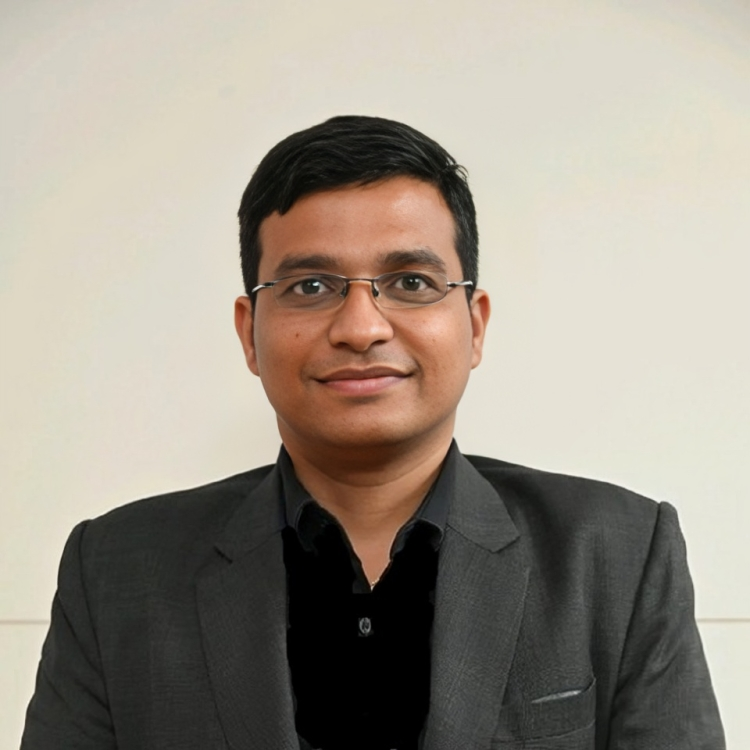
    While you reflect on your diverse career you are certified as a PoSH trainer, also a certified mediator, policy consultant, analyst, and IPR enthusiast, as you have done your PhD in that what was the reason behind you choosing law as your career? And while you were doing so, while you were pursuing your legal career, how did you plan on becoming such an ardent academician as well as legal researcher? We would love to hear that.

    I guess this journey is more of a cinematic type of journey.

    The reason for taking up law—and I’ve said this on various forums, I guess that’s how my first introduction usually goes too—is that I come from a family of lawyers. My blood group is LLB positive. And the reason for saying this is very clear: I’m a fifth-generation lawyer. I’m a first-generation academician. So, from my great-great-grandfather to everyone else, my father is currently practicing in the Gorakhpur district courts—it’s been more than 42 years of his practice.

    My brother is in the Allahabad High Court; he’s practicing. So that was the first step for why I took law. I guess the answer is very plain, clear, and simple. And yes, as everybody thought—being the youngest in the family, with my father in the district court, elder brother in the High Court—Deevanshu’s gateway to the Supreme Court was already opening by the end of his final years.

    But that made me take a point: okay, everybody in my family has done this. And being the youngest, it was like what everybody’s doing, and it came to me as a baggage itself—oh, you’ll have to practice because your father is there, your elder brother is there. Your way is too easy for those things.

    And then I came to know of this subject called intellectual property rights in my fourth year—thanks to my teachers then. At that time, I was the first in my entire family to pursue an LLM. So I wrote my CLAT examinations for the PG and I got an All India Rank of 49, and, at that rank, I was able to get into top nationals

    But the reason for opting for NLIU Bhopal was because I had already spent five years in Bhopal for my graduation, and the subjects of intellectual property rights were very much fascinating to me. As I said, during my graduation, I was inspired by the articles and words of Professor Shamnad Basheer Sir, who unfortunately, is no longer with us physically.

    But I guess his way of teaching, how IPR took a place, is something that still stays with us. And that helped me take up IPR in NLIU Bhopal under the guidance of Professor Dr. Ghayur Alam sir, another stalwart of IPR. And that is how I felt fortunate to be under the guidance of Professor Alam and Professor Dr. Mona Purohit Ma’am, under whom I pursued my PhD in intellectual property rights. These are the two people who not only inclined me toward intellectual property rights but also toward becoming an academician. The purpose of law, as we all say, is only to convince.

    Rather than being the king, it’s better to be the kingmaker. So now, with so many years—more than a decade—coming up on that, I can proudly say that there isn’t a district court left in Madhya Pradesh or in Uttar Pradesh where my students are not present—as advocates, judges, or legal officers.

    So through them, I relive this particular domain, and intellectual property rights are again one thing I still say I am a student of. I can never say that I am an expert in IPR, but being a student has helped me not only to do research but to understand the nuances of how even in the coming times, technology is evolving and how these things are developing.

    All these things come together.

    You’ve been deeply involved in IPR, AI, and cyber laws—fields that weren’t as prominent when you started. What challenges did you face in choosing such a niche area at that time? How did you handle the uncertainty around whether to go into practice or academia? What helped you stay confident in your choice despite limited awareness and acceptance of the field? How did you convince both yourself and your loved ones that you could succeed in this path?

    Thank you so much for that question. I could just say one thing: what majorly turns out to be a challenge, I guess in my case, was more of an opportunity. I guess no law school in our country is left out of the scenario where, in your third year or fourth year, one of your professors comes in really pissed off at the entire batch for making noise or not doing something, and they say, “You know, each year 10,000 advocates come out of the country. Where do you see yourself?” and all those things.

    So I’ll tell you honestly, by that time I was deeply and madly in love with IPR. This was, again, during my two years of LLM—and in my days, it was a two-year LLM. I guess I was part of the second-last batch before the two-year LLM was on the verge of being phased out.

    By then, research had already taken a hold of me. I felt that research and IPR were going together. And the best part—my PhD in IPR, in law—was titled Online Infringement of Trademarks. I’m talking about having chosen this topic in 2013–2014. Now imagine that online Infringement of Trademarks makes sense to everyone in 2025.

    Back in 2013–2014, everyone was like, “Okay, this topic hasn’t yet been taken.” I said, “Thank you so much for validating that. Okay, my PhD topic is good to go.” Second thing—I did a comparative study. This comparative study was on the US, India, and China. By the end of 2017, I submitted; by 2018, I was awarded.

    By 2018, I was very clear about the laws relating to online infringement of trademarks—a provision that is absent in the Indian Trademark Act of 1999. There isn’t much talk about online infringement. This is similar to how there’s no express provision for e-contracts under the Contract Act of 1872.

    They say we are guided by the same principles, wherever the contract happens. And the same thing was told to me—that wherever trademark infringement happens, whether it’s online or offline, the rules remain the same. Now, this was the point where I felt out of the league because I wasn’t taking constitutional law or criminal law.

    So that was one thing—and a very funny story I’ll share with you: there were only five students in my LLM specialization of IPR and Business Law—just five. Out of a batch of 60 students, only five took this. The rest were in criminal law or constitutional law.

    So I’d say 90% of my batchmates were either in criminal law or constitutional law. And the rest? “Okay, IPR? Are you sure?” And believe me, the syllabi at that time for the two-year LLM—that’s why I’m still a big advocate for keeping the two-year LLM—was comprehensive and beneficial.

    Then came the journey of PhD with research. It helped me understand the laws of countries we are already engaging with. As we say, China and the US are nearly 15, if not 20, years ahead of where India currently is. So, this helped me work on something we knew would eventually come to India, because the US, EU, China, and other countries had already adopted it.

    As always, something that comes to the world first reaches India later. But I guess the perspective is changing. Today, at par, when I look around—that foundation helped me. Even recently, as we speak, I completed my second arbitration, which was in the domain of IPR.

    So IPR has always been the core, and I’ve kept aligning everything else around it. This is also one of my messages to all of you out there: never feel that just because you’ve chosen one domain, you can’t explore others. This was something I told my students the year before last, when the three new criminal laws were introduced in our country.

    They asked, “Sir, what will happen to us? We haven’t studied them.” I said, why are you seeing it as a challenge? Why not see it as an opportunity? A 20-year senior lawyer who studied IPC, CrPC, and the Evidence Act is now on the same footing as you when these new laws are enforced.

    So, it’s not about the laws—it’s about how well you’ve understood the jurisprudence behind them, and how well you’re going to take that forward. Anything that is posed as a challenge—if you are capable enough to identify an opportunity in it—I guess you’re already in the right place, irrespective of where the crowd is going.

    So, don’t follow the crowd. Stand at a point where the crowd will follow you. And that, I guess, would be the best way to conclude my answer.

    You’ve clearly shown how IPR aligns with many fields, and your academic journey reflects that. But while doing all this, you also became the founding head of the Jagran School of Public Policy and International Affairs. How did that transition happen from a core legal and IPR background into public policy? What key challenges did you face as a lawyer stepping into the public policy space?

    Sure, I’ll just tell you one thing very clearly. For me personally, I’m saying this—there were only two positives out of COVID. One was that I took the headship of the Public Policy School, and the second one was online platforms, which I generally say, thanks to COVID—Zoom interactions and other things increased significantly at that point.

    And as I said in my previous answer, I’ll relate it here as well. I’m not saying that I’m ahead of time. I’m just telling you that 2019 was the first time I came across the concept that there is something called a think tank. Now, a think tank for me at that particular time was a very fascinating term.

    The reason is, I’m a very big fan of arcade games, PS5, and playing assassination games and all those things. So I said, “Okay, think tank—well, tanks do not think.” And then I came to know about law and public policy. That’s how I came across PRS Legislative, the LAMP fellowships, and other things.

    I was too late for it. But as a teacher, you are never too late. The reason is very clear—because I get to relive that through my students. And I’ve always been a follower of one particular statement in my entire life: you should be the version of yourself that you want to be with. So whether it’s a PhD, whether it’s any small IPR subject to be understood, whether it is good eating joints, whether it is good places to move around, things to do in Banaras, places to eat there—whatever it is—be a person who, if I was alone at that place, could help myself out.

    So with this, when it came to think tanks and public policy, I thought there is a very, very close-knit relationship. I wouldn’t even call it a first cousin—it’s more like a sibling to what law as a domain entails.

    And even today, if you look at the major think tanks in our country—you name them, you’ll find vacancies—and the people working there are majorly from political science, law, or economics backgrounds. Major assistance given to Members of Parliament today comes from people with these academic profiles.

    Because we’ve all studied that a law exists. But the question always popped up for me—why do we need a law? And that’s how the policy angle always came into play. For example, there’s a debate today about revamping colonial laws and introducing new criminal laws with desi Hindi names.

    What about students from the South who can’t even pronounce those names? A good friend of mine, when she was an HOD at Central University in Tamil Nadu, mentioned a new act called Bhartiya Vayuyan Adhiniyam. And she asked, “What is this all about?”

    She questioned why they couldn’t include both names, or alternative English terminology. If you look at Article 1 of the Constitution, it says “Union of India, that is Bharat.” So they were giving similar formats. Yes, Hindi is one of the prominent languages of our country, but we must acknowledge there are nuances. I’m not getting into the language debate or what Tamil Nadu thinks about Hindi, but the key is understanding where these things are coming from.

    As law students—and this is my message again—you need to understand the context. For example, it’s always said: to understand why something was made a fundamental right, read the Constituent Assembly debates. That will absolutely help you.

    That’s why, when we saw the Waqf Amendment Bill being introduced and a late-night debate happening in both houses, these debates held importance to understanding the text. The reasoning behind them is often mentioned in Supreme Court judgments.

    This helped me understand how laws are made—identifying a problem and reaching the root cause—and that’s where public policy comes into play. So it was an opportunity for me.

    By that time, I was already immersed in the legal domain. But with public policy, the major challenge—especially in Central India—was that people didn’t consider it a proper subject. They thought public administration was fine because it’s an optional in UPSC. But public policy? “You’ve created your own subject,” is what some parents told me.

    In response, I reformulated the course. At the undergraduate level, the course was called BA in Public Policy and Administration. My way of explaining it was: in one course, I’m giving you two degrees—public policy and public administration. That’s the advantage of being in a private university, I would say.

    The master’s course was an MA in Public Policy and International Affairs. Both these courses were unique in Central India. No other university or institution in Madhya Pradesh, Chhattisgarh, Uttar Pradesh, or Uttarakhand was awarding these degrees.

    That’s how it started. Yes, it began in July 2020, during the first phase of the pandemic and lockdowns. It was affected, but I’m proudly saying this today: when the first batch graduated and the first postgraduates completed their course, the students were either serving with the government or pursuing higher education abroad.

    These efforts helped them. We also introduced a very important component—something we, as law students, know as a dissertation in the final year. We introduced, for the first time, a capstone project. This project involved identifying a root problem and formulating a policy to address it.

    It was majorly a fieldwork-based study, and the students learned these intricacies before moving forward. That’s how I transitioned into public policy, and then eventually returned to law. That’s how things unfolded.

     Now that you’ve started as the Dean and Founding Dean of GL Bajaj, do you think India is ready to allow academicians to actively practice law and practicing attorneys to take up full-time teaching roles, not just as visiting faculty? In developed countries, this dual role is common and beneficial. Wouldn’t such a model greatly enrich student learning and bridge the gap between theory and practice? Given your experience launching innovative programs, do you foresee such a shift happening soon? Especially now, with rapid changes in law due to AI, IoT, blockchain, and other disruptive technologies?

    Okay, so I would like to answer that, I’m not going to tell you something that has not been happening.

    So all credit, and I’ll just take you back with something called as the National Education Policy. We all have been hearing this NEP 2020, if not many, then once in a day. That comes across to our ears as well. Also, I’ll really compliment what you just asked me, that I’m not the first person to answer that.

    UGC, the University Grants Commission, has introduced a concept of professor of practice. There is an entire portal which is available on UGC’s site and there are two particular sub-tabs to it. First, any professional who has completed a minimum of 15 years—one five years—of his practice in the field, which excludes teaching.

    So this automatically, like for example, I’m an academician. I have retired after serving for more than 30 years. Now I cannot go back as a POP to an educational institution. Completely banned. But what has been there is that a person who has been in the industry—and this industry can be private practice, served as a judicial officer, served as a legal officer in any of the companies, served as a corporate lawyer in any of the law firms—with a minimum of 15 years of practice can enroll on that portal as a professor of practice, and major universities can adopt them with that particular thing.

    As a professor of practice, the POP thing that comes onto, number one. Number two, now you asked me the flip side of the question was that you being an academician, don’t you feel like, so I’m also telling you that I have seen, and a couple of my teachers have been, and I’ll name one who’s presently the Vice Chancellor of National Law University Delhi, respected professor, Dr. G.S. Bajpai, sir, he served as an amicus in one of the Delhi High Courts. So what I’m trying to let you know is that this venue is also getting open now. And one critical thing that I’ll say on that point, for example, any advocate, I’m just giving an advocate because I posed this question to my own father who has been practicing for more than four decades now.

    So more than 40 years, 43 years on the civil side. So I have seen him put a bookmark without any note on it. And I have my own library where I put a bookmark and I scribble a note on it. Okay, why am I putting this bookmark here? Is it a case law? Is it something valuable? And he puts a blank bookmark even today.

    And I just randomly said, why a blank bookmark? Because I know what is written on that page. I said, is it? So he says, Yes. So it’s just a blank page that I can remember why you’re seeing the AIR of 1978. This is why I would’ve taken that. Now, I asked him, why don’t you come and teach them? My law students will require you.

    And he is like, look, I only have 24 hours in a day, where I’m spending more than 12 hours or nearly 10 hours in the court and then coming to my chamber and spending more than 4 hours there, you give me more than 24 plus anything hours, I’m ready to come and teach for that plus hours in your law school.

    So it’s not like I can’t, I have to sit with my client. I have to study the file. And as I’ve been always saying to my young people who are in their 11th and 12th and are planning to take law and medical, the only answer is why are these practices called as a practice—because you never become with this practice as a perfect, and you have to study your entire life, whether it’s medical, whether it’s legal, so whether it’s case laws, whether it’s new law books, whether it’s precedents.

    You name it, you’ll have to study it. So I’ve seen my father, even after having his dinner late, he goes back to the chamber. I see my elder brother. Okay, no, I have to prepare a brief for tomorrow and it should go like this. And I guess that is also one of the ways I’m answering that will AI change the perspective and you’ll not be requiring—the answer is a big no.

    So the only perspective to see that if a successful advocate, whether it’s in a corporate law firm, whether it’s a private practice, asking them to come back to the law school, they can only dedicate a small time because they cannot leave their plan A first. And that is why they have earned that stature where we are requesting, yes, retired judges, a lawyer never retires.

    So this is one thing that my father has always told me. I have asked him various times. Look, now your son is a dean, your elder son is a practicing Advocate in Allahabad High Court. You leave your practice, you come and live with us. And he said, no, no, no. I have more cases than what you people would combinedly ever have.

    I still have that. And that’s how the point is very clear that yes, if you are growing, the purpose of introducing such a system by UGC is yes—to bridge that gap between industry and the academic colleges. And this is not merely limited to law, but open, inclusive of law, which includes engineering, management and all those things.

    So yes, it is already prevalent and I’m pretty confident next five years you will find more of it. And I’m so happy. A couple of my very good friends in the law firms today who are at a senior partner level and they’re like, Deevanshu, enough of what we have done, now we’d like to come. Your life is very easy.

    We’d like to become an academician. I said, the grass is always greener on the other side. I would like to live a life of a law firm partner as well. So they say, yeah, we understand that payment-wise we might be on a very higher scale, but ask us—is it the payment or, in the end, the relaxation or the comforting thing that we come onto?

    We generally do a thankless job, but you are surrounded by gratitudes and other things. And that, I guess, is something that we require in our lives as well. So answering your query and to cut it short again, to conclude—yes, the opening of professors of practice, and not merely as guest faculties, adjunct professors and all those things.

    Even the Bar Council of India has allowed us that we can have the people from the local bar, from the bench, to be part of our law schools. And that definitely is not only shaping up a good law student but also a young lawyer for that particular perspective.

    The UGC has introduced many reforms, but real change is needed at the grassroots level, especially in a populous country like ours. Moving on, I’m curious how you managed to publish 43 papers and present at over 60 conferences. Your topics are cutting-edge and highly informative—how do you tackle and anticipate these challenges? Since foresight is your strength, especially in your niche PhD field, how do you maintain this momentum? And how many more papers and books do you have in the pipeline?

    Again, one thing I’ll say that every time you pose a question, which is revolving around challenges, I’ll answer you as an opportunity with that.

    So I’ll tell you honestly, the base of writing a good research or base of doing a good research, I have said it, and I know many of your viewers who have been my students or who have heard me at various forums. Would re-agree to me by saying, if you read well, you write well. Plus whenever I get a newspaper in my hand and I still get a newspaper in this era of digital, where all my apps are there, so I have a Times of India app as well. I have all my apps ready, but I still get a newspaper in my hand. That’s the first thing that I would really want and I search as I was told, and I recall again, an IPR thing.

    So I was told by my professor, which was surrounded by IPR, right in the morning, the toothbrush and the toothpaste that goes in your mouth is an IPR. And by the time you go back to your sleep and you switch on your AC, it itself is an IPR. So you are surrounded by it. I urge and I request young minds, young legal fellows here to have this habit of searching law right at the front page news to even the sports news.

    To even the editorials that you wrote and you missed out. I’m now writing more of the editorials for newspapers. Now this is helping me because I have to read it, I have to read it well, I have to understand, I have to curate it well, and then I need to focus that particular thing ahead as well. So if you read well, you get these ideas, don’t just stop it there.

    Have that habit of jotting down those ideas. And sooner or later, today or tomorrow, you might get to expand those particular ideas as well. So this helps me to write, parallelly I’ll be very honest, and if you’ve asked me how many are in pipeline, so I’ll tell you honestly, this afternoon itself, I presented a paper.

    And it’s not like I have become a dean. I should do that. I guess this is only and I recall that I’m still a student. Don’t let that student and a young researcher inside you ever die. So the moment I’ll see, okay, I’ve already done this, what’s the need of it? So I’m not presenting in conferences for certificates.

    I’m not presenting that thinking I should write that in my CV. But I’m presenting because I get peers. I get some ideas from my peers who are presenting. I get some wonderful chairs to share those ideas. And I get some critical analysis as well.

    One more, and a very special request to all of you out there. Be open to criticism and do not take it as how dare somebody tell me, okay, I’m a dean and he’s an assistant professor here and he told me that I should incorporate this, what he thinks or what she thinks. No, take it gracefully and you should ideally thank them that he or she has given you that idea.

    That can be a next research paper or a research idea for you. And as it has been said, nobody copyrights the idea. It’s the expression of the idea which is copyrighted. So parallelly you and me might be thinking on the same idea, but the expression of Divya ma’am and expression of Deevanshu, would be completely too copyrightable items on our table as well.

    So read well to write well, and just don’t read and do not write. So when you’re reading whatever idea is coming to you, and I have said this thing as a researcher as well, that the easiest thing to start for a young law student as a research is to write a case comment. And why I’m telling you this is that gives you a leverage, that you can criticize based on reasoning that this judgment could have been a better one.

    Borrow the minority judgment. Read the entire judgment, not half of it. Read the entire judgment. Nowadays, the young lawyers are blessed with apps like Live Law and Bar & Bench, and I do not take any such thing. They’re doing a fabulous job in what is happening at Supreme Court at 2.30 is being reported at 3.30 or 4.

    What else can we ask for? It’s not like us where we have to report that when the SCC or AIR would come, then only I’ll come to know for that particular matter. So that is very, very helpful. The e databases like Manupatra, LexisNexis, be it Supreme today with AI versions of it, have enhanced the researchers as well.

    So time is being saved, things are getting onto, I even promote usage of AI. So believe me, there is hardly any AI app, which I have not used in my personal life. You name it. And I have been using it at all above level, like Chat GPT 4.0. Perplexity, Gemini, you name it, I have used it all. So the purpose is when I go and teach that thing in the classroom, I need to be up to date.

    And I have always said it. And with your forum, I’m also utilizing it, and I know you are a big fan of AI, so I say it is a tool and let it be a tool. Do not let it become your master. It’s not like you’ve given the command. Whatever output comes, you copied and you pasted it. Don’t do that. Take ideas from it.

    Okay? And that is what I’m saying. It gives me varied opinions. Okay. On this line, I can also think on this line, I can also think, and on this line, I can also think. So read well and write so that you can write well. And that is the basic motto for me to do these researches. And I don’t count with numbers, it’s just one point.

    I know major of them have not been reflected in my CV as well, so it’s not about putting numbers in the CV, it’s more of how and what I’m learning about it.

    Thanks for the insightful response! As a policy consultant for Cyber Peace Foundation, how do you see emerging fields like cybersecurity and digital law shaping public policy in India? Given rapid global developments, how do you ensure these advances are integrated into both theory and practice? How effective are Indian think tanks compared to international ones in influencing legislation? And how do you bridge this gap to prepare students for real-world challenges?

     Thank you so much for that particular question because the answer that I’m going to tell you is exactly what we have been practicing.

    So the entire thing that I’ve told also in the past or in the coming time is not that I’m just a creature for that particular matter, it’s all have been practiced and been taken around. Now just understand, I’ll take a minute to make people understand the concept of think tanks is what I have seen.

    So think tanks are the catalysts. Think tanks are basically research agencies. And what are the basic two objectives? Number one, is to do that ground research about something, to something that I call a base of a policy, and to bring it ahead, number one. Number two is to create awareness. So these are the two majors of what a policy or a think tank is generally revolving around.

    Now, it’s not merely the legislative that is taking on. Now, why I’m saying this, yes, the think tanks submit their report, which is taken by a member of parliament, whether it’s opposition, whether it’s from the government. The new trend in India is that even these prominent think tanks reports are cited by the judiciary as well.

    Now, this is something when in a judgment, the base of such a thing is being done. So think tanks are, as I used the word catalyst, and we all know what catalysts do. Catalyst just enhances the reaction in a faster time. And that is what these important think tanks in our country are doing.

    And to name a few, they have identified their areas. Now, I was a consultant with the Cyber Peace Foundation. How institutionalized and why they are getting educationists as a part of their think tanks as well is number one, how these awareness would be gone. And I’ll tell you small examples. For example, the maximum number of cyber frauds.

    And one small thing as a caller tune, which was a very well acknowledged initiative by TRAI that you’ll get these things have created an awareness, talking on those things that these are the new ways how these things are being taken up. Now what I’m trying to tell you is that these think tanks alongside institutions are also launching.

    And we have launched, we have done international conferences. We have done international working paper series, podcasts. And launch certificate courses in addition to law and other perspectives. So at my institution, it’s not merely a BA LLB or an LLB that a student would get, but during the tenure of that five years or three years, in the case of a three year LLB, the student is also earning two certifications in each semester.

    And that is an all choice based thing. So I know that is not possible. But if Divya is coming as a student to me, I know her inclination is towards IPR and AI. And in her three years law course, she can have an LLB course plus a difference of six certifications in the parameter of six semesters that you can have, number one.

    Number two, if she’s not interested and it’s more of a criminal law and other perspective, how additional certifications in the criminal law perspective can be given . So the think tanks are in collaboration and all have to work not in silos, but in collaboration. So think tanks in collaboration with academic institutions, think tanks in collaboration with NGOs and together how they are bringing it on.

    Nowadays, the think tanks have also collaborated with national law schools to establish a dedicated center for research at their law school itself. And these are the small initiatives which are on the verge of togetherness, they are bringing a change of practical changes, which no law school is teaching.

    The Bar Council of India and I must acknowledge and applaud the efforts of The Bar Council of India, in May, 2024 they came out with a regulation, which is a mandate to all law schools, to teach subjects like AI and tech law and financial laws, FinTech laws. Their law schools. I understand, and I know that smile on your face is so they came out with a regulation, but how many law schools in the country have actually followed it?

    And my answer to you Divya for that would be one step, even as I say in my classroom as well, when I go and teach a subject in a batch of 60 students. And even if six have grasped and they’re on a good path, I guess my role as a teacher gets fulfilled. Similarly, not all but few who will do and believe me, it’s not many times the teacher or the body who will be directing and the people who do it, but it is always with the peers.

    So out of 1800, if 18 institutions in the country follow that regulation or that compliance from The Bar Council of India and couple of years down the line, they come out as the Centers for Excellence in this particular matter. Out of the major 1800, at least 180 would again be inspired to do and to bring that thing.

    And you see, forensic labs. So the National Forensic Science University, a great initiative again by the government of India. Each state should have one. They should have a forensic law lab, something we would’ve never thought of. I was very happy in seeing that In FBI, there was a series that used to happen, way back when no Netflix and other things were there and I was very inspired.

    Oh wow. And then we had the Indian version of CID happening. So our aspiration was not of that of forensic doctor. You are a good example again that from an engineer background doing law and then taking AI law or FinTech law, I guess that’s the best example that I can cite right now in front of me as well.

    So similarly, the newer avenues, the bodies like The Bar Council of India, who are the parent body for legal education, I would say they are the guardians of legal education in our country. And the establishment and the way they’re taking it up is something which is commendable. I know major law schools in our country are lacking, but I’m on a very hopeful and a very positive approach that yes, coming years are going to be where we are going to have unified systems of teaching.

    Couple of things are coming on a very good prospect for legal education. These things are no more, something that will be kept on a background, but something that the student would demand on his own. So while choosing a law school, it’s not merely an LLB course or a BA LLB course, but how well the industry driven certifications and add-ons, skill add-ons are given to a law student should also be taken.

    And I guess where think tanks would be coming above the catalyst role and would be an equal partner in disseminating these particular subject knowledge.

    Your clear explanations could transform at least 10% of law schools, creating a more international and skilled legal workforce. This shift will likely encourage greater global collaboration and intervention. As you mentioned, it’s not just about think tanks, but also understanding why lawyers need these tools to enhance their practice. The Supreme Court’s adoption of AI, thanks to the former Chief Justice, is a great example. This progress reflects how technology is becoming integral to the legal field.

    I’ll just add, sorry, I’m pausing you in between. So I came across this, so I’m a big, big fan of DYC. And it’s been like four occasions where I’ve met him, such a down to earth person. Now one very important instance that I’m sharing, yesterday, he rolled out a junior associate and in brackets, it’s written retainership , for his own office. So it’s the office of DYC. And I’ll tell you, a junior associate, Divya, guess the salary. The salary is one lakh rupees per month. And you know it, I know it, his tenure at the Supreme Court, the young researchers, something that we used to call it the Articleship, the legal clerkship thing.

    They were young and number of publications that were out. Whether it is the Supreme Court handbook on addressing women, what words should not be used , even for that smallest thing that I’ll say. And he shared that thing. I was a part of it last month itself, and he said even addressing the issue of women washrooms at the Supreme Court, he was one of those particular things, the standard of food items at the Supreme Court.

    He made sure that those things were there. The corridors had chairs for juniors to sit there. Now, as a chief justice, if he’s thinking about junior advocates, I guess something, if all of us can imbibe onto to that particular thing, and I’ve learned it, I might be the dean and other such things, but I still see, okay, if my student is walking, it’s very warm, like it’s on 41 right now in Delhi. Can I have a closed path for them to walk from the gate to my building? Now I know this is not a big thing, but yes, this is making you apathetic. This is making you humble and this is making you think about the future and you’re raising it through your teaching itself. I am sorry that I interrupted you in between, but I guess this was one point whenever DYC’s name comes, with all respect, like, I can say a fanboy moment again, for me, when it comes with Justice DYC, for that matter.

    I’m a huge fan, not just for his work but for his focus on gender sensitization, which is essential for everyone. Despite his legacy as a 5th generation lawyer, he remains grounded and humble. How does he ensure his messages truly impact not only lawyers but also everyday people who often don’t know their legal rights? In India, awareness of the Constitution and rights is limited, so how does he address this gap? Lastly, how does he stay calm and humble while handling such diverse responsibilities?

     Okay, so I’ll answer that part first. How to keep yourself humble and calm. So I’ve always been a big advocate of a fact that there are only two teachers, which a student generally faces.

    So first of all, you’ll have to believe you are a student. The moment you start believing, okay, I have crossed this age, I’ve crossed that student thing, I guess your learning stops. So for me, I was blessed. To have teaching both with my parents and my elder brother. And I really like to mention my elder brother because what I see today, myself as a dean or as a student of law, and the best part, we share common among me, my elder brother and my father.

    We have our own libraries and we hate sharing books. So each book, the moment it comes, the first thing that we used to do is to put an OM on it and write our names there. So that’s one thing because we hate it, like it’s my book. It needs to be there in my library. And the reason is I have my own habit of underlining and reading.

    And his books are very neat and clean. He said, why to make the books dirty. And I said, this is not dirty. It’s like, I’ve read this book. So that’s how, so we disagree. So what I’ve learned is from my parents, my elder brother and my teachers, and the lot that I took the name as, and many more to add to that, they are all humble.

    And so what I have learned is what I was trying to tell you, that not all things are taught with textbooks. Some things are by your gestures as well. Fortunate enough, when I started teaching, fortunate enough, the law firms that I went for my internships, I met people who were very humble.

    They’re still, I just mentioned about DYC, that why am I a fanboy thing? It’s not like I’m a regular practitioner to the Supreme Court. But there would be hardly any judgment of his, if it’s his name, I’ll have to read it. This is as simple as this. He has always said, and I will quote him again.

    He was speaking and he said, I know you all would love to buy the books, and I can see at your background as well, you love to buy the books of your own choice. We all have our own genres to read. This type of book is something I want, this, that, and all those things. But always have this habit of what somebody’s gifting you as a book.

    Because it is, and this is where I’m putting a base of my next answer, the second part of your question as well, how you make things understand to people, whether it’s legal, whether it’s non-legal or something like that, is when somebody gives you a book, he actually is giving his particular genre to you, which is an area for you to explore because you have already cleared and mastered your own genres.

    And you asked me what is the best way to understand a person’s perspective, so I’ll be very honest and these questions were not pre shared with us that we are trying to script it up and bring it out. These things are not paid enough by either part of us.

    So the point which is very clear, is that the questions that Divya, you are posing to me. I am trying to step into your shoes to make you understand that answer and that satisfaction with a smile on your face is something that I’m achieving as well. Now this, whether it’s my student around the table corner, it’s my elder brother, it’s even his daughter.

    When she asked me why this Disney character has longer hair and why I do not have that long hair. I’m standing at the first floor of my balcony and my ponytail should go at the ground floor. Now these are exactly the things are, and then the other day she was watching my favorite cartoon Popeye.

    And so she asked me why Popeye is called Popeye. Now, this is where my research would come into place. I said, look, his eyes popped out and that is why it’s Popeye. And she was convinced. And this exactly is where I’m not made that cartoon favorite of mine, only because of the fact that it is my favorite.

    But I have to research about it. So interested in those particular things. And my answer would be the same. So whenever you are asked something, try to step into the shoes of that particular person, whether it’s your client, whether it’s your student, whether it’s your friend, whether it is anybody for that matter.

    And humility and humility I guess, goes hand in hand. So it is nothing like, it is one dinner that I had and I’m more humility, or I can mix it with Horlicks milk in the night, drink and in the morning I’ll become a humble person . So be humble is, again what I’m saying, it’s not by learning from me or you, but we have grades in our country.

    In legal domain one again is again, I’ll repeat his name,Justice DYC . So these are people who are existing and being on the top position of the country. And even if you meet him today, if it is not that crowded, he’ll not hesitate to shake hands. He’ll come sit right next to you without any such thing.

    And that speaks volumes about him. And again, one thing I’ll tell you,  and this was one challenge that I faced when I was a POSH trainer and I got my certification. I went for my first training. Everybody was like, you are a male, and will you be a good POSH trainer?

    And I said, okay. So where it is written that only females can be a POSH trainer. No, I know your reaction is saying everything to me, Divya. But again, this is where the point was coming on, and this is where I’m answering the third part of your question: that I was a student in my class eight.

    We had compulsory subjects like civics, which was clubbed with history at that particular time. And civics was nothing but preamble, the constitution, part three, part four. And that is how law was something that we’ve taken off. Even today, I ask each of my students who all remember the preamble. And this is, again, I could have posed this question to you Divya, as well.

    So you need not open a book and tell me the preamble. And this is simple. So it’s not about the people of India. There is one wonderful line that I’ve always like I have opened that line clearly to everyone, is the liberty of thought, expression, belief, faith, and worship. Now, as an English student let’s say liberty of thought, expression, belief, faith, and worship.

    So belief, faith and worship are synonymous terms. And in law we do not have synonyms. So when the words are used, they are used for a proper intent. And tell me, and this is again, I’m giving some homework, as a good teacher, even if my interviews do not have homework, I guess I’ll not be a good teacher.

    I just want the students to understand what is this expression of thought, belief, faith, and worship. So they need to understand why this particular thing is there. And the preamble uses the term liberty. The entire constitution lacks the term liberty. This converted into freedom. Now, what’s the difference between liberty and freedom for that matter?

    Now these are small things that we as law students should dive into. Okay? If this word is used, why this word is used? And my advice to all young law students out there, two books that I would definitely recommend. One, please buy a Government of India legal Glossary. Don’t buy a legal dictionary.

    And there is a difference between a glossary and a dictionary. Glossary never gives you the meaning. Glossary would put you to the place where the word is defined. For example, consideration, which is in Hindi and the best part of legal glossary, government of India, gives you the exact legal Hindi out of it, which is helpful for my students who are preparing for their main exam for judiciary, where you get a Hindi English translation.

    So consider, the meaning is pratiphal in Hindi. And it says Section 2D, Indian Contract Act 1872. So as a law student, you know that you need to open the Indian Contract Act, section 2D to understand the definition of consideration, and this is exactly how the glossary and dictionary differs. So answering all the three parts, I guess I have answered all three parts for you as well.

    You are being a true academician, true teacher, professor, doctor, everything. Amazing! I’m loving the interview with you. One last curious question. How do you nurture your students not only better and good professionals, but the best human beings as well?

    Number one, I never ask my students to follow what I am saying.

    I know I might be criticized on this particular line, but we at law schools, we are a buffet provider. A buffet of what is kept on the table and where I know all my 60 students in one particular batch, that’s a maximum that I’m talking about are not of the same likings.

    And this is also one of my messages to all my young students. Don’t just take it up because your best friend is taking it up, and think okay we are going to the same intern place so that one month we can be together. No, try, see what suits you and what doesn’t suit you. And this again, as I say, we see our favorite actors wearing a particular outfit.

    We go, we try the same outfit on our own and we are not satisfied. That was looking good on that particular person. Now you need to identify your own path. The only thing that I create to my students is whichever path you are taking. And I have said that if I wouldn’t have been in an academician, and as rightly said at our times when we were scolded by our parents, that if you can’t do anything, at least run a samosa stall..

    I’m telling you very honestly, if that would have been my career objective, I would have been the best samosa sales person in my entire locality. Now, the reason I’m saying this is only to achieve your excellence, whichever domain it is. Whether it’s criminal law, whether it’s civil law, whether it’s IPR, whether it’s, I do not know what new laws are coming up as well.

    Today anything that we are talking about will involve a law. And I came to know, somebody asked the other day on aviation, it was a good talk that birds fly. There is no law governing them. When humans fly, there is a law governing them.

    And he said, wherever you’ll find humans, you’ll find a law, simple. Now, when I say this, what I mean is very clear that if it is human anything that we as humans see  books, water, air, laptop, technology, whatever it is, it would be accompanied with a law. Just identify your domain. There is no obsolete domain in law.

    Law can never be obsolete and there is no thing which many are taking. Even if many are taking, you are the competitor. And that’s where I conclude by saying we only practice in the legal domain. Whether it’s forty years of practice, whether it’s five years of practice, whether it’s one year of practice.

    If you practice it well, you can practice well. So that would be all from my end.

    Get in touch with Prof. (Dr. ) Deevanshu Shrivastava –
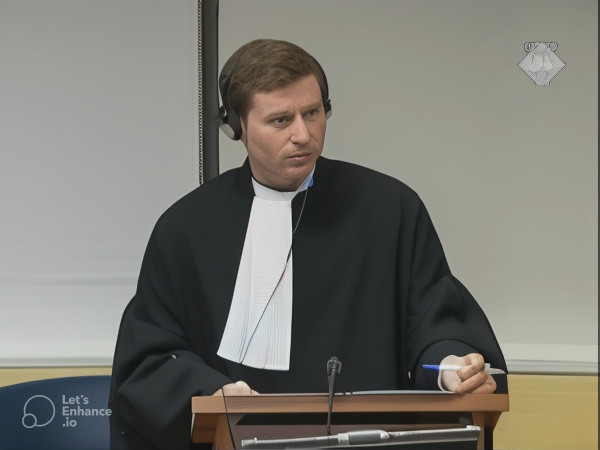
  • “Justice must be done for atrocity crimes, and it’s the responsibility of international law to ensure it.” — Dr. Matthew Gillett, Senior Lecturer at University of Essex School of Law

    “Justice must be done for atrocity crimes, and it’s the responsibility of international law to ensure it.” — Dr. Matthew Gillett, Senior Lecturer at University of Essex School of Law

    This interview has been published by Namrata Singh and The SuperLawyer Team

    Your career has spanned almost 15 years before the international courts, with significant cases including the destruction of cultural heritage. Can you share what initially inspired you to pursue a career in international law and what has kept you motivated throughout? 

    Living in New Zealand as a teenager in the 1990s, I saw the tragedies in Bosnia and Rwanda and wanted to do something about it. As I learned about the international criminal courts, I realised that was a means of taking action against the perpetrators of the worst crimes, including in those countries. Eventually I secured a position prosecuting international cases before those courts. My motivation was fueled by a sense of injustice and then later from meetings with victims who explained the impact these crimes had on their lives. Working with people from all over the world was also an inspiration. From Italy to India and everywhere in-between, you end up on teams with a huge range of backgrounds and legal traditions, which generates creative ideas as well as the odd procedural dispute. The international criminal courts face many challenges and the work can be frustrating. But ultimately there is no question that justice needs to be done for these atrocity crimes and that’s a major motivation.  

    As the Chair Rapporteur of the United Nations Working Group on Arbitrary Detention, what new dimensions or insights have you gained in the field of human rights and international law that were perhaps less visible in your earlier career? 

    As the Chair-Rapporteur, I see the organisational aspects of improving human rights practices. One of the key insights has been the importance of clear and open communication. A lot of problems can be avoided with regular and frank exchanges of information and communication helps to focus on the most serious issues which are directly affecting the victims. Closely linked to this is the need for inter-personal skills and empathy. When you are dealing with cases of persons arbitrarily detained for months and sometimes years, often in countries where they have no family, you have to picture the world from their perspective in order to understand the gravity of the threats and uncertainty they are facing. 

    Your work has involved prosecuting cases related to environmental harm at the International Criminal Court. How do you see the relationship between international criminal law and environmental protection evolving, and what key lessons have you learned from these cases?

    When I started writing about the International Criminal Court prosecuting environmental harm, it was just a theoretical idea. However, in 2024, prosecuting environmental harm under international law is becoming a reality. Significantly, three small island States (Vanuatu, Samoa, Fiji) have officially tabled the crime of genocide for inclusion at the ICC as the fifth crime along with war crimes, crimes against humanity, genocide, and aggression. This year has also seen the Office of the Prosecutor initiate a policy on the prosecution of environmental harm. International law is useful to combat threats to the environment, as it typically focuses on large-scale crimes committed by groups of people. However, there are many challenges in transposing international criminal law to the environmental context. The courts are not ecological research centers, and so there will be a lot of lessons to learn. My main observation is that experts from sciences should be brought in to avoid the law being applied on incorrect foundations. I also propose that the definition of ecocide needs to be carefully formulated to ensure that it is clear as to what is covered (and what is not) and that it provides fair notice to people and organisations as to what conduct is included. 

    In your opinion, how can international law be better utilized to combat rising global challenges such as climate change, digital privacy violations, and arbitrary detention, while ensuring justice for marginalized communities? 

    International law requires enforcement. For that to occur, international courts must be strengthened. In particular, States such as the USA, Russia, China and India should join the International Criminal Court. Bodies such as the United Nations Human Rights Special Procedures should be strongly reinforced, with sufficient resources and binding powers to improve human rights adherence. 

    As someone who has published widely and won prestigious academic awards, what advice would you give to young legal scholars who want to balance research, writing, and a practical legal career?

    For young lawyers and legal scholars, I highly recommend taking the time to research and write about legal issues that interest you. It’s one thing to work on a legal case but another to write about the broader context and the meaning of the laws and principles involved. If there are issues which strike your sense of justice or injustice, then there is likely to a scholarly question to examine. Balancing professional work and scholarship can be difficult, but the two facets reinforce each other. And it’s important to pass on what you learn to future generations of lawyers and human rights advocates. 

    For young professionals and students in international law, what would you say are the most crucial skills and knowledge they should develop, considering the evolving landscape of global justice, human rights, and environmental protection? 

    Young lawyers and students need to learn the fundamentals, such as the essential fair trial rights, while also developing an awareness of the emerging digital tools which can help them in their work. In terms of skills, good writing is critical. Take the time to follow a course on writing proficiency, as it is such a central skill in most roles. More importantly, clear writing reflects clear thinking, which is required more than ever at this time of crisis around many parts of the World. 

    You have contributed extensively to scholarly literature, what are the key gaps in international law research that you believe need to be addressed by future legal scholars? 

    Gaps in the literature on international law and human rights exist in relation to the procedures that ensure accurate fact-finding and in relation to measuring the impact of human rights work. All too often, it’s presumed that well-expressed and benignly motivated human rights conclusions will flow into enhanced human rights adherence by governments. However, that is a contestable claim, and more attention needs to be paid to measuring the impact of human rights work.

    As a Senior Lecturer at the University of Essex, how do you integrate your extensive practical experience in international law into your teaching, and what key lessons do you hope to impart to your students about the future of global justice? 

    My teaching at the University of Essex is highly interactive. I encourage my students to extemporize and to be prepared to support their claims with arguments and evidence. I also encourage them to develop the ability to entertain a contrary position in order to fully explore its strengths and weaknesses. Getting on the feet to present an argument animates the students and engages their uptake of the information that I’m trying to convey. Finally, I try to remind students that there are real people at the ends of the procedures, often languishing in detention, and so working efficiently and expeditiously is critical. 

    Looking ahead, how do you foresee the role of international law in addressing global challenges like artificial intelligence and cyber warfare, both of which have the potential to drastically alter traditional notions of conflict and justice? 

    We don’t need to look too far ahead to realise that cyber warfare and AI can revolutionalise major areas of human activity. Already, we have seen cyber strikes used in various conflicts, and increasingly it is being integrated into conventional warfare. AI can add digital steroids to human online activity. The potential benefits and efficiency gains are immense. But the risks of misuse, whether advertent or inadvertent, are real and pressing. Efforts are being made to have international law address AI. But a lot of work will be required to create any form of international law that can enforce restrictions on the misuse of AI – and the axiomatic importance of protecting free expression and liberty must always be borne in mind.

    With such a demanding career in international law and human rights, how do you find time to unwind, and what hobbies or activities help you maintain balance in your personal and professional life? 

    Keeping a balance between work and home life is important, especially when working on grave matters like atrocity crimes. My family keeps me grounded, and I enjoy sitting down with them to hear about their school and work days. Whereas I used to play a variety of sports, most of my activities now revolve around the family. But I still make time to watch the New Zealand All Blacks rugby team play whenever I can.  

    Get in touch with Dr Matthew Gillett-

  • “Pro bono cases are like repaying the unseen debt from society. It’s our obligation to give back.” – Prabhu Prasanna Behera, Central Government Counsel & Founder at Office of Prabhu Prasanna Behra and Associates

    “Pro bono cases are like repaying the unseen debt from society. It’s our obligation to give back.” – Prabhu Prasanna Behera, Central Government Counsel & Founder at Office of Prabhu Prasanna Behra and Associates

    This interview has been published by Namrata Singh and The SuperLawyer Team

    As a first-generation lawyer, what motivated you to choose law as your career path? Were there any particular mentors or figures who played a significant role in guiding and supporting you on your journey to success?  

    When I was in School, particularly in Std. VI, we were taught about three pillars of Democracy. Thus from there I had an idea that when someone has the Law degree, then only he can touch all the three pillars like, Executive, Judiciary and Legislative. 

    Secondly I had an opportunity to interact with Hon’ble Justice Rangnath Mishra, The Former Chief Justice of India and Member of Rajya-Sabha. He  had visited our School namely Sri. Aurobindo School of New Thought, at Cuttack as the Chief Guest. That time he was the Member of Rajya Sabha. I had the honour of receiving the Best Student of the School award from him and hence could share a few minutes with him in the office of the Principal. Seeing his profile I felt that I would definitely study Law.

    Then when I completed my +2 Science, I joined 5-years B.A. LL.B (H) Course in Madhusudan Law College (Now Madhusudan Law University) as I used to read about said Institution in News Paper. Of course I was / am also impacted with the Life of the Great Hero of Odisha Late Madhu Sudan Das, popularly known as Utkal Gaurav Madhu barrister. 

    To answer the second part of the question,  I humbly believe that I am yet to achieve Success. It is because, I think Success is the journey and not the destination. Every day I feel that a lot to be done and people who we idolise also have the same hour of work maximum up to 24 hours a day but they are doing so much. So I always wonder about learning and I humbly think that continuous learning is the only option we have. 

    It is also a fact that many seniors and teachers have contributed to my professional career to have been shaped. I am always obliged for their contribution. 

    Considering your extensive experience and successful practice in various courts, did you ever contemplate joining a law firm, or was independent practice always your preferred path? If so, what factors influenced your decision to pursue an independent practice from the outset of your career?  

    Honestly I have never thought of joining a Law Firm or for that matter having my practice in such a design. There is no specific reason as such. 

    Maybe in the state of Odisha there is no such environment or such style of practice. We may not find many Law Firms in Odisha. 

    If I think a little more I would like to state that, I had the humble opportunity to have been engaged by a few Law Firms in some cases in Odisha. Then I had developed a good rapport with the firms so probably could not think of joining a firm for my practice. 

    To the second part of the question, My Senior Mr. Aswini Kumar Mishra was always stating that the day you join the bar, you should always feel like an independent practitioner and develop yourself like that. That gives you a sense of responsibility and you become more and more responsible. Thus I have always been inclined towards Independent Practice. 

    My idea of Independent Practice is not just having an Independent Office, Independent practice starts from the point when start doing a case or dealing with a client independently winning his confidence till the end of the litigation. That can also be done when you are working with a senior.

    You have authored and published a law book and are working on several other compilations. What drives you to write, and how do you think your publications contribute to the legal field?  

    I humbly believe that the Law Students, Lawyers and each one of us are like a ship in the ocean of  Legal profession. In order to reach the destination or the port, the ship requires a strong radar. The more effective the radar, it will be easier to reach at the destination.

    Therefore writing articles, research papers, books, compilations are like a radar for the individual professional or student. You stand out and make a different identity for yourself in the fraternity. 

    Secondly it is also helpful for legal research and helping people learn the Law. 

    For example many judges are known and remembered for their books may not be for the judgements. Many exceptional lawyers who are stalwarts in Law are remembered for their erudite books not just for the arguments advanced in the courtRoom. 

    Lastly, writing and researching keeps growing and we never feel complacent.  

    More than eight of your juniors are now in independent practice. What do you think are the key qualities or skills that you have imparted to them that have contributed to their success?  

    स तु दीर्घकालनैरन्तर्यसत्कारासेवितो   दृढभूमि :

    sa tu dīrgha kāla nairantarya satkārā ‘‘sevito dṛḍhabhūmiḥ

    This is the famous sutra from Paranjalai Yoga Sutra which defines “PRACTICE”. 

    It says 

    “ sa tu dīrgha kāla” Which means For a Longer Period

     “Nairantarya” which means Without any break/interruption 

    “satkārā ‘‘sevito” which means With Honour and Respect.

    Further Honour and respect means – Giving 100% in what you do at a given point of time. 

    That is Practice. 

    What we all try to do is to continuously be in the learning process, without any break and with honour and respect. 

    On the other hand I always tell my associates that People come to Lawyers and Doctors when they are in trouble.

    So we need to be careful and empathetic towards their problems. For some persons, Magistrate’s Court or The District Courts are the last hope. They do not know the High Court or Supreme Court. They cannot afford to reach also.(Although we have Legal Aid)

    So we need to be extra cautious in our professional work and try to be honest and deliver the service .

    Lastly My associates are trained with a particular line which is “We will not say what sounds good, we will tell what is Good and more particularly what is good for the Client and his case”. 

    This helps us in winning the confidence of clients. They remain with us for all time to come. 

    One more thing we always try to do is SWOT analysis. i.e. Strength, Weakness, Opportunities  and Threats. (I believe there is no Threats.It can be replaced with “Challenges”). 

    You conduct “Pro Bono” cases. Can you discuss the importance of pro bono work in the legal profession and share any memorable experiences from your pro bono cases?  

    Pro bono cases are like repaying the unseen debt that we have received from the society. When we were studying Law or any other course in school or colleges, the amount of financials/money involved and spent by the institutions are much higher than that of the fees we paid to the said institution. Therefore the extra amount which the institution has spent for us is taken from the society. Hence when we start earning from the formal education received from that educational institution it becomes our obligation to put our efforts to repay the debt that we have received from the society by doing some good work. And pro bono cases can be one of these small steps towards the repayment of unseen debt.

    On the other hand receiving remuneration from the cases is like “LAXMI”. When people receive money by false promise and illegal manner that is like “AA-LAXMI”. When professional help the needy people honestly and receive blessings as may be little amount that is like “MAHA-LAXMI”

    LAXMI- Comes and Goes, it’s the Most Dynamic.

    AA-LAXMI- Come in abundance and definitely will go making everything Empty or will Attract negativity. 

    MAHA-LAXMI- may come slowly but will always remain with you and it  will grow not just in terms of Money and objects but also in terms of good will as well as blessings. 

    Reflecting on your legal career, what have been some of the biggest challenges you’ve faced, and how have you overcome them? Additionally, could you share your future goals and aspirations for your legal practice and your contributions to the legal community?  

    The biggest challenge has been the resources such as the library and recognition in the bar as a good lawyer. When you argue well then automatically people assume that you must be the second generation lawyer and the son/daughter of some senior advocate or judge. Secondly, when you compare your counterparts, your friends from school and colleges who are working in other sectors and also in law forms, the remuneration that they receive is much higher than what you get in litigation. In a middle class family that too when you have nobody in the profession there is a constant pressure for joining services like judiciary, law clerk or teaching. Of course teaching was my second preference and I have been teaching till date also. But primarily I would say there has been no such big challenge but the challenges are the opportunities to learn to make yourself a better person and a better professional. 

    As far as overcoming the challenges are concerned the only thing which I strongly believe that helps is continuous learning, dedicated work, ignoring the negative thoughts and ideas as well as negative factors of course by recognising it properly.

    It is said “Jag Mein jiye to kaise jiye… jaise JAL Mein Kamal ka phool khile”

    It means like a Lotus that blooms in water, but its roots are in mud. When you take it out, it is unaffected by the water or by the mud.

    Thus I strongly feel that we should not be affected by the difficult times and negativity. Rather we should be focusing on the work.

    We’ve heard that your office warmly welcomes students for learning opportunities. Could you tell us more about your internship program? How can students connect with you for internships, and what specific skills or qualities do you look for when considering interns for opportunities in your office?  

    As I said in the above question, internship programs are like fixing your ladder and finding out the place where you can think of a career in your future. Students should be open in learning from various organisations not just the legal aspect but also the functional and organizational structure of the institutions where they are Interning.

    I remember when I was in law College, at that time we noticed that there were neither internships programmes nor any organization used to allow law students to join as an intern in their organization.

    I along with one of my friends had to work hard and by requesting the then chairperson of Human Rights Commission, Women Commission, and other organizations like NABARD, companies like NALCO, we introduced internships program in their work schedule.

    Now we see that the students are highly benefited with such internships programs in those organizations. 

    In so far as working as an intern in our office is concerned the only criteria that we look for is the interest of the student. If somebody is interested and has an honest urge to learn, we would love to make him or her a part of our office.

    One thing I always tell that once somebody is interning with us, we make sure that he or she becomes a part of our family and we would always stand for the student and the student should feel that he himself  is a part of the team so that he would never feel that he has nobody to guide or no scope to learn or he has just worked for a month or two only for a certificate.  

    Managing a diverse legal practice, teaching, and engaging in spiritual activities must be demanding. How do you maintain a balance between your professional and personal life?  

    As I have mentioned above that everyone has 24 hours, accordingly we need to schedule and balance our work. Legal practice is the profession, teaching is the passion and spiritual activity is a way of life which does not require a specific time; rather it is an inherent, unseen as well as coexisting factor which remains always with you in whatever and whichever position you are. I believe everyone is connected to spirituality somewhere or the other. Therefore for spiritual practice no specific time is required or you need not think that it is going to take a lot of time from the day to day activities.

    You’ve mentioned your interest in researching Indian Knowledge Systems. Could you share with us how you integrate insights from Indian Knowledge Systems into your legal practice, and how does this unique perspective enhance your approach to legal issues?  

    I have participated in a course conducted by Sri Sri University, Cuttack, designed by Prof. Dr. Richa Chopra, working in IIT Kharagpur, namely “Human Development and Psychology Vedic and Modern Perspective”. The said course is like a bouquet of knowledge and helps in introspecting and knowing the impact and impressions on human life of various factors such as art, science, music, astrology, mathematics, chemistry, ayurveda, embryology, social life, family life etc. The course helps in knowing “why I am the way I am”. From there I could gather that there is a lot to be learnt beyond the parameters of the syllabus.

    Further reading of various texts and more particularly after introduction of National Education Policy, I believe that every subject which we study in the institution as a part of the syllabus is connected to the Indian knowledge system and has its source from the Indian knowledge system. 

    If we study that and try to connect with the same, then it might not be so helpful in academics but it will definitely enlarge the ideas thoughts as well as define the views on that particular subject.

    Directly a professional may not get some tangible benefits from the study of the Indian knowledge system but I believe that in a long run it would be definitely beneficial. 

    Get in touch with Prabhu Prasanna Behera-

  • Ashirbad Nayak, Lecturer at JGLS Sonipat,In Conversation with SuperLawyer On Role of Co-Curricular Activities in Law School and Much More

    Ashirbad Nayak, Lecturer at JGLS Sonipat,In Conversation with SuperLawyer On Role of Co-Curricular Activities in Law School and Much More

    This interview has been published by Prabhjot Singh, Priyanka Karwa and The SuperLawyer Team

    How would you like to introduce yourself to our readers?

    Hi, I am Ashirbad, and I am currently a Lecturer at O P Jindal Global University. I love to paint and sketch. You would always find me humming to Sufi music or Eminem, there is no in between. I have a black belt in karate, I used to run 10Ks during my Masters, and most of my free time during the work week is spent watching Instagram reels about puppies, or NFL and UFC matches. And, when I have vacations, I backpack across remote but picturesque destinations.

    Why did you choose to pursue a degree in law after your Class 12 Boards?

    Didn’t really have much of a choice. I was a PCMB student during my 11th and 12th. It was not my cup of tea. I had a disastrous JEE and AIPMT. The only option that I had was CLAT. AIPMT ended on 3rd May, CLAT was on 10th May. I prepared what I could within that and showed up for the exam. Quite fortunately, things have been on a upward trajectory ever since.

    Tell us a little about your days in NLU Odisha?

    I had the time of my life in NLUO. When I joined there really were no campus placements, only a few batches had graduated, no one really gave us guys a shot. So, we as the students, had to build up a fair bit of the institution that it has become, ourselves. Beyond the professional or academic front, I met my closest friends there, I am very fortunate that the friends I had in first year of law school, are still my friends.

    I learnt karate from Akshay, who used to live in the room next to me. I learnt how to write papers from some of my seniors there. Vegadarshi taught me a lot about how to be a Speaker for a moot. More than anything, everyday was a laugh riot in the place. I wouldn’t trade those days for anything

    How did you narrow down on NLU Odisha specifically to pursue your undergraduate legal studies?

    Again, didn’t really have much of a choice. I got through to TNNLS in the third round of CLAT counselling. Two and a half months later, there was a vacancy at NLUO, I applied and got through. The first two months were ludicrously challenging. I was the last guy in, I had joined after the mid-sems had gotten over, I had no clue what to do. Fortunately, I persisted, and things worked themselves out. I often say that the greatest things in my life have happened to me by accident, CLAT, NLUO, my friends, St Catharine’s, and they have had the best impact on me.

    What were the activities, academic or otherwise, that you undertook in your law school days which in your opinion have shaped you and your career?

    Plenty of them. I had a finger in every pie. From college committees, to moots, to papers, conferences, academics, debates, MUNS, I was involved with everything. I am generally quite outgoing, and I made full use of whatever avenues NLUO offered. It went beyond just building a career, and the academic knowledge I gained from them.

    I have always prided on being able to don multiple hats at the same time and juggle multiple things successfully. They have proved to be quite beneficial in life, in general. I knew everyone on campus from the Vice Chancellor to the guards manning the gate.

    Quite fortunately, they all got to know pretty well. That kind of connection is invaluable. It teaches you a lot about fostering and maintaining relationships with people from all walks of life and being a reliable person for them.

    I am particularly proud of the work that I did as the Co-Convenor the College’s Internship Committee, along with Mridul, my Convenor. We lead a team of 10 students, and in our time span, we broke the record of the number of internships that NLUO had ever obtained in a calendar year by a wide margin. We took the total from 4 in the previous year to 59 in our term.

    What kind of internships did you engage in during your undergraduate student years which you feel were invaluable to you in reaching your current position?

    I interned at mostly data protection and general corporate teams of law firms. The most significant of them would be the two stints I had at Khaitan & Co, Kolkata, in the Corp A team with Mr Supratim Chakraborty. I had a blast working with him. I learnt so much from him, Shourya Da, Risa, Pratik Sir and a whole host of other people. I have really good memories of my time there.

    You had been an all rounder in NLU Odisha, because of which you were bestowed with the ‘Shri Bichitrananda Mahanty Gold Medal’. How did you manage your academics, co-curricular and extra-curricular activities at the same time?

    I used every available minute that I had, and I was as efficient I could be. It was a constant drive to be the very best version of myself. I was always occupied with something or the other. And I enjoyed doing it. No one forced me to do those things, I have always been naturally inclined to set high goals and see if I can achieve them. Being engaged in so many things also kept me focused and on track. That and an aptitude to work hard. There is no substitute for the latter. In a way, it was preparation for the future, beyond the limitations of law school. That being said, it was not all work though, I made sure to have enough time to kick back and relax with my friends.

    You had been National Winner and Octa-Finalist of several Indian and International Moot Court Competition. Kindly share your experience as a successful mooter of NLU Odisha.

    I have only done two moots the Oxford Price Media Moot Court and NUJS HSF Moot Court. Quite fortunately I performed well in them both. Price Media 2018 was the first moot that I ever did, and I spent a year working on it. Within that time span, I did not pick up any other assignment or co-curricular activity. We managed to reach the Octa-Finals of the World Rounds and were also adjudged as the Runners-up of the South Asian Rounds. We were the first team from NLUO to qualify for the Worlds in that competition.

    The next year, I took part in HSF, and it was a month of pure sleeplessness. It had some of the most thrilling rounds I have ever been a part of, and we were adjudged as the Winners of the competition.

    Again, we were the first team from our college to win the competition. Of course, along the way for both the competitions we received a tremendous amount of support from friends, alumni and college resources. The only thing I had in mind while preparing for Price Media was to be the very best Speaker I could possibly be, I had always been a debater and never a moot court Speaker, so the transition had some growing pains.

    The secret sauce for success in a moot is to form a team with people you are comfortable working with. That, and a tremendous amount of hard work and sacrifice.

    You had an accomplished record of publishing at renowned journals from publishers like Thomson Reuters, Eastern Book Company, Wolters Kluwer and famous dailies like that of The Indian Express, The Daily Guardian, The Statesman, Deccan Herald, just to name a few. Kindly share your experience of writing papers and articles for the journals and dailies.

    I have always liked to write, so I expanded upon that in law school. I started off with nascent steps, publishing in online blogs and journals, until I garnered enough experience that I felt I could write for reputed publishers. Newspaper articles are always fun, as they are short, precise and reach a much larger audience.

    The books or articles that I have published with the aforementioned publishers, were based on strenuous academic research, structured in a manner that was scholarly to merit publication, but, at the same time engaging enough to keep the reader hooked. I co-authored several articles with my Registrar at NLUO, Professor (Dr) Yogesh Pratap Singh, and, it was always a joy to write with him.

    How important is it for the law students to write research papers while being at the law school?

    It is definitely helpful, but, there is no hard and fast requirement as such. I have often heard stuff like publishing one article in a journal is equivalent to taking part in a moot. That is simply not true. These activities teach you different skills, and a lot depends on the quality of the paper and the journal it is being published in, which is the same as the quality of a moot court and your position in the competition.

    A research paper would not only give you in-depth knowledge about the topic, but also streamline the manner in which you think and present your thoughts. A useful skill for a lawyer, for sure.

    You had been a student researcher of important projects of NLU Odisha, won accolades in debate competitions, youth parliaments and MUNs’. How relevant do you believe are those achievements in your success story, so far?

    Very relevant. I started off with MUNs. It laid the foundation for everything else that was to follow. As regards debates, I have been doing that since my childhood days. Debates taught me to think on my feet and marshal my arguments in a systematic and convincing manner. Debates also had a tremendous role to play in eliminating stage fright for me, and to be an engaging public speaker. My time

    Between the time of your graduation and your post-graduation, you had briefly worked in a renowned law firm at their Gurgaon office. Kindly share your experience of working there in the role in the intervening period between your LL.B. and LL.M.

    I was associated with the General Corporate team of JSA Gurgaon for the period between my undergraduate and my Masters. It was a great experience, and I learnt a lot about transactions. The responsibilities that you are entrusted with at the beginning are immense, and you have to adapt to the needs of the clients with alacrity. It was quite an enriching experience overall.

    What prompted you to opt for LL.M. from University of Cambridge within a year of completing your BA. LL.B. from a renowned National Law University?

    I always knew that I wanted to do a Masters, right from my first day of law school. And I was dead set on two places: Oxford and Cambridge. No other place ever held that charm for me. I wanted to study in a place which had history dating back to centuries, ensconced amongst picturesque medieval architecture and surrounded by the best minds in the world. Safe to say that I found that and much more at Cambridge.

    How relevant would you say higher studies are for a career in law, be it working in law firms / companies or pursuing an academic career?

    Its subjective. People do a LLM for various reasons. Some do it to satisfy their academic curiosity, others to transition into a foreign workforce, a few people I knew did a LLM as a break from their work. But, you do learn a lot during the year you spend studying for the program. Living in a different country, finding your feet amongst new friends and in a new culture teaches you a lot about yourself, and forces you to adapt to challenges. It opens your eyes to how people from different parts of the world live and the stories that they carry with them.

    For an academic career, a LLM is always a big bonus. For law firms, I cannot offer an adequate comment. At the very least, the year you spend for your LLM, if it is at a sufficiently good University, is a year in which you gain a lot of knowledge, so its always a win-win.

    What does the CV of a student seeking admission in a premier university offering an LL.M program have to look like? What are the factors you feel are looked into and what are the activities that the assessors regard favourably?

    At the top of the list are your marks. To get into Oxbridge or relatively similar places, you need a good enough batch rank and marks. There is no substitute for that. Apart from it, excellence in a particular field is very helpful.

    If your CV can demonstrate that you have a certain level of expertise in a particular area of law, you have worked on it extensively, and you are aiming to pursue your Masters in that particular area itself, it helps establish you as a strong candidate for the program. Apart from that, everyone’s CV is different. There is no hard and fast requirements as such.

    You had been the Co-President of MCR (Postgraduate student body) Committee at St Catharine’s College for the Academic Year 2021 – 2022. How was your experience of leading a student body, that too outside the country?

    It was incredible. I was admitted to St Catharine’s College at Cambridge and the college had elections for the position of the Co-President of the MCR Committee. I ran against a PhD candidate and was elected. As an Indian, being elected as the head of a British College was surreal keeping in mind the positions Indians had had in the British empire barely a hundred years ago or so.

    The weight of it all was not lost on me. It was a tremendous amount of responsibility though, almost like a full time job. But, it gave a great opportunity to meet people from different streams: medicine, the sciences, humanities, finance, business; and also to work with the college authorities, and help them all in whatever issues that they had. It was truly a humbling experience.

    You had been a gold medallist at NLU Odisha for Public International Law. Despite your command over the subject, what prompted you go for an LL.M. in Corporate Law?

    I always wanted to work in Data Protection inter-mixed with commercial law. So, most of my internships and activities were geared on that front. I loved studying PIL in NLUO, primarily because of my Professor, Ananya Ma’am, who made the entire subject extremely engrossing. The fact that I got a medal in the subject, gives me immense joy, but my career trajectory has always been centred around commercial and technology laws.

    Please share with our readers how did you narrow down on University of Cambridge for pursuing your LL.M. on Commercial Law along-with data-protection laws as your additional specialisation;

    I have mentioned briefly earlier about my desire to study at Oxbridge. Of the two, Cambridge became an obvious choice because of Professor David Erdos, who teaches the module of Law and Information at Cambridge. He also heads CIPIL, which has done some remarkable work on European Data Protection Law. I knew I wanted to study from him, so, it was quite easy for me to decide to opt for Cambridge.

    You went to Cambridge on full scholarship. You have been a recipient of three scholarships – Prathiba M Singh Cambridge Trust Scholarship (through Cambridge Trust), J N Tata Endowment for Higher Education of Indians Abroad (through TATA Trusts), Kemp-Gooderson Law Award and other Bursary funds (through St Catharine’s College, University of Cambridge). What is the secret of securing three prestigious scholarship at the same point of time for pursuing your LL.M.?

    All of these scholarships are merit-cum-means based, implying that they need a certain calibre of academic standard, and the candidate ought to be in need for financial resources to fund their LLM. I had one objective in mind upon conclusion of my undergraduate program, which was to not ask my family for any funding. And I have been quite fortunate to have achieved that through the cumulative financial commitments of these scholarships. There is no secret as such. Just know your area of law well, be confident, honest and straightforward in the interviews.

    Please share your experience of applying at University of Cambridge and for the scholarships, you had secured. Kindly share your experience of the application process for the LL.M. and the scholarships.

    It was a bit stressful. Balancing a firm job, along with applications is a tall order. I had prepared a table with the last dates for applications of various scholarships along with their required documents. That helped me keep things on track. I had also reached out to my referees well in advance, so, that helped in avoiding any last minute hiccups regarding letters of recommendation and as such.

    My one tip would be, research the Universities you want to get into well in advance, ensure that you have your transcripts and references prepared, and know yourself well for writing the statements of purpose.

    In the year 2022, just after completing your LL.M. from the University of Cambridge you have joined Jindal Global Law School, Sonipat as a Lecturer. What prompted you to take the plunge in the field of academics?

    A: I have always liked academia, being surrounded by young, bright minds. It is always good to give back to the next generation of students. When I was in Cambridge, Jindal came for recruitment, I applied and got through, and here I am. I am still at an early stage of my career, so, lets see where I end up in the next few years-academia, firm, an organisation, or somewhere else.

    Back in your student years, did you ever see yourself becoming an instructor at a prestigious law school, sometime in the future? What did it take to get here?

    Absolutely. In fact I used to teach my batchmates prior to every examination. The night before each exam, there would be an assembly of boys in the Boys Hostel in front of my room, and I would teach them whatever limited things I had read myself. These classes became known in NLUO as ‘Ashirbad classes’, and in fact in my final year, some of my batchmates put up a poster titled ‘Ashirbad Classes’ all around the campus. That was the foundation of my career in academia. So, I knew I had a future in academia for sure.

    Give us a brief capsule of the life of a lecturer in a prestigious law school.

    A: Its an engaging day, comprising of classes and research. It is an important responsibility to instruct students, so, you always have to be prepared for the classes. Apart from that it is always good to be in a University set up where things are quite organised and orderly.

    How is your experience of working with Jindal Global Law School’s legendary instructor, Professor. Arjya B. Majumdar?

    I have learnt so much from Professor Majumdar. He is pioneer of when it comes to teaching commercial law. I cannot describe accurately how much I have enjoyed working with him at Jindal. Apart from being a great educator, he is also an incredible guy. I have sought his advice on quite a few things, and they have always been eye-opening.

    How important are grades, in your opinion, for a student to be eligible for employment, be it in academia or in top tier law firms?

    Quite important. Never mess them up. Grades show one important thing- consistency. And that is an invaluable quality that every employer of institution looks for in a prospective candidate. So, be sure to keep them on track.

    If given an opportunity, what would you do differently in your career journey up to this point?

    Nothing. Not a single thing.

    Is there any other suggestion you would like to give to our budding lawyers?

    Do everything that you want to do. Set high dreams and demand the highest standards of excellence from yourself. There is nothing quite like regret, so make sure that when you look back on your life, you don’t have regrets about anything.

    And always remember these lines “Stick to the fight when you are hardest hit, it’s when things go wrong that you must not quit.”


    Get in touch with Ashirbad Nayak-

  • Subhrajit Chanda, Faculty of Law at Jindal Global Law School and Founder of Global Sports Policy, Review on Different Careers in Law

    Subhrajit Chanda, Faculty of Law at Jindal Global Law School and Founder of Global Sports Policy, Review on Different Careers in Law

    This interview has been published by Prabhjot Singh, Priyanka Karwa and The SuperLawyer Team

    What prompted you to choose legal studies, post your Class 12 Boards, when you had the option to study architecture in a reputed government college?

    Long story short, from the beginning itself I had been looking forward to doing something different in the governing system. I had also wanted to break the family’s custom of pursuing engineering studies, if you are being born as a boy. If one wants to work in the managing system, there are only two domains where you can start working from – while the first is Management, the other one is being law. And law is a kind of subject, which starts where management ends. Further, since inception of the universe, it has been governed by law. So, I chose law in order to fulfil my aspiration of doing things differently from the usual course. As I say, once you are a lawyer, you are not jack of all trade, but master of all trade.

    Having studied your undergraduate legal studies from Amity Law School, Jaipur, Rajasthan, what were the challenges faced by you?

    I think you need to first ask me why Amity Law School Jaipur. During my time, from the group of faculties, four of them were stalwarts in their subjects who happened to teach me during my course of five years of law school, helped and backed me a lot. Those were the faculties who knew their subject inside out and used to deliver lectures at global conferences on a daily basis. The faculties of the college made me interested about Amity Law School Jaipur.

    Being from a traditional Bengali family with humble sports background, who has got more knowledge about engineering and medical colleges, they had no knowledge about what 5-year professional law course or law school entails. For my family, every lawyer sits below a banyan tree with a typewriter, as are shown in the typical Bollywood movies. The circa was 2012, when internet penetration was very low, and information was not very easily accessible. Therefore, having no knowledge of CLAT, I relied on two things to choose my college.

    As I mentioned above, faculty was one of the reasons, the other being a little funny – it was the Indian Premier League. Amity was one of the sponsors of Mahendra Singh Dhoni and the use of the logo Amity University in his bat and the Rajasthan Royals team, intrigued me into joining the law school, to pursue my five years of legal studies. Additionally, myself being an avid sportsperson, the seemingly world class sporting facilities at Amity Jaipur made me more interested to join.

    After getting inside, there were lots of challenges. The timing of the library was one major concern. We used to have two libraries – one law school library and the other one was the central library.

    Central library used to operate from 9 AM to 8 PM. And the law school library timing was from 9 AM to 5 PM, which means resource was not easily accessible. If, one compares that to the libraries of one of the most reputed global law schools of the country with Institution of Eminence tag, where faculties have connections with many reputed organizations in backing their students, to pursue research and internship, Amity Law School Jaipur was nothing at that point of time.

    I still remember when I got my internship at IIFT (WTO Studies) and Indian Oil, it was the walk of a lonely road for me, with my shadow being the only companion. So, one may easily comprehend how tough my journey was.

    What prompted you to opt for pursuing Masters of Law in Energy Law from UPES, Dehradun?

    Well, while planning for doing my masters in India, I was not looking for Masters in Energy Law, it was International Trade Law which I was looking forward to specialize in. Being a sports-person, I always had a keen interest from the beginning in the domain of Sports Law and wanted to make it a strong base along with International Law.

    Unlike the European Universities, which offers much flexibility to its admitted students to study and research in only in the subjects chosen for the specialisation, most Indian Universities are very inflexible.


    In Indian LL.M.’s you start with some basic subjects like Legal Research Methodology and so on, and then later on towards the second half of your course, i.e., the second semester, you get your subject in which you want to pursue your masters. But this is where there was a tweak in the story.

    When I was about to start my final semester at UPES Dehradun, I was informed by the University authority abruptly, that since I am the only student who had opted for the subject, they cannot provide me the same, and I have got to choose between the Corporate Law, Cyber Law and Energy Law specialisation. Hearing this I had initially decided to leave the college.

    However in these testing times, my parents and two elderly professor were the ones who had supported and motivated me by suggesting that since you have spent six month, leaving the college without taking the degree, would lead to wasting of your time only. Per their advice, I continued my LL.M. in Energy Laws from UPES, with the aim of specialising in the niche domain of Energy law and that is how I got my masters in Energy Law, as there is a saying “Knowledge never goes in vain.”

    When I compare my experience as a student in Indian Universities, with that of where I am employed, I can realize how stark the difference is in between them, and this is the difference which makes all the difference in the students studying in them.

    Were you always bent on pursuing an academic career post completion of legal studies? How did you prepare yourself for the same?

    I had not always harboured in my mind for an academic career post completion of legal studies but yes at certain corner of my mind, I had wished myself to see as an instructor. We, Indians are always complaining toward the law society that Sports Law is a niche area and that we need to work on it to make it more mainstream.

    Many people also say that we need the future of the country in the Sports Law in India; but how if you asked, people will be saying it is tough to answer. Now if you look at the countries like United Kingdom, you will see how sports law is an important and developed subject, also even smaller countries like New Zealand, Croatia, Ghana etc. have a proper developed knowledge of sports and education related to it, with young lawyers supporting it.

    While doing this research, it made me realize that young and future lawyers are created, only if one can share the knowledge with the future of the country i.e. the “students”.

    The only way you can inspire the future and make the world a better place if you reach out to the students, and the only way a person may do so is by joining the academics.  Therefore, I joined the academic side, so we can have large number of budding lawyers. Further if you say that you want to join the academics, I will suggest one should love one particular subject and gives his full dedication to it by research and publishing.

    If someone is interested in an academic career in law, how would you advise the concerned professional to work towards that goal?

    Well, there is only one thing I will advise them – you need to dedicate yourself toward one particular subject as your major, then try to master it by researching and publishing as much as you can.

    You had been an avid sportsperson right from your school days, what prompted you to choose a career in sports law over and above a career as a sportsperson?

    To answer this in depth I will provide a little introduction to my family from which I belong. See, sports run in my veins.  My mom used to be a state-level cricket player and my father used to be a football referee. So one can say that I have seen sports as an activity very closely, and it has made me also attracted to sporting activity. I still remember that I used to practise cricket every weekend and football every weekday back in my childhood days.

    But later part of my life, I have concentrated on football only, in which I played for Sports Authority of India Eastern Region. But later on, an injury lead me to stop the practice, but as you know, once you dedicate your love towards sports, you cannot neglect it.

    So, I thought if you cannot practise the game on the field, why don’t you practise it differently, as a discipline. I still remember back in 2017/2018 Indian people were unaware about the subject of Sports Law.

    There were only very few people who knew about it. Even its in developing phase today, people still get confused with management and law. But sports law has always been active in India. Looking back as far as 4th Century BC, there was a script which has mentioned about the law of games, which in most likely a board game. I researched this topic within my own studies and became aware of how most people were not aware of the existence of sports law, even in today’s society.

    Nowadays, as sports law is undergoing its development phase, many new upcoming lawyers want to know about the subject. They complain about the lack of knowledge available as we don’t have that much faculty who have specialisation within the subject. So, I thought, why not take in charge without complaining like most others and start to develop future Sports Lawyers. As soon as I thought this, from that time onwards itself I tried to change my passion into an education degree, so I can create the structure and teach the same to my students.

    After this, everything falls in place, and I got an admission call from Nottingham Trent University with an International Scholarship. This in itself came after sacrifice of many nights’ sleep. However, I did the same for the sake of my country and other underprivileged students from around the world, who want to study this subject and can’t be due to family or monetary reason. 

    Furthermore, there is more to be done for Athletes in India. These individuals suffer a lot due to lack of proper legislation / regulations of sports of any kind. Not only that, the legal system in India still now needs more research as even the Supreme Court sometimes get confused about whether some organisation representing the country will be considered as State or not. There is also a question of whether National Olympic Community will be considered as a supreme governing body or not. So, I just want to dedicate myself as a bridge to fulfil the gaps in my legal and educational systems. This has led to my love of sports developing into a passion for Sports Law

    You had completed your Second Master in law (LL.M.) from the prestigious Nottingham Trent University, United Kingdom, with an International Scholarship. Please share your experience starting from application stage for the LL.M., to the scholarship application up to your experience of studying at Nottingham Trent University?

    Well, from the beginning it is a smooth running operation compared to many Indian traditional universities, and the university authority will always be in touch with you, for every point of your application to fill the scholarship form.

    Now moving toward education system, not only Nottingham Trent University, even all the British Universities has the open and flexible education system, where we can take any subject as elective subject with our law subject, and secondly in Nottingham Trent University particularly, you have one of the famous Sports Law Professor Simon Boyes, who is considered as one of the chief architect for the development of sports law in the world.

    Post your LL.M. from Nottingham, you had also briefly worked at one of the prominent Football Clubs in the English Premier League Circuit. Kindly share your experience of working in the same including the work you used to do in the same organisation.

    Well see life there is pretty fast and timely, so it was good experience with some commercial experience, but yes if you have habit of hard work and smart work mixer you will enjoy their work culture.

    You have undertaken multiple diplomas and certificate courses, more importantly, from the International Olympic Association (IOC Young Leader), FIFA, UEFA. How do you choose courses for the purpose of skill-development? 

    So there is a saying knowledge is like ocean, even if you try to conquer all, still you can’t, and if you say you have learned everything it means you are only dooming yourself. For me I chose the courses at first for the thirst of the knowledge and secondly according to my student’s need because at the end of the day you are the captain of your crew which are your students.

    Despite being someone involved in the development of sports law in India, you have handled assignments of teaching other law subjects at ease and is quite popular amongst your students. What is your secret in being a popular teacher amongst the students?

    Thank you for saying so, but I think every student have someone who is favourite to that individual, but if you ask me I will say I always motivate them, try to listen them, collaborate with them; sometime try to empathise with them and treat them with utmost respect as upcoming future buddy lawyers.

    Apart from being an Assistant Professor at Jindal Global Law School Sonipat, you are also the Assistant Director at Centre for Sports Law Business and Governance of the law school. Kindly share your experience of working in the same, so far.

    It’s a dream for me to work with one of my role model and one of mentor and guru Professor Shaun Star, and really like to work under his leadership as he has taught me many things, and once it was also my dream to learn under him but that is fulfilling in another way under his leadership.

    Apart from your role as a Professor, you seem to be a multi-tasker, as you handle multiple roles as an Editor, Author, Guest Lecturer, Editorial & Review Board Member. Kindly share your experience of working in multiple roles at the same point of time.

    All I want to say in one sentence I enjoy to work and love to dedicate my time to the subject and development of future generation which is students

    What is the recipe of your success in successful multi-tasking, which you believe law students of today should develop?

    My tips to all the budding sports lawyer are to first change your passion for sport into love and interest towards the subject as like, you do same with your girlfriend or boyfriend, because subjects are like girlfriend or boyfriend only. How can you be happy if you don’t have interest in her or him? It will lead to break up, but more you are interested in a girl or boy and give him or her time she or he deserves, will give you more love in return, so same is with the subject. You have to have a passion and drive for sports to engage within the study of sports law.

    The second and more important tips will be to be curious about every rule and the judgement you come across and think why it has been decided like this or it has been not done in the other way, the more you think more capable you become.

    From having been appointed as a visiting faculty of SLS Hyderabad, you have gone a long way on becoming the Indian to be appointed the Ambassador of ISDE Law Business School Spain, a visiting faculty at IIM Rohtak , Research Analyst at Nehginpao Kipgen Centre for Southeast Asian Studies and an Assistant Professor at the Jindal Global Law School.

    How do you find this journey in such a short span of time of a little over two years?

    Well, Actually in my mind there is a thinking that when I am in this field there are lots of senior faculties who are at first senior to you and secondly they have more experience than you. So, for making it there and to sit on the chair of this assembly, one needs to be humble and spend more of their time in practising as well as sleeping less, because firstly you need to fill the gaps. Additionally, you always need to be one step ahead of them.

    Amongst so many achievements in your life, what is that one failure that redefined who you are today?

    Well, there is nothing as such. Even if there is, I think I have forgot the same by this time. I always like myself happy and I don’t look at the past or think about the future as you know I live each day and each moment of present as the last day, as you know present is gift to us by time.

    Being avid sports personnel and being involved in the development of sports law in India, how effective do you think AI and Legal Tech can be in the meaningful development of the sports law in India?

    In the world of IoT and constant change, its always helpful, as it helps to get access to more research document and case list around the world so one does not have any more barrier in the education world.

    Lastly, before we end our interview, what piece of advice would you like to give to the law students of today?


    I will suggest them, before if you want to win this subject,  it’s advisable to first change your passion for subject into love and interest towards the subject, then try to be always humble never let it enter our head.

    Secondly always keep in mind law that it is a professional subject, so don’t mug it up without understanding the subject as you know mugging it up means you will be theoretically sounded and top for many, but in court it is always not the same thing, which is mentioned in the book, you need to be practically smart.


    Never think about the marks, try to think about grasping more and more into practical view.

    And at last I will say them all that, it is your life, try to decorate it on way and try to be honest and listen to heart always. You all are young and will be having competitor whom you treat as enemy, then feel yourself lucky for having enemy as you know that a clever person learn more from his enemy then a fool from his friend.

    If any problem comes, always keep in mind that problem is not the problem but problem is your attitude about the problem.


    Get in touch with Prof. Subhrajit Chanda-


  • In conversation with Srishti Chaturvedi – the choice between JAG and academics, and the road so far

    In conversation with Srishti Chaturvedi – the choice between JAG and academics, and the road so far


    This interview has been published by Sonali Parashar. The Interview was taken by The SuperLawyer Team.


    What prompted you to choose Law? Did you always want to take Law as a career? 

    Law was not my first career choice. While in school, I maintained a persistent good grade and was expected to prepare for engineering entrance examinations while pursuing my 10+2. I had never really been only into academics from the early start and was therefore also pursuing vocal music, kathak and karate competitively during the time. A major reason why I started looking for options other than engineering has been NCC though. I had been in the Army wing of NCC in my VIII and IX std. when I participated in the Republic Day Parade in Delhi; after which, I participated in the Senior Wing of Air Wing in my XI and XII std. and received a ‘C’ certificate and was also chosen as the Main Flier for the MP&CG contingent in Vayu Sena Camp. All of this led me to consider Flying as an alternate career option. My parents were not particularly keen on this and as a result, this was deferred till my graduation. I had started exploring other options though. Some of my friends who were preparing for CLAT suggested that my aptitude is better suited for law and so I prepared for the CLAT entrance intensively for a month and got through NLIU, Bhopal.

    While pursuing LLM, you appeared for the JAG exam for the Navy and cleared all the stages. What special effort does the JAG exam require? How did you manage to make out time for both? Would you like to suggest a few tips for its preparation?

    The entrance examination for JAG was during the first month of the LL.M. course and GNLU was accommodating enough to give me academic leave for the 11 days that I stayed at the SSB centre. Since it was the start of the course, I did not have to juggle two things simultaneously. 

    I was recommended for JAG and cleared the medical tests in my first attempt. I liked the experience of the 5 day SSB exam process because, in my opinion, it is one of the few entrance tests that does not promote rote learning and tests the aptitude of the candidates. Some people prepare for it through coaching centres etc. but I don’t think it is necessary. It is adequate to have a thorough knowledge of the various tests and activities that are conducted in the 5 days. The preparation for written tests can be done through any basic book of preparation for SSB (I read Arihant) and the aspirant must have a minimum level of physical fitness to go through the physical tasks of the examination. Having a basic knowledge of the composition and working of the Defence forces is usually very helpful, and having certificates in NCC and sports competitions is an added advantage. Over-preparedness does not help as the tests are structured in a manner to test the aptitude of the aspirants. 

    Do you think TA-ship is important in the LLM programme? How was your TA-ship experience? What was that one learning experience in your TA-ship that you’d credit to have shaped your career and your current role? 

    Yes, I think TA-ship is extremely important in the LL.M. programme, especially for students who want to take up academics as a career. I did my TA-ship under Dr Jagadeesh Chandra, for Law of Evidence classes in GNLU and had a wonderful experience learning about various teaching pedagogies in theory and then seeing him use them in his lectures later. It was his style of interacting with students in an open, relaxed atmosphere and actively engaging in discussions with them, that made me understand the importance of having a mentor and not just a subject-teacher in the life of a student. I have tried adapting a similar role when I am assigned a class to teach or a group of students to interact with, in any other official capacity. 

    PhD is all about extensively researching in the chosen field and gaining an insight into the subject. What new things and skills did you develop while pursuing your PhD? How strenuous was clearing the PhD entrance exam of NLIU? 

    I slightly differ on the view that a PhD is all about researching and gaining insight into a particular topic. Of course, extensive research has to be done even before a topic can be finalized and by the time a thesis is submitted, you have considerable insight into the topic of your research. But there are a lot of other skills learnt. During the course work, we learn a lot about quantitative methods of research which is not covered adequately even during masters. We learn about various statistical, citation and referencing and content-correcter tools. Since every draft is revised and corrected several times before it is finalized, it results in not just better research skills but also far better legal writing and articulation skills than we started with. Most importantly, you learn to be patient with yourself and the people around you since everything cannot be controlled directly, and you learn to work with long-term goals. For a lot of us who had already started teaching for some time before starting our PhD, the coursework period especially presents an excellent opportunity to refresh what is it like being a student and knowing their expectations, learning obstacles and preferences, from a first person’s perspective.

    The exam is honestly not very difficult if you are in touch with the basics of law. When I gave the entrance exam for NLIU in 2018, there were 3 subjective papers for Research Methodology, Constitutional Law and Jurisprudence. Since I was also preparing for UGC-NET at the time, it was not very difficult to prepare for. This was followed by a small interview session where the panel asks questions to know the proposed area of research and how the applicant plans to go about it.  

    Srishti Chaturvedi

    You have observed students very closely and from different perspectives by the virtue of being in different roles. How would you describe the modern era student’s mindset? What improvements do they need in their day-to-day activities to help them succeed?

    I think students today are extremely smart and informed, they know a lot more than we did in our graduation days. However, I also think the competition of getting successful, more and faster, than their peers is making a huge dent in their emotional well being. To study law and build a career in the middle of a pandemic, only adds substantially to this pressure. I have worked with Jagran Lakecity University, NLIU Bhopal, DNLU Jabalpur and now at RNTU in 4 years and I have found one thing which is common in all the students irrespective of all the other differences, that they are under a lot of pressure and most of them are not coping well with it. I cannot emphasize enough how important mental and emotional well being is, to succeed not just in life generally, but also in one’s profession specifically; everyone should make this an utmost priority if they want any kind of success in life.

    I don’t think that the students require a lot of tips about succeeding academically, except that they should be open to all kinds of experiences that the course offers. They should take up extra courses, write research papers, moot, participate in MUNs, present papers, become part of various committees and clubs, and intern in different places till their third year at least. This will help them discover what they like and what they want to do after graduation. The efforts of the next 2-2.5 years can be streamlined accordingly.

    You also started working as one of the founding members of CAN Foundation’s blog ‘Vedanam’ and later, as an Executive committee member of the Foundation itself. Can you tell us a bit about your role at CAN? What all responsibilities did you have? 

    My role as an Executive Committee member is primarily to focus on the execution of the 2 flagship scholarship programs of CAN- ‘Eklavya’ and ‘Dhananjay’. I work with the student committee of CAN from the inception of the project. We set the minimum eligibility criteria to apply, invite applications from meritorious students, go through hundreds of applications and sort them meticulously while also verifying their documentation. Thereafter, we have multiple rounds of meetings with the scrutiny committee and selection committee to finalize the names of the scholarship awardees. The whole process takes a lot of time and organization and cannot be done without the hard work and consistent efforts of the student committee members of the Foundation and the able guidance of Mr Siddharth R. Gupta,(CEO, CAN Foundation). Going through various applications of students who are extremely meritorious even while facing all kinds of financial hardships, since the last 2 years, has further encouraged me to realize my privilege and set long-term goals through which I can contribute back to the community in any form.

    Can you tell us a bit about your current work and role? What do you plan to achieve next in your career trajectory?

    I am currently in the final stages of completing my PhD thesis, and will probably be submitting it this year. However, I kept thinking I wanted an opportunity to do something different and most importantly, I wanted to be back in a classroom. So, I have recently joined as an Assistant Professor of Law in RNTU, Bhopal. My job profile includes teaching UG and PG classes, working on administrative rebuilding and cohesion and working with the local community as the Legal Aid Cell in charge through various projects of the University. 

    My sole aim for my career this year is the successful submission of my PhD thesis. I have been wanting to be an ‘Author’ of a book for some time, but the plan keeps being postponed due to some reasons. So after my PhD, I plan to write a book sometime soon. Working at DNLU made me realize I like taking up administrative responsibilities as much as I like teaching since I was also the Warden, the Faculty in-charge of the Legal Aid Cell and some other committees as well; so I would like to take up roles where I can work more in administrative capacity along with working on my classroom teaching skills.

    What would be your parting message to our young readers?

    My message to the readers, especially students, is to not be too hard on yourself. Read as much as you can, and not just about law, watch good movies, participate in competitions, create a lot of good memories with your friends and take utmost advantage of the facilities and opportunities offered by the University. The time, resources and opportunities that are offered during the 5 years of law school will not come again and they should be experienced accordingly. Everyone succeeds at their own pace, and as redundant as it sounds, every person should only compete with themselves. Someone might get a PPO in 4th year while you may still be giving interviews post-graduation, but that is okay. Someone might select the field they want to work in the first go, while you may have switched 2 fields already and are still not sure about what you want to do, and that is okay. Keep learning, keep exploring, keep working and take adequate breaks to breathe between all of this. Things will start falling in place one after the other.


    Get in touch with Srishti Chaturvedi: