Category: Novelist

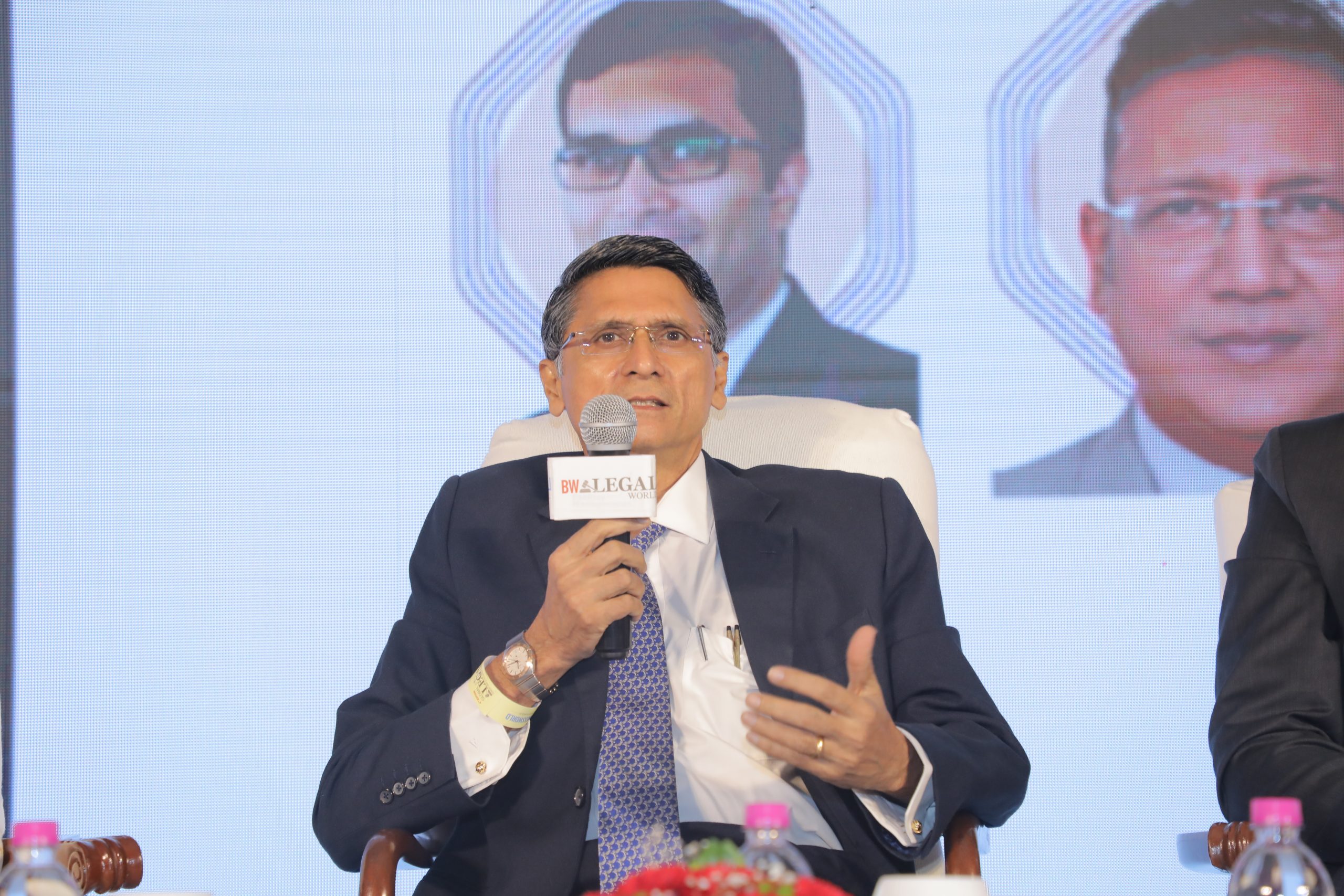
  • “Every friend you make lifts you just one notch higher. And being likable makes you lighter to lift.” – From village roots to Supreme Court heights, Naveen Kumar, Advocate-on-Record at Supreme court of India.

    “Every friend you make lifts you just one notch higher. And being likable makes you lighter to lift.” – From village roots to Supreme Court heights, Naveen Kumar, Advocate-on-Record at Supreme court of India.

    This interview has been published by Namrata Singh and The SuperLawyer Team
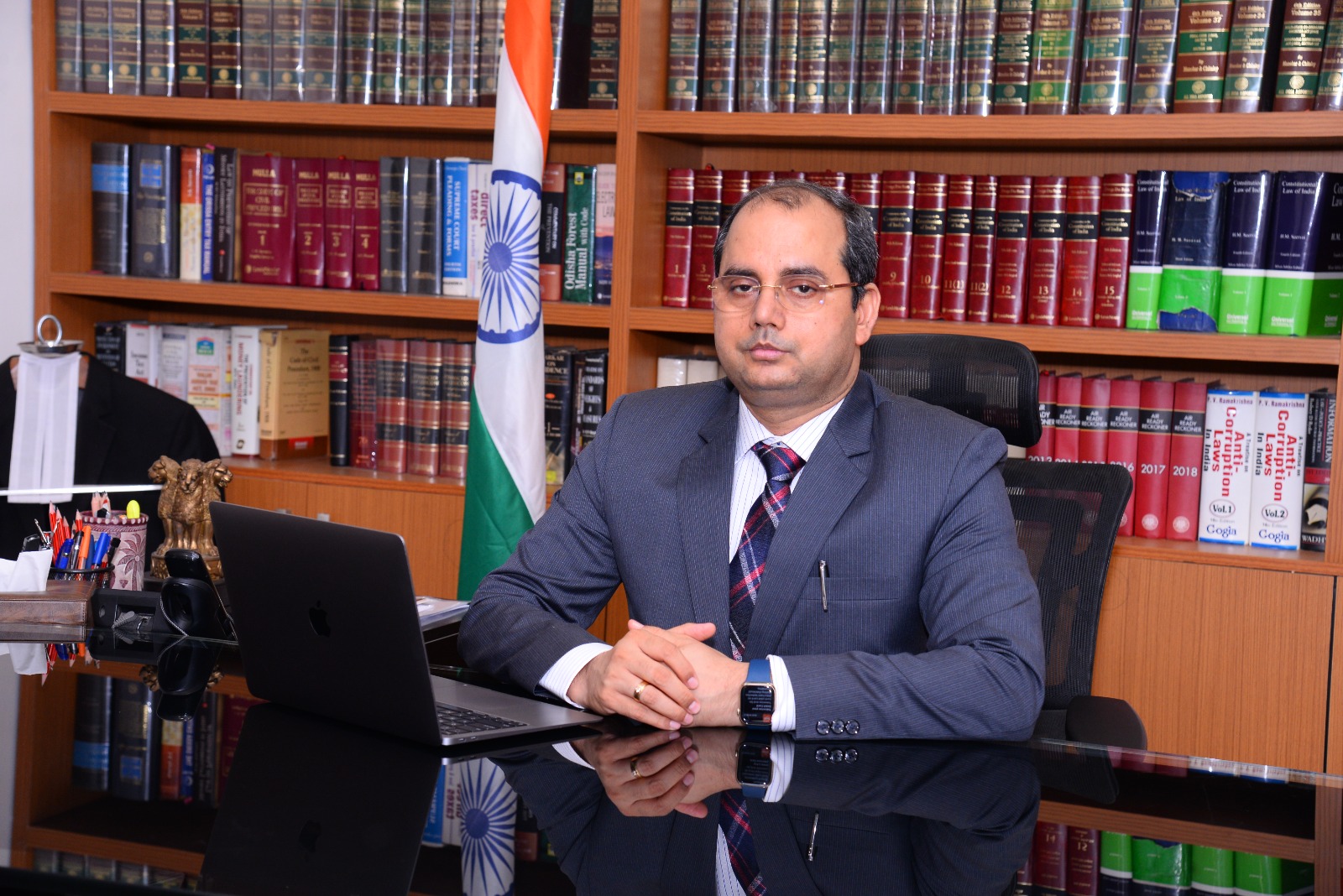
    Mr. Naveen, your journey from the University of Delhi to becoming an Advocate-On-Record with over two decades of experience is impressive. Can you take us through the pivotal moments or decisions that shaped your path and brought you to where you are today?

    While the journey from Delhi University onwards may be as good as it could be, the expedition from a village school to CLC (Campus Law Centre of Delhi University) is nothing short of a miracle. As it is said, if you believe in miracles they do happen. Today while I can boast myself as a modern english educated person having scientific temperament, I owe a lot to the scriptures, especially “The Ram Charitramanas” (by Goswami Tulsidas) without which I could not have grown even as an educated person.

    As in the first page of the epic Tusidas ji has worshiped goddess of faith and belief by saying “भवानीशङ्करौ वन्दे श्रद्धाविश्वासरूपिणौ” (alute lord Shiva and mother goddess Parvati who are personification of faith and belief). In hindsight, I can trace my existence to the very faith and belief (in God and oneself) which shaped my early life. Thus, I have no hesitation in confessing that I could not have received even an elementary education but for my interest in spiritualism and mythological stories such as Ramayana, Mahabharata, Puranas etc which used to be daily ritual in my family, while growing up in a village of district Siwan (Bihar).

    Of course, the spiritual light was sparked by the parents, especially my father, a deeply religious person, who used to narrate bed time stories of Ramayana, Mahabharata and Puranas etc.

    In this backdrop even before starting formal schooling, I was able to recite Chaupai and Dohas. My father had a fixed routine throughout his life, he used to do puja (worship) every morning which included Path (recital) Ram Charitmans. The child’s natural curiosity led them to look through the pages of the epic, perhaps starting with the photos, and thereafter reading the stories. Soon I grew up as a favorite child to be called for reciting Dohas and chaupais in front of guests and visitors by my father.

    I don’t remember anything more about my studies or schooling up to class 8th. A significant milestone (again in hindsight) was surpassed when I was shifted from the village primary school to high school in class 9th in the year 1984-85. Because of my interest in Hindi poetries etc., and the ability to orate them loudly in front of anyone, a few of my teachers somehow started admiring and encouraging me.

    In the year 1985, during the 9th class, I won the first prize in antakshari on Tulsi Jayanti. Though it may not have seemed much worth at the time, today, it appears to be one of the significant events of my life. This achievement drew the attention of more and more teachers in school towards me, leading to special attention in my studies.  

    Due to the encouragement of the teachers, I began to take my studies more seriously, ultimately becoming the highest scorer in the 10th board exams in the whole village. Even today, I can vividly recollect my first day as I started learning my alphabets in the sunshine on the auspicious day of Basant Panchami in 1985 when one my teachers, Shri Hiral Lal Singh, started teaching me ‘angrezi’ (English).  

    Because of the encouragement (rather blessings) of my teachers I grew up to become the first person in the joint family (of about 30 people), consisting of all of my cousins, to study beyond Class 12th.

    The first seed of big dreams were planted again by sheer coincidence (almost like a miracle). In 1987, my identity as a sincere student received a boost due to my good result in 10th Board. Simultaneously, an unrelated event occurred where a native of Siwan district topped the UPSC Civil Services Exam in the same year. Instantly, it became a matter of huge celebration and talk of every nook and corner of the district including my village. A number of inspiring tales of hard work and success left a lasting charm of civil services which stuck with me and played a role in drawing me to Delhi.

    As I landed up in Delhi with big dreams and empty pockets the hard realities in the form of huge financial constraints and cultural shock put insurmountable challenges; in that backdrop few well-wishers suggested getting admission in a Law course in DU which would give access to library and other facilities. Accordingly, preparation for DU entrance started, and luckily, I secured a few tuition assignments to sustain survival in the life of the metro. After having secured good rank in the entrance test, doors of CLC opened and so the new horizon of hope, aspiration and struggle. 

    During CLC days I was again dear to my teacher who inspired me to engage in the extracurricular activities as visits to Tihar Jail, Criminal Courts, Slums-areas, I used to perform in Nukkad-Natak etc,. as a part of our Legal awareness activities which opened the doors of real-life learnings and helped me to develop a keen interest in interplay of law justice (or injustice) at the crude level.

    Thus, my journey is an intricate interconnection of how spirituality, education, and the quest for knowledge all played a role. Starting from the small village temple to studying law, each part of my journey has added to my life story, making me who I am today.

    Your career spans over 24 years in litigation, with a focus on diverse areas like Energy/Natural/Mining Laws, Intellectual Property, and more. Can you share a case that significantly shaped your approach to law and advocacy?

    After having completed my LL.B. degree in 1998, I got my bar registration and plunged into practice; the obvious choice for me was to start from Tis Hazari court as some of my friends as well as seniors were practicing there. I drifted for about 2 years in various chambers of Tis Hazari court. In 3rd year through a senior’s reference, I joined the chambers of Mr. Gopal Jain, (now a senior advocate). This opportunity proved to be a very huge milestone as I got access up to the highest echelons of litigation practice. Because of my initial training in district courts and hardworking nature my senior started giving independent briefs for subordinate courts and showed full faith in me.  I got various chances to handle the cases independently which ultimately turned out to be a good grooming process. While working with Mr. Jain, I had numerous opportunities to brief various senior advocates, including the most renowned ones and these opportunities enhanced confidence and enriched my understanding of diverse legal areas.

    Like any other young aspirant, I too was fascinated by the grandeur of the Apex Court. I was a regular visitor to the premises of the highest court of the land. However, I didn’t get any case in the Supreme Court despite my sincere wish for that. As it is said, that every thought is a prayer, my purposeless visits manifested into a reality when I got my first Supreme Court case in the year 2005 with reference to one of my distant relatives. Later on, another milestone in my career as an advocate of the Supreme Court was achieved when I got one case involving eleven policemen accused of murder in an encounter in Jharkhand, which later on became a landmark judgment on Section 482 of the Cr.P.C. 

    During the grooming days striving to become a practitioner in the Hon’ble Supreme Court and High Court(s) of India, my mentors/seniors instilled the ethos of “working like a horse and living like a hermit”. A junior is expected to be very thorough with the list of dates, comparative analysis of rival pleadings, argument points, compilation of case laws and also possible arguments of the other side (devil’s advocate) etc. As I always aspired to be a litigation lawyer in higher forums, I was constantly asking my seniors to provide me more and more work or opportunity to read files, also, I used to ask for those matters, which were not assigned to me. In that process and during my association with Mr. Jain I gained invaluable experience and professional maturity.

    A significant turn happened in 2011 when I handled a case related to illegal mining before the Supreme Court of India, arguing against a renowned Senior Advocate and securing a favorable outcome for the mining lease holder. The controversial and politically sensitive nature of the case gained widespread attention in the State of Odisha consequently I started getting a lot of mining cases which eventually created my reputation as a mining lawyer and till date I have handled almost 500 mining cases before Mines Tribunal, NGT, different High Courts and Supreme Court. In fact, in 2018, in one of the most controversial mining cases, a bench of the Apex court asked a super senior to give way to me to address the court, and after five days of full day arguments a reported judgment was delivered. This provided firmness in Supreme Court litigation practice, marked by strong desire, hard-work, consistency and consequent abilities to overcome the hindrances/ barriers created by language, lack of family background, or financial or other support from parents.

    Your extensive list of publications showcases a keen interest in legal commentary. How do you decide which topics to delve into, and what impact do you hope your writings have on the legal community or society at large?

    In determining the topics for my legal commentaries, I am guided by a dual purpose – a passion for the subject matter and a commitment to addressing issues that hold relevance for the legal community and society at large. Each publication represents a careful selection based on contemporary legal challenges and emerging issues.

    For instance, my book titledSand Mining Laws in Indiadelves into a crucial yet often overlooked aspect of environmental law. Through this work, I aim to shed light on the intricacies of sand mining regulations, contributing to a better understanding of the legal framework surrounding this environmental concern.

    The articleJudicial Restraint in Tender matters – A perspective,” published in SCC Online, reflects my interest in exploring the nuanced application of judicial restraint in the context of tender matters. By sharing this perspective, I hope to initiate thoughtful discussions within the legal community and contribute to the development of jurisprudence in this area.

    Similarly, my writings on topics like “Principles of Bail in Financial Crimes,” “Goal of Net Zero,” “Ban on Single-use-Plastic,” “Gender Pay Gap,” and “Compensatory Afforestation” aim to bridge the gap between legal theory and practical implications. These pieces in Bar and Bench and Live Law are designed to prompt reflection, foster informed dialogue, and potentially influence legal discourse and policy-making.

    Ultimately, my goal is not only to contribute to the legal scholarship but also to bring about positive changes and make contribution in the legal discourse. I aspire for my writings to serve as catalysts for discussions, policy reforms, and a deeper understanding of the legal complexities surrounding these critical topics.

    You’ve authored “Sand Mining Laws in India.” What inspired you to write on this specific subject, and what challenges did you face in distilling such complex legal issues for a broader audience?

    So far as the sand mining is concerned, from my experience in appearing before NGT and Supreme court, I realized that there is a serious discord between the authorities who are granting quarry leases for sand and those who are regulating and implementing the environmental regulations concerning the sand mining. Through interactions with numerous lease holders, it became evident that they were uninformed about the intricate statutory rules, regulations, circulars and office memorandums etc., governing their business of sand mining. Due to the lack of awareness, many miners incur the ire of NGT, resulting in the imposition of significant penalties. Many times, penalties are computed by the committees constituted by the NGT, which are based on an eye estimation, surmises, conjectures and which is far beyond the paying capacity of the respective quarry holders. This mainly inspired me to write a book on this specific topic with a purpose to spread awareness amongst the stakeholders about the required compliance as sand the most extracted materials from the earth’s crust and a lot of environmental, social, sustainability concerns do arise from it. Thus, it underlined the necessity of basic awareness within the mining community and other stakeholders. Another aim is to provide a view point to the policy makers, researchers and to facilitate informed decision-making in this crucial sector.

    Your practice extends to various tribunals like NGT, NCDRC, NCLT, NCLAT, and more. How do these forums differ from appearing in courts like the Supreme Court or High Courts, and how do you adapt your advocacy style accordingly?

    Practicing in different forums like NGT, NCDRC, NCLT and NCLAT is little different from that in higher courts like the Supreme Court or High Courts. These tribunals specialize in handling specific cases, such as those related to environment, corporate and financial matters. The rules and procedures in these tribunals are designed specifically for the types of cases they adjudicate, showcasing a nuanced and specialized approach in contrast to the broader scope of the Supreme Court or High Courts.

    On the other hand, the Supreme Court and High Courts have a broader jurisdiction, dealing with a wide range of legal issues beyond specific specialties. Appearing in these courts involves navigating more general legal procedures and practices.

    The main difference is that tribunals are specialized, allowing for a more focused and streamlined approach to cases within their specific areas. This sets them apart from the broader and more diverse settings of the higher courts, with their own dynamics and nuances.

    Usually when we prepare for cases, we do extensive research of all the relevant case laws and topics which are germane to that particular matter. To adapt my advocacy style accordingly, I focus on the specific rules and procedures of each forum. The key is to be flexible and adjust my approach based on the unique requirements of each forum.

    You’ve presided over workshops on legal awareness. Why is legal education and awareness crucial in today’s society, and what challenges do you see in bridging the gap between legal intricacies and public understanding?

    Legal awareness programs hold immense significance for several reasons, and if we impart basic legal awareness to the masses, it will be the most effective tool for empowering them. Equipping people with fundamental information about their legal rights and responsibilities is a necessity, as it enables them to deal with injustice which they face on a daily basis by the police and other administrative machinery. In fact, when we used to do street plays, we ensured that through that play we educate the public about their rights and duties and create legal awareness. These events provided a unique opportunity to establish direct connections with the masses, offering valuable insights into the practical application of laws.

    The challenge in bridging the gap between legal intricacies and public understanding lies in making the law simple and accessible to everyone. Legal terms and processes can be complex, and people might find them difficult to grasp. As an advocate, my role is to break down these complexities, use simple language, and provide real-life examples that the public can relate to. Therefore, conducting legal awareness programs, using plain language in legal communications, and engaging with communities directly are some ways to overcome this challenge. Making the law less intimidating and more understandable for everyone is crucial for ensuring justice reaches every corner of society.

    As someone with experience in arbitration, what advice would you give to businesses entering into arbitration agreements to safeguard their interests?

    Having observed the evolution of Arbitration as the most effective mechanism for alternative dispute resolution in India, I have gathered insights into the crucial aspects that need consideration by all stakeholders. The challenges which arise from court interference, delays in arbitral award execution, and concerns about the quality of arbitrator asks for careful attention. To my clients, I have always been advising that they should be objective and fair while negotiating and drafting clauses in arbitration agreements. Where the arbitration clause and the terms of the arbitration agreement are one-sided, then the scope of interference from the courts would be much wider at different stages. I have always advised my clients that the arbitration clauses should provide for selection of an impartial and experienced person as an arbitrator and both the parties must have fair chances and stake in the appointment of the arbitral tribunal and conduct of the arbitration proceedings and the clauses of the agreement should be drafted accordingly.

    Away from the legal arena, what are your hobbies or interests that provide a respite from the complexities of your profession? Any particular activity that helps you recharge?

    I engage in hobbies that offer an escape from the intricacies of my profession. Reading historical and spiritual books, immersing myself in the calming melodies of classical music, and enjoying moments of solitude are my chosen activities. Additionally, I find fulfillment in social initiatives, interacting with people on my own accord. These pursuits not only provide a break but also contribute to my overall well-being. They bring to life the childhood dictum, “विद्यां ददाति विनयं, विनयाद् याति पात्रताम्,” reinforcing the importance of both knowledge and humbleness. Engaging in these diverse activities provides me with energizing distractions from my high demanding profession and allows me to return to my legal responsibilities with a refreshed perspective and renewed energy.

    Simultaneously, participating in social initiatives deepens my connection with the community, instilling a sense of responsibility and empathy. This active engagement not only broadens my understanding of societal issues but also provides an avenue to contribute positively. The synergy between these diverse activities creates a harmonious rhythm in my life, enabling me to navigate the complexities of my demanding profession with resilience, a balanced perspective and a genuine appreciation for the multifaceted tapestry of my life.  

    With your extensive experience, what advice would you give to young lawyers aspiring to build a successful career in litigation and advocacy?

    My rocky journey in this profession may have some advice for younger stars such as-

    Ø Consistent Hard Work- While I was traveling in the DTC bus a co- passenger while interacting made a statement that “it is very easy to get a law degree but it is extremely difficult to become a good lawyer”. This statement of a stranger echoed in my mind throughout my struggle period and it holds good even today which is evident from the fact that we have a huge pool of young law graduates but there is a dearth of good lawyers in each court of India. What shaped my life in initial days is that I had inculcated a few small but good habits such as I used to read bare acts, legal magazines and cases even though I do not have any brief relating to the respective subject. These seemingly small habits paid off, as clients recognized me as a well-read individual, enhancing my “likeability factor”. My advice to budding lawyers is to keep learning, even in the absence of immediate briefs, as continuous learning prepares one for future opportunities.

    Ø Work is worship- One small event which I could recollect is that one of my clients advised me saying that “one’s commitment to work should supersede all other priorities”. The advice came roughly because I had got delayed in reaching the court and because of my being late the matter was passed over. Being late for a court appearance taught me a direct lesson. The client’s advice was straightforward – giving preference to any family event or anything else instead of work would not bring either the success or happiness or even the admiration of family members. This lesson stuck with me every for the whole of my formative age in the professions. I can say with conviction that a legal profession is a very high demanding profession which requires the highest degree of focus and dedication and that too without much reward in initial days of practice.

    Ø Patience and Big Goals- Overcoming initial challenges requires patience and a larger vision. Although the situation has improved significantly due to the emergence of numerous law firms, opportunities in the corporate sector, and academia, young law graduates now have a variety of choices. Despite these growing opportunities, struggles persist. In the early days, I had few techniques to keep myself inspired. While practicing in district courts, I regularly visited the Supreme Court and High Court to observe the legends of the legal profession and used to idolize them. Seeking inspiration from legendary lawyers in the Supreme Court and Delhi High Court kept my ambitions high.

    Ø Learn broadly and with focus- Another ritual of observing the court proceedings of all the courts helped me in staying motivated. Thoroughly reading legal documents, bare acts, law magazines etc. proved very beneficial. Later on, one of my seniors advised that you must flip through (using tai-lopez method of speed reading) the bare acts and rules whenever you get a case relating to that subject.

    I would like to quote an excerpt from David J. Schwartz- “The Magic of Thinking Big” which is a must for this profession “likeability factor”-

    Mark this point well. A person is not pulled up to a higher-level job. Rather, he is lifted up. In this day and age nobody has time or patience to pull another up the job ladder, degree by painful degree. The individual is chosen whose record makes him stand higher than the rest. We are lifted to higher levels by those who know us as likable, personable individuals. Every friend you make lifts you just one notch higher. And being likable makes you lighter to lift.

    To sum up, my advice to the young lawyers is simple – Dear young lawyers, here’s a piece of advice: alongside your legal studies, make sure to gain practical experience. Real-world situations teach you valuable lessons that books alone can’t provide. So, dive into the practical side of law to become a more skilled and effective legal professional. embrace hard work, treat work as worship, practice patience, think big, and focus on continuous learning as well as ensure to have a likable personality. These principles, from personal experiences, pave the way for a successful legal career. 

    Get in touch with Naveen Kumar-
  • Ramakrishnan Viraraghavan (RKV). Senior Advocate, Supreme Court and bestselling author on GST Laws shares his learning on legal writing, lecturing at National Judicial Academy and pursuing LLM after three decades of practice

    Ramakrishnan Viraraghavan (RKV). Senior Advocate, Supreme Court and bestselling author on GST Laws shares his learning on legal writing, lecturing at National Judicial Academy and pursuing LLM after three decades of practice

    This Interview has been published by Pragya Chandni and and The SuperLawyer Team

    Congratulations on the success of your book The Law of Goods and Services Tax: A Comprehensive Internet Age Commentary. Tax is primarily an auditor’s topic and a territory of Chartered Accountants. Why did you choose to write a book on GST Laws?


    I started my practice in the 1980’s in an age of information scarcity. I had a degree in commerce and then a law degree. I worked under my maternal uncle who was a tax lawyer. I enjoyed the complexity of tax practice and specialized in tax litigation, appearing before various tribunals. My exposure to accounting and accounting principles in my commerce degree was a huge advantage in commercial and tax litigation. In my experience, judges and lawyers without an accounting background feel challenged by accounts and accounting entries. Understanding these is essential for tax litigation . Much of my advocacy in the High Courts and the Supreme Court is to simplify accounting principles and concepts and explain them in a legal language acceptable to the legal mind.  . 

    After GST laws were enacted in 2017, I saw tax lawyers and practitioners instructing me struggle with the complexities of GST legislation. Unlike the Income Tax Act, GST Laws did not have any standard commentary. I decided to do something about it and began writing. My book is  a focused and penetrative commentary, an original writing on GST laws . It took me four years to complete my book. 

    I wrote a commentary in simple language avoiding legal jargon and overflow of citations. Considering the daily information overload on tax practitioners, I wanted to write a book which tax lawyers and practitioners could read on the way to the court or the tribunal and succeed in their arguments.

    It is an internet age commentary which avoids copious extracts from judgments, circulars, and GST notifications to the greatest extent possible. The book refers to a large number of decisions of the courts and rulings of the advanced ruling authorities. However, these references are given only as footnotes to the commentary. The relevant page and para number is given in the footnote. This will make it easier for the reader to locate the relevant para and cite the decision. The book also points out defects and deficiencies in judgments of the courts and advance rulings. It gives possible answers to legal issues (such as betting, racing and online gaming)  which have not been decided by the courts so far. My book is gender neutral. I avoided using ‘he’ or ‘she’ unless absolutely necessary. 

    Your involvement at the National Judicial Academy, conducting sessions for newly elevated High Court Judges and Judges from other jurisdictions is unique and commendable. How has this experience influenced your own perspective on the legal profession? 

    These experiences have made me deeply sympathetic and understanding of the plight of an average judge. Judges face enormous pressure disposing of matters, sitting in committees and simultaneously handling tons of administrative work. I am no longer irritated when a judge does not read the papers fully or adjourns a matter for want of time. Lawyers must understand that judges are also human beings. Judges also feel hunger, body pain and tiredness. Mental fatigue and irritability set in any judge, any human being after hearing arguments day after day, week after week without time to recover or recoup energy. 

    My advocacy has become judge-centric. I now see myself as a senior advocate assisting the court rather than arguing before the court. The best of arguments should be made in a manner helpful for the judge to write the judgment in the client’s favour. Good advocacy should give the judge a quick and easy solution to the dispute. No judge anywhere is interested in long arguments showcasing the lawyers’ erudition.

     You’ve authored publications, conducted sessions on law for judges, and played a role in drafting rules. Could you share the motivations behind your contributions to legal literature, legal education, and rule-making, and how do you believe these efforts contribute to the legal community?

    I did not have any specific motivation to do all of these. The legal profession rewards good work with more work. My first book was on the Madras High Court Letters Patent, Appellate and Original Side Rules. The book was successful and resulted in the Chief Justice appointing me on the Court Fees Rationalisation Committee. The committee’s well drafted report was accepted by the government and by the High Court without modifications. 

    This led to my appointment on the Madras High Court Arbitration Committee and on the Madras High Court Rule Committee. My contributions here were kindly appreciated and I continue to be on the Rule Committee although I have shifted to the Supreme Court. Similarly, the success of my first book led to publishers inviting me to more books.

     There are two lessons from all of these. Firstly, one must grab every opportunity that presents itself. Secondly, most opportunities lie outside the comfort zone. Therefore, having grabbed the opportunity, one must struggle, overcome discomfort and grow to the level of the opportunity.

    How have you seen yourself evolving as a Senior Advocate from a raw young law graduate? What role do you believe mentorship plays in your development as a legal professional?

    As a young lawyer, I thought precedents were all important and tried to support every argument with some case law. Now, I realise persuasion is all-important. Arguments with too much case law are like over spicy food. They turn away judges. Arguments must be garnished with minimum case law, just enough to make it attractive and presentable but not beyond. As a young lawyer, I thought I could succeed in my arguments without too much hard work once I became a senior. Now, I realise hard work is a part of the process even as a senior advocate. I had appeared in common-law jurisdictions across three continents. I found hard work was an essential requirement for success at the Bar throughout the world.

    Mentorship is essential for improving the quality of the justice delivery system. I have seen retired judges mentoring sitting judges at the National Judicial Academy. Similarly, advocates must mentor junior advocates. Mentoring must be professional and must meet the needs of the mentee. Mentoring does not mean placating the mentor’s ego by listening to the mentor’s war stories. Real-life examples from the mentor’s past offer valuable guidance but must be fine-tuned towards the mentee’s requirements.

    Sir, could you please share a bit about your background and journey that led you to become a Barrister at Law, practicing in both India and London? What inspired you to pursue a career in law?

    I completed my bachelor’s degree in commerce. Then, I had the option of pursuing management, accounting or law. I applied for an MBA and was offered admission by two prestigious colleges in Mumbai. My father felt I was temperamentally suited for a profession rather than a corporate job. He suggested I could become a chartered accountant or a lawyer. My paternal great-grandfather, my maternal and paternal grandfathers and my uncle were lawyers. Law seemed to be a more attractive choice. I felt I would be bored with accounting. I studied law and became a lawyer. 

    I became a barrister at law by accident. An English barrister met me for legal advice on Indian law. She was impressed by my legal skills and suggested I should become an English barrister. By then, I had put in 25 years as a lawyer in India. I felt becoming a barrister did not add any value to my practice in India. 

    A couple of years later, she convinced me to sign the application papers. Amidst hectic professional life, I studied English law like a maniac and passed the difficult test. I was called to the Bar by the Honourable Society of Inner Temple where Mahatma Gandhi was also called to the Bar. I wanted to return to India after becoming a barrister. However, the Sub-Treasurer of Inner Temple insisted that I should complete my pupillage in England and obtain rights of audience before the English courts. I stayed on, pupilled in barristers’ chambers in London and obtained my practising certificate as well.

    Your educational background is quite diverse, including degrees from the University of Edinburgh, NALSAR University, and the University of Bangalore. How did these experiences shape your approach to law, especially in the areas of international arbitration and commercial litigation?

    LLM from the University of Edinburgh was a game changer for three reasons. Firstly, since I joined LLM after 25 years as a lawyer, I could understand and implement in my practice many legal concepts taught in the course. This would not be possible had I joined LLM immediately after my LLB. 

    Secondly, my writing skills improved enormously. I needed to write concisely and with precision. I could not simply fill up the pages and expect to pass. Almost everything I wrote in my dissertation needed to be supported by citations. The high quality of writing I learnt from LLM helped me write three books on law. 

    Thirdly, a degree from one of the top universities in the world gave me entry to many places. 

    One of the courses in LLM was on international commercial arbitration. The course was taught by a reputed international arbitrator. Learning the nuances of international commercial arbitration helped me become a Fellow of the Chartered Institute of Arbitrators, teach arbitration as an accredited tutor, argue international arbitration matters in Indian courts and finally sit as an international commercial arbitrator abroad.

    Exposure to foreign legal systems such as English law, Scottish law and continental jurisprudence in Europe helped me to think out-of-the-box in identifying new lines of arguments in Indian commercial and tax litigation.

    You’ve been involved in significant matters under the Insolvency and Bankruptcy Code and commercial litigation. Could you share some insights into the challenges and complexities you’ve faced in these areas, especially when dealing with issues such as avoidance applications, corporate liquidation, and company petitions for oppression and mismanagement?

    I have only one insight. The task of an advocate in any complex litigation is to break the complexity into simplicity. Judges hate complexity and love simplicity. Justice Oliver Wendell Holmes said “For the simplicity on this side of complexity, I wouldn’t give you a fig. But for the simplicity on the other side of complexity, for that I would give you anything I have.” It requires enormous hard-work to reach this simplicity.

    As a Fellow of the Chartered Institute of Arbitrators, you’ve been involved in numerous domestic and international arbitrations. Can you discuss some of the key aspects of your experience in arbitration, including any notable cases or challenges you’ve encountered?

    The glaring contrast between domestic and international arbitration is the professionalism in international arbitration. Timelines for pleadings, witness examination and arguments are scrupulously followed by the lawyers in international arbitration. The arbitral tribunal is also well prepared, having studied the pleadings and the evidence well ahead of the hearing. International arbitrators do not have a sense of loyalty to the party appointing them. Domestic arbitration has to travel a long way to catch up with international arbitration. Sitting as an international arbitrator, I see Indian lawyers and Indian law firms rise up to international standards. However, this is absent in domestic arbitrations.

    Lastly, considering your wealth of experience, what advice would you offer to law graduates who are just entering the profession? Are there any key lessons or principles that you wish someone had shared with you at the beginning of your career?

    First, take care of your health. Eat correctly and exercise regularly. Aim to live active and to ripe old age. 

    Secondly, set one small goal, reach the goal. Then set another small goal and so on. Do this consistently. Small goals always trump large goals. 

    Thirdly, remember the journey never ends. Thirty-eight years at the Bar, I am still learning law and improving my skills, daily.

    Fourthly, be kind to yourself (but not indulgent).

    Get in touch with Ramakrishnan Viraraghavan-

  • “One must be passionate about their work. If law is something, that you are passionate about, I am sure that everything else will follow” – An illuminating interview with Saurabh Bindal, Partner at Fox Mandal & Associates LLP

    “One must be passionate about their work. If law is something, that you are passionate about, I am sure that everything else will follow” – An illuminating interview with Saurabh Bindal, Partner at Fox Mandal & Associates LLP

    This interview has been published by Namrata Singh and The SuperLawyer Team

    Could you introduce yourself and share a brief overview of your journey from college to becoming a Partner at Fox Mandal & Associates LLP?

    I am Saurabh Bindal, a Partner at Fox Mandal & Associates LLP, heading the Disputes and Litigation practice of the Firm in Delhi. I did my Engineering and thereafter, decided to pursue Law from the reputed Indian Institute of Technology, Kharagpur, India. Thereafter, I started practicing in a reputed Intellectual Property Law Firm in National Capital Region. After a short stint at the Firm, I realized my calling to be a litigation and disputes Lawyer. Subsequently, I have worked with different Law Firms in the past in various capabilities.

    In my current role, I render dispute resolution support to clients on issues relating to Arbitration law, Intellectual Property law, Privacy law, Information Technology law, Constitution, Company Law, Contract Law, Employment Law, Electricity Law, Insolvency and Bankruptcy Code.

    I have eight books to my name and several publications in leading journals. I like to speak on different facets of law and have had the opportunity to represent my clients in different forums, in India and abroad.

    With significant experience in diverse areas of law, including Arbitration, Intellectual Property, and Employment Law, what inspired you to pursue such a multifaceted legal career?

    Well, you know, I firmly believe that the practice of law is based on continuous learning. I try to learn each day. The inspiration to learn is something that keeps me motivated in life. I have worked on different facets of law as that motivates me to grow. One must find a purpose in life. For me, I tend to believe now that my purpose was in the practice of law. Once, you start practicing law, you must be internally inspired to keep the channels of learning open.

    As a Partner at Fox Mandal & Associates LLP, you lead the Alternate Dispute Resolution and Litigation practice. Could you share some insights into the challenges and successes you’ve encountered in this role?

    The role I am currently engaged in is quite challenging. Each day there are new hurdles, and you have no other option but to live it up to them. As a leader, one must take everything as a part and parcel of life. In life, your failures become your teachers and your success your enemy. I believe it will be very difficult to point out every challenge faced by an individual in her or his role. However, after some point of time, with one’s hard work, every challenge a person faces in life sometimes becomes an opportunity to strive forward. The only insight I could share with the challenges faced by me in my role is that each challenge has taught me new ways to live a meaningful life.

    Aside from being a legal expert, you’re also an author, having written several books on intellectual property law, arbitration law, and privacy law. What inspired you to delve into writing, and how does it complement your legal practice?

    The person who brought me pen and paper was Dr Uday Shankar, a Professor at the prestigious Indian Institute of Technology, Kharagpur. It was he who asked me to assist him with a submission. When I look back, I give all the credit in my writing to him for his patience with me. He has been my friend, philosopher, and guide.

    I would also like to give credit for my writing to Eastern Book Company. Eastern Book family, and more particularly Mr. Sumeet Malik has been very kind in holding my hands. Majorly, all my books are thoroughly reviewed by him personally and he has contributed much to my life.

    You’ve been recognized as an expert public speaker. What’s your favorite topic to speak about, and do you have any memorable experiences or anecdotes from your speaking engagements that you’d like to share?

    Like the practice of law, public speaking is also a lifetime learning experience. The more you do it, the more you learn about engaging the audience. I have been constantly trying to master the art. Each event I speak at, makes me realize that speaking in public is also an art, at which, I am just a novice.

    Having worked with various law firms, including Desai & Diwanji and Singhania & Partners, what lessons have you learned throughout your career, and how have these experiences shaped your approach to legal practice?

    I have only learnt that your hard work will get recognized in life. You will always have people around you to pray for you in life, if you are good. I have always maintained good relationships with every Firm I have left. It is a very important learning in life. This has certainly helped me in shaping my legal practice. A legal practitioner must deal with different clients and as an officer of the Court must assist the Court. I believe, my experiences in life have taught me how to interact with clients and make a long-lasting relationship with them. My work in all the past firms has also taught me that it is only your work which will define you.

    Apart from your legal expertise, your profile mentions that you are an insightful writer. When you’re not writing legal pieces, do you have any personal writing projects or genres you enjoy exploring in your free time?

    Frankly speaking, I used to read a lot of fiction. Lately, I don’t get time to read fiction and that is something that I miss.

    As a lawyer with a keen interest in technology, what’s your take on the evolving landscape of privacy and data protection, and how do you think legal professionals can stay ahead in such a dynamic field?

    Intersection of law and technology is always appealing. COVID-19 pandemic taught all the lawyers to accept that intersection. Privacy as a concept is relatively new to India. We are still to see the rules being made under the Digital Data Protection Act, 2023. For legal professionals, it will be my advice that to stay ahead in this dynamic field, they must embrace the change which the Act has brought to India. I am sure that there will be a lot of work which will flow from the Act as it has recognized right of individual to keep his digital data private and talked about the repercussions if sharing of such data leads to any breach.

    As someone who has excelled in both professional and personal life, receiving accolades such as the India Business Leader Award and the Young Alumni Achiever Award, what advice would you offer to young legal professionals aspiring to achieve similar success?

    My advice to young legal minds would be to read, write, laugh, and enjoy life. One must be passionate about her or his work. If law is something, that you are passionate about, I am sure that everything else will follow. It is only work that will take any person ahead in life.

    Get in touch with Saurabh Bindal-

  • How to start your own Legal Practice and go for Legal Startup, You Tube channel: In conversation with Naman Mohnot, Advocate, Author and Legal Consultant

    How to start your own Legal Practice and go for Legal Startup, You Tube channel: In conversation with Naman Mohnot, Advocate, Author and Legal Consultant

    This interview has been published by Priyanka Karwa and The SuperLawyer Team

    Sir, could you please tell us the reason behind choosing Law as a career?

    Back in 2008, when I completed my matrix and got a merit, there was a presumption that every meritorious student should fight for IIT-JEE exams so at that point of time, without thinking anything, I started preparing for the same. Later, I realised that Physics, Chemistry and Maths were unfulfilling and the subjects did not align with my interests and then I realised that I am going somewhere in the wrong direction.
    Certainly, I have always had a passion for public speaking and debating; I have worked as a radio jockey and also acted in some serials, which gave me the push to pursue law as a career. Also, there was a thought somewhere in my mind that what I can do in my life which can be useful for some other person or society. Subsequently, I decided that being a lawyer this can be done and that was the turning moment for me to decide the Career in Law. Additionally my father has been the biggest factor behind my decision to pursue a career in law. He is a law graduate himself, but he never practiced as a lawyer due to certain reasons so I decided to take his vision forward. His guidance and support have been invaluable in my development, both personally and professionally. In addition to this, law provides a flexible and versatile career path with many opportunities. Finally, I believe that law is a noble profession that can help to bring a positive change to society.

    Why did you Choose to Practise and not join any Firm, especially when you got the PPO?

    Being a Graduate from NLU- Delhi, I was sure that I will get a decent placement but the Corporate Job never allured me, even though I have done internships in good law firms but those job roles never attracted me. Apart from that, I always wanted to come back to my home town Jodhpur and build something from here by staying close to my family. I do agree that joining a law firm would have been easier then starting my own practice but I always wanted to start something of my own. So, when I decided to start my own practice, I knew it will come with advantages and disadvantages. If I think about the disadvantages then I wouldn’t have been able to make it, I knew it’s either make it or break it. Anywhere you go you have to create your place, your identity, you have to give it time and then see the magic happen.

    How was your Law School Journey like?

    I was fortunate to have such an incredible learning experience in one of the best legal institutions like NLU- Delhi. During my time there, I was exposed to some of the best professors, resources, and experiences that helped to shape me both professionally and personally. A tier-1 city like Delhi has always given me location advantages due to which I was able to write certain books and acquired a deeper understanding of the law and get a better grasp of the legal system. Along with the academic excellence, I was able to build strong friendships and lasting memories that I will cherish forever.

    Being a first-generation lawyer, how difficult was it for you to start your own practice?

    Embarking on a career in law is not a simple undertaking, be it for a novice legal practitioner or one with a prior legal foundation. Generally, a lawyer with legal genealogy has the advantage of their family background, where they don’t have to make new associations since they have sound direction and solid networking.
    I started my professional excursion with a remarkable senior, mentor Mr. Farjand Ali sir who is now an Honourable Judge in Rajasthan High Court. He gave me the directions and chances to show up, address the Courts & argue the matters. During my 2 years journey, when I was assisting him, he has given me more than 750 plus cases to argue which is a remarkable figure for any junior. I was sufficiently fortunate to get a decent senior and coach which is a critical part in the professional journey in one’s initial years and that is the thing that makes or breaks you. Once he got elevated, he advised me to become independent and since then I am practising as an Independent Advocate. I am managing the Firm Legal Shots through which our team is providng multiple Litigation and Non Litigation Services across the Country.

    Share your Litigation Journey with our viewers?

    My litigation journey has been a great learning journey. I am learning each day. Every other case brings out a different experience. I am doing what I love and following my passion makes me satisfied at the end of each day. I am extremely thankful to the bench of the Honourable Rajasthan High Court which has given me recognition. There is a long way to go!

    We are curious to know more about Aapka Consultant.

    After graduating from the National Law University, Delhi, I decided to pursue my professional career journey from my native town – Jodhpur by starting something of my own as I always had this principle in my mind that ‘ Naam aur pehchaan bhale hi choti ho, magar khud ki honi chahiye’. This idea eventually culminated in the creation of our legal start up and I approached my sister Adv. Swati Jain and we this how Aapkaconsultant came into picture. Aapka Consultant provides a comprehensive range of online one-stop business services and solutions, utilizing a network of CAs, CSs, and lawyers. This start up helped me in bagging clients from all across the nation even after staying in a Tier-2 city like Jodhpur. We are continuously providing hassle-free business and legal support to clients all over India through our services. We strive to work together with our clients and handle their complete legal and compliance needs, allowing their leadership teams to focus on their essential priorities.

    What was your vision behind your YouTube channel i.e., Legal Shots?

    Legal Shots is my lockdown brainchild. During the first lockdown of 2020, an employer from Bhilwara approached me for a legal opinion and I consulted him via whatsapp voice note and after a few days I came to know that a lot of Bhilwara people are getting relief from that. Then I set out to take my work online, explore more and contemplate undertaking something new. I was guided by my brother cum mentor Mr. Rishab Jain, who is the founder of Labour Law Advisor. With a perspective to assemble awareness and decode the laws for the general population in an easy language, in a brief and compact manner.. We began our YouTube channel Legalshots. Our vision is to promote and disseminate legal knowledge and understanding among the people. Our goal is simple – to educate both laypeople and lawyers about relevant legal and social topics, in an effort to make the complicated simple for everyone. I wanted to provide a single platform to discuss all legal issues. Three years later, we now have a family of more than 310,000 subscribers and more than 1.5 Crore Views.

    Please tell us what inspired you to write your book and the number of books you have written yet.

    Growing up in a Hindi Medium School, I was always aware of my lack of fluency in English. But I was determined to improve my English, so I applied myself to the task, researching and writing a book. Unfortunately, when I submitted an article to an International publishing house, I was rejected and told that students like me were spoiling the name of prestigious institutions like NLU-Delhi. This moment became a trigger in my life, and I began to work even harder on my English. Through dedication and perseverance, I was able to improve my English. I was determined not to let my lack of fluency in English be a weakness. I took advantage of every opportunity to read more, write more and hone my language proficiency. This experience only spurred me on further, and I began to research and wrote my first book on ‘Law relating to Ragging’ foreword by Late Mr. Ram Jethmalani which was published by Universal Publications. Later I wrote “Judgments that shaped the Indian Jurisprudence”, Foreword by Late Mr. Arun Jaitley which was published by one of the World’s biggest publishers ‘Thomson Reuters’, and ‘Surrogacy & the Law’ foreword by Mrs. Maneka Gandhi & Mr. Salman Khurshid and Revised version of ‘Law related to Ragging’ foreword by former Hon’ble Chief Justice Mr. S.A. Bobde and the Journey is still going on.

    How do you manage  Practise, Startup, Youtube Channel and Authorship journey altogether?

    Establishing my own legal practice, launching a start-up, creating a YouTube channel and writing books has been an ambitious endeavour. However, through efficient teamwork and delegation, I have been able to make the process more manageable and enjoyable. I prioritize tasks and make daily to-do lists to remain organized and ensure that nothing slips through the cracks. I am also constantly learning more efficient approaches to save time and maximize efficiency. Having a routine, staying organized, and taking the necessary breaks are the key to maintain equilibrium between all the activities. Even though my days are busy, I love what I do and that is why I am able to keep everything in check. With the help of my teams in the respective departments, we are able to provide the highest quality of service to our clients and viewers.

    Coming to the last question, any advice you would like to give to the young Lawyers out there?

    One of the invaluable pieces of advice that I would suggest to emerging lawyers is that it is worthwhile to prioritize experience and practical exposure over earning money. In a prestigious profession such as law, patience and diligent hard work are integral components of success. The early stages may be taxing and challenging, but one should wait for the opportunities, that will inevitably come, to showcase their acquired knowledge and experience and where you can spotlight the aptitudes and experience that you have collected in all those years. Law is rewarding and complex due to continual changes.

    It is essential to focus on daily learning and stay up to date with the ever-changing jurisprudence. As a legal professional, you never cease learning. It is always evolving. There will be days where you may feel you are not accomplishing anything productive, but that is perfectly acceptable. Remember that the sun continues to rise even after witnessing unfortunate events on this planet, so why not YOU? There will always be a brighter tomorrow. So do whatever your heart says and keep going!

    Get in touch with Naman Mohnot

  • Mr Vipul Maheshwari, a prominent and established Advocate and an Author, talking about his latest publications and his love for Law.

    Mr Vipul Maheshwari, a prominent and established Advocate and an Author, talking about his latest publications and his love for Law.

    This interview has been published by Sonali ParasharOjuswi Sahay and the SuperLawyer Team


    Having both a stellar legal career and being a celebrated author, how would you like to introduce yourself to our readers?

    I am a practising Supreme Court Advocate and have a keen interest in our polity. As an advocate and responsible citizen of society, I always feel that I have a duty towards the society to elaborate the comprehensive survey of our Indian democracy and rule of law. 

    What was your Law School journey like? Was Law School where you first tried a hand at writing?

    I had a wonderful journey in my college as a political science student and thereafter as a student leader in Law College. I had lots of opportunities to raise my voice on different platforms but not as a writer.

    Tell us about the book “Ramayana Revisited – An Epic through a legal prism”. What was the idea behind choosing this subject? 

    The Idea has come up with my uncle who is a co-author of the book. We discussed a unique idea which had never been thought about in the legal world. After discussion with him, I was excited and immediately started preparing the defence and prosecution of the characters of Ramayana and we decided to leave it to the readers to decide the culpability. Supreme Court and High Courts Judges, Parliamentarians, Mythologists, Journalists and Vice-Chancellors have appreciated the book.

    You have also written about elections in India in the book titled, “The Power of Ballot”. Was this idea always in your mind or was it something you and your co-author Anil Maheshwari together came up with?

    I have seen personally the election process very closely and hence was always keen to write about the theoretical law and practical reality. I have read and keenly monitored lots of elections and their processes in the country. The writing of the book was there in my mind for almost a decade. In fact, I had petitioned before the Supreme Court for admissibility of the Internet voting on mobiles but those were the days when the Court did not deem it fit to admit the writ petition. Another writ petition on similar lines has been admitted and is under process in the apex court. We have given details of the admitted case in the book.  

    You seem to be deeply interested in History amongst other disciplines. How do you believe writing on this subject is essential in today’s time and age?

    The idea to write on a subject which is very close to every citizen of India as I have always seen that Indians love elections which have become a sort of national festival across the castes, communities and regions in the country. Secondly, I have seen that elections in India in always been dominated by patronage, money, fake news and prediction which made me think to write about the book. Despite all these weaknesses, elections in India are the symbol of a thriving democracy even after seven decades since its introduction way back in 1952 after we attained independence. Let us discuss its shortcomings and make efforts to remove them. 

    You have been a member of the National Executive Committee of FICCI and PHD Chambers of Commerce and Industry in India and have received many accolades from different sections of the society for your literary achievements side, we would like to know what got you interested in Commercial Laws as practice area?

    This is not a variation as I have done the constitutional, civil and criminal litigation for almost three decades; lately, I started enjoying the commercial litigation of corporates. As a student of political science and law, this has always been my first choice and as an active lawyer and political analyst I always think that it would be good to pen my thoughts on law, the festival of democracy, duties, the exercise of the ballot by more than 910 million electors, management of the largest electoral process by the ECI and lastly the lifeline of democracy will be a good idea to share with the readers in the form of a book.

    You have served as the former Additional Advocate General of Haryana and Senior Central Government Standing Counsel of various state governments in the Supreme Court of India. If you had to choose between litigation and writing, what would you choose and why?

    As a lawyer, my first love is my profession and fortunately, it involves a thought process in drafting, therefore both litigation & writing go hand in hand and I would like to continue my passion for writing. 

    You are a founder of the law firm Maheshwari & Co., Advocates and Legal Consultants, a full-service law firm known in India and internationally dealing with corporate, commercial, transactional, mergers and acquisitions, and intellectual property. Please share about the challenges of your role and the advice you have for the next generation.

    As a founder of a Law firm is a big responsibility on one’s shoulder which involves hard work, integrity, dedication, transparency & accountability and lastly the tender job of nurturing young lawyers and help explore their talents. I feel in any sphere of life one should always aspire and try to do a larger good for society.


    Know more about Vipul Maheshwari –

  • Mr Anil Maheshwari, a celebrated Journalist and an Author, talking about his latest publications and his advice for young aspirants.

    Mr Anil Maheshwari, a celebrated Journalist and an Author, talking about his latest publications and his advice for young aspirants.

    This interview has been published by Sonali ParasharOjuswi Sahay and the SuperLawyer Team


    With a remarkable career in Journalism, and also having authored quite a few books, how would you describe your professional journey to our readers?

    My professional journey or say the foray into the realm of journalism had been a rewarding experience as I was transferred nine times, though most of my colleagues and friends in journalism spent their entire life at one station. Therefore, I was enabled to see and understand the major parts of the country at a grassroots level.

    Tell us about the inception and idea behind the book- “Ramayana Revisited- An epic through a legal prism”.

    I am happy that the book Ramayana Revisited: An epic through a Legal prism was so well-received in the market. This idea germinated in my mind in 1998 when I was enjoying the company of a lawyer serving the West Bengal High Court. He was talking in defence of Ravana. Two decades had passed, and eminent mythologist Bibek Debroy (The Economist) encouraged me to develop a book around this theme. I roped in my nephew, who has acquired a name in the legal parlance- Vipul Maheshwari, who helped me immensely with his legal inputs. That is why he is the co-author.

    How did the book- “ The Power of Ballot” actualized? What kind of research and fact-finding you have had to undergo towards the completion of this book?

    The newest book has been treated the same. Vipul Maheshwari has given his legal input on the subject, as holding fair and free elections is the base of a vibrant and thriving democracy. However, there are misconceptions about some innovations which have eliminated the most dangerous illness, which was rigging the elections. Hence, he is the co-author.

    You have been a journalist for over five decades and you retired from Hindustan Times as a Special Correspondent. We would love to know about this journey of yours.

    I’ve enjoyed every moment of my journalistic life. Newspapers were my classrooms, and the experience was my teacher. The mentors I met along the way were a few editors and an army of veteran reporters. They taught me about the classical roots of narrative non-fiction and offered great insights into the techniques of reporting. My belief is that intellectual curiosity and relentless work etc matter infinitely more than the natural ability in achieving excellence.

    What was more challenging for you, journalism or writing?

    Journalism and writing are subjects that overlap each other. However, there is a difference between journalistic writing and writing a book. Both remain challenging in their own ways. But I took the challenges in stride and that is why I enjoyed the unique joy both offered me. I have witnessed Vipul Maheshwari express a similar challenge with Law. 

     Here’s an incident he shared with me that I was tempted to include in The Power of the Ballot. Everyone is aware of the unseating of the PM Mrs Indira Gandhi, an incident that led to the imposition of an emergency in the country. The next time, when another election petition against her election for the Lok Sabha from Raibareli was filed before Allahabad High Court, it was summarily dismissed because the Raebareli district was under the jurisdiction of the Lucknow bench of Allahabad High Court. In the earlier instance, the judge overlooked such a gross mistake and the lawyer who appeared on behalf of Mrs Indira Gandhi. And the country had to pass through a cycle that could have been avoided.

    You have two short-term tenures as a fellow at the Aligarh Muslim University. Please share with us about this experience of yours.

    Aligarh Muslim University, a prime seat of learning and symbol of the Muslim way of life in India, has been kind enough to offer a short-term fellowship to me twice, to read and write any subject of my choice. For starters, I’ve worked on writing a book (co-authored by Dr Faizan Mustafa) about the Right to Information. Back then, the Right to Information was not in vogue in the country. 

    The second time, a few years ago, I worked on the subject of the History of Aligarh Muslim University, which will soon be released as a comprehensive book about the university in the coming November, with Bloomsbury publishing the title. Before I was absorbed as a full-time reporter by the Hindustan Times, I used to work for several magazines and newspapers as a freelancer. During that course, I also contributed to the prestigious weekly Economic and Political Weekly. I covered the Allahabad High Court, its Lucknow Bench, Jaipur bench of the Rajasthan High Court, The Haryana and Punjab High Court, Jammu and Srinagar High Court besides the district courts at Meerut, Siliguri, and Bareilly. Covering courts has always been fascinating and fulfilling. 

    You have contributed to the Economic & Political Weekly, and The Frontier, and have also covered stories on various District Courts and High Courts in India. What do you think is the most important aspect for becoming a successful journalist? A word of advice for aspiring authors and journalists among our readers?

    There is a dearth of professional legal reporters in this country. For any budding journalists, my advice is

    1. Singleness of purpose; 2. A wide study of various subjects; and, 3. Deep penetration into the subjects.

    To cap them one should be willing to learn new things and respect points of view expressed by others.


    Know about Anil Maheshwari’s works –

  • Vivek Narayan Sharma, Advocate, Joint Secretary of Supreme Court Advocates on Record Association discusses the Challenging moment of his Career till date

    Vivek Narayan Sharma, Advocate, Joint Secretary of Supreme Court Advocates on Record Association discusses the Challenging moment of his Career till date

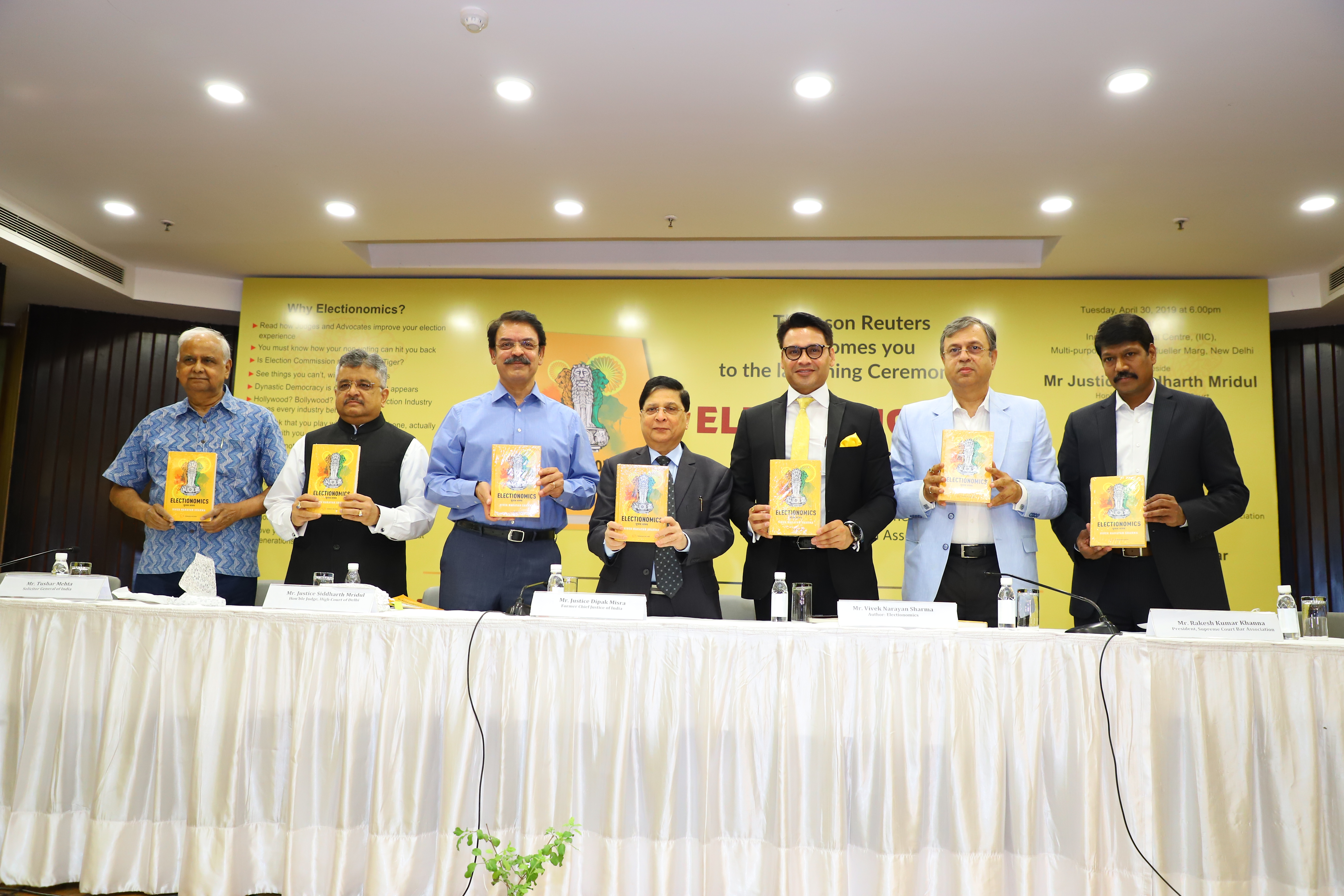
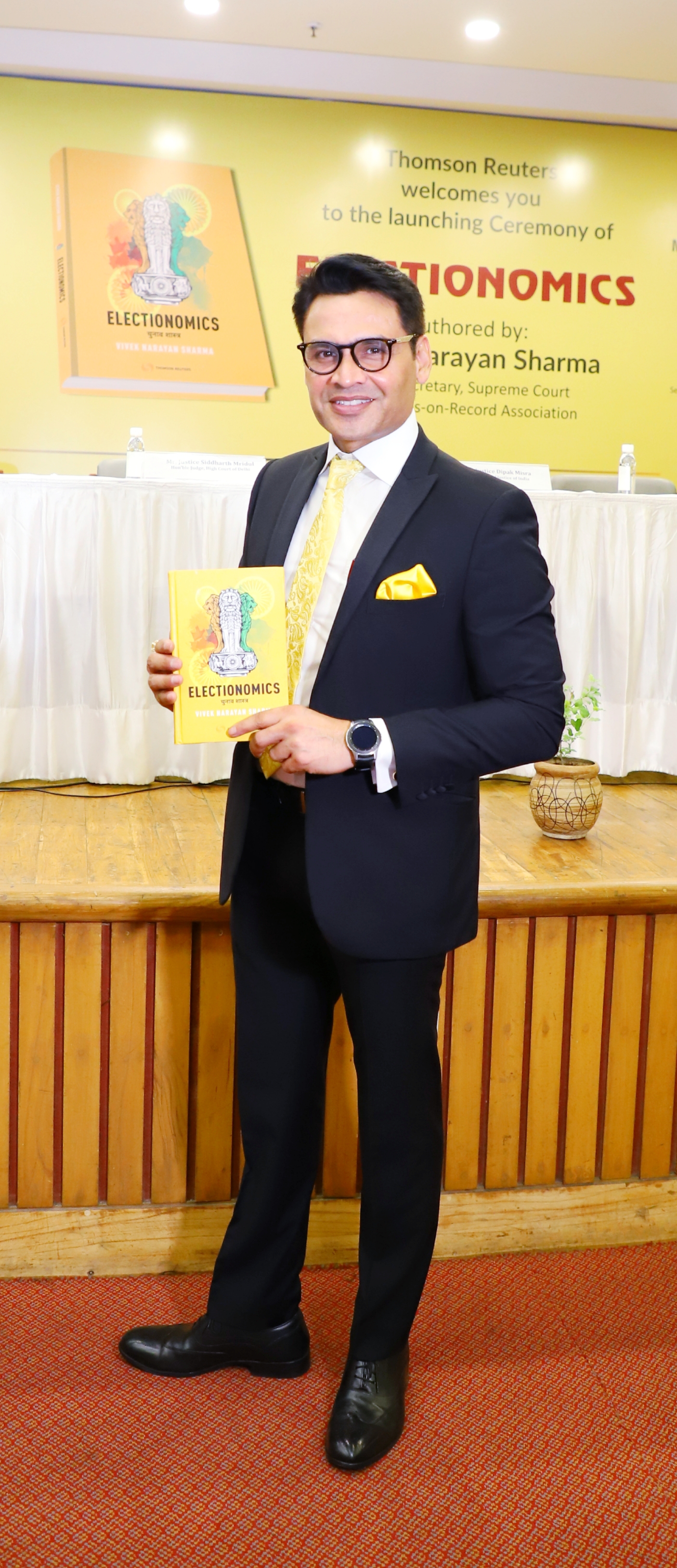
    Vivek Narayan Sharma is a Socio-Politico-Constitution expert and renowned advocate practising at Supreme Court of India. He is the Joint Secretary of Supreme Court Advocates on Record Association. He is the President of Society for Criminal Justice and National Advisor, Consultant & Convenor for eminent social, political outfits and law journals in India. He is Advisor (Legal) to Indo-Canada Chambre De Commerce (ICCC) (India Chapter). He is one of the most popular, most discussed and most-read Columnist for Times of India (TOI) and Economic Times (ET). He has authored “Electionomics”, a book published by world’s top publishers Thomson Reuters.

    Apart from catering to his opulent clients, He feels compelled to satisfy his philanthropic & social ennoblement urges. He has filed & contested cases of public importance to improve the hues and spectrum of society. He has advised Ministers and Political parties. He envisions strategic improvements in Democratic, Electioneering & Criminal Justice Delivery system in India.

    Enrolled as an advocate with the Bar Council of Delhi in the year 1999, He has handled litigation pertaining to politics, corporate, constitution, energy, consumer, environment, property, real estate apart from dealing in conventional civil, criminal and indirect tax appellate practice at Supreme Court, High Court of Delhi and Tribunals and Commissions. He has appeared and argued before numerous High Courts including Punjab & Haryana, Himachal Pradesh, U.P. & Karnataka etc.

    He is Senior Counsel on the panel of UOI and State of UP. Vivek is counsel for several Public Corporations like Coal India Ltd. and its subsidiaries, NHPC, UP Power Corporation (UPPCL) etc.

    In this interview he talked to us about:

    • Challenging moments of his career till date
    • He talks about his book “Electionomics”
    • Wins that he cherish till date
    • The secret of never losing a case as a trial lawyer.

    What were the three most challenging moments in your career as an advocate till date? How did you handle them?

    Challenges are inevitable when you have the grit to push against the wave. I have a strong conscience and hence, once I take up a case, I take it forward with all my being. Having said that, sometimes, the facts of the case, the legal position of the case and the moral appeal of the case, all deserve to be answered with justice but there may be unfortunate episodes when Courts appear prejudiced or pre-meditated and do not afford opportunities to even present the case properly. At times, even before the presentation of your case, you find yourself totally compressed between the push of your conscience and formal decorum that you cannot overstep as an advocate. I would briefly tell you the three top tight situations: 

    Ganga Action Plan case (2003)

    The Supreme Court Bench seemed prejudiced towards the seniority and paid heed to the arguments of the Solicitor General of India Mr. Harish Salve, irrespective of mention of incorrect relevant facts, in the face of the record. With 4 years of experience at the bar, I was extremely prepared with all facts on fingertips, case laws cited, legal position drawn.  

    But no matter what I said, Judges’ eyes and minds stayed fixed on the senior gown. The Court showed no interest to my best documents in the paper-books, which would have proven the SG wrong and I eventually ended up shutting my files and telling the Court, “What is the point in arguing before your Lordships, if your Lordships can’t appreciate what I am arguing?”. I was loud, clear, harsh and my voice enveloped the Court in silence. Though I had raised a valid point, but I was arrogant. The Bench irked, “What did you say?”, and I repeated with the same penchant. Mr. Gopal Subramanium, a Senior Advocate, who was sitting beside me to represent another party in the same case, pulled my gown and told me something which I don’t remember, but consequently I repeated my words with care, caution and respect and pleaded to the Court that I was trying my best to assist and sought proper attention of the Court to the relevant facts of the case. The bench pretended to hear me after my objection but nothing fruitful came out during that session of Court. However, later I could drive the outcome in a favourable position for my clients, who were fighting for cleaning of Ganges and to stop misutilisation of hundreds of crores of tax-payers money.

    Interestingly, I had written a letter for the presiding Judge of the Bench on the very same night at around 2 am and posted the very next day and conveyed that I was wrong in my arrogance before the court. The impact of that letter was seen 4 months’ after that when the case again came for hearing and the Presiding Judge remembered what I had argued on that day and provided relief in our favour.

    PIL in Nirbhaya’s Case (2013)

    This was another hard and unfair situation of early 2013 when the entire country was perturbed with the cruelty of the Delhi Gang Rape. Chief Justice Altamas Kabir’s wife worked for the welfare of Juveniles and kept themselves at the side of the culprit Juvenile in the Nirbhaya’s case irrespective of his gruesome animalism with Nirbhaya and accused the media as unbiased towards the juvenile victim. I had filed the PIL for the Juvenile to be tried as ‘Major’ in the Delhi Gang Rape and for seeking his clinical examination as to whether he was a Psychopath and a danger to the society if freed! Several other PILs were clubbed together for hearing. 

    The cases were being dealt by the bench of Justice S. Radhakrishnan and Justice Dipak Misra. But surprisingly, after several hearing, the cases were moved to Chief Justice Altamas’s bench, by way of an administrative order passed by Chief Justice. I knew he had a conflict of interest as he had already given a public statement to favour the culprit, Juvenile. My PIL was clubbed with other PILs filed, feeling responsible for my fellow advocates, I stayed quiet and didn’t raise an objection. All the cases were dismissed. 

    I had to pick an alternative route of drafting my proposal for amending Section 16 of the Juvenile Justice Act, thereby bringing the juveniles to ordinary criminal trials in serious crimes. I used to advise certain union ministers in the Parliament, I pushed my proposal through one of them.  Consequently, Central Govt. brought an amendment in Section 16 of the JJ Act. Things went well and ultimately the law was changed. But that psychopath juvenile was released from the child home after he completed his detention of 3 years and that appeared the biggest injustice to the daughter of our country, Nirbhaya. 

    Case against Delhi Golf Course (2019)

    I was issued contempt notice in this matter by the Chief Justice of Delhi High Court! The issue again was a conflict of interest, I knew that the Chief Judge is an honorary member of the Delhi Golf Club (GGC), yet he didn’t refuse to hear the petition. But I didn’t possess the document to prove the same. The injustice began to unfold, he asked me to withdraw my petition or dilute my prayers to notional pleadings. Somehow, I felt, the matter that had all the law, facts and moral appeal for the underprivileged sportspersons, who bring laurels to the Nation, going down the drain for the wealthy and powerful. I felt the gush of my conscience, this was a pro-bono case and the financial situation of the sportspersons flashed in front of my eyes. I wanted to bring the opportunity of unhindered entry, right to play on public land(Gold Course) and respect for these sport-persons at DGC.

    With all due respect, I pleaded before the court to grant me hearing before making up their mind on anything. The Bench asserted that they would allow me to argue if I would remove certain prayers. I respectfully told the Bench, “These are material prayers in the case based on cogent and well-founded grounds. With due respects, I would not withdraw them, but this Hon’ble Court may always dismiss them after hearing my arguments on the same.” The Bench told me that it would not hear arguments on those prayers but dismiss the petition. Under a spot, I responded to the Bench, “The Courts can’t pre-empt the arguments of a counsel. Because if the counsels won’t argue then what would they do? I think in such a situation, we should just put down our gowns and stop practising.” I further added, “You are sitting here to hear us and so you must!” Then the bench gave me a hearing for some time, but this again was not an effective hearing and chose to dismiss the petition. So, in the end, I stated, “I knew this outcome!”, on which, I was issued contempt notice.

    The same evening, the contempt notice was served at my residence at 10.30 in the night. Notice named 3 of my juniors as well along with all the petitioners. However, on the day of hearing of contempt, at around 10.20am, the Chief Justice called me inside his chamber and expressed sorry for having issued the contempt notice and withdrew the same and restored the petition too, on the ground of conflict of interest and that he wasn’t aware of such conflict of interest. I was relieved and felt greatly happy in the gesture of the Chief, who also gave me a warm hug and consoled me beyond my imagination. I would always treasure those moments in my memories. 

    My recollection of this event won’t be complete without mentioning the gratitude to Mr. Tushar Mehta (Solicitor General of India), Mr. Shyam Diwan (Sr. Advocate), Mr. KC Mittal (Chairman, Bar Council of Delhi), Mr. Rakesh Khanna (President, Supreme Court Bar Association), Mr. Kirti Uppal (President, Delhi High Court Bar Association) and my very close friend Mr. Ajayinder Sangwan (Member, Bar Council of Delhi) and so many other advocate  friends, judges, well-wishers; whose blessings and good wishes have always enlightened my path.

    Tell us about the 3 wins that you really cherish till date?

    For me, the genesis of intention to win has substantial weight. An advocate may win by hook and crook for wealthy clients adding to the litter in the bin of social filth. For me, winning in the right perspective is fulfilling and adds to the contentment of my persona.  

    Each case taken up by me is important to me. I reckon the pains and investment a client takes to reach till High Court or Supreme Court, hence, winning and keep winning every day on principles is the character of my lawyering. Let me still try to pick some of the extraordinary and unique wins awarding me satisfaction, which are peacefully settled in the corners of my mind:

    Saraswati Kunj Society Case (2007)

    My client was an elderly widow, supporting herself by teaching even after she had retired. Like all real estate matters, my client had deposited the money with the Saraswati Kunj Society, Gurgaon for allotment of plot. She was brought to me by another senior citizen client, who selflessly helped her. The three of us would leave at 4 am and drive to the Chandigarh High Court for months for the hearing. I was worried about the cost effect on my client due to recurring hearings without any result. On a preceding night of the case listing, I could not sleep and just keep on pondering over the case. I would lie down, close my eyes and would get up and write some point and I kept on doing this ordeal till 3 am. It was in my mind that I must take the order in this hearing. I did not sleep that night and entire way also I was awake and pensive. During the hearing, I used the arguments, I had prepared during the previous night and forced myself strategically over the division bench of Chandigarh High Court. As is the saying, “God favours the Brave!”, I returned with an unprecedented verdict in my favour. Why I say, “unprecedented”, because prior and after that verdict, no one could ever obtain that verdict in the case of Saraswati Kunj society. Even years after that order, I was contacted by hundreds of people, including judges, bureaucrats etc. to take their cases and repeat my kind of success. But I had stopped going to Chandigarh High Court those days as I was too busy in Delhi and my mood had changed due to an incident. I avoided Chandigarh High Court though I went to argue before other high courts like Shimla, Bangalore, Cuttack, Allahabad, Kolkata & Mumbai etc.

    What was that incident which changed your mood?

    It’s still a vivid memory! After the order, the society lost it’s an appeal in Supreme Court too. I filed contempt and during this contempt hearing, the presiding Judge of the division bench wasn’t favouring the judgment arrived at by his predecessor on the bench. While many other similar cases were clubbed together and pending at the same time. The Judge would keep on giving adjournments on the request made at the behest of a well-known counsel of Chandigarh Mr. Atma Ram, Sr. Advocate (as I recollect), who was representing the Society. Mind it, there were 4 continuous adjournments each week and I used to travel to Chandigarh along with 2 senior citizens and for that, all of us used to get up at 3 am followed by a total of 10-12 hours of car travel each time. And we used to just get adjournments. When the ritual was repeated during the 5th hearing, I raised a serious objection and pleaded before the bench, “My lords may hear the case today, as I come from Delhi and the case is getting adjourned since last 4 occasions!” The Judge snapped at me, “Who has asked you to come here?” This was indeed an offensive statement.

    For a moment, I didn’t realize what to answer and I tried to weigh the situation in its correct perspective. I only said, “Mylords may consider my request.” The case was though not adjourned, but passed over, I could perceive something hard is going to come my way. During the arguments, the judge snapped at me again, “They don’t have plots, where would they give you plot from? Even the Supreme Court order can’t help your client!”. The Judge also said that he would pass rule in the main matter (which would then come in 5-7 years) and dispose of the contempt on society’s plea that they don’t have plots to allot.

    There were multiple complications in the case, and I am not going into those, but the impact would have been that all that was achieved, in the past, in favour of the client, would have been lost. This was one of the trickiest and testing moments of that time. I bought a minute’s time from the bench to talk to my clients, while in effect, I sought time to think a little more (…laughingly). Coming back to the bench, I requested the bench, “Mylords may pass an order, as they deem fit, I have one very small request to make, ‘whenever the society start executing registry (sale document), the first registry is executed in the name of my client.” (In effect this was my trap for the judges, as in reverse, I was seeking to bind the society so that they can never execute any registry, without first giving the plot to me). My speech delivery, carefully chosen words and positive attitude changed the context of things there. The bench accepted this contention of mine. And after a year or so, we filed another contempt and consequently, the registry was done in favour of my client. From the date of filing of this case in 2006 and till date, my client had been perhaps the sole beneficiary out of so many thousand people, who had bought a plot in Saraswati Kunj society, just opposite to Gurgaon Golf Course, and got possession thereof in consequence of a court order. 

    Love Jihad case for RSS (2003-04)

    This was one of my first pro-bono that I fought in my early career days. A 10th fail 45-year-old man, who was already having 2 wives and working in the Waqf Board, alleged that he was legally married to a highly educated professional Hindu Women of 28 years from Ambala from a family of intellectual and well-settled parents. The issue was boiling in the region for around 6 months and consequently, several cross cases reached at the door of Supreme Court, including the cases filed by the parents of the girl, for whom I was arguing.

    The parents were in greatest distress about the welfare of their daughter, who was earlier married to a Hindu boy in Delhi and was removed from his company, while the couple was going to Vaishno Devi, by the Muslim Man. For seeking her release from the abduction, parents had filed Habeas Corpus petition before the Chandigarh High Court. The Muslim man and the Hindu girl had jointly filed Writ Petition for seeking protection and a separate petition for seeking quashing of FIR against Muslim man. A couple of other petitions from Muslim Priest (Maulvi) and Hindu Support groups were also filed. Both Central & State governments belonged to different parties, so the battle was really heated up on this count too.

    The High Court granted protection to Muslim boy and Hindu girl and dismissed parents’ petition, but declined to quash the FIR against Muslim man and directed him to appear before concerned Magistrate’s court for obtaining bail.

    Before the Supreme Court, there was a lot of drama and the entire courtroom was filled with people on either side of spectators came to watch this case. The Jethmalani clan with a battery of support lawyers were representing the Muslim man and a Hindu girl.  Heated arguments took place for long. At the conclusion of the long hearing, the SC bench called the Hindu girl for seeking her statement in open court. The girl gave a statement in favour of a Muslim man. But I was vigilant like an eagle and watched her body movements and words’ delivery very closely. I somehow sensed the tension in her body and observed a minute of detail. While she spoke her name she was confident and looked into the eyes of Judge. But when she said that she wanted to live with a Muslim man, she became a different person. She sounded low and spoke face down without eye contact. The bench was quick enough to retort, “It is totally clear that she wants to live with….!.”, and I snapped just at that moment and very softly spoke, “Mylords may I request to take her statement inside Mylords’ chamber privately!” I repeated, Mylords heard it clearly now, they paused and within few moments directed that they would take her statement in Chamber during lunchtime.

    This changed the outcome of this case later. When the truth was revealed to the court privately by the Hindu girl, the Court denied relief to the Muslim man, who in fact ran away from the court premises during the hearing itself, apprehending his arrest. I still remember the girl’s overwhelmed parents lied down on their stomach and touched my feet outside Court, bringing tears to even my eyes.

    CRPF/BSF Pension Pay-parity case (2019)

    One of my very close friend, who is a senior officer in the CAPFs services, brought this case to me with an appeal from thousands of service personals. There was a long legal struggle which they had adhered, and the matter had finally reached the Supreme Court. I had to work on deriving the legal position to achieve positive results. It was extremely challenging, I had to spend substantial time on research, discussions and building the case. Eventually, we achieved the desired. It was a landmark judgment that brought organised status to CAPFs services (BSF, CRPF, ITBP etc.) and provided financial parity to officers similarly situated therefore benefitting lakhs of families of officers. I received hundreds of calls and messages on social media to express gratitude for this win.

    As a trial lawyer, you have a record of never losing a case. What is the secret?

    One develops one’s skill of lawyering with time. While each to his own, I have my own grasp of human psychology apart from in-depth legal acumen. The trial incorporates building case strategy based on the court process, the examination of evidence, cross-examination of witnesses, facts’ penetration and presentation. All these skills applied together help in winning each case.

    You started your career in the chamber of late Mr. Dipankar P. Gupta, formerly Solicitor General of India. Tell us about your biggest takeaways as an advocate during this time.

    Since I was fresh out of college, his mentoring was critical and left lasting impressions on my persona. His meticulousness impressed me, and I adapted it as a penchant. There were other commonalities between us, we both liked, believed and had read Swami Vivekanand and we both were tall and handsome (…laughingly).

    You are the Joint Secretary of the Supreme Court Bar Association. What are your plans to make things better for the lawyers practising at the Supreme Court and what all have you achieved so far?

    I see SCAORA body as a possible engine that could drive the judiciary culture to a futuristic vision comprising of no pending cases, quick and fair trial, technological advancement to aid speed and awareness and taking care of the legal fraternity in the best way. 

    To make all this possible, we need the right kind of people on board along with supportive infrastructure, staff and resources. 

    I would say, each member of the committee brings their intention for the upliftment of fellow advocates. I too, add up to the committee with my previous experiences of intention, planning and execution but where we all fail to achieve our vision is the lack of staff, resources and infrastructure, basically, the funding and formation of SCAORA machinery as a functioning body must be maturely established in order to achieve its goals. 

    For example, since last one and a half year of my tenure, I could push some of the important executions through the SCAORA committee, like medical schemes for advocates, SCAORA e-journal that provides the platform to the fellow advocates to speak up through articles, we also formalized delivery of lectures by Judges and senior advocates for the benefit of bar members to prepare for their AOR examination. All this and more, I have a strong inclination for technology and so, apart from bringing e-journal, I also pushed all possible resources for these lectures to be made available online. Having made all this effort, I want to stress upon that all of this could have gone a long way if there was more support available in terms infrastructure and resources to SCAORA, for which our request to the Chief Justice of India is pending consideration. The CJI has assured us for providing supportive infrastructure to SCAORA soon and has also agreed to resolve the necessary issues of a registry, which advocates are facing for years. I am happy to say that some of the issues have already been resolved. I am happy to say that the present SCAORA Committee is progressive and mindful and is a pleasure to work with.

    I am happy to say that we could also add a feather in the cap of the SCAORA committee by organizing an elite “National Conference on ‘Technology, Training and Infrastructure: Keys for Speedy Justice’; and ‘The Changing Face of Legal Education in India’ held at Vigyan Bhawan in Sep’ 2018”. This was the first time in the history of Supreme Court that the SCAORA Committee organized such a successful and valuable program that the whole legal fraternity could take pride. My previous exposure of successful huge social events enabled me to drive the planning and execution of the National Conference against all odds and challenges. I had in mind that we had to ensure the smooth flow of the event since it was prestigious and being inaugurated by the President of India and under the chairmanship of Chief Justice of India and attended by all the other Judges of the Supreme Court of India. I am so grateful for the whole team members who worked extremely hard for it.

    Basically, I feel we need innovation, pragmatism and zeal to implement various episodes to uplift fellow lawyers. I wish to execute much more and seek the blessings of Almighty, to be in the position to achieve more in the field of health, fitness and financial security of my legal fraternity.

    What are your thoughts on pro bono legal work? You are known to do a lot of pro bono matters. Tell us about the three most important pro bono matters you are working on currently?

    Being humans, we are blessed with the capability to think and use limbs in the best possible manner, as compared to other living bodies on earth. What animals are incapable of, humans are capable of! One such capability is ‘to help’. Humans are best built to help, with their minds, limbs and ability to communicate. So I believe, whatever we do, there should always be an element of pro-bono. I bear it as a recurring habit. Society is best served, when more and more able minds provide pro-bono services in different fields, be it law, medical, education etc. The culture is fast developing in India, but a lot is required to be done yet.


    When you ask about 3 ongoing important pro-bono litigations, I would say,

    (i) Muslim Women – Halala & Polygamy case – pending before the Supreme Court; 

    (ii) Permanent Commission for women in Armed Forces – pending before Supreme Court of India & 

    (iii) Illegal Sand Mining case – pending before National Green Tribunal (NGT), however, in this case, serious observations and directions have been issued to stop illegal mining from the riverbed.

    You write frequently. You often write for various media houses and also recently published a book called Electionomics. How do you find time to write despite busy schedules?

    Your question has the answer itself, ‘..you find time..’. We all have the same twenty-four hours in the day, it is about disciplining oneself to do what one has to do. Sometimes, when a lot is at stake for my clients, the cases take most of my mental space, those are the days, I do not write much although subconsciously if I have decided on a topic, my mind keeps gathering information and begins its analysis.

    The day comes, when my mind is relatively free and all prepared to flush all my thoughts on my laptop, then it’s a matter of just a few hours. The actual writing is just a result of my thought-process that I cannot quantify in the unit of time, that’s how my mind works as far as articles are concerned. 

    Writing a book especially one like ‘Electionomics’ is a different story, a lot is already covered in the Author’s note of the book, briefly, it can be said, that it is a huge commitment to come up with a book. A book like this has lot of research and analysis into it combined with my knowledge of Bhagwad Geeta of tender years. Surprisingly, Shlokas that I had read in my early youngsters’ days, came out to ripen with deep understanding when I began compiling them for the book. I think the habit of daily meditation helps me a lot in my mental agility. 

    Tell us about Electionomics. Why did you want to write a book like this? What is the idea behind this book?

    Election machinery of the largest democracy of the world is complex beyond imagination. The book attempts to define the Election process in a very simple way so every common person can understand it. I have used the ancientness and spiritualism of King Dhritrashthra as a satire to describe our current Election process along with its legal fabric. The book is not just the economics of the election but it’s a comprehensive Election Science (चुनाव शास्त्र). 

    The book presents the complications of Indian Democracy and elections through the anecdotes, statistics, the legal provisions, position of courts and any resultant discomfort of the readers have been offered solace by way of 24 shlokas from Shrimad Bhagvad Gita. The wisdom of Krishna is used to advise the young generation on how to survive in the adverse times, the book “Electionomics” comes out as a Mythological Satire on the complex Election scenario in India. It’s a fusion of reality and fiction awarding wisdom and ease to the readers to deal with harsh life. The book has attracted accolades like the only book of its kind, an accompaniment of Bhagwad Geeta, Mythological Satire, the tale of elections from the eyes of Sanjay and ears of Dhritrashtra etc.


    I wrote this kind of book because I have all what it takes to write it. 

    Mental and physical fitness is very important, but most lawyers fail to take care of themselves in this regard. Tell us about your self-care routine?

    Self-care, cannot have a special routine removed from my professional routine. Everything is engrained within the one and only one time-seed of the day. Whatever we sow each day, reaps out and shows. Here, read between the lines from the outline of my daily routine. Life is not easy and with the demanding professional life, I cannot live with a fixation on the clock. Each day is a different day. The two intrinsic things are I open my day with few minutes of meditation and finish my day at home with my family and everything else remain an on-spot decision based on energy level inside me at that moment. 

    My fitness routine varies as per my court schedule, there are days I need to rush for the court early, preceded with overnight case preparation and I reduce or skip my fitness regime in the morning. Sometimes I sneak out during the evenings when I feel the need to burn the calories is imminent. I listen to my body and head out for my food and activities accordingly. Its mix of cardio, callisthenics, weight training and stretches at the gym; yoga with my wife, lawn tennis with friends or merely golfing with my close buddies or kids. 

    My breakfast is usually fruits salad mixed with curd and turmeric. I carry the home-cooked meal to court. The court proceedings usually occupy me till midday on working days, followed by client meetings or public events. I usually have early dinner between 6:30-7:00 pm sitting at my home office. Usually, it’s a bowl of Lotus Seeds (Makhanas) or two besan cheellas, or single sandwich or a bowl of salad, as I am fond of home-cooked food. 

    Evenings are usually spent with case preparation, writing articles and other important meetings, when I close my day, I make sure that I speak to my kids about their daily routine, achievements, challenges. I love to parent them. I usually keep Saturdays for pro-bono meetings and beyond that I prefer to keep weekend for activities with my family & close friends, like sports, get-togethers, excursions or watching good movies, only except for urgent client meetings, as you can see a lawyers life cannot be guided by fixation, as I talk about it, I know, how tricky it is, the idea is to try to optimize and not to lose on anything. In addition, many of my lectures & speeches happen during weekends and that provides me inroads to social interaction with the youths, which I love very much.  

    According to you what are the ten most important skills one should cultivate in order to succeed as a brilliant litigator?

    That’s easy! (…laughingly) 

    A brilliant litigator should be very good at reading, writing & oratory. Strategic, clever & mighty minds do best for their clients! Positivity in attitude, good work and timely delivery are a must for fruitful future references in work. And that’s only nine! (…laughingly)

    What’s the tenth?

    The tenth is, a brilliant litigator should always have some surprises up his sleeves, which he should never share even with his team.

    The legal profession is very stressful, how do you unwind yourself?

    I always begin my day with 10-15 minutes of meditation, it energises me for the day. It is extremely important to take care of personal life and the relationships that we cherish. I am a family man and my home is the best place for me to destress myself. I and my wife take extreme pleasure in raising our two children, I think it’s crucial to spend time with the children, impart our experiences to them and also, see the world through their fresh eyes, it keeps us upbeat and modernised. My mother passed away a few years back and I try to speak to my father every 2nd or 3rd day, I enjoy a very fond relationship with him. 

    You have built a great brand for yourself as a lawyer in a relatively short time. What are your thoughts on how a lawyer should go about building their brand as a practitioner?

    Correct Practice, Right approach, vision, presentation, commitment, genuine concerns for the fraternity and clients, honesty, integrity and connect. Just be yourself, honest and genuine, do not get affected due to the rat race of the world. I have a better sense of duty towards others and that also entices others to think about me. I am always careful about my duty towards others with the least nuisance value.

    Do you have a personal code of ethics about which kind of matters you will accept or refuse? What according to you are the 3 most important ethical principles that you personally adhere to?

    When in doubt, I ask my conscience, if that permits me, I take the case, else either I refuse or discourage such a client to opt for me. Sometimes I have to refuse because of a shortage of time or when the attitude of a client appears extremely unreasonable. 

  • Kunal Marathe, CEO of Author’s Empire India, on pursuing his career in law

    Kunal Marathe, CEO of Author’s Empire India, on pursuing his career in law

    Having written columns, articles and short stories for various publications, Kunal Marathe’s first novel was released in January 2011. Now at 26, he is the CEO of Author’s Empire India and has authored two books. More than twenty titles including fiction, non-fiction and poetry have been published under his company’s aegis. Magic Magic is the third book authored by him.

    At present he is studying law from Indore Institute of Law.

    In this interview he talks to us about:

    • His decision to write a novel and the challenges faced as a first time novelist.
    • How to create an impressive book trailer.
    • How to find a publisher.
    • His decision to pursue law.

    How did you decide to write your first novel? What were the challenges that you faced?

    Frankly speaking, I didn’t write my first novel because I had a story that forced me to write. Rather, I wrote because writing a novel was something I always wanted to. I had a dream of becoming a writer since when I was in school. It was all I ever wanted.

    Challenges – there were many. I can write a book on them. Unfortunately in India, when someone dreams of taking writing – or any other art – as his career, it’s never easy. When I started drafting the story of my first novel; I was working in Hotel Taj, Mumbai. I used to work till 12 at night, and then, sit in an open library of Fort area all night to complete my novel. It was tough balancing the job, writing, and then those long traveling hours in Mumbai local. But that was just the beginning of the challenges. In writing and publishing industry, actual challenges begin after you get published.

    Tell us something about your upcoming novel ‘Magic Magic’.

    Magic Magic is a unique novel – it’s a blend of magic and romance, something that is uncommon for the Indian market. It’s the first book of the series that would revolve around Sikandar, a gifted magician.

    The novel has been written by two authors – Mr. Anil Samotiya and I. We have tried to keep it lighthearted, something the young Indian readers prefer. Though Magic is the center theme of the novel, romance and humor are the major elements.

    If I want to write a novel, how would I go and find a publisher?

    Today in the world of Internet, finding and approaching publishers is not a tough job – however, getting your manuscript selected by them is! Penguin Random House, Rupa Publications, Harper Collins and Westland are some of reputed names. Generally one has to send a synopsis of the novel, along with few sample chapters and a cover letter to the publishers as the first step of submission. However, each of them has some special guidelines, which can be found on their official websites.

    In case one fails to get his/her manuscript accepted by the publishers, he/she can opt for paid publishing in which the writer pays to the publisher to get the book published. My publication, Author’s Empire had stopped function around one and half years ago due to some financial issues. However, we have resumed our publishing process and any author can contact us for traditional publishing or paid publishing by simply dropping an email at authorsempire@gmail.com

    How can I learn to create an impressive book trailer?

    What I have seen especially in India is that 99% of the book trailers being released by the authors are immature works. Never do that. Making an impressive book trailer is a time and money consuming work.

    Book trailers can be cinematic; like the one of Magic Magic shown below. Or they can be work of graphics or animation, etc. What you need to understand is that a book trailer is NOT the blurb or synopsis of the book. Many writers simply use the lines from the blurb of the book and form them into the trailer. A book trailer should rather be something that would attract the readers. It’s a medium of marketing – something to compel the reader to buy your book and read it after being watched.

    Here’s the link for book trailer of Magic Magic: http://youtube.com/watch?v=q0lywxhODZY

    http://youtube.com/watch?v=q0lywxhODZY

    What prompted you to study law despite of writing and publishing being your professional background?

    I am studying law not as a career option, I am happy with my current profession – writing and publishing. I am studying law because it has always fascinated me. I guess every citizen should study law – in a college or with the help of good law books. Having the knowledge of law protects you, and it gives you strength to serve your nation and society by acting against the wrong and supporting the right causes.

    From where are you studying law?

    I had many options in Indore, my hometown. I chose Indore Institute of Law. I was told that they are the best in the city, which proved out to be true. Since I also have writing and publishing to look at, I need constant support from my college to complete the projects and cover the course when I fail to attend some classes. And the professors – and even the Executive Director, Mr. Gaurav Basant Jain – at Indore Institute of Law have always been extremely helpful.

     What would be your advice to our readers?

    I would like to keep it short. For those who are studying law, please study it to understand the law completely, not just to get a job! And for every single reader of this marvelous portal, I request you all to read my upcoming novel – Magic Magic, which is available on Amazon.in here.

    The Link is: http://www.amazon.in/Magic-Novel-Anil-Samotiya/dp/9383865008/ref=sr_1_1?s=books&ie=UTF8&qid=1459810499&sr=1-1&keywords=magic+magic+a+novel

  • Mini Gautam, Independent Legal Consultant, on being in-house counsel, and writing a book

    Mini Gautam, Independent Legal Consultant, on being in-house counsel, and writing a book

    Mini Gautam graduated from ILS Law College, Pune University, in 2010. Presently, she is a Senior Manager in the strategy and planning department of one of the leading infrastructure finance companies in India. She plays a key role in legal strategy and transactions crossing a certain level of criticality and threshold.

    In this interview we speak to her about:

    • Challenges associated with being an in-house counsel
    • The recruitment process in her company
    • Writing her book and the publication process

    You are working in the strategy and planning office of your company. How different is that from a regular legal function?

    I am working in the strategy office of Srei Infrastructure Finance Limited, one of the leading infrastructure finance companies in India with operations of affiliated entities extending into the oil, power, construction equipment leasing, and telecom sectors. The quality of work here is superlative. We are expected to not just pick up and read laws, but to structure and provide practical and workable solutions. The motto is to try and furnish the solution; not just identify the problem. That has helped me to look at everything from a commercial and systematic point of view.

    I don’t want to delve into the philosophy or art of law anymore as a commercial lawyer. I want to know what is it that affects my organization and to what extent. That’s it. Once I have that base knowledge, everything becomes easier.

    12650821_10153790751870446_811507915596196158_n

    What are the essential requirements that a law student must fulfill in order to pursue a career in financial services? 

    CA, CS, MBA are really helpful for working in corporate law. I don’t have any of these degrees and some of the people who I have had a chance to work with and who have a good grasp of the law and a clear understanding of concepts, do not either. So I will be compelled to say that degrees don’t add the kind of value that practical experience does. In my experience, I have found that the harder and harder you work, the more the number of hours you put in and as a lawyer, that’s pretty much all you need to be successful.

    How would you describe the roles and responsibilities associated with being a senior member of your organization?

    Thankfully, I have been given a good role in my organization. I would think corporate in-house wise, this is probably the best exposure a person can get. The scope of the work is diverse and spread across multiple sectors; so there is never a boring day or repetition of any kind. The learning curve is really good.

    Why did you shift from a mid-sized law firm to a company?

    Moving in-house from a mid – sized law firm was one of the best decisions of my life. Working in-house has made me appreciate and soak in one thing, the beauty of business. The kind of challenges involved in running a company, whether they be on a day to day and operational perspective or whether they are from a structuring and transactional viewpoint. While being in a law firm may help you understand the academic and doctrinaire aspects of law, in-house heaps a whole lot of responsibilities on you that are fundamental to the functioning and sustenance of a corporate house.

    What are the challenges associated with being an in-house counsel?

    The biggest challenge of working in-house is balancing legal and business needs and aspirations. You have to learn to pick your battles wisely; some things you fight tooth and nail for, some things you let go and live to fight on another day.

    As in-house counsel, you have to be thorough with the business requirements; every decision you make is crucial and may have spill – over effects over a long duration.

    You don’t have that much scope to go wrong or make a mistake. Your business teams rely on your judgment entirely. Once you have taken a call, that’s that.

    Would you hire a hard working student or a street smart one? 

    We are always looking for hard-working students to come on board. The willingness to work hard and yes, to some extent, the ability to work smart is the key differentiator between students who get selected as opposed to those who don’t. We don’t want to know how much you already know as a fresher; because trust me, you know nothing. We just want to know how willing you are to be remolded and recast; everyone starts at zero.

    What do you see in candidates when you go for recruitment? 

    While conducting an interview, the one thing that matters the most is the sincerity of the candidate. It is the single most important and deciding factor and is much more relevant than grades or moot courts or paper publications or internships. The practice of the law in any setup is a hard and challenging job. It requires patience, commitment and a dedicated number of long hours. The process we follow for recruitment is giving out assessment internships. We believe that gives both us a chance to review the candidate’s work and also the candidate an opportunity to understand the way we function and most importantly, our thought process. Training of resources necessarily involves having colleagues who can understand the “why” of what you are talking. Once that happens, you don’t need to micromanage or recheck work.

    10897030_10152933394005446_886127385185496502_n

    What is the role of a mentor in any job?

    A mentor is probably the single most important influence on a job. The majority of people quit their jobs because of the kind of boss they had.

    A good mentor can change your entire perspective regarding your job. The idea is not to micromanage your resources but impose faith in them; so that they take on responsibilities themselves and feel like they are adding worth to the larger scheme of things. One of the biggest mistakes I find is employers who keep repeating phrases like“one will leave ten will come”, “nobody is indispensable,” etc. especially in Indian law firms where the general assumption is that law students are being manufactured by the dozen. A good mentor will make you feel valued so that you put in that extra effort.

    An excellent resource is not easy to find and tougher to retain. Do we really want automatons who will pop out drafts and agreements without application of mind and more importantly, without an iota of genuine interest in what they are doing or do we want genuinely interested, inspired and initiated individuals who are strategically important cogs in the wheel.

    As a mentor at some point in time you will need to realize what is it you are looking for; a false sense of power at keeping track of what time your employees entered and when they left office even if they are playing candy crush under their desks? Or can you let your employee manage his own schedule, deliver good quality of work to you and if required is ready to put in 200% of what his or her capabilities are.

    You can only be a good mentor to someone if you are free from insecurities yourself, and most importantly when your focus is on getting the job done rather than just purely wanting to harass another individual. Your mentee’s growth is also a part of your own.

    What are the challenges associated with being a woman?

    Generally, I don’t feel biased against in any manner being a woman working in a corporate set-up. It is only when I attend meetings and find that in probably eight out of ten I am the only woman in the room that I realize that something is wrong with not just our country but the world over.

    Women generally start with great careers on the same footing as men. But as they move ahead, they fall behind. Marriage, children, the excuses are plenty. Yes, I understand women who are staying back at home to raise kids and look after their families are probably doing something much more worthwhile than what working women can achieve in their lifetimes. But I really hope that these are genuine cases of a voluntary choice made by a woman and not a manipulation or a societal unsaid and yet undeniable obligation.

    What are your long term goals?

    The journey may have been hard and stressful at times but if given a chance I wouldn’t want to change a thing and would retrace my steps to exactly the same destinations. While good experiences are comforting and encouraging in life, it is the bad ones that teach you in ways nothing else can.

    Honestly speaking, I fail ten times a day. I make mistakes, take wrong decisions, don’t understand certain things, may not be able to articulate myself properly, stand up for things that may not be so important while ignoring the ones that really matter, the list is sadly endless. If two years ago somebody had asked me what your weaknesses are; I would have given some smart alec answer and said my only weakness is that I don’t have any. Today, I have matured and understood myself and the world enough to know that I am far, really far behind where I want to reach and that it’s not such a bad thing. I have understood that making mistakes means learning. I have realized that perfection is a notion, not a reality; and you should never aspire to perfection. You should only aspire to growth.

    It’s hard to say what I am seeking or where I am trying to reach with certainty. As of today, I love my work and my job. It is fulfilling and satisfying. But yes, a job cannot be a long-term goal.

    There has to be some ideology or philosophy you subscribe to; something that you are so passionate about that it wakes you up every day with a cheerful buzz in your heart. I am in pursuance of that passion; hope to reach there at some point.

    What would be your advice to our readers?

    My advice to readers especially law students is please don’t take life too seriously. Nothing is life and death issue; definitely not jobs and placements. A job is a means to an end, not an end in itself. Keep your priorities in life clearly demarcated.

    Loved ones always come first, and in that list, you should put your own name on top. If anything makes you feel depressed or unhappy or dissatisfied; there is just no need to do it. There is no rush. Life is not a race. Don’t be in a hurry to get somewhere. Enjoy the journey; the journey is what life is.

    Congratulations on the release of your new book, The Gutter Princess ­ Diary of an (Un)Willing Prostitute. Where did you draw your inspiration from for this book?

    I have always been inspired to write on subject matters which are more relevant to women, how a sex worker came to be the protagonist of my first published novel, is a question I cannot answer definitively. I believe the fact that we do not feel any empathy for women who are prostitutes by choice made me feel really pained from within, because I knew that the word choice was being misinterpreted. A society which cannot provide education or means of sustenance to so many of its members, does not get the moral high ground to judge a woman who chooses to earn a living through an honest means of employment. We cannot accept such women in our fold, whereas we do not give a thought to the men who are availing their services. The fact that our society, or probably any society, carries double standards and prejudices against women is known, the question is, what we are going to do about it. This book is a simple attempt to do something about it.

    What inspired you to consider writing as a serious endeavour? 

    I have been writing since I could hold a pen, it is an outlet for me to express my emotions, happiness and frustrations. I don’t know how I would classify it, as a serious endeavour or as a hobby, one sounds too professional and one too amateur. Writing is a form of art, and it’s hard to classify or compartmentalise art. The only thing that matters is the joy it brings to the artist. I write because it makes me feel happy; the entire process of starting with a word and ending with a tale, a story revolving around characters. The more real and convincing your characters are, the more successful you are as a story teller. Fiction is a bad word; it feels “made up” and “fake,” while it doesn’t have to be so. A story of made up characters can also be as real as anyone’s life story, it all depends on where it takes the reader. I find it sad that people are losing the habit of reading due to time constraints; it is so much easier to curl up on your sofa with Netflix than to do so with a good book. But studies have shown that watching the television can add to depression while reading actually helps in developing cognitive abilities and gives you experiences the telly cannot. There is increasing awareness towards physical fitness; I wish we could also lay stress on mental well – being.


    What authors or writing would you say has influenced your style of writing? 

    I keep my writing original, and for this reason, I never give my work for feedback or reviews to other people (only exception being my husband) while I am writing, I don’t want my work to be reminiscent of someone else. I read a lot, and have read extensively from classics to contemporary literature, but when it comes to my own writing, I like to keep it as simple as possible, almost as if I am in conversation with my reader. I feel the current market is ripe for such writing, and readers are also in favour of titles which they can resonate with. However, this is no reason for the market to be flooded with only coming of age romance novels, and it is high time it opens up to other subject matters as well. A light, breezy novel is always welcome, but sometimes you need something more, something which makes you think and shakes you from within.    


    What are the challenges and learning opportunities that you were faced with in writing this book?

    The biggest challenge for me was that I didn’t want to base the novel on research; I wanted it to come out as a story and not as a documentary. I was writing about the life of a sex worker, but as a form of fiction, and that made it hard. I wanted to write about sexual abuse freely, but you know how it is in our closed society. I received some reactions from readers saying the language was too raw or harsh for them to accept, especially for people from older generations, but that they otherwise loved the content. I accept that with grace, and do not find it upsetting that some people did not like the language as long as the overall message hit them, and they could empathise with the protagonist.  


    Being a lawyer involves a lot of drafting and writing; would you say that your background and experience has helped you shape the novel that you have authored?

    Yes, there are fields which may be mutually repellent and there might be ones which don’t really attack each other, but which can go hand in hand. The legal profession is largely one which can accommodate a lot of things, you find many lawyers pursuing their other interests as well. I don’t perceive it is because the profession is less demanding, but because it follows simple common sense and analytical thinking, and therefore a good lawyer can be a good CEO or a good sports analyst or anything else he wants to be. I believe we are blessed, being lawyers, the field is vast and encompassing, and if you really apply yourself, there is a lot which can be achieved while continuing with the practice of the profession.  


    Would you consider moving into writing as a full-time occupation?

    I think the moment we make something our full time occupation or profession, we stop enjoying it, and I don’t want to do that with something as pure as writing. I also enjoy being a lawyer, and I don’t feel the need to give up one to pursue the other, not as yet, at least. I write in an erratic and eccentric manner. There are times when I have written five thousand words in a day, and then there are months when I haven’t written a word. I don’t like to force myself to write, but generally, I do keep writing for my own happiness and satisfaction. To honestly answer the question, yes, I am writing another book, whether I will publish it or not, is something I will decide based on how the book shapes up, if it shapes up at all. I started with writing on simpler and sweeter things, but after writing one book on prostitution, I found that a pen is a good weapon to hit masses with, and when you have that kind of an instrument at your disposal, you should wield it wisely. My current book is also on a social issue and has flavours of human bondage in it, but again, I am not sure, when I will complete it, I don’t like to put a deadline on something I am enjoying so thoroughly.


    How do you manage your time between your professional commitments as a lawyer and your passion for writing?

    The answer to this question is in the question itself, as you rightly say, it’s a passion, and we can always take out time for something we feel passionate about. The problem generally is not with lack of time, but with, lack of time management. I write because I need to write, it’s almost an involuntary emotion like hunger. As long as I don’t need to complete books based on deadlines, I don’t think the two would have a problem in co-existing. I don’t want to dilute the quality of my writing, and so I’d rather stick to fewer book releases but more meaningful ones. Meanwhile, it’s super being a lawyer.