Category: Partners, General Counsels and Senior Advocates

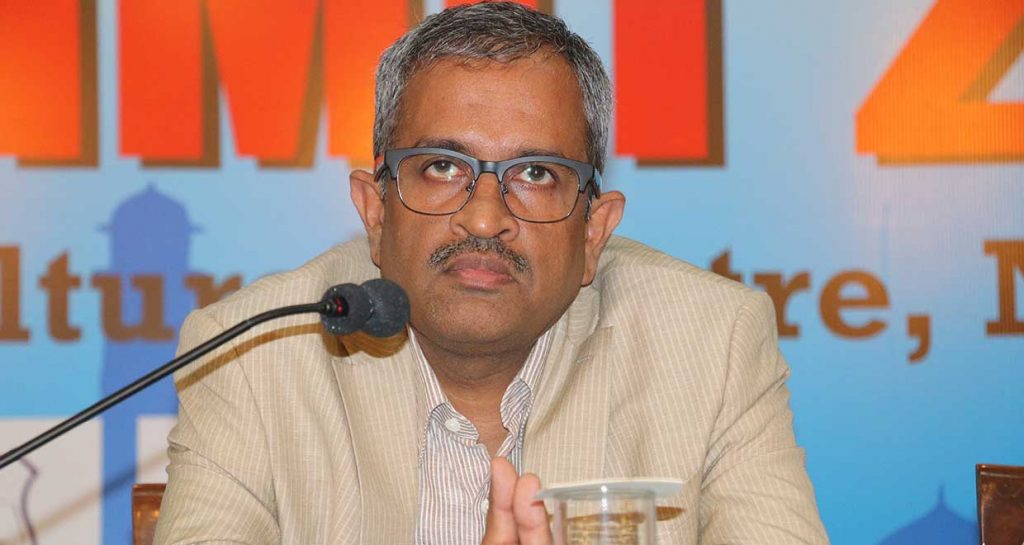
  • Ajay Verma, Founder, Juris Chambers, on litigation, human rights and International Bridges to Justice

    Ajay Verma, Founder, Juris Chambers, on litigation, human rights and International Bridges to Justice

    Ajay Verma graduated in law in the year 2000 from Agra College affiliated to Dr. B.R. Ambedkar University (Formerly. Agra University) after pursuing a bachelor’s degree in science. In his final year, he interned under Mr. Jayant Bhushan, the then Standing Counsel to the Central Government and joined his Chambers after graduation. After a few years of core litigation practice, he started his law firm Juris Chambers in 2003.

    In this interview he talks to us about:

    • His pre-law school days and experience with the National Cadet Corps (NCC)
    • Decision to pursue college against pressure to join the family business
    • His interests, activities and internships in law school
    • His learning experience under Mr. L. Nageshwara Rao, former Senior Advocate, presently a sitting judge of the Supreme Court
    • Starting up with Juris Chambers
    • His passion about human rights and involvement in the International Bridges to Justice as a Senior Fellow
    • Completing the International Investigator Course from the Institute of International Criminal Investigations and being accredited as a War Crime Investigator


    Please introduce yourself to our readers. Where were you born, brought up and completed your basic education? What was your initial career plan?

    I was born and brought up in Agra. I did my Bachelor of Science and LL.B. from a very old institution called the Agra College, which was established in 1823 by the endowments bequeathed by Pandit Gangadhar Shastri Ji, a renowned Sanskrit scholar in the service of Madhav Rao Peshwa of Gwalior. It is the oldest and biggest educational institute of northern India. During my college days I was actively involved in the National Cadet Corps (NCC) which motivated me to join the armed forces. I was an Aeromodeller during that time.


    You completed a B.Sc. (PCM) and also completed NCC Certificate (Air Wing) with Grade A. When you had a strong background in science and defence, why did you decide to take up law?

    Being a son of a jeweller, I had a lot of pressure from the family to join business. When I joined college, children of my relatives joined their respective family businesses. I was criticized by my relatives for not following this tradition. When I was applying for Air Force and Army through NCC direct entry, I realized that I must continue with my studies. Till the time I joined law school, I was not aware of its importance. However, once I started learning about law and the role of a lawyer in the society, I became passionate about legal practice. During my college days I participated in Indo-Nepal Cycle Expedition from Agra-Kathmandu-Agra for approx. 2500 KM organized for International Peace and Unity by the NCC. This expedition inspired me to continue towards pursuing my goals in life.
     

    ajay-verma-2

    How was your law school experience? Looking back, is there anything you wish you had done differently? What activities were you involved in when in law school?

    (Ajay pursued law from Dr. B.R. Ambedkar University [Formerly Agra University] and qualified in the year 2000)

    The biggest challenge we faced during law school was with the curriculum, where only theory was taught. It was really challenging for a student of science to start learning about law. The best opportunity we got during our college days was our study circle which was created by our Principal Dr. Mukhtiyar Singh and Dr. N.K. Gosh, a very competent professor of English Department. Additionally, I used to participate in various debate competitions. We also wanted to conduct moot courts but we were not equipped enough in terms of the infrastructure.


    Did you complete any internships as a law student? Please describe each of them and your reasons for taking them up.

    In the year 1999, during my final year I joined the Chambers of Mr. Jayant Bhushan, Senior Advocate as an intern, who was the Standing Counsel to the Central Government at that time. During my internship, I learnt many skills from Mr. Bhushan, who was not only a good orator but also one of the finest Senior Advocates in the Supreme Court of India.


    How have additional  diplomas been useful to you later in your career? Do you think such additional certificate courses and diplomas are essential for a law student?

    (Ajay completed a Post Graduate Diploma in Cyber Laws and a Post Graduate Diploma in International Trade Laws from the Indian Law Institute, New Delhi.)

    Yes, I feel additional certificate courses and diplomas help students to expand their knowledge from traditional law curriculum to a specialized field of law. Interestingly, while I was interning under Mr. Jayant Bhushan, I joined these courses. Initially it was tough for me to handle internship in Delhi and college in Agra at the same time.  So I decided to travel from Agra to Delhi thrice a week to attend the chamber of Mr. Jayant Bhushan besides my evening classes at Indian Law Institute.


    How was your initial experience in litigation? Did you plan to continue with litigation at that time?

    (After graduating, Ajay worked at the Chambers of Advocate Jayant Bhushan followed by Sikri & Company and thereafter at the Chambers of Senior Advocate L. Nageshwara Rao, Supreme Court.)

    While in the office of Mr. Bhushan I decided to shift to Delhi to practice law. After Mr. Bhushan’s office my experience with Sikri & Company was also very good where I learnt about service law and industrial law. This office had a very good learning environment. I planned to continue with litigation and with the urge to learn more I joined the office of Mr. L. Nageshwara Rao, Senior Advocate, Supreme Court.  Those were my golden days of learning when I was with Mr. L. Nageshwara Rao Sir who is now a sitting Judge of the Hon’ble Supreme Court of India.

     

    ajay-verma-3

    In 2003, you established Juris Chambers, a full-service law firm in Delhi. Please describe your experience of starting a law firm. What were the main challenges you faced? What important steps must one follow for setting up a law firm?

    Juris Chambers was started by me to work in litigation and it is not easy for a first generation lawyer to start up a firm independently. In spite of all the challenges I started this firm which not only focused on litigation but also advised many corporate clients on complex issues.


    What does Juris Chambers look for in potential candidates before recruiting them? What are the main management and HR practices that Juris Chambers follows?

    Before recruiting we look for the competency of the candidate after evaluating his/her cv. The applicant’s interests in various subjects of law and commitment play a major role in the evaluation. We normally hire a person on probation for six months thereafter subject to mutual understanding hire them full time.


    You have been a Senior Fellow at the International Bridges to Justice. What do your responsibilities include?

    Let me first explain what is International Bridges to Justice (IBJ). It began its journey in 2000 and was founded by Karen Tse who is now the CEO of the organization. IBJ was created to promote systematic change in the administration of criminal justice at the global level. Karen Tse has been a public defender and graduated from UCLA Law School and Harvard Divinity School. IBJ is presently headquartered at Geneva, Switzerland.  IBJ is a non-governmental, apolitical and independent organization. It is registered as non-profit organization in the USA and in Switzerland. IBJ has spread its wings through various countries such as Burundi, Cambodia, Vietnam, Rwanda, Zimbabwe, Myanmar, China, India, North America and various other countries from Europe. IBJ visualizes in helping make a world where the rights of every man, woman and child is respected in case of an arrest, where torture is eliminated as the cheapest mode of confession, where competent legal representation is provided, where everyone is aware about his/her rights and where international human rights are respected as local laws. IBJ’s approach is very simple and functions on three very basic principles: Defender Capacity Building, Criminal Justice Reform and Rights Awareness.

    As a Senior Fellow I am currently on the board of IBJ India and working towards the promotion of constitutional rights and other rights of people. I am also working towards improving the capacity of the Lawyers Representing poor persons/person in prison before various criminal courts.


    You have also completed the International Investigator Course from the Institute for International Criminal Investigations. What is the course about? What exactly does the course teach and how has it helped in your work at Juris Chambers?

    Well I have always been passionate about working for human rights so I attended this course. It teaches about War Crime Investigations. After completion I became a qualified International War Crime Investigator and by virtue of the same I have been taken on the roster of Justice Rapid Response (JRR) an organization based in Geneva. Justice Rapid Response (JRR) manages the rapid deployment of criminal justice and related professionals from a stand-by roster. These deployments can be requested by the international community to investigate, analyze and report on situations where serious human rights and international criminal violations have been reported. I love to work as volunteer for these causes whenever I get time from my actual court practice.


    You were a part of the Harvard – Kennedy School Executive Education and received a Certificate in Leadership. Please describe your experience at the academy.

    Attending this course helped me in understanding the importance of leadership and in clearing  many misconceptions about leaders. Prof. Marshall Ganz, a famous professor was our mentor who taught us about Leadership, Organizing and Action: Leading Change. In this course, participants practice leadership by organizing a leadership team to work with him or her to mobilize members of a “constituency” to work together to achieve specific outcomes in the pursuit of a shared purpose by the end of the course. Participants learn five core leadership practices: building committed relationships; using narratives to translate values into the capacity for agency; turning resources into power by strategizing; turning intentions into effective action; and structuring organization so as to develop leadership, engage constituents, and achieve goals.


    Lastly, what is your plan for the future? Would you like to give any advice for the current lot of law students?

    Besides expansion of practice of the firm I plan to be a lawyer who can work towards the improvement of the society, because whatever I am gaining is from the society and I have responsibility to contribute to its improvement. There are many areas where law students can become change makers by involving themselves in social activities. I also plan to promote the pro-bono culture in legal profession.  Law students during their college time may focus on their goals and work towards in achieving the same. They must utilize their time towards skill improvement by attending as many internships and courses as they can. In my view a true lawyer learns about law and skills throughout his/her life.
  • Alladi Venkatanarayana, retired advocate on internships, higher studies and litigation

    Alladi Venkatanarayana, retired advocate on internships, higher studies and litigation

    img-20160816-wa0002

    Advocate Alladi Venkatnarayana (retd.) hails from a small town in Andha Pradesh, known as Nellore, but settling in Chennai in later years. He is a graduate of the Madras Law College in Chennai, now known as the Dr. Ambedkar Government Law College. Having initially worked under an experienced lawyer in his early days, he would later start working on cases in his individual capacity. Today, his experience in the field of litigation remains unmatched and he is considered a specialist in matters concerning contracts.

    In this interview he talks about:

    • Litigation practice and what to expect to expect in connection to it
    • Evolving and developing one’s preliminary knowledge in the legal industry
    • Judiciary and its various achievements through the years
    • Acing the Supreme Court Advocate-on-record examination
    • How students may plan their respective careers while still in college

    HOW WOULD YOU LIKE TO INTRODUCE YOURSELF TO OUR READERS?

    Hello everyone, this is Alladi Venkatanarayan. I am a retired Senior Advocate of the Supreme Court of India. I hail from a family with a prior legal background. My grandfather, Mr. Alladi Krishnaswamy Iyer was one of the 5 draftsman of our Indian Constitution. Post retirement, I still attempt to keep to the practice of continuously reading various legal journals and books so as to remain updated.


    WHAT ARE THE SKILLS REQUIRED TO BECOME A LITIGATING LAWYER ACCORDING TO YOU?

    Like most people would say, I would say the same, you need to have great communication and argumentative skills. However, I would emphasise also to students to concentrate on the various legal provisions that they should already know or are now learning thoroughly, such as provisions of the Evidence Act, Civil Procedure Code, Criminal Procedure Code and other such important Acts. Having a thorough hold over these subjects gives you the edge over other lawyers. It may even help you in getting an edge over an opposite counsel who has better communication skills than you.


    DO ADDITIONAL QUALIFICATIONS LIKE LLM, MBA, CA, CS, DIPLOMAS HELP IN GETTING THE JOB OR GETTING PROMOTED?

    I wouldn’t say no, but then, in all my years of experience, I have observed that additional qualifications only give you a higher platform to launch yourself on, but from there how much further you would go depends entirely on the the manner in which you make a mark in all the works that you undertake. However, if a person has interest in pursuing a particular subject area within the legal discourse then there is no harm; higher education always adds to your CV which in turn helps you get positioned in a more established practice.


    PLEASE ADVISE STUDENTS PLANNING A CAREER IN LITIGATION AS TO SOME OF THE DO’S AND DON’TS THAT WOULD BE REQUIRED TO BE OBSERVED?

    As far as my experience goes, I can tell you that litigation isn’t going to be as easy as a corporate job. You will face a lot of bumps in the first stages of your career, but later on you would also be able to realise that all those bumps had been helping you to make yourself  better at the various stages of the litigation career i.e. pleading, drafting, etc. It doesn’t matter, all you need to do is just keep learning and keep improving your knowledge day by day and you will definitely establish yourself quite easily. Also, as I mentioned earlier, your basics should be quite strong with respect to the relevant Acts, Sections and Procedures.


    WHY SHOULD ONE CHOOSE LAW AS A CAREER OPTION?

    Personally, I chose law because I couldn’t get into any other stream (laughs). There was certainly always however a kind of pull towards that field right from my very early days in childhood. I always was intrigued by the various ongoing socio-political issues in those days and felt that I would excel at legal studies. For a person to choose law, there can be end number of reasons like good money, reputation, but the most important factor is your personal interest. If you are interested in law, then you should choose law as a career. You will never have the fear of job safety. Becoming a lawyer also gives you the great satisfaction of being able to  help people in dealing with their issues . Also, the gratitude that they show you is invaluable.


    HOW SHOULD ONE WORK IN ORDER TO CRACK THE S.C. ADVOCATE ON RECORD EXAMINATION?

    I would suggest to the people who are taking the test to first practice for some time in lower courts, so, while you are engaged in advocacy work, you learn a lot of things that you would eventually be tested upon. So, that helps a lot. Like my answer to many other previous questions, your basics should be strong with regard to the Civil procedure code, Evidence Act, etc.


    HOW WOULD YOU ADVISE A LAW STUDENT IF ONE HAS TO START PREPARING FOR A CAREER WHILE IN COLLEGE?

    Most students start freaking out after a year or so into their college life when they realise that they have no clarity with regards to what they are going to do after they complete their under-graduation. I would suggest them to just wait until they get interested in a particular subject, to wait until they complete classes of all major subjects of laws and then pursue the one that made  them think the most, the one that they felt intrigued by the most.


     img-20160822-wa0000 WITH RESPECT TO THE LAW SCHOOLS AT THE PRESENT TIME, DO YOU THINK THAT THEY ARE PREPARING THE STUDENTS ENOUGH FOR THE ACTUAL REAL LIFE PRACTICE IN COURTS?

    I think that they are. As far as I know , all the top league law schools are imparting the students with enough basic practical knowledge. The rest can always be learnt by experience in internships and working after the imparting of the degree in courts.


    SINCE INTERNSHIPS PLAY A VITAL ROLE IN SHAPING A STUDENT’S CAREER, WHICH PLACES WOULD YOU SAY ONE SHOULD IDEALLY INTERN IN ORDER THAT THEY MAY ADD WEIGHT TO THEIR CV?

    I think it depends a lot on which field of law they are interested in. As for students who wish to go into litigation, you must first start from the district court and then gradually move on to high court. This is because, at district court level , the various lawyers that you work under will have the time to explain those basics which you otherwise would not be aware of. Court room behaviour, the way you plead, can all be better learnt at district court.


    A LOT OF STUDENTS PREFER A CORPORATE JOB OVER LITIGATION; WHILE INTEREST MAY BE ONE OF THEIR REASONS, THE FEAR OF UNCERTAINTY IN ANY CAREER OTHERWISE IS ALSO A MAJOR ONE. WHAT DO YOU HAVE TO SAY ABOUT THIS?

    That is quite true, but this was the scenario when I had completed my graduation.  This is not scenario now; things have changed. There is no such kind of uncertainty any more really. You can always excel easily here as long as your basics are strong. I keep repeating this because, now-a –days most students have no good grip over these aspects and get affected badly due to this.


    SO, HOW WAS THE EXPERIENCE WORKING IN A COURT FOR THE FIRST TIME? DID YOU GET THE FEELING OF BEING THE LONE ONE DROWNING IN THE SEA?

    I won’t say I felt as if I was lost in the sea because I had already been working under a lawyer before. So, that helped me in knowing the procedure of the courts  beforehand.  However, I was also very eager to take my chances with fate. The lawyer under whom I worked had after a long period entrusted me with a case, so I was rearing to have a go and prove my worth.


    ANY ACHIEVEMENTS THAT YOU FEEL OF THE JUDICIARY ARE UNDERRATED?

    Not many , I think many judgements of the judiciary are quite well appreciated in the legal field but only in the cases which have garnered media attention would the people really follow up and read the judgments in entirety. So, mostly it is the legal fraternity alone that remains alerted to all the legal developments, significant apparently or otherwise, and I don’t remember any judgement that could be termed as underrated.


    YOUR VIEWS ON THE LEGAL EDUCATION BEING IMPARTED AT SCHOOL LEVEL IN OUR COUNTRY?

    At urban level, I think it is being imparted quite properly and sufficiently. At rural level , it is not being done properly. At the rural levels, even basic education is not being imparted properly, so legal education is a far off thing .


    WHAT WOULD BE YOUR PARTING MESSAGE/ADVICE TO OUR READERS WHO ARE ALL MOSTLY BUDDING LAWYERS?

    To all the readers, I hope and pray that you become the best at what you do and achieve great heights in your respective legal careers. Also, never get disheartened by failures in the beginning, keep going no matter what. Always stay aware of latest legal developments at national level as well as at international level. I would also urge you to keep the reputation of our profession at great heights.

  • Ajar Rab, Partner, Rab & Rab Associates, on Dual degree LL.M. and MBA from Germany, NLSIU graduate, on setting up Uttarakhand’s first law firm

    Ajar Rab, Partner, Rab & Rab Associates, on Dual degree LL.M. and MBA from Germany, NLSIU graduate, on setting up Uttarakhand’s first law firm

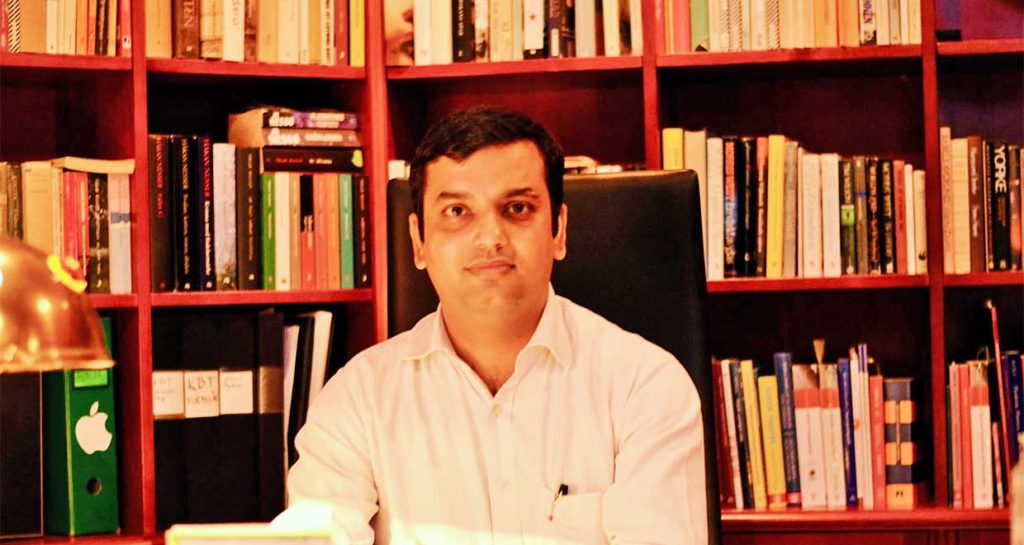
    Ajar Rab graduated from National Law School Of India University, Bangalore(2006-2011). At present, he is a partner at Rab & Rab Associates LLP, Dehradun and his work ranges from civil litigation, arbitration and corporate transactions.

    He is also an international policy consultant at Lexidale and a Non-Resident Expert at Vidhi where his work includes review of existing laws, policies and regulations, drafting of policy documents, amendments, rules and regulations and research on comparative policy.

    In this interview he talks to us about:

    • His experience at NLS, Bangalore.
    • His decision to pursue with a dual degree- LL.M. and MBA from Germany.
    • Skills one must require to become a legal consultant.
    • His views on how Indian Universities may improve the education regime.

    How would you like to introduce yourself? Tell us a bit about your childhood and pre-college life.

    I am a lawyer who grew up in the small hill station of Mussoorie where I studied at St. George’s College. My school lay great emphasis on extra-curricular activities and I was an active debater and loved playing sports. I was very lucky to find good friends with whom I have the fondest memories.

    What motivated you to choose law as a career?

    My parents are also lawyers. My father is a designated senior advocate at the High Court and my mother has spent over 37 years at the trail courts. I guessed I absorbed things like a sponge, never really seeing the big picture directing my interest in law. Though my parents never told me to become a lawyer, somehow their experiences and narrations about court cases and clients generated a keen interest in law.

    Please share your experience at National Law School of India University, Bangalore, especially as the first student to be elected as President of the Student Bar Association in absentia.

    I feel very lucky and privileged to have had a chance to study at NLS Bangalore. The place changed me for the better and I feel I am an entirely different person, pre and post college. One of my seniors, Nizam Pasha, who was in his final year when I joined, told me “Law School is a land of opportunity” and I don’t think I have better words to describe the place.

    My election to the SBA, while I was on exchange, was sheer benevolence of my batch and my close friends. I am truly grateful to all of them for believing and in me and convincing the others who did not at the time. My term at the SBA was full of various highs and lows. I have no hesitation to admit that it changed my world view forever. I learnt a lot about strategy, politics, negotiation and public perception – something we have to deal with daily as lawyers.

    Why did you decide to pursue higher studies? What was your motivation?

    Working for the general corporate team at Amarchand, I developed an interest in corporate law and transactions. During my time at law school, I always believed I wanted to do only litigation but after working for year, I realized I did not know enough about transactional lawyering so I wanted to pursue higher studies to educate myself.

    Why did you pursue with a dual degree- LL.M. and MBA from Germany? Why Germany and not some IVY League University?

    I chose the Master of Law and Business program at Bucerius Law School/WHU Otto-Beisheim School of Management, which to my mind, was a unique blend of law and business management, geared towards international commercial transactions. The faculty profile included some of the biggest names in academics and industry and the course outlines were structured as practical applications of concepts rather than mere theory. I guess that seemed like the right fit to learn more about the ins and outs of transactions, both from a legal as well as a commercial perspective.

    Do you think that the Indian Law Universities need a change to match up to the standards of foreign Universities? What can be done in order to make NLUs more conducive for learning? How do you think Indian Universities may improve the education regime?

    Definitely, the gap between Indian Law Universities and foreign universities is quite big. I feel our traditional style of classroom instruction is out dated with the dynamic application of concepts we learn in class. Exercise oriented class room discussions are far more fruitful for understanding the theory and applying them. At my masters, our professors gave us case studies which are used in IVY league institutions and we were tested on our analysis and conclusions, rather than simply answering theoretical questions in an examination. I think our universities can adopt a similar approach, but my caveat is that our system of school education should also change to accommodate that kind of learning.

    What are the skills one must acquire to become a legal consultant?

    I think every lawyer is a legal consultant to some extent. The distinction here is more on lawyers who handle litigation in Courts and those that are involved at policy levels or at the level of legal strategy. I don’t think the skills required to become a legal consultant are very different or unique, just that as a consultant, especially a policy consultant, needs to have the broader picture in mind with respect to the ramifications of their advice in various areas.

    Share your work experience as the first law firm of Uttarakhand.

    I consider myself lucky that our firm has had very versatile experience, in terms of the nature of work and the kind of clients. It is not so say that we did not struggle at the beginning but my seniors and friends have been very kind to refer various matters and as a result though it has been only 5 years since my brother setup the law firm, we have represented some of the biggest names in the country such as the Aditya Birla Group, Birla Tyres, Hyatt group of hotels, Rakesh Roshan, Viom Networks etc., for litigation as well as corporate transactions.I guess the cliché holds true “I get by with a little help from my friends”.

    What were the reasons behind leaving Amarchand&Mangaldas and moving to Dehradun?

    I learnt a lot at Amarchand but left to pursue my masters. Moving back to Dehradun is a question I am regularly asked about and have been defending since the time I left Amarchand. My brother had already setup a law firm,Uttarakhand was a promising State and there was scope of transactions here. With my experience, I felt moving back would add to our areas of practice and we will be able to service clients within Uttarakhand and outside if we provide quality legal advice.

    What kind of work you are entrusted with as a non-resident expert?

    My stint with Vidhi has been brief but I was part of a team which was drafting amendments to the Food Safety Act and its Rules.

    Many law students aspire to secure a job. What do you think most are doing wrong, from your observation? Please give our readers some tips to nail an interview.

    I think sometimes we tend to over sell ourselves and also forget that the person who is interviewing us has also been on the other side of the table. There is no substitute for sincerity and honesty in an interview. One other thing is that students tend to estimate their value by the size of the pay package being offered. I don’t think that is necessarily true. A pay package is a management decision considering various other aspects and costs than just someone’s qualifications and value. Moreover, freshers applying for a job tend to forget that even though they did really well in law school, practicing law in real life is a different ball game altogether – an experience they definitely lack. The aim early-on should to be take a job which allows maximum exposure and experience, rather than a fat pay cheque.

    Lastly, what would be your message to our readers who are mainly young lawyers and law students?

    Law is a field which requires immense patience and experience. We all aspire to be like Mr. Nariman, Mr. Singhvi or Mr. Rohtagi, but we forget how long they have been in practice. They have a name and charge a fee after decades of being in practice. Students today tend to want a similar lifestyle straight out of law school, which leads to frustration. If the aim is to grow your knowledge of law day-by-day, be better lawyers and work towards your clients’ best interests with utmost dedication, I think we all may land up being where the big names are, but only in due time.

  • Andrea Chavarria, Founding Attorney at The Chavarria Law Firm, Dallas, on practicing in international immigration law

    Andrea Chavarria, Founding Attorney at The Chavarria Law Firm, Dallas, on practicing in international immigration law

    Andrea Chavarria is an American lawyer and business owner who works on immigration issues at the Chavvaria Law Firm in the Dallas/Fort Worth Area. Andrea after completing her Bachelors on Journalism in 2004 from University of Texas, went ahead to pursue a year long masters program in International Law and Diplomacy from Schiller International University. Thereafter Andrea joined the Juris Doctor programme at Thomas M. Cooley Law School and qualified in law in 2009.

    Andrea pursued a few more short term courses at University of Geneva, the Hague Academy of International Law and at the School of Advanced Study, University of London.

    In this interview, she speaks to us about:

    • What motivated her to pursue law and take up immigration issues
    • How her experiences at the Hague, the University of London and the University of Geneva impacted her
    • Her pro bono work with CARA
    • Her views on the immigration issues and refugee laws, as well as her expectations about the evolution of policy in those areas


    How would you like to introduce yourself to our readers?

    I was born in Mexico and raised in the United States. I am an attorney and business owner in Texas. I love traveling, reading, listening to live music, and tacos.


    Growing up in America, what motivated you to take up and pursue a career in law?

    As a kid, I would watch my mother help out people in our community. They were usually people who had just moved to the United States or who didn’t speak English. I knew that I wanted to help people as well. It wasn’t until I got to college that I realized that I wanted to become a lawyer. As an immigration attorney, I have the opportunity to help people in a way that positively changes their lives.


    What prompted the switch from journalism to law? How do you think the two professions differ with respect to the impact you can make towards social justice and change?

    I originally wanted to become a journalist so I could write about politics, laws, and human rights issues. I was taking a lot of political science classes in college and that’s when I realized that I wanted to work directly with people and the law rather than write about it.

    The two professions differ but both professions are necessary in order to have an impact on social justice and change. Immigration attorneys can have a direct impact on someone’s life, which in some cases can be a matter of life or death. For example, I represented an individual who, if returned to his home country, would be persecuted by his home country because of his religious beliefs. We won the case and the individual was able to remain in the United States where he can openly practice his religion.

    Journalists are important. They can have a broader impact because they are able to present an issue to a wider audience. There was a particular judge in an immigration court who was known to be ruthless towards children in removal proceedings. Complaints were filed by several attorneys, but nothing changed until a newspaper published an article about the behavior of the judge. Soon after, all of the children cases were removed from the judge’s docket. That’s just one example of how journalism can have an impact on social justice and change.


    Consequently, how did your experience as a legal assistant/intern change your views on the ground realities of the practise?

    It wasn’t until I worked as a legal assistant and as an intern that I realized how much work goes into one case and how important it is to have a good team working together. Attorneys generally get the credit, but assistants, paralegals, interns, and other staff members deserve credit as well. It really is about teamwork.


    Your extensive work as a volunteer covers refugees, family detention, mentoring, etc. What motivated you to take up these causes?

    Through my practice, I realized that there was a great need to help certain individuals who were fleeing their countries, but who did not necessarily have the funds to hire an attorney. In the United States, individuals who are in removal proceedings are not afforded an attorney. Even children as young as three years old are not provided an attorney. These individuals are often seeking asylum. Having an attorney can often make a difference in someone’s case. Everyone deserves to have the right to put forth the best case possible. That’s one of the reasons why I am an advocate for volunteering and working with refugees and fighting against family detention centers.

    I also do volunteer work through the Dallas Bar Association and Dallas Hispanic Bar Association. I enjoy volunteering with these organizations because I get to help my local community. It’s important to give back to your community.


    andrea-chavarria-2

    To what extent did your education at The Hague Academy, the University of Geneva, and the university of London augment your perspective on the immigration laws and other related issues within the U.S.?

    My time at those institutions has taught me how intertwined the U.S. immigration laws are with international laws and human rights principles. When working on an immigration case, it’s important to not only look at our current U.S. immigration laws, but to also look at our international principles and obligations. In the immigration field, we have seen situations where the United States failed to adhere to its international obligations. We’ve recently seen this happen with the detainment of Central American women and children. The institutions mentioned above have helped me gain a better understanding of our international laws, obligations, and the complexities of enforcing these laws and obligations.


    What would you like to tell the readers about your pro bono work with CARA?

    I previously did some volunteer work with the CARA Family Detention Pro Bono Project. CARA was created due to the Immigration and Custom Enforcement’s (ICE) significant expansion of its family detention centers in Dilley, Texas and Karnes City, Texas. Women and children, who are often seeking asylum, are being detained in facilities that are inhumane and inconsistent with a fair and just legal process.

    andrea-chavarria-1I spent some time at the detention center in Dilley, Texas where I assisted in representing women in their bond hearings, preparing them for their credible fear interviews, and informing them of their legal rights. All of the women I spoke to fled their home countries because they feared for their lives or the lives of their children. Some of the women had been in the detention center for months because they could not afford to pay the bond the immigration judge issued. Some of these bonds were as high as $15,000. Many of the women felt hopeless. A majority of them were traumatized. Others were stressed and worried about their children who were also in the detention center. Some children weren’t receiving adequate medical care. Other children weren’t eating properly and losing weight. It was shocking and heartbreaking to see women and children, who had fled their countries due to fear, be treated in such an implacable way. Unfortunately, these family detention centers still exist. Women and children continue to be detained in this centers. If it weren’t for CARA and the help of volunteers, many of these women and children would not know their legal rights. To learn more about CARA visit their website: http://caraprobono.org.


    What drove you to establish your own firm in 2010?

    It was a culmination of things. I was working for a particular law firm and realized that it wasn’t the right fit for me. I wasn’t sure what to do next, but I knew that I still wanted to work in the immigration field. I relocated to Dallas and soon after I realized that there were many people who were in need of immigration assistance. Both of my parents are business owners so I grew up with a business owner mentality. It was with their help and support that I made my decision to start my own practice.


    Given the socio-political atmosphere within the country owing to the upcoming elections, how do you think immigration and refugee law and policy will evolve in the near future?

    I would like to think that in the future we will have sound immigration laws and policies, but I don’t foresee it happening in the near future. In the last couple of years, I have seen how fear and xenophobia have affected refugees and immigrant communities. The state of Texas tried to block Syrian refugees from entering the state, which the federal government said it can’t do. That’s just one issue, but there are so many other issues that we have to deal with in the immigration field.

    Overall, our immigration laws are complex. Advocates have been trying to push for some type of immigration reform for more than ten years. Congress has repeatedly failed to pass any type of immigration reform. The Obama Administration has deported more individuals than any other president. Recently, the United States Supreme Court issued a 4-4 split decision in U.S. v. Texas, which was a lower-court challenge to the expanded Deferred Action for Childhood Arrivals (DACA) and Deferred Action for Parents of Americans and Lawful Permanent Residents (DAPA). The deadlock means DAPA and the expansion of DACA will not move forward.

    There are numerous issues that need to be addressed within immigration law and the outcome of our next presidential election could gravely affect how our laws and policies evolve. Depending on who wins, we may see harsher policies and more deportations or we may see a push for comprehensive immigration reform. At this point, I’m unsure of what our future immigration laws and policies will look like.


    As a lawyer, do you believe that it is a responsibility of those well versed with the legal statutes and policies to aid those without the resources to access this due procedure?

    Yes, I strongly believe that individuals, such as attorneys, who understand the law have a responsibility to provide assistance to those without resources. One of the best ways to assist is by providing pro bono services through a non-profit organization or local bar association.


    Summing up, what do you believe are the main obstacles to progressive immigration laws?

    One of the main obstacles is Congress and its inability to pass a comprehensive immigration reform bill. Congress has been deadlocked over the issue for the last few years. On November 20, 2014, President Obama announced his executive action plan, which would grant deferred action to certain individuals. Some members of Congress believed that his actions were beyond the scope of his authority. His plan to bypass Congress was met with some controversy and once again, Congress killed any chance of passing a sensible immigration reform bill. Will Congress remain at a standstill? Only time will tell.

    Another major obstacle is the misconception of immigration laws. There’s the rumor that giving birth to a child in the United States grants automatic citizenship to the parents. It does not. I’ve been asked why undocumented individuals don’t just get in line to obtain legal status. There is no one line. Some individuals may not have a qualifying relative to petition for them. In other cases, it can take more than 20 years to obtain legal status through a family member. The process isn’t as quick and easy as some might think. Another common myth is that most immigrants are in the United States unlawfully. While there are some undocumented immigrants, there are also various other immigrants who are legally residing in the United States or who entered the United States lawfully. All these types of misinformation are harmful because it undermines public support for immigration reform.


    How do organizations such as AILA help change the status quo?

    Change comes through advocacy. Organizations, such as the American Immigration Lawyers Association (AILA), play an important role in advocating for reasonable changes in immigration law. In April, I traveled to Washington, D.C. to participate in AILA’s National Day of Action. Several AILA members and I visited Congressional offices to explain why comprehensive immigration reform is necessary. This type of advocacy is important because it’s an opportunity to highlight the problems plaguing our current laws. It’s also a chance to give members of Congress and their staff examples of how our existing laws have affected immigrants, their family members, and their communities. Since it’s the role of Congress to pass legislation, it’s crucial to inform its members why certain laws aren’t working.


    Finally, do you have any other advice for our readers, most of whom are college students?

    You will make mistakes. We all make them. However, learn from your mistakes and always own up to your mistakes.


  • Srinath Sridevan, Founding Partner, HSB Partners, on leaving Magic Circle and starting up

    Srinath Sridevan, Founding Partner, HSB Partners, on leaving Magic Circle and starting up

    Srinath Sridevan is the founding Partner of HSB Partners, Advocates & Solicitors, Chennai. Srinath graduated with a Gold Medal in Law from Madras University in 1996 and then went on to pursue his masters from New York University in 1997. After graduation he got an offer from Allen and Overy, London and started working there. Later he moved back to India & started out with a new Law office, named – ‘HSB Partners’ at Chennai in the year 2004. He possesses an experience of over twenty years in the legal Industry with specialization in different aspects such as mining law, arbitration, corporate law etc.

    In this interview he talks to us about:

    • Choosing law as a profession and his experience at New York University.
    • His formative years as a lawyer and his time at Allen and Overy, London.
    • Experience of establishing his own firm with his friends.
    • Criteria for selection of associates while recruiting.
    • HSB Partners and its rapid expansion.


    What incidents, influences or interests prompted you to think of law as your career and what other options would you have considered for your career?

    srinath-sridevan-1I am one of the fortunate people who came from a family of lawyers and therefore Law was something apparent to me since I was in school. I also had an interest in science and astronomy especially, and I suppose if I had not gone into law I would have gone into astronomy. I had studied BSc(Physics) before I got acceptance from Madras Law College.


    Tell us about your experience in Dr. Ambedkar Law University.

    See, that time it was Madras University it was not Dr. Ambedkar University. The college itself is a century old institution and therefore, the building is spectacular, the library has books which we only dream of. For example I have seen with my own eyes a two hundred year old copy of the Hedaya by Bailee, which was one of the most classical texts in Muslim law. But unfortunately the university suffered due to government laps and negligence. Therefore, classes were conducted in a haphazard fashion. In such a situation you are forced to learn for yourself and that’s what I did.


    Could you tell us about your experience at New York University? What all were the differences that you found the Indian form of legal education and the other form of legal education?

    Everything was different. I don’t even know where to start In the Indian form of teaching specifically at Madras Law College, the professor would come in, cover their portions and leave at the end of the hour. Some professors took a little bit more interest and tried to make the class more interesting, so it was only the frontbenchers who really gained anything, because we used to study out of our own interest, and also used to take notes in class. But at New York University, the scenario was completely different. The entire class was completely participative. The professor started a discussion and he guided the discussion. So, at the end of the hour the entire class would participate in the discussion. So as a result the entire portions were covered. And apart from that there would be seminars. So, in a semester you had one hour of discussion per week with a professor, where you would jointly research on some of the subjects. The amount of learning you got in these seminars was unbelievable. Of course, the quality of the professors at New York University was also very high. Some of the professors I learned from are known the world over. So, you really can’t compare the two. The experience at NYU was quite amazing.


    You received a scholarship for applying to New York University. What factors should be kept in mind while applying for LL.M in different foreign universities?

    First you have to look at what you actually want out of your LL.M. Students go overseas for masters degree for different reasons. Some of them are extremely focused and they see a masters degree as a stepping-stone for a further career progression. Some students do a masters degree simply because their friends are doing it. Some people do it because they want a year before the reality of life hits them. So, it depends on what you want out of it. Let’s take the first category, the people who are extremely focused. They need to think about what they want to do after their Masters. If one thinks of working at the UN or some international body, then you need to apply to those universities like George Washington, NYU, and Columbia etc., which have very strong relationships with international bodies. And if you do your Masters there, it is easier to get positions and fellowships from international bodies. So, that’s one. Similarly, if you are looking to work at a law firm in the US, then you should look at the universities in those states of the US, where you are permitted to take the Bar exam with just a masters degree. So, for example you choose a State like New York, or California, where you actually can consider taking a job after taking the Bar Exam in the US. In the UK, you have to look at the universities that give you best access to QLTT.

    The second and third categories of people are those who are going for an LL.M because they can, or because they want to discover themselves, or something like that. They need to choose a city that enables them to enjoy life there to the fullest. If funding is an issue then you need to choose the universities that are really rich and which are able to give large R.A.s and T.A.s or fellowships.


    srinath-sridevan-5

    You have interned at Deacons, a foreign law firm and you have been an associate at Allen and Overy. How your experience there was and what differences did you find between foreign law firms and Indian law firms?

    I was very young when I interned in Deacons, so everything was new to me when I was there. So, on a couple of occasions, when I got to work directly with the partner that was like a high for me that lasted for the entire day. Therefore, since every experience was new, the internship itself was an eye-opener for me. What I got out of it I cannot say but it was a life changing experience for me. You learn how large these firms are. I was three years into the profession when I got an opportunity to work at Allen and Overy. So, I was more settled and I had clearer legal views. At Allen and Overy what interested me was my access to global transactions and global working practices. So, I learnt a lot there as well.

    Coming to the Indian law firms, in the last five years, they have got most of the good practices that these foreign law firms have. So, you have well established drafting and conveyancing techniques, clearer career paths for the Associates etc.


    The Government of India is planning to allow foreign law firms to enter into India. Do you think the Indian law firms will be confronting to fight with the tough competition foreign law firms entering into India?

    You, have to understand that you are asking this question to a law firm based in Chennai. I do not believe that law firms based outside of Delhi and Mumbai will be affected at all, because whoever is in Mumbai or Delhi will always need local legal support from a good law firm in Hyderabad, Bangalore or Madras. So I personally do not think that a law firm in Chennai will be affected at all.

    Further, even as per what I have read, foreign law firms will be permitted to enter only for the purpose of advising on foreign laws aspects of transactions.


    It is a general assumption that the fresher graduates have to struggle a lot during the initial years. What was your experience?

    Look, you use the word struggle as something bad. From my first year, I spent all my free time reading Bare Acts and judgments whether I understood them or not. The first few months, especially the first three months, were quite boring and it was really difficult to sustain the interest. But at some point of time the interest kicked in. Once the interest comes in, it’s a matter of pleasure to keep learning. Even now when I am bored, I pick up a law book and read. It’s not a “struggle”. I find it very pleasurable.


    srinath-sridevan-4

    What made you to venturing into a law firm than setting up an independent practice?

    All the three partners at HSB are all the same age. We all hail from families of lawyers. After we finished our bachelor’s degrees, we all went to the US for our Masters’ degrees. I went to NYU, and my partners went to Northwestern. After we finished our respective degrees, my two partners worked in Chicago and New York respectively, and I went to work in London.

    Over the next few years we kept in touch through e-mail. We were always talking about returning to the motherland and being with our parents.

    By 2002, one of my partners, Harishankar, and I started a firm and we commenced working together.

    By 2004, we spoke to Bhaskar and informally we joined together.

    And on first of April, 2005 we formally united as HSB partners.


    How was your journey during the initial days of HSB? Why do you think that HSB has won the best law firms award in the year 2012 in corporate and commercial laws?

    These awards do not matter much. You can get one every year from someone or the other. I personally don’t give much importance to these awards.

    The initial years were very exciting because it’s great to be working with your friends. There was a lot of sharing of knowledge. You know every day me Hari, Bhaskar and I used to discuss our respective cases. So, that was extremely exciting.

    We also got to learn transition from being the sole proprietors of our family firms to actually being one single firm like HSB.


    While hiring lawyers, what kind of skills you look for in their CV?

    srinath-sridevan-3Speaking for myself, I look for three things.

    The first being the university where the candidate has studied; whether it is a recognized one or not. I look for academic scores.

    Then I look for the places that this person has worked or interned at and the kind of work the candidate has done.

    Most importantly I look at the extracurricular and co-curricular activities because that is the real test of character and if I see something interesting there then I usually invite the person for an interview.


    What do you expect from a first year associate or an intern?

    I usually take interns from their second year. I ask them minor questions to see if the candidate shows interest. If a candidate shows initiative, then I give more responsibility.

    So from my perspective, I give as much work to a person as that person wants. Each person depending on how much interest they show can grow.


    What do you find admirable in present generation of lawyers compared to that of your generation?

    They are lot more prepared, prepared in the sense, bold and willing to state their opinions. For example: when I was in my fourth year of law school I don’t think I could have expressed my views as boldly and candidly as many of the interns do nowadays.


    What is your thought about the traditional ideas of specialization in single core areas of law as opposed to the contemporary broader approach with wider field with multiple specialties?

    I am biased because I myself have several areas of interest. So obviously I will say it’s better to have a broader field of knowledge. I don’t think you can be an effective lawyer if you know only one very narrow vertical.

    You can be an effective lawyer only if you know the general principles of all laws and you have a very wide-ranging interest in other fields of life as well.


    Do ever want to be a senior counsel or judge?

    Senior counsel: Yes, that is something I would like. When, I don’t know. The rules in Madras High court for designation of lawyers by senior counsel have now been changed. Now, it’s only by invitation. So, that may arise if and when am invited.

    Judge, probably not.


    What kind of internship would you recommend for a law student to opt for, to start building versatility and a wide range of law that you are well versed with today?

    I would recommend a litigation internship with lawyers or a firm that has a very substantial practice, that too when a court is in session. This is what will expose an intern to the widest possible range of laws in a shortest possible time. Unfortunately, most of the applications for internship are for the months of May and December when the court is not in session. So, those interns don’t get very much out of their internships. So to get the broadest ranging experience, I would recommend interning under a very busy lawyer or a very busy firm when the court is in session.


    What would be your advice to the budding lawyers?

    Nothing but Enjoy yourself.


  • Ramanuj Gopalan, General Counsel, SAIF Partners on being one of the youngest GC in India and work experience

    Ramanuj Gopalan, General Counsel, SAIF Partners on being one of the youngest GC in India and work experience

    Ramanuj Gopalan graduated in the year 2007 from the West Bengal National University of Juridical Sciences. He got a Pre-Placement offer from Amarchand & Mangaldas & Suresh A Shroff & Co, Delhi, and was part of the M&A and Corporate Advisory Teams. He was made Principal Associate in 2013, after working there for six years. During his career, he has also published articles relating to FDI in major publications. Currently, he is one of the youngest General Counsels in India, at SAIF Partners. SAIF Partners is a venture and growth capital fund invested in helping Asia’s exceptional companies grow from concept to IPO.

    In this interview he discusses:

    • His time at AMSS and his perception of the field
    • The reasons behind his success at AMSS
    • His shift from AMSS to SAIF, India
    • The scope and nature of his responsibilities as General Counsel


    How would you like to introduce yourself to our readers?

    I am a commercial lawyer presently working as general counsel with SAIF in India. In terms of background, I was born and brought up in Kolkata. I did my schooling in Don Bosco School, Park Circus and did my law from WBNUJS, Kolkata. I received a pre-placement offer from Amarchand, Delhi and joined its M&A and General Corporate Advisory team in 2007, worked there for 8 years and then joined my current position.


    What motivated you to pursue this field? Are there any lawyers in your family?

    I am a completely first generation lawyer. No one in my family is a lawyer.

    My introduction to law was mainly from American novels, movies and serials which both my sister and I used to like. Lawyers such as Atticus Finch and the ones in Grisham’s novels fascinated me. I was a science student in school, and while engineering and medicine were popular choices in my region, I was not too interested to pursue these as a career. In fact I had taken the form for JEE but did not give the exam. The plan to study law however, was not fixed till my last year of school. This was when WBNUJS had just opened in Kolkata under Dr. Madhava Menon. While I was not very sure of my chances as I had not prepared very hard or taken any coaching for the exams, I was very happy when I got through as it gave me an opportunity to stay in the city and be with my family.


    Tell us about your experience at NUJS, Kolkata.

    College and staying in a hostel were life changing experiences for me. There was good exposure and guidance in core academic and co-curricular areas such as publications, mooting etc. The experience of staying independently away from home and interacting with people from diverse backgrounds and cultures in college and hostel was also invaluable.

    We had a very vibrant student body at least in our first few years when Dr. Menon was there as Vice Chancellor and Professor Shiju as warden. In the last couple of years, because of the pressure of placement and recruitments this tapered off a bit.

    Since I was from Kolkata, I used to stay in the hostel and go home during weekends or holidays, so in that sense I had the best of both worlds. Of course it was easier for me compared to students from other cities who may have found it difficult initially away from home. Our college is located very centrally and it is very easy to go around the city. Apart from academics I was part of the Recruitment and Placement Committees and also the Constitutional Law Society.


    What advice do you have for law students on maintaining a good academic profile?

    I find students today to be a lot more focussed and clear about their career goals so not sure I am the best person to be giving advice on this! In terms of academics I was never the type to study a lot. However, what I found helpful was to listen attentively in class and take notes as that helped in absorbing what the teachers said and was also helpful to study before the exams.


    You have published many articles in the field of business laws. What advice do you have to give students on how to go about writing publishable articles?

    ramanuj-gopalan-2There are several publications today that are looking for good articles on topical issues. For business related articles the key is the topic selection. It must be relevant and preferably bring some new perspective on the issue. The other important area is that it has to be comprehensive but still concise. The difference with pure academic articles is that the article must be presented in a reader friendly format and not become too technical or legalistic as your audience would lose interest.


    How did you decide on this particular field of expertise? Did your internships help in shaping your current career trajectory?

    Yes, to an extent. The other big factor was career certainty. In my view at least till a certain level a law firm (and a corporate job) is certainly more merit based and democratic than private practise. While private practise also interests me, I feel it is very difficult to find your feet in litigation practise initially and there is very less financial security. So for someone from a middle class background and without any family connections in law like me, a law firm or corporate job was ideal. Corporate law also has its own nuances and constantly challenges you so it is not difficult to remain motivated.


    Tell us about your time at AMSS, Delhi. Did your perception of the industry change in the eight years you spent with them?

    I had a very good time in Amarchand and worked with Mr. Shardul Shroff and some great team members during my time there. I was fortunate to have worked on a lot of interesting and headline deals which gave me great exposure to different areas of law and sectors. One advantage with working in a firm like Amarchand is that you work on larger and more complex deals involving issues from different areas of law, including other practise groups such as IP, Competition, Tax etc. The corporate team, by project managing the deal, has a 360 degree view of the issues involved. Another big advantage is of course the network effect in working with leading lawyers in the country. Systems, infrastructure, training and knowledge management within the firm was much organised. It helps in building a strong base.

    On the second question, yes of course. A large part of what we do develops with practise and experience. When we are new graduates, while there is enthusiasm and energy there still exists a big learning gap which only gets overcome through experience. With increasing liberalisation of the economy the legal field as well as perception of lawyers has also changed for the better over the years.


    What are the secrets to your outstanding performance while you were at AMSS, Delhi? What must one keep in mind before joining such an organisation, especially immediately after graduating?

    Well I guess the first question is subjective but I performed to the best of my abilities and the firm was kind enough to recognise and appreciate my efforts. I feel what is critical in practising commercial law is not just spotting issues but to also find solutions to those issues. One must be keenly aware of what the business requirements are. In general terms, like in any field, there is a lot of hard work and commitment required. Since law firms are in the service industry there must be absolute dedication to the client who is paying a premium for your service. Be eager to learn and committed and have good attitude is what I would advise young lawyers before joining.


    What falls within your scope of responsibility as a General Counsel?

    All legal matters essentially from beginning to end and during the life of the investments. These include fund structuring, investments and exits in companies, litigation and disputes, review of ongoing legal issues, advising portfolio companies, advising directors, sectoral review, coordinating with and managing external counsel and advisors.


    ramanuj-gopalan-3

    What prompted your shift to from handling headliner deals at AMSS, Delhi to becoming General Counsel at SAIF India? How different is the nature of work and the challenges you face?

    While I had very good growth in Amarchand, SAIF presented a fantastic opportunity so it was in a sense moving because of the role. Working as a General Counsel for a fund like SAIF gives me an exposure which would have been difficult in Amarchand at the position I was in.

    The nature of work is very interesting. Handling transactions not just from start to finish but also during the life of companies gives a very unique perspective. It is in a sense putting theory into practise. The people both within my organisation as well as outside I deal with are very dynamic since that is the nature of the fund and the investments. I have to work alongside the deal team and business teams on the transaction, keeping in mind what is required for the transaction/business. Except for the requirement of business development, my work is as challenging (if not more) as was in Amarchand.

    In terms of challenges nothing specific per se but of course the level of support that one has in a large firm both in terms of peer group support, legal infrastructure and databases, domain knowledge is not something that can be found in-house.


    You were with AMSS, Delhi for Eight years. Was it difficult to handle a change after such a long time? What helped make the transition smoother?

    Moving out was really difficult as in a sense you are moving from the really close relationships you have built in the firm over time. Then I had to shift from Delhi to Gurgaon so there was the whole shifting process and adjustment process which my wife and I had to handle. In terms of work there was some learning curve to adjust to the documents, thinking and existing advisor relationships of SAIF. The SAIF team was very helpful so the shift was smooth in that sense.


    Given that you are one of the youngest General Counsels in India, is age a factor, either positive or negative?

    In the venture capital space I would say age is a definite positive as the thinking is very dynamic and hands on and the overall team is also young. It is also easier to learn and adjust at a younger age. In more traditional sectors as well as litigation practise being older would probably be a positive.


    What do recruiters look for in the current crop of law graduates?

    I would say good attitude and commitment are very important. The law school one belongs to, CGPA and co-curricular activities also matter, especially early on and help in getting interview/PPO opportunities. One must be confident and articulate with good communication skills.


    What would be your advice to our budding lawyers?

    Be good in what you are and you will definitely get results. A lot of opportunities are there for lawyers and the legal market in India is also maturing. Keep abreast of technology as I feel legal practise both on the corporate side as well as litigation will increasingly embrace technology in the next few years.

  • Sanjay Hegde, Senior Advocate, on building a legal practice, arguing on landmark cases and on legal journalism

    Sanjay Hegde, Senior Advocate, on building a legal practice, arguing on landmark cases and on legal journalism

    Mr. Sanjay R Hegde, is a Senior Advocate at the Supreme Court of India. He began his illustrious career back in 1989 while working as a lawyer with M/s Mulla & Mulla & Craigie Blunt & Caroe Solicitors. He gained his LL.M while at work and thereafter moved to Delhi to practice in the Supreme Court in the Chambers of Senior Advocate Mr. G. Ramaswamy. During this period he worked on several high profile cases, appeared for the Government of Indian before an international arbitral tribunal and from 1996 to 2004 was on the Union of India’s arguing panel before the Supreme Court. He also worked for a decade as the Advocate on Record for the State of Karnataka and thereafter focused on private practice. He has frequently engaged in legal journalism including appearing on television panels and writing as a columnist for newspapers.

    In this interview, he talks to us about:

    • His career choices and the reasoning behind them.
    • His experiences in the various roles and offices he has assumed over the years.
    • His opinions on miscellaneous topics – the importance of mooting and writing for students, ADR in International Law and legal journalism.
    • His advice to law students while studying, practicing and moulding their careers.


    Please elaborate on the motivating factors which helped you in choosing legal studies.

    I assume you mean, why did I decide to study law? Well, in our days, choosing a career in law, was not a matter of choice but circumstance. Often one did not set out to become a lawyer, but did drift into the profession after exhausting most other avenues. My father was a lawyer as was his uncle and grand-uncle. So as the first of five children, of a not very successful lawyer, a legal career, while available was not necessarily a first choice. I did law, while working in a computer company and studying for the civil services examination. I also did an LL.M simultaneously while working with Mulla & Mulla.


    Please tell us about how you decided to pursue litigation. Were you considering any other opportunities?

    I got selected by the UPSC for a non-IAS service, which I kept on hold for a couple of years, while I started out in the Supreme Court with the then attorney general Mr.G.Ramaswamy who was my guru in court-craft. I had been a debater and a quizzer in my times, so a quiet life behind my desk in a solicitor’s firm (that’s what we called corporate law then), did not appeal to me. It had to be courtrooms or nothing in my case.


    How were your years in college? Did your study prepare you in any way for real-life practice in Courts?

    When I see kids in law schools these days (my son included), prepare so hard with presentations and papers, I am reminded of how little I did in college. I did spend good time in my law college in Bombay (K.C.Law) making friends and eating sandwiches from Ramesh Sandwichwala. My life as a law student, was evening classes after work in my computer company’s administrative job. I attended classes which had good teachers and neglected other subjects. I passed the examinations with undistinguished marks and often found that I scored badly in subjects which I knew well by studying original texts. In those days, examiners had got used to answers mugged up from guides (three test papers) and original stuff may have fazed some of them. Suffice to say, the course did not prepare me for life in court, but I did learn a bit by tagging along with my father and his friends.


    What should a law student do, in your opinion, to shape up his profile for litigation?

    Practice simple things like public speaking and elocution. You would be surprised to see how badly some people express themselves in court, and how judges are grateful to any lawyer who can clearly state the problem, before attempting to persuade them to his side. Some experience of dramatics and the stage are also useful. Both Kapil Sibal and Rajeev Dhavan, had experience in theatre which went a long way towards making a courtroom presence.


    How important do you think Mooting and Academic Writing are for a Law Student aspiring to become an Advocate?

    Both are very important. Mooting helps you deconstruct issues, prepare memorials and briefs and present them to trained minds. Writing is even more important. An ability to clearly express oneself in writing, in simple sentences, is the hallmark of a good mind. While taking people on board, I am more likely to choose, someone who can give me a quick written note, than someone who can turn a wonderful phrase in conversation.


    After your enrolment at the Bar in 1989, you worked in Mumbai for a period of three years. How did these formative years mould you as a lawyer?

    They taught me about handling corporate client problems, and how to turn around work reasonably quickly. More importantly they taught me the value of friends in the profession and the constant peer-review that always accompanies life at the bar.


    You have a rich experience of working under Mr. G Ramaswamy, Senior Advocate and former Attorney General. You have also assisted several distinguished Senior Advocates at the Supreme Court. Please tell us about your work under them.

    Each senior advocate addressing the court, is essentially a performing artiste. At the end of the day, he is not so much concerned with the judgment which is the judge’s job. He is concerned that his performance was the best that could be summoned from within him and that it best expressed all the points in his client’s favour. Mr Ramaswamy had an amazing depth of knowledge and experience, which enabled him with a bare instruction on facts, to argue for hours and place a case in its entire legal perspective. He had the ability to hear a whispered phrase as an instruction from the advocate by his side, and to know exactly what was meant and what needed to be said. In other words, an amazing pickup on the fly. I find the same ability in Sibal and Rohatgi, as well as Salve and Fali Nariman. The latter two also share the breadth of learning that GR had, and Mr Nariman particularly is almost oracular in his wisdom. Among the others I have instructed Mr Sorabjee, stands out for his ability to hit all the right notes without making it seem too heavy, Mr Ashok Desai’s ability to paint a picture and scrap through to a conclusion without angering anyone is a gift to be envied. The late Goolam Vahanvati must be mentioned for his understated, efficient manner of delivery and his incredible ability to turn around written submissions and pleadings in a very short time.


    Many students aspire to practice at the Supreme Court and High Courts. Should a student first practise at the Trial Court to learn the nuances, or is it fine to start at a High Court itself?

    I’d say go wherever there is enough work to keep you occupied. Do not get hung up because you hang around the superior courts, do not feel low in the lower courts. A good grounding in the trial courts, stands you in good stead thereafter. Mr Ramaswamy spent 11 years in the trial courts before moving to the Madras High Court and his base in civil and criminal law, gave him an advantage over his peers who had been appellate court lawyers throughout.


    What are the differences that you see between a practice in a High Court and a practice in the Supreme Court?

    The Supreme Court has greater turnover and greater mortality. In the Supreme Court, you prepare a lot, only to see it destroyed in a two minute performance. High courts are more relaxed but more time consuming.


    What is your opinion on the recent judgement of the Supreme Court which upheld the ‘Collegium’ system?

    (Mr Hegde had appeared for Union of India In Re: Special Reference 1 of 1998 i.e. The Third Judges’ Appointment Case).

    I did assist Mr Sorabjee the attorney general in the Third Judges case. That judgment and the current one, all revolve around independence of the judiciary. Can we have independent judges, if their appointments are made by politicians? The court is part of the political system in a manner of speaking, how far can you keep routine politics away. Has insulating judges, resulted in the creation of a self-perpetuating jurocracy? My personal opinion is that the striking down of the NJAC, is a good blow for judicial independence, especially in an era of majoritarian politics.


    How effective, in your opinion, are Alternative Dispute Resolution mechanisms in International Law?

    (Mr Hegde has appeared before an International Arbitral Tribunal for the Union of India.)

    Well my case was the Government versus Suzuki Motor Corporation which was essentially a private contractual dispute. But in public international law, in the absence of pre-decided judicial forums, alternate dispute resolutions are often the only options available.


    sanjay-hegde-2

    Could you elaborate on your experiences as an AOR for Government of Karnataka?

    (Mr Hegde has been an Advocate-on-Record for the Government of Karnataka at the Supreme Court for a period of ten years, during which he handled many sensational and landmark cases, like the Kaveri and Krishna Water Disputes, Rajkumar Kidnapping case, Swami Shraddhananda case etc.)

    It was personally exhausting, tough and immensely educative all at once. As long as one was not bothered about being adequately paid for the effort, working for the state made me the all-round lawyer that I am. I learnt Criminal law and indirect taxation on the job. A wealth of memories include a chief minister being hauled up for contempt, a chief secretary’s perjury prosecution being stayed, a godman or two being kept in jail for a long period of time. I remember early on Rajkumar being kidnapped and the state preparing to release his associates, till Justice Bharucha yelled, “If you can’t govern constitutionally, then quit”. A few years after the incident, some of the same associates, got death sentences in appeal, where the TADA court had given life imprisonment. So many memories require a book and not a question.


    Other than the Supreme Court, you have appeared before various fora, how is a practice before these Tribunals different? What is your opinion on “Tribunalisation”?

    (Mr. Hegde has appeared before many such tribunals as CESTAT, TDSAT and NGT.)

    Tribunals are more specialised areas and often the monetary impact is much heavier than normal courts. I do think that tribunalisation is the way to go, though courts have increasingly frequent misgivings. After all judges can’t know everything about complicated technical decisions, but experts in these fields can make decisions if judicial members control the fairness of the process.


    You are a designated Senior Advocate of the Supreme Court of India. How is the life of a Senior Advocate different from a normal Advocate? How do you manage the responsibility?

    A senior advocate is a bit like a taxi for hire, for day and date only. If the ride is not smooth he is unlikely to be hired again. But flippancy apart, the biggest responsibility is to give the client and the briefing lawyer, a pre-view of how the case is likely to be appear to the eyes of a judge. A good senior will in all probability leave you with a forecast of how the game will play out in the court and should advise you on your best options, including the negotiating of a settlement if one is possible. Unfortunately people come to seniors at the last minute to try for a win but not for the available reasonable option, of a realistic assessment of their chances in court.


    You are a well-known newspaper columnist and Television Panelist on pressing legal issues. What, in your opinion, is the future of legal journalism as a career, for aspiring people?

    There is a great demand for people who can decode legal processes and put it in simple terms that an ordinary viewer or reader can understand. We still have to develop a culture of great legal reporters in the mould of an Adam Liptak, a Joshua Rozenburg or a Dahlia Lithwick. Indian reporters, out of fear of contempt laws, often tend to get into bare bones reporting of fact, without too much accompanying analysis.


    Students tend to take up plush Corporate Firm jobs, as they find the prospect of an initial struggle at the Bar scary. What would be your message to them?

    They are right to choose whatever makes them comfortable. After all many of them are first generation lawyers, who have spent fortunes on their education and need to start earning as soon as possible. However a law school must provide you with the ability to make decisions and see them through to fruition. If litigation is your thing stick by it, keep working away, offer your services free if needed, to lawyers who are too busy or too tired to attend hearings. If you keep pegging away, cracks will appear in seemingly closed doors and you will make it. Keep going without getting disappointed or turning to drinks and the like, and you will find your niche from which to grow.


    What advice would like to share with our readers who are mostly young lawyers and law students?

    Be curious, read a lot, keep writing from time to time, but argue everything, every time, even if it is within yourself. For a lawyer, the unargued life is not worth living. Have fun and stay within the boundaries of truth. The world will accept you and find a use for you.


    This interview was taken by: Shreesha Kailankaje, IV year, GNLU, Gandhinagar

  • Ritwik Sahay, Partner, Jus Remedium, on building a Corporate/Commercial practice

    Ritwik Sahay, Partner, Jus Remedium, on building a Corporate/Commercial practice

    Ritwik Sahay qualified in law from Delhi University in 2008, prior to which he had attained a bachelor’s degree in Commerce. He has worked as an Advocate at firms like Trilegal and Dua Associates, with his specialization being Corporate Law. He currently heads the Corporate and Commercial team at Jus Remedium.

    In this interview, he talks to us about:

    • The selection of law as a career choice and the role Commerce had to play
    • Starting up Jus Remedium
    • The art of negotiations and liaisons
    • Identification of key areas of responsibilities and taking on assignments in various fields of specialization


    How would you like to introduce yourself to our readers?

    Hi, I am Ritwik Sahay, the Corporate Partner at Jus Remedium Law Offices. I am a law graduate from Delhi University and have completed C.S. (Executive). My core areas of practice include M&A, FDI, general corporate & commercial advisory, labour & employment, and corporate and regulatory compliances. I love reading and that helps me to improvise myself, on a personal as well as a professional front, on a regular basis. My success mantra is hard-work, honesty and collective growth.


    ritwik-sahay-2

    Was Law your first choice as a career? What prompted you to take up this line of work?

    Well, Law was not my first choice as a career. I was aspiring for business administration but could not get through any ‘A’ grade business school. Basically, I started Law to compliment my CS syllabus, but gradually I fell in love with Law and pursued it as my main course. Most lawyers would agree when I say that Law is a challenging career that literally forces you to excel everyday if you want to be in the practice for a long period. I became fascinated towards Law practice after realising that this profession will not only provide me a platform to gain immense knowledge but will also give me opportunities to make a difference in the functioning of corporate sector.


    Did your Bachelors in Commerce in any way prompt you to choose Corporate Law, or further your interest in it?

    Yes, of course. I strongly believe that my commerce background not only prompted me to take up Corporate Law as a practice but also proved to be of great help in understanding the intricacies of corporate structure and requirement. Some of the commerce subjects like economics, accounts and business laws gave me a bigger horizon to understand  Corporate Law issues and measures to tackle them. I also believe that in the present era, legal and business requirements go hand in hand, and you cannot really segregate them especially if you are in Corporate Law practice. Having a commerce degree (and pursuing CS) literally mended my way toward adopting Corporate Law practice. Once you have been in this practice for 7-8 years, you tend to realise that having a good understanding of financial records of a company gives a cutting edge over others, and having a commerce background certainly helps you in decoding these financials records.


    What was your experience like during your stay in Delhi University? What were some of your biggest takeaways?

    Oh, it was a life-time experience staying in DU. I had come to DU from a small town in Bihar/Jharkhand and it was a quite a cultural shock to me initially when I was introduced to DU (during my graduation days). Gradually, DU started taking good care of me and all I had to do was to adapt to the circumstances. Law graduation from DU was, of course, a prestigious thing and I thoroughly enjoyed my days at Law Faculty. I still believe that the Law Faculty trains you to be hard-working, dedicated and innovative. The variety of students you find in Law Faculty will completely change your outlook towards life and your career. Moot courts were really helpful in understanding the importance of the research part of Law practice. Similarly, debate competition literally improved my negotiating skills. It is quite important that you keep participating in these activities during your college days. I had bagged a couple of awards in debate and moot-court competitions in Law Faculty.


    You refer to your ability to act as a liaison and your negotiation skills as some of your key skills. How do you think these have played a relevant role in your career?

    Well, I think liaising and negotiating skills are inseparable part of Corporate Law practice, and these are as important as your knowledge of laws. I am an ardent believer in the fact that if you cannot express or communicate your knowledge, your knowledge will not be useful. As Corporate Law practice largely involves finalising the terms of several agreements, it is not important only to draft these agreements but also to negotiate the terms with the other parties and to convince them to agree to your terms. If you do not have a strong negotiating skill (coupled with knowledge to back it up, of course), it would be difficult for you to get through any transaction. I also believe that adaptability is one of the significant factors that you must possess to enhance your negotiating skills. Likewise, liaising with different Government bodies to conclude a transaction is something which you cannot afford to ignore. It is necessary to understand that different Government bodies function in different styles and you have to adopt different measures to liaise with them.


    A lot of your work involved foreign investment. Do you think the current laws do a satisfactory job at safeguarding and promoting foreign investment?

    Foreign Investment is one of the most important aspects of Corporate Law practice. Majority of the Corporate Law Firms in India, these days, base their practice on foreign investments. As a firm, we are of the view that the current legal regime has been quite successful in attracting foreign investment. There are, of course, certain areas like labour and industrial laws, which – in my view – are archaic and can be improvised to make them simpler and practical, but a large number of current legislations are providing good opportunities to foreign investors to explore Indian market. Further, introduction of the new set of companies laws and bankruptcy & insolvency laws are a good sign which have already attracted the eye balls of foreign investors. Also, the liberalisation in the conditions for foreign investments (through amendments in the foreign exchange laws), on a regular basis, not only signify the Government’s intention to make India a better place to invest in, but also make the investment procedure simpler and smoother. At present, one of the biggest challenges is to eliminate the uncertainty regarding the tax laws (in terms of Goods and Service Tax laws and Direct Tax Code) which, I think, are causing the foreign investors being overcautious.


    Did your internships and/or prior work experience in any way aid you in the furtherance of these?

    Actually, being a commerce graduate and pursuing CS, I always had interest in corporate laws, and the kind of internships I undertook pushed me to take up Corporate Law practice.


    You have worked with issues regarding benefits available to employees under various labour welfare organisations etc. What are your thoughts regarding the Labour Laws present in India today?

    Most of the labour laws in India are welfare legislations and were enacted to protect the interests of labourers to a large extent. The Indian Judiciary, too, have time and again been proven to be labour friendly because of the fact that labourers are considered to be having week bargaining power vis-a-vis their engagements with corporate entities. However, with the evolution of trade unions in India, there has been an immense shift in the bargaining power of the labour force which at times gets exercised in unwanted manners. If you see, a majority of the labour laws in India have failed to adapt the new trend and that causes a regular tussle between the corporate entities and them. Further, these labour laws are so scattered that it is really difficult for a corporate entity to be fully complied. Segregation between Central legislations and State legislations vis-a-vis the labour laws has further added to the complexity of these laws. We, as a firm, strongly believe that now is the time when the Labour Laws need overhauling to make them simpler and practical so at to cater the needs of the labours but at the same time making the compliances easier and smoother for corporate entities.


    What made you decide to start your independent practise Jus Remedium? What are some key differences you have faced in terms of dealing with clients while working under a firm, and being an independent practitioner?

    I think it is broadly a matter of choice whether you wish to continue working with a law firm or want to go independent – both has its pros and cons. For me, I think it was an urge to develop my own philosophy of working which sort of compelled me to start Jus Remedium. Of course, it was a tough decision to leave a settled career in Trilegal and start an independent practice, but it was a bit of self-belief and the support of family and clients-cum-friends that allowed me to go for it.

    I did not find much difference in dealing with clients because of the fact that I have been dealing with similar clients for a substantial period of time while I was in a law firm. One prominent difference would be the added responsibility that you not only have to execute the work but also to develop a relationship with the clients directly to earn works. Initially, it was little difficult to realise that we are a start-up firm and we have to adjust to the clients’ requirement in terms fees and deadlines. But, we adapted quickly and the clients are quite happy with the quality and turn-around-time we offer to them.


    In the short while since you have founded Jus Remedium, you have built a significant network of big corporate clients. What are the key factors to building such a clientele and maintaining their trust?

    These days, competition amongst law firms is acute, and hence it becomes important that your clients are satisfied with the quality of your work. It is not important only to win new clients but also to maintain a healthy relationship with these clients, and this is possible only if they feel safe in your hands. There are several factors which should be focussed on while you are developing your clientele, including your expertise and acumen to understand clients’ specific requirements. Additionally, you have to make your clients feel important irrespective of its size and the industry it belongs to. As a start-up firm, our philosophy is to provide quality work to our clients within a flexible turn-around-time, at a highly competitive price.


    Please share with us your experience with identifying and shouldering Key-Responsibility Areas with regards to assignments in a myriad of fields. How did you go about such a mammoth task?

    Basically, I enjoy identifying and shouldering responsibilities- be it towards clients or other lawyers. It has been quite a journey for me from being an associate to being a partner, and it has really helped me to understand the ground level issues to top level issues. As regards the legal assignments, I strongly believe that you would be able to give your 100% only if you get a sense of attachment with the assignments. It is easy to convince others on any issue but you should always try to convince yourself first before discussing it with others. Once you are convinced with your view, you would have a solid logic to back it up.


    What message would you like to share with our readers?

    Always stick to the fundamentals. Never opt for any shortcuts. Law is such a profession where you have to grow on a daily basis and be updated with the changes around. Since these days, laws are so dynamic: it becomes all the more important to be aware about all the amendments in the legislations you are practicing. My candid suggestion to the readers would be to focus on developing analytical and reasoning skills besides adopting an attitude of getting into the depth of every matter.

  • Sangeeta Lakhi, Partner, Rajani Associates, on leading a practice in Capital Markets

    Sangeeta Lakhi, Partner, Rajani Associates, on leading a practice in Capital Markets

    Sangeeta Lakhi qualified in Law in 1993 and possesses an experience of over 20 years in the legal industry. She has worked as an Associate at Crawford Bayley and is at present a Partner at Rajani Associates. She has been handling the International Capital Markets practice of the firm since 2004 for which she has been recognized as a ‘Leading Lawyer for Capital Markets’ by Legal 500.

    Sangeeta has recently completed 105 issues of GDRs, FCCBs and QIPs, each of them full-fledged transactions, handled by her. Each transaction has been unique and no one transaction has been the same as the other. Sangeeta has handled these issues for companies in almost all sectors, whether they be pharma, textiles, oil, manufacturing, service, etc.

    In this interview, she talks to us about:

    • Choosing law as a profession and changes in the legal sphere since she graduated in 1993.
    • Her career decisions.
    • Working in the corporate sector and her specialization.
    • Advice to students about the Corporate Sector and prioritizing.


    How would you introduce yourself, given that most of our readers are young law students & young lawyers?

    I am a happy lawyer. I love my work and am constantly looking out for more challenges.


    What incidents, influences or interests prompted you to think of law as a career? If not law, what would you have considered for a career?

    At first I was not serious about law and just wanted to study some more. However, after I started working at a law firm and on assignments, I developed a liking for the field and the challenges that each assignment contains and the satisfaction that I get upon their completion. I love to travel so if I hadn’t become a lawyer, I would have been an air hostess!


    What has your experience with legal education in this country been like and how relevant do you feel it has been to your profession after attaining your LL.B in 1993?

    The legal education in our country is improving and I am very proud and happy about it.  I am happy with my education and what I’ve achieved before I started work in 1993. I did my B.Com and then did an MBA and law, not to mention other small courses along the way. All of these have shaped my career and outlook towards people and the world.


    How competitive would you say the legal profession was when you entered it, has it changed since then?

    Not very! A lot has changed now. We hear of new law firms springing up every month and it is constantly getting more and more competitive.


    What led you to a practice in Capital Markets as your area of speciality?

    In 2004 when the market was booming, I chose to work on international capital markets, in which I have completed 105 issues. When the markets fell in 2008 and deals in international capital markets became scarce, I went back to what I was doing prior to 2004, i.e. corporate work.


    sangeeta-lakhi-1

    Did you always prefer corporate practice what thought do you have for litigation?

    Although, I have done some litigation, my preference has always been on the corporate side.


    Please tell us a bit about your time at Crawford and Bayley.

    My years with Crawford Bayley & Co. were very good and taught me many things, not just law. My senior, Mr. Suresh Talwar was the best teacher I could have asked for, and I have learnt a lot from him.


    What prompted the shift from Crawford Bayley to your current Firm?

    I guess I was looking for a change of work. For Rajani it was just the idea of supporting and growing the firm from its inception.


    What were the biggest obstacles and challenges faced by the firm during the initial days?

    At the beginning we were a start-up and did not have a brand which motivated us to prove ourselves with our hard work and dedication and win clients’ confidence and appreciation.


    Were there any trade-offs?

    None. I am a workaholic.


    How do you balance your professional life with your personal life given the heavily demanding working hours of the profession you have chosen?

    It is just a matter of priority. I ensure that both my professional life and my personal life get due attention.


    In dealing with clients within and beyond the domestic markets, what do you personally believe have been your greatest accomplishments through the 105 issues of GDRs, FCCBs, and QIPs you have dealt with so far?

    Each transaction has been unique and has had its own challenges. In dealing with the number of clients, merchant bankers and lawyers across the globe, I have made new friends and we receive, as well as, provide referral clients to each other.


    What are your plans for your career path in the future both presently and in the long term?

    To continue to work hard and be recognised as one of the Magic Circle Law Firms in India.


    What would be your advice to law students and young lawyers looking forward to make a mark in the industry?

    This field is not easy. It requires a lot of hard work and dedication. You must be serious about your career and be ready to deal with various kinds of clients.


    What would your parting advice be to our readers?

    Don’t forget to enjoy life!

  • Amit Cowshish, Partner, Dua Associates, on practicing in Defence Law and serving as a Financial Advisor (Acquisition) in the Ministry of Defence

    Amit Cowshish, Partner, Dua Associates, on practicing in Defence Law and serving as a Financial Advisor (Acquisition) in the Ministry of Defence

    Amit Cowshish, served the Indian Defence Accounts Service in various capacities and retired in 2012. Having studied M.A. and M.Phil in Political Science from the Jawaharlal Nehru University, and qualified in Law from Delhi University, Amit had also received a Diploma in Alternative Dispute Resolution from the Indian Law Institute.

    amit-cowshish-2Amit went on to serve on deputation with the Ministry of Defence, first as Under Secretary and later as Additional Financial Advisor & Joint Secretary and Financial Advisor (Acquisition) & Additional Secretary. He also served as Commissioner for Departmental Inquiries on deputation with the Central Vigilance Commission. He is a presently a Distinguished Fellow with the Indian Institute for Defence Studies and Analyses, and is presently a Partner with Dua Associates, Advocates and Solicitors.

    In this interview, he talks to us about:

    • Working in the arena of Public Administration;
    • His work with the Defence Accounts Department;
    • His responsibilities with the Minsitry of Defence; and
    • His post-retirement transition to a life in corporate law.


    What influenced you to choose law as your profession? Where did you pursue the same?

    Law runs in the family. My father was a lawyer, and so was his father. Both my daughters are lawyers, as well. I had great admiration for the profession right from my early days in school. Destiny took me elsewhere, but after retirement I have returned to the fold, as it were.

    I studied law at the evening centre of the Delhi University while I was in service.


    You hold a pre-degree diploma in the Russian and Persian languages. How did you develop an interest in learning languages?

    Apart from Hindi and English, we were taught Punjabi at school.  I picked up Urdu as it was the language used by a large segment of the local population, and used in the courts. That got me interested in languages. So, when I got an opportunity, I decided to learn a couple of foreign languages as well.


    What steered you into the area of public administration?

    These are institutes where serving government officers are sent for mid-career courses. I was fortunate to have been sent for the courses run by IIPA (Indian Institute of Public Administration) and NDC (National Defence College).


    Do tell us about your journey as part of the Defence Accounts Department.

    I got the opportunity to serve at different stations; travelled far and wide within India; gained vast experience in financial management in defence.


    What were your main responsibilities as the Controller of Defence Accounts?

    Controllers of Defence Accounts are responsible for various functions related to accounting, payment, audit and financial advice in relation to the military establishments located within the jurisdiction of the organizations they head.


    What was the biggest challenge you faced in your role?

    Being a finance person is, in itself, the biggest challenge in any organization!


    What were the different tasks involved in the posts of an Under Secretary, Additional Financial Advisor & Joint Secretary, and Financial Advisor (Acquisition) & Additional Secretary?

    As Under Secretary, I was responsible for matters related to pension policy for the armed forces. As Additional Financial Advisor, my work was related to financial matters concerning the organizations assigned to me as well as defence planning and budget.

    As Financial Advisor (Acquisition), I was associated with all capital acquisitions for the armed forces and the Indian Coast Guard.


    How did you come to be associated you with the drafting of the Defence Procurement Manual 2009? Did having a legal qualification help with the same?

    This task was assigned to me, probably because at that point of time I was associated with revenue procurements. Yes, my legal qualifications did help.


    amit-cowshish-1

    How is it that you came to join Dua Associates as a Partner?

    I joined Dua Associates after my retirement from the Indian Defense Accounts Service in 2012, to keep myself engaged in meaningful work.


    Was it difficult to adapt to a corporate firm after having worked for long in public administration?

    The transition was smooth; I did not face any difficulty.


    Defence being a very niche sector what would be your advice to young lawyers working in defence matters?

    There is not much of a difference as regards keeping abreast of the latest developments whether one is handling the defence sector or any other sector. To make a beginning, one has to develop general familiarity with the subject, study the existing policies and procedures, follow the developments reported in the media and law journals, keep an eye on the official announcements, and pay special attention to the judgements concerning one’s areas of interest. Attending seminars and other events related to defence matters also helps.


    Do you work only on defence related projects at Dua?

    No, the work I do is not confined to defence related projects.


    amit-cowshish-1

    Would you consider taking a few lectures on Defence law and material procurement if invited?

    Certain statutes like the Army Act, the Air Force Act, the Navy Act and the Armed Forces (Special Powers) Act are specific to the armed forces. There are other statues, rules and regulations like the Industries (Development and Regulation) Act, the Companies Act, and policies concerning FDI and exports, etc., which also have a bearing on legal issues concerning the defence sector. However, there is no specific law concerning defence procurement/acquisition by the Ministry of Defence. Defence purchases are primarily governed by the Defence Procurement Procedure and Defence Procurement Manual.

    I would be happy to talk on defence procurement policies and procedures of the Indian Ministry of Defence.


    Being a very niche sector what would be your advice to young lawyers working in defence matters?

    Broadly, legal professionals can contribute with regard to service and contractual matters. It is important that those who are interested in these areas not only keep themselves updated about the applicable laws, rules and procedures, but also acquire a good understanding of the organisational ethos of the armed forces, coast guard, border roads, etc., as well as acquaint themselves with the functioning of the defence industry.