Category: Senior Consultant

  • Advocate Anurag Chaturvedi B.Sc., LL.B., E.D.P. Trained, Hons. Dip A.S.M., C.C.A.P., Ex. Member-Judge, D.C.D.R.F., Govt. of W.B.

    Advocate Anurag Chaturvedi B.Sc., LL.B., E.D.P. Trained, Hons. Dip A.S.M., C.C.A.P., Ex. Member-Judge, D.C.D.R.F., Govt. of W.B.

    This interview has been published by Isam Kabir and The Super Lawyer team . The Interview was taken by Raunak Chaturvedi and Ankita Sen

    The  following interview is an excerpt of a conversation with Anurag Chaturvedi

    You chose Law after graduating in science. What motivated you to take Law as a career option?

    In our days, Law was the stream of study which could be pursued only after graduation, unlike Engineering or Medical, which were five-year courses and could have been pursued after completing 12th grade. Law was a three-year course to be pursued after graduation. When I joined the University of Calcutta, I joined Law in the 1st batch of this 5-year course, but by that time, I was already a graduate, by having a B.Sc.

    And as regards joining the course,  In my days, Law was considered a safe stream of study where everyone could pass out. But, at the same time, it was supposed to be a source of income at different levels in the working hierarchy- whether in Courts or outside and in the commercial arena.

    How was your journey as a young advocate? How were your initial days different from budding advocates today? Can you give us three examples of the same?

    My journey as a young Advocate was quite comfortable and encouraging too. In my family, I had my father, Mr K.C. Chaturvedi was an Honorary Magistrate of District Lakhimpur Kheri, U.P., from 1952-1959 and my maternal grandfather, Mr L.N. Chaturvedi as the Sessions Judge of the Balson Princely State and a series of other Advocates in the maternal family. So, I always had something to boast about with me.

    My initial days were different from today’s budding Advocates in so far and so much that we never had Google Baba, and we had to depend on Boi Maa that is ‘Book Auntie’, in Bengali. For any query or rule or reference, we had to meddle with the books and circulars and the law journals, and we had to decide which portion was relevant and which was not. 

    This gave us an evaluating capability and has made us different from today’s budding lawyers. For every small thing, they use the Google search engine and accept the information without any exercise of mind for evaluation of the Law, its rule, and much more. Instead, input is accepted on their face value, outright.

    Today’s lawyer fails to think of the relief immediately. In contrast, we immediately had the vision of striking at the possible relief in the case and drafting our cases to keep the end relief in prayer before the Ld. Courts.

    Today’s lawyers find it difficult to some extent.

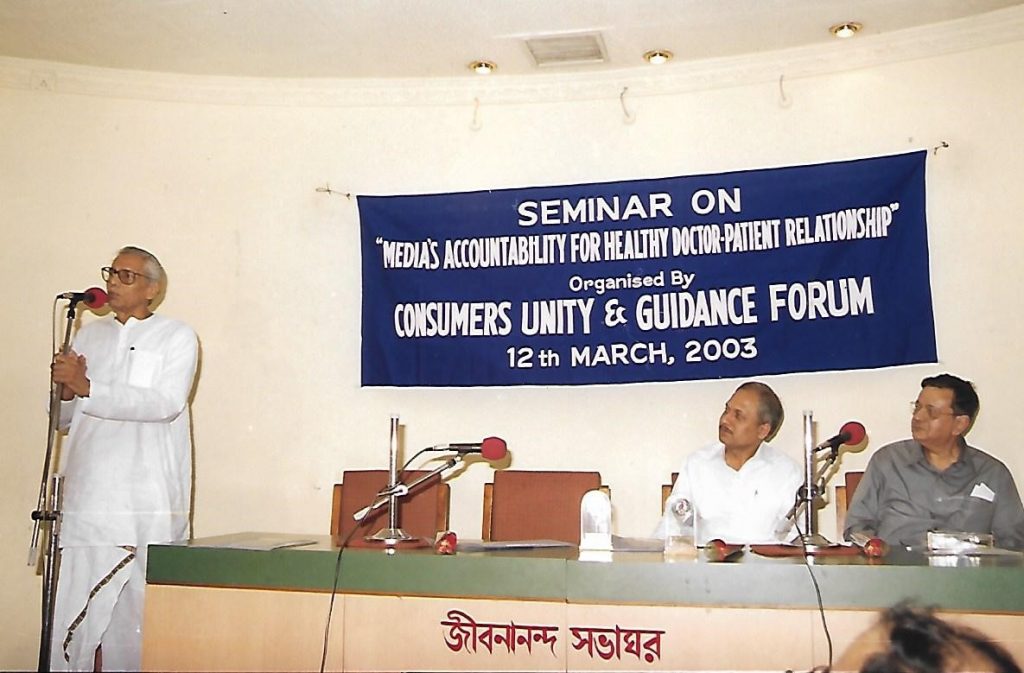
    A seminar of Consumer Affairs, with the then Consumer Affairs Minister of West Bengal, Mr Naren Dey.
    A seminar of Consumer Affairs, with the then Consumer Affairs Minister of West Bengal, Mr Naren Dey.

    A seminar of Consumer Affairs, with the then Consumer Affairs Minister of West Bengal, Mr Naren Dey.

    You started school in 1993. What legal formalities do we need to follow if we want to start a school?

    One has to envision the nature and the class of school one wants to start.

    School may be a Kindergarten / Primary / High / Secondary School.

    Permission from the Board under which the school shall be recognized is necessary if it is other than a Kindergarten school. If one wants to have the school run under a Board other than the local State Board, then a No Objection is to be obtained from the local State Board only after which the other Board, like C.B.S.E. or I.C.S.E. shall entertain the application for recognition.

    Teachers appointed should be on the guidelines of the Board to which the school gets affiliated to. The school has to have an internal guideline of rules and regulations for its students and also for its working staff and teachers. The position of a principal is mandatory.  And there are many other formalities and requirements to be fulfilled for running a school.

    How to undergo the transition from being under a senior to becoming an independent practitioner? Can you tell us about three things we need to prepare before starting our independent practice?

    Seniors only talk of their successes and make young lawyers run with a file for obtaining adjournments or filing papers in the court and carrying briefs with the seniors going for appearances in cases.

    To be a successful lawyer, one has to develop writing petitions, drafting cases and marking appearances whenever and wherever becoming possible. This will make them slowly and gradually indispensable to their seniors, who will entrust them with more work and help them grow into independent lawyers soon. To be a successful lawyer, one has to be punctual, hardworking and soft in his approach towards his colleagues. He has to be submissive and should learn to sell his talent along with his tears, which he shall have to swallow time and again to make him shine.

    If someone wants to become a judge in a Consumer Forum, what preparation one needs to have to deliver his duties properly?

    In whichever Court you work and discharge duties as a Judge, you have to have the reading skill and prompt decision-making ability. Because for many petitions coming, before passing the final order, one has to decide on Dias itself. One must have the patience to hear both the parties and should not try to make the third case of his own. 

    How was your experience as an Acting President of a Consumer Forum? Can you tell us about three remarkable instances?

    It has been a remarkable experience. Three of my remarkable stints as the Acting President of the Howrah Forum may be noted as follows-

    1. I looked after the administration of the entire forum and its finances too. And got Pending payments cleared through getting adequate budget sanctioned for our forum in time and gave relief to all service providers by getting their payments pending for more than three years to get released within three months of my taking responsibility. 

    2. Under my pen, I could make working guidelines for my forum.

    3. I enforced punctuality, honesty and timely delivery of orders in my forum, clearing the pending backlog of cases and timely discharge of cases.

    What critical component of this position as a Judge makes the work challenging?

    Awareness of applicable laws and knowledge of any precedents or ruling from the higher courts’ hierarchy. As a Judge, one has to be neutral and must strike a balance between the convenience and the inconvenience of the case parties and ensure that an order is not passed on such impractical terms that it never gets executed.

    How was your transition from being a Judge to becoming an advocate once again, and why did you leave your position as a Judge?

    The transition from a Judge to an Advocate is never a happy journey. When you plead as an Advocate, and you know the relief to be given is not given, you get lowered not only in your own eyes but also before the clients. Unpleasantness in nature grows. 

    Seeing my working capabilities, the West Bengal Government wanted me to go to all those Courts where working needed an overhauling. They started transferring me. I had my responsibilities towards my ailing mother, so I decided not to leave her in her last days. I discontinued putting this fact on record after accepting few transfers.

    You had a dynamic career; how do you summarize it in a few words?

    Experience pays. It builds your confidence and makes you challenge-worthy.

    What is your advice for young advocates who are planning to establish a successful legal practice?

    Aim at Judiciary. It gives you satisfaction in working and the joy of discharging justice honestly.

  • Nishant Choudhary shares his experience being the first Indian lawyer in Myanmar, being recognized as a top 40 EU Business leader and embracing change.

    Nishant Choudhary shares his experience being the first Indian lawyer in Myanmar, being recognized as a top 40 EU Business leader and embracing change.

    This interview has been published by Isam Kabir and The Super Lawyer Team. The Interview was taken by Priyanka Cholera.


    Nishant Chaudhary is a partner at DFDL and is also the co-chair of Euro-Cham Myanmar Legal Advocacy Group. Furthermore, he is a board member of the India Myanmar Chamber of Commerce. Mr Chaudhury completed his Masters in Legislative Law from George Washington University (Business & Finance Law) after his Bachelor’s from Symbiosis Law School, Pune. 

    1. You chose to be a lawyer when most people were inclined towards learning science or entrepreneurship. How did this journey happen? 

    I opted for law in 2001, when law as a career started to pick up. So, the law was not wholly an off-beat career. An uncle of mine gave me insights into the legal profession at a family gathering since he was a lawyer, and I thought it was not a bad idea. Initially, I was confused with respect to opting for law, however, gradually during my 5 years programme I started to appreciate the course and enjoy it. 

     2. Could you tell us a little about your time and experience studying at the prestigious George Washington University Law School? What encouraged you to do masters right in the middle of a full-fledged practice? 

     My experience in George Washington was good. Although I don’t want to make a comparative analysis, I hope that schools in India adopt a more practical education system than a theoretical approach. 

     I would generally not recommend taking a masters course right after one’s first degree because it clarifies the legal system and general interpretations. A certain sense develops after you have practised or worked in a law firm or corporate house. After my LLB, I focused on practising litigation civil, constitutional, criminal, and excise matters. While I was in Washington, I deviated from litigation and opted for business and finance laws. I realized that to further accelerate my career I had to diversify and which will likely be a career approach that will last longer. 

    3. Having studied at law schools in India and in the United States, what are some substantial differences in the pedagogical approach among schools in India and schools in the West? 

    I was a graduate of Symbiosis, Pune and the examinations were based on an academic standard. The practical intake was restricted to the fifth year. On the other hand, if you look at the American schools, they have a case-based education system and adopt a more practical way of teaching. Although, I believe now the New York curriculum in the law schools in India is moving towards that approach. 

     For example, In George Washington, there were mock trading sessions. During the anti-money laundering classes, we had a mock investigation session, basis on which we were asked to draft and an indictment. The course of teaching was very different and entertaining. Indian legal education system is very conventional, whereas the West has a more interactive way of teaching. But if education and entertainment go hand in hand, it tends to stay with you more comprehensively. 

    Moreover, the infrastructure is superior in American schools. The professors in reputed schools have several authoritative books to their names. My project finance teacher was a lawyer for OPIC, now known as Development Finance Corporation (DFC).  

    Another difference is the flexibility of choosing different and mix-matched subjects and the possibility of interlibrary access.   

    4. How was your experience before you moved into Banking and Finance Practice, i.e. as an Advocate at the Patna High Court and as a Counsel with Parekh & Co. (Advocates and Attorneys), where you worked on Competition law, Bankruptcy and Tax matters etc. Can you share a few experiences from that time? What is your take on specialization in the early years? 

    It is difficult to practice on the original side if you are unaware of the work at district levels. For young lawyers who will start practising litigation, it would be highly beneficial if they start practising in the District Court, or can even co-practice in both District court and High court at the same time.  

    Mr and Mrs Parekh, along with Mr Kumar and Mr Mohanty were very learned and great mentors. Unlike a regular law firm, Parekh & Co. had a very close-knit working culture. I assisted Mr and Mrs Parekh on the cement cartel matter and ADR, especially in infrastructure-related projects. In addition, I had the opportunity to walk into the chambers of prominent legal faces in India for case briefings, ranging from Mr Harish Salve and Mr Ashok Desai and other reputed lawyers. The experience was very enlightening. 

    5. How did the transition happen to be an In – house at a leading bank, and how did your time as a Senior Manager at ICICI Bank shape you into the Banking and Finance professional you are today? 

    I was a litigator while looking for a job in Banking and Finance. I had to undergo many difficulties in most of my interviews, although my prior experience was appreciated. I was deemed ineligible since I lacked transactional drafting experience. Furthermore, the recruiters provided that I would be a mismatch if given to work with junior associates. It is a misconception that earning a master’s will get you a job. It serves as an academic degree, not a professional degree. Someone suggested that an in-house role will be more appropriate for me, and from there, I could transact back to law firms. I applied for ICICI Bank and was interviewed by Ms Nitu Agarwal, who hired me.

    <p> 	<img loading=
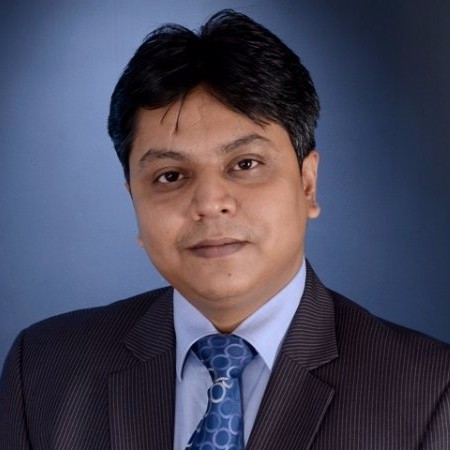
    Nishant Choudhary

    6. Towards the end of 2014, you made the shift to Myanmar. How did this new role come about in your professional journey? 

    In my professional journey, I kept looking for any opportunity in ASEAN, not particularly Myanmar, but suddenly Myanmar opened up in 2013 and was recognized as the future market. A new market fell from the sky, where everything had to be done from scratch. I wanted to work in ASEAN, which Myanmar was a part of. Therefore I decided to move. I had to undergo a fair share of struggle initially, but it is now as convenient as any other metropolitan city in India with its growth in the last seven years. 

    7.How was your experience of starting life afresh in a foreign country? Were there any challenges that you faced for being a qualified Indian lawyer in a foreign jurisdiction? 

    I was likely the first Indian lawyer to enter Myanmar after it opened up in 2013. It was a completely different culture. My workplace consisted of people from Myanmar, China, the USA, Australia, Italy, the Philippines, Vietnam, Japan, etc.  One aspect of working abroad is that you need to be culturally sensitive, especially towards the locals. For instance, Myanmar is not a template western country and has a robust culture that they take pride in. The sensitivity facilitates a better work experience in a multi-cultural environment. 

    8. You are a member of the Executive Committee at Indo Myanmar Chamber of Commerce and Co-Chair of the EuroCham Myanmar Legal Advocacy Group. Do you take it as your responsibility to make Myanmar more inclusive for foreign legal professionals, mainly Indians and put it on the map as well? 

    I have been in the EuroCham Myanmar Legal Advocacy Group as co-chair for a long time. I work towards advocacy for the EU business in Myanmar, alongside regulators, to make the business efficient. Similarly, I am a part of the India Myanmar Chamber of Commerce. Naturally, being an Indian, there is undoubtedly similar scope there. So, the idea here was to facilitate good business and at the same time not just as a part of India Myanmar Chamber of Commerce or EuroCham, even in general conferences or networking events or in public interactions, I have always highlighted the potentials of Myanmar, and that is because Myanmar deserves it. It has tremendous potential with 53 million people, with abundant natural resources across the country, one of the larger oil and gas deposits in Asia, located between two large Asian economies and the connection of these two large Asian economies to us here. I do take it upon myself to showcase Myanmar for what it is.

    9. Can you tell us a little about your role as a Partner with DFDL? What challenges or responsibilities do you shoulder? 

    DFDL is a great employer, but that also brings about the responsibility of working with DFDL. While working as a partner with DFDL is to gain business for the firm and for the execution part where I am supported by a team. There is a lot of management work where it is essential to harmonize how things are to be achieved. As at the same time, I am also the deputy managing director of the Myanmar Company, so I have a fair share of admin roles as well. Furthermore, I have a role in different chambers where I am not in any position per se but just a member. I am regularly a part of it as well. My role ranges from business development to working on the project, training of the team to the administration of a firm’s entity and then general business community interactions and responsibilities.   

    10. Your extensive practice experience working in Myanmar and India and working on significant financial transactions include the first and one of the largest onshore syndicate financings of Myanmar foreign banks branches and the licensing of one of these branches. Apart from case preparation, how do you keep the morale high for you and your team? 

    I enjoy a blend of things, like business development, because of its challenging nature and how it develops the confidence to deliver. But, at the same time, I enjoy working on a matter with the team, and I am fortunate to have an excellent team.  

      When one works as part of a team and leading it, where issues are discussed openly, the working is efficient. That way, it’s the team’s decision as to what they are going to prefer. I believe in active participation so that my team is aware that I am also working with them. I don’t believe in a hierarchical approach. I think that we are all in it together, yes there has to be a degree of mutual respect amongst people, but it should be more of a casual atmosphere and more of teamwork. I try to be a facilitator because I want to remove the hurdle that my team is facing on a given task to efficiently work forward. 

    11. You have received numerous accolades for your professional achievements, all of which are very well deserved and earned. Of particular note is Top 40 EU India Young Business Leader, 2019, by Europe India Centre for Business & Industry, which you received at the European Parliament, Brussels, Belgium. What do these milestones signify as a lawyer as well as an Indian? 

    These are primarily appreciation of one’s journey in a way that incentivizes the person. But they are also recognitions. For example, on the business or negotiation side of the market, a client will prefer somebody who has a commercial approach and is recognized to be a facilitator of business in the relevant market. Especially the India Europe Business Leader happened because of my involvement in EuroCham Myanmar and assistance of Indian Companies. It was an invitation from the Europe India Centre for Business & Industry (EICBI)  at the Europe India Business Leaders Conference 2019 held at the European Parliament in Brussels, where I was facilitated by Hon Caroline Nagtegaal, who then was the Member of European Parliament – Netherlands & Vice Chair- European Parliament delegation for relations with India. 

    12. When hiring young law graduates, what factors do you take to be non-negotiable?   

    There is no exact template or box for the procedure. Everybody has their journey. A harmonious working attitude is essential for being part of a team and being driven by the teamwork process. There has to be a balance where everybody should get their own space and at the same time be a part of the team. Therefore, attitude is primarily crucial because knowledge is endless. Consequently, I can’t expect a person to know everything under the sun. However, if the person is unaware of the answer to a question, he needs to own up to the fact that he is not aware and is willing to work towards it. Finally, one needs to take ownership of the work. The client doesn’t pay a lawyer to tell them what they can’t do, but to guide them on how they can do it.  

    13. Do you have any advice for young lawyers, law students, etc., who are trying to make a career in Myanmar, Vietnam, Laos, and other jurisdictions in the South East Asia region which are booming grounds for legal talent? 

    Southeast Asian countries are the market of the future. It is essential to keep reading about these markets and see how the business trend is moving. These locations are highly remunerative. The career path is faster compared to a bigger market due to less competition. But there are also challenges like language barriers and cultural elements.

    14. Finally, any parting words of advice for our ambitious readers? 

    It should be remembered that opportunity comes to everybody but not at the same time. Therefore, instead of being disheartened, one should work on their career goal and be focused. 

    GET IN TOUCH WITH NISHANT CHOUDHARY
  • Dr.Kabir Duggal on working as an Arbitrator in the US, being a Harvard-Oxford-Leiden-NYU scholar and being an inspiration to thousands.

    Dr.Kabir Duggal on working as an Arbitrator in the US, being a Harvard-Oxford-Leiden-NYU scholar and being an inspiration to thousands.

    This interview has been published by Isam Kabir and The Super Lawyer Team. The Interview was taken by Priyanka Cholera.


    Dr Kabir Duggal is a Senior International Arbitration Advisor in Arnold and Porter’s New York office focusing on international investment arbitration, international commercial arbitration, and public international law matters, He is a graduate of the University of Mumbai (Gold Medal), University of Oxford (DHL-Times of India Scholar), NYU School of Law (Hauser Global Scholar), Leiden Law School (2018 CEPANI Academic Prize), and is currently pursuing an SJD Degree from Harvard Law School.

    1. Your accolades and achievements are known to the world, the career trajectory you have witnessed is one everyone dreams of but only a few achieve apart from all these. What is something the media or the world at large doesn’t know about you?

    I am delighted to be here. And very grateful for the kind words. I think two things that people don’t realise, and this is true for everybody, is that we need to be a little more sensitive and give ourselves a little more of a break. Second, there is a lot of hard/smart work behind the scenes but there is going to be a fair bit of failures. For every ten things you do, nine times the answers will be a ‘NO’ but the tenth answer might be a yes! So, you need to keep trying. Keep the good fight on! 

    Further, you need a little bit of the right time and right place and so we must not take for granted the opportunities. In India, in particular, there is so much talent. You need the opportunity to channel it and that sometimes is not fully within your control. But always try and grab opportunities whenever you can.  CaRPE dIEM.

    2. Let’s start from the beginning: why law out all the career choices available?

    I got into law, unlike a lot of people today. Most people today get into law right after high school. I did not. I did the three-year course after I had an undergraduate degree. The decision to enter law was not one that I had taken lightly. This is what I encourage everyone to do: think about your skill set, think about things that make you happy and try to find a career that combines both of these. So I realised that I like speaking, debating, writing and I thought that that skill set fills itself nicely with the legal profession. When I got into law school, I realised – this is fun! 

    3.In your academic trajectory, right from GLC to Harvard, routing through NALSAR, NYU, Oxford, Leiden, you have been denoted as a scholar, rightfully so, what about academia or research kept you going?

    As noted above, my decision to get into the law was a conscious choice. So I got into something I enjoyed, I mean no one is compelling me to do all this. I do it because I enjoy the process–getting to read things that are fun, getting to talk to people who are very smart. Different people can look at the same thing very differently. I think in Jain philosophy, it is the Anekantavada philosophy, where the same thing can be understood in so many different ways. I do feel particularly privileged to have been affiliated with some of the best universities and study with the best minds. 

    4. How has your experience before venturing into arbitration i.e as Judicial Clerk, Honorable Justice Sujata Manohar, Consultant, Development Research Group – At The World Bank Group, Legal Consultant To The Child Protection Unit – Unicef has shaped you and can you share an experience or two?

    Justice Sujata Manohar is a pioneer, a truly remarkable person. She was able to study law at a time when women did not have equal opportunities (and this is true all over the world). She became a Supreme Court Judge but her humanity and compassion made her stand out. I look at her as a mentor and a role model even today. And if I can become half the person that she is, I will consider that a success. 

    My interest when I got into higher education was in the areas of public international law and in human rights. And that’s where UNICEF and the World Bank came in. And both of them were very different but very amazing experiences which are really hard to come by. You really do feel quite privileged to have had those opportunities. UNICEF began as an unpaid internship. It started off that way and became a two and a half year stint. In fact, they invited me to come back after my masters at Oxford and before I started at NYU.  

    While I was at NYU, the World Bank Group offered me a consultancy and that is how that position happened.  Again another fascinating experience. 

     They were very different areas of law. One was looking at child rights and child protection while the other was looking at socio-economic rights in the developing world. This experience has been pretty remarkable because it exposed me to a wide range of areas within international law. 

    5. One of the most interesting observations we have noticed is you have kept human rights in the centre of your academics, what inspired the shift to arbitration? 

    My interest has always been in public international law.  International arbitration, particularly investor-state arbitration, allows me to pursue my interest in public international law and human rights because the cases often involve an intersection between several areas of public international law.  But, my interest in human rights still continues. I am part of a team that has created a global non-profit to increase access for arbitration lawyers from all over the world (https://letsgetrealarbitration.org/) and I work as a consultant for the UN office for Least Developed Countries. 

    6. How has your time at Curtis, Mallet-Prevost, Colt and Mosle LLP, Baker McKenzie, honed you in the arbitrator you’re today?

    It’s been a very exciting journey to work on some of the largest and most prominent disputes. Every firm has a different culture. Every firm has a different way of looking at things. In the investor-state context, in particular, some firms focus more on state work, some focus more on investor work, some do a hybrid of both. So getting exposed to different people, different ways of doing things, I think challenges you and helps you appreciate things in a variety of different ways. Indeed, you can get very comfortable doing the same thing the same way every day. I think having something to challenge you helps you learn a different skill, a different way of doing things.

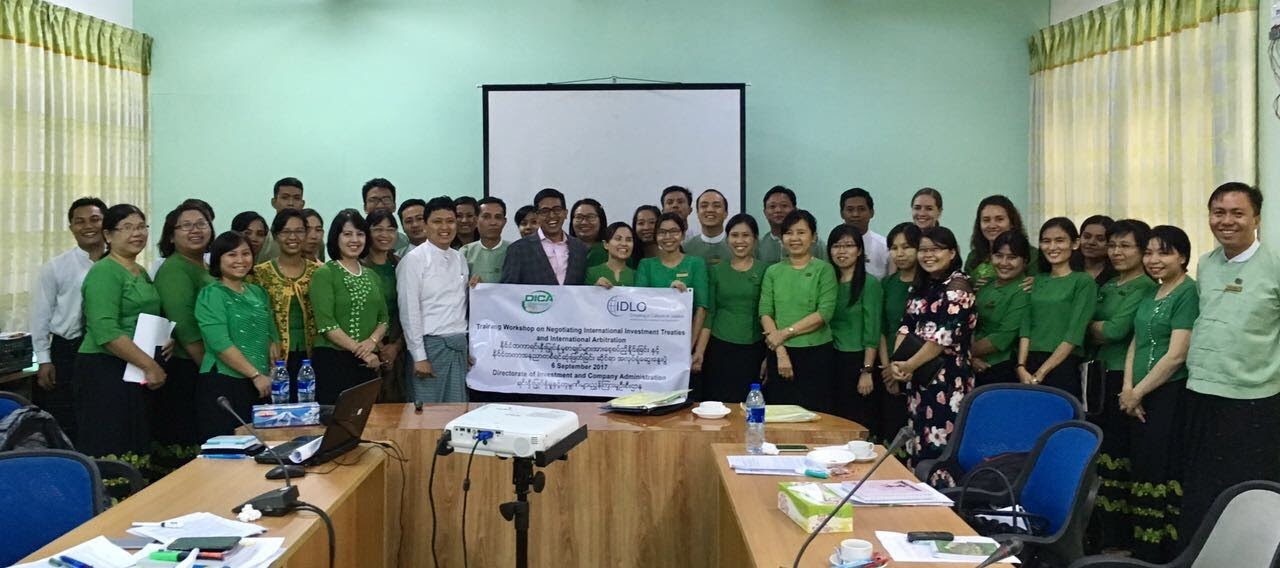
    Undertaking training for the Government of Myanmar

    7. Can you tell us about your PhD thesis on Investor-State Arbitration at Harvard as well as Leiden?

    Investor-State Arbitrations, sometimes you call Investment Arbitration, is a specialised form of International Arbitration. This is arbitration between a foreign investor and a sovereign state. Your Respondent is always going to be a Country or a State and the Claimant is a foreign investor. Here the foreign investor alleges violations of international law that often arise out of investment treaties or (domestic) foreign investment laws. And the dispute is resolved before an arbitral tribunal. Some examples in India are like Vodafone which brought its case against India arising out of a tax measure. This was under the UK-India investment agreement. That would be one example. These are cases against the sovereign so by nature, they tend to be highly political and long-drawn. It’s a lot of fun but there is a lot at stake. 

    At Leiden, my focus was on evidentiary standards in investor-state arbitration. This is a fascinating topic because international arbitration seeks to avoid detailed rules of procedure and evidence.  However, a tribunal is still bound by certain evidentiary rules.  The process was to identify what principles of evidence could be derived from the general practice of states and from public international law that would bind tribunals.  I was very privileged to receive the Academic Prize from the Belgian Arbitration Center for my research.

    My current research at Harvard looks at the intersection of human rights law and investor-state arbitration. Investment disputes often tend to implicate human rights.  For example, an investor may allege that a state policy implicates the right to fair and equitable treatment but the state may seek to justify its actions on human rights considerations.  My research seeks to unpack this tension between investor protection and human rights. 

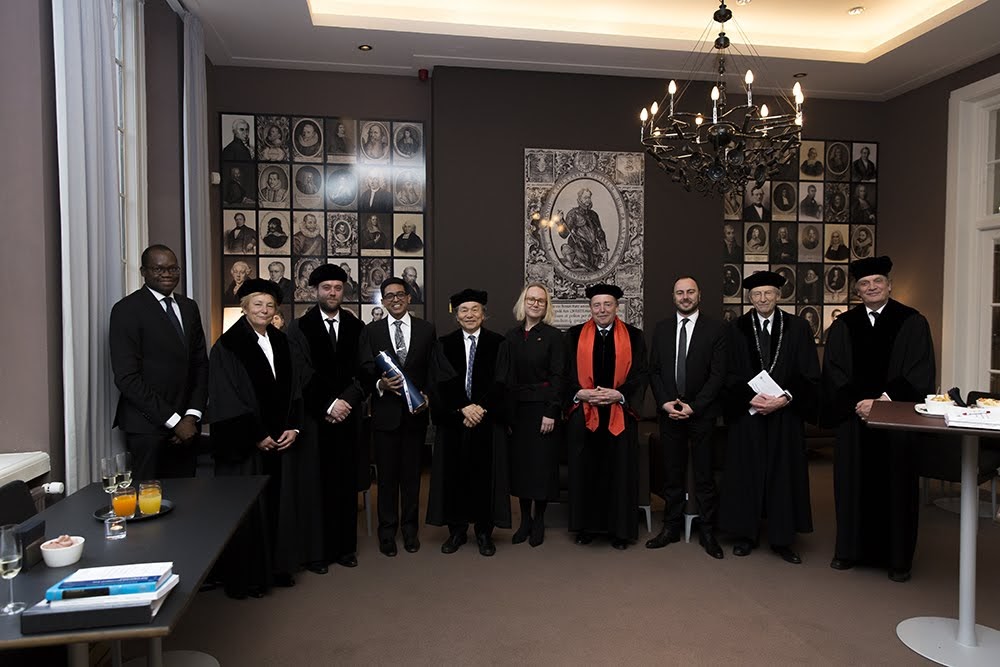
    The Leiden Defense
    The image is following the Leiden Defense

    8. You have been teaching at Columbia for nearly a decade now, and have taught at Madrid, Georgetown University, India, Harvard to name a few that pulled you towards it as given your qualifications you could have easily taken a corporate job or started practising given that you are qualified to practice in New York (U.S.), Washington D.C. (U.S.), England & Wales (Solicitor), Maharashtra and Goa (India)?

    I have always wanted to teach. As of this year, I have completed twelve years of teaching. Indeed, when I had started some of the students at Columbia University were older than I was. I enjoy it. It is something that I enjoy. I am a big believer in people doing things that make them happy. If something makes you happy, go for it. 

    9. You are a part of the Rising Arbitrators executive board, Consultant for the United Nations Office of the High Representative for Least Developed Countries, Landlocked Developing Countries and Small Island Developing States (UN-OHRLLS), you have published over 40 articles and spoken at over 300 arbitration events across the globe, what inspires these endeavours?

    Thank you, All these are things that are fun, I enjoy them. I like writing, speaking, and meeting new people. When you do something you enjoy, it does not seem like work. Some of these activities are also opportunities to make a difference and so I feel particularly privileged to have the opportunity to do so.

    Undertaking a Government Training with Representatives from Saudi Arabia (which is my country of birth)

    10. You started your journey as a law student in 2001, in GLC you have been part of this fraternity for 20 years now. What has changed for you in this passage of time?

    When I went to law school there was only one national law school.  NALSAR & NUJS had started and they still hadn’t had even the first set of students who had graduated. If we look at the legal landscape in India today it is very competitive. With the proliferation of law schools and people with ambition, it is a rather different reality. 

    Indeed, when I was in law school,  there was some amount of stigma in studying law- “You can’t do anything. So, you’re doing the law.” So, I think that would be the biggest change. There’s a lot more dynamism. The law students are a lot more dynamic and are a lot more willing to be enterprising and that’s a good thing. We are seeing the market evolve as well– for example, we are seeing greater think-tanks, non-profits, academic avenues in India. All this is great for our profession. When I graduated, legal education was still in the nascent stages. I look at it now though, you have people who are very thoughtful scholars today; people who are really engaged. That’s good for India at large. The profession is in better shape than when I was in it. So I look at it as a good thing. It’s becoming quite similar to the American model- very competitive, but the people who get into big law, so to speak, have a very steady career path set for them.

    11. How often have you been the only Indian in the room? Do you think silent racism towards Indians or Asians still persists or they’re still underrepresented in board rooms and classes?

    I think this is a great question and is worth addressing. Does racism exist? The answer is yes. Does racism exist against Indians in the law field in the west? I think the answer to that is also yes. It may not always be direct or overt but it does exist. If we look at the United States, Indian Americans have done extremely well in business, science, technology, engineering. That has still not been the case for the legal profession. But hopefully, things will change and we should always strive to do two things. First, we should always be aware of the privileged position that we are in and we should try, whenever we see bad things happening, to stop it. We’re lawyers and we are in a privileged position to stand up to injustice. There are people who don’t have that, both in India and in the US, and it’s important for us to stand up for injustice (this can often be taking a stand against innocuous sexist or offensive stereotypes). The second point I would just mention is, last year in the US (although this is not unique to just the US), you looked at violence against African Americans and then Asian Americans, which really got us to reflect on the inequities that exist even in our profession. We, therefore, launched an initiative called REAL- Racial Equality Arbitration Lawyers and one of our goals there is to advocate and give access opportunities to people who otherwise don’t get it. We give a lot of scholarships to attend arbitration events which can often be very expensive. I would encourage the viewers to look at this if they’re interested in arbitration, these are put on our LinkedIn Page: https://www.linkedin.com/company/real-racial-equality-for-arbitration-lawyers.  We are free to join the organization so if you are interested, consider signing up.

    12. What are a few pieces of advice you’d like to give to students or lawyers who want to pursue foreign education through scholarships?

    First, You need to start the planning process early. There will be an academic component and there will be an extracurricular component, both are important. Make sure you’re not doing one at the cost of the other. Sometimes you see people who have done like 15 moots, leadership positions in many organizations but grades are mediocre or you see people who’ve only focused on grades and done nothing else. So my suggestion is to find a good balance. 

    Second, have a nice consistent narrative to tell. Can your narrative change? Yes, it can. Tell it in a manner that’s interesting, that’s personable, but reflect a little bit on your story. 

    Third, pay particular attention to scholarships and see the requirements that they have as well as the deadlines. 

    Fourth, access your financial situation and make an individual assessment of whether or not it makes sense for them to pursue higher education if you have to take out a loan. Be prepared for the best and worst-case situation. Jobs outside India are few and far between and highly competitive.

    Finally, consider the visa reality. This is probably one of the areas that are not within your control. This is increasingly becoming harder and harder, as countries are restricting immigration. So when you’re doing your pros and cons, you really need to factor in this reality.

    13. It is known to us that apart from Hindi and English, you are fond of Urdu and have learned Spanish and Sanskrit as well, what are some of your favourite reads?

    I think with time my interest has been becoming greater and greater in reading books on history. And my specific focus, not exclusive, but the specific focus has been on reading about different aspects of Indian history. When you don’t live in India this is one way to remain connected with your heritage. I am currently reading the Age of Wrath by Abraham Early that discusses medieval India (even though the book focuses on the Delhi Sultanate there is a very interesting discussion on the Vijayanagara empire as well). 

    14. In your opinion, how will pandemic change the way we perceive education? Do you think it has achieved the philosophy of the world being a big classroom?

    The pandemic has definitely caused a lot of suffering. I will acknowledge that at the outset. Having said that, some good things have come out of it. And one good thing that has come out has been embracing technology. There is something to be said for in-person meetings but there’s something to be said for having opportunities like this where you can talk to people across time zones, across different countries. So, hopefully, post-pandemic, we keep some of this alive. The world has become a lot closer.  

    15. How does it feel to be a source of inspiration for so many people? 

    I am very grateful to hear this and am touched that people feel inspired.  I believe that my journey has still just only started 🙂 

    16. What would be your parting advice to students and everyone dares to dream big?

    Have a plan and go for it. Dream big and also be realistic. But there’s nothing wrong with aspiring. Take advantage of avenues around you. Avenues like Law Sikho didn’t exist when I was in Law School. Take advantage and be positive, failures will happen and that’s fine. To quote Kelly Clarkson- ‘What doesn’t kill you, probably makes you stronger. Therefore, take charge of your career.  

  • Trupti Kulkarni, Senior Consultant, Vahura, on being a Candidate Engagement Lead at Vahura

    Trupti Kulkarni, Senior Consultant, Vahura, on being a Candidate Engagement Lead at Vahura

    Trupti Kulkarni graduated from University Law College, Bangalore in 2005. She joined Accenture Services Private Limited where she worked for an Insurance Process handling Motor Insurance Claims. She also worked with Honeywell Technology Solutions and TPI Advisory Services handling Contract Management.
    At Vahura, Trupti used to head recruitment at senior and mid- level, for corporates and law firms, concentrating on South India. She has regularly worked on General Counsel and Senior Management positions in the IT, infrastructure, manufacturing, pharma, FMCG space. More recently she has moved on to internal functions within the organisation focusing on Candidate Engagement and Employee Motivation initiatives. She also handles internal recruitment at Vahura.


    In this interview she talks to us about:

    • What prompted her to join Vahura.
    • Impacts on her after joining Vahura.
    • How legal education and training helped her in the present role.
    • Advice to a young lawyer if he/she wants to tread the alternate career path.


    How would you like to introduce yourself to our readers?

    I am a lawyer by training and a HR professional by choice. I passed out of the Bangalore University Law College in 2005. I am a second generation lawyer. My father is an advocate with more than 35 years of practice at the Bar. He handles matters pertaining to Writ Jurisdiction, Service and Constitution among others. My brother and sister-in-law are also lawyers. My brother works as an In-House lawyer while my sister-in-law has taken a break from active practice. So, in a way, I am the lawyer who took the bypass route J  I worked in-house with Accenture. Honeywell and did a brief stint with a company called TPI Advisory Services where I handled contract management. For more than 6 years now I have been working with Vahura where I have had the opportunity to don many hats and to prove myself in areas which have been new to me. I am also a mother of 2 and hence am on a constant balancing act.


    What prompted you to think of law as a career? If not law, what other options would you have considered for your career?

    Like I mentioned, I come from a family of lawyers. Dinner conversations are usually about all the court room drama and about how legal issues could have been handled differently. Some of my earliest memories from childhood are about clients walking in to our home cum office, even on Sundays, to have a discussion with my dad. Infact he has been and will always be a deep influence in my life. My dad gave up a Central Government job with the Telecom Department (8 years to be precise) to study law and to start afresh. Through sheer determination and hard work he established himself in the field to get to where he is today. With such a role model it only seemed natural for me to follow the same path. Even before I could complete my pre-university from the prestigious Mount Carmel College in Bangalore, I knew I would be studying law for the next 5 years. Now when I look back, I think that if I hadn’t tread this path, I would probably have gone on to obtain a degree in Communication Studies or Psychology at Mount Carmel and would be in a role related to either of them.


    What prompted you to change the track and join Vahura?

    My family always knew that I was more of a people’s person- someone who would be good at people interaction and counselling. I guess I took some time to realise what they already knew. By the time I had changed 3 jobs I was starting to feel that there was something missing. I was a trained lawyer so I didn’t want to be completely out of the profession, but at the same time I felt that I should be doing something different and unconventional. I was not sure what that was, though. One day, on my brother’s suggestion, I got onto the Vahura (then a part of Rainmaker) website to hunt for a job. Instead, I was more curious to read about the team there and what they did. What I read about them intrigued me. Suddenly, the missing piece of the puzzle seemed to fall in place. I contacted Vahura to ask if they were hiring. Although, they weren’t at that point of time, they reached back to me a few months later. There has been no looking back since then.


    What is the reaction of people when they hear about what you do, especially friends and family?

    I have been with Vahura for quite some time now and so most people who know me, know what I do as well. In a way, Vahura and my role here has become a part of my identity. Friends and family are generally curious to know what I mean when I say I work for a legal talent management firm. They want to understand how it works and what the business model is. Most of them usually find it interesting and say that they didn’t know something like this existed! A lot of them find what I do pretty cool and have even asked me if we would be hiring.


    Do you miss a corporate career and the perks that come with it? How easy was the transition from being an In-House Lawyer to joining a startup like Vahura?

    Since the shift was a conscious and well thought of decision, I was prepared for all the changes that would accompany it. I do remember, that have worked with a company having 5000 odd employees on campus, coming into a small office with just 2 other colleagues for company felt a little strange, initially. But the work was so interesting, there were so many new people to meet, so many different things to learn that I didn’t mind at all. The best part was not being tied to the desk. Meeting clients and professionals meant that I was constantly outside. That always helped break the monotony and made work exciting. Infact, it’s so easy to get lost in the crowd when you work for a bigger organization. Here, each small contribution that you make stands out and earns you recognition. Of course, you probably don’t get the same perks that would have come from working with a bigger organization. But then the flexibility, the opportunity to take on more responsibility, the ability to grow quickly and to expand on your learning are unmatched. They more than make up for anything else that you miss out on otherwise. I have always been very sure about what I do not want in terms of a career- long work hours, system bound work procedures etc, don’t interest me. That way, I feel that I have got more than what I could have asked for.


    How has the decision to join Vahura impacted you as a person and your growth as an individual? 

    I would say that the impact has been tremendous. I am much more confident as a person. My present role has helped me realise my own strength and the organization has seen potential in me when I myself have not. I can confidently say that I have learnt much more in these past 6 odd years than I have in any of my previous roles. I started off as a legal recruiter and was soon overseeing hiring for the entire Southern region (law firms and in-house included). When I was back from a maternity break and requested for a change of role, I was quickly absorbed into more strategic functions. I currently oversee Internal Functions and People Management, besides handling Performance Management and Internal Talent Acquisition for the organization. I also got one of the biggest opportunities in my life when I became one of the Directors on the Board, about a year and half ago. I can proudly say that I am the first Woman Director at Vahura! I don’t think I would have got this opportunity anywhere else and that too so early on in my career. If I look back at my career graph and see the entire gamut of work that I have handled, I see no regrets and I feel satisfied.


    How has your legal education and training helped you in your present role?

    My legal education and training has been a big advantage in all the roles that I have played at Vahura. We touch all aspects of Legal Talent – recruiting, consulting, governance, mentorship, community engagement. Although a legal education is not a pre-requisite for all this, it does make a huge difference. When I am recruiting a lawyer for the legal team of a company, it helps if I have been an in-house lawyer myself. It gives me an intuitive understanding, backed by practical experience which works very well for the client as well. So also, as a HR Manager for Vahura, my previous corporate experience has come handy in implementing best practices and recommending changes for the organizational well-being.


    If you were to do one thing differently, with respect to your career, what would that be?

    I would probably go back to law school and would take my internships and moots more seriously! Not that they have impacted my career progress and have affected what I am today. But they would have definitely helped me make a more informed choice and would have helped me figure out faster what WOULD NOT work for me. I interact with law students/ fresh graduates now and see how well prepared they are and how thoroughly they have researched about what they want. I can’t help but feel a pang of envy! I admire them for knowing what they want, so early on in life. It definitely gives you an edge and helps you stay focused.


    What would be your advice to a young lawyer if he/she wants to tread the alternate career path? 

    We are all in a noble profession. The opportunity to make a difference in society and in the lives of others is so much more for us as lawyers. Whether you are a litigating lawyer who is fighting for the right cause or a corporate/ law firm lawyer impacting businesses decisions, there is no limit to what you can achieve in this field. If that is not your cup of tea, then you can always be an ‘alternate lawyer’ like me and help make an impact by being on the other side of things. The ways in which you can do that are unlimited. For instance, I am presently heading a project at Vahura called ReLawnch. It is aimed at helping women lawyers make a comeback into the profession after they have taken a career break. We have had our first success by helping a woman professional start her career in litigation. The entire experience is so fulfilling and enriching that it is unparalled. To know that what you do makes you happy and that you are doing your bit to make the world that much better- that is when you know that you are doing the right thing! And if that means doing something unconventional and taking the road less travelled, so be it. If it doesn’t work, you always have the option to get back to the core legal profession. But it is important to try before you arrive at that decision.

  • Biplab Lenin, Consultant, Cyril Amarchand Mangaldas, on building up expertise in Intellectual Property Rights

    Biplab Lenin, Consultant, Cyril Amarchand Mangaldas, on building up expertise in Intellectual Property Rights

    Biplab Lenin graduated from Rajiv Gandhi School of Intellectual property law (2009-2012). He is a qualified attorney with more than 4 years of both law firm and in-house experience in dealing with general corporate and intellectual property matters. He is registered to practice before Indian patent office and currently working with Cyril Amarchand Mangaldas at its Delhi office. His core areas of work include wide range of transactions, general advisory and intellectual property matters. He has acted on some of the significant and complex transactions that the intellectual property team has been involved with.

    In this interview he talks to us about:

    • How he build up expertise in IPR.
    • Primary essentials of a corporate lawyer.
    • Professional ethics one should follow while at work.
    • Basic subjects one should understand before sitting for an interview.

    How would you introduce yourself, given that most of our readers are law students, law aspirants or professionals in the legal arena?

    I am currently working as a Consultant with Cyril Amarchand Mangaldas in New Delhi. My practice areas include intellectual property laws and corporate laws. I am a registered patent agent at Indian patent office. I completed my LL.B. from Rajiv Gandhi School of Intellectual Property Law (RGSOIPL) in IIT Kharagpur Campus and also hold a graduate degree in Biotechnology Engineering.

    Were you always as fascinated by the field of IP Law or was it an acquired passion that set in through your college years?

    Since my father is also a lawyer, I was never a stranger to legal discussions which my father often used to do with his friends over evening tea after a long day in Court. Nevertheless, after 12th standard I followed the crowd of students doing engineering. In the last semester of my engineering, there was a subject called ” Intellectual property Rights”. Somehow, it attracted me quite a lot mainly because it involved both technology and law. That led me to apply for the course at RGSOIPL at IIT Kharagpur. I guess I was lucky to have studied under tutelage of good teachers and in a diverse peer group that IIT offers. Though I had an inclination towards IP subjects, at the same time, I wanted to do my internships on other subjects as well. Hence, I did internships with law firms as well as corporate in the domain of general corporate law, taxation, disputes, technology transfer and intellectual property law.

    How did you build up your expertise in IPR? Tell us about your work experience.

    My first hands on training on practical aspects of law happened in my internship at Monsanto. After finishing law school, I joined Mahyco as an in-house Counsel where I worked on different IP laws like patents, trademarks, plant variety, biological diversity and technology transfer. More importantly, interactions with several eminent scientists and stalwarts in the agri-biotech domain helped me realize the importance of understanding the technical nuances of the technology involved in any IP law. My engineering education helped me a lot in this area.

    After completing three and half  years of satisfying work at Mahyco, I joined Cyril Amarchand Mangaldas at Delhi where I am working on matters related to patents, plant variety, biodiversity, transfer & assignment of Intellectual property and general corporate transactions. On litigation front, I am a part of the team which is handling patent infringement and drugs ban litigation before the Delhi high Court

    Tell us about your schooling and early life. What do you think are the habits that you cultivated which help you today?

    I did my schooling from Sainik School in Bhubaneswar from Class 6th till Class 12. I think the values of integrity, camaraderie which are a hallmark of the army, are ingrained in me now. Also, Sainik School gave us a lot of endurance training, which helps me when I have to work for long hours in the Firm! I feel that my school experience was also quite instrumental in putting me at ease in any group with diverse cultural backgrounds, which is helpful for an attorney whose work involves people interaction.

    How are internships helpful for a law student? What are the other options available for someone interested in IP?

    Internships have a role to play in one’s professional career as a lawyer. They help us in learning how the law is practically applied. Also, business aspects of transactions are also better appreciated in internship. Skills like corporate communication are sharpened during internship. For those who are interested in making a career in IP, I suggest doing first internship under a practicing lawyer to get a feel of our justice delivery system. It is also important to look for quality work rather than brand name. There is no point in securing an internship in a big organization where there is little work for an intern. Students can join an IP specialized law firm or corporate for doing internships.

    Having Said that, I also feel that one should not be obsessed with stuffing one’s CV with internships. It is important to remember that in college one is a “professional student”and one’s primary duty as a professional student is to study the law books and the basic concepts. What can be learnt in 10 internships over 5 years in a no-pressure situation can be learnt in 6 months in a pressure situation when one starts actually working after college. Many times these days, interns, who have finished more than 10-12 internships in their first 3-4 years of college, but unclear about fundamental legal concepts, which I believe is injustice to one’s profession as a student.

    How do you maintain your work-life balance?

    I have always had a problem with this concept which pre-supposes that work and life are different and need to be balanced. I believe the first step in achieving work-life balance is to love yourself and love your work. Luckily I do both! Presently my focus is on honing my skills. I believe I’m being paid to learn now so I’m not complaining at all! I also believe that even at a senior level people do get time for themselves while managing work and I feel this should not be a concern for us at least at the beginning of our career.

    Any extra-curricular or co-curricular activities did you take up during your time at RGSOIPL and engineering? How did the same affect your learning experience and prepare you for the legal sector?

    I participated in a few moot court competitions during my college. However, I enjoyed parliamentary debate competitions more and also participated in several case study competitions conducted at IIT Kharagpur. During my engineering days as well, I have participated in several paper and poster presentations.

    However, apart from legal skills, I used extra-curricular activities to build my communication skills and inter-personal skills. I was one of the founding members of moot court society and conducted the first parliamentary debate competition at RGSOIPL.

    During my law school days, I worked as a volunteer in an NGO named “Independent Thought” based in Delhi. The NGO works for the Eradication of Social Disparity and Injustice by promotion of Fundamental and Socioeconomic Rights. I used to assist team in doing research and preparing reports with regard to remedies on issues relating to child labour. This experience showed me the humane side of the law and it still keeps my sensitivity intact and reminds me that beyond all the paper work and legal arguments there are real people who are affected by what I do.

    Generally the first year after graduation is the most defining time of a fresh law graduate. What would you suggest a fresh law graduate should do to hold spirit and utilize the opportunities available?

    I would suggest a two-pronged approach:

    1. Many students are thinking about doing an LL.M, immediately after LLB. I feel that an LL.M. without any work experience is just an LLB with some more semesters and a thesis.
      I strongly encourage fresh graduates to take up some professional assignment of their liking instead of academics, be it with a law firm or corporate or even NGO. You’re bound to be confused, so make sure someone’s paying you in the meantime!
    2. In college, we first pay fees and then we learn. In a job, we get paid to learn. Therefore, as a paid student, learn as much as you can about different areas of law and practice. It is important to remember that most books mention “law” and “practice” separately, for example Banking Law and Practice, meaning thereby that practice is something different from mere legal provisions. This will help you in choosing a particular field or subject for your career.

    What are the primary essentials of a corporate lawyer? How do you say a fresh graduate can work on building these skills?

    I think honesty towards the client and one’s colleagues is of utmost importance. One may be low on information about a legal concept, which can be gained, but honesty must come from inside. This of course is a basic human requirement in any profession, so all law graduates must also try to imbibe these values.

    Patience is also a vital asset. One must not get affected by looking at how others are doing in the profession.

    What are the primary professional ethics you follow while at work? How do you deal with mistakes or errors?

    I believe that honesty is the best policy. If there is a mistake, one should admit immediately. Mistakes are bound to happen especially in areas where human effort is involved. In face of mistakes, first requirement is to maintain a cool head, accept a mistake has been made and then immediately start working on a solution. When I’m the team lead, I own the mistakes of my team. I think clients too appreciate such candidness.

    What are the basic subjects which one should read and have understanding of before sitting for an interview?

    From point of view of legal concepts, basic understanding of the following 5 subjects is a must for any civil lawyer regardless of any interview:-
    1. Contracts (including sale of goods and specific relief)
    2. Transfer of property
    3. Evidence
    4. Registration and stamp duty (basic concepts not details)
    5. Constitution (basic concepts)

    Thereafter, one may try to gauge the requirements of any specific interview and prepare accordingly.

    Where do you see yourself ten years down the line?

    Hopefully still on the line!! Jokes apart, my first aim is to build my expertise in my domain, which is more of an internal process. I haven’t really given a thought to any particular designation as such. But I would like to be a lawyer who has earned atleast two things – complete trust of  clients which  allows them to sleep peacefully as far as their legal worries are concerned; and respect from seniors and peers in the profession regarding my professional ethics and competence. Apart from this, designations are trivia!

    Please compare RGSOIPL with other law schools.

    RGSOIPL is a unique law school because admission itself requires a degree in technology or medicine. Being a part of IIT Kharagpur campus, it has an IIT-style admission process with entrance test, group discussion and interviews, which is a great learning in itself. It attracts students from all over the country, which helps in enriching one’s culture and view of life. Also, studying law in the IIT Kharagpur campus in the midst of the crème-de-la-crème of India’s technical brains, gave me 2 important lessons –

    • Law is an instrument to facilitate business and technology;
    • Law cannot be learnt or applied in isolation without an eagerness to learn the technical dynamics of any business.

    RGSOIPL also benefits from the infrastructure of IIT. We had access to major online legal resources like Westlaw, Manupatra and Hein online apart from books.  There are various co-curricular activities which one can pursue to unwind from demanding course schedule.

    How is your experience in working as In house and then shifting to law firm?

    Being an In-house counsel helps to learn the significance of law as a toll for business. However, I would advise to have law firm and court experience at the initial stages of the career and learn court proceedings and allied matters and then shifting to in-house.

    Shifting from In-house to a law firm is tough from a work pressure point of view. Also, subject experts are readily available when you are working in-house, which may not be the case in a law firm full of mostly lawyers. Anyone who wishes to develop a very particular specialization should work in in-house IP department. Law firm gives you a more diversified work. Needless to say, law firm working hours are more strenuous. However, learning as well as growth is much speedier in a law firm.

    What would be your parting message to our readers?

    An excellent CGPA is always good. However, it is important to co-curricular and extracurricular activities as well. Read as much as you can. Take risks when it is required. It is not necessary that every risk you take will result in success. There will be failures too.

    It is important to not think too seriously about oneself and one’s so-called reputation etc. while taking professional decisions. I think the most vital part is that one should feel good both as a human being and a lawyer.


  • Nakul Bhatnagar, Senior Consultant, on recruiting for various roles in the legal sector in India and across Asia

    Nakul Bhatnagar, Senior Consultant, on recruiting for various roles in the legal sector in India and across Asia

    Nakul Bhatnagar graduated from Cardiff University, U.K. in 2011. At present, he is a Senior Consultant at Aquis Search with responsibility for private practice and in-house legal recruitment services in India. He recruits for various roles in the legal sector in India and across Asia. He is interested in connecting with potential clients who have talent acquisition requirements and professionals looking for their next career challenge.

     In this interview, he talks to us about:

    • His experience at Cardiff University.
    • How interns can get positive feedback in limited time.
    • What law firms look for in potential candidates.
    • His advice on CV building.

    Most of our readers are young lawyers and law students. How will you introduce yourself to them?

    I am a lawyer by training and legal recruiter by profession. I was born and raised in New Delhi and spent almost all my life here. Post class XII, I pursued the B.Com (Hons.) course from Delhi University and after having dabbled in very different fields in the industry, I decided to pursue Law. I completed my LL.B from Cardiff University, U.K. in 2011 and after having worked with a few organisations (including a law firm and a trade law counsel). I made the switch to legal recruitment in 2014 and joined an Indian legal recruitment firm. I am currently working as a Senior Consultant with Aquis Search – Asia’s leading executive search firm with offices in prominent Asian cities. I focus on legal and compliance recruitments, across junior and mid-levels in India and the Middle East.The story continues…

    Having done B.com, what motivated you to choose law as a career? Or did it just happen?

    Doing law was a rather calculated decision for me and I believe I found inspiration to do law from the most unusual places. During my college days, I was actively following the Indian independent music scene and briefly performed in a rock band myself. Not to mention, I was a very confused child and tried my hand in so many different fields to try and come to a career conclusion – I interned in places like design studios, ad agencies and a music / events company as well. Post my graduation, I was pretty much convinced that I wanted to take up music management and for a year, I worked with a company which promoted independent original music, managed artistes and organized live concerts & festivals. During this time, I had the good fortune of interacting with musicians and a few lawyers who introduced me to several new concepts like Copyright, Performance Rights and Digital Rights Management. I was quite intrigued to see how the law worked with something as basic as a song or a performance. It was something that I never thought could work so well in an ecosystem that seemed completely disconnected. I started researching on what options I may have and I decided to try and pursue law. Not to mention, my father is a lawyer by training himself and always encouraged me to pursue a career in the field. Little did I know that the adventure was just beginning!

    Describe your experience at Cardiff University.

    The experience of studying at a foreign university was surreal. The methodologies, the faculty, course structures and support offered were very beneficial to every law student. Cardiff, being one of the top law schools in the U.K., was possibly the biggest learning experience for me. Constant development every step of the way, studying there made me the person I am today. Studying in Cardiff gave me immense exposure to global standards of legal education and a connection to a worldwide network of prominent lawyers. An additional advantage of studying there was that the University is recognized by the Bar Council of India and the transition of practicing in India was never tough. Many Indian students who graduated from there have moved back and are successfully practicing here (even as Partners at leading law firms).

    How do you say interns can get positive feedback in the limited time they have?

    Internships are probably the most valuable experience any budding lawyer can get. In one way or another, they are the stepping stones for a career in law. They show you the practical side of the profession and how the application of the law goes much beyond the course books.

    Pro-activity is possibly the most valuable skill that an intern needs to posses. Try and be actively involved with the partner / associates that you are working under. Remember, they get interns every month and recall value is definitely scarce. You have to make the jump out of the page for them to remember you. Especially final year students; if you wish to work with the firm post law school, you will have to walk the extra mile for them to offer you a PPO or a recommendation.

    Having worked in the legal recruitment industry what are the challenges you have faced?

    Challenges are as wide in this industry as any other. The point of working in a niche can work as an advantage and a challenge as well. The advantage of being a lawyer has helped me work my way into legal recruitment. I can understand the work that one does and has done in the past and how that experience can work well for a potential opportunity that one may be looking for. It is of utmost importance for recruiters to look at both sides of the spectrum. One needs to understand the needs of the lawyer looking at a potential job as well as the recruiter, looking to hire talent for his firm. The gap needs to be filled perfectly or it could pretty much lead to issues for the firm, as well as the young lawyer.

    Acquiring talent is a big task for any recruiter. Opportunities, whilst being seasonal, are usually always prevalent in the market. It is the right talent that can be scarce at times. Firms are usually very sure of the qualities that they want in a lawyer (law school, practice areas, experience wise). Getting them the perfect fit is the mark of a good recruiter. We have to remember that the level of trust, shown by a firm looking to hire and a lawyer looking to be placed, are utmost in a recruiter. Challenges are a part of everyday life but, just like any profession, they can be overcome.

    What do law firms look for in potential candidates?

    Here we go! (If I had penny for every time I was asked this question… you know how it goes.)

    Let’s get it straight. Firms are looking for someone who is with them for the long haul. Period! Firms (especially the big ones) in India are built on the core values of their name and legacy. They are looking for professionals who can be nurtured into taking that name forward.

    Professionally, the story isn’t very different from any other profession. A strong educational background, the ability to work hard and with a team, diligence, communication skills and of course, patience. The transition phase (especially the first 6-9 months) maybe tougher but the reward has its own charm.

    Strong on technicals – the main point of focus. For example; a prospective corporate lawyer should have the acumen for numbers, financials and a strong eye for detail and along with this good knowledge on topics like Contract Law, Sale of Goods Act, Company Law, SEBI Regulations, FEMA, FDI Regulations etc. Similarly, a professional, looking to build a name in the disputes practice needs to be aware of everything around him in the legal environment. Be prepared with important sections of the CPC, CrPC, Constitution, landmark judgments and recent developments in the legal biosphere.

    The basic quality that every lawyer needs to possess (and I cannot stress this enough!) is the eye for detail in everything that they read or write. Till date, I have seen so many professionals who are not proficient with drafting and tend to omit so many errors; it’s possibly one of the biggest grey areas for any law firm looking to hire. You need to start from the bottom of the food chain everywhere. Your firm will want to know everything that you are capable of.

    What advice would you give to law students / professionals interviewing for law firms?

    The one piece of advice that would be the most important (for lawyers across levels);KNOW YOUR CV. Know every word of every line of what you have put on there. For freshers, your internship details are of utmost importance. Know the names of the Partners / Associates that you worked under, the teams, the kind of work and your involvement. For laterals, any transaction / matter that you worked on, your contribution to the same and everything that you have put on your resume. You need to have your CV on your fingertips; if it is on your CV, get ready to be questioned. Keep yourself abreast with all legal developments in the market, especially the ones with a connection to any phrase mentioned on your CV. Apart from academic qualifications; your extra curriculars go a long way in determining your achievements. Moot courts, debates and other activities are equally important to show your development during law school.

    Apart from that, know what is happening in the market and of course, know the firm that you are interviewing with. You need to know details about key partners, latest deals and general structure of the firm as questions can be fired from any direction. You need to assure your interviewer that you are the right choice and your knowledge about the firm makes you want to be there. This is about going that extra mile to show your appreciation for their time and consideration. People always look for that spark that would separate you from the others. Be confident in what you answer and do not hesitate in accepting that you may not know something out of the plethora of questions, it is only natural. Be sure to tell them even if you don’t know or are unsure. Be sure to make a note of it and tell them you can research and get back to them with a sure answer. Surety goes a very long way. Be sure of yourself and what you know and you’ve already won half the battle.

    What must a law student do to get hired in a top-tier law firm? Any advice on CV building that law students must keep in mind?

    Before I answer that, we really need to address one thing for young lawyers and everyone else reading. The mentality of a ‘top-tier’ brand is changing in this ever evolving legal market of ours. Whilst top-tier firms still do rule the roost and deservedly so, many firms operating on a smaller scale (only in terms of number of people) are bringing in meaty work and good clients. These firms (bracketed as mid-sized or boutique firms) are coming up with a strong force and several of them have been started by and employ alumni from leading firms. In terms of quality of work, people employed and even pay-scales, they are very competitive with all other firms and will be a force to reckon with in the near future.

    Let’s face it; cut throat competition in the market as of now, is more than it has ever been. With more than 70,000 lawyers graduating every academic year, securing an interview can turn out to be quite a harrowing process. Most firms hire graduates directly from campus or make offers to their star interns. Firms that do come on campus will look for someone whose CV jumps right out of the page to catch their attention. Hence, building a strong CV is the first stepping stone to this process.

    On CV building, we need to remain concise. Academics are the foremost factor that people tend to look at on your resume. Your grades need to be consistent and will be considered on priority. Along with grades, a few other factors that may help go a long way:-

    Moot Courts – The first insight into a Court environment, the basic reason and intention of organizing moots is to help students develop their research and oratory skills. You should try to actively be a part of inter / intra college moot court competitions. The skills that are put to task here are the ones you need the most in this profession and one can develop them very well.

    Research Papers / Publications – Your knowledge on the latest developments in the profession are yet another tool in your artillery. Your knowledge on the information gathered here could easily be one of the biggest advantages in the interview

    Organisational Skills –The committees that you were a part of during college, the activities that you took part in. These show a sense of team work which every young professional can use to his / her advantage.

    How is the legal landscape in India changing viz a viz the talent needs?

    The landscape has changed hugely over the past few years since I have been following it. People are beginning to focus more on the person, rather than their pedigree (which has always been the growing trend). Firms are seeing severe competition in the market and of course, last year was probably one filled with the biggest surprises (and shocks for some) in the industry. Reasons like these alone, are completely twisting the landscape. Since any change can be positive or negative, depending on the perspective, the industry has learnt to adapt with its growing needs. Firms are getting bigger, business is on the constant rise and people are needed. At this point of time, hiring at the senior level is becoming more strategic and there is definite preference for those having their own book of business and good reputation and relationships in the industry. Another interesting point to note is that, at the junior and mid levels, firms are also investing heavily in BD and internal trainings.

    Lastly what are your plans for future? What advice would you give to law students wishing to work in the same sector as you?

    After having dabbled in so many sectors myself, I feel I found my niche in the legal recruitment business. The plan is to learn and grow with the system which is growing every step of the way. I am glad to have found a platform like Aquis Search, as it is the only search / recruitment firm in the legal and compliance industry in India has with an international network – in both the in-house and private practice space. I am happy to be able to leverage my network and relationships to hopefully bring a positive change in the Indian legal ecosystem.

    Guys, success and failure are a part and parcel of the game. Trust me, I’ve been there. Everyone is prone to mistakes and the best part is that it’s never the end of the world. Getting a law firm job or not shouldn’t be on your final list. The profession that we are in, is one of constant growth and learning. One literally can never stop learning here (even if it feels like things are stagnant). Keep making mistakes, learn from them, equip yourself better and move on. The recruitment business is on very similar lines. I feel that my experience in law practice has equipped me with the knowledge to be a decent legal recruiter. For anyone wishing to work in the same field, I’d only say that keep your eyes and ears open. Most importantly, build the best network that you can (a network is what makes or breaks a recruiter). You should enjoy being an all-round people’s person. The work is all about the trust that you gain with your clients and candidates alike so, keep the lines of communication flowing because after all, professionals are trusting you with their careers on the line.

    Lastly, as a lawyer or a recruiter, never lose hope. Be confident in your professional abilities and start! The world is out there. Good luck!