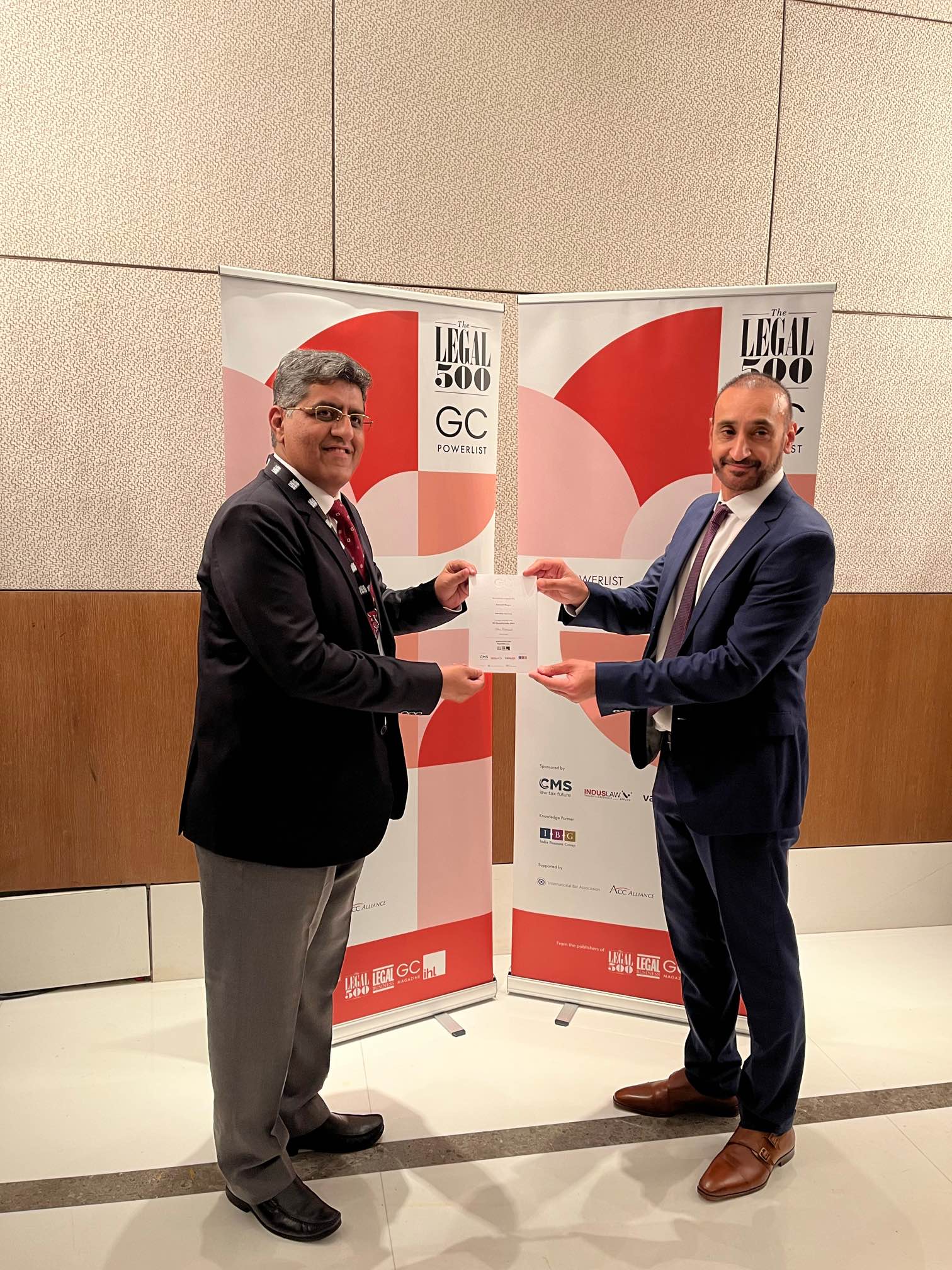
Category: Company Secretary

  • “Success lies in understanding legal principles while addressing business complexities effectively.” – Rabindra Purohit, Vice President Legal, Compliance & Company Secretary at DFPCL.

    “Success lies in understanding legal principles while addressing business complexities effectively.” – Rabindra Purohit, Vice President Legal, Compliance & Company Secretary at DFPCL.

    This interview has been published by Anshi Mudgal and The SuperLawyer Team

    What pivotal moments influenced your decision to become a lawyer and CS, and how did your early experiences of life shape your career path?

    The roots of this inspiring journey trace back to a tiny village in Odisha, nestled about 200 kilometres from Bhubaneswar. It was a place of simplicity and resilience, where school was held beneath the open sky, under the shade of a sprawling tree. When the rains came, they did not just wash the earth but also brought unexpected holidays, for there was no roof to shield the lessons. 

    Saturdays were special—they were days of collective effort and community spirit. The boys fetched water from nearby tanks, while the girls prepared the schoolyard, smoothing the earth with cow dung collected from the village. By Monday, the grounds were dry and ready to welcome another week of learning.

    In this setting, where challenges were woven into the fabric of daily life, a young dreamer’s path began to take shape. The journey from studying under a tree to standing in corporate boardrooms reflects a life sculpted by grit and determination, rooted deeply in those formative experiences.

    What inspired your decision to become a lawyer and CS, especially given your humble background? How did this journey shape your growth and influence those around you?

    From a small village in Odisha to a disciplined boarding school, the journey was a test of resilience and determination. Limited to education until class seven in the village, the young dreamer moved to a nearby town, adapting to the rigor of boarding school life—waking at 4 a.m., managing chores like grocery shopping, and balancing academics. These experiences instilled independence and discipline.

    Graduation brought a pivotal realization—the need to break free from constraints through education. This drive led to the bold decision of pursuing both company secretaryship and law simultaneously, an extraordinary feat accomplished with unwavering focus. Success transformed my life, taking me from humble beginnings to corporate boardrooms—a true testament to grit and ambition.

    How has your transition from independent CS practice to working at a law firm to serving as an in-house counsel shaped your career? What do you enjoy most about your role?

    My journey has been one of exploration and growth, shaped by diverse experiences across India. After completing my early education in Odisha, I moved to Chennai for my CS and later to Delhi to finish the course. These transitions exposed me to India’s rich diversity and built adaptability.

    I began as an independent practitioner CS in Delhi, handling IPOs, mergers, and corporate actions. This entrepreneurial phase was rewarding, but I sought to expand my horizons. Moving into corporate law firms, I leveraged my CS expertise to deliver client-centric solutions, which set me apart.

    My transition to in-house counsel began at Bharti Delmonte, working under inspiring mentors and gaining corporate strategy insights. Joining Vodafone during its historic acquisition of Hutchison was transformative, with a decade spent managing complex litigations, arbitrations, and large-scale challenges in telecom.

    then at NIVEA, FMCG leading legal functions for a global brand has been a dynamic and fulfilling chapter. Each role has enriched my perspective, blending entrepreneurial spirit, legal acumen, and strategic leadership.

    After two decades of experience working with major corporations, what significant changes have you observed in corporate legal practices, particularly in compliance frameworks and dispute resolution mechanisms?

    Over two decades, I’ve witnessed significant shifts in corporate legal practice, especially in compliance and dispute resolution. Companies like Vodafone demonstrated the importance of strong ethical foundations and robust compliance frameworks, aligning processes with a clear vision. Their dedication to excellence was reflected in hiring outstanding professionals and anticipating challenges years ahead.

    Recently, advancements in technology have streamlined compliance and dispute resolution mechanisms, improving transparency and efficiency. Coupled with a culture of ethics and governance, these developments have transformed the legal landscape. The combination of visionary leadership, structured policies, and exceptional talent remains the driving force behind corporate success today.

    How do global corporations, especially multinationals, approach dispute resolution differently?

    Litigation would always be the last resort for MNCs. It disrupts relationships and business continuity, so companies focus on resolving disputes amicably be it with governments, vendors, suppliers, or customers. 

    Multinationals emphasize customer-centric solutions. For instance, customer satisfaction was paramount. If a customer faced network issues, we responded with apologies or compensations rather than assigning blame. This empathy-first approach reflects their understanding that business thrives on happy customers.

    Globally, companies also prioritize efficient mechanisms like mediation and arbitration, ensuring conflicts are resolved swiftly while preserving relationships.

    Multinationals succeed not because of their global stature but because they create trusted brands, deliver value, and ensure compliance. It’s this forward-thinking, customer-first philosophy that drives their success with their leadership, empathy, and processes.

    How do you handle intellectual property and brand protection for a Global brand you served?

    Intellectual property is vital for innovation, identity and brand longevity, it begins with securing patents, trademarks, trade dress, and designs to convert creativity into valuable assets. Innovation drives product development, and legal measures ensure every aspect—from packaging to product shape—is meticulously protected.

    Proactive strategies, such as monitoring markets for counterfeiting and unauthorized use, are critical in preserving brand integrity. Collaborating with enforcement agencies and implementing stringent safeguards are key, especially in diverse markets like India were consumer dynamics demand vigilance. This approach ensures the longevity of the brand, upholding its reputation and trust across generations and geographies.

    Sir, how do you share your experience and impart education to new entrants in the legal field? What process do you follow to guide interns and inspire them to develop passion for the profession?

    Internships are essential for shaping future legal professionals. At our office, we actively host interns sent by law colleges, consistently engaging two to three interns each month. We assign them meaningful projects, encourage research, and foster collaboration, ensuring they gain practical insights that prepare them for successful careers.

    My advice to young lawyers is simple: the legal profession is a marathon, not a sprint. Patience, continuous learning, and adaptability are key. Success lies in understanding legal principles while addressing business complexities effectively. The challenge—and opportunity—is to merge theoretical knowledge with real-world solutions.

    Mentorship and exposure to seasoned professionals are invaluable in this process. Personally, working with stalwarts in multinational companies has shaped my journey, proving that growth comes through steady, purposeful learning and commitment over time.

    Sir, would you like to share some memorable achievements or recognitions from your career that had a significant impact on you and your approach to the kind of work that you have been doing?

    Ups and downs are part of every professional journey. Sometimes, despite your best efforts, outcomes may not favour you—like a lawyer who wins and loses cases or a doctor who saves lives but cannot save all.

    In my experience, one notable case involved a complex arbitration dispute. The matter escalated to the Supreme Court and back to arbitration, stretching over 15 years. For seven of those years, I was actively handling it, and by then, 30 crore rupees had already been spent on a 100-crore dispute. Such cases highlight the challenges and costs of prolonged litigation—it’s a fight that can go on endlessly if parties don’t seek resolution.

    On the other hand, there have been many rewarding moments. For instance, in a recent case, one of our competitors was disparaging our brand. We took them to court and secured a landmark order from the Delhi High Court, which stands as a testament to the power of focused legal strategy.

    My guiding principle, inspired by the Gita, is Kamrany vadhikaraste Ma Phaleshu Kada Chanan “Do your duty without worrying about the results”. The result is always a byproduct of consistent effort, dedication, and making the best use of available resources. Whether in tough challenges or noteworthy recognitions, this belief keeps me focused on delivering my best.

    You’ve pursued dual qualifications as a company secretary and a lawyer. How has this combination benefited your career, and what advice would you give to learners following the same path?

    The combination of being a company secretary and a lawyer is incredibly powerful. Company secretaryship provides deep insights into business operations, taxation, management, governance, and organizational behaviour. However, it doesn’t cover areas like civil law, criminal law, constitutional law, or jurisprudence—fields that are integral to legal practice. Law complements this by equipping you with a thorough understanding of the legal system.

    When you combine the two, you gain a unique ability to bridge business challenges with legal solutions. This synergy is highly valued by companies, especially those requiring professionals to manage both roles efficiently. Many organizations prefer hiring individuals with dual qualifications to meet regulatory requirements while optimizing resources.

    For learners, my advice is to see this combination as a long-term investment. It’s a strategic advantage that not only opens doors to versatile career opportunities but also helps you excel in leadership roles. The key is to approach your career with patience, commitment, and the understanding that success comes from integrating knowledge and applying it effectively over time. This is undoubtedly one of the best professional combinations for aspiring legal and corporate professionals.

    What unique legal challenges have you faced in the skincare industry, especially when transitioning from telecom to FMCG?

    Moving from telecom to skincare was a significant shift. Telecom revolves around services, technology, and infrastructure, like optical fibres and towers, while skincare is product-focused with manufacturing, supply chains, and distribution at its core.

    The regulatory landscape is vastly different. Telecom is governed by sector-specific regulators, whereas FMCG and cosmetics must adhere to the Drugs and Cosmetics Act and legal metrology rules. The skincare industry, often treated like pharmaceuticals, requires strict compliance to ensure product safety and consumer trust.

    Adapting to this new framework took time—about six months to fully absorb the nuances of manufacturing, distribution, and FMCG regulations. While some aspects like contracts and compliance were familiar, learning the specifics of product-centric laws and supply chain operations was essential.

    Skincare demands understanding Skin Science, rigorous compliance, strict adherence to regulatory standards, and a deep understanding of its unique challenges and competition landscape. With focus and adaptability, I’ve successfully navigated this dynamic environment, ensuring robust compliance and operational excellence.

    Outside of your professional life, what are some personal interests or hobbies that contribute to your overall well-being and work-life balance? How have you found that peaceful space for yourself?

    Earlier, I was passionate about cycling, but I had to stop due to safety concerns in Mumbai. I then shifted to yoga, which has been transformative for me over the past couple of years. Yoga, along with meditation, helps me unwind and maintain a sense of balance. Swimming is another activity I enjoy whenever I get the time—it’s both relaxing and energizing.

    Reading and listening to blogs are integral parts of my life as well. In our profession, staying informed is crucial, and I find reading to be both enriching and calming. When I have a longer break, I indulge my passion for travel—especially road trips. One of my most memorable adventures was driving from Mumbai to Ladakh; Mumbai to Kanyakumari by road with a GC friend, exploring India’s beauty by car.

    These hobbies—whether yoga, swimming, reading, or traveling—serve as my personal escape. They not only help me recharge but also motivate me, adding meaning and joy to my life beyond work.

    Get in touch with Rabindra Purohit –

  • In Conversation with: Avneesh Chopra, Head (Legal) and Company Secretary at Valvoline Cummins Pvt Ltd (India)

    In Conversation with: Avneesh Chopra, Head (Legal) and Company Secretary at Valvoline Cummins Pvt Ltd (India)

    This interview has been published by Prabhjot Singh, Priyanka Karwa and The SuperLawyer Team

    Was doing law pre-planned or did you instantly make a decision to pursue law?

    Yes, doing law was pre-planned. My father who is also law graduate from Delhi University introduced me to the law and law books. We used to have a small library at home where I enjoyed reading the case laws on contracts, IPC etc.

    When I went to do B. Com (H), I was introduced to contracts law, sale of goods, partnership, and property laws, where the actual journey to understand the law started.  To further enhance my knowledge of law, I also decided to pursue the Company Secretary course which provided me more insight into finance and taxation, and the law governing the corporate entities.

    Having more than 2 decades of experience in the legal industry, what strategies keep you going in this profession?

    The strategy which keeps me going is that I always consider myself a student. As a student, I am open to new learnings, changes and challenges.

    As a law student, I developed the habit of observing and learning, before interpreting and applying. While working as an in-house lawyer, I realized that to have legal knowledge is not enough; hence, I worked myself to understand the other facets of the business, competition, industry, and kept myself updated on foreign economic and  regulatory environment, as well.

    During my career, I also faced a few up and downs which fortunately helped me develop a network of mentors, comprising individuals who have supported me during testing times.

    Do you think after doing CS, it’s an easy sail for every legal professional in the corporate world? We have heard opposing arguments though from some people!

    Nothing is easy in the corporate world if you are a legal professional. The Company Secretary Course will help you understand the way in which an organization operates and functions. If you wish to work in the Legal Team of a company, then the Company Secretary course is a good option as it is designed to give you knowledge in various subjects and areas which are beyond the law as well.

    The Company Secretary works as a link between the company and its board of directors, shareholders, government, and various regulatory authorities.

    Hence, they take up diverse roles in the management, taxation and finance departments of a company and help the company in all such areas. It is incorrect to say that Company Secretary course is an easy sail; it should be kept in mind that every professional in the corporate world must prove their worth and deliver results to move up the ladder.

    Avneesh as you are experienced in dealing with POSH cases, we have heard a lot about “Quid Pro Quo Harassment” and what are the punishments for the same?

    In Latin, “Quid-Pro-Quo” means “something for something”. Quid pro quo sexual harassment occurs when employment, pay, benefits, title, position or other opportunities for advancement or training, are conditioned upon the submission to unwelcome sexual advances.

    Quid-pro-quo is a serious offence. It is extremely important to be very clear and transparent in all businesses dealing with employees at the workplace. The punishment depends upon a case-to-case basis ranging from disciplinary action including a written apology, reprimand, warning, censure withholding of promotion/ pay raise/ increment, termination of employment, undergo counselling etc. In some matters, it could also lead to a criminal complaint against the perpetrator.

    Reg -Tech is helpful they say in doing compliance’s, how far do you believe this?

    Definitely, any tool and technology which reduces human efforts and intervention are going to help. In a digital environment featuring complex business structures with the change of law and regulations almost happening on daily basis, organizations require tools that will keep them up to date with the latest regulatory changes thereby minimizing the likelihood of human error.

    Reg-Tech can also provide increased confidence in meeting board agendas pertaining to issues such as transparency and proactive reporting of risks and compliance. This technology also allows companies to meet regulatory-driven data activities and support submissions to regulatory bodies in an accurate and consistent manner.

    However, before implementing and recommending Reg-Tech, we as lawyers need to learn about the technology, its architecture, data models, as well as algorithms.

    We also need to understand cross-functional teams for evaluating the risks, beyond the legal risk of using manual and automated processes, along with the legal risks related to any specific Reg-Tech product. Data protection and privacy remain the most important factors to consider when using Reg-Tech.

    As tech startups are growing like never before, do you think our data is protected and the level of secrecy is maintained?

    Data is growing faster than ever. Data secrecy and conditionality are prime concerns of General Counsels (GCs). The prevalence of cyber-attacks, frauds & crime and the emergence of new regulations like CERT guidelines are forcing boards and their GCs to work closely with the chief information security officer (CISO) to make decisions about how to protect the company against cyber-attacks, respond to data breaches as well as other attacks, while complying with applicable data protection laws.

    My personal experience suggests that many tech start-ups are not investing enough time & sources and are not incorporating privacy as the default.

    In recent times, we have seen the Government withdrawing the personal data protection (PDP) Bill after receiving concerns from Indian start-ups, which suggest that data localization requirements in the draft PDP Bill are too “compliance intensive” and could hamper the ease of doing business and stifle innovation.

    The same may be true, however data security and confidentially should be paramount and should be a part of the core DNA of any start-up or organization. The tech start-ups should consider data privacy as part of their core foundation before offering any products, services, and processing data, which will enable them to be future-ready. Further, it will bring transparency and trust among the users and customers.

    How do you see the corporate world serving more opportunities to individuals in the legal world?

    Multiple opportunities are available in the corporate world for individuals. The legal department as business partners must take ownership and support the overall success of a company.

    Depending on the nature and size of the business, in-house legal work has been rising in volume, especially in specific areas like environment & safety, data protection & privacy, competition law as well as other  regulatory & compliance work arising out of amendments and change in law, compliance breaches, intellectual property protection, M&A etc.

    Another reason for the increase in legal work is the growing attention to legal budget control and better risk management, whereby in-house lawyers’ must have more knowledge about the company as compared to external lawyers.

    At present, many lawyers are contributing to multiple facets of the organization such as corporate governance, contracts, litigation, compliances, ethics, investigation, internal control & audit, employment, data privacy as well as other security matters, corporate social responsibility, policy advocacy & liaison, taxation and finance.

    The key attribute for an individual to grow in the corporate world is that they should have commercial sense, be willing to learn, explore new opportunities and be ready to work outside their comfort zone.

    Any advice for our readers?

    To succeed as an in-house lawyer, you need to be proactive, flexible, find solutions and communicate them in a concise and simple manner. You must understand the business, the industry, collaborate more with other businesses, build trust, and relationships. One must also ensure the alignment of expectations and communicate them. It is also important to remain  a lifelong learner.

    In today’s dynamic environment, if you can think and act as entrepreneur, the same is going to help you immensely.


    Get in touch with Avneesh Chopra-

  • In conversation with Rohit Jain- An Advocate, a former Legal Journalist, and a qualified Company Secretary, who is currently working as an Account Director at Adfactors PR

    In conversation with Rohit Jain- An Advocate, a former Legal Journalist, and a qualified Company Secretary, who is currently working as an Account Director at Adfactors PR

    This interview has been published by Sonali ParasharOjuswi Sahay and the SuperLawyer Team


    Could you please share with us your inclination towards law and tell us why you decided to pursue this discipline?

    First of all, thank you for this interview opportunity. Before starting on what made me pursue this discipline a little bit about myself. 

    I come from the small town of Dhule, Maharashtra where I completed my education till the eighth grade. Post that, I shifted to my current home town of Nashik where I completed my junior college (11th and 12th). I chose to pursue Bachelors of Computer Applications as computers were a rage those days. Post that I completed my MBA with Finance specialisation which helped me in getting my first job. 

    It will be slightly wrong if I say that law was always my first choice. Since my school days, I have had a multi-disciplinary approach towards studies and consuming knowledge in general. Until the 10th grade, I was deeply interested in mathematics and science. During graduation, it shifted towards finance and technology. 

    My interest in law evolved over a period of time. One of the first encounters with something purely legal that I can clearly remember was the starting copyright notice of this fantastic NES game – Captain America and The Avengers that I used to play during the early 2000s. The game starts with a copyright notice “Captain America, the Avengers and distinctive likenesses thereof”...During my bachelor’s, I enjoyed the coding as well as reading EULAs and software legal disclaimers that are embedded in these software. 

    My interest in law became even stronger once I cleared the Company Secretary examination. This coupled with my drafting skills, unquenchable appetite for reading and ability to understand complex things helped my transition into the legal sector. 

    You hold a degree in MBA in Finance and you also went on to pursue CS. What motivated you to pursue a career in the corporate sector?

    At the start, I was more inclined towards getting a government job or joining the civil services. Unlike the freshers of today, I knew of no other choice other than a corporate or a government job. Startups (as a choice as they are today) were non-existent then and NGOs were not the talk of the town. 

    My efforts in applying for government jobs bore fruit more than once. But I got rejected in the final rounds which dissuaded me from moving further. Once I got my first job with Axis Bank and then Deloitte USI, it was never looking back. I believe that if a person is good at the work that he/she does, the sector can never be a constraint. I have seen people transitioning from corporate to academia and then public services also. 

    Multiple factors work together in shaping your choice at any point in time. 

    You began your career working as a Legal Analyst for Deloitte US India Offices. Can you please tell us about your experience there? 

    I was part of the Office of General Counsel in Deloitte USI, which is the Indian subsidiary of the US-based Deloitte Consulting LLP. Our team handled the core legal functions pertaining to the Deloitte USI entities. 

    To put it in a nutshell, my work involved drafting, vetting and negotiating contracts, legal research, handling corporate secretarial compliances and providing counsel on legal matters. This would range from traditional areas such as employment laws to emerging areas like data privacy and taxation.

    Having worked there for nearly 5 years, I can say that Deloitte USI has one of the best environments that one can work in. The learning and development opportunities were immense – we had access to some of the top-notch legal training databases that may otherwise be reserved only for seniors in other companies. 

    I was lucky enough to have a wonderful and supportive team which was equally exuberant in the interests that I had. 

    You also worked at Bloomberg Quint as a Legal Correspondent reporting and writing on corporate, taxation, insolvency, securities and, indirect tax laws. What was working with a news portal like and how did it shape your career?

    My stint as a journalist helped me in enhancing my writing skills, although I do not agree with some of the writing conventions that journalists follow in general. Anyways, the stint as a journalist helped me in being more expressive of what I felt insofar as law and policy are concerned. I became more active on social media, especially LinkedIn. As a journalist, you can write in a more expressive manner. Inhibitions go away. 

    I was lucky enough to shift to journalism at a time when the Insolvency and Bankruptcy Code was slowly gaining momentum. Because of this, I got the opportunity to visit the High Court, SAT and the NCLT and listen to the arguments on an almost daily basis. Being from a legal background, I could relate to the arguments and developments even more. This also provided me with an opportunity to know a few practising lawyers who have now become good friends. 

    Being a part of the Strategic Communications group at Adfactors PR, India’s largest public relations company, how important do you believe communication and people skills are in one’s career, and how did law help you in developing these skills?

    Communication and people skills are an absolute must in one’s career. 

    From a public relations perspective, communication determines the state of relation between an inanimate object – a company – and its external stakeholders, who are animate.  A plethora of case studies has shown that a crisis situation could have been totally avoided or handled in a much better and smoother manner if the communication was properly done. Good communication skills equally matter for an employee as she/he climbs up the career ladder. 

    People skills also hold equal importance. We are living in changing times. The world is moving towards a flatter organisational structure, breaking unnecessary hierarchies and stereotypes that hitherto existed. People skills are thus very imperative for all, especially managers. It can be as simple as making a person feel welcome on her/his first day of work or being accommodative towards your colleagues. The way a person treats and behaves with others stays in the mind forever. So, people skills are equally important.

    You hold a PG Diploma in Cyber and media laws. What interested you the most in this and how should one go about making a career in these fields?

    Cyber law as a term has become a slightly out of date term now. Today, it is rather known as tech law, data privacy law etc. One must note that a 3 year or 5 years LLB program is a mix of different laws but nothing offers you specialisation. For instance, Patent and Copyright laws are so vast, yet they are mixed together in just one module (Intellectual Property) in a law school. The focused approach towards cyber law and media law interested me the most.

    The legal field of today demands specialisation. If you see the new practices being set up in law firms, one may notice areas such as technology, data privacy, blockchain and crypto etc. To gain a foothold in such areas, one needs a mix of solid work experience and academic knowledge. It is at this juncture that PG Diplomas help you. 

    We must remember though. Merely doing a Diploma as an additional course will not land you the dream job.

    Many legal professionals aim at pursuing CS. What are the aspects that one should keep in mind according to you, to prepare themselves in this regard?

    The Company Secretary course requires intense study. Lawyers who are working in law firms may find it difficult to devote adequate time to study because of their long working hours. Those who work in corporate law will find it easy as the syllabus will match their working area. They may face a challenge with the finance and accountancy modules though. 

    When I attempted the CS professional module, I remember quoting real-world, recent and relevant details in my answer sheet. For instance, I would have written about the IL&FS crisis w.r.t corporate governance if I was attempting my answers now. While the relevance depends on the invigilator, there is a good chance that you will get commensurate marks.

    In my opinion, lawyers who wish to become compliance officers must pursue the CS course. In general, the LLB syllabus of a 5-year course from a good law school is more than enough. 

    Finally, a word of advice for professionals leaping into communications and related fields?

    Public relation is an exciting field. Not many know about this industry because it is mostly based out of the top 3-4 metro cities. It is much more than just advertising. The lines are blurring though. 

    As a start, professionals intending to switch over to comms/ PR must develop a bandwidth to track what is happening in the world of media, what journalists are writing about, what are the topics being talked about etc. Like any other field, PR also involves specialisation. So a person from an engineering background who is good in communication skills can add much value to a client requiring advisory on ESG, mobility or allied areas. Comms and PR is an exciting domain where a long term play can be really rewarding. 


    Get in touch with Rohit Jain –