Category: Interviews

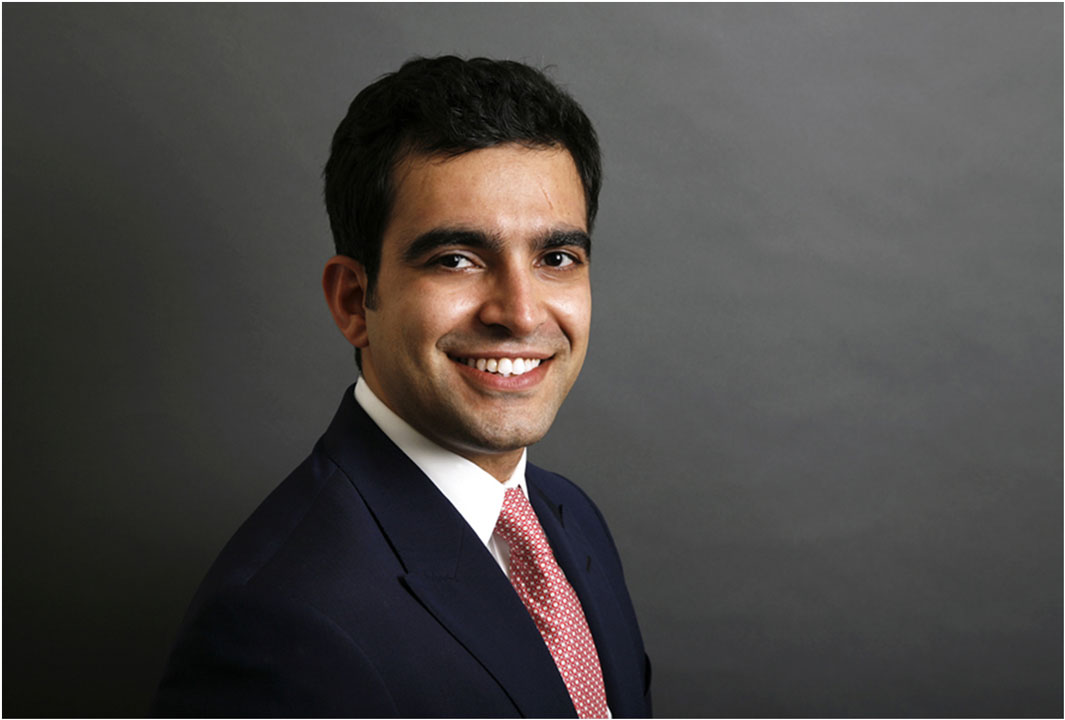
  • Aishvary Vikram, Winner, BCI Moot, 2013, on being a 4th generation lawyer, his mooting experience, and plans for the future

    Aishvary Vikram is a fifth year student of School of Law, KIIT University, specializing in comparative constitutional law. His team was adjudged  the best team at the 29th All India Inter University Moot Court Competition, 2013,  where he bagged the award for best speaker. He has participated in seven moots at the state and national level.

    In this interview he speaks to us about:

    • How to start preparing for moots
    • How to draft memos
    • His internship experience


    Why did you want to study law?

    Law was never my first preference but ultimately it became my last choice. For a science student there have traditionally existed only two career choices after class 12, either engineering or medicine. Despite being the 4th generation in my family with a formal training in law, I never got the opportunity to see the law in motion. My great grandfather was a lawyer who later became an MLA but I never got to meet him; my grandfather was a judge but his death prevented me from benefiting from his experience once I had joined law school; my father studied law but never practiced it, so I never got a chance to see what the practice of law is. People usually study law to enter into practice seeing their parents or relatives, and later end up in law firms. Or they are inspired by great legal luminaries, or fictional characters such as Alan Shore or Danny Crane (From the Boston Legal TV series), or at best they want to serve society. This was however not to be my story. I gave the entrance exams for law due to my father’s continuous insistence. Not being able to get through CLAT, I appeared for KLSAT and joined KIIT.


    What internships have you done so far? Did you receive any assistance regarding this from your college?

    My track record with internships is really poor. Lost in my own ideology to learn from internships rather than collecting certificates, I have spent a lot of time at BHU, the Allahabad University and the faculty of law library for which certificates were however not provided. Nevertheless, I have done a total of seven internships. Out of these internships, one was under an NGO in my first year, two in a district court in my second year, two in High Courts in my third year, one under Prof. Faizan Mustaffa, Vice Chancellor of the NALSAR in my fourth year and the last under a senior advocate in the Hon’ble Supreme Court in my fifth year. The college has always provided us with great assistance in getting internships and now it has opened various programs to provide internships to the students in accordance with the fields they are interested in.


    Which internship experiences will be right at the top and why?

    I have very little to say about my internships due to my inexperience. I find myself an incompetent person in this regard. However, as a piece of advice I would like to say that I have always disliked the working style in law firms due to the non-participatory nature of work where one is only asked to find the law and given no opportunity to relate it to the facts. Sitting on a chair the whole day and finding material is like being Google, which has never interested me (this is my personal opinion and people reading this, are free to discard it).
    aishvary-vikram


    Tell us about your mooting accomplishments.

    The first page of the BCI moot chapter started with a phone call from my friends Nitesh Ranjan and Navneet Sahey. Both were in college and were planning to take part in the 29th BCI Moot court competition. Unfortunately their third team member Satyabratha Das was at home, planning to come a little late due to her internships. The 29th Bar Council Moot was something I never planned for. Really, being in the fifth year, people don’t do this moot at this stage. But no other team was ready to do this moot as our vacations had just ended and the date for the open challenge was not suitable. So we made a plan to do this moot just to pass a month, as very little was there to study and our friends were not back from their internships. After the problem was released, we realized that it is far more difficult to research. We had actually done many moots earlier, but for the first time we realized how tough it is to research for four moot problems in a month. We divided the four problem in three groups— Nitesh Ranjan, the lead researcher was to deal with the first problem with Neha Tripathi, an additional researcher provided by our college, Navneet Sahey was to deal with the second problem with Vikash Chandra Shukla, another additional researcher, and I was to deal with the third and the fourth problem. This is how our memorials were prepared. The biggest contribution to our success was from our friend, Abhinav Gupta, who not only assisted us in drafting but did the formatting of the moot memorials, even though he was the convener of the First KIIT Conference on Intellectual property rights and Bikash Shaw, who was always there with us online, downloading the cases even when we were in MITS giving our orals. This moot was more than a moot; it was a litmus test for the bond of friendship we have. Knowing the fact that only participants will get the certificate, our friends as our additional researchers were always with us. The moot experience in terms of orals was extremely good. The teams we faced were well prepared. In preliminary rounds we faced Christ Law College; in he quarters we faced BHU; in the semis we faced NLSIU and finally we faced NLU Bhopal. All the teams were excellent and well prepared. This success wouldn’t have been in our hand if our lead observer, Akshay Rajpurohit was not with us. From printing the compendium, compiling it to bringing snacks and cold drinks, he was always there with us.


    What factors do you think contributed to this success?

    My senses are too weak to see the whole picture of support and contributing factors towards my success. My words of appreciation about their contribution would be such a small  description of their help that it will be an insult to the sources. Therefore, without specifically narrating all the assistance I got, I will generally thank my teachers and friends for always assisting me and my parents for always holding my hand.


    What separates a great memo from an average memo?

    I will give due credit to my law professors for this, as unlike traditional law universities, our professors have always prepared a course structure taking into consideration laws and practices of different countries to the extent that it doesn’t affect the basic structure. Specifically our Constitutional Law general and specialised papers conducted by Prof. Kumar Kartikeya has taken a further step by incorporating not only the foreign principles or case laws referred to by the Indian judges but has designed the structure in such a way so as to give us a short idea of the constitution in four countries, namely US, Australia, India and unwritten constitution in UK. Due to this comparative approach it was easier for us to research and find case laws and statutes in various countries. If one refers to our memorial, specifically the third and the fourth memorial, one would find foreign case laws and doctrine, which I failed to find in the memorials of other teams in the semi-finals and finals.


    Speaking skills or knowledge of law, what is more important?

    It is important to marry the two. The knowledge of law is like an armour which one may use to protect his case while, speaking skills are a spear to rupture the judges’ sarcasm and leave a long time impression on a judge’s mind.


    When you get the problem, what is the first thing you would do?

    Read it (I believe this satisfies this question literally), but on a purposeful note, one should read the problem until he is aware of the purpose of each and every single line. It may happen that a part of the problem may seem to be introduction, but later on one realises that even though the particular fact instigates no law finding but, is of peculiar importance to support the formulation of arguments or argues on the basis of the fact.


    Share your formatting secrets. 

    A mooter must prepare multiple arguments amalgamating reason and logic. Prepare multiple arguments, so that you may never run out of options. Using rational and convincing arguments with the spirit of law is of utmost importance. Instead of quoting a number of case names or details of the cases and presenting a thesis, one must try to formulate reason, practical and theoretical as to why his argument must be accepted by the court. I have seen people whose memorials consist of hundreds of cases and thousands of authorities but lacks reason or logic. Merely taking a particular statement from various books without knowing the reason or its relevance is of no use. If one may cast a look on best memorials in international moots, one will find my observations true.


    Why is mooting important? 

    Actually, I have not yet tasted the flavour of advocacy so I hardly know how it will contribute to my skills as a lawyer. Mooting has been an accident for me. When a colleague could not make it to a moot, my best buddies Vikash Shulka and Abhinash Barik approached me and convinced me to moot with them. So from the first year itself our mooting started and slowly it engulfed me in its charms and beauty. From first year till now, we have done a number of moots. The incentive to start off my mooting carrier goes to my friends but the continuation of this goes to my seniors and my parents who were always there to help me and always motivated me to carry this extra load.


    What is your opinion on your intra-college mooting system? 

    The intra moot court system in our college is really good. Thanks to my friend Abhinash Barik, my teachers, Asst. Prof. Kasturi Bhagat and Asst. Prof. Kumar Kartikaya whose imaginative thinking has brought various changes to the system of mooting. There is no favouritism, nor can anyone dominate the moot court society and this includes the Director as well. The moot court competitions are divided into two segments, all national moots except the Bar Council of India and B.R Sahany moot are allotted according to the results of the intra moot court competition and the international moots and the two moots listed above, are open to open challenge. The transparency and student welfare is the fabric of our moot court society, which leaves me with no comments for improvement.


    If I have never mooted in my life, but I want to, how should I get started?

    Getting started is really simple as there is no competitive written exam which one needs to qualify to call oneself a mooter. Trying out for national or international moots is also mooting, but continuing the academic practice of mooting is very difficult, as there is always a tilt towards running away from the extra burden a student has conferred upon oneself. Every attempt may not bear a fruitful result and add to that, the extra burden of college good reputation which is a constant pressure for the team, which may bring efficiency but in many cases forbids creativity. One has to have a strong determination if he so intends to enter into the arena of mooting and use his creativity, as judges in various moot courts are not always looking for the case laws in support but the extent of artistry and understanding of law that has been put to the problem. Further, one thing must be really clear before one even attempts to call himself a mooter that mooting is not always among the equals, there is no Article 14 application here. It has always been between students irrespective of their institution, quality of teachers and extent of their support, the year in which one is, no consideration is given to these facts. The thing which every mooter possesses is the moot problem, the library and his creative mind which one has to solely amalgamate and, support of teacher may serve as a catalyst but can never be the basic foundation.


    How important is the role of a researcher in a moot team vis-à-vis the speakers?

    Well, in our team, all were researchers seven days prior to the moot and it is only after the preparation of the memorials that we decide who all will be the speakers. The role of speakers and researchers are equally important but I also feel that speakers have a slight edge above the researcher in oral presentations and in sharing the fame, if they so win a moot. There is no “I can do better or it’s not good for me” game in mooting, there is always “What is good for the team and who can better serve the team in orals.” It’s very rightly said that if one wants to travel faster he may run alone but if one wants to survive longer, walk with someone– try to apply this in mooting as well.


    What message would you like to share with our readers?

    My inexperience and little knowledge will to some extent make my views premature and short sighted but nevertheless, some of the things I learnt are:

    1. In moots don’t go for law in the strict sense, always try to use creativity and imagination, don’t see the judgement but look behind the judgement and try to focus on jurisprudence than on case laws.
    2. Prepare the brief and arguments and take notes of the judge’s name and para number to some extent, to show your level of preparation.
    3. Try to formulate multiple arguments for the same proposition.
    4. Avoid difficult words.
    5. Show respect for the judges but no flattery.
    6. Be confident and never emphasise on a wrong proposition for the sake of argument.
  • Nima Heydarian, Founder, Indianlawyers.net, on the need to modernise the legal industry and his passion for technology

    Nima Heydarian, Founder, Indianlawyers.net, on the need to modernise the legal industry and his passion for technology

    Nima Heydarian is a Controls Engineer in the Oil & Gas industry with an electrical engineering bachelor’s degree from Purdue University. He has been developing websites and applications on the side for the past eleven years. In 2010, he started a new business called “Heritage Law Marketing” focused on marketing the services of the attorneys based on their heritage background, international practice areas and languages that they speak. He has been developing an online marketplace through which one can reach out to Indian lawyers worldwide, Indianlawyers.net.

    In this interview, we speak to him abut:

    • His project and its importance
    • The challenges faced by him
    • How lawyers will benefit from Indianlawyers.net


    nima-hHow did you decide to start a project related to the legal industry?

    I am Iranian. About seven years ago when I was in college I built the website, IranianLawyers.net, to list Iranian lawyers and help them connect with the Iranian community. I built the website as a hobby and completely free of charge. At the back of my mind, I also believed that this could one day be a serious business because I would be addressing a very real need in the market. Also lawyers of other ethnicities are a demographic largely overlooked by the larger legal marketing firms.

    From the beginning my goal was to turn Heritage Law Marketing into a large legal marketing firm so I had to build a solid platform and a set of the tools focused on long term growth. That required time and a decent amount of investment neither of which most senior electrical engineering students have. I graduated college in December 2009 and started the business in March 2010.


    To anyone who’s never come across ‘Indianlawyers.net’, how would you describe it?

    It’s a directory of Indian attorneys around the world. We publish legal articles pertaining to the Indian community. We are working on a ranking system to rank Indian non-corporate law firms in India and elsewhere. We also plan to host various “Indian Legal” events around the world.


    Could you explain your business model to our readers in layman terms?

    Attorneys pay to be included in our directory and we help them connect with clients seeking their services. We also sell legal marketing services such as Adwords, SEO, Web Design, etc.


    What have been some of the challenges?

    The biggest challenge so far has been to stand out among the abundance of the legal directory websites that are out there. We are going to be much more than just a directory and need to do a good job of conveying that message to attorneys who get bombarded by ads from different directories every day.


    How did you go about creating the technology behind the product?

    I did as much of the programming myself to save money but for the more complicated and delicate parts of the script I hired the best programmer I knew from around the web. He wasn’t cheap but the results are obvious in how user friendly, fast loading, and solid the website is.


    What kind of growth has ‘Indianlawyers.net’ seen since its launch?

    I spent the first 3 years mostly building the platform so we didn’t have much growth during that time. Right now I am offering the listings to about 100 select attorneys free of charge to test features of the website, so that I can get feedback, and generate word of mouth advertising. I hope to have 100 attorneys listed with us by end of 2013.


    Any major learning you would like to share with our readers?

    Finding the right people and right team is much harder than it seems.

    What kind of lawyers would benefit from joining the portal? Why should they join it?

    Individual lawyers and small law firms would benefit the most because the legal clients we send to lawyer are mostly individuals, families and small businesses.

    How are you marketing Indianlawyers.net to lawyers?

    I am using a host of different methods right now including social media, article marketing, banner advertising, direct mail, print advertising, etc. I am trying to use as many weapons out of the book Guerrilla Marketing Weapons by Jay Conrad Levinson as possible.


    What message would you like to share with our readers?

    The legal industry in India is old and in need of modernization. Let’s work together and make it happen. I am happy to work with anyone else who is looking to leave an impact on the legal industry in India through the use of technology.

  • Divya Vikram, Consultant, Legal League Consulting, on her experience and the future of Legal Management

    Divya Vikram, Consultant, Legal League Consulting, on her experience and the future of Legal Management

    Divya Vikram is a graduate from NUJS, batch of 2012. During her time as an undergraduate, she was Director of the Society for Advancement of Criminal Justice (SACJ) for two consequent years. She has also taught at the Adult Literacy and Legal Education Programme, an initiative undertaken by the Legal Aid Society of NUJS. She is currently a consultant with Legal League Consulting, where she handles Strategy and Business Planning, Practice Development, Brand Communications & Client relationships, Law Firm Alliances and Synergies.

    In this interview we speak to her about:

    • Her experience at LCC and the responsibilities the job entails
    • Striking a balance between work and personal life
    • The future of legal management


    How did you decide to study law? Tell us about your college life


    Let’s just say, law was sort of a happy accident. College life in the first year I would say was sort of tough. You had to get adjusted to living away from home, your parents and friends back home, hostel life, hostel food, making new friends, coping with law school in general. However, things got better with subsequent years. Law school shapes you as an individual and professional. NUJS offered me diverse things to do as a student, be it moot courts, publications, managing committees/societies, volunteering in various activities etc. apart from the regular studies and projects.


    What kind of internships did you do while you were a student? 

    After my first internship at Lawyers Collective (NGO), I decided to do my second internship in a law firm. I started with ALMT Legal then subsequently interned at AZB & Partners, Trilegal, Brus Chambers etc. None of my experiences were remarkable as such but each internship taught me something new. However, at the end of 4th year I decided that five years down the line, I don’t see myself working in a law firm.  Hence in my 5th year in order to experience the corporate world as well, I interned at a Corporate (SunEdison) and loved it.


    How did you decide to work with Legal League Consulting?

    The first time I heard about Legal League Consulting (LLC) was in my 5th year when they invited applications through Campus Recruitment Committee. That’s when I checked online about LLC and the managing law firms. Also, I was lucky to find a junior who had interned there and he explained me the nature of work they undertook. From what I learnt about the nature of work I was almost immediately convinced and interested at the prospect of working at LLC.


    divya-vikramCan you tell us something about the kind of work LLC does?

    (LLC is the first law firm management company in India legal industry.)

    Legal League Consulting (LLC) provides Management Consulting to the legal industry. We provide solutions to the legal industry with respect to Human Resource Management, Financial Management, Business Development, Strategic Business Planning, Knowledge Management, Partnership Structuring, Alliance, etc. In a Nutshell, it’s basically a 360* degree management service to the Legal industry.

    My role at LLC majorly involves, but not restricted to, formulating policies essential for running of a law firm, undertaking activities to assist firms in developing business. I also assist Law Firms in the implementation of various Human Resource, Business Development and Knowledge Management related systems.


    Did you ever hit a rough patch in the beginning of the career? 

    Student life was fun and apart from scoring good grades and working towards a making a good CV and enjoying college life, there was not much you really had to do. But being a professional is altogether a different ball game. It was indeed a little difficult to transition. Firstly, my transition from a lawyer to a management consultant itself was a difficult one, especially those work involving compensation structuring and other finance related aspects. Learning various management concepts, its application and understanding the rationale behind it. As a Consultant, you are solely responsible for all the clients you handle and the documents you send them etc. therefore the accountability factor is more and one cannot afford to make mistakes. Furthermore, one has to be well informed about not only the Company’s clients but the market and global trends and keep evolving.


    What is a typical day at work like?

    At LLC I work for the Law Firm Management Team (the other two being Brand Communications and Talent Acquisition Team), where we undertake a wide variety of work starting from HR, Finance, Partnership Structuring, Compensation Benchmarking etc. Hence most of the days, depending on client needs I work on the client deliverables for that particular day or week. Apart from that sometimes I accompany Ms. Bithika Anand, our Founder & CEO and sometimes other seniors to client meetings. In addition to client work we work on developing new products, and other upcoming initiatives of LLC.


    What are your thoughts on work-life balance? How do you achieve it yourself?

    Work- life balance is definitely of utmost importance to me. I would definitely need a day off from work to clean my apartment, wash clothes, cook some good food, relax, watch television and catch up with friends. At LLC 2nd and 4th Saturdays is off in addition to Sundays, which is good enough for me to relax. However, very rarely, you might have to attend some client meeting on a non-working Saturday or work towards completing some client deliverable… but that’s fine!


    What do you think is the future of Legal Management?

    The future of Legal Management is bright… in fact very bright. Almost every other day we have a new client (law firms, corporates, LPO’s, recently even an NGO) who has approached us for handling their various management related issues and needs. There is growing awareness and realization on the importance of management in runningone’s organization. As lawyers are busy with execution of law, they prefer to leave the day-to-day running and management of their organization to experts in the Management field.


    Where do you see yourself five years down the line? What kind of work will you like to do?

    Since I seem to be enjoying my job a lot, I certainly see myself as a Management Consultant… however, a much experienced and evolved professional. As I love doing more of HR work than Finance, I would like to specialize more in the HR related aspects.


    What do you do apart from work? How is the life of a law graduate in Delhi?

    I would prefer spending my off days at home either watching television, experimenting my culinary skills, reading books and sometimes meeting up with friends and not to forget shopping.

    Delhi is a wonderful place for youngsters. It offers a wide variety of options for all kinds of people. There are places to shop starting from your malls to Sarojini Nagar and the old Chandni Chowk, places to eat ranging from your Sheraton, Hauz Village, ParanteWaali gali and other street delicacies. For those who love Indian culture and history, there are remains of the past Mughal Rule in India which can be visited and many other places.


    Would you like to work for law firms as an associate in future?

    No, not at all.

    Last but not the least, what would be your message for law students?

    There is no reason why a law student will be interested in a message from me. But then if I had to say something, I would say enjoy every bit of your college life, because they are priceless and they will never come back to you. Once you are a professional you will yearn for that kind of time and fun.

    Also, don’t spend law school life just being bothered about internship and grades. Trust me, at the end of the day that hardly matters!

  • Prem Ayyathurai and Sahana Mahesh, co-founders, Kranti, on Government inaction, the culture of dissent and bridging inequalities

    Prem Ayyathurai and Sahana Mahesh, co-founders, Kranti, on Government inaction, the culture of dissent and bridging inequalities

    Prem Ayyathurai and Sahana Mahesh are peers and graduates in law from NLSIU, Bangalore. They co-founded Kranti, an initiative that attempts to mobilise politically conscious students from across the country. Sahana is currently working in the chambers of Jawahar Raja and Rajat Kumar and Prem is in the final trimester of 5th year in law school. They trace their path from law school to kick starting this initiative and highlight their experiences along the journey.

    In this interview we speak to them about:

    • The need for an organised, mobilized student movement
    • Government inaction, disillusionment with the system and trying to bridge inequalities
    • Offering political resistance through art, and celebrating the culture of dissent


    How would you introduce yourself to our readers?

    Prem: I have always sucked at introductions, so I’m going to avoid getting into one here.

    Sahana: I am Sahana Manjesh. I’ve recently graduated from the National Law School of India University, Bangalore. Originally from Mysore, I will soon be moving to Delhi to start my litigation practice in the chambers of Jawahar Raja and Rajat Kumar.


    Tell us about your childhood and schooling. Is there any particular childhood incident that has proved to be an inspiration for you?

    Prem: Most of my schooling was done at the erstwhile Dr. Kalmadi Shamarao School in Pune. I then attended BMCC and came to NLSIU. There were far too many inspiring people and moments in my childhood that have shaped me and compelled me to push harder; but if I were to place my finger on one, it would be the humbling realization that one generation before mine, my family lived in a small hamlet – the realization of this growth has never left me and pushes me to challenge myself, continuously.

    Sahana: I studied in St.Joseph’s Central School till 10th grade, after which I studied in the Demonstration Multipurpose School for two years, both in Mysore. Again, many moments of inspiration to name.


    How is life at NLSIU, Bangalore? Have you always wanted to study law?

    Prem: I didn’t really fit into the law school environment for a long time but I’m sure most people find it lovely. The great thing about NLSIU is that it enables a student to do a great many things – if you have the potential and more importantly, the desire to see things through, this place won’t let you down. The administration and, more importantly, the alumni are always there to support something good.

    I didn’t always want to study law. I decided to aim for legal education after noticing how far too many successful organizers of people’s struggles had some background in law. I want to work on social questions later on in life and so it seemed to be a natural choice, in that context.

    Sahana: I have wanted to study law since I was very young. It seemed to combine my love for words and arguments and oration with my interest in rights and politics. My time in NLSIU has been very rewarding. It is a space that exposes you to a world of opportunities if you allow it.


    krantiTell us something about your brainchild ‘Kranti’. 

    Kranti has taken shape, slowly, over the last six months. But it is the culmination of years of wondering about political processes and involvement with student groups. In Pune, I was involved in founding Yugpath about seven years ago. Over the last two years, especially, I have seen with great interest the mobilization of students in different urban spaces across the country (India Against Corruption, and after the rape of Nirbhaya). These were legitimate outbursts of long running disappointments of our generation with the government of this nation. Unfortunately, however, while the mobilization was on an inspiring scale, it was not rooted strongly in ideology. That, amongst many other factors led to the dissipation of these movements once the mass media looked away. Clearly, then, there is frustration in our generation. Enough frustration to step out on the streets (which takes courage) and face police batons. But this expression of frustration needs direction. This was my inspiration for Kranti.

    The aim behind the campaign is to bring together the experiences of veteran organizers of peoples’ struggles along with academics who have been speaking about the failure of the Indian political processes. Having done this, we want the youth across India to engage with these veterans and, together, ponder over what the solutions to India’s future may be.

    Kranti is a festival. It is a festival to discover, celebrate and reclaim the rich culture of dissent in our country. Although Kranti originated in the National Law School of India University in Bangalore early this year, it has since gone on to spread to a few other cities with students from elsewhere joining in. The purpose of Kranti is to introduce college students to the many struggles that are part of India’s story of ‘development’ through the culture of dissent. This, we believe, will go a long way in raising solidarity for these movements and their causes. We do this through street plays, movie screenings, songs of protest and conversations with students.

    Our online content on the culture of dissent is growing. Between July and August we had and continue to have documentary screenings in colleges in Bangalore, Mysore, Pune, Bombay, Hyderabad and Delhi. We have photo exhibitions in Bangalore during August. Through this time, Delhi, Mysore and Kolkata will witness street plays in solidarity with Kranti. Our main events will be in Bangalore during September. On the 7th, activist musicians will perform in our event, “Songs of Protest”. On the 8th, celebrated film makers will present their work. And finally on the 15th, academics and activists will participate in the “Dissent Conference”.

    Kranti is a result of a string of experiences I have had during my time as a law student.  My internships in Rajasthan, Chhattisgarh, Delhi and Bombay exposed me to peoples’ struggles and legal activism both inside and outside the courts. I was associated with the Legal Services Clinic while in college and my activities there sensitized me to various issues of rights. Attempts at legal critique and reform have also led me to discover politics and activism. Kranti to me personally is an effort to share these realisations about India’s inequity with people of my age, for we have the ability to engage in redistributive politics.


    It is indeed a commendable initiative, but what do you think about the sustainability of such a revolutionary idea? What makes Kranti different from other similar campaigns?

    What makes Kranti different is straightforward – we are under no illusion that our attempt to strike conversations across the country will culminate in a campaign which will bring change. Note how Kejriwal was involved in a fast earlier demanding democratic revolution but his latest fast was to facilitate gas and electricity connections. That climb down happens when campaigns are not thinking at least 5 years ahead.

    For us, Kranti is special because we are asking deeply uncomfortable questions – by organizing the screening of Kak’s Red Ant Dream, Patwardhan’s Jai Bhim Comrade, or a performance by Kabir Kala Manch, our statement is clear. There may be other platforms which set up ‘conversations’ between the youth and parliamentarians. Our conversation is amongst the youth itself, to ask ourselves what we understand to be the role of the Indian government in ensuring social security, and whether it is legitimate, for example, for India to call left-wing violence ‘terrorism’ but right-wing violence as ‘an expression of frustration’, and so on.

    Personally, I am constantly amazed at the many incredible people who are doing some amazing work – through their art, through their politics, through their words, through their appreciation of contemporary concerns. Kranti is a small idea, in a large world of possibilities. In the time that we have conceptualized and started executing Kranti, we have made many friends and sought guidance from several mentors. These are relationships and networks which help build solidarity for various causes; these relationships will outlive Kranti. At the core of Kranti is the desire to introduce youngsters to the world of dissent, to enable a moment of revelation which could change the way they look at their choices, their politics. If we achieve this with a handful of friends in different corners, I think our job is well begun.


    How do you think a common man can contribute towards the movement? And, how can anyone join the movement or volunteer?

    The effort at Kranti is to discover and share information about the many brave dissidents in India and we therefore spend considerable energies in curating this information. You can come take a look at our work, follow us on Twitter @KrantiFest and also spread the word about us!

    Also, in order to ensure our independence in the causes we wish to discuss and engage with, we are funding Kranti through crowd-sourcing. We still have quite a bit of money we need to raise. If you think this idea is worth your money, or know anyone who may be able to afford it, please write in to us at kranticonference@gmail.com to find out about the donation process.

    We need students from across the country to reach out and participate – they can do so by organizing film screenings and talks, or by setting up street plays and reclaiming the public spaces like roads and parks for expression of dissent, or by helping us design posters, pamphlets, films, online campaigns and so on.

    As Sahana pointed out, we are also raising funds ourselves – we are cash-strapped and running a tight show. If people are interested in helping us raise funds, or know of institutions/organizations which can contribute, we’d love to hear about these opportunities.


    How supportive have your parents been about this? Were there oppositions from friends and family that you’ve had to face, regarding Kranti?

    My family has always been supportive right from the times of Yugpath, for all the activities I have taken up. There have been times that I called up family and said, “I am filing RTI applications against IAS officers, nobody will employ me after graduation if this thing comes through,” and they’re like, “Haan, thikhai!

    My parents, sister and friends have indulged me in my obsession with this campaign, through moods both blue and orange.

  • Aonkan Ghosh, student, GNLU, on bagging high profile internships, application procedures, and how to convert them into jobs

    Aonkan Ghosh graduated in law from GNLU, batch of 2009. He has had a series of successful internships during his time an an undergraduate.

    In this interview we talk to him about:

    • Approaching the right firms for internship opportunities
    • Trying to get a versatile internship experience
    • Building contacts and converting internship opportunities into prospective jobs


    What have been some of your internships so far?

    Well, I have interned at JSA, Gurgaon, Luthra & Luthra, New Delhi, Kachwaha & partners, New Delhi and Wadia Ghandy, Bangalore.


    What is the procedure to apply to these law firms?

    In your junior years I would say, it’s more about luck and persistence but apart from that, I think you should apply to as many places as possible 4-6 months in advance, follow up in general by calling and sending them emails, so that they feel that you are really interested in interning with them and just hope to get an internship!


    What was the kind of work allotted to you during your internships?

    I have to say, these law firms have a lot of work and a bit of that chunk is allotted to interns. I have dealt with matters related to due diligence and private equity transactions. I was asked to make research notes and opinions on the aspects of company law. While interning in these top law firms, I even got exposed to indirect taxes and learnt a great deal about arbitration, especially at Kachwaha. I worked with the corporate team and the litigation team both, so I got a chance to experience both kinds of work. Through my internships I have developed a fondness for the subject!


    How has your internship experience been?

    The experience was really thrilling. I got to interact with a lot of people and I was lucky to learn a lot from the associates. In law school you read the law but while interning you get to apply it, so overall I got to learn more about law and its application from my internships.

    What is the kind of work environment that you experienced in law firms?

    The internships were an incredible experience. The partners and the associates were extremely hardworking. Interns are also given a lot of work which might not be interesting but at the same time you get to gather a lot of knowledge and I personally did not face much of a problem in working for long hours because a lot of us are used to pulling off all-nighters in law school.


    What are the things an intern should keep in mind to get a call back?

    Diligence at work is the most important thing. You can’t be afraid to take initiatives. As an intern you are allowed to make a few mistakes but at the same time you are expected not to repeat them. The conduct of an intern is expected to be highly professional because it is something which is strongly taken into consideration.


    What do you think is important to convert a good internship into a job?

    It usually takes more than an internship to secure a job at a particular law firm. For an intern it is extremely important to be patient and wait for the right time to come. Try getting exposed to as many practise areas as you can and not just one. Another important factor is that as an intern you have to be presentable. If you keep all these things in mind then I think you should keep your fingers crossed and hope for a job.


    Which was the best law firm internship you have experienced?

    Nothing in particular; as in I won’t single out any firm but I learnt a great deal from all my internships. The experience was very pleasing and I was amazed at the professional conduct of the law firms.


    What do law firms consider the most while hiring?

    The pre-requisites are usually display of good academic record, your ability to work hard, then… how well you can apply your mind to situations, your ability to grasp and your awareness of current legal issues.


    Do the law firms usually provide the candidates with an option to work with the teams of their choice while recruiting?

    Well… definitely they ask you about your preference but the final decision is with the firm. They hire as per their requirements. Usually the recruiters decide the department which they think would suit you the most, so that you can grow as a professional and succeed.

    There is this general notion about AMSS being a GPA oriented firm. What is your take on that?

    They do take your GPA into consideration like other law firms but apart from the GPA they take your resume into consideration as a whole. I personally think that this notion is misplaced because the interviews for the top law firms are very stringent and even your extra-curricular activities are taken into consideration!

    What would be your advice to the law students who aspire to secure a job at top law firms?

    I think that the aspirants should develop the habit of reading. It is very important to build a knowledge base because it helps a lot in the future and if it is done passionately, then you can push yourself to the limit. Hard work is something very important, whether it is an exam or an internship, so keeping these things in mind is essential to be best prepared for an opportunity.

  • Susieben Shah, Founder, Priyadarshini Taxi Services, on being an activist, author and social enterpreneur

    Susieben Shah, Founder, Priyadarshini Taxi Services, on being an activist, author and social enterpreneur

    Susieben Shah pursued her majors in Economics from Sophia College and obtained her degree in Law from GLC, Mumbai, which she followed up with work as an advocate in the Mumbai High Court. She veered towards social work and activism subsequently, focusing on women’s rights and enabling access to justice for women. She has authored books on the subject and has provided opportunities for gainful and ethical employment of women across service sectors.

    In this interview we speak to her about:

    • Her inspiration to pursue law and her time in the Bombay High Court
    • Her views on the current state of women in the country and the changes that need to be brought
    • How she manages her various roles as activist, author and social entrepreneur


    How would you like to introduce yourself to our readers who are young lawyers and law students?

    I would like to be known as a woman committed to women’s empowerment, with special  focus on economic empowerment of women, a social and political activist, not a hardcore feminist but certainly a woman who celebrates womanhood.


    What made you pursue Law from GLC, Mumbai, after your Economics major? How was your experience practicing at Bombay High Court?

    From the very beginning, my father, Shri B.A. Desai, a Senior Advocate and until recently the Additional Solicitor General of India, was a source of inspiration who continues to be my mentor and guide. As a college going young woman I have seen him passionately arguing in the High Court and Supreme Court. Since then, my mind was made to be a lawyer. He was the reason that I decided to join the legal profession.  I did my B.A with major in Economics from Sophia College, an all women’s institution, but we had a great time, created a strong bond and are still friends with most of my colleges colleagues.
    Life in, Sophia college was, in short, was serious studies coupled with fun and frolic. I did my law  from Govt. Law College, Mumbai. In the Government Law College the curriculum was interesting and interactive. I enjoyed participating in moot courts and from my last year I started my Articleship. It was always my desire to pursue Counsel Practice.

    During early days of my counsel practice, I was also assigned to be a Commissioner to record evidence, of a witness who could not attend High Court. As I mentioned earlier my father is a Senior Advocate of the Supreme Court and a Counsel of repute, his pleadings across the Bar inspired me and hence I made a foray into legal practice.


    SusiebenWhat do you think about the current situation on awareness of law, for the common man? How do you think the situation can be improved?

    I believe information is the gateway to knowledge. Unfortunately despite various women friendly legislations enacted by the Government of UPA 1 and UPA 2 the women of India across social and economic backgrounds are not aware of their rights accorded to them in the constitution. With that in mind, I penned the book Legal Awareness amongst Women and published it in four languages. I have once again started writing a book on the latest amendments thereon, focusing on the Criminal Amendment Act and Prevention of Sexual Harassment at the Workplace, which has just been enacted by UPA Government, to protect the safety and dignity of women. It is going to be my sincere effort that these books are available at every bus-stop, railway station and all public places for women to read and make themselves aware of their rights, because it is only when you know your rights, can you enforce them.


    Can you tell our reader about the other initiatives you’ve undertaken?

    (Susieben has actively participated in and organized a number of political and social-community events, such as Priyadarshini Taxi Services, Rakhis for Jawans and Marathons for causes.)

    Priyadarshini Taxi Service was conceptualized and implemented a novel and unique concept by me with a view to economically empower women. It has been very satisfying and exciting journey so far which has been appreciated by one and all.  Rakhis for Jawans was our gratitude towards the war heroes of Kargil on the occasion of the 10th Anniversary of Kargil War. It was our effort to express gratitude towards our brothers in the army.

    The 10km Environment Run was organized to celebrate the 25 years of Priyadarshini Park & Sports Complex, a 22-acre sports complex and community center, of which I am the General Secretary. To know more about the Priyadarshini Park & Sports Complex, kindly visit www.priyadarshinipark.org


    How supportive have your family and friends been towards all this?

    I have always been committed to the economic and social empowerment women and the aam aadmi. I was greatly inspired by the leadership of Smt. Indira Gandhiji, the Iron Lady of the millennium. I must mention that in all my social and  political  endeavors, my family, and specially my husband Mr. Vidyut Shah, who himself is a first generation successful industrialist,  has supported  and guided me in in ever way possible.  He has been my strength and guiding force. I would also like to stress here that for a woman to succeed it would be necessary for the family to support and the men in their lives to support them. It is not that women cannot do it alone – but certainly she can do better with the support of her family and near and dear ones.


    What has been the biggest challenge that you have faced, and how did you overcome that?

    The biggest challenge that I faced was the implementation of Priyadarshini Taxi Service from the Domestic Airport. I had to wage a war with the unions and other vested interests to start our operation under the pre-paid category despite a government notification in our favour. I had to move the Mumbai High Court to have it implemented. The only way to succeed in this man’s world is to believe in yourself, your endeavors and believe that the mission that you sought out to accomplish has to succeed against all odds. In short women entrepreneur has to have a ‘never say die’ attitude.

    For more information on all my endeavours kindly visit www.susiebenshah.in and www.priyadarshinitaxi.com.


    Where do you see yourself in the next five years, and what are the changes you expect to bring about in society till then?

    In the coming five years, I certainly see myself entrenching  in  the political process, of nation building under the leadership of Shri Rahul Gandhi and Shri Milind Deora, M.P. from South Mumbai. I am a firm believer that for us to bring about the change the political system, to weed out the evils of corruption, red-tapism, we have to plunge ourselves in the political process, else you would remain in the periphery and your ideas and aspirations would not go past the drawing board. As Mahatma Gandhi always said, you must be the change that you want to see in the world”.


    We wish you all the very best in your endeavors. What is your message for the youth of the country?

    Let us all together, take concrete steps, in whichever field we are involved, in your own humble manner,  for the upliftment and development of India. Let us also vow and pledge for the safety, security and dignity for the women of India.

  • Vikrant Pachnanda, Masters candidate, Cornell University, on being the founder of the India Law Journal, and plans for the future

    Vikrant Pachnanda, Masters candidate, Cornell University, on being the founder of the India Law Journal, and plans for the future

    Vikrant Pachnanda graduated from GNLU in 2011. While in college, he founded the widely successful India Law Journal. He is also a senior editor for SILC (Standard Indian Legal Citation), which aims at providing uniform legal citations for Indian sources that are usually not covered by other standard citation formats. He is currently on his way to Cornell University for his LLM.

    In this interview, he talks to us about

    • Founding the India Law Journal
    • Having ILJ copies at the International Court of Justice
    • Plans for the future


    Given that most of our readers are law students and lawyers, how would you introduce yourself to them?

    I passed out of Gujarat National Law University in 2011 and then joined Luthra & Luthra Law Offices as an Associate, where I was part of the team handling Mergers & Acquisitions, Aerospace & Defence, Anti-Bribery Compliance and Knowledge Management. Thereafter, I worked in the Chambers of Mr. Najmi Waziri, Chief Counsel for the Government of the National Capital Territory until his recent elevation as a Hon’ble Judge of the Delhi High Court. I am now on my way to Cornell University to pursue my LLM.


    Though it’s one of the most asked questions but yet, why law?

    I have always enjoyed speaking in public forums and thus developed my passion for wearing the black robes and arguing before a court of law.


    You are the founder of one of the most prominent journal, India Law Journal. How did you come up with the idea of creating something like this?

    During my first few months at law school, I had authored an article which I sent for publication to an international law journal. Although they liked my piece, they told me that since I was not a lawyer they could not publish the article, as they published only articles authored by lawyers and not law students. I wanted to create a platform dedicated to express views on topical legal issues, thereby generating a cross current of ideas on emerging matters. The aim was to ignite the initiative and desire of young law students to contribute in the field of law alongside soliciting the erudite response of legal luminaries.


    You have been running the India Law Journal for past five years or so. How is your experience so far?

    It’s been a fabulous experience. However, I would not like to take the credit alone, since it has been a team effort. I would like to thank the entire Editorial Team, who have all worked very hard in creating a platform which focuses on legal issues that are challenges before law makers, lawyers and the society at large, in an ever changing social, economic and technological scenario.


    The journal also found a place in the International Court of Justice. How did that happen?

    My Director at GNLU, Dr. Bimal N. Patel has been very supportive of this initiative and prior to joining GNLU as the Director, was working with the Organisation for the Prohibition of Chemical Weapons which is situated at The Hague, Netherlands. It was his suggestion that I send a copy of the first Annual Issue of the ILJ, which was published around five years ago, to  the Peace Palace Library at the ICJ. Therefore, Dr. Patel very kindly put me in touch with the Director of the Peace Palace Library and ever since, copies of ILJ have been going there.


    Also, Congratulations on being selected for Cornell University. So what plans do you have once you finish your LLM?

    Well it’s too early to say now since I can only take a call on my next step once I reach Cornell and may be finish a semester.


    Last but not the least, what would be your message for law students?

    Well, I think one should do whatever their inner-voice says and what they feel they will enjoy doing the rest of their life.


  • Apurva Sukant, Founder, Androidly, on studying in CNLU, his passion for philosophy and venturing into tech

    Apurva Sukant, Founder, Androidly, on studying in CNLU, his passion for philosophy and venturing into tech

    Apurva Sukant is a graduate from CNLU, batch of 2011. During this time he has interned with the likes of Mr. Arvind Mouar, Advocate, Civil Court Patna, the Rural Litigation & Entitlement Kendra, Amnesty International India, Honb’le Justice Mr. Ajay Kumar Tripathi, Patna High Court, among others. In May, 2012, he took the entrepreneurial plunge and started his own range of Android smart watches, Androidly. He is also Founding Partner and Managing Director at Scenescape, a registered partnership firm, dealing in gardening and art.

    In this interview we speak to Apurva about:

    • Making the shift from lawyer to entrepreneur
    • His diverse internship experiences
    • His passion for technology


    Most of our readers are law students and young lawyers. How will you introduce yourself to them?

    I would like to introduce myself as a tech and a philosophy enthusiast first and subsequently as an entrepreneur and a lawyer.


    Why did you decide to study law? What would have you been doing if not law?

    I found law to be the only professional degree with no limits on what could be done with it in the future. This is to say, law is very open-ended. Today, we have lawyers successfully walking every field of life, ranging from the arts, politics, business, non-profits, and there are a few in technology too.


    What kind of internships did you do while you were a student?

    I have interned at a few non-profits, like Amnesty International and Rural Litigation Entitlement Kendra, which was during my early years as a law student. Later on, I did an internship under a High Court judge in Patna, and with an additional Solicitor General in the Supreme Court. The high point in my internships was one term with the eminent lawyer Mr. Ram Jethmalani, during which I got to see and work on some landmark cases and be in the same room with some very influential people. The only internship I did at a law firm was at Luthra & Luthra.

    A singular experience during my internship was when I got to interact with and legally help folks in remote villages in Himachal Pradesh, during my internship with RLEK. The villages were small with around twenty households and were inaccessible by road. There was no electricity or telecommunication. The beauty of the place and its people has me searching for words! As a plus, I found that work meaningful too as I was able to cause direct change in peoples’ lives, albeit at a smaller scale.


    Apurva SukantHow did you manage the shift from HNLU to CNLU? Did you face any difficulty caused due to the shift?

    The shift was great as I was welcomed in the institution with open hands and hearts of both the faculty and students. I found some of my best friends there, and was fortunate enough to win the university presidential elections for the Student’s Bar Council. I went to the Willem C. Vis moots, both the Hong Kong and Vienna rounds with competent and dedicated teams from CNLU only. So I’m only too glad that that happened.


    How did you decide to venture into the startup space?

    Internships are co-curricular activities, meant to interface us with the industries and the real world. As a law student, I found it normal to go to NGOs, courts and firms for internship just like my peers. In hindsight I can say that an internship in the legal section of a tech company might have come in handy, but that never happened. As a law student, I wanted my education and experience to be as complete as possible, and so I did all the regular categories of internships.

    Starting up, after doing a slew of regular internships doesn’t seem unusual to me, as the idea of starting up had always run parallel to my circumstances as a law student. I had always thought of being a decent lawyer first, so that I could use all that knowledge into starting my venture successfully afterwards.


    How did Androidly happen?

    ‘Happened’ is a good verb to describe the story of Androidly. The story is about four childhood friends together, all of whom are moonstruck with technology. After about completing their graduation, we serendipitously decide to ‘make’ things. I think it works out something like this, when people become really good at things, they naturally want to take their stuff out into the real world. This might be our innate sense of adventure, our desire to make a ‘dent in the universe’ etc. When we became convinced that what we could do would be comparable to what billion dollar multinationals were doing, then we were able to shut off our risk-aversion behaviour and take the plunge!

    The specific story about how we decided up on a smart watch is related to our perception that whatever we were to make, should be cutting edge and something which would arouse interest out of sheer novelty first and functionality and quality later. It should be something that everybody needs, but nobody can place their finger on quite yet. Smartphones have been with us for some time now, and tablets are becoming popular every day. The wrist seemed the eventual destination for the next generation computing platform, and that’s when we decided it was to be a next generation smart watch.


    Tell us something about the smart watch that Androidly developed?

    The Androidly smartwatch is the world’s smallest full Android device, and the first complete Android smartwatch in the world. The watch comes with a full suite of sensors including GPS, camera, accelerometer and a full suite of radios including, Phone, WiFi, Bluetooth. So there is not much difference between a latest Android based phone and the Androidly smartwatch as far as functionality goes. The only difference is the form, now all this functionality is available on your watch, which lets you carry the whole world on your wrist.


    How is a typical day for the CEO of Androidly Systems Pvt. Ltd.?

    The typical day goes making calls and sending emails to customers, and business inquiries and doing development work on the watch and our websites. Outreach activities with the media and customers worldwide also come in a bit, though most of that is handled by our very capable communications officer, Pavneet. Occasionally meetings are scheduled with corporate partners to negotiate deals and alliances.

    Do you think that in today’s time when wristwatches are being replaced by phone, Androidly’s smartwatch would make a breakthrough?

    Wristwatches are dumb devices, they perform only one function, that of telling the time and date. Smart phones perform many functions one of which is also telling time, so inevitably phones are replacing watches. Androidly unlike traditional watches, is a smart watch and has all the features of a latest Smartphone and it too tell the time. So going by the example you provided, and for the same reasons, Androidly should replace phones, just like phones have replaced traditional watches and shouldn’t have much trouble in the breakthrough process!


    Is there any particular marketing model you are working on for Androidly?

    We have several and we favour none in particular. We pursue crowd-funding, direct sales, distribution arrangements and other forms of corporate partnerships. We estimate our target audience to be 15-35, belonging mostly to the nerdy, techie crowd. We are happy to reach them through whichever model happens to work!


    Where do you see your company 5 years down the line?

    We would like to shift out our offices in US preferably California! Currently Androidly operates from UK and India which is fine for now. Seeing how most of the tech development and funding activity happens in the US, I think it is most likely that we will end up there. We would likely have partnerships with telecom operators in India , China and UK, as several talks are already underway with some operators right now.

    We would have had an IPO, or be trying hard for one. I believe the idea is ultimately to transform into a brand, from a device manufacturer.

    Do you think doing law is helping your current career in any way?

    Self employment is not a career!

    With that in mind, let me give an example of when we had company law in our 4th year, the study freaks were busy memorizing the clauses and case laws, and the party freak were busy not caring and partying. I looked upon those clauses as words of God that were going to regulate my life for all foreseeable time! Every clause invoked in me a very personal sense of wonder or disgust, depending on whether it was going to make my life easier or tougher later on. This was true for a host of other related subjects too. So yes, law helped me and the venture in a very big and direct way.

    Luckily I was able to grasp this importance when it mattered.


    Everyone faces rough patches in their career – what will be your advice to beat a rough patch being faced by a young lawyer?

    Rough patches are the best. This might sound a bit unintuitive but in my personal experience I have constantly found it to be true. Rough patches and failures in general are an entrepreneur’s best friend. It is said that the reasons for any venture succeeding are always unknown, because they are so complex, interdependent and spread out. While reasons for failure are always specific. So failing offers better chances of actually learning, given that one is willing to be brave and learn. My advice in this regard would be to smile, and be attentive while one is through a rough patch. Given that time continues to flow, no failure or rough patch is terminal, as one always has the next moment to innovate and pivot from the failure into success or something like it.


    How is easy or difficult is the process of transition from being a law student to a lawyer? What would be your piece of advice to gonna- be- graduates?

    The transition is extremely difficult. I believe this is true for other careers too, where one has to provide business for oneself, such as for doctors. The educational institutions of our country are to blame for this. In the case of law, for five years, they systematically amputate the mental faculties of students and push them into a delirious, make believe fantasy land of text books. They are told, this is what it is, and this is how it works, and if you can memorize it then you have succeeded. You couldn’t get any further from the truth. Anybody working in the field has this complaint, they don’t teach all that matters in the law school. Human beings are effectively turned into compliant vegetables unable to stand up for themselves. Obviously this translates into an extremely difficult transition for students. My advice would be to be vigilant towards real world development in one’s field. One should always try and gain as much experience as possible by ‘doing’ all the things that one is taught ‘about’. Lastly, one shouldn’t forget to keep smiling.


    Do you take interns? How should one apply? What do you look for in interns?

    We keep getting emails from prospective interns. At this time though, we neither have the inclination for interns and nor the appetite for them. We would be going on a recruitment spree very soon, but for that we already have people and institution in mind, so again interns don’t figure in this plan.

    If we did take interns, we would probably look at their philosophic outlook on technology and also the knowledge and experience they have. Probably give them a couple of quirky, offbeat problems to solve like Google does.


    Last but not the least, what would be your message to law students, young lawyers and wannabe entrepreneurs?

    I would like to leave you with a quote from Lewis Carroll’s Alice’s Adventures in Wonderland. “She generally gave herself very good advice, (though she very seldom followed it).”

  • Alipak Banerjee, Masters candidate, University College of London, on being from the maiden batch of his college, his high-profile internships and plans for the future

    Alipak Banerjee, Masters candidate, University College of London, on being from the maiden batch of his college, his high-profile internships and plans for the future

    Alipak Banerjee had graduated from KIIT, Bhubaneswar, in 2012. During his years as an undergraduate he has interned at the Rural Entitlement and Litigation Kendra, Kerala, Aarohi Bhalla and Sujata Kurdukar, Solicitor and Advocate on Record, Supreme Court of India, Dua Associates, London Court of International Arbitration, Amarchand Mangaldas, among others. He then went on to pursue his masters from University College of London, with a focus on Cross Border Mergers and Acquisitions, Corporate Insolvency, International Trade Laws, and International Arbitration. 

    In this interview he speaks to us about:

    • Being part of the first batch of his college
    • Securing a series of high profile internships
    • Studying in London, his curriculum and plans thereafter


    You’ve probably been asked this before, but why law?

    Law was more like an option rather than a choice. But I fell in love with the subject and when I look back I am glad that I decided on law.


    If you had to describe your college life in one word, what would it be?

    I have learnt a lot from the founding faculty members at law school. Being a member of the first batch was never easy as I had to start from scratch. I must tell you that not having any precedent was my potential opportunity as I got the chance to shape the law school. I presented papers in conferences, wrote articles, represented universities in moots (including Jessups, VIS Vienna), and I had about eight good internships when I left my college. In general college life was fun. It is home away from home. I had an amazing moot team and I continue to be best friends with my team members.


    Do you think being from a non- national law school caused you any problem?

    There are two aspects: is it an issue and how you decide to deal with it.

    Yes, it is an issue as it affects your peer group, quality of faculty and possibly your self-esteem. Being in a NLU is akin to the USA immigration presumption – deemed to be an immigrant unless you proven contrariwise. On the other hand, non-NLU students are deemed to be average, unless proven otherwise. However, how you deal with the issue is your choice. It is a challenging experience to put your best, but I quite enjoyed it. If you know your subject, it’s great to face challenges. I did the same and my university, and my friends and family supported me.


    You have interned with all leading firms. Can you tell us about the experience?

    (Alipak has interned with the likes of Mangaldas and Amarchand and the London Court of Arbitration, to name a few.)

    I am afraid getting a good internship is not easy. You have to start your hunt early. If you have a four week internship – first three weeks you should work really hard and in the final week you should make arrangements for your next internship. If you don’t know people talk to the associates in the present firm you are interning, they will have friends in other firms and if they have liked your work – they will help you.

    A librarian at a lesser known firm helped me get an internship with a top tier firm in Delhi. You have to make the best use of resources available. There isn’t any point writing reminder mails to the HR – the response is not going to be different. Instead, pick two partners and read the articles they have published. Mail them asking them about their views or opinions about something from their field. Demonstrate your curiosity for their subject, from a purely academic standpoint. And with time you can always request them for an internship.

    In the year 2010, I interned at LCIA, London and with Freshfields Bruckhaus Deringer LLP, London. At LCIA, at that time, they didn’t have any provision for interns. I was an unpaid intern for one month. The process has changed now. They have a six months paid internship programme. They have two intakes now. Please check their website for more details. Also, FF offers great opportunities in their Paris office in IAG group (international arbitration group). Typically, the internships are for six months.


    What was it like working as Research Analyst for RSG?

    (RSG is the research partner to the Financial Times for the Innovative Lawyers reports. RSG’s research findings feature in various international press)

    I was aware of RSG`s India rankings since my law school days. I was delighted to participate as a researcher in the RSG 2013 India report. I have spent some time at their London office during my winter vacation. Initially I was sceptical as I thought it was not my forte (as the research didn’t involve legal skills). However, I was convinced that at the end of the research I would have a renewed perspective about the market which would ultimately help me to decide on a suitable law firm for employment.

    I interviewed 60 legal purchasers (typically General Counsel). I now understand the market expectations – turnaround time, the quality of work, expert opinion, issues regarding billing so on and so forth. As a budding lawyer, I will be selling my services to my clients. Hence, if I know about their requirements it would help me in medium to long term to cater to my clients.


    Congratulations on doing your Masters from University College of London. How did that happen?

    I was keen on pursuing masters after completion of undergraduate study. At UCL, I studied international trade law, international arbitration, financial restructuring, liquidation and consequences and mergers and acquisition. I was taught by the best in the field. Prof. Ian Fletcher taught me the paper on liquidation and subsequently, I am writing my dissertation under his supervision. Regarding financial restructuring, Mr. Andrew Wilkinson taught us the course – he is the European Director at Goldman Sachs for financial restructuring. I think this is the greatest advantage of a London college over Cambridge/Oxford – if you have to study papers in the commercial domain, any city university (especially UCL) will give you practical insights as the teaching is done by practitioners. And I was not surprised when UCL was ranked ahead of Cambridge and Oxford by Guardian this year.

    I got a bit of funding from TATA. My research experience with RSG, Prof. Hunter and also Lord Lawrence Collins (British Judge and former judge of Supreme Court of United Kingdom) has helped me procure partial concessions.


    Tell us something about your life as an LL.M student.

    I must tell you about Goodenough College. It is a residential college located in central London. It attracts 800 masters and Ph.D students from more than 100 countries spread across different streams. I had a lovely time being a part of the college community and I have made good friends with people from different walks of life.


    Currently you are research assistant to Prof. Martin Hunter. How is a typical day at work like?

    It is more like a research experience. I am assisting him in revising the 6th edition of Redfern and Hunter, which is due next year. I have also assisted him in his teaching assignments, case work. I am also co-authoring an article with him.


    What are your future plans?

    I am returning to India in September. I will be joining a Tier-I firm in Mumbai in October.


    Any message for young or aspiring lawyers?

    Work hard. Be sociable. Be marketable. Believe in your abilities.

  • Dr. D. Dhanuraj, Chairman, Center for Public Policy Research, Kerala, on cross disciplinary studies, alternate career options for law graduates & starting your own Public Policy Think tank

    Dr. D. Dhanuraj is a policy researcher and entrepreneur who is currently the Chairman of the Centre for Public Policy Research at Cochin, Kerala. He holds a Ph.D in Science & Humanities from Anna Univserity, Chennai. Dr. Dhanuraj started his career as a Research Associate in 2003. Over the years, he was promoted to Research Team Lead and Research Fellow. He has handled various social research projects and has extensively traveled across the country to manage projects of various kinds. He works in the fields of urbanisation, education, health, livelihood and law. He has worked with different state governments and international and national NGOs and corporate houses

     In this interview we speak to him about:
    • His experience in pursuing academia across the sciences and humanities.
    • His training as a Research Associate.
    • Consultancy work, think tanks and his experience in starting his very own public policy think tank.


    Most of our readers are law students and young lawyers. How will you introduce yourself to them?

    I am a policy researcher and entrepreneur who believes in the power of innovation and knowledge dissemination. I chair Centre for Public Policy Research (CPPR), a policy Think Tank operating from Cochin, Kerala. I strongly believe in popularizing Research & Development labs of public policy among the general public.


    You have a Masters in P hysics and Political Science, a Diploma in International Business and a Doctorate in Philosophy. Tell us about your journey through the various universities and training experiences in India and abroad.

    I was a young fellow in the Indian Institute of Science from 1997 to 2000. The exposure and interactions in IISc had a tremendous influence on my career. After completing my Masters in Physics, I opted for an IT job. After spending eight months in that company, I resigned and took admission in the Madras Christian College to pursue an M.A. in Political Science, as I felt I could contribute more to social development outside the glass cabins. Right from my IISc days, I started understanding political systems and how decisions taken by the Government impact millions. At times, I used to wonder how they arrived at these decisions and who took such decisions. Then I understood the fallacy of democratic processes in India and how non-representative the system was. These thoughts encouraged me to inspire a motivated group of my friends from college to set up CPPR in 2004. Subsequently, all of our efforts were dedicated to understanding how the Governance system worked and how public policies were deliberated, debated and delineated in this country. We had the opportunity to travel across India and abroad and undergo training provided by experts in the field. In India, we collaborated with leading Think Tanks while in the USA and Germany, I was trained in think tank management and public policy discourse. Such experiences gave us more exposure and opened our eyes to reality. Of course, having an academic background of interdisciplinary learning at different places helped a lot in understanding the real time issues of the public around. It helped in analysing theories and identifying philosophies with practitioners. It has also helped to build better research methodologies.


    One of your early experiences includes working at the Center for Civil Society for a year, as a Research Associate. What was that like?

    CCS helped a lot in the beginning of my career. They were very flexible in the work arrangement. We were given a lot of space to exercise our own discretion and work however we felt comfortable. I worked as a research associate for about eighteen months and traveled across the country extensively.  In the beginning, we planned a working paper series on the ‘Community Management of Natural Resources’. The highlights were the Study on the Olavanna Water Distribution model, a study on community management of fishery resources in Pulicat lake, etc. I have also dealt with subjects like Forestry Management, Uneconomic Schools of Kerala, 1957 Education Bill of Kerala, etc. Overall, it helped me to understand the philosophy of policy making, how to conduct policy research, how to interact with Government institutions, etc. These were very important lessons at the outset of a career in policy research.


    The Center for Public Policy Research (CPPR) was formed in 2004 by individuals who believed in the Freedom of Expression, Rule of Law and Right to Livelihood. Tell us something about the nature of your work, the kind of people you came across, etc.

    Our group was passionate about research and how it could influence public policy making. It was in this back ground that we set up CPPR in 2004. At the same time, we believed that decent careers were possible for researchers. By conducting research, researchers not only contribute to academics but also help and facilitate communities solving the issues and problems they face. The ability and skill to understand the world around you is a crucial parameter for a successful researcher cum public policy expert in this domain. We do carry out research, conduct surveys, publish papers, and write articles, host seminars and workshops. We have worked for different Government departments and institutions, academic institutions, civil society organizations, corporate houses etc. in the last nine years. I had the opportunity to work with a wide spectrum of personnel starting right from homeless people on the streets to the ministers in the cabinet.


    It is a position that carries tremendous responsibility and requires a lot of effort. What are the major challenges that you have faced at work? Have there been any hindrances in work by people or organizations who disagree with your view of equality and equity?

    The challenges are at two levels; one is at the academic level of involvement and the other one is at the administrative level of the organization.

    At the academic level:

    Only in recent times have public policy dialogues and research gained understanding and acceptance at the Governmental level. It was mostly the media that worked on the forefront of public policy debates outside the Government in this country for many decades. Otherwise it was handled by bureaucrats. With a liberalized economy, the flow of information is unparalleled and it has helped to set a background for public policy researchers. Even then, the centralized planning and the rigid systems in the political party functioning, are challenges to the policy makers. In India, the conservative outlook towards private agencies and individuals getting involved in governance is another challenge. The delays and the lack of transparency in the decision making process at the level of the government is yet another challenge. To find the right kind of wavelength with the policy community is another challenge as it is still a small traction to work with.

    At the organizational level:

    The entrepreneurial challenges are at the forefront. To find like-minded groups and individuals to support our efforts is a challenge. To find the right kind of a team ‘fit’ for the projects is another difficult task. To find the market demand, funders and investors are yet other challenges. To coordinate and find solutions for both, administrative and academic challenges demands a collective action from the team. Luckily, I have a very enterprising team working with me.


    You are also the Managing Director at Civitas Consultancies Pvt. Ltd. Tell us something about the nature of your work there.

    In Civitas, we do consultancy work in three different areas; urban, legal and market advisory. We have a team of consultants working with clients in all of the aforementioned areas, offering the most market friendly solutions. Innovation and ideation are the buzz words in Civitas.


    You’ve worked very closely with the government at different levels and NGOs in addition to corporate houses. How did you adapt to different work environments?

    It is really challenging at times. We are researchers and how good you are at presenting your findings is the key. We believe in focus studies and primary research. We demonstrate the causal factors for each social issue. We argue to the extent of challenging conventional wisdom and regular practices. All of this needs to be done in a very simple way so as to enable the audience to understand easily. We also use the technique of two way interaction while presenting the facts and figures.

    The biggest challenge is when we work with the Government. Frequent transfers of the officers and political inaction can cause delay and sometimes will kill the initiative. Sometimes, the change agents will be one or two in a system. So the success depends a lot on how powerful they are. Unfortunately in India, doing business with the government is very difficult, irrespective of what the sector is.


    Do you think this is an area which holds opportunities for law graduates, seeing that it deals with rights, duties, rules, freedoms and equality?

    A law graduate can do a lot and there are many opportunities. One can look at their neighbourhood and understand how flawed our system is. Many laws are redundant or obsolete. Millions are suffering because of this lack of vibrancy in law making. Law graduates can start on their own. They can assist the local municipal councilor to MPs in the legislative businesses. They can help the poor by advocating for their rights and duties. In fact, there is no avenue in governance where a law graduate can be ignored.


    You are also an avid blogger at MindTEXT, where you deal with issues of social and political relevance. How do you balance your hectic schedule? Is blogging something that helps you relax after a long, busy day?

    I like observing different ecosystems. I try to understand the different rules and regulations and various types of players in these ecosystems. Then I try to understand how one ecosystem interacts with the other ecosystems. How do each one of them react to various situations? Once I have a clear picture, I share my thoughts on them by writing in MindTEXT. It is so natural to me to express random thoughts.


    What are your hobbies apart from writing?

    I like to read and watch sports, games.


    With the diversity of career options evolving, what would be your advice to current law school students and graduates?

    There is no dearth of opportunities in this country. In fact, the country needs millions of law graduates. Each one of you can be a specialist while being sensitive to the society around you. It will be an interesting journey if one finds the root cause of social problems. A law graduate can contribute immensely to find solutions to these social issues.

    Observe and understand the society first before opting for legal interpretations. Laws are evolving and subject to change. It is important to understand how the society responds to the existing laws and how legal systems respond to the changing times. Emphasis shall be given to reading and debating on the changing times.