Category: Interviews

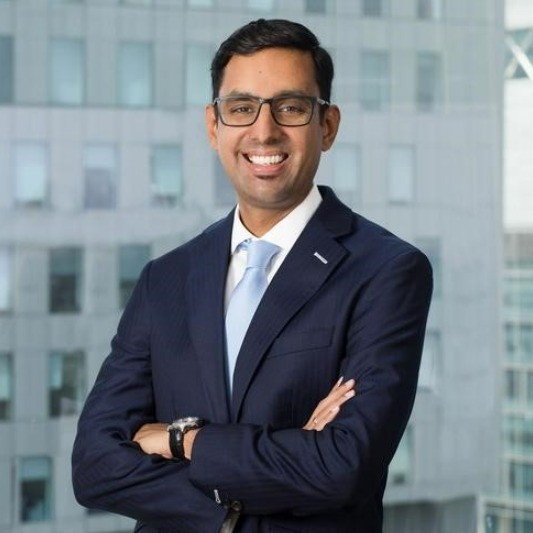
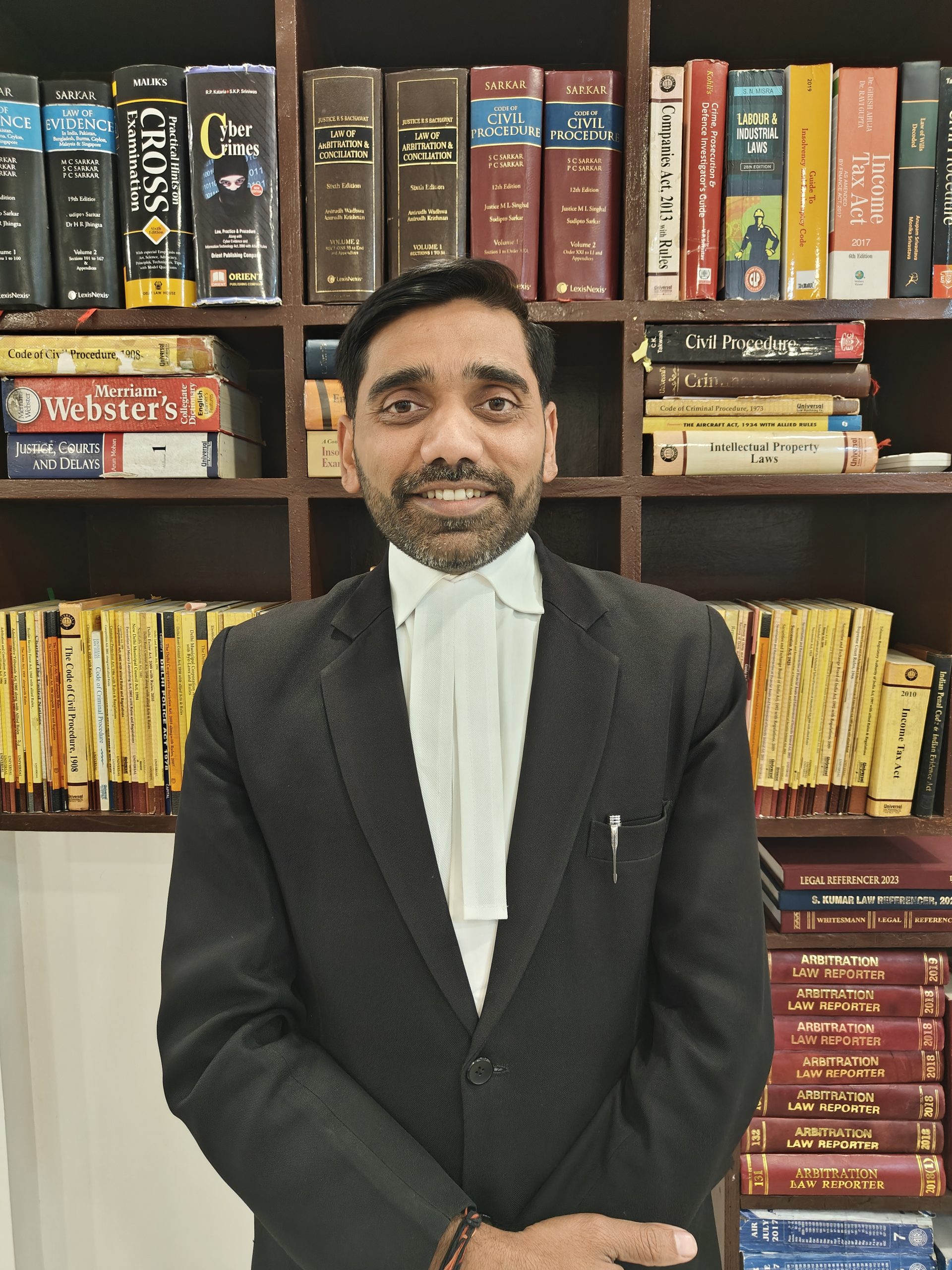
  • “Having the right to file pleadings before the Hon’ble Supreme Court of India, an AOR is an integral connecting tissue between the aggrieved party, the arguing counsel and the highest court of the land”- Vikash Kumar Jha, Partner at Cyril Amarchand Mangaldas and  Advocate-on-Record at the Supreme Court of India

    “Having the right to file pleadings before the Hon’ble Supreme Court of India, an AOR is an integral connecting tissue between the aggrieved party, the arguing counsel and the highest court of the land”- Vikash Kumar Jha, Partner at Cyril Amarchand Mangaldas and Advocate-on-Record at the Supreme Court of India

    This Interview has been published by Pragya Chandni and The SuperLawyer Team

    Can you share with us what inspired you to pursue a career in law, particularly in the field of dispute resolution and arbitration?

    Funnily enough, I would have to say that my entry into the law school and eventually into the legal profession was not all planned and happened by accident. I was initially a Zoology (Hons.) student at North Campus, Delhi University, where through the internet, peers, and friends, I found out about the various national law schools in India. I was instantly intrigued; decided to leave zoology behind; and apply to law schools. It was at NLIU Bhopal, that I realised the emancipatory potential of law; my inclination and ability towards analytical thinking and its capability of a positive impact on society and human civilization at large. Further, during the 5 years I spent at Bhopal as well as the various internships I completed during that period, I realised and accordingly decided that dispute resolution would be the practice area for me. 

    I started my journey as a lawyer in 2011, upon graduating from NLIU, Bhopal and joining the disputes practice of Amarchand & Mangaldas & Suresh A. Shroff & Co. (AMSS), at its Mumbai Office. I thereafter shifted my base to Delhi in 2016, and presently, I am a Partner at Cyril Amarchand Mangaldas, at its Delhi, NCR Office.

    Now, 13 years later, I am a qualified Advocate-on-Record and endeavouring to build and develop a practice in advising and representing both Indian and foreign clients in a diverse spectrum of areas under the disputes and arbitration umbrella.

    You have a specialization in various areas such as complex, civil and commercial disputes; contractual disputes; securities laws; white-collar crimes; and environmental matters. What drew you or motivated you to pursue such diverse practice areas within dispute resolution?

    The preference for a super specialised practice versus a more general one, of course, differs from practitioner to practitioner. However, for me, personally, having a more holistic and well-rounded practice and knowledge in the age of specialisation, is definitely an important arrow in my quiver. I would credit my early curiosity to learn and explore more than one area of a law, as well as the various opportunities which my firm has provided me – as equipping me to effectively advise and represent clients in a diverse variety of matters.

    As a gold-medalist graduate from NLIU, Bhopal, what pivotal moments during your education shaped your interest in dispute resolution and arbitration? 

    Numerous peers, professors and mentors and my experiences have shaped the interest I have and which I continue to learn on a daily basis in dispute resolution and arbitration. I would have to give due credit to my colleagues at my firm, college seniors, who were already placed in various law firms and who regularly advised me on various aspects of practice; my professors, who were instrumental in developing my keen interest in disputes; the various internships and clinical courses I completed which helped create a sound foundation of procedural and substantive law and of course, the people around, who constantly reinforced my desire and determination to use my legal knowledge to help people, create a more aware surrounding, and whatever I can contribute towards building a just world, the best I can. 

    Could you discuss some of the key matters you’ve worked on, such as advising and representing premier associations, international publications, and major infrastructure projects? How have these experiences influenced your approach to dispute resolution?

    During my time at Cyril Amarchand Mangaldas, I have been fortunate enough to work on a variety of high profile and very interesting matters. Whilst it may not be advisable to get into specifics, I have advised big conglomerates, reputed developers and builders, cricket bodies, tech companies etc. I have recently advised and represented a premier association of private sugar mills, on inter alia challenging the implementation of a state policy by way of writ proceedings instituted before the High Court of Allahabad. I have also advised and represented a highly reputed international magazine and multi-platform publication, in a civil defamation suit in Delhi; a major tea estate before the Madras High Court as well as the Supreme Court of India; a leading steel plant in various critical matters before the National Green Tribunal, Principal Bench; as well as the court appointed Administrator of a club/association before the Supreme Court, High Court, NCLAT and NCLT – amongst many other varied cases.

    These matters, like all my others, greatly influence my approach to dispute resolution. They reinforce what I believe is a prerequisite to any matter being effectively handled – first, very frankly evaluating the needs and requirements of my client in a solution-oriented approach, and then dynamically exploring the strengths and weaknesses of their case, i.e., whether they would benefit from alternate dispute resolution methods, if at all, etc. I have found that this enables me to best, realistically advise my clients and have their expectations managed from the get-go. In my view, it is very important to have a long-term vision and to have a solution based and practical approach.

    As an Advocate-on-Record, Supreme Court of India, what unique challenges and opportunities do you encounter while representing clients in the highest court of the country?

    I believe an AOR has to be cognisant of the immense responsibility that accompanies its title. Having the right to file pleadings before the Hon’ble Supreme Court of India, an AOR is an integral connecting tissue between the aggrieved party, the arguing counsel and the highest court of the land. Almost on a fortnightly basis, one hears of directives and observations passed by the SC that an AOR cannot merely be a signing authority and file meritless or frivolous petitions. Thus, being an AOR is a balancing act between the needs of the client and the responsibility towards the court, which must be exercised responsibly. It is in fact a privilege. 

    In your opinion, what are some of the critical skills and qualities necessary for a successful career in dispute resolution and arbitration, especially when handling complex cases involving multiple jurisdictions and legal nuances?

    Good question. In my opinion, the first critical quality that is necessary for a successful career as a dispute resolution practitioner is hard-work, hard-work, and hard-work! It is also imperative that no matter how many years of practice have gone by, as a lawyer, one must stay abreast of developments in the legal arena and open to new and challenging ideas. This will greatly facilitate one’s capability to strategize and effectively advise the client. It is also important that one is aware of the changing needs and aspirations of the people of India, the corporate world and the nation as a whole – it will only help in molding one into a lawyer for today and for tomorrow. It is of course also important to have basic ideas about other jurisdictions and build good and reliable contacts with lawyers and experts in varied jurisdictions. The ability to learn fast and on the go is also very critical.  

    Always remember that dedicated hard-work, perseverance, and good relationships will never steer you astray! 

    Lastly, what advice would you offer to recent law graduates aspiring to excel in the field of dispute resolution and arbitration, based on your years of experience and expertise?

    Borrowing, from what I have said above, broadly I would like to synthesise my advice to law students/recent graduates as follows:

    • Sustained hard work and regular reading are your most powerful allies, whether you are a fresh entrant into the practice or a seasoned veteran. It is important to carve out the time to stay updated, accordingly.
    • Stay in touch with your alumni; your mentors; and your peers and seniors at your internships – those who are already practising and take ‘on ground’ practical advice from them. 
    • Further, do not dismiss procedural aspects or courses to the peripheries of your studies. Knowing the ins and outs of CPC is just as important as Constitutional Law or Contracts Law, if not more. Having sound procedural knowledge is vital and will provide for an excellent base/first principles knowledge, when practicing. 

    Get in touch with Vikash Kumar Jha-

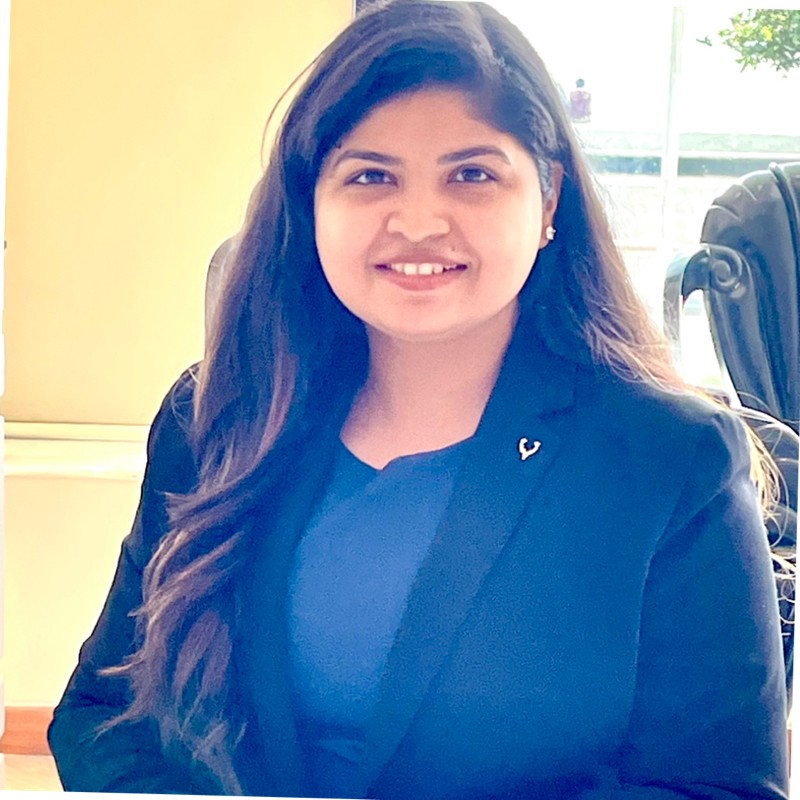
  • “As a leader, give direction, seek feedback, and motivate positively to foster excellence.” – Explore the remarkable journey of CS Vandana Bhatia, Director-Legal, Compliance & Company Secretary, Ryan

    “As a leader, give direction, seek feedback, and motivate positively to foster excellence.” – Explore the remarkable journey of CS Vandana Bhatia, Director-Legal, Compliance & Company Secretary, Ryan

    This interview has been published by Namrata Singh and The SuperLawyer Team
    Vandana, your journey from college to becoming a prominent figure in corporate law and compliance is truly inspiring. Could you walk us through your college years and share what influenced your decision to pursue a career in this field? Additionally, what were some of the initial challenges you faced when you started your career, and how did you overcome them?

    I started working right after class 12 to complete my higher education due to my family crises. I did my higher education through distance learning; it was challenging and not easy as having to work and study together. Also, didn’t have enough guidance, so I took some tutions on subjects that I found difficult over weekends and late hours—still managed to complete the same after so much struggle and hard work. I belong to Ghaziabad a place that was back then known for power cuts that were longer than 12 hrs. a day, I remember studying in candlelight sometimes. I never wanted to be what I am today (wanted to be a journalist back then), my father encouraged me to pursue Company Secretary and that further influenced my decision to have MBA (finance) and LLb degrees in my hand. I am proud of the decision that I took back then to fulfil my father’s wish and thank my parents for always being an encouragement and support system for me.

    Congratulations on receiving an honorary doctorate in Law and Governance from California Public University! Could you share with us what this recognition means to you personally, and how it has impacted your career trajectory and aspirations for the future?

    This is like a dream come true, I always wanted to have a doctorate and prefix Dr. in front of my name. It was a complete privilege and honour for me to get this Honorary Doctorate from California Public University. This has helped in receiving recognition from many of my peers and seniors.

    You currently serve as the Director-Legal & Compliance at Ryan India Tax Services Private Limited. Could you provide us with insights into your day-to-day responsibilities in this role and how you ensure alignment between legal and compliance functions within the company?

    I have a big role and responsibility to ensure 100% compliance on all functions in India and that requires regular monitoring and diligence. Further as legal director, my responsibility is to provide legal advice, review legal documents and proactively address to legal risks. I happen to be successful in balancing both roles as I have my own matrix to categorize the matters/tasks.

    You’ve navigated through various sectors such as pharma, education, finance, and more. How has this diverse experience influenced your perspective on corporate governance and compliance across different industries?

    I have been lucky in working in different sectors which made me understand certain regulations applicable to those sectors like in pharma there is specific drugs and cosmetics acts which is applicable; NBFC have certain Master Directions of RBI that need to be adhered too. This provided an edge to learn those specifics and apply the same in the job.

    Your list of achievements and awards is incredibly impressive. Amidst such professional success, what personal values or principles do you hold dear that guide you through your journey?

    My personal mantra is to act with integrity and be true to yourself. Keep working hard and smart and believe nothing is impossible.

    You’ve been involved in instituting corporate governance frameworks and setting up processes in multiple organizations. What are some common challenges you’ve faced in this process, and how do you overcome them?

    Challenges were to go deep dive into the problem areas of non-compliance and making the same complaint. That required going back to the inception of the organization. The developing process was not that challenging but making stakeholders understand the implications and implementation was a tough job.

    Your list of achievements and awards is incredibly extensive, ranging from being recognized as one of the “Top 10 Chief Compliance Officers in India” to receiving the “Golden Pinnacle Award” and an Honorary Doctorate. How do you stay grounded amidst such recognition and maintain a humble approach to your work and interactions?

    I always believe you should never forget your roots and the hard work that you have put in to achieve them. It’s not only professional but I always believe that even personally a person should stay humble.

    As a leader, what qualities do you believe are essential for fostering a positive work culture and inspiring your team to achieve excellence?

    As a leader, it is important to give the right directions to the team, and give them space to explore, innovate and learn. It also important for a leader to seek feedback from the team which will build a positive impact and confidence on the team. Give credit and recognition to those deserved in the team and motivate others positively. Be approachable and not bossy.

    Beyond your professional achievements, what are some hobbies or interests that bring you joy and fulfillment outside of work? How do you make time for them amidst your busy schedule?

    I love reading books (mostly spiritual books) and travelling, I try to squeeze a week travel once or twice in a year.

    Given your extensive experience and remarkable achievements, what suggestions or advice would you give to the upcoming generation of professionals looking to enhance their CV and leave a lasting impact in their respective fields

    Don’t restrict to work been assigned to you, keep looking for the opportunities within organization where you can grow and provide your value addition. Keep learning as that never stops and compete with yourself. Also, diversify your work horizon.

    Get in touch with CS Vandana Bhatia-

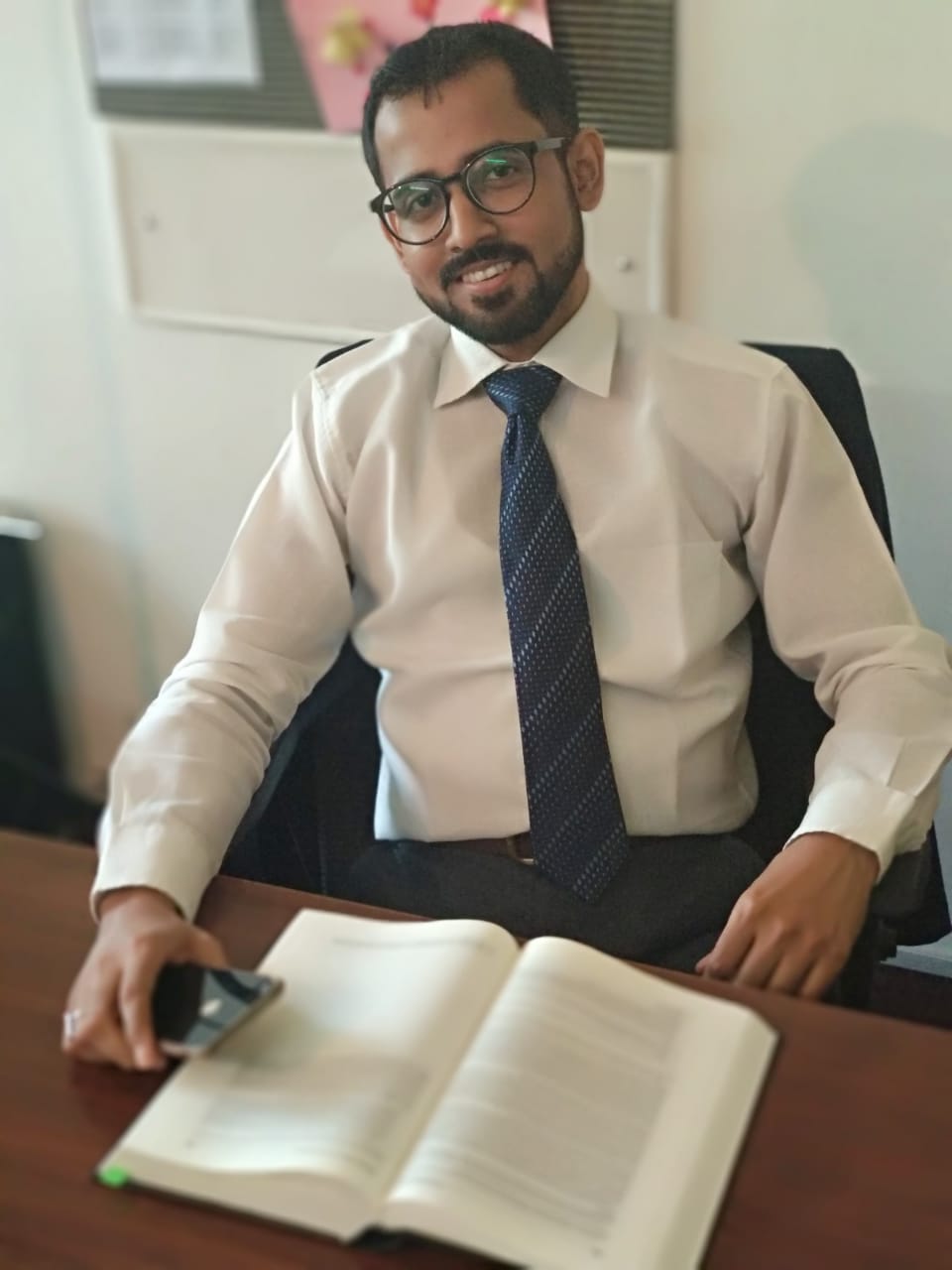
  • “Don’t ever lose hope, be patient, and focus on your work, as there are no shortcuts in this profession.” – Himanshu Tyagi, Advocate-on-Record at the Supreme court of India

    “Don’t ever lose hope, be patient, and focus on your work, as there are no shortcuts in this profession.” – Himanshu Tyagi, Advocate-on-Record at the Supreme court of India

    This interview has been published by Namrata Singh and The SuperLawyer Team

    Your journey from Meerut to becoming an Advocate On Record at the Supreme Court is quite inspiring. Could you share some pivotal moments or challenges you faced during your early years in Delhi, and how you overcame them to establish your practice?

    Once you step out of your comfort zone every first thing seems to have its own challenges. However, on the professional front I can say that I decided to take the plunge to the Capital with dreams and hope to make it big, in spite of not having any significant father figure in the field of law. Initially the first question which was required to be answered was from where to start as there was hardly anyone to suggest or guide what are the choices one could make while entering the profession. I made my choice and started with litigation as I had attained little experience while being associated with the chambers of Mr. Ravi Shanker Tyagi for a very brief period in Meerut Bar which was initially very helpful as Courts in Delhi are much more refined in terms of infrastructurally and in other avenues as well.

    Your journey as a first-generation lawyer is truly commendable. What were the key principles or values that guided you in your career, especially during the initial stages when the path might have been more challenging?

    Yes, being a first generation lawyer is a very difficult choice to make especially when you are in litigation. But all that I can say is don’t ever lose hope, be patient and focus on your work, as there are no shortcuts in this profession, the only way you can accelerate is through your abilities to make hard choices and by burning midnight oil.

    Becoming an Advocate On Record involves rigorous training and experience. How was your time with Retd. Justice S.R. Singh shaped your understanding of the legal field, and what key lessons did you carry into your independent practice?

    I was fortunate enough to join the Chambers of Retd. Justice S.R Singh ( Retd. Judge from Allahabad High Court) Sr. Advocate in the year 2009.  After working with Mr. Singh for almost two years and having gained opulent experience by understanding the nuances and intricacies of legal field along with drafting, filling and everything that the field entails.

    One judicious adage told to me by my very veteran Senior was that “ Vakalat is your first wife” if you want to do justice to your profession and I have ever since imbibed this in my practice till date and I am always grateful to all my seniors and colleagues from the chamber and outside the chamber for always guiding me in the profession. 

    As Ex. Additional Advocate General for the State of H.P., you’ve handled significant cases. Can you share an experience where your role had a meaningful impact on the state’s legal representation, and what insights did you gain from that experience?

    It was a very enriching journey while discharging my duties as AAG for state government before the Hon’ble Supreme Court as such opportunities help you bring the best out of you. As while holding such an esteemed office one has to be very candid with all the briefs while representing the State before the Court.

    Handling cases involving state entities like the Himachal Road Transport Corporation (HRTC) requires a nuanced understanding of administrative and constitutional law. Could you elaborate on the challenges faced and strategies employed in representing HRTC in various legal matters?

    It is always challenging to represent Road Corporation before the Hon’ble Courts as the mostly the matters pertaining to the Corporation is of higher monitory significance be it MACT matters or service matters. What I can say from experience is that you are required to be more updated with the law and recent judgments so that you can provide better assistance to the Hon’ble Court.

    Handling criminal matters requires a different set of skills. Can you share an experience from a criminal case you’ve worked on, discussing the complexities involved and the strategies adopted for a successful outcome?

    Through my experience in handling criminal matters I must say one should have a very fair understanding of criminal jurisprudence as most of the criminal matters involve personal liberty which is of utmost importance.  During my time at bar I have done several criminal trials, appeals but what always challenges me is the stage of cross examination as in my view Cross examination in any criminal matter is the heart and soul of the Trial.

    Apart from your legal pursuits, do you have any personal hobbies or interests that you find to be a great source of relaxation or inspiration?

    I can say visiting places and spending time with family and friends keeps me motivated other than work. 

    Coming from a small town like Meerut and making a mark in the legal profession in Delhi is undoubtedly a significant achievement. Could you share some extra efforts or unique strategies you employed in your journey to overcome any perceived challenges or biases associated with being from a smaller town?

    Once you make your mark , and in this industry that is possible only when you garner some accomplishments in your name. The bias associated with a small town only remains so long as you let it affect your mental make up. If you are determined enough, the tag of coming from a small town and making it big in the capital only adds to your reputation , which at the same time works as an inspiration for people coming from the same background, and are hesitant in pursuing their goals. My only advice to the budding generation of lawyers is to fight your demons and always be hopeful and take each day as it comes. The road to success may seem endearing but it sure is fruitful at the end.

    You emphasize the importance of hard work and dedication in your career. What advice would you give to the current generation of aspiring lawyers to navigate the challenges of the legal profession and build a successful practice?

    I can vouch for the fact that hard work is the key “what you are seeking is seeking you”. I make my juniors understand that to be candid with clients and accurate in analysis and strict in study, you will achieve whatever you aim for as there are no shortcuts in this profession.

    Having experienced both your own student journey and now interacting with the current generation, what notable differences do you observe in the approach and mindset of today’s law students compared to your time? Are there specific areas where you believe current students could focus on improvement to excel in the legal profession?

    The major shift that I witnessed in the mindset of the students in comparison to when I was one, is the availability of resources and better infrastructure that can help them achieve their goals with a lot of help which is easily available, of which there was a dearth during our college  days. Accessibility and availability are the major factors that determine the early years in one’s legal career as initially apart from all the teachings done at college level, the practical learning is also very vital if you wish to stay in this field.  

    Get in touch with Himanshu Tyagi-

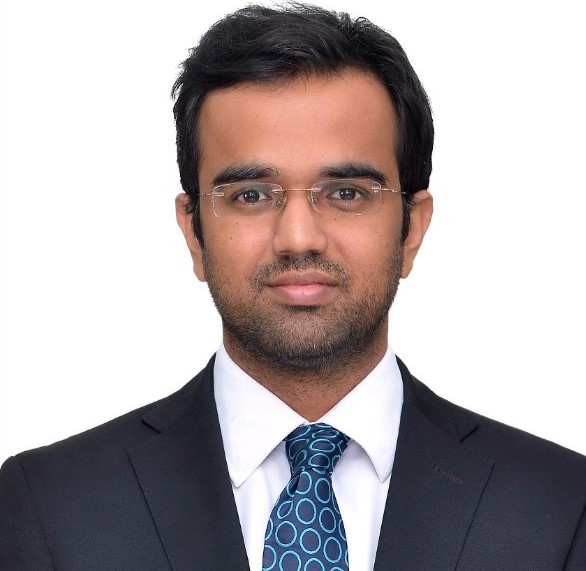
  • “Another important aspect I learnt in the formative years of my career is teamwork. It is one of the most crucial yet neglected areas, if properly appreciated teamwork can yield results which have no bounds.”- Tushar Roy, Founding Partner at RG & Kumar LLP

    “Another important aspect I learnt in the formative years of my career is teamwork. It is one of the most crucial yet neglected areas, if properly appreciated teamwork can yield results which have no bounds.”- Tushar Roy, Founding Partner at RG & Kumar LLP

    This Interview has been published by Pragya Chandni and The SuperLawyer Team

    Could you please share with us what initially sparked your interest in pursuing a career in law?

    I was born and raised in Kolkata, West Bengal. After completing Class 12, I was looking for options other than the traditional courses like B.Com, BBA or pursuing CA.  It was then, I chanced upon the integrated 5-year law course and thought of giving it a try. I pursued my graduation B.A. LLB from M.S. Ramaiah College of Law.

    In college my interest towards Law grew more, as I was fascinated about Contracts and its various facets which has helped me later in building a career as an Arbitration Lawyer. Till date the nuances of contract fascinate me.

    With your diverse experience across various law firms and legal internships, how did those early experiences shape your understanding of the legal profession?

    Each internship and each role in my previous law firms taught me a different lesson. As far as my internships are concerned, I was learning the practical aspects of law as practice. Furthermore, during internships, I was more inclined to join in-house or corporate law firms. In my college I was also steer heading the placement committee with my dear batch mates. Being involved in the placement committee, I realised getting through in-house and joining a well known law firm would be difficult. Hence, after finishing college, I went to Delhi, through a friend’s reference I had joined a litigating lawyer practicing before the Supreme Court of India. I still remember my first day at the senior’s office. I was told to go to the Competition Commission of India, where I had the good fortune of observing a high-stake matter between a star cricketer and a sports apparel giant. During my first few weeks as a litigation lawyer, it was tough, as the picture I drew in my mind was of a big office and big pay scale. During this time, I had got an opportunity to join in-house, however, by this time I enjoyed appearing before various Courts and it was then I realised, I want to be a litigating lawyer. During my time as a junior advocate, since I was not local and being a first-generation lawyer, it was difficult to join good chambers/law firms, I used my learning from my placement committee days in college and kept on contacting chambers/law firms, fortunately, I have been able to get through some good chambers in Delhi and worked with a well-known law firm in Delhi. I have learned a lot from my seniors/mentors with whom I have been associated.

    During my term as senior associate with a well-known law firm, I was trying to start my own setup. I had consulted a very good friend, who already had her own practice ongoing. She agreed to join me as a partner for opening a law firm. My journey with RG Legal Associates started in 2019 and thereafter we grew in number and we had the good fortune of adding two more partners and then our law firm was rebranded to RG & Kumar LLP. It is always tricky when one starts practicing/runs their own setup, that becomes a different ball game altogether, because, as a professional one becomes answerable to their clients. Especially when stakes are very high in the matter, the entire gamut changes. I have also learned through my seniors. What I am today in the professional field I owe to my mentors under whose mentorship I commenced my professional journey.

    Another important aspect I learnt in the formative years of my career is teamwork. It is one of the most crucial yet neglected areas, if properly appreciated teamwork can yield results which have no bounds.

    .                            

    What motivated you to specialize in areas such as Corporate and Commercial Litigation, Arbitration, and White-Collar Crimes?

    I took up all sorts of work that came my way. However, since the start of my career, I have always joined chambers/law firms specialising or have worked in arbitration/commercial litigation. I have been keen in reading materials about Arbitration, I still try to read one judgment on arbitration every day. For my love for the subject, I had completed the Associate level of professional curriculum offered by Chartered Institute of Arbitrators, London. I still plan to complete the remaining curriculum.

    For matters in White Collar Crimes, I would have to give credit to my friend Ms. Kinnori Ghosh, Partner, RG & Kumar LLP. She is the one who heads this practice area in our firm and I have learned a lot from her. Whatmore attracted me to White Collar Crimes cases is the commercial angle involved in it. Interestingly, my client base has been more of Commercial litigation and white-collar crimes. Also, the complexities of special acts added as a catalyst to me, to read and find out of the box strategies for my client, which has in turn helped my clients.

    We see you’ve represented clients across different forums and even internationally. Can you walk us through a particularly challenging case and how you navigated through it?

    There is this case, wherein, the Government of India is requesting the extradition of my Client from London and the extradition proceedings were going on before the Westminster’s Court, UK. We as a team were working remotely round the clock for our client during the COVID-19, we had to work both Indian and UK time as well, as we had conference calls with a law firm based in London. We were opposing our Client’s extradition proceedings. Also, we had to appear as an expert witness in the matter to assist the Magistrate Westminster’s Court, UK in understanding Indian laws. That is one case where my team and myself had to work on dual jurisdictions and work on both UK and Indian timings. Coupled with the fact that extradition in itself is a very critical aspect where a number of technical aspects are to be checked and extensively worked upon.

    As a certified Associate Arbitrator and a member of the Young Singapore International Arbitration Centre, what drew you to arbitration, and how has it enriched your legal practice?

    Arbitration as a subject always excites me and as the law in arbitration is evolving and the steps taken by the various stakeholders to make it more efficient further adds to my interest. Further, being members of these prestigious institutions, the one advantage that one gets is to attend events and interact with the experts. We as a firm always encourage our partners to attend knowledge sharing events organised by the likes of SIAC.

    You’ve been involved in matters related to Money Laundering, Customs, and other White-Collar Crimes. What unique challenges do you face in handling such high-stake cases, and how do you overcome them?

    In matters of money laundering, customs and other white-collar crimes, the stakes involved are huge, to share one of such incident, we were assisting one of the companies in customs case, wherein, we as an organisation had to get a stay order from the Jaipur Bench of Rajasthan High Court, failure on our part would have resulted in halting of production of our client, in consequence it would have impacted the production of another listed company of which our client is the exclusive supplier for certain product to that listed company. Overnight we had the writ petition drafted and the same was filed and listed the next day. We were shuttling between Delhi and Jaipur for this specific matter. Our team had strategized the situation so well that we were able to get relief for our client without hampering the production and/or business of our client.

    Lastly, considering your journey from law school to becoming a partner at RG & Kumar LLP, what advice would you offer to recent law graduates embarking on their legal careers?

    Well, first and foremost, take care of your health, this was the first advice that I had received from my seniors that I have worked with. One can deliver the best if one can take care of his/her health. 

    Never give up, the worst of situations can turn around the best for you. To share one incident, in one of the matters we were briefed by a lawyer from Kolkata, wherein, our client had lost before the MM Court, Sessions Court, Calcutta High Court and thereafter we had filed SLP for stay of arrest for our client before Supreme Court of India, we had no hope in the matter, as concurrent findings were against our client, to our surprise we were able to get a stay on arrest from the Supreme Court of India. 

    Always be prepared with your brief, a client is more comfortable with a professional who is well versed with the facts of the case, this will help one to retain the client for a long period and most importantly will help one to get the best results for the client.

    One should stay updated with the latest developments of law, one aspect I have learnt from my senior is reading one judgment a day. It helps you give a boost to your knowledge and also helps you stay confident in representing your clients or appearing for an interview.

    Further, a lawyer should always socialise and should always meet people not only from the legal fraternity but also from people from different industries.

    Lastly, you will know what choices you make.

    Get in touch with Tushar Roy-

  • “Dream big so that you work hard to achieve the life you want, but in the meantime, don’t forget to live.” Encouraging young legal professionals to approach their careers with positivity and resilience – Karan Bindra, 𝗙𝗼𝘂𝗻𝗱𝗲𝗿 𝗮𝗻𝗱 𝗣𝗮𝗿𝘁𝗻𝗲𝗿 𝗮𝘁 𝗞𝗜𝗔𝗔 𝗟𝗟𝗣

    “Dream big so that you work hard to achieve the life you want, but in the meantime, don’t forget to live.” Encouraging young legal professionals to approach their careers with positivity and resilience – Karan Bindra, 𝗙𝗼𝘂𝗻𝗱𝗲𝗿 𝗮𝗻𝗱 𝗣𝗮𝗿𝘁𝗻𝗲𝗿 𝗮𝘁 𝗞𝗜𝗔𝗔 𝗟𝗟𝗣

    This interview has been published by Namrata Singh and The SuperLawyer Team

    Can you share insights into your journey from college to becoming the Founder and Partner at KIAA, LLP? What were the pivotal moments or experiences that shaped your decision to establish your own firm?

    Like every law student, I too have had my share of carefree days in college but as I progressed into senior years, the zeal of doing something started to kick in. In the early year of 2011, after the completion of our law degrees, the members of KIAA LLP (as they are today) found themselves taking divergent paths in the legal profession. Some ventured into roles as in-house counsels for corporations, while others worked with seniors in the field, gaining valuable exposure and experience. However, as we navigated our journeys, it became evident that establishing one’s presence in the legal field required more than just exposure. While working with seasoned professionals sure helped us create a space for our own in the industry, the opportunities that we had created for ourselves in that space needed to be tapped in time.

    Realizing this, I engaged in discussions with like-minded colleagues, Ankur and Chayan, who shared similar perspectives on the importance of creating a niche for ourselves in the legal arena.

    Fortuitously, our discussions culminated in a collective decision to join forces and establish KIAA LLP in early 2012. This marked the inception of our law firm, where we aimed not only to leverage our individual experiences but also to pool our strengths and work collaboratively. The firm was founded on the belief that client satisfaction using correct knowledge, providing the right information, and ensuring accessibility of service to our clients even if located in the remotest part of the country. Hence, that got us a name for our perspective, KIAA LLP- Knowledge Information Access Associates Limited Liability Partnership.

    Given your involvement in pro bono services for organizations like Malala Funds and Trust Law, how do you balance commercial legal work with contributing to social causes?

    So, it’s not about balancing at all. It’s about aligning your principles of  life with your work, and what is a man without principles?

    I was born and raised in a Sikh Family with the teachings of the Gurus. I want to take this opportunity to refer to a verse from Shri Guru Granth Sahib Ji which has immortalized words of Guru Nanak Dev Ji – “One who works for what he eats, and gives some of what he has in charity, O Nanak, he knows the path to fulfilment.” Taking inspiration from which, we have always been inculcated with a habit of doing ‘Sewa’ which can be either through  ਮਨ,  ਧਨ (tan (physical service), man (mental/emotional service),  or  dhan (financial support)).

    My intention of working for social causes has always been that of giving something back to society in terms of my time and efforts. So, I utilise my knowledge and expertise to earn my livelihood through commercial matters, and I consider myself privileged to be able to utilise some of it for a social cause.

    KIAA, LLP has received numerous awards and recognitions. What do you attribute the success of the firm to, and what sets it apart in the legal landscape? 

    I attribute the success of the firm to my team- my co-founders, associates and every other member of our staff who do not hesitate to work around the clock if need be. It is also about the work culture at KIAA LLP that we have all built through the years. I have always said that we measure our success not by trophies, awards or cheques but by ‘Client Satisfaction’. I think, our ‘Client First’ attitude is our USP!

    You’re a member of various legal associations and clubs. How has being part of these networks enriched your professional life and influenced your perspectives on law?

    To be very honest, networking is very important in our profession and being part of the legal associations and clubs is a great way to socialise and build a meaningful network. I have benefited greatly from it, not only because I met many of my prospective clients through these clubs but I met people from various walks of life including law, seniors & juniors having different experiences.

    These kinds of experiences widen your horizons as a lawyer. The job of the lawyer is to understand the perspective of his client, and the Court both. We all know how dynamic and subjective human nature is. Being a part of these clubs helps you enhance the emotional quotient- the greatest asset of our profession!

    You’ve served as the Central Government Counsel at the Delhi High Court. Could you shed some light on your role during that time and share any experiences or cases that left a lasting impact on your professional journey?

    Certainly! I was pleased to be appointed as Government Pleader in the year 2012, and I remained on the list of empanelled lawyers with the Central Government Litigation branch at the Delhi High Court until 2017-18.

    This six-year period was most significant in shaping my professional journey. It exposed me to the intricacies of handling multi-faceted and high-stakes government matters.

    One of the distinctive aspects of appearing on behalf of the government is the sense of responsibility and accountability because your actions and advice can have a direct impact on the general public. It goes beyond individual client representation, as you are entrusted with safeguarding the interests of the larger public and the government as a whole. That’s the combination of power & responsibility that a government counsel bears on his head.

    A set of experiences that seemed cumbersome to my 10-year younger self but had the most impact on my professional journey was the manual filing process prevalent at the time. Unlike today’s E-filing systems, we used to stand in queues before filing counters with strict deadlines to meet. This hands-on experience taught me the importance of time management, meticulous preparation, and adherence to court procedures.

    Now, the agility and clarity with which a court case needs to be handled comes as a second nature to me. I guess, now I truly understand the meaning of this phrase “The more you sweat in peace, the less you bleed in war.”

    Can you tell us a bit about the talented team at KIAA, LLP? How do you nurture and support your team members, and can you give us an idea of the size of your team or the number of interns involved in the firm’s operations? 

    First things first, I think every person at KIAA, LLP knows their job well and my co-founders & I give our Associates a free hand to conduct the matters. Of course, we discuss each proposition together and work on possible solutions but flexibility is the key.

    We believe people can work better if they are not micromanaged. We allow them to work freely while standing strong and tall as their support should the need arise. We are a happy, hardworking and fun-loving bunch of about 15-17 people including our clerical staff.

    You’ve expanded KIAA, LLP into a multi-service law firm. What inspired this diversification,  how do you ensure the team provides practical legal solutions to clients?

    I’d rather say, WE have expanded KIAA, LLP into a multi-service law firm. Naturally, when we started the firm, we were a boutique firm working only on the matters that our clients got to us. Over time we realised that most of our clients (largely business & commercial houses) face similar problems, and we thought why not have an end-to-end solution for all these problems starting from compliance to representation in appropriate forums?

    That’s how we undertook expansion and diversification. Just as Rome wasn’t built in a day, we also took our time, took one department, one specialisation at a time. Categorised various departments and hired associates having specialised knowledge in that department. KIAA, LLP as you see today is years of hard work, late nights, early mornings, sweat & blood.

    We have only one mantra of providing legal solutions to our clients- WE PUT OUR BEST PERSON ON THE JOB!

    In addition to your legal expertise, you’ve delved into blockchain and cryptocurrency, as seen in your certification from Berkeley Law. How do you see emerging technologies influencing the legal landscape, and how is KIAA, LLP adapting to these changes?

    Well, the emerging technologies can influence the legal landscape in many ways or they have already started influencing the system, I’d rather say. With Smart Contracts, Live Streaming of court hearings, E-Filings, E-tokens etc. It would come as no surprise when there will be an official cryptocurrency being used as legal tender! Maybe there will be dedicated law firms for Crypto Law Practice in the future, who knows!? The possibilities are endless!

    We are talking about two things that are highly dynamic- Law & Tech! An impact on one industry will definitely impact the other.

    Outside of your busy legal career, can you share a personal interest or hobby that might surprise our readers and provide a different dimension to your personality?

    I love travelling! I find immense joy in exploring new places and immersing myself in different cultures. It’s not just about leisure; I often plan my trips strategically, making the most of the court summer vacations to indulge in this personal interest. Whether it’s a serene beach destination, a historic city, or a picturesque mountain retreat, I appreciate the diversity our world offers, and I make it a point to experience it firsthand. It helps me unwind, gain fresh perspectives, and recharge for the challenges of the profession.

    Another hobby that adds a different dimension to my personality is playing golf. I find solace in the greens, it helps me strike a perfect balance between relaxation and skill, offering me a chance to clear my mind while engaging in a sport that requires focus and precision.

    Not many would know but I am also an avid collector of watches and antiques. I appreciate art & craftsmanship. Each watch or antique item tells a unique story, and helps me travel in the era bygone!

    Having navigated through diverse legal challenges, is there a piece of advice or a valuable lesson from your career that you would like to share with the upcoming generation of legal professionals as they embark on their journeys in the legal field?

    I would say to my young colleagues & fellow persons: – Dream, Work & Live! Dream big so that you work hard to achieve the life you want but, in the meantime, don’t forget to live. That would mean allowing yourself to make mistakes, they would teach you lessons no law school and mentor can teach. Keep moving and be positive about your work because like a wise man said-

    ‘A pessimist makes nothing not even a mistake!’.

    It would be most appropriate to end this conversation with a saying of Steve Winwood, “The finer things I feel in me, the golden dance life could be.”

    Get in touch with Karan Bindra-

  • “It is a very long and tedious process to become a lawyer and to specialize in a particular field of interest, and to make a name for oneself. But this should not deter anyone from pursuing their dream.”- Vivek B.Siddalingaiah, Civil Servant, Ministry of Justice UK 

    “It is a very long and tedious process to become a lawyer and to specialize in a particular field of interest, and to make a name for oneself. But this should not deter anyone from pursuing their dream.”- Vivek B.Siddalingaiah, Civil Servant, Ministry of Justice UK 

    This Interview has been published by Pragya Chandni and The SuperLawyer Team

    Can you share your journey from practicing law in India to your current role as a Legal Advisor for the Magistrates in the UK’s Ministry of Justice?

    To begin with, I did my B.A.L. LL.B. , five years integrated course from University Law College, Bangalore University. In October 2010, I was called to the bar after completing my All India Bar exam and immediately after being called to the bar at the Karnataka State Bar Council, I started practicing. I started practicing under a senior and my main practice area involved insurance, banking, domestic arbitration, and other civil matters. Along with this, I also used to practice before the Debt Recovery Tribunal.

    After practicing for over four years in Bangalore, I moved to London to do my Master of Laws post-graduation from City University, London. My areas of specialization were Alternate Dispute Resolution and Civil Litigation in reference to the UK law. I completed my post-graduation in 2015 and my final dissertation as part of the course was about International Investment Treaty Arbitration. After this, I had to move back to India because of Brexit issues and I joined a startup company in Bangalore as a legal counsel. After working there for less than a period of six months, I joined Tatva Legal Bangalore as an associate in their litigation team. Working at Tatva Legal gave me a wide exposure to the other fields of law namely Corporate Law, Corporate Litigation and International Commercial Arbitration. In 2016, the New Companies Act and Insolvency & Bankruptcy Code were passed in India and as a result the National Company Law Tribunal were established. I started practicing before the NCLT for a period of two years.

     In 2019, I got an opportunity to work with the Financial Ombudsman Service, London as an investigator/ adjudicator. This role gave me an opportunity to resolve disputes in a quasi-judicial setting.  I had to take a small break during the COVID lockdown to attend to my personal work. 

    In 2022, I started applying for Civil Service roles in the UK.  Civil service recruitment in the UK is based on open competitive examinations. 

    These posts are advertised and applications are invited from eligible candidates, preferably candidates with law degree or experience in a common law jurisdiction. In August 2022, I cleared my competitive examinations and I was appointed as a Crown Court Advisor/ Clerk. I was mainly responsible for most of the administrative and procedural functions of running the Crown Courts. I got a very good opportunity to understand the criminal justice system in the UK. After having worked for one and a half years in this role, I got an opportunity to be promoted through an internal campaign and after having cleared my interview and other written tasks, I was appointed as a Legal Advisor for the Magistrates in the East London local justice area. I have been working in this role for the last two months.

    How did your experience in litigation, merger & acquisition, insurance, and international arbitration prepare you for your role as a legal advisor at His Majesty’s Court & Tribunal Service?

    As we all know, India is a common law jurisdiction, and this acted as an advantage for me. My litigation experience in India gave me all the understanding and the tools required regarding the court procedures. Because of this experience, I wasn’t a stranger to the legal system in the UK, even though there are a few procedural and other administrative differences between the two countries, the overall legal system is very identical. Because of this, I was able to understand, implement and do my best in the roles that I have been performing in the UK till now. 

    My litigation experience in India helped me in clearing my Bar exam in England and Wales, and also in my applications, written tasks and interviews for the legal positions that I applied for in the UK. 

    My experience in the field of insurance was advantageous when I worked at the Financial Ombudsman Service. My main responsibility at the Financial Ombudsman Service was to deal with insurance, banking and pensions disputes between the customers and the businesses. Having practiced insurance law for a period in India, it was easy for me to understand the concept, the difficulties and the nature of cases that were brought to the Financial Ombudsman Service for investigators or adjudicators like me to resolve. My experience in the field of domestic or international arbitration helped me in almost all the roles that I have been performing till now.

    What inspired you to pursue a Master of Laws in Civil Litigation & Dispute Resolution at The City University, London, after practicing law in India?

    In the year 2010, when I graduated with my law degree, it was sort of a practice for every other law graduate to go abroad to pursue Masters. I have had a few friends who went to the UK, the US, Australia and other places to pursue their masters. I had an opportunity to speak with them about their experiences, their expectations, and the advantageous position that they were in when they returned to India. 

    In my experience and understanding it is a bit important for any legal professional to have a specialization in one or more fields of law and I was very keen on specializing in at least one field of law which could give me an advantage over other candidates when it comes to the job market and this was one of the reasons why I decided to pursue my Masters.

    However, I was not sure about which field of law I wanted to specialise in. Initially I started my practice in insurance and banking law, then moved on to property law, then moved on to other fields of law. I wanted to make sure that I understood which field of law I would like to specialise. This could have been possible only by my own experience and work rather than anyone’s advice. After four years of practice, I realised that alternative dispute resolution was my field of interest and that is the field in which I would prefer to specialise in. 

    How has being dual-qualified as a Barrister in India and England & Wales influenced your legal career and approach to practicing law?

    It was always my aim or dream to qualify as a Barrister in England and Wales. Also, being a person interested in history and having read about many well-known jurists, freedom fighters and other people who have been in some of the very responsible positions, I realised that most of them were Barristers. I’ve heard the argument that it doesn’t require a qualification for a person to do great things. However, in my view, I was always interested in belonging to the list of people from India who are qualified as Barristers in England & Wales. Being a dual qualified Barrister does have its own advantages. I get to practice or work in two jurisdictions. It is also a very prestigious and respected profession in both the countries. I have had the opportunity of practicing before the courts in India and working in the courts in the UK. I believe this dual qualification has allowed me to work as I always wanted to. The dual qualification has also given me the advantageous position when it comes to applying for various positions or for my professional growth.

    Could you elaborate on your experience as an Investigator and Adjudicator at the Financial Ombudsman Service in London and how it shaped your understanding of dispute resolution?

    The Financial Ombudsman Service (FOS) is a service which resolves disputes between the businesses and the consumers without having the customers go to the courts. The legal system or the court system in the UK is very expensive when compared to that in India. This is one of the reasons why consumers or common people would like to bring their issues to FOS to be addressed. FOS deals with almost all types of commercial and business disputes including insurance, pensions, banking, credit, frauds and scams etc. 

    The role of an investigator or an adjudicator is to listen to both the parties, be impartial, unbiased and decide in the favor of the party which is right. This could involve penalizing the business or asking the business to do something that they are expected to do. I had the opportunity of working and resolving disputes in the insurance and banking team. I had the opportunity to resolve disputes in the Insurance, Banking and Pensions team. This gave me an opportunity to understand the various requirements, the way of interpretation of the law and drafting judgements. It also gave me an opportunity to speak with experts in the field of law and business to enable me to decide the disputes. Further,  it gave me an opportunity to understand the quasi-judicial setup in the UK and the procedure for parties to go to the courts or tribunals to resolve their disputes. This role prepared me for applying to other legal based positions.

    What unique challenges have you encountered while advising lay Magistrates on legal matters and procedural issues at His Majesty’s Court & Tribunal Service?

    Magistrates in the UK are also known as Justices of Peace. They are individuals from all walks of life who are passionate about making a difference in their local communities. This role is a volunteer role. Magistrates are people from all walks of life, usually with no legal qualification or training. The legal advisor sits with the magistrates in the courtroom to advise them on the legal procedures and the rule of law.

    No two days are the same for a legal advisor as it depends on the experience of the magistrates, the type of cases and the number of cases that are heard. As a legal advisor, we are expected to not only know the law, procedure but also the facts, recent developments in the field of law, recent judgments that might affect a particular case.

    The legal advisors are in a unique position as a lawyer. They are not fighting a case from a particular side, but instead looking at the law itself and ensuring it is applied in the correct way. A legal advisor acts with a judge’s hat on rather than as a stereotypical lawyer. This role places me at the heart of the criminal justice system. It is not only about advising the magistrate, but also assisting the parties who are unrepresented. 

    As someone deeply involved in both Indian and UK legal systems, what differences have you observed in the legal cultures and practices between the two jurisdictions?

    India is a mix of common law and civil law however, mostly adheres to the common law principle just like the UK. The judicial system in India is highly influenced by that of the British system which was framed and practiced pre-independence. The system is very identical and as such is not difficult for an experienced lawyer to understand. 

    Some of the differences that I could point out between India and the UK legal systems are the volume of cases (due to population), the time in disposing of the cases, the police system, and the working of various other departments that are involved in the administration of justice.

    The major difference is that administration of Indian courts is managed by the judiciary themselves. However, in the UK it is managed by the organization which I’m part of called His Majesty’s Court and Tribunal Service (HMCTS). 

    The practice and procedures are very identical, the court language used are very similar, the civil procedure, criminal procedure, admissibility of evidence are all very identical as well. 

    Overall, the Indian and the UK legal system are identical and they’re also complementary to one another.

    Lastly, what advice would you give to recent law graduates aspiring to pursue a career in litigation, arbitration, or judiciary, considering your diverse experiences in the legal field?

    I do not consider myself to have the experience to advise law students, however being a first-generation lawyer in my family, I had very little advice when I wanted to choose law as a career. This resulted in me waiting for a number of years before I could understand and decide what and how to do things. As such, I am keen on advising law students, especially first-generation lawyers who do not have much exposure or understanding about this profession.

    As said, the legal profession is a noble profession. One must have a lot of patience to survive and to do well in this profession. It is a very long and tedious process to become a lawyer and to specialize in a particular field of interest, and to make a name for oneself. But this should not deter anyone from pursuing their dream. Majority of my professional dreams have been fulfilled as I speak. My next and my aim is to enter the Judiciary which in my view will happen in the next few years. 

    Believe in yourself, work hard as there is no substitute for hard work and get the right advice from the right people.

    Career in law need not have to be restricted to civil or criminal practice; there are various fields of law that one can excel in. Make the right choice, take your time, get the right advice and follow your dreams.

    Get in touch with Vivek B.Siddalingaiah-

  • “The legal landscape has undergone some of the most significant changes in recent years, due to technological advancements and subject-specific specialization.”- Prashant Kumar, Advocate-on-Record, Supreme Court of India and Principal Associate at Dua Associates

    “The legal landscape has undergone some of the most significant changes in recent years, due to technological advancements and subject-specific specialization.”- Prashant Kumar, Advocate-on-Record, Supreme Court of India and Principal Associate at Dua Associates

    This Interview has been published by Pragya Chandni and The SuperLawyer Team

    Sir, could you please share your journey of how you ended up becoming an Advocate-on-Record at the Supreme Court of India and a Principal Associate at Dua Associates? What motivated you to pursue a career in law?

    The starting point of my journey with law was a matter of chance. During my school days I never imagined myself studying law, however, when I look back today, I think that joining law school was one of the best decisions which I took. I got through Gujarat National Law School, Gandhinagar in the year 2005 and started my journey in the profession in the year 2010 under the able guidance of Ratan Kumar Singh, Senior Advocate. Thereafter, I joined Kapil Sapra & Associates in the year 2012 where I dealt with multifarious works. Being a small set up, work was of different kinds, and the exposure there helped me understand the finer nuances of corporate commercial laws. In the year 2016, I joined Lakshmikumaran & Sridharan, where I dealt with high stake arbitration matters amongst others. Therefore, the exposure at this firm was of a completely different nature. In the year 2020, I joined Dua Associates as a principal associate and continue to work in this firm. I firmly believe that one must keep upgrading his skill sets to be relevant in the legal field. This belief led me to write Advocate-on-Record examinations and I cleared the same in my first attempt. I have enjoyed and learned immensely from different stints in the legal profession.

    With a specialization in commercial/civil litigation, insolvency laws, and alternate dispute resolution, can you discuss a particularly challenging or significant case you’ve worked on? What lessons did you learn from that experience?

    Every case presents a different set of challenges. Therefore, as a lawyer one must understand each case of its merits and treat the same accordingly. I started my practice with a strong foundation of civil, commercial and arbitration laws, which has helped me in dealing with other laws as well. With the advent of insolvency laws, the options available with the parties have increased manifold. Therefore, the first challenge which a lawyer faces today is to decide the right course of action in the given facts and circumstances. Whilst I have worked on various cases which have been challenging or significant, I have been recently involved in a matter before the National Company Law Tribunal, where I represented the financial creditor, in an application filed by the homebuyers, seeking to commence insolvency proceedings against a real estate developer, to which the financial creditor had lent money. Whilst the law is fairly settled, and in case the homebuyers meet the threshold and there is a default, insolvency proceedings should be commenced. However, I argued that the tribunal should not act mechanically and should see the financial health of the company, in addition to the intent behind the filing of the application by the homebuyers which can be fraudulent. I also argued that the interest of homebuyers who are not before the tribunal should also be considered before arriving at a final decision. The tribunal is yet to pass an order, however, this is significant because law is all about being creative within the realm of judicial precedents and legal principles. 

    As someone who appears regularly before various courts and tribunals, can you shed light on the dynamics of practicing law in different forums? How does your approach differ when dealing with cases in the Supreme Court compared to other fora?

    Every forum presents a different set of challenges, and a lawyer should be flexible to deal with such challenges in case one intends to practice before a different forum. By flexibility I mean adapting to the situation at hand. A lawyer who regularly appears before a district court has a particular way of dealing with the cases, however, the same may not be applicable with higher forums. Similarly, a lawyer who practices before the higher forums, will find it difficult to practice before the district courts. That’s why a lot of lawyers choose forums and stick to it. My approach is different because I have been associated mostly with chambers and firms. I started with district courts, tribunals and gradually shifted to high courts and supreme courts, and therefore had the benefit of knowing finer nuances of various courts practice. The best approach according to me is to stick to the basics, i.e., mastery over facts, reliefs sought and an understanding of the forum where the matter is listed. 

    Given your extensive experience in handling commercial disputes and arbitration matters, both domestic and international, could you highlight some key trends or changes you’ve observed in the legal landscape over the years?

    The legal landscape has undergone some of the most significant changes in recent years, due to technological advancements and subject-specific specialization. In addition, the legal profession is also moving towards a multidisciplinary approach, where there is an integration of legal services with other disciplines, such as technology, finance, and business. The areas which have seen significant change include information technology related laws, cyber laws, environmental law, arbitration law etc. In order to cater to the evolving laws and changing trends, a legal professional is required to be updated and focus on specialization. 

    Having dealt with cases across diverse sectors such as Oil & Gas, Infrastructure, Telecom & IT, Banking & Finance, etc., how do you stay updated on the intricacies of different industries? How important is industry-specific knowledge in your field?

    It’s very essential for a lawyer to be updated with latest legal developments and changes, especially in the areas in which he/she works. The way in which I stay up to date is by regularly reading legal updates online and offline. These days there are various newsletters being issued by firms, organisation which contains useful industry specific updates. In addition, I also attend to webinars and conferences, whenever the time permits in order to stay updated. Industry-specific knowledge is very essential in my areas of practice since different industries have different styles of operation. For example, a banking and finance industry has a different style of operation if one compares the same with an oil and gas industry. Therefore, it becomes imperative for a legal professional to deal with every industry after understanding and analysing the basic difference. Once there is a clarity on the basics, one can deal with the issue at hand with ease. 

    What role does advisory work play in your practice? Can you share an instance where your advice made a significant impact on a client’s case or decision-making process?

    Advisory assumes a great importance in my practice areas. Advisory does not only mean a written/oral legal advice, but it includes the day to day dealing with clients, and answering the queries, and extending support to them in the usual course as and when required. One of the opinions which according to me made a significant impact on a client’s case or decision-making process, relates to an analysis of attachment orders issued by district collector, pursuant to the recovery certificates issued by National Consumer Disputes Redressal Commission, and suggesting the future course of action. Pursuant to our thorough analysis and opinion, the attachment orders were quashed and the same was a big relief for the clients. 

    With over 13 years of experience in the legal field, what advice would you give to fresh graduates aspiring to pursue a career in law, considering the evolving nature of the legal profession? What qualities or skills do you believe are crucial for success in this field?

    My advice to a fresh graduate aspiring to pursue a career in law is to focus on the basics first. One can excel in the field and do specialization only if the base is strong. Secondly one has to be humble and have a humane approach. The legal profession is a noble profession wherein we have to deal with various human beings on a daily basis, therefore being humble is very essential. In addition, being sincere and meticulous also helps a lawyer in the long run. Also, having a commercial bent of mind is also important for a lawyer, especially for lawyers who deal with commercial disputes, arbitration, insolvency, corporate laws, and others. Constant upgradation of skill set is also required for a lawyer who wants to succeed in the legal profession. Lastly, one must be solution oriented and should have clarity of thought. This can only come through continuous learning and adapting to the situation at hand.  

    Get in touch with Prashant Kumar-

  • “Protecting intellectual property is not just about rights; it’s about enforcing them effectively. In the world of IP, diligence and honesty are non-negotiable. They’re the pillars of trust.” – Nishi Shabana, Founding Partner of Lume Legal

    “Protecting intellectual property is not just about rights; it’s about enforcing them effectively. In the world of IP, diligence and honesty are non-negotiable. They’re the pillars of trust.” – Nishi Shabana, Founding Partner of Lume Legal

    This interview has been published by Namrata Singh and The SuperLawyer Team

    Your educational background includes a Bachelor’s in Science (B.Sc.) followed by a transition to law. Could you share the journey of how you made this switch and embarked on your legal career? What were the challenges or struggles you faced during this transitional period, and how did you overcome them?

    In 2008, I moved to Delhi to pursue a Diploma in Clinical Research with weekend classes. While looking for a job, I ended up at a law firm specializing in intellectual property (IP) with the help of a friend. Initially I was assigned with creating a database for 300 patent cases they were handling, I became familiar with the patent process and began identifying deficiencies in the files. Upon expressing my observations to my boss, who noticed my science background, I was encouraged to try patent prosecution. This marked the beginning of my journey, and within the same year, I successfully cleared the Patent Agent exam and there was no looking back after that.

    Understanding the legal language, it took me some time to get the flow of it. I think constant exposure to it by reading every day helped me get used to the flow.

    Nishi, with a background in toxicology, law, and extensive experience in IPR, what sparked your interest in this unique combination of fields, and  how has your background in toxicology influenced your approach to handling cases related to intellectual property and food laws?

    It’s all about curiosity. When I started in this field, everything was new to me. Learning about inventions and brands before they hit the market really fascinated me. For example, back in 2009, I worked on a patent application for a mobile wallet, which felt like a big deal at the time. Now, we use it for almost every transaction.

    An extensive research oriented program of toxicology helped me a lot in handling and understanding patent applications. 

    Being recognized as a “Top 50 emerging IP Player” by IP Gorilla is a remarkable achievement. Can you share a pivotal moment or case in your career that you believe contributed significantly to this recognition?

    During my time with my previous firm, I was honoured to be recommended twice by RSG rankings as the most recommended lawyer in the firm. Additionally, I received recognition as one of the recommended lawyers in IP by Legal 500 and was acknowledged as one of the most read authors on Mondaq. I believe these recognitions played a role in my selection by IP Gorilla.

    As a founding partner at Lume Legal, you handle various aspects of intellectual property rights, including patent, design, and trademark issues. What inspired you to establish your own firm, and  what unique vision or approach do you bring to the legal landscape through Lume Legal?

    Honestly, it wasn’t a planned move. I took a break from my job, but I continued to get work through recommendations. That’s when I thought, why not start something on my own? That’s how it all began. We aim to adapt to the evolving legal landscape influenced by changing technology and assist our clients in navigating these changes.

    As an advocate for IP rights awareness, you’re actively involved in speaking at various seminars and conferences. What message do you often find yourself emphasizing to businesses and entrepreneurs regarding the importance of intellectual property?

    Protecting intellectual property (IP) is crucial for any business, but I stress the importance of enforcing IP rights. Business owners need to be clear about where they stand. It’s essential to avoid infringing on others’ IP and, at the same time, ensure that their own rights are not violated. Setting these boundaries is key for a successful business

    Having advised Fortune 500 companies on the protection and use of trademarks, could you highlight a key strategy you employ when working with such high-profile clients to ensure the safeguarding of their intellectual property?

    Diligence, staying informed, and maintaining honesty have consistently been my guiding principles, and they have proven to be beneficial in various situations.

    You’ve written for various national and international law journals. Could you share the motivation behind your writing, and how do you believe it contributes to the legal community and public understanding of intellectual property issues?

    I follow the principle of writing for those who aren’t familiar with legal terms and need straightforward answers. Coming from a science background, I realize that grasping legal jargon can be challenging. My goal is to communicate in simple language so that even the average person can easily understand the content.

    Maintaining a successful career in law requires a high level of self-discipline. Can you share your thoughts on the importance of self-discipline in your professional journey and any strategies you use to stay focused and organized in your work?

    Thanks to IP prosecution, whether it’s dealing with patents or trademarks, it’s a field that operates on tight deadlines. Missing a deadline means having to explain, so being self-disciplined is crucial. When you genuinely enjoy your work, you don’t need elaborate strategies; it simply becomes part of your daily routine.

    Beyond your legal pursuits, what are your hobbies, and how do you like to spend your free time?

    I enjoy experimenting with various activities, ranging from music and dance to reading, and my interests tend to shift over time. Currently, I’m engrossed in watching documentaries.

    For students aspiring to specialize in Intellectual Property Rights, what would be your top piece of advice or a recommended approach to gain a strong foothold in this field while still in law school or early in their legal careers?

    My approach is simple: read, read, and read. Staying updated on current events, brands, and new innovations is crucial. Reading case laws helps me understand how the court addresses different sections or aspects. I firmly believe in the power of perseverance and the importance of continuous learning.

    Get in touch with Nishi Shabana-

  • “As a cyber security advocate, I strive to strengthen laws and policies to combat emerging threats and safeguard digital ecosystems.” – Media Persona and Legal Luminary Dr. Shruti Bist, Advocate-on-Record at the Supreme Court of India

    “As a cyber security advocate, I strive to strengthen laws and policies to combat emerging threats and safeguard digital ecosystems.” – Media Persona and Legal Luminary Dr. Shruti Bist, Advocate-on-Record at the Supreme Court of India

    This interview has been published by Namrata Singh and The SuperLawyer Team

    For our readers who might be encountering you for the first time,  could you share a bit about your journey in the legal profession and your  various roles in the realms of cyber law, corporate law, and advocacy? Also what made you choose law as your career. 

    I am LLM in Corporate laws, I started my legal career as legal executive at  Thomson Reuters in 2015. I then shifted from Corporate to litigation and  worked with Seth associates under guidance of karnika Seth mam in field of  Cyber laws, arbitration and litigation .Then I joined AOR training under guidance  of Senior Advocate Supreme Court S Janani mam and started my independent  practice in Supreme Court from 2020 and qualified my AOR as well. I had  passion for law since the scope of law is very vast and also legal awareness  empowers women to exist with respect in society. 

    In addition to your legal practice, you are actively involved in media  as a TV panellist and public speaker. How do you balance these different  roles, and how has being a media personality influenced your work in law  and advocacy? 

    Yes I am a media panellist and have appeared on various legal issues and debates in DD  news, Republic Bharat, Zee News, TV 100, Nation live and others. I believe it’s also important for lawyers to increase awareness on legal issues to prevent crimes  from happening .We can balance our media work when we are free from court  hearings and being a media personality certainly adds on to your communication  skill and confidence . 

    You are an international arbitrator and mediator accredited in  London and Singapore. How does international arbitration differ from  domestic cases, and what challenges and opportunities does it present? 

    Yes I am an international arbitrator and mediator both and the work of International  mediation and arbitration certainly is more accountable since you have to  generate work for yourself and also meet International standards. In domestic  mediation matrimonial and commercial disputes are handled comfortably and are having good and huge scope to grow. The challenges of young lawyers entering  is high since big corporates prefer Singapore as base and also retired judges are  preferred as arbitrator hence new arbitrators find it tough. International arbitration is a new arena in India and Singapore leads. We look forward to improving  international arbitration in India as well. 

    As the President of the National Cyber Security Council for Women’s  Indian Chamber and Commerce Industry, you play a key role in policy making for cyber laws. What are the most pressing cyber threats faced by  individuals and businesses today, and how can one stay vigilant in the digital  age? 

    As president of the Cyber Security Council ,WICCI I actively forward  representations to PMO and various ministries for better implementation of cyber  laws in India. I worked on regulations of OTT platforms and drafting on  Intermediary Guidelines And Digital Media Ethics Code Rules 2021. I believe  further amendment on Broadcasting Services (Regulation) Bill, 2023 is must and  provision of cable Tv Act and TRAI regulation to further make the regulations  of OTT platforms stringent is must .Cyber threats such AI crimes Deepfakes;  driverless vehicles as a weapon; tailored phishing; disrupting AI-controlled  systems; large-scale blackmail; AI-authored fake new s are latest threat and is  must to prevent . 

    By going through news on various crimes happening and latest measures to  prevent crime available on google such as internet security, unique passwords etc  can help prevent crimes . 

    Your expertise was sought during the drafting of Information  Technology (Intermediary Guidelines And Digital Media Ethics Code Rules  2021. Can you share a bit about your role in shaping these regulations and  the key considerations that were addressed? 

    Yes representation forwarded to the Ministry on adding Singapore based guidelines  on age gradation in content of programmes shown on OTT platform was accepted  and also the Writ filed before Supreme Court through our Council assisted in  regulation of further provision on Intermediary Guidelines And Digital Media  Ethics Code Rules 2021. 

    Please Describe Work Of IEFCI And Also Your Roles As IEFCI  President.

    The International Economic Forum of Commerce And Industry is one of the  leading business organizations, enabling business to secure peace, prosperity and  opportunity for all. IEFCI is the institutional representative of various leading companies across the globe. A non-government, not-for-profit organization, IEFCI is  the voice of international business and industry. From influencing policy to  encouraging debate, engaging with policy makers and civil society, IEFCI  articulates the views and concerns of industry. Our Mission is to make business  work for everyone, every day, everywhere. We provide networking forums for  Industries, Dispute resolution forum that includes international Court of Arbitration and Mediation, legal consultancy in cyber laws, corporate laws and  other legal issues, Policy forum, and various Online Courses to empower the  Entrepreneurs and professionals to learn better skills. 

    As President and founder of Forum I have responsibility to appoint various people  to prestigious posts and also implement ideas across India through conferences  and seminars and coordinate with people apart from handling ADR and ODR  disputes. 

    Please Explain About The International Council Of Artificial Intelligence,  Cyber Security, Research And Development (ICAI CARD) And Your Role As  Founder And President  

    International Council Of Artificial Intelligence, Cyber Security, Research and  development (ICAI CARD) is an umbrella organization that provides wide ambit of  AI and cyber security solutions to Industries and Government and also works  towards attaining goals on UN Sustainability. It’s an initiative of Shruti Bist Socio  Legal Foundation registered u/s S 8 of Company Act 2013 , Ministry of Corporate  Affairs ,India .www.caics.in 

    Our mission is to attain a high standard of AI and cybersecurity in the country and  attain sustainable development goals that require cyber peace and capacity  building for cyber resilient development. Technologies of 5G and AI (Artificial  Intelligence) have the potential to revolutionise a variety of industries, including  medicine, education, and agriculture. We have a dedicated team to research the latest AI related crimes and technology. Our mission is to provide cyber security  to Industries and government via legal and tech team and ensure Cyber Swachh  Bharat. 

    As president of Council I am working towards attainment of our goals and  mission and make India Cyber safe. I am working designing innovative courses on AI and Cyber laws in collaboration with other Universities and also implementing innovative challenges in AI and Cyber laws to promote the professional skills and  campus recruitment in the field . 

    In your extensive media appearances and speaking events, you’ve covered topics ranging from women’s rights to cybersecurity. Is there a  particular cause or issue that you are most passionate about, and why? 

    Cybercrime related topics and other topics relating to women’s rights in property, Article 370, women’s role in politics and law are my keen areas of interest since it helps women empower themselves and also defend themselves from the latest  crimes happening to them.

    You’ve received several awards, including the Virangana Award and  the Inspiring Citizens Award. Which recognition holds a special place in your  heart, and how have these accolades impacted your professional journey? 

    Certainly the accolades assist in morale boost, social recognition and also inspires  us to work further towards attaining the goals of life . 

    Being a prominent figure in the field of law, how do you unwind and  relax in your personal time? Any hobbies or activities that you find  particularly rejuvenating? 

    I like writing Books, listening to music,Yoga, walking and cooking. Its mind refreshing activities. 

    As someone deeply involved in legal education, having contributed to  conferences, e-books, and online courses, what advice do you have for law  students and young professionals looking to build a successful career in law?

    I advise them to learn law and co relate various laws together in a way that when they read IPC they should also know the provision of CrPc and Evidence applicable and  join an internship to learn practical. Joining courses enhances skills they should learn  more through distance mode forums available it increases employability in  companies.

    Get in touch with Dr. Shruti Bist-

  • “Navigating trademark prosecution and enforcement across diverse jurisdictions demands an approach that harmonizes black letter law with case law and procedural insights”-Renuka Rajan, Managing Associate at  Lall & Sethi

    “Navigating trademark prosecution and enforcement across diverse jurisdictions demands an approach that harmonizes black letter law with case law and procedural insights”-Renuka Rajan, Managing Associate at Lall & Sethi

    This Interview has been published by Pragya Chandni and The SuperLawyer Team

    Can you share your journey and tell us what motivated you to pursue a career in law, from your early internships to your current role as a Managing Associate at Lall & Sethi in New Delhi?

    As a child, you would find me engaging in lengthy discussions, be it with my parents, friends, or teachers at school.  And my mother’s dedication to social service has always inspired me – despite having a full-time job and two young kids, she never stopped doing whatever she could to give back to those in need. This instilled in me a strong responsibility to give back to society. As law was the way to advocate for people’s rights and engage in arguments, it was a natural progression for me to decide on law as a career. However, as a first-generation lawyer, my first real experience of the practical side of the law was through my early internships, which provided hands-on experience, and solidified my commitment to this career. Now, as a Managing Associate at Lall & Sethi, I continue this journey, driven by the belief that law is a powerful tool for society. My pursuit aligns with a deep-seated desire to contribute meaningfully to society.

    You have an extensive background in intellectual property law. Could you explain what drew you to this particular field and share some of the most interesting cases or projects you’ve worked on in the realm of intellectual property?

    The arts have always played a major role throughout my life. My mother is a classically trained singer and started training me at the age of three. Thus, having been trained in singing and dancing, and having dabbled in drawing, craftwork and directing, my curiosity was piqued by the interplay between the arts and the law, thus making intellectual property law a natural choice for my specialization. The dynamic nature of this field, especially given the developing nature of the law in India, drove me towards it. Throughout my career, I have had the privilege of learning from and being involved in complicated cases that raised interesting questions of law spanning different fields. One particularly intriguing project involved navigating the complexities of derivative work performed by different artists vis-à-vis the rights of the original artist in the underlying work. Another highlight was considering and advising clients on the interpretation of comparative advertising through implied comparison. One other matter that comes to mind is advising clients on ambush marketing and its implications.  I’ve also had the privilege of delving into the interplay between trademarks and geographical indications. These experiences have not only honed my legal skills, but also reinforced my commitment to excelling in intellectual property law.

    Your experience includes working as a US and India Associate Attorney. How did you navigate the legal systems in both countries, and what were the key differences or similarities you encountered?

    Navigating the legal systems as a US and India licensed Attorney in IP law involves a focus on different strategies. What is interesting is that both countries have similarities in the manner in which they prioritize prior use in the market over the first to file with the government. But the process of registration is very different in both countries. As a US-licensed attorney, I learnt the need to be extremely thorough in running clearance searches before filing a trademark because of the strict nature of examination by the United States Patent and Trademarks Office. Conversely, in India, my focus extended to strategic advisory work, embracing a more solution-oriented approach, as Indian procedure before the Trade Marks Registry focuses on the prior user in the market. The concept of use of a trademark and what is considered sufficient is also quite different in both jurisdictions, thus changing the focus of the advice that one would give clients to prove use in the respective countries. However, despite these disparities, the Indian judiciary often considers it relevant to examine the laws abroad, more particularly in the US, UK and EU when passing orders on interesting points of law.  As a result, the development of intellectual property law in these countries is relevant for the progress of Indian law as well. This motivates me to not only keep abreast of new Indian judgments, but to also keep track of changing US jurisprudence in IP law. 

    You’ve been featured in the World Trademark Review as a top filer in the US. What strategies did you employ to achieve such recognition, and what challenges did you overcome during your time with LegalForce RAPC Worldwide?

    Securing recognition as a prominent filer in the US very early in my career was a result of highly meticulous case management, learning the law quickly and efficiently in a manner that best served the needs of my clients, of course with the integration of technological solutions for enhanced efficiency, and a vigilant awareness of evolving trademark laws. Building strong client relationships was a priority, ensuring a profound understanding of their unique needs and fostering enduring relationships.  This journey was not without its challenges. As a young lawyer, one learns by immersing themselves fully in the law and its changes by being a voracious reader and also learning to observe their peers, seniors and juniors. Much of my learning relating to procedure was due to the time I spent with paralegals who assisted me in my filings. I realized that effectively managing time and cultivating a collaborative team approach were imperative in order to achieve the best efficiency. Observing my peers and learning from their different styles of being a lawyer also encouraged me to look inwards to find the kind of lawyer I wished to be. This reinforced the importance of maintaining, in me, an unwavering commitment to complete honesty in work and excellence in both client service and legal research.

    In your career, you’ve worked on trademark prosecution and enforcement across various countries. How do you approach providing detailed country-specific advice to clients who operate in multiple jurisdictions?

    Navigating trademark prosecution and enforcement across diverse jurisdictions demands an approach that harmonizes black letter law with case law and procedural insights. I have had the unique opportunity of being deeply involved in Indian, US and south east Asian legal frameworks which exposed me to the nuances of each country’s laws and procedures. Past prosecution and enforcement experiences combined with discussions with legal counsels in different jurisdictions on a range of matters has provided invaluable lessons, allowing me to anticipate challenges and optimize strategies based on my experiences in those countries. Beyond legal technicalities, grasping the unique dynamics of each country is crucial. Procedural requirements combined with an understanding of how the judiciary reacts significantly impact enforcement strategies. Regular engagement with local counsels fortifies my advisory role, facilitating a proactive response to emerging issues. Of course – clear communication with clients is paramount for me – if I am unable to distill complex legal intricacies into actionable insights, I would not be helping them make informed decisions. Flexibility is key, allowing for tailored approaches that resonate with the legal and business requirements of each client. I always strive to understand the business needs of every client. This holistic method ensures comprehensive and effective counsel, fostering robust trademark strategies for clients operating seamlessly across multiple countries.

    As a guest lecturer and judge in various legal events, you’ve had the opportunity to share your legal expertise. Could you tell us more about your experiences in educating and mentoring future legal professionals?

    As a guest lecturer and judge at various legal events, I have had the privilege of interacting with inquisitive future legal professionals, especially students in law schools. I encourage students to come forward and ask me any question to help them understand law as a profession as this is one such profession which can benefit people from all walks of life.  Through lectures, I convey how black letter law translates to practice in an attorney’s everyday life, highlighting the relevance of judicial pronouncements and legal research. 

    As a first generation lawyer myself, I have relied heavily on connections I had built over the years, to navigate my journey as a professional. So, my aim in serving as a mentor to students, aspiring lawyers or young professionals is to help them navigate the profession a little better, guide them on refining their advocacy skills and nurture a respect for research and reading. Playing a role in shaping a new cadre of adept, socially aware, and justice-committed legal practitioners is incredibly fulfilling for me personally and I am always available to anyone who reaches out for my guidance.

    You’ve earned several degrees in law, including an LL.M. from The George Washington University Law School. How did your academic pursuits contribute to your career, and what advice would you give to law students who aspire to excel in their studies and those interested in intellectual property law and international practice  ?

    My legal education, an LL.M. from The George Washington University Law School, has been the compass guiding my career. When I graduated from law school with my undergraduate degree, I was still keen on delving deeper into the field that I knew was my calling.  So, pursuing a masters was a natural choice and I find myself much enhanced as an overall professional because of this experience. 

    As Gandhi said, ‘Be the change you wish to see in the world’. To aspiring law students: Blend academic prowess with practical wisdom. Engage in internships, embrace moot courts, and build a network. Excellence demands dedication and a commitment to continuous learning. Success in law is not just about knowledge, but embodying the change you seek. The journey from student to legal professional is a transformative process; let Gandhi’s wisdom inspire your path to becoming a catalyst for positive change in the legal realm.
    As I reflect on my journey and accomplishments, my advice to fresh law graduates would be to foster a curious mindset, staying attuned to the constant, very evolving legal frameworks. Pursue diverse experiences through actively participating in networking to construct a strong professional foundation. In the dynamic realm of intellectual property, nurture a fervor for research and keeping abreast of the latest legal developments, whether it is through reading judgments or conducting research on the aspects of law which are yet to be explored. With evolving technology, there is an ever expanding scope for the law itself given the ambiguity in the current legal framework that has not changed at the same speed as innovations. So, keeping yourself informed of legal and technological developments is key for any growing professional.   As a young lawyer, it is also very important to work towards being the kind of professional you intend to be throughout your career. Prioritizing communication skills, adeptness in communicating intricate legal concepts in a simple, easily understandable manner, establishing a mentorship network to actively seek guidance, never compromising your integrity or ethical standards – are all foundational to a flourishing legal career.   It is important to remember that every miss, every challenge and every mistake is a chance for growth, and this commitment to continuous learning will pave the way for a gratifying and impactful journey in law.

    Get in touch with Renuka Rajan-