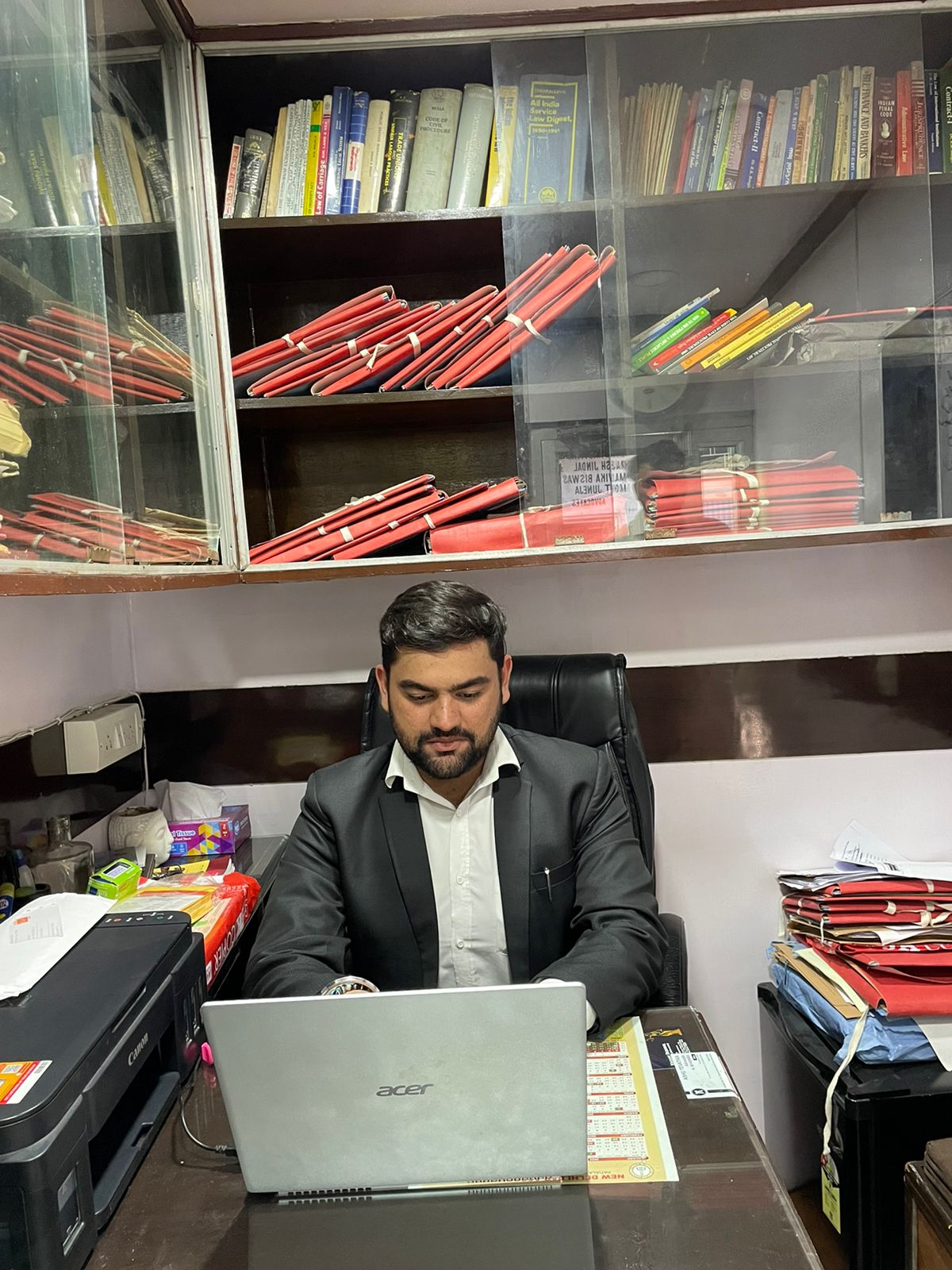
Category: Interviews

  • “Transforming from a student to a practitioner of law can be overwhelming as a lot of responsibility vests on your shoulders”,- Abhay Agarwal, senior associate, JSA

    “Transforming from a student to a practitioner of law can be overwhelming as a lot of responsibility vests on your shoulders”,- Abhay Agarwal, senior associate, JSA

    This interview has been published by Priyanka Karwa and The SuperLawyer Team.

    To start our conversation on a lighter note, we would love to know what made you choose law as a career option?

    Since my childhood, I was unsure of what career to pursue. The choices oscillated from being an economist, a journalist, an architecture and even a chef. Being a lawyer was never on the list. It was quite usual in our school for students with commerce background to take up chartered accountancy after 12th. However, in my quest to study something more versatile, I ended up taking law since law is multidisciplinary in character. Perhaps law is the only field in which, depending on one’s practice area, knowledge of other subjects such as economics, finance and even psychology is also essential. Hence, the decision to choose law.

    We would definitely like to know about the struggles you faced in your early years as a student and after you pursued law

    Being a first-generation lawyer that too from a non-national law school was challenging. Given that the law school was fairly new, we did not have a huge alumnus base and getting internships was a dauting task.

    While law school teaches you to read the law, it is only when you start practicing that you learn to apply law in different scenarios. Transforming from a student to a practitioner of law can be overwhelming as a lot of responsibility vests on your shoulders. Having said that I feel there is a huge disconnect between classroom teaching and practicing law. This gap can be bridged by doing more internships and gaining more practical exposure.

    It would be a pleasure for our readers to know about your first job as an Associate at Khaitan & co.

    Khaitan & Co. is one of the most prestigious and amongst the leading law firms in India. After several internships, I was fortunate enough to be offered a position at the firm’s Mumbai office. Given that the firm does voluminous deals with often very high stakes, the training which seniors at the firm imbibe to its juniors is impeccable.

    While at Khaitan & Co., I was involved in various high-profile matters such as public issuances of debentures and offshore bond issuances, some of which were also award winners. I had the privilege of learning from some of the stalwarts of the industry. The time spent at Khaitan & Co., and the relations made there is something which I would cherish forever. I am grateful to Khaitan & Co. for kickstarting my career.

    Since you specialize in Banking and Finance and Financial Services, would you like to elucidate about your role as an advocate in this field and the motivation that landed you in this sector?

    I am involved in advising a range of domestic and foreign banks and financial institutions, and Indian conglomerates, in a variety of domestic and cross-border financing transactions. A typical workday as a financing lawyer involves drafting and negotiating various financing documents, and advising clients from start to closure of the transaction. On the insolvency front, I have been regularly advising committee of creditors, the resolution professional and the resolution applicant.

    Being a debt lawyer opens up a lot of opportunities in foreign market particularly the United Kingdom. This was one of the motivations of taking up banking and finance as a practice. Further, lending and borrowing is essential for a growing economy like ours. Insolvency is a developing area of law with lots of potential for growth. This is one of the few practice areas which is not seasonal, and one can expect to be busy throughout the year.

    From your profile, it is quite evident that you have worked with some of the leading law firms in India, would you like to tell us about your journey so far

    As mentioned above, I started my career at Khaitan & Co. where I worked for about 3 years. Then I moved on to Cyril Amarchand Mangaldas where my stint was rather small of less than a year. I joined JSA in July 2019. JSA boasts of robust practice areas and has been consistently ranked as Tier-I for its debt practice, amongst others.


    Under the guidance of Ms Dina Wadia and Mr Soumitra Majumdar, I have been fortunate enough to work on some marquee and path breaking transactions. Contrary to the other firms I worked at, I have gained exposure to a broader range of transactions. In a profession such as ours where burnout and depression is on the rise, JSA has also taken various measures to ensure well-being of its attorneys.

    To wrap this conversation up, what advice would you give to the fresh Law graduates?

    Bear in mind that law is a noble and a very demanding profession. Being client-centric, one has to put client’s interests over his own. This could include sacrificing weekends and leisure time. There could be unrealistic timelines and the expectations are typically high.

    Having said that, it is important to have command over the language. The only way this is possible is to read (almost anything) regularly! One should articulate his thoughts and pen it down. This will develop analytical skills and improve clarity.

    Last but not the least, work hard, be motivated to learn and take up a (weekend) hobby.

    Get in touch with Abhay Aggarwal-

  • “There may be times when I fail or stagnate, but it doesn’t demotivate me”- Vaishvi Khare, IP Attorney | Corporate Lawyer| Media & Entertainment Lawyer

    “There may be times when I fail or stagnate, but it doesn’t demotivate me”- Vaishvi Khare, IP Attorney | Corporate Lawyer| Media & Entertainment Lawyer

    This interview has been published by Priyanka Karwa and The SuperLawyer Team

    So Vaishvi, what was your motivation behind choosing to pursue law as a career?

    Law as a career is a very zestful practice and you will learn something new on everyday basis. I firmly believe in acquiring knowledge and develop multifaceted skills from wherever it is possible. I did actually wanted to serve people in some way or the other and choosing a career in law was the answer to this! As, Henry Beecher said “A law is valuable, not because it is a law, but because there is right in it”. I therefore wanted to educate people on their rights and help them if they get stuck in any legal trouble.

    Please elaborate about the role of a Media and entertainment lawyer.

    As a media and entertainment lawyer, we have a crucial role in advising individuals, companies, and organizations in the media and entertainment industry on legal issues related to the creation, distribution, and exploitation of content. The responsibilities of a media and entertainment lawyer can include:

    Reviewing and negotiating contracts: This may include contracts for the creation, distribution, and exploitation of film, television, music, publishing, and other types of content.

    Advising on intellectual property issues: This may include trademark and copyright protection, licensing, and disputes over the ownership of content.

    Advising on regulatory issues: This may include advising clients on laws related to advertising, broadcasting, and telecommunication.

    Advising on talent representation: This may include advising on the negotiation of talent agreements and representing talent in disputes with their employers.

    Defending clients against lawsuits: This may include lawsuits related to defamation, invasion of privacy, and infringement of intellectual property rights.

    Advising on mergers and acquisitions: This may include advising clients on the legal aspects of mergers and acquisitions within the media and entertainment industry. Overall, Media and Entertainment attorneys are essential in guiding their clients through the intricate and often changing legal environment that surrounds the media and entertainment sector.

    We would also like to know about the  award you received for the outstanding Leadership Award in Law 2.0 conference and what it took to win that award?

    Law 2.0 Conference was held in Dubai, UAE from 16th to 18th December 2022 where in total six conferences were scheduled. I was awarded for the Outstanding Leadership Award in the Law 2.0 Conference. We also had an opportunity to connect with people from different sectors and learning their synergies. I was also a panellist for a panel discussion which was on “How to protect your brand in the Digital Space”. I would say as a result of my diligence and enthusiasm for the legal sector. I was the one who studied and kept up with my social life while I was attending law school. I firmly believe in striking a balance between my personal and professional lives, therefore when I was a student, I gave my coursework my all-out love and dedication, and when I was with friends, I had a blast. So work life balance is very important in today’s life. As a first-generation lawyer, I had a lot of challenges landing internships and starting my own business. I made a lot of mistakes, but in life you learn from them and become a better leader. Therefore, in my opinion, the reason I won is because of my passion, my willingness to learn new things, and my positive outlook.

    What do you like to do in your free time?

    Spending time with my family, my three dogs, and going on trips with them are some of my favourite things to do when I have free time. Due to my conviction that everyone should lead a healthy lifestyle, I often practise yoga and meditation. Additionally, I enjoy trying out different foods. I enjoy listening to new tunes, cooking, and watching movies and television.

    Given that you have expertise in IPR policies, what drawbacks do you see in our current IPR laws?

    According to me, these are some drawbacks to the current IP laws that are often discussed:

    1. Complexity and unpredictability: IP laws can be complex and difficult to navigate, especially for small businesses and individual creators who may not have the resources to navigate the legal system. This can make it difficult for people to protect their creations and to know if they are infringing on someone else’s rights.

    2. Slowing down innovation: IP laws can also slow down innovation by creating barriers to entry for new businesses and individuals who may be building upon existing innovations. This can result in a reduction in competition and progress in certain fields.

    3. Cost: Obtaining and enforcing IP rights can be expensive, which can make it difficult for smaller entities and individuals to protect their creations. This can lead to unequal protection of IP rights, where only those with the resources to afford the legal process are able to protect their innovations.

    4. Imbalance in power: The current IP laws often favor large companies and organizations over individual creators and small businesses. This can result in an imbalance in bargaining power, making it difficult for smaller entities to negotiate fair terms for the use of their creations.

    5. Limitations on access to knowledge and information: IP laws can limit access to knowledge and information, making it more difficult for people to build upon existing innovations and create new ones. This can result in a reduction in the flow of ideas and creativity, which is essential for progress and innovation. These are some of the drawbacks of current IP laws, and while they are important to consider, they are also challenges that can be addressed through ongoing efforts to reform and improve the IP system.

    In order to end this conversation, kindly tell us about the things which keep you motivated in your area of expertise.

    As I already mentioned that, the legal field can be intellectually stimulating, as it involves continuous learning and staying up to date with new developments and changes in the law. As a lawyer, I really enjoy learning and being able to help people with my knowledge and skills keeps me motivated. Also, my desire for success drives me to do well. What motivates me to keep going is the knowledge that my diligence and tenacity will enable me to experience more professional achievement. One way to do it, in my opinion, is to have the company’s goal and values coincide with mine. Knowing that my efforts are on the right track motivates me to exert greater effort. Success is therefore vital to me on a personal level as well as an organisational level. The growth of the company, which ultimately results in success and personal achievement, provides motivation. There may be times when I fail or stagnate, but it doesn’t demotivate me. On the other hand, I feel re-energized and ready to work harder. Regardless of the situation, what keeps the fire burning within me is the taste of achievement after a setback.

    Get in touch with Vaishvi Khare

  • Gaming and Technology Law as an Emerging Career Option: a Discussion with Rachna Shroff, Gaming Lawyer

    Gaming and Technology Law as an Emerging Career Option: a Discussion with Rachna Shroff, Gaming Lawyer

    This interview has been published by Priyanka Karwa and The SuperLawyer Team

    Was pursuing law planned for you, or did it all happen in a flow? Kindly share with our readers.

    It was a “Flow” for me; because I’ve said this earlier as well, I was not somebody who would choose any other stream, and science was not allowed as my elder sibling was already studying that. At this point of time, my parents didn’t allow me to pursue science, as they believed one in the family was enough to study so hard. Hence my approach was “Ok, Fine, then let’s look for something else!”  I was easy with life.

    I gave my exam, cleared it, and I started studying law. Moreso, when I was studying during my 11th standard, my teachers had also suggested the same and thereafter a friend also proposed the same idea, appears as I was destined to and the rest is history. 

    Which specific advice has helped you come thus far in law? What is that one motivation that keeps you going in life?

    My mother. She never allowed us to give up. She had held the fort for us and always told us to keep moving on because of which no situation ever felt like a failure, all it looked like was challenge to be met. My toughest times in life I have crossed with this one thought of that she has instilled in me strongly to “keep moving”

    Kindly tell us about your current role and responsibilities.

    I was lastly working with an e-gaming company, and currently, I have been freelancing – on the tech law and gaming side which involves contracts, conducting workshops, free webinars I have also been conducting expert sessions on technology law for legal edtech platforms. I’m  also mentoring young lawyers for a career in the field of law.

    Rachna, with all these 12 years of experience, according to you academics and skills, what should be considered by a legal professional in their respective fields?

    I think networking, academics and soft skills, all hold an important place. Any factor missing is a concern. But at the same time, I would like to emphasise that this is age when you’re studying, building your career and you are at your prime, please do not miss the fun! Do not forget to socialize, make those bonds, friends and forge lasting relations. I want to advice to all the young lawyers through your platform and state that social media is fine, but move out in the open and get going.

    We are so lucky, that in this era where you have platforms like LinkedIn and others to network with the professionals anytime, It is so easy to reach out today, so, please go out and network. If you want to land up with internship, find that internship, if you want to start working, start working. If you want to upskill by other courses apart from your academics, do it because all these – are going to benefit you in the long run. Don’t be too choosy, each opportunity will teach you something and I can assure you that it will be useful – I promise! Being too picky sometimes is not a great idea.

     I want to tell you don’t worry. Don’t be anxious or don’t think that you’re left behind. You know, everybody has their own trajectory, their own timeline. Everybody reaches their point at some point of time or the other. Give yourself that time and keep moving! There is not much time to be sad, depressed or feeling rejected.

    I highly recommend soft skills, that’s my secret to success, which is no more a secret. It’s not only about your academic skills; soft skills mean how to interact with people, how to understand the emotional quotient, how to increase your confidence, how to not compare yourself with others, how to understand that you are unique. All these together will find that path for you. It will open all the opportunities that you are looking for.

    Please tell us about this emerging career choice, i.e., Gaming and Technology Laws for law professionals!

    When I started in the gaming industry, I was clueless about the exposure and today I am just grateful for the learnings and growth. I am actually covering a huge part of the technology law from Intellectual Property, Data Privacy, the IT Act, cybercrimes, contracts, litigations,  advisory, training and research. It makes such a great profile which can land you to work with different tech industries not being limited to gaming but also fintech, Edu-tech, pharma, e-commerce and so much more in this tech space. You can work as an in-house counsel, as an associate with law firms and also have the option to you can work as a legal advisor to the government.

    There is a great balance to be in this industry at this point of time which has immense scope. There are numerous start-ups, companies into gaming, and every other day I meet some businessmen seeking advice to start a gaming company. It is a booming sector, jump into it right now as it has all the scope to absorb you.

    Our audience is curious to know the use of trademarks and copyrights in the Gaming industry and other IPR-related agreements that are needed for similar purposes.

    It is one of my most favourite area while dealing with technology laws in gaming side. IP is one of the most important parts in gaming because it is an organisations intangible asset. When a company goes into merger or acquisition, or for funding, whatever a gaming company is looking at, the IP portfolio will speak for it and will do a great deal.

    You need to protect your brand. I think I’ve told this so many times in all expert sessions, that if you are studying gaming or if you are a tech lawyer, you have to parallelly study IP. Without that, it’s somewhere halfway. To all who are interested in Tech law, I emphasize again to study IP laws well.

    Rachna, please also enlighten our audience with insights on the “Data Protection Bill, 2022,” and how it can affect the gaming industry.

    The data will affect the entire technology industry, and not only gaming. Anything that is using technology will have to comply by data privacy laws; all will be bounded. The previous Data Privacy bill has been withdrawn, and then a new draft had been issued. We await to see how it shapes up finally. It’s certainly going to be very challenging for all the operators. The one only good part that has happened through this new draft bill is that localization of the servers has been done away with, which is a big relief for MNC’S and for all the gaming operators.

    Please tell us about your role at the “Art of Living” Foundation.

    I am a faculty with the Art of Living and it is founded by Sri Sri Ravi Shankarji where I facilitate – the Happiness Program, which is the basic level program and the core of the program is Sudarshan Kriya Meditation – a rhythmic breathing pattern and results in your overall well- being. Research by the likes of Yale and Harvard University has shown Sudarshan Kriya Meditation immense effect in relieving stress, improving sleep and with better control over the mind and emotions. It has given me my personality and made the human being I am. 17 years with Art of Living has been a beautiful and joyous ride. Every successful person is a meditator. What are you waiting for?  Meditation should now be a part of one’s lifestyle because it’s no more luxury. It has become a necessity. You should just take the leap. If you want to be successful, you should be meditating.

    What are most of the standard sets of doubts that, while mentoring, you come across?

    I usually come across where, young students asking me about their careers -how they should shape their careers? or if they’re interested in gaming, what should they do next? or how they should make their CV’s? when they should make a switch from the current job they’re doing?

    While speaking to these young minds I have noticed a glaring difference between our generation and them and that is the youth today really wants to move very fast. which is fine but I would suggest that while you are on the chase outside, be patient – inside. Allow things to come to you.

    Most young lawyers think that the corporate world has just contracts and agreements to draft and nothing else; please clarify this.

    It’s a big-time myth. Certainly, contracts are a big part of your profile being an in-house counsel I just spoke of the number of opportunities you have from contracts to litigation, to dealing with cybercrimes, to dealing with research, training and advisory and much more.

    You would get the opportunity to train the highest in the management to the youngest person in the organisation; creating – policies for the hr, advising on the new laws, notifications, guidelines and judgements, strategizing with stakeholders, holding conference with the top senior counsels across the country and also lobby your point of view to governmental agencies

    In-house counsel has a lot to contribute, a lot to learn- It’s a challenging job.

    People think there’s a lot of money on the in-house counsel side and, maybe, the work isn’t that much, but it is the opposite. Money can come in any profession you pursue passionately. But I will tell you that it’s not an easy cakewalk job.

    You will have to work very hard, and do multiple things at the same time. be prepared if you’re thinking of being an in-house counsel. It will take a lot of passion, dynamism and enthusiasm. You should be ready for challenges and ad-hoc situations every now and then.

    Any five best pieces of advice for our young law professionals.

    This is my favourite question. The first piece of advice is you got to move, drop your phone and go and meet people physically.

    Secondly, you’ve got to do some yoga, meditation, running, jogging, exercise, playing, trek-king, whatever you like! have to keep your mental and physical fitness at an all-time high and prioritize it.

    Thirdly, listen to music, read books, which are not only your subject books; read a little. If you do not like it, drop it. Read something which you like.

    Fourthly   have that faith and confidence in yourself. That you will make it. Find a mentor or a Guru, however you would like to call it. Take assistance, listen to their advice.

    And fifthly, don’t lose your smile. Life is too short. You are here to achieve and it will work out.

    Get in touch with Rachna Shroff-

  • Woman in the Real Estate sector: a Discussion with Veena Krishnan, Partner at SAMVAD: Partners

    This interview has been published by Priyanka Karwa and The SuperLawyer Team

    What inspired you to choose law as a career and how has been the decision so far?

    I chose law as a career only because I cleared the entrance test conducted by NLSIU and felt that it would be beneficial if I studied at a University par excellence. I did not even consider law as a career and wanted to become an engineer. Out of the myriad of entrance exams I wrote, my parents had gotten the form for the NLSIU entrance exam and I simply wrote it on a whim. I have not regretted the decision since.

    What were the challenges faced by you at the beginning of your career?

    I wanted to become a practicing lawyer and be based out of Bangalore. At that time, finding good law firms was a challenge and it was initially difficult for me to find a good law firm to work with in Bangalore.

    Since you have also been a part of PoSH and the statutory Prevention of Sexual Harassment, do you think it is implied in local committees where women are neglected in informal sectors? 

    The Local Complaints Committee is a saving grace for women in the informal sector. As far as other establishments are concerned, there is a mandate for a POSH Committee but the LCC helps domestic workers and informal workers who may not be working in an organizational setup.

    Talking about work-life balance, there has been an ample amount of discussion on health issues as a lawyer, what do you believe are the best practices to maintain the equilibrium?

    I have by and large managed to strike a healthy work-life balance in my sphere of work. Some of the practices I would recommend are – daily exercise and physical activity which would lead to a healthy body and mind; any form of spiritual practice such as yoga or meditation which would enable the mind to stay calm; also while it is important to work hard and strive for professional success, it is important to keep a mental distance from success and failures and not get too attached to the outcome of one’s efforts; time management and conscious utilization of each minute of the day is very important.

    Among all the aspects, i.e,  lease and purchase of office spaces, stand-alone buildings, IT complexes, land, and properties conveyed by government entities such as the KIADB, etc, which one do you find the most interesting and challenging? 

    I find the lease of office spaces and acquisition of land parcels most challenging in terms of the title and documentation issues that arise in these transactions.

    Any road-maps that were followed by you, that you would like to share? 

    Spending time with family and friends; keeping a mental distance from my successes and failures; not comparing myself to others who are more or less successful than me (this consumes a lot of brain power and is a drain on one’s energy); emphasizing on teamwork and delivering quality work to the client and investing time and energy in helping juniors learn the ropes.

    What advice would you give to someone considering a real estate purchase? 

    It is important to make a commercial decision first on whether this property is suitable or not and then look at the legal aspects. The title and other aspects may work fine, but there are several instances where legal things are fine, but it does not work commercially for the client.

    What advice would you give to young law professionals? 

    Take your time and be patient to settle down in an organization, do not be in a hurry to jump jobs; be proactive in asking seniors for work and actively working on seeing a transaction to closure rather than simply doing the work allotted to you; when you are assigned work, do not simply sit down and start on it, but figure out the transaction structure, ask to be included on client calls and meetings. Do not compare yourself to your peers, as each lawyer’s journey is different; work hard and you will surely find success.

    Get in touch with Veena Krishnan-

  • Road Less Travelled: Journey of Advocate Lalit Suryavansi in the IPR domain

    Road Less Travelled: Journey of Advocate Lalit Suryavansi in the IPR domain

    This interview has been published by Priyanka Karwa and The SuperLawyer Team

    Being a science student, and then choosing law, what was the idea behind?

    Great Question. Though I am used to this question and answering this question every other day. Actually, this science and law cocktail was not planned. In fact, Law was something I never imagined I would be pursuing. I did my graduation and post-graduation in technological streams and happily started working as an Engineer.

    Barring a few things, I was satiate with my carrier. As destiny had other plans for me, one fine day, I felt something is not right about my job and the kind of work I was doing back then. I started looking for other options and got to know about Intellectual Property Rights and prior art searching. The domain looked different and exciting, so I decided to switch my path and get into Intellectual Property. So, this is how I get into Legal domain, and in this journey, I qualified the Patent Agent examination. Later, I felt like having formal qualification in law, which led me to pursue LL.B.

    Please enlighten our audience about the initial struggles in your career and how you managed to overcome them?

    I’d rather start with initial anxieties. As I started my career as an RF engineer, and I was letting go my 3-4 years of job experience for something new called Intellectual Property, which, at that point in time, people thought to be some sort of real-estate business related endeavor, I had lot of disquiet in my mind, and I was in dilemma about the decision I was going to make. Plus, the baggage of what people would say if I failed. But my heart had already accepted it, so it pushed to me to make a bold decision and take that plunge, which I did, and I am elated to say that I made the right decision at that point.

    Of course, there were struggles, but I was very passionate about what I was doing and loved it so much that struggles never felt struggles, they felt like challenges, for which I was determined to go any lengths.

    What are the most important considerations to keep in mind when dealing with IPR and registering patent issues?

    Over the years, I have realized that inventors are mostly concerned about the outcome, i.e., the grant of a patent, not about the events that come along the way of patent grant. I have experienced that most inventors, if not all, are interested in getting their patent granted, and they are either ignorant about the very-very important milestones that starts with patent application filing and end with patent grant/refusal.

    Let me give you a little more perspective, I believe prior art searching to be the most important thing in the patent proceedings, but inventors hardly show any enthusiasm to get it done. And those who consider prior art searching, they fail to understand why a prior art search is done at all, how it can contribute in shaping his/her patent application. Similarly, patent application or claims drafting is merely considered to be the patent agent job. Of course, it is as you are paying him/her, but I’d like advise that please do not recklessly depend on your Patent Agent and be actively involved in the events/proceedings—-Afterall inventions are inventors’ child, not Agents’. My intention is to make the inventors more inquisitive and interactive so that they know what is actually being done by their patent attorney, how the attorney is giving shape to claims, application, arguments, etc.

    IPR and other corporate sectors are evolving like never before, would you like to throw some light on the same? And according to you Lalit, what exciting opportunities it can create for our young lawyers?

    With government initiatives such as “Make in India”, “Self-reliant India”, push for innovations, and programmes like “Start-up India”, protection of innovations is seen as a necessity to compete in the market. With this patenting activities has increased many folds, and patent filing in India is rising at an unprecedented rate.

    As per the Economic Survey 2021-22, the number of patents filed in India has gone up from 39,400 in 2010-11 to 58,502 in 2020-21 and the patents granted in India have gone up from 7,509 to 28,391 during the same time. With so many numbers of patent filings, Patent Prosecution is rising, so is the Patent Litigation. Therefore, one can easily infer the prospects for young professionals.

    Lalit, as per your experience in the legal field, how do you see the legal industry coming up with new concepts and creating exciting opportunities?

    With the constant push for digitization, arrival of faster telecommunication technologies like 4G/5G, invent of communication platforms such as Zoom, Teams, etc., alike every other domain, Legal industry is also witnessing rapid transformation. Everyone is now aware how virtual courts have started, how virtual hearings has transformed the way hearings were taken. If I specifically talk about the Indian Patent paradigm, Indian Patent Office (IPO) too has segued from offline system to online system. With conversion of physical hearings into into virtual-call-based hearings, paperless patent application filings, mandatory online filings for Patent Agents, and many other such initiatives, IPO has put in place a lot of new concepts/systems. So, newer opportunities are coming along, we just need the right approach and right temperament to grab said opportunities.

    What can be some of the toughest considerations while someone from a non-legal background has to see before opting law as a career?

    For someone from a non-legal background, the toughest consideration would be the time window for success. To make a mark in this industry, one must possess the tenacity to climb every rung of the ladder that leads to the success. As they say, there is no shortcut to be successful—legal domain is no different or alien to this saying.

    Lalit, what is a typical day like for you?

    Well, a typical day is typically typical for me. I get up around 6 AM. Do my daily chores by 8 AM and leave for office by 8.30 AM. Commute to office, reach there by 9.30 AM, and get lost in the pool of matters waiting my arrival. Leave office at 6.30 PM, reach home around 8.30 PM where my son and my daughter (twins) remain armored to welcome me with the showers of anecdotes, complaints, happenings, and everything in between from their typical day.

    Could you highlight some of your success habits that enable you to meet your goal?

    Never say no attitude’ and ‘to remain grounded’ at all the times are some of the attributes which I think play pivotal roles in anybody’s success.

    Lastly, what advice would you give to someone starting out?

    Keep your mind, eyes, and ears open for anyone and everyone—you never know who might give you the piece of information that can change your life forever. One more thing, everything progresses at its own pace, so never feel frustrated/agitated if something is not happening at your whims/desires—time and destiny will certainly make it happen for you if you are honest and keen about it.

    Get in touch with Lalit Suryavansi-

  • Jyoti Kapoor, Senior Manager (Legal Counsel) at Diageo, In a Discussion With SuperLawyer On Unconventional Career Options In Law

    Jyoti Kapoor, Senior Manager (Legal Counsel) at Diageo, In a Discussion With SuperLawyer On Unconventional Career Options In Law

    This interview has been published by Prabhjot Singh, Priyanka Karwa and The SuperLawyer Team

    What motivated you to choose law as a career? And how has been the journey so far for you?

    While growing up, I remember my mother telling me that she always wanted to be an advocate. However, since she came from a humble background, she could not pursue it.

    As they say, “When it comes to life, we spin our own yarn, and where we end up is really, in fact, where we always intended to be”, somewhere, I believe that destiny had a major role to play while I chose to study law and pursue it as my career since I was very inclined to pursue fashion designing.

    God has been very kind to me, I have met some wonderful mentors during my journey who have constantly guided me through. It has been an eventful journey, very rich in terms of learning, not monotonous. I feel that I am fortunate to have discovered on how to be assertive and support the business while not losing my own ground. That’s the best part, isn’t it?

    What were the challenges that you faced in the beginning of your career?

    I moved out of the ‘city of dreams’ after pursuing law from Government Law College, while I had a PPO in my hand just to feed my own curiosity of what’s in store for me in a new city, in a new role? I just wanted to understand how a company works and what role does a lawyer play in building it. Many of my friends chose to work in law firms but somewhere I was determined to pursue an in-house role in real estate.

    I am a very passionate human being and an extrovert as well, and I feel that it somewhere affected my first promotion. Early on, I remember when I got rejected for this promotion, I felt devastated. It undoubtedly was one of the first failures which I had tasted. I had been an academically bright student who predominantly scored well and therefore, it took a lot of time for me to heal.

    During this phase, while I was trying to find job opportunities and relocate myself to Bombay, I largely faced rejections. I remember, feeling miserable about myself and questioning my own skills and choices. I held my patience and kept myself motivated and as they say “Tough Times Never Last, but Tough People Do!” and some fantastic opportunities came my way.

    As I progressed in my professional journey as an inhouse counsel, I learnt a little later in life that you need to be very solution driven towards the business. A strict ‘no’ to a business proposal even with a solid rationale is something that may not work.

    Among all the specializations, i.e., drafting, vetting, due diligence, risk mitigation, which area of law is the most interesting to you and why?

    Risk mitigation to me is the most interesting. I believe that this exercise teaches you to research the moot points, evaluate and assess the business proposal accordingly. Alongside this, it also makes me build and present the best and worst business case for my stakeholders.

    Having said that, doing due diligence and creating an title trail as a real estate lawyer is also challenging and interesting at the same time. As you may know that the land laws are very region specific and even consist of cryptic language, hence to derive and create a title trail is both complex and absorbing.

    Jyoti, how do you balance your work and personal life effectively?

    I believe that I am organised when it comes to my work and personal life both, which makes it very easy for me to balance both effectively. I love to travel which means I take frequent breaks and therefore planning is the key. I often try to work backwards which gives me immense time to think, strategize and plan my work and life, both. By following this thumb rule, I do not procrastinate and stress myself. I believe that work is an integral part of my life but not my whole life.

    What can be some of the toughest considerations while someone from a non-legal background has to see before opting law as a career?

    I do not see it challenging if someone from a non- legal background starts one’s journey as a lawyer. Having said that, the choice of a law school is very integral. I am proud to be a GLC’ite. As a student of GLC, I had the freedom to explore different fields of law by interning with law firms/ companies, senior counsels, or maybe just venture into a different horizon altogether. It essentially gave me time to introspect and perspective on who I want to become and most importantly how I want to be.

    I am a first generation lawyer and feel that I have an advantage here, as I have the freedom to make mistakes without feeling any threat of being judged. With each mistake that I have committed, I have learnt to be wiser. All of our journeys are different and they can be absorbing yet very fulfilling, if we see from the right lens. We just have to dive in deep and we shall definitely find our way, the perspective has to be right.

    What is a typical day like for you?

    I am an early riser and start my work day usually around 9-9:30AM by checking/ replying to emails and messages. I, then write my to do list (and sometimes also get overwhelmed with the tasks that I have put down for myself to be completed in a day!) and then get started with the projects that have my top priority. I find that I am most productive during the day, hence I try to read as much as I can so as to advise my stakeholders on their business proposals or build strategies to move ahead before I start to jump into meetings and commence the contracting work. Before ending my work day I mostly look back and assess what’s one new thing which I learnt today. This is one of the ways which helps me to be grateful to the job that I do.

    Jyoti, could you highlight some of your success habits that enable you to meet your goal?

    The most important success habit which has always helped me to achieve results is discipline. I live by the principle that “discipline is the bridge between goals and accomplishments”. Discipline helps me in taking charge of my own life be it professional or personal; it also helps me to train myself much ahead in time.

    I also feel that performing yoga consistently, pursuing my hobby alongside work and travelling has helped me to largely reduce work fatigue.

    Last but not the least, I feel that we must trust our leaders, mentors, team and colleagues. I fully echo the thought that together we can do so much, togetherness comes with a team and teamwork begins by building trust. With my own experiences, identifying and trusting my mentor/ leader and building a team has helped me in facilitating my accomplishments much earlier.

    Lastly, what advice would you give to someone starting out?

    For someone dreaming to choose law as their career, I believe that you should first assess if you are passionate towards pursuing it. One must be brave and also wise to assess what is the right thing to do. You also have to be patient in this journey and not fear to evaluate yourselves in different fields of law. To conclude, I feel that one must believe in oneself, have faith and make your own country proud.

    “Every accomplishment starts with a decision to try”.

    -JYOTI KAPOOR

    Get in touch with Jyoti Kapoor-

  • Kanishk Khullar, Senior Associate at ASV Legal LLP, In a FireSide Chat With SuperLawyer On Important Tips For Drafting Documents

    Kanishk Khullar, Senior Associate at ASV Legal LLP, In a FireSide Chat With SuperLawyer On Important Tips For Drafting Documents

    This interview has been published by Prabhjot Singh, Priyanka Karwa and The SuperLawyer Team

    Was pursuing law planned or did it all happen by chance?

    I was thinking about the career choices available to me, after completing my 10th Boards Exams, when our school arranged a career counseling session for all 11th standard students of Frank Anthony Public School, where during the counseling session I was suggested by the counselor two career options first was Journalism and Second was Law, the later clicked in my mind as an ideal profession to pursue, because as a layman I use to view lawyer as a rationale person safeguarding the rights Individuals, and corporates without considering the fact that what is the public opinion formed upon against particular Individual and entity. Thus, this viewpoint attracted me towards taking law as a profession.

    Please enlighten our audience about the initial struggles in your career and how you managed to overcome them?

    Being a first-generation lawyer and that too from the non-NLU background itself ads up challenges to a lawyer’s initial days struggles, thus, it gets difficult to get a break even as an intern in Tier 1 Firms. On the other hand, there were many unexplored fields of law of which I had no idea, therefore, I made sure to get as much exposure as I can to various disciplines of law by interning with various practicing lawyers so that I could decide at the time of my graduation, that exactly practicing which area of law would suit my interests.

    Among all the specialisations, i.e. Insolvency & Bankruptcy, Drafting, Arbitration, Debts Recovery, Criminal related, Company law, etc., which one do you find the most interesting and challenging? 

    Among all the various fields I have been practicing in I have found practice in Debt Recovery matters to be fairly interesting and equally challenging as well, in Debt Recovery matter Banks have the recourse of taking remedy under both the SARFAESI Act and RDDB&FI Act, thus, it is interesting to represent a bank and assist the court to take over the possession of the attached property, further, suggesting the banks various steps available to them to recover outstanding amount in loans involving complex issues.  

    Subsequent to providing legal services to the bank I had shifted my focus towards protecting the rights of the borrowers and other affected parties as the said statutes are enacted for recovery of bad debts, at times recovery proceeding comes hard upon the rights of the affected parties, thus, while representing the Borrowers or other affected parties one has to pay attention to minute details of all compliance done by the bank as any non-compliance by the bank of various rules under either SARFAESI Act, RDDBFI Act, or Security Interest Rules can give a new life to the defense prepared for safeguarding the interest of the Borrowers and other affected parties.

    Kanishk, as you have mentioned Drafting as your core responsibility, What advice would you give to someone considering a career in legal drafting?

    Through all these years of drafting, I am able to make out that an ideal way to draft is to start with having all the correct facts in hand from the client as the client is the only master of facts, and make sure all dots gets connected and no gaps are left to surprise the counsel at the later stage, further, when all the facts are received, one should prepare points for arguments and defense chronologically so that the draft has flow like a storyline and no ambiguity get formed in the mind of the reader by a simple reading of the draft.

    How do you stay up to date on the latest legal developments?

    As a major part of my job is drafting one has to keep an update on the law so to keep an update on the latest developments in the legal field, therefore, I prefer to spend my money on buying subscriptions to legal news portals and online law journal instead of spending it on entertainment purposes. Other than that, I have to keep researching new judgments for the legal prepositions that occur during drafting matters, so keeping a check on legal developments is both habit and a necessity to me being a drafting counsel for time being.

    Any roadmaps that were followed by you, Kanishk and how do you consider the role of the same in this profession?

    The simple road map that I have followed is to build connections in person and on Linkedin, apart from it, whenever, I am at court I make sure that I build good connections with seniors and other colleagues lawyers greet them nicely whenever I come across them during the court proceedings as the same is a traditional and effective way of building connections in the legal field, further, I will suggest that always leave your jobs and internships on a good note with senior as you can get a client as well as job recommendations from your previous office and in this field the nature of the profession is such that anyone could be a useful link in dealing with a particular case at any point of time, thus, one should always try to thrive in developing healthy professional relations.

    How do you handle ethical dilemmas that may arise in your work? Could you highlight some ways to tackle the same?

    At times you have to have a client-centric approach, which may result in damaging your professional outlook, to tackle such a situation one has to adopt an out-of-the-box approach to maintain the ethical balance in your professional life so that you will be able to provide relief to your client without tempering the legal framework.

    Nowadays, people don’t have that zeal to pursue a career in law, what can be the reason for that apart from job security in corporate?

    Litigation as a career demands a lot of patience and persistence which is kind of lack behinds in today’s world where everyone wants instant gratification and results, only those who really have a passion for this profession and understand that justice takes time and it takes time to excel in this profession can sustain in this environment.

    Kanishk, as per you, what are the best strategies and possible ways you use to negotiate with creditors, as in debts recovery cases?

    Creditors specifically banks and financial institutions only aim towards recovering the amount which they had disbursed and which turns out to be a bad debt, thus, they are least interested in selling the mortgaged property as it itself is a time taking and expensive exercise for the bank, thus, a borrower may negotiate with the banks for paying off its debt till the time the auction of the mortgage gets final as the bank has a lower hand when it comes to recover bad debt and thus, the borrowers can try and insist the banks to settle for the less amount, although, the best time to negotiate with the banks and financial institutions to pay off the debts is during the last quarter of a financial year i.e. January, February and March as during this time the banks have pressure to close the bad debts account so that least NPA’s gets reflected on their balance sheets which will help the banks to get more incentives from Reserve Bank of India ‘RBI’. In other words, the fewer bad debts that get reflected in a bank’s balance sheets the more incentives a bank receives from the RBI.

    What is one piece of advice you’d give to our readers, who are looking for a career in the same profession?

    As, I have mentioned before in the above conversation, this profession requires a lot of patience and persistence, further, there is no limit to the amount of hard work you put in,

    The more effort you put into this profession in your initial days, the sweeter fruit will ripe for you later.”     

    -KANISHK KHULLAR

    Get in touch with Kanishk Khullar-

  • Abhishek Nangia, Partner at RNA, Technology & IP Attorneys In a Discussion With SuperLawyer On Freelancing In Legal Profession and Insights On ‘Fake Consumer Reviews’

    This interview has been published by Prabhjot Singh, Priyanka Karwa and The SuperLawyer Team

    What was your motivation behind choosing law as a career?

    When I was in school, I would often express my interest in becoming a pilot.  However, during my high school days, I used to have regular discussion with my uncle, who was an advocate practicing on the civil side in the Delhi District Court. He would share details of interesting litigation cases handled by him.  The discussions would sometimes stretch for hours and the court experiences shared by him were quite intriguing. These discussions were instrumental in developing my interest in the field of law and I seriously started thinking about pursuing it as a career option.  My family supported me as well and I enrolled myself with a law coaching institute after class 12 board examinations to prepare for law entrance examination.  As luck would have it, I cleared the entrance exam and joined Amity Law School in the year 2000.

    Please share the challenges that you faced in the beginning of your career?

    The first challenge was finding a lawyer or law firm that would offer internship. Though I was fortunate to be offered a job on the basis of my internship during the final year with a leading corporate law firm in Delhi, the renumeration offered was not enough to even cover my expenses and made me realise it will take a while to be financially independent. I spoke to my seniors in the profession and was told that there is a long career ahead of me and the focus should be on learning during the early stage, and most firms do not pay or pay a nominal amount to fresh law graduates

    I accepted the offer and started working at a leading corporate law firm with full vigour and sometimes did not get an off during the weekend too (which was an eye opener for me!). I worked on different facets of law – Companies Act, Labour Law, Contract Act, Tax law, IP law, vetting of Agreements and opinion work. It was interesting and challenging considering all the subject areas were new for me and it involved spending lot of time sitting in the library researching on the topic but at the same time I was excited with the exposure that came my way. I would ask numerous questions. Somehow, I developed an interest in the field of IP and thereafter worked in law firms specializing in the field of IP law. The experience and the knowledge gained during my stint at a leading corporate law firm during my first job has proved to be immensely beneficial!

    Another challenge which I faced was to prove myself at the workplace despite putting in long hours. The initial struggle and challenges made me rethink if I have chosen the right profession.

    Today, when I look back, I believe that the advice received at the start of my career to focus on learning was indeed the right advise and I do not hesitate to pass it to on to the budding law graduates.

    Abhishek, is freelancing worth doing in the legal profession and if yes, how to master the same?

    Freelancing in the legal profession is actually working as a sole practitioner. My advice would be to do it if you are mentally strong to bear the uncertainty in workflow and resultantly the monetary reward. It offers flexibility and comfort, and the individual can pursue the hobbies or spend more time with family. They can work as much or as little as they want

    Self-discipline, timely delivery of work and good networking skills are crucial to master the art of freelancing or being an independent practitioner.

    What are your thoughts on “Moonlighting” and please share its legal implications as well

    Some people believe that Moonlighting is ethical because it allows people to earn extra money to support themselves or their families. Others maintain that moonlighting is unethical because it amounts to cheating (due to conflict of interest) and is unacceptable.

    In my view, Moonlighting is likely to have an impact on the employee’s productivity, possibility of confidential data (names and details of client/potential clients, customer/ supplier name, power point presentations etc.) being shared and use of resources of one company for another cannot be ruled out. According to me, it is a serious misconduct.

    Though, there is no specific law that completely bans Moonlighting, the offer letter or employment contracts are often referred to determine whether it is permitted or not. If the employee engages in Moonlighting in contravention to the terms of employment, he can be held liable for breach of employment contract and proceedings under the Indian Penal Code and Information Technology Act can be initiated in a court of law. It is imperative for employees to adhere to their employment contracts to avoid any legal trouble.

    Abhishek, there has been a lot going around the Data Protection Bill, 2022 since it came up, but we would like to take your views on the same as well!

    The Digital Personal Data Protection Bill refers to

    • Personal data only of a “person” unlike PDP Bill. The PDP Bill addressed sensitive personal data; however, it is missing in the revised Bill. The definition of personal data includes ‘any data’ and presumably includes sensitive data.
    • Relaxed rules on cross-border data flows. The draft Bill mentions that list of countries to whom data fiduciary may transfer personal data will be notified.
    • Deletion of personal data once the purpose for collection is no longer served, or the retention is no longer necessary.
    • Hefty penalties for non-compliance but which are capped without any link to the turnover of the entity.

    The potential areas of concern could be

    • Fixed timelines are missing and may lead to delays – Lack of timeline for the Data Protection Board to complete the inquiry, adjudicate the complaint. Also, lack of timeline to cease processing of personal data (in case of withdrawal of consent by Data Principal), no deadline for the data fiduciary to erase personal data that is no longer necessary etc.
    • If non-compliance is not significant, the Data Protection Board may close the enquiry, and will impose penalty in case non-compliance is significant. The use of the expression “significant” does not seem to be appropriate and may lead to faulty/individualistic interpretation.
    • Wide definition of public interest. 
    • Indian government and state agencies granted exemptions from the proposed law in the interest of national security.
    • Central government is allowed to exempt any data fiduciary from the provisions of the draft Bill and
    • Reduced independence of Data Protection Board to oversee the provisions of the proposed legislation. The Data Protection Board shall be established by the government. The establishment of the body by the government has its own set of problems – lack of resources and technical expertise of members may lead to issuance of erroneous decisions.  The delay in appointment of officers is not uncommon and may not lead to speedy disposal of grievances.

    As per the present times, what are some of the skills that are in demand in the legal profession? Please brief our audience wrt both litigation and corporate point of view!

    • Oral and written communication skills – Good orator and storyteller.
    • Understanding the client’s business and requirements and how you can add value.
    • Problem solving ability and ability to think ‘out of the box’.
    • Negotiation, engaging other side in a discussion especially during settlement discussions. I believe in the mantra – not everything is worth taking to the court.
    • Adopting ethical business practice to achieve the desired goal.
    • Managing client’s expectations.
    • Managing work and time.
    • Being aware of the business and legal developments.

    We have seen “N” no. of cases wrt fake consumer reviews, how can guidelines be better drafted to avoid the same?

    Yes, this is an area of concern. The government has recently issued guidelines to curb fake consumer reviews and unverified ratings on e-commerce websites, online food delivery platforms, social media platforms, hotels and travel-booking platforms. The guidelines come into force from November 25, 2022. 

    As per the guidelines, authors submitting reviews online will be required to verify their identity by platforms. Platforms will need to verify consumers’ identity from email address, phone numbers, IP address etc. The compliance to these guidelines is currently voluntary and may be made mandatory if the menace of fake reviews continues. The government has unveiled a new standard on “Online Consumer Reviews” that will be managed by Bureau of Indian Standards (BIS). Global bodies – including U.K.’s Competition and Markets Authority (CMA) and Federal Trade Commission in U.S. are working towards limiting misleading reviews online. 

    The crackdown on fake reviews is a positive step and clearly conveys the message that protecting consumer interest is of paramount importance!

    Do you see any challenges that AI and Legal Tech have created so far with respect to privacy and other aspects? 

    Global LegalTech Artificial Intelligence Market size is projected to reach USD 10,351 million by the end of 2030, growing at a CAGR of 33.50%The advancement of technology has brought its own set of challenges. Data security and privacy concerns are the key challenges considering lawyers handle confidential and sensitive information. The challenge is to deliver secure legal service considering the chances of experiencing security breaches becomes even higher with the advancement in technology.

    Talking about work-life balance, there has been ample amount of discussion on health issues as a lawyer, what do you believe are the best practices to maintain the equilibrium? 

    There has been a lot of discussion on this topic and more so during Covid phase when there was increasing focus on health. In particular, if there is any right formula to maintain work-life balance. In the past two years, there has been a lot of focus on mental health.

    During my initial years, I would work till late in the office and it I started to develop health problems. I made changes in my working style and prioritized health over work.  I have been working from 8 am-5 pm strictly for the past 14 years and have been quite successful so far. I am the first one to open office and leave on time in the evening.  At one point, I used to go to work out in the gym during lunch hour. I use my time in office carefully (without taking frequent breaks during office hours) and it has helped me in leaving without carrying any baggage or thinking about unfinished emails to spend time with the family and have a good laugh! The mini break helps me to rejuvenate. In fact, I do not encourage juniors/support staff to work late on a regular basis considering it is the general trend in most of the law firms. I must add here that health and wellness sessions are organised at my current workplace and the office has been very supportive on maintaining healthy lifestyle and work life balance.

    Another thing I have done is delegation of work and have trained team members so that they can handle basic tasks independently. This has reduced my workload and the team members are happy with their professional growth as they got the chance to work on something new and build their skillset.  During weekends, I take out time for cycling or go for a long walk. I keep a watch on emails; however, I consciously stay away from responding to emails unless it cannot wait.

    Lastly, any advice you would give to someone considering a career in this field.

    • Good oral and written communication skills
    • Reading and learning never stops until you retire. Reading should not only be confined to the practice area, but business side of things is equally vital for holistic learning.
    • Sometimes you need to get uncomfortable to get comfortable.
    • Be open to ideas, willingness to learn and have solution-oriented approach. 
    • Enjoy your work and success. We are here for a limited time!
    • Health is wealth, due care should be taken despite long working hours.
    • Be willing to experiment and innovate.

    Get in touch with Abhishek Nangia-

  • Adv. Lalit Suryavansi, Principal Associate at Khurana & Khurana, Advocates and IP Attorneys In Conversation With SuperLawyer On Dealing With IPR & New Opportunities In Legal Profession

    Adv. Lalit Suryavansi, Principal Associate at Khurana & Khurana, Advocates and IP Attorneys In Conversation With SuperLawyer On Dealing With IPR & New Opportunities In Legal Profession

    This interview has been published by Prabhjot Singh, Priyanka Karwa and The SuperLawyer Team

    Being a science student, and then choosing law, what was the idea behind?

    Great Question. Though I am used to this question and answering this question every other day. Actually, this science and law cocktail was not planned. In fact, Law was something I never imagined I would be pursuing. I did my graduation and post-graduation in technological streams and happily started working as an Engineer. Barring a few things, I was satiate with my carrier.

    As destiny had other plans for me, one fine day, I felt something is not right about my job and the kind of work I was doing back then. I started looking for other options and got to know about Intellectual Property Rights and prior art searching. The domain looked different and exciting, so I decided to switch my path and get into Intellectual Property. So, this is how I get into Legal domain, and in this journey, I qualified the Patent Agent examination. Later, I felt like having formal qualification in law, which led me to pursue LL.B.

    Please enlighten our audience about the initial struggles in your career and how you managed to overcome them?

    I’d rather start with initial anxieties. As I started my career as an RF engineer, and I was letting go my 3-4 years of job experience for something new called Intellectual Property, which, at that point in time, people thought to be some sort of real-estate business related endeavour, I had lot of disquiet in my mind, and I was in dilemma about the decision I was going to make.

    Plus, the baggage of what people would say if I failed. But my heart had already accepted it, so it pushed to me to make a bold decision and take that plunge, which I did, and I am elated to say that I made the right decision at that point.

    Of course, there were struggles, but I was very passionate about what I was doing and loved it so much that struggles never felt struggles, they felt like challenges, for which I was determined to go any lengths.

    What are the most important considerations to keep in mind when dealing with IPR and registering patent issues?

    Over the years, I have realized that inventors are mostly concerned about the outcome, i.e., the grant of a patent, not about the events that come along the way of patent grant. I have experienced that most inventors, if not all, are interested in getting their patent granted, and they are either ignorant about the very-very important milestones that starts with patent application filing and end with patent grant/refusal.

    Let me give you a little more perspective, I believe prior art searching to be the most important thing in the patent proceedings, but inventors hardly show any enthusiasm to get it done. And those who consider prior art searching, they fail to understand why a prior art search is done at all, how it can contribute in shaping his/her patent application. Similarly, patent application or claims drafting is merely considered to be the patent agent job. Of course, it is as you are paying him/her, but I’d like advise that please do not recklessly depend on your Patent Agent and be actively involved in the events/proceedings—-Afterall inventions are inventors’ child, not Agents’.

    My intention is to make the inventors more inquisitive and interactive so that they know what is actually being done by their patent attorney, how the attorney is giving shape to claims, application, arguments, etc.

    IPR and other corporate sectors are evolving like never before, would you like to throw some light on the same? And according to you Lalit, what exciting opportunities it can create for our young lawyers?

    With government initiatives such as “Make in India”, “Self-reliant India”, push for innovations, and programmes like “Start-up India”, protection of innovations is seen as a necessity to compete in the market. With this patenting activities has increased many folds, and patent filing in India is rising at an unprecedented rate.

    As per the Economic Survey 2021-22, the number of patents filed in India has gone up from 39,400 in 2010-11 to 58,502 in 2020-21 and the patents granted in India have gone up from 7,509 to 28,391 during the same time. With so many numbers of patent filings, Patent Prosecution is rising, so is the Patent Litigation. Therefore, one can easily infer the prospects for young professionals.

    Lalit, as per your experience in the legal field, how do you see the legal industry coming up with new concepts and creating exciting opportunities?

    With the constant push for digitization, arrival of faster telecommunication technologies like 4G/5G, invent of communication platforms such as Zoom, Teams, etc., alike every other domain, Legal industry is also witnessing rapid transformation.

    Everyone is now aware how virtual courts have started, how virtual hearings has transformed the way hearings were taken. If I specifically talk about the Indian Patent paradigm, Indian Patent Office (IPO) too has segued from offline system to online system. With conversion of physical hearings into into virtual-call-based hearings, paperless patent application filings, mandatory online filings for Patent Agents, and many other such initiatives, IPO has put in place a lot of new concepts/systems. So, newer opportunities are coming along, we just need the right approach and right temperament to grab said opportunities.

    • What can be some of the toughest considerations while someone from a non-legal background has to see before opting law as a career?

    For someone from a non-legal background, the toughest consideration would be the time window for success. To make a mark in this industry, one must possess the tenacity to climb every rung of the ladder that leads to the success. As they say, there is no shortcut to be successful—legal domain is no different or alien to this saying.

    • Lalit, what is a typical day like for you?

    Well, a typical day is typically typical for me. I get up around 6 AM. Do my daily chores by 8 AM and leave for office by 8.30 AM. Commute to office, reach there by 9.30 AM, and get lost in the pool of matters waiting my arrival. Leave office at 6.30 PM, reach home around 8.30 PM where my son and my daughter (twins) remain armoured to welcome me with the showers of anecdotes, complaints, happenings, and everything in between from their typical day.

    • Could you highlight some of your success habits that enable you to meet your goal?

    ‘Never say no attitude’ and ‘to remain grounded’ at all the times are some of the attributes which I think play pivotal roles in anybody’s success.

    Lastly, what advice would you give to someone starting out?

    Keep your mind, eyes, and ears open for anyone and everyone—you never know who might give you the piece of information that can change your life forever. One more thing, everything progresses at its own pace, so never feel frustrated/agitated if something is not happening at your whims/desires—time and destiny will certainly make it happen for you if you are honest and keen about it.

  • Prateek Lakra, Founding Partner at Clergy & Wisemen, In a Discussion With SuperLawyer On Legal Management & Increasing Opportunities In Same

    Prateek Lakra, Founding Partner at Clergy & Wisemen, In a Discussion With SuperLawyer On Legal Management & Increasing Opportunities In Same

    This interview has been published by Prabhjot Singh, Priyanka Karwa and The SuperLawyer Team

    What was your motivation behind choosing law as a career?

    Growing up in a family of doctors, I was surrounded by medical professionals and it was expected that I would follow in their footsteps by pursuing a career in medicine. However, as I progressed through my education, I began to have doubts about whether that was the right path for me. In my ninth grade, I developed the habit of reading the newspaper and became interested in the impact of law on our daily lives by reading articles and editorials. Additionally, I have always been drawn to challenges and the idea of making a name for myself in a unique field.

    By the end of my tenth grade, I had made the decision to pursue a career in law, despite the surprise of those around me. I chose commerce instead of biology and started my Law School preparations. Fortunately, my parents were incredibly supportive of my choice to study commerce after completing tenth grade and pursuing Law as a career.

    What were the challenges that you faced in the beginning of your career?

    The legal industry is known to be challenging and dynamic, especially for first-generation lawyers who are just starting out. When you embark on a career in law, you often have to start from scratch, building your own law firm, acquiring clients, and establishing your practice and reputation. After completing my LLM from the United Nations Interregional Crime and Justice Research Institute, I partnered with Avi Kalra to start our own law firm. While we faced many challenges in the beginning, a few stood out as particularly difficult.

    One of these challenges was that, at 24 years old, many potential clients saw me as too young to handle their cases or offer sound legal advice. I had to work hard to prove myself and earn their trust, often competing with more experienced lawyers in the industry. Another major challenge was financial. In the early days of our law firm, we had to cover our running costs and basic expenses while also trying to sustain our business. The second wave of the COVID-19 pandemic made this especially difficult, I was sleeping in the office, I could not afford a place to live and I had to choose between keeping the office or getting a place to live.

    Prateek, do you think that for a first-generation lawyer, the journey becomes a little difficult? Please explain the same wrt to your own experience.

    Absolutely, I feel that the journey becomes a little difficult for first-generation lawyers as there are lot of factors to it. Starting with your law school days, being a first generation lawyer you’re clueless as what specialization to pursue that would be best suited for you or with finding right Internships and it becomes a difficult process to apply for Internships with reference at all. Secondly, if you plan to start your own law firm/ law practice you’re all alone out there, you have start from ground zero, you have no cases, no references, no identity of your own.

    Thirdly, ‘the doubt’, since you’re the first in your family, ‘the doubt’ to work security, sustainability and expansion is always there and there’s no going back but I think being a first generation lawyer out there might be difficult process but it gives you a lifelong learning and a sense of achievement that cannot be compared to anything.

    Nowadays, people don’t have that zeal to pursue a career in litigation, what can be the reason for that apart from job security in corporate?

    When I conduct job or internship interviews, I often ask candidates if they are interested in joining the litigation or corporate team at the firm. More often than not, the answer is the corporate team. There are several factors that can influence a candidate’s decision to pursue corporate rather than litigation. One reason is that litigation can be like going to war, and one must be prepared for any situation.

    Additionally, the practical knowledge gained through litigation is significant, but it can also be a struggle. The lack of efficient judicial infrastructure, such as outdated buildings and complicated case filing processes, can be a deterrent. Additionally, the practice of law can vary significantly from one district to another, making it difficult to navigate, for example in Delhi courts the matters are called according to the list but if you go to the Gurgaon court the list is not followed and your matter is taken up as you approach the court. Furthermore, when litigating, the burden of representation falls entirely on the shoulders of the attorney, who must ultimately represent their client in court. It is no small feat. Additionally, it is important to consider that the salaries in litigation may be lower in comparison to the amount of work and energy required. It is a demanding field that requires a significant investment of time and effort.

    Prateek, What was it that kept you awake in your pursuit of success, eventually leading to you being the founder of Clergy & Wisemen?

    The concept for ‘Clergy & Wisemen’ was first formulated during my third year of law school, when Avi and I won our first National Trial Moot Court Competition. However, it wasn’t until after the first wave of the COVID-19 pandemic that we decided to officially establish the law firm. We recognized that starting a successful law firm required careful planning and preparation, and so we took a break after law school to further understand the Industry and gather the necessary skills and knowledge.

    During this time, I pursued a master’s degree at the United Nations and continued to meet new people and learn as much as possible about starting a law firm. The idea for ‘Clergy & Wisemen’ evolved and was refined through constant learning and experimentation. Even after starting the firm, we faced challenges, particularly during the second wave of COVID-19 when business was slow. However, we remained committed to our goals and continued to read, learn, and develop our legal processes in order to succeed.

    Starting a law firm at the age of 24 with no clients was a risky endeavour, and many people did not believe in our idea. However, we were determined and clear about our goals, and we consistently worked towards achieving them. Despite the challenges and doubts, we were committed to making our vision a reality. It is important to be consistent and persistent, and to always strive to overcome any obstacles that may come your way.

    Among all the specialisations, i.e., legal management, compliance, advisory and litigation, which area of law is the most interesting to you and why?

    I would say Legal Management. Legal management involves managing the legal affairs of a corporate or startup entity. This includes ensuring compliance with all laws and regulations related to contracts, taxation, licenses, and more. At ‘Clergy & Wisemen,’ we provide legal management services to a variety of companies, including protecting and regulating their intellectual property, managing the contract life cycle, and handling compliance requirements. Working in the field of legal management is constantly challenging and rewarding, as there is always something new to learn. It is important to stay up-to-date with laws, regulations, and notifications, which can be particularly challenging in areas with regularly updated laws or numerous notifications, such as with the Goods and Services Tax. Additionally, legal management often involves managing litigation, providing a well-rounded experience that encompasses both the corporate and litigation aspects of law.

    Prateek, how do you see the legal management sector increasing more opportunities for lawyers in coming times?

    The demand for legal management services has increased in recent years with the rise of startups, as these companies and corporations aim to avoid costly disputes and litigation. Legal management ensures compliance with all relevant laws and regulations, providing a cost-effective solution for these businesses. Companies with large operations may also choose to hire in-house legal managers to handle their legal affairs. If you enjoy working with various disciplines of law, legal management is a rewarding field to consider.

    How do you push through your worst times?

    Starting my own law firm has been filled with ups and downs, and there are still many challenges ahead. There have been times when I have questioned myself and doubted my abilities, and it can be easy to feel consumed by these negative emotions. To get through these difficult times, I try to maintain consistency in my work and personal pursuits and focus on activities that contribute to my own growth and the growth of the firm. It is important to prioritize one’s emotional well-being, no matter what the circumstances may be. Ultimately, the key to navigating challenges is to work smart, stay consistent, and keep moving towards your goals while also taking care of your physical and mental health.

    Talking about work-life balance, there has been ample amount of discussion on health   issues as a lawyer, what do you believe are the best practices to maintain the equilibrium? 

    Maintaining balance in life is crucial, and achieving a healthy work-life balance is essential for both personal well-being and business growth. While building ‘Clergy & Wisemen,’ I lost sight of this balance and found myself working excessively long hours, leading to negative impacts on my physical and mental health and personal relationships. Recognizing the importance of balance, I made changes to my lifestyle, including waking up early, exercising, and prioritizing time for friends and family.

    These efforts have had a significant impact on my overall well-being and productivity. I also try to be mindful of the number of hours we work at the firm, although there are occasionally times when additional hours are necessary. Regardless of the demands of work, I make it a priority to prioritize my physical and mental health by waking up early, staying active, and spending quality time with loved ones. This simple habit of waking up early has made a dramatic difference in my life and I highly recommend it to others. It helps to make the days feel longer and the mind feel clearer, leaving you full of energy.

    Few advice for our young law professionals?

    Know your goal;

    Work smart, not hard;

    Be consistent;

    Health is always first and

    Do what you love.

    – PRATEEK LAKRA

    Get in touch with Prateek Lakra-