Category: Uncategorized

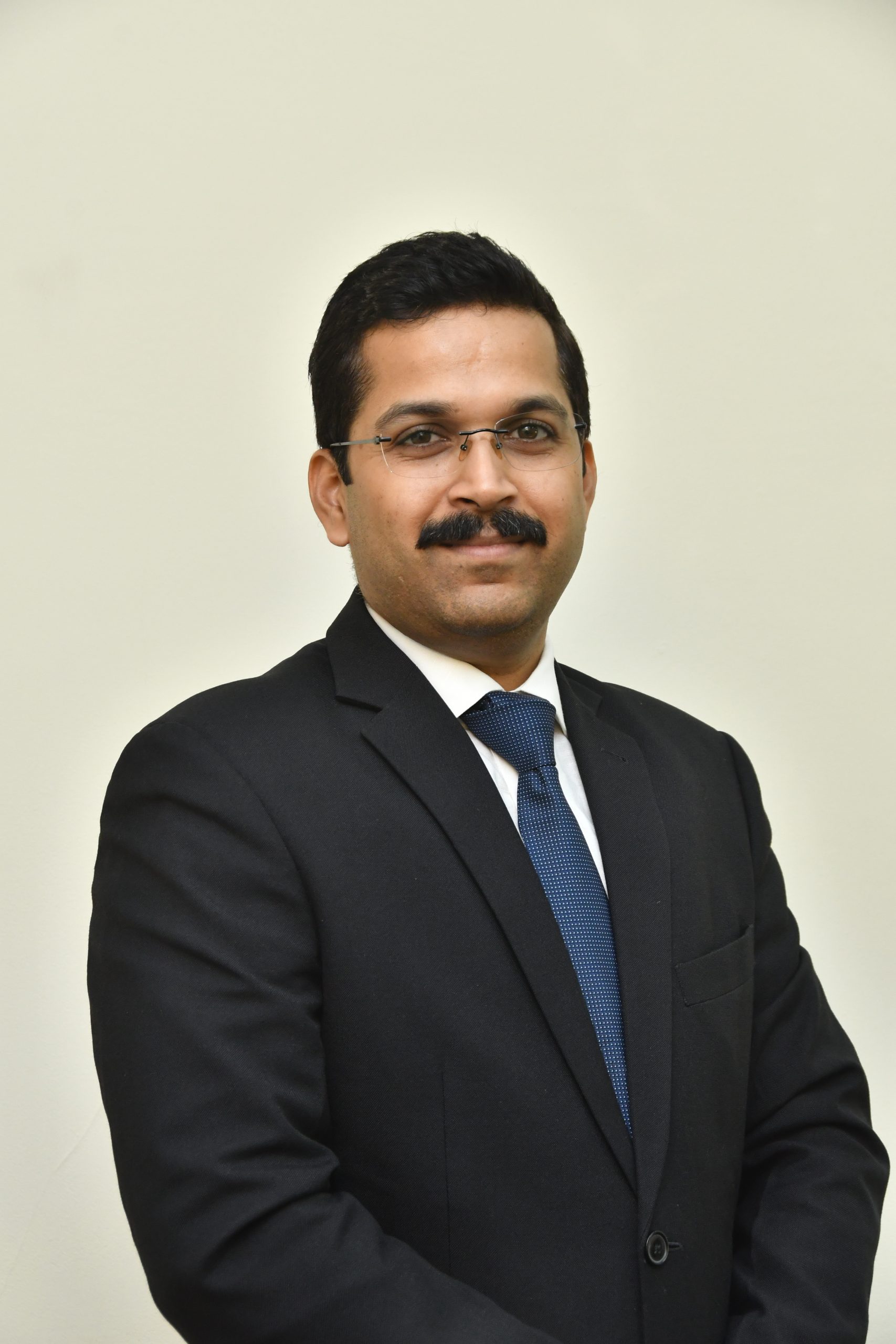
  • “The legal landscape has undergone some of the most significant changes in recent years, due to technological advancements and subject-specific specialization.”- Prashant Kumar, Advocate-on-Record, Supreme Court of India and Principal Associate at Dua Associates

    “The legal landscape has undergone some of the most significant changes in recent years, due to technological advancements and subject-specific specialization.”- Prashant Kumar, Advocate-on-Record, Supreme Court of India and Principal Associate at Dua Associates

    This Interview has been published by Pragya Chandni and The SuperLawyer Team
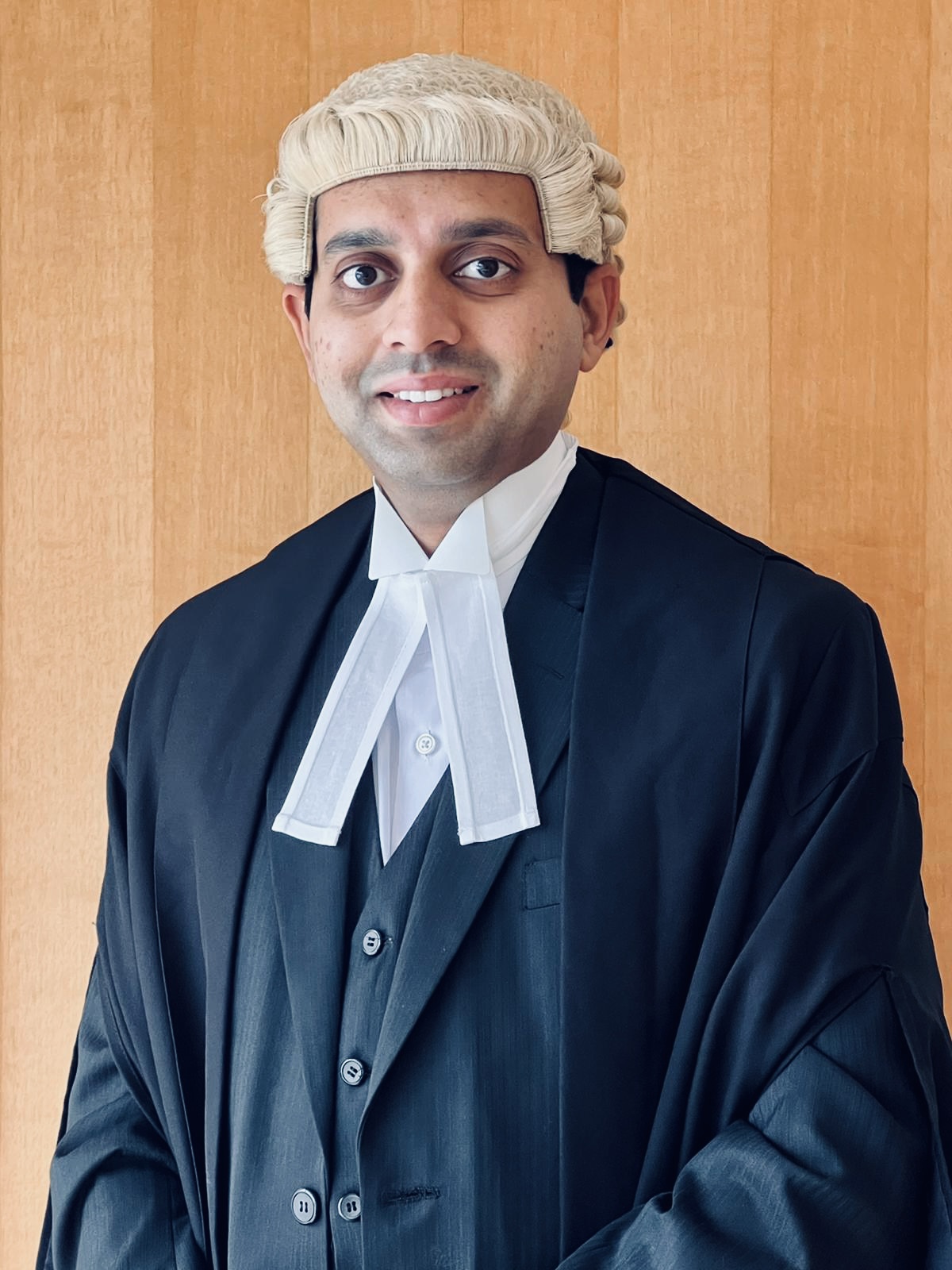
    Sir, could you please share your journey of how you ended up becoming an Advocate-on-Record at the Supreme Court of India and a Principal Associate at Dua Associates? What motivated you to pursue a career in law?

    The starting point of my journey with law was a matter of chance. During my school days I never imagined myself studying law, however, when I look back today, I think that joining law school was one of the best decisions which I took. I got through Gujarat National Law School, Gandhinagar in the year 2005 and started my journey in the profession in the year 2010 under the able guidance of Ratan Kumar Singh, Senior Advocate. Thereafter, I joined Kapil Sapra & Associates in the year 2012 where I dealt with multifarious works. Being a small set up, work was of different kinds, and the exposure there helped me understand the finer nuances of corporate commercial laws. In the year 2016, I joined Lakshmikumaran & Sridharan, where I dealt with high stake arbitration matters amongst others. Therefore, the exposure at this firm was of a completely different nature. In the year 2020, I joined Dua Associates as a principal associate and continue to work in this firm. I firmly believe that one must keep upgrading his skill sets to be relevant in the legal field. This belief led me to write Advocate-on-Record examinations and I cleared the same in my first attempt. I have enjoyed and learned immensely from different stints in the legal profession.

    With a specialization in commercial/civil litigation, insolvency laws, and alternate dispute resolution, can you discuss a particularly challenging or significant case you’ve worked on? What lessons did you learn from that experience?

    Every case presents a different set of challenges. Therefore, as a lawyer one must understand each case of its merits and treat the same accordingly. I started my practice with a strong foundation of civil, commercial and arbitration laws, which has helped me in dealing with other laws as well. With the advent of insolvency laws, the options available with the parties have increased manifold. Therefore, the first challenge which a lawyer faces today is to decide the right course of action in the given facts and circumstances. Whilst I have worked on various cases which have been challenging or significant, I have been recently involved in a matter before the National Company Law Tribunal, where I represented the financial creditor, in an application filed by the homebuyers, seeking to commence insolvency proceedings against a real estate developer, to which the financial creditor had lent money. Whilst the law is fairly settled, and in case the homebuyers meet the threshold and there is a default, insolvency proceedings should be commenced. However, I argued that the tribunal should not act mechanically and should see the financial health of the company, in addition to the intent behind the filing of the application by the homebuyers which can be fraudulent. I also argued that the interest of homebuyers who are not before the tribunal should also be considered before arriving at a final decision. The tribunal is yet to pass an order, however, this is significant because law is all about being creative within the realm of judicial precedents and legal principles. 

    As someone who appears regularly before various courts and tribunals, can you shed light on the dynamics of practicing law in different forums? How does your approach differ when dealing with cases in the Supreme Court compared to other fora?

    Every forum presents a different set of challenges, and a lawyer should be flexible to deal with such challenges in case one intends to practice before a different forum. By flexibility I mean adapting to the situation at hand. A lawyer who regularly appears before a district court has a particular way of dealing with the cases, however, the same may not be applicable with higher forums. Similarly, a lawyer who practices before the higher forums, will find it difficult to practice before the district courts. That’s why a lot of lawyers choose forums and stick to it. My approach is different because I have been associated mostly with chambers and firms. I started with district courts, tribunals and gradually shifted to high courts and supreme courts, and therefore had the benefit of knowing finer nuances of various courts practice. The best approach according to me is to stick to the basics, i.e., mastery over facts, reliefs sought and an understanding of the forum where the matter is listed. 

    Given your extensive experience in handling commercial disputes and arbitration matters, both domestic and international, could you highlight some key trends or changes you’ve observed in the legal landscape over the years?

    The legal landscape has undergone some of the most significant changes in recent years, due to technological advancements and subject-specific specialization. In addition, the legal profession is also moving towards a multidisciplinary approach, where there is an integration of legal services with other disciplines, such as technology, finance, and business. The areas which have seen significant change include information technology related laws, cyber laws, environmental law, arbitration law etc. In order to cater to the evolving laws and changing trends, a legal professional is required to be updated and focus on specialization. 

    Having dealt with cases across diverse sectors such as Oil & Gas, Infrastructure, Telecom & IT, Banking & Finance, etc., how do you stay updated on the intricacies of different industries? How important is industry-specific knowledge in your field?

    It’s very essential for a lawyer to be updated with latest legal developments and changes, especially in the areas in which he/she works. The way in which I stay up to date is by regularly reading legal updates online and offline. These days there are various newsletters being issued by firms, organisation which contains useful industry specific updates. In addition, I also attend to webinars and conferences, whenever the time permits in order to stay updated. Industry-specific knowledge is very essential in my areas of practice since different industries have different styles of operation. For example, a banking and finance industry has a different style of operation if one compares the same with an oil and gas industry. Therefore, it becomes imperative for a legal professional to deal with every industry after understanding and analysing the basic difference. Once there is a clarity on the basics, one can deal with the issue at hand with ease. 

    What role does advisory work play in your practice? Can you share an instance where your advice made a significant impact on a client’s case or decision-making process?

    Advisory assumes a great importance in my practice areas. Advisory does not only mean a written/oral legal advice, but it includes the day to day dealing with clients, and answering the queries, and extending support to them in the usual course as and when required. One of the opinions which according to me made a significant impact on a client’s case or decision-making process, relates to an analysis of attachment orders issued by district collector, pursuant to the recovery certificates issued by National Consumer Disputes Redressal Commission, and suggesting the future course of action. Pursuant to our thorough analysis and opinion, the attachment orders were quashed and the same was a big relief for the clients. 

    With over 13 years of experience in the legal field, what advice would you give to fresh graduates aspiring to pursue a career in law, considering the evolving nature of the legal profession? What qualities or skills do you believe are crucial for success in this field?

    My advice to a fresh graduate aspiring to pursue a career in law is to focus on the basics first. One can excel in the field and do specialization only if the base is strong. Secondly one has to be humble and have a humane approach. The legal profession is a noble profession wherein we have to deal with various human beings on a daily basis, therefore being humble is very essential. In addition, being sincere and meticulous also helps a lawyer in the long run. Also, having a commercial bent of mind is also important for a lawyer, especially for lawyers who deal with commercial disputes, arbitration, insolvency, corporate laws, and others. Constant upgradation of skill set is also required for a lawyer who wants to succeed in the legal profession. Lastly, one must be solution oriented and should have clarity of thought. This can only come through continuous learning and adapting to the situation at hand.  

    Get in touch with Prashant Kumar-

  • “Navigating trademark prosecution and enforcement across diverse jurisdictions demands an approach that harmonizes black letter law with case law and procedural insights”-Renuka Rajan, Managing Associate at  Lall & Sethi

    “Navigating trademark prosecution and enforcement across diverse jurisdictions demands an approach that harmonizes black letter law with case law and procedural insights”-Renuka Rajan, Managing Associate at Lall & Sethi

    This Interview has been published by Pragya Chandni and The SuperLawyer Team

    Can you share your journey and tell us what motivated you to pursue a career in law, from your early internships to your current role as a Managing Associate at Lall & Sethi in New Delhi?

    As a child, you would find me engaging in lengthy discussions, be it with my parents, friends, or teachers at school.  And my mother’s dedication to social service has always inspired me – despite having a full-time job and two young kids, she never stopped doing whatever she could to give back to those in need. This instilled in me a strong responsibility to give back to society. As law was the way to advocate for people’s rights and engage in arguments, it was a natural progression for me to decide on law as a career. However, as a first-generation lawyer, my first real experience of the practical side of the law was through my early internships, which provided hands-on experience, and solidified my commitment to this career. Now, as a Managing Associate at Lall & Sethi, I continue this journey, driven by the belief that law is a powerful tool for society. My pursuit aligns with a deep-seated desire to contribute meaningfully to society.

    You have an extensive background in intellectual property law. Could you explain what drew you to this particular field and share some of the most interesting cases or projects you’ve worked on in the realm of intellectual property?

    The arts have always played a major role throughout my life. My mother is a classically trained singer and started training me at the age of three. Thus, having been trained in singing and dancing, and having dabbled in drawing, craftwork and directing, my curiosity was piqued by the interplay between the arts and the law, thus making intellectual property law a natural choice for my specialization. The dynamic nature of this field, especially given the developing nature of the law in India, drove me towards it. Throughout my career, I have had the privilege of learning from and being involved in complicated cases that raised interesting questions of law spanning different fields. One particularly intriguing project involved navigating the complexities of derivative work performed by different artists vis-à-vis the rights of the original artist in the underlying work. Another highlight was considering and advising clients on the interpretation of comparative advertising through implied comparison. One other matter that comes to mind is advising clients on ambush marketing and its implications.  I’ve also had the privilege of delving into the interplay between trademarks and geographical indications. These experiences have not only honed my legal skills, but also reinforced my commitment to excelling in intellectual property law.

    Your experience includes working as a US and India Associate Attorney. How did you navigate the legal systems in both countries, and what were the key differences or similarities you encountered?

    Navigating the legal systems as a US and India licensed Attorney in IP law involves a focus on different strategies. What is interesting is that both countries have similarities in the manner in which they prioritize prior use in the market over the first to file with the government. But the process of registration is very different in both countries. As a US-licensed attorney, I learnt the need to be extremely thorough in running clearance searches before filing a trademark because of the strict nature of examination by the United States Patent and Trademarks Office. Conversely, in India, my focus extended to strategic advisory work, embracing a more solution-oriented approach, as Indian procedure before the Trade Marks Registry focuses on the prior user in the market. The concept of use of a trademark and what is considered sufficient is also quite different in both jurisdictions, thus changing the focus of the advice that one would give clients to prove use in the respective countries. However, despite these disparities, the Indian judiciary often considers it relevant to examine the laws abroad, more particularly in the US, UK and EU when passing orders on interesting points of law.  As a result, the development of intellectual property law in these countries is relevant for the progress of Indian law as well. This motivates me to not only keep abreast of new Indian judgments, but to also keep track of changing US jurisprudence in IP law. 

    You’ve been featured in the World Trademark Review as a top filer in the US. What strategies did you employ to achieve such recognition, and what challenges did you overcome during your time with LegalForce RAPC Worldwide?

    Securing recognition as a prominent filer in the US very early in my career was a result of highly meticulous case management, learning the law quickly and efficiently in a manner that best served the needs of my clients, of course with the integration of technological solutions for enhanced efficiency, and a vigilant awareness of evolving trademark laws. Building strong client relationships was a priority, ensuring a profound understanding of their unique needs and fostering enduring relationships.  This journey was not without its challenges. As a young lawyer, one learns by immersing themselves fully in the law and its changes by being a voracious reader and also learning to observe their peers, seniors and juniors. Much of my learning relating to procedure was due to the time I spent with paralegals who assisted me in my filings. I realized that effectively managing time and cultivating a collaborative team approach were imperative in order to achieve the best efficiency. Observing my peers and learning from their different styles of being a lawyer also encouraged me to look inwards to find the kind of lawyer I wished to be. This reinforced the importance of maintaining, in me, an unwavering commitment to complete honesty in work and excellence in both client service and legal research.

    In your career, you’ve worked on trademark prosecution and enforcement across various countries. How do you approach providing detailed country-specific advice to clients who operate in multiple jurisdictions?

    Navigating trademark prosecution and enforcement across diverse jurisdictions demands an approach that harmonizes black letter law with case law and procedural insights. I have had the unique opportunity of being deeply involved in Indian, US and south east Asian legal frameworks which exposed me to the nuances of each country’s laws and procedures. Past prosecution and enforcement experiences combined with discussions with legal counsels in different jurisdictions on a range of matters has provided invaluable lessons, allowing me to anticipate challenges and optimize strategies based on my experiences in those countries. Beyond legal technicalities, grasping the unique dynamics of each country is crucial. Procedural requirements combined with an understanding of how the judiciary reacts significantly impact enforcement strategies. Regular engagement with local counsels fortifies my advisory role, facilitating a proactive response to emerging issues. Of course – clear communication with clients is paramount for me – if I am unable to distill complex legal intricacies into actionable insights, I would not be helping them make informed decisions. Flexibility is key, allowing for tailored approaches that resonate with the legal and business requirements of each client. I always strive to understand the business needs of every client. This holistic method ensures comprehensive and effective counsel, fostering robust trademark strategies for clients operating seamlessly across multiple countries.

    As a guest lecturer and judge in various legal events, you’ve had the opportunity to share your legal expertise. Could you tell us more about your experiences in educating and mentoring future legal professionals?

    As a guest lecturer and judge at various legal events, I have had the privilege of interacting with inquisitive future legal professionals, especially students in law schools. I encourage students to come forward and ask me any question to help them understand law as a profession as this is one such profession which can benefit people from all walks of life.  Through lectures, I convey how black letter law translates to practice in an attorney’s everyday life, highlighting the relevance of judicial pronouncements and legal research. 

    As a first generation lawyer myself, I have relied heavily on connections I had built over the years, to navigate my journey as a professional. So, my aim in serving as a mentor to students, aspiring lawyers or young professionals is to help them navigate the profession a little better, guide them on refining their advocacy skills and nurture a respect for research and reading. Playing a role in shaping a new cadre of adept, socially aware, and justice-committed legal practitioners is incredibly fulfilling for me personally and I am always available to anyone who reaches out for my guidance.

    You’ve earned several degrees in law, including an LL.M. from The George Washington University Law School. How did your academic pursuits contribute to your career, and what advice would you give to law students who aspire to excel in their studies and those interested in intellectual property law and international practice  ?

    My legal education, an LL.M. from The George Washington University Law School, has been the compass guiding my career. When I graduated from law school with my undergraduate degree, I was still keen on delving deeper into the field that I knew was my calling.  So, pursuing a masters was a natural choice and I find myself much enhanced as an overall professional because of this experience. 

    As Gandhi said, ‘Be the change you wish to see in the world’. To aspiring law students: Blend academic prowess with practical wisdom. Engage in internships, embrace moot courts, and build a network. Excellence demands dedication and a commitment to continuous learning. Success in law is not just about knowledge, but embodying the change you seek. The journey from student to legal professional is a transformative process; let Gandhi’s wisdom inspire your path to becoming a catalyst for positive change in the legal realm.
    As I reflect on my journey and accomplishments, my advice to fresh law graduates would be to foster a curious mindset, staying attuned to the constant, very evolving legal frameworks. Pursue diverse experiences through actively participating in networking to construct a strong professional foundation. In the dynamic realm of intellectual property, nurture a fervor for research and keeping abreast of the latest legal developments, whether it is through reading judgments or conducting research on the aspects of law which are yet to be explored. With evolving technology, there is an ever expanding scope for the law itself given the ambiguity in the current legal framework that has not changed at the same speed as innovations. So, keeping yourself informed of legal and technological developments is key for any growing professional.   As a young lawyer, it is also very important to work towards being the kind of professional you intend to be throughout your career. Prioritizing communication skills, adeptness in communicating intricate legal concepts in a simple, easily understandable manner, establishing a mentorship network to actively seek guidance, never compromising your integrity or ethical standards – are all foundational to a flourishing legal career.   It is important to remember that every miss, every challenge and every mistake is a chance for growth, and this commitment to continuous learning will pave the way for a gratifying and impactful journey in law.

    Get in touch with Renuka Rajan-

  • “Figure out your purpose in life, have a larger vision and chase that, you are more than your job, your accomplishments and your possessions”- Kudrat Dutta Chaudhary,  Commissioner, Immigrant Rights Commission, San Francisco, California, United States

    “Figure out your purpose in life, have a larger vision and chase that, you are more than your job, your accomplishments and your possessions”- Kudrat Dutta Chaudhary, Commissioner, Immigrant Rights Commission, San Francisco, California, United States

    This Interview has been published by Pragya Chandni  and The SuperLawyer Team

    Ma’am, can you please share the pivotal moments or experiences that led you to pursue a career in law, especially focusing on your journey from studying at the Army Institute of Law to earning an LL.M. at The Fletcher School of Law and Diplomacy?

    I always had a justice oriented personality and the choice was either between Law or Journalism for me when I was growing up. I also was very clear since very early on that I wanted to work in the field of women’s rights and gender based violence and with that I decided that Law would be a path best suited for me. At 22,   I published a novel on the human trafficking of women in Nepal to India after the Nepal earthquake and after completing Law from the Army Institute of Law I went on to study at the Fletcher School where I focussed specifically on gender based violence and International Law. I wouldn’t say that there was one moment that defined my trajectory but I’d say that just the conviction that  my aim in life is to use my education, privilege, knowledge and expertise to help women led me from Law School to graduate school to the positions I’ve held thereafter. 

    Your LL.M. focused on International Laws, and you received the Honos Civicus Award for Civic Engagement. How did these experiences shape your perspective on the intersection of law and civic engagement, and how do you see it influencing your current work?

    I feel both Law and civic engagement have a symbiotic relationship for example it was Raja Ram Mohan Roy’s advocacy against ’Sati’ to legally put an end to it in the 1800’s and today we see the role of civic engagement in creation and abolishing of laws over matters important to the current times. For me, being active and participating in the community, advocating for one’s community and influencing positive change is my mantra and I live these beliefs by being involved in groups and advocacy over issues that I am most passionate about like women’s rights and immigrant rights. 

    As a law clerk specializing in asylum law and gender rights at the Law Office of Robert B. Jobe, can you elaborate on how your work has involved strategizing refugee and asylum claims based on gender-based persecution? What challenges and successes have you encountered in this role?

    In my previous role, I worked with battered women who were fleeing persecution that they suffered in their home countries and it involved documenting their persecution, highlighting issues that were in tandem with the theory of their case. My journey with a client often started from building rapport with them which sometimes can be hard when they have suffered immense trauma in their lives, to creating a safe space where they can feel comfortable in expressing themselves and sharing their stories. One challenge with this work is that sometimes the other person is not open to seeking therapy or doesn’t live in a community that would help them work through their trauma; I learnt how to tackle this bump over the years and I feel the more you grow as a professional and person, there are different approaches you can use to understand their resistance to therapy while also giving them other suggestions to seek support from a place of empathy. 

    You’ve engaged with governmental organizations like USCIS and the Executive Office of Immigration Review. Could you share how these partnerships have contributed to your work in supporting vulnerable populations, and what impact your stakeholder engagement strategy has had on your cases?

    My engagement with EOIR and USCIS as a Law Clerk was limited to the work I was doing but given my position as the Vice Chair of the San Francisco Immigrant Rights Commission, I have more freedom to persuasively raise and inquire about immigrant issues with USCIS that impact immigrant population of San Francisco. That said both EOIR and USCIS are Federal bodies and stakeholder engagement with them happens at the Federal level that hopefully I am a part of at some point in my life.  

    Serving as a Commissioner for the San Francisco Immigrant Rights Commission, you’re involved in developing strategies for human rights and labor rights for immigrants. How do you balance your advocacy work with the practical aspects of implementing policies and programs to address these issues?

    San Francisco Immigrant Rights Commission works on conducting special hearings to make recommendations to the Mayor and Board of Supervisors on Immigrant rights issues which span from creation of employment for asylum seekers to housing for immigrants to taking a stance on H1B layoffs to standing in solidarity with DACA recipients whenever the country fails them. Once we have a special hearing, we review the recommendations, debate them and then forward them. This debate is often rich and detailed with every commissioner bringing practical questions to the mix and we also have the San Francisco Attorney’s office and Office of Civic Engagement and Immigrant Affairs to help us through the procedure. At the end of the day, the aim is to be an accurate representation of the issues of the immigrant community and should there be a gap between the recommendations and the practical implementation of policy, the Mayor and the Board of Supervisors may reject it. 

    Your role as the Chair of Women’s March San Francisco involves designing and implementing human rights programs. Can you provide insights into the specific programs you’ve developed, and how collaboration with government and grassroots organizations has played a role in advancing these initiatives?

    The Women’s March San Francisco is an inactive group right now but in the past I have worked on organizing First Amendment Marches in San Francisco on reproductive rights and have collaborated with different initiatives like we have co-hosted panels on equal pay for women followed by a movie screening (on the discrepancy of pay between the men and women’s football teams in the US) and we led a workshop on how to be active beyond the marches. The beauty about a group like WMSF is that it is an all volunteer group founded by women who are epitomes of  ’stand up fight back’ and has been around since 2016. WMSF has also amplified the work of other grassroots organizations for years and has provided support (whenever possible) if needed.

    As a Research Assistant for Prof. Dyan Mazurana on the topic of child brides in humanitarian settings, how did your work contribute to addressing evidence gaps in child marriage during crises, and what lessons did you draw from this experience?

    My work as a Research Assistant was to assist with a literature review on the topic and then identify key stakeholders who possess experience and practical knowledge in the field of child brides in humanitarian settings so that they could be interviewed and their insights could be recorded by Prof. Mazurana. As my first assignment as a graduate student, a lot of my work revolved around planning logistics for interviews and communicating with the interviewees from INGO’s and governments around the world and I definitely learnt a lot in this process. 

    Lastly, what advice would you give to fresh graduates aspiring to make a positive impact in the legal and humanitarian spheres based on your journey?

    Figure out your purpose in life, have a larger vision and chase that, you are more than your job, your accomplishments and your possessions. AND give back to your community!

    Get in touch with Kudrat Dutta Chaudhary-

  • “Success of a case or project isn’t the result of individual brilliance but rather the outcome of a meticulously orchestrated collaboration”- Mitsu Parikh, Senior Partner at World of Legal Research

    “Success of a case or project isn’t the result of individual brilliance but rather the outcome of a meticulously orchestrated collaboration”- Mitsu Parikh, Senior Partner at World of Legal Research

    This Interview has been published by Pragya Chandni and and The SuperLawyer Team

    Can you share a bit about your educational journey and how you pursue law as a career? 

    I originate from a quaint town in Gujarat where, a decade ago, career choices such as law, journalism, creative writing, and hotel management were not common for females. When I expressed my aspiration to pursue a career in law to my parents, their reaction was beyond surprise. They recommended that I gain firsthand experience by shadowing a seasoned lawyer before making a definitive decision. Consequently, I immersed myself in the legal field, accompanying and observing an accomplished lawyer in various cases spanning banking, constitutional, employment, and family laws. The diverse and intricate nature of the legal profession left a profound impression on me, ultimately solidifying my determination to pursue law as a career. This experience broadened my understanding of the legal landscape and instilled in me a deep appreciation for the multifaceted challenges and responsibilities inherent in the field.

    You’ve pursued advanced degrees in International Law and Legal research. What drew you to specialize in these areas? 

    During my undergraduate studies, I actively participated in moot court competitions, assuming roles as a speaker and researcher. While I thoroughly enjoyed the entire moot court experience, I found a particular passion for research. Delving into legal research became more than necessary; it became a profound interest. This inclination led me to explore opportunities to publish papers and interact with esteemed academicians at conferences and symposiums. Recognizing the significance of contributing substantively to the legal discourse through research and publishing papers, I pursued a master’s degree. Someone once told me that just raising questions doesn’t make you people worthwhile; finding solutions does. 

    You’ve had diverse roles, from Legal Assistant in law firms to your current position as a Senior Researcher and Coordinator. How did these experiences contribute to your growth and specialization in international law? 

    My stint in the corporate sector and various law firms served as a journey of self-discovery, compelling me to confront the realization that these roles may not be my lifelong passion. However, I wholeheartedly acknowledge that each experience played a crucial role in shaping my personal and professional growth. During my internship, a pivotal lesson resonated deeply – the significance of every task, regardless of its scale. It became evident that the success of a case or project isn’t the result of individual brilliance but rather the outcome of a meticulously orchestrated collaboration. Whether assuming the role of a clerk, lawyer, or researcher, every individual in the chain contributes uniquely, and the collective effort propels success. This realization has ingrained in me a commitment to execute my responsibilities to the best of my abilities, regardless of my role in the process. 

    Could you tell us more about your role as a Senior Researcher and Coordinator at the international consultancy World of Legal Research? What kind of research-based consultancy do you provide to the government, law schools, and academicians? 

    We provide a variety of services. Some of the services involve a project where we have to study impact assessment, create analytical research reports, and assist with reviewing the research papers. Additionally, we are more inclined towards assisting our legal fraternity with our efficient legal research team, specializing in diverse fields of law.

    As a Visiting Faculty to many universities in India and abroad, you teach Public International Law and Legal Research Methodology. What inspired you to take up a teaching role alongside your research work? 

    When I was a student, the thought often crossed my mind – what if certain topics were approached differently? Would they become more intriguing? It wasn’t until I visited conferences in the southern part of India that I stumbled upon a fascinating realization. Among the accomplished individuals, be it a thriving businessman, a seasoned lawyer, or a distinguished doctor, there was a common thread – academic involvement. It brought to my mind Chanakya’s words about teachers never being ordinary; they hold the power of construction and destruction. This insight fueled my aspiration to contribute meaningfully to the academic realm. As I transitioned into the role of a researcher, my desire crystallized into a passion for teaching law students the art and science of research. It’s not just about acquiring knowledge but understanding the intricacies and methodologies that make research a captivating and essential facet of the legal profession. 

    Your experience includes working in law firms in Australia and India. How did these experiences shape your understanding of legal practice on an international scale? 

    Lawfirms became my school of perfection, teaching me the invaluable skills of meticulousness and the art of thriving under deadlines. But beyond the technicalities, it was a vibrant classroom where I learned to navigate the intricate tapestry of human diversity. Working with people from different cultures was a daily lesson in understanding, patience, and respect. There were instances where a case forced me to reconcile my personal beliefs with my client’s position. The legal profession throws a unique challenge at you – dealing with ethical dilemmas that demand a delicate balance. The realization that every client, boss, or judge is a distinct chapter in your professional story. Each encounter is an opportunity to embrace diversity, not just in your home country but in foreign lands. It taught me the importance of respecting diverse cultures and opinions, a lesson that goes beyond the legal arena and shapes how I approach life.

    You’ve presented papers on various topics, from health inequalities during COVID-19 to discrimination in legal education. Can you highlight a paper that you found particularly impactful or that received significant attention? 

    In 2023, I had the privilege of presenting a paper at the Center for Criminal Law, University of Oxford (UK), addressing the alarming issue of ancestral rapes in the state of Haryana during the COVID-19 pandemic. This paper garnered recognition and was honored with an award for being the most passionate presentation. Subsequently, I received emails from faculty members and fellow paper presenters at the conference, affirming that this problem extends beyond India to encompass every country and culture. The correspondence highlighted a shared sentiment that societies tend to suppress or disregard such issues, choosing to deny their existence. The suggestions and solutions proposed in my paper resonated with the international audience, earning appreciation from diverse perspectives. It was a powerful acknowledgment of the universality of the problem and the importance of proactive and compassionate approaches to address it on a global scale.

    Your involvement in founding an NGO called ‘Madad’ during the COVID-19 pandemic is commendable. Could you share more about the initiatives and impact of this organization?

    I wouldn’t like to talk much about my NGO as our ancestors say that if you help someone with your right hand, your left hand shouldn’t even know about it. I would just say that at whatever stage you are in life, try to help others, not for the betterment of society, but for yourself, so that you can face yourself in the mirror at the end of the day. 

    You’ve received several awards and honors for your contributions, including the Youngest Leader Award from Rotary International. Which of these achievements holds a special place in your heart, and why? 

    In the third year of my undergrad studies, I received an award for the best position paper at Harvard University. That paper made me realize that regardless of being from a small town or being from the vernacular medium of studies, you can if you really want to achieve something in life.

    You’ve held various editorial roles and served as chairman in some committees while studying at the University of Sydney. How have these positions enriched your professional journey? 

    These positions equipped me with essential skills such as time management and strategic planning. Additionally, they provided valuable lessons on effective teamwork. Each extracurricular engagement in Law School imparts qualities beyond the teachings of books or academic activities.

    Finally, based on your journey so far, what advice would you give law graduates just starting their careers in the legal field? 

    Well, I’m not experienced enough to give any advice. I’d reframe it as learning that I can share from the mistakes I made in my journey. 

    1. Take your internships seriously. You will gain something from every task you do during your internship, even if it is just carrying your senior’s briefcase and/or documents. For example, you’ll be able to be a part of his conversations with clients and people around in court, how one carries his business in the legal field, etc.; this will teach you much more about the practicalities that even a subject in law school wouldn’t. 

    2. Whether you want to join corporate or litigation, publish papers and take part in conferences. Publish or perish is a thumb rule. If someone googles you on the internet, and you have something published, you will get brownie points. 

    3. There is no shortcut to success. It might sound like the cheesiest line. However, life is not 2 minutes noodles. Instant gratification. Instant Fame. All these are not to be focused upon. Do smart work, but don’t get scared away from hard work. Thus, creating a strong base first is very important, because if you sow well, you’ll reap the fruits throughout your life. Choice is always yours.

    Get in touch with Mitsu Parikh-

  • Ramakrishnan Viraraghavan (RKV). Senior Advocate, Supreme Court and bestselling author on GST Laws shares his learning on legal writing, lecturing at National Judicial Academy and pursuing LLM after three decades of practice

    Ramakrishnan Viraraghavan (RKV). Senior Advocate, Supreme Court and bestselling author on GST Laws shares his learning on legal writing, lecturing at National Judicial Academy and pursuing LLM after three decades of practice

    This Interview has been published by Pragya Chandni and and The SuperLawyer Team

    Congratulations on the success of your book The Law of Goods and Services Tax: A Comprehensive Internet Age Commentary. Tax is primarily an auditor’s topic and a territory of Chartered Accountants. Why did you choose to write a book on GST Laws?


    I started my practice in the 1980’s in an age of information scarcity. I had a degree in commerce and then a law degree. I worked under my maternal uncle who was a tax lawyer. I enjoyed the complexity of tax practice and specialized in tax litigation, appearing before various tribunals. My exposure to accounting and accounting principles in my commerce degree was a huge advantage in commercial and tax litigation. In my experience, judges and lawyers without an accounting background feel challenged by accounts and accounting entries. Understanding these is essential for tax litigation . Much of my advocacy in the High Courts and the Supreme Court is to simplify accounting principles and concepts and explain them in a legal language acceptable to the legal mind.  . 

    After GST laws were enacted in 2017, I saw tax lawyers and practitioners instructing me struggle with the complexities of GST legislation. Unlike the Income Tax Act, GST Laws did not have any standard commentary. I decided to do something about it and began writing. My book is  a focused and penetrative commentary, an original writing on GST laws . It took me four years to complete my book. 

    I wrote a commentary in simple language avoiding legal jargon and overflow of citations. Considering the daily information overload on tax practitioners, I wanted to write a book which tax lawyers and practitioners could read on the way to the court or the tribunal and succeed in their arguments.

    It is an internet age commentary which avoids copious extracts from judgments, circulars, and GST notifications to the greatest extent possible. The book refers to a large number of decisions of the courts and rulings of the advanced ruling authorities. However, these references are given only as footnotes to the commentary. The relevant page and para number is given in the footnote. This will make it easier for the reader to locate the relevant para and cite the decision. The book also points out defects and deficiencies in judgments of the courts and advance rulings. It gives possible answers to legal issues (such as betting, racing and online gaming)  which have not been decided by the courts so far. My book is gender neutral. I avoided using ‘he’ or ‘she’ unless absolutely necessary. 

    Your involvement at the National Judicial Academy, conducting sessions for newly elevated High Court Judges and Judges from other jurisdictions is unique and commendable. How has this experience influenced your own perspective on the legal profession? 

    These experiences have made me deeply sympathetic and understanding of the plight of an average judge. Judges face enormous pressure disposing of matters, sitting in committees and simultaneously handling tons of administrative work. I am no longer irritated when a judge does not read the papers fully or adjourns a matter for want of time. Lawyers must understand that judges are also human beings. Judges also feel hunger, body pain and tiredness. Mental fatigue and irritability set in any judge, any human being after hearing arguments day after day, week after week without time to recover or recoup energy. 

    My advocacy has become judge-centric. I now see myself as a senior advocate assisting the court rather than arguing before the court. The best of arguments should be made in a manner helpful for the judge to write the judgment in the client’s favour. Good advocacy should give the judge a quick and easy solution to the dispute. No judge anywhere is interested in long arguments showcasing the lawyers’ erudition.

     You’ve authored publications, conducted sessions on law for judges, and played a role in drafting rules. Could you share the motivations behind your contributions to legal literature, legal education, and rule-making, and how do you believe these efforts contribute to the legal community?

    I did not have any specific motivation to do all of these. The legal profession rewards good work with more work. My first book was on the Madras High Court Letters Patent, Appellate and Original Side Rules. The book was successful and resulted in the Chief Justice appointing me on the Court Fees Rationalisation Committee. The committee’s well drafted report was accepted by the government and by the High Court without modifications. 

    This led to my appointment on the Madras High Court Arbitration Committee and on the Madras High Court Rule Committee. My contributions here were kindly appreciated and I continue to be on the Rule Committee although I have shifted to the Supreme Court. Similarly, the success of my first book led to publishers inviting me to more books.

     There are two lessons from all of these. Firstly, one must grab every opportunity that presents itself. Secondly, most opportunities lie outside the comfort zone. Therefore, having grabbed the opportunity, one must struggle, overcome discomfort and grow to the level of the opportunity.

    How have you seen yourself evolving as a Senior Advocate from a raw young law graduate? What role do you believe mentorship plays in your development as a legal professional?

    As a young lawyer, I thought precedents were all important and tried to support every argument with some case law. Now, I realise persuasion is all-important. Arguments with too much case law are like over spicy food. They turn away judges. Arguments must be garnished with minimum case law, just enough to make it attractive and presentable but not beyond. As a young lawyer, I thought I could succeed in my arguments without too much hard work once I became a senior. Now, I realise hard work is a part of the process even as a senior advocate. I had appeared in common-law jurisdictions across three continents. I found hard work was an essential requirement for success at the Bar throughout the world.

    Mentorship is essential for improving the quality of the justice delivery system. I have seen retired judges mentoring sitting judges at the National Judicial Academy. Similarly, advocates must mentor junior advocates. Mentoring must be professional and must meet the needs of the mentee. Mentoring does not mean placating the mentor’s ego by listening to the mentor’s war stories. Real-life examples from the mentor’s past offer valuable guidance but must be fine-tuned towards the mentee’s requirements.

    Sir, could you please share a bit about your background and journey that led you to become a Barrister at Law, practicing in both India and London? What inspired you to pursue a career in law?

    I completed my bachelor’s degree in commerce. Then, I had the option of pursuing management, accounting or law. I applied for an MBA and was offered admission by two prestigious colleges in Mumbai. My father felt I was temperamentally suited for a profession rather than a corporate job. He suggested I could become a chartered accountant or a lawyer. My paternal great-grandfather, my maternal and paternal grandfathers and my uncle were lawyers. Law seemed to be a more attractive choice. I felt I would be bored with accounting. I studied law and became a lawyer. 

    I became a barrister at law by accident. An English barrister met me for legal advice on Indian law. She was impressed by my legal skills and suggested I should become an English barrister. By then, I had put in 25 years as a lawyer in India. I felt becoming a barrister did not add any value to my practice in India. 

    A couple of years later, she convinced me to sign the application papers. Amidst hectic professional life, I studied English law like a maniac and passed the difficult test. I was called to the Bar by the Honourable Society of Inner Temple where Mahatma Gandhi was also called to the Bar. I wanted to return to India after becoming a barrister. However, the Sub-Treasurer of Inner Temple insisted that I should complete my pupillage in England and obtain rights of audience before the English courts. I stayed on, pupilled in barristers’ chambers in London and obtained my practising certificate as well.

    Your educational background is quite diverse, including degrees from the University of Edinburgh, NALSAR University, and the University of Bangalore. How did these experiences shape your approach to law, especially in the areas of international arbitration and commercial litigation?

    LLM from the University of Edinburgh was a game changer for three reasons. Firstly, since I joined LLM after 25 years as a lawyer, I could understand and implement in my practice many legal concepts taught in the course. This would not be possible had I joined LLM immediately after my LLB. 

    Secondly, my writing skills improved enormously. I needed to write concisely and with precision. I could not simply fill up the pages and expect to pass. Almost everything I wrote in my dissertation needed to be supported by citations. The high quality of writing I learnt from LLM helped me write three books on law. 

    Thirdly, a degree from one of the top universities in the world gave me entry to many places. 

    One of the courses in LLM was on international commercial arbitration. The course was taught by a reputed international arbitrator. Learning the nuances of international commercial arbitration helped me become a Fellow of the Chartered Institute of Arbitrators, teach arbitration as an accredited tutor, argue international arbitration matters in Indian courts and finally sit as an international commercial arbitrator abroad.

    Exposure to foreign legal systems such as English law, Scottish law and continental jurisprudence in Europe helped me to think out-of-the-box in identifying new lines of arguments in Indian commercial and tax litigation.

    You’ve been involved in significant matters under the Insolvency and Bankruptcy Code and commercial litigation. Could you share some insights into the challenges and complexities you’ve faced in these areas, especially when dealing with issues such as avoidance applications, corporate liquidation, and company petitions for oppression and mismanagement?

    I have only one insight. The task of an advocate in any complex litigation is to break the complexity into simplicity. Judges hate complexity and love simplicity. Justice Oliver Wendell Holmes said “For the simplicity on this side of complexity, I wouldn’t give you a fig. But for the simplicity on the other side of complexity, for that I would give you anything I have.” It requires enormous hard-work to reach this simplicity.

    As a Fellow of the Chartered Institute of Arbitrators, you’ve been involved in numerous domestic and international arbitrations. Can you discuss some of the key aspects of your experience in arbitration, including any notable cases or challenges you’ve encountered?

    The glaring contrast between domestic and international arbitration is the professionalism in international arbitration. Timelines for pleadings, witness examination and arguments are scrupulously followed by the lawyers in international arbitration. The arbitral tribunal is also well prepared, having studied the pleadings and the evidence well ahead of the hearing. International arbitrators do not have a sense of loyalty to the party appointing them. Domestic arbitration has to travel a long way to catch up with international arbitration. Sitting as an international arbitrator, I see Indian lawyers and Indian law firms rise up to international standards. However, this is absent in domestic arbitrations.

    Lastly, considering your wealth of experience, what advice would you offer to law graduates who are just entering the profession? Are there any key lessons or principles that you wish someone had shared with you at the beginning of your career?

    First, take care of your health. Eat correctly and exercise regularly. Aim to live active and to ripe old age. 

    Secondly, set one small goal, reach the goal. Then set another small goal and so on. Do this consistently. Small goals always trump large goals. 

    Thirdly, remember the journey never ends. Thirty-eight years at the Bar, I am still learning law and improving my skills, daily.

    Fourthly, be kind to yourself (but not indulgent).

    Get in touch with Ramakrishnan Viraraghavan-

  • “It is extremely important to keep your head down and continue working hard at every stage of your career”- Pratiksha Mishra, Advocate-on-Record, Supreme Court of India

    “It is extremely important to keep your head down and continue working hard at every stage of your career”- Pratiksha Mishra, Advocate-on-Record, Supreme Court of India

    This interview has been published by Namrata Singh and The SuperLawyer Team

    Pratiksha, it’s a pleasure to have you with us. Could you start by introducing yourself to our readers, giving a glimpse into your journey from law school to becoming an Advocate on Record at the Supreme Court of India?

    I graduated from the Army Institute of Law in 2015. I began law school with the idea of venturing into the corporate/transaction side. However, during my early internships I realized that I enjoy litigation and foresee myself practicing in courts. This was largely because of the mentors I came across during the course of internships and, my senior and  very close friend from college, Niyati Kohli who really encouraged me to pursue litigation. 

    I started my career at the chambers of Mr. Balaji Srinivasan, Advocate on Record where I got the opportunity of independently handling matters before the Supreme Court and a variety of other forums such as the TDSAT, NCLAT and the NCDRC. The professional guidance and moral support I got from Mr. Srinivasan helps me with my work even today.  I must also mention that I had a wonderful set of colleagues at the chamber with whom a 7-day work week never felt burdensome. 

    Having worked at an AOR Chamber, appearing for the AOR exam had always been a priority. By the time I became eligible and appeared for the exam, I was at Khaitan & Co. Apart from everything else that goes for any other exam, appearing in the AOR examination also entails handling the pressure of the preparation process, alongside the responsibility of your regular practice. In my case, this entire process was relatively easier because my husband was also appearing for the exam the same year. 

    You’ve had an impressive career at Khaitan & Co. Can you share some pivotal moments or cases that shaped your journey and defined your focus in areas like IBC litigation, commercial and civil litigation, and arbitration?

    I joined the Delhi Office of Khaitan & Co after completing 3 years at Mr. Srinivasan’s chamber. Thanks to the firm and my seniors, Mr. Diwakar Maheshwari and Mr. Karun Mehta, I have had the chance to work on some extremely challenging and nuanced propositions. I got to contribute to several high-stake IBC disputes almost immediately after joining the team. Over five years of working with the firm have given me the opportunity to interact with and represent a variety of clients. One of the most valuable lessons I have learnt is the importance of understanding the commercial objective behind a litigation and coming up with a solution to achieve the same. 

    My expertise in areas of IBC litigation, commercial and civil litigation, and arbitration, essentially came from the work that has come my way during my time at Khaitan and Co. 

    Your practice involves a wide array of legal areas, including IBC litigation, commercial and civil litigation, and arbitration. How do you manage to balance such diverse responsibilities, and do you have a favorite among these areas?

    Irrespective of the subject matter, the way one approaches a case is largely the same.  Having said that, the procedural law followed in an IBC proceeding, an arbitration and a civil suit is very different. The style and structure of the pleadings differ from fora to fora as well. For example, a plaint/arbitration claim is starkly different from a petition under IBC which is largely as per a prescribed form.  

    I work with an extremely competent team of lawyers and support staff from the firm. They make managing the volume and diversity of work much easier. 

    I do not have a particular favorite area of work. I enjoy the pressure that the stakes of an IBC proceeding inevitably brings. At the same time, I find the process of initiating a suit/arbitral claim and seeing it through to its logical end extremely fulfilling. The rush of adrenaline that follows a good cross-examination is unmatched. As I have said earlier, I have been fortunate to have been exposed to a gamut of work. I hope that the same continues in the future. 

    As someone who has represented clients in insolvency proceedings, could you share an interesting or challenging experience that stands out in your career so far?

    IBC as a legislation has been extremely dynamic and fast-paced. There have been numerous cases where amendments to the law have been introduced having completely altered the course of a matter overnight. 

    Another great thing about working on a relatively new subject is that you get to test innovative propositions which have not been examined by the Courts before. I have found it extremely satisfying when arguments based solely on the reading of provisions of the IBC have been canvassed by us and accepted by the Court. The chance to contribute to the development of new jurisprudence in this manner has been both – the most challenging and the most fulfilling experience in my career thus far. 

    Looking ahead, what are your aspirations for the future, both professionally and personally? Are there specific areas of law or causes that you are passionate about and would like to contribute to in the coming years?

    Professionally, I hope to be able to continue doing good work and turn out as a well – rounded and reliable professional for my clients. Having worked on the commercial side for 7 and a half years, I hope to be able to make time for taking up pro-bono assignments in the future and to be able to somehow contribute to society. 

    On the personal front, it has always been an endeavor to maintain the right work-life balance and make time to pursue some hobbies outside work. 

    Beyond your legal pursuits, do you have any personal interests or hobbies that play a role in maintaining a work-life balance? How do you manage the demands of a challenging legal career while nurturing personal well-being?

    I have always enjoyed participating in physical activities such as swimming, running, boxing etc. I believe that taking care of your physical health, in a way, helps you also take care of your mental health. Setting aside, a few hours in the morning before work for exercise helps me decompress and prepare for the day.  

    For aspiring lawyers entering the field, given the competitive environment and long working hours what advice would you offer? 

    There are no shortcuts in this profession. It is extremely important to keep your head down and continue working hard at every stage of your career. Given that we spend most of our time around people we work with, it is essential to be inclusive and have a good equation with colleagues. Like I mentioned earlier, having a good team around you effectively reduces the stress of the long hours one has to put in.

    Get in touch with Pratiksha Mishra-

  • “It’s essential to grasp the intricacies of a client’s business, their specific needs and to accordingly offer tailored solutions”- Dhruv Grover,IP Litigation Attorney at Shardul Amarchand Mangaldas & Co.

    “It’s essential to grasp the intricacies of a client’s business, their specific needs and to accordingly offer tailored solutions”- Dhruv Grover,IP Litigation Attorney at Shardul Amarchand Mangaldas & Co.

    This Interview has been published by Pragya Chandni and and The SuperLawyer Team

    Could you please walk us through how you initially decided to pursue a career in law, and what motivated you to specialize in Intellectual Property (IP) Litigation?

    As a first-generation lawyer, I leaned heavily on mentors to guide my path. Initially, my academic inclination was towards science during my 11th and 12th standards. However, an unexpected meeting with a seasoned lawyer (who turned out to be my first mentor in the field) at a family gathering shifted my perspective. He illuminated me on the vast horizons and multifaceted opportunities that were offered by the legal profession (beyond its cliché portrayal in popular media).

    While law school introduced me to a plethora of intriguing subjects, it was Intellectual Property (IP) that resonated the most with me. A defining moment came during an internship when a senior partner posed a thought-provoking question: “Why specialize in IP?” My response: “If it is not new or novel, it is not IP and if something is new or novel on every turn, it is always interesting and worth specializing in”.

    Further fuelling my interest were dedicated professors, particularly in IP and CPC, who recognized and nurtured my enthusiasm. Their encouragement and insights solidified my decision to specialize in IP Litigation.

    Your career has taken you through notable firms like Remfry & Sagar, Khurana & Khurana, and now Shardul Amarchand Mangaldas. Could you share the pivotal moments and experiences that shaped your journey in the field of IP law?

    Every step in my career, from drafting my first legal notice to my first court appearance, has been a significant learning opportunity. One particularly memorable matter involved a client alerting us about an imminent shipment of counterfeit goods destined for India within just two days. The urgency of the situation warranted immediate actions: identifying the shipment, liaising with Indian Customs offices, and swiftly filing a lawsuit seeking injunctive relief in Court. Those intense 48 hours, while challenging, imparted invaluable lessons in handling time-sensitive IP matters.

    Working at a full-service law firm like Shardul Amarchand Mangaldas has further enriched my professional journey by providing me an opportunity to work and interact with experts from diverse legal domains. This experience has further honed my ability to perceive and cater to client’s expectations from a holistic standpoint.

    Having handled diverse aspects of IP, from drafting pleadings to appearing before various courts and tribunals, what aspects of your work do you find most challenging and rewarding in the realm of IP litigation?

    Legal profession is a continuous journey filled with multiple learning opportunities. Reflecting on my early internship days, I recall discovering quicker methods to navigate court files during time-sensitive situations. Drafting intricate pleadings in complex cases was initially daunting during my early professional years. I vividly remember the apprehension of my first solo court appearance; the nerves were palpable. However, with each challenge encountered, I recognized them as important learning milestones that made me the lawyer I am.

    In the realm of litigation, the most rewarding moment is undoubtedly when a favourable order is pronounced. All the hard work and preparation culminating in a successful result is profoundly gratifying.

    Your profile mentions engagement in business development activities, including client meetings and conferences. How do these activities contribute to your professional growth, and what role do they play in enhancing your practice in IP litigation?

    Engaging directly with clients through meetings and conferences is fundamental in any client-centric profession. It’s essential to grasp the intricacies of a client’s business, their specific needs and to accordingly offer tailored solutions. Through these interactions, one can gain deeper insights into the challenges clients face, especially in IP disputes.

    For example, while some clients might prefer a more diplomatic approach to resolve IP disputes through legal notices or mediations, others might seek immediate legal action to safeguard their IP, perhaps on account of the potential impact on their business. By actively participating in such engagements, one can better align their strategies and advisory to suit the unique requirements and preferences of each client, ensuring a more effective and personalized approach to IP disputes.

    You’ve conducted training sessions for clients on IP laws. Could you elaborate on the importance of client education in the field of IP and share any specific challenges you’ve encountered in helping clients navigate intellectual property issues?

    Often, the primary focus of clients is on business growth and revenue generation, sometimes overlooking the critical aspects of IP protection. For instance, we have often seen clients approach us to enforce their design registration, only to later discover that they’ve been using the design for years prior to filing the design application. In such cases, we have to inform them that their design registration might be vulnerable for cancellation due to prior self-disclosure. In these situations, design registration certificates may be nothing more than a toothless paper.

    This underscores the vital role of client education. By proactively educating clients about the nuances of IP and the associated timelines, one can prevent potential pitfalls. It’s essential for businesses to recognize that robust IP protection is integral to their long-term success.

    You’ve appeared before various specialized tribunals and high courts in India. How does your approach differ when dealing with IP matters in these forums compared to more traditional court settings, and what skills do you consider crucial for success in such specialized areas?

    In specialized IP forums, there’s a heightened awareness and appreciation for the technicalities revolving around the field of IP, which often results in more streamlined communication and understanding of complex issues. This environment is conducive for IP practitioners, making it important for them to remain updated with the latest developments in the IP landscape. Unlike traditional court settings, specialized forums demand a deep understanding and familiarity with both domestic and international IP trends. Therefore, staying abreast of advancements in IP not only enhances an IP lawyer’s credibility but also equips them to leverage the unique opportunities presented by these specialized forums.

    Your academic achievements include gold medals, debate/moot wins, and publications. How has your academic background contributed to your success in the legal profession, particularly in the specialized field of IP law?

    During my time in law school, every academic experience was crucial for learning skills that are requisite for becoming a successful lawyer. Participating in debates and challenging moot court sessions didn’t just help me in honing my oratory skills but also taught me how to work in a team. On the other hand, writing research papers on interesting IP topics deepened my understanding of the subject at a jurisprudential level. 

    While I didn’t realise it then, each activity wasn’t just an academic exercise or an assignment, it was a step towards understanding the legal world that was awaiting after 5 years of law school.

    Drawing from your experiences, what advice would you like to share with law graduates who are just beginning their careers, especially those interested in pursuing a specialization in IP law? Are there any lessons or insights you wish you had known when you started your journey?

    Of late, IP practice has become more lucrative and is attracting numerous law graduates to specialize in this domain. While the rewards of this practice are undeniable, I believe it is important for law students and young professionals to determine if the subject truly resonates with them. Engaging in IP internships or dedicating time to study and write about IP can offer some clarity in this regard.

    Reflecting on my early days in the IP practice, I recall focusing all my energy in understanding the developments in and around the field of IP. While this approach enhanced my understanding of the subject, I inadvertently overlooked developments in fields outside of IP. Over time, I realized the value of maintaining a balanced perspective, acknowledging that while specialization requires depth, a holistic understanding of law across domains is invaluable. 

    Get in touch with Dhruv Grover-

  • “International arbitrations and cross-border litigations might be incredibly challenging, especially if a counterparty is not acting in good faith, falsifies documents, and abuses its rights”- Mariana Antonovych, Foreign Lawyer at Linklaters

    “International arbitrations and cross-border litigations might be incredibly challenging, especially if a counterparty is not acting in good faith, falsifies documents, and abuses its rights”- Mariana Antonovych, Foreign Lawyer at Linklaters

    This Interview has been published by Pragya Chandni and and The SuperLawyer Team

    Mariana, we are delighted to have you for this interview. To start, could you please introduce yourself, providing a glimpse into your professional journey and the factors that led you to specialize in investment arbitration and cross-border litigation?

    It had been my dream to become an arbitration lawyer since university. I am grateful to my professor at Kyiv-Mohyla Academy, Dr. Lyubov Logush, for raising my interest in arbitration. My path was not always smooth. During the first two years after graduating from Kyiv-Mohyla Academy I worked as a journalist and in parallel was doing my LL.M in International Dispute Resolution at Humboldt University of Berlin. Only afterwards I managed to start practicing arbitration in Ukraine. For this, I am grateful to Prof. Dr. Gerhard Wagner as the university not only accepted me to the programme but also granted me a tuition fee waiver without which I would not have been able to pursue my studies. It was very difficult to obtain any scholarship in Ukraine as Russia had just started its war of aggression against Ukraine in 2014 and Ukrainian scholarship funds were focused on priority development areas for Ukraine. During my studies, I always planned to come back home and practice arbitration in Kyiv. 

    Your experience includes significant roles at reputable firms like Linklaters, Avellum, and Kinstellar. Can you share some key moments or cases that have shaped your career as a foreign lawyer, particularly in the realm of international dispute resolution? 

    When I came back to Ukraine in 2016, I applied to two dispute resolution vacancies for junior associate positions in two international firms. One of those firms – Kinstellar – which had just opened its office in Kyiv believed in me and took me on board. It was the beginning of my arbitration career. For the next, roughly 5 years, I worked on various commercial arbitration and cross-border litigation projects involving Ukrainian elements, culminating in my first cross-examination of witnesses before the LCIA tribunal at the remote hearing in 2020. After my boss left Kinstellar in 2021, I left after him to be able to assist the client going forward. 

    On the first day, when I joined Avellum, the tribunal rendered a 250-pages award in that matter ruling in our favour. Avellum added investment arbitrations to my CV. I am very proud of the opportunity to work for the Ukrainian government in those arbitrations in the months preceding the war and afterwards. 

    When the war started, many Ukrainian law firms took drastic measures to ensure that the firms would stay afloat. This was a key reason why I applied for a part-time job in Linklaters Warsaw in July 2022. I had been working at two jobs until October 2023. At present, I work only for Linklaters focusing primarily on business development and pro bono activities in the areas of international arbitration and cross-border litigation. 

    Having represented clients in various jurisdictions, including Ukraine, Cyprus, Belize, France, Liechtenstein, Switzerland, and the UK, how do you navigate the complexities of cross-border disputes? Are there unique challenges that arise, and how do you address them?

    International arbitrations and cross-border litigations might be incredibly challenging, especially if a counterparty is not acting in good faith, falsifies documents, and abuses its rights. Furthermore, these projects may take years. One of my projects lasted for seven years and one of its “branches” still continues. It takes time to get to the truth and, therefore, it is important to stay patient, not to give up when you fail and focus on the end game. With various parallel proceedings, sooner or later, the untruthful counterparty always makes a mistake. So it is very important to keep an eye on various developments happening in other proceedings, keep your position consistent and straight-forward and, when the time comes, use the inconsistencies in the other party’s case to your advantage. As my former colleague once told me and I continue repeating this to others “This is a long run”, so one needs to be prepared for everything, including, as it turned out, COVID and war. This is not a resilience they teach at school or university. 

    In your current role at Linklaters, you’re actively involved, among other things, in business development and pro bono assistance. Please elaborate.

    Both during my last year at Avellum and now at Linklaters, I spend more time than usual on business development and pro bono activities. When the war started and especially before the Kyiv region was liberated, there were days when I would not receive a single email to my email box, which was frightening. The situation improved towards the end of 2022 and 2023 was very active again. At the same time, it was and remains clear that it is not sufficient to focus exclusively on billable projects. More needs to be done for the community. I am very proud of certain pro bono projects I have had a chance to pursue since February 2022, including collecting evidence of russia’s war crimes in Ukraine, suspending russia’s membership in the Financial Action Task Force, assisting Gateway Ukraine with its activities aiming to boost investment in Ukraine, helping Ukrainian refugees and so forth. On the business development side, it is great that many international firms worldwide set up Ukrainian desks in anticipation of Ukraine’s victory and seek to strengthen their relationship with the Ukrainian market. I am happy to facilitate this process. 

    Your publications cover a range of topics, from legal professional privilege to sham agreements. What drives your interest in legal writing, and how do you balance this with your demanding professional responsibilities?

    Unlike other lawyers, I do like writing. As I mentioned, I worked as a journalist for a few years in 2015-2016. My primary task was to choose content and prepare it for Kyiv Post’s supplement, Legal Quarterly. I also helped fact-check Panama Papers for Organized Crime and Corruption Reporting Project (OCCRP). As Ukraine was undergoing major reforms in 2015, it was very interesting to follow this process by interviewing the high-ranking Ukrainian officials in charge of those reforms.

    Frankly, I never understood senior lawyers and partners who make their associates write articles for them. As a junior and after seven years as a managing associate I always wrote articles on my own based on the experience I obtained in arbitrations and cross-border litigations. This is why my publications cover a broad range of topics.

    Having interned at Wegnerpartner and the German Institution of Arbitration, how did these experiences contribute to your understanding of international arbitration, and what cultural insights did you gain?

    Those internships, which were part of my master programme at Humboldt University, cemented my belief that I want to work in the area of arbitration. I am grateful to Korinna von Trotha, the former head of Berlin office of German Institution of Arbitration (DIS), and my professor, Dr. Adrian Müller-Helle, the partner at Wegnerpartner, for giving me an opportunity to become acquainted with arbitration from institutional and counsel perspectives during my studies. Of course, there are differences between Ukrainian and German approaches to arbitration, but, in my view, they are minor. 

    Juggling a demanding legal career and coaching moot court competitions must require a delicate balance. How do you manage your time effectively, ensuring success both in your professional and coaching endeavours?

    Indeed it is very demanding and challenging. Last time, I acted as a coach in 2019-2020. Overall, I coached various moots for six years. I was heartbroken when my team did not go to Washington in 2020 to compete in Jessup due to COVID-19. This year, I advise the Kyiv-Mohyla Vis Moot team and plan to arbitrate the moot in Vienna. It is still time-consuming, but much less than coaching. Despite various burdens that come with coaching, I treat this as a community investment. I believe that students deserve to have good mentorship and I am proud that students I coached now also act as coaches and succeed in their careers. 

    Away from the legal arena, what are your favourite hobbies or activities? How do you unwind and recharge outside of the legal world?

    At first, I was focused only at work and moots, but then it became clear that it could not continue that way. I am passionate about sports – gym, swimming, hiking, cycling – and languages. Unfortunately, in my case, learning each language requires a lot of time and effort, but I am happy I am slowly progressing and hopefully, soon I will be able to say that I speak five languages – Ukrainian, English, Russian (unfortunately), German and Polish. And I assure you it will not be the end of my language journey.

    Given your journey from being a junior associate to your current role, what advice would you give to young professionals aspiring to build a successful career in international dispute resolution and foreign law practice?

    I would advise you to follow your passion. If you love arbitration, certainly do it. But don’t have any illusions. Legal world is extremely demanding and competitive; the world we live in is extremely challenging and unpredictable; arbitration projects are getting only more complex; co-counsels and clients are not always easy to deal with. Make sure you realise that when you start your career. And when you do – make sure you remain the best version of yourself down that road.

  • “Encapsulates the essence of a legal professional who not only navigates the complexities of the legal world but does so with an unwavering commitment to honesty and fairness” – Aashdin Chivalwala, Principal Associate, Argus Partners

    “Encapsulates the essence of a legal professional who not only navigates the complexities of the legal world but does so with an unwavering commitment to honesty and fairness” – Aashdin Chivalwala, Principal Associate, Argus Partners

    This interview has been published by Priyanka Karwa and The SuperLawyer Team

    Aashdin, it’s a pleasure to have you featured. To start, could you share a bit about yourself and your journey, from your law school days at Mumbai University to becoming a seasoned Principal Associate at Argus Partners?

    Like many other emerging professionals, I too grew up in a humble background facing initial hardships. It is at those nascent stages that I found my strength and learned to transform my challenges into opportunities. Growing up, I was always taught to appreciate and value hard work.

    Soon after I graduated with B.A. (Psychology) degree from Mumbai University, my journey to become a successful lawyer began. It was with rigorous years of learning which included full day internships at the chambers of prominent counsel in Mumbai.

    The practical experiences that I was exposed to during my internship days were intense and overwhelming. Every day, after attending lectures in college (where I met my better half), I would reach the chamber of my senior where I was required to immerse myself in the intricacies of various statutes, legal precedents, and legal theories. I was encouraged by my senior to engage with him in brainstorming sessions and provide legal research which for me at the time seemed very complex.

    Upon receiving my law degree, the journey transitioned into a more professional realm as I embarked on a path of building a career as a successful lawyer. My early years as a lawyer were at HSA Advocates, where I got the opportunity to enhance my skills through research, drafting, and courtroom experience under guidance from my seniors.

    After spending about half a decade at HSA Advocates, the team along with me, advanced to Argus Partners.

    My journey as a lawyer is in progress as I continue to learn from my seniors and juniors. I am grateful to them as they continue to contribute to a career which I absolutely love.

    Your career spans over a decade, with notable experiences at HSA Advocates and now at Argus Partners. Can you reflect on some key milestones or cases that have played a significant role in shaping your expertise in dispute resolution and litigation?

    Every experience throughout my career has contributed towards my professional and personal growth. While some were joyous, others challenging, but each one of them have shaped my progress in the profession. 

    While I have been part of and contributed to a few significant cases which may be remembered as an important event, some of my notable experiences were created at the time of preparation and strategizing for hearings at conferences with counsel and colleagues.

    Representing clients in cases which are unusual, coupled with the uncertainties connected with litigation, provide for an exciting sense of anticipation which I absolutely yearn for.  While my professional journey has included diverse areas of law ranging from, suits for defamation, specific performance of contracts, varied commercial disputes, company petitions for oppression and mismanagement, Insolvency and Bankruptcy laws, laws relating to intellectual property, eviction cases to rent control measures, guardianship petitions and arbitrations including execution petitions, each aspect and involvement has had a significant role in shaping my skill in dispute resolution and litigation.

    A few of my experiences which I can recall at this moment, was my first reported case during my initial years at HSA Advocates in which I appeared (of course along with a prominent senior counsel and a well-known advocate from Goa) before the Bombay High Court at Goa. I remember the arguments that took place in court like it was yesterday. This was a case which emerged from an order of the Company Law Board and was an appeal under section 10-F of the Companies Act, 1956 which dealt with the law relating to the provisions of the Limitation Act, 1963 and the Depositories Act, 1996. 

    Another significant decision given by the Madras High Court, that I can recall, is whereby the High Court held that the mandatory time limit of 120 days to file a written statement in a commercial suit is not applicable to a written statement to a counterclaim. This issue was undecided by a court previously and the arguments and preparations that went in this case were interestingly exhilarated which led to a successful outcome for our client. 

    Recently also, before the National Company Law Tribunal at Mumbai I was fortunate to have appeared in cases whereby legal aspects of the Insolvency and Bankruptcy Code, 2016 were examined and with the help of judicial precedents the cases led to a successful and logical conclusion.

    All that said, I must acknowledge that the key milestones achieved by anyone, either professionally or in the personal chapter is a culmination of a dedicated team effort. 

    These experiences and milestones have collectively created a mosaic of memories that define my identity and contribute to the richness of my professional experience. 

    In addition to being a dedicated attorney, you hold a bachelor’s degree in psychology. How has your background in psychology influenced your approach to legal matters, especially in dispute resolution?

    I had never thought that after completing my majors in psychology, I would embark upon a journey as a lawyer.

    Though, in my years of practice, I have realised that psychology and law intersect in various ways.

    Understanding psychological factors of your clients can often be valuable in considering or deciding an appropriate approach towards your clients’ needs and achieving the desired outcomes in a case.

    With the increase in litigants and individuals opting for alternate dispute resolution methods, applying psychological principles become important especially for arbitrations, mediation, negotiations and conciliation in order to effectively facilitate communication and resolution between parties.

    The integration of psychology and law has enhanced my understanding of human behaviour and decision-making which ultimately lead to more informed and just legal outcomes.

    Your commitment to pro bono work and legal education initiatives is commendable. Can you share a specific instance where your pro bono services made a significant impact on someone’s life, and how did it shape your perspective on the role of legal professionals in society?

    I was always encouraged to take up pro bono work as a budding lawyer and made to understand that lawyers should contribute their expertise to help people who might not otherwise have access to legal services. This would help me build an ethical practice in the years to come.

    I can recall a few instances, one of which was when I advised a security guard and assisted him to recover his dues from his previous employment while on another occasion, I advised an elderly person from a chawl regarding a dispute with the developer relating to an alternate accommodation.

    I believe that pro bono work is essential for every professional to contribute towards the community which helps support the disadvantaged and creates a sense of morality and integrity amongst the public and uplifts the status of this profession.

    Having worked on both civil and criminal matters, is there a legal area that you find particularly intriguing or intellectually stimulating? What aspect of your work keeps you motivated and passionate about the legal profession?

    There is no particular legal area that I find more intriguing or intellectually stimulating than the other as both these practice areas are distinct, each dealing with different types of cases, legal issues, and consequences. I find both equally stimulating and fascinating.

    While the majority of my practice area involves civil law, there are a slight number of matters that I take up under criminal law too. Therefore, my focus as a lawyer practicing mainly under civil law, deals with resolving disagreements between the parties, suggesting and advising on the remedies available to my clients.

    Being mindful about what the outcome of a civil case or a criminal case could be is crucial for legal professionals and individuals involved in legal matters. 

    What drives me about the legal profession is the complexities and dynamic nature of law which is constantly evolving be it through legal precedents, social and cultural changes or otherwise.

    In your role at Argus Partners, you’ve been involved in a diverse range of matters, from civil and criminal cases to insolvency and arbitration. What aspects of these areas do you find most challenging and rewarding, and how do you approach them?

    Though mainly my practice areas involve civil litigation and a small amount of white-collar crime proceedings, I also represent financial institutions and asset reconstruction companies before the National Company Law Tribunal across the country. Each of these practice areas pose different challenges which depend on the peculiar facts of each case. Similarly, as every individual is different and has their own traits, the cases that a lawyer is engaged for are also distinct from each other, therefore applying the law on facts of those cases can be challenging and the ability to do that is rewarding.

    Each case must be approached with an open mind and accepting of the possible outcomes with the purpose of providing the best possible resolution to your client. 

    Beyond your professional pursuits, are there personal interests or activities that contribute to your growth and well-being? How do you manage the demands of a challenging legal career while ensuring personal enrichment?

    Well, I have never thought of keeping a boundary between my professional and personal life. I believe that my professional pursuits are very much aligned with my personal interests and passions. 

    I find it natural that my personal and professional life is integrated in such a way that my professional success ensures personal enrichment.

    I know of many professionals that find it challenging to compartmentalize their personal and professional lives, especially if work demands spill over into personal time or when personal issues affect their professional performance – thus, time management and self-awareness is crucial in such situations. However, I believe that being a professional is a full-time job and thus integrating it with your personal life can lead to a fulfilling lifestyle.

    With that said, I must add and appreciate that right from my formative years as a lawyer, my seniors have always provided a flexible work environment allowing me to blend my personal and professional responsibilities.

    As someone who provides free legal services and encourages students to uphold constitutional values, what advice do you have for young law students aspiring to make a positive impact in the legal field?

    From my experiences I have noticed that quite often people have preconceived opinions about individuals based on stereotypes. As lawyers, I would recommend that every young law student aspiring to be a lawyer inculcates principles of equality and ensures that every person who approaches them for their legal advice or assistance on any matter, should be treated fairly and without discrimination.

    It is necessary that every individual aspiring to make a positive impact upholds ethical standards and learns from mistakes and challenges, using them as opportunities for personal and professional development rather than being deterred and feeling dejected.

    As a student, it is vital that you choose a specific area of law that aligns with your passion and interests. You need to stay informed about changes in the legal landscape, recent case law, and emerging legal trends.

    Dedicate some time to pro bono cases, maintain a reputation for honesty and fairness as that will contribute to your long-term success.

    Get in touch with Aashdin Chivalwala-

  • “A Legal Maestro’s Journey from Army Aspirations to Intellectual Property Mastery” – Explore the expansive landscape of legal expertise, ranging from Intellectual Property Rights to general litigation, An In-Depth Conversation with Aditya Dhar, Principal Associate at Vaish Associates

    “A Legal Maestro’s Journey from Army Aspirations to Intellectual Property Mastery” – Explore the expansive landscape of legal expertise, ranging from Intellectual Property Rights to general litigation, An In-Depth Conversation with Aditya Dhar, Principal Associate at Vaish Associates

    This interview has been published by  Priyanka Karwa and The SuperLawyer Team

    Can you share a bit about what inspired you to pursue a career in law and how you ended up specializing in Intellectual Property Rights?

    As an adolescent, I was actually always inclined towards joining the army as I was fascinated with the uniform and the discipline that comes with it. I had plans to go to Rashtriya Indian Military College (RIMC) for schooling but fate had other plans and that took a backseat as I grew up. As time passed, I had a young man’s realisation that I was soft spoken but always wanted to put forth my point. Being a lawyer, I felt, would give me an opportunity to channelize this desire. Being a lawyer at that time, or so I thought, meant being aggressive. I had a different view though. I thought that if I blend two extremes I would rather grow as an individual. So to answer your questions, it was my desire to grow as an individual that inspired me to pursue law. As a first generation lawyer, I did not have anyone to look up to and follow the same path. Since my first day in this profession, I was more than happy to wear different hats and try out different fields of law. Having said that I was always interested in the litigation part of the profession because, as I said, my opportunity to grow as a person would, at least in my mind, come when I was appearing before a judge and thinking on my feet. While I was exploring different fields of law, one of my seniors in my early days, from whom I have learnt a lot, had specialization in IPR and gave me opportunities to explore the field.

    Beyond the courtroom, we hear you’re quite the legal wordsmith. What inspired you to start writing legal articles, and do you have a favorite topic you’ve covered so far?

    I was told in the beginning of my profession that litigation has three basic pillars which are drafting, research and appearance before the courts. Fromday one, I had an inclinationtowards drafting part of the profession and was always interested in writing. My seniors always pushed me to write articles as they always said that articles are the best way to reach people and educate those who are not from legal background. It is also a marketing tool. You can never pick one topic, but my idea of writing articles is focusing on the basic principles of law which are easy to understand from a layman’s point of view.

    Your expertise spans a wide range, from Intellectual Property Rights to general litigation. If you had to choose one area of law that you’re most passionate about, which would it be and why?

    I may get criticized for this but it will be unfair to choose one area of law. My passion lies where the client’s need is. If a client’s need is initiating an arbitration proceeding, I would have to go with that. If the same client wants to file a criminal complaint, it is my duty to pursue that recourse as well. But before going into different domains of law, the most important thing is to gain the trust of the client by giving the client the desired results. Having said that, it impossible to cater to every need of the client and you need to broadly identify your strengths. Since you have put the “passion” question, it would be safe to say that the commercial side of the profession whether it is a commercial suit including IPR or any branch of it like arbitration or white collar crimes interests me the most.

    Being in this profession for the last 10 years and being associated with Vaish Associates since 2018, you’ve seen the legal landscape evolve. What do you find most exciting about the current legal environment, and are there any upcoming changes you’re particularly interested in?

    Needless to say that the legal profession is ever growing. The current legal environment is more commercial driven. The advent of commercial courts act and commercial courts have proved that future is more commerce driven. However, since the world of commerce has economic advantages, the courts do not want to indulge in unnecessary litigations. For this purpose, it has become mandatory before filing a commercial case to try and settle the case by filing a pre litigation mediation application which filters out such unnecessary litigations. The courts have also been reasonable in doing away with such mediation application if the court is convinced that the case in hand is urgent and that such application would hamper justice.

    Since we are talking about the commercial era, one cannot forget about arbitration. Recently, it has been held that by the Apex Court in case of NN Global Mercantile v. Indo Unique Flame that an arbitration agreement cannot be acted upon if the stamp duty on the said agreement is not paid. This has led the parties entering into an arbitration agreement to pay the appropriate stamp duty which was many a times not paid due to N number of agreements with different parties, and if the same is not paid on the existing agreement, courts have the power to impound the agreement. However, a seven judge bench of Supreme Court is reconsidering the said judgment, wherein order is reserved and the same is awaited as on date.

    It is interesting to see that how after covid, the courts are more digital friendly. Lawyers today have the option to appear before a judge sitting in the comfort of their home. Digital courts are established for taking up cheque bouncing cases. Court filings are done digitally. Trademark hearings are conducted through VC. Having said that, one may also argue that the profession has lost its charm by being digital and attending hearings through VC.

    Your educational journey, from Apeejay School to being a first generation lawyer and becoming a Principal Associate at Vaish, is quite impressive. Along the way, were there any mentors or role models who significantly influenced your career choices or approach to law?

    I feel mentors are not just people. Even situations can be mentors to you. As far as people as mentors are concerned, I would say that there are different kinds of mentors. There may be people who unknowingly help you on the way. Sometimes difficult situations are created by difficult people, but the important thing is what you can take from those situations and learn from it and treat that situation as a learning experience. In this profession, if you are a first generation lawyer, you have to be your own mentor.

    Beyond the legal realm, what’s a passion or interest you have that might surprise people? How do you incorporate this into your life, especially during busy periods in your legal career?

    People say that I am a good singer. We had a band in my school days and I was the lead singer in that. But now it is just a hobby and a way to entertain friends and family. Besides this, whenever I get time, I love being in the mountains close to the nature.

    Finally, what advice would you give to recent law graduates who are just starting their legal careers? What lessons have you learned along the way that you believe would be valuable for them as they embark on their own journeys in law?

    Be thorough with whatever task is given to you. Remember devil lies in details. Choose your strength amongst the three pillars of legal research, drafting and court crafting and play with it. Do not take for granted the other pillars. Be soft spoken no matter what people say about how a lawyer should be. Never let anyone guess what is going on in your mind. Sincerity towards your profession and towards the task in hand can take you places. Lastly, it is important to understand that in the present world, unless you can market what you create, your creation may become useless.

    Get in touch with Aditya Dhar-