Tag: Adjunct lecturer

  • “RUN AFTER WORK, NOT MONEY! The opportunities I seized with heart and soul have led me to where I am today. Dedication, consistency, patience, and a good support system are key to success.” – Shriya Maini, Advocate-on-Record, Supreme Court of India

    “RUN AFTER WORK, NOT MONEY! The opportunities I seized with heart and soul have led me to where I am today. Dedication, consistency, patience, and a good support system are key to success.” – Shriya Maini, Advocate-on-Record, Supreme Court of India

    This interview has been published by Namrata Singh and The SuperLawyer Team

    Your journey from GNLU to Oxford seems fascinating. Can you share what inspired you to pursue law, and What challenges you faced along the way, and how you overcame them to achieve your current success?

    First of all, thank you for this question! It takes me down memory lane instantly. At first blush, I would say yes, it has been an incredible journey really, especially after having sailed through a decade in the profession. My path to becoming an Advocate – on – Record (AOR) practicing at the Hon’ble Supreme Court of India has been indeed fascinating and exhilarating, starting from the initial seeds sown by my father {that his daughter would lead his counsel practice} to this day when I’m actually living my dream, quite literally!  

    With a family background deeply rooted in the legal profession, law was an organic choice. My late grandfather served in the Shah Commission as a Magistrate and my father followed his footsteps, but on the other side of the Bench. As a single child to my workaholic parents, I would come back from school only to see my father conduct client meetings in the outhouse make – shift chamber he had set up in his early years. Legal news (both print and media) would dominate daily dinner table conversations over the latest movie release. I was often asked to question, critique and debate every proposition or change that my parents had made in the house, right from the choice of vegetable to be cooked for dinner to a property to be acquired by the family. I came to fall in love with the law as such, almost even before I knew anything about the profession. Without me realizing, the law had become an integral part of my upbringing and I was nurtured in an environment almost normatively to have embraced the legal career subsequently. Therefore, despite my mother’s initial insistence (her being a Doctor) on pursuing sciences in school, I eventually turned towards being a lawyer. Though I studied science subjects at my Plus 2 levels, little did I know – destiny had other plans for me…..

    I was the first CLAT batch, and successfully cracking the exam did open doors to several prestigious institutions in India. Gujarat National law University (GNLU) marked the beginning of an enriching five-year law school journey, with hostel life being nothing short of “transformative”, both personally and professionally for me. I made some wonderful friends, interacted with a bunch of brilliant teachers (William Sir and Jagdeesh Sir) and realized that I had to study with utmost focus and dedication to top my batch.  This was the only way I could get placements and scholarships early on. I believe I truly became independent (having grown up as a single child who was now left to fend for herself) and adjusting (hostel does teach you a lot – share and care). Managing my own finances and daily expenditures, eating whatever was served in the mess (Mind you, Mohini Caterers did a wonderful job!), I navigated through the challenges of a typical law school life, striking a delicate balance between study, leisure, and extracurricular pursuits like mooting, conferences etc.

    To sum up, my time at GNLU laid the foundation for my legal career, igniting a passion for the law, particularly in areas like practice and procedure. The prospect of courtroom advocacy became increasingly appealing, prompting me to veer towards litigation. The dilemma struck when I did top my batch, only to secure a pre – placement offer at a prestigious law firm in Delhi (the then Amarchand Mangaldas & Shroff & Co.)! 

    Having spent a few months at the firm, I realized I was made for the Courts perhaps! I felt under-utilized, having sat on a Rejoinder for almost 3 months. I began to miss my dad’s daily anecdotes, describing legal banter, having turned the wheels to head to Court. The allure of the courtroom drama where I got to witness the direct impact of my legal arguments on people’s lives fueled my desire to pursue advocacy and I began assisting my father’s Chambers (Rajive Maini Advocate). Before I knew it, I had transitioned from commercial / corporate law to litigation, and I could see my legal education translate into practical outcomes resonating with the masses instantly.

    What was beautiful about my journey in hindsight was that I never planned a thing.  While going up and down to Courts in New Delhi, suddenly my scholarship and Masters in law applications came through. Life took an unexpected turn and I landed at the United Kingdom, Exeter College on a full scholarship (my tuition fees and living expenses covered) to study at the University of Oxford. I was the only Indian student in 2014 who was independently sponsored by Dr. Harish Salve, Senior Advocate to pursue her Masters in Law at Oxford. Next blink of an eye and I reached The Hague (Den Haag), The Netherlands working at the United Nations Tribunal, all thanks to Professor Dapo and Judge Meron, my mentors from Oxford!

    So, I would say, reflecting on this roller – coaster of a journey, while I may not have meticulously planned every step, I embraced each opportunity that came my way wholeheartedly. I believe the opportunities that I seized and grabbed with not only my hands, but also my heart and soul have led me to where I am today. Every twist and turn in my journey was instrumental in shaping my path towards being a practising lawyer, reinforcing my commitment to the profession and its impact on the society.

    What inspired you to pursue becoming an Advocate on Record (AOR) and how did you manage to attract larger cases? Reflecting on your journey, what were some of the initial hurdles you encountered, despite your established legacy? How did you navigate through these challenges?

    My father would often say to me “Aim for the Stars Shriya!” That’s precisely what I imbibed since childhood. When I was studying at GNLU, I had no clue about the existence of the Supreme Court Rules of Practice and Procedure, 2013 which govern the Apex Court corridors! Today, I run an AOR chamber practice independently and realize the growing importance of the specialized examination. I must proudly admit that it is one of the best decisions I have taken in my legal career to have cleared the AOR examination. AORship instantly transitioned my practice from trial court to the appellate jurisdiction – The Hon’ble Delhi High Court and The Hon’ble Supreme Court. The bigger briefs just seep in, as long as you are dedicated, talented and hard working. I was lucky to have transitioned into building an AOR practice during the pandemic (Covid – 19) since e-filing, online drafting, and virtual conferences wasn’t a facility every chamber was offering! With my father’s Chambers now handling high stake Supreme Court briefs with ease, I am an integral part of the drafting, arguing and soliciting process. 

    But first Credits please! – The main men who inspired me, apart from my father, to reach the Hon’ble Supreme Court corridors were Director Sir (Prof. Dr. Mohd. Salim, Director, Lloyd Law College, Noida); William Sir (Dr. Nunes, Gujarat National Law University) and Hon’ble Mr. Justice Sibo Shankar Mishra Sir, Orissa High Court who was then Advocate on Record at the Hon’ble Supreme Court of India. I shadowed under Sibo Sir as a mandatory examination requirement and I owe whatever little I have managed to achieve till date to these stalwarts. 

    Now, the biggest challenge really was passing the examination in one go! As one of the youngest AORs in the country, what impressed me most was the detailed approach the examination process followed. Spanning across four days with three-hour exams each day, it was indeed a rigorous test of theoretical knowledge and practical expertise. Despite my confidence, I found myself overwhelmed on the fourth day, a testament to the exam’s demanding nature. The subjects as such are not tough but pretty bulky, emphasizing on practical skills and theoretical knowledge – mentioning, urgent hearings, circulation, drafting etc. Supreme Court Practice and Procedure is one subject which requires a deeper understanding of courtroom dynamics and legal intricacies to sail through. So whether you have a legal legacy or not, the AOR examination I can safely say is NOT one plagued by the Uncle Judge syndrome, which is why maybe we just have about 5000 odd AORs in the country as on date! It is indeed an exclusive Chamber practice looked at with much prestige, both inside and outside the corridors. Procuring briefs and being paid handsomely was another challenge outright. Conventionally, clients preferred experienced seniors in the Apex Court corridor. Today, the trend has changed.  Fresh Young blood is taking over and the Benches too are very encouraging to the younger lot of AORs. 

    I was lucky to have an inflow of some basic works when I became an AOR in 2019. Be it a simple matrimonial Transfer Petition or a Bail matter which had organically walked its way to the highest court on account of concurrent rejections, I did not let go of any work, even if it meant filing my Vakalatnama Pro – bono back then. I was hungry to learn work and I knew that each and every filing was bound to teach me something new, which would augment my knowledge and skills. So I kept patience and consistently worked up civil, criminal, debt recovery and insolvency briefs without batting an eyelid or being money hungry for big bucks in the Supreme Court corridor. As a younger chamber which had aggressively shifted towards e – filings and VC hearings during Covid, we were dabbling several courtroom links in a day. I had consciously decided not to take up a panel practice and I deliberately chose quality over quantity when it came to drafting and arguing my own Supreme Court briefs. I never hired a Senior Advocate and I filed, mentioned and argued my own matters. The Hon’ble Judges too were very encouraging to me as a young AOR and till date, they are. I have just had a Review Petition which was allowed in open Court, the Special Leave Petition having been restored. This was a first in my career since Review Petitions are a rarity in the Apex Court to even be listed for an open Court hearing. It was such a moment of pride for me as a young AOR. Today, I make more than enough money but the tip that I’d give young AORs is – RUN AFTER WORK, NOT MONEY!

    Complex cases often referred to as “larger high stake matters” walked in organically after some months and those required meticulous examination of Ld. Trial Court records, and Hon’ble High Court decisions. Progressing through various tiers of the judiciary sharpened my legal acumen and transformed my gaze from that of an Advocate to an AOR (from factual analysis to intricate legal criticism). As one ascends to the Apex Court, the focus shifts towards critiquing the law, identifying gaps, and advocating legal reform – for instance drafting of Questions of Law! Constitutional Law, Administrative Law and Procedural Law become the subjects to swear by. My dad decided the Chamber would do Trial Court matters which as much zest as the AOR briefs for that would keep us firmly rooted at the grass root level. Justice was all I wanted to make popularly and easily accessible to one and all and before I knew it, I had successfully established an AOR practice at my Chambers, adding a brick more to the wall that stood tall, built by my father. 

    Could you share your transition from being an Advocate on Record (AOR), known for your strong passion for litigation, to delving into dispute resolution, particularly in the realm of arbitration? How did you navigate this shift, and did you find the transition as fulfilling as your experiences in the courtroom?

    I’ve been fortunate to enjoy a diverse academic journey, majoring in International Crimes to International Commercial Arbitration – all at the same time! At University, more particularly Oxford in the United Kingdom while doing my BCL (Bachelor of Civil Laws – a master’s level taught degree course that retains the canon law name) I explored a range of subjects namely International Humanitarian Law, Crime and Commercial Remedies / Arbitration. Even during my brief stint at Amarchand Mangaldas Law firm prior to my Masters (erstwhile SAM and CAM) I was working with the Arbitration and Litigation Team. We were actively involved in a Mozambican – Indian govt. railway contractual breach issue and at concomitantly, I was also drafting a Rejoinder and an environmental law Writ Petition. It was this diversity which kept me engaged and motivated perhaps! 

    During your time at Oxford, you received recognition through various awards and scholarships, such as the Oxford Global Justice Award for Public International Law. Could you provide insights into some notable experiences from that period? Furthermore, how has your exposure to PIL at Oxford influenced your professional journey in India, and what aspects of PIL have you integrated into your practice?

    While at Oxford, I was blessed to be taught by an amazing professor namely Dr. Dapo Akande who is a British-Nigerian academic and lawyer. Dr. Akande is the Chichele Professor of Public International Law at the University of Oxford, a Fellow of All Souls College, Oxford and co-director of the Oxford Institute for Ethics, Law and Armed Conflict (ELAC). He was the one who propelled me to apply for the said Award and during my tutorial sessions he ranked me the highest in class for I had boldly critiqued one of his articles published on the European Journal of International Law (EJIL) blog, a free and open platform curated by him on the subject. He taught me how to engage in scholarly discourse and this is how I ended up drafting my first ever Memorandum on Diplomatic Assurances while interning under Judge Theodor Meron at the Mechanism for International Criminal Tribunals (MICT) at The Hague, The Netherlands. For the benefit of Indian students, I even published the said Memo as a free read – https://blog.ipleaders.in/international-law-permit-deportation-assurances/ 

    As the Global Justice Awardee for Excellence in Public International Law for the year 2015 – 16, I was most delighted when the Oxford Global Justice Committee 2015 offered to fund my clerkship at the Mechanism for International Criminal Tribunals (MICT), The Hague, beginning January 2016. I landed an opportunity to work under the most able and wonderful guidance of Judge Theodor Meron, President of The MICT, a new court of law that had been established by the United Nations to carry out a number of essential functions of the International Criminal Tribunal for Rwanda (“ICTR”) and the International Criminal Tribunal for the former Yugoslavia (“ICTY”) after the completion of their respective mandates, including, inter-alia others, handling appeals and re-trials, tracking the remaining fugitives and maintaining the legacy of both institutions, namely the ICTR and the ICTY.  

    As the first and only MICT intern then on board, I assisted the President and his staff on a variety of projects, which typically included drafting and reviewing assignment and sentencing orders; undertaking research on a plethora of legal propositions; due-diligence exercises; drafting minutes, notes and research memoranda; and fulfilling any other specific judicial functions of the Tribunal. Most often, my tasks, in terms of subject content spanned across issues pertaining to International Criminal Law, International Humanitarian Law and Public International Law. This not only made my work as a lawyer very fascinating but also, helped me understand how the aforementioned subjects really play out together in practice. Be it drafting memoranda on procedures for filing refugee claims or assessing the legality of deportations, I dabble in a comparative analysis of different jurisdictions (including the U.K., U.S.A. and European Court of Human Rights etc.) on a daily basis. This clerkship gave me an unparalleled opportunity to interact with legal luminaries and experts in Public International Law across the globe and learn the nuances and intricacies of international crime from the stalwart himself, Judge Theodor Meron. I truly believe that it is solely because of the support I received from the Oxford Global Justice Award and Dr. Dapo Akande, my Professor at Oxford University, that I was able to experience the incredible work culture at the MICT.  

    Upon returning to India, I integrated my newfound PIL knowledge into teaching as well as legal practice. Today, I do Bails for economic frauds of cheating, forgery and criminal breach of trust, besides the special laws (CBI / ED) with utmost interest! I am an Adjunct Faculty / Visiting Faculty for Supreme Court Practice and Procedure, International Criminal Law, Modern Laws of War, Human Rights and Women and Child Law at several law schools like Lloyd Law College, RGNUL Punjab, Renaissance Law Institute and NLU, Delhi. A pinch of academia really keeps me going I guess and most of my writ law drafts are sprinkled with arguments vociferously shouting PIL all over. It’s fascinating to witness how seamlessly applying foreign legal principles within the Indian context offers innovative solutions to complex legal dilemmas, paving the way for progressive legal reform.

    Could you share insights into how you manage to balance these roles with such passion and energy? We’re keen to understand your strategies for maintaining high levels of energy and enthusiasm, especially considering the demanding nature of legal practice. Your ability to prioritize both your professional responsibilities and your dedication to helping others is inspiring, and we’d love to learn more about this.

    Well, let’s start with this! It is a highly stressful job being an Advocate on Record at the Supreme Court of India, specializing in disputes ranging from Bails, Suspension of Sentences, SLP hearings, and Interim reliefs sought a propos Property and bank Recoveries. All the said work reeks of EMERGENCY at first blush! I would concede that I am a workaholic, putting in at least 12 – 14 hours a day at my desk in the office! I don’t take the Sundays off – I teach the law and interact / engage with students to keep abreast with legal drama unfolding across the country and globe! I verily believe I was made to serve people and get them justice. So my passion and energy stems from right there. Also, I love to sit on a table and crack a cross – examination in a rape case for instance with my father, till date. I enjoy every gush of the adrenaline rush a court hearing pumps in me so I make time to study the law, as much as I can. 

    However, I do recognize the importance of balance and self-care. I spend the evenings chatting with my parents and partner. My dad and I ensure that we do not discuss the law on the dinner table and we just choose to  consciously laugh a lot, talk to as many people as we can, absorbing from the environment akin a sponge, keeping things in perspective. Till date, I draw my sense of self from my parents and not my work, and hence, I believe that I am bettering at my craft by the second! I try to ensure I have a priority list of works ready, with the office pushing out one legal draft a day. We file and argue cases daily, with a lot of homework being put in for days before the actual court hearing. As a chamber therefore, we enjoy a 99 % success rate I can proudly say! I’ve been taught to vigorously prepare for a courtroom battle and till date, I rehearse my arguments while bathing, sleeping and eating, literally living the law each second! 

    What advice do you have for younger or new lawyers looking to enter this field? What should they focus on and how should they approach it? Additionally, considering the importance of guidance and mentorship, what areas should they prioritize to ensure their success in this profession?

    Firstly, be disciplinedI I make it a point to be in bed by 10:00 PM on a daily basis, aiming for lights out around 9:30 to 9:45 PM. I try to get a solid eight hours of uninterrupted sleep, waking up refreshed at 6:00 AM, ready to tackle the day ahead with my father, my mentor cum boss. As a younger lawyer, and more so a woman in her thirties (which I proudly embrace) getting enough sleep is most critical for staying sharp and focused all day long in Court. I read my case files in the morning and that works for me. So for all the new entrants, please party less and sleep more. 

    Another tip would be – Think out of the Box! I took up academia because it was easy money, came naturally to me (being an identified core strength) and I particularly enjoyed it in college, teaching my classmates. See what works for you! A lawyer struggling to build their practice with free time at hand can copy edit books, pen down legal books and commentaries, teach or even publish blogs and articles at first instance. These work strengths have today helped me draft well, to the extent that I am able to get Notice issued on the first hearing by the Hon’ble Court on the strength of my writing skills purely, without arguments having been heard! 

    Also focus on timelines / deliverables and do not sit overdrafts for days. With so many lawyers offering services in the market, it is essential that your drafting as a lawyer stands out in perfect English language and hits all the legal pointers. Therefore, legal research is another precarious cornerstone of my law practice. I’m committed to conducting a thorough research, drawing on my fondness for this aspect since law school days. If a junior struggles with research, I dive in myself, investing the time needed to ensure comprehensive preparation for I do not go to Court without a legal precedent on the point. Prioritizing this area I believe has ensured my success in the profession. 

    Lastly, I’d say do not get disheartened! Every day in Court is a new learning. Do not get affected by the scolding of a Bench or the dismissal of a Petition. Instead, hustle and find the next brief! Be a bit selfish and think about your work single handedly. It’s an entrepreneur’s life in a nutshell where we build our practice and sustain it. Right from being the Xerox guy to the chaiwala in the office, a young budding lawyer adorns many hats – draftsman (/woman), briefing counsel, arguing lawyer, recovery agent! So enjoy and love your daily work. TO sum up, dedication, consistency, patience, passion and diligence, besides a good support system are key during these periods of growth and these will make or mar your legal career, quite literally! 

    Could you please share your interests and hobbies? How do they contribute to your professional practice? Additionally, what advice do you offer to your mentees, particularly regarding decision-making in their legal careers, considering the diverse challenges they may face, especially in the post-COVID era?

    Before I answer this question, I must fairly admit – I love spending time with my parents, partner, aunt (masi) and grandmother (Nani)! So all my free time, whatever little I get is consumed by my family essentially. 

    Now, let’s get to the question really. So, I have always been drawn to various forms of expression, whether it’s painting, learning French, public speaking / debating or engaging in sports during my school years. However, the demand of our legal profession often overshadows our hobbies and interests and hence, I try to find some time for myself (which honestly does get tough – Covid was a bliss and I did some rather interesting sketches which I’ve put out for you all to relish!) Till date, I enjoy sketching and painting (be it an oil or water base). I believe art helps relax. Besides, it pushes me to develop a sense of focus, adherence to deadlines while giving me a sense of fulfillment. Another exercise till date which I engage in since I became a lawyer was to seek daily feedback from my father – Advocate Rajive Maini. As my boss, mentor, guru and father, we engage in a delightful ritual post work, at the dinner table fondly playing our “barrister versus solicitor” game, whereas as a whimsical yet insightful exercise we assess daily chamber performance, teaching us how to improve with constructive feedback. We have other interns and associates in our Chamber as well, all working together as a team! 

    Additionally, as a woman in the legal field, I strongly feel that societal norms have altered and for the best. Women are no longer expected to leave their parents conventionally post marriage and set up another’s home! They can very much work with their own parents, take the family practice ahead, support their mother and father while building their own careers just like their male counterparts establishing their own family legacy! My partner who is extremely supportive of my erratic work schedule and travel commitments adjusts happily. Beyond my professional pursuits, I am very passionate about travel and learning French as a speaking and writing third language. Exploring different cultures and their legal systems has broadened my horizons and led me to explore newer jurisdictions such as Canadian law, off late. 

    To sum up, I’d leave the interview with this sole tip for young professionals to excel in their legal careers – Recognize and nurture your strengths. Do not force yourself into roles that do not align with your inherent abilities. It is crucial to identify and cultivate these talents (be it that of a solicitor or a barrister) rather than trying to fit into a mold that doesn’t suit you – like a square peg and round hole. Law school graduates usually have a clear understanding of their abilities, guiding their roles and assignments. For example, my early passion for moot courts shaped my entire career path as an arguing counsel. As strange as it may sound, today, I feel my best in a courtroom or a classroom! In law, there’s no one-size-fits-all approach. It’s about finding what suits you best. Whether you prefer intensive research at a prestigious firm, working as an in-house advocate, or even balancing teaching with legal practice, the options are endless

    Get in touch with Shriya Maini-

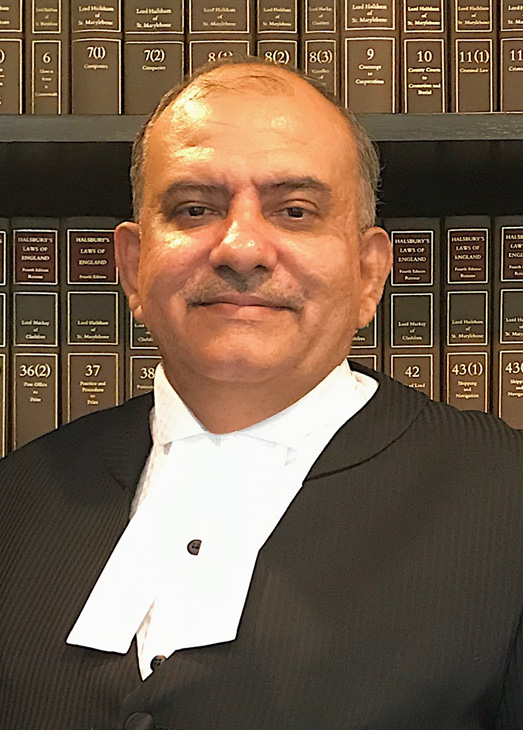
  • “Sports law presents challenges from rights protection to fair play, but it’s a domain ripe for innovation and crucial for athlete advocacy. I urge young lawyers to grasp a breadth of legal fields before specializing.” – Datuk Dr. Baljit Singh,  Founding Partner at Shukor Baljit & Partners

    “Sports law presents challenges from rights protection to fair play, but it’s a domain ripe for innovation and crucial for athlete advocacy. I urge young lawyers to grasp a breadth of legal fields before specializing.” – Datuk Dr. Baljit Singh, Founding Partner at Shukor Baljit & Partners

    This interview has been published by Namrata Singh and The SuperLawyer Team

    What inspired you to pursue a career in law, Sir?

    Firstly, thank you for having me on this forum. I must say, that amazing effort has been made, and I was overwhelmed to see that such a platform exists. Now, coming back to your question, what drove me at a young age is that my background; my father is a policeman, and my grandfather, who came from India in the 1940s, was also a policeman. So, in fact, my entire journey from a young age until I left for university, I grew up in a police station. I understand the dos and don’ts, the whole roll call, every flag post, every corner, what happens, and what doesn’t happen. I was ingrained from day one of my journey. In fact, in Malaysia, even though I’m Punjabi, as my first language, because I used to stay in the police barracks, most of them are Malaysians. So the first language I spoke was Malay. Punjabi came later, of course, and picked up with my parents. That was the influence of staying in the police barracks. When I finished my law degree, my father brought me a police application to join as the cadet assistant superintendent of police. For graduates at that time, they had the scheme for senior police officers. I said, “enough for two generations. I am definitely going to do law.” So, when you are at the age of 16, we have form four here. So you divide between the art stream and the science stream. I was given the science stream. I studied in Penang, a Lasallian school. I still remember my principal, who’s Irish from Ireland, Brother Casimir Hannon. So I was in the science stream. I told him, “Brother, I need to switch to arts.” He said, “What? People want to go to science stream and you want to go to arts?” I said, “yeah, because I’ve decided what I want to do. I want to do law. So I just want to focus on the subjects I want to do.” He said, “No, you focus on science. They give you a bigger perspective and all that.” Anyway, I was also adamant. So I took my dad. I told my dad, whatever it is, I want to do these subjects. I was determined. I knew it. This is what I want. This was my path. I knew it. So, that was my journey.

    So, Sir, you have been involved in a lot of legal publications as well, and you have authored many, many articles. What actually drives your passion for legal writing and how do you balance your time between practicing law and following your scholarly pursuits?

    I also don’t know that. How I do it, but I do it, you know. So sometimes I’m wondering how I do it, but I think I take small steps. I take baby steps and I just do it, like my first book on the criminal litigation process. That’s about 700 pages, but the first book took me about almost 10 years. Of course, when you update, it doesn’t take me long.

    I think when I update the book, it takes me about 6 to maybe 10 months. I can update it. But the first book took some time. So then you just progress and you just build on. Articles I pick up on my practice area, which I find interesting, like recently I’ve written on affidavit evidence by way of quasi-criminal cases. You know, what is the burden stand? What is the timeline and so on to file an affidavit? Do you bother about the timeline? Because I say it’s quasi-criminal offences. It’s a criminal case. So as far as I got the concern, that is the interest of justice and not to be procedurally governed.

    All right, so that article has just been published. So that’s from my cases when I do, so I came up with this topic just to add some jurisprudence to the entire legal community. And then I’ve done one more on the criminal investigation, the court’s perspective, sometimes how it is done, because sometimes when statements are given, the courts will say, Oh, this is an afterthought, but then they have to point out to you, that’s the first time that accused has got the opportunity to say something when he gives them and it cannot be an afterthought.

    And what statement he gave the police must do an investigation. The police must not just shrug it aside, you know, they can’t do that. So that’s the reason, I just take my cases, what I do so that I just come out with an article. So that will interest readers and also will help in the legal journey for others when they have cases and so on there’s something to look at. Then I progressed on to do my Masters at the University of Malaya. Then I also earned a Diploma in Sharia Law in UIA. That was an 18-month course.

    So, that was on Saturday morning. I said, “Why not just do it, you know?” PhD was torturous for me because it was a lonely journey, with no friends, nothing. I got to thank COVID for helping me complete my PhD because I realized I came home, I got nothing else to do other than sit down and work on my PhD. In fact, my viva was done by way of Zoom, my chapters also because towards the tail end. I completed almost seven years, but because of the exemption of the COVID period, I was able to complete it. I think I got, in a way, the blessing of COVID because I’ve been forced to sit down and do my work.

    And then of course, my family also supported me. My wife did the editing and checking everything, paragraphing all in order, giving some advice, and giving some pointers. Because she had done a PhD earlier than me, so I had a tutor at home also to make sure that I’m on track.

    That’s what I did during the COVID time because for months, we were at home base, you see, almost a year or so. That’s where I said, “Okay, now let’s complete this.” And during COVID, I also started on my book. So I always keep myself moving. There’s always something that I’m doing. Nowadays, I also start to get my younger lawyers to come in and to do articles with me so that I want them to also progress, so that they work together with me as a co-author on the articles. So they also gain a track, and of course, for me, I’m more or less walking to sunset already.

    So the younger generation, you are the future. So, you know, whatever I can do, why not? Because whatever I have is all given by the almighty God. So for me, just to hand down, so that’s about it.

    As the president of the Sports Law Association of Malaysia, and being deeply involved in the legal aspects of sports beyond criminal litigation, could you provide some insights into the distinctive challenges and opportunities within sports law? How does it intersect with the broader legal issues you encounter on a daily basis?

    Now, by virtue of sports law, I also chair the Malaysian Football Federation Disciplinary Committee for the entire Malaysia for discipline cases, players, and so on. Of course, that is a disciplinary angle, right? It’d be interesting to see because sports are very close to me. I was an all-rounder, you know. Whether you want me to play volleyball, I can play. Whether you want me to play tennis, I can play. Football, I play. Hockey, I play. The whole works, you know. You want to play basketball, I play. As a son of a policeman those days, we don’t have games, and we don’t have phones. We are out of the house at 4 PM, and we come back at 7. We play everything, including playing kite, playing marbles, the whole works. So sports are very close to me.

    Basically, when it comes to sports law, of course, this is a new area. It is a new jurisdiction. Of course, the law is quite settled, but it’s a new area in many jurisdictions. And of course, the United Kingdom, the US, and London, I think more track because they have the entire sports association like football and all, big thing.

    So, of course, they track more. Here is basically when you’re looking at the rights, the players’ rights, protecting the athletes’ rights. And then to make sure it’s fair play, and then the bigger issue is on doping cases. How to be dealt with, then contractual disputes. So this all derived from this sports law. It’s a good area to come in but sometimes I have this problem with younger members of the bar they say, “Sir, I want to come I just want to do shipping.”

    I want to do construction. I just want to do sports law. I think that’s a bad recipe, a bad formula. So whatever you intend to do, do general first for four, or five years, right? Pick up the entire thing. Then maybe after the seventh, or eighth year, you can think about what you want to do, okay?

    Because you must understand, the legal journey is a continuum, a continuous process. And you just take care. Everything is taken care of you. Because the other problem is nowadays, most of the young generation, I want to make this much. I want to make some X amount. Don’t worry, don’t worry. Be good at your work. Everything will come. Just be good. Be good. Do honesty, okay? Do your work well, prepare your files well, prepare your pleadings well, and prepare before going to court well. Be diligent. Hey, don’t worry. Things will be in your favour, but things will come.

    The younger generation, they can’t wait. So I just say maybe do some breathing therapy. Calm down, relax, and then take baby steps, and then just focus, and also don’t be too… I mean, of course, money, everybody needs, we don’t deny that, you know, you need to pay bills, but take it easy. And the law profession definitely can put a meal on your table, alright? There’s no doubt about that. Doctors, lawyers, and all that, the meal can be on your table, and pay your basic rights, things, what you need, your needs, can be done. But don’t worry. Spend time developing your work, and spend time doing quality work.

    So I build my career like a block, you know, block by block, block by block. So even today, it’s another block, another block. It goes on like that, okay? And of course, I always believe that if you can help anybody, help. There’s nothing, it doesn’t cost you any money. Where you can assist, assist. Alright? Because no man is an island, okay.

    Being appointed to the Royal Commission of Inquiry to review Malaysia’s sovereignty over Pedra Branca, Middle Rock, and South Ledge is indeed a remarkable achievement. What contributions do you aspire to make to this significant inquiry, and what are your expectations regarding the desired outcomes?

    Yeah, because I’m a member of the Royal Commission, I’m governed by secrecy, so I can talk about what is there in the public domain, all right? So, the public domain will be the judgment of the International Court of Justice in 2008, where I gave Pedra Branca to Singapore. Then there’s another process that Malaysia filed for revision and interpretation, in which Malaysia later withdrew the application to ICJ. But basically, that is all in the public domain. On our Royal Commission, I think it’s basically the due processes that took place, how the processes took place for future leaders, future generations to understand what’s going on. It’s a good decision for all students to read from the International Court of Justice, particularly international law.

    When I started my career, I did everything. So whether you’re doing a property transaction, whether you’re doing a civil case, whether you’re doing a criminal case, all I had to do is read up everything I can see. I can see the whole thing in the picture. So that’s why, unless you’re very certain, take one step at a time. I must inform the students. Remember, when I started, I was riding a motorcycle, I rode a motorcycle for two years. Of course, people don’t look. People look now at what I have and what I do but don’t realize that I was also living on my basic needs. I was the son of a policeman, you know, so my father was just a constable, corporal. So, he had to be careful with the budget. Then I used to give tuition to sustain myself. All this is a process. Be calm, relax, focus, and take baby steps. And of course, also to mix with the right company. If you mix with the wrong company, then that becomes a problem because you want to be in the places where you want to be seen.

    Then you start spending more than what you earn. For me, I would just say, if you can, no alcohol until you are established. I would say no alcohol. I didn’t take any alcohol until I was after 40. Because all this, you need to balance out, okay? You need to balance out.

    Of course, you need to enjoy, you need to relax, okay? But all things, you need to calibrate and balance it out. Okay.

    As someone deeply involved in numerous committees and task forces, including serving on the advisory panel to the Malaysian Anti-Corruption Commission, your dedication to combating corruption is evident. How do you perceive the role of legal professionals in tackling significant societal challenges like corruption? Furthermore, how do you envision the pursuit of justice in this context, aligning with the principles you have advocated for throughout your career?

    I think I wear too many hats around. You know, I also sit as honorary assistant commissioner of the police. Also, as a member of the MSCC advisory board, I’m in the preventive panel. So, you see, my role in the MSCC is basically preventive. So, what can we do?

    One is maybe having the syllabus being taught, maybe a small topic being taught in the universities. Start from the school, telling them about the corruption. What is corruption? Introducing some simple thing. Maybe it needs to be less than five pages. It’s all right, but give them an idea that this is not acceptable. This can cause chaos in a country, in a system.

    So one is preventive way, and then you have awareness campaigning in the universities. Even in the primary school, secondary school, you have this awareness campaign. Maybe you have a week of corruption, anti-corruption debate. Or maybe quiz or whatever, to bring the awareness to people and then in the shopping mall, in the big organizations, you have talks, you have anti-corruption pledges by the staff, so on.

    Of course, corruption is not easy. Every country has got it, but we need to make sure we can put it to the very minimum or maybe if possible eradicate, but not easy. It’s an uphill task. And of course, Malaysia, as you know, we have also very interesting cases going on in court which you have seen our former Prime Minister who’s been tried and convicted and other charges are pending. So, you can see Malaysia is okay, you know, in terms of democracy, in terms of processes and all. It’s all right. There is a due process in place.

    Your extensive contributions to society are evident. Did this influence your transition from practicing law to becoming an adjunct professor at multiple universities, offering a unique perspective on your varied approaches? Given your multifaceted background, how do you approach teaching law, and what advice do you typically impart to aspiring lawyers or law students entering this field? You mentioned being open to various practices earlier. Would you care to elaborate on that, Sir?

    I think I bring an interesting perspective because I bring real-life situations to the classroom. They can see how it’s related. I can tell them, “Okay, I picked up on a certain area. This is what happened. These are the facts, this is how this law is legislated, and then this is how it’s been applied. Can you see the case now going on in court? What happened?” So they can see the whole segment connection into one piece. That’s where students, I think—I don’t want to be too overconfident—they truly enjoy my class. They just like the connectivity that I bring from practice-related industry to the academic world, so that is a thing.

    The adjunct professor part is basically for me to bring industry experience to that particular area because, you know, nowadays, for any students, when they go out to work, some of the employers, maybe most of them, have this—they want the students to be the practice-ready approach. Some of the students that start their internship, they don’t even know how to use a photostat machine. They don’t even know how to do a file. They don’t even know how to staple this thing. How do you handle your correspondence? How do you handle your course papers? You know, simple things like that.

    Because nowadays I think some books are available online, but some of the textbooks are good textbooks. Sometimes, you know, must know how to navigate yourself with a textbook. How do you do research with the indexing, with the footnotes, with all this, so you must know how to navigate yourself from the textbook.

    So this is one area I think we’ll soon have a problem. It’s good. It’s good to be tech-savvy, yeah, but some of the books, especially some of the old books which carry, of course, you know, that law of trust. That is a dry area that the law of trust is not going to change, but most of the old books on this area, a lot of salient points are inside the old books, and of course, they’re not going to transcribe anything and put online because it is a question of how much can they earn from that—you can see how much revenue they can generate. Of course, nothing much, but if you’re doing certain areas of law, it is good for you to know how to do manual research, rather than, you know, being tech-savvy.

    Of course, tech-savvy is very good. But manual research also, do not abandon it.

    Given your extensive experience in criminal law, are there common misconceptions about the legal system that you frequently encounter? How do you actively address and dispel these misconceptions to ensure clarity and understanding among individuals seeking your expertise?

    One serious misconception they always have is if you’re innocent, you’ve got nothing to worry about. Let the case go on. But you must understand, you put a person on trial, and the trial then takes years down the road. And then you tell him you’re innocent, and you know, he lost the entire earning and so on.

    So this misconception by saying that, hey, if you’re innocent, you’ve got nothing to worry, that is not true per se. I think most of the investigations that are done are not objectively done, then you put the person through this, right? And of course, another misconception is people will say, Okay, if you sign a document, you’re bound by it.

    Okay, in a criminal case, so on, a lot of things you must see whether the person has authority to do so, whether it’s done by duress, whether it’s done by force, was he misled. So all these things by way of talks, by way of interaction. This misconception must be dispelled.

    We’d love to delve deeper into your passion areas within law. Could you share what specifically drives your passion and what you aim to impart to your learners regarding these exceptional and innovative areas you’re practicing in?

    Other than my practice, I would just say, you must have a balanced life. So if ever I can, if I can do daily walks or simple daily gym, I do it because that is to calibrate myself, to keep my body chemicals in balance, and for me to think better.

    In fact, if I go for walks, I go alone because there’s so many things that I’m thinking about, and I get so many ideas when I go for my walks. And better still, if I walk into a jungle tracking and so on, it gives me amazing. So that’s where I get my inspiration.

    I get my ideas and so on. Reading, reading makes a person, that you cannot deny. And I personally read autobiographies. I read all, I go from the left to right. I think the book that I love best is Long Walk to Freedom by Nelson Mandela.

    In fact, I read that four times, you know. Simple, very simple written. And then how he was incarcerated for almost three decades, you know, 27 years, 28 years put there almost three decades. And how he’s taken and how he’s dealing and coming back into power and so on. So the process.

    So I read the book, at least I think three to four times I’ve read it. I also even read, In Line of Fire by General Musharraf, Pakistani former Prime Minister. Anyway, all these books are available in India, so don’t say that you cannot get it. India has got great autobiographies of judges and so on. You can pick up, and the most famous crimes and all that, they have a lot of these books.

    In fact, one of my favorite bookstores is normally in a Jain bookstore in a corner place in Delhi. So that’s one place where I sit from morning to evening, looking at books. Sometimes I spend days just sitting down there, morning to evening. Vishal is the owner there, a good friend of mine. So he will be entertaining me with coffee and tea. So I sometimes sit one, two days from morning to evening, picking up the books, reading what I need to do. And I send it back. But nowadays, of course, some of it, I get it online.

    So there are other books also, even Gandhi. Of course, Gandhi, the entire book, how his journey, I read his book at least. I find it interesting. I read it twice. But I stumbled upon another book by Nathuram Godse. And into why he assassinated Gandhi. I found that book from Jain bookstore also. I’m not campaigning.

    I’m not selling it. I’m not marketing for Jain. I’m just, don’t get me wrong. So I’m just saying, I found the book from there. So I picked it up. I saw his train of thought. After committing that, after firing the shot, he stood there. He didn’t run away. All right. He wanted to make a statement.

    And then even in court, he refused to engage a lawyer. And he prepared his own printings and so on, and that book that I’ve got, I think I can’t remember. Yeah, but it’s written by himself. Yeah. All right. And the pleadings were done by him. So it’s interesting, you know, to see another perspective.

    And then of course you have Dalai Lama, then you have Bill Clinton, and then the former presidents of the United States. You have Lin Kuan Yew, even in Malaysia, Dr. Mahathir. You have a lot of these books to see their thinking process. How they look at things and their journeys.

    So when I go for holidays, I’ll normally have two books. One is autobiography, one is doing revision. Maybe on criminal procedure, on criminal law, on evidence, or civil procedure. I just have to revise. Just to catch up, and just to keep the momentum.

    I think the students must just not stick to the law books per se, but these books also give you dynamics, help you to build. And then, of course, there are some good movies as well. You know, you can look to articulate your advocacy skills and all that.

    Of course, movies, the movie world and the actual practice is different. But there are some good movies. There’s some good legal movies just to see the advocacy skill, but of course, practice is far away from the movie world, but just, if you’re looking at that, I think Bollywood is really run away, far away from the actual practice, except for the court surroundings. So that’s how you need to balance between yourself. And sometimes you must know when you’re a bit stuck in a particular corner, there’s things to be done, calm down and all that. And also sleep is very important. So do not compromise on your sleep. Do not study last minute. Then you know, when you study last minute, what happens? Then you get everything clamped up, then you get upset, then you’ll be throwing tantrums. And also, take care of yourself by doing your daily exercises. I’m not asking you to run marathon, no, or go for triathlon or go to Ironman. No, simple, simple exercise, 45 minutes walking, stretching, and then take vitamins, I think the vitamins that you really need is, B complex because mental fatigue, you know, because you read and you read, you get tired, you must be able to rest your eyes and all, these are small small things.

    If I presume that you’re doing your reading, and not socializing or gallivanting around town, la, so anything else if I can assist anyone.

    I’d like to inquire about how you navigate the balance between your personal and professional lives. You mentioned the importance of activities like taking walks, engaging in exercise, and incorporating both light and legal reading. How have you managed to strike that balance in your own life?

    I plan my day ahead, one day before, sometimes two days before, and occasionally even three days before. So when I get up in the morning, I know that 8 to 9 is scheduled for this, 9 to 10 for that, 10 to 11 for another task, and so on, with specific time slots allocated for each activity.

    I always have tasks lined up, ensuring a productive day. For instance, Saturday and Sunday afternoons are designated for my nap, while on other days, such breaks aren’t feasible due to work commitments. Sometimes, I also take short 10-15 minute naps in the office to recalibrate.

    I’ve structured my schedule in this manner, planning it out meticulously. For example, when working on an article, I may spend three to four months on it, revising and refining it in stages. It’s an iterative process of drafting, revising, and contemplating.

    As I mentioned, I have allocated time slots for everything, and I adhere to them. If I’m unable to complete a task, I don’t get upset; it’s a part of being human. I simply reschedule it for the next day because planning is crucial. As the saying goes, “If you fail to plan, you plan to fail.”

    It’s essential to plan and prepare a sequence of tasks. I always take time to prepare and analyze my schedule, ensuring efficient utilization of time. That’s how I approach my daily routine.

    Get in touch with Datuk Dr. Baljit Singh-

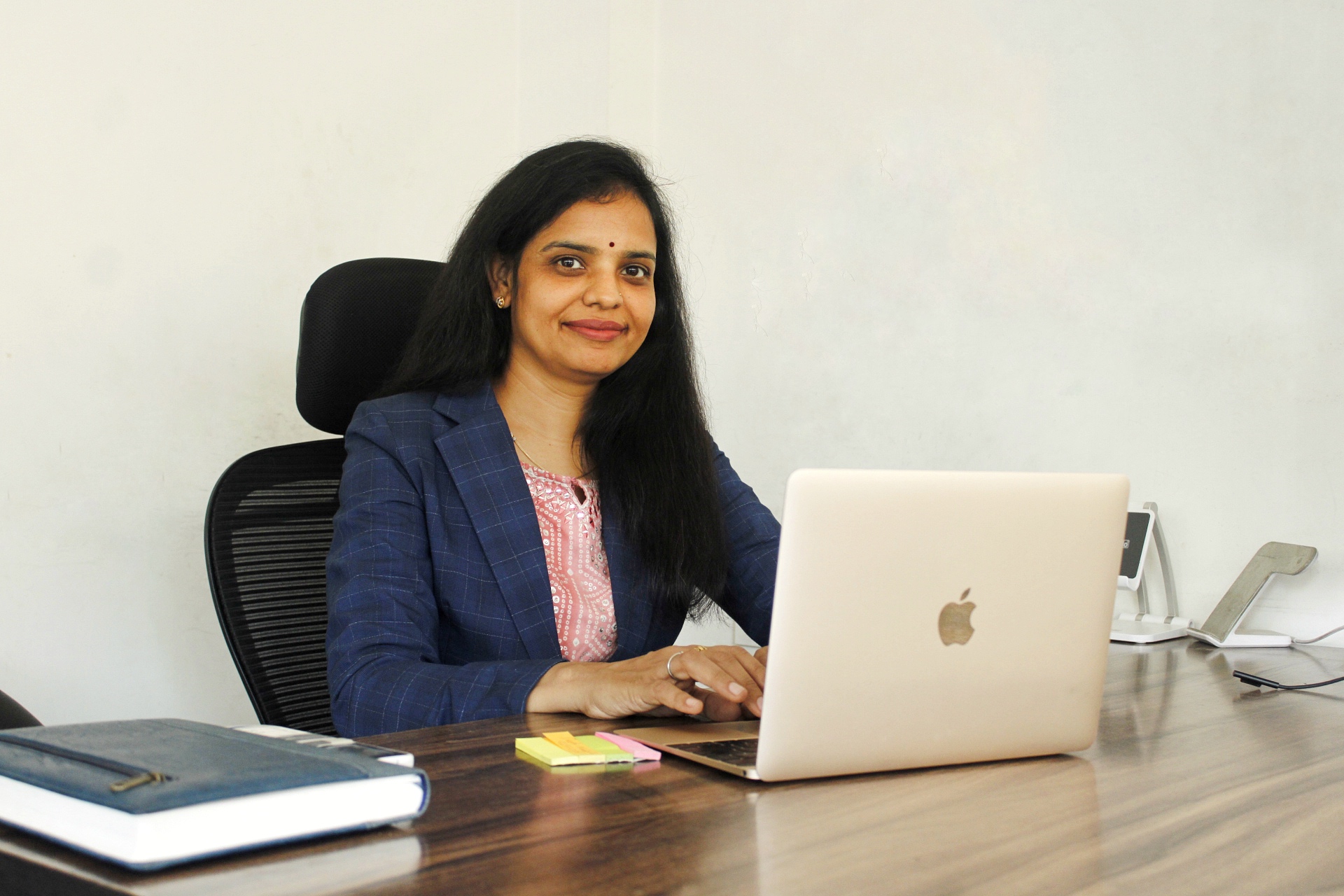
  • “Helping a larger community is incredibly fulfilling… It’s rewarding to know that my work contributes to their well-being and empowerment outside of formal legal proceedings.” – Sapna Patwa, Former Civil Judge & Managing Director at Legal House Law Firm.

    “Helping a larger community is incredibly fulfilling… It’s rewarding to know that my work contributes to their well-being and empowerment outside of formal legal proceedings.” – Sapna Patwa, Former Civil Judge & Managing Director at Legal House Law Firm.

    This interview has been published by Namrata Singh and The SuperLawyer Team

    Could you please introduce yourself to our readers and share with us how you decided  to pursue a career in law? What challenges did you encounter when starting your career,  and how did you overcome them? 

    Hello, readers. My name is Sapna Patwa, and I am a former judge who served in the Madhya Pradesh judiciary for 8 years. Currently, I am practicing at the High Court of Madhya Pradesh. 

    My journey into pursuing a career in law has been a unique one, filled with challenges. Initially, after completing my undergraduate and postgraduate studies in commerce (M.Com),  I got married, thereafter I took a break from academics to focus on raising my children. However, after a gap of six years, my husband encouraged me to continue my education, and  it was his support and motivation that reignited my passion for learning. 

    In my first year of pursuing my LL.M, I became acquainted with the field of judicial services. Learning about this path sparked my interest, and from then on, I dedicated myself to prepare for it. Despite the challenges of balancing familial responsibilities and academic pursuits, I persevered with the unwavering support of my husband and mother. 

    The journey towards becoming a judge was not without any obstacles. Studying law after a  significant gap presented its own set of challenges, but through determination and hard  work, I overcame them. Additionally, preparing for the judiciary exams required immense  dedication and focus, but with perseverance and the grace of the lord, I was able to  successfully clear the Madhya Pradesh Civil Judge exam in my second attempt. 

    I am deeply grateful for the unwavering support of my family, especially my husband and  mother, whose encouragement has been instrumental in my journey. As I continued to serve in the legal profession, I remained committed to upholding justice and making a positive impact in the lives of those I serve. 

    Your journey from a civil Judge to managing director at Legal House is inspiring. Can you share a pivotal moment or decision that led you to transition from the bench to  advocacy and legal consultancy? 

    As a civil judge, I found that dispensing justice from the bench had its limitations. Working within the confines of the judiciary restricted my ability to reach out to a broader segment of  society. Conversely, transitioning to advocacy and legal consultancy allowed me to assist a greater number of underserved individuals by being actively involved in the community. This  realization prompted me to make the transition from the bench to advocacy and legal  consultancy. 

    Your dedication to educating and guiding aspiring legal professionals is evident. What  motivated you to become a guest lecturer and a mock interview panelist at Judiciary  Gold, and how has this experience influenced your approach to practicing law? 

    My decision to become a guest lecturer and mock interview panelist at Judiciary Gold was driven by the challenges I encountered while preparing for judiciary exams myself. I struggled to find proper guidance and support during that time, and I realized that many  others were facing similar difficulties. This motivated me to become a lecturer, so I could provide aspiring legal professionals with the guidance and support I wished I had received. 

    By sharing my knowledge and experiences, I aim to help them navigate the complexities of  legal examinations more effectively. This experience has shown me the importance of  mentorship and education in the legal profession. It has also deepened my understanding of  the challenges faced by aspiring legal professionals and the need for adequate resources  and support. 

    Engaging with students has not only allowed me to give back to the legal community but has  also enhanced my own understanding of legal concepts and principles. Overall, my role as a  guest lecturer and mock interview panelist has been a rewarding experience, benefiting both  the aspiring legal professionals and myself. 

    As a former Judge, you’ve presided over numerous sensitive family law cases. Can you  share a particularly challenging case that left a lasting impact on you and shaped your perspective on family law and justice? 

    As a former judge, I’ve dealt with many difficult family law cases that have shaped my perspective on justice. One case that stands out involved a bitter dispute between two  parents over custody of their children. The hostility between them made finding a resolution  incredibly challenging. Despite my efforts to encourage cooperation, their deep-seated emotions hindered progress. 

    What made this case especially tough was seeing the impact on the children caught in the middle. Their well-being was overshadowed by their parents’ conflict, which took a toll on their emotional health. Witnessing this reinforced the importance of prioritizing the children’s best interests in family law proceedings. 

    This experience deepened my understanding of the complexities of family law and the need  for empathy in resolving disputes. It also strengthened my commitment to promoting  cooperation between parents and protecting children’s welfare. 

    While cases like these can be emotionally draining, they remind us of the importance of our role in shaping the lives of those we serve, especially in family law matters. 

    Your involvement as a legal advisor for the All India Chief Life Insurance Welfare  Association showcases your commitment to community service. How has this role  allowed you to make a positive impact beyond the courtroom? 

    Being a legal advisor for the All India Chief Life Insurance Welfare Association (CLIA) fills me with pride. It’s a chance to handle various cases from all over India, which goes beyond just  courtroom work. 

    Helping a larger community is incredibly fulfilling. By giving free legal advice to CLIA members, I not only inform them about their rights but also educate them on legal procedures and options. This knowledge empowers them to make informed decisions that  can improve their lives. 

    This role allows me to make a real, positive impact on individuals and families. It’s rewarding  to know that my work contributes to their well-being and empowerment outside of formal  legal proceedings. 

    Overall, being a legal advisor for the CLIA lets me continue my commitment to community service and create meaningful change in people’s lives, beyond what happens in the  courtroom. 

    Given your extensive experience, what advice would you give to young legal professionals aspiring to pursue a career in the judiciary or legal consultancy? 

    For young legal professionals aiming for a career in the judiciary or legal consultancy, here’s some advice. If you’re leaning towards becoming a judge, it’s important to intern in a court  for around 2 to 3 years. This hands-on experience will give you a practical understanding of  how to handle cases effectively. Remember, both fields offer diverse opportunities, so choose based on what aligns with your strengths and interests. It’s important to consider  your own nature and abilities when deciding. 

    Starting Legal House was indeed a significant undertaking for me. Leaving my honorable post was not an easy decision, but it was my family’s encouragement and support that motivated me to pursue a career as an advocate. My husband played a vital role in helping me build a client base, while my son assisted me in establishing Legal House. Despite facing challenges, such as transitioning from a prestigious position to advocateship, their support made the journey possible. 

    Beyond your legal career, what are some of your personal hobbies or interests that you enjoy pursuing in your free time? 

    Outside of my legal career, I find fulfillment in exploring spirituality, which occupies much of my free time. Additionally, I enjoy cooking as a way to unwind and express creativity in the kitchen. These interests enrich my life beyond the realm of law and provide balance and  fulfillment in my personal pursuits.