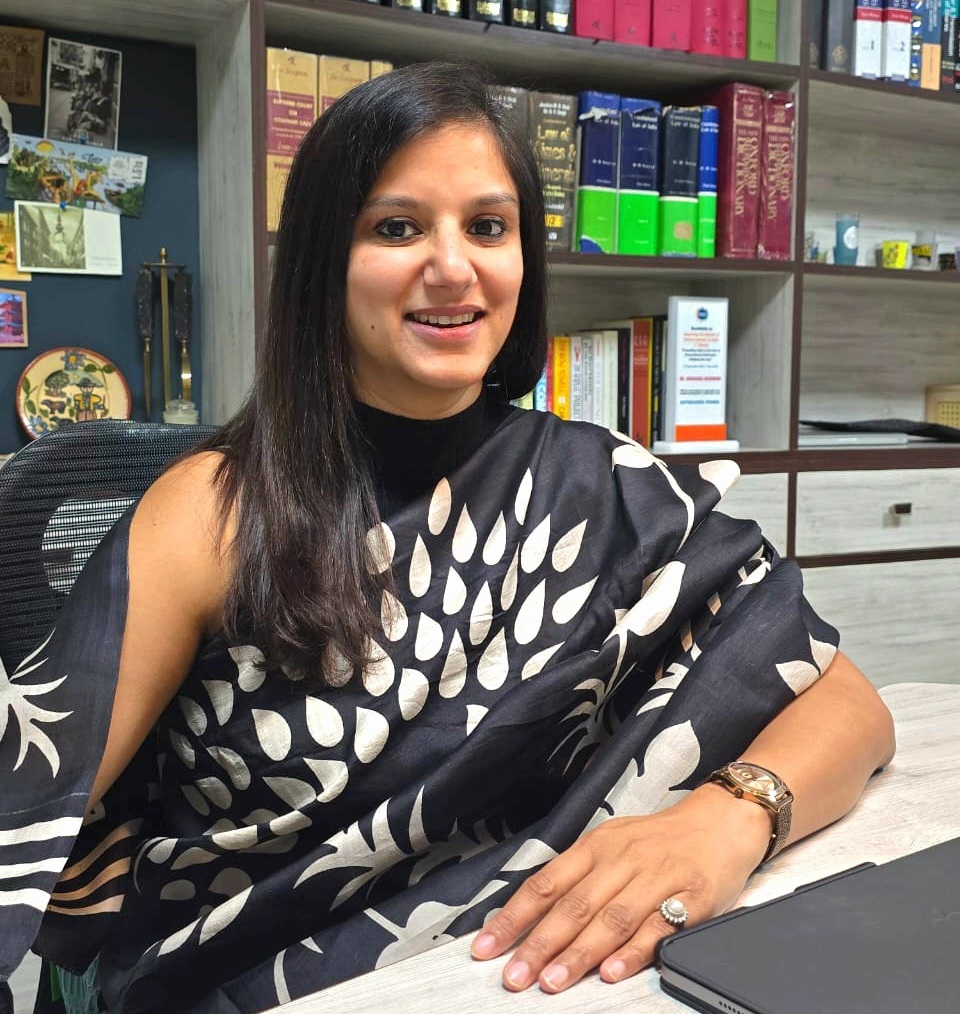
Tag: Administration Law

  • “Machine learning technology is rapidly evolving, and I believe the current consent-based approach to data privacy will be tested.” – Vishwajith Sadananda, Founder & Lead Counsel at Sadananda & Prasad, Advocates.

    “Machine learning technology is rapidly evolving, and I believe the current consent-based approach to data privacy will be tested.” – Vishwajith Sadananda, Founder & Lead Counsel at Sadananda & Prasad, Advocates.

    This interview has been published by Anshi Mudgal and The SuperLawyer Team
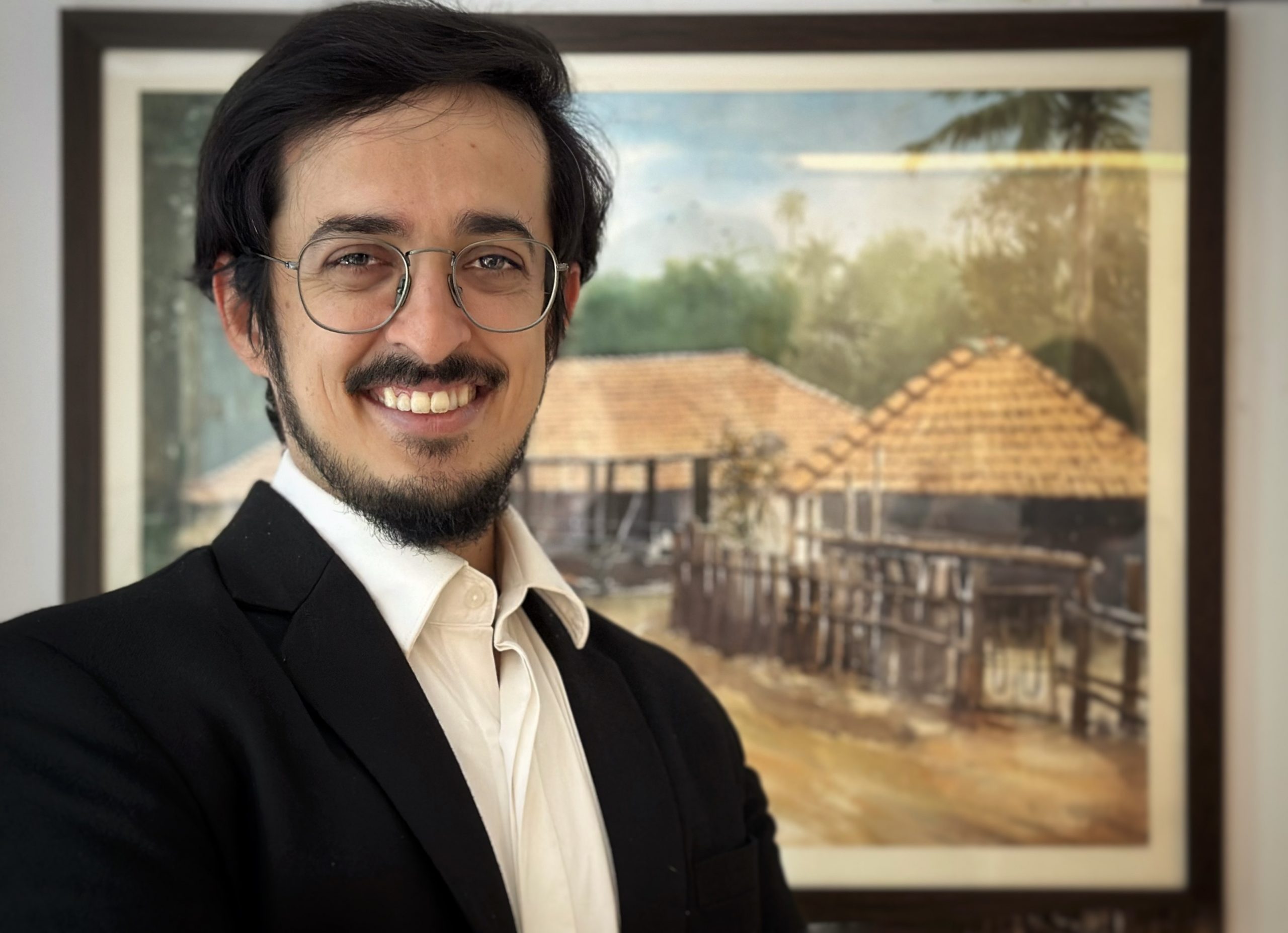
    With nearly 12 years of impressive experience in the legal field, what initially inspired you to pursue a career in law? Which aspects of the profession resonated with you the most, and how did your time at NALSAR University of Law shape your legal journey?

    I wish I had a more elevated answer to give you on what inspired me to become a lawyer. I think I was 10 years old when I got into a playful argument with my uncle. His son in law watched the entire episode and causally remarked that I should become a lawyer. I said “sure” and from that day I didn’t even conceive of an alternative career. In short, I have my brother in law to credit (or blame, depending on how the day is going). 

    The way I’ve looked at the profession has changed quite a bit from the time I chose to become a lawyer. Like many other first generation lawyers, my understanding of what a lawyer does was informed by TV shows, movies and books. Of course, NALSAR and my internships during my time in law school made me realise the difference between fiction and reality. During my five years in law school, I was fairly certain that I would litigate – though for the longest time I don’t think I really knew why. Quite naively, I conceived of a career as a lawyer from only two perspectives – litigating lawyer and transactional lawyer.  I had tried my hand at corporate law during my internships, and by the process of elimination I knew I did not want to become a transactional lawyer. I also had a keen interest in debating and public speaking, so  a career that enabled me to speak to an audience daily for living seemed the right fit. 

    Your LL.M. studies at the prestigious University of Michigan Law School must have been a transformative experience. How did those studies influence your practice, particularly in the fields of competition law, constitutional law, and criminal justice? Were there any specific courses or professors whose impact on your legal career has been particularly significant?

    My LLM program at the University of Michigan Law School was both enriching and perhaps one of the toughest things I’ve done in my life. While I can’t say for sure if the content of the law that I learnt has impacted my career (yet), Michigan Law’s emphasis on teaching you to think like a lawyer definitely has. The professors who taught me the courses were experts at the Socratic method, and each day and each class felt like a very public final exam. Particularly, courses by Prof Don Herzog (Political Corruption), Prof Eve Primus (Criminal Procedure) and Prof Richard Primus (Constitutional Law) were life changing. The professors focused more on making us think of a legal argument from both sides seamlessly and sharpen our legal reasoning abilities.  I also got the opportunity to take up courses outside the law school, and had the privilege to be selected for a leadership program by the Stephen M Ross School of Business. So I also got to learn a lot outside the law in Michigan. 

    Having had the privilege to work with eminent legal figures such as Mr. P.S. Narasimha, the Additional Solicitor General of India, and Justice Dr. S. Muralidhar at the Delhi High Court, what were the key lessons you learned from them? How did these experiences shape your approach to the practice of law, and which habits or skills from these mentors have you integrated into your own professional style?

    After NALSAR, I joined Dr. S. Muralidhar, then Judge of the Delhi High Court, as his law clerk for a year. I believe I started to think seriously about the context of the law – and its nuts and bolts – only after joining his office. More importantly, the biggest lesson I learnt during my time as his clerk was that the profession isn’t about me – it isn’t about how I am perceived in court while arguing, how much fame and fortune I get through being a lawyer, or how many important cases I’ve done, but about who I represent and their lived reality.

    Carrying this understanding of the profession, I next joined the chambers of Mr. PS Narasimha, then the Additional Solicitor General of India, for two years before I left for my LL.M. In those two years, I had the chance to be part of some landmark cases like the challenge to the NJAC and the challenge to criminal defamation laws. Working with Mr. PS Narasimha — now Justice Narasimha — was a fantastic experience, as I learnt how to at once look at the big picture while handling a case and analyse precedent granularly. 

    Perhaps most importantly, working under both of them taught me about the value of giving space to a junior lawyer – space to think, to express himself, and to have the freedom to be wrong.

    You have represented a Member of Parliament before the High Court of Karnataka in a public interest litigation challenging the orders issued under Section 144 CrPC by the Government of Karnataka in Bengaluru. What were the key legal arguments you put forth in the case, and how did you navigate the complexities and high stakes involved in such a significant matter?

    When the client approached us, given the time sensitivities involved, we only had about three or four hours to draft, file, get the matter listed and brief our senior counsel.  But despite the short timelines and the pressure of getting the matter heard on time, a bunch of  counsel who were representing similar petitioners got together and helped us in the process of filing and listing the matter – exemplifying the collaborative nature of litigation in general, and our bar in particular.   

    In terms of the merits of the matter, our petition started off focusing on constructing arguments on the values that the Constitution espouses and the meaning of the right to free speech and the right to protest. However, at the time of briefing and during arguments, our senior counsel decided to take a more practical approach to the matter by arguing on administrative law grounds – specifically, whether the orders were issued in a procedurally proper manner, and with reasons. This taught us the value of knowing when to call on a bench to make value-laden calls on the content of rights like free speech and the right to protest, and when to just focus on more objective standards of what the letter of the law permits and prohibits. This approach eventually helped the petitioners win the case, and made me realise the merit of developing tightly reasoned and irrefutable arguments — far from the type that make headlines.

    After working with a range of esteemed lawyers and law firms, what motivated you to establish your own practice? What were some of the initial challenges you faced in this transition, and how did you overcome them to establish a successful practice?

    Whether I’ve established a successful practice is for time to tell. I suppose I, like most litigating lawyers, always wanted to set up my own practice after working for a few years under someone. And as many litigators will tell you, a big part of being a litigating lawyer is being at the right place and at the right time. Before setting up my own practice, I had the chance to handle some of my own clients while being part of Arista Chambers, run by Promod Nair – now a senior counsel — in 2019. During my time at Arista, I slowly built up a base of clients largely through word of mouth. Then Covid hit and a lot changed. By January 2021, it felt like the time was right to start my own practice.

    The real challenge that I faced – and perhaps continue to face – is more internal than anything that involves the actual practice of the law. I don’t know if this is an experience every other litigator has but, for me, I kept (or keep) changing the goalposts. Initially, when I started off, my concerns were about the number of clients and matters I had; this soon changed, and I started to worry about whether I was earning enough to stay on top of things. Very quickly, I moved on to worrying about the kind of matters I was doing and how much of a role I had in various matters. Rinse, repeat. So, essentially, I found myself stressing about different things relating to a career in litigation. Today, I guess I’ve become a bit better at getting some distance from all this, but I would be lying if I said I’ve completely moved beyond these challenges.

    You’ve represented an AI startup in the past. How do you see the future of AI and technology law evolving, particularly in relation to intellectual property rights, data privacy, and regulatory frameworks? What challenges do you anticipate in balancing innovation with legal protections in this rapidly advancing field?

    This may sound like a cliché, but the biggest challenge, I suppose, will be to see whether the law can keep up with technology that appears to be evolving every few months. We’re already seeing this play out live in the Delhi High Court with ANI taking OpenAI to court for copyright infringement. It’ll be interesting to see how the court applies the current copyright regime to deal with technology that was not even conceived at the time the legislation was enacted. The same goes for data privacy. Machine learning technology is rapidly evolving, and I believe the current consent-based approach to data privacy will be tested. I’m not sure how consent can be practically obtained for every instance of use of data when you consider how Gen-AI repurposes data continuously for new outcomes. We may therefore need to imagine a different, more comprehensive data privacy framework for machine learning – or perhaps a separate regulation policy – which not only accounts for the growth and development of the sector, but also keeps at its centre the individual whom the sector is supposed to ultimately serve.

    With your extensive experience spanning constitutional law, commercial disputes, and more, what aspects of the litigation field continue to inspire and drive you? Looking ahead, what vision do you have for both your own career and the future of your firm and how do you balance your personal life with such a demanding career? 

    Three aspects mainly – firstly, I absolutely love the theatre of it all. I like thinking about the delivery of the argument, what style works before which judge, what the judge is thinking at any given point, how to craft the argument before the delivery, and finally the actual delivery of the argument. Secondly, no two days in litigation are the same. One day we are fighting a contentious shareholder dispute; the next day we are going up against the state to protect a farmer’s rights. I’m not sure there are very many professions that enable such diversity in work. Thirdly, every once in a while, you get to represent someone who has been left out by the system. 

    My interest in litigation naturally extends to wanting to nurture those who will shape its future (something I’ve gained immensely from thanks to my previous bosses). At Sadananda & Prasad, we’ve been trying to make it a sort of incubation chamber for future lawyers and a safe space to develop as a lawyer. I believe every good litigator eventually has the dream of starting off on their own, and we hope to create a space where lawyers can come, learn, and start to grow their own practice while not being afraid to fail. That is our vision, and we hope in time this vision is realised.

    Of course, dedication to this vision, and to the profession as a whole, is demanding. That naturally leads to the question of personal balance. I used to try to unwind by either playing a sport or noodling on the guitar or piano. Now I have a 16-month-old, and I spend a significant chunk of my time pretending to be a monkey for her sake. Truth be told, personally, nothing is more stress-relieving.

    What advice would you give to law students aspiring to build a career like yours? What key skills or qualities do you believe are essential for success in these fields? Your journey serves as an inspiration for many, and any advice from you would be invaluable to aspiring legal professionals.

    The role of luck is frankly quite underrated. You may be the best legal mind in the room but still not get the opportunities to showcase it merely because it just isn’t your time. I’ve seen far better lawyers than me give up on litigation simply because of this. So my advice to aspiring litigators would be to just wait for it and don’t give up. Be patient and equanimous. Everyone’s time comes in litigation. In the meantime, be prepared for that moment. Observe and learn from your seniors and peers; know the law – the letter of the law, its logic, and finally its actual practice, so that when your chance comes – which it will – you’re ready to take it. And as my ex-boss often insisted, remember, it’s not about you.

    Get in touch with Vishwajith Sadananda –

  • “My takeaway from my journey in the field of law has been to be patient, to keep up the hard-work, and to know that every opportunity and every win or loss is a golden ticket to learn something new.” – Shraddha Deshmukh, Advocate-on-Record at Supreme Court of India.

    “My takeaway from my journey in the field of law has been to be patient, to keep up the hard-work, and to know that every opportunity and every win or loss is a golden ticket to learn something new.” – Shraddha Deshmukh, Advocate-on-Record at Supreme Court of India.

    This interview has been published by Anshi Mudgal and The SuperLawyer Team

    You completed your Bachelor in Civil Law at Brasenose College, University of Oxford. Was law always the career path you envisioned for yourself and what motivated you to pursue law as a profession?

    My tryst with law was accidental. I had lost my Civics book, a day prior to my final exams in school. My father sat me down with a copy of the Constitution of India and spoke about Keshvananda Bharti. Whilst reading through the charter on Fundamental rights and duties, I came across the wide powers of the courts as enforcers and protectors of rights and therefore, by default, the duty of the lawyers to bring causes to justice. That was it! Dreamy eyed about the change and difference that lawyers can make to society (of course also influenced by Alan Shore from Boston Legal), I decided to pursue Law as my profession.

    Early in your career, you worked at several prestigious law firms before transitioning to work with Senior advocates like Mr. Akhil Sibal and Mr. K.K. Venugopal. How would you describe the cultural differences between these two environments, and how did you adapt to each?

    There are definite distinctions and also certain similarities in the working culture of a Law Firm when compared to a Counsel’s Chamber. 

    Starting with the distinction first, at a law firm, you are exposed to direct client dealings, extensive drafting and working with many counsels and senior counsels. You are involved with filing and getting matters listed, billing and preparing recording letters for the client. 

    On the other hand, working in a Senior Advocate’s chamber gives you a balcony view into the mind of the lawyer- her/his quirks, style of presentation, method of preparation and the ultimate act of reading the law and convincing the bench with arguments. Preparation of briefing notes involved detailed churning of legal research with factual analysis.

    Coming to the similarity– at both places, you are expected to work hard and stay abreast with the law and the legal system. The working hours don’t get better at either, and you learn and gain immensely at both!

    Therefore, whilst the scope of work for the junior may differ in a Law Firm when compared to a Senior’s chamber, the expectations from her/him to give their best- remains the same.

    Having worked closely with prominent Senior Advocates like Mr. K.K. Venugopal, what are some of the most valuable lessons you’ve learned from them, and how have those lessons shaped your approach to legal practice?

    Working with a venerated counsel like Mr. Venugopal- who is an institution in himself, was a guiding factor in me truly coming to love the law and understand the rigours and discipline that are basic tenets for a lawyer. Boss, as we all call him in his chamber, taught us that there are no shortcuts to success. Even today, whilst preparing for a matter, he refers to judgments and makes copious notes, with the same curiosity as he would have if he were reading it for the first time, despite having argued many of them himself and having applied them in several instances. During arguments, Boss could ask any question from the briefing junior, which was born from the facts stated in the file or beyond, which meant that we had to always be on top of things and be prepared for a volley of questions- sometimes tougher than what came from the bench itself. This taught us to be prepared beyond the file, to ask questions and analyse, to fact-check and to never argue on conjectures. Boss would rarely ever raise his voice at us and his disappointment was often remarked with a long sigh reverberating in a whistle, the consequence of which was far stronger than mere words. He taught us the discipline to reach court early irrespective of how late your matter was on board. He taught us to be fair and to act as an ethical officer of the court. He treats every colleague of his as an extension of his family. One instance that I will never forget was, when I was seeking a passover for him in Court as he was stuck before another bench, and the concerned Judge asked me to argue the matter instead. He came in the middle of my arguments, but patted me on my back and asked me to continue arguing and sat right next to me-that kind of encouragement to a young counsel starting out in their career meant a lot! Despite working so hard, boss also taught us to not take ourselves too seriously and to always remain curious. In his own words, he taught us that “to know that you don’t know is the beginning of knowledge.” I am truly blessed to be a part of his chamber- which has had a large part in shaping me as a lawyer. 

    Working with Mr. K.K. Venugopal on landmark cases like the Right to Privacy case must have been an enriching experience. Could you share some insights from your involvement in that case and how it has influenced your career?

    Being a part of the 9 Judge bench’s unanimous declaration of the right to privacy as a fundamental right definitely stands out for me as one of the most exhilarating experiences in my short stint as a lawyer. Days preceding and during the hearing were spent reading countless judgments, articles, international covenants, and expert views on the issue. As a student of law, partaking in thought-provoking arguments from some of the finest minds in the country- at bar and on bench, was outstanding. It exposed me to understand the many different silos that exist in the right to privacy, beyond its manifest existence in body integrity. As a counsel, I have applied the said doctrine in my matters dealing with data privacy and boundaries of authentication and digital records. We are all richer in our rights by the said decision and I couldn’t be more grateful for having been a part of this landmark case. 

    After gaining experience with top law firms and senior advocates, you made the transition to establishing your own practice. What motivated that shift, and what were some of the challenges you faced when starting your independent practice?

    Like any other counsel, I also dreamt of having my own independent practise and to put my training to task. So, after about 8 years of apprenticeship, and with a small handful of clients, I decided to take the plunge and went independent. The initial days were tough especially as the quality and quantity of work that comes to you as a fresh, off the hook, independent counsel is very different from what you may have done in the senior’s chambers or in firms. But the free time gives you an opportunity to read and update your knowledge base. Being on the panel for the Union of India at the time gave me the opportunity to work on diverse areas of law and appear in court regularly. Soon after, I was appointed as the Deputy Advocate General for the State of Chhattisgarh. As special counsel, I successfully represented the Special Task force in Rajasthan in a multi-cooperative society scam involving thousands of crores of Rupees, which added to my experience. When I look back, my takeaway has been to be patient, to keep up the hard-work, and to know that every opportunity and every win or loss is a golden ticket to learn something new. I am extremely grateful for my fears and experiences, which play a part in shaping me as a lawyer today. 

    As an Advocate on Record and now running your own practice in areas like Constitutional and Administrative Law, Arbitration, Data Protection etc. You’re clearly dealing with highly complex issues. Could you share one of the most interesting or challenging cases you’ve worked on, and how did you prepare for that case?

    A very interesting case that I recently argued was the 7 judges constitutional bench reference on the issue of sub-classification of reservation benefits to Scheduled Caste and Scheduled Tribe seeking re-consideration of the decision in E.V. Chinnaiah v. State of Andhra Pradesh and Ors. [(2005) 1 SCC 394]. In order to justify the reversal of the earlier judgment required presenting the Hon’ble court with constituent assembly debates- to show the original intent of the constitutional framers. I argued that Compensatory discrimination, as a subset of Affirmative Action, has the preliminary goal of curbing discrimination and the ultimate goal of its eradication. I presented empirical data to show that Scheduled Caste as a group is heterogeneous in its form and acute disparity exists within the groups and treating them with the same brush of representation is antithetical to the concept of substantive equality. Several scholarly writings on the subject, such as Marc Galanter’s book-Competing Equalities: Law and the Backward Classes in India, J.H. Hutton’s book, Caste in India: Its Nature, Functions and Origins, celebrated Austrian Economist Friedrich A. Hayek’s work on the Constitution of Liberty, to name a few, came to my extensive aid. We are now in receipt of the landmark judgment, where my arguments have found mention, and which lays down the distinguished principle of sub-classification of reservation benefits as a facet of substantive equality. 

    Given the demanding nature of your work, especially your role as Counsel for the Union of India in the Supreme Court, how do you manage to maintain a work-life balance? What strategies do you use to recharge and stay passionate about law?

    I remember reading the quote somewhere that “The law is a jealous mistress and requires long and constant courtship. It is not to be won by trifling favors, but by lavish homage.” I couldn’t agree more- it takes away most of your weekends and expects you to burn the midnight oil. But the profession is also like riding a wave, some days are crazier than others-So in my free time, I love to read, spend time with my family and pursue my hobbies.  Also, the court calendar sets out long vacation periods, allowing us to travel or take time off, which for me, is the best energiser. Staying passionate about law comes from staying in tune with the changing times and also from rigorous reading and discussions. Even if I am not involved in a matter, I love watching cases being argued in court and to witness legal jurisprudence develop. Discussion with my colleagues in the office is an enriching exchange of fresh ideas. Legal conferences can also be a great venue to brainstorm and to learn from other’s experiences and discussions. 

    For young lawyers just starting out, particularly in the fields of litigation and international/domestic arbitration, what advice would you offer to help them navigate these complex areas and build a successful career?

    Young lawyers just starting out today have far more exposure and better understanding of the nuances of law and its practise, than I remember having, when I started out. The only thing that I sometimes find lacking in young lawyers is patience. I see young counsels diving into calling themselves specialists without knowing basic procedural laws. Also, whilst arguing matters in the Apex Court or doing big ticket arbitrations is a thrilling experience, learning from the ground carries you higher. Walking through the registries and learning how to get defects cured and getting matters filed and listed, to me, is as crucial as knowing how to argue a case. These learnings help you especially when you start out on your own and have to run an office and give time commitments to your client. In today’s time, being comfortable with technology is a must- both for litigation and Arbitration. Staying abreast with evolving law helps you stand out. AI based research may have made life easier, but it is crucial that the foundations are laid stronger and provisions in a statute are read before diving into research. In my opinion, perseverance, hard work and integrity are key ingredients to success for any and all. 

    Get in touch with Shraddha Deshmukh –

  • Avi Kalra, Founding Partner at Clergy and Wisemen In Conversation With SuperLawyer On Startups, Arbitration and Much More Interesting Aspects

    Avi Kalra, Founding Partner at Clergy and Wisemen In Conversation With SuperLawyer On Startups, Arbitration and Much More Interesting Aspects

    This interview has been published by Prabhjot Singh, Priyanka Karwa and The SuperLawyer Team

    Was pursuing law planned for you or it all happened in a flow? Kindly share with our readers.

    Well to start with, I am a first-generation lawyer, and to be very honest law was never a career option for me until the 10th Grade, I had planned to either join my father’s business or start something of my own. However, it all changed in the year 2012, when my father was involved in a car accident, in which one bike hit his car and the pillion rider died on the spot.

    After this, it was the first time that I ever visited the Local District Court of my city. During court visits, I was highly influenced by the impact the lawyers could have over their clients. Soon after, I developed interest in Criminal Law and the same grew over me and made my belief indeed stronger. So today, I can proudly say that being in the legal fraternity was a well thought decision and didn’t happen by chance.

    What do you think, which specific advice has helped you come thus far in law? What is that one motivation that keeps you going in life?

    The advice that has helped me come this far is that if you roll up your sleeves and decide to do something, nothing in this world is impossible. Everything is doable, you just need to have the courage.

    Frankly speaking, I never participated in any public speaking event in high school and had stage fear. Now came the time in Law School, when I realized the importance of Moot Courts but the continuous insecurity of never being a good public speaker or having no prior experience kept acting as a barrier.

    It was only in the third year when I got the opportunity to participate in the Intra Mock Trial, where although in my opinion, my public speaking was not up to the mark, however, this opportunity gave me a sense of understanding that it was these mental barriers which were stopping me to do something. Since then, I have worked upon my oratory skills, and have never said no to such an event, which has helped me tremendously in becoming a better orator and Advocate.

    Speaking about Motivation, after winning the National Mock Trial Competition in 2017, me and Prateek Lakra made a goal to start our own law firm after completing 3 years at the Bar. In 2021, we started Clergy & Wisemen, and since then there has been no looking back, and taking our Law Firm to the level of top law firms in India is the motivation that keeps me going.

    Could you brief a case you were led on that substantially broadened your knowledge of the legal field?

    From what I have learned while practicing law is that law is nothing but common sense, one should just have the vision to see the answers. It is an art that is learned through experience and wisdom. During the initial years of practice, the most crucial part is to understand the implementation of what we study in the Law School.

    It was in 2019, when a Fraud had been committed by a person, which was worth crores. In the same case, my client was duped for a handsome amount. Initially, we filed a Suit for Specific Performance against one of the properties of the Accused before the Delhi High Court, however, it came to our knowledge that the Accused had created multiple third-party rights over the property, therefore, we also had to move before DRT, since the bank had started proceedings against the accused. Also, there were claims from various entities, due to which there were multiple suits and cross impleadments.

    Parallelly, proceedings under the 156(3) Cr.P.C. were also instituted against the accused, wherein we got favourable order and an F.I.R. was also registered with the Economic Offences Wing (EOW), Delhi Police.

    These proceedings helped me understood various remedies that a person has under both the Civil & Criminal Laws in India and how the Courts and Tribunals function.

    Among all the specialisation, i.e., Administration law, RERA, Taxation, Corporate law and Arbitration, which area of law is the most interesting to you and why?

    I would say that Corporate Law, since Corporate Law can itself be classified into various other sub-specializations, and due to the recent increase of Startups in India, Corporate Law has opened up various opportunities for Young Lawyers.

    Now, with Startups the issue that usually comes up is that they cannot afford Big Law Firms, and it is where young lawyers can step in.

    Further, in Corporate Law, a Lawyer has to get into the shoes of the Founders so as to protect their interests while making agreements such as the Shareholders and Founders Agreement, so that in case the Company goes for funding or dilutes its equity, the founders don’t lose the control over their own company. Moreover, issues like dispute resolution between founders also has to be carefully drafted. With contracts, it is necessary that the Liabilities are limited, indemnification clauses are watertight, and in the case of Intellectual Property, the rights are carefully defined. I can go on with such examples, such is the nature of Corporate Law.

    What would you do if you had taken on a case that went against your values? Any prior experience you could relate with?

    I take cases as per my conscience; however, I am a firm believer in the fact that a person is innocent until proven guilty.

    Yes, there have been certain cases where I had to self-introspect whether I was doing the right thing, however, I tend to keep my personal opinions and professional life apart. As the great Mr. Ram Jethmalanai once said: “A lawyer who refuses to defend a person on the grounds that people believe him to be guilty is himself guilty of professional misconduct.”

    How do you maintain the work-life balance Avi?

    As a Lawyer, I feel that law is that field where once you are at the initial stage you need to spend more hours, drafting, researching, and navigating through documents, but as you practice more and more it gets easier to locate the crux of the case and you exactly know where to hit the nail, so spend in your initial years, it will reap well. Also, law is just like investing, the more you invest in your legal skills right now, the more returns in the later years.

    Personally, for me, what has helped me maintain my sanity with this schedule is waking up early in the day, and having some time to myself before the whole show at the law firm begins. I believe that one must do something that is good for his/her soul once a week. It’s okay to take a break, but you should know when the break ends. The work should not suffer, make yourself that efficient.

    What strategies do you use to ensure that your clients receive the best possible?

    There is no secret sauce to ensure the best possible results. Each case has to be seen in its own strategic manner.

    In my previous experience be it working at chambers of a lawyer or law firms, one thing I saw was that although the Clients were getting reliefs in their cases, however, they were not satisfied by the management. For example, the client would not know what is going around in the case, sometimes they won’t know what is next date, no regular updates, so on and so forth.

    After starting Clergy & Wisemen, we not only ensured that our clients get the best legal services but also focused on the management of the Law Firm, be it the regular updates of their cases, addressing their doubts, having dynamic meeting slots, taking regular follow ups about our services, etc.

    Now with Corporate Clients, we have come out with certain services such as Contract Lifecycle Management (CLM), Legal Manager, which have substantially increased the effectiveness and efficiency of the services provided by us. Recently, we have tied up with certain AI companies, which help us in the drafting of contracts, although each contract is reviewed by either an Associate or Partner at the Law firm, but it has helped us in reducing the TAT and Cost.

    What challenges have you faced as in bank matters with DRT, DRAT, NCLT & NCLAT?

    DRT and NCLT, alongwith their appellate tribunals, were made so that the burden over the courts is reduced and the cases can be fast tracked. Although, the burden over the courts have been substantially decreased, but I would not agree with the fact that the matters have been fast tracked.

    Since, due to a smaller number of benches, the matters usually take a substantial time to be adjudicated, wherein the sitting benches are not able even finish half of the cause list, and requests such as to list the matter at the top of cause list have to be mentioned.

    Moreover, these tribunals are not on par with the High Courts, be it the adjudication process, or the working of the registry.

    Therefore, I believe that the number of Benches in the Tribunals should be increased and only in the rare cases the timeline mentioned under the Code shall be extended.

    Lastly Avi, any advice for our young legal professionals?

    My advise to the young legal professionals would be that they should always be updated with what is going around in the Legal Sector, this would not only help them in increasing their knowledge, but also to strike out a conversation at a relevant place and time, and trust me this helps significantly.

    The other would be that they should understand that whatever service you are giving should be a valuable addition to the client and it must solve their problem, taking care of these would definitely help a professional building up his name, since the person would not only happily pay his/her fees to you, but also would recommend you to others.   

    Lastly, in case someone is planning to start his own practise, then rather than just possessing the legal skills, one must also have the skills of a sales person, it might sound a little different, but Law is a Business until you get a client, one might be a very good lawyer and possess good skills, but till the time he has got no client, those skills would be worth nothing. Therefore, it is advisable that you must know to sell whatever skills and knowledge you possess. 

    All the best!


    Get in touch with Avi Kalra-