Tag: Advocates

  • “Keep moving forward with unwavering determination, and you’ll find that the rewards are bound to follow.” – Evolution from a First-Generation Lawyer to IP Law Specialist, Anil Kumar Sahu, Managing Partner of ALL IP CARE.

    “Keep moving forward with unwavering determination, and you’ll find that the rewards are bound to follow.” – Evolution from a First-Generation Lawyer to IP Law Specialist, Anil Kumar Sahu, Managing Partner of ALL IP CARE.

    This interview has been published by Namrata Singh and The SuperLawyer Team
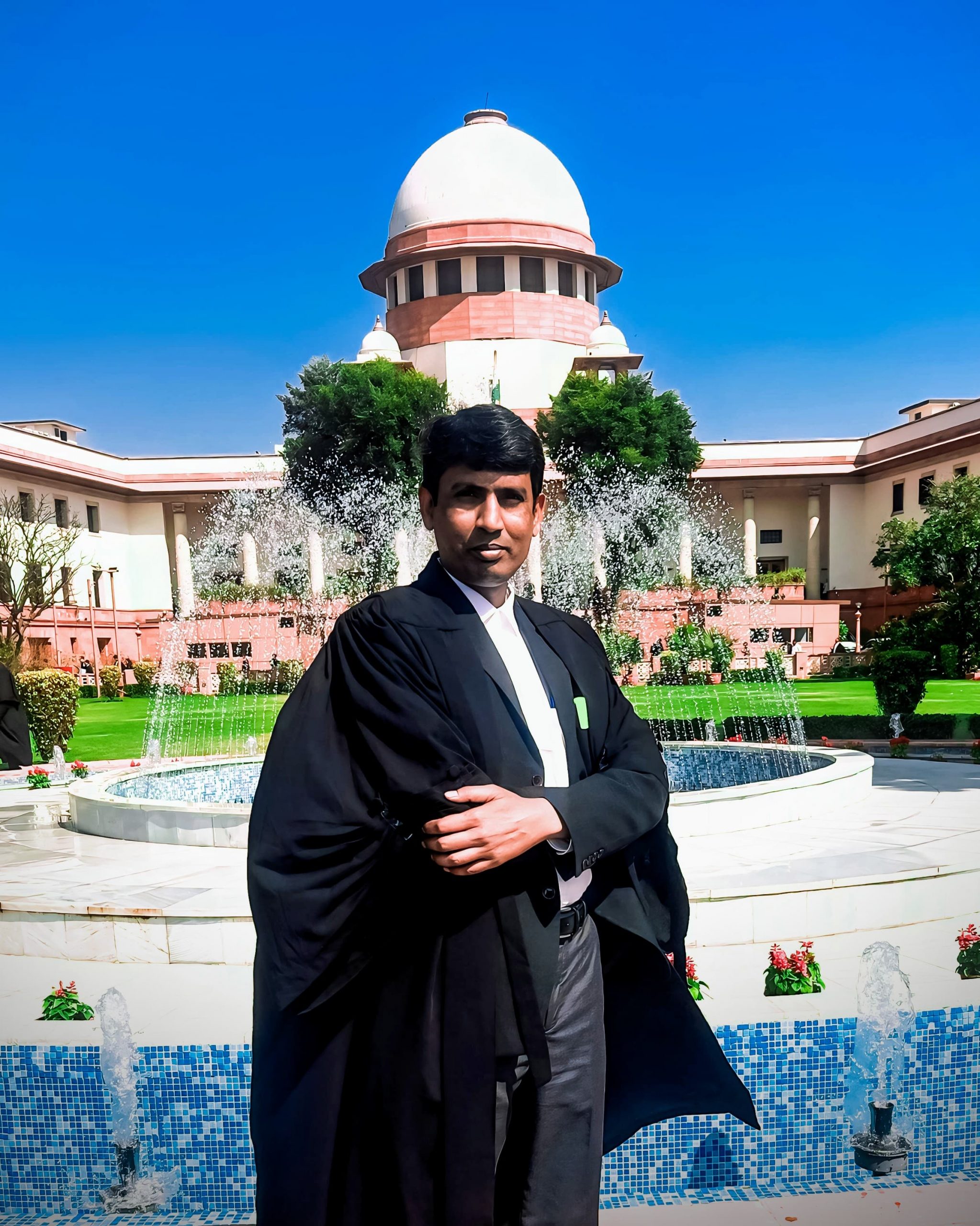
    Can you share with us the story behind your journey into the field of law? What inspired you to pursue a career in law, and how did your early experiences shape your path to becoming a seasoned legal professional?

    As a child, I witnessed my family go through a challenging and emotionally taxing ordeal that required multiple visits to various courts. During this time, my father faced significant hardship due to family disputes and it was during these moments of adversity that I had a profound realization that I would never want to see my family or anyone I cared about go through such difficulties again.

    This poignant experience became the catalyst for my decision to pursue a career in law. I was determined to gain the knowledge and skills necessary to navigate the legal system effectively, to protect the rights and interests of my loved ones, and to ensure that justice was served. It was a deeply personal motivation that fuelled my journey into the field of law, driven by a heartfelt commitment to prevent others from experiencing the same kind of turmoil and uncertainty that my family endured.

    Your firm, ALL IP CARE, specializes in Intellectual Property Rights among other legal services. What drew you to focus on this particular area of law, and what excites you the most about working in the realm of IP rights?

    Becoming an advocate, especially as a first-generation lawyer, presented me with numerous challenges on my path to success. In 2002, I embarked on a journey of advocacy at Tis Hazari Court. I gained first-hand experience in handling a diverse range of legal matters, including civil, criminal, matrimonial, writ, and service cases.

    However, life had other plans and in 2007, when I decided to switch my practice in the domain of Intellectual Property laws. This transition introduced me to the intricate world of IP laws.

    During my tenure at the IP law firm, I was fortunate to be presented with significant opportunities that I regard as noteworthy achievements. I was entrusted with the task of working on a research paper related to prior publication in the Designs Act, and I was also deeply involved in trademark research. These experiences allowed me to delve deeply into the realm of Intellectual Property Rights (IPR) laws.

    Given your extensive experience in criminal law, could you share some insights into how you approach defending clients in criminal cases, especially in light of your specialization in areas like Intellectual Property infringement?

    When approaching clients, particularly in cases of Intellectual Property infringement, I adhere to a strategic and comprehensive approach. Though stringent laws on criminal prosecution exist, their enforcement is challenged by limited awareness among law enforcement bodies. Investigation and scrutinizing evidence surrounding the alleged infringement go hand in hand, further buttressed by assertions from potential witnesses such as subject matter experts or law enforcement officers who can support building the case, whether it be a civil or criminal prosecution. Being able to adapt strategies based on evolving circumstances ensures the best possible outcome for the client in protecting their IP.

    Your profile mentions your involvement in organizing workshops and seminars on various legal topics. What motivates you to engage in these initiatives, and how do you believe they contribute to the legal community?

    As an IP lawyer, organizing workshops and seminars is not only a professional responsibility but also a passionate pursuit. The lack of awareness among people about intellectual property remains a significant hurdle, leading to substantial challenges in enforcing IP rights. It provides a platform to disseminate knowledge about trending developments and legislative changes within the field among young lawyers and business professionals which in return provides space to enhance understanding of complex IP concepts, as well as moulding opportunities for collaborative ventures. At the same time, it allows for an interesting brainstorming session with budding lawyers and business professionals.

    As a seasoned advocate, you’ve undoubtedly encountered diverse legal challenges. Can you tell us about a particularly challenging case you handled and how you navigated through it to achieve a favourable outcome for your client?

    I could recollect a notably challenging case that I handled which involved securing an injunction against a defendant who was dealing in jewellery falling under class 14, while using a tagline deceptively similar to our client’s tagline registered in class 3. Dealing with this complex matter required a strategic combination of legal research, expert collaboration, and meticulous argumentation and we crafted a compelling case by highlighting the infringement of both trademark rights and the deceptive trade practices involved. Through persistent negotiation and leveraging the strength of our legal arguments, we successfully obtained the injunction, thereby protecting my client’s intellectual property rights and securing a favourable outcome.

    However, I would like to stress that it is not a particular case but the domain of IPR laws which is itself a very challenging and rocky terrain which requires intellectually eccentric application of mind.

     Your firm has been involved in various legal initiatives and collaborations, including workshops with law enforcement agencies. Could you elaborate on the significance of such collaborations and how they contribute to the broader goal of legal awareness and enforcement?

    These collaborations with legal firms and law enforcement agencies are important for promoting legal awareness and enforcement of IP rights. These initiatives facilitate the exchange of knowledge and expertise, creating a better understanding of complex legal issues and procedures which in return helps in building capacity through proper guidance. Altogether, these efforts contribute to more effective problem-solving strategies, enhanced enforcement outcomes, and increased community engagement, by working together comprehensively and securing awareness among all channels of enforcement.

    Away from the courtroom, do you have any hobbies or interests that you like to indulge in? How do you strike a balance between your professional commitments and personal pursuits?

    Maintaining a healthy work-life balance for me involves a clear distinction between my professional and personal life. I establish boundaries to ensure that when I’m working, I’m fully engaged and focused on my professional responsibilities, and when I’m off-duty, I prioritize personal time with my family and watching documentary/ Bollywood movies. Additionally, I love to Share my knowledge and passion by becoming a mentor or teaching others about the different realm of the provision of laws.This separation allows me to recharge, spend quality moments with loved ones, and pursue hobbies and interests, ultimately ensuring that both my professional and personal aspects of life coexist harmoniously and contribute to my overall well-being.

    Lastly, considering the rapidly evolving legal landscape and the challenges faced by the current generation of legal professionals, what advice would you offer to young lawyers aspiring to make their mark in the legal field?

    Perseverance and patience are the fundamental keys to success. It’s essential never to lose faith in yourself and your journey because life has a way of presenting opportunities that make all the challenges and efforts worthwhile. I suggest to all young lawyers to remember a famous dialogue from the movie ‘3 Idiots’ – “All is well.”. This simple mantra serves as a reminder that, despite difficulties, maintaining a positive mindset can be a powerful tool to navigate through life’s ups and downs. Keep moving forward with unwavering determination, and you’ll find that the rewards are bound to follow.

    Get in touch with Anil Kumar Sahu-

  • Mahafrin Mehta, Senior Associate at HSA Advocates, In a FireSide Chat With SuperLawyer Sharing Insights On Challenges Faced By Budding Litigators

    Mahafrin Mehta, Senior Associate at HSA Advocates, In a FireSide Chat With SuperLawyer Sharing Insights On Challenges Faced By Budding Litigators

    This interview has been published by Prabhjot Singh, Priyanka Karwa and The SuperLawyer Team

    What was your motivation behind choosing law as a career?

    Whilst growing up, the law always fascinated me. For some reason, there is a lot of misconception surrounding law as a profession. I was discouraged at many points in time by a lot of people from taking up this profession as well. However, I was determined to study law. My parents have been my biggest supporters and were overjoyed with my decision. Initially, I was intimidated by it all but gradually I started enjoying the learning process.

    What are the challenges that are faced by budding litigators at the start of their careers?

    With lakhs of students graduating from law schools/ colleges across the country, every year, the competition for freshers is fierce, to say the least. Not only to get a job, even to get an internship with a reputed firm, it is tough process.

    It is important to gain exposure through internships and identify their ultimate area of interest within the law. In my second year of LLB, I was certain that I wanted to be a litigator and hence started my association with a reputed law firm in Mumbai, first as an intern and then as an articled clerk.

    Freshers and interns are at the bottom of the hierarchy and are taken most advantage of, especially in litigation. In order to gain exposure, many a times, they agree to work for a miniscule amount or at no cost at all. I was blessed and privileged enough to not have any overheads. However, it is tough for a lot of freshers and interns to work without any salary stipend.

    What are your thoughts on “Arbitration” as a mechanism for dispute resolution?

    At the outset, I’d like to say that there is a noticeable shift during the course of the last few years. Contracts/ Agreements have but naturally become more arbitration centric. It is very rare that you would come across a contract/ agreement nowadays which would not contain an arbitration clause. Not only is Arbitration effective but it is also a speedy mechanism for dispute resolution. Having said that, arbitration has also got flack for being a “luxury” litigation i.e. there is a substantial amount of expenditure involved to conduct the same.

    How do you make pleadings/ contracts understandable/ more accessible for your clients?

    I enjoy drafting! It has always been a complete joy and pleasure for me to draft pleadings and other documents. Not all our clients are fellow lawyers and not all of them have any legal knowledge. The key to make you pleadings/ contracts understandable/ accessible to your clients is to keep your drafts as simple and concise as far as possible.

    Talking about work-life balance, there has been ample amount of discussion on health issues as a lawyer, what do you believe are the best practices to maintain the equilibrium?

    The legal profession is a demanding one. Urgent matters and tight deadlines are a common feature. Its only but natural that in such a demanding environment, individuals are exposed to high amounts of stress. In order to maintain balance, its important that one takes time off and undertake any activity(s) which helps them to relax. Mental health issues are often overlooked and not talked about.

    Do not let this go unchecked and seek appropriate help. Nothing is more important than your health. As cliched as it sounds but “health is truly wealth”.

    Lastly, what advice would you give to someone starting out in the field of litigation?

    My advice to freshers and interns who want to be litigators, would be to read up on the various statutes. Sadly, there is a noticeable lack of knowledge of basic provisions of the CPC, in a lot of juniors, which is your foundation. Being in the legal profession, you never stop learning. Its constantly evolving.

    Therefore, I think it is also very important to be abreast with the latest developments and judgments.

    Lastly, hard work is definite key to success in this profession. More the effort you put into it, the more results/ benefits you can reap out of it.

    – MAHAFRIN MEHTA

    Get in touch with Mahafrin Mehta-

  • Rugved More, Senior Associate at Trilegal, In a Discussion With SuperLawyer On Career In Litigation & Tips To Stay Update With Recent Legal Updates

    Rugved More, Senior Associate at Trilegal, In a Discussion With SuperLawyer On Career In Litigation & Tips To Stay Update With Recent Legal Updates

    This interview has been published by Prabhjot Singh, Priyanka Karwa and The SuperLawyer Team

    What motivated you to choose law as a career? And how has been the journey so far for you?

    Legal mind was always in the family blood. However, none of them were practicing. I won’t lie that some fascinating story pulled me into law. I just took an aptitude test and law was the most favorable outcome for me. It just was inevitable after that. The journey so far has been amazing. Although, I do have an interesting tale on why I picked litigation. Superlawyer played an important part in it. During my internship, I read two of the interviews published by Superlawyer depicting the interviews of some lawyers who were then working at the first Law Firm I eventually worked with and that’s how I applied for an internship at the same firm which later turned into a PPO. 

    What were the challenges that you faced in the beginning of your career?

    Coming from a non- NLU college always demotivated me when my application for internships used to get rejected. However, I looked at the brighter side and due to my non-NLU background, I took up as many internships as possible. I also was lucky enough to take up long-term internships as non-NLU colleges afforded me that opportunity. These long-term internships were instrumental as they later turned into a job. 

    What is the most challenging case you have handled in litigation and what were your learning’s out of it? 

    The most challenging case was an international arbitration which was conducted in the summer holidays of the Bombay High Court. Though the matter was eventually settled, my biggest learning was to always be prepared. I was in a vacation zone and thinking that I should probably relax a little and this matter came out of nowhere (which tends to happen a lot in law.) It taught me to always expect the unexpected. 

    How do you ensure that your clients receive the best possible outcome? 

    I don’t think about the outcome as taught by my Mentor. I ensure to give them the best possible strategy and advice. Thinking about the outcome is like flipping a coin in litigation. As I mentioned above, expect the unexpected. 

    What strategies do you use to prepare for a litigation case? 

    Strategy changes on a day to day basis. A strategy today might not be the strategy tomorrow as it changes according to where the matter is going. Law is a lot like chess. You can’t plan your next move until your opponent plays his. 

    A fool-proof basic strategy is to just always be prepared and read the brief fully. 

    What advice would you give to someone considering a career in litigation law? 

    My advice is not only to anybody choosing litigation but to any budding lawyer. 

    A. Always be prepared for any and all matters that you’re handling;

    B. To set boundaries at workplace from the start of your career;

    C. Your health is paramount and with lawyer’s hours, you will have to put in the extra effort to maintain it.

    7. What do you consider to be the most important qualities of a successful litigation lawyer? 

    As learnt from my mentor, a successful litigation lawyer needs:

    Cool mind, amazing drafting skills, to be updated with the law, enough confidence to face any judge or lawyer appearing against you and to convince your points, to be open for learning and also open to learning from mistakes; and that clients are built by trust. 

    How do you stay up to date on changes in the law and legal practices?

    I utilize my travel time in reading articles and notifications on my phone. Also the articles shared by the Knowledge Management teams of law firms help you a lot to understand

    Among all the specialisations, which area of law is the most interesting to you and why?

    I have always been practicing as a general litigator which has allowed me to gain experience in commercial, criminal, IP, IBC and arbitration. Therefore, having a specialization is not my Forte. I endeavor to be a master of all trades and to excel in all.

    How do you maintain the work-life balance?

    Finding a right Senior is the key to maintaining a work-life balance. 

    Work is abundant wherever you go however having a good team who knows how to differentiate between work to be done on priority and work which can be put on a backburner is important. 

    Also, it never hurts to have a good conversation with your senior if you ever feel burnt out.

    What is one piece of advice you’d give to our readers, who are looking for a career in the same profession?

    Do not target working with any particular firms at the start of your career. You are eventually going to reach where you are supposed to be; at the right place and at the right time. Also, do not fall in the trap where most of the young lawyers brag about working for 20 hours continuously as it is not recommended nor is expected. 

    Not all late night burning lamps lead you to success; some lead you to health issues.

    Working hard is always a good thing but working smarter will benefit you. 

    How do you feel when you lose a matter?

    Keeping practicality aside, it definitely feels bad when any order is passed against you but law is a learning experience. Any loss can be converted to a learning and it can be used to win another matter and I have done that on numerous occasions. 


  • Devika Sharma, Senior Associate at Shardul Amarchand Mangaldas & Co (KM) In a FireSide Chat With SuperLawyer On Unconventional Paths In Law And Networking In Corporate

    Devika Sharma, Senior Associate at Shardul Amarchand Mangaldas & Co (KM) In a FireSide Chat With SuperLawyer On Unconventional Paths In Law And Networking In Corporate

    This interview has been published by Prabhjot Singh, Priyanka Karwa and The SuperLawyer Team

    What motivated you to take law as a career and how has been the decision so far?  

    When someone takes a decision, there are always a combination of certain situations and circumstances which leads a person to that decision. Therefore picking out that one situation or moment to take the decision of choosing law won’t be fair enough. Whereas, the primary reason which helped me in deciding to take up law was a bent towards speaking my mind fearlessly, without any judgments.

    Hence, law aligned with my interest and I ended choosing law.   I would not want to make it sound honkey-dory by saying that the decision was perfect since the start, but eventually it has been something that I like doing.

    I have experienced various work environments, during my law school internships to then working as a legal editor at EBC/SCC Online to now shifting to knowledge management at SAM. Therefore, it definitely has been an adventure till now and am hoping for the same to continue further. Hence, the decision has made me confident as an individual.

    How has been your experience working as an “Editorial Assistant (Legal)”?  

    I started my career as a Legal Editor which was the most non-conventional career path anybody would have chosen. I definitely had my doubts when I joined the organisation, but I ended up falling in love with my work. Someone who has a knack of learning and growing should definitely spend sometime in the publishing industry, it is a space of immense personal growth opportunities that let you network in the industry.

    According to you, what networking strategies should be adopted by the first-generation lawyers specifically in corporate?

    There is no specific strategy or a straitjacket formula to network. The key is to network with as many people as you can and ask questions. The easiest way to connect with people in the industry is LinkedIn, it is an open platform where you can connect with people and create worthwhile connections.

    Please elaborate for us your current role and how students can excel in the same in coming times?

    KM is an evolving function. You may read one thing about this function today, and tomorrow you will see it had progressed a lot from that point. The central point of everything by and large is knowledge. One of the primary purpose and responsibility of KM as a function is to device and improve better processes for flow or knowledge. So, my advice to anyone who want to take up or pivot into KM is to not restrict their understanding in terms of any definite structure. There is a lot of space for new ideas. KM in a law firm is ideal for someone who wants to romance the law but not in the conventional sense.

    I interact daily with lawyers and partners from various law practices, I read law daily, I keep notes, and do many other things just as a practicing lawyer would do. Yet I have opportunity to put in innovation and creativity which I had always wanted to do. I would only suggest that you are serious about joining KM function in a law firm and moving up the ladder, dont think that you may compromise on your studies or preparations during law school. Keep your focus on point. Afterall, if you are in KM, you have to be a lawyer’s lawyer – a resource on whom seniors and partners can rely on.

    Devika, how do you manage work-life balance?

    Fortunately, my work has never made me feel the need to even address the work life balance subject as my jobs had the inherent nature of providing that to the employees. Whether it was publishing where I reported cases mid night or currently in the role of KM, I have never felt worked up or exhausted because of my work. These profiles inherently come with the absorbed in work life balance in them.

    Lastly, any advice for our young law generation?  

    The industry seems to be a little intimidating at the start, but that’s the thing which makes you strong and confident as an individual.

    Hence, coming with no background and being the first ones to choose this itself brings in the best kinds of adventures and experiences which will help you reach your dreams be it the most conventional one or something you never dreamt of but ended up being in the best spot for yourself.


    Get in touch with Devika Sharma-

