Tag: AI

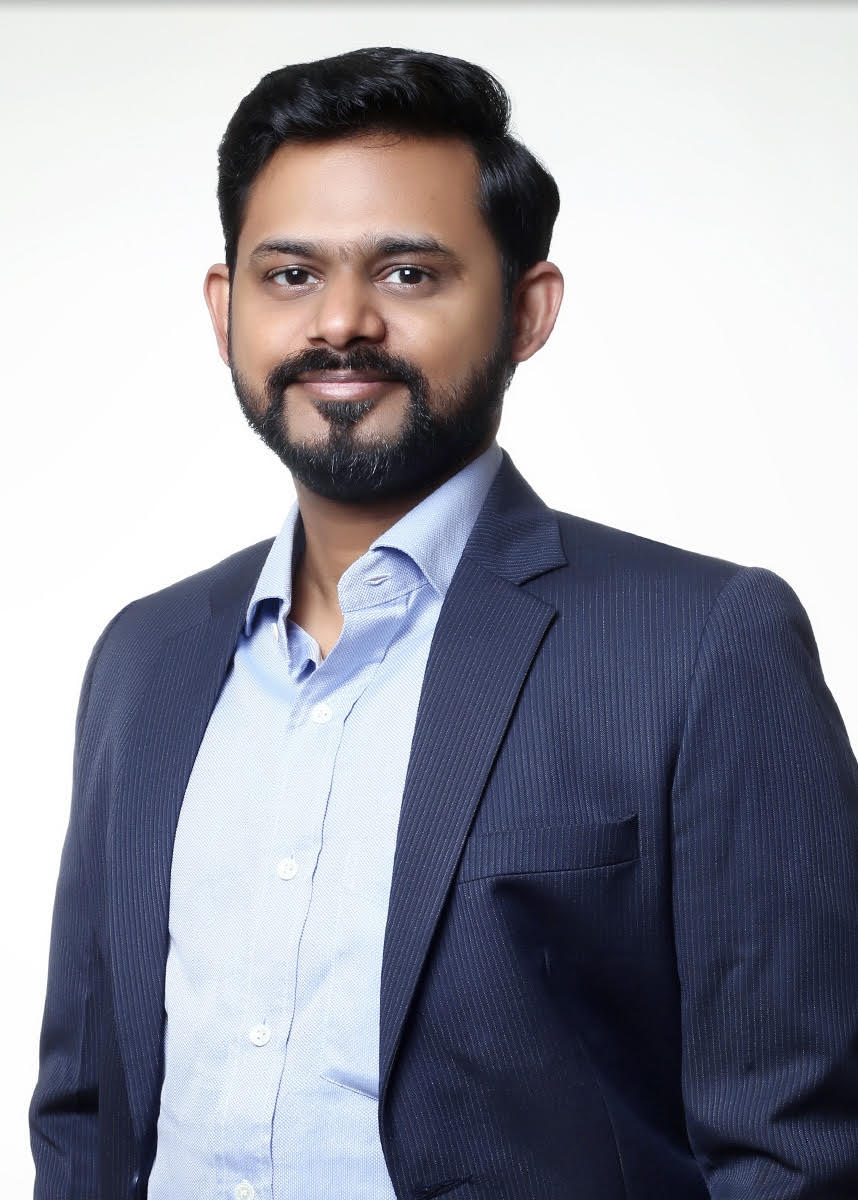
  • “When I started to study law, I felt that this is one of the most organic educations, which not only deals with actual problems but also provides real solutions for real problems.” – Saurabh Anand, Senior Counsel (IP and Technology Law) at Akamai Technologies

    “When I started to study law, I felt that this is one of the most organic educations, which not only deals with actual problems but also provides real solutions for real problems.” – Saurabh Anand, Senior Counsel (IP and Technology Law) at Akamai Technologies

    This interview has been published by Namrata Singh and The SuperLawyer Team

    What inspired you to pursue a career in law, and can you walk us through your journey from being a science graduate to becoming a notable practitioner in intellectual property and technology law? Who or what influenced your decision to transition into the legal field?

    I often call myself an “Accidental Lawyer”. I come from a background where my parents were doctor and teacher respectively. Hence, like any kid from a Tier-III city, my ultimate aim was to either clear the entrance examinations for medicals or otherwise complete my graduation in order to become eligible for UPSC examination. But, destiny had some other decisions for me. 

    When I could not crack any medical entrance examination, my parents enrolled me in B.Sc. Life Sciences at Kirori Mal College so that I can prepare for the medical entrance examination during the first-year college. To achieve this, they got me admitted to a coaching institute as well and for the whole 1st year of my graduation, I was doing both. However, till that time my interest in medical examinations started to dwindle and I gradually gravitated towards the world of science. I would like to highlight here that since beginning, I was not the one who can walk on a conventional path. Hence, during my graduation, a non-conventional course, B.Sc. Life Science and a motivating mentor, Professor Rajni Gupta, helped and guided to get a scholarship from Government of India, under the name of Kishore Vaigyanik Protsahan Yojna. While working on my research, during the third-year of my graduation, I got exposed to the very first concept of “patents” which kind of fascinated me. Everyone in the college was super sure that I will continue to work in the field of science and then came a second change in my academic career. 

    My father, a retired Government servant, guided me to sit for UPSC, however I was not prepared for that. Then came my all-time mentor, my mother in the picture, who supported me in my madness and supported my decision. With the sole intention to be around UPSC aspirants, I gave the entrance examination for Faculty of Law, University of Delhi and I still don’t know how I cleared it. All said and done, within a month from a research scholar in science, I became an UPSC aspirant in the first year of my LLB. When I started to study law, I felt that this is one of the most organic educations, which not only deals with actual problems but also provides real solutions for real problems. This shift kind of stuck with me and gradually I decided to give it a try with all my energy and dedication. This was the first time I became aware of Intellectual Property Rights and how I can actually weave my science degree with law. 

    I started to gain more experience by way of internships and gradually landed with Singh and Singh, where I got an opportunity to work with some of the best legal minds in the field of patents. My mentors there guided me as to how my science background can be utilized in the legal profession. Thereafter, I got an opportunity to work with K&S Partners, which not only provided me with a platform to work on allied areas of Intellectual Property Laws but also provided experience of working in multi-jurisdictional courts and with multi-jurisdictional counts. Needless to mention, colleagues at K&S Partners, and primarily Mr. Ravi Bhola, were always supportive of my non-conventional ways of approaching any problem. With this exposure, my interest gradually tilted more towards allied areas of Intellectual Property Laws, which in general parlance, we call it Technology Laws and then I got an opportunity to work with Akamai Technologies, where I am currently working. 

    In short, I would say circumstances, my mentors and to some extent my non-conventional mindset, are key contributors in my legal journey so far. 

    As a Senior Counsel at Akamai Technologies, you’re dealing with cutting-edge issues in cloud computing, and intellectual property. What are some of the most exciting aspects of working in this field, and what challenges do you often encounter?

    The most exciting part of my job at Akamai is the opportunity which I get to solve real business problems. As Akamai operates in different jurisdictions across the world, it becomes equally important for us to be at least aware of the law of the land which can be applicable on our services. As I primarily look after Technology Law issues, it becomes all the more important for me to understand how law is shaping up in relation to our existing or any prospective product set. Hence, I would sum up the exciting part of my job as under, as opportunities to:

    1. understand business;
    2. understand a business problem;
    3. to learn and apply legal varies areas of law to solve a business problem.

    Having said that, it is very difficult for me to docket challenges at my current job, because I see these challenges as an opportunity to grow, which further satiates my non-conventional mindset. However, I do want to call out some operational challenges, like working across multiple time-zone issues, which everyone will face while working for a multi-jurisdictional organization. But, this is something which varies from organization to organization. I am glad that at Akamai, it is never an expectation to remain available across multiple time zones and all the colleagues constantly endeavor to remain available in a time-zone which is less cumbersome for the other. 

    You handle various transactional documents and engage with law enforcement authorities globally. How do you stay updated with the rapidly evolving legal landscape, especially in the realm of technology and data privacy?

    Yes, as a part of my job, it is an unsaid rule, that although I have educational background in Indian laws, it is an add-on, if I have a working knowledge of the legal landscape of other jurisdictions as well. My first source of truth for understanding legal requirements outside India, are my colleagues, who are trained in laws for that jurisdiction. One need to understand here that you cannot gain or remain updated with ever changing legal requirements across the globe without having collaborative working relationships with your peers in those jurisdictions. Hence, before doing desktop research, I always rely on the expertise of my colleagues and one should always follow this. In today’s era, where information is accessible at your fingertips, I have seen individuals giving knowledge on laws of other countries. But, I always follow the differentiation between theoretical and practical knowledge, because it is the practical application of any law which will give you a solution and not the theoretical knowledge. 

    Having said that, for an individual’s growth and to quench my thirst for knowledge, I always try to read comparative analysis of any law across the globe with Indian laws. This helps me in identifying the differences and those differences are the key to understanding any legal landscape around the world. One can always refer and reply to comparative analysis prepared by good law firms or think tanks, to begin with.  

    As a registered Indian Patent Agent, what are some common misconceptions or challenges that an applicant/patentee often faces regarding intellectual property rights, and how did you address them while you were litigating?

    There were two critical issues which always used to come while I was doing patent litigation. First and foremost, was whether a patentee is inviting revocation proceedings by suing the other party. Second one was, how to assess damages before initiating any litigation, so that a patentee can do cost benefit analysis well in advance. 

    For the first issue, my response was pretty simple. I always used to advise my client that if you have taken a business decision to apply for a patent, that decision should also include the decision to defend that patent for its lifetime. Because a patent, whether sitting  idle or going to be enforced, will remain vulnerable to get challenged during its entire lifetime. 

    For the second issue, my advice was to at least get a presumptive idea of loss which they are facing, because of the infringing activities and gather clear and cogent evidence to substantiate the same. Reason being, granting damages are within the jurisdictional realm of court and our duty is to give clear and convincing evidence to the court to assist the court in arriving at a particular decision. 

    Considering your extensive expertise in intellectual property laws, what advice would you offer to the current generation of law students aspiring to build a career in this field?

    My advice to the student would be to first focus on developing a strong grasp over concepts of law and the same can be done by not only reading the statutes but also understanding how a statute was applied to solve a real time issue. A law student in his/her journey should do two things: read judgments with the mindset as to how a statute/legal principle was applied to solve the issue at hand and secondly, to gather experience by way of internships. I would like to highlight here that I am aware that getting internships is not an easy cakewalk for all the law students from different law colleges, because I faced the same issue. But in today’s world there are organizations like LawSikho who are actually guiding and helping students. Having said that, I always believed that actual application of law can be best understood in Courts and this is something which I did when I was a law student. I did not wait to hear back from an organization on my internship application, I simply went and knocked the doors of multiple practicing advocates in the Trial Court, and most of them helped me in understanding practical nuisances of law. I am ardent believer of this phrase:

    “You will never know what is there on the other side of the door, until and unless you knock and ask. At the best you will get a clarity, which door to knock later and which door should be avoided”

    Looking ahead, what are some emerging trends or legal challenges in the field of IP and technology law that you believe will shape the future of legal practice, both in India and globally?

    IP and technology law evolves with evolving technology. With the current set of technology in place, based on my set of expertise, I would bet on Artificial Intelligence, which has the potential to be evolved as a separate area of practice in law. 

    You’ve authored several articles and publications on intellectual property rights and patents. What motivates you to share your insights and knowledge with a broader audience, and how do you approach the process of writing on complex legal topics?

    Writing articles is my way of keeping myself abreast with the evolving areas of law. I have been an ardent believer of the logic that when you write, you learn more. And the beauty of writing articles is that you get feedback from either your peers or from someone who has more experience than you. 

    Before writing on any subject, there are two things which should be kept in mind: whether the topic is relevant in the present set of circumstances and who your audience is. Once you have cracked this, it is your responsibility to state the correct facts and for which I am very stringent to only rely on trusted sources, like the statute itself, or the judgment itself. 

    You transitioned from your role as a Senior Associate at K&S Partners to an in-house Counsel. Can you share with us what motivated this transition and how it has impacted your approach to legal practice?

    My motivation for this transition was to keep myself in pace with the changing legal landscape. While litigating, I was exposed to certain issues which was mostly relevant from the applicability of Indian laws. However, when working with clients from different jurisdictions, I became aware as to how other jurisdictions are looking at similar issues with a different legal angle which I was looking at from Indian legal requirements. This quest to learn more on multi-jurisdictional approaches, helped me to make this switch. Needless to mention here that at this stage of career you cannot take such decisions without the support of your family. Here, I would like to give a shout out to my wife, Meghana, who herself specializes in IP litigation, in supporting my non-conventional decision here.  

    My decision has definitely impacted my approach to legal practice, because in India, we often see in-house Counsel as an intermediary between client and its outside counsel. However, after joining Akamai, this myth got broken for myself, because the role of an in-house counsel is to understand the business requirement and give a legal solution for that requirement. 

    Having transitioned from roles in litigation to that of an in-house counsel, what notable differences did you find in the nature of work, challenges faced, and overall professional satisfaction? How did these experiences shape your career trajectory and approach to legal practice?

    While I think I have captured the issues around the nature of work and challenges faced in my earlier answers, I can probably focus here more on professional satisfaction. For me, the definition of professional satisfaction keeps on changing because I always understand and foresee a legal career as an organic career, which keeps on changing with the changing issues in society and technology. I joined Akamai with the sole interest to understand the application of intersection of multi-jurisdictional law on the evolving technologies. This still remains relevant for me with the present set of affairs. In a nutshell, I was fortunate to shape my career based upon my experiences and one should always remain open to changes.   

    Apart from your professional pursuits, do you have any personal hobbies or interests that you find equally fulfilling? How do you balance your passion for law with other aspects of your life?

    In my circle, I am known for my passion for driving. While this may not be considered as a hobby or interest, for me somehow it helps in clearing my head. While I am not quoting from the famous series, “the Lincoln Lawyer”, driving is something which has stuck with me from the very early ages of my life and is still continuing. While some people confuse this with the passion for new cars, this is not the case. I enjoy driving with whatever I have, I have and what I aim to have (off course keeping in mind the budgetary constraints ☺).

    For me there is no requirement to balance my passion for law with other aspects. Like driving is a passion for which I will not compromise on anything, similarly for learning new legal nuisances, I do not have set boundaries to learn. I believe that you tend to balance and make time for things which you are forced to do. For your passion, you should not be balancing your time with other things in life. While there are priorities in life for which you need to give time, but whenever you have time give priority to your passion, whether for law or for driving or for anything else. 

    Get in touch with Saurabh Anand–

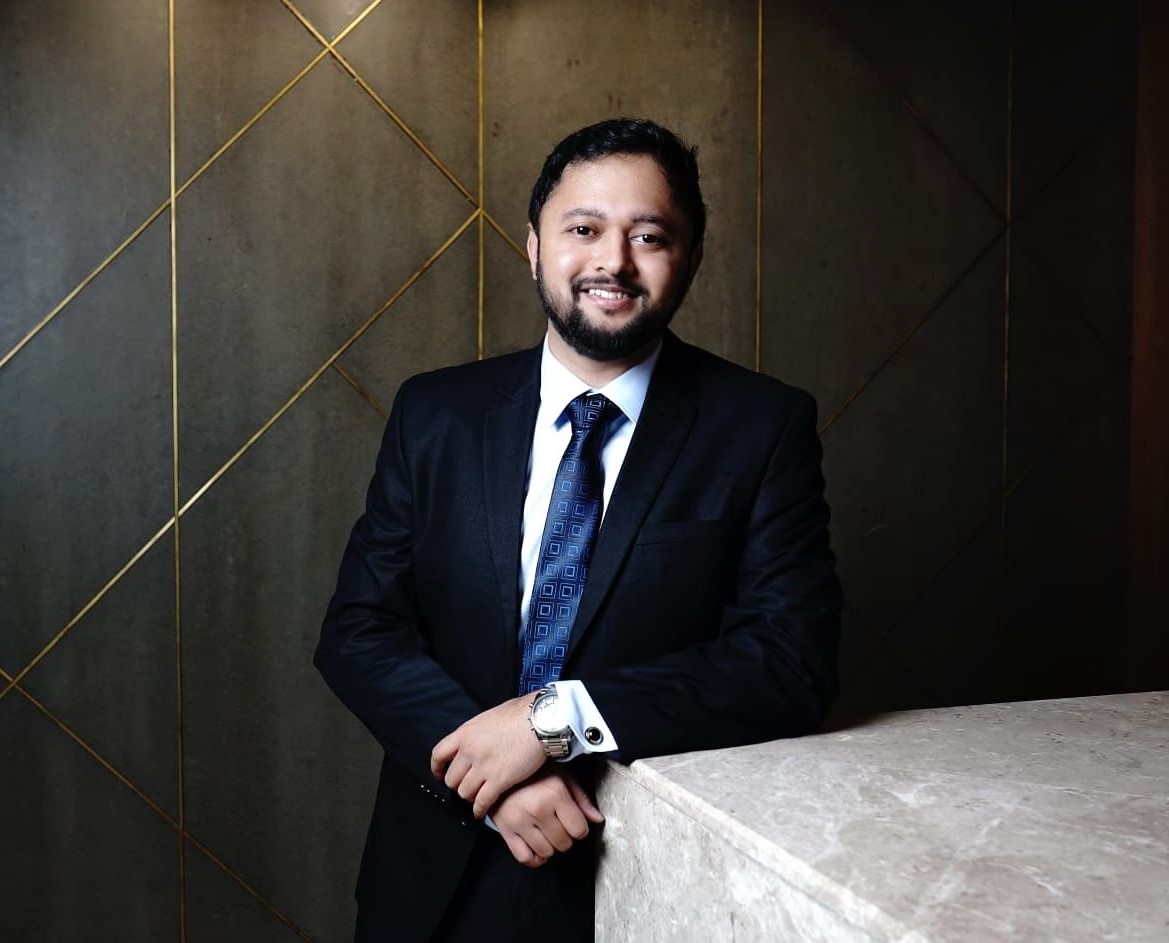
  • “Even though fintechs are growing rapidly, it is becoming progressively harder and cumbersome for them to match pace with the regulations and compliances for their existing or new products”- Aman Yadav, Legal counsel, OLX Group

    “Even though fintechs are growing rapidly, it is becoming progressively harder and cumbersome for them to match pace with the regulations and compliances for their existing or new products”- Aman Yadav, Legal counsel, OLX Group

    This Interview has been published by Pragya Chandni and The SuperLawyer Team

    Can you share your education journey into the legal field, particularly what motivated you to pursue law after completing your B.A. in Business Economics? 

    During my bachelors I decided to pursue masters in economics or psychology but when I saw the career trajectories of Delhi University law graduates I realized that a Delhi University law degree has tremendous potential and is quite cost-effective. I graduated from the Faculty of Law, Delhi University in 2009 and joined the firm where I interned as an associate. 

    Your profile showcases a diverse range of experiences, from working as a Partner in a law firm to holding leadership roles in major corporations. How did these experiences shape your approach to legal practice? 

    I spent my first 10 years in the general corporate practice of a boutique law firm where I worked on several aspects of law ranging from general corporate to litigation and arbitration, and this varied exposure trained me for a larger role. When I got the 10-year itch I decided to move in-house to experience the business side of law. My first in-house role was eye opening because I had to quickly learn how to juggle a higher work volume but with lesser intensity unlike my law firm days where it was about specific assignments but high quality delivery. My rigorous law firm background helped me extensively in increasing the quality of in-house legal work and deliveries. In-house legal practice is vastly different from law firm practice primarily because almost all legal advice and decision matrix has to be delivered to the internal stakeholders in a simplified version for enabling business decisions but without removing the legal essence. 

    Could you elaborate on your work with the Indian Cyber Crime Coordination Centre (I4C, MHA) ? How did this experience influence your perspective on cybersecurity and online fraud prevention? 

    Cyber frauds between users were quite high in one of our online business verticals and we collaborated with I4C (MHA) in building an online fraud prevention model for intermediaries like us and others. My major learning from this experience was how introducing customer education, multi-check KYC mechanism (during account creation especially) and dynamic algorithmic filters can drastically increase cybersecurity and reduce online frauds to supplement the in-house legal team’s efforts. 

    You’ve been involved in various aspects of fintech. How do fintechs navigate the regulatory complexities while ensuring innovation and growth ?

    Even though fintechs are growing rapidly, it is becoming progressively harder and cumbersome for them to match pace with the regulations and compliances for their existing or new products. Our government is very frequently issuing guidelines, notifications, circulars, and laws which make it difficult for fintechs to quickly design, grow, or tweak products and synchronize with the government’s objectives. I feel that in the near future compliance and regulatory aspects for fintechs will stabilize and the Indian government will have completed building a large part of its fintech regulatory ecosystem. Until then fintechs have to operate on a risk-compliance model to build the most compliant platforms and products which minimize customer, business, and public risk. 

    You’ve filed a DRHP in December 2023 with SEBI for Awfis Space. What are some of the key preparatory points pre-DRHP filing ? 

    Company secretarial documentation and information, promoter identification, consents, litigation disclosures and risk factors form the backbone of a DRHP filing, especially in a company where several investment rounds have occurred and there are pending regulatory litigations. At least 7–8 months prior to DRHP filing it is advisable to be audit ready, collate and complete all secretarial documentation and information, resolve or settle larger vendor payments, litigations, arbitration, and disputes, and avoid new business complexities which can have adverse regulatory or legal impact. 

    You were part of Prosus’ Olx India business sale to Cartrade Tech in August 2023 for USD 65 million. What was a unique aspect of the transaction which you had not anticipated ? 

    It was a really interesting transaction because we first had to merge the classifieds business with the autos business and then sell the combined entity to Cartrade Tech. I had not anticipated the employee related complexities we would face in moving about 400 employees from one Olx business entity to the other. It was a legal and human resources issue where we had to interact and take written consents from all such employees which extended our closing timelines a bit. 

    How is AI changing in-house legal teams in routine legal work ? Any advice for new lawyers on maximizing AI use benefits ? 

    In routine legal work, the positives I see are faster research work and basic drafting. It is easy to generate basic templates for notices, representations, and low-value agreements. The negatives are that new lawyers are not reading articles, books, and case laws and heavily rely and trust AI generated results. Till AI advances to near perfect levels and becomes a default use case, a new lawyer should be able to draft simple documents by writing or typing to hone their legal skills and become comfortable with legalese.

    With your background in public policy, including your involvement in amending the Motor Vehicles Act in April 2023, what advice would you give to fresh law graduates aspiring to make an impact in shaping legislation and regulatory frameworks? 

    If public policy work interests a lawyer then it makes sense to practice for a few years especially in litigation to become comfortable with interpreting legislations and developing legal arguments and then work in the public policy department of a company or non-profit, or join a think tank. A masters degree in social sciences or public policy will add tremendous value and can unlock several opportunities.

    Get in touch with Aman Yadav-

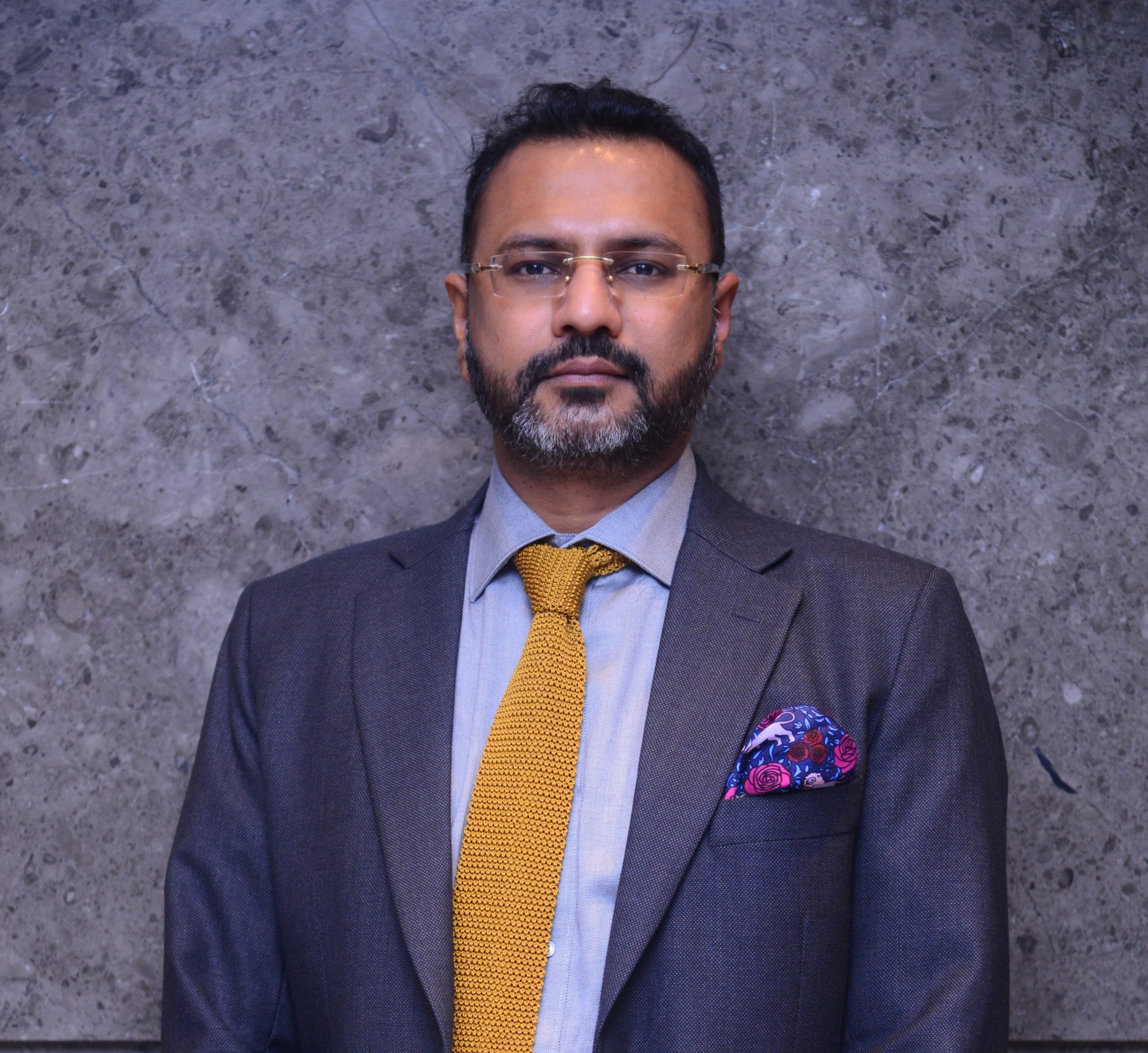
  • “AI would be a game changer in national security, personal privacy and the job market in general”- Anandh K, Advocate-on-Record, Supreme Court of India and Partner at SA Law

    “AI would be a game changer in national security, personal privacy and the job market in general”- Anandh K, Advocate-on-Record, Supreme Court of India and Partner at SA Law

    This Interview has been published by Pragya Chandni and The SuperLawyer Team

    Can you tell us about your journey into the field of law, particularly what motivated you to pursue an LL.M. in Corporate Law & Governance after your B.S.L., LL.B. degree?

    As far back as I can remember, law as a profession had always piqued my interest. My mind was set on law and ILS Law College, Pune was ranked No. 1 in a popular survey around the time I finished 12th standard. There I was in Pune. I loved that city from the moment I reached the Pune railway station. I had learnt Hindi in school, but it was bookish and my friends thought I was showing off speaking like a poet. The illusion was dispelled quickly when they realised bookish or not, my Hindi was below average. If my Hindi teacher (Late Ms Usha Rajagopalan) had known, she would have quit teaching twice over – once for people thinking I spoke chaste Hindi and once for making it known to the world that all her efforts on me were rather wasted. But there I learnt law, bits and pieces of Hindi and Marathi. I am very fond of my professors from Pune; they were all great mentors. Dr. Jaya Sagade and Ms. Smita Sabne hold a special place in my heart. I also have some of my most cherished memories with friends in Pune.

    I decided to complete my post-graduation before entering into the profession. I wasn’t sure I would be able to take a break for further education once I started working. I was naturally inclined towards taxation and corporate law, perhaps due to my commerce background in school. I got into NALSAR University of Law. There I met some great professors and made great friends. I was also happy about extended college life. 

    How did your educational background, including your diploma in National Security and International Relations, influence your approach to practicing law, especially in the areas of corporate governance and international investment law?

    Pune is a city of world-class colleges and educational institutes. I joined as many courses as I could. I was and am fond of politics, international relations and national security. The IR course taught me to see the big picture of domestic policies and regulations. India’s economy and its growth is inextricably linked with a whole set of factors and even a minor difference in the mix would have far reaching ramifications. IR opened my eyes to the consequences and effects (primary, second order and tertiary) of each policy and regulation within the country, their interplay with India’s foreign relations. 

    Investment law was part of my LL.M. instructed by Professor V. Balakista Reddy. After class, I used to assist him in several of his assignments which gave deeper insights on the subject and the influence it holds over the domestic affairs of India.

    Even as we as a nation are growing from strength to strength, I find myself going back to the lessons learnt from these courses. I draw upon these to contribute to the general legal discourse in the country in my own small way. And in my own practice, it helps me ruminate over the wider aspects of any given case.

    From my own experience, I would advise every student of law to actively seek and acquire knowledge from diverse disciplines and not restrict oneself to law books alone.

    As the managing partner of SA Law, you handle a wide range of legal matters. Could you share with us some memorable cases or experiences that have shaped your perspective on the legal profession?

    I have been fortunate to work in a range of cases across several forums and cities. Rather than go into specific instances I will share what I have learnt or what has been reinforced in me.

    I have and will always consider myself a student of law. Not just my experiences in managing a Firm, but my experiences even as a junior advocate in the profession have influenced my thoughts and approach to my practice.

    I always bear in mind the wisdom imparted by several seniors over the years – be ethical, one’s reputation is more valuable than the money one makes in a matter or a lifetime, be humble and honest with the court, do not hide facts which may be against you and always read and review your own work. These are the broad principles which have guided me. Each day, I realise more and more the importance and truth in these pearls of wisdom. 

    Be thorough with the facts; prepare to present the matter as if the judges do not know anything and at the same time as if they know everything, that way one will eliminate the room for lacunae in preparation; cross-check every work product prepared by one’s team and also have one’s own work product carefully reviewed; these are the other thoughts which influence my approach to work.

    You’ve been involved in advising tech-based businesses and startups on legal and regulatory aspects. What unique challenges do these clients face in terms of technology laws, and how do you navigate them?

    In India, we suffer from too much regulation in certain areas and too little regulation in certain others. We are evolving as a nation in this regard. Both the legislature and the judiciary are wise to the regulatory quagmire. There are some promising steps being taken. Technology as an interface will also mitigate several of the challenges faced by both clients and lawyers. 

    Some clients have to find a way in the labyrinth of regulations and stay on the right-side of law without the burden of compliance sounding the death knell to the business. Some clients have to be told that what is not regulated does not mean that it is prohibited. Especially, newer kinds of business find themselves without any regulatory guidance and often these companies liaison with the regulators to bring about a law to govern their industry. Fintech is a classic example of industry-led regulation. It also has the danger of bias when business lead the way of regulations. But India has done well in that department overall. Of course, one can always improve. 

    Tech based companies making a foray and disrupting the finance, education or medicine industries find themselves facing unique business as well as legal challenges. Some of these issues were deliberated upon by experts from various fields in the Vichaar 2024 Conclave organised by our Firm. Right from designing the contracts that govern the relationship of the clients inter se, with their vendors and users, to the regulatory obligations under the law, new-age companies present issues which may not have any precedence and defy the template-model of transaction and conveyance practice. Without understanding the business there is no way one can find the thin line between legal and illegal business operations. The first step for any technology lawyer is to first understand the technology and the business. Then one must revisit the principles of law. I always find it useful to re-read the provisions of law and their interpretation before providing any advice. I feel this is especially important for start-ups as any misstep may cost dearly to not only the clients and their investors, but may also adversely impact the technical solutions piloted by such start-ups. And never cut corners.

    Cyber law is not a new expression in India’s legal system. But as technology evolves, tech-law also has to keep pace. We are all waiting for life to be breathed into the Data Protection Act. Fast evolving technology like AI is full of possibilities, opportunities and at the same time massively disruptive capabilities. AI would be a game changer in national security, personal privacy and the job market in general. This presents a huge challenge to everyone with stakes in the law and policy field to anticipate, prepare and adapt for the changes while safeguarding the core constitutional promises to citizens.

     Your experience includes handling pro bono cases for individuals with meagre incomes and working with NGOs like SEWA Bharat. How has this aspect of your work impacted your overall legal career?

    Every case is satisfying in its own way, be it contesting the unsustainable tax demand, bringing defaulting corporate debtors to books, dealing with breach of service law, championing the cause of unjustly terminated labour in getting justice, or representing the parties involved in the criminal justice system. 

    By nature, I have never been particular about money – not a great quality when you are managing your own practice, but that is what it is. So when I help someone in need, I do not feel altruist or special about it. It is what I am and what I do. But these cases also humble me, and they make me realize more and more the nobility of the profession.

    At the same time I would add this: ask any senior in any court and they will tell us to work harder on pro bono cases or cases where we are advocating the cause of some social organisation. These are cases which can shatter the delicate reputation that any lawyer has to build with great diligence and time. I take these words of caution with utmost seriousness.  

    Could you discuss your role as a senior associate at Lakshmikumaran & Sridharan, particularly your involvement in indirect tax matters and your appearances before various authorities and courts?

    I had one of the most enriching experiences of my life at LKS. It was a great learning experience. A large firm like that gives one the opportunity to work with seasoned and consummate professionals at the top of the game. One learns from individuals with great differences in style and approach. Where one senior demands perfection in the draft another would require extensive research even on issues tangential to the matter, just to be thorough and to leave nothing unprepared. I also had the opportunity to work from some of best Senior Advocates involved in indirect tax cases, from Mr. Harsih Salve, Mr. P. Chidambara, Mr. Arvind P. Datar, Mr. Santosh Bagaria, Mr. N. Venkataraman to Mr. V. Sridharan. 

    I worked closely with Mr. V. Lakshmikumaran during the time the Supreme Court constituted a special tax bench to speedily dispose of long-pending tax cases, including assisting him before the 9-judge bench Entry Tax matter. That was my first constitution bench matter. Thanks to him, I honed my ability to quickly navigate any brief, anticipate the questions and prepare for the same. Under him, I learnt the importance of preparing to explain the most basic points of a subject and at the same also to present the most nuanced and sophisticated points of the same subject. During the time the special tax bench was there, I was fortunate to have worked on more than 200 final hearing cases, which is a very rare opportunity for anyone in the profession. I must say this – the pace of Justice A.K. Sikri and Justice R.F. Nariman on the tax bench kept all of us on our toes and the entire team working on Supreme Court matters would have worked for close to 16 hours a day!

    Apart from appearing in the Supreme Court, I have handled cases before the Delhi High Court, CESTAT and at Commissionerate level. In all these, I have been the beneficiary of guidance and friendship of several lawyers of the firm. In no particular order, I am grateful for the time and guidance of Mr. B.L. Narasimhan, Mr. Amit Jain, Mr. Hemant Bajaj, Mr. MP Devnath and Ms. Jenny Verghese. Some of my former colleagues are today friends beyond and outside the profession.

    You’ve been actively engaged in conducting seminars and talks on legal issues for law students and professionals. What inspired you to take on this educational role, and what do you hope participants gain from these sessions?

    While in college, I read somewhere that the best way to learn a subject is to teach it. I started making presentations purely to learn topics, but I soon realised that I enjoyed the process of learning, sharing what I learnt and learning more in that process. I have since carried on with conducting such sessions with students. It is a way for me to learn more and to also give back to my profession.

    I also feel that due to the nature of the profession and the enormous syllabus which needs to be covered in college, nuances and practical aspects cannot be taught solely by the law institutions. Seminars and conferences which bring practical experience to the classroom serve to fill the gap of what can be taught in a traditional environment and what is expected/ required in the market. So our endeavour at the Firm is to bring the niceties of legal practice across to the students and aspiring young professionals.

    Lastly, based on your journey from law school to becoming a managing partner and advocate-on-record, what advice would you give to fresh graduates aspiring to enter the legal profession, especially in the areas of corporate law and governance?

    Legal profession is a rewarding and at the same time a highly demanding profession. The foremost demand placed by the profession is on the health of the individual, both physical and mental. Focusing on maintaining good health and creating a daily routine around which to organise every aspect of your life comes first. There are time-tested and well-respected qualities expected from any lawyer and law student – commitment, professional knowledge, professional competence, hard work, attention to detail and being well-informed about the developments in the society. By professional competence I don’t mean only written and oral communication skills, but I include adherence to ethical standards and providing honest advice to clients, even if such advice is unpalatable to the client. These are necessary but not sufficient conditions for success in the profession. Consistency, professional and personal integrity, steadfast adherence to professional ethics and building a good network are factors which make or break a career. To add a few words about personal integrity – a lawyer is somewhere between the society at large and the centres of power (though often the roles overlap) and hence, must bear the extra weight of responsibility to the society more so than most other professions and at all times conduct themselves as an ambassador of the profession.

    Speaking specifically about corporate law – keeping pace with business and economic development, learning about the evolving business trends, training to put oneself in the shoes of an entrepreneur – these are the qualities one must develop.

    I have saved the best for the last. Patience and unwavering self-confidence. These are, of course, empty shells if one doesn’t check all the boxes above. 

    Get in touch with Anandh K-

  • “As a cyber security advocate, I strive to strengthen laws and policies to combat emerging threats and safeguard digital ecosystems.” – Media Persona and Legal Luminary Dr. Shruti Bist, Advocate-on-Record at the Supreme Court of India

    “As a cyber security advocate, I strive to strengthen laws and policies to combat emerging threats and safeguard digital ecosystems.” – Media Persona and Legal Luminary Dr. Shruti Bist, Advocate-on-Record at the Supreme Court of India

    This interview has been published by Namrata Singh and The SuperLawyer Team

    For our readers who might be encountering you for the first time,  could you share a bit about your journey in the legal profession and your  various roles in the realms of cyber law, corporate law, and advocacy? Also what made you choose law as your career. 

    I am LLM in Corporate laws, I started my legal career as legal executive at  Thomson Reuters in 2015. I then shifted from Corporate to litigation and  worked with Seth associates under guidance of karnika Seth mam in field of  Cyber laws, arbitration and litigation .Then I joined AOR training under guidance  of Senior Advocate Supreme Court S Janani mam and started my independent  practice in Supreme Court from 2020 and qualified my AOR as well. I had  passion for law since the scope of law is very vast and also legal awareness  empowers women to exist with respect in society. 

    In addition to your legal practice, you are actively involved in media  as a TV panellist and public speaker. How do you balance these different  roles, and how has being a media personality influenced your work in law  and advocacy? 

    Yes I am a media panellist and have appeared on various legal issues and debates in DD  news, Republic Bharat, Zee News, TV 100, Nation live and others. I believe it’s also important for lawyers to increase awareness on legal issues to prevent crimes  from happening .We can balance our media work when we are free from court  hearings and being a media personality certainly adds on to your communication  skill and confidence . 

    You are an international arbitrator and mediator accredited in  London and Singapore. How does international arbitration differ from  domestic cases, and what challenges and opportunities does it present? 

    Yes I am an international arbitrator and mediator both and the work of International  mediation and arbitration certainly is more accountable since you have to  generate work for yourself and also meet International standards. In domestic  mediation matrimonial and commercial disputes are handled comfortably and are having good and huge scope to grow. The challenges of young lawyers entering  is high since big corporates prefer Singapore as base and also retired judges are  preferred as arbitrator hence new arbitrators find it tough. International arbitration is a new arena in India and Singapore leads. We look forward to improving  international arbitration in India as well. 

    As the President of the National Cyber Security Council for Women’s  Indian Chamber and Commerce Industry, you play a key role in policy making for cyber laws. What are the most pressing cyber threats faced by  individuals and businesses today, and how can one stay vigilant in the digital  age? 

    As president of the Cyber Security Council ,WICCI I actively forward  representations to PMO and various ministries for better implementation of cyber  laws in India. I worked on regulations of OTT platforms and drafting on  Intermediary Guidelines And Digital Media Ethics Code Rules 2021. I believe  further amendment on Broadcasting Services (Regulation) Bill, 2023 is must and  provision of cable Tv Act and TRAI regulation to further make the regulations  of OTT platforms stringent is must .Cyber threats such AI crimes Deepfakes;  driverless vehicles as a weapon; tailored phishing; disrupting AI-controlled  systems; large-scale blackmail; AI-authored fake new s are latest threat and is  must to prevent . 

    By going through news on various crimes happening and latest measures to  prevent crime available on google such as internet security, unique passwords etc  can help prevent crimes . 

    Your expertise was sought during the drafting of Information  Technology (Intermediary Guidelines And Digital Media Ethics Code Rules  2021. Can you share a bit about your role in shaping these regulations and  the key considerations that were addressed? 

    Yes representation forwarded to the Ministry on adding Singapore based guidelines  on age gradation in content of programmes shown on OTT platform was accepted  and also the Writ filed before Supreme Court through our Council assisted in  regulation of further provision on Intermediary Guidelines And Digital Media  Ethics Code Rules 2021. 

    Please Describe Work Of IEFCI And Also Your Roles As IEFCI  President.

    The International Economic Forum of Commerce And Industry is one of the  leading business organizations, enabling business to secure peace, prosperity and  opportunity for all. IEFCI is the institutional representative of various leading companies across the globe. A non-government, not-for-profit organization, IEFCI is  the voice of international business and industry. From influencing policy to  encouraging debate, engaging with policy makers and civil society, IEFCI  articulates the views and concerns of industry. Our Mission is to make business  work for everyone, every day, everywhere. We provide networking forums for  Industries, Dispute resolution forum that includes international Court of Arbitration and Mediation, legal consultancy in cyber laws, corporate laws and  other legal issues, Policy forum, and various Online Courses to empower the  Entrepreneurs and professionals to learn better skills. 

    As President and founder of Forum I have responsibility to appoint various people  to prestigious posts and also implement ideas across India through conferences  and seminars and coordinate with people apart from handling ADR and ODR  disputes. 

    Please Explain About The International Council Of Artificial Intelligence,  Cyber Security, Research And Development (ICAI CARD) And Your Role As  Founder And President  

    International Council Of Artificial Intelligence, Cyber Security, Research and  development (ICAI CARD) is an umbrella organization that provides wide ambit of  AI and cyber security solutions to Industries and Government and also works  towards attaining goals on UN Sustainability. It’s an initiative of Shruti Bist Socio  Legal Foundation registered u/s S 8 of Company Act 2013 , Ministry of Corporate  Affairs ,India .www.caics.in 

    Our mission is to attain a high standard of AI and cybersecurity in the country and  attain sustainable development goals that require cyber peace and capacity  building for cyber resilient development. Technologies of 5G and AI (Artificial  Intelligence) have the potential to revolutionise a variety of industries, including  medicine, education, and agriculture. We have a dedicated team to research the latest AI related crimes and technology. Our mission is to provide cyber security  to Industries and government via legal and tech team and ensure Cyber Swachh  Bharat. 

    As president of Council I am working towards attainment of our goals and  mission and make India Cyber safe. I am working designing innovative courses on AI and Cyber laws in collaboration with other Universities and also implementing innovative challenges in AI and Cyber laws to promote the professional skills and  campus recruitment in the field . 

    In your extensive media appearances and speaking events, you’ve covered topics ranging from women’s rights to cybersecurity. Is there a  particular cause or issue that you are most passionate about, and why? 

    Cybercrime related topics and other topics relating to women’s rights in property, Article 370, women’s role in politics and law are my keen areas of interest since it helps women empower themselves and also defend themselves from the latest  crimes happening to them.

    You’ve received several awards, including the Virangana Award and  the Inspiring Citizens Award. Which recognition holds a special place in your  heart, and how have these accolades impacted your professional journey? 

    Certainly the accolades assist in morale boost, social recognition and also inspires  us to work further towards attaining the goals of life . 

    Being a prominent figure in the field of law, how do you unwind and  relax in your personal time? Any hobbies or activities that you find  particularly rejuvenating? 

    I like writing Books, listening to music,Yoga, walking and cooking. Its mind refreshing activities. 

    As someone deeply involved in legal education, having contributed to  conferences, e-books, and online courses, what advice do you have for law  students and young professionals looking to build a successful career in law?

    I advise them to learn law and co relate various laws together in a way that when they read IPC they should also know the provision of CrPc and Evidence applicable and  join an internship to learn practical. Joining courses enhances skills they should learn  more through distance mode forums available it increases employability in  companies.

    Get in touch with Dr. Shruti Bist-

  • As lawyers we ensure that as the business of our clients grow and as they diversify into different sectors or launch new products, their respective policies, compliances, and agreements in place are revisited and updated as required  to counter the different legal hurdles that they may be  subject to- Raghav Muthanna, Principal Associate at IndusLaw

    As lawyers we ensure that as the business of our clients grow and as they diversify into different sectors or launch new products, their respective policies, compliances, and agreements in place are revisited and updated as required  to counter the different legal hurdles that they may be  subject to- Raghav Muthanna, Principal Associate at IndusLaw

    This interview has been published by  Priyanka Karwa and The SuperLawyer Team


    Can you tell us about your journey into the field of law and what inspired you to specialize in technology, media, and telecommunications (TMT) and financial services regulation?

    There is this common saying that if one can’t do engineering or medicine in India, they end up doing law. While that may not necessarily be true for most people in our industry, to a large extent that does hold true in my case.  I am not going to say that I always dreamt about becoming a lawyer or that I was extremely passionate about the law, because that would be a lie. I was an average student at school, especially when it came to subjects like physics and maths, and so by the time I finished my Class 10th boards, I knew I had to end my misery and opt for commerce over science in Class 11. By opting for commerce, I had automatically ruled out engineering and medicine as career options, both of which till date, but even more so at the time, were considered the most sought after and ever green career prospects one could have. Thus, it was only in Class 12, after little deliberation, did I know that law is it for me, and that’s not because there was a lack of choice in the field of commerce, but it was what interested me the most out of the options I had in hand.

    My encounter with TMT was almost similar to that with law, it didn’t happen voluntarily, but like law, I am extremely happy that it did. I started my legal career as a general corporate lawyer who did anything from drafting and reviewing general commercial contracts to advising on complex regulatory queries, assisting with fund raise, mergers and acquisition and working on technology and employment law related work mandates as well. I spent a considerable time of my career especially my early to mid-years in the profession exclusively working on some very exciting and interesting PE/VC and M&A deals in different industry sectors. While I thoroughly enjoyed working on high value transactional work, after a certain point, for various reasons, I felt the need to explore new opportunities and seek change, which is when I was offered the opportunity to transition full time to the technology and corporate advisory practice group at my firm, where I have since, worked on some very interesting matters in the field of e-commerce, technology (specifically fintech and insure-tech) and data protection related mandates, while continuing to work on a lot of general corporate advisory matters.

    With over 9 years of experience advising clients in different sectors, could you share a specific project or case that had a significant impact on your career and the clients you served?

    It is extremely difficult to pin-point and pick one project or matter that stands out. There have been so many great projects that I have had the good fortune to be a part of. Some where the kind of work itself has been disruptive and cutting edge, while others where the work or business model in itself may not have necessarily been the most exciting, but the scale at which the business grew or the impact it had on the masses or the kind of targets such businesses may have met, despite the several roadblocks and hurdles it faced along the way, is what made such success stories extremely satisfying to watch. What in particular has been extremely gratifying personally is witnessing the meteoric rise and growth of several of the start-up clients I have been fortunate to work with as their external counsel. I have been incredibly privileged to have assisted several clients right from the days of their incorporation and seed investment to this date, where some of them have even gone on to become unicorns in such short spans of time. A few of the clients that I have worked or work with include Upstox, Groww, Google, Makemytrip, Mediassist, Air India, Licious, Big Basket to name a few.

    You have worked on a wide range of topics in the legal field, including data protection, cybersecurity, fintech, and emerging technologies like blockchain and AI. What drew you to these areas, and what do you find most exciting about them?

    It was never going to be easy to not be drawn into the revolution of technology playing out in front of me. Having grown up in a generation that witnessed the birth of laptops and mobile phones in India and the constant transformation of various technology and products, be it storage devices for instance- starting from floppy disks to CDs in the 90s and then to pen drives and hard disks in the first decade of the 21st century to now being almost entirely replaced with online servers and virtual data rooms and cloud storage services, where the need for an external hardware itself has almost been made redundant, technology in its various forms and facets have always peaked my interest. A decade ago, when I was in law school, I hadn’t even heard of the terms ‘Blockchain’ or ‘AI’,  let alone be interested in them, but today, I receive applications from law students across the country expressing their desire in pursuing a career specifically surrounding disruptive technologies like AI, blockchain, Big Data, Metaverse amongst others that were almost unheard of not too long ago. While many of these concepts are relatively new and have come into prominence only over the past few years, the pace at which technology and the legal landscape around it has evolved in such a short span of time, is extremely exciting to witness. The number of initiatives taken by the Indian government in the recent past, has played a major role in creating and supporting so many new age service offerings, which for me as a tech lawyer, consistently keeps me engaged, enthused and optimistic about the tremendous growth opportunity and potential that the tech space has to offer to the large digital consumer base in India, as well as the various stakeholders in the field, which includes tech developers as well as tech lawyers like myself.

    You have been recognized as a recommended lawyer by Legal 500 and a ‘Rising Star’ by IFLR1000 in the field of ‘Financial Services Regulatory’ in India. What do you believe sets you apart in this highly competitive and dynamic field of law?

    I would like to believe that the small recognitions and little success I have been fortunate to have witnessed thus far in my career is down to a lot of luck and hard work. Sometimes you need to be lucky to be at the right place at the right time, under the right circumstances and to be exposed to the right opportunities, for things to work out, and I believe I have been fortunate that way. Luck will however only take you so far without hard work, dedication and ambition. As cliché as it may sound, there really is no substitution to hard work. All of that said, the recognition and success would not have been possible without a strong support system at the back end, whether it’s a team that makes you look better than you are, family and friends who have to put up with you cancelling plans or constantly cribbing, or even clients that have been very supportive and generous with their feedback and wishes over the years. I have also been blessed to have had great mentors along the way, each of whom have in some way or the other played a major part in shaping my career and ensuring where I am today. I have also been fortunate to work with some excellent lawyers both in the organisations that I have worked with as well as counterparts on various matters, most of whom have inspired me in some way or the other.

    Your work includes policy and advocacy initiatives, and you’ve submitted stakeholder comments on consultation papers issued by regulators. Can you talk about the importance of legal professionals engaging in shaping regulations and policies in the technology and financial sectors?

    I cannot stress enough on the importance of engaging with regulators on a regular basis. As a lawyer who advises several big and small companies in different sectors, I often see challenges our clients face when it comes to either launching a new product or taking decisions over some of their existing businesses, specifically in regulated businesses like insurance, finance, healthcare and education among others. This is largely because of the lacuna that remains around the operation of several new age businesses within the existing regulatory framework. This could be down to the regulators not having accounted or envisaged for the kind of business models and businesses that exist today, back when they formulated the law, or it could simply be on account of the rapid evolution of the business landscape outpacing the existing legal framework. Almost every service offering that is either provided in a regulated sector or offered in some way or form in connection with a regulated entity is either already regulated today or is proposed to be regulated in some manner. It thus becomes very important for the government to interact with actual stakeholders of a particular industry and vice versa, before a law can be passed so that each relevant stakeholder that is impacted by such law has expressed their inputs and concerns around the framework proposed to be brought in, before it becomes a law. As a consultant to several impacted clients/businesses and also independently as a lawyer that practices in areas that such law pertains to, we often engage in discussions with regulators either by meeting with them in person or writing to them either where we outline our views and provide our inputs and comments on the relevant bill/subject, while being mindful to ensure that the governments objective behind regulating such a business/subject in a legal and sound manner is not jeopardised in anyway. These discussions with regulators can go a long way in securing the interest of all the impacted parties, whether it is the customer, the business or any third person impacted by such regulations.

    Looking back at your career, can you share a particularly challenging or memorable moment that taught you a valuable lesson or significantly influenced your professional growth?

    You learn something every day in this profession. It could be learnings from mistakes you make at work or it could be adopting and applying something new that you have learnt, heard or come across during interactions with your peers or clients. A big learning on a non-professional front which ends up playing an important part in the long-term sustenance of your professional career would be on how to manage a good work life balance and yet deliver on expectations at work. That is still a work in progress personally for me, but I believe striking that balance becomes key to ensuring that you do not burn out and continue to be motivated in a field that is otherwise often associated with long work hours and a lot of hard work.

    You’ve advised start-ups, venture capital funds, and established companies. What are the key legal considerations that emerging tech companies should keep in mind, and how can they navigate regulatory complexities in India’s evolving legal landscape?

    Most clients I interact with today in the concerned space are extremely knowledgeable and fully ingrained even in the regulatory side of the business, which makes my job as a legal consultant easier as my work is sometimes reduced to validating their understanding of the regulated space. Such is the passion that new age entrepreneurs come with. That said, the law can be too complex for most people, which is why most of the bigger companies that we cater to are ably supported by a large group of advisors both inhouse and external (like us) while the smaller companies often rely on our expertise and advise to navigate through the legal complexities that remain in several industries. The legal landscape like you rightly pointed out is ever evolving with the changing business landscape. Accordingly, as lawyers we ensure that as the business of our clients grow and as they diversify into different sectors or launch new products, their respective policies, compliances, and agreements in place are revisited and updated as required  to counter the different legal hurdles that they may be  subject to.

    Get in touch with Raghav Muthanna-

  • The usage of technology and artificial intelligence to streamline legal processes and improve efficiency is a trend that will continue to grow- Rohan Sharma FCIArb, Principal Associate at Karanjawala & Company and Solicitor (England & Whales)

    The usage of technology and artificial intelligence to streamline legal processes and improve efficiency is a trend that will continue to grow- Rohan Sharma FCIArb, Principal Associate at Karanjawala & Company and Solicitor (England & Whales)

    This interview has been published by  Priyanka Karwa and The SuperLawyer Team

    Can you tell us about your journey into the field of law and what inspired you to pursue a career as an Advocate and Solicitor in both India and England & Wales?
    Coming from a generational family of lawyers, taking up law as a profession was a default option. However, after completing my graduation in Political Science (Hons.) from Delhi University, I initially dabbled in venturing towards doing something Information Technology or Business Administration, but not getting the college of my choice I finally decided to pursue law. By the time I made my decision, the entrance exams for both IP University and Campus Law Center, Delhi University were over, so I took up admission at Mewar Law College, C.C.S University. Looking back I regret that despite the opportunity I never interned with any law firm or Advocate during my studies at the law college. 

    After completing my graduation I read law in the chambers of Sr. Counsel Mr Arun Bhardwaj for almost 6 years and practised both on the Civil and criminal side during which I had secondments with both English and Singapore law firms, and then in 2013 I joined my current law firm Karanjawala & Co, I am very grateful to Mr Raian Karanjawala who gave me the opportunity to sharpen my legal skills in my current firm which I call the “AIIMS” of legal practice, because of the sheer amount of diverse matters one gets to handle ranging from complex commercial disputes, PIL, writs petitions, etc to family disputes and one is exposed to the whole spectrum. My supervising partners, Debmalya Banerjee and Meghna Mishra, also deserve credit for their priceless guidance and mentorship.

    Credit goes to my father who encouraged me to become a Solicitor as after completing of LL.B., we discussed the possibility of doing an LL.M. However, I was not keen to do further studies, so he suggested that I should sit for the Solicitors conversion test and simultaneously work with either English or Singapore law firm for some time abroad to broaden my horizons. I qualified as a Solicitor after taking the erstwhile conversion test known as the Qualified Lawyers Transfer Test (QLTT) in 2010 and my experience working at Clyde & Co, London gave me key insights into the life of an English Solicitor. Following my secondment at Clydes, I had the privilege to join Rajah & Tann in Singapore where I worked under the current Chief Justice of Singapore, Mr. Sundaresh Menon SC, as well as Jainil Bhandari, Partner in Admiralty & Shipping, and Prakash Pillai, Partner in International Arbitration and then later on I continued my professional journey at Herbert Smith Freehills, under Mr. Nicholas Peacock, Partner in Arbitration.

    Just before the Covid 19 pandemic, I submitted my application via The Experienced Practitioner Route (EPR) to become a Fellow with the Chartered Institute of Arbitrators (CIArb) which is the world’s largest community of alternative dispute resolution (ADR) professionals, and in 2020 after review of my application and interview by the main office at London, I was inducted as a Fellow.

    With around 15 years of experience in civil & commercial litigation, arbitration, and corporate matters, could you share some key highlights or memorable cases from your career that have had a significant impact on you?

    Sure, let’s start in a descending timeline, in 2022, it is every lawyer’s aspiration to brief and assist Mr Fali Nariman, Sr. Advocate who had been on hiatus for quite some time, my chance to brief Mr Nariman came during the COVID pandemic in 2022 when Mr Nariman agreed to appear for Surat Parsi Panchayat Board before the Supreme Court who were seeking a traditional burial of Parsi Zoroastrian Covid-19 victims. From the initial preparation of the special leave petition to the final disposal of the matter, Mr Nariman even at the age of 94 is full of energy and spent a great deal of time and energy going through every document. Mr Nariman used to dictate numerous notes, which he used to consistently amend to make them as concise as possible for the Bench. My big takeaway is to consistently think about your case as with the passage of time you are able to articulate the material facts required for the applicable rule in a concise manner. 

    The culmination of a successful arbitration (Government Of NCT Of Delhi. Vs. M/S Shonkh Technologies ) that started from seeking an injunction (Section 9 of A&C Act Petition) against the termination order passed by the Transport Department, Government of NCT in 2013 against our clients- Concessionaires. Due to the sheer volume of documents we had to sift through and collate them in a logical manner in relation to our claims with the various Sr. Advocates that were briefed in the matter starting from Mr Gopal Subramaniam, Dr. Abhishek Manu Singhvi, Mr Sandeep Sethi, Mr Saurabh Kripal and  Mr Chinmoy Sharma, gave me a front row seat the manner in which the said Sr. Advocates muster and applied law to common facts, their legal strategy has been invaluable in my growth as a lawyer. The case is memorable as the client reposed faith in me and referred me to subsequent matters. 

    During my initial days of joining Karanajwala & Co I was marked on an ongoing writ petition against an Insurance Company that had unilaterally deleted rain cover for a cricket match and subsequently repudiated the insurance claim. After two concurrent findings by Delhi High Court that writ petition is not maintainable, we were able to successfully persuade the Supreme Court to set aside the concurrent findings. This case is memorable as we developed the parameters for invoking writ-large jurisdiction concerning insurance policies, rather than resorting to alternative remedies.

    I have had the best time working at Barlow Lyde & Gilbert now known as Clyde & Co and I express deep gratitude to my supervising partners Mr Richard Black, Eurof Lloyd Lewis, Patric McGonigal, Jeb Culow and colleagues Lyall Hickson, Leon Alexander and Kenzia who involved me in their matters, encouraged me and were patient in clarifying my numerous concerns. 

    During my tenure in the Marine Energy & Trade department at Barlows, Mr. Black engaged me in the Elektrim SA v Vivendi Universal SA case, which was a multi-billion-euro dispute ranked by American Lawyer magazine as the 11th largest arbitration in the world in the year 2008. As this matter had only a limited number of associates involved due to its focus on insolvency issues and compliance with EU Regulation No. 44/2001, rather than shipping-related disputes. So Mr Black involved me and I had the chance to undertake various tasks preparing notes for the hearing, from drafting witness statements & procedural applications, bundling & filling, attending conferences with Barristers and Kings Counsels such as Gabriel Moss KC, Richard Millett KC & Julian Kenny KC, court hearing, etc.

    I recall that in one of the hearings before the Commercial Court, Royal Court of Justice, Mr Toby Landu KC who acting for the Vivendi Universal SA during his submissions quoted from the book- EU Regulation on Insolvency Proceedings which was incidentally authored by Gabriel Moss KC who was leading us in the same matter which lead to a series of amusing comedy of errors during the hearing.

    One of the other big matters- Congentra AG v Sixteen Thirteen Marine SA (The “Nicholas M”) in which assisted & acted for the Russian Charterer- Congentra AG against the Greek Shipowners-Sixteen Thirteen Marine SA who had instituted London arbitration proceedings and obtained attachment order in New York in support of their arbitration claim. We counterclaimed that the attachment order was wrongfully obtained and the injunction should be discharged. We were led by Richard Southern KC, Richard Walker KC and Anna Gotts. Leading up to the dispute the emails were exchanged from different parts of the world so to get a real sense of the timeline I remember we had to cross-reference each email with the corresponding UK, Russian and New York time. 

    You are the Director of the Federation of Indian Corporate Lawyers (FICL), a not-for-profit organization. Could you tell us more about FICL’s mission and the role it plays in the Indian corporate legal community?

    Yes, FICL (www.ficl.org.in) was incorporated during the Covid pandemic in 2020 as a not-for-profit company. FICL’s vision and mission are centred around becoming the leading advocate for corporate lawyers in India. We aim to facilitate the sharing of legal expertise among the Indian corporate legal community while promoting the highest professional standards and offering valuable developmental opportunities for in-house lawyers and legal professionals in India to enhance their skills and expertise. To that effect, FICL released “FICL Code of Ethics & Standards of Professional Conduct for In-House Lawyers’ ‘ (“FICL Code”) during its Inaugural “FICL 1st Corporate Lawyers Summit 2022 held in New Delhi. FICL Code aims to provide general guidance on the ethical and professional standards to the In-house corporate lawyers community in India. 

    This year Justice Navin Chawla (Delhi High Court) released the results of India’s first “Survey on Dispute Resolution in India” undertaken by FICL & Centre for Trade and Investment Law (CTIL) during FICL’s annual one-day conference “DELHI DISCOURSE 2023”. FICL signed a Memorandum of Understanding with the Singapore International Arbitration Centre (SIAC), Beihai Asia International Arbitration Centre Pte Ltd (‘BAIAC’) to promote international arbitration as a preferred method for resolving international disputes. FICL also supports seminars of ICC, SIAC, IPBC, ACGC, Singapore Academy of Law, АРАС, etc for wider reach and participation of key stakeholders. 

    In 2022, you were recognized as one of the Forbes Top 100 Individual Lawyers in India and received the Lex-Falcon Global Award for Outstanding Achievements in the Legal Industry. What do these recognitions mean to you, and how have they influenced your career?

    These recognitions hold immense personal and professional significance for me, as they validate the dedication and effort I have invested in my practice. They serve as a powerful motivator and a source of pride, not only for myself but also for my team and my current colleagues Kartik, Nicholas, Anmol and Shreesh who have supported me along the way. Moreover, these accolades have had a substantial impact on my career trajectory. They have enhanced my professional reputation and opened doors to new opportunities. For instance, they have facilitated networking with like-minded professionals, leading to collaborations and partnerships that have further enriched my work.

    Your professional journey has taken you to law firms in India, London, and Singapore. How has working in these diverse legal environments shaped your perspective on the practice of law?

    I consider myself fortunate to have had the opportunity to work in diverse legal environments, which has greatly enriched my legal skill set. For example, in the UK, it is common for English Solicitors to engage in settlement negotiations and discuss the merits of a case without prejudice before it proceeds to a hearing, as the prospect of bearing actual and punitive costs in the event of loss weighs heavily on the parties involved. Likewise, I have observed that the legal practice in Singapore tends to be characterized by its clinical and direct approach. All in all, my experience of working in leading law firms across different parts of the world has provided valuable insights into their approaches and behaviours in different situations. 

    You’ve been involved in a wide range of legal matters, from representing corporations in arbitration to dealing with government regulations. Can you share some strategies or insights you’ve gained for effectively navigating complex legal landscapes?

    Whilst navigating disputes complex or otherwise, what I have learned is to develop a central theme like a tree trunk and then to categorise all the ancillary, supporting points like branches. This is also useful for complex legal issues where you can compartmentalize your key premises by using deductive and inductive reasoning methods as to why the court should rule in your favour. One should use a visual representation of a complex problem/ transaction by way of charts, diagrams or photographs which break down a big issue into bite-size issues which are easy to understand. 

    In drafting with the advent of cut-copy-paste, there is always an inclination to paraphrase and verbosity does not help either your clients or the judges so keep it concise. If you represent the Plaintiff- use active voice and vice versa for the Defendant. As mundane and time-consuming as it may be, make it a point to peruse through all the correspondence, documents, etc yourself and not solely rely on the client’s inputs.

    It’s prevalent for English solicitors to maintain a case diary/logbook, which basically is a notebook in which they pen down their case notes, client conferences, conferences with Barristers, coordination, etc which serves as a time capsule and it can be referred back for clarification, itemising memos, etc. This practice I believe one should inculcate.

    Can you discuss any trends or developments in the legal industry that you find particularly interesting or noteworthy, especially in the context of India and international practice?

    Technology Adoption: The Indian legal industry has increasingly adopted technology solutions for tasks such as e-filling, document review, research, case management, VC hearings, etc in the aftermath of the confinement during the COVID-19 pandemic. The usage of technology and artificial intelligence to streamline legal processes and improve efficiency is a trend that will continue to grow.

    Entry of foreign law firms in India: The much-awaited entry of foreign law firms this year by BCI is a big development that has happened this year. As these foreign firms establish a presence in India, a demand for local legal expertise in areas such as transactional and corporate law, JV, M&A, intellectual property, contract drafting, etc would emerge. The inclusion of foreign law firms in active participation in arbitration cases in India in form of either venue or seat will contribute to India’s potential to become a prominent international arbitration centre akin to London and Singapore. Simultaneously, this would open doors for Indian legal professionals to engage in arbitration activities abroad, presenting substantial prospects for them.  

    Alternative Dispute Resolution (ADR): India is ranked the fifth-largest economy in the world which is fuelled by mega infrastructure projects, Services, IT, manufacturing, etc. Consequently, the momentum of this booming economy often translates into an increase in commercial disputes. Resolutions of commercial disputes through arbitration and the newly enacted The Mediation Act are popular ADR methods. Furthermore, making India the hub of International Arbitration has been one of the pioneering initiatives of Prime Minister Shri Narendra Modi. So I do see a huge potential in this area.

    Finally, as someone with a wealth of experience and achievements in the legal field, what advice would you like to give to fresh graduates who are just starting their legal careers and are eager to make their mark in the profession?

    I am reminded of what a KC said to me when I was delivering hearing bundles at his chambers he asked “What is the similarity between mushroom and trainee solicitor” after a few moments he replied, “Both are kept in the dark and fed shit”. My advice to recent graduates is to prioritize the finer details, such as organizing paperwork in accordance with court records and staying in regular communication with your seniors regarding case progress or when things go south. These are the qualities that will make you stand out and your Seniors will entrust you with greater responsibility. Make a habit of writing legal articles periodically. The rest is about embracing your legal journey with a touch of humour and paying attention to your mental health. 

    Get in touch with Rohan Sharma-

  • Legal professionals need to be tech savy not to look smart but to be smart because, the solution needs to be digital, fast, smart and Tech driven nowadays and more in future- Shaswata Kapat, Tech-Lawyer, DIFX – Digital Financial Exchange

    Legal professionals need to be tech savy not to look smart but to be smart because, the solution needs to be digital, fast, smart and Tech driven nowadays and more in future- Shaswata Kapat, Tech-Lawyer, DIFX – Digital Financial Exchange

    This interview has been published by  Priyanka Karwa and The SuperLawyer Team

    Can you tell us about your journey into the field of law, particularly how you developed a passion for technology law and web3?

    From my childhood I was always a tech Nerd, I still remember I would draw new smartphone designs, new kinds of computing devices in the back of my note books, and conduct odd experiments with my school best friends at his or my house. But then my family is a doctor’s family so got drawn into Medical & NEET entrance. But did miserably at entrances and got depressed and thought I can’t do anything in my life. From a bright student to a failure….life had taken a sharp turn, so my father suggested to study B.SC.LL.B where I would be able to study Science and Law together, and from my first class at Contracts and Constitution – Torts I fell love in law..and then GDPR came..so data privacy..and during 2019 into Web3 and this world…because I wanted to be part of this amazing revolution happening in Our technology, financial and social world.

    Your background includes expertise in Cyber Ethics & Forensics. How has this specialization influenced your approach to technology law, and can you share any notable experiences from your work in this area?

    As I was saying my course was in BScllb, so from start we were taught in law school ballistics,  forensic physics,  chemistry,  Cyber forensics,  bioinformatics, Toxicology and interned in 1st year in Chandigarh Central Forensic Science Laboratory,  live place where the heinous Kathua Rape case’s forensics has been done, that propelled my interest in the junction of Law – Science & Technology. So these experiences and learning curve helped me to later on write a research paper on core tech policy issues which got international recognition, referred to in International – USA University Law journals,  which was read coincidentally read by one of my then future seniors who hired me after a few years. 

    With your extensive experience in IP, Data privacy, AI Ethics, and Cyber Laws, how do you see these areas evolving in the context of emerging technologies like web3 and blockchain?

    People have a very big misconception about Web3 & blockchain.  That everything is this field is crypto currency.  It’s much more than that…web3 blockchain are the jumps of what we have seen since 1990 when the internet started to become commercialized..when web2 happened in 2010-12 the social media started to take place. But it’s more than that because it’s disrupting conventional financial system,  social ideology,  macro and micro economy. And in this new order of law everything is moving..so IP, Data Privacy,  AI Ethics, Cyber Laws all are part of it…your general civil litigation…corporate laws…criminal liability..Competition law…corporate governance..Banking law..capital markets all are part of it… these will be becoming more intertwined to each other, and we will see newer versions of every conventional law we have seen till now.

    You’ve worked with top-tier law firms in different parts of the world. Could you share some insights into the challenges and opportunities you encountered while advising clients on complex cross-border technology transactions and crypto projects?

    The biggest challenge is to be updated and be prepared for dynamic laws across the globe and how it connects and how it sometimes does not connect. For an example some clients want a bespoke corporate structure for their project to have banking in Singapore,  some Money remittance license in USA, corporate tax free entity in Caymans Islands, treasury in BVI, sister one in UAE and IP in Bahamas. So you need to know not only those countries’ laws…all sorts of laws required for this…so you need to keep studying, updating yourself…keep researching..try to come up with innovative and long term beneficial plans for your clients. As I have been the young lawyer in the room of some senior folks….it needs more of your quick analysing ability and effort to be on toe to toe with their experience. 

    As someone who’s deeply involved in the world of Web3 and Tech events, could you highlight some recent developments in Crypto & TMT law that you find particularly fascinating or impactful for businesses?

    There has been some big developments across the globe, starting with india’s Long due Data Protection Act and then with recent G20 Summit in India the G20 countries have called for global consensus based crypto and web3 regulations on this basis of recently published IMF – FSB Synthesis Paper on Crypto Policy. Then UAE with their forward thinking VARA & ADGM regulators coming up with some comprehensive regulatory frameworks and planning and Singapore and Hong-Kong are on the same path. And California and the EU are recently working on their AI regulations as well… every other country wants to regulate these emerging countries…but the countries who are acting first with pro innovation and ample light touch regulations are going to win the race of getting maximum business. 

    How do you balance your technical knowledge with legal expertise when representing clients in negotiations, drafting contracts, or advising on complex legal issues?

    Most of my clients are seasoned entrepreneurs and Tech wizards.  So it’s hard to be on their wavelength in a conversation about the technical side of the business connecting dots with law. So I keep Learning and keep using my background in core technology and science to bridge the gap between their technological solutions and my legal solutions.  So complex technologies sometimes don’t have their pre structured legal solutions.  So I always map their tech and their implications,  jurisdictions,  risks, solutions and then solve each challenge of them in a legal lense one by one and in the end connect the dots and give them the full picture legal solutions.  It’s challenging and it’s exciting!

    Given your belief in the transformative potential of AI and web3, what role do you see for legal professionals in shaping the future of these technologies?

    People are either getting fearful that AI will replace their jobs or web3 will replace conventional business ecosystems or either People are ignorant that they should be detached from AI & web3. Both thoughts are wrong,  you should embrace with awareness, you should harness the power of AI & web3 to take leverage and grow your capabilities and your business.  Legal professionals need to be tech savy not to look smart…to be smart…because the solution needs to be digital..fast…smart and Tech driven nowadays and more in future.

    Lastly, as a seasoned legal professional, what advice would you like to give to fresh graduates aspiring to pursue a career in technology law, especially in the context of the ever-evolving landscape of web3 and emerging technologies?

    This field is new, unconventional but with mammoth potential.  Don’t get caught in the dazzling rays in this field, try to understand and go deeper into this field, explore it and then choose this as a career.  Be very quick in your approach.  Because remember Technology always moves faster than Laws and regulations.  So you need to be in tune with technology and sometimes go beyond it … ..it’s a highly innovative and exciting and challenging field…if you love to be at the forefront of writing the future legal world of a newly forming digital world … .take up web3, AI and emerging tech law…. Best of luck & After all it’s fun to be a lawyer in this space!!

    Get in touch with Shaswata Kapat-

  • By doing my profession I feel a sense of happiness and boost my ego because when you win a case to make a good argument you are highly appreciated by the judge the client and sometimes by the opposing counsel-Dr. Aparrajitha Ariyadasa, Senior Partner, ATD Legal Associates

    By doing my profession I feel a sense of happiness and boost my ego because when you win a case to make a good argument you are highly appreciated by the judge the client and sometimes by the opposing counsel-Dr. Aparrajitha Ariyadasa, Senior Partner, ATD Legal Associates

    This interview has been published by  Priyanka Karwa and The SuperLawyer Team

    Dr. Aparrajitha Ariyadasa, what was the motivating factor in your life that pushed you to pursue law?

    I have a family reason because my role model the father was an interdisciplinary person who was a lawyer as well as a lecturer. He inspired me to be an interdisciplinary personalty if I wanted to be socially and financially stable. I saw the luxuries of my father and from the childhood, I wanted to become a law scientist. Therefore after my Advanced Level, I joined the science faculty and simultaneously, I joined law college and became a lawyer and a science graduate at the same time. Now I enjoy all the luxuries what my father wanted me to have because of my profession.

    What aspect of your profession makes you beam with pride on a day-to-day basis?

    By doing my profession I feel a sense of happiness and boost my ego because when you win a case to make a good argument you are highly appreciated by the judge the client and sometimes by the opposing counsel. Due to that appreciation, you get a lot of motivation about the profession. As a woman specifically in a male dominated society when you become, he spotlight, it will generate you confident and sometimes over confident., appreciation, motivation, and productivity. On top of that, when you walk in a society, a lady lawyer is highly recognised socially and politically. Being a reputed lawyer will lead you to get social invitations of different societies, social events and gain lot of respect from the society as a credible and a n honourable person.

    You have touched on various areas of law in your practice, Intellectual Property, Immigration Law, Competition Law, Criminal Justice etc. Which area of practice is the most preferred by you?

    I adore Intellectual Property Law and cyber law due to the very reason that both of them are inter disciplinary law subjects which involves together with Science and IT which are my other specialized subjects in my other degrees.

     Can you tell us your experience of getting through your obstacles and setting up ATD legal Associates?

    I TOOK MY OATHS AS A LAWYER IB 2000 AND THEN I JOINED TWO MULTI NATIONAL COMPANIES AND a government organization. I ended up as a Director legal in 2008, due to the very reason my husband was pressurizing me to resign as my daughter needs to be taken to school. With this conventional attitude, I had to find my way making everyone happy. I WANTED TO BALANCE MY FAMILY and the work. I had a decent amount of capital with me and therefore, I did not want to waste my time as a housewife. No sooner had I resigned, I planned to start a law firm and rented an apartment and collected the equipment needed. I was lucky that I had only one apprentice and I took the first step to my firm. I could manage my work and the family because I was my own boss. I expanded the employees and my legal services as I had exposure to multinational companies. At last, during the covid, I could link my firm to a number of countries. My main obstacle was my conventional husband and his grumbling about a working wife who gets late home which I could manage due to my patience. Second obstacle was that the anti-feminist discourses in the country. Men did not want to retain a lady lawyer for their cases. To prevent that, I partnered a male attorney for marketing and networking, and I was in the operation. Once the first consultation was done, male clients were highly impressed and with the time, the anti-feminist attitude in males were eliminated. By now its been 21 years of my practice by now and I do not face any problem of discrimination.

    How important do you think, protecting data privacy and taking appropriate actions pertaining to cyber security are for start-up companies?

    Data privacy of startups safeguards information from loss through backup and recovery. Data security needs specifically to measures taken to protect the integrity of the data itself against manipulation and malware. It provides defence from internal and external threats. Data privacy refers to controlling access to the data in startups.

    How in your opinion have IPR laws developed and transitioned over the years in Asia?

    Yes. But the management should be streamlined. Training should be given to Patent agents. Patent drafting and registrations need more experts.

    Being a full-time lawyer and also giving your valuable time as a visiting lecturer, how do you manage to achieve a perfect equilibrium when it comes to work-life balance?

    I am my own boss. I manage my flexible times without disturbing kids and the family I play by the ear.

     Having extensive work experience across several countries in Asia, how do you think budding law graduates can pursue an international career in Law?

    They have massive opportunities if they specialize several areas such as IP, Cyber Law and data privacy.

    As the Senior Partner of ATD Legal Associates can you tell our curious readers how an average work day would be at your firm?

    8 hours

    What are the qualities you would look for in interns and new job applicants if they should apply to work at ATD Legal Associates?

    Preciseness, self-motivated, research oriented and punctuality

    What would be your words of advice for young lawyers who aim to set a career in corporate law?

    Know your law. Learn your law, further learn it until you die.

  • Jyotsna Jayaram, Partner (Technology, Media & Telecommunications) At Trilegal In a Quick Chat With SuperLawyer On Importance Of Unconventional Skills For a Lawyer

    Jyotsna Jayaram, Partner (Technology, Media & Telecommunications) At Trilegal In a Quick Chat With SuperLawyer On Importance Of Unconventional Skills For a Lawyer

    This interview has been published by Prabhjot Singh, Priyanka Karwa and The SuperLawyer Team

    What inspired you to choose law as a career? How has been the decision so far?

    I have always been fascinated by the impact that words – verbal or written – can have and when I was in school I was always drawn to the law as a profession, particularly because of the command over language that it requires. Of course as with most children that age, I had romantic notions about becoming a criminal lawyer and being in the thick of high profile cases. However, as I prepared to join law school, I wanted to focus more on gaining a strong knowledge base of all laws before I decided on what to specialise in. I am glad I made the decision to become a lawyer and the constant learning continues to inspire me to become a better lawyer.  

    What were the challenges that you faced in the beginning of your career?

    The primary challenge was to secure a job. I was in the first batch of my law school and at that point we didn’t have established recruitment processes and most firms did not know us. We all had to work doubly hard towards getting our own internships and interviews and making a mark before we were considered for recruitment.

    Then came adapting to a work environment which was very new, highly competitive and incredibly fast paced. While law school helps build the foundation in terms of basic knowledge that is required to start off, a lot of what you need (even at the start of your career) is learned on the job.

    It was a challenge to switch out of a heavily theoretical and academic approach to a more practical style which required you to think on your feet and come up with creative solutions, while being very thorough with the law and its application. It was a also a challenge to adapt to quick timelines, long hours and a much faster pace of life. That said, the environment at work although challenging equipped me to adapt quickly and feel confident about my ability to move from my life as a student to a working professional.  

    What do you consider to be the most challenging and important aspects in this field of IT law?

    The most challenging aspect of the field of technology law is that it is changing and evolving at a very fast pace. From being a field that was subject to very minimal regulation, technology is now at the front and centre of most regulation – either in the form of new laws and regulations, or as a result of amendments and changes being made to existing laws to adapt to the digital revolution. While I believe that it is crucial to regulate the use of technology, it is important for the law to not be overly prescriptive and compliance heavy as that would be counterintuitive to very nature of technology and its ability to evolve.

    As an IT lawyer, it is important to marry the principles that the laws are based on with the functions that various technologies bring with it in such a manner that innovation is not hampered, and the harms that technology brings with it are addressed.

    This often requires us to go back to first principles, be very aware of how technology is being regulated across jurisdictions and actively following the policy initiatives with respect to technology as they most often set the context to new tech regulation.

    Often times, you will find yourself walking into a grey area with no interpretational guidance where you need to take calls based on several factors including your deep understanding of technology, the intent of regulations and regulatory perception.

    Jyotsna, do you remember any exigent experiences while advising clients on all these regulatory aspects, data privacy, etc. ? What suggestion would you give to our young law professionals to tackle the same?

    The field of technology law is very broad and encompasses several areas such as cyber security, data privacy, e-commerce, digital payments, content regulation etc. Very often these areas intersect and it is critical for us as technology lawyers to be able to address the full spectrum of issues that a client is facing without operating in silos. A good example of this is in dealing with cyber security incidents which have become very common. The nature of cyber-attacks that organisations face are highly sophisticated and evolving each day and as a result our assistance as lawyers in advising clients on regulatory and commercial aspects becomes critical.

    Cyber-attacks often come with several considerations including regulatory reporting obligations, an assessment of privacy issues (if personal data is involved), criminal law aspects while examining unauthorised access, ransomwares etc., as well as building strategy around communication to the data subjects, to the public and depending on the sector, sectoral regulators. Most often these attacks are multi-jurisdictional and require understanding and working closely with lawyers in the relevant jurisdiction to develop a common strategy.

    In order to deal with matters like this, and generally on matters related to data, technology and privacy, I would recommend that young law professionals train themselves to be nimble, highly aware of regulatory trends, enforcement and practices across jurisdictions to be able to advice clients in a holistic manner. It is also important to guide the client on an approach that is future proof and based on best practices and this often puts the client in a much better position than others who choose to only do the bare minimum when it comes to compliance.

    Jyotsna, people have started feeling that corporate is a safe option instead of choosing a longer struggling period in law, do you think the same?

    I do sense that in-house as a choice of profession has gained some more traction recently, however I don’t think this is necessarily because it is considered a ‘safe option’ as opposed to a law firm. I think in-house roles have also become an important choice as the demands of the role are similar to a lawyer in a law firm, with companies ramping up and investing in legal departments.

    In fact, the challenge of dealing with legal issues by being a part of the company as opposed to serving as external counsel, is one of the main factors that I think drives people to choose in-house. That said, I think there is generally a push to rethink how one wants to practice the law and there do seem to be several parallel tracks that have come about for professionals to choose from, instead of joining a law firm or sticking to mainstream law.

    How do you balance your work and personal life ?

    My approach to balancing work and personal life has always been to not view one as restricting or impinging on the other. I am conscious of the decisions I make when it comes to work and personal life and at all times I try and ensure that I am honouring each commitment. That said, if I am unable to manage a perfect balance, I make sure I am not hard on myself. It is not doubt easy for work to overwhelm and capture all your mind space but with time and small changes to my routine I have been able to feel like I am in control of both aspects of my life.

    For example, the time I set out for my exercise, or to spend with my child is sacrosanct and I try and schedule it in a way that does not allow work to creep in and reduce the time I set out for this. If it means I start my day an hour later, then that does not faze me and most things can in fact wait. I try and stick to a routine that is simple and flexible so that I am able to respond to the demands at work and home calmly. I also make sure that I take small breaks from work whenever I can so that I don’t feel like it is always catching up to me.

    A lawyer sometimes is expected to do work apart from legal functions as well, what are your views on the same?

    Absolutely, and this is an increasing expectation even from clients. The demand now is not just to provide sound legal advice, but also to be able to identify and balance commercial considerations in arriving at solutions. This may need you to step in to the shoes of the various stakeholders you are dealing with – for e.g. if there is a new technology product that is being launched, you need to be able to understand the objectives and outcomes from a technology, business and legal perspective.

    Further, as a lawyer, it is also important to be aware of and participate in public consultations and policy making as this often shapes the regulation that comes out. Separately, as a lawyer in a law firm, you also have several administrative functions attend to including billing, matter management, knowledge management and building and business development. All of these functions are equally important as being a lawyer and equip you to be a better and more efficient lawyer.

    Jyotsna, was there any roadmap that helped you thus far in your journey, or any mentor that supported you from the very beginning, please share how was it for you?

    I didn’t enter this profession with a specific roadmap. In fact, when I joined Trilegal I wasn’t sure of what I wanted to specialise in. When I joined, we had a rotation system and my first seat was TMT. I have since then only been part of the TMT practice and I couldn’t be happier with how things turned out. While I am not very rigid with how things pan out and often like to play things by ear, I did set various targets for myself in my journey as a lawyer and what I wanted to achieve. Most importantly, I ensure that I am always growing as a lawyer, and learning new things every day. I always kept (and continue to have) an open mind and as a result I have greatly benefited from the perspectives of my juniors, my peers and seniors.

    The partner’s practice who I started off with has always been a mentor for me and has had a huge role to play in my journey as a lawyer at Trilegal. I have learned immensely from him and the focus has always been to develop a high quality practice that focuses on learning, freedom of thought and self-challenge. It is also important to not lose sight of the importance in building out a safe, respectful and encouraging work space and that has been integral to my journey as a lawyer in this firm.

    While being in a law firm is no doubt challenging and competitive and I have had my share of tough times, overall my experience has been nothing but rewarding and enjoyable and that’s what keeps me so invested in this.

    According to you, what networking strategies should be adopted by the first generation lawyers specifically in corporate?

    Jyotsna: Networking in an orchestrated set up is a challenge for most people and at times is not very effective. I think that networking should be woven in to your practice as a lawyer where you ensure that you are meeting and investing in professional relationships in several inorganic ways. For starters, don’t wait for a specific time in your career to start networking.

    It is never too early and the earlier you start the more natural it becomes for you. Take the time out to think of people that you want to meet and engage with, find avenues to meet that person – it could be a conference, it could be a roundtable discussion or perhaps a knowledge session that you conduct, or are a part of. Keep in mind what to be of interest to that individual and if there are relevant developments, find a way to get your thoughts over to them. Don’t be shy of expressing your opinion or taking a stance as that helps the other person understand your approach and views as a lawyer.

    Most importantly, do not network with an expectation to see immediate results. Building professional relationships comes with its own gestation period and it is important to recognise that. You will find that slowly you will make a mark and people will remember you for your expertise and reach out. And for this you do not have to be the loudest voice in the room.

    Lastly, any 3 best pieces of advice for our young lawyers?


    I would just say keep an open mind, stay on top of all regulatory developments and constantly learn. No amount of knowledge is too much. And find a way to truly enjoy what you do.

    – JYOTSNA JAYARAM

    Get in touch with Jyotsna Jayaram-

  • Deborshi Barat, Counsel at S&R Associates In a Discussion With SuperLawyer On Current Demands And Importance Of Practical Skills In The Legal Profession

    Deborshi Barat, Counsel at S&R Associates In a Discussion With SuperLawyer On Current Demands And Importance Of Practical Skills In The Legal Profession

    This interview has been published by Prabhjot Singh, Priyanka Karwa and The SuperLawyer Team

    What motivated you to take law as a career and how has been the decision so far?

    Law was appealing at the level of ideas when I was young. In law school, like at NUJS, said ideas tend to get affirmed (absent extraordinary circumstances). For those of us who didn’t grow up with lawyers in the family, some self-selection invariably occurs. Since law wasn’t part of the Indian board curriculum in my time, certain proxies, such as affinities for logic, language, argument, etc., informed the decision-making process. I’m not sure if these proxies are useful, let alone representative, but we do rely on them disproportionately at that stage of life, given informational and experiential scarcity.

    It’s been a pretty good journey so far. I’ve lucked out over time with regard to being able to dabble variously, and I enjoy diverse aspects and manifestations of the law. I look forward to more learning.

    Your internship experiences are filled with renowned firms and other reputed people, was there any roadmap for the same or all did was in flow? How would you guide students in choosing internships?

    I suppose these things are part of an organic trajectory, perhaps steered by a latent sense of purpose. Things do happen in a flow, but we ultimately end up navigating viable paths. Curiosity helps. I see students these days choose internships based on niche interests and very specific practice areas. I admire such clarity, especially at that young an age. While it’s difficult to know yourself completely in law school, elimination is useful. However, I still think that sampling from a large spread is a good idea before marrying into the unknown.

    Could you shed some light on your journey in the topmost university, Fletcher? I’d love to know the flashbacks.

    Fletcher was a cherished destination. Even when I first joined S&R Associates (where I currently work), I had an idea that I might want to explore a specialization later, preferably in a different country. I liked Fletcher because of many things, but most of all for the flexibility and eclectic environment that it offered. The crowd is truly diverse and international, and my ways of looking at the world changed fundamentally when I came out.

    The best memories are perhaps the simplest ones, the quiet neighbourhood, the bucolic surroundings, the redbrick buildings, hours spent inside the ‘Harry Potter Room’, trudging to Harvard amidst the first snow of winter, and endless cups of coffee with friends. Add to that, the opportunity to genuinely engage with people from various walks of life, from various parts of the world, from contexts wildly different from yours: that kind of exposure is irreplaceable.

    Deborshi, among all the specialisations, i.e., in MALD, LLM, and Ph.D. Fletcher’s programme, what do you find the most interesting to you? How far did you use all this expertise in your practical areas of work?

    I liked the Master of Arts in Law & Diplomacy (MALD) program because it gave me the chance to keep law as a base and build on that substratum by adding disciplinary layers to it, including those involving public policy, political economy, international relations, comparative politics, global history, research methods, national security, foreign policy, international organizations, transnational business, and others. The MALD remains Fletcher’s keystone graduate program, and for good reason.

    Also, it’s a 2-year program, as opposed to the 1-year LLM. I’d heard from others before me that a year’s duration often feels too short from a learning perspective, and I wanted a more immersive experience.

    I received two awards as a student under the MALD program: the William L. Blue and Joan R. Blue Scholarship, and the Alfred P. Rubin Prize – awarded by the Fletcher law faculty to the ‘outstanding student of international law’ in a given year. Other than my core specializations at Fletcher, I also cross-registered with the Harvard Law School (HLS) for a semester-long seminar on law and politics.

    Accordingly, I decided to apply for the LLM thereafter. The LLM is a distinctly curated program, comprising smaller cohorts, a very close-knit community, regular exchanges with faculty and peers, periodic events and updates, and some amazing international law professors.

    The career trips to New York and DC pivot away to interactions with partners from global law firms, rather than with policy thinktanks and international organizations alone, such as in the MALD. For instance, Prof. John Burgess, then partner of WilmerHale, was the Director of the LLM program during my stint there.

    His insights on international M&A and cross-border financial intricacies were deeply valuable. At the same time, cross-listed faculty like Profs. Jeswald Salacuse and Ian Johnstone brought with them multi-disciplinary perspectives on investment law, arbitration, the UN, the World Bank, along with constructivist approaches and sociological constructions of the law.

    The PhD, of course, is a very different animal. It’s a self-driven process, especially after you finish your coursework, clear the comprehensive exams, and defend your proposal. That’s when the real research begins, and it’s easy to get lost en route. Besides, life happens. Managing things and people in the course of the PhD – which, in a US curricular perspective, remains an immensely trying, albeit templated, process with several discrete milestones – is one of the bigger challenges.

    Going through your background information, it seems you’re always up for learning something new. Even though you worked independently in the Calcutta High Court, after obtaining MALD and LLM degrees, you indulged yourself in teaching a self-designed elective course in “Law and Public Policy.” So, Deborshi, was that challenging or thrilling for you, and how?

    Being from NUJS myself, I wanted to offer a course there. This was before my PhD coursework began. However, by that time I’d already decided to adopt a more ‘law and policy’ approach to work. That way, offering such a course at NUJS was a culmination of many things, including my interest in weaving together miscellaneous disciplinary paradigms into mainstream legal analysis.

    How about your experience with Harvard LIDS, Boston, and working with ? What do you think is the most exciting part you would like to share with our readers regarding the same?

    From the perspective of personal evolution, these stints were hugely significant, where I wanted to push myself to try new things, especially in the context of applying my learning to situations on the ground. For instance, ‘law and development’ was one of my main focus areas. Working with the Law and International Development Society (LIDS) at Harvard thus provided a great opportunity in respect of putting to use some of the theoretical constructs I’d learnt across real-life problems and circumstances. We worked with the secretariat of Transparency International about the possibility of reparations for victims of ‘grand corruption’ in international criminal proceedings.

    Further, ‘international negotiation, mediation, and conflict resolution’ was one of my other specializations. I was taking a course on mediation with Prof. Eileen Babbitt. Around this time, I joined MWI, a company in Boston working in the ADR space, specializing in dispute resolution for companies through ombudsman, negotiation, consulting, arbitration, facilitation, and mediation services. I worked with instructors at the Harvard Negotiation Project of HLS, learning from their experience of negotiating with Fortune 500 clients and vendors. As part of my training, I mediated a few cases in Massachusetts district courts as well, particularly in south Boston.

    Similarly, I was working with Prof. John Cerone on matters of international criminal law and humanitarian law, which culminated in representing Fletcher for the Model International Criminal Court Moot held at Krzyżowa, Poland; serving as editor for the Journal of Humanitarian Assistance; and joining the Fletcher Human Rights Practicum, pursuant to which a small group of us had the opportunity to collaborate on drafting amicus briefs for the Committee on the Elimination of Discrimination against Women (CEDAW), a body of independent experts that monitors implementation of the corresponding treaty.

    This last experience came in handy because I’d already been working as Supervising Lawyer with Femin Ijtihad – Strategic Advocacy of Human Rights (SAHR) – a 501(c)(3) nonprofit organization. Accordingly, I continued working with SAHR until 2017 as its Global Legal Counsel using lessons from such experiences.

    As Global Legal Counsel at SAHR, I developed best practices and drafted model laws for the purpose of legislative reform, designed judges’ and lawyers’ training workshops, and advised individuals, organizations, and local lawyers/judges in various jurisdictions, including in the US, Afghanistan, Iraq, and Nigeria.

    Later, during the formative stages of my PhD, when I first got interested in the legitimacy of dispute resolution, I worked with my advisor, Prof. Salacuse – an ICSID-empanelled arbitrator and a leading expert on negotiation theory – with the Judicial Leadership Project conducted by the National Center for State Courts at the Harvard Kennedy School of Government.

    I also taught a lot during this stage and worked on several consultancy, research, and training assignments, including in terms of: taking foundational classes on International Law for undergraduate students of the Political Science Department at Tufts University; teaching introductory courses on American Politics, Sociology of Race & Ethnicity, and Globalization & Social Change under the School of Arts and Sciences at Tufts University; updating Prof. Salacuse’s book on “The Law of Investment Treaties” (3rd edition) for Oxford University Press and another book on “International Business Planning: Law & Taxation (U.S.)”; coordinating and teaching a course called “Debates in Economic and Political Relations” conducted by the Horizon Academic Research Program, New York for exchange students from mainland China; and serving as coordinating instructor for the Tavitian Scholars Program in Public Policy – conducted by Fletcher for diplomats and officials from the Foreign Service of the Government of Armenia.                    

    So far we’ve seen lawyers not focusing on their mental health because of work pressure and tight deadlines. Please shed some light on this issue, any tips that can make the situation better?

    We develop our own coping mechanisms over time. If there is meaningful work to be done, there will be appurtenant pressures and timelines within which one needs to deliver. I can’t speak for others, but I like to treat work as an extension of self. Accordingly, it’s very important to me that I enjoy the work that I’m doing, to be really invested in it. When that happens, I think a couple of things coincide: you end up being better at your job, and the pressure stops being a bother. In fact, the pressure might become a thrill in itself.

    I’m deeply aware that mental health is an important issue for all professionals, including for lawyers. Modern-day work ends up creating high-pressure situations for everybody. We ourselves as clients and consumers in quotidian contexts demand fast, efficient service. It’s not so much fun, perhaps, when the boot is on the other foot.

    Work-life balance is what everyone talks about, presumably as an ideal. I’m not big on that myself. I don’t mean that we should sacrifice life, or the pursuit of happiness, at the altar of work. But when work goes beyond a set of itemized chores, or when work means more than something one has to do out of a sense of compulsion or duty, it starts creating a balance of its own. Life gathers around work. Personally, I like that kind of life.

    If, on the other hand, work starts feeling like a lot of work – an ordeal, a terrible burden, etc. – then maybe one needs to move things around. I realize that this view reeks of some kind of privilege that many are ill afford to harbour, on account of variegated factors ranging from family, finances, health, and sundry responsibilities. Having said that, I was diagnosed with Multiple Sclerosis (MS), an incurable and debilitating autoimmune disease, in 2006 when I was in my third year of law school. At that time, I had no idea what MS was, or what to expect from it over the long-term.

    I remember thinking that it sounded pretty awful when the neurologist looked at my MRI and pronounced his verdict. Some other doctors suggested that I leave studies altogether and focus on maintaining my health, let alone maintain hopes of building a career, legal or otherwise. It’s been an interesting journey ever since, for sure. I’ve had incidents of relapse during internships at JSA and NDA. I’ve been tempted to give up many times, because simple things that others take for granted, or tasks that ‘normal’ people do on an everyday basis, get very difficult to complete at times. Since I have the relapsing-remitting kind of MS, there are good days and there are bad days, and some phases of relapse, along with a progressive accumulation of disability over time.

    With that qualification, however, I know that I have been very lucky to have had the kind of support from family, friends, doctors, physiotherapists, gym instructors, peers, colleagues, bosses, and employers that allowed me to continue – be it at Tufts, Fletcher, AQUILAW – where I worked during my PhD, Jindal, or S&R.

    We have to reach out for support when we need it. It sounds simple, but it’s very difficult to do. This realization itself goes a long way in taking care of oneself.

    We have heard that most law schools don’t focus on practical skills, and the current demands as well, what are your thoughts on the same, and how law students and other professionals can upskill their game?

    I was teaching at the Jindal Global Law School before re-joining S&R Associates as Counsel. I think that educational institutions (and the wider pedagogical culture that such institutions uphold) undergo some learning over time and adapt themselves to new dynamics, especially in order to remain competitive and relevant. Compared to my time as a student, law schools these days need to, and do, focus a lot more on practical skills, including actively seeking out legal practitioners to conduct sessions where stories from the trenches are shared to give students a better idea of how things work in the real world.

    At least that’s what my first-hand takeaway was, from my 3-year stint at Jindal – where as an Associate Professor, I offered courses on contract law, investment law, M&A and PE, etc. I myself used case-studies and real-life examples to familiarize students with the commercial law aspects of the courses I taught. The idea was to provide a holistic and ‘practical’ learning experience for all students. The Bar Council of India, too, has introduced various new curricular requirements that focus on such practical skills in keeping with the times.

    Lastly, any 5 best pieces of advice for our readers?

    I honestly doubt that my ‘advice’ will find resonance across the board. Nevertheless, here goes:

    1. Make plans. These are building blocks of your future.

    2. Expect said plans to go awry. Bad things happen, none of us is special. Be prepared to improvise.

    3. Keep an open mind, and keep learning. Staying relevant and curious is half the battle.

    4. Stick to your strengths and build on them.

    5. If possible, have fun meanwhile. Life is short. No point making it more painful than it needs to be.


    Get in touch with Deborshi Barat-