Tag: Aligarh Muslim University

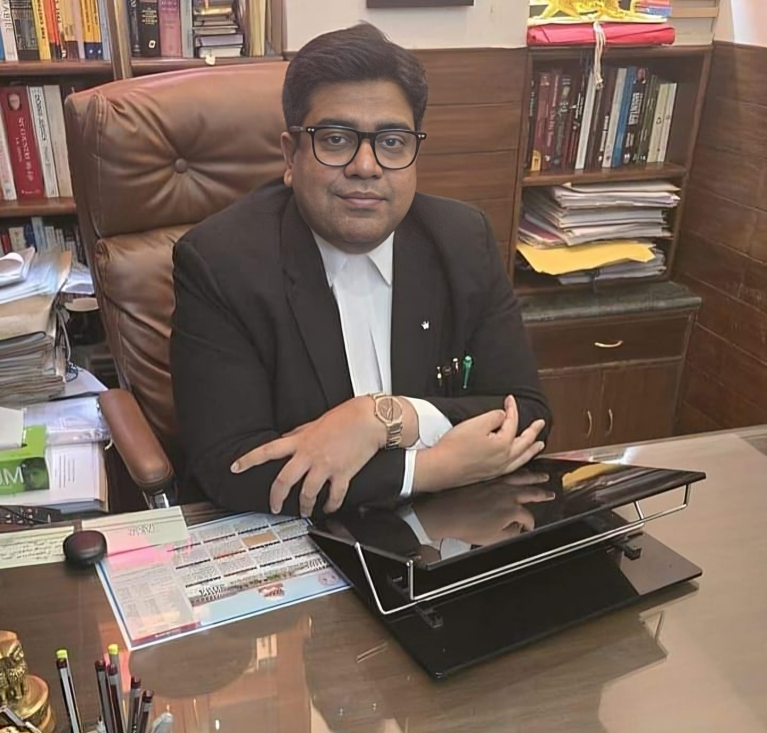
  • “Litigation is not about instant rewards, it’s a long game. It tests your patience, builds your  character, and teaches you lessons that no textbook ever can.” – Kauser Husain, Advocate at Supreme Court of India.

    “Litigation is not about instant rewards, it’s a long game. It tests your patience, builds your  character, and teaches you lessons that no textbook ever can.” – Kauser Husain, Advocate at Supreme Court of India.

    This interview has been published by Anshi Mudgal and The SuperLawyer Team

    In the early stages of your career, you interned with several leading law firms. Could you  share specific experiences or lessons from those internships that significantly shaped your understanding of the law and laid the foundation for your litigation practice?

    Thank you very much for inviting me—it’s a pleasure to be here at this platform, and I  truly appreciate the opportunity. 

    Coming from a non-NLU background, having pursued my BA LL.B. from Aligarh Muslim  University followed by an LL.M. from NALSAR, the path to breaking into top-tier law firms  wasn’t straightforward. However, through determination and consistent effort, I was fortunate to  secure internships with leading firms such as the erstwhile Amarchand Mangaldas and Luthra &  Luthra. 

    I consciously chose to work across both corporate and litigation teams to gain a well-rounded  understanding of the legal landscape. On the corporate side, I was involved in drafting commercial  contracts, conducting due diligence, and assisting in deal structuring—experiences that honed my  attention to detail, regulatory knowledge, and commercial insight. 

    However, it was in Litigation that I found my true calling. Attending court proceedings, grasping  procedural intricacies, drafting legal responses, and conducting research using platforms like SCC  Online and Manupatra, etc. significantly shaped my litigation skill set—tools, which I still continue  to rely on in my current practice. 

    A particularly formative experience was assisting in a complex arbitration matter, where I had the  opportunity to observe Senior Counsels navigating the procedural and substantive challenges with  strategic finesse. This experience further solidified my interest in litigation, especially in the realm  of Criminal law, which demands keen analytical thinking, real-time problem-solving, and  persuasive advocacy. 

    Beyond technical proficiency, these internships instilled in me essential soft skills—discipline, time  management, and the ability to perform under pressure. They laid a strong foundation for my  litigation practice and continue to influence the professional I aspire to be. 

    What drew you to the legal profession? Was law always a planned career path for you, or did your interest develop gradually over time? 

    To be honest, Law was not my initial career plan. Coming from a commerce background,  I had originally considered pursuing professional courses like CA or CS. Around 2010, when I  completed my 12th grade, awareness about legal education—especially institutions like National  Law Universities and entrance exams like CLAT—was still quite limited, particularly at the  grassroots level.

    It was actually through my father that I first came to know about the option of studying law. That  sparked my curiosity, and I began researching about the Law schools, the Legal Profession,  placements, top law firms, and prominent lawyers. The more I explored, the more I found the  field fascinating—it felt like an opportunity to do something meaningful and different. 

    Once I joined law school, my interest deepened gradually. Studying various legal subjects and  gaining practical exposure through internships helped me understand the vastness and depth of  the profession. 

    Most lawyers tend to pick a specialization early on—fields like IPR, corporate law, or tax. But I  deliberately took the longer route. I wanted to earn clarity through lived experience rather than  rushing into a niche. By working across different domains, I gained a broader perspective and  eventually discovered that my true passion lies in Litigation. 

    What motivated you to pursue an LL.M. in Corporate & Commercial Laws from  NALSAR University of Law? How did that specialization deepen your grasp of commercial legal  issues and impact your practice? 

    After qualifying CLAT, I thoroughly researched LL.M. specialization options offered by  various National Law Universities. NALSAR stood out to me for its diverse range of  specializations and academic excellence. Given my prior internship experience with corporate  teams in Law Firms as well as Litigation Chambers, I decided to pursue Corporate and Commercial  Laws as my primary specialization. 

    I was particularly drawn to this field because of its dynamic interplay between legal reasoning,  business strategy, and regulatory frameworks. However, my interest didn’t stop there. During my  internships, I also discovered a genuine passion for litigation. I initially aimed to pursue a dual  specialization with Criminology but couldn’t formally opt for it due to program constraints.  Nevertheless, I chose Criminology as an elective to complement my corporate focus. 

    This combination—Corporate & Commercial Laws with an understanding of Criminology— equipped me with a well-rounded legal perspective. It allowed me to develop the skill set needed  for both corporate advisory roles and litigation practice, offering me flexibility in career direction  while deepening my understanding of complex commercial and criminal legal issues. 

    You’ve worked on landmark constitutional cases like Aadhaar and M. Nagaraj alongside  senior advocates. What were some of the most challenging or rewarding aspects of those matters?  How have those experiences shaped your current approach to litigation? 

    After completing my legal studies, I was fortunate to work under the guidance of  esteemed Legal Professionals, including under Chambers of Advocate-on-Record and prominent Senior Advocates such as Mr. Arun Kathpalia and Mr. Sidharth Luthra. Working in their Chambers  gave me the rare and invaluable opportunity to contribute to Landmark Constitutional matters  such as M. Nagaraj, Aadhaar, Ayodhya, and cases concerning mob lynching, among others. 

    One of the most enriching aspects of these experiences was engaging with complex constitutional  questions and the evolving landscape of public law. Tasks such as conducting in-depth legal  research, preparing concise briefing notes for senior counsels, and closely observing courtroom  strategy helped refine my analytical abilities and broaden my legal perspective.

    What I came to appreciate deeply is that litigation extends far beyond courtroom appearances— it’s about the discipline, consistency, and integrity brought to each stage of a case. The rigorous  process of preparing briefs, anticipating counterarguments, and grasping the wider constitutional  ramifications of a judgment has significantly shaped my litigation approach. I’ve learned to pay  close attention to detail, think critically, and always stay anchored in the constitutional values  underlying each matter. 

    These experiences have cemented my long-term interest in constitutional litigation and criminal  law practice. They’ve also taught me that even behind-the-scenes contributions play a vital role in  shaping outcomes and influencing the development of the law. 

    You’ve had the opportunity to work under Chambers of the most  distinguished Senior Advocates in the country, including Mr. Sidharth Luthra and Mr. Arun  Kathpalia, predominantly in areas like criminal law and insolvency. What were some of your key  takeaways from working in their Chambers, both in terms of legal acumen and professional  growth?

    I began my legal career after completing my studies by joining Chambers of Advocate on-Record Mr. Fuzail Ahmad Ayyubi, who has a robust criminal law practice, followed by Mr.  Sanjay Kapur, a leading counsel for the State Bank of India with a strong practice in civil and  commercial laws. These initial experiences were truly foundational. I was actively involved not  only in legal drafting but also in understanding court procedures and clerical work—skills, which I believe are essential for any young lawyer starting a career in litigation. Gaining this procedural  insight early, gave me a practical edge and helped solidify my interest in courtroom advocacy. 

    While working under AOR’s Chambers, I gradually developed a deep interest in Criminal law. One  of my aspirations was to work under the guidance of Mr. Sidharth Luthra, Senior Advocate— an opportunity I knew would be both rare and competitive, given his stature in the field. Before  joining his chamber, I had the privilege of working with Mr. Arun Kathpalia, Senior Advocate,  who is widely regarded as a top-tier Counsel for complex IBC matters before the Hon’ble Courts. 

    Mr. Kathpalia’s exceptional memory and mastery of Insolvency Law were immensely inspiring.  Assisting him in high-stake matters and undertaking intensive legal research helped me build a  strong foundation in commercial litigation and develop a more strategic, structured approach to  handling complex cases. 

    Eventually, I was fortunate enough to get a chance and join the Chambers of Mr. Sidharth Luthra— a long-standing goal of mine. Working under his mentorship has truly been a best once-in-a lifetime experience. He is a tough master yet a remarkable mentor one can ever have. As I often  say, you may enter his Chamber like a puppy, but you leave it with the strength and discipline of a  Rottweiler. The transformation is that intense, but incredibly rewarding. 

    Mr. Luthra’s Chamber molds you into a well-rounded Litigator, regardless of your area of  specialization. But particularly for someone inclined toward Criminal Law, the exposure is  unmatched. From sharpening your legal research and drafting skills to preparing argument notes  and managing the pressure of a fast-paced litigation environment, you are constantly challenged  to grow. You lose the fear of reading voluminous bulky case files and develop habits that sustain  a long-term career in litigation. 

    While I may never match his brilliance, what I’ve truly tried to internalize are his work ethic, time  management, argumentation style, command over case laws, and unwavering dedication to the craft of advocacy. These experiences have been pivotal in shaping both my legal acumen and  professional outlook, instilling the discipline and resilience required for a meaningful career in  litigation. 

    What inspired you to establish your independent practice? What initial challenges did you  face while setting it up, and what vision did you have for your role as an independent counsel? 

    From the early days of my undergraduate and postgraduate legal studies, I was  determined to immerse myself in every dimension of the law—be it Corporate practice or  Litigation—rather than confining myself to a single niche. My internships across leading Law  Firms and prominent Chambers exposed me to the nuances of drafting, court procedures, and  client handling. But it was through those hands-on experiences that I discovered my deeper  inclination toward Litigation. I came to understand that Litigation isn’t just about mastering  statutes and precedents; it’s about crafting compelling narratives, building trust through  connections and referrals, and delivering real justice to clients. 

    Starting an independent practice as a first-generation lawyer—from a mid-tier city to the legal  landscape of Delhi—was undoubtedly daunting. I had no legacy to rely on, no ready-made client  base, and there were days in the beginning when court appearances were few and far between.  Establishing credibility meant more than just refining my research and drafting abilities; it meant  absorbing the invaluable lessons I learned under mentors like Mr. Arun Kathpalia and Mr. Sidharth  Luthra, developing strong interpersonal and conversational skills with a blend of strong command  over the Laws. 

    The vision behind KH Law Office has always been twofold. First, to build a practice rooted in  integrity, meticulous preparation, and genuine client empathy—ensuring that anyone who walks  through my doors, whether for a criminal matter, commercial dispute, NGT proceeding, or an  IBC case, feels assured that they have a dedicated and dependable advocate. Second, to maintain  intellectual and professional versatility. While my core focus lies in Criminal and White-collar  matters, I actively take up the cases in civil litigation, GST, environmental law, and Insolvency. 

    Today, with established branches in both Delhi and Gorakhpur and a steadily growing practice,  I look back with pride and can say, it was perseverance, belief in myself, and the understanding  that true excellence in Litigation goes beyond specialization, that helped turn my vision of  independent practice into a growing, dynamic reality. 

    As an empanelled legal counsel for the Competition Commission of India, what are some  of the unique challenges that arise in representing regulatory authorities? How do you address  complex, sector-specific legal issues in such matters? 

    Representing a regulatory authority like the Competition Commission of India brings a  unique set of challenges. One of the key responsibilities is to ensure that legal arguments not only  align with statutory mandates but also uphold public interest and regulatory integrity. Unlike  private clients, where strategy often centers on protecting individual interests, working with a  regulator demands a broader, sector-wide perspective. 

    As an independent practitioner, I value the objectivity and responsibility that comes with such  empanelment. It’s not just about winning a case—it’s about reinforcing regulatory frameworks and  promoting fair competition in the economy.

    Many of your publications explore important issues like trials by media, cybercrime, and  gender justice. How do you manage to balance the demands of a full-fledged legal practice, your  commitment to writing on socially relevant topics, and finding time for your personal life? 

    Balancing a full-fledged legal practice with writing on socially relevant topics and  maintaining a personal life does come with its challenges, but it’s something I’ve been passionate  about for a long time. Since my college days, I’ve been actively involved in academic writing and  have had several papers published. After completing my post-graduation, my inclination toward  academia only grew stronger, and I made a conscious decision to pursue it alongside my litigation  practice. 

    Over the years, I’ve delivered lectures on various legal subjects—predominantly in criminal law— which has not only helped me deepen my own understanding but has also allowed me to stay  updated with evolving legal concepts. I genuinely enjoy interacting with law students; those  engagements are often mutually enriching and offer fresh perspectives. 

    Balancing litigation, academic writing, and teaching definitely requires good time management. I  usually try to dedicate some of my weekends—Saturdays and Sundays—to research, writing, or  preparing for lectures. I firmly believe that a lawyer should possess dynamic qualities and should  actively contribute to both the practice and academic sides of the profession. Engaging with the  next generation of legal minds is both energizing and intellectually stimulating, and that’s how I  strive to maintain balance in my professional life. 

    What advice would you offer to young law graduates aspiring to enter litigation? Are  there any specific resources or practices you would recommend to help them stay updated on the  latest legal trends and developments? 

    My genuine advice to young Law graduates aspiring to enter Litigation, especially from  the lens of someone who built an independent practice as a first-generation lawyer with no legal  background, would be this—have a strong vision, stay persistent, and believe in your ability to  grow through the process. 

    Litigation is not about instant rewards—it’s a long game. It tests your patience, builds your  character, and teaches you lessons that no textbook ever can. Many freshers walk into Chambers  asking, “What’s the starting salary?” And while it’s understandable, Litigation doesn’t begin with a  CTC—it begins with court. If your first instinct is to calculate income before understanding the  practice, Litigation might not be for you. This profession pays, but only after it shapes you. It pays  when you’ve shown that you’re worth paying. 

    In the initial phase, your goal should be to learn—not to earn. Some may pay you in the first  month, others may wait until you prove your contribution. What matters is your presence, your  commitment, and your curiosity to grow. 

    My advice: 

    Keep reading—not just judgments and articles, but also good books on legal reasoning, advocacy,  and even biographies of great lawyers. 

    Develop the habit of going through Bare Acts—they are the backbone of Legal interpretation. Strengthen your Legal Research and Drafting Skills—these are the tools of your trade.

    Build your communication skills and cultivate professional relationships—referrals and a good  reputation can take you a long way. 

    Stay updated with legal developments through platforms like SCC Online, LiveLaw, Bar & Bench,  and newsletters by reputed firms or legal portals. 

    Also, don’t try to immediately narrow your focus. In the early years of your independent practice,  take up all kinds of matters—Civil, Criminal, Commercial, Environmental, Tax, IBC—whatever  comes your way. It helps you gain exposure across various Hon’ble Courts and develop command  over a range of subjects. Gradually, you’ll discover where your core interest lies. 

    Ultimately, the path is tough, especially if you’re starting from scratch—but if I could do it with  perseverance and a clear vision, so can you. Stay consistent, stay grounded, and don’t be afraid of  the slow climb. Because in litigation, once you rise, the view is absolutely worth it.

    Get in touch with Kauser Husain –

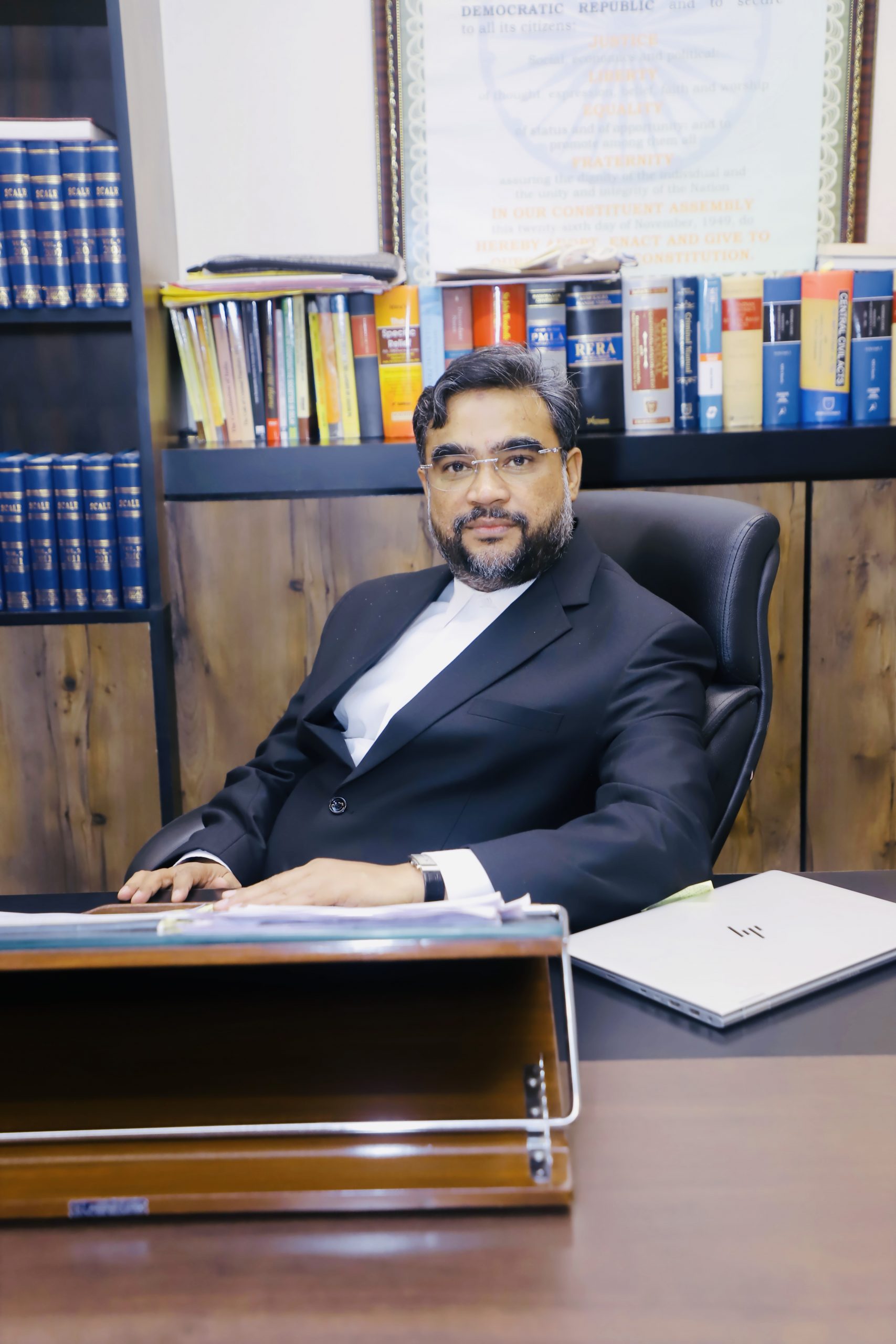
  • “Stay focused, work hard, and build discipline as a core habit. Success comes from commitment, perseverance, and consistently applying these principles in both practice and life.” – Tariq Ahmed, Co-Founder of Ahmadi Law Offices.

    “Stay focused, work hard, and build discipline as a core habit. Success comes from commitment, perseverance, and consistently applying these principles in both practice and life.” – Tariq Ahmed, Co-Founder of Ahmadi Law Offices.

    This interview has been published by Anshi Mudgal and The SuperLawyer Team

    Your legal career spans a wide range of practice areas. What inspired you to pursue law as a profession, and what led you to specialize in Corporate Law at NLU Jodhpur?

    My journey into law was deeply influenced by my early childhood experiences. Growing up in a household where my father, both a law graduate and government officer, instilled a profound respect for the legal system, I developed a natural gravitation toward the profession. His influence, combined with my inherent desire to pursue justice, solidified my decision to study law during my school years.

    During my time at Aligarh Muslim University, I was fortunate to learn from distinguished law professors who shaped my understanding of legal principles. 

    A particularly transformative experience was my exposure to Nehru studies, which opened my eyes to the crucial relationship between economics and law. This course helped me understand how even minor policy oversights could significantly impact market dynamics and national growth. A pivotal moment in my academic journey was my introduction to Eric Posner’s groundbreaking work on law and economics. His analytical framework and insights into how legal rules affect economic outcomes resonated deeply with me and ultimately shaped the trajectory of my legal career. Looking back, I see how this exposure laid the intellectual foundation for my current approach to my practice.

    These experiences naturally led me to pursue a specialization in Corporate Law at National Law University, Jodhpur. The robust curriculum in the course, with its strong emphasis on foreign trade and corporate governance, perfectly aligned with my growing interest in the legal framework that emerged in the wake of India’s transformative 1991 liberalization policies. This has proven invaluable in my practice, enabling me to better serve clients navigating the complexities of modern corporate law.

    Having worked alongside senior advocates like Mr. Irshad Ahmed and Mr. A. Samad, what were some key lessons or insights you gained during your early practice that have shaped your approach to law?

    My early legal career began under the mentorship of a senior law officer of Uttar Pradesh, which provided an excellent foundation in legal practice. While those initial years were enriching, I soon recognized that staying within my comfort zone would not serve my professional growth. This realization prompted me to pursue a more challenging path in economic offenses and white-collar crimes.

    A defining moment in my career was the opportunity to work with Mr. Abdul Samad, whose visual impairment never hindered his exceptional legal acumen. His mastery over money laundering laws, indirect taxation, customs, DRI, and financial fraud matters was remarkable, which I had the privilege to observe and imbibe first-hand. What truly set him apart was his meticulous attention to detail and unwavering professional discipline. Under his guidance, I had the privilege of working on diverse cases across India, from Guwahati to Bengaluru, including complex corporate matters and cases under COFEPOSA. 

    After spending nearly six years working as an associate with senior lawyers, what motivated you to start your own practice? What were some of the initial hurdles you encountered in that transition?

    After two enriching years with Mr. Samad, I began to recognize that independent practice would allow me to fully embrace the challenges and responsibilities of the legal profession. The timing proved fortuitous – as the market began recovering from the second wave of COVID-19, my elder brother, Mr. Shariq Ahmed, and I established Ahmadi Law Offices, which is a registered Advocate on Record Firm based in Delhi.

    While we faced the typical challenges that first-generation lawyers encounter, our journey was thankfully smooth, thanks to our strong foundation and support system. My brother’s unwavering faith in divine justice and constant encouragement were instrumental in our success. I must also acknowledge the invaluable guidance of Ms. Vibha Datt Makhija, Senior Advocate, whose mentorship has been crucial in our professional development.

    As stated earlier, our background had equipped us with the mental fortitude necessary to overcome professional obstacles, and this resilience has been key to our firm’s growth. Looking back, what might have seemed like hurdles were actually stepping stones that helped shape our practice into what it is today.

    With over a decade of experience, you’ve regularly dealt with complex Money Laundering and FEMA matters. Could you share details of one particularly challenging case, and how you approached its preparation?

    White collar crimes and economic offences particularly those involving Money Laundering and FEMA, represent some of the most challenging areas of legal practice. The sensitive nature of these cases, combined with constantly evolving jurisprudence, demands exceptional attention to detail and precision in deploying the appropriate legal strategy.

    In my experience handling these matters, I have learned that no two cases are identical, as each presents its unique set of complexities and challenges. The stakes are invariably high, and the margin for error is effectively non-existent.

    For me, each case is a child I nurtured, requiring careful preparation, from researching relevant precedents to crafting precise legal arguments. While every case has been uniquely challenging, success consistently depends on meticulous planning and effective presentation. The key lies not only in understanding the law but also in anticipating its application to each distinctive situation.

    Handling cases that intersect environmental, industrial, and corporate law can be challenging. How do you ensure a smooth workflow while effectively managing your practice?

    My answer might seem clichéd but success in legal practice follows a compound effect which means that one well-handled case leads to many opportunities. The practice of law, especially when dealing with intersecting areas, requires more than just technical knowledge. It demands unwavering confidence and self-belief to effectively manage both the practice’s growth and workflow complexities. I have found that maintaining strong organizational capacity while staying adaptable to changing circumstances is key to handling these cases effectively.

    Given the high demands of your role, particularly Independent Practitioner and Co-founder Ahmadi Law Offices, how do you manage personal obligations? What strategies do you employ to recharge and stay motivated in your legal career?

    Maintaining work-life balance is crucial in our demanding profession. I make it a point to spend quality vacation time with my family, and always outside Delhi, to truly disconnect from work. While weekends tend to sometimes blur into workdays due to professional commitments, I ensure we maximize our vacation time. 

    To stay grounded, I find solace in literature and arts – reading biographies, enjoying poetry in Hindi, Urdu, and English, and listening to Ghazals.  I am particularly drawn to Satyajit Ray’s work, especially “The Apu Trilogy.” The way he portrayed human relationships and societal transitions in films like “Pather Panchali” resonates deeply with me. They are a constant reminder of the human elements that underlie our professional work.

    Given your broad experience across different legal domains, what advice would you give to young legal professionals who aspire to have a corporate practice as you?

    My advice to law students and aspiring lawyers is very straightforward: maintain unwavering focus and work consistently toward your goals. Remember that no challenge should shake your confidence. Success in this field is built on the fundamental pillars of commitment, hard work, patience, and perseverance. Most importantly, make discipline your core habit – it is not just about managing your practice, but about making it an integral part of your life. This discipline will naturally reflect in your work quality and professional relationships.

    Get in touch with Tariq Ahmed-

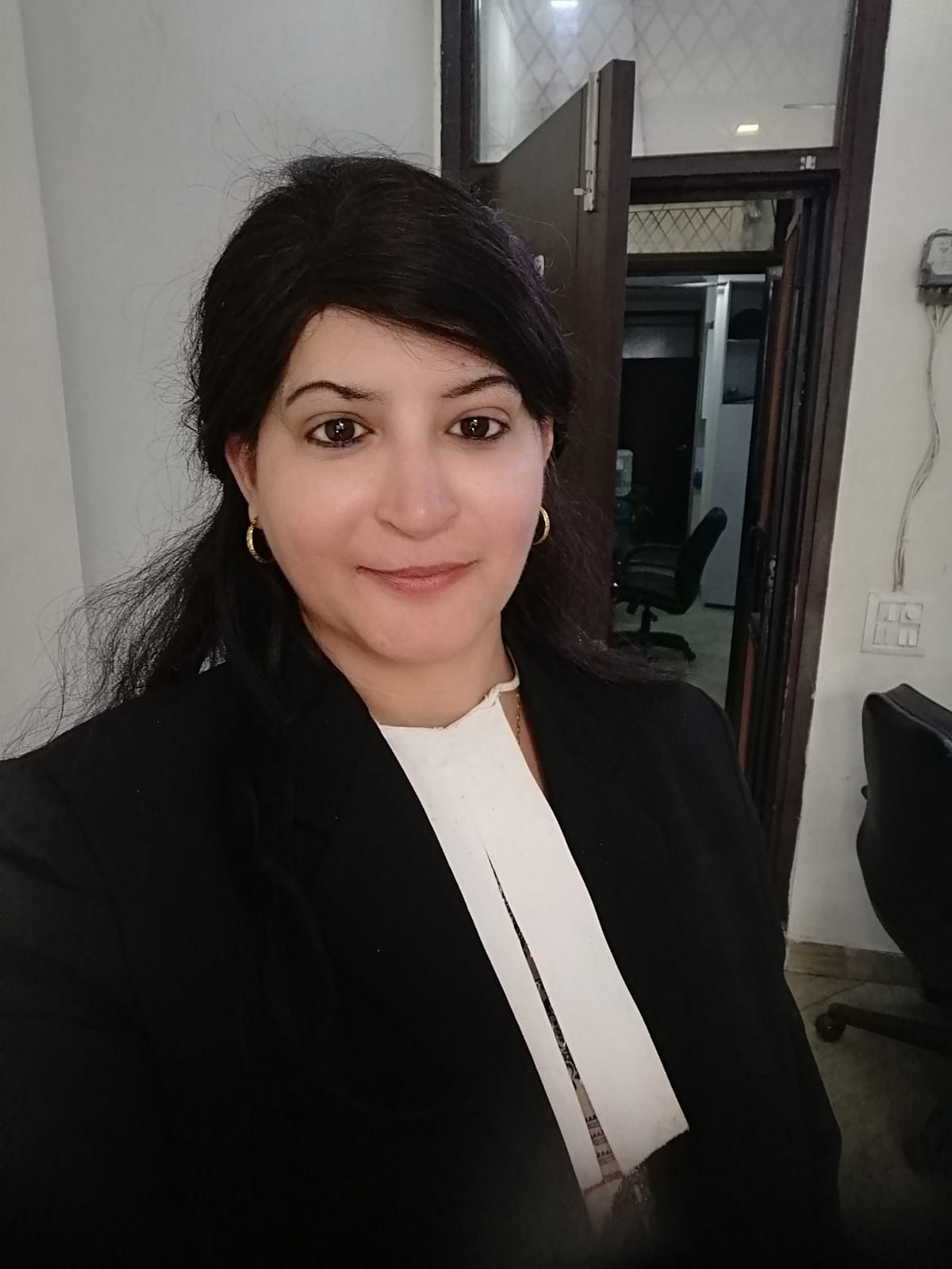
  • “Legal compliance isn’t a burden—it’s an investment in your company’s stability and growth. Seeking professional advice is crucial for navigating complex legal landscapes.” – Gauri Saraswat, Independent counsel, Corporate & Criminal Lawyer | Contract Specialist.

    “Legal compliance isn’t a burden—it’s an investment in your company’s stability and growth. Seeking professional advice is crucial for navigating complex legal landscapes.” – Gauri Saraswat, Independent counsel, Corporate & Criminal Lawyer | Contract Specialist.

    This interview has been published by Namrata Singh and The SuperLawyer Team

     Your journey through law seems incredibly diverse and dynamic, spanning various roles and responsibilities. Can you walk us through your journey telling us what inspired you to do Law and what challenges you faced during your initial stage of your career?

    Certainly! My journey through the legal field has indeed been diverse and dynamic, encompassing various roles and responsibilities. Let me share my story with you. My path in law was not meticulously planned; rather, I embraced opportunities as they presented themselves. I take pride in not adhering to conventional norms. Before venturing into independent practice, I accumulated a decade of experience, including working with different ministries of the Indian government and my days in litigation.

    Law has fascinated me since my early childhood. Growing up in the traditional town of Aligarh, Uttar Pradesh, I pursued my B.A.LL.B from Aligarh Muslim University and later completed my LL.M from Dr. RMLNLU, Lucknow. The initial challenge for me was relocating from UP to New Delhi without a job offer in hand after completing my Masters in Law. Thankfully, my father and family supported my decision, and that’s where my journey truly began.

    Remember, sometimes the most rewarding paths are the ones less travelled.

    Thursdays with Gauri has become quite the sensation on LinkedIn. What inspired you to start this initiative, and what do you hope participants take away from these sessions? Also can you tell us about a particularly thought-provoking discussion or insight that emerged from one of these sessions?

    Thursdays with Gauri was a random thought while having a casual discussion with one of my friend Hamid Ahmed but later became a decision when it actually pushed me to contribute towards the linkedin community to read something which needs to be known. “Thursdays with Gauri” isn’t just about content—it’s about building bridges, sparking conversations, Little did I know that this seemingly random thought would evolve into a meaningful initiative within the LinkedIn community. Honestly, I embarked on this journey with zero expectations, fuelled by the intention to play my part.

    Broadly this LinkedIn post gave me two things: invitation to connect from students to influential people and appreciation in my DMs which again converted into my network. I think the purpose has already been served due to the algorithms of LinkedIn and I am grateful for that.

    As a legal content creator, your articles and thought pieces have sparked conversations and challenged norms within the legal community. How do you see your writing contributing to broader discussions about justice, equity, and the rule of law?

    As a legal content creator, I’ve witnessed the impact of my articles and thought pieces within the legal community. My posts resonate because they delve into practical aspects of law—topics I’ve encountered first-hand. Whether it’s corporate law intricacies, complex agreements, or advisory content for loan seekers, I aim to provide actionable insights.

    Legal discourse often clings to tradition and precedent. However, my writing encourages critical thinking. I write about new norms and practices and advocating for progressive approaches. 

    The rule of law is the bedrock of any just society. Whether discussing landmark cases or legal reforms, I strive to reinforce the rule of law as a safeguard against arbitrary power. In essence, my writing aims to bridge the gap between legal theory and practical application.

    Your work spans across multiple sectors, including technology, fintech, and cybersecurity. What drew you to these specific areas of law, and what challenges have you encountered in navigating their complexities?

    As a law enthusiast and corporate lawyer, my journey led me to explore specific areas of law that overlap with technology, fintech, and cybersecurity. I consider it my duty to stay informed about emerging legal issues related to technology, fintech, and cybersecurity. I realized that even a seemingly simple query from an individual could potentially transform them into a client.

    When I started exploring international markets—both online and offline—I encountered challenges related to different legal processes and procedures. I realised that understanding the intricacies of US, UK, and European legal systems was essential. However, my journey took an enriching turn when I enrolled in courses offered by Lawsikho. Beyond study materials, what truly stood out was their personalized approach—their handholding support. It instilled confidence and efficiency in me. In essence, my work in these specialized areas isn’t just about legal technicalities; it’s about empowering clients.

    Looking back on your career journey thus far, what advice would you give to aspiring lawyers, particularly those interested in pursuing a similarly diverse and multifaceted path in the legal field?

    Reflecting on my career journey, in one sentence my advice would be “Don’t just believe what others say”. With all due respect and humility, the traditional ways are supreme but when time and technology change, so do the challenges in law and the complexities. In the present time when the Data protection bill has been passed and AI law is on the agenda of the government, you think the limited knowledge can help you stand out of the box and earn exponentially. Give it a thought. Stay informed about emerging laws (such as the Data Protection Bill) and understand their implications. According to me, Adaptability is the key.

    Legal education doesn’t end with a degree. It starts from there. Learn to serve in addition to earning out of it.

     Your career has seen you transition across various roles and sectors within the legal field, from corporate law to criminal litigation, and from law firms to government agencies. What motivated these transitions, and how have they contributed to your professional growth and expertise? And what valuable lessons have you learned from the unique challenges and experiences encountered in each position?

    You are right, My career has indeed spanned diverse areas of law, including competition law, electricity and insolvency matters, NBFCs (Non-Banking Financial Companies), and even criminal law. Indeed, it was my friend Syed Jafri who first introduced me to the realm of investment banking and encouraged me to consider it as a viable avenue to apply my legal expertise. Interestingly, I’ve never worked in a traditional law firm. Instead, my father, being an advocate, was my informal mentor. Our dining table discussions often revolved around legal concepts, both civil and criminal.

    My motivation has always been a “go-getter” attitude. When opportunities arose, I seized them without hesitation. Each transition allowed me to explore new facets of law, broaden my perspective, and contribute meaningfully. My journey so far has given me friends for a lifetime and seniors like Mr. Debajyoti Ray Chaudhuri, who in himself is an inspiration for many.

    To my understanding, Legal issues don’t exist in isolation. It also needs an understanding of business, technology, and other inter-related legal issues. In essence, my journey so far isn’t just about legal roles; it’s about lifelong learning as well as meaningful connections.

    You’ve been involved in drafting a wide range of agreements, from Co-founder Agreements to Software Development Agreements. Could you share a special technique or approach that you believe contributes to excellent drafting? Additionally, what do you think sets your drafting style apart and makes it particularly effective in ensuring clarity, fairness, and legal compliance?

    Certainly! Drafting legal agreements is both an art and a science. I have inculcated a special technique I’ve found effective is that before putting pen to paper (or fingers to keyboard), I pause to understand the purpose behind the agreement. Why is this agreement necessary? What are the parties trying to achieve out of it? What risks need mitigation? By clarifying the purpose, I ensure that the agreement aligns with the client’s goals.

    I always get on a call with the client to discuss their context, concerns, and objectives. This dialogue helps me tailor the agreement to their specific needs. Because it happens that the client being the non-legal person confused the franchise agreement with the service level agreements. They deserve such clarity by me as their lawyer.

    In your experience advocating for clients before the Supreme Court of India, what strategies do you employ to ensure that their interests are effectively represented and understood by the judiciary?

    Considering my little experience, one thing I have learnt about the Supreme Court litigation is that “it’s all about a team work” because an effective representation requires a collaborative approach. And I am grateful to Mr. Aditya Manubarwala for giving me an opportunity to work with him and his team on a couple of cases before the Apex Court. Before advising a client, extensive research is essential. We have to delve into legal precedents, statutes, and relevant case law to understand the nuances of the client’s situation which further allows us to provide informed recommendations to the client.

    Case briefs, arguments, and submissions are the part and parcel in every case, especially when you get a very limited window to mark your appearances with your best arguments before the judges of the Supreme Court of India. To decide which point to be picked for arguments in order to provide relief to the client is the matter of utmost importance. Hence, Supreme Court advocacy is a blend of legal acumen, teamwork, and strategic thinking.

    As an authorized representative for a European company, you extend legal representation services in Estonia and Finland. How do you navigate the nuances of international law and cultural differences to effectively advocate for your clients’ interests in diverse legal environments?

    In my professional journey I have had the opportunity to represent my client who was from Estonia. That particular case involving a Gurgaon-based individual and an Estonian lady was unique in the sense that the absence of a formal agreement and the cross-border nature of the transaction posed challenges. I engaged in detailed discussions with the Estonian client to grasp the entire situation and her specific needs. Understanding the nuances of each jurisdiction was crucial. Estonia’s civil law system differs from India’s common law system. However, as an authorized representative, I initiated legal action against the individual.

     Beyond your legal career, what are some of your personal hobbies or interests that you find enriching or rejuvenating?

    Beyond my legal career, I find immense enrichment and rejuvenation in delving into religious texts. These non-fictional scriptures offer profound insights and guide me toward understanding the true purpose of my life. During my teenage years, I immersed myself in fundamental religious literature, often drawn to the extensive collection housed within my father’s library, where the titles of numerous books piqued my curiosity and prompted further exploration. I firmly believe that to read and to know are different concepts. Now, I’m drawn to delve into more advanced texts. These delve into unique teachings and mystical experiences. The pursuit of knowledge is both humbling and exhilarating. The insights I have gained from these scriptures shape my world view and influence my actions.

    As someone deeply involved in consulting and advisory roles, what advice would you give to startups or established companies navigating complex legal landscapes for the first time?

    legal compliance isn’t a burden—it’s an investment in your company’s stability and growth” is  precisely what I want to convey to all sincere start-ups. It is apparent that navigating the complex legal landscape can be daunting, especially for startups and established companies venturing into unfamiliar territory. Therefore, seeking professional advice from a seasoned lawyer who understands the nuances of your specific industry and jurisdiction is a must.

    Diligence in selecting legal advisors pays off. Look for lawyers who specialize in your field—whether it’s technology, finance, or any other domain. They should avoid generic templates. Each business is unique. One has to customize the legal agreements, contracts, and policies in accordance to your specific needs. Also don’t forget to Maintain open channels of communication with your legal team. Transparency ensures that legal strategies align with your overall business strategy. Share your business goals, challenges, and concerns and let the lawyer find you a way.

    I would like to request the given start-ups or companies to rely on someone who is experienced and in the market already. Be diligent in choosing your lawyers and try to keep pace with them. 

    Get in touch with Gauri Saraswat–

  • “As per my experience, judges in the Delhi High Court are very cooperative, and empathetic towards young lawyers who are at the learning stage”-Mohd Fuzail Khan, Advocate on Record at the Supreme Court of India

    “As per my experience, judges in the Delhi High Court are very cooperative, and empathetic towards young lawyers who are at the learning stage”-Mohd Fuzail Khan, Advocate on Record at the Supreme Court of India

    This Interview has been published by Pragya Chandni and and The SuperLawyer Team

    Sir, can you share with our listeners how your journey into the field of law began? What inspired you to pursue a career in law, and how did your early experiences shape your decision to become an Advocate on Record?

    When I completed my law in the year 2023 I had decided to pursue my career as a lawyer so initially I started my practice from the Lucknow bench of the Allahabad high court in 2003 till 2006. After that in July 2005 I joined the chambers of senior Advocate late Shri R K Jain. To start your career in the field of law one has to have a good senior who acts as a mentor. Learning law is also similar to learning about life. If one has to practice in the Supreme Court, a lot of dedication is required.

    Having completed your B.A LL.B (Hons.) from Aligarh Muslim University, could you highlight any specific aspects of your education that you believe significantly contributed to your success as an advocate? What motivated you to enroll in the Bar Council of Uttar Pradesh?

    In order to practice law a student has to work on certain subjects such as IPC CPC CrPC, Evidence Act etc but most importantly one has to thoroughly read a newspaper. The law page is the most important. The availability of a large number of cases and overload on judiciary motivated me to enroll in the Bar Council. 

    You started your practice as an advocate in the High Court of Delhi and the Supreme Court of India. Can you share some memorable experiences from your early years, including the types of cases you handled and any significant challenges you faced?

    To practice in Delhi High Court and the Supreme Court one has to be punctual and secondly good command over English language. As per my experience, judges in the Delhi High Court are very cooperative, and empathetic towards young lawyers who are at the learning stage. I have a lot of experience in civil cases because of the interest. The challenges include adapting with the new age technology and striving for perfection with each amendment.

    Your profile mentions handling matters in various domains, such as criminal, service, civil, and constitutional law. How did you navigate the diverse legal landscape, and were there specific cases or areas that you found particularly intriguing or challenging?

    It is never easy to choose a particular field. In my case, I was fortunate enough to gain experience in diverse types of laws and ultimately, I understood that all of them are equally important. As far as the challenges are concerned, civil law as well as criminal law pose a lot of challenges in college years. 

    You’ve worked with notable legal figures such as Late Mr. R.K. Jain and Mr. P.C. Hota, as well as with organizations like the Yash Birla Group and Karims Mughlai Foods. How did these collaborations influence your professional growth, and what lessons did you learn from working with such experienced individuals and entities?

    All of them have had a great impact on my overall development. Professional growth is a slow and steady process, and it would be wrong to give all the credit to just one organisation. We keep learning through the way. The only lesson that keeps me going is that nothing in life comes easy, irrespective of the field of law chosen.

    Your work experience includes associations with companies like Lemon Entertainment Ltd. and Shambhu Technology Services P. Ltd. Could you share insights into how your legal expertise was applied in the corporate context, and what unique challenges did you encounter in these roles?

    Corporate law offers a plethora of opportunities. When I started practicing, it was never a goal to become a corporate lawyer. Based on the opportunity, I learned a lot about Contracts and other aspects of corporate law. As such, there have been no unique challenges but deep learning all the while. I then apply the learning in upcoming cases to solve them in a more comprehensive manner. 

    You’ve appeared in various tribunals, including the Central Administrative Tribunal and National Green Tribunal. How does advocacy in these forums differ from traditional court settings, and what skills do you consider crucial for success in specialized tribunals?

    Contrary to popular opinion, the nature of work remains the same. It is just that the tribunals have a more streamlined process and the cases are disposed of quite expeditiously. Critical thinking skills will help in the long run, for people who wish to pursue a career on this path.

    Drawing from your experiences and achievements, what advice would you give to law graduates who are just starting their careers? Are there particular principles or strategies that you believe are essential for success in the legal profession?

    Everyone has their own fields of interest. My only advice would be to give your 200% in everything, even in petty cases. It will shape you as a lawyer and definitely make you a better thinker. There are no particular principles, since law is not just a subject but a way of life. All law graduates should try to imbibe everything they hear about the latest laws, for a successful career in any aspect. 

    Get in touch with Mohd Fuzail Khan-

  • “A lawyer, apart from a good strategist, must be a good story teller and must possess the art of presentability”- Dr. Farrukh Khan, Partner at Diwan Advocates

    “A lawyer, apart from a good strategist, must be a good story teller and must possess the art of presentability”- Dr. Farrukh Khan, Partner at Diwan Advocates

    This interview has been published by Priyanka Karwa and The SuperLawyer Team

    Can you share with us your journey into the field of law, from your early education at Aligarh Muslim University to obtaining a Ph.D. in Law from Sai Nath University? What motivated you to pursue such a diverse range of legal experiences?

    It was never in my plan to become a lawyer. After completing my High School in the year of 1999, I had the option to choose between the streams in either Science or Commerce, however, I opted for Commerce stream and completed my higher secondary. Thereafter, I was all set to opt for B.Com. and was even selected for the said course, however, upon the insistence of one of my friends, I sat into Entrance for B.A.(LLB) and was fortunately selected. The interesting part is that my friend, who had also appeared for said B.A.(LLB) Entrance, was not able to make it to the final list and was put on the waiting list. He was also on the waiting list in B.Com. Thus, it was resolved amongst us that in whichever course, his waiting list is cleared, I will go for the said course.

    A very interesting aspect is that although we both did our law from the faculty of law at AMU, yet, while I joined the profession, he opted to do M.B.A. in Singapore and is now working with a Singapore based Company in the management sector. I topped the first and second semester of B.A.(LLB), however, while I was in third semester, I was framed and suspended by the Proctorial Department of University in a case related to student protest. This particular unfortunate development, which has led to a paradigm shift in my thinking, I, simultaneously, deviated from my academics and turned out to be a full time student activist. At that time, the student union at AMU was defunct so I led agitation for its restoration. The agitation was successful and the student union was restored. 

    It is important to note here that to the best of my knowledge, the student union of AMU is the only student union in India, which has its existence in statute i.e. AMU Act, 1920. I am telling all these for a simple reason that my period as student activist and later on, I, being elected as honorary secretary of AMU Students Union by record margin till date, actually honed my skills of public speaking, which is now paying dividends and helps me a lot in my legal profession as an advocate. I completed my B.A.LLB in the year of 2007 and joined the profession. My LL.M. and Ph.D. were completed whilst I was also practicing. Fortunately, in those days, that was allowed. Therefore, my advent into the legal profession was purely accidental, it was never planned, however, as destiny would have it, I became a lawyer.  

    As the Managing Partner of Diwan Advocates, you’ve been involved in various aspects of law, including corporate, commercial, intellectual property, and civil matters. Could you highlight a specific case or project that stands out as particularly challenging or rewarding in your career?

    As an advocate for the last 16 years, I have been fortunate by the grace of Almighty to handle a diversified range of litigation, right from hardcore civil, criminal, corporate & commercial to intellectual property rights and so on and so forth. For a lawyer, every case which he/she handles is very special. However, since you have asked about a particular case, which has been challenging or rewarding, therefore, I would recall a case, where I was appointed by Hon’ble Delhi High Court as Amicus Curiae during the peak of Covid-19 pandemic. The said case was widely reported in the media. It was a case of a widow of the deceased, who was from Himachal Pradesh and while working in Saudi Arabia, he died. Despite the deceased being Hindu, due to certain mistakes on the part of the Indian Embassy and the officials based there in Saudi Arabia, he was buried as per Muslim rituals and customs. The widow, therefore, had approached Hon’ble Delhi High Court by filing a writ petition seeking direction to the Union of India for ensuring repatriation of mortal remains of the deceased.

    It was a very challenging case, since the directions only to the concerned officials of the Union of India would not have yielded any result since the mortal remains were to be repatriated from a foreign country and such case was unknown to that country as it did not have any prior history of such exhumation of mortal remains. Despite all these challenges, Hon’ble High Court took up the matter and during the course of the proceedings, I was appointed as an Amicus Curiae in the said matter. It was a time of enormous difficulty as Covid-19 pandemic was at its peak and the movement was restricted. Upon being appointed as an Amicus Curiae, which was then for the first time in my entire career, I was a bit nervous since I did not know what had to be done. However, I started collating all case documents and used my AMU related network to find out persons who are based out in Saudi Arabia so that they could render some assistance.

    Saudi Arabia, at that point of time, was also engulfed and confronted with Covid-19 pandemic and the mobility was also limited. However, one of my old friends, after understanding the matter, assured me of his help and he travelled from a far distant city of Saudi Arabia to the concerned hospital where the corpus was kept before its burial for tracking of relevant records. It was learnt by my friend, who later informed me that Saudi Arabia maintains the geo-tagging records of all the graves. Fortunately, with the help of technology, it was revealed that the deceased was buried in which particular grave. 

    After the above mentioned turn of events and initial breakthrough, the challenge was how to assist the Hon’ble Court to pass the appropriate directions to the concerned person back at Saudi Arabia since it was legally impossible. Accordingly, upon suggestion being made to the Hon’ble Court, the Hon’ble Court was pleased to request the Embassy of Saudi Arabia at New Delhi to explore the options. Simultaneously, directions were also passed to the concerned officials of Government of India to coordinate and facilitate the entire process of exhumation and repatriation of mortal remains.

    Last but not the least, after day to day hearing, which had transpired in the said matter, Union of India, under directions of the Hon’ble Delhi High Court, was successful in convincing the officials of the Saudi Arabia for exhumation of the mortal remains and same were repatriated to India by Charter Flight and were then sent to deceased’s native town in Himachal Pradesh, to fulfill the last rites. Appropriate compensations according to the policy of the Union of India and the Government of Himachal Pradesh were also awarded and the Hon’ble Court ensured that the said compensation is timely remitted to the bank account of the widow of the deceased. The aforesaid facts pertaining to the said case, seemingly straightforward, posed a significant challenge for me. Nevertheless, despite the complexity, I successfully contributed to the entire process with God’s grace.

    Your work experience extends internationally, including roles in Qatar and as a Legal Advisor to a Spanish corporate conglomerate. How has working in different cultural and legal environments shaped your approach to legal practice, and what unique challenges have you faced?

    I completed my B.A.(LLB) in the year of 2007 and got enrolled with the Bar Council of Delhi. Thereafter, I joined a reputed trial lawyer at Patiala House Courts, New Delhi. However, given my political ambitions, which were always at forefront, on account of I having served the student union as honorary secretary, my family was apprehensive that I might leave the profession and could join politics, the idea which my late mother had always resisted. Sensing this, my elder brother, who was working in Doha, Qatar, through his network, got me placed at an IP Law Firm in Doha as assistant paralegal. Though I was reluctant, yet, I joined as a trademark assistant paralegal and started working, where I was soon promoted from trademark assistant paralegal to junior associate in the said law firm.

    Thereafter, I changed my job and joined a leading real estate conglomerate in Qatar as their legal officer. The said real estate conglomerate was expanding its business operations in Spain. I was also appointed to look after the legal matters related to the said Spanish expansion of the said company.

    I spent nearly two years working abroad, and I found the work environment to be more flexible compared to what we typically experience in India. In those jurisdictions, lawyers rarely face the intense pressure and tight deadlines that are common here. The majority of litigation cases were of a commercial nature, as criminal matters were exclusively handled by Arabic-speaking lawyers.

    Despite the language barrier, the atmosphere was friendly, and I had the opportunity to collaborate with professionals from various countries, spanning from the Middle East to North America. They were cooperative, providing valuable assistance in training and mentoring me. My main challenge was my reluctance to learn the Arabic language; however, I was fortunate that commercial related legal aspects were conducted in English, allowing me to navigate and succeed in that environment. 

    Given your extensive experience in handling high-stakes litigation, could you share insights into a notable case where you successfully defended a client, whether it be a private corporation or a governmental agency, before the courts?

    In reply to this question, I would say that I have defended several private entities and corporations in high stake litigations. One case involves the matter that I was handling before the Hon’ble Allahabad High Court at Lucknow Bench. In the said case, the developer was allotted land by an instrument/agency of the State of Uttar Pradesh. Thereafter, the developer, after complying with all the procedures, started developing the said land and have almost sold the entire inventories in the said project. The moment when the construction and development works over the said land became noticeable, an agitation in the name of farmers grappled with the said project.

    The state machinery failed to protect the interest of the developer and approximately 1500 homebuyers who were associated with the said project, who turned out to be the collateral damage. Hence, we approached the Hon’ble Allahabad High Court at Lucknow Bench by filing the writ petition. The matter was contested by the erstwhile landowners and the role of the State was not more favorable. However, the matter proceeded for hearing and thereafter a detailed judgment was passed.

    By that time, the developer I represented was on the brink of bankruptcy, primarily due to personal circumstances and other compelling factors. Though I did not have any privity or any relationship with any of those homebuyers, yet, they started contacting and asking me to find some solutions so that the developer’s and homebuyers’ rights and interests could be secured. I told them categorically that there is conflict of interest and I cannot act against the interest of the developer. Nevertheless, I endeavored to address the conflicts and discrepancies that regrettably arose between the developer and homebuyers. In pursuit of resolution, multiple rounds of negotiations took place, with approximately 500-700 homebuyers attending each meeting, and I had no option but to navigate and lead the matter.

    The trust and confidence that the homebuyers placed in me is something unforgettable in my life. Despite being the counsel for the developer, they consistently relied on me. In the meantime, the Hon’ble Court allowed the said writ petition. Since the State machinery was not implementing the direction as passed by the Hon’ble Court, we approached the Hon’ble Court again by way of a criminal contempt petition against the then concerned officials. During the contempt proceedings, the senior officials were summoned before the Hon’ble Court and following a stern warning from the Hon’ble Court, the encroachment on the specified land was eliminated. Further, the developer, upon my persuasion, inducted some other partner who was flushed with liquidity. Collectively, these measures successfully addressed all concerns between the developer and the homebuyers. As a result, the project was not only built and developed but also delivered, with over 200 homebuyers currently residing in the completed development. Despite the passage of almost 7 years, several homebuyers and residents of the said flats continue to reach out to me through messages and calls. They maintain a friendly demeanor, treating me as if I were a part of their family. Moreover, numerous individuals extend invitations for me to attend events at their homes. The meaningful connections and relationships I created with these homebuyers are truly gratifying. As a lawyer, I often say that while we can attain financial success and recognition, the profound satisfaction of cultivating enduring relationships with clients, even after concluding a case, and being regarded as a trusted friend or family member is immeasurable. 

    In your role as a Corporate Legal Advisor for “The Wall Holdings” in Qatar, you oversaw legal aspects related to finance, construction, corporate, and commercial operations. How did this experience differ from your work in India, and what valuable lessons did you draw from it?

    The work which I was entrusted with while working in Qatar, was of non-contentious nature and was purely transactional works. Since I was not allowed to appear before the courts at Qatar, my duty was only confined to the preparation of cases and drafting of pleadings. While my responsibilities in Qatar were focused on contracts, opinions, due diligence, and other related advisory tasks, my work in India predominantly involved contentious matters, with a primary emphasis on litigation. Nevertheless, I have consistently maintained my relationship with non-contentious and transactional works. I believe that the amalgamation of my experiences in both contentious and non-contentious realms has endowed me with a wealth of valuable insights. The knowledge gained from my endeavors in Qatar significantly aids me in formulating effective defense strategies in litigation and delineating the line of attack in litigation. 

    With your involvement in intellectual property matters, especially at Aramarks Intellectual Property, could you discuss the importance of intellectual property rights in today’s globalized and technologically advanced business landscape?

    Intellectual Property, more particularly, Trademarks are very close to my heart. Actually, you would not believe it but when I was working at Aramarks as Assistant Trademark ParaLegal, I have always dreamt to be an IP Lawyer and even when I rejoined the profession by end of the 2009, I had this planning at back of my mind that I would only work for IP litigation and other non-contentious IP related tasks. However, the challenges for the first generation lawyer, that too, coming from a very remote area of Bihar and trying to survive in the cosmopolitan city like New Delhi are of different magnitude. I was getting less IP Works, therefore, I decided to venture into other aspects of litigations and as the luck would have it, cases of different and diversified nature started coming in, and gradually I started developing as a lawyer and the journey still continues till today and I pray to mighty that it continues till I am alive. 

    As someone passionate about interacting with law students, could you share an impactful piece of advice you received early in your career that has guided you, and how would you advise fresh law graduates entering the field today?

    Interacting with law students is my passion. Since I have been a student activist and student leader during my University days, therefore, when I go amongst them, I still find myself as young as I was in those days. I prefer not to lecture; instead, I aim to listen to them—embracing their questions, anxieties, and experiences and try to answer them from my own experience with this caution that solution and the respective problems pertaining to every person are not identical and anyone who tries to pick a ray of hope from others’ solutions should always be cautious that what has worked for ‘A’ could not work for ‘B’.

    Therefore, customization of solution of problems is must according to anyone’s personal needs. For fresh law graduates, since I am an intense litigator, therefore, I advise them to come to litigation and in these aspects, I am a little selfish, I will confess. It does not mean that I am against fresh law graduates going in the corporate or for in-house jobs, however, I always believe that even if a fresh law graduate wants to shape his/her career in corporate- for some initial years, he/she must come to the trial courts because the experience which you get in the trial courts cannot be developed in any other colleges/institution or even in the superior courts. The challenges which a fresh law graduate has to confront within the trial courts, actually strengthen his/her potential and that strength, which could only be developed at the initial stage of the career, is something to reckon with. 

    Your career spans various sectors, including technology, media, telecom, and pharmaceuticals. How do you stay abreast of the rapidly evolving legal landscape in these industries, and what advice would you give to legal professionals looking to specialize in dynamic sectors like these?

    Specialization in the legal sector or legal industry is evolving in India. However, being a hardcore litigator, I have quite an unpopular opinion. I believe that any litigation must have potential and caliber to handle any sort of litigation, for whatever he/she is entrusted with. Why I say this is because even judges who are there to adjudicate upon such specialized disputes are not specialized persons. Specialization of subject does not mean that for any contract or construction related dispute, only an engineer who has turned out to be a lawyer can handle the case or a person coming from a pharmaceutical background can handle a pharmaceutical related IP matter. Laws in India, in my humble opinion, are intertwined and interconnected. If one is an IP Lawyer, he must know the basic nuance and must be trained in civil litigation. The edifice of any IP litigation would be the CPC. What I have seen unfortunately is that fresh law graduates who want to go for specialization are lacking in procedural law and it is not good development for the legal profession in our country. That being said, if somebody wants to handle the special segment of a case aka specialization, in my opinion, that person, at least for 10 years, should work in every branch of law so that after 10 years he/she could caste a niche for himself/herself, and thereafter could shape his/her career. 

    I am not saying these all out of the context. Let us take examples of legends in our profession, such as the late Mr. Setalvad, the late Mr. Daftari, the late Mr. Ram Jethmalani, and even in the current generation, Mr. Kapil Sibal, Dr. Singhvi, Mr. Mukul Rohatagi, Mr. Arvind Datar, and the list goes on. They possess the ability to handle any legal matter on any subject and can effectively present and argue the matter before the courts. Thus, the specialization in the legal field has to be multi-dimensional. A lawyer, apart from a good strategist, must be a good story teller and must possess the art of presentability. A lawyer, in my opinion, must develop the art of re-calibrating himself into the spur of the moment so that whatever the challenges are, he/she can face the same with calm and politeness.

    Get in touch with Dr. Farrukh Khan-

  • Mr Anil Maheshwari, a celebrated Journalist and an Author, talking about his latest publications and his advice for young aspirants.

    Mr Anil Maheshwari, a celebrated Journalist and an Author, talking about his latest publications and his advice for young aspirants.

    This interview has been published by Sonali ParasharOjuswi Sahay and the SuperLawyer Team


    With a remarkable career in Journalism, and also having authored quite a few books, how would you describe your professional journey to our readers?

    My professional journey or say the foray into the realm of journalism had been a rewarding experience as I was transferred nine times, though most of my colleagues and friends in journalism spent their entire life at one station. Therefore, I was enabled to see and understand the major parts of the country at a grassroots level.

    Tell us about the inception and idea behind the book- “Ramayana Revisited- An epic through a legal prism”.

    I am happy that the book Ramayana Revisited: An epic through a Legal prism was so well-received in the market. This idea germinated in my mind in 1998 when I was enjoying the company of a lawyer serving the West Bengal High Court. He was talking in defence of Ravana. Two decades had passed, and eminent mythologist Bibek Debroy (The Economist) encouraged me to develop a book around this theme. I roped in my nephew, who has acquired a name in the legal parlance- Vipul Maheshwari, who helped me immensely with his legal inputs. That is why he is the co-author.

    How did the book- “ The Power of Ballot” actualized? What kind of research and fact-finding you have had to undergo towards the completion of this book?

    The newest book has been treated the same. Vipul Maheshwari has given his legal input on the subject, as holding fair and free elections is the base of a vibrant and thriving democracy. However, there are misconceptions about some innovations which have eliminated the most dangerous illness, which was rigging the elections. Hence, he is the co-author.

    You have been a journalist for over five decades and you retired from Hindustan Times as a Special Correspondent. We would love to know about this journey of yours.

    I’ve enjoyed every moment of my journalistic life. Newspapers were my classrooms, and the experience was my teacher. The mentors I met along the way were a few editors and an army of veteran reporters. They taught me about the classical roots of narrative non-fiction and offered great insights into the techniques of reporting. My belief is that intellectual curiosity and relentless work etc matter infinitely more than the natural ability in achieving excellence.

    What was more challenging for you, journalism or writing?

    Journalism and writing are subjects that overlap each other. However, there is a difference between journalistic writing and writing a book. Both remain challenging in their own ways. But I took the challenges in stride and that is why I enjoyed the unique joy both offered me. I have witnessed Vipul Maheshwari express a similar challenge with Law. 

     Here’s an incident he shared with me that I was tempted to include in The Power of the Ballot. Everyone is aware of the unseating of the PM Mrs Indira Gandhi, an incident that led to the imposition of an emergency in the country. The next time, when another election petition against her election for the Lok Sabha from Raibareli was filed before Allahabad High Court, it was summarily dismissed because the Raebareli district was under the jurisdiction of the Lucknow bench of Allahabad High Court. In the earlier instance, the judge overlooked such a gross mistake and the lawyer who appeared on behalf of Mrs Indira Gandhi. And the country had to pass through a cycle that could have been avoided.

    You have two short-term tenures as a fellow at the Aligarh Muslim University. Please share with us about this experience of yours.

    Aligarh Muslim University, a prime seat of learning and symbol of the Muslim way of life in India, has been kind enough to offer a short-term fellowship to me twice, to read and write any subject of my choice. For starters, I’ve worked on writing a book (co-authored by Dr Faizan Mustafa) about the Right to Information. Back then, the Right to Information was not in vogue in the country. 

    The second time, a few years ago, I worked on the subject of the History of Aligarh Muslim University, which will soon be released as a comprehensive book about the university in the coming November, with Bloomsbury publishing the title. Before I was absorbed as a full-time reporter by the Hindustan Times, I used to work for several magazines and newspapers as a freelancer. During that course, I also contributed to the prestigious weekly Economic and Political Weekly. I covered the Allahabad High Court, its Lucknow Bench, Jaipur bench of the Rajasthan High Court, The Haryana and Punjab High Court, Jammu and Srinagar High Court besides the district courts at Meerut, Siliguri, and Bareilly. Covering courts has always been fascinating and fulfilling. 

    You have contributed to the Economic & Political Weekly, and The Frontier, and have also covered stories on various District Courts and High Courts in India. What do you think is the most important aspect for becoming a successful journalist? A word of advice for aspiring authors and journalists among our readers?

    There is a dearth of professional legal reporters in this country. For any budding journalists, my advice is

    1. Singleness of purpose; 2. A wide study of various subjects; and, 3. Deep penetration into the subjects.

    To cap them one should be willing to learn new things and respect points of view expressed by others.


    Know about Anil Maheshwari’s works –