Tag: Anand & Anand

  • “My journey into law was a choice of passion over convention, fueled by a desire to explore intellectual property rights and make a meaningful impact in the field.” – Vibhav Mithal, AI & IPR lawyer & Associate Partner at Anand and Anand.

    “My journey into law was a choice of passion over convention, fueled by a desire to explore intellectual property rights and make a meaningful impact in the field.” – Vibhav Mithal, AI & IPR lawyer & Associate Partner at Anand and Anand.

    This interview has been published by Namrata Singh and The SuperLawyer Team
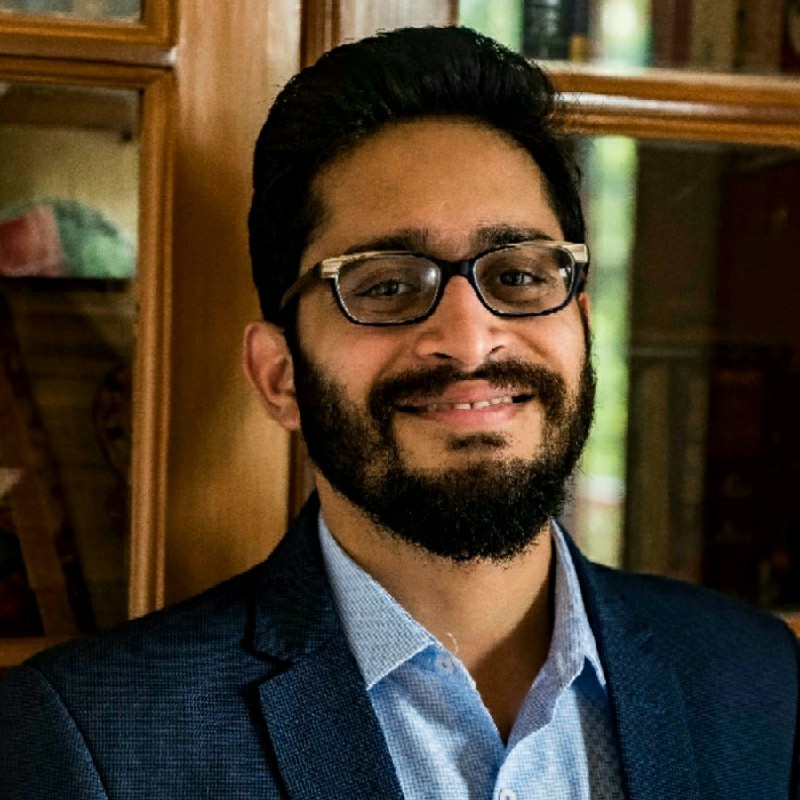
    Hello and welcome to SuperLawyer Youtube channel. And once again, we are here with a phenomenal personality Vibhav Mithal and a very dear friend. I have known him for more than a couple of years now. Welcome Vibhav. Thank you for agreeing to this interview. And yes, I should introduce him as a partner at Anand and Anand and other than that, he will carry forward with his own story.

    I would request you to tell us about your journey into the legal field, and how you decided to become a lawyer, especially in intellectual property rights, which you are fascinated about and have made a name in. What inspired you to specialize in such a niche area? And please take us through your journey. Welcome Vibhav and thank you.

    Thank you so much, Divya. It’s an absolute pleasure to do this with you. I’ll start from the beginning of my journey. My parents are doctors, and there’s a conventional expectation in India that a doctor’s son will become a doctor or an engineer’s son will become an engineer, right?

    My father told me clearly, “Son, you won’t be able to do engineering,” so it was between medicine or another profession. I honed in on law because, at that point, it was more a process of elimination. I didn’t want to do engineering, and although I considered medicine, I wasn’t sure. Both my parents cast long shadows, being very successful in their fields. I felt that pursuing law would give me the flexibility to move into journalism, which interested me at the time. I was heavily involved in theater during school, and I thought I might explore laws around theater and playwrights, or perhaps even pursue an MBA after law school. Thus, I chose law, keeping my options open.

    Once I made up my mind, I started coaching during class 12. Even though I was busy with my board exams, I began career launcher coaching from SDA market in New Delhi. I remember this very clearly; it was back in 2007-2008 when I took the CLAT exam while also preparing for my 12th boards. Despite taking up the coaching, I couldn’t focus entirely on it because I prioritized my 12th exams. However, I was very mindful and present during the coaching classes, which were held every Monday from 5:30 to 7:30 PM.

    By the time I reached the CLAT exam, I had a good understanding of how to approach competitive exams. I also did a crash course with Career Launcher in April before the exam. Fortunately, I made it to NUJS, Calcutta. I had a clear strategy for the CLAT exam, knowing how many marks each section was worth, how much time to allocate to each section, and the order in which I would tackle them. I prepared thoroughly for the black-and-white sections like GK and English vocabulary, while practicing the more nuanced sections through mocks.

    NUJS was fantastic for five years, but I won’t go into too much detail. Moving on to the question about intellectual property, one of my uncles, Ratan Masaji, introduced me to the concept when I was in my second year of law school. We were at the Indian Habitat Center, having tea on the terrace, and he mentioned an IP case. The idea of intellectual property intrigued me

    By the end of my third year at NUJS in May 2011, two significant events occurred. First, I interned with Geeta Luthra, a renowned civil litigator, which ignited my passion for litigation. It was an intense internship, with long hours from 10 AM to 1 or 2 AM, spanning four weeks. During this period, I experienced the trial courts in Delhi, which remained active until June.

    The second notable event was meeting Rodney Ryder, a prominent figure in intellectual property law, in CP. He shared his experiences and recommended I read “Rembrandts in the Attic,” a book on intellectual property rights and monetization, particularly focusing on patents. This book, written in the early 2000s, discussed the evolving perception of intellectual property in America.

    After reading the book in the summer, my fourth-year courses in intellectual property began. My professors, Anirban Majumdar (copyright law), Vishwas Devaiya (trademark law), and Shamnat Basheer (patent law), further solidified my interest. Anirban sir’s teaching resonated with me, especially due to my background in theater. Shamnat sir shifted my focus from copyright to patents, and Vishwas Devaiya sir introduced me to trademark law.

    By the end of my fourth year, I was certain about pursuing intellectual property law. Despite being in the top 20 of my batch, I chose not to participate in placements. My commitment was clear to my peers, who often went on weekend trips while I focused on internships and coursework to enhance my CV.

    In my final year, I faced pressure from my mother to consider placements, but I remained steadfast in my decision to specialize in intellectual property. I dedicated my time to relevant internships and coursework to ensure my CV reflected my focus on IP. This was a stressful period as IP litigation jobs were scarce.

    Fortunately, in March 2013, Anand and Anand held a recruitment fair at my college. I was interviewed and selected the same day, about 40 days before my final exams. The interview, which has become part of ANA folklore, involved questions on patent law and the concept of a person of ordinary skill in the art. My current boss and Mr. Anand himself conducted the interviews.

    This journey, from my third year to securing a position at Anand and Anand, highlights my commitment to intellectual property law and the steps I took to achieve my goal.

    Your story is truly fascinating, especially how you were so determined to focus solely on intellectual property litigation. This field is still quite niche and hasn’t become mainstream yet. Thank you for your dedication, as it ensures we have skilled lawyers in India who specialize in intellectual property litigation.

    With that in mind, you must have witnessed significant changes over the past decade in this field. What kind of advancements or enhancements have you observed, and how have you contributed to these changes? Please share your story.

    I think one of the main aspects of changes in intellectual property law over the last decade is my tenure at Anand since I left law school. One important thing for the audience to understand is that Anand and Anand is a pro-IP firm.

    We protect and enforce intellectual property rights, standing up for the IP owner across various fields, including trademark law, patent law, and copyright. For instance, in patent law, we represent the patentee, such as a cancer drug owner. In trademark law, we stand with brand owners, and in copyright law, we support individual artists or singers against any opposing party. The changes we’ve seen in IP law are viewed through this protective lens. Much of the intellectual property rights litigation occurs at the Delhi High Court.

    Let me highlight two to three major changes in IP law from different perspectives. First, regarding the reliefs granted by the court: On my first day on the job, my immediate boss handed me the 275-page judgment passed by Justice Manmohan Singh in the Roche Cipla patent infringement dispute. This was the first lawsuit filed under the Patents Act of 1970 after the product patent regime had begun. My first two and a half years involved being part of the Roche versus Cipla appeal. Roche, a cancer drug maker, had initially lost before the single judge, and the first appeal was before the division bench. During this process, I learned a great deal about patent law, conducted extensive research, and honed the art of handling complex matters.

    A significant change occurred on November 27, 2015, when we won that appeal. The court laid down several concepts of patent law and jurisprudence, particularly in the context of pharmaceutical patents, which remain relevant today. This victory marked a shift towards a pro-patentee stance about two and a half years into my profession.

    In terms of substance, trademark law reliefs have blossomed, now including costs and damages against infringers. Copyright law jurisprudence has also been evolving and growing. The reason I emphasize this from a patent perspective is that it illustrates how jurisprudence evolves, especially in the more nuanced areas of law.

    Another significant experience was my involvement in the Monsanto dispute at the Supreme Court level after returning from my LLM. This dispute provided a different type of experience, where I was not only the most junior member but also deeply familiar with the case files.

    So, the issue was more in the context of patent eligibility tests. Simply put, it was about determining whether an invention qualifies as a plant variety, a gene, or something else. The court was able to understand the various legal issues, set aside the decision of the division bench, and sent it back to a single judge for reconsideration and trial.

    I highlight these points from a patent perspective to show how courts adeptly understand the nuances of legal issues. Outcomes can vary, but this change shows progress.

    The second change relates to procedural aspects. In India, associates involved in litigation ensure that once a lawsuit is filed and summons are served, service is coordinated through their office. I remember in 2015, about two years into my career, I had to serve a defendant in a foreign country. I got their address from public domains and gave it to our courier service, but they reported the address as incorrect. This led to a lengthy argument, as an incorrect address meant the defendant wouldn’t be served, prolonging the litigation unnecessarily.

    One notable change is the introduction of WhatsApp service by the Delhi High Court in 2018, which streamlines this process. Additionally, procedural laws have evolved, imposing strict timelines. If a written statement isn’t filed within 120 days, the right is forfeited. Previously, after filing a written statement, separate processes like admission denial affidavits would extend the timeline significantly. Now, these processes are clubbed together, expediting litigation.

    For example, in 2022, post-COVID, I handled a trademark case where the defendant had no viable defense. We moved for summary judgment, argued, and received a favorable ruling, saving the client’s costs for a full-fledged trial. These changes, largely due to the Commercial Courts Act, recognize IP as a commercial dispute, altering litigation timelines and procedures. The Delhi High Court’s rules also include WhatsApp service, reflecting significant procedural advancements.

    Lastly, with the abolition of IPAB, the Delhi High Court’s Intellectual Property Rights Division now handles both IP infringement cases and appeals from the registry. This has expedited the resolution process; for instance, two trademark appeals were decided within 36 days.

    For students and new practitioners, these rapid changes require a clear understanding of timelines and meticulous planning. While litigation often focuses on immediate deadlines, having both a macro and micro view is crucial. Balancing short-term responses with long-term planning helps navigate the evolving legal landscape efficiently.

    Your explanation is meticulous. Your ability to recall dates, days, years, and everything in such detail is impressive. It’s not easy to maintain that level of precision, and it’s commendable.

    As you mentioned your LLM, could you elaborate on that a bit more? Specifically, what differences did you notice between the study process in India and in the US? A comparative analysis would be very insightful. Additionally, how did your thought process change after completing your LLM and returning to rejoin your work? Would you be willing to share those experiences?

    Of course, it’s an excellent question. Before I address the differences and changes, I think it’s essential to first discuss when to pursue an LLM. The decision is highly personal.

    An LLM’s value depends significantly on what you make of it. One of the most crucial aspects of an LLM is how you utilize the program, the choice of the program, the professors, and the course combinations. How you spend your time in the program defines your LLM experience and impacts your time after completing it.

    Whether to pursue an LLM immediately after college or after gaining work experience is a personal choice. I chose to do it after working for a few years for several reasons. Firstly, you gain better clarity about your goals with an LLM after having two to three years of work experience. While two to three years of work experience is ideal, a minimum of two years is necessary. This experience teaches you discipline, how to handle stressful situations and deadlines, and it clarifies your mind after some time in practice.

    For instance, if you’re practicing in a specific area, you might decide to pursue an LLM in that same field. In my case, I was practicing intellectual property law and chose to do an LLM in the same area because my practice confirmed my interest in intellectual property. However, it could have gone the other way. After two or three years in intellectual property practice, I could have concluded that I wasn’t enjoying it and decided to pursue an LLM in a different field.

    There are advantages to gaining work experience before pursuing an LLM. The overall LLM experience is different because, with work experience, you don’t get overwhelmed by tough professors, challenging assignments, or grading concerns. You’re able to handle situations on their merits and substance, focusing on what you want to learn without being overly concerned about grades. This clarity often comes with work experience.

    Additionally, work experience helps you decide which LLM college to attend. I had a few options, but I chose to attend Boston University School of Law for their niche LLM in Intellectual Property program, even though it didn’t qualify me for the US bar exam.

    Of course. It’s an excellent question. Before I address the differences and changes, I want to first discuss when to pursue an LLM. This decision is a personal choice.

    I made a conscious decision in my journey. I remember having an informal interaction with a leading law firm in the US. They mentioned that they had encountered many Indian lawyers who come to America, but I was the first one they met who didn’t intend to take the bar exam or even choose a course that required it. I explained that given my job experience and exposure in India, achieving an equivalent position in America would take three to five years, perhaps even less, but it would still require significant time. Therefore, the bar exam was not a priority for me. Instead, I focused on learning intellectual property.

    During my studies, I took diverse courses, including Trade Secrets Law, Food and Drug Administration (FDA) Law, and an IP Workshop at Boston University School of Law. In the IP Workshop, we critiqued leading academics’ papers, including one on the Oracle-Google Java API copyright dispute, which the US Supreme Court later decided in favor of Google. I wrote a paper supporting the copyright owner, diving deep into the history of the dispute.

    This academic course, seemingly detached from practical practice, taught me to understand and formulate arguments based on the underlying positions of opposing papers. This skill has been invaluable, even aiding me in the Monsanto decision when I returned to India.

    In terms of differences and takeaways, one significant aspect of American legal education is the required study time. For every hour of class, an average reader needs at least three hours of study outside class. For instance, 10 hours of class time a week, or 10 credits, translates to 40 hours of study. This means dedicating eight hours every day, Monday to Friday, solely to studying.

    Each lecture comes with assigned readings, and professors ask questions based on these readings. If you’re unprepared, you’ll fall behind and have to catch up on your own. Staying on top of readings is crucial for continuous learning. Professors will push you if you’re diligent. For example, in my Food and Drug Law course, my professor encouraged me to compare the biologic and biosimilar regimes in India, rather than taking an end-semester exam. She is an authority in the food and drug space, and her guidance was invaluable.

    This commitment to preparation and engagement defines the American law school experience and is a key difference from other systems.

    I ended up writing a 70-page paper for that course, not because I had planned to, but because the professor engaged with me continuously, rather than assessing me on an end-semester exam. She kept giving me deadlines, saying things like, “I like the discussion. Why don’t you come back with a title next week?” So I went back with a title. Then she said, “I like the title. Why don’t you come back with an abstract next week?” I wrote the abstract. Then she said, “Now that you have the abstract, let’s work on the informative portion of the paper, and then we’ll come to the analysis.” This created a different kind of engagement.

    On the academic side, the LLM experience involves investing in your education and studies. However, an equally important aspect is the exposure outside the classroom, where you meet people from different countries. During orientation, I made sure to meet every single batchmate. This is common across any law school, but I made a concerted effort to connect with everyone. As a result, my friend circle grew to 16 people from 11 different countries. Despite the craziness of studies, we managed to do three trips together. We went to Mexico during spring break with half of the group, and after exams, all 16 of us took a trip to Cape Cod in Massachusetts. We rented a large house that could accommodate all of us, which took half an hour just to explore fully.

    One memorable moment was when we arrived at the house in May, around this time of year. The American winter had just ended, and summer hadn’t fully started yet. We got there around noon, but by 7 PM, we realized no one had entered the kitchen, and we were all hungry. We discovered the stove didn’t work, so we called the person who arranged the rental. He panicked, saying he would send someone to fix it, but that person didn’t speak English. We assured him it wasn’t a problem, given our diverse group from 11 different countries; we would manage.

    This experience highlighted the value of an LLM beyond academics. It teaches you many skills and builds lasting friendships and big ideas. It’s been seven years since I finished my LLM, and I’m still in touch with my alma mater, BU Law. I even spoke there recently. We had a reunion in 2019, reinforcing the strong connections formed during that time. My LLM books are still on my shelf, and I refer to them when needed. Some recent matters I’ve worked on directly relate to my LLM studies, particularly in IP law.

    An LLM experience isn’t just about ticking off a checklist; it’s about growth and development, both consciously and subconsciously. It’s important to be clear about why you’re pursuing an LLM and how you intend to use it. The combination of professors and courses you choose is crucial, but so is enjoying the journey. My schedule was set: I studied from Sunday to Friday evening, then spent Friday evening and Saturday with friends. Saturday morning was for house chores and a bit of study, and Sunday was dedicated to studying. Every weekend, from September until graduation, we had fun on Friday and Saturday nights. Looking back, I feel like I balanced my studies and social life well, and I certainly made the most of my time with friends.

    Wow, what a fascinating journey you have had! I don’t know whether you planned it all or if it just happened flawlessly for you, but you always seem to achieve the best possible outcomes in whatever you do. From my experience with you on AI and law, as well as AI and IP, I can certainly attest to that.

    As you enjoyed your LLM and your work with Anand and Anand, where you decided to prioritize IP, it has clearly become your niche. You are now an authority in the field. I want to ask, how did you come to love AI and law, as well as AI and IP, in the same manner? What prompted this interest, especially since you started working on it long before it became a popular topic? Additionally, could you please share your perspectives on the current impact of AI on IP and what you foresee in the future, given your extensive experience?

    Thank you for that question. My interest in AI is something that often surprises people, both at my workplace and elsewhere, especially considering my passion for IP. They often wonder how I got into this field. I think it boils down to a couple of key factors.

    First and foremost is curiosity. I’ve always been curious, and AI intrigued me way back in 2019, just two years after completing my LLM. Second, my brother-in-law, who is heavily involved in AI, played a significant role. Similar to how I had a masaji who spoke about IP, I had a jijaji who mentioned AI in conversations. Additionally, in 2019, Mr. Anand organized a moot court focusing on AI issues, which led to further discussions and piqued my interest in AI.

    The real turning point came during the COVID lockdown. With the extra time on my hands, I stopped watching TV by mid-April 2020, just a month after the lockdown began. Instead, I started reading more. I came across articles by Karen Hao, who wrote for MIT Technology Review and published a weekly newsletter called “Algorithm.” Her writings sparked my interest further. I even wrote to her, and she knows about my admiration for her work.

    Around the same time, I joined the MKAI (Milton Keynes Artificial Intelligence) community. They held weekly events on AI, which I found fascinating. They also had a WhatsApp group for discussions. By November 2020, I was actively participating in these discussions, dedicating an hour or so each evening to reading, responding, and sharing my views instead of watching TV.

    This routine continued for about six months until Richard Foster Fletcher asked me to become the voluntary head of the MKAI community in early 2021. I held this role until the end of 2022. During my one and a half years with MKAI, we conducted numerous LinkedIn Live sessions, where I often served as the lead panelist. This period significantly enriched my understanding and involvement in AI.

    So, my journey into AI began with curiosity and was fueled by influential people and timely opportunities during the COVID lockdown.

    My journey into AI ethics began with what could be termed as a long-distance LLM, or an interactive LLM, if you will. Monthly events and my role as a lead panelist in LinkedIn Live sessions required extensive reading, sparking my interest in AI ethics. One particularly impactful read was a book on AI ethics authored by Mark from MIT, alongside literature on machine learning and “Transforming in the Age of AI,” which I began exploring in 2020, just before COVID-19. These discoveries were driven purely by curiosity.

    Soon after, I became involved with a Springer journal titled “AI Ethics,” joining its peer review board upon nomination. This marked my formal introduction to the field. Subsequently, my tenure as voluntary head of community at MKAI, an organization dedicated to general AI, spanned one and a half years. MKAI proved invaluable for anyone looking to delve into AI and establish themselves in the field.

    My involvement with MKAI coincided with my joining ForHumanity, a role closer to home as they were then developing an AI systems audit framework under data protection laws. This move solidified my commitment, and I haven’t looked back since. With ForHumanity, initiatives like Koli Team India were launched, focusing on India’s AI policies from 2021 onwards. We meticulously reviewed the national strategy, responsible AI reports, and contributed to shaping the AI audit scheme proposed in the withdrawn data protection bill. Throughout 2022, I actively participated in responding to industry calls for comments, forging connections that furthered organic growth.

    LinkedIn played a significant role during this period, facilitating high-quality interactions and connections across the globe, especially during the COVID-19 pandemic from 2020 until early 2022. Although initially centered on IP and AI debates, my focus evolved towards understanding AI comprehensively—exploring AI ethics, responsible AI, and its ethical implications. This broadened perspective led to collaborations with industry bodies and engagements with legal aspects, particularly concerning generative AI and IP issues.

    My involvement extended to providing initial feedback to NASSCOM on their generative AI guidelines, an effort recognized in their published report of June last year. These experiences have shaped my understanding of AI from a legal lens, highlighting its impact on intellectual property and sparking debates on ownership and authorship.

    Looking back, my journey has been defined by a deliberate curiosity and a strategic choice in how I allocate my time. Engaging with AI holistically, I’ve maintained a non-technical approach, leveraging my legal background to translate ethical considerations into responsible AI practices—focusing on data protection, IPR, and security implications. As the landscape continues to evolve, my commitment remains steadfast, anchored in a clear understanding of AI’s legal implications and its transformative potential.

    Wow, “Chip War” is one of my favorite books. Yes, Lord Tim Clement. I’ve read a lot about him and have interacted with him a couple of times. I enjoy how with every sentence he speaks, there’s always a book reference. That’s something that makes me really happy. It’s rare to find someone who always has a book to refer to, and I love that. I’m an avid reader myself. I have all the books in the series, like “Chip War,” “Breached,” and others that explore AI and law from a non-technical perspective. It’s important not to always view it from a technical standpoint.

    Knowing you as someone who demystifies AI from a non-technical angle, I’d like to ask: What key points do you think everyone should understand about AI, not just from a technical standpoint but also from a legal perspective? Additionally, for students and young lawyers in fields like litigation or IP law, how do you suggest they approach building a career similar to yours? What should they focus on as law students or early-career lawyers?

    I appreciate these insightful questions. I’m glad to see the flow of our conversation touching on various aspects. Let me share my journey, focusing on two key areas you’ve highlighted: understanding AI and what students can do in this domain.

    Firstly, it’s crucial to grasp the current AI landscape. AI can be categorized into two main types: artificial narrow intelligence (ANI) and artificial general intelligence (AGI). ANI, as a pattern recognition tool, generates outputs like images or text based on recognized patterns, albeit within its defined tasks. AGI, on the other hand, envisages AI reaching human-level intelligence, a frontier still distant despite ongoing research and occasional claims.

    For students entering this field, understanding these distinctions is pivotal. Current laws and regulations, including those from bodies like the World Intellectual Property Organization and recent EU AI Act amendments, predominantly address ANI. This underscores the importance of comprehending AI’s present capabilities and limitations.

    AI pervades everyday experiences—from entertainment streaming to social media interactions. Viewing AI through a non-technical legal lens helps appreciate its omnipresence and anticipate associated legal challenges such as privacy and security.

    Regarding AI’s impact on employment, it’s essential not to confine discussions solely to job displacement. While some roles may shift, others will emerge, akin to historical technological shifts. Embracing AI comprehensively demands holistic perspective, encompassing its societal, economic, and ethical dimensions.

    For aspiring students, clarity in career aspirations is crucial. Whether pursuing AI or intellectual property (IP) law, introspection into personal interests is foundational. Knowing oneself—what interests and excites—is pivotal in shaping a fulfilling career path. My own journey into IP law stemmed from personal curiosity and academic exploration rather than mere prestige.

    Specializing in IP law necessitates a focused approach. Awareness of diverse opportunities beyond prominent firms is vital. During my own career search, I meticulously researched roles across various tiers of firms, aligning each with specific career goals and progression plans.

    Internship experiences are pivotal in this journey. Commitment and diligence during internships often translate into tangible career opportunities. I recall instances where interns’ dedication during intense projects led to permanent roles—a testament to the importance of commitment and understanding one’s responsibilities.

    Opportunities in AI and related fields abound for those passionate about technology and policy. Playing to one’s strengths, whether technical or legal, is essential. My advice to younger individuals exploring AI is to leverage their interests and strengths effectively within this dynamic field.

    In conclusion, navigating the evolving landscape of AI demands not only technical acumen but also a clear understanding of its legal and societal implications. By aligning personal passions with professional pursuits and seizing internship opportunities with dedication, aspiring professionals can forge rewarding careers in AI and IP law.

    “You’ve highlighted a crucial aspect: respect for the job and for the person assigning you tasks. Upholding this can significantly increase your chances of securing a job offer or a pre-placement opportunity, even during internships.

    I believe this perspective you’ve raised is vital. It’s not just about putting in 16, 18, or even 20 hours of work. What stands out is the importance of being respectful and mindful of the consequences that follow. The significance of a task isn’t solely determined by whether it’s handled in the Supreme Court or High Court.

    It should be seen in terms of its impact on your career. When you assist, recognition follows. That’s the essence of your suggestion, as I understand it. It’s crucial for students to grasp this concept, and it’s what we aim to convey here.

    We’ve covered much ground in this interview, but there’s one important question I haven’t asked yet about your personal life. How do you manage to maintain balance amidst your rigorous reading and work schedule? What advice would you give to others who struggle to find time for their personal lives?

    Could you share how you’ve managed this so far and offer insights on how others can emulate your approach?”

    Work-life balance is a crucial topic, especially in the post-COVID era. Personally, my parents, family, friends, and my wife have played pivotal roles in maintaining this balance.

    Initially, living with my parents in Delhi before marriage provided significant support. Litigation demands time to develop, and being able to consult and spend quality time with my parents was invaluable. Both of them are doctors, and observing their disciplined work schedules—from leaving early in the morning to returning by evening—left a lasting impression on me since childhood.

    After marriage, my wife’s unwavering support has been transformative, particularly from 2017 onwards, coinciding with significant milestones in my career, including Supreme Court cases and ventures into AI. Her background as a former corporate lawyer, now a teacher, brings a deep understanding of professional challenges, which greatly contributes to maintaining balance.

    Finding balance, for me, involves consciously investing time in activities that bring joy and relaxation. During the COVID period, this meant pursuing hobbies like reading about AI, alongside family time with shows like “The Crown.” As life resumed, balance shifted to outings for movies or enjoying quiet mornings together.

    Balancing responsibilities extends to our household, where everyone, including my sister-in-law who is a teacher, contributes. Even our dog plays a role in keeping spirits up. Quality time spent together during leisure hours significantly impacts our overall balance.

    Self-care is crucial. Taking time to connect with oneself amidst busy schedules is essential for maintaining equilibrium. Structuring my day with discipline has been key—I start work promptly in the morning and ensure to leave by early evening unless urgent matters demand otherwise. This routine allows for dedicated time at home, whether it’s enjoying moments with family or unwinding with entertainment.

    Achieving work-life balance hinges on transparent communication about priorities and mutual understanding within the family circle. This approach has been instrumental in shaping my perspective on balancing professional and personal commitments effectively.

    Thank you, Vibhav, for bringing such insightful perspectives to our conversation. Your thoughts on work-life balance were particularly inspiring, emphasizing the importance of discipline in achieving harmony. I’m certain our learners and listeners will find your approach worth emulating, and I encourage them to connect with you. Your responsiveness and generosity are truly commendable.

    I also appreciate your role as a community builder, bridging the gap for us lawyers in AI and other emerging fields, making these advancements accessible in India and beyond. Lastly, thank you for agreeing to this interview. I hope you found it enjoyable, and once again, your participation is greatly appreciated.

    It’s been my absolute pleasure.

    I have just shared my perspectives and more than happy to listen to anyone. Any questions and you’re right I do respond to everyone almost who reaches out to me. So there’s absolutely no problem. Anyone is confused. If there’s anything they have questions, they want to ask more, happy to converse.

    So thank you so much. It’s been an absolute pleasure interacting with you.

    Get in touch with Vibhav Mittal-

  • Raunaq Kamath, Managing Associate, Anand and Anand, on his time at Symbiosis, and IPR Law

    Raunaq Kamath, Managing Associate, Anand and Anand, on his time at Symbiosis, and IPR Law

    Raunaq Kamath graduated in law from Symbiosis Law School, Pune, in 2010, following which he joined the litigation department at Anand and Anand. He is currently a Managing Associate and handles a large portfolio of matters with a focus on trade mark, copyright and patent law.

    In this interview we speak to him about:

    • His time at Symbiosis Law School
    • His experience in IPR Law
    • The Indian IPR regime

    Please tell us something about your college days.

    College was a fantastic experience. Though I was hardly the best student around, I made it a point to attend every class which was of interest to me. I found intellectual property and civil procedure particularly engaging, which in many ways paved the way to where I am today.


    What all activities did you take part while in law school?

    Sports was a big part of my law school experience because it allowed me many opportunities for close interaction with students who were considerably older than me and were either on the brink of going out into ‘the real world’ or had just done so. Such exposure helped developing a better understanding of what the shift from college to work would entail and prepare accordingly. On the academic side of things, my participation in moot courts and mock trials convinced me that I would in fact be a litigator. A corporate desk job, no matter how comfortable or lucrative, was not for me.


    Do you believe that grades matter a lot in deciding one’s career? What is your opinion on the same?

    Not in the least. A good grade indicates academic proficiency which in turn suggests a solid foundation on which to build a career. That said, I have always felt that what I learnt during my internships and moot courts have served me better than what I picked up in class rooms.


    How did you develop this keen interest in Intellectual Property Rights Law?

    One of my better habits in law school was reading case law. Of all the case law I encountered, nothing was quite as much fun to read and easy to absorb as a good IP case. Over the course of reading hundreds of IP cases I, quite simply, fell in love with the subject.

    How much value do IPR related conferences add to a student’s understanding of the subject?

    It really depends on the content discussed at these conferences. However, one must never include details of a conference in their CV if they do not recall what was discussed. In fact, as a thumb rule, never have anything on your CV which you are not in a position to elaborate on.


    Please give our readers some insights on the leading Indian firms dealing in IPR law, and your recommendations for where and how to secure internships.

    This usually varies from firm to firm and there is no one formula to secure an internship. The best way is to cast a wide net and apply as much and aggressively as possible. However once you secure an internship of your choice, always inform the other firms you have applied to that you are no longer available for that period. You do not want a situation where another firm also gives you an internship subsequently and you are constrained to reject it owing to a prior commitment. The rejected firm may think twice before accept your requests in future.


    Do you believe in the conception that there is manifest reluctance among law graduates to take up IPR law as there is a scarcity of job opportunities in this area of practice? 

    Not really. IP as a practice has tremendous scope which is demonstrated by the number of IP suits filed every year, in particular before High Courts with original jurisdiction. There has also been an exponential increase in the number of firms and individual practices which handle IP cases in such jurisdictions. This in turn has resulted in a corresponding increase in job opportunities.


    Is it necessary to have a background in General Sciences in order to pursue IPR studies?

    Necessary, no; advantageous, certainly. While a science background will not play a part in conventional trade mark, copyright or design cases, it certainly helps in complex patent matters. Most litigators handling high stake patent cases have technical support, however the advantage conferred by a holistic understanding of both the law and the technology involved cannot be understated.


    What co-curricular activities would you recommend for an IPR law enthusiast to further their interest?

    Read, moot, and observe court proceedings! Read as much as possible, not just case law but blogs as well. I cannot stress the importance of moot courts enough and how this can shape your career decisions. And last but least least, please do try and observe as many IP court proceedings, particularly in the High Courts, to develop an understanding of actual proceedings.

    What general advice would you give our readers who aspire to stay at the top of their IP game?

    Read IP cases and blogs voraciously. Same as above


  • Akshath Goyal, Assistant Legal Manager, PayU Payments on work experience in IPR, mooting and legal career

    Akshath Goyal, Assistant Legal Manager, PayU Payments on work experience in IPR, mooting and legal career

    Akshath Goyal graduated from the National University of Juridical Sciences in 2012. Just after graduating he worked at the Intellectual Property firm Anand & Anand, and thereafter at Shardul Amarchand Mangaldas and Co. He is passionate about Intellectual Property and has interned and worked in IP related matters since qualification. He is currently the Assistant Legal Manager at a PayU Payments Pvt. Ltd.

    In this interview, he talks to us about:

    • His experience at WBNUJS
    • The importance of clarity, networking, and hard-work
    • The experience of working in big firms and start-ups
    • How to prepare yourself for the profession beyond the first placement


    How would you introduce yourself, given that most of our readers are law aspirants, lawyers-in-the-making & young lawyers?

    I am a first generation lawyer and I graduated from WBNUJS. Post-graduation, I have worked with IP boutique firms, full service firms, and now as a counsel for a fin-tech start up company. Over the course of my relatively short career so far, though it feels like a lifetime of work, I have had the privilege of working on subjects/ areas that I enjoy with some of the smartest people in the fraternity.


    What interest or influence propelled you to pursue Law as a career? What other options were you considering apart from Law and how did you make the final decision?

    Growing up in a family of Army doctors, I was neither exposed to law nor did I grow up with any innate disposition towards the same. Prompted by my nervousness with the onset of college admissions, I spoke to my parents, teachers, counsellors, etc. most of whom, surprisingly, suggested that I try law.

    I assume one of the major reasons for that was the Law School Entrance being the only exam that tested General Knowledge and Logic for under grad admissions, and being in my school’s quiz team, they assumed that I would have an edge. I then spoke to a few seniors of mine from school, who were doing their legal studies from Bangalore and Hyderabad, and they were very encouraging. So I took the entrance exam for NUJS, which used to be held in January back then, and even before my board exams started I had gotten an admission result. That pretty much sealed it and I was off to Calcutta.

    I did think of medicine as a career option, primarily because my father is a Doctor, but once I realised that the Medical entrance exam involved extensive rote learning of facts I realised it wasn’t my cup of tea and that law just seemed to be a more appealing option for me.


    You pursued your Law from the WBNUJS. How would you describe the experience? Would you like to do anything differently if given the chance?

    My time spent at Law school was, without doubt, the happiest 5 years of my life. Calcutta was an excellent city to study in and NUJS had a lot of extremely smart and interesting people. Being a tiny campus with a small student body, you invariably ended up knowing almost everyone and befriending people not just from your batch but from batches above and below yours, which provided for a rich and diverse learning experience.

    I essentially used law school as a platform to explore my interests in law. I mooted, debated, wrote papers, joined societies and committees, conducted events and even played football for my batch team (I still think that’s my greatest achievement in college). I tried my hand at everything law school had to offer and loved every bit of it.

    The one thing that I wish had done differently was maybe focus on my grades a bit more. Unfortunately, despite being one of the best law schools in India, NUJS did not have the best faculty and the entire teaching system was geared towards rewarding rote learning rather than actual legal knowledge and acumen and I think that was one of the reasons why I just never did well academically. Looking back, I probably should have been less stubborn and made the best out of the system that was available. I also regret taking Elective courses simply based on what would appeal to potential recruiters, I now wish that I had taken those that I had genuine interest in and wanted to learn about.


    akshath-goyal-2

    How did you perform on a purely academic scale? Which disciplines did you find especially engaging and challenging? What was the reason for the same?

    On a purely academic scale, I don’t think I did all that well. I could have definitely done better, but I was left extremely disappointed with the teaching system there. We, of course, had some fantastic professors such as M.P. Singh, Ruchira Goswami, Shamnad Basheer and Anirban Mazumdar, all of whom who made a lot of effort in their lectures, but overall the system left much to be desired leaving a lot of us feeling a bit disappointed.

    I enjoyed my IP and Legal history lessons the most. In fact it was because of the fantastic set of IP professors at NUJS during my time there that I ended up choosing the field as my career.

    Having said that, grades obviously are an indicator of performance but beyond my first college arranged recruitment interview my grades haven’t really been a factor in my legal journey so far. Once you’re in an organisation and in the industry in general, your work and skills count for more than your grades. Yes, getting good grades makes it easy to get that first job or get you that first interview but beyond that it’s your knowledge, handwork and passion for the subject counts.


    How did you build a CV which could offset your academic performance?

    Grades only form a part of your application. The CGPA system unfortunately is a very unforgiving one. Abad semester and the math goes against you. Even though I started progressively improving my academic performance after my second year, overcoming the deficit created due my prior performances turned out to be extremely difficult. I would assume that’s where my extensive participation in extra-curricular activates and rigorously pursuing internships helped me off set my academic performance. The fact that I had mooted, wrote and presented papers in India and abroad and organised legal seminars and talks probably tilted the decision in my favour. Having said this, I would also like to advise law students, who are in the same boat as I was, to not underestimate the power of networking. Talk to your seniors, your professors, your friends in other law schools, actively seek advice and recommendations, etc. Most of my internships came because I wrote to people and spoke about my interests and why I wanted to work with them.

    Everyone sends a CV and a generic two liner when applying, what will separate you is the fact that your letter should be able to effectively convey why you want to work with the firm or a particular partner, something that you will only get if you invest time and effort into researching an organisation and then choosing to work with them rather than just applying to the big names.

    By all means, apply to the big 6 but know why you want to work with them, which practise area of theirs fascinates you and why. Once you do the basic leg work and convey the same effectively, I don’t see any reasons why firms will not be glad to have you on board.


    Please share with us your experience of participating in in the Surana and Surana Corporate Moot. Did the same help you find your area of interest?

    (Akshath’s team won the runners-up position at the Surana and Surana Corporate Moot)

    I believe that I owe whatever success I had as a mooter to my seniors and team mates from college. I was extremely fortunate that I had a supportive team who never lost faith in me and we ended up working well together and reached the finals of the competition. Since I hadn’t really studied corporate law before the moot, the experience helped me gain confidence in my research skills and ability to understand and solve complex problems without any formal training in the subject.

    Since I did the moot in my first year, it really was too early for it to have an impact on my choice of corporate law as a career. I did, however, enjoy researching the problem.


    What interest led you to write research papers? What research techniques did you adopt and what focal questions did you ask in order to write such a paper?

    (Akshath co-authored a paper titled ‘Freedom of Modern Media & Privacy’ which was published by the University of Thailand.)

    Technology and its interplay with law was always something that fascinated me. Which is why when an opportunity to contribute to an international journal came up, I grabbed it with both hands. The fact that I was then invited to Thailand to present the paper was just a fantastic experience. Besides this, I have also co-authored papers on Sustainable Tourism and the Impact of International Trade and its impact on the environment.

    I really didn’t follow a particular theme with my articles, I simply worked on issues that fascinated me at different points of time.


    Could you tell the readers about your internships, how you searched and applied for them, the experience and diversity of work you received a chance to engage in, the development it led to?

    Internships were something that I was very careful about. Having decided that I wanted to practise IP laws, I worked in firms with extensive IP work. Even when I did intern in full service firms like Amarchand or Karanjawala, I ensured that I worked on IP disputes and transactions.


    You worked as an Associate at Anand&Anand in Noida. What was your work profile like and how did you secure that job?

    Since I wanted to be an IP lawyer, Anand and Anand was an obvious choice. I spoke to my professor, Mr. Basher, who had previously worked at Anand and he had only good things to say about the firm- its culture and practise. Once I had a general sense of the firm, then it was all a matter of applying and interviewing with the firm. Luckily, the firm liked my previous work experiences in the field and took me in.

    Being the biggest IP firm in the country, Anand provided me with an opportunity to work on some fantastic matters for some high profile clients. Being surrounded by some of the best IP practitioners in the country was an insanely enriching experience and ensured that I built a solid foundation.


    You then went on to work as an Associate at Shardul Amarchand Mangaldas & Co, Delhi. (SAM & Co.) What prompted this shift and what was the nature of your work?

    While Anand was a great place to learn, as with all boutique firms, your role tends to get highly specific and specialised. I personally felt that it was too early for me to specialise in one part of IP. I wanted to not just work on the contentious side of IP but also on the transactional side of it. That’s where SAM & Co. with its massive corporate practise and international clientele was the best choice. At the firm, I was exposed to the various aspects of IP practise such as technology transfer agreements, comprehensive IP Protections mechanisms, Patent litigation, Regulations governing Technology and IP valuation etc. all which prepared me for my next role as counsel for fin-tech start up.


    What qualities do you think a lawyer needs to possess beyond pure numbers on paper? What advice can you provide for a more holistic learning process to attain goals?

    Look don’t get me wrong, numbers help, having great grades gives the employers the confidence that at least you have the basics sorted and that they’re not wasting their time interviewing you. However, having said that, I think one of the biggest qualities a lawyer can possess is having an insatiable hunger for knowledge and information. Don’t just stick to the course material, read things that interest you, talk to people who have been in organisations that you see yourself in.

    I think one of the best things about having a five year college life is that it gives you ample time to figure out what your interests are.  Honestly, my only recommendations to the current bunch of students would be to use this time to understand what you want to do and not where you want to be. Moot, debate, travel, network, and use all the tools available to understand what you want to do and why you want to do it.

    Don’t follow the herd if you know you’re not like them. Understand your strengths and leverage them in your favour, figure out your weaknesses and work on them. Take courses not because they are scoring, but because they interest you (if they happen to be both, then it’s a jackpot). Pursue internships not because they will look good on your CV but because you genuinely want to work in those organisations. When I was interning in Amarchand, I was initially placed in the Projects team but I knew that I wasn’t something I liked. I enjoyed IP and so I spoke to the HR department and they were more than happy to accommodate me and because I had already worked with the Partner at AMSS before, getting the shift from Anand to AMSS was extremely smooth.


    In 2015, you left SAM and Co, to work as an Assistant Legal Manager for PayU Payments. Could you tell us a bit about PayU and the nature of your work? What prompted the shift?

    Like I mentioned before, the interplay of law and technology was always something that fascinated me and there is no better industry to watch this relationship unfold than the fin-tech industry.A law firm just cannot provide you with the kind of exposure that a start up can. To be able to sit with the Product Team and conceive and tweak consumer products, to help market the same to your customers, to be part of business strategies of a young company was something that really got me excited.

    At PayU, my work is more than that of a traditional lawyer. At a firm, your job is mostly restricted to legal and regulatory advisory work, but in a company your mandate is so much more. Not only do you have to ensure the product is compliant with the existing legal and regulatory framework, but you also need to figure out how to tweak it in cases where it is not. Plus, by joining a start up, you get to be a part of something from the very beginning and gain a sense of ownership unlike any firm experience.


    Could you describe your journey from your first job to the present one and how they’ve contributed to your knowledge and skill set? What has been absolutely memorable through this period?

    Well as mentioned before, each of my jobs focussed on developing a certain skill set which I felt was necessary for me to develop as a lawyer. Since my first job was a boutique firm, it helped me strengthen my basics in the field. My job in a full service firm helped me use those basics to further expand my knowledge base. Finally at my in house job, I’ve been finally able to use my acquired skills and knowledge to work in an industry that fascinates me and challenges me on aspects of not just law but business as well.

    The fact that I have worked at some of the best firms in the country, under some of the smartest people in the industry, and had the opportunity to work in a field that I wanted to has been the best part. I have always tried to work in places that have fascinated me and so far its going well.


    Which area of law do you think, personally, has the maximum capacity to develop over the coming years and why do you think so?

    At the risk of sounding biased, I think that IP is the most fascinating field of law. It’s still developing in the country and with all the technological revolution that’s going on around us, IP will start becoming more valuable to companies than traditional tangible assets and that’s when good IP counsels will be extremely sought after. In fact, in the mature jurisdictions of US and EU, patent litigation is one of the most lucrative areas of practise and I see no reason why India will not follow suit.


    What is a typical day of work like for you? What interests do you possess outside of the sphere of the workplace?

    Again, the good thing about working in a start-up is that there is no such thing as a typical work day or work profile. Your day can range from working on internal policies for the company, to sitting with the product team and brainstorming on new ideas, or even to negotiating agreements with your business partners, vendors, auditors or your outside counsels. So there’s always a lot going on and it’s always exciting and engaging.


    What is your advice to students in order to strike the right balance in law school life?

    My advice to law students would be to use their time to figure out their interests and passions. After that, everything becomes a lot clearer and achievable. Study hard but college should also be about stepping outside your comfort zone. So, join societies, organise events, moot, debate, quiz, dance, etc., because these things play an extremely important role in shaping who you are as an individual, and while grades will help you get your first interview, the rest will help you succeed in life.


    Lastly, what makes you believe that you are not a one-shot wonder, or just a lucked out by chance lawyer? What message do you have for our readers?

    Quite honestly, I don’t think I am a one-shot wonder. I say this because I refuse to believe that only the top 10 students in a class can make good lawyers. I went to a college where only 100 kids out of the 25,000 who apply are selected. Almost all of those who end up there are extremely intelligent and motivated individuals with their own inherent strengths and weaknesses, and almost everybody from the college is doing well. So career success isn’t a monopoly for those 10 rank holders. Sure, it makes life easier to get that first job, but after that it’s all a level playing field. That’s where your passion, work ethic, knowledge and networking skills come into play. The simple fact is that the harder you work the luckier you get.

    So just because you didn’t get the grades doesn’t mean that your career is over, because 6 months down the line nobody cares about your grades. What they do care about is your work ethic and dedication, and once you have that there’s nothing that’s going to stop you from achieving your goals.


  • Abhilasha Nautiyal, Senior Associate, IPR and Competition Law, Anand & Anand, on LL.M from Harvard and job experience

    Abhilasha Nautiyal, Senior Associate, IPR and Competition Law, Anand & Anand, on LL.M from Harvard and job experience

    Abhilasha Nautiyal graduated from Army Institute of Law, Mohali in 2010. While in law school, during her internship at Anand and Anand, she was offered a job which she accepted and started working there after graduation. Thereafter she went to pursue Masters from Harvard Law School. After coming back to India, she again joined Anand and Anand but this time as a Senior Associate. Currently she practices IP and Competition Law at Anand and Anand.

    In this interview, she talks about:

    • Law school experience at AIL
    • LL.M from Harvard
    • Career in Intellectual Property law
    • Work at Anand and Anand


    Tell us about your profile and how did you decide to study law?

    I work with Anand and Anand and practice IP and competition law.

    Law was a fortuitous choice, and going to AIL was also a matter of chance – I was preparing for med school when a friend introduced me to the idea of going to law school. Being from an army background, Army Institute of Law seemed like a law school I could realistically get into.


    What has been your experience on the NLU and Non-NLU divide?

    Yes, there is some truth in that. Luckily for me, I interned and now work at a firm that doesn’t differentiate amongst its resources on an NLU/Non-NLU divide.


    After graduating from AIL, you joined Anand and Anand as an Associate. How did the appointment take place?

    I was offered a job at Anand and Anand during an internship. As an associate, I assisted senior members of the litigation team. The learning curve of a litigating lawyer is steep and there is of course a lot to catch up with in terms of what the law is and how the legal machinery actually functions as opposed to what one thinks of the legal system in law school.


    How would you describe your experience while studying Masters from Harvard Law School?

    I always wanted to have a more fulfilling academic experience, hence an LL.M. I have come across people in the profession who feel that an LL.M. has very limited value for a litigating lawyer. In my experience, the LL.M. year opened my mind to diverse ideas, which I believe is a great ‘value addition’ for a lawyer irrespective of the field of law he or she is practicing. The LL.M. year is not just about academics but is a great opportunity for personal growth.


    After coming back from Harvard you were offered the position of a Senior Associate at Anand and Anand. How would you say the LL.M affected your career?

    There are several factors involved in the process – time at the firm and ability to handle individual responsibility are examples of criteria the firm may look at. I was directly offered the rank of Senior Associate after my LL.M from Harvard.

    An LL.M., at the very least, does refine ones thinking, which is a great boost. My responsibilities at Anand and Anand have increased over the years. One must bear in mind that foreign education comes at the price and must be prepared to make such an investment.


    Tell us a bit about work culture at Anand and Anand and the life of a Senior Associate.

    I am happy to be working with people who are as passionate, if not more, about the law. We enjoy our work and team work is our strength. I handle matters in consultation with the partners. My responsibilities include handling day to day requirements of clients, advisory work, appearances in court and taking forward the competition law practice of the firm.


    abhilasha-nautiyal-2

    How did you build up your expertise in IPR? Tell us about your work experience.

    I learnt a lot during internships and on the job. Like I said before, there is a huge gap between what we study in law school and how we actually practice law. It is important to bridge that gap – a headstart in college by focusing on quality internships is very important. The role of an IP lawyer may involve several facets like transactional work, consultancy, prosecution or litigation. The key is to do your job and to do it well. Attention to detail is a quality that can help one go a long way in this profession.

    I most enjoy working on matters at the cusp of IP and competition law. This includes FRAND and compulsory licensing problems. At the risk of sounding clichéd, I feel there is no substitute for hard work (and good strategy!)

    If you are passionate about IP, life will be much simpler as an IP lawyer.

    Mistakes happen – it’s fine as long as you learn and move on. As I have learnt over the years, it important to try because most mistakes can be corrected.


    How are internships helpful for a law student? What are the other options available for someone interested in IP?

    Internships are a must. Diligence is well appreciated during internships.

    It’s always helpful to have an idea of the relevant substantive and procedural law. General awareness of burning issues in your field of interest will help.

    Working with start ups, or having your own legal start up, may be a lucrative option in some cases. Alternatively, teaching, clerking with courts, or working for a government agency are other options to explore.


    abhilasha-nautiyal-3

    How do you maintain your work-life balance?

    This is a tough one. My husband is also a lawyer so both of us work long hours. The trick is to take benefit of any break, long or short, that comes our way.

  • Aditya Gupta, Senior Associate, Anand & Anand, on an LL.M in IPR from Harvard Law School and a career in Intellectual Property

    Aditya Gupta, Senior Associate, Anand & Anand, on an LL.M in IPR from Harvard Law School and a career in Intellectual Property

    Aditya Gupta is an intellectual property litigator and currently works as a Senior Associate at Anand and Anand. He graduated from NLU, Jodhpur in 2010 and is a gold medallist. He has been a recipient of the prestigious Microsoft Intellectual Property Rights Scholarship, 2009.

    Soon after graduation, he started working as an Associate at Anand and Anand and after three years of works, he joined Harvard Law School to pursue Masters in Intellectual Property Rights.

    While at Harvard, he worked as a Research Associate to Professor William W. Fisher III for a period of six months. After coming back to India, he again joined Anand and Anand but this time as a Senior Associate. He has also been a Visiting Faculty at National Law University, Delhi for a semester and taught a seminar course on Practicing IP law’ to students pursuing undergraduate degree in law.

    In this interview, he talks about:

    • His decision to chose NLU, Jodhpur
    • His experience of working with Anand and Anand
    • His days at Harvard Law School and LL.M experience in IPR
    • The skills of an Intellectual Property lawyer


    How would you like to introduce yourself to our readers who are mainly law students and lawyers?

    I am a litigator with a keen interest in intellectual property law and new ventures. I am currently working as a Senior Associate at Anand and Anand.


    When and how did you decide to study law? How did you settle for NLU, Jodhpur?

    My decision to study law was not a planned one. I was preparing for pre-medical examinations till late into my XII standard when I suddenly realized that I did not want to be a doctor. For one, I did not have the patience to study for twelve years! Anyhow, purely on instinct and gut feeling, I decided to pursue legal studies. It was decision fraught with risk, especially since I am a first – generation lawyer. As I was quite late into the application process, I only applied for NLU, Jodhpur, NALSAR, NLS and Amity Law School. NLU, Jodhpur was the highest ranked law school that I could get through and that’s why I settled for it!


    After graduating from NLUJ, you joined Anand and Anand as an Associate. How did the appointment take place? What comprised your work at Anand and Anand?

    I had interned twice at Anand and Anand during my third year and had received positive feedback. In my fifth year, I applied for a job at the firm through the HR department. I was called for a personal interview with the Head of Department and a few days later I was told that I had been selected. Since I was in the litigation department, during my first two – three years, a lot of my work comprised of drafting court documents, research work and assisting seniors within the firm and Senior Advocates during arguments in Court. I was particularly lucky to work on some high-profile cases with very high stakes which exposed me nascent and as yet undeveloped areas of law.


    aditya-gupta-2

    How difficult were the first few months of Anand and Anand given that it focuses mainly on a specific field of law?

    I did not find the initiation period very difficult since I had taken a keen interest in IPR ever since third year of college and had interned at IP firms, took courses related to IP at NLUJ and written papers on intellectual property. The quantum leap that one takes after joining the profession is not on substantive law but the way the Courts function and the realization that substantive law is a tiny (though of course important) part of legal practice. Thus while I felt reasonably confident of my ability to handle areas of substantive IP law, I did find that the practice in Courts requires skills in addition to reading and understanding the law, which students are not exposed during law school.


    You have specialized in IPR. What made you interested in the same?

    Innovation and creativity are, in my view, the two most awe–inspiring facets of human life. While intellectual property litigation may appear to be a battle between large corporations it is, at its heart, about protection of the innovative/ creative genius of an individual. That intellectual property law endeavours to foster this genius generated my interest in the subject and practicing this field of law for the past three years has only fuelled my passion for it.


    Thereafter you went on to pursue Masters in Intellectual Property law from Harvard Law School. Was it a professional requirement to enhance more in your career?

    I had decided that I will pursue a master’s degree in law during my undergraduate studies itself. I wanted to be exposed to the pedagogic methodologies in foreign universities and always dreamed of being taught by the top professors in the world. Once I chose IPR as my career choice, it made even more sense for me to pursue a master’s degree since IPR in India borrows several concepts from IPR across the world.

    The experience at Harvard was everything that I had imagined and much more – libraries providing access to nearly every book in the world, the opportunity to interact with world-class professors who know their subject (and much more) inside out and forming bonds with students from over 60 countries – I think it helped me broaden my horizons both as an individual and a professional.


    While at Harvard, you worked as a Research Associate to Professor William W. Fisher III. What kind of work you were entrusted with?

    I worked with Professor Fisher on a specific project that pertained to a multi-jurisdictional analysis on the role that intellectual property law plays in the fashion industry from a policy perspective. Since the project is ongoing, I would not like to discuss much about its details.


    After coming back to India, you  rejoined Anand and Anand, and this time as a Senior Associate. What does it take to be appointed as a Senior Associate?

    The firm pre-defines the expectations from members at a particular designation level and consistent performance across various metrics is assessed by the management before taking the decision on whether to promote an ‘Associate’ to a ‘Senior Associate’. Unlike many other firms, the number of years in the firm is not the only criteria and other factors such as interpersonal skills and ability to handle pressure are equally important in determining one’s progress in the firm.


    What are the primary essentials of an IPR lawyer? How do you say a fresh graduate can work on building these skills?

    I think keeping abreast with the latest case-law is absolutely critical for practicing IPR. Unlike many other areas of the law, IPR is fast-developing and Courts are exploring new doctrinal areas on a very frequent basis. An Intellectual Property lawyer must also understand the space IP enjoys within a particular company – for instance, IP may form the core of the business for a music production company but it may not be so for an e-commerce company (though of course most e-commerce companies also rely heavily on their brand valuation). It is becoming increasingly important for lawyers to appreciate the business of their clients and clients appreciate lawyers who act as facilitators of their business rather than merely providing a legal opinion.

    Since IPR is a technical subject, it is also important for fresh graduates to understand the basics so that they are able to communicate with their clients in a language which they can understand – without legalese.


    Tell us a bit about work culture at Anand and Anand and the life of a Senior Associate. What is your current work profile like? Please tell us about the responsibilities you are entrusted with.

    The work culture at Anand and Anand is very excellent – it not only fosters free and independent thinking but in fact rewards people with fresh and creative ideas. The firm is ambitious and one is driven by this constant desire to deliver a world-class work product. Though the learning curve is very steep, the senior members of the firm are supportive and they help you grow as a lawyer.

    My current work profile involves developing litigation strategy, interacting with clients on a daily basis, arguing matters in Court and assisting others in arguing matters and client management and development.


    What has been your strategy to deal with errors and mistakes? How would you suggest a young associate to deal with them?

    I believe that errors and mistakes are a part and parcel of providing any service. Mistakes happen and while one should not keep moping about them, it is important not to have a lackadaisical approach. It is absolutely critical that you learn from each error/ mistake and not to repeat them.


    People often complain about the highly skewed work-life balance at the top law firms. What is your usual workday like?

    I am still figuring this one out! For me, I enjoy my work a lot and I do not recall the last time I woke up in the morning and did not want to go to work.

  • Shantanu Sahay, Partner, Anand & Anand, on work experience in IPR and journey from Associate to Partner

    Shantanu Sahay, Partner, Anand & Anand, on work experience in IPR and journey from Associate to Partner

    Shantanu Sahay graduated from National Law Institute University, Bhopal in 2007. With an in-depth knowledge and interest in IPR laws, he joined the litigation team of Anand and Anand as an Associate in 2007. With his work, acumen and diligence, he was quickly elevated to the rank of a partner in June, 2014. We asked him to share his work experiences and career moves with us.

    In this interview, he tells us about:

    • Law School experience at NLIU, Bhopal
    • The journey from an associate to becoming a partner at Anand & Anand
    • Work at a top IPR Law Firm
    • Important skills of a lawyer and a partner


    What brought you into studying law? Was it fate or plan?

    I belong to a family of lawyers. In fact, I am the fifth generation lawyer from my father’s side. My father is still a practicing advocate at the Patna High Court. Also, both my grandfathers have been lawyers. Being born in a family full of lawyers, I definitely had some sort of a natural inclination towards this field and in view of this; it was very much a matter of fate too.

    However, I was also impressed by the concept of five years integrated law school course such as NLS, NLIU, NALSAR etc and thus I decided to sit for law school entrance examinations.

    I had the chance to score rank one at the all India entrance examination for NLIU, Bhopal in 2002 and therefore I decided to join it.


    Please tell us a little about your law school days at the National Law Institute University, Bhopal?

    I was in NLIU from 2002 to 2007 and it was one of the finest days of our lives.

    NLIU offered everything which we aspired as law students. From academics, sports, library and other infrastructural facilities, NLIU was just fantastic. It was five years full of fun and was a world in itself. I made a lot of friends at law school.

    Also, because it was an on campus residential set up, we used to have a lot of activities after college hours. Debating, sports, dramatics, moot courts etc gave us a lot of exposure in shaping our outlook towards life in general and legal profession is particular.


    shantanu-sahay-2

    How important do you say is a good CGPA for an illustrious career in legal?

    I would say fifty-fifty. Obviously, good CGPA is an indicator of how much hard work you put in into your academics at law school.

    Also, from the perspective of campus placement, having a good CGPA always stands to be an advantage. But that does not mean that a good CGPA will guarantee an illustrious career.

    Your performance at the law school is totally independent of your performance as a professional. In fact, there have been a lot of cases where a lot of law students who were not that high graders in law school performed really well after they joined the profession.


    You have specialized in IPR. How do you say one can gain expertise in it? What does it take to be good in IPR?

    I got interested in IPR from my first year itself. In the boys hostel during my first year I used to live around my seniors who were interested IPRs. They used to write various articles and do a lot of research work in various field pertaining to IPRs.

    Initially, I used to help them with their researches and it is from there my interested in this particular field of law took off.

    All my internships, publications, moots etc used to be in IPR. In fact, my resume was so much IP specific that I was not even short listed for any corporate based law firms during my final year. I interned at Anand and Anand in 2007 and joined the firm that very year.


    You joined Anand and Anand as an Associate in 2007 and became a Partner in 2014. For a law student it’s very difficult to think about becoming a partner in just seven years of joining work. What would you say helped you to join the ranks of a partner?

    I was inducted in the litigation department at A&A and was involved with the IT and E-commerce law practice group. The partner who was heading this vertical went on to become a client. From 2010, I started heading this practice and in 2014, I was called into partnership as the partner-in-charge of this vertical.


    What kind of effort should a young associate put in to work to get it appreciated? What distinguishes an associate with a partner when it comes to work?

    Execution of the assignments in a diligent manner is the mantra. Hard work and dedication really pays well and associates are recognized very well in terms of their visibility and their importance in a team.


    What does a partner at a Law Firm like Anand and Anand do? What falls within the scope of your responsibility? Tell us about a typical work day.

    As an in-charge of this practice, come a lot of responsibilities, targets and travels. You are responsible to the clients as well as the internal senior leadership. To add, there are also expectations in terms of getting new clients to the firm. These tasks are challenging but fun at the same time.

    Normally in the first half, I go to the Delhi High Court where I attend to my matters along with the team. Then I come back to office (which is in Noida) around lunch time. Post lunch is usually allotted for client meetings and conference calls. In the evening, I respond to all my emails and prepare for the matters listed the coming day. I try to leave office by 9 pm.


    How important is it for a law firm partner to be good at business development, or are great lawyering skills enough to become a partner? What separates the people who become partner from those who don’t?

    As a partner, it is important to engage in Business Development. Especially, as in charge of the vertical, I have been doing BD for a long time now. Rain makers in these law firm structures are always valued by the senior leadership and also increase chances for further promotions. One has to understand that partnership also has its own growth path.


    How is the work culture at Anand and Anand? If an associate commits a mistake or an error what course of action do you follow as a partner?

    Anand and Anand has a fabulous work culture. This is one place where performance takes precedence over seniority. Associates work in a relaxed environment and have a lot of independence and exposure to various challenging legal issues.


    What changes has being a Partner brought into your life, do you ever feel that there is excess of work load on you?

    Not much difference I should say. Work load remains same but responsibilities have increased. Travels have increased and so have client interactions.


    How is internship helpful for a law student? Esp. from the viewpoint of Anand & Anand?

    Anand & Anand in true sense takes internships very seriously and for us an intern is a potential recruit. Internships are important as they can give the real world experience to a law student as to how their life would somewhat be after they pass out from college.

    Internships, if done diligently can result in recruitment as has been my case.


    What are the qualities you look for in an intern at Anand & Anand?

    Hard work, dedication and having a right kind of attitude in terms of taking on assignments from their reporting teams. More than possessing the knowledge of law, it is important to have the right kind of aptitude in terms of knowing where to look for an answer to a legal proposition. Possessing soft skills, knowledge of how to use legal search databases such as SCC online, Manupatra etc. Overall the ability to work hard towards completion of an assignment.


    What do you feel makes an intern stand out and is very important for him to do to have a chance of getting a call back or even a PPO?

    Good performance is always noticed and a second application is accepted or a PPO is offered.


    What would be your message to our readers who are budding lawyers and law students?

    • Have the right kind of attitude towards profession.
    • Money should not be the first criteria in terms of choosing a particular field of law.
    • Give time to your profession and follow your professional ethics.
    • Be persistent and patient. Read a lot.
    • Keep informed about what is happening also at the policy and economic level which has bearing on your field of law.
    • Most importantly, work hard.