You participated in a few National Rowing Championships and secured a great position. What made you choose law over sports?
Rowing till date is very close to my heart and I will never forget the days where it was rain or shine we would go down to the jetty and race against others. My passion kept me in the sport and I won the gold medal at the National Championships more than once. I loved my journey as a rower but at the same time, I was not keen on making it my full-time profession. In the penultimate years of school, I decided to pursue law. The prospect of being a lawyer and having a voice in a society wherein I could defend myself lured me to choose law as a career.
Do you think that participating in National MUN, National Parliamentary Debate, or National Moot Court Competition helps in real litigation or legal fields?
Any form of extra-curricular, be it MUN, parliamentary debates or Moots plays an important part in one’s journey in law school. A MUN gives you exposure to a pre-prepared competition in international diplomacy whereas a Parliamentary Debate teaches you to be quick on your feet and cull out the most interesting arguments in a short span. While the former is a well-rehearsed and researched competition the latter is dependent on your knowledge. Both these competitions are extremely fun, but I would prefer a Parliamentary Debate, because of the adrenaline rush. They help hone your public speaking skills.
Moot Court Competitions for sure help you in real-life litigation because they are the closest experience to a courtroom during law school. You learn how to draft issues, present arguments, learn court demeanor, and understand the courtroom. You may participate as a researcher or a speaker, but in either role, you understand the basics of real-life litigation, which you can then build upon once you’re a professional. For instance, when I took part in Mediation at the Symbiosis ADR Competition, I found one of my interest areas in law and when I won the third best memorial at the Philip C. Jessup, I learned how to deal with multi-dimensional issues, court craft, and drafting. I cherish all my participation and accolades in Moot Court Competitions because they have helped me grow as a student of law.
Should one always intern under the same Advocate/firm or explore new places with time? What will be best for a law student to establish his/her career in law?
Internships are without a doubt a vital part of law school which helps you find your passion and interest areas. Having said that, it is implied that one should explore through in their nascent years, say up to your 3rd year by working at different places. By interning at different places, one is exposed to different laws, working environments, projects. For example, in my first three years, I worked with NGOs, State Commission, a boutique family law firm in Bangalore, a Calcutta High Court Advocate specializing in company law matters, Sr. Advocate Siddharth Luthra specializing in criminal law. In those years I learned how different Courts operate and got a macro understanding of various laws and practices. On the way, through my internship with the Disputes team at Khaitan & Co., I found my interest in arbitration.
Then in my last two years, I streamlined my internship opportunities at the Disputes team of various law firms, like Nishith Desai Associates, Dua Associates. In my final year, I was looking to intern with a law firm for the long run or do repeat internships to secure a job. Since I already knew by then that I wanted to practice arbitrations I applied for an internship at Kachwaha and Partners. Once I completed that, I received my assessment internship at the firm for two months and then I was offered a PPO in my last semester.
My only reason to lay down my journey so far is to depict that one should not lay their eggs in the same basket. If you are trying to find your interest then explore your options, after a while streamline your internships and then choose what fits you the best.
You are dealing with national and international arbitration matters. How do you feel about it?
I am fortunate that Kachwaha & Partners has allowed me to work on multiple high stake arbitrations. The experience has been exhilarating so far! I have for a year working on both ad hoc and institutional arbitrations on an array of topics. I feel humbled that I have worked so early in my profession, worked on such big-ticket matters, and attained knowledge about the intricacies of the profession. All in all, I would say that I have had a great kick start to my journey in the field of arbitration and undoubtedly it will go a long way in the profession.
Could you please tell us about your role in the CAN Foundation? How has your experience with the Foundation been until now?
Before I get into the specific role, I’d like to tell you a little about our work. At the Foundation, we support law students at various National Law Universities to complete their academic courses and freshers as well. I work there in the capacity of Additional Director of Philanthropy. My main role is to secure as much financial support we can to help out our applicants. Over the past few months, I have worked closely with Siddharth Sir (the CEO of the Foundation) and spearheaded the fundraising campaign for our flagship program Eklayva (wherein we provide scholarships to financially distressed law students). One would expect it to be a fairly simple task, but over almost three months, my team had approached approximately 400 potential donors daily to raise funds.
Being involved in fundraising at such a big scale has made me more humble and conscious of my privilege. While perusing through the applications, the obstacles which students have faced, the backgrounds they hail from, their stories, can shake a person to their core. It is honestly a fulfilling task to see that our hard work over the past few months has led to awarding of scholarships to so many students in need.
We have an audience that is interested in legal writing. Could you tell them how to utilize their interest in shaping their career?
Legal writing is undoubtedly a very important part of our profession, and it is a skill best developed if started early. The beauty of legal writing is that firstly, it provides you with a holistic understanding of the topic one is writing on, and secondly, it improves your drafting skills. I would advise interested students to try and pen one article each semester. This would not even put a lot of pressure on the student or hamper their extracurriculars. It is important to mention that, it is not necessary to write your articles on the same law, but rather you can choose to diversify depending on the current topic of relevance and interest. For example, I have written on niche topics in arbitration, and alongside have written pieces on environmental law, human rights law, etc. The tricky bit while writing is not penning down the article but rather choosing a good platform to publish it. One should choose a forum of repute while sending in their manuscript for publication; only then will the publication be of relevance in the long run.
You are a young established legal professional. What is your success mantra?
Thank you for your kind words, but I think I am too young in the profession to be called established. However, the only mantra I abide by is to learn something new every day, however inconsequential it may seem. It may so happen that the task you are allotted might be small but only if your basics are coherent can one build a strong empire. I would also like to say that it is important to not rush in the journey because it is a marathon, not a sprint. You need to perform every day and be a better version of yourself as compared to yesterday.
What career tips do you want to give to our readers?
The only career tip I would like to give everyone who is reading this is to do their tasks diligently. There is no shortcut to hard work. So if you put in your hours and apply yourself to the task you are working on and be patient, there is absolutely nothing stopping you from attaining success in the field of your choice.
How tough was pursuing C.A. with additional professional degrees like B. Com & LL.B.?
There are two parts to any academic journey, especially when it involves an extremely practical/on the ground kind of qualification such as pursuing CA – first is the academic or theoretical knowledge itself, which is not as tough as one would perceive since many concepts would overlap with B.Com and LLB. If the fundamentals of various topics are clear (at Foundation/Intermediate level), then the theoretical knowledge is relatively comfortable to maneuver.
However, the second one, which is more important and will result in long-lasting benefits is the “Articleship”. I started working when I was 17 and worked effectively, in three shifts – from 9 am to 11 am, in M&A/Corporate Tax Litigation, thereafter from 11 am to 6 pm in Audit and again from 6 pm to 9 pm in M&A/Corporate Tax Litigation. Of course, given the time commitment, one has to prioritize a lot and that does create additional pressure while pursuing other degrees. However, to manage the time and overall pressure, one does have to commit to a particular mission, and while on that the time management associated with it.
Many students feel that tax litigation is hard to follow, but the same amused you. How can corporate tax be learned in a fun way?
My stint with corporate tax litigation was during my Articleship/Internship period – in this context, I was new to the field and found the concept of litigation fascinating since it tests the technical prowess of corporates (and their advisors) on one hand, and the might of the Income-tax authorities on the other. Further, complex issues involving corporate restructuring, interpretation of a particular exemption/deduction, etc. would have required in-depth planning and analysis before taking such a position in the return of income, and therefore, the fascination lies in the fact that one would have to defend such a position during litigation, which would have been analysed thoroughly in the past. To me, the learning and the associated fascination comes from the fact that each position or stand is not taken on a stand alone basis, but after considering the previous stands, impact on the future financials of the company involved, interaction and interconnectedness with other regulatory laws (such as corporate law, securities law, FEMA, IndAS, etc.) and therefore, to understand a particular issue under litigation is to again understand that entire gamut of analysis undertaken in hindsight, and what could have been done at that time so that the litigation scenario could have been obviated.
Would you like to share your experience of any M&A transaction that shaped your career?
Initially, I had started my career with KPMG Mumbai in their M&A Team at the age of 20. Then when a part of the team transitioned to PwC Mumbai, I got an opportunity to directly work with the India M&A Head of PwC at the age of 22. And it was at that time, I was handed the responsibility of conceptualising and executing the merger of Cairn India with Vedanta in a $2.9 Bn all-share swap deal. The concept itself dealt with a gamut of laws and regulations owing to a complex ownership structure – tax, corporate law, FEMA, securities law, stamp duty, etc. At that time, IndAS was just taking shape, and we had to figure out the overall impact of IndAS on standalone as well as consolidated financial statements of Vedanta, and without any specific guidance, it was a challenge to apply IndAS 103 and IndAS 110, dealing with business combinations and consolidation/control assessment. Dovetailing and interconnecting all the laws was a task in itself at a conceptual level.
In addition to that, corporate India was transitioning from a High Court based jurisdiction to a National Company Law Tribunal based jurisdiction. So, from an execution perspective, we had to unlearn the old procedures, re-learn the new ones, and then present to the NCLT the merits of our case, which was one of the first few to be sanctioned by the NCLT post its formation.
I think the key takeaway from this is that the tax and regulatory landscape in India are ever-evolving and one cannot work in a static environment. And I have learnt to rely on my fundamentals while applying the fundamentals to the constantly changing dynamics in the M&A landscape.
You are a part of “Katalyst Advisors” (Mumbai), a boutique firm focusing on Mergers & Acquisitions. How has the journey been so far?
The journey has been fantastic so far, to answer in one line.
To elaborate – when I joined Katalyst Advisors since its inception, our vision has always been to be a boutique firm, focussing only on M&A and related aspects, and with a limited team so that we can do justice to the matters at hand, especially when it involves complex commercial, regulatory and tax matters.
Today, in the era of “accumulation”, quality has been overwhelmed by the quantity, and therefore, our vision, since its inception 4-5 years back, has been to focus only on the quality of our advice, rather than the quantity or volume of clients. This has worked well for us as we have worked on some major deals in the last couple of years – major family separation of the TVS Group, divestment of Eureka Forbes by Advent International, acquisition of Thyrocare by PharmEasy, private InvIT structure between Singapore based GIC and IRB Infra, major fundraising-related structure for the Shapoorji Pallonji Group, etc. This has added a lot of value to our learning in addition to us providing value addition to the client.
Apart from the client work, the notion of building a firm right from the beginning – designing the website, newsletter, etc. has excited me a lot and has given me immense satisfaction as compared to my previous endeavours.
How challenging has it been maintaining a work-life balance in this era of Work from Home?
Well, we have been partially working from the office since June 2020 after the first complete lockdown – however, I must say that, as an M&A professional, the focus of clients on consummating any deal has increased, and in the last 1 year, as I mentioned, we managed to close three major deals – the TVS Family restructuring (a $7 Bn family separation), acquisition of Thyrocare by PharmEasy and acquisition of Eureka Forbes by Advent International, and therefore, the work pressure has certainly increased. Of course, with high stakes involved, the concept of 9 am to 6 pm workday, or Monday to Friday working week is not obliterated, but at the same time, I have consciously managed to take some time out to maintain my physical and mental health (through regular meditation and cardio), and the hobbies that I love (for example, playing the Tabla), given that in the times of such uncertainties and limited social interaction if one focuses on being mentally and physically fit, one has won half the battle.
I look forward to taking some mask-less vacations soon, but till then, the personal health regime that I have managed to maintain has helped me a lot over the last 15-20 months to cope up, and, be more effective at my work.
What is your current role? Could you walk us through how a normal day looks like in your life?
I am into Mergers & Acquisitions at Katalyst Advisors presently. I handle promoter-related issues, such as family settlements, succession planning, pre-IPO planning, etc. corporate restructuring and deal/ transaction advisory related issues, certain specific regulatory-related and corporate/ international tax-related issues and deal with a whole host of laws such as income-tax, FEMA (outbound/ inbound/ debt investment advisory), securities’ law (LODR, ICDR, Takeover Code, AIF/ InVITs/ REITs/ etc.), corporate law, stamp duty, IndAS, competition law, etc.
In this context, given that we deal with very interesting issues, involving interaction with a lot of tax and regulatory laws, a “normal” day differs from day to day, but largely, it involves conceptualisation of deals, which involves various laws mentioned above, and coming up with innovative ideas to achieve the commercial objective of the client, while keeping in mind the tax and regulatory fetters. Conceptualization becomes all the more challenging and interesting, if it involves listed entities or non-resident parties, etc.
From an execution perspective, given that any M&A deal would most likely have in place a Share Purchase/Subscription Agreement, Shareholders’ Agreement, Non-competes, etc. and if it involves a merger/ demerger, then the entire NCLT approval process in place for approval of a Scheme of Arrangement, it requires a thorough understanding of the commercial objectives of the client, and ensuring that the same is reflected in various transaction documents, as well as ensure that the regulatory approvals (NCLT/ RD/ RoC/ OL, etc.) come through based on the definitive agreement.
As a result, a “normal” day would involve interacting through meetings and calls with the clients, lawyers, valuers, regulators, etc., preparing decks, notes and emails capturing our advice, following through with the above to get our idea to the client, and finally negotiating and closing the deal with the other parties/ regulators to see the deal seeing the light of day!
You have authored several articles in relation to the M&A field, rendered several seminars, and co-authored “Impact of GAAR on Holding Structures” published in Compendium of GAAR published by the Bombay Chartered Accountants Society. How important is it to publish legal articles for law students fundraising-related in their career?
One needs to write articles. There are several reasons for this – firstly, providing an output in a limited number of words requires a combination of thorough research, understanding the issue at hand in-depth, and then paring out the “noise” to articulate in the best possible manner so that your readers understand the core issues. Therefore, writing articles not only help in the technical knowledge getting sharpened (through research) but also the articulation skills getting honed depending on the platform where one is publishing – for example, on a technical platform, one may want to discuss more intricate technical issues, while on a general platform (such as financial dailies), one may want to translate the technical issues into more commercial ones for a wider reach.
As you are an expert on Mergers and Acquisitions transactions, would you like to advise anything specific to the like-minded aspirants?
If one likes the M&A/deals space, then one needs to understand, in detail and thoroughly, the entire gamut of tax and regulatory laws, as mentioned previously. Once the fundamentals are cleared, one can easily traverse through the constantly changing tax and regulatory environment – however, if fundamentals are not clear, then one would be lost in a cyclone of the dynamic environment. In addition, and equally important, is for one to research the commercial aspects of a deal – what was the rationale of a particular deal, what were the valuation parameters, are there similar deals taking place in the same space, was it a distressed or a voluntary deal, what would be the impact on the overall group business as a result of the deal, what would be the impact on the promoters, etc. As I mentioned earlier, any deal is different from any other deal, a deal evolves constantly before its consummation, and therefore, each deal requires a “tailored fit”, which, in turn, requires one to understand the commercial, regulatory and tax matters in-depth and apply one’s knowledge to facilitate deal consummation.
Did you always want to become a Lawyer or was it something that you decided in the later part of your school life? What other career options would you have considered, if not law?
Law was never my first choice. In fact, I was oblivious to the law as a profession and wanted to be an engineer like most of my peers. In my 10th standard, I was inevitably put to choose a career path like any other 14-year-old kid. Though I didn’t have any preference in my mind, I was introduced to the law as a profession by my father. After talking to my friends, neighbours, teachers etc. about the same, I was convinced that law would be the perfect field for me as it could help me fulfil my dream of doing a corporate job while learning something new every day. I believe that had I not been a lawyer, I would probably have been a CA or an MBA executive or maybe even an engineer.
You are quite active on LinkedIn. How important do you think LinkedIn is for professionals? Does that also discourage young struggling minds?
I believe that after COVD, Linkedin has become the foremost place for networking amongst the legal fraternity. According to me, if used properly, anybody can immensely benefit from this platform. At the same time, it cannot be denied that students may feel discouraged after seeing the achievements of their peers or lack of response. However, this cannot be treated as a hurdle and rather this is the necessary motivation required to reap the full benefits of this platform. According to me, continued usage of Linkedin along with posting valuable content can easily boost someone’s career. Networking has never been so simple and accessible in the legal profession before Linkedin.
You also took part in various competitions and have published numerous papers and Articles. How important do you think these are in shaping your understanding of law?
Writing is one of the most rudimentary skills of a lawyer. As a law firm associate or as a junior lawyer, much of a young lawyer’s time is spent drafting briefs, research notes and petitions. Therefore, through writing a lawyer can improve his understanding of the law and how to communicate his thoughts properly. Another underrated advantage of writing is a novelty. Lawyers are required to generate out of the box solutions every day to tackle everyday problems. Writing papers compels a lawyer to think and to bring novelty in his arguments. I believe that all my writing achievements and endeavours have played a major part in shaping my career and helped me reach where I am today.
You have been working on Arbitration cases since the beginning of your career and are now working as an Associate at KN Legal. Why did you choose Arbitration and what scope do you think it has in the future?
I have always considered myself to be a libertarian. Therefore, the consensual basis of arbitration resonated with the libertarian in me. Moreover, as I started exploring arbitration, I just couldn’t think of anything else apart from arbitration as my career path. This is because virtually every commercial contract contains an arbitration clause today. Disputes may be big or small, but today every commercial dispute is adjudicated through arbitration. Moreover, I believe that arbitration is the future of commercial arbitration. Anyone desiring to work in a corporate setup or the commercial litigation sector necessarily needs to know about arbitration. Furthermore, in the context of India, we may see more and more instances of mandatory statutory arbitration. Therefore, the scope of arbitration is limitless.
You also happen to be a member of various International Arbitration Centres. Besides ADR, you are a mediator and ODR Consultant at Sama. Do you think it is time for India to adopt ODR on a larger scale?
ODR has been a subject matter of debate in India for quite some time now. However, it was because of COVID that litigants were compelled to explore ODR as an option. Moreover, in my experience, such litigants have now started to recognize the benefits of ODR. Another factor is that India’s digital infrastructure has considerably improved and therefore, repeat players should consider adopting ODR for at least less complex and repetitive disputes.
Can you walk us through a day in your life? What is the life of an Associate of a boutique law firm like?
To say that a law firm associate’s life is busy would be an understatement. Moreover, with the advent of COVID and the work from home option, the lines between professional and personal life have considerably blurred. However, this comes with a silver lining as it allows me to develop my specialisation at a quicker pace. Moreover, I am involved in every step of arbitration and litigation including pre-litigation strategy, client meetings, drafting and appearing during the hearings etc. Furthermore, the small size of the team helps to ensure effective communication.
You completed your Masters’ dissertation on the topic ‘Promoting Efficiency of Arbitration in India by Using Technology’. Can you tell us a bit about it and how you see promoting Arbitration using Technology in India?
In spite of being a practising lawyer who has seen virtual arbitrations every day, I was surprised to see that there was no information regarding the use of technology in Indian arbitration. There is no awareness regarding the use of technology in arbitration in India. Therefore, I took up this topic to discover the viability of the use of technology in the Indian arbitration landscape. After my interactions with various industry experts (whom I cannot thank enough), I believe that there is a huge scope for use of technology in Indian arbitration especially in small value disputes because of its cost-effectiveness. Moreover, this market seems to be niche and only a handful number of players and users exist which is largely due to COVID. However, through proper endeavours, technology can have long term benefits for India seated arbitrations.
Lastly, is there any suggestion or advice that you’d like to give to our readers?
I always say that ‘it is good to dream big but it is not bad to start small’. Students and young professionals like me should see every opportunity as a learning opportunity. With the advent of COVID, knowledge and opportunities have never been easier to grasp. Contrary to popular beliefs, quality internships can be done right from the comfort of home. Furthermore, as already stated above, writing is the most important skill for a young lawyer. Lastly, reading and engaging in meaningful conversations pertaining to any area of law can be a sure shot way to be a successful lawyer.
You’ve presided over debating societies and have been a part of MUNs since your school days. You have also served as the President of the Debating Society at St. Stephen’s College as well as a debate coach to students at Vasant Valley School, New Delhi. Did your inclination towards debating and public speaking make law a natural career option?
Since school, I had participated in and enjoyed theatre, debating, and any other co-curricular activity which involved interacting with people or facing an audience. Growing up, I developed a keen interest in politics and participating in debate competitions meant deliberating upon topical issues of relevance pertaining to both national and international affairs. So, I would say that I was interested in becoming a lawyer since school, but my initial interest in criminal law was triggered at Stephen’s, while reading for history, through my study of the intersection between penal and coercive processes of the colonial rule. My gravitation towards law was a culmination of all the of the above: my flare for debating & public speaking coupled with my study of Indian history!
You graduated with LL.B. from Delhi University and then went on to pursue BCL, you also pursued double Masters from the University of Oxford and Harvard Law School. Can you tell us about your experience at these various world-renowned alma maters?
My experience as a law student at Campus Law Centre, Delhi University, was exciting and enriching. Faculty of Law, Delhi University was like India in a microcosm: a melting pot of diversities. I met students with varied ideological beliefs and opinions. Apart from academic exposure to law, my three years at CLC offered me a real & practical insight into student politics and election campaigning.
My two years at Oxford, academically, were instrumental in giving me a legal and theoretical insight into the functioning of different criminal justice systems. During the BCL, my study of the relationship between criminal justice, security, and human rights helped me understand the interplay between intersecting but ostensibly competing rights of liberty and security, especially in cases of terrorism. Courses such as Children, Families, and the State, helped me gain a foundational understanding of Children’s rights and agency and the way legal systems should accommodate their interests. The MSc, on the other hand, helped me understand the sociological context in which crime occurs and explore both qualitative and quantitative research methodologies in the field of criminal justice.
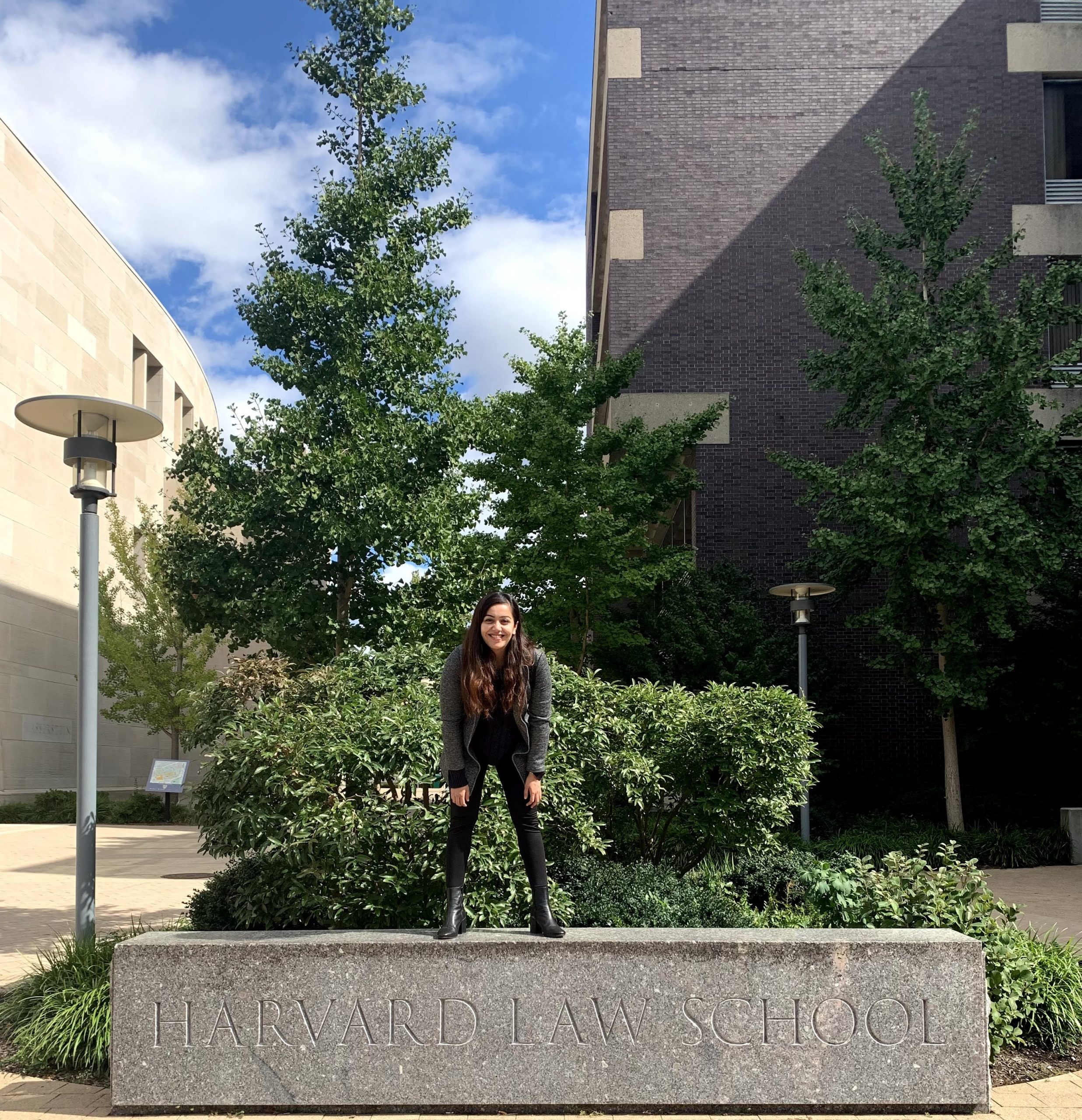
At Harvard, I decided to venture out of my comfort zone and explore different facets of criminal law through my study of white-collar criminal and cyber-criminal law. Additionally, the Harvard LLM provided me with the opportunity to study Fintech & its interaction with different legal systems in the world. As somebody who had no prior knowledge about Fintech, Blockchain or Cryptocurrency- the course provided me with the unique opportunity to learn about how emerging technology impacts extant legal systems and regulation.
Apart from the academic exposure, I also had the opportunity of making life-long friendships and being mentored by some of the best professors. This made my time there enjoyable and wholesome.
The Rhodes Scholarship is the oldest and perhaps the most prestigious international scholarship programme in the world. Could you suggest to our readers an ideal roadmap to qualify as a Rhodes Scholar?
Simply put, there is no specific roadmap. The Rhodes Scholarship, more than anything, is about authenticity: about unapologetically being yourself. Applying for the scholarship was not a knee-jerk decision for me. In my first year at CLC, I had decided that I wanted to pursue my master’s from an International University. I worked towards that goal for the next three years and finally applied for the scholarship in 2015. During the application process and my interviews, I realised that there is no prototype of a Rhodes scholar: anybody and everybody can and should apply. I think the commitment to service, humility, authenticity, and perseverance are the four pillars of the scholarship. This belief was further strengthened when I met Rhodes Scholars from across the world at Oxford- we were all very different from each other! The only thing in common between us was our collective and individual desire to give back to society.
What would you advise to all the forthcoming applicants who are applying to universities abroad?
Firstly, the decision to pursue your education outside India should not be an impulsive one. It should be well-thought-out and deliberated upon as the application process is extremely tedious and fastidious. It requires a lot of dedication and time.
Secondly, I would recommend extensive research before you begin the process. I spent months just reading up about universities in the United States and the United Kingdom to understand their admission processes, requirements and, more importantly, to gauge the academic ethos of the Universities. The American process is quite different from the English one in terms of SOP focus and academic/extra-curricular requirements. After this, I read up on all the potential scholarships that I was eligible for. Subsequent to this, I prepared a list of my preferred Universities and the scholarships I wanted to apply for. Once my groundwork was done, I had dived into the application process. This helped me streamline the entire process, which can otherwise be a bit overwhelming and daunting.
You have worked as a legal consultant to HAQ – Centre for Child Rights. You have also served as the Convener of the Legal Aid Society. Speaking, retrospectively how can law students make a difference when it comes to legal aid and legal-social work?
My work with the Legal Aid Society and then with HAQ (2018-2019) gave me direct exposure into the actual working of the criminal and the juvenile justice system in India. It additionally also gave me the necessary insight into the systemic challenges faced by our criminal justice system. Particularly, my research projects with the Delhi State Legal Services Authority shed light on the several institutionalised impediments faced by the incarcerated in actualising their legal entitlements and the general apathy of the justice system to prisoner rights and well-being. My work as a paralegal also made me aware of the paucity of research into the causes of criminogenic behaviour and the general gap between academic research and praxis in the field of criminal law.
Law students are in a remarkable position to facilitate change at both the ground level through fieldwork and through the law in courts. Exposure to fieldwork is essential for lawyers and law students alike to discern the complex challenges faced by our criminal justice system in order to craft a purposive and humanised approach or to create feasible/sustainable interventions. Law school is a great place to garner this experience- law students should volunteer as much as they can during their study of the law. I believe legal aid work prepares you for litigation in courts in India.
You are presently working as an Associate at Bharucha and Partners in the Litigation & Disputes Team. Could you highlight how a foreign LLM helped you in litigation? How has your experience in litigation been since you returned from Harvard?
My academic experience helps in legal research and in developing submissions and arguments grounded in legal jurisprudence. The LLM trains one to discern the fundamental legal principle behind an issue. It also inculcates the skill to analyse and organise voluminous material in a coherent manner.
Upon my return to India last September, I hoped to work and broaden my experience in criminal litigation, with a special focus on white-collar criminal law, anti-corruption, governance, and international financial crimes. Bharucha & Partners’ Litigation & Disputes Team was the perfect fit- a small team with a lot of criminal trial work. The litigation team, led by Mr. D.P. Singh and Ms. Sonam Gupta, specializes in white-collar crimes and regularly appears before Courts and Tribunals in cases involving both domestic and international financial crimes and general criminal law. Under their collective tutelage, I have had the chance to appear across all levels of the adjudicatory process.
You recently cleared the New York Bar examination and the England & Wales (MCT) Examination and will be qualified to practice in three jurisdictions soon. Could you throw light on the process to register for bar examinations outside India and how to prepare for the same?
I qualified for the Indian Bar in 2016. I sat for both the New York and England & Wales Bar (MCT) examinations this year.
To be eligible to sit for the New York Bar Exam, you need to have an LLM from an American Law School. Further, you need to dedicate approximately 12 credits to the Bar Exam during your LLM. On the other hand, you don’t require an LLM to sit for the England & Wales Examination. You only need to be a lawyer qualified to practice in a common-law jurisdiction.
It was challenging to manage my preparation with work, and it wouldn’t have been possible without the unconditional support of my team. Preparation for both exams is extremely arduous- especially, New York. Both examinations require consistent dedication and a lot of discipline. I used to devote 4-5 hours during weekdays and approximately 10-12 hours a day during the weekends.
You have also been invited by International Organisations such as WIPO and leading law schools in India to deliver guest lectures on Fintech & Emerging Tech. Your work has also been published in international journals. Are you interested in simultaneously pursuing a career in academia?
I am definitely interested in contributing as visiting faculty at universities and law schools in India. I have been fortunate enough to be invited by some law schools in this regard. Further, I really enjoy legal research and legal writing. Going forward, I would like to write and publish more on topical legal issues. I feel this provides an opportunity to conduct in-depth research on a particular area of law and to pen legal arguments in a cogent manner which in turn helps gain clarity on the law. Similarly, teaching a subject also sharpens your understanding of a particular area of law as you explain the concepts in a simple way (often through illustrations and examples) to students.
What does your legal career trajectory look like? What advice would you have for law students & young lawyers who want to pursue a legal career in a similar direction to yours?
Honestly, my heart lies in child rights and juvenile justice, but I hope to garner as much experience as I can in the next 4-5 years in different areas of law before jumping back into it and establishing my own practice. Eventually, joining politics is also on the cards.
I think my advice is that law students and young lawyers shouldn’t be in a hurry to specialise. There is merit in being a generalist rather than a specialist early on in your legal career. Second, be kind to yourself during the process. I have a hard time practising this as well, so this is my advice to myself too. Failure is inevitable, and you need to keep at it despite it. Third, invest in your friendships and relationships. Take out time for people who matter. Don’t prioritize work over your mental & emotional well-being. On your worst days, your investment in your friendships will always come through.
You have an intriguing trajectory that we are excited to talk about. Did you envision this for yourself in the first year of law school?
Thank you for inviting me. Indeed, it has been a very interesting journey so far and I hope that it continues to be. When I joined law school in 2012, I did not in any way anticipate that I would be working at a law firm in New York or moving to a new country altogether. I wanted to get an LL.M. degree to take advantage of the several practical opportunities available to understand the legal practice in foreign universities, which are still missing in Indian universities as their main focus remains on teaching the theory of law. I hadn’t decided at the time whether I would pursue my LL.M. in the United Kingdom, like most law students in India, or the United States, where job prospects after an LL.M. for Indian lawyers are considerably limited. With hard work and some luck, I was admitted into the University of California, Berkeley which is a great school, and my launching pad into a career in the United States. During my LL.M., in addition to my coursework, I did a part-time internship with the Office of the General Counsel at the Bay Area Rapid Transit. I truly cherish that internship as my first exposure to the workplace in the U.S. The journey has been surreal and has involved plenty of blood, sweat and tears. It also required ample time and perseverance to continue looking for a position that would entail work in the areas of law that I enjoy. Overall, the journey has been interesting, and I hope it stays that way!
Let’s start from the beginning: why law out of all the career choices available? And how was your experience at Guru Gobind Singh Indraprastha University?
I had wanted to become a lawyer ever since I was in ninth grade. It wasn’t an obvious choice, though, as everybody in my family is either a doctor or an engineer, and my father was in the army. However, the ability to use analytical reasoning, writing and oratory skills in a profession were factors that got me interested in the legal profession. I have participated in several debates and had been commended in school for my writing skills, which aided my decision to become a lawyer. Essentially, the profession indeed is a mixture of a lot of writing and speaking. When I started law school, I was very interested in venturing into and specializing in criminal law; however, I was advised by senior lawyers that it wasn’t the safest profession for women in India and that I should consider corporate law instead and that is what I did. Most of my internships during law school in India were in the field of corporate law and capital markets.
Regarding my experience at Guru Gobind Singh Indraprastha University, I would definitely say that the five years were very formative in my career development, especially in terms of thinking about legal issues. I participated in many Model United Nation conferences and Parliamentary Debates, which ultimately had a bearing on my choice of practice area. I think the best part of being in law school is that the only responsibility is understanding the courses, getting good grades, interacting with other students and professors, and participating in co-curricular activities. I chose my university mainly for two reasons – first, it had an option to pursue a Bachelor of Business Administration integrated with the LL.B. and second, the class size was very small (30) for this course, which is a great way to get individual attention from professors.
During your time in law school, you interned at different offices, including a senior advocate, a medical devices company, capital markets departments of two of the biggest firms (Luthra and Khaitan) etc. What value did these internships add?
Every internship teaches you how to think and write like a lawyer. Even though an intern isn’t given huge responsibilities or assigned drafting an entire document, you get to witness and assist lawyers by researching specific points and producing early drafts. It becomes a part of the learning process. Amongst my several internships, I had the greatest learning experience when I interned with a Senior Advocate in the Delhi High Court who practices in Criminal Law and with the capital markets team of Khaitan & Co. as well as Luthra & Luthra Partners where I learnt a lot from a small team including a partner and a senior associate. The internships shaped me as a lawyer, and they essentially helped me learn how to think, research and write.
However, the style of writing adopted by lawyers in India is very different from American or British lawyers. Therefore, I had to adapt my writing style to what is expected from an American lawyer. The LL.M. program and taking the New York bar were very important in my understanding and adaptation of writing an effective brief like an American lawyer.
In one of your interviews, you stated that while shortlisting schools for LL.M., you considered the quality of journals published by various law schools in America. And even during your time at Berkeley, you were a part of many renowned journals. Would you please share the thought process behind giving such importance to journals? How has being associated with these journals shaped you?
That is correct, one of the many factors I considered while shortlisting schools to apply to was the quality of journals published by the law school. I was an associate editor for both the Berkeley Business Law Journal (BBLJ) and the Berkeley Technology Law Journal (BTLJ). Most law schools have good journals. However, some are more renowned than others, for instance, the Berkeley Technology Law Journal is one of the top journals in the U.S.
As a member of these journals, I was exposed to various interesting articles submitted for publication and participated in cite and source checking for these articles, as well as took part in several activities organized for the members. The activities provided access to various law firm organized events as well as to students pursuing their J.D. who had a different perspective on the law school experience as compared to international law students and insight into the American legal market. When you’re working for such journals, you get to read a lot of excellent literature that has been written, understand the editorial process, which is immensely helpful if you are interested in publishing articles later in your career.
One of the most interesting observations we have noticed is that it was only after you started pursuing your LLM that you streamlined your work towards arbitration. Was there any particular experience/incident that inspired you to pursue a masters?
First, regarding the focus on arbitration, it is correct that after my LL.M. I refocused on opportunities in the international arbitration field. However, my interest in the field was longstanding. During my third year in law school, one of the Model United Nation conferences I attended included a ‘Permanent Court of Arbitration’ committee and the case we were arguing was the famous Philip Morris v. Australia case. I found it very interesting how parties had the autonomy to choose the law applicable to their dispute, the seat of arbitration and the arbitrators deciding the dispute. I found the entire procedure really different, giving a lot of autonomy to the parties. That is how I got interested in arbitration. Once I started my LL.M., I opted for all courses related to international arbitration. Fortunately, my commercial arbitration professor was very patient and encouraging and his coursework genuinely reinvigorated my interest in international arbitration.
Second, I aimed at specializing in business laws during my LL.M. and opted for as many international law courses as I could. My LL.M. was never meant to focus on international arbitration alone and I am glad it didn’t since I have used various business law concepts in my international arbitration practice so far.
Right after Berkeley, you attended the International Arbitration Academy in Paris, one of the most renowned institutions worldwide for studies on Arbitration. Could you share with our readers your experience at the Academy?
It was an absolutely great experience. We were a class of around 80 students including young to mid-level practitioners sharing a common interest, international arbitration. The courses are taught by renowned practitioners from all over the world. To name a few, we had professors from the University of Paris 1 (Panthéon-Sorbonne), the University of Liège and Brussels, the University of Oslo, the University of Geneva, Dean of Swiss International Law School and Professor emerita of Private Law at the University of Basel/Switzerland.
There were also workshops and seminars conducted by legal counsel from ICSID, Deputy Secretary-General and Principal Legal Counsel, Permanent Court of Arbitration, Secretary-General, ICC International Court of Arbitration, Deputy Secretary-General, ICC International Court of Arbitration, Secretary-General, Hong Kong International Arbitration Centre, as well as arbitration practitioners from Shearman Sterling.
Not only did I get exposure to the teachings of the esteemed faculty, I also learnt about the difference in practices and experiences of the other students coming from approximately 30 countries. Overall, it was an excellent learning experience and networking opportunity. I made several cherished connections which I maintain to date.
You have interned at various US law firms, like Alston & Bird, Busse Disputes. How have these experiences contributed to your growth? Do you think it would have been easier to land a role if you attained bachelors from a foreign university?
I admit it would have been considerably easier to be employed in the U.S. had I pursued my Juris Doctor (J.D.) in the U.S. As a matter of fact, I did consider it, however, I had already completed my B.B.A. LL.B. and LL.M. degrees, so I didn’t really think it was an economical option.
It is difficult for international students/lawyers to break into the legal market in the U.S. as U.S. law firms generally hire from their summer associate cohort, and international profiles aren’t the usual suspects owing to the obvious lack of a conventional J.D. degree. However, difficult does not mean impossible, many LL.M. students who went the extra mile are now working in law firms in the U.S.
I worked with Alston & Bird, New York for around eight months with a team of very competent and approachable lawyers. I also made some great professional connections which I maintain to date. I not only learnt how to draft legal memoranda, effectively conduct research in American and International law, and understand aspects of an arbitration proceeding and enforcement action. This was my first experience and exposure to US law firm culture which is different in many aspects from Indian law firms.
When I went to Germany to intern at Busse Disputes, it was a country and culture that I did not know much about. It was my first experience with a boutique arbitration firm, and it was interesting to learn how a boutique firm functions. I also had the opportunity to understand an arbitration proceeding from the perspective of an arbitrator. The manner of working and assigning tasks is comparatively different from the U.S. I found that German firms are more formal and hierarchical whereas U.S. firms (or at least the ones I have worked with) are collegial and tend to give you as much responsibility as you are willing to take.
What were your key responsibilities as an Associate at Diamond McCarthy LLP? What are key firm culture differences in India and the US?
As the only associate in the international arbitration practice group at Diamond McCarthy, I was entrusted with a unique level of responsibilities and autonomy on a range of complex arbitration and related litigation matters. I conducted legal research and drafted pleadings, witness statements, instructions to experts, document production requests and responses, and handled correspondence with opposing counsel and tribunals. I was also heavily involved in the business development efforts of our practice group.
I think it was a great learning experience since it led me to understand how all aspects of a case really works and how different components come together, as well as the requirement to consider external factors which impact a case.
With the passing years and stricter visa regulations, we understand that getting a job in the US with an LL.M. is not very easy. What did you do differently to penetrate the legal market, and is there any advice for people looking to enter the US legal market?
There is this notion that visa regulations restrict international lawyers from getting employment. However, I think that is only partially true. Once you have proved your mettle, firms will gladly sponsor your visa. The greater barrier is the unconventional profiles that international lawyers bring to the table. If you look at tech companies, they hire immigrants (including Indian engineers) all the time and sponsor their visas.
I encourage people to not be disheartened owing to this preconceived notion regarding potential visa issues, and apply to as many jobs as you can with a cover letter and resume tailored to the position.
I quickly learned that U.S. law firms were not willing to hire me as an associate straight off the bat, so I started applying for trainee and internship positions. I also networked quite a fair share and tried to attend all available dispute resolution related events, even during my LL.M.
As far as the financial side of things is concerned, I took a loan for my LL.M. An LL.M. is a huge financial investment, and I was determined to ensure that the investment was worth it by persevering and leaving no stone unturned. I will not deny that there were times when all I wanted to do was give up, take the easier route and apply to a position at an Indian law firm. At such times, my mother gave me the strength to keep at it and reminded me that there is always a light at the end of a tunnel.
You were a gold medalist at Delhi State Inter- School Karate Competition. And even during your time at Berkley, you opted for a Yongmudo (Korean Martial Arts), Taekwondo, and Ballet course. Could you tell us more about these interests of yours?
My father was in the army, and since I was a child, he always encouraged my sister and me and provided me with avenues to participate in physical activities like rock climbing, rappelling, skiing, basketball and Karate.
I moved to the U.S. for my LL.M. when I was 22 years old, I was learning about a new country, its legal market, and dealing with applying to internships and associate positions. At times I found myself overwhelmed by these things, and the Ballet course, Yongmudo, and Taekwondo classes were an effective way to cope with the stress and give myself a break from law school. An added advantage was that I made some good friends and met many people who I wouldn’t have had access to if I only spent my time in law school. I think overall it did wonders for my mental and physical health.
The pandemic has been quite challenging both personally and professionally. What are your coping mechanisms? What would be your parting advice to students and lawyers who want to work in American law firms?
The uncertainty combined with the devastating state of affairs during the peak of the Covid-19 pandemic affected everyone all over the world. Personally, there was and continues to be a lot of hard work which goes into coping with everything, and hobbies like gardening, reading books, and painting really helped me. But I won’t lie, there were days during the pandemic when I felt burnt out. That being said, it also made me acknowledge that mental health issues remain unspoken in our profession, making it even more important to reach out to others if things get overwhelming.
My advice for students and junior lawyers, especially during this pandemic, would be to take small steps towards your goals but keep moving. The small steps and plans that you layout seem achievable that way. I would suggest that they meet new people – virtually or if you are able to in-person, even if it makes you feel uncomfortable at first. Once you start, you will eventually enjoy interacting with people who share a mutual interest with you. The best relationships I have fostered with colleagues are the ones that began organically and also making the effort to stay in touch with them. Be confident and express your interest if you are interested in a person’s practice and would like to learn more about it. You will be surprised at how many people respond and would like to help younger lawyers build a successful career. Lastly, I would just advise or rather preach something I do practice – never give up, your dreams might seem big right now, but believe in yourself and you will achieve what you set your mind to. It will not be easy, but it will be worth it, and eventually, everything will make sense. For the fear of sounding too much like Dr Seuss, I truly believe that in life, you can steer yourself in any direction you choose. I hope that does not sound too cliche, but I truly believe it. Last but not least, make sure you have fun in this journey even though it’s a difficult one. Take care of yourself and hone your skills continuously to become the best version of yourself.









 Allow notifications