Tag: AZB

  • Whilst I do agree that the dynamic nature of tax makes it challenging, that is precisely what also makes it interesting and exciting,Counsel at AZB & Partners

    Whilst I do agree that the dynamic nature of tax makes it challenging, that is precisely what also makes it interesting and exciting,Counsel at AZB & Partners

    This interview has been published by  Priyanka Karwa and The SuperLawyer Team

    Sir, can you please share the story of how you initially became interested in law and what motivated you to pursue it as a career?

    Funnily I come from a family of lawyers, being a fourth generation lawyer from both sides, so the “interest” in law has always been there, however, the journey to pursue the same was not so straightforward. 

    As a kid I always aspired to be a lawyer, however, once I completed my schooling, I decided against it and went abroad to study Business and Public Policy Management. When I came back, I joined a budget hotel as a part of their management team. Long story short, in 2008 the global recession hit and the investors in the business being non-residents wanted to liquidate their investments. That’s when I realised that I needed to have a professional degree handy as a back-up, even if I never wished to practise. I gave the entrance exam for Campus Law Centre, thankfully got through. I chose evening classes since I was working during the days, however, since that did not take up a lot of my time I started assisting in my dad’s office. Just basic stuff like making returns for individuals which led to basic preparation for representation before the appellate authorities. 

    The intrigue came from the dynamic nature of tax law with changes being introduced with every finance bill and the constant tussle between the department and the taxpayer whilst interpreting the same section. By the end of my 3-year course, I knew this was my calling and decided to join the profession.

    With over 10 years of experience in the field of direct tax advisory and litigation, could you highlight a specific case or project that you found particularly challenging and how you successfully navigated it?

    One case which comes to mind is the Honda Trading Corporation case, where I had the privilege to assist in, which was argued over a span of a few days before the Delhi Tribunal and actually led to an amendment being brought into the statute book. As a lawyer, the satisfaction one gets in such matters and the acknowledgement of the same whereby the legislature brings in amendments to overcome the judgement is something which cannot be expressed in words. 

    Tax law is known for its complexity. Could you explain your approach to helping high-net individuals and corporate entities in optimizing tax efficiency and managing compliance issues effectively?

    Firstly, this notion of tax law being more complex than other laws is flawed. If one is honest and diligent in their subject, the complexity is of no consequence. If your basics/fundamentals are strong, nothing can stop you. This is evidenced by the fact that the greatest tax lawyers of the country do not necessarily have a tax background like the great Nani Palkhivala. Whilst I do agree that the dynamic nature of tax makes it challenging, that is precisely what also makes it interesting and exciting. 

    Coming back to your query, the Indian Tax Department is known to be one of the most aggressive departments world-wide, therefore, tax compliance ought to be a key consideration for any businesses. Till what is being done is within the four corners of the law, even if the position being taken is aggressive, should not deter the clients. That being said, one must be mindful of not being unrealistic under the garb of being aggressive. Hence, being primarily from a litigation background, the endeavour is to advice clients whilst keeping in mind the litigation exposures that I foresee and mitigation of the same.  

    You’ve represented clients before various judicial forums, including the Supreme Court of India. Can you share some insights into your strategies for building a successful track record in representing clients in high-stakes tax litigation cases?

    The strategy is very basic and simple. Read – Re-read the files and Repeat!! 

    Be thorough on facts and the relevant legal provisions. Something which I have learnt from my mentor, Mr. Chopra over the years is that till date whenever we discuss any case, his first go is to read the relevant sections even if he has read them a thousand times. Trust me something as basic as reading the relevant provisions can sometimes lead to interpretations which you could not fathom earlier. 

    Secondly, ensure that all the relevant facts/documents are on record. Last but not least, court craft is extremely important in any litigation. Understanding which battle to pick and when to relent is extremely important. Harping on a point which apparently is not working, learn to let go and move on to the next one.   

    Your expertise spans various tax matters, including income tax, corporate tax, international tax, and transfer pricing. How do you keep up-to-date with the constantly evolving tax laws and regulations in these diverse areas?

    First and foremost, read the bible (the Income Tax Act) again and again. I can’t emphasise that enough. Keeping a tab on the ever-changing landscape of tax laws is extremely hard, but I am lucky to be in a team in which our mentor ensures that we earmark time every week to discuss important judgements/circulars etc. which really helps. Plus, over time I have realised that such discussions with every member contributing with their point of view helps expand one’s opinions and understanding.  

    As Counsel, you’ve worked with both domestic and international clients. Can you discuss the unique challenges and opportunities you’ve encountered when advising international clients on Indian tax matters?

    The client comes to you for the value-add you provide. The nationality of the client is of no consequence. The only difference, if any, which I have noticed is that in the cases of international clients, since they are not acquainted with the nature of litigation in India or Indian laws, it is important to be very transparent and clear in all communications and explain the strategy along with its rationale. 

    Finally, considering your successful career and diverse experiences, what advice would you like to offer to fresh law graduates who are just starting their journey in the field of law and tax advisory?

    To be honest and speaking from experience, I would urge all fresh graduates to begin their career with smaller/boutique firms. The kind of learning and experience you will get there is unparalleled. Get the fundamentals clear and understand how things really work at the grass root level. This is something you will never learn in bigger firms. No matter how attractive big tier 1 firms sound, it is not recommended to begin your career there. 

    If your fundamentals are in place, everything will follow and fall into place. It is important to have a good mentor, as it plays an important role in your initial years. Honestly, I feel I have been extremely lucky in that department. I started my career with a boutique tax firm where my senior was known to begin his day at 4 AM. He always told me that by the time the world wakes up, half of his work was complete. So that’s one thing I held on to and till this day, I begin my day very early. Secondly, my mentor Mr. Deepak Chopra has always imbibed in us that you don’t leave your clients in the office. It is important to keep at it till you find the solution or to simply put, the value-add the client came to you for. 

    To sum up, if you are honest to yourself and your work, the world is your oyster. 

    Get in touch with Rohan Khare-

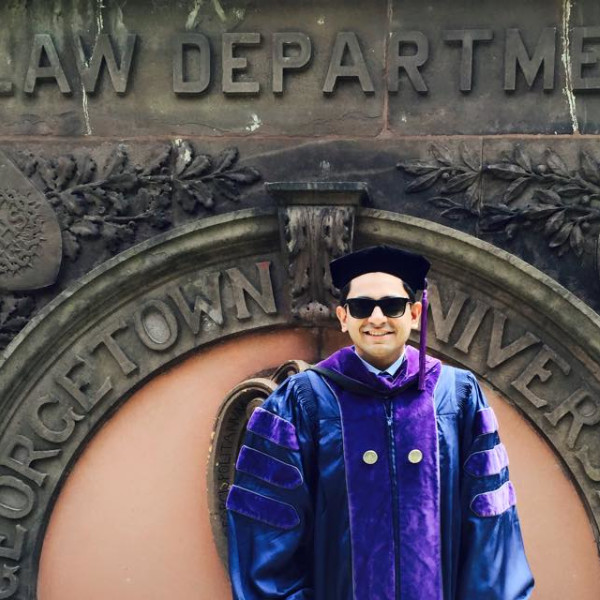
  • Anmol Anand, Associate, AZB & Partners, shares his experience on LLM from Georgetown University and career in taxation law

    Anmol Anand, Associate, AZB & Partners, shares his experience on LLM from Georgetown University and career in taxation law

    Anmol Anand graduated from ILS Law College, Pune, in 2014. He then went to Georgetown University Law for studying LL.M in law of Taxation. After a brief stint as International Tax Analyst at Bloomberg BNA he returned to India and worked with PDS Legal. Currently, he working in AZB & Partners as an Associate.

    In this interview, Anmol talks about:

    • His experience at Georgetown University Law Center
    • Career in taxation law
    • Difference between International Tax and Domestic Tax Practice


    HOW WOULD YOU LIKE TO INTRODUCE YOURSELF TO OUR READERS? PLEASE TELL US SOMETHING ABOUT YOUR PRE-COLLEGE LIFE?

    Not sure how to put this across for readers, but Hi! I am Anmol, just another lawyer with a curious and ambitious mind.

    Well before ILS happened, I had a pretty nerdy journey through the better half of my academic career. I had scored pretty decently in my X and XII, which at that time seemed satisfactory to my ambitious mind.

    Coming from a family full of lawyers, I was on the path to become an engineer. I was a science student with aspirations of making it through the best colleges for B.Tech. I also had law as my backup option since I was a firm believer in not wasting time or creating any gap in my resume. I thought of law as an alternate option in the event I would not get through any of the engineering entrances so as to try a different field while perhaps preparing for taking another shot at the engineering entrances a year later.

    Soon it was all over and I was left with my score in XII standard and an option to take up engineering colleges’ way down my priority list. Bogged down with not making it to any of the preferred institutions for B.Tech I chose to go ahead with law, at least for a year, wherein ILS was the clear cut choice, being one of the better institutions as per reputation. I mean there were couples of reasons for choosing ILS – one that there was no entrance exam and that selection was based on XII score and second it was away from Delhi.

    So from a family of lawyers, and from never having set foot outside Delhi, I chose ILS and flew to Pune.


    PLEASE TELL US SOMETHING ABOUT YOUR COLLEGE LIFE. HOW IMPORTANT WAS YOUR COLLEGE IN SHAPING YOUR CAREER?

    ILS as mentioned earlier, was perhaps a stopgap arrangement for me when I made the decision of studying there. Well, it turned out to be the best decisions of my life.

    I remember my first day in ILS and was immediately hooked on. I was surrounded by highly competitive peers who either had law as a preferred career choice or were far too serious about ILS being a stopgap arrangement for them. However, soon for me, I became adamant of continuing at ILS and taking my career forward from thereon.

    ILS as an institution threw various options at students to pick from. One could enroll oneself in any particular kind of specialised academic cell or pick up a moot-court competition or engage in research paper writing etc. after regular classes. Since regular class hours were not long, I had ample time to pursue a lot of extra-curricular activities.

    I would, therefore, remember ILS as a place that taught me the value of opportunities, self-learning and leadership. From acting in dramas to representing college at national level moots to leading the charge for sports activities, I had bagged various opportunities and converted most of them into success, while also making a lot of friends, who will remain so for life.

    I also took time out to enrol myself in the Company Secretary Course, which was the first time in point when I got interested in tax laws. Although I could not manage completing it, given that I left the country right after ILS for my masters, it’s important to mention that at ILS it is manageable to be able to pursue the CS and that pursuing so opens up a wider perspective that I believe everyone should endeavour to at least discover.

    To conclude, I would say that I had to pick ILS for the lack of better options at that point of time but I am happy to have studied there and gathered most of out.


    WHAT MOTIVATED YOU TO GO FOR A MASTERS PROGRAMME? WHAT LED YOU TO CHOOSE TAXATION AS YOUR SPECIALISATION?

    Well taking up LLM as the next move in my academic career was largely because I had the will to dig deeper in tax laws.

    That does sound boring. But honestly I felt that I had the knack for tax laws once I started pursuing CS, followed by various internships in tax firms. What really had me hooked up to the idea of LLM in tax laws was one of the national moots that my peers and I participated in. It was in international tax and although, unfortunately for us, we ended up as runners up, it opened the idea for me to explore the subject of international tax.

    The other reason why I picked taxation as specialisation, apart from tax being a heavily litigated subject, was perhaps because it was rarely chosen by law students (may be because it sounds boring to a lot of people), which to my mind was an opportunity for the future. I knew I had a knack for a subject, which to a lot of people would always remain a text book that they will dread opening.

    Therefore, before I could to step into the shoes of being a hardcore tax lawyer, I wanted to dig deeper into the subject, which is why I chose to take up LLM in tax laws as my next move, by the end of fourth year in college.


    HOW IMPORTANT IS TAXATION AS A SUBJECT FOR LAW STUDENTS? WHAT COURSE OF ACTION WOULD YOU SUGGEST TO STUDENTS LOOKING TO SPECIALISE IN TAXATION?

    I believe that even if one is not willing to be an expert in tax, one should not neglect it completely. India is the front-runner when it comes to aggressive tax jurisdictions. Newspapers make headlines almost every week with some or the other tax policy or decision which shows the volatile nature of the subject in India.

    It’s not a secret that demonetisation was aimed at booming the revenue by increasing the tax base, GST was brought in for achieving better compliances, GAAR and concepts like equalisation levy were all directed against tax planning and at times to counter what the courts had otherwise held in favour of the taxpayer. It’s important to realise that this country runs majorly on taxes. Most of the times the income tax department tries to extract more than what is allowed to be gathered as taxes as per law. This outreach, apart from being unreasonable, brings with it most interesting issues that are at times dragged to the supreme court only to have the government amending laws to nullify a taxpayer favourable supreme court decision. On the other hand, businesses are always looking to pick up tax advantages in every transaction, which is where the involvement of tax lawyers has become inevitable. Therefore, its time law students should realize the importance of tax laws and work towards putting a couple of pointers regarding the same on their respective resumes.

    Taking up specialised courses in tax, pursuing CS/ CA or like courses, taking up internships or going all the way in spending a year or two in tax LLM would definitely help.


    WHICH UNIVERSITIES DID YOU APPLY FOR LLM? HOW DID YOU CHOOSE GEORGETOWN UNIVERSITY LAW CENTRE?

    The biggest challenge to apply for LLM in tax laws is that not every university around the world has a tax specialised LLM. Therefore, again I chose to have back up options like National University of Singapore for a general LLM program.

    However, I had a preference to go to the United States given its unique and discrete tax policies that are followed world over. I had applied to most of the the specialised tax LLM courses at universities like New York University, Northwestern University, University of Florida, Boston University, Georgetown University Law Centre etc.

    Given that Georgetown University was considered to be one of the best in the world for specialised tax LLM courses, it was the inevitable choice for me. The options for tax courses were extraordinary and were far from being imaginable for a student just out of law school like me. I remember this one course, which was called “international business planning workshop”. It was taught by an adjunct professor who was also the chairman of national tax practice at Baker Mckenzie. The course involved practical international tax planning issues for business looking to restructure globally and was graded on one’s understanding of such issues and capability to present the same. All this is to say that the learning experience at Georgetown that I have had is unparalleled and I would highly recommend law students to explore the option of LLM abroad, if possible.


    WHAT DOES THE CV OF A STUDENT SEEKING ADMISSION TO A PREMIER UNIVERSITY OFFERING AN LLM PROGRAM HAVE TO LOOK LIKE? WHAT SHOULD BE KEPT IN MIND WHILE WRITING SOP FOR LLM ABROAD?

    I believe, that the CV of a student looking to apply for an LLM should be clear and reflective of one’s decision of picking a specialisation, if any. It should be short, preferably one page and should include references to instances that show one’s capability of being an opinion maker.

    SOP on the other hand could be as long as two pages. It should be crisp, should reflect on the personality of the candidate and the flow should come out naturally. The candidate should put in there his/her thought as to how a particular course at a particular university in a particular city will help the candidate in achieving his/her short term and long term goals.


    YOU HAVE WORKED AT BLOOMBERG BNA, WASHINGTON DC POST YOUR LLM. HOW WAS YOUR EXPERIENCE WORKING THERE? HOW IS THE WORK CULTURE ABROAD DIFFERENT FROM INDIA?

    BNA was a fantastic stint. I would rather say that it was an extension of my LLM program since I was working exactly in what I had just been trained for at Georgetown. My job was research oriented and advisory in international tax and I had to play around with tax laws in about 114 countries, which was tedious but interesting.

    Working at BNA under Bruce Reynolds was inspirational. My other colleagues at BNA were very supportive and insightful and it was real fun to be working with them. Work culture was very typical as per American standards. Best part about working in Virgina was that it was about a few minutes away from where I lived in Washington DC, the working hours were decent, people at the organisation were compassionate and respectful and mindful of everyone’s personal life.

    Working here in India, although not complaining, is very aggressive. Everyday here is a new challenge, sometimes with added levels of difficulty. Work hours are long, but none of this makes it worse. It is rather better.


    WHAT FACTORS INFLUENCED YOUR DECISION TO COME BACK TO INDIA AFTER WORKING IN WASHINGTON DC?

    Well the biggest factor that influenced me to come back to India was visa issue. I had the option of opting for a program called CPT, which allows you to study and work alongside, but that seemed to be taking the issue too far for me. Because of the visa issue, it was becoming difficult to find a job at a law firm in the US, since they would not offer one to someone not holding a valid H1B visa already. Clearly that was a vicious circle. With my back against the wall, I decided to move ahead in career and look for jobs in hometown rather than opting for CPT.


    PLEASE TELL US ABOUT THE RECRUITMENT PROCESS AT AZB? HOW IS THE WORK ENVIRONMENT AT AZB?

    AZB Delhi recruitment happens in different manner for different teams I believe. For our team, its need based as is in most cases and we look to identify candidates based on their level of reception to most of the queries and their responses of course. If you are an entry-level candidate, your merits won’t matter as much as your ability to demonstrate interest in the subject.

    I think working at AZB exposes you to the best of all practices. I am part of the tax litigation team here. So primarily, I represent a number of major MNCs pan India. I think it’s much more smoother to do so at AZB, given AZB has presence in major cities like Mumbai and Bangalore and therefore traveling from Delhi to at least either of these jurisdictions assures full ground support.
    I also engage in tax advisory, which flows from various practices that run parallel at AZB. For instance, I also work with corporate partners of AZB located in different cities, on the tax side of a particular transaction/ restructuring.
    What makes working at AZB special is the quality of work and the work culture that I believe is inherent in the nature of every lawyer here. Anyone at AZB can freely walk up to any else for help and help is never denied. Also I should mention that AZB hosts an annual off site for all AZB lawyers across the country, which is an absolute delight to be at.


    WHAT IS A TYPICAL DAY AT WORK LIKE? HOW DO YOU MANAGE TO STRIKE A BALANCE BETWEEN YOUR PERSONAL AND PROFESSIONAL LIFE?

    Typical day at work normally starts with courtroom followed by meetings or calls or just completing pending assignments. The best part about working at AZB is the team that I work with. It is spear headed by Mr. Deepak Chopra who is not only inspirational, but also instrumental in making sure that his associates’ personal lives are not compromised. We as a team work for mostly corporate clients representing them before various forums pan India in relation to issues of international tax and corporate tax.

    I believe that at this stage of my career, its important to invest more time in professional life, while focusing on personal life on the sidelines. In early stages in a lawyer’s career, it’s easier to do so I believe. Most of my time, these days, is spent in traveling and as soon as I get time off, I like to spend that with family, or get some rest or maybe catch up with some friends. I believe that if one is happy professionally, then at least at the earlier stages of career, one is bound to strike balance with one’s personal life.


    HOW IS INTERNATIONAL TAX PRACTICE DIFFERENT FROM DOMESTIC TAX PRACTICE?

    Totally different. International tax issues arise out of cross border transactions. Most of these cross border transactions involve the interplay of tax treaties between India and the other country at the other end of a particular transaction. Rules relating to interpretation of such tax treaties emanate out of documents published by OECD or other international organisation or negotiations between the two countries. They trump the application of domestic law if they are more beneficial to taxpayers.


    WHAT DOES IT TAKE TO BE A GOOD TAX LAWYER?

    To be a good tax lawyer, one needs to have a strong accountancy base. It’s very essential. Secondly, it’s important that tax lawyers, at least in the early stages, focus on lower authorities first rather than jumping to the high court level and Supreme Court level. Thirdly, it’s important for a tax lawyer to keep his/her knowledge up to date, especially given the divergence in view on various tax issues across the country. Fourthly, it is highly recommended for lawyers interested in tax to become acquainted with concepts of international tax and transfer pricing as the world is seeing numerous changes in those fields which are bound to give rise to issues that will be ripe of advisory and litigation in the near future.


    LASTLY, WHAT WOULD BE YOUR PARTING MESSAGE TO OUR READERS?

    My grandfather used to say that a lawyer is a student for life. One should always give importance to self-learning, as the knowledge you gather today will be your biggest weapon in future. Also, learn the importance of networking. Your network will sooner or later decide your fate as to where you land up in future.


  • Ishana Tripathi, Legal Practitioner, on Policy Law, working for Tier-I firms, and her diverse experience

    Ishana Tripathi, Legal Practitioner, on Policy Law, working for Tier-I firms, and her diverse experience

    Ishana graduated from NALSAR in 2011 and joined AZB in 2011. After working there for three years in the fields of acquisitions, inbound investments, commercial/civil/corporate crime litigation and arbitration, she then branched into helping set up a private mediation centre – Centre for Advanced Mediation Practice. She assisted them with rule drafting and case management strategies and also a lot of business development. In 2015, she started work on two projects in parallel, the Centre for Policy and Research, Bangalore, and Vidhi Legal, Delhi; one on civic citizenship to develop a constitutional law search engine and the other on court annexed mediation.
    In this interview we speak to her about:
    • Working for Tier-I firms such as JSA and AZB
    • Her time in NALSAR
    • Her experience in Policy Law

    How would you like to introduce yourself to our readers?

    This is a trick question. If it has to be concise, then it would someone who is trying to navigate through the various avenues of the inter discipline of law available today!  To me, there are a variety of experiences that one can gain even while pursuing a corporate law firm career without viewing it myopically.  While “specialising” in an area and building your own niche is important for recognition, if you don’t broaden your horizons to work – in every space and opportunity available, in my view, at this seventh year of practice, your ability as a lawyer stagnate.

    As a professional who is here to stay, you need to keep educating yourself to the changing ecosystem and while you can’t know everything, it our responsibility to be aware of as much as possible and not let go of opportunities that allow us to experiment. Law as professional can be a beautiful thought provoking and life changing way of life.

    Give us a brief overview your NALSAR experience for our readers.

    The NALSAR experience is novel to each one in terms of utility. For me, law school was a confusion on whether I want to pursue the law at all. Today, the passion I feel for law comes from working with some of the best people in the profession – a privilege that at the beginning  of my career in 2011, came from being a NALSAR graduate. It would be foolish to deny the edge that having an “National Law School” label will give you but to say that the students are smarter than the rest would be another thing and misconceived.  Its ultimately boils down to a proof of hard work, integrity and dedication – which you need to find within.


    What kind of internships did you undertake during your student years?

    Law school to me was an opportunity to explore and take chances. I did close to fifteen internships, with different work profiles, I didn’t repeat a single internship. This was a personal choice. I worked with government organisations like TRAI, not for profits like TERI, clerkships with the CLB and the Supreme Court, trial work, general litigation and corporate law firms.  By the end of it, the only thing, I had no idea what I wanted to do but I knew what I didn’t. For instance, I realised I was too mercurial for criminal trial work (here, i mean cases of rape, domestic violence, assault, and not white collar work) and decided not to pursue that route. I am now venturing back into criminal trial work – particularly in relation to restorative justice models – so lets see if I have reached an emotional maturity to handle it.


    Is it absolutely necessary to moot or undertake paper publications in order to be a successful advocate?

    There is no straight jacketed formula to success. Every individual has their own journey.  Like I said, law school is an individual experience. But if it is advice, then I would urge people to not be close minded, especially todays generation of lawyers –  who have many more avenues like legal journalism, legal policy, legislative drafting – which are work spaces available for a lawyer and were not as present in the mainstream in 2011 when I graduated. Try as much as possible in law school but do it with zeal and not because the mass says so. Law school prepares you to embrace different perspectives. While having ambition and direction are important, do not write off anything.


    What are your areas of specialisation and how did you go about choosing these fields to specialise in?

    I specialise in – ADR and corporate /commercial litigation, and, labour and employment laws. The first was an interest in law school which solidified at AZB and is a true academic area of interest which I continue to pursue. The latter is attributable entirely to AZB. If you would have told me in law school that I would become a diligence handbook for labour laws, I would have laughed at myself, it was my worst subject – mostly for the lack of interest in it! Today, the research and jurisprudence in it fascinates me to no end. I read regular updates and amendments.


    How were the first few years after your graduation? 

    Law school was a different phase all together. It engineers healthy competition, using your brains to argue/defend positions, change view points, embrace failure and general personal development.  It doesn’t, however, unfortunately give you notes on implementing the law. It is necessary that the absence of practice from theory in legal education changes. But, that’s a debate for another time. The internships that I was fortunate to get gave me some insights into the inner workings of the lawyer life but I suppose my mind was too young to comprehend and process the amount of handwork and brain cells required to materialise the text book law into strategy.

    I honestly lucked out with the mentors I had at work right out of law school. They instilled a quality of work and pushed my intellectual barriers. They enabled me as a lawyer right from the start, they never treated me as someone fresh off of the boat. It was “use your brains and assume responsibility for work” from go!  If I look back, my time at AZB, gave me a strong foundation and was a very empowering experience. I can blindly say that I am ardent Zia Mody fan, she defies patriarchy in the profession in ways I took for granted at the age of 21, when I started working there.


    Give us some insights on the qualities that Tier-I firms look for in prospective candidates.

    I can’t speak for every Tier-I firm and I also think recruitments and requirements change with time / legal landscapes.  Prospective candidates vary accordingly – depending on type of work, experience, firm expansions etc. If you are asking for what they look for in an fresh of the boat law student in an interview – for me, self confidence, good English (I suppose!), demonstrable ability to work well with others, passion for any element of the law is what worked.  


    Briefly describe your experience in assisting the set-up of the Centre for Advanced Mediation Practice.

    Professionally, after three years of arbitration experience at AZB, mediation was a new bull to me. To study it and embrace it was easier than I thought it would me. CAMP opened a new chapter to me as a person as well as a professional and gave me insight into being non – adversarial in thought process and also gave me new direction towards understanding law.  CAMP, to me, was being a part of a movement, which would shape a new dimension in legal process in India. It was of course, a new challenge, since going from the comfort of a corporate law firm to figuring out how to get conference call facilities! But that’s the beauty of a start up. Its not only the idea of it but also every other element of it that makes it more personal. Combine it with the “purpose” that it seeks to achieve – CAMP was critical in reinforcing the idea of wanting to be a part of the system and help nurture a better case resolution mechanism.


    Please give our readers some insights into the functioning of Policy Law firm.

    (Ishana has worked with two of India’s most reputed firms in policy law- The Centre for Policy and Research, Bangalore and Vidhi Centre for Legal Policy, Delhi.)

    With Vidhi, I worked on a project that studied the efficacy of court-annexed programmes. Here, we studied four centres in India and where there were issues and fallouts. The hope remains that the recommendations are picked up and a change in implementation of mediation is envisioned by the law makers and the judiciary.

    With CLPR, was a project on civic citizenship and constitutional law. This was uncharted territory, since my knowledge of constitutional law was basic and text book. CLPR was spearheading a project that would culminate into a database of the constituent assembly debates that led to the framing of our constitution. I worked on the first phase which was focused on the fundamental rights and directive principles.  The project involved reading through days of debates and coding them in a prescribed format which would then be fed into an algorithm where people could search (like Google).

    It was amazing to learn and unlearn the pre-conceived notions of our rights and in a way get to know the people who fought / argued/ reasoned / shaped the future of individual and social rights in this country. To everyone who reads this, I am shamelessly asking you to check out the CLPR website for the CAD page! It will be worth the effort! The hope is that one day it would reach the common man for general awareness.


    When and why did you decide to leave your job at JSA?

    It was in April 2017 that I decided to leave JSA. I believe it was the right time in my profession to pursue a higher education in law with the Erasmus Mundus programme.  


    Is there any other suggestion you would like to give to our budding lawyers?

    You just have to have the dedication and maintain a standard and drive for yourself.  The day you can’t give your 100% to something – it could be even proofreading ten lines on a matter, then its time to find something else. Demotivation in life is the worst thing you could do to yourself and the person whom you represent – who deserves your dedication, time, thought and places their faith in ‘you’ not anyone else to guide them right.  So if you ever find yourself in a situation where you say “have to” more than ten times a day, move on. It is a disservice to yourself and your colleagues if you choose to continue in the same state of mind.

    As a parting thought, never take any work opportunity and position in life for granted. Moreover, to me work-life balance is a myth. Never take on a task with the purpose of attain this. It is work that has shaped my personality, increased my capacity to question and broaden thoughts. It is practice that has indulged a love of studying the law.  The sooner you accept the importance of work in your life the easier your journey in law becomes!

  • Dhruv Sahai, Managing Director, Sentio Advisory Initiative, on Labour Laws, working at AZB, and his experience

    Dhruv Sahai, Managing Director, Sentio Advisory Initiative, on Labour Laws, working at AZB, and his experience

    Dhruv graduated in law from ILS Law College, Pune, in 2009. After starting his career with AZB & Partners in M&A, and spending two years in that role, he decided to join his father’s business of conducting labor law audits across supply chains for multinational brands. Six months later, he set up his current company which specializes in Labor Law Consultation and Development & Implementation of Appropriate Remediation Systems.

    In this interview we speak to him about:

    • His time at AZB & Partners
    • His passion for Labour Laws
    • His experience thus far

    How would you like to introduce yourself to our readers?

    Foodie, comic, lawyer: those are the three words that describe me best.


    Why did you choose to pursue a future in law?

    Throughout my childhood, school, and most part of my life, I have always been in the habit of questioning everything around me, trying to identify logic behind every system, policy, action, etc. It was this trait within my nature that pushed me towards pursuing law.


    What are your areas of expertise, and how did you come about them?

    My area of expertise is Labor Laws & General Corporate. I garnered all my experience in General Corporate during my time with AZB & Partners, and advising my friends/ family in their business ventures and disputes. Labor Law is something I learnt through a hands-on approach. I worked within supply chains advising my clients on the legal requirements and evolved this further by assisting their suppliers in developing and implementing sustainable remediation systems to meet these requirements.


    What is, according to you, the right time to focus on specialization?

    The right time for specialization is when you have explored all the options available to you. This can be achieved by pursuing a variety of internships from the time you start law school. Intern with law firms, litigation specialists, social organizations, MNCs and Government/quasi-government bodies to gain knowledge about what the different fields of law entail; once you have the necessary amount of information, make your choice!


    Please tell us a bit about your experience as a student at the ILS University, Pune. 

    Moving to Pune was a complete change from Delhi and with no hostel culture we were to manage on our own in our own apartments. ILS had the best class timings which were 7 AM till 11 AM, allowing us most of the day to ourselves. I loved participating in moot courts and also pursued related courses from other institutions. The ILS campus is one of the greenest campuses from what I have seen; there was also a hill behind our classrooms, to where we would do an occasional trek, followed by a picnic.


    What were your key areas of interest in academics? 

    M&A and Labor Laws were my key areas of interest. Apart from this, I have always had an interest in the culinary arts and loved hosting cookouts for my friends while I was in college.


    Did you have any specific pattern of approach regarding selection of the internships?

    My approach was simple; start interning from year one and fit in at-least two internships each year. Each internship should be different from the previous one, allowing me to explore the different career options that I would have post completing law school. I started my internship with a mid- level law firm, followed by an MNC, a social organization, a top-tier law firm, a senior advocate, a start-up, a consultancy firm , a quasi-government organization, and finally, the last one at AZB & Partners.


    What would be your advice to the law interns? 

    The advice would be to interact as much as possible with their seniors and volunteer to do as much work as they can. Top- tier law firms give you the opportunity to garner experience in numerous fields of law, but you have to take the initiative to regularly ask for work. While some look at proof- reading exercises as merely clerical work, one could actually use this opportunity to master the art of drafting agreements. Top-tier law firms like to see initiative, perspective & persistence.


    How was the work environment at AZB Partners, one of the top legal firms of the country?

    Amazing! My seniors always pushed me to do more and to get better each day. I consider myself blessed to have worked with the people I did. The partner I reported to continues to be my mentor till date and will remain to do so. While competition between associates was encouraged, it was ensured that this was healthy and beneficial. Everyone was willing to help and there was never a dull moment.


    What are the causes you strongly feel and champion for?

    Workers’ welfare within the various tiers of the supply chains and taking responsibility to prevent environmental degradation. This is what I strongly feel about and this is why I do what I do.


    How far do you think growth in the development sector has reached till now?

    (Dhruv works with various state and central government Ministries regarding social and rural development across the country- including implementing and developing CSR initiatives.)

    Under the current Government, things are moving in a positive direction. More initiatives have been introduced, and with Skill India & Make in India initiatives a huge number of people are being provided with employment opportunities, not just in India but across the Globe.


    Tell us about your role in human rights and development causes as the Managing Director at Sentio Advisory Initiative Pvt. Ltd.

    I consider my biggest achievement is to have moved numerous multinational brands away from the practice of conducting labor law based audits where they would pass or fail their suppliers, to a consultative approach where they follow a transparent & collaborative approach to ensure adherence to both local & international law requirements. Another achievement which I’d like to mention is being asked to compile a Guidance Handbook on Social Compliances for the Indian Handicrafts Industry by the Export Council for Handicrafts in India. This book summarized all important labor regulations of India as well as the International Labor Organization and provided blueprints of multiple systems that could be implemented to ensure adherence to the same.

    Looking in hindsight, what would be your proud moments of glory?

    Starting my career with AZB & Partners and being awarded a Token of Appreciation from the Government of India for my contribution in the Handicrafts Manufacturing Sector.


    How do you manage to balance your time between the corporate world and the social world?

    When you enjoy doing what you do, the balance comes automatically.


    Where do you see yourself in the near future?

    Hopefully, as a successful social entrepreneur and as a venture capitalist promoting social entrepreneurship.


    What are the developments in environment laws in the last couple of years?

    While the modifications to the laws have been limited, the monitoring has become a lot stricter.  With many Indian companies participating in the Higgs Index program and other International Environment Initiatives, things are beginning to move in the right direction.


    Any message you want to share to our readers?

    Life is a lesson, keep learning each day. Most importantly, do not let your passion be substituted for money. My ex- boss and mentor once said to me-“Dhruv, do not run after money, and one day, money will run after you”.  While I didn’t believe him then, I do now!                                                                                                                                                                                                                                                                                                                                                                                                                                                                                                                                                                                                                                                     

  • Krishna Venkat, Partner, KLaw, on working at Crawford Bayley & Co., AZB Partners, and his experience in M&A

    Krishna Venkat, Partner, KLaw, on working at Crawford Bayley & Co., AZB Partners, and his experience in M&A

    Krishna graduated in law from The University of Manchester in 2004. He is a Corporate/M&A lawyer with of experience in handling cross border M&As for Indian and foreign companies. Krishna has also worked closely in structuring foreign direct investments in a variety of sectors, including into highly regulated areas such as tobacco manufacture & sales, and other general corporate laws. In addition, Krishna has worked closely with pharmaceutical & healthcare companies on a range of legal / regulatory issues that affect companies in this industry. This has involved making appearances before various Indian drug regulators from time to time. At KLaw, Krishna heads the FMCG, pharmaceutical & healthcare practice of the firm. Apart from the pharmaceutical industry, Krishna has also worked closely with several internationally reputed licensed payment system providers. Krishna’s experience also includes handling fraud investigations, dealing with investigators and devising strategies for the disclosure and resolution of findings made on conclusion of such investigations, including for listed companies. This experience also involved handling compounding and other remedial actions to be taken before different Indian regulators and guiding Indian and foreign companies on resolution of such matters.

    He has recently been awarded with 40 Under 40 Rising Star Awards by Legal Era Magazine.

    In this interview we speak to him about:

    • Studying in Manchester
    • His experience in the M&A domain
    • His current role as Partner


    Tell us a bit about your time as an undergraduate student at University of Manchester.

    The immediate thoughts that come to mind are entering lecture halls filled with students from across the world, sharing dorms with an equally diverse crowd of people and trying hard to keep up with all the cultural anecdotes and facets that I would encounter daily. The other vivid memory I have of my time there was our lectures in a building called the “Science building”. There was a large wall display in this building that listed many of the twenty-odd Nobel Laureates who have been associated with the University. Even though most of them were scientists, it was always inspiring to spend a few minutes gazing at that plaque and remembering the rich academic tradition that us students were, and still are, a part of.

    Manchester as a city was also a lively place to be in. The biggest draw of the place for me was the independent music scene at Manchester, which was and probably still is the best in the UK. There were several pubs and bars around the University campus where there were live student bands, which I found to be great fun.


    What co-curricular activities and interests took up your time during your legal education?

    I was a co-founder and the General Secretary of the University of Manchester’s Indian Society. Out of all the events we organised, my favourite was singlehandedly organising a cricket tournament with the Pakistan Society at the University to commemorate the test and one day series that both nations played during that time. From selecting the venue, organising the equipment and overseeing the day’s events, it was a feather on my cap that I’m still deeply proud of.

    I was also a part of the International society at the University, which was responsible for welcoming all new international students to the University over a week-long orientation. In the last year, a German friend of mine and I were responsible for leading a team of 30 student volunteers, to show close to a few hundred new students around the university and the city of Manchester. Daunting as it was, the experience was a lot of fun for every single minute of it!

    I was also an avid debater in college. I was a member in the University’s debating Union, having represented the University at a couple of inter-varsity events. It was an interesting time as well in the UK politically, due to the Iraq war, the proposal to increase tuition fees in colleges and the role of the then Labour government. All of this made for very lively debates.  

    Have you always been keen on a career in corporate law and M&A? 

    I chose Corporate M&A as a subject largely because of my experience in my first internship at Crawford Bayley & Co. I worked for two months on a range of corporate matters and found this subject very interesting.


    What advice would you give students in avoiding a decision paralysis? 

    Personally I feel that a basic law degree from a good university is all you need to start a career in a law firm or to practice before the courts. Further studies make a lot of sense if you are looking at an in-house role in a company or getting into academia. The reason I say in-house roles is because a lot of what you learn during a Masters in Law (or during a Doctorate) can be of great value if you are actively involved in dealing with highly regulated industries or industries where the laws are still being evolved.

    Further studies also make sense if you are looking at working abroad and would need credits from the LLM / Masters course to write a local bar exam.

    If you are planning on working in a law firm in India or practising before Indian courts, a basic degree in law is all you need.

    There are, of course, many lawyers who pursue further studies as a means of experiencing life abroad or the academic rigor of a foreign university. This is worthwhile if your time and money permit.

    What influenced your decision to pursue an LPC as opposed to an LLM from Inns of Court School of Law – City University? 

    I am a firm believer in practical experience and in courses that develop your skills as a lawyer. The LPC syllabus teaches skills such as legal research in a law firm, interviewing, and advising techniques, basics of advocacy as well as how to practically apply business, property and dispute resolution laws.

    The emphasis of this course is on teaching the basic skills you need in order to handle life in a law firm. The course also covered stress management in a law firm, interesting sessions such as reading body language, negotiation tactics and, my personal favourite, tips to preserving profitability in a legal practice.  

    Practising law in a law firm in India does not require a battery of degrees. It requires, in this exact order, experience, very specific skill sets, a clear understanding of the basic laws you covered during your LLB and lastly, confidence.


    From a law student to a lawyer, how will you describe the transition?

    I found this transition to be quite easy. The modules on the LPC Course and a very encouraging boss in my first job helped me enormously in making a smooth and quick transition into law firm life. Within two to three months of joining Crawford Bayley & Co., I was staffed on several critical assignments for the firm. I attribute this heavily to some of the soft skill courses that were covered during the LPC, such as interviewing and advising and research & analytical skill.


    Could you please share with us your early professional experiences at Crawford Bayley & Co.?

    It’s quite hard to describe the early professional experiences there, but I’ve realised that there were a couple of things that they emphasised on while working there.

    The first was on being able to handle an outsized challenge. Legal understanding is important, no doubt. But ultimately, in life, there is no rule book that prescribes the magnitude of a challenge that can be dropped on your head. There were more than a couple of times when I was thrown into the deep end of a pool and had to figure my way out.

    The other thing they placed emphasis on was staying calm, even in the middle of a storm. My first boss (whom I still deeply revere) showed extraordinary calm in some very challenging situations. Watching him over the years, and closely paying attention to how he carried himself taught me the importance of, as well as how to stay calm during difficult negotiations.  

    Thirdly, they expected decisiveness, even from a first year associate. If we expressed a legal view to our seniors, right or wrong, it was critical to be decisive no matter what. On-the-fence answers or highly caveated replies were not tolerated unless the circumstances were such.

    Lastly, but most importantly, creativity and out of the box thinking was deeply encouraged. Regard was always given to the more creatively envisioned answers or creatively presented views, as opposed to run-of-the-mill thinking.

    From my early years in the firm, these were the things that were imbibed vigorously into us. These are the lasting memories from my earlier years at the firm.


    How did you come to take up a position with AZB Partners? 

    I was looking for a change, and the opportunity to work in a large firm such as AZB. This move proved to be perfect for that. AZB is also a great place to learn a few advanced soft skills during negotiations and presentation of ideas; it was also a useful place to learn the latest industry trends and seeing how a top law firm handles a range of issues or how “calls” are taken on critical matters. These skills, along with some terrific partners that I reported to, made this a very positive stint.


    What are the key attributes that one must develop in order to excel in the field of M & A? 

    One common feedback that senior lawyers love giving to junior M&A lawyers is “build a commercial awareness”. Commercial awareness is of course critical in being a corporate lawyer and it eventually helps guide your evolution as an M&A lawyer. Unfortunately in my experience, no senior ever gives an intelligent answer on how one goes about doing that, whatever the reasons may be. And frankly, in twelve years of practice, I don’t think any of this so called “advice”, has made me any wiser.

    If you want to build commercial awareness, I would suggest making friends and developing close associations with startup entrepreneurs. Also spend time with them and learn about how their businesses function practically. A few years back, I partnered with a very dear friend of mine to develop a certain IT platform for companies. My role was to only act as a passive partner/investor and offer suggestions and ideas.

    The experience of working with my friend and experiencing practical problems first hand that a business faces in India were far more valuable in building a commercial understanding than in just blindly repeating ideas that originated from someone else. Hands-on experience carries powerful teachings, which can never be supplanted by simple observation and learning or by any number of books you read.

    I have also found that being in constant touch with startup entrepreneurs in a variety of industries teaches you a lot about what makes businesses work (or not), what sells with investors, how to evaluate long term goals and managing relationships.

    A good commercial understanding is the ability to understand a given business and effectively transpose the objectives of all parties with one another. When you are able to do that, evolving a legally sound strategy for your client and for implementing the deal becomes simpler.


    Tell us about your present role as a Partner at K Law.

    At K Law, I spend a lot of time working with FMCG, pharmaceutical and healthcare companies. I deal with regulatory issues that arise under different pharmaceutical and healthcare laws. This often involves presenting thoughts and ideas at a range of industry specific conferences and seminars and reaching out to industry bodies.

    Another subject that I have built a great awareness of is payment systems and RBI regulations on this subject. I also cover M&A assignments in these industries and for other industries such as energy, manufacturing and infrastructure.


    Did you have a mentor or guide during the formative years of your career? 

    Yes. A good mentor helps you define a career trajectory and give you the skills to fulfil it. My mentor and guide is Mr. R. A. Shah, the Senior Partner of Crawford Bayley & Co. Nobody has taught me more about law and legal practice than he has. I have also learnt a great deal from working at AZB with Mrs. Zia Mody and other partners such as Sai, Ashwin and Essaji. I also learnt a lot and owe a great deal to some terrific in house counsel whom I have worked with over the last twelve years and who continue to provide remarkable support to me even now.


    How do you manage to maintain a work-life balance as a busy legal professional?

    Well, the secret is there is no way of maintaining a work life balance. The best way to come to terms with this revelation is to keep a big jar of Nutella hidden in your work area and liberally dip into it whenever required.

    But what I do try and do when I am not working or spending time with family, is photography, trekking, running (the Mahalaxmi Race course is my favourite), reading fiction, and playing the guitar.

  • Abhijit Joshi, Founding Partner, Veritas Legal, Ex-AZB Senior Partner on starting up with Veritas

    Abhijit Joshi, Founding Partner, Veritas Legal, Ex-AZB Senior Partner on starting up with Veritas

    Abhijit Joshi is a founding partner of Veritas Legal, Advocates and Solicitors, and is also a qualified member of the Law Society of England and Wales. Abhijit graduated in Commerce and qualified in law from Mumbai University. Over the course of his career he has worked at Amarchand Mangaldas, Dua Associates and AZB Partners. In this interview he talks to us about:

    • How he selected law and his early career.
    • Criteria for selection of associates while recruiting.
    • His formative years as a lawyer and his time at Amarchand and AZB.
    • Veritas Legal and its rapid expansion as well as advice for our readers.


    How did you decide to pursue law as a career option? Were there other lawyers in your family?

    My father passed away very young and what is not untypical of Indian families all our properties went into disputes. As a result at a very young age (school days) unfortunately I had to interact with lawyers along with my mother. It probably had a counter effect, i.e. me not wanting to take up law! So while I studied law, I never intended to become a lawyer. After trying my hand at a few things, I realized that the unplanned training I got during my childhood, had probably made me more attuned towards the profession and ultimately I decided to pursue it as a career. There is no one in my family who was ever a lawyer and I was told that this might be a serious impediment. Needless to say, I realized that if you have merit and are willing to work hard, there are no real impediments.


    abhijit-joshi-2

    Tell us about your schooling and college life before you graduated. Any fond memories or anecdotes that spring to mind that you would like to share with us?

    School days were great, but at the age of nine I lost one of my parents. It had an effect, but I coped well. I then went to Sydenham College for Commerce which was then a premier institution. There are lots of fond memories. I excelled at academics, I excelled at extra-curricular activities, I became the youngest chairperson of the Students Union. I found the love of my life, my wife. I probably learnt my early lessons on the importance of networking at the college.


    Were you always interested in corporate work? Did you have other areas of law that interested you? How did you ultimately choose your field of work?

    Corporate work has a buzz and I guess a lot of young minds would like to be associated with it. Even today, I see the same trend. I had planned nothing. I had applied to Mr. R. A. Shah at Crawford Bayley as he was the pioneer of international corporate work in those days. I was not accepted. I applied at AmarchandMangaldas and they were kind enough to take a risk on me. There were 5 to 6 lawyers in their Mumbai office in those days other than the family. I quickly realized that destiny had made the right choice for me.Amarchand was at the cutting edge of India’s economic evolution and I got to work on many of the firsts. For example, the first Euro issue, the first Cola war , etc. The firm’s orientation was towards corporate law and I eventually got interested in it and continue even today.


    How important is CGPA for a law student? While hiring, are you primarily looking at the academic record of the candidate or other areas like extra-curricular activities too?

    This is a good question. When you are judging a candidate by her resume, academics is going to form a lopsided part of consideration. However, I believe that in addition to academics other aspects of the personality of the candidate is what will give him/her the winning edge. I would assume that everyone is going to be hardworking, but it is important to know who has the “spark”. Personal interviews go a long way in getting a “gut” on the candidate. After having recruited for many, many years, it somehow comes to you within the first 5 minutes of the interview whether there is potential or not. But often this has not been fair to the candidate and this has to be validated by more scrutiny. For example, when you see extra-curricular activities, you see whether the candidate has all-round development. I would typically see what games the candidate has played. Is he a cricketer or is he a tennis player? In other words has he/she excelled at team games or individual games, is he/she a team player or a solo player.These are only aides, but I would admit that in a situation where there is not much to judge from, academics will have a very heavy weightage.


    abhijit-joshi-3

    You started your career at Amarchand Mangaldas and moved on to Dua before joining AZB. How did your initial years in practice shape your outlook?

    My initial years shaped me. My senior Mr. Cyril Shroff has left a deep impression on my work and my style of work as that is what I observed very keenly and closely during my formative years.I remember he once told me to never close the right side of a chart when you are developing options because mentally when you close it, you will feel there are no other options and you will start thinking within the box. He taught me how sound knowledge of law needs to be applied with innovation in thinking. The initial years have left an imprint on me.


    You have been associated with AZB for a number of years – you started as one of their first partners before being made CEO of AZB. How do you look back on your time at AZB?

    AZB holds a special place in my life and career. I got to observe another giant, Zia Mody. Both at Amarchand and AZB , I was around in their initial days of evolution and therefore I had the privilege of working very closely with both Mr. Cyril Shroff and Ms. Zia Mody. We were around 11 to 15 people when I joined AZB (then known as CZM) and the sheer joy of growth and the adrenaline was unparalleled. Working with Zia and Bahram was delightful as not onlywere they good lawyers, but also great human beings. I look at AZB very fondly. It has shaped me.


    Less than a year ago, you left a comfortable job to start out on your own at Veritas Legal. What prompted this move and what role do you envisage for yourself at Veritas Legal?

    I can only quote Robert Frost as an answer to this question. “The woods are lovely, dark and deep, but I have promises to keep and miles to go before I sleep.” I guess I enjoy the growth phase. I enjoy constructing. Both at Amarchand and AZB, I really enjoyed that portion of the journey. In the last decade of my career I guess I wanted to venture out and feel the excitement once again. My decision has nothing to do with any grievances about the past.It was all about the possibilities of the future. My role at Veritas Legal is dynamic at this stage. However, I do not intend to be around forever. Keeping this in mind, I did not use my name or surname in the firm name.This should never be an issue for senior talent aggregation. We have got very experienced resources. In time, I am sure they will step up and I will ease out. But before that, I would like to implement a lot of what I have learnt- what should be done and equally what should not be done. There are a lot of ideas that float in my mind. A lot of initiatives that I could not take up earlier. I intend to live each one of them. I see cultural integrity as a core part of the value system. I see value systems as the only cohesion at work place. I see that only these values will allow resources to flourish and bring excellence at their work. I hope that these will stay central to our growth and we will make all endeavors to see that these are not compromised at the altar of growth or success.


    How did large corporate deals come your way and what do you feel for your firm’s success?

    (In its relatively short period in existence, Veritas Legal has already completed around 27 transactions in the field of M&A and private equity. These include transactions for Recipharm in the acquisition of Nitin Lifesciences which is the second largest deal in India in the injectable space and Evonik acquisition of Monarch Catalyst.)

    We have more than 200 filings in various judicial fora. These have come from various sources and from all directions. I am more than pleased at the firm’s performance in the first year. But I take cognizance that the 2nd year will be more challenging than the first. We are determined to work hard and stay focused on our beliefs and hopefully better times will follow.


    Do you think the firm might perhaps be growing too fast or is hiring based on the amount of work you have to handle?

    (From having started with just two members, the firm has grown in strength to over 35 people with 25 lawyers in such a short period of time.)

    Yes, I think we have grown faster than we would have liked. However, we have not gone out and recruited anyone. The resources have been referred to us and we have recruited selectively. As matters kept coming, we kept increasing our strength to ensure that there is no burn in the system. Therefore, the growth is more a reflection of the thrust of the economy as opposed to a planned one. In fact, we have no numbers in mind. We have only quality in mind and whatever number is necessary to support the quality will be achieved.


    What do you expect from first year associates or interns from law school who wish to work for your firm?

    I do not have any eligibility criteria for interns. How do I put criteria on a student who is himself/herself discovering life? There are only basic attributes of hard work and inquisition. I love working with curious minds. I guess this is inherent and if the resource has it, it will show.


    Where do you see yourself and your firm ten years from now?

    Ten years is a long time. However, I hope that we are known for the job we do. We do not necessarily need to do everything, we do not necessarily have to be a size, but we necessarily have to be a happy place to work in and we necessarily have to be excellent at our work. I have a journey in mind with these values. The destination will reveal itself in good time.


    You are a member of the Law Society of England & Wales and qualified as a solicitor in England. How does one qualify as a solicitor in England and what advantages do you think it poses?

    Degree as such has a limited value. The knowledge you derive in gaining the degree is invaluable. Having a solicitor’s degree from England to my mind has limited value if you are practicing in India. It is not a “must have”, it is “good to have”.


    Finally, what is your parting advice for our readers?

    When I started my career, someone gave me a quote which went as under “Don’t learn the tricks of the trade – learn the trade”.I do not think that I can summarize my advice any better.

  • Abhishek Sinha, Associate Partner at Khaitan & Co., on how to gain expertise in Corporate Law

    Abhishek Sinha, Associate Partner at Khaitan & Co., on how to gain expertise in Corporate Law

    Abhishek Sinha is a dual qualified (England & Wales and India) corporate lawyer with a post-qualification experience of more than ten years. Prior to joining Khaitan, he was working as a ‘Partner’ at Shardul Amarchand, Mumbai. He started his career at a leading law firm in Mumbai (DSK Legal) and later joined the Mumbai office of AZB & Partners. In the year 2012, he was seconded to Morrison & Foerster, Tokyo as an ‘International Visiting Attorney’.    

    Abhishek has been leading transactions involving corporate and commercial laws. Abhishek has wide-ranging experience in advising on private equity matters, as well as structures requiring India entry strategies. He has been involved in various acquisition matters (both domestic and cross-border), contract negotiations, and has regularly advised his clients on investment strategies, joint ventures, strategic alliances, regulatory compliances, exit options and general corporate matters.

    To satisfy his academic inclination, in addition to his legal practice, Abhishek has been a visiting lecturer at ILS Law College (Pune), KC Law College (Mumbai) and Government Law College (Mumbai). He has also handled various academic assignments at several law colleges, including HR College (Mumbai) and the National University of Advanced Legal Studies (Cochin). He has on numerous occasions spoken at several seminars and conferences, including the Institute of Company Secretaries of India and the Institute of Advanced Legal Studies, Pune on issues pertaining to foreign direct investments, due diligence, companies act, the law relating to contracts and related subjects.

    In this interview he talks to us about:

    • Life, law and the choices he made while pursuing it.
    • The work entailed in his position, and the field of corporate law dealt with.
    • The importance of grades at the law school.
    • Importance of socializing in career progression.

    Tell us something about yourself. Where did you grow up and attend school?


    Hi! This is the much-dreaded classic question: “Tell me about yourself”! It reminds me of a quote from ‘The Office’ (I think season 5): “Sometimes I’ll start a sentence, and I don’t even know where it’s going. I just hope I find it along the way.

    I’m a dual qualified (England & Wales and India) corporate lawyer with a post-qualification experience of more than ten years. I graduated from ILS Law College, Pune in 2006 with dual bachelor degrees. Presently, I am working in the Mumbai office of Khaitan & Co, as an associate partner, primarily focusing on private equity transactions. Prior to re-joining Khaitan, last year, I was a corporate partner at Shardul Amarchand, Mumbai. For me, my first office will always remain special, and it must find a mention in this “know me” segment. I started my career at a leading law firm in Mumbai (DSK Legal) and later joined the Mumbai office of AZB & Partners. After a stint of approximately two and a half years at AZB, I joined Khaitan. I have also spent a fair amount of time at the Tokyo office of Morrison & Foerster as an ‘International Visiting Attorney’.

    I grew up in a small town, Ranchi (yes, the same place as Dhoni!) and completed my schooling from DAV Shyamli (yes, the same place as Dhoni!!). Just for my SoBo friends, Ranchi is the capital of Jharkhand (and yes you can google for Jharkhand).

    What brought you into studying law as your profession?


    Law, happened to me, just by chance and not the choice. I was a science student and didn’t score well in the entrance test to grab an MBBS seat. My rank in the CBSE PMT was just enough to get me through BDS, and I never wanted to spend my entire life looking inside someone’s mouth. My dad wanted me to join the BDS, and I was just looking for a way out. India Today magazine came to my rescue; ILS was ranked 2nd in the law colleges ranking that year, and I applied because that was the only college where the admission was based on class 12th marks. Mine was the last name in the 1st merit list. But the real motivation to pursue my law degree seriously happened in the 3rd year of my college. The only good thing about myself (I am just being modest, there are a lot of good things about me), is that once I take things seriously, I take it seriously. I worked hard and topped the Pune University in my 3rd and 4th year of college (that’s a different thing that both the years, after re-evaluation results, I was ranked 2nd). Haha!

    After joining the profession, I had the benefit of having some amazing mentors, and I think my ‘student mode’ will continue for a long time as there’s a lot to learn and I have just started.

    What were the activities you were a part of?


    I was a very active student in college. Name the ‘cell’ or the ‘committee’, and I was there in it. Apart from all the college activities, I was associated with several NGOs and experimental leadership training groups. I used to enroll for every other diploma/certificate course, thinking it may help me in getting a job. Today, the students have a lot of avenues to get information and then decide what is right for them. For me, it has always been the harder way of “hit and trial method”, but I am not complaining at all.

    Apart from the above, I used to teach in a school in Pune over the weekends and go for my long mountaineering trips by cutting down on my internship period by 10 days (well every internship), sell newspaper subscriptions and insurance products (yes I was an insurance agent from 2nd year to 5th year of college and surrendered my license, right after getting placed).

    If today, I am asked to give a list of top 3 things which is essential apart from attending regular classes, the list will look like this: (i) participating in moot courts, (ii) self-reading and writing articles or research papers; and (iii) internships.

    Tell us about the nature of work you are entrusted with and what’s a typical day like?


    Apart from merely leading transactions, involving corporate and commercial laws, I advise on private equity matters, as well as structures requiring India entry strategies. Just to give a quick flavor, my work profile includes advising on various acquisition matters (both domestic and cross-border), contract negotiations, financial investment strategies, joint ventures, strategic alliances, exit options and general corporate matters.

    A typical day at work is the same as any corporate lawyer- attending to client meetings and conference calls; internal meetings, reviewing the documents, responding to emails, etc. However, I make sure that I take out the “me time” for reading the legal updates, chatting with seniors and taking my coffee (and stamina-sticks) breaks.

    To satisfy my academic inclination, I teach at ILS Law College, KC Law College and Government Law College, Securities Law Course, the Institute of Company Secretaries of India (seminars) on issues pertaining to foreign direct investments, due diligence; companies act, the law relating to contracts and related subjects.

    How do you say one can gain expertise in corporate law? What does it take to be a good corporate lawyer?


    There’s no strategy or science behind becoming an expert in any area. If you like the subject, half the work is already done.

    I will digress a little bit, but it’s important. Most of the interviews, students are able to answer (to perfection), the questions, which are out of their regular curriculum (like questions on FDI Policy, FEMA). However, a simple question on contract act, sale of goods act, companies act, will make them scratch their ear.

    The short point is, the basics of law need to be absolutely clear. This cannot be compromised if you want to excel (I am not talking about being an average corporate lawyer). All the other fancy laws can be learnt while working. Always remember, Indian Contract Act 1872 is the “mother of all laws”, and you must know it and know it all.

    Having said all this, please make a note that just by knowing the law (or so called being an expert) will not make you a good corporate lawyer. You need to be a team player, learn to logically articulate your point/ position and never be disrespectful in an argument (unless the other person is a bully). Everything else will fall in place.

    How do you maintain a work-life balance? Are there any specific time management tips you would like to share?


    Though this is tricky, it’s critical for me. Life of a corporate lawyer is very demanding, so one has to make a conscious effort to maintain this balance. For last several years, this has worked for me (not saying that it has worked all the time):

    • maintaining an effective to-do list (and prioritize matters)
    • effectively delegating and keeping the working team on the same page, up-to-date with the matter so the person next in line can take charge whenever required
    • Learning the art of saying “no.” Sometimes this is the key (Caution: use with care).  

    Most of my friends wake up, shower, and go straight to work. They all complain about having no time to do anything. I make sure that I get at least 3 hours for myself in the morning.This makes me more productive and helps in having a peaceful workday.

    Tell us about your journey from being a student to a partner. Whether life changes after being a partner?


    For me, this journey was a natural process. I kept my focus on doing good work and left all other things to my mentors (who never disappointed me). My agenda was to complain only when I wasn’t getting challenging work

    (but that never happened).

    Life doesn’t change if you like your work and have the same vision as the firm. Just be prepared for the responsibility.

    Tell us about your international secondments. How important are these secondments?


    The six months I spent in Tokyo with Morrison & Foerster, provided me with a very different kind of exposure. Japan as a jurisdiction is a unique, distinct and process oriented. I sincerely believe that such secondments are very important for everyone who is on track for a leadership role.

    How to excel in what you do? How to become the star of the firm?


    There’s no rocket science in excelling in anything you do. You:


      • have to be passionate about what you do. If you aren’t, change
      • should keep your focus on quality work
      • shouldn’t get bothered about what people say behind your back (just remember, they are either jealous or simply jealous and that means you are doing good)  
      • Interact with your seniors. You will get to learn a lot, even in a mere 2 min conversation
      • teach a subject at some law school. You will be amazed to see how this will change things in your work life

    select a stream/ segment and be the champion in that enjoy your life.

    • If you keep taking the stress and working all days, weeks and months- what’s the fun in being a star.   

    What is the difference between a hard worker and a smart worker?


    A hard worker is a like a horse with blinkers, just running in one direction without a long-term goal. A smart worker will have a 360-degree vision, will prioritize things and effectively manage his time. No one wants to be in office over the weekends!

    Please note that there’s a difference between ‘shirking away responsibility’ and the ‘art of delegation’. As you go up the ladder, you have to be a smart worker, taking the team together towards the collective vision through effective delegation, prioritizing things and being responsible for team’s action.

    How important are the grades at a law school?


    If a survey is done, this question will top the list of every law student. We should remember one simple point, anything that reflects on ‘what all and how’ have you done things in your five years (or 3 years) of college life- is relevant, very relevant. I am not in any way looking away from the known concerns on curriculum, a pattern of examination and marking strategy. I am just trying to say things are relative, isn’t it the same for every student taking the exam? So you have to be relatively the best! Period.

    Having said this, I don’t believe that just a good grade is an indication of strong fundamental knowledge of the law, but it’s enough to bring you to the other side of the table for an interview. Isn’t that the first hurdle, which you want to cross anyway.

    Is it important to be people’s person for career progression?


    Well, this is a very tricky question. Let me answer this little differently.

    You cannot give importance to a bi-product. However, sometimes, certain bi-products are equally valuable, just like the final product itself. Therefore, the entire process force has to be directed towards the final product, and all other things will fall into place.

    I won’t say that being a people’s person is a critical criterion. But everyone likes to work in a team, which is aligned towards one goal.

    What is the importance of socializing on career progression?


    We need to understand that ‘socialization’ as a construct is not a skill-set, which needs to be developed. We are born with it. The entire premise of civilization and society is based on socialization. Ross (well…not Mike Ross!) defined socialization as “the development of the we feeling in associates and their growth in capacity and will to act together.” Gone are those days where a star corporate lawyer used to steal the show! It’s the era of “we & all” and only collective effort of the team makes an individual and the firm successful.

    Please note that socialization in this context doesn’t mean eating, drinking, smoking, partying and/or gossiping together. It means more than this! Having a meaningful conversation with everyone, greeting them, and being there when they need you (work or otherwise) is the construct, which helps you attain that maturity and stability in the system. Having said this, you shouldn’t confuse this with ‘acting in a manner to please others’.

    I feel that today, a firm may be ready to lose a star lawyer who is not a team player rather than a perfect team player. Productivity and effectiveness are directly proportionate to the collective efforts. The standards these days are so high that every other lawyer has same or similar skill-sets as far as the technical/legal skills are concerned. What will differentiate a good lawyer from the rest are the leadership skill and the ability to make team members a part of transaction/ matter they are working on. In my experience, productivity and learning agility of an associate increases exponentially when he/ she gets a feeling of “my matter” rather than “partners’ matter”.

    What message would you like to leave to our readers?


    Especially for the young corporate lawyers, it’s important that they:

    • learn to write/ draft in simple English;
    • understand and appreciate the commercial construct of transactions, and
    • understand, the client wants a solution-oriented approach.  

    I am not highlighting the obvious that they need to know the law and keeping abreast with the latest developments/transactions.

    I genuinely believe that I am a risk taker. I know that if I don’t take any chances in this short life, I will have a dull and boring life.Who wants a boring life anyway? Having said that, it doesn’t mean you will succeed every time. In fact, you will fail most of the times, but the good part is the experience you get and the fact that you will never regret “not doing it”. Regretting about things ‘that you never tried’ is worst than trying and failing.

    The short point is that you should do whatever you want to do in life if you feel it’s the right thing for you. Period. Whatever you do in life (good or bad), people around you will speak about you. It’s fine, because, at the end of the day, you are here for the experience and not to just please people around you.

    Also, if you’re good at what you do, there’s no reason you can’t brag about it.

    Always remember, we all ‘work to live’ and not ‘live to work’. Being dedicated is one thing and being in office 24/7 is another. Go out, meet with friends, travel, do something for yourself, and patiently hear everyone but listen to just yourself.

    Fitness is not just an important aspect; it’s essential if you want to enjoy your work as well as your personal life. You just can’t ignore it. I don’t need to explain what needs to be done. Everyone knows it, so don’t be lazy, go out and sweat.

  • Rahul Rai, Competition/Antitrust & Trade Lawyer, AZB Partners on LL.M in International Trade Law from Stanford Law School

    Rahul Rai, Competition/Antitrust & Trade Lawyer, AZB Partners on LL.M in International Trade Law from Stanford Law School

    Rahul Rai graduated from WBNUJS, Kolkata in 2006 and got a PPO from Economic Laws Practice after interning there twice. He joined as an Associate after graduating and worked mostly on international trade and competition law matters.

    In 2011, he decided to pursue an LL.M and got in at Stanford Law School in the USA. He describes his LL.M experience, talks about the world-class professors and facilities and his time as an Article Editor of the International Law Journal.

    After returning to India, he joined AZB & Partners and contributed in building their competition law practice. Here, he talks about:

    • Why he didn’t take up any extra-curricular activities in law school
    • His experience as an Associate at Economic Laws Practice
    • The biggest reason he got through to Stanford Law School, USA
    • Joining AZB & Partners upon his return to India


    Please tell us a bit about yourself. How would you like to be introduced to our readers?

    I am a competition and international trade (WTO law) lawyer working with AZB & Partners in Bombay.


    rahul-rai-2How did you come to know about the newly established WBNUJS? What helped you gravitate towards law?

    Like most kids from my part of the country, I too aspired to crack the IIT-JEE. Like many, I bombed through class XI and XII and unless my parents were to buy a management quota seat in some forlorn engineering college; I stood no chance of becoming an engineer. Even if I were to get into an engineering college, I was confident about my incompetence. Throughout high school I had loved studying non-science subjects like history, economics, and civics. I fleetingly heard about Professor Madhav Menon and the National Law School in Bangalore. Law as a possible career option was becoming more and more promising- it offered the escape from sciences and also promised reasonably well-paid jobs upon graduation. The prospect of landing decent jobs helped win over my parents and their fascination of seeing their son in an IIT. The prospect of getting over the baggage of disastrous XI-XII performance (I got 2/100 in Maths in the first semester in class XI and passed my XIIth with 43/100), never to look back at sciences, studying subjects that I had enjoyed in high school and yet be hopeful of a decent job upon graduation made me zero down on law as a possible career. Thereafter, it was simple. In 2001 Google was relatively new but was catching up as a research tool. I went searching for National Law School, Bangalore and found a thread talking about Professor Menon’s move to Calcutta as the founding Vice-Chancellor of WBNUJS. I wrote the WBNUJS entrance test, got through but failed to crack the entrance to National Law School, Bangalore. So I ended up in Calcutta and WBNUJS.


    How would you describe your time at WBNUJS? Did you partake in extracurricular activities?

    Time at WBNUJS was fun. I entered NUJS with three other friends from school. All four of us had struggled in similar fashion to find a roof over our heads after class XII. The five years at NUJS made me cement the friendship for life. I also met some very interesting and nice people and the friendships forged during college days continue to this day. That is one of my most cherished takeaway from NUJS. Academically, when I look back, I can count 5 out of 50 subjects that were taught brilliantly. I just loved G. Ajay’s Political Science, Prof. Rudranshu Mukheerjee’s History, Prof. BS Chimni + Ms. Sheela Rai + Prof. Mritiunjoy Mohanty’s International Trade Law and M.V. Shiju’s Constitutional and Competition Law courses.

    Extracurricular activities were a strict no for me. I had spent my high school days in boarding school chasing (with reasonable success) the trophies in debates, elocutions and sports and decided to do nothing in law school unless it interested me. So, all I did, was sleep, read a few books, and spend just so much energy on studies that would offer a fighting shot at jobs.


    Right after graduating, you started working at Economic Laws Practice. How did the appointment take place? How difficult were the first few months of ELP given that it focuses mainly on a specific field of law?

    I had enjoyed studying International Trade Law and had done reasonably well in the course. With some good luck I landed an internship at ELP, Bombay. I think I worked hard and that got noticed. I got another opportunity to intern with ELP and I decided to work in their Delhi office. Back in 2006 there were 6 associates in their office and Samir Gandhi led the International trade practice in Delhi. Again, I think I worked hard and ELP made an offer.

    First few months at ELP were difficult. I could barely draft a two sentence email and within the first month I was working on a full blown WTO dispute. Samir was and continues to be a great mentor. I struggled with drafting for about 8-10 months and finally one day I got a draft without any red marks! Working in the area of International Trade law and doing a WTO dispute was more of fun than a challenge.


    How did you build up your expertise in competition and trade law? Please tell us a bit about your work profile at ELP.

    I had joined ELP with the idea of working in the area of International Trade law and the hope that someday when the Competition Act, 2002 becomes operational, take up competition law as well. I spent most of the first eighteen months at ELP working on the WTO Dispute with the US on additional and extra-additional duties on import of alcoholic beverages. I would spend 8 hours in the office and another two to three hours reading up on WTO laws. I guess once you become a lawyer, there is no substitute for reading legal texts and commentaries. I just read as much as I could between Monday to Friday, week after week and month after month while at ELP.

    Sometime in late 2007 I saw an advertisement from the Competition Commission of India for conducting market studies. I took the idea to Samir, who was extremely supportive and so was Mr. Suhail Nathani, my ultimate reporting partner at ELP. We put in our proposal to run a study on the interface between antidumping and antitrust law, the Commission accepted it and thus began my career as a competition lawyer. Again, I read and read- there is just no substitute.

    The work profile at ELP was just what I had asked for- mix of litigation, advisory and policy. Above all, ELP offered the opportunity to do what I wanted to do- trade and competition work.


    rahul-rai

    What prompted you to opt for an LL.M from Stanford Law School? How difficult would you say it was gaining admission?

    The desire to study for LL.M. was driven more by the idea of experiencing life in a very good university and not so much by learning ‘law’ a little more. Perhaps, I wanted to make good for the ignominy of not even coming close to cracking IIT-JEE (I was ranked somewhere around 99000 in prelims)! An LL.M. in the US back in 2011 cost about USD 75K and therefore I wanted to go to a place which ranked amongst the very best. Stanford Law School, of course does not need my certificate. I lucked out, despite my not so great rank and CGPA at WBNUJS, Stanford granted me a seat. In retrospect I think, it was all because of my work experience at ELP.


    Did you apply for any scholarships? How was the academic culture at SLS?

    Stanford Law School does not offer any scholarships to LL.M.s and I had secured the Hugo Grotius scholarship at Michigan. So, it was a tough call. In the end, the lure for the sun and sand in California took me to Stanford. I also tried my luck for INLAKS where I did not even make the shortlist.

    The best part about Stanford Law School was the absence of a formal grading system which made the law school such a fun place. Once you stop pitting students against each other and get rid of the system where one student will necessarily be ranked first and other ranked last, studies become fun. Students no longer run after CGPA, take up courses that they really like and above all study than aim for the top CGPA/rank. Like most top law schools in the US, Stanford attracts the very best of faculty and students. The professors are the very best, the peer group is the most diverse and extraordinarily talented. The law school promotes multidisciplinary education in the truest sense. Some of my friends were able to take up courses at the design school, others opted for ‘coding’. I had read a little on Francis Fukuyama’s work and never knew that he taught at Stanford. Realising this, I ran to register for his introductory course of political theory and despite being very selective he was just glad to take in a trade and competition lawyer with nothing but pop political science theories to offer. Likewise, I wanted to try courses at the Stanford GSB and was able to take up one of the most sought after courses-“Build your own start-up”. If I have to sum up the academic culture at Stanford, I would say that it offers the opportunity to try different things, perhaps fail, try again and in the end if nothing works out then walk out with an experience that will certainly make you a better person, if nothing else.


    You were also an editor of the reputed Stanford Journal of International Law. How did this opportunity come to you?

    Stanford Law School is fairly small but has significant resources. So it offers more opportunities than one can make good of in a year’s time. Every year, the student run law journals invite applications for editors. I had spent close to four years doing trade work and so I tried my luck with the International Law Journal. It worked and I got selected as one of the article editors.

    The experience though was a little ‘under-whelming’ considering how correcting footnotes can be quite boring. The article I edited was written by one of the top trade law practitioners and it was fun to read the primary sources and test the author’s propositions.


    How would you say in retrospect your experience in LL.M. helped you in gaining more knowledge and expertise in competition law? Would you suggest other lawyers having a similar profile to opt for an LL.M.?

    Yes. I studied competition law under Professor Mark Lemley, who is without a doubt one of the very best professors in IP and Antitrust and Charles Koob who has one of the most unparalleled profiles as a practitioner. The lessons in Antitrust and assignments have indeed helped in the manner in which I approach an issue now.

    I would most certainly recommend people to opt for an LL.M. at Stanford. If nothing you’d come back with a lot of good friends and even if you sleep through the classes, the activity surrounding you will leave you richer in many different ways.


    After finishing your LL.M. you started work at AZB & Partners. What prompted you to join AZB? Were there other career options available to you?

    Of course I wanted to spend sometime in the U.S. and had managed to secure an offer from one the top firm’s with their antitrust practice in Washington DC. The law firm withdrew the offer after a few weeks of extending it. I had to come scurrying back to India and look for a job. Although AZB did not have an established competition law practice, Samir and my colleagues from ELP had moved to AZB. I spoke to Samir and Zia and was convinced about the firm’s focus on building the competition law practice. Zia was and continues to be very enthusiastic about competition law and that was a big plus. The prospect of reuniting with the old team at a firm that promised to invest in a new area of law made the decision to join AZB a fairly simple one.

    I would have considered sticking around in the U.S. if we completed the “Build your own start up” course at Stanford GSB by securing the seed capital from a venture fund. All VCs told us we were ahead of the curve (polite way of saying the idea sucks). Once the start up dream failed to take off, and the DC law firm withdrew its offer, I came back to India.  AZB happened and I did not try my luck at any other firm.


    Have you ever considered litigation or starting up on your own? Would you say the opportunity a firm provides for a young lawyer is worth the trade off in building a reputation?

    The romance of doing litigation never got to me. I had grown up seeing a generation of my family and family friends with nothing short of master degrees looking for jobs and not finding any. Deep down I wanted a JOB and at the moment I am happy with the sense of security the monthly pay cheque provides.

    I don’t necessarily see a disconnection between the opportunity offered by law firms and building reputation. All professions are about building trust and maintaining one’s credibility. In a law firm setting, one has to first gain the trust of his/her colleagues, immediate seniors, then the partner and finally the clients. I like the system where you are slowly exposed to different levels of responsibilities. Once you have won the trust of colleagues, seniors, partners and clients, recognition will come. On the point of building reputation I do not see any trade offs between a law firm career track and private practice track. One has to earn the trust of everyone around whether at a law firm or at a counsel’s chamber. Become trustworthy and then recognition is bound to come.


    What are the primary essentials of a corporate lawyer? How do you say a fresh graduate can work on building these skills?

    There is a massive gulf between what is taught at law schools and what is expected from an associate at a law firm. If you manage to learn something, there is a good chance that you will have to unlearn it all once you start working. I generally think that most students walking out of the law schools have more or less the same level of intelligence and certainly sufficient intelligence to become a successful lawyer. The real differentiator is communication skills- written and spoken. The good part is that you need not be a gifted writer or orator- these skills can be acquired. And for that you need to be very very careful in the first job you pick. Rather, the decision to take up a job should primarily be driven by the senior you’d work with. If you find the right senior, the battle is half won. And if the senior has the time and patience to guide you, then nothing like it. Else just observing every single word he/she writes and speaks, analyze the difference in approach, and very soon you would develop your own style, tempered by the basic dos and don’ts taught by the senior.

    The other skill set that law schools can never provide is the ability to handle pressure. As you progress in your career, the pressure points will change and you’d see yourself struggling again. It is a continuous process and I am yet to reach a stage where I can start preaching.


    What is your current work profile at AZB? How can an intern be of help while trying to learn?

    I do a mix of competition and trade law work. I would say about 85% of my work is in competition law. In competition, a bulk of my work involves representation in behavioural cases and merger notifications to the CCI. Increasingly companies are approaching us for risk assessment on their business practice and guidance on mitigating risks. We loosely call it competition advisory and compliance. In International Trade I do the occasional representation for an exporter in an anti-dumping or safeguard duty investigation.

    Interns are quite valuable as the colleagues are working full time. We try and involve interns in ongoing assignments for all types of work, including research and drafting of bits and pieces of let’s say an appeal memo. All that I look for in an intern is ability and willingness to work hard and with diligence.


    What would be your parting message to our readers?

    To continue to work for a long period in a law firm set up can be challenging. Unless you enjoy the work, there is just no way that you will survive. So, pick the area of law that interests you the most and make a career out of that.

  • Shan Kohli, Associate, AZB Partners, on mooting and blogging, and working at Linklaters

    Shan Kohli, Associate, AZB Partners, on mooting and blogging, and working at Linklaters

    Shan Kohli graduated from NUJS in 2011. She was an avid blogger at SportsLawyer and she has also been covered in news media as a sports law blogger. After graduating she got a training contract from Linklaters and after working there for sometime she quit to join AZB & Partners.

    In this interview we speak to her about:

    • Getting appointed at Linklaters
    • Necessity of an LL.M degree at a magic circle firm
    • Blogging on SportsLawyer


    How would you like to introduce yourself to our readers?

    I graduated from the National University of Juridical Sciences, Kolkata in 2011, completed my training contract at Linklaters and am currently working at AZB & Partners.  I studied in Bangalore at Sophia High School.  At school I was always very interested in participating in debates, literary events, theater and that laid the ground for a career in law.  I was quite sure by the tenth grade that I wanted to study law.


    Why did you choose law as a career?

    I had no other alternatives planned out. I was quite focused and sure that I wanted to go to law school.  This belief was cemented when I went to the Law School Tutorials (“LST”) classes for the entrance exams.  I enjoyed the discussions and debates.  I had some very sharp peers and trainers. The whole experience was very different from the typical classroom one has in schools, where one isn’t always encouraged to debate and ponder over issues much.  The LST classes gave me an opportunity to apply my mind and think on my feet.  After that, there was no looking back.


    What prompted you to consider NUJS, Kolkata for your legal studies?

    Back in the day when CLAT did not exist, we had to give individual exams for each university.  There was always another shot to do better.  I didn’t apply to too many universities; NUJS was definitely one of my top preferences.  I was elated when I got through the entrance exam.  Honestly, it wasn’t right on top of my list, though looking back if I had to make a choice given what I know now, it would be on top of my list.  Things have a way of working themselves out.


    Tell us about your time at law school.

    During my time at law school, NUJS was at the cusp of a change.  A new VC (Prof. MP Singh) had just taken over the reins and was spearheading a lot of student friendly reforms, bringing in lots of really good professors, introducing more electives etc, so it was quite an interesting time to be there.  I’m sure this is true for a lot of law schools, but in NUJS in particular we had a very vibrant student community.  Everything from the mess to the cyber committee was managed by students.  Everyone was very self-motivated and that sort of forced all of us to pull up our socks and keep up.


    As a law student which activities did you participate in?

    I wanted my law school experience to be holistic.  I wanted to explore every facet of what was on offer, so I tried to dabble in as many things as possible from joining societies, writing for the college newspaper, organizing events etc.  The one co-curricular activity which was constant throughout my five years was mooting.  I tried my hand at it in my first year since I was curious to try it out.  Anyone at law school knows how much fear and trepidation mooting evokes among students.  I was curious to know more and was hooked from my first year.  It also helped that mooting offered the opportunity to travel to interesting places across the world.  I’ve been to Australia and Taipei on my mooting trips.


    What kind of internships have you done?

    The set pattern that law school maps out for you, NGO in the first year, Supreme Court and then at law firms.  I interned at Janaagraha a non profit foundation in Bangalore in my first year, where I got the opportunity to get some hands on experience on a couple of interesting projects relating to urban planning and development.  I was given a lot of responsibility and a free hand to plan my own research within the parameters of the project at hand.  Besides, that I also did a couple of corporate law firm internships.

    Internships don’t really prepare one for their future job, however they help in developing skills like pushing yourself forward, making your work known around the organisation and are a great way of networking and meeting future mentors.  Law firm internships in particular can give you an insight on what a typical day is like for a corporate lawyer, but I don’t think any internship can fully prepare you for the future workplace, given the short duration.  None of my internships were longer than six weeks.


    Tell us about your mooting experience.

    (Shan was a part of the team which won the 10th edition of the ELSA WTO Moot Court Competition.)

    Yes I was, that was a very special moot.  Winning an international moot is the ultimate goal for anyone who moots at law school and I was no exception.  ELSA doesn’t have a national round concept.  We had an Asia Pacific round in Taipei and the finals at Dominican Republic.  The quality of judging and the teams was exceptional.  In one of our courts, we had Professor Bryan Mercurio, who had framed the problem that year, judging us.  He was particularly appreciative of our innovative approach to the problem.  I think that was really the highlight of the moot for me.


    Tell us about your preparation plan for any moot court competition?

    I think a lot of ground work needs to be done even before the moot problem is released. One really needs to understand the nuances of the moot.  Speaking to seniors or friends from other colleges who have gone for the moot in previous years is imperative.  Every moot court competition is different.  We have a tendency to criticise the moot problem, competitors, judging when everything doesn’t go right in a moot.  I think it is also important to understand the way a moot works, who is judging, how the moot is organised etc and crack the system.  We tend to sometimes over look the other factors at play and concentrate only on the legalese, which may not be the best way to win a moot.


    How did you manage mooting with academics?

    It’s quite tough, and to be honest I didn’t always manage it, but I was quite sure I wanted to give mooting a go and if anything were to go amiss I knew I had the opportunity to make up for it in the later years of law school.


    How did your appointment at Linklaters take place?

    The foreign law firms came to NUJS for the first time during my second year and picked up the cream.  We heard stories of lavish vacation schemes and well planned training contracts on offer.  The opportunity to work at some of the best law firms in the world was very appealing.  During my third year, I tried to attend as many of the presentations given by the foreign firms.  I tried to understand what they were looking for and tried to imbibe as much information about the firms as possible.  In my fourth year I was selected for a vacation scheme at Linklaters, at the end of which I received a training contract.

    I had the opportunity of spending six months each at four departments at Linklaters.  There was no sort of typical day, some days were more manic than others.  One of the more interesting departments I had the opportunity of working in was at Banking.  Every deal I worked on was a headline grabbing news worthy deal, which was very exciting.  One gets the opportunity to really sink one’s teeth into some of these deals and once the associates or partners see your interest then the level of responsibility and quality of work given to you also increases substantially.

    There were no challenges as such because Linklaters has fantastic systems and mentors in place.  It is also one of the most diverse firms, so I never felt like an outsider. Though I will say that here in India we tend to romanticize the amount of training one is supposedly given at any foreign law firm.  I think that sometimes training can be very pedantic and doesn’t always push you to engage, which can be counterproductive.


    What would you suggest a law student should do in order to land a job in a magic circle law firm?

    I think the application is the most important, as the starting point.  The application decides whether you can move forward through the subsequent phases.  It is imperative to begin working on the applications and submit them well before the deadline.  The answers should be well thought out, each question should be answered, even the little ones they tend to slip in.  I would recommend proof reading your application a number of times, ask one of your friends to go over it for you as well.  Attention to detail is critical and all magic circle law firms are sticklers for detail.

    At the interview, I think it is most important to really demonstrate that your focus is corporate commercial law that you want to make the move to London and work at their firm on a long term basis.  It is very important to have your thoughts together on what you want from your legal career and your life before the interview.


    shan-kohli-2

    Most of the English Law firms require an associate to complete an LL.M degree with some specialisations. How did you get to join Linklaters without a masters degree?

    Linklaters had no such requirement.  Most of the lawyers in the firm in fact did not have a masters degree.  I would recommend some prior work experience though.  Not just the few internships done at law firms in the holidays, but some significant amount of time at a leading corporate law firm in India, perhaps as a paralegal or an extended internship.  This is not mandatory but I think it would help in exposing oneself to the ways of a large corporate law firm.


    When and how did you decide to come back in India?

    I came back to India last year and joined AZB at their Bangalore office.  I’ve been lucky; I haven’t found any differences in work culture.  I think large firms tend to operate in more or less the same way the world over.


    When did you conceptualize the idea of having a blog about sports laws?

    (Shan used to write on the SportsLawyer, a blog about legal issues around sports and sporting tournaments in India – on branding, doping, broadcasting, national and state level sports associations, etc.)

    Sports law was one of the electives offered in college during my time.  I was very eager to delve into this nascent area of law.  I have always been interested in wanting to pave my own path, and to create something of my own.  The blog was a step in that direction.  I knew that the field of sports law and the issues surrounding it, were not being debated as much as they should have been.  There wasn’t much guidance from literature to rely on so we (my co-bloggers Abhuydaya and Ramanuj) had to do all the groundwork ourselves.


    Lastly, what would be your message to our readers?

    Keep reading SuperLawyer! All the best Donnie for all your endeavors.


  • Sourav Dan, Associate, AZB & Partners, on Intellectual Property Rights, and working for Govt. of Maharashtra

    Sourav Dan, Associate, AZB & Partners, on Intellectual Property Rights, and working for Govt. of Maharashtra

    sourav-dan2Sourav Dan is a graduate from KIIT Law School, batch of 2013. He has deep rooted interest in national and international Intellectual Property laws. He has worked in IP law for top notch law firms and in a very short period of time after graduation he has been appointed as a member of the Drafting Committee of Govt. of Maharashtra due to his expertise in the sector of IP laws. In this interview we asked him a few questions about:

    • Enduring interest and research work in IP laws
    • Work at Anand & Anand and in the IPR wing of AZB partners.
    • Being selected as a Drafting Committee member of the Govt. of Maharashtra

    Tell us about your life before college.

    Being the only child of working parents, a major part of my childhood was spent in a crèche. I studied at the Assembly of God Church School in Calcutta and was an average student.  With my inclination towards Biology, the obvious choice was Science in 10+2. Initially, I wanted to be a doctor and even cleared the entrance exams, but I also gave the law entrance exams just as a fail-safe. However, as the saying goes: “Man proposes and God disposes”, I ended up being a lawyer, just like my parents. My father was an IP Attorney and my mother even though a law graduate never practiced until she retired from banking services.


    How does a B.Sc. LLB differ from a B.A. LLB?

    My Father was an IP Attorney. When he learnt that I have been called for the counseling program at KIIT, he advised me to opt for the B.Sc. LL.B. program as it would help me to understand the scientific background present in patent related issues. Academically speaking, it did give me an edge in understanding the patent cases taught at law school in the IP curriculum. Further, it also helped me in my IP (Hons.) Specialization. Given the scientific background, I was able to grasp the chemical structure, mathematical formulas and biological nomenclature easily. I would advise law aspirants to choose a stream keeping in view their professional aspirations. Given, the fact that many law schools provide options in choosing the stream, a proper understanding and knowledge of the course structure, faculty, infrastructure coupled with industry requirements shall prove beneficial in choosing a particular stream like BSc. LL.B, B.A. LL.B. or B.B.A. LL.B.


    sourav-dan4What motivated you to start writing?

    It all started when I came across an essay competition organized by GNLU while I was in the field of IPR.  The essay competition caught my eye as even five years back; it was hard to find essay competition dedicated to IP. It was vacation time and I literally had to write the essay all without any guidance or review. All I had was couple of books borrowed from the Law School Library and handful of articles from Westlaw. The only help I got was from my jurisprudence teacher, Mr. Ahmad Ali Khan who made me sit down with him and taught me the art of applying footnotes according to the Blue Book Edition. Even today, I remember most of the rules of Bluebook style of formatting (laughs). Quite surprisingly, I was adjudged as second in the essay competition and was called upon to receive the prize in the first convocation of GNLU. I believe it was this win, which propelled me to pen down more articles. There was no looking back after that. The best advice to get started in writing articles is to read more articles particularly from the reputed journals. I won’t single out any specific ones because the journal might contain articles which might be so complicated, that a young law student might not read it till the end and leave halfway disinterested and disgruntled. The safest bet is to choose articles on topics which one likes, it can be on any subject and read them. As you would read more, one would come across the underlying issues and then research more to find a solution to the issue and pen down the thoughts.


    How would you select a specific journal and approach them for publication?

    The more you read articles on a specified area of law, the better you know which journals are held in high regard. Primarily, I have seen the reputation as well as the editorial board of journals before sending them for publication. Often there was call for papers and I had happily send them my write ups for publication. Sometimes it was selected, sometimes not. But I never stepped back from trying. I used to work on my project topics diligently and transform them into articles. Structure of any article remains the same as we are taught in schools, introduction, body and conclusion. The only thing, which changes is the number of paragraphs and the style of writing. It can be giving solutions to an already existing problem or highlighting the issues and then giving solutions or it can even be a comparative approach on the topic. It’s about your contribution to that area of law. As I said earlier, the more you read, the more you know and the more you know, the more you understand what the field lacks and hence your research is to be directed to that path. It can be your interpretation also on any particular issue. Any issue is just like a prism, there are various angles to see through it and analyze the same. Hence, the various solutions one can reach.


    What got you interested in IP and internet law?

    My father being an IP Attorney, discussed a lot about brands with me since my school days. I got bitten by the IP bug back then. Once in law school, I used to read mostly on IP developments around the world. I became so engrossed that I started subscribing to the any blogs I found on IP. I am still subscribed to them! My professor at law school, Dr. Tabrez Ahmed always encouraged me to read on the subject. Internet laws is a strange bed companion with IP, particularly with Trademarks and Copyright and hence my exposure to the same. My association with Mr. Rodney D. Ryder fuelled my interest on data privacy laws, encryption technologies and internet laws. I did learn a lot from him apart from law. He is a gem of a person and is friendly to the core. You can discuss with him anything starting from literature to law. I believe that after passing away of my father in 2011, Mr. Ryder and Dr. Ahmad mentored me a lot of credit goes to them for my interest in this field. I would also like to add the very nature of IP laws is very intriguing. This area of law is fluid, dynamic and dependant on lot of external factors like economics, development, policies, human rights and many others. It’s one law which can be so abstract and yet so determinate at the same time. The best part is you always have the best of reasons to take a side and pursue or argue. I think if one is interested in one particular area of law, he/she is bound to devote more time into it. I would not say it gives expertise, but definitely more knowledge for sure. I am not competent enough to say whether it is important or not but I can claim, it does help a lot in moulding one’s career and choices.


    sourav-dan1

    How well do you think your education at law school prepared you for real world practice?

    According to me, it did prepare me well, if not fully. It provided an adequate foundation or one can say a platform and I think that is the purpose of education. Law is an applied science and can’t be learnt theoretically alone. The gap is the well known conundrum; law in theory – law in practice dichotomy. Internships provides the best and the unique opportunities to put the theories to test in a controlled environment. The best part of internships is you don’t set to lose anything (apart from making grave mistakes and listing yourself down) and you can gain immense exposure from the exercise. Internships are the best opportunities to apply the law school teaching into an arena. It provides the perfect platform to understand the dynamics of law.


    Do you think being from a non-NLU law college impeded your career in any way?

    Honestly speaking, I didn’t get replies from many law firms which may be due to my non-NLU tag. Personally, I don’t think so it impeded in any way. I joined the best IP law firm of the Country even before I passed out and currently I am working with one of the best law firms of India. However, I think that NLUs provide a better launch pads than non-NLUs and hence pushes one ahead in the race. From there it’s a solitary journey to long winding road and only the best reach the goal.


    How important are grades if one takes a long term view of one’s career?

    Almost all employers have a CGPA cut off for calling for interviews and hence the obsession for higher grades. Additionally, higher the CGPA, higher is your rank and as most employers interviews a number of candidates for a particular position, higher ranking do play a major role in selecting one. Further, an employer has limited time to interview each candidate to understand their potential and unless one is Sigmund Freud, high CGPA and ranking do provide an easy criteria for selection and is often the safest bet also. Just like a higher price tag on an item makes us believe the item as exquisite, better than others and exclusive, the quest for higher grade follows the same logic. Answering your second question, I would say it’s the rule of nature; survival of the fittest and hence the fittest shall survive and prosper the long, windy road of a legal professional. Hard work, Patience, determination and courage are the key words for a legal career; there is no overnight success. It comes slowly by practice, only the well-equipped ones survive, and hence one needs to have patience to learn, adapt and grow in this field. Don’t expect to become Harvey Spectre in your first year.


    How do online courses help a student?

    The online courses enhanced my knowledge and understanding of my area of law many folds. They supplement and complement the knowledge on any domain of law. In my case, the online courses from WIPO provided me a better understanding of IP laws in general. More so, the courses of WIPO are country-neutral and provide you with an international/global outlook of the IP laws including the treaties, which are often skipped in law school’s curriculum. It also provided me with an opportunity to interact with students from all over the world and I was quite surprised to find many working professional as students of these courses. The best part about these courses are you get to know as to how the world or your peers thinks about that thing which can be case, treaty or even a provision of law. I do believe that these courses help in the training of working professional. Now, even in India Continuing Legal Education (CLE) is being taken seriously and these online courses provides one of the best ways to keep yourself updated and to discuss freely with your peers from around the world. You not only get additional knowledge but you also get a comparative view on the topic. It’s priceless!


    How did you secure your internships?

    The mantra is to apply early aka first mover advantage as in summer and winter law firms are flocked by law students. Secondly, keep following up by email or by phone. I planned out my internship based on the complexity of the matters handled by the firm. For e.g. my first internship was in a full service law firm which handled a sizeable number of IP matters. I learnt the basics there, basic case laws on trademarks and slowly progressing to specialist law firms which handles the most complicated matters. As my interest focused on IP laws, it was easier for me to isolate boutique IP firms and apply during summer and winter slots. All my e-mails to the law firms was followed by follow up emails and phone calls just to make sure my name is on the loop. It worked often.


    What kind of work did you typically find yourself doing as an intern?

    I was fortunate enough to get research oriented work during all my internships. Generally research ranged from isolated topics to case law research for litigation.  These helped me to learn the art of creating propositions in litigation and manipulate the same depending on the facts of the case. I wouldn’t say it varied significantly on the type of work but yes, it varied on the complexity of the matters in which I was able to assist the team. I distinctly remember my internship experience with K&S Partners, when one fine day a senior associate called me up to find a case on a principle of administrative law which he intend to rely on during an IPAB proceedings scheduled for hearing two hours hence. It feels great when someone entrusts you with a job just because of his/her faith on you.  But personally my internship with Anand and Anand was my best internship so far. The sheer complexity of the matters, the research propositions which were nerve wracking and the litigation strategies that were circuitous enough to make you draw flow charts on your notebook to just understand the scenario better. It is at this place, I learnt that for every offence in your litigation strategy, you should have defence ready and you should be able to comprehend the counter attack way before you battle it out in Court. Inspired from Art of War, I believe.


    Any tips for crafting the model CV and facing an interview?

    First rule: do not make it more than two pages. Nobody reads entirely. Prioritise the biggest achievements as the reader might lose interest by the time he reaches the end of the page. Preparation for a interview takes time and is a process. And it is better not to be kept till the day. Barring the obvious tips, I would say read your CV thoroughly. You don’t want to be caught off guard while answering something which you have done in your second or third year. If your CV mentions lot of articles, make it a point to know at least the summary of the each article. The interviewer might be interested in knowing what you wrote on that article


    What myths about the legal industry did your internships help dispel?

    I always had the notion that a lawyer works alone in a matter. As soon as I started working I realized that it’s all about a team play. Each lawyer plays his/her part and a good team leader handpicks his team based on the requirements and expertise. The team works like a clock and a good team leader makes it comfortable for everyone to wrap up the work accurately and efficiently.


    sourav-dan5What is a regular work day as Associate at AZB & Partners like?

    As I stay quite far from the office, I start my day with a long one-hour train journey in Mumbai’s iconic local trains (giggles), accessing e-mails or reading news. But mostly, I have spent it reading e-mails from the multitudes of IP Blogs I have subscribed for keeping myself updated about the recent developments happening in India and worldwide. I don’t want to be surprised by my client informing me about the recent inclusion of any trademark as a well-known trademark on the list. A normal workday entails replying to e-mails, clearing up the pending-work list and managing deadlines and if any urgent work comes in finishing it on a priority basis.  As I am the junior most in the team, my work is often reviewed by at least two seniors before sending it off to the client.


    What is the procedure for applying for an internship at AZB?

    The procedure is simple and standardized. Apply via the standard ID mentioning the requisite details along with the time frame for internship.


    How do you think interns can get noticed in a positive way in the limited time they have?

    Imagine a place with more than a hundred lawyers and couple of interns, all eager to leave a mark but, more or less, all of them do the assigned work. So, the question is how one cuts above the rest given a limited time frame. I think here is where your interest, creativity, desire to learn and speed with accuracy comes into consideration. Show interest and your desire to learn as these are the indicators of your desire to grow as a lawyer. As law firms are always on a time crunch, timely delivery of good work is always praised and acknowledged. Add on some curiosity to learn and you score well in your limited time. Personally, I always believed that the phrase ‘Curiosity killed the cat’ is restricted to cats only (No offence intended).


    What is work-life balance like?

    At times I have left office at 4 AM. It does get taxing sometimes due to either complicated issues on which opinion is sought or a tight deadline. The work-life balance is often shaken but, I think it is not impossible to maintain. The initial days are the hardest as one does not only the work assigned but is also on a mission to create an impression on the management. In a corporate setting the illusory competition to leave an expression of a work horse drives most to unsettle the work-life balance. Additionally, in a huge organization, the working protocol which involves multiple layers of review often makes the entire process tedious and time consuming and hence, late hours.


    What does your role as member of Drafting Committee of Govt. of Maharashtra entail?

    At the outset, I would consider myself lucky to be appointed as a member of the Committee at this stage of my career. Primarily, it involves providing legal support to the committee in drafting the Maharashtra Clinical Establishments Bill. The responsibilities includes attending the drafting committee meetings, highlighting the inconsistencies with the Central Act, legal research on provisions of the Bill, thorough vetting of the provisions of the Bill for legal complications and also providing legal solutions to the multiple problems which often arises in inclusion or deletion of provisions of the Bill. Personally, I have gained an immense exposure to the dynamics involved in framing a legislation and got a live example of the oft-applied concept of ‘intention of the legislature’ thorough my association with the Committee.


    Lastly, what would be your message to a law student aspiring to excel at work?

    I will say that do not waste your five years of law school time thinking about where you would be after five years. Try not to miss the moments, which can give you the best days of your life time. Even bunking and lazing in your hostel room can be fun (done it umpteen times). Make friends, enjoy and keep in touch with them as these will be the very same people whom you can trust and rely. Just know no matter how much bland the law books are, Law is fun. Have fun with law. Probably no other subject allows you so much creativity and flexibility. Life has its own way of settling things down. In the end, believe in yourself and in your dreams.