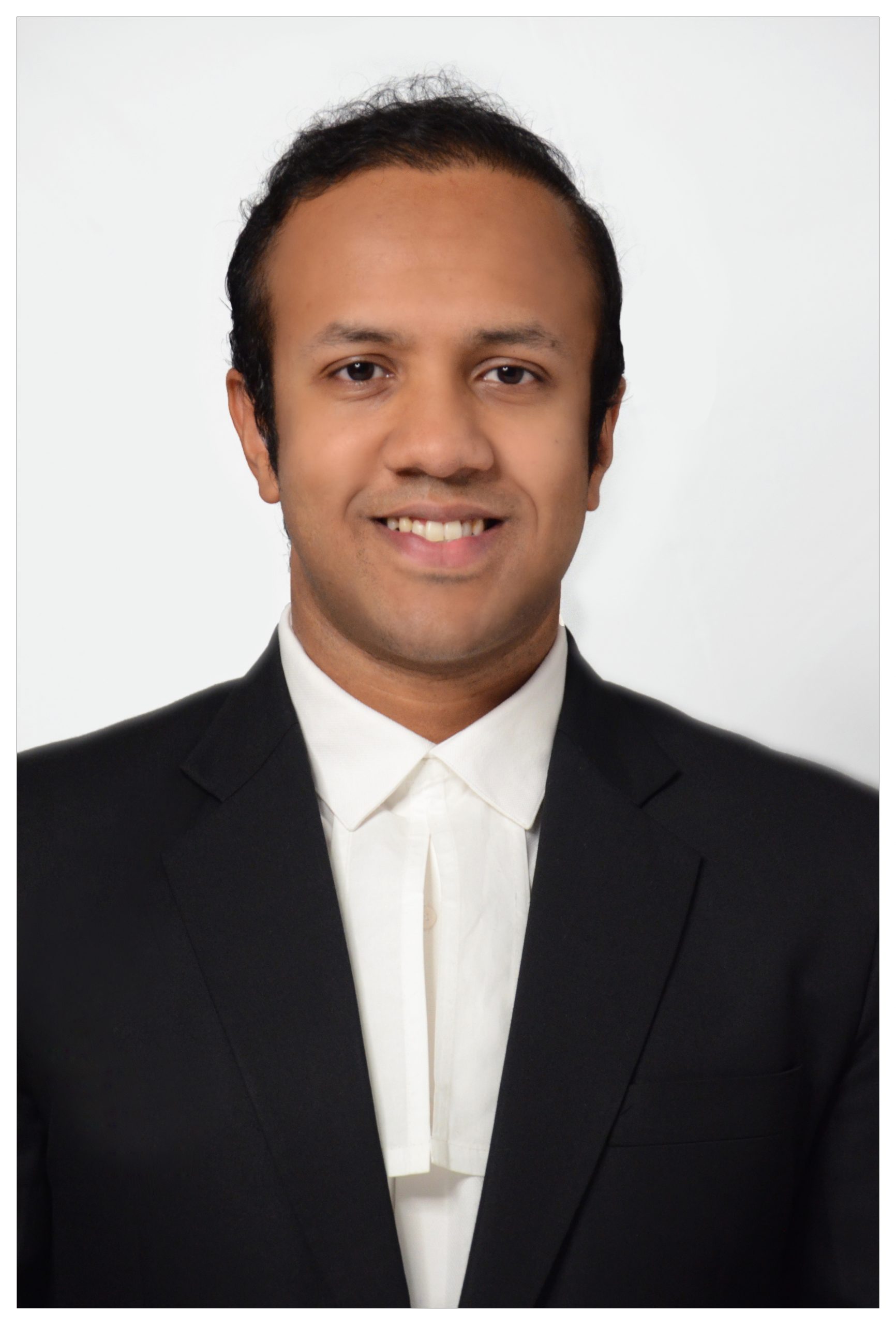
Tag: BA.LL.B(Hons)

  • “Each failure pushed me harder to succeed, and that resilience shaped who I am today.” – Sumit Garg, Founder of Alpha Corporate Legal.

    “Each failure pushed me harder to succeed, and that resilience shaped who I am today.” – Sumit Garg, Founder of Alpha Corporate Legal.

    This interview has been published by Namrata Singh and The SuperLawyer Team

    Hello and welcome to the new episode of the SuperLawyer YouTube channel. Today we have with us Sumit Garg sir, who’s the founder of Alpha Corporate Legal and an experienced lawyer with a qualified CS degree, with a demonstrated history of working in the legal service industry for over 18 years now. He is skilled in matters related to mergers and acquisitions, corporate governance, SEBI, NBFC, regulatory and white-collar crime matters.

    Welcome, sir. And thank you so much for agreeing to be with us here. it’s an honour. Thank you so much, sir.

    Thank you, Divya. It’s a pleasure for me to get an opportunity to come on this platform and share my experience with budding professionals and fellow professionals as well because I believe that encouraging someone in turn encourages yourself. So, thank you so much for this opportunity. Let’s take it forward and I’m looking forward to an engaging session. Which I believe will add value to the budding professionals and my fellow professionals.

    Rightfully said, sir. Thank you so much.  Let’s start with the very first question when did you decide to pursue law or why did you decide to pursue law?  Even better, who inspired you to pursue law and what challenges did you face during the initial stages of your career? How was your journey? Please do share your experience.

    So, Divya, to answer that question, first of all, I never aspired to be a lawyer.

    I originally aimed to become a company secretary (CS) of a listed company. The inspiration for that came when I was in 12th grade, reading a newspaper. I’m from Meerut, and at that time, the trend was to read newspapers regularly. Being in 12th grade, I was more conscious about which stream I should choose.

    I had taken commerce in 11th grade, so I knew I was heading into the commerce field, but I was still confused about whether to pursue CA, CS, ICWA, MBA, or something else. Especially in my situation, where no one in my family or extended family was a lawyer—everyone was either an engineer, businessman, or MBA, managing their own businesses. There was no one to guide me, or perhaps, I didn’t seek out guidance actively.

    Then one Sunday, I picked up the newspaper and in the career section of Dainik Jagran, I read about the role of a company secretary. It explained what a CS does, how they function within a company, and the one thing that really resonated with me was the fact that in a listed company, there’s only one CS, who works closely with top management, assisting the company in every business decision—compliance with laws, disclosures, governance, and feasibility.

    That aspect of being a key decision-maker in the company attracted me to CS as a career. Later that evening, my eight friends and I—who had also read the same article—decided that we would all pursue CS together. And so the journey began in February 1998.

    We registered provisionally with the CS Institute, and I still remember the day when the eight of us traveled by bus from Meerut to Delhi. Reaching the CS Institute on Lodhi Road was quite a challenge, as we were all new to Delhi, despite Meerut being so close.

    That was the starting point. As we progressed through our CS Foundation and later the CS Intermediate, we encountered various laws that sparked my interest. It was during this time that I thought, “Why not also pursue law?” This could help me earn a little extra by working as a legal head in a company and expose me to more laws in practice.

    At that time, the MRTP Act and the Consumer Protection Act were prominent. These laws helped me understand legal nuances early on, like the difference between “flat 50% off” and “up to 50% off,” and the meaning behind the asterisk we often see with “T&C apply.” These details sparked my interest in law.

    After completing my B.Com from Delhi University and while pursuing CS, I decided to pursue law as well. I qualified as a lawyer in 2005, although I finished my CS in 2006.

    In 2007, I got enrolled with the Delhi Bar Council. Interestingly, I joined an office in January 2007 where I got the opportunity to work on mergers and demergers, but I was still unsure about whether I should get enrolled as an advocate. Even though I visited the High Court regularly, wearing the black tie (though without the band), I hadn’t fully committed to enrolling.

    It was in May 2007, after gaining more exposure to law and realizing it was my true calling, that I finally enrolled as an advocate. I had the knowledge, but practicing as an advocate—going to court—was what gave me the real practical experience.

    That’s how I became a lawyer and a practicing advocate, which is why I call myself an accidental lawyer.

    Beautifully said, an accidental lawyer who has made a name for himself in many kinds of legal worlds where the corporate world starts and ends at that particular space. You have actually merged both of these things and used both company secretaryship and bachelor of law degree in combination so beautifully that you have built a whole sphere around you and you also have founded Alpha Corporate Legal.

    Would you care to share your challenges or stories behind starting this particular company for your legal firm, and how has CS and law both helped you building that particular empire for yourself?

    I think, as much as I became engrossed in practicing law and corporate matters, I got more and more connected with it, or rather, it became ingrained in my blood. As I shared, I am a first-generation lawyer, and for me, it was really tough to make a mark in the legal industry or even find a suitable job.

    But, as luck would have it, I started working in January 2005, before I qualified as a CS or completed my law degree. One thing that gave me the strength to venture into law with perseverance, without ever doubting my decision, was my repeated failure in my CS examinations. I still remember that I couldn’t qualify for my CS Intermediate Group 1 in three attempts. It was only on the third attempt that I finally cleared it. Similarly, at the final level of my CS, I cleared Group 2 on my fourth attempt. It took me about eight years to complete my CS, but I am not shy about it.

    I openly share this because, despite the failures one may face in life, each failure should motivate you to push harder and succeed. In this regard, it would be unfair not to mention my teachers, Mr. Bhupesh Anand, who still teaches Direct Tax and Financial Management to CS students, and Mr. S.P. Rao, who taught Indirect Tax. I went to them when I couldn’t pass my exams, and I used to travel back to Meerut for my CS exams.

    I would impart the knowledge I gained in coaching classes to my fellow friends who were also pursuing CS, and they would clear their attempts, while I kept failing. One day, I went to Mr. S.P. Rao and told him that I wasn’t cut out for CS. It wasn’t happening.

    He told me, around late 2005 or early 2006, to write on a piece of A4 paper: “I will qualify my CS in the June 2006 attempt,” and put it on the wall where I studied. I did exactly that. He also told me to follow this, and meet him after the exams in June 2006. He gave me a piece of advice that I still follow today. He said, “Whenever you face a problem or can’t solve a question, make a fist, tell yourself that ‘I can do it, I have to do it,’ and try again.” I still follow that advice, and it really helped me.

    Despite the syllabus changing during my last attempt, I sat for all eight or nine papers consecutively, and I cleared my CS in the June 2006 attempt. His belief in me filled me with conviction that I had the ability to do it. It was just a matter of time and persistence. That belief in myself kept pushing me forward, shaping my career.

    In January 2005, I began working as a Secretarial Executive in a private limited company that provided secretarial services to its clients. It was there that I met Mr. Anil Goyal, a Chartered Accountant, Company Secretary, and a rank holder in both. He was a self-made man, and he recognized the potential in me. At that time, he was the auditor for a listed entity, and he referred me to work there. I went for the interview, got selected, and that’s how I started working for a listed company that had the second-best IPO of 2005.

    I told myself I wasn’t going to miss this chance at any cost. I learned a lot while working there, but I realized that my true calling wasn’t in working for a listed company because, even after completing my work, I had so much free time that I kept craving more.

    However, I stayed with the company because I was still pursuing my CS, and it gave me enough time to study. I remained there until I qualified, and, being fair to them, I didn’t leave without seeking employment as an Associate Company Secretary.

    As luck would have it, the main Company Secretary got an opportunity to work with a firm dealing in mergers and demergers, but he passed on that opportunity to me. I spoke to Mr. Anil Goyal, and he said, “Sumit, this is the best opportunity you can get.”

    At the same time, I was offered a much higher salary by a reputed company to join as their Company Secretary, but I chose the opportunity to work in the M&A domain with Mr. Deepak Deewan. I’m forever grateful to him for making me his first associate in his office, which exposed me to the world of mergers and demergers.

    In my first year, I handled my first scheme for a listed entity. It was a demerger where the real estate division was demerged and bogged into an SPV, which we got listed under the Securities Contracts Regulation Act without going through an IPO. Overnight, after the order passed, the person had another listed entity in his group, and that gave me immense satisfaction.

    I stayed with Mr. Deepak Deewan for almost four years, during which I worked on 50-60 schemes of mergers and demergers, including about 15 listed entities. Some of the names include Spentex Industries, Jindal Drilling, Maharashtra Seamless, Ansal Group Companies, DLF, and more.

    During my time there, I encountered unique cases. One was a scheme proposed by the shareholders of two listed entities involving two brothers with a family arrangement. Usually, it’s the company that proposes the scheme, but in this case, the shareholders were proposing it. It took me two hours to convince the Delhi High Court Registry that there were no transferee companies in this scheme.

    Another case was the merger of a real estate company involving farmlands and farmhouses around the airport area. After the merger was completed, the client came to us because their sale deeds were impounded by the sub-registrar of Kapashera. We approached the Delhi High Court, and I researched a pre-independence notification under the Indian Stamp Act of 1937. After months of effort, I found the notification, which was ultimately upheld by the Delhi High Court in the Delhi Towers Limited case. This became a highlight of my career at that nascent stage when the order was passed in December 2009.

    Although this order had far-reaching implications, I had fulfilled my duty to my client by exonerating them from paying stamp duty. Following this, the Delhi government withdrew the notification, and mergers and demergers in Delhi became subject to stamp duty. Other states followed suit.

    So, I may have deviated from your original question about setting up ACL, but all these events in my early professional career really solidified my commitment to the law. Or rather, I got married to the law because of these experiences.

    Yes, it is very difficult for people to accept that there have been failures in their career as well. But it’s commendable that you are accepting it with open arms. And you are sharing your learning from those failures. What I believe or what I have understood till now in my life, that yes, if you accept your failures, you will be more successful than what you would have imagined. And I guess that is the reason why you have such amazing clients also who tend to forget the parking charges for their planes, where you have saved them crores and crores of rupees.

    How do they compliment you with all these kind of things? And how do you keep yourself so aware that you get to understand that these all nitty gritties are also there and you help them in saving them their not only money, but their faces as well. How have you done that?

    Divya, there’s more to it. While I was working with Mr. Diwan, I was quite young at that time—still young at heart—but back then, I was young physically as well. I decided to go solo, and certain things happened. It was right after my marriage in November 2010 that I decided to work independently for about six months.

    Handling these matters boosted my confidence immensely. I felt like I could conquer the industry, so I thought, “Let me start on my own.” However, I soon faced reality and realized I was lacking experience.

    A lawyer is a lawyer to the world, whether you’re a corporate lawyer, criminal lawyer, or IPR lawyer—these distinctions come much later in your career. When I faced the reality that I couldn’t serve my clients properly due to a lack of experience, I accepted it.

    I couldn’t approach other friends, colleagues, or seniors for help because I believed that if I was working for a client, it was my responsibility. It changes your attitude toward work when you take ownership. It’s like buying a car—you look at every detail before making a decision. Similarly, how can anyone be lax when working for someone else? This attitude of treating my client’s work as my own pushed me to go the extra mile because, ultimately, if my client is happy, I’m happy—and I’m progressing.

    So, when I realized this, I joined DMD Advocates. At the time, it was known as Dutt, Menon, Dunmorr Sett. I’m really thankful to Mr. Rashi, the corporate head there, and to Ms. Anuradha Dutt, with whom I had the opportunity to work later in my career. These two individuals taught me what law truly is—how to read, analyze provisions, and much more.

    Mr. Rashi had recently returned to India after working in the US for 16 years, and he instilled in me the traits of being a true professional—true to your work, your clients, and yourself. I’ll always be indebted to him, Ms. Dutt, and DMD, as well as all my colleagues there. They believed in me and gave me the opportunity to work for their clients. After that, there was no looking back.

    I was with DMD for almost 11 years, and it gave me the confidence that if I ever decided to go independent, I wouldn’t fail. Many juniors at DMD started their own firms and are successful today. That’s the kind of training I received there, and I will always be grateful. Without my time at DMD, I wouldn’t have thought about setting up ACL.

    Like everyone, I had my highs and lows at DMD. I’m not shy to admit that at one point, I didn’t complete my appraisal form because my performance wasn’t up to the mark that year. But I was determined, and I’m thankful to Mr. Rashid for believing in me and giving me another opportunity. I bounced back, and for the next three years, I received the highest increments in DMD and was promoted to principal associate.

    I worked on numerous matters for MNCs, regulatory issues, and represented clients before SEBI, Enforcement Directorate, CBI, and RBI. That gave me a platform to hone my skills as a lawyer. Over time, I learned that a lawyer never gives up, and that’s why this profession is one of the strongest in the world.

    In July 2021, I finished a major assignment—part of a larger global disposition—and that gave me time to reflect on what I wanted to do. While I had no complaints about the quality of work, remuneration, or culture at DMD, I wanted to do something more. Working at a law firm doesn’t give you the time to pursue those extra things. So, I took a sabbatical.

    Interestingly, on 13th July 2021, my last day at DMD before my sabbatical, an old friend called me out of the blue. He asked what I was doing, and I told him I was going on vacation. He said, “I’m hiring you as my outside general counsel right now, and I’ll pay you this much.” I told him I was on vacation and didn’t want to work for the next 15-20 days. He insisted, saying, “Your retainer ship starts today, but I won’t disturb you during your vacation.” And just like that, I got my first client.

    During the vacation, I discussed things with my wife, who is a crucial part of my life. At the time, our son was about to start school, so it was a critical juncture. My wife asked, “Are you mad? How will we pay our bills and EMIs if you leave DMD and start your own firm?” I told her I had saved enough money to survive for a couple of years, even if I didn’t earn anything. She gave me one year to prove that I could sustain our family without denting our savings.

    That’s when I started thinking about what to name the firm. I didn’t want my name on the board—Sumit Garg & Associates or SD Advocates—because I wanted to create an organization where anyone could contribute without feeling it wasn’t their office. I wanted to be at the top of our game, the “alpha males” of the industry. So, we named it Alpha Corporate Legal. I called a friend in IT, got the domain registered, and started working from home.

    That’s how ACL came into existence. It’s still a proprietorship because I’m looking for the right person to partner with—someone who shares my commitment to clients. My associates, the ones who started with me, should eventually step up and become partners. That will give me the ultimate satisfaction—that my colleagues are now my partners.

    I tell them all the time, “This is your office, not mine. You decide what’s best, plan policies, take on client work, but always be available, accountable, and responsible to your clients. If you’re late on a deliverable, own it, reach out to the client, and explain. Never let the client chase you.”

    I’ve noticed, after almost 20 years in the profession, that many lawyers dodge their clients when they’re delayed on something. It’s wrong. You should be proactive. Clients will respect you more for being honest and forthcoming. That’s what I tell my colleagues and anyone who seeks guidance on how to progress in their career.

    These are traits I’ve learned the hard way, but if I can impart them to others, why not? That’s my philosophy when I say I want to give back to society and the profession. And that’s what this journey with ACL is all about.

    I would like to ask about your involvement with Startup ventures, because I guess you are very much involved into helping them as well. But major question there would be to understand the psychology of the young aspirants or aspiring entrepreneurs who regarding to the legal aspect they try and take more risk in terms of not having absolute legal team ready for them from the very start and later they suffer because of that.

    So how do you adjust to this particular thought process of startups and how do you help them or train them in case they have come in the start and once they have gotten into some trouble and come to you at a later stage.

    So, Divya, you’re absolutely right. This generally happens not because anyone wants to cut costs, but because entrepreneurs want to focus on their business. That’s their passion, their vision – to grow the business. However, some entrepreneurs have a broader vision and believe, “Whatever I’m doing, I need to do it right.” For them, having the right team is the most important thing. I personally believe that setting up the business team is crucial, and the second most important thing is setting up the legal compliance team.

    If my business or the way I conduct it is not in compliance with the applicable law, there won’t be a business for long. There’s been a paradigm shift in the mindset of entrepreneurs compared to 10, 15, or 20 years ago. Now, they don’t see the legal team as a cost center; they see it as an integral part of the business and invest in it. Because when the business is new, there are numerous challenges – managing the team, setting it up, and money is usually tight in the beginning as you’re seeking funding.

    Sometimes, promoters or entrepreneurs try to cut down on legal costs by not hiring a legal expert or not seeking legal advice. In fact, just last night, I was on a call with a foreign client who had set up a company in India a few years ago. While they weren’t hesitant to spend money, they didn’t bring the right people on board to advise them properly.

    This acts as a checkpoint for Indian entrepreneurs because when funding happens, the investors, who are putting their hard-earned money into a startup, want it to succeed. It’s up to the promoter to find the right person – a lawyer or corporate legal expert – who can guide them through legal processes so they can focus on the business while ensuring that all aspects are legally sound.

    My advice to entrepreneurs is always to hire the right person to support them in all legal decision-making, ensuring that their business decisions will stand the test of time and law, if required in the future. Secondly, I advise them to be transparent. In business, it’s not necessary to make 100% right decisions all the time. Sometimes wrong decisions are made, but if they are, own up to them, learn from them, and be honest with your investors. Explain why the decision was made, what changed, and what corrective steps you’re taking to rectify it.

    Another key point I want to highlight is that many professionals focus solely on problems. Few look at solutions. We have to be solution-oriented in life. If one door closes, we must look for the other five doors that have opened for us. Transparency is key – with business partners, employees, vendors, customers – everyone. It is essential to grow and scale up your business.

    Moreover, it’s important to form bonds of friendship. An employee is not just an employee; they are a vital component of the business. They become family. Unfortunately, some businesses merely pay lip service to this idea. But real success only comes when you truly create a family out of your team. Without the support of your team, it’s difficult to achieve anything.

    I always tell entrepreneurs not to cut corners on legal and compliance budgets. One wrong compliance move could become a major obstacle for future fundraising or obtaining licenses for the business. Maintaining high levels of integrity is critical if you want to create a scalable business.

    Once these aspects are covered, the rest comes down to passion. If you have the right passion, you will build and scale the business and make a name for yourself. I particularly remember a client I served in 2012, who had built a well-established brand in the F&B sector with a major Indian conglomerate in consumer goods. He sold his minority stake in the company and started his own F&B business, where he was the 100% owner.

    With a proven track record and a passion for food, he scaled his startup in just three years. He secured funding of ₹18 crores, followed by ₹100 crores a year later, and then another ₹50 crores after another year, eventually reaching ₹100 crores again. He built 10-15 dominant brands in the F&B sector, with restaurants in India and abroad. We even did a master franchise agreement for him at a global level.

    He was true to himself, his investors, his employees, and his partners, which is why he could scale his business so rapidly. I’m still associated with him, and I take pride in being part of that organization. It gives me a different level of satisfaction because, for me, earning isn’t everything. Building relationships and achieving a sense of satisfaction is far more important. And that’s what I try to instill in my team as well.

    Taking all of these kinds of learnings, I would like to move forward and ask you about your experience related to educating people, giving them lectures, interacting with students, new entrants.

    What are your observations about the upcoming generation of legal professionals and the kind of challenges probably they are going to face with the kind of technologies that are upcoming and the way law is also changing in relation to the kind of disruptive tech which we are now seeing, it has taken shape?

    And how do you see when you guide them or when you lecture them, how do you convince them that they can make a name for themselves? Along with being truthful and honest, what all are your guidance to them and how do you make sure that they do not get disheartened by big names and try and make a name for themselves?

    Divya, I always share my failures more than my successes because, as professionals, we know that platforms like LinkedIn, blogs, and podcasts are filled with success stories. There’s a lot of digital content available online these days, but merely going through it mechanically doesn’t give you that zeal, and it often doesn’t resonate with you.

    That’s why I prefer face-to-face interactions over virtual ones. However, we have to keep up with technology and the times, so I’ve adapted to virtual hearings, interactions, and everything else. Still, my first preference remains physical, face-to-face meetings.

    The biggest strength I see in today’s younger professionals is their clarity of thought about what they want to pursue in their careers. When I started law in 2007, I worked on everything—corporate M&A transactions, general corporate, IPR-related matters—because IPR is crucial to any business. When you’re negotiating corporate or M&A agreements, significant time and effort go into negotiating the IPR aspects. It took me 6 to 8 years to figure out what I really wanted to focus on. But today’s youngsters know exactly what they want to do, whether it’s corporate law, IPR, criminal law, civil commercial litigation, or family law. They have that clarity, and I think a lot of it comes from the immense content available online, which gives them deep insights into career paths and specialized fields.

    However, my suggestion to them is that in the first five years of your career, do everything that comes your way. Get a sense of the various practice areas before deciding which one suits you best. Only then can you make an informed decision based on your skills and experiences.

    Another strength they possess is that they have their priorities right. When we interact with young lawyers for hiring purposes, they aren’t shy about asking practical questions like, “What are the office timings?” or “What are the working days?” In the four or five interviews I’ve had in my life, I never dared to ask such questions. My objective was always to secure the job. But I respect that they ask these questions, and I even encourage them to do so because if they’re comfortable with the work culture and conditions, then we move on to technical evaluations. Otherwise, there’s no point in wasting anyone’s time.

    These are some of the strengths I’ve observed in freshers entering the industry. I believe everyone should ask these questions because work-life balance is important. I know many colleagues who burned out in the first five years of their careers. If you’re running a marathon, you have to train for it. It’s not a sprint. We need perseverance, conviction, and the endurance to finish the marathon, not leave it halfway.

    Youngsters have a lot of questions, and what I’ve learned is to ask as many questions as you can. If you’re asking questions, it shows you’re eager to learn. The problem arises when you’re not asking questions—either because you’re shy or because you think asking might invite trouble. Maybe your reporting partner or senior will ask, “If you had this question, how did you finish the work already?” Some people avoid that interaction and think, “If the work is done correctly, I’m good. I’ve managed to hide my shortcomings.” But you can’t rely on luck every time.

    I used to wonder, back when I was with DMD, how my reporting partners instantly caught things I missed in a document. Now I know that after 15 to 20 years of experience, you can immediately tell how much work has gone into a document.

    Since you brought up the aspect of work-life balance, being such an accomplished professional, how do you manage to maintain that balance? If possible, could you share any personal experiences, hobbies, or approaches you use to handle this? Work-life balance has become such a pertinent issue, especially with burnout becoming more common, as you rightly pointed out. How have you managed it so far, and how do you ensure your team learns from your example?

    My hobby is singing and playing the guitar. Although I haven’t played the guitar in a long time, I never miss the opportunity to sing whenever I can, whether it’s at social gatherings or other events. Even if it’s just a couple of lines, I enjoy it. There’s another aspect I consider important, and that’s spirituality. I believe it plays a crucial role in everyone’s life. We may not realize its significance when we are young, but as time passes, spirituality brings calmness and the wisdom to understand what’s happening around us.

    I was fortunate to be introduced to Nichiren Daishonin’s Buddhism through my wife, who was practicing it even before we got married. It’s a Buddhist philosophy that I’ve been following ever since. This practice has helped me achieve a sense of spirituality in my life and taught me how to take responsibility for everything that happens to me. The philosophy is based on the concept of cause and effect—what I do today will shape the outcomes I experience tomorrow. It keeps me grounded, humble, and gives me the strength to keep moving forward.

    This philosophy emphasizes accountability and highlights the importance of happiness. It teaches that once you achieve happiness, it’s your responsibility to spread it to others, regardless of their social status—whether it’s the security guard in your building, your domestic help, the cook, your driver, colleagues, wife, kids, or mentors. Gratitude is at the core of this practice, and it has become a guiding principle in my life.

    My Buddhist faith was a significant factor in establishing ACL, and it helps me bring a humanistic touch to all my interactions—whether with clients, colleagues, or family. It keeps me grounded and level-headed. I also devote a lot of time to Buddhist activities and encourage my colleagues to learn about it as well. I believe no philosophy can harm you—you can always take what resonates and leave the rest.

    This philosophy is not just my hobby or passion; it influences my work and personal life, allowing me to do good for my clients, associates, family, and friends. It helps me stay connected to the human nature that exists within all of us, but which we sometimes forget in the fast pace of life. I strongly believe in being humane to everyone because if you don’t like something happening to you, it’s likely the other person won’t like it either.

    This belief is what inspired me to ensure a healthy work-life balance at ACL. That’s why we operate on a five-day work week, unlike the seven-day trend in many law firms. Of course, when necessary, we do work on Sundays or overnight, but that’s a rare occurrence at ACL. I believe if work is managed efficiently, there is no need to work overtime or on weekends.

    Another principle I’ve instilled in the work culture at ACL is respect for personal time. If someone is on leave, we don’t call or email them. We don’t disturb them because it’s important for everyone to spend time with their families and recharge from the demands of being a lawyer.

    Sir, would you care to share some thoughts about ACL? Are you planning to expand it? How do you envision bringing more people on board, and what are your future plans for the firm?

    Given the philosophy you’re promoting; many people would be eager to join a firm where they have the freedom to take leave without interruptions. It would be fantastic to hear more about this approach, and it’s inspiring to know that such firms exist.

    let me clarify one thing. When I said that we don’t disturb, it’s only when it’s absolutely urgent that we contact our associates. Otherwise, I avoid disturbing them when they’re not working. I feel the same way about not being disturbed while I’m with my family. It’s a two-way street; it cannot be one-sided. As I mentioned earlier, I’m not in a rush to expand ACL. I often see LinkedIn posts like, “We now have 500 lawyers in our office” or “We’re growing at a 2x pace” or “We’ve opened this office and that office.” And while that’s great and encouraging for people like us, when it comes to ACL, I’m not in a hurry to grow because I believe in expanding with a humanistic approach, gradually, not instantly. I’m here for the long haul. It’s a marathon, not a sprint, and I don’t want to be a fly-by-night operator.

    At ACL, God has been kind, and I want to express my deepest gratitude to our clients, those who entrust us with such intricate tasks and believe in us. Securing clients for a relatively small office is no easy task, neither for me nor for the clients. But thanks to my experience in the industry and the work I’ve done, word-of-mouth has been spreading at a good pace. Recently, we completed three years at ACL. During these three years, we’ve worked on notable assignments, such as the acquisition of a listed entity by one of the top five Indian groups, representing media companies in their acquisition through the SEBI route, and navigating the SEBI takeover code. This was one of the first listed company assignments we handled at ACL.

    Also, because of my long-standing relationships with clients I had served during my time at DMD, some of them wanted to connect with me as soon as I started ACL. But having spent nearly 11 years at DMD, I learned invaluable lessons in integrity from the people there. So, even though I hadn’t signed any non-compete agreement with DMD, I decided on day one that I wouldn’t take on any client I had worked with at DMD for at least six months. That was my way of honoring the place where I learned so much. I didn’t want to give anyone the impression that I was poaching clients. However, there was one particular client who was adamant that if I left DMD, they wanted to move with me. Incidentally, I had been the one to introduce that client to DMD, and my managing partner was gracious enough to let me take the client with me, encouraging me to do my best for them.

    For this client, I represented them before the Securities Appellate Tribunal (SAT) against penalties and debarment orders, where a penalty of ₹10.25 crore had been imposed, along with a five-year debarment not just on the company, but also on its promoters and directors. We successfully got the penalty reduced to just ₹25 lakhs. This was the first company to receive relief from SAT in GDR-related matters, out of 70-80 similar cases pending with SEBI and SAT. This level of commitment is what builds lifelong connections with clients, not just for a single transaction, but for life.

    Some of those clients have returned, and I continue to work with them, having signed engagement letters only after the required time period. Since then, our client list has only expanded.

    Another significant client we gained was a listed entity in the travel sector, which entrusted us with acquiring a majority stake in three domestic companies. With a team of just three people, we successfully completed these transactions, which involved drafting definitive agreements, negotiating with selling shareholders, and structuring the deal. What made this transaction unique was that there was no cash consideration involved. The listed company acquired the majority stake via a share swap, issuing its own shares as payment.

    The next stage was to obtain in-principle approvals from the stock exchanges for the listing of the newly issued shares, which we successfully secured. We then applied for the listing and trading approvals from the stock exchanges, which were also granted. This is how we successfully closed that transaction for the listed entity. Impressed with our approach, availability, and commitment levels, the client entrusted us with three more overseas acquisitions.

    I take immense pride in how we approach our assignments. We work on a lot of SEBI-related matters. Recently, we represented an individual who couldn’t afford our fees, but we took him on anyway, offering him a substantially discounted fee and the flexibility to pay when he could. I believe even if you charge a nominal fee, it helps the client retain their self-respect while valuing the work you’ve done for them.

    I’m proud to say we represented him, and after several hearings with the whole-time members, we managed to get him exonerated from all the allegations. The satisfaction that comes from such outcomes is immense. In this case, one of my team members, who had worked with me on the assignment, had left ACL due to health issues. I made it a point to call him and inform him that we had won the case and achieved a fantastic result.

    This is how I plan to grow ACL—by ensuring that every person associated with us brings a human touch to everything they do, offering the highest level of commitment to clients, colleagues, and the office.

    What a wonderful thought, sir: aiming not only to grow your organization organically but to make it more human and client-centric. After all, we are here to serve our clients. Your honesty in this interview was truly refreshing. The beauty of it lies in your openness about both your failures and successes, without any hesitation.

    I’m genuinely thankful that Namrata brought you in for this interview and that you graciously accepted. I thoroughly enjoyed this candid conversation. Thank you once again for being with us at SuperLawyer. It has been an amazing experience today.

    Thank you so much.

    My pleasure! I feel a responsibility towards my fellow colleagues and the new generation entering the legal profession. This is the reason I engage in these conversations; it gives purpose to my life. While we live for ourselves and our families, we should also live for others. This is a lesson I’ve learned from my practice of Nichiren Daishonin’s Buddhism.

    I am deeply grateful to the Buddhism I follow, to my wife, and to my parents who have always supported me through both challenging and happy times. If in the future you think my input might be valuable, I am more than willing to help. It would be my pleasure to assist and be available for my fellow colleagues.

    Get in touch with Sumit Garg-

  • It is seen that many fresh graduates being carried away with the burst of information and content on social media attempt to have their hands in everything but end up not having a meaningful impact in either-Shoumendu Mukherji, Advocate on Record, Supreme Court of India

    It is seen that many fresh graduates being carried away with the burst of information and content on social media attempt to have their hands in everything but end up not having a meaningful impact in either-Shoumendu Mukherji, Advocate on Record, Supreme Court of India

    This interview has been published by  Priyanka Karwa and The SuperLawyer Team

    Can you share your journey into the field of law and what motivated you to pursue a career in this field, including your experience at the National University of Juridical Sciences (NUJS)?

    I would say ‘Law’ happened by chance and it was not that I had planned for it for long. During Class 12, my parents came to know of law as a career from a friend of theirs. Once I started preparing for CLAT, the subjects that were offered grew on me, especially the sections on logical reasoning and current affairs. I enjoyed the preparations and was able to crack the exam that led me to my second home i.e. the City of Kolkata for the next five years. My parents were a constant source of encouragement during the preps. The only distant pre-existing link in my family with the field of law that I can think of is that my grandfather had been an Additional District Magistrate in the Bihar Civil Services.   

    Being at NUJS was an experience to cherish. For the first time I came into contact with peers from across the country. The different languages, foods, habits, it was an in-depth lesson in learning about the diversity of India. It was not too hard to make friends, as I was always an ardent participant in different extracurricular activities. There was a thriving atmosphere of Sports, Cultural events in college apart from moots and debates that developed the competitive spirit in all of us. NUJS was also popular in hosting the largest sports fest among law schools “INVICTA”. I had the honour of leading the fest in my 4th year as Convenor which also instilled a sense of leadership, and also won a national level moot court competition. These qualities did come in handy at the time of branching out with my independent practice.              

    As a first-generation advocate, can you describe the early years of your career? What were some of the challenges you faced, and how did you overcome them?

    The early years as an independent litigator were certainly challenging. There would be days when I would have no briefs in hand and I would wonder whether I took the right call to branch out this early (merely 2 years into my career). However, whenever you sense the overwhelming cloud of despair, every time there does emanate a beacon of hope from somewhere or the other which consolidates your belief to keep going further, into the path of uncertainty you’ve chosen. That beacon of hope may be from an entrepreneur friend who was looking for a lawyer to his start up, or the relative who had familial property issues to sort, or the acquaintance looking for advice on a will. The only way to overcome these initial challenges, in my experience, is to keep networking, and meet new circles of people. Social gatherings are also a healthy way to make new clientele, who knows what’s on the mind of a fellow invitee looking for quick and free legal advice!    

    For the initial two years after college, I had worked with a college senior of mine Mr. Ankur Sood, Advocate on Record. His office helped me inculcate nuanced drafting skills and the filing processes / preparation of a Petition thanks to his highly experienced clerk Sajid Ji, who would take me along to the various court registries to help me get a wind of what goes on behind the scenes of the glamour of the courtroom, and what all it takes to finally place a Petition on the Hon’ble Judge’s desk.  

    Your work spans a wide range of legal areas, from civil and criminal cases to intellectual property and arbitration. Could you share a few memorable cases or experiences from your career that have had a significant impact on you?

    I would say that being part of the Delhi Legal Aid Services (DLSA) initially at Saket District Court and handling cases as a ‘Legal Aid Counsel (LAC)’ for economically weaker litigants in the initial years in a way shaped me as an Advocate and emboldened my commitment towards the profession. The glee and the gratitude in the eyes of mothers on being told that their son had been acquitted or had got bail was very gratifying. Obtaining orders for domestic violence victims being awarded interim maintenance was also equally pleasing. It made me realize the social importance of our profession, and the impact it can have on the lives of thousands, that the long helping hand of law is not too far from any person in our society. 

    Obtaining a John Doe order for a multinational publishing house in the initial years from the Hon’ble Delhi High Court followed by raids on the infringing publishers at Daryaganj was my first brace with big ticket litigation and a memorable learning curve.   

    During the Covid pandemic, there was this huge controversy about reduction in school fees as no physical classes were being held. I was approached by an Association of 250 ISC / ICSE Schools from West Bengal for obtaining relief from Supreme Court as Calcutta High Court had passed an adverse order directing the schools to charge only tuition fees, which was impractical as schools also had to pay salaries, other running expenses for the upkeep of their infrastructure. The High Court had also ordered for showing of schools’ balance sheets and appointed a committee composed of the Petitioners’ Advocate to address grievances of parents. The controversy was fostered owing to an absence of a fee regulatory body in West Bengal. We were faced with an onerous 3 judge bench in the Supreme Court with Justice MR Shah on it. However, we managed to obtain a stay order from SC, and for the next 12 months were a roller coaster of a journey dealing with an unpredictable bench of the Calcutta High Court which was passing contradictory directions at every hearing date at a frequency of 2-3 months. I also had to make frequent trips to Calcutta to attend the Court-appointed Local Commissioners’ hearings on behalf of the school management. Ultimately the Supreme Court gave a quietus to the issue as Covid had passed and all the directions were kept restricted to the Covid years alone. 

    During my tenure as a Counsel for the Union of India I appeared for the Department of Atomic Energy before the Appellate Tribunal for Electricity (APTEL) at New Delhi. The matter pertained to a demand of Rs. 289.59 Crores under the head “Grid Support Charges’ ‘ made by Govt of Telangana. After hearing arguments, the Hon’ble Tribunal was pleased to stay the said demand in favour of the Union of India holding that under Section 184 of the Electricity Act, 2003 exempted the Ministry or Department of the Central Government dealing with Defence and Atomic Energy from applicability of the Act. 

    You’ve represented various Central Government Departments and have extensive experience in litigation. How has your role as Senior Panel Counsel for the Union of India shaped your legal practice?

    Being on the prestigious Senior Panel representing the Union of India has thrown open the window of opportunity to appear before the Delhi High Court on a daily basis before different benches. It adds to the sheer volume of briefs that you prepare for on an everyday basis and a rich experience to shape your future career. Each brief brings with it an unique point for consideration and the high stakes that come along with it. As a counsel holding a brief for the Union of India, you are expected to be on top of your game day in day out. The Hon’ble Judges expect you to be fair and well prepared as every new Petition on the Supplementary List starts with a Stay Application to oppose and the Government’s action to defend! Thus, one cannot afford to take any brief lightly. Usually, the new matters are marked to the Govt. Counsels the evening before, thus we only get that evening and next morning to take instructions from the respective Department and gear up for the admission hearing. It is thrilling, greatly satisfying and a big honour. 

    During the day in Court, we get to rub shoulders with Senior Advocates on the other side that adds to the challenge and gives you an added motivation to go to Court with your best prep forward. The sheer diversity of matters moulds one’s skill sets, one day it can be a Service Matter involving Promotion or Pension, on another day it may be Section 34 Challenge to an Arbitral Award, same day there may be a final hearing listed for a Miscellaneous Writ, on some days Tender matters, on some LPAs and Appeals against Tribunal decisions etc. Our younger crop of Panel Counsels also get enriched by the constant motivation and encouragement of our Seniors and Standing Counsels as well as Ld. ASG Sir who we keep crossing along the corridors of Delhi High Court and learning from their vast experiences.         

    You’ve been empaneled with organizations like GAIL (India) Limited, Delhi Development Authority (DDA), Council for the Indian School Certificate Examination (CISCE) and the Enforcement Directorate (E.D.). Can you discuss the importance of these empanelments and how they have contributed to your professional growth?

    One must realise that empanelments are only a push to give you volume of work, which you are eligible for only after 4-5 years into your practice. The initial years preceding that eligibility period you have to really grind it out. I would say that is the gestation period. Empanelments help you get a good grip on a specific type of subject area, and some empanelments with retainers ensure a fixed income per month securing you financially. But you need to keep performing and maintain the standards otherwise someone else will take your place.   

    How has Becoming an Advocate on Record further helped diversify your practice? 

    It has given a foot in the door for establishing an independent Supreme Court Practice. Not that I have not been working on Supreme Court matters earlier. Thanks to my college senior Mr. Kunal Chatterji, AOR who had given me a volume of Supreme Court drafting to do in my initial years when I had branched out independently. His clerk Sukanta Ji also taught me the nuances of SC Filing Procedures, I will be forever grateful to them. Becoming AOR is one thing, but getting those AOR briefs for filing is the second step that follows. For this, it is important to carve out a network of lawyer colleagues from different states who can send you those SLPs, Civil Appeals and Transfer Petitioners. During our first orientation organized by the Supreme Court Advocates on Record Examination (SCAORA), Justice Sanjay Krishan Kaul who had himself been a AOR gave us all a golden advice to not be merely postmen but to read and give finishing touches to drafts that came our way so that the knowledge gained during the AOR Exam preps can be put to good practical use. Justice Kaul advised us to refrain from filing Petitions without reading them which holds good in today’s times.   

    You have also been involved with certain matters of political nature. Could you throw some light on them and their professional benefits? 

    I would say these are our social responsibilities. In the aftermath of the West Bengal Vidhan Sabha Elections of the year 2021, there was large-scale violence that broke out targeting the members, workers, voters of the Bharatiya Janata Party (BJP) who had voted / campaigned against the ruling Trinamool Congress (TMC). As soon as the results were declared, there were murders, loot, arson, and even gang rapes. Although the State of West Bengal has a history of bloody elections and many would declare such violence to be ‘normal’, however at some point of time that ‘normalcy’ must be questioned. In all other States elections are held peacefully, then why an aberration in only this one State. I was part of the team that appeared for the victims in the Hon’ble Supreme Court and Hon’ble Calcutta High Court. I would put in all nighters to draw up the pleadings explaining the gruesome incidents and plight of the families. Finally, the Calcutta High Court ordered a CBI probe into the various incidents. 

    Earlier this year, after the Municipal Corporation of Delhi (MCD) elections and appointment of a new Mayor in Delhi there were separate elections held for the 6 positions of the MCD Standing Committee which is voted by Councillors. Owing to a fracas in the house and expecting an unfavourable outcome, the Mayor who was a Councillor elected on an Aam Aadmi Party (AAP) ticket cancelled the elections and ordered re-elections even though the process had been completed and only results were left to be declared. The Hon’ble Delhi High Court declared the Mayor’s action to be illegal and directed pronouncement of the results immediately. 

    Being involved with political matters provides one a hand to work for the betterment of our systems and appear for MPs, MLAs and various leaders of the said political party. It gives one a platform to interact with such elected representatives and public personalities to learn from their world view, perspectives. Moreover, such matters often attract a lot of media attention and it thus gives one an additional edge and experience of regularly appearing in such media-friendly ‘high profile’ matters. I also have had the opportunity of assisting the BJP during election cycles, both at the National and State levels pertaining to Election Commission compliances which has helped cultivate different kinds of skill sets.                

    Finally, as someone who has built a successful legal career with diverse experiences, what advice would you like to give to fresh graduates who are entering the legal profession today and aspire to make a meaningful impact?

    Foremost takeaway from what I have experienced, is to be patient and not be in too much of a rush. Yes, be ambitious but be practical as well. It is seen that many fresh graduates being carried away with the burst of information and content on social media attempt to have their hands in everything but end up not having a meaningful impact in either. The race is long and lawyers don’t retire. If one is sincere, dedicated and hard working, rewards will come, even if not today then certainly in the next few years down the line. What is essential however is to have in place a working culture and a disciplined lifestyle. Those abashed college years are over, in the real world a lot more is riding on every brief and your every appearance than just a few marks of a moot court competition! 

    Get in touch with Shoumendu Mukherji-

  • Rather  than existing in isolation, the law and its concepts should serve as tools to support  individuals and enterprises-Neeha Nagpal, Founder, NM Law chambers

    Rather than existing in isolation, the law and its concepts should serve as tools to support individuals and enterprises-Neeha Nagpal, Founder, NM Law chambers

    This interview has been published by  Priyanka Karwa and The SuperLawyer Team

    Please share with us the journey of how you ended up becoming a lawyer? What  inspired you to pursue a career in law, and what were the significant milestones along the  way? 

    I believe that my current profession, which is being a lawyer, has chosen me in a way. I  did not actively grow up with a strong aspiration to become a lawyer. My father used to  emphasize the importance of understanding the laws of the land, which planted a seed  of interest in me. This ultimately led me to pursue a double major in Law and Business  Studies at the University of Warwick. However, the idea of being a lawyer and going to  court every day was not something I had planned for myself. 

    Despite this, I feel incredibly fortunate to have received mentorship from a young age,  from Mr. Arun Jaitley. Fondly referred to as ‘Arun Uncle’, he was a close friend of my  father and had a profound impact on my life and maybe somewhere hearing him regale  his court antics had a subconscious impact on the choice I ultimately made. Though, I  must say that I learnt it is from Mr Jaitley, I learnt the value of conducting oneself with sincerity while interacting with Clients. He always said, “There is no replacement for  sincere hard work in the profession!” 

    You have an impressive work history, with experience in various areas of law, including  Supreme Court litigation, arbitrations, and commercial transactions. How did you decide to  focus on these particular areas, such as insolvency, competition law, and white-collar  crimes?  

    My journey in the legal profession started out by getting involved with the team that  was working on the BMW Sanjeev Nanda Hit and Run appeal in Delhi High Court. Following that, I commenced working with Agarwal Law Associates [‘ALA’] in 2009,  where I dedicated a decade of my career until 2019. 

    During my tenure at ALA, I found myself amidst the unfolding 2G scam, a major  controversy at the time. I actively represented the Essar Group and its promoters in this  matter. Coincidentally, around the same period, the coal scam was also coming to light,  and I got the opportunity to contribute to that case as well. This involvement marked  the beginning of my increasing engagement in matters related to white-collar crime. 

    Since I set up NM Law Chambers with my Partner- Malak M Bhatt, in 2019, there has  been vast amounts of work related to white collar crime and insolvency coming our way. Hence,  NM Law Chambers is essentially focused on these areas of legal practice. 

    As I delved deeper into my legal pursuits, I realized an interesting overlap between  insolvency and white-collar crime, which subsequently directed my focus toward  insolvency matters.  

    Presently, I consider myself fortunate to collaborate with the Insolvency Law Academy,  where I’m actively engaged in working on a research paper pertaining to personal  insolvency law in India.

    Throughout your career, you’ve represented a diverse range of clients, including  prominent companies and individuals. Could you tell us about a particularly challenging or  memorable case that you worked on and how it impacted your approach to law? 

    Each legal case comes with its own unique set of challenges and trials.  At that time, the 2G scam stood as one of India’s most significant white collar /  commercial crime cases. It reshaped the landscape of bail jurisprudence and required a  reevaluation of legal norms. 

    Likewise, I was involved in an International Arbitration case centered around the  complex concept of advance loss of profit. This particular case demanded a high level  of dedication and had a steep learning curve due to its intricate nature. 

    However, one case that will forever hold a special place in my heart is the effort towards  decriminalizing homosexuality. I initiated this petition on behalf of my dearest friend,  motivated by the power of love. The impact of the resulting judgment on people’s lives  was truly profound. 

    Your work played a crucial role in the challenge to homosexuality laws in India, leading  to the decriminalization of homosexuality. Can you share the experience of working on such  a groundbreaking case, and what was the most rewarding aspect of being a part of it? 

    The petition was a laborious endeavor fueled by deep affection. I drafted and filed it on  behalf of my childhood friend. However, during the process of having him sign the  affidavit, a sense of concern clouded my thoughts.  

    This worry stemmed from the fact that, at the time of filing the petition, Section 377 of  the Indian Penal Code criminalized even consensual relationships between homosexual  individuals. Essentially, I was seeking his endorsement on an affidavit that essentially  labeled him as a criminal. This apprehension unsettled me. 

    Despite my concerns, we proceeded with the filing, and as they say, the rest is history! The most gratifying element of our triumph was the outpouring of tears of happiness  that filled the courtroom that day. I bore witness to countless individuals, many of whom  I had never met before, stepping forward to convey their elation and gratitude. This  experience was truly humbling and served as a poignant reminder that actions  undertaken for the sake of love, guided by love, hold the potential for tremendous  impact. 

    You have received recognition and awards for your contributions to the legal field, such  as the Forbes ‘Tycoons of Tomorrow’ Award and being featured in the ‘Forbes Powerlist 2021′  and BW Legalworld’s ’40 under 40’ Elite Lawyers. How do you stay motivated and focused on  achieving excellence in your work? 

    The transition from motivation to discipline is a straightforward one. When motivation  wanes, discipline becomes the driving force. Personally, I find a sense of satisfaction in  adhering to discipline and staying devoted to my commitments. 

    Recognizing the profound impact our work as lawyers can have on individuals’ lives and  freedom, I understand the paramount importance of responsibility in our profession. 

    Hence, it’s the combination of my innate dedication and the weight of responsibility that  serves as the anchor keeping me rooted and concentrated on my path. 

    Over the years, you have worked with various high-profile clients and handled complex  legal matters. What are some of the essential skills and qualities that you believe have been  critical to your success as a lawyer? 

    In my genuine perspective, individuals seldom seek the services of lawyers or doctors  willingly and by preference. Their circumstances, often far from favourable, compel  them to approach professionals in these fields. Therefore, our role as lawyers (or  doctors) is to respond with empathy and compassion, striving to alleviate some of the  burdens that accompany their difficult journey. 

    My approach centers on treating clients with understanding and warmth, aiming to offer  them a measure of comfort along their challenging path. This approach serves as the  core of my practice, and from there, positive outcomes tend to naturally unfold. 

    You have experience advising clients in media/TV show productions and commercial  transactions. How does your legal background come into play when dealing with such  business-related matters, and what challenges do you often face in these areas? 

    Recognizing the significance of an interconnected legal framework is crucial. Rather  than existing in isolation, the law and its concepts should serve as tools to support  individuals and enterprises. The initial step involves comprehending and appraising the  practical realities of commerce, and subsequently aligning legal elements with those  realities. Through experience accrued over time, professionals acquire the acumen to  discern which strategies are viable within comparable factual contexts. 

    The real challenge emerges in persuading clients to remain open-minded and flexible.  Encouraging them to eschew rigid expectations and steadfastly held positions can be  demanding, particularly when they are fixated on specific outcomes or contractual  terms. 

    As a founding partner at NM Law Chambers, you are responsible for managing and  leading a team. What advice do you have for young lawyers aspiring to become partners and  leaders in their respective law firms or legal practices? 

    Your effectiveness is inherently tied to the quality of your team. They constitute the  bedrock of your efforts. Thus, it becomes crucial to provide feedback and actively invest  in their growth and development. 

    In addition, it’s imperative to define your personal work ethic and values, and then  steadfastly adhere to them.  

    Personally, I prioritize responsibility and responsiveness towards my clients. Likewise,  at NM LAW CHAMBERS, our emphasis lies in delivering optimal performance, focusing on 

    efficiency and effectiveness. Rather than fixating on monetary gains, we view them as  a natural outcome of the dedicated work we undertake. 

    Throughout your career, you’ve witnessed the legal landscape evolve and change. How  do you keep up with the latest developments in law and ensure that your legal knowledge  remains up-to-date? 

    Read. Read. Read. Read.  

    There is no shortcut to that.  

    As someone with vast experience in the legal profession, what advice would you like  to give to fresh law graduates who are just starting their careers in the field of law? What  key principles or lessons have you learned that you believe could benefit them as they  embark on their own journeys in the legal world? 

    1. Knowledge is power 

    2. Don’t just work hard but work smart! 

    3. Time management is a valuable life skill and the faster one learns how to manage  their time, the happier one will be. 

    4. Happiness is a choice, we will make everyday  

    5. Define your own success. You cannot define your success by someone else’s  parameters or lens! 

    6. Take time out for yourself- most important. Do something small everyday that is just  for you. Be it a workout or play a sport or read for leisure. Me time is essential. 

    7. Family and friends are your life support system. Give them the priority they deserve. 

    8. Lastly, trust the process. Life always has a larger plan for all of us.

  • Knowing your brief, correct facts, being bold and aware about what you present, are key points which come what may, would not shake the confidence no matter what- Anushkaa Arora,Principal & Founder at ABA Law Office

    Knowing your brief, correct facts, being bold and aware about what you present, are key points which come what may, would not shake the confidence no matter what- Anushkaa Arora,Principal & Founder at ABA Law Office

    This interview has been published by  Priyanka Karwa and The SuperLawyer Team

    Ma’am, please tell us about your educational background and how you ended up pursuing a Master of Laws (LL.M) in Intellectual Property Laws from the National University of Singapore?

    I was born and brought up in Delhi however, I pursued 8 years of school from Dehradun, namely Ann Mary School.  I am a Science with Maths student from an ICSE + ISC school named previously. Thereafter, from a PCM background I took the plunge into BA LLB, and with god’s blessings topped semesters and attained top position during my final semester. I further pursued my masters in IPR from NUS Law. Meanwhile during school, I have also had the innate interest towards yoga and attained Pramana Patra by clearing all 5 levels with highest grades. 

    I took the plunge into IPR for the reason that apart from criminal laws, IP Laws interested me a lot during university days. I found that the curriculum taught in law schools was not enough to overall understand this subject, which is when I decided that I would definitely want to study IP  in depth. I was fortunate to get into Amarchand Mangaldas on merit, as an intern, where I was put into the IP team, which further caught my attention towards IP, which is when I was sure that I would like to explore this subject more, before I hit the professional world. I thereafter to satisfy my curiosity over this subject got into Luthra & Luthra internship and experienced various more aspects in the same. Further, I was called back at Amarchand Mangaldas over an assessment internship, with which I was sure that I would really love to further pursue this subject and dwell into advanced core. This is when, it struck me, to pursue IP from NUS, being top 10 in the world for IP Laws, as a recommendation from every well-known practitioner of IP India has seen. After further training with some of the most refined law firms as named above including RK Dewan, I took the plunge for Singapore to pursue masters in IP. 

    During your LL.M program, you specialized in subjects such as Celebrity and Entertainment laws, fair use in the UK and USA, copyright, trade marks, cyber law, and more. What sparked your interest in these areas of law, and how do you think they contribute to the field of intellectual property?

    My main motive to pursue masters from Singapore in IP field was to be trained by the best and pursue subjects which form part of real core of IP. These subjects form part of the real core of IP if we talk about trademarks and copyrights. Being trained by the best, witnessing luxury brands In Front of your eyes by professors who teach such subjects, not only amazed me, but reinstated the dedication for which I had subscribed to masters from Singapore. 

    These subjects have not only contributed towards my professional commitments but have given me the maturity, edge over competitors and confidence to deal with some of the very high stake and high profile IP litigations/advisory I have handled so far.

    You completed Directed Research under Prof David Tan on Luxury Brand Counterfeiting. Could you share some insights from your research and its significance in addressing the issue of counterfeiting?

    My directed research under the topic as mentioned has been pursued under the guidance of a person who is not only well known for the said subject but is a live example of walking luxury brands. My research involved understanding luxury brands, the efforts and time spent on making the same, counterfeits of such brands, empirical research of the same. To undertake the research,  I even travelled to south Vietnam, which houses counterfeits of the world, understanding the market there, issues with use of counterfeits etc were some aspects which were witnessed in person and thereafter jotted down. 

    Counterfeiting is escalating especially with advent in technology and know-how. The directed research addresses very specific points over the same, creating significant impacts over society to understand the issue to its root cause and the pitfalls associated.

    Your Bachelor of Arts and Law Honours degree from Guru Gobind Singh IP University in Delhi showcased exceptional academic performance. What motivated you to excel in your studies, and how did this experience shape your understanding of the law?

    Honestly, I was always passion driven. Nothing seems rather a task when it comes to law. I just loved what I am doing, hence it all happened as it should happen. I always had the innate quality to understand arts subjects right from school where I used to obtain highest grades in history, English etc. continuing the same interest in BA LLB. I am glad I did exceptionally well. 

    Being honest, law school studies did shape a personality, however with respect to understanding of law, I will say I give the credit to my training as an intern since 2012 in any or all holidays. I think practical knowledge in law is most important which one does not get by studying law. Same story follows, at least for me. 

    As a member of the Singapore International Arbitration Center (SIAC), could you share some of your experiences in handling arbitration cases and the significance of alternative dispute resolution in the legal profession?

    I have represented Indian clients before SIAC and have also advised on such international arbitrations. Apart from the same, I have dealt/been a part of some of the high stake arbitrations in India for which the journey compared with litigation has been a much smoother ride.

    Getting instructions from clients, presenting the same before the arbitrator working your way out in a much organised and sophisticated manner, have been some of the most loved experiences.

    I believe we should work towards advising parties in choosing ADR rather than complex, long and haphazard litigation, which not only saves time and money of the Client but it does give a comprehensive organised flavour to the case. Speedy angle being added, makes it even more suited for clients. 

    You have been actively involved in conducting webinars on various legal topics and moderating sessions with renowned individuals in the legal field. What motivated you to engage in knowledge-sharing activities, and how do you think they benefit both legal professionals and the wider community?

    I have always been involved in such knowledge-sharing activities, since school days. Having an innate quality to help the society, I have even kept myself occupied with pro bono activities and extending pro bono legal aid to the downtrodden. 

    Be that as it may, I do not think anything motivated me, I think this is always something I liked, because I wanted to help a major section of society either by imparting education or by getting dignitaries who could do the same. 

    Such knowledge-sharing activities have far reaching effects. These days, the internet is accessible to masses. For those students or professionals who cannot afford expensive commentaries, web access, mentoring under dignitaries, can gain insights by witnessing such knowledge-sharing activities, which has been my main motive all the while. People who are preparing for exams, involved in litigation over subject matter relating to such knowledge-sharing activities etc are tremendously befitted, as they can join and during interactive sessions, pen down their queries and thereby avail answers. 

    In your role as the Founder of ABA Law Office, you have worked on notable matters such as handling complex criminal law cases, intellectual property rights etc. matters for clients. Could you share some key challenges you faced in these cases and how you effectively addressed them?

    Key challenge faced is I believe with respect to me being a female. Gender discrimination though subtle but is prevalent. Tackling the same especially in lower courts outside Delhi is yet again a major task, which I successfully seem to have handed over the years of my practice. 

    Knowing your brief, correct facts, being bold and aware about what you present, are key points which come what may, would not shake the confidence no matter what. Being any sort of subjugation from the opposite sex, having the above mentioned points, would not let you digress from your end goal.

    As a litigator, you have represented clients in various forums and courts, including notable companies like M & R Furnishing (Apartment 9), Asian Paints, Mr. Shiv Khera Central, Government of India, Indian Railways etc. Could you share some experiences from your litigation practice and how you have successfully advocated for your clients’ interests?

    Running from one court to another, 1 DAY- different forums, different state courts, international matters, briefings, advisories, client calls, drafting’s, arguing, sleep and repeat is a summary of my experience of litigation.  

    I am very confident to say that I believe in obtaining a speedy redressal for my Clients which my track record till date (by god’s grace) has been at par with my thought process. Having an unblemished record of win and speedy redressal is something for which I am truly humbled and bow down to the almighty to bestow upon his kindness. 

    Throughout your career, you have received several professional qualifications and honors, such as winning the Best Research Paper Award and being a recipient of the Ram Jethmalani Academic Excellence Award. How have these accolades contributed to your growth as a legal professional?

    They have given me the boost to consider that I am on the right track and also the reinstatement of the thought that with hard work comes success.

    Based on your experiences and expertise, what advice would you give to fresh law graduates who are about to embark on their legal careers?

    Train/intern as much as you can. Do not waste law school years by sitting ideal and wasting vacations. Any vacations, joining an internship, online internship, virtual internships can be done even if we have difficulty in pursuing physical internships. 

    Only once you have experienced different types of law offices, you would have clarity as to what is the right profession for you when you leave law school. 

    Many a times, students do not train/intern much during law schools, and end up figuring for the first 1-3 years as to which place suits them best, is it a law office, law firm, chamber, judges chamber etc. so to avoid wasting 3 -5 crucial years of career post law school, my only advice would be this. 

    Could you provide us with an overview of the collaboration between ABA Law Office and R S Solomon LLC? What drove the two firms to sign a Memorandum of Understanding (MOU) and join forces?

    The collaboration is an understanding between group international law firms, to work together on matters which may come across each other’s way including advisory, drafting or vetting etc.

    I always had a vision for a global practice of my Law Firm. I have always since my law school ventured to international domains to present papers, understand cultures, built international contacts, and then pursued my masters from Singapore, which further gave me an excellent domain to further strengthen my international contact database. 

    With the said edge of having an international masters from Singapore my south east Asia connect with my colleagues became very strong and soon ABA Law Office started to become a one stop shop for client who wanted to set up companies in southeast Asia by having an Indian law office who could coordinate with various other law offices abroad and get the work done.

    India clients reposed trust in ABA Law Office and soon ABA Law Office developed a strong international practice of advisory, registering trade marks, opinions on IP, contract vetting etc. 

    In the same manner, R S Solomon LLC carrying the same vision was already in a group law firm collaboration with various other law firms across the globe. With the recent BCI notification of allowing foreign lawyers and law firms in India, I saw the same as a good opportunity to further strengthen my Firm’s international practice and with the same in mind, both law firms found synergies to further dwell and commit to. 

    Get in touch with Anushkaa Arora-