Tag: Bangalore University

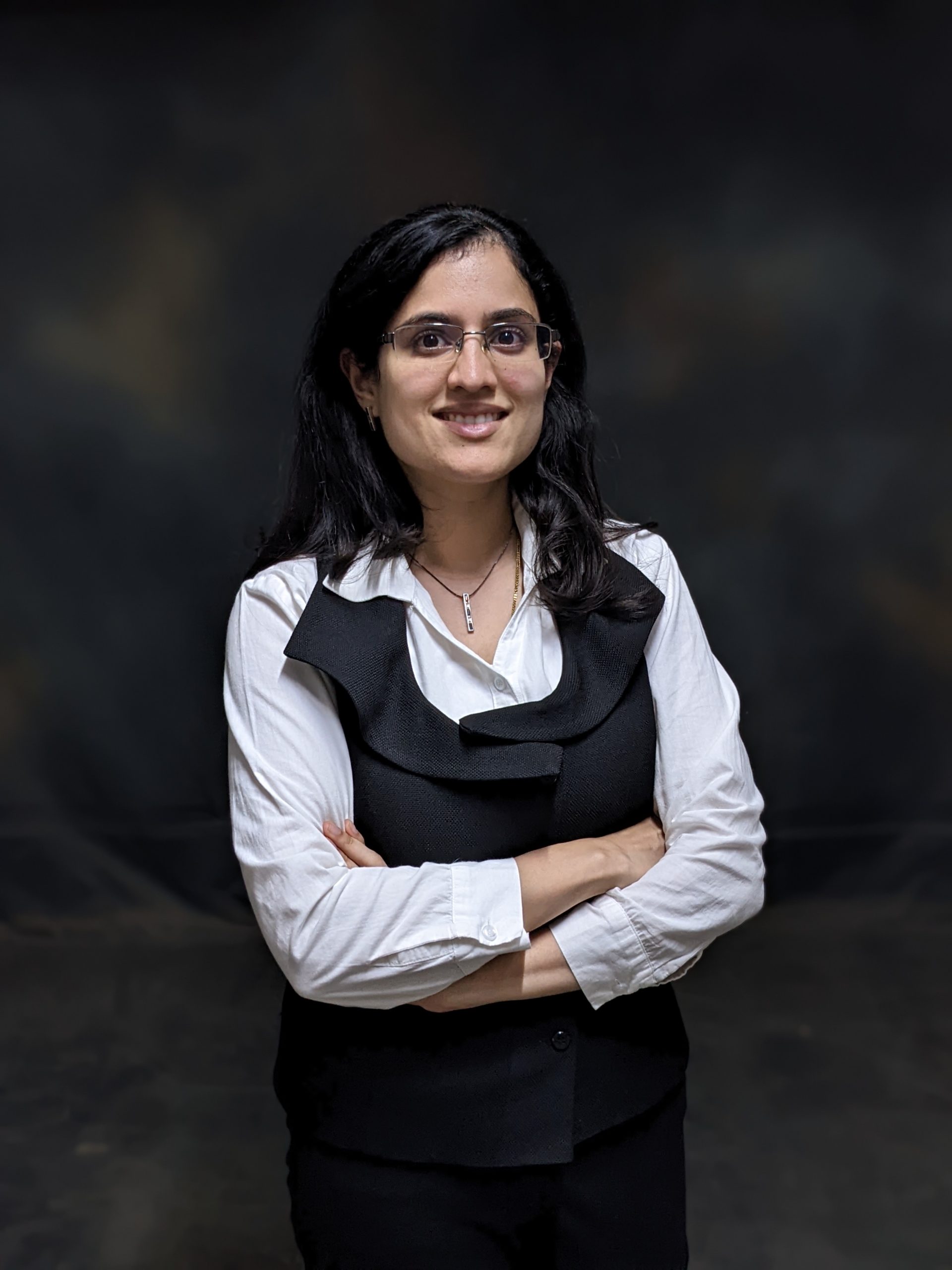
  • “Watching a junior become the lawyer they were meant to be is a wonderful feeling, we should recognize hard work without glorifying overtime” – Pallavi Bhogle, Partner at Huilgol Law Chambers

    “Watching a junior become the lawyer they were meant to be is a wonderful feeling, we should recognize hard work without glorifying overtime” – Pallavi Bhogle, Partner at Huilgol Law Chambers

    This interview has been published by Namrata Singh and The SuperLawyer Team
    Was pursuing law an inner calling for you, or did someone or something inspire you to choose this path? Please walk us through your journey to becoming a legal professional.   

    I have my mother to thank for me becoming a lawyer… but not in the way you are probably imagining. I was your typical college student, very sure of what I did not want to do; but not very sure what I wanted to do. 

    My mother is a Professor of Psychology and one of her areas of specialization is in career counselling. I turned to her for advice and learnt that I was best suited for a career in either law or journalism. While I enjoy writing as well, law particularly appealed to me. 

    Perhaps it was my love for mystery novels and crime-solving that drew me to law. At that time, problem-solving and law seemed intrinsically linked in my head. While I have since learnt that law is far more nuanced, the intricacies of it have only made it more interesting for me. Now, I cannot imagine doing anything else.

    Your college notes have been a legacy for future batches at University Law College. How do you feel about this, and what impact do you think it had on the students who used them?  

    I had no clue that my notes would get distributed the way they did! When I first prepared them, they were a means of studying for my law exams. It was the practice in college for seniors to hand down their notes to their juniors. Like many other, I did as well. I thought the story ended there.

    It was only a couple of years later, when unknown students started contacting me and thanking me for my notes, that I realized that they were still in circulation and had taken on a life of their own. It’s still a bit of a shock to be recognized for my notes. The most memorable time was when we had recruited a new associate in my previous firm and he was being introduced to the team. I was about three years into the profession at that time. On being introduced to me, he went “So, you’re Pallavi Bhogle who wrote all the notes? I thought Pallavi Bhogle was some old lady…..” 

    Other than being mistaken for an old lady, I will admit that I derive deep satisfaction from knowing that a lot of people benefitted from my notes. As the law keeps evolving, my notes may not retain their relevance for much longer, but until then I hope that they make exams a little more bearable for future lawyers. 

    Huilgol Law Chambers has been making a significant impact under your leadership. Can you elaborate on the major practice areas your firm focuses on and how you are helping to develop and support the next generation of legal professionals within your firm?  

    My partner, Sandeep Huilgol, who heads the litigation and tax practice in the firm is the true ‘captain of the ship’. He founded Huilgol Law Chambers in 2019 and laid the foundation stones for a successful practice. Sandeep provides litigation and advisory services in diverse practice areas, especially in taxation proceedings. He has also addressed numerous training programs on the Insolvency and Bankruptcy Code and has authored articles on taxation issues that have been published in tax journals.

    I joined Huilgol Law Chambers in 2022 to head the corporate and commercial law practice of the firm. I advise on general corporate agreements, private equity and venture capital investments, joint ventures, mergers and acquisitions, legal structuring and labour matters. I particularly enjoy mentoring start-ups. There is a joy in seeing something grow from an idea to a business.

    It is similar to the next generation of legal professionals. Watching a junior become the lawyer he or she was meant to be and knowing that you have played a small part in their journey, is a wonderful feeling. I enjoy mentoring and hope one day to find the time to teach as well. Being a mentor is a huge responsibility. Your mentor, especially your first boss, plays a big role in defining who you are as a lawyer. The way you think, the way you approach any deal, and even the way you interact with a client are all influenced by the person who mentors you. I am very conscious of this fact and actively remind myself of this every time I mentor any law student.

    What motivated you to co-found Huilgol Law Chambers, and how has leading the corporate and commercial law practice been different from your previous roles?  

    There comes a time in every professional’s life when the only way to grow is to push yourself out of your comfort zone and take a risk. Co-founding Huilgol Law Chambers was the biggest leap of faith I have taken, in my professional life. I can truly say, there has not been a single day so far that I have regretted putting faith in my ability. 

    My previous roles prepared me well for this position and I had no difficulty in handling the clients and doing the legal work. The biggest learning experience was in handling a firm. Like a start-up, in the beginning, you have to wear every hat. I had to learn to handle the accounts, the administrative work, the staff and the everyday issues that crop up when you have your own business. It gave me an insight into what start-up promoters experience and reinforced my desire to help them and at least take the legal work off their plate. 

    You emphasize maintaining a healthy work-life balance. How do you manage to balance your demanding career with personal time, and what advice would you give to young legal professionals in this regard?  

    “Unfortunately, the legal industry isn’t naturally conducive to a work-life balance, so making that choice can feel like a compromise, especially early in your career. In India, unlike some of our colleagues overseas, lawyers are expected to work long hours and be available 24/7. The consequence of not prioritizing work often means missing out on promotions or pay raises. It’s a culture that I strongly believe needs to change—and we can change it! We should recognize hard work and dedication without glorifying overtime.

    For me, achieving a balance has been possible due to the flexibility I have in managing my work schedule, coupled with incredible support from my family and colleagues. However, this balance is a recent development; I, too, spent years compromising on sleep and missing family events due to deadlines. It took time to learn how to work smart, prioritize, and eliminate unnecessary stress.

    To young professionals, I would offer the same advice that was given to me: communicate. Speak with your law partners and clients about timelines, and set realistic goals. Once everyone understands the timeline for deliverables, you can plan your days and make room for personal time as well.

    Can you discuss a particularly challenging case or transaction you’ve worked on, such as the acquisition of Funtoot by Reliance Industries Limited’s (RIL) subsidiary Embibe, and what unique insights you gained from it?  

    The Funtoot transaction is particularly memorable for me. Our client, Edreams Edusoft Private Limited, popularly known by its brand name Funtoot, was being acquired by its rival ‘Embibe’. Embibe had, at that time, recently become a subsidiary of Reliance. Being in the same business sector, and rivals no less, our client was extremely (and understandably) hesitant to disclose some of its more confidential information, as there was always the risk that the acquisition may fall through. This made the negotiation for us all that harder! 

    This transaction underscored my belief that for a transaction to be successful, there needs to be trust between all persons involved. The Funtoot transaction finally closed because the parties explained their concerns to their lawyers and trusted us to look out for their interest in the investment documents. As lawyers, we need to envision the worst-case scenario and protect from that. As parties, you need to envision the future and work towards that. 

    You regularly mentor start-up companies and their founders. What are some common legal challenges start-ups face, and how do you help them navigate these issues?  

    Start-ups often overlook the legal compliances that every company must adhere to, as their promoters are (understandably!) more focused on building their business. As a result, essential legal requirements, such as proper employment agreements or safeguarding confidential information, may be neglected.

    A core area of my practice involves acting as the legal department for start-ups, helping them establish the contracts and policies necessary to operate smoothly. We create templates for the day-to-day agreements they’ll need and educate their teams on the importance of these practices. When start-ups receive contracts from other parties, they often pass them on to us for review. Our role is to ensure that no burdensome obligations are inadvertently accepted, while still protecting the start-up’s rights and maintaining positive business relationships with their counterparts.

    You have pursued various diplomas and courses in different legal areas. How important do you think continuous learning is for legal professionals, and what areas do you think they should focus on in the future?  

    Continuous learning is essential for every professional, regardless of their field. There’s no doubt that knowledge gives you an edge in your career. However, I must admit that reading about the same subject day in and day out can become monotonous. This is why, alongside studying subjects directly related to my specialization, I pursued diplomas in other legal areas as well. Currently, I hold diplomas in IP law, media law, and cyber law.

    There are so many fascinating fields within the law, each offering vast learning opportunities. Even though corporate law is my primary focus, my knowledge of other areas allows me to provide more comprehensive advice to clients and tailor contracts to better suit their business needs.

    Having worked on numerous private equity investments, what are some of the most unique or unexpected challenges you’ve encountered, and how did you overcome them?  

    I have had the benefit of working on both sides of the table in private equity investment and this has helped me understand what each party considers critical or a ‘deal breaker’ for them. You would be surprised to see how this can change in every investment! Understanding your client’s motivation for the transaction is crucial. Once you understand this you will know where to push back to protect your client and where to compromise.

    Having to compromise on certain clauses and explaining to your client the necessity of doing so can be particularly challenging. A contract that will stand the test of time is fair to both parties. This necessarily means that you would need to compromise on some of your asks in the agreement. 

    For me, taking the time to understand your client’s point of view and building trust with them is extremely important for you to be a successful lawyer. 

    In your experience, what are the most critical aspects of corporate governance and ethics that companies often overlook, and how do you ensure that your clients adhere to these principles?  

    Companies often forget that they are what they are, because of their employees. Employee agreements and employee handbooks are quite often a low priority for companies. Something to put in place to satisfy a condition precedent or condition subsequent in an investment document. 

    An employee can so easily make or break a company, and it is important to have a document clearly defining the relationship between a company and its employees. This protects both the employee and the company.

    This is one area I try to regularize in all clients, especially my start-up clients. I find that when I give my clients a clear roadmap and put in place an onboarding and offboarding policy for their employees, it reduces the labour issues they face. The employees also have a clear picture of what benefits they can expect from the company and recourse if they do not receive what is promised to them. 

    Get in touch with Pallavi Bhogle-

  • “Customs law comprises multiple notifications, regulations, and exceptions which are very dynamic in nature. Reading and only reading has helped me to forego the challenges.” – Pankaj Kumar, Sr. Legal Counsel and Department Head at Maruti Suzuki India Limited

    “Customs law comprises multiple notifications, regulations, and exceptions which are very dynamic in nature. Reading and only reading has helped me to forego the challenges.” – Pankaj Kumar, Sr. Legal Counsel and Department Head at Maruti Suzuki India Limited

    This interview has been published by Namrata Singh and The SuperLawyer Team

    Could you please tell us about your journey from your early days at DAV Jawahar Vidya Mandir to becoming the Sr. Legal Counsel and Department Head at Maruti Suzuki India Limited? What motivated you to pursue a career in law?  Please share your journey from your choosing law as a career to where you have reached today.

    During my school days the priority for almost all the parents was to get their children to pursue engineering. The same mindset used to flow down to the children. I was not an exception to it. After my matriculation, opting for science stream was an obvious choice for me. I took up mathematics but thankfully I could not get much clarity on concepts of physics, chemistry and math which allowed me to look for a career beyond engineering. I used to read newspapers and take interest in societal and government affairs, and hence my inclination was towards journalism. However, one fine day my father informed me that one of his colleagues is getting his ward admitted to law. That clicked with me and after a few days I asked my father to explore the possibility of my admission as well. That suddenly changed my track, and I ended up taking law.

    Once I started college, I was cognizant that it was the second and the last opportunity for me to build my career and there wouldn’t be any third chance. This resulted in a sense of fear as well. I started exploring options available in the legal profession and resultantly started doing internships. I ended up doing 14 internships during my 5 years stint which gave me exposure to a variety of laws ranging from Competition law, FEMA, IP, SEBI regulations, IT laws etc. However, during 2009 recession hit the globe including India and hardly there were available jobs in the market. Fortunately, Bajaj Allianz agreed for campus recruitment from our college, and I too got an opportunity to face the interview. I got selected which relieved me from the stress of getting a job. But the catch was that I was not aware about the job profile and the place of work, but I was excited to join irrespective of what I will be doing. Just a week before the scheduled date of joining, I was informed that I have to join the Raipur office which was a shock but at the same time I was grateful that at least I didn’t have to wait for a job. At Bajaj Allianz I gained excellent exposure to handle litigations, to appear before courts, to draft petitions etc. I learned CPC, Cr.PC, Evidence to which I never had paid attention during my college days. After 2+ years, in order to move to a bigger city, I looked for a change and I switched to ICICI Lombard at New Delhi. However, though insurance was a new subject for me, I exhausted all opportunities to learn insurance laws and at the same time continued reading the laws of my interest which I had developed during my internships. I got an opportunity to work with a law firm as a litigation counsel but due to internal business rearrangement at the firm, I could not continue for long and I ended up going back to insurance and joined HDFC ERGO General insurance as zonal head. Gradually I developed my team over there and handled various matters at all levels of courts spread across north India. Finally, after spending half a decade, I got an opportunity at Maruti Suzuki where initially I handled litigations which were of similar nature. After a while, I was elevated as Department Head at Maruti Suzuki and my then superior and General Counsel gave me the charge of handling matters and advisories relating to Competition law, Metrology, IBC, Customs and other corporate legal issues. My internship exposure and core interest in corporate laws had driven me to accept the challenge and in fact acted as impetus for me to deliver as well.

    As the head of the Dispute Prevention & Advisory team at Maruti Suzuki, what are some of the most complex legal issues you’ve had to address, and how do you prioritize and manage these challenges? 

    There are many complex legal issues that I am currently dealing with. One area which I consider as a challenge is Customs litigation. Customs law comprises multiple notifications, regulations and exceptions which are very dynamic in nature. So no process or approach, which though being followed in an organization for a long time, can be called the right approach since with one small change in law, the entire process/approach may become redundant. The area was new to me but reading and only reading has helped me to forego the challenges. Priority management is a common challenge for everyone. In such situations, it is important to identify what all things will have a greater impact on the management. Accordingly, priorities are to be set. 

    How has your experience in a law firm influenced your approach to legal counsel in the corporate environment?

    I have gained almost 12 months of law firm experience as an intern and almost similar length of experience in working in a law firm. Though the time period is very short as compared to my overall working experience, it has helped me to understand the psychology of the other side. The law firm experience helps me a lot while partnering with law firms in any matter. I believe such experience gives comfort to both clients as well as law firms and the end result that comes out is in the best interest of the organization.

    Having transitioned from the insurance sector, where you worked with companies like Bajaj Allianz, ICICI Lombard, and HDFC ERGO, to now being with Maruti Suzuki in the automobile industry for the past five years, what were the major differences or challenges you faced? How did you adapt your legal strategies to meet the distinct needs of the automobile sector?

    In fact there was a three tier transition. From corporate internships in law firms to the insurance sector and then to automobiles. All the transitions were challenging. However, my learnings at the insurance sector gave me the dimension to understand the litigation and procedural laws which is very important for becoming a general counsel. Though there was a sudden shift in industry, it did not trouble me much. Firstly, because I already had exposure to laws I am dealing with at Maruti and I got to know that if the fundamentals in law are clear, it hardly matters as to which industry you are catering to. A bit of more reading will be sufficient to adjust in a new environment. The major difference I faced while moving from the insurance industry to auto is in terms of length and breadth of applicable laws. In the insurance sector, knowing four to five legislations will be sufficient, however in the auto sector more than 1000 legislation is applicable and if you are in a function of dispute prevention then you have to be ready to deal with any issue which will come to your table. The only strategy that works is to have motivation and a go to team which loves reading law. I am fortunate to have team members with a like minded approach.

    During your internships with prestigious law firms such as Trilegal, J Sagar Associates, and Nishith Desai Associates, how did these experiences shape your career trajectory? Could you share insights into how you secured these internships and what qualities you believe these firms value most in candidates seeking to intern or work with them?

    The internship experiences have contributed a lot to my career. It gave me a horizon to think beyond what is taught in colleges. It gave me the push to keep myself updated on corporate legal affairs which resulted in my developing interest in reading Economic Times since I was in my third year. On securing internships at prestigious law firms, I think my then existing internship and the assignments I had taken up there played a vital role. At law firms like Nishith Desai and Lexygen, I had to face interviews. Since my areas of interests, publication works and assignments undertaken during past internships, as mentioned in my CV, were aligned with the practice area of the law firm, it resulted in my selection. I believe these firms assess your focus area and some evidence in your CV to corroborate with your focus area while selecting the candidate for internship. Error free cover letter/email application and crisp but impactful CV do play a vital role in selection.

    Over the years, how have you seen the legal landscape evolve in areas like Competition law, Insolvency & Bankruptcy, and Legal Metrology? What future trends do you foresee? 

    I believe Competition and Insolvency laws are still in a nascent stage but are evolving fast with time. The recent amendment in Competition law has brought Indian Competition law regime almost at par with global practices. Whereas introduction of Digital Competition Bill shows how India has become futuristic and can lead the world. The stringent provisions as well as recent actions taken by CCI have made the corporates extremely cautious with respect to Competition law compliances. Insolvency law is assisting in revival of struggling corporates however there are various challenges being faced by RPs as well as creditors due to the complex nature of transactions happening in today’s business landscape. There have been frequent amendments and landmark judgments setting right the current law, however I believe that there is a long way to go for a stable legislation on insolvency. Metrology law is somewhat stable with changes being brought in to suit today’s business needs. However, there is a strong need to decriminalize the law completely to prevent the misuse of inspector raj in today’s world.

    Outside of your professional life, what personal interests or hobbies do you pursue, and how do they contribute to your overall well-being and effectiveness in your legal career?

    After office hours there is hardly any time left to think about hobbies. With a small kid at home, it becomes very difficult to pursue my hobbies. Right now, I have made it my hobby to spend maximum time with my kid which also contributes as a stress buster and keeps me rejuvenated which in turn increases my productivity and focus at work.

    What advice would you give to young legal professionals aspiring to reach a senior position in a large organization? What skills and experiences do you believe are crucial for success? 

    It is very important for young legal professionals to first realize that during the initial phase of professional life there is ample time to learn and enhance skills. Learnings can be enhanced by writing articles/blogs/judgment analysis etc. After identification of any particular area of law, one should write on any trendy issue related to that area of law. Such writing requires deep analysis and research which in turn makes the learning forever. One should then focus on perfectionism i.e. flawless writing skills, whether it is email writing, opinion or any drafting. These initial learnings make a big impact at a later stage of the career. One must understand that at a senior position, you will hardly get time to learn and only the knowledge and skills developed during the initial stage of your career will help in the long run.

    Given your extensive experience, are there any innovative approaches or methodologies you’ve adopted in legal practice or dispute resolution that have yielded unexpected successes or efficiencies?

    As an in-house counsel, it is very critical to have legal as well as business acumen. While I am a lawyer, I have to be cognizant that I am also part of an organization and hence have adopted an approach which is a blend of legal as well as business skills. As an in-house counsel, one does not deal with clients but stakeholders. With this approach, you will give comfort to your stakeholders and ultimately fulfill the organization’s objective. My approach is to partner with business for fulfillment of the organization’s broad goal. This approach has yielded a good and healthy work atmosphere and gained the trust of stakeholders. Once your stakeholders look up to you for any solution, it gives immense satisfaction.

    Get in touch with Pankaj Kumar-

  • “There is more professional satisfaction in actually resolving a dispute rather than letting it linger in Courts for years together.” – A First Generation Lawyer’s Journey to Success, Mahesh Arkalgud, Partner at ATV Legal

    “There is more professional satisfaction in actually resolving a dispute rather than letting it linger in Courts for years together.” – A First Generation Lawyer’s Journey to Success, Mahesh Arkalgud, Partner at ATV Legal

    This interview has been published by Namrata Singh and The SuperLawyer Team

    Reflecting on your journey, could you share with us how you embarked on your career in law and what inspired you to pursue this profession? Additionally, what significant milestones or experiences along the way have shaped your trajectory and approach to the practice of law?

    In my childhood, I just went with the flow and as was the trend in the early 2000’s, I took up science in my 10+2. Having seen my elder siblings venture into Engineering studies, and having myself studied science in 10+2, I was clear that I was not cut out for that kind of studies and work. I was greatly influenced by the words of my father to look at law as an option. My father had obtained a law degree, but never practised. He went on to become a Civil Servant. He shared a lot of his experiences in his work, which was inevitably interspersed with the legal system. 

    Once I began my legal studies, there was no looking back. I took on legal studies like a duck to water. I must say I was at peace with myself and really enjoyed reading legal literature. During my college days, I took up internships largely with a view to understand which area of law to practise in. I did internships with law firms as well as chamber lawyers and was very keen to understand how a lawyer’s life would be. In every place I have interned, I would pick the brains of the seniors in that firm from every vertical of the practise, to understand how actually their work was. The guidance from the Partner in the last law firm I interned, whom I eventually regard as my mentor in the profession, enabled me to firm up my mind to be a litigator. I eventually joined that firm’s litigation practice.     

    As is the case with most litigators, the initiation was extremely rough with quite a few bitter experiences and novice mistakes in Court. Fortunately, my senior colleagues were very supportive and encouraged me. I always felt that I had more to offer than was being asked of me by my firm. I was quite restless and impatient to make a mark. 10 months into the practice, I got my first big opportunity. Due to various factors, I was the only person from the litigation team that was available in office, when a case in which we were on caveat, for a premier client of the firm, came up and we were required to appear. I grabbed the opportunity, channelised my restlessness and desperation well, and ensured that the Partner would have no reason to put any other person onto that matter. There onwards, I was looked upon as a reliable hand in litigation matters and my confidence grew day by day. 

    After moving on from established law firms, you started your own firm and later moved on and partnered with other lawyers. Can you reflect on this journey of yours?

    I was with two law firms in a period of five years after starting off. There afterwards, along with three other lawyers we started our own law firm in 2015. It was a leap of faith. An exciting phase of establishing a practice. Each of us knew that we had the potential to build a practice. The first few months were spent in establishing connections and meeting a lot of people. Most of the connections initially made, continue to result in referrals and work. It is crucial to meet people and network with them. Sincere and truthful efforts will always yield good positive results. Proud that some of the referrals that come about now are multi-tier referrals, which means that the word of mouth has travelled far and wide. Presently I have joined hands and partnered with a bunch of lawyers, who were all peers in my first law firm. We all have been through the growth curve and survived the rigors of the profession and now have similar career trajectories. 

    Given your diverse expertise, particularly in construction and commercial arbitration disputes, what common misconceptions do clients often have about this area of law, and how do you address them?

    In most construction disputes the construction company would inevitably want to make claims for damages. While the construction company feels shortchanged with the manner in which the owner of the project would have treated it, I find that claims are made for the sake of making it, with hope that at least a part of the claims come through. Same is the case in some commercial matters. I think it is extremely important to think through the claims and build a robust foundation for the claims which are in the nature of damages. It is critical to evaluate evidentiary value of what a client believes to be ‘evidence’. We should not encourage a client to just dump their files and expect the lawyers to churn out magic. It is important to educate a client about law and on how things will actually pan out before a Court/Tribunal. I believe that keeping the client fully in sync with the legal process and proceedings helps to bring the best out of the client as well as the lawyer. I have often found that a hands-on client is able to provide quality inputs and results in better output from the litigation.    

    In your extensive experience, what would you consider the most effective strategy for resolving disputes outside the courtroom? Could you share an example where alternative dispute resolution methods yielded exceptional results?

    An out of court settlement is achieved through negotiations and eventually mediation. I find that a large number of disputes are a result of frail egos or personal grudge. There are also the opportunistic litigations. In any event, it is imperative to understand every aspect of the dispute and all things that resulted in the creation of the dispute. If one is able to delve into the core of a dispute and unearth its origin, everything including that which is not stated on paper, one can actually do a good counselling job on the client to see how to proceed with the dispute. It is also important to set the expectations right and let a client know the best case and worst-case scenarios by explaining the law. 

    Such out of court settlement also depends largely on the psyche of the client. A recent case was where a client wanted a larger payout from a defaulting tenant. In the very first meeting the client said that they were willing to go up to the Hon’ble Supreme Court. I spent quite some time understanding the client and also on why the client was so passionate about fighting the tenant. As the client felt comfortable with me, they opened up and explained the entire history and the backstory. Upon several rounds of counselling, the matter was eventually resolved with the issuance of a lawyer’s notice. There is more professional satisfaction in actually resolving a dispute rather than letting it linger in Courts for years together.  

    As a first-generation lawyer, what advice would you give to aspiring legal professionals who are just starting their careers, especially those aiming to make a mark in the competitive legal landscape?

    While I agree that having someone who has been there and already done that helps, especially in the litigation vertical, it is not impossible to carve out a space for oneself being a first-generation lawyer. The challenges start from finding the right office to start off with; to getting the right leads for building a practice. One needs to be proactive and extremely alert to the opportunities and possibilities. I was fortunate that I found a great mentor to start my practice. Once you commence, it is important to be relevant and display the eagerness and hunger to learn. Resilience and adaptability are crucial traits to forge ahead. One needs to keep evolving with the times and stay abreast with new developments. At the beginning of a litigation career be ready to do all kinds of work and work in all jurisdictions. It helps you in the long run, especially when you venture out on your own. A lot of my learning has happened through witnessing other lawyers in action. While it is good to catch up with a friend in the corridors, it is extremely important that one does not waste the time while waiting for their turn in the Court. Inspirations are aplenty in Courtrooms and one must not miss such opportunities.     

    With your experience appearing before different High Courts and tribunals across the country, what key differences have you observed in legal proceedings and judicial interpretations, and how do you adapt your strategies accordingly?

    Every tribunal or forum has its own characteristics in terms of the process or presiding officers or the legal practitioners appearing therein. It is crucial to understand and respect the local practices and adapt quickly. Lawyers from Delhi are very assertive and persuasive, they go about their brief with extreme focus, while lawyers from Mumbai are highly efficient and meticulous. I find that lawyers from these two jurisdictions are thoroughly prepared and come with the go getter mentality. These days, with virtual appearances possible, it is indeed a great experience to appear in different jurisdictions. Each appearance in a different forum enriches one’s exposure immensely.    

    Continuous learning is essential for professional growth. How do you prioritize ongoing legal education and skill development within your firm, and what resources or platforms do you find most valuable for staying updated with legal developments and best practices?

    These days information is available in plenty and in various modes. The judicial precedents laid down by courts is the most important legal education for practising professionals. New legislation and amendments in our area of practice is something which we keenly keep an eye out for. Various portals reporting the Court rulings and publishing articles on various legal aspects, become the first point of reading about the developments. One tends to get busy with the cases on hand and at times stop reading other than for a case on hand. Therefore, it is a goal to publish articles and analyse new developments and roll out newsletters. That way not only are we keeping ourselves updated, but also enlightening clients on new developments. Needless to mention that for a litigator, the Courtroom remains the ultimate place to learn best practices. 

    With the demands of a challenging legal career, maintaining a healthy work-life balance is crucial. Could you share some of your favourite ways to unwind and recharge outside of work, and how do these activities contribute to your overall well-being and effectiveness as a legal professional? 

    It is important to give attention to oneself, family and the work. While in the initial stages of a career it is inevitable that work takes precedence over anything else, one should not completely kill any other passion for the sake of work. The earlier that one is able to obtain a work life balance, the quality of life would be better. Drawing up boundaries on each aspect of life and respecting those boundaries would help immensely. I am passionate about fitness and nutrition and end up doing quite a few activities on that front. While in pursuit of such endeavours, I meet people from different backgrounds and that too enriches my personality. Lately I have taken a liking to learn to play a musical instrument. It is a good way to unwind and quite relaxing. The cliched statement that if one makes it a priority, they will find the time to do it is very true. 

    Get in touch with Mahesh Arkalgud-

  • “ADR is the present and also the future, and the earlier we understand this, the chances of growth will be faster. ADR is not only efficient but also cost-effective.” – Nivedita Shree, Founding Partner of Shree & Associates

    “ADR is the present and also the future, and the earlier we understand this, the chances of growth will be faster. ADR is not only efficient but also cost-effective.” – Nivedita Shree, Founding Partner of Shree & Associates

    This interview has been published by Namrata Singh and The SuperLawyer Team

    You’ve had a diverse and extensive career in law. Could you share with us how you ventured into the legal profession and what inspired you to specialize in litigation? Could you please walk us through your journey from your college days to where you are today?

    As I was pursuing my high school in Bhavan’s Gandhi Vidyashram, Kodaikanal, like any other family, I was also asked to pursue my career in engineering. However, I was clear I wanted to be a lawyer and fancied those black gown and the band. Pursued my B.A.LL.B from Bangalore University and LL.M from Hidayatullah National Law University. I was placed in a law firm dealing with international trade. Despite the work being amazing, somehow it did not satisfy my desire for the band and those “My Lord” moments. I later on switched my job but finally I started with my career in litigation and since then there has never been a day that I have regretted my decision.

    Shree & Associates is renowned for its expertise in Civil, Corporate, and Family Law among other areas. What motivated you to establish this boutique law firm, and how do you differentiate your services from larger firms?

    When I started my career in litigation, I was overwhelmed by the work and pay disparity. And then while practicing I realized that only two things work:- Dedication and timely delivery of solutions to the client. Clients need to be satisfied and we being lawyers have to be very good listeners. I remember while dealing with matrimonial disputes, I have even acted and taken up a title as a marriage counselor. Just having knowledge of law will not suffice. One has to be lawyer with empathy and should also be ready to understand the agony of client. It has also taught me to be resilient.

    While practicing in district court, one should be ready to face a high profile client and also a client from village who speaks only the local dialect. The spectrum of clientele is big and so is the paying capacity. Having a fixed fees does not work in lower courts and to start the career, fees should not be priority. Number of cases matters as you get to research and learn and present the best you can at that moment of time.

    When I started practicing the big advantage I had was the knowledge of local language and the local history pertaining to land, So when somebody referred to a particular document I knew what exactly did he want to say. In Jharkhand a lot of old documents pertaining to land is written in “Kaithi” which is in devangiri script but tough to understand and read. So knowledge of that helped to gain a lot of civil matters. It is very surprising that even today in few district courts computer literacy of lawyers is quiet low.

    Client nowadays need speedy disposal of their cases and if we are in a position to convince the parties to go for mediation or arbitration, it is a win win for all.

    Shree & Associates is a boutique firm and the lawyers in the firm are very well versed with the local laws and also updated with technology and ready to work and settle the dispute by alternative methods.

    Your involvement in Corporate Law, particularly with the Real Estate Regulatory Authority and the National Company Law Tribunal, suggests a broad scope of legal expertise. How do you manage to navigate such diverse legal landscapes effectively?

    Firm assists clients in establishing sound corporate governance structures, ensuring compliance with regulations, and fostering ethical business practices. Our team is very closely knitted and takes care of needs and specific details of the client while dealing with the boards of directors and executive teams. We can relentlessly work to create a framework in a company to enhances transparency, accountability, and overall organizational effectiveness. We have been very fortunate to not have lost any matter in NCLT so far. NCLT

    With the growth in Real estate sectors in form of apartments, even  in small town, it has opened new avenues. Before RERA, matters were usually sorted out amicably wherein a lot of time the buyers were not very satisfied with the service provided by builders or the land owners, but with new laws in force, the scenario has changed and the buyers are now more vigilant pertaining to their rights. Real estate litigation is complex and involves multiple parties, extensive discovery, expert testimony, and specialized legal issues. It’s essential for parties involved in real estate disputes to seek experienced legal representation to navigate the complexities of the legal process and protect their rights and interests. We at our firm have specialized team working specifically in this field to provide the best remedy and solutions to the client.

    Our team has been very dedicated team of young energy and expertise of senior lawyers. Despite being a firm working at grassroot level and growing upwards, our sole moto of client satisfaction has also been taken care of.

     In addition to your professional achievements, you’ve presented papers on Corporate Governance and participated in international conferences. How do you balance your legal practice with academic pursuits?

    I am also a Guest Faculty in University Law College, Vinoba Bhave University, Hazaribag, where I (when time permits) take classes on the practical application of procedural laws, usage of evidence act in trial and also in civil matters and the importance of Local land laws for proper understanding of  roots of the civil dispute.

    One must invest in continuing legal education and be updated with current development in laws. This will definitely give a niche above others.

     Your bio indicates a passion for mediation and arbitration. How do you believe alternative dispute resolution methods contribute to the legal landscape, and what advantages do they offer over traditional litigation?

    ADR is the present and also the future and the earlier we understand this, the chances of growth will be faster. ADR is not only efficient but also cost effective. In today’s time, nobody wants to get “tarikh pe tarikh”. One is ready to spend a little higher to get quick, easy and effective solutions to their problem. In such a situation, the best option is that of mediation and arbitration. Best part of ADR is that it can be tailored to the specific needs and preferences of the parties involved.

    Given your vast experience in the legal profession, what do you believe the current generation of aspiring lawyers can do to carve out successful and fulfilling careers in law amidst evolving societal and technological landscapes?

    I have also recently posted on my Linkedin profile regarding the same. There are a lot of  pointers but the few are hard work, professional ethics, managing client expectations, being resilient, being updated with new laws and cases are important for learning and growing. The current generation are technologically way more advanced and this will help them to work smartly. Aspiring lawyers needs to have at least few pointers mentioned above to have a positive trajectory of growth in field of litigation.

    You’ve been actively involved in legal practice across different regions of India. How do you adapt your approach to suit the unique legal environments and cultural contexts of each location?

    I alongwith the team, travel a lot and appear in various courts all over India both physically and virtually. Every court has its own way of working and pace to resolve the cases. One important point is to always have a local team or a lawyer to understand the local scenario of courts and work culture, until we branch out to various places. It has also given our firm cases and matters which would not have been accessible otherwise.

     Apart from your legal expertise, what are some personal hobbies or interests that you enjoy outside of work, and how do they contribute to your overall well-being and professional effectiveness?

    I spend my time exploring new places, spending quality time with my kids and paint when ever I can. I love cooking  as well so when ever I am not loaded with work I try allocating time and enjoy my fullest. It is more like setting a reset button. I love the work I do so there is no “job stress” and thus makes me little more efficient in the work I do.

    Your educational journey has taken you to various parts of India, including Nepal. Could you share how these diverse experiences have shaped your perspective, and what factors led to your decision to settle in Jharkhand, establishing your practice there?

    Well, my father was an employee in State Bank of India. I pursued my primary and middle school education in various small towns in Jharkhand. Later since my father was being transferred every 3 years, I was put in boarding School, Delhi Public School situated in Dharan, Nepal, where I completed my 10th std. While in 10th std. I came to know about Bhavan’s Gandhi Vidyashram located in Kodaikanal, Tamil Nadu through a brochure given by my parents. I was very keen in joining for many reasons but one most important being my love for south Indian cuisine. Pursued my High School in Kodaikanal. Thereafter, since, I wanted to pursue B.A.LL.B, Bangalore was my first preference then. Got my degree from Bangalore Institute of Legal Studies, Bangalore.

    I always had desire to earn a specialization in corporate and also have a masters degree, I applied for few Universities in United Kingdom. I got offer letters from Edinburgh University, Manchester University and also from Cardiff University. However, that was the year when CLAT(PG) had also started for the first time and I like any other law graduate aspiring for masters, appeared in the test. Got AIR 162 and got into Hidayatullah National Law University, Raipur. Since I could not get a scholarship and the fees being high in Universities in U.K., I preferred joining HNLU, Raipur and I think it was a great decision. Got placed before completion of my course and since then I have never looked back.

    While travelling to different places, I learned various languages and I am now proficient in Nepali, Tamil, Kannada and ofcourse my mother tounge, Maghi. Since I have travelled so much in India, it has expanded my horizon. Experiencing different ways of life and witnessing socio-economic disparities has lead to perspective shifts and introspection and these factors affect positively, while we deal with clients in the firm.

    Since, Jharkhand is my home state, I wanted to establish my practice base in Jharkhand. Staying close to family and loving the work I do, is nothing less than bliss and I am filled with gratitude.

    With your extensive experience and expertise, what qualities or characteristics do you typically look for in students who apply for internships or seek training opportunities at Shree & Associates? How do you nurture and mentor aspiring legal professionals to help them thrive in the field?

    Well, the firm has been very open in getting interns every now and then. We have a selection process wherein we look into the academic background and  schedule an interview via meet or if possible personally in the office. The most important aspect that we look is the desire to learn. A person has to have a desire to learn and grow and then ofcourse the mundane questions of reason for joining the firm etc.

    The new members joining us as an associate, are firstly provided with clear objective as to what are motive and vision is and the work ethics and environment in the firm. Emphasis is given on continuous learning and by providing constructive feedback so that they can self assess and learn.

    Beyond your primary areas of legal practice, such as Civil, Corporate, and Family Law, are there any specific niche areas or emerging legal domains that particularly pique your interest or passion? How do you see these areas evolving, and what draws you to explore them further?

    With the advancement in technology and advent of Artificial Intelligence in law, Technology law along with AI  and Robotics law is one evolving area which I would like to explore and have a dedicated team for this.

    Get in touch with Nivedita Shree-

  • “Ethics plays a major role in the legal strategies of companies… It contributes to achieving good governance and increases the reputation in the market.” – Panduranga Acharya, General Counsel at Zepto

    “Ethics plays a major role in the legal strategies of companies… It contributes to achieving good governance and increases the reputation in the market.” – Panduranga Acharya, General Counsel at Zepto

    This interview has been published by Namrata Singh and The SuperLawyer Team

    Your journey from the courtroom to the boardroom is fascinating. Could you share with us how you embarked on your career in law, what inspired you to pursue this path, and the challenges you encountered in the initial stages of your career?

    Firstly, it’s a pleasure to share my thoughts at www.superlawyer.in and thank you for this opportunity. I began my career as a litigating lawyer, and over time, I worked my way up the ladder to become a general counsel. Throughout this journey, I’ve consistently applied a general counsel mindset. I’ve also built strong relationships by actively participating in discussions, which has led to a more collaborative and efficient team environment

    I chose to be a lawyer because I was intrigued by how lawyers conduct themselves and their influence on society. I thought lawyers could make a real difference in people’s lives, specifically protecting rights and their ability to help others was always a powerful motivator.

    The initial days of my career weren’t that easy, as a first-generation lawyer, I had to struggle to find a lawyer’s office for my initial training and in those days, the law firms were limited and the scope for legal professionals in the companies was also limited or not much evolved. Thankfully, after visiting many offices, I found an opportunity with an individual legal practitioner and had the privilege to assist him in diverse matters, predominantly in Writs. After a short stint with the court practice, I pursued in-house opportunities. But, the initial period of court practice helped me a lot to grow as a professional.

    With such an impressive journey through various corporations, how do you see Zepto’s approach to quick commerce changing the game in India’s online grocery sector?

    The e-commerce landscape is undergoing a rapid transformation fueled by technological advancements and ever-evolving regulations. The past decade has witnessed high adoption of e-commerce in many segments and has changed the way how India shops. Zepto’s quick delivery service is not only a pioneer in itself but also sets industry standards, only to be followed by other players.

    The meteoric rise of quick commerce, a space where customer satisfaction is king, perfectly exemplifies this need for change. Zepto, loved by consumers for its lightning-fast delivery, is redefining the e-commerce shopping experience for them. Zepto’s success highlights a shift in consumer preferences. People are increasingly seeking immediate gratification, and I think Zepto fills that gap.

    You may even look at the market size, there are a few analysts that estimate a market size exceeding $45 billion, indicating immense room for expansion for quick commerce. Traditional players like grocery chains are also entering the fray, offering quick delivery service options alongside established models. This healthy competition benefits consumers with wider choices and potentially better service. I am glad that I am part of this transition of e-commerce.

    From courtroom battles to corporate boardrooms, you’ve navigated diverse legal landscapes. Your career trajectory began in private practice as an Associate Advocate before transitioning to corporate roles. What prompted your shift from the courtroom to corporate environments?

    While my initial legal experience in practicing counsel was invaluable, it wasn’t until I transitioned in-house that I discovered a particular pull towards the corporate world. There, the focus shifted from handling individual cases to the bigger picture – the strategic legal needs of a company. This appealed to my desire to be a part of something larger and contribute to a company’s overall success. I went on to serve companies in the telecom retail and telecom services sector and during my stint there, I always looked for solutions which make economically sensible to the organization, which led to sharpening my skills to solve with out-of-the-box solutions.

    However, the real turning point came when I witnessed the burgeoning e-commerce industry. The Flipkart experience crystallized my focus. The legal landscape of e-commerce was dynamic, constantly evolving and challenging too. It offered a unique blend of established legal principles applied in a completely new and exciting way. But these challenges were what excited me most. I saw an opportunity to not only be a legal expert but also a pioneer, contributing to shaping the legal framework for this rapidly growing sector.

    Having worked with giants like Flipkart and Swiggy, what inspired your transition to Zepto?

    This is an interesting question, but interestingly my answer is, that when I joined Flipkart and also Swiggy, they were not giants. I have enjoyed working in growth-stage organizations, which will have a lot to achieve and solve unique growth-related legal issues, building companies brick by brick. It gave me a sense of gratification and professional satisfaction. I think I like to be part of companies, which have the potential to scale up faster and rigour in leadership to achieve the same. The growth phase of any organization is gratifying for someone like me. Like Jakma said, one can be part of the process, by joining a big organization or joining a small company, to learn passion.

    Although I have been associated with the e-commerce sector for more than a decade I think e-commerce is still not at its peak and quick commerce is a recent avtaar of e-commerce and Zepto has the rigor and the opportunity with such intensity to lead it from the front.

    Your involvement with INBA and CII reflects a commitment beyond corporate duties. How do you balance professional obligations with your contributions to legal and regulatory frameworks in India’s e-commerce ecosystem?

    As I mentioned earlier, e-commerce is evolving and there the laws also keep updated, rightly so. The involvement with INBA and CII commitments are much aligned with what I do and I take out time from official and personal time to ensure I contribute. It helps me understand the landscape of the ex-ante regulatory framework applicable to e-commerce and helps me with long-term strategic advice. Therefore, it makes sense to take part in the lawmaking process considering these laws will have an impact on the sector and ease of doing business is conducive.

    With 20 years of experience, you’ve witnessed the evolution of India’s legal and regulatory landscape. How do you foresee the role of legal professionals adapting to future shifts in the industry, especially with emerging technologies and business models?

    Yes, the introduction of the Information Technology Act, the new Company’s Act, IBC and the new Consumer Protection Act are significant in revolutionizing the regulatory landscape besides forex laws. The new Digital Personal Data Protection Act, new Labour Codes and the new Criminal laws are expected to be game changers, these laws not only like to bring more clarity for legal professionals but also pose challenges to adoption. Therefore, one should be on the edge always to evaluate their business operations, and ensure compliance with new laws. It in a way enhances the importance of legal professionals be it in-house or practicing ones.

    I think the in-house counsel should wear the hat of risk officers and constantly apply the upcoming regulatory framework to their business practices and identity, mitigate likely risks and thereby contribute to the company’s success. The cost of non-compliance will be huge in the coming years.

    Outside the legal realm, what hobbies or interests do you pursue to unwind and rejuvenate?

    That is most important, I am a sporadic reader and follow current affairs. Apart from that in my free time, I prefer to travel and explore new places and cultures. I generally like to connect with people and learn from their experiences. I follow cricket and kabaddi as sports.

    For those starting their career journey, what lessons or advice would you share from your own experiences, particularly regarding resilience and adaptability in the face of industry disruptions and challenges?

    My advice to the youngsters starting their career in the legal profession is to be as humble as a monk, as empathetic as a therapist, and as fearless as a superhero. Of course, there will be competition, but don’t let that stop you. Stay ahead of the game by keeping yourself updated and making lots of friends. When it comes to making decisions, don’t be afraid to take the plunge. Remember, even the best lawyers make mistakes sometimes. Don’t be afraid of the mistakes, the important thing is to learn from them.

    Your role involves a wide array of responsibilities, from legal matters to policy advocacy. How do you stay updated and informed about the latest trends and developments in the industry, and what sources do you rely on for insights?

    As I mentioned earlier, policy advocacy ensures ease of doing business and helps predict compliance risks. One should think of risk in everything, be it contract, litigation or compliance

    and the goodness one will bring to the table for any organization is to protect the company from business continuity risk and financial risks. Whether or not one likes it, staying updated on the latest developments in the industry has become mandatory. I generally follow the latest developments through the industry bodies and the respective ministry websites. Keep track of ongoing developments in the sector besides, talking to the industry folks.

    With the rapid digitization of commerce, what role do you believe ethics and social responsibility play in the legal strategies of companies, and how do you ensure these values are upheld in your work?

    In my opinion, ethics plays a major role in the legal strategies of companies. It is very important to ensure the business practices adopted by the companies are ethical and it is adopted as a culture (ethics by design), expecting the employees and vendors to maintain the ethical standards and thereby enhance the customer trust. It contributes to achieving good governance and increases the reputation in the market. Social responsibility can be twofold, you may have to comply with the legal requirements of CSR and the other one is ensuring the business practices are sustainable, and environment-friendly, like the adoption of electric scooters, responsible use of plastic etc.

    Get in touch with Panduranga Acharya–

  • IPR is the backbone of inventions and brand protection and with the advent of the new age economy  it is becoming all the more impactful for brand protection and the building of India as a country  and nation leading the economy in the times to come- Shivaarti Bajaj, Co-Founding Managing Partner at RSD Bajaj Global Law Firm

    IPR is the backbone of inventions and brand protection and with the advent of the new age economy it is becoming all the more impactful for brand protection and the building of India as a country and nation leading the economy in the times to come- Shivaarti Bajaj, Co-Founding Managing Partner at RSD Bajaj Global Law Firm

    This interview has been published by  Priyanka Karwa and The SuperLawyer Team

    Can you tell us about your journey and how did you end up becoming a lawyer specializing  in intellectual property, data protection, and emerging technologies? 

    As a person with a Masters in Biotechnology and allied Sciences, and coming from an Indian  Air Force (defence) family background, and as a first generational lawyer, pursuing law and to  build our firm has been an experience of immense learning. I have grown with the India growth  story – that if you have merit, it shall prevail with the right kind of hard work to back it.  

    Furthermore, with the guidance and mentorship of Dr. Vidya Sagar, Founding Managing  Partner, Remfry & Sagar and the Father of Intellectual Property Rights in India, being able to  absorb his teachings after being recruited directly by him in the firm, was my watershed  moment. With always a keen interest in the language of law, debates, history and a penchant  for reading, having to progress into becoming a full-fledged lawyer was a natural one post that.  It was at that moment that I realized that I can use this cross-section of knowledge of science  and law that I have generated in the field of IPR’s and technology law and thereby started  contributing to the field of law. 

    With the advent of the digital age, technology has always been at the forefront of our thought  process and while building the firm we follow the vision of being able to be advised through  quality and in-depth knowledge to the clients in the field of technology and emerging tech and  cater to the new age economy.  

    But if I have to summarize my journey till now, in one line, I would quote Robert Frost, “These  woods are lovely, dark and deep, but I have promises to keep, and miles to go before I sleep,  and miles to go before I sleep.” 

    As the Co-Founding Managing Partner at RSD Bajaj Global Law Firm, what motivated  you to establish the firm and what unique services does it offer to clients globally? 

    Our vision of establishing RSD Bajaj Global Law Firm is by way of creating an impact by  advising clients of the new age economy at legal and business strategic level.  

    The firm’s vision is principally based on the important pillars of- being a full service law firm; integrity and professionalism – which is something which we see at the cynosure of our ethics  and functioning the firm, be it within our teams or with the client’s at large; and to take the  firm global from India.  

    Being a full service law firm from India puts us in a position to advise our clients not only on  the advisory fronts on all practice area’s but also on the enforcement end of the law. This unique  ability to be on the full spectrum is something we have always envisioned at the firm and with  the amalgamation of integrity and professionalism we are keen to take it to the global forefront.  

    You have successfully advised and aided in scaling of various digital/tech start-up’s.  What key challenges do these start-up’s often face, and how do you help them overcome  those challenges?

    The firm – RSD Bajaj Global law firm – being a full service firm, from the point of view of the  capability of the firm to advise on Corporate, PE, M&A, IPR, Data privacy and litigation as  well. 

    This makes us- in terms of capability- to be able to provide our clients with an out-an-out 360  degree advisory along with enforcement capabilities within the firm itself. This we see as a  challenge which the firm is able to dwell into and solve at a level which enables us to be present  as an end to end advisory with a strong ability of enforcement.  

    Lawyers in traditional law firms do not understand how the new economy works, how their  leaders think. We have been entrepreneurs and grown with these entrepreneurs and invested  our heart and soul of theirs through process and entrepreneurship mind space. Hence, in contrast  to the traditional law firms, we see that our solutions are more suited and advice is rounded in  terms of the current business needs. At the end of the day, your product has to be good. If you  can solve difficult problem statements for clients, you are the go to person for the client. In  order to be a part of that solution, the ingredients and hence the approach both are different.  

    With your specialization in intellectual property rights and data privacy, how do you  advise clients on the intersection of IPR and business laws- particularly in the Web3.0 space and with Metaverse and NFT’s ; also with regard to the Data Privacy in the India  jurisdiction?  

    Also, since you are one of the few certified qualified patent attorney/agents in India with a  masters in Biotechnology & allied sciences, could you shed some light on the importance of  patents and trademarks in protecting innovations and brands? 

    Intellectual Property Rights as I like to call them are a right which might have not been taken  very seriously by a plethora of businesses in India in the past. However, in the present times the  vast applicability of Intellectual Property rights along with the relevance it brings to businesses  at large is gaining it’s securing place in the legal realm of all deals, innovation and brand  protection.  

    IPR is the backbone of inventions and brand protection and with the advent of the new age economy  it is becoming all the more impactful for brand protection and the building of India as a country  and nation leading the economy in the times to come.  

    In the digital phase, the next juncture will have a heavy influence of IP rights in the digital  world. With the advent of Web3.0 , Metaverse, NFT’s and digital current. In the Indian  jurisdiction, it will be rather interesting to witness and be a part of judgments, findings and  decisions that we are all set to be witnesses to in the realm of practice. For instance, in April,  the Delhi High Court, for the first time, examined NFT digital player cards and the connected  right of personality of cricket celebrities.  

    The Personal Data protection bill is also underway and the legislative bodies are touted to make  it a law anytime soon. This brings with it a more clear view of the law in terms of Data Privacy  in India and what it would mean for Indian tech companies etc. to be operating in and from  India. The right treatment of data is more of a necessity and the nuances if not followed well  can be leading to heavy penalties as by the government. 

    You were recognized as the BW Intellectual Property Lawyer of the year 2023; and the  BW Tech Lawyer of the year 2023. In addition to this you have also been accoladed with the  BW 40 under 40 lawyers in India in 2022. What do these accolades mean to you, and how  do they reflect your accomplishments in the legal field? 

    From the view of an initial reaction, I think this is a great encouragement for young lawyers in general, especially a ‘first-generational lawyer’s’ such as myself towards my contribution in the last 15+ years to the field of IPRs (Intellectual Property Rights) & Data Privacy and TMT (Technology, Media, Telecom) amongst others. As well as for my legal entrepreneurship journey of scaling a law firm, in the capacity of being the Co-Founding Managing Partner, RSD Bajaj Global Law Firm. 

    Accolade’s are always positive and uplifting, however, in this enriching profession of law whilst building a law firm from India, it is a long way to go. In the present times, a lot will be in a dynamic state with respect to the profession of law and from being an active participant and contributor to the same; and witnessing the fast pace of the changing face of the economy there is still a lot to contribute.  

    Here one cannot help but mention the extract from ‘Ulysses’ by Alfred Tennyson. Ulysses is about living life to the fullest and to constantly aim for positive movement. Ulysses’ zest “to follow knowledge like a sinking star” is something that holds great relevance in the practice of law. 

    The iconic closing line of the poem “To strive, to seek, to find, and not to yield” advocates not just the pursuit of knowledge, but also the will to do so. 

    You have also been recognised as the Chair of the Young Members Committee at the  Licensing Executives Society International (LESI), in India. Therefore, as Chair of LESI  India, what initiatives have you undertaken to support young professionals in the legal  industry? 

    As being honoured to be at the Chair of Young Members Committee in India, we along with  the inputs from our President from India, conduct various webinars and aid in knowledge  sharing across all countries to keep abreast with the changing legal landscape at large.  

    With your vast experience and achievements, what advice would you give to fresh  graduates aspiring to pursue a career in law and the legal profession? 

    Albeit the experiences that I hold come from being able to be present in the once in a lifetime change of the age and knowledge being at the centre point of the new age economy. However I always feel in a field such as the Noble profession of practice of law it will always be an uphill journey with diligence, perseverance and tenacity at its very fundamentals. This is what has mattered and will always matter as the most important accomplishment and with the learnings from seniors across all practice areas and constant guidance of senior’s always help in the learning profession such as law.

    Get in touch with Shivaarti Bajaj-

  • I believe, the practice of law is very deep rooted with our society and social leanings and learnings- Adeel Ahmed, Advocate-On-Record at Supreme Court of India

    I believe, the practice of law is very deep rooted with our society and social leanings and learnings- Adeel Ahmed, Advocate-On-Record at Supreme Court of India

    This interview has been published by  Priyanka Karwa and The SuperLawyer Team

    Can you share with us how you became interested in pursuing a career in law and what motivated you to specialize in litigation?

    From my childhood itself, i have looked up to lawyers and the way they represent the destitute and the needy. that they are the Voice for the Voiceless, and it always intrigued me to see the process of Justice being administered in various Courts of law. I was always interested in various aspects of Law, and later on, during my studies of Political Sciences and law, i became more passionate about the same. 

    As a qualified lawyer and legal practitioner, you’ve had the opportunity to represent litigants in various courts and tribunals, including the Supreme Court of India. Could you tell us about one of your most challenging or significant cases and the impact it had?

    Every case is a challenge and is a frontier to test new boundaries and arenas of law. But some of the most perplexing of  cases have been the Public Interest Litigations with which I have been involved on ‘hate-speech’, CAA-NRC, Foreigners detention Laws, Conversion cases, Hijab ban, et al. These have been cases where not only the matter is to be handled inside Court, but also the challenge lies in containing various aspects of the case, outside the Court as well, in that dealing with public anxiety and conscience has definitely been a most daunting and uphill task

    Your expertise spans across a wide range of legal areas, such as corporate and commercial matters, taxation, real estate, family laws, women’s rights, intellectual property, and more. How do you manage to stay updated and proficient in such diverse fields?

    I’ve been an avid reader, and I try to stay updated with various legal events. Not only do Journal and Reports provide you various insights, but the fact that they are available on a digital platform, makes it easier to learn the nuances of the trade. Moreover, if your a patient listener, many a times, it’s the Client which gives you keen insight into the case.

    In addition to your litigation practice, you also work as a legal consultant to the Indian Statistical Institute, Delhi Center. Could you share some insights into your role and the type of legal issues you handle in that capacity?

    It’s been a privilege being associated with  Indian Statistical Institute, Delhi Center. It has led to a more fulfilling experience in terms of diverse kinds of legal problems with which the Institute has had to grapple with including for that matter it being an Institute of academic importance. Vetting Contracts involving international grants and funding can be a tricky piece of legal advice where you do not want the Institute to suffer, and at the same time, maintain an amiable atmosphere for academicians and staff.

    You have been empanelled with various state governments and government bodies, including the State of West Bengal and the High Court of West Bengal. How did you establish these professional relationships, and what are some key responsibilities that come with being empanelled?

    I have had the fortune of being associated with a Chamber cum office of the Late G.S. Chatterjee, and subsequently, Mr. Raja Chatterjee, who’ve been always represented and worked with and for these and other numerous States, and Bodies thereunder. It is indeed challenging to defend Government Policy, and stance, particularly, like that of West Bengal, which could be at a difference with the Center. But then such is the beauty of the Federation that we are, and such are the peculiar workings of the great Nation that we are part of.

    As a representative for public sector units (PSUs) like GAIL and NAFED, you have experience in arbitration matters and representing clients before specialized bodies like the Debt Recovery Tribunal (DRT) and the Debt Recovery Appellate Tribunal (DRAT). Could you discuss some of the unique challenges and strategies involved in these types of cases?

    The DRT and DRAT are the protectorate of “public money”. And if you are a defaulter the noose tightens. But yes, if you can explore alternative ways to resolve disputes, and be creative in seeking redressals, both sides stand to gain. 

    Apart from your professional work, you have also dedicated your time to social causes and volunteered for various social organizations. How do you balance your legal practice with your commitment to these important causes, and how do they complement each other?

    I believe, the practice of law is very deep rooted with our society and social leanings and learnings. During my college days, I was a peer-ed with NAZ Foundation, and was trained as an educator to educate fellow friends and students on HIV and AIDS. By being associated with such concerns, it has given my practice a social side which helps me better understand various social issues and their implications.  

    Finally, based on your vast experience and knowledge, what advice would you give to fresh law graduates who are about to embark on their legal careers? Are there any particular skills or areas of focus you would recommend they develop to succeed in the field?

    Keep your Mind Open ! You probably learned something today, but that doesn’t mean you cannot learn better, or rather unlearn tomorrow. Decide if possible which area of law you wish to pursue, and then start taking measures to achieve that by equipping yourself with the skills required. It’s these ripples which cause waves later on ! 

    Get in touch with Adeel Ahmed-

  • Archana Tewary, Partner, J. Sagar Associates, Bangalore on managing time between work and motherhood

    Archana Tewary, Partner, J. Sagar Associates, Bangalore on managing time between work and motherhood

    Archana Tewary graduated from University Law College, Bangalore University in 2008. Being a very vocal, communicative person with a strong sense of fairness, Archana always knew law was her true calling in life. Back in college she had a great fascination for company law which led her to become a corporate lawyer.

    She worked at Crawford Bayley & Co. with Mr. Sanjay Asher for the first few years of her career and then joined JSA after moving to Bangalore post her marriage. Currently, she is a Partner at the firm and works in private equity, mergers, acquisitions and general corporate work.

    In this Interview, Archana shares her insights with Rounak Biswas of SLS, Pune on the topics raised by Shafina Salahuddin.

    • Her role and responsibility as a Partner at J. Sagar Associates
    • The importance of internships during law school
    • Maintaining work life balance


    HOW WOULD YOU INTRODUCE YOURSELF TO OUR READERS?

    I am a corporate Lawyer and a partner with JSA, Bangalore. I would also describe myself (in no particular order) as a mother, bookworm, feminist, homemaker and foodie among other things.

    Born and brought up in Bangalore, I have lived here for most of my life. My childhood was very happy and typical to someone born in the 1980s. It was filled with books, words, and the freedom and time to pursue my fancies. There was a strong emphasis in my family, on education – not just earning good grades, but learning the skill sets I would need to be a strong, independent person. My family (including my extended family) has great role models across generations, and this has greatly influenced the person I am.


    HOW DID YOU COME TO TAKE UP LAW AS A PROFESSION?

    I have always been a very vocal, communicative person with a strong sense of fairness and that has led me to law, and where I am today.

    In my pre-university education I was a science student, and the training and courses were aimed at taking up engineering or medicine as a profession. However, I knew I would not be happy in either of those professions, and thought I might enjoy practicing law. Although in hindsight I realise that when I took the decision to study law, I did not know what the profession would actually involve, I am grateful that my decision was right nonetheless.

    I studied law at University Law College, Bangalore University. The course structure allowed me to do internships and moot courts. This led me to interact with a lot of practicing advocates and professionals, which was very important as it helped me make conscious decisions regarding my career.

    I have greatly enjoyed studying law and being a corporate law professional. As a student, for instance, studying Constitutional Law and some of the case laws led me to think about human values, life and dignity. I was very happy to be studying subjects which could do that. As a corporate lawyer, I found myself seeing concepts I had studied in hypotheticals in college, being applied in real life. If I had found reading company law a bit dry when I was a student, I found it immensely interesting when working, because of the details.


    DO YOU BELIEVE THAT CURRENTLY THERE IS A BIAS OF THE REPUTED LAW FIRMS IN INDIA TOWARDS THE NLU STUDENTS?

    I have not, personally, seen such a bias within JSA. I believe the college / university does not matter, if one has strong fundamentals and the ability to learn quickly.

    Not in my experience, but there are some aspects which could be improved upon in “non-NLU” colleges. Speaking from personal experience:

    • There was a great deal of focus on litigation in college, and hardly any emphasis was given to corporate law. This would probably be very unfair to students, who would need to take the initiative to find out about corporate law and practice by themselves. Equal emphasis should be given to all professional options.
    • The absence of a strong alumni association did feel like a disadvantage, though it must be said that the seniors in college and the alumni I interacted with as a student were very encouraging and helpful. A strong and formal association which would help with internships, placements, job opportunities, etc., would have been very good.
    • When I started working, I realised that a number of the concepts and subjects which were vital to working in corporate law firms were almost ignored in colleges. The teaching needs to be made more practical and oriented to what a law student would need to know, when she starts working.


    WHAT IMPORTANCE WOULD YOU ASSIGN TO INTERNSHIPS?

    In my student years I choose consciously, to intern with a human rights organisation, a civil court lawyer, a high court lawyer / senior counsel, an in house team and a corporate law firm. This gave me some amount of insight into how each of these organisations functioned, and helped me in making my decision to work in corporate law firms.

    WHAT QUALITIES DO YOU BELIEVE HELP LAW STUDENTS GET A JOB?

    Confidence, diligence, common sense and the willingness to work hard. You also need to be ethical and sincere right from the beginning, because these will define the decisions you make.


    TELL US ABOUT YOUR WORK IN CRAWFORD BAYLEY & CO.

    I worked at Crawford Bayley & Co. with Mr. Sanjay Asher for the first few years of my career, after I interviewed with him for an associate’s position. It was an opportunity to learn on the job and grow as fast as you can. I learned to think on my feet, find practical solutions to issues but also, to work hard. Working in capital markets made me detail oriented and capable of multitasking.


    WHAT PROMPTED YOU TO MOVE TO JSA?

    I had interned in JSA and knew it would be a great place to work. After marriage I moved to Bangalore and was lucky to be offered an opportunity to work at JSA, with Mr. Vivek Chandy as my mentoring partner. My experience at the firm has been rewarding and my everyday interaction with my colleagues has made me a better person, which I think is a truly remarkable thing. I have been fortunate to work in a firm where I have not faced discrimination due to my gender or any other factor, and hard work has been recognised without bias.


    WHAT ARE YOUR PRACTICE AREAS?

    I started my career working in capital markets. When I moved to Bangalore, I got more exposure in the practice areas of private equity, mergers and acquisitions. Due to my interest in corporate law, I also enjoy working in general corporate matters. In terms of sectors, a lot of my work has been in real estate and e-commerce. The practical nature of private equity work appeals to me, and the manner in which every party to a deal have to balance their own interest with that of the others makes the work interesting. Every transaction has its interesting moments.


    AS A PARTNER OF JSA, BENGALURU HOW DO YOU MAINTAIN THE WORK-LIFE BALANCE?

    This is a skill I am still learning, and the most important lesson I have learnt is to not be rigid and allocate time, depending on what is a priority. Especially as a woman and a young mother, I am constantly trying to balance the various matters which require my attention and involvement, and the only way I am able to get by is to focus on what is important and urgent, and to rely on my colleagues at work and my family at home.


    WHAT IMPORTANCE WOULD YOU ASSIGN TO MENTORSHIP IN ONE’S CAREER?

    I have learnt from my partners and colleagues at all stages of my career, particularly from the partners who have trained me. In my work, I can easily recognise the manner in which they have influenced my approach and thinking. However, instead of looking for a mentor, it would be better to keep an open mind and absorb learnings from everyone around you.


    WHAT ADVICE WOULD YOU LIKE TO GIVE OUR READERS?

    Please choose the path you want your career to take carefully. If you are going to spend half your life doing something, let it be something you will love doing on a daily basis. Please be grateful for the opportunities you have and take pride in what you are doing. This will show in the quality of your work. Wherever life may take you, please try to be humble.