Tag: Banking

  • “I feel each role contributes to your overall growth and helps in your evolution, if performed with full dedication”- Anjali Jain, Partner & Head – Insolvency & Restructuring Practice at Areness

    “I feel each role contributes to your overall growth and helps in your evolution, if performed with full dedication”- Anjali Jain, Partner & Head – Insolvency & Restructuring Practice at Areness

    This Interview has been published by Pragya Chandni and The SuperLawyer Team

    Can you please share the journey of how you ended up specializing in Insolvency and Restructuring practice, considering your educational background in Constitutional and Criminal Law?

    I always had a keen interest in Business, Economics, Finance and Commerce. I started my education with a B.Com (H) from Lady Shriram College, Delhi University and followed it up with LLB from Delhi University itself. While I had delved into Constitutional and Criminal Law for my Masters, my interest continued towards how law affects the economics of businesses and country as a whole, my post-graduation further strengthened my research and interpretation skills. The Insolvency Law in India has taken a rebirth in the year 2016 and post completion of my Masters, the newly enacted Insolvency & Bankruptcy Code, 2016 proved just to be the perfect practice area for me. IBC is one of its kind laws in India, more of a revolution. As I had already groomed myself on how to focus on a specific domain of law, specialising in Insolvency was only a path to be chosen. What really intrigued me about the Code, was how the law was laid from scratch with no baggage or burden of its previous laws and limited subject jurisprudence as well, I had the freedom to explore the various facets of law in light of statutory interpretation, legislative intent and judicial outlook. Also, lastly, I feel that building a practice in such a new law with hardly any precedents, skills developed in my Masters in Law from NLU – Delhi did help a lot. 

    What would you say has been the most challenging case you’ve encountered, and how did you navigate through it?

    Perhaps, every case brings with its own challenges, expectations, anticipations, and anxiety. To be honest, I am not a litigation practitioner, however, as a subject matter expert, we do participate in devising legal strategies. Sometimes the matters are at a very nascent stage where we get ample time for a 360-degree evaluation and then there are those cases where you have to prepare your front-facing team members for split second decisions. Each case brings with it its own experiences and learnings. If you have to ask me the most challenging case, mentioning one would be too unjust for the others, for reasons unknown to me so far, we are more often than not engaged in very typical particular matters only!

    As a member of INSOL International, you’ve been part of various national and international forums. Could you tell us about a specific instance where you felt your participation made a significant impact or contribution to the discussions on Insolvency, Banking, and Corporate Affairs?

    I have been very privileged to have been a part of discussions on law. What started as a resource person for law colleges, went onto being called for forums of policy discussions. Initially, it was more of an academic role with me professing how IBC works to law students. I also am actively involved as an industry resource for the Graduate Insolvency Programme at the Indian Institute of Corporate Affairs. Some time back, I was invited by State Bank of India as a part of a training session of its Law Officers on IBC and its inter-relations with the Banking sector. In one of my most memorable discussions, a global conference held on Insolvency in December 2020 where I discussed the future of IBC, especially in the post CoVid era. Lately, I have been involved in policy discussions at ASSOCHAM.

    Your professional journey involves managing a team, devising legal strategies, and handling financial planning. How do you balance the legal and managerial aspects of your role, and what advice do you have for aspiring legal professionals aiming to take on leadership positions?

    When you transition from a technical or a professional role to a management role, there is a high probability of dilution of your technical skills. For me, it came as a matter of no choice to be honest to you. If I look back, I feel it was also my interest which motivated me to assume responsibilities of Management. As I mentioned earlier, I am really passionate about the Insolvency Law and the Management responsibilities are an additional charge for me. Luckily, I am able to devote time on Practice as well besides the Management, I feel it helps me in my continuous growth and evolution. What has helped me throughout has been a very supportive team. I have also learnt a lot from attending short term Management courses as well as reading Management books. 

    My advice for aspiring legal professionals is to actively participate in various functions at their organisations such as client interviews, research, events, team management, etc. A sense of belonging towards your organisation, zeal to constantly learn and grow, participation in team meetings, events, etc., the leadership journey requires perseverance and persistence and there are countless minor unnoticeable steps which you have to climb to reach that leadership level. But not to miss out, invariable, leadership is a crown of thorns.

    Given your involvement in numerous workshops for legal officials of PSBs, including SBI, what key insights or lessons have you gained from these sessions that you think are crucial for professionals in the field of Insolvency and Banking?

    What I feel today’s times call for super-specialisation in any domain. In our interactions with officials of PSBs, what I have felt is lacking is perhaps being too overburdened with Managerial roles that professionals with such roles fall short of time for upscaling themselves on the subject. A law such as Insolvency is a very fast paced one. Not just the process, but the judicial pronouncements, policies, regulations and rules are almost updated every few days. I feel adequate time has to be devoted by every professional towards keeping himself/ herself updated on the latest developments of law.  

    You’ve been recognized as a Rising Star in 2021 by Legal Era. What do you believe are the key attributes that contributed to this recognition, and how do you continue to stay at the forefront of your field?

    I am not sure I can ever have an answer for that. I believe in simply delivering my responsibilities towards the best of my abilities regularly. However, if I have to answer that, I can only repeat that I push to keep myself updated on the law and the industry. What may have also worked for me is a complete client – centric approach which helps me start with the end in mind when I am assigned with any case, opinion or draft by our clients.

    In addition to your legal practice, you’ve authored several publications and columns. How do you manage to balance your role as a practicing advocate with your commitments as a columnist and resource person for various platforms?

    Balance is my life’s driving motto. I feel each role contributes to your overall growth and helps in your evolution, if performed with full dedication. I will give you an example here. For me, every column and publication gives me an opportunity to read in-depth on a particular proposition which I may not have in our daily professional commercially driven responsibilities. Likewise, every event where I participate as a speaker or a Resource Person, I read through comprehensively to ensure consistency and correctness. In a lot of our research reports, I get an opportunity to gain knowledge from a vantage point. So, you can say, every event, every publication or column also betters me and assists me in delivering my responsibilities as a practising advocate better. Also, it keeps the monotony at bay!!!!

    As someone who has been actively involved in legal education, what advice would you give to fresh law graduates entering the field today, particularly those interested in Insolvency and Restructuring?

    Though I feel it is still early days for me in this profession, still if I have to advise, I will only recommend law graduates to read a lot. As they say, there is no shortcut to success, likewise as much I promote advancement in technology and its use in the field of law as well, however, for a professional, responsibility is magnanimous. In the legal profession, we use our knowledge and skills for our clients at times, as officers of courts at others and for the public as a whole as well. Every judgment I have read through as a whole has helped me learn a lot more than giving me a solution for the matter at hand. Barring those who perhaps prepare for judiciary services, I find few actually even going through the entire statutes. Blogs and tools like ChatGPT can offer quick solutions when there is dearth of time, however, in early years, I would just advise young law graduates to read as much as they can. Lastly, I would say that in the initial years of your career, try to gain as much knowledge as possible and try to strengthen an overall understanding of how law works and over the years, choose a specific domain of law and build expertise in it.

    Get in touch with Anjali Jain-

  • Payal Parikh, Partner, ANB, on Real Estate, Infrastructure, and Banking

    Payal Parikh, Partner, ANB, on Real Estate, Infrastructure, and Banking

    Payal Parikh graduated in law from Mumbai University in 2000. She has held diverse diverse posts in her career including being a Partner at M. Dhruva & Partners, Deputy General Manager of the Welspun Group heading the Infrastructure and Textile arm of the group. She has also been associated with law firms like Dua Associates and Kanga & Co. and Companies like the Lodha Group of Companies and Suzlon Energy Ltd. She currently heads the Real Estate, Infrastructure and Banking practice at ANB Legal.

    In this interview we speak to her about:

    • Her expertise in Infrastructure, Real Estate, and Banking
    • Her role as Partner
    • Her experience thus far

    How would you introduce yourself to our readers?

    As an administrator, I am a disciplinarian, with a human touch. When it comes to handling my assignments, I believe in attention to detail. Having said that, I am careful as to choose what to devote my time to. I am passionate about my work and do it with a great amount of zeal. Despite over seventeen years now in the profession, I have a newcomer’s enthusiasm.


    What motivated you to pursue a career in the legal field?

    I am one of those ‘by chance lawyers’. I had not thought of what I wanted to pursue as a career. All I had envisaged is that I want to be honest to my work, my word and my people. I was in Jaipur when I passed my B.Com and came to Bombay as my dad was transferred. He was then an accountant member of the Tribunal at the ITAT, being duly qualified as a lawyer and chartered accountant. We spoke and decided to go in for Law. Although it was an impulsive decision, I am glad I took it. The fact that each day is a new day of learning and education is a great impetus to come to work.


    Did you pursue activities such as moots, debates and internships in law school? 

    My college was limited to attending class and heading for the traineeship with a firm i.e. Kanga & Co. My real college was the work I did, my professors were the partners/colleagues of the firm. My moot court training was done preparing for actual matters and the debates took place between the finest minds in the profession. The three years till I passed out was worth many years of learning in any university.


    Would you say law school prepared you for the real world practice of law?

    As I said above, I was lucky to be in the real world as soon as I stepped into the legal world. Working along with studying teaches you a lot in terms of not only the law or practicality, but also handling clients, growing with your colleagues, teaching them what the seniors were kind enough to pass on to you. I am not saying by far that college is of no point. However, to answer your question, for me the preparation to the real world was, in one word, an experience.


    What is your opinion on the need for pursuing higher education?

    Education is very necessary in the specialised world of today. Especially if you do it abroad. The reason I feel, more than the academic learning, it is the broadening of your horizon by learning from people from different cultures, knowing their manner of functioning, and having your friends/contacts in different jurisdictions helps in the longer run.  


    What are your areas of interest? 

    Interest is something which evolves, you can’t discover it with intent. What relaxes me is painting, doing a bit of craft work. I guess I did not do it in school that much.


    What was your first job after college? How did you secure it?

    My first job was in Suzlon, the wind energy giant. I worked out of Pune. My father got transferred out of Bombay and I could not afford to stay on my own with the salary which was doing the rounds way back in the year 2000. I may add here that now freshers have the option of taking up jobs which can support them. Back in the day, we had to gather a few years of post graduation experience to be able to survive on our earnings. I applied to many places in Pune as that was the city closest to Bombay and then I was able to fend for myself on what I earned.


    What is your current job profile at AnB Legal? 

    I am the Partner in charge of the NCR office and head the real estate and banking practice in the Firm. I am presently based in Mumbai, but visit the NCR office twice in a month. My responsibilities are more akin to a managing partner here as I have taken up the role to ensure that the accounts, billing, recovery and management is in order.

    Also, we are a relatively small team having sometimes piles of work and urgent deadlines. As a result we all help each other in  assignments. For example, in an urgent research on litigation concerning real estate, I may just be an assistant to our Senior Associate Shreni Shetty. Having a small, but well knit unit, has its advantages.


    As an expert in Real Estate, Infrastructure and Banking, can you tell our readers a little about the subjects and the nature of work they demands?

    In a short space, any mention of the three practices and their nuances is not going to do justice to any writer or reader. Any branch of law or profession is going through changes even as you read this piece. RERA, for instance, has changed the real estate landscape, in a manner that the earlier practitioners would be left with mere memories of how conveyance was practiced. To sum it up, be it any practice, update and innovate.


    What responsibilities does being a Partner entail?

    A partner is responsible just as maybe any head of the family is. We can list out all the duties, obligations and tasks here, but it is a lot to cover.

    In brief, to be able to wade through a bad time a colleague is having, give him/her some time and support; or a colleague is in difficulty and cannot attend a meeting with you (maybe work related or illness or personal difficulty), give them the flexibility. I have seen that people are diligent if you trust them. You give them your best and what you will get back is even better from them.  Client satisfaction is as important as keeping your colleagues’ best interests in mind, a partner has to find the balance and work on that tight rope.

    Also, being at the helm, responsibilities includes roles of revenue generation, being a brand ambassador, getting a better and wider name of the firm, wherever you go and whoever you deal with.


    You have also been a Deputy General Manager at Welspun Group. How did this appointment take place?

    Most of the companies in India are still promoter driven. As an in-house counsel one has to balance professionalism and business minds, which is a challenge. One may refuse a client if it doesn’t fit in your idea of professionalism. To do that when you are in a job, becomes difficult. As a partner, I do what keeps me grounded and yet on my toes. Building a practice in this competitive world is not so easy. Being in-house has a comfort of work (although it is sector specific) and financial security. However, having done both, I would not trade the adventure of being in the practice with any amount of job security.


    What qualities would you look for while hiring law students and young lawyers?

    For any colleague, be it for law or as a typist or as a peon, the most important is attitude. If one has that in correct measures, he/she is welcome with us. When I say attitude, it is  the mixture of competence, diligence, respect in the eye for the other, and the humility  to deal with success.


    What are the hurdles you have faced in building your career as it stands today?

    Hurdles are those things which you see when you take your mind off the goal. I have had a few, but I have absorbed them as education. On other occasions, I have taken decisions based not on instinct but on the need of the hour. All this is a part and parcel of growing up and being a part of the profession you have begun to be fond of.  The lesson learnt is, give it all you have got and deal with the task at hand. If that done, any issue will be taken care.  


    How do you maintain a work- life balance?

    Simple; give it all during the week, and if correctly followed, no working on the weekends, and at least one vacation a year with complete switch off.


    What advice do you have for our readers who are primarily college students?

    All very well to have aspirations, however, keep your feet on the ground when you dream of flights. We have picked up papers, proof read volumes, paginated, compiled lists, done meager odd jobs and still do. Even now, if it calls for it, I assist junior colleagues without a thought of seniority. There is no small work nor substitute to hard work, and won’t be.

  • Vishrut Jain, Banking and Finance Laws Specialist, on the Indian banking regime, and his experience

    Vishrut Jain, Banking and Finance Laws Specialist, on the Indian banking regime, and his experience

    Vishrut Jain graduated in 2012 from WBNUJS, Kolkata. He is a Senior Associate in the Banking & Finance team of VDB-Loi a law firm based in Myanmar, with offices in the South East Asian region. Prior to this he has worked as an in-house counsel, first as a Manager with ICICI Bank, then as a Senior Manager with Tata Capital and after that as an Assistant Vice President with Yes Bank. He is also a designated advocate of the Bombay High Court.

    In this interview we speak to him about:

    • His experience in the banking sector and the banking regime in India
    • His experience thus far in the legal field


    WHAT WOULD YOU LIKE TO SAY TO OUR READERS BY WAY OF INTRODUCTION?

     Growing up, I was always surrounded by law books as I am a fourth generation lawyer. In school, I was a voracious reader and enjoyed participating in debates and theatre. I would describe myself as having a gregarious personality and a curious outlook to life, therefore I like meeting new people and learning new things.


    WHAT MOTIVATED YOU TO TAKE UP LAW AS YOUR CHOICE OF CAREER?

    As I mentioned, law is in my blood, so to speak. Having said that, I was never forced to make it my career choice, rather I gravitated towards it organically. I was really impressed by the respect that the legal profession commanded and the fact that it was really about helping people in their time of distress. This is why it is called a noble profession.


    TELL US A BIT ABOUT YOUR TIME STUDYING LAW AT NUJS.

    I am proud to say I am an alumni of NUJS. It is a fine institution with an excellent faculty and one whose students have gone on to achieve great things in life. In college I was a member of the literary and debating society and headed the society for advancement of criminal justice and also the magazine committee. I also took active part in moot courts, MUNs and the cultural festivals. The learnings I received, both inside and outside the classroom, the life experiences I had and the friendships I made — these will stay with me for life. I do want to make a point here though. College life comes with it many challenges and everything is not always smooth sailing. It is in these difficult times that one has to carry on and hope that things will work out. And most times, they do.


    COULD YOU TELL US ABOUT THE INTERNSHIPS YOU TOOK UP, AND WHAT YOU LEARNT FROM THOSE EXPERIENCES?

    As is the norm, my first internship was with an NGO, followed by court internships (district courts in Delhi, Delhi High Court and the Supreme Court) as well as a judicial clerkship. Thereafter I interned in law firms such as AZB & Partners and Khaitan & Co. While academic learning is essential, there is no substitute for practical experience and I learnt the practical aspects of being a lawyer during these internships.


    WHAT ADVICE WOULD YOU GIVE STUDENTS IN AVOIDING A DECISION PARALYSIS WHEN MAKING A CAREER CHOICE?

    A decision paralysis is actually a blessing, since it is caused by having an abundance of choices. Ultimately, it comes down to what you enjoy doing. If you enjoy being in a court setting, and do not mind waiting a few years before raking in the big bucks, then a career in litigation may be for you. If you prefer the corporate lifestyle with the glamour of closing deals, then you may consider a law firm or an in-house role. The beauty of law school is that it opens up the doors to a variety of options – graduates have also chosen to join the civil services, judicial services, teaching profession and even politics.


    TELL US ABOUT YOUR EARLY PROFESSIONAL EXPERIENCES AT ICICI BANK LIMITED. 

    I was fortunate to get an opportunity to start my career with ICICI Bank. The legal team at ICICI is especially renowned for building a strong foundation in its fresh recruits. I gained transactional knowledge and learnt the intricacies of the banking sector during my time there.


    WHAT WAS THE TRANSITION LIKE FROM LAW STUDENT TO A LAWYER?

    Every student finds it intimidating when thinking about the shift from law student to lawyer and I was no exception. Three things helped make the transition smoother – the training I received in law school, self-discipline along with self-motivation and the guidance from my senior colleagues.


    HOW IMPORTANT IS IT TO HAVE A MENTOR?

    It is not only important, but absolutely essential to have a mentor. In fact, I would say not only one, you must have as many mentors as you possibly can. Mr. Edwin Vanderbruggen, Ms. Jean Loi, Mr. Jeffrey Martin, Mr. Nishant Choudhary, Mr. Arun Khanna, Mr. Kumar Medhavi, Mr. Raunaq Baid, Ms. Leena Chacko, Ms. Sarita Kamath, Ms. Nitu Agarwal and Mr. Sanjay Nambiar have guided me along my path.


    HOW DID YOU COME TO WORK AT TATA CAPITAL FINANCIAL SERVICES LIMITED AND WHAT WAS YOUR EXPERIENCE LIKE?

    Having worked in a bank, I wanted to gain experience working in an NBFC and this was an ideal opportunity. I worked closely with various stakeholders including other creditors, multiple borrowers, business teams and law firms, to build common ground and resolve legal and commercial issues to ensure that a deal goes through. At this time SARFAESI also became applicable to NBFCs and I helped revise the debt recovery policy of the organisation. I find the NBFC space to be an interesting sector with its own unique challenges.


    HOW WAS YOUR EXPERIENCE WORKING AT YES BANK LIMITED?

    YES Bank is the fastest growing organisation in the banking sector and the first greenfield bank to be licensed by the RBI. I was involved in a variety of transactions, including GIFT City funding and Masala Bonds. The experience I gained there is invaluable.


    WHAT IS IT LIKE TO WORK IN MYANMAR? WHY DID YOU MAKE THE SHIFT?

    It is an exciting place to be in since the country has only very recently opened up its economy. There are new projects coming in every day with foreign investors, and the legal regime is being overhauled as well. So, I am getting the opportunity to learn a lot and, at the same time, make a meaningful contribution to the progress and development of the country.


    ON WHAT PARAMETERS DO YOU CHOOSE THE PROJECTS YOU WORK ON?

    First, as expected, I work on the projects I have been assigned, which consist of a variety of transactions, including project finance, structured finance and debt recovery. Beyond this, I choose to work on projects which are somewhat new and off the beaten track. For example, in Myanmar I have worked on a World Bank project for the restructuring of state owned banks and advised the government on the drafting of housing laws. I have also made presentations on the new company law, investment law, insurance law and condominium law. I advised a foreign airline company on market entry into the aviation sector.


    COULD YOU TAKE US THROUGH A TYPICAL WORKING DAY AT YOUR OFFICE?

    Typically, a working day would see me handling multiple transactions at a time, meeting with clients and, time permitting, work on drafting a memo on a new law or a legal update.


    WHAT BOOKS HAVE YOU READ WOULD YOU SAY HAVE PLAYED AN INTEGRAL ROLE IN SHAPING YOUR LEGAL PHILOSOPHY?

    Three that immediately come to mind are Before Memory Fades by Fali Nariman,Roses in December by Justice M.C. Chagla and On Balance by Leila Seth. These autobiographies of renowned jurists have greatly influenced my thought processes.


    WHAT ARE THE KEY ATTRIBUTES THAT ONE MUST DEVELOP IN ORDER TO EXCEL IN THIS INDUSTRY?

    A person who reads a lot is bound to excel in this industry. Hard work and discipline are a must. It is important to enjoy what you do, since that keeps you motivated. And finally and most importantly, the key to success lies in one word – practice.


    HOW DO YOU MANAGE YOUR TIME BETWEEN YOUR PROFESSIONAL AND PERSONAL INTERESTS?

    Work-life balance is important to avoid getting burnt-out. I enjoy traveling, reading, biking, trekking, swimming and spending time with my pets.


    HOW DO YOU KEEP YOURSELF UPDATED ABOUT THE LATEST DEVELOPMENTS IN THE LAW?

    I feel the best way of learning is by doing. If I hear about some new developments in the law, I try to write about it. We regularly hold presentations and circulate a legal newsletter. External sources such as legal websites (Bar & Bench, Legally India) and newsletters from other organisations are also a useful source of information.


    WHAT ADVICE WOULD YOU LIKE TO GIVE OUR READERS, WHO ARE MOSTLY LAW STUDENTS AND YOUNG LAWYERS?

    To law students I would say, even if you decide not to become a lawyer, five years in law school teaches you how to think. This will hold you in good stead wherever you go. To young lawyers I would say play the long game. Law is truly a jealous mistress, but if you serve her well, she will take you places.

  • Manas Agarwal, Scale-1 Officer, Karnataka Bank on cracking the Institute of Banking Personnel Selection (IBPS) and the interview rounds

    Manas Agarwal, Scale-1 Officer, Karnataka Bank on cracking the Institute of Banking Personnel Selection (IBPS) and the interview rounds

    Manas Agarwal graduated in the year 2014 from School of Law, Christ University, Bangalore. Immediately upon graduation, he joined Accenture Pvt. Ltd. as a Contract Associate, before appearing for the Institute of Banking Personnel Selection (IBPS) and being selected as a Scale-1 Officer (Law) for Karnataka Bank.

    He holds a Diploma in Business and Legal Studies, apart from having completed a general course on IPR laws conducted by WIPO. He has to his credit many awards ranging from debating to moot courts. In this interview he discusses:

    • The benefit he accrued from studying in a private university with many departments.
    • The IBPS examination and how he cleared it
    • His tips to ace the interview rounds after a selection process
    • The importance of a helpful mentor in a lawyer’s formative years.


    How would you like to introduce yourself to our readers?

    Hey! This is Manas Agarwal. I prefer to introduce myself as a lawyer falling under the ‘Non-Nerd’ category. I graduated from School of Law, Christ University, Bangalore. I am currently working as Scale-1 Officer (Law) for Karnataka Bank.

    Was studying law your dream career? What motivated you to take up this field?

    In all honesty, it was a dream career which I started dreaming of after class 10th. I remember that day when I was sitting on the stairs of my boarding school (Wynberg-Allen School, Mussoorie), staring at the lush green hills under the monsoon clouds and thinking aboutwhat to do with my life. That is when I asked Mr. Tindale (the Principal) who was standing next to me– “Is it a cool thing to be a lawyer?” His ‘Whoa! Attaboy’ expressions followed by a detailed explanation motivated me to take up this field with the never ending support of my parents.


    Tell us a little about your time at School of Law, Christ University, Bangalore. What extra-curricular activities did you participate in and how did it enrich your law school experience?

    Christ University was a good platform for me not only to grow as a budding lawyer but also to grow as an individual as I was being exposed to different multicultural and departmental benefits which a deemed private university could offer. I was an average student academically. I was that guy who enters the class with a basketball in his hand in the morning. Every class has that one guy. I was mostly active outside the classroom being immensely involved in the extra-curricular and co-curricular activities such Client Consultation Competitions, Negotiation Competitions, Moot Court Competitions etc. I was a part of the college’s basketball team and a ‘C’ cert. NCC cadet. I used to have basketball team practice before the class hours and NCC drills on Saturdays post classes. I made a lot of good friends who are not just restricted to the legal industry but belong to different departments such as management, computers, engineering, commerce, arts etc. which again is one of the perks of a private university having different departments under one roof.


    You have won many moots, debates, client counselling and negotiation events during your years at law school. What do you have to say about excelling at such events?

    manas-agarwal-2As we prepare for a competition, we spend hours researching about the problem/topic in the process of preparing the contentions/agenda. In this process of intensive research, many a times, students get deeply engrossed in the problem and reach the advanced level of the research but forget to prepare on the basic or elementary knowledge of the problem in hand which is mostly questioned by the judges in any competition. My advice to students who wish to excel at such competitions would be to start from scratch. Try to understand the problem first and then ask yourself- Did you understand the subject matter? Can you narrate the problem to your friend without looking at it? If not read again. Before turning into an insomniac and shifting to the advanced research levels reached through spending late nights at the library, a student should work on the root questions. If a student is thorough with the basics, half the battle is won.


    You hold a diploma in business laws and have also completed a certificate course on IPR laws offered by WIPO. What is the value addition of such external courses?

    As a student of law, when I took up these courses the thought which hit me first, as it mostly does for the students of that age, was it’ll reflect good on my CV. What I have realised after completing these courses was that more than the CV, the knowledge delivered by these courses which helps in the long run. A decorated CV can only get you an interview call but the knowledge you gained will help you jump rest of the hurdles, both before and after joining.


    You have been selected as Scale-1 Officer (law officer) at Karnataka Bank conducted by IBPS. Would you like to tell our readers a bit about the examination and the process of preparing for it?

    Sure! So IBPS conducted this exam for Karnataka Bank. Firstly, the candidates were shortlisted based on the exam, which was conducted online similar to other bank PO exams. The exam was a 200 mark multiple choice question paper with 5 options. The paper was divided into 5 sections including Quant Aptitude Test (Mathematics, which was the biggest challenge for me being away from the subject for quite a time). There was 1/4th negative marking allotted for each wrong answer. Result of the test was communicated after a few days on the official website of the bank. The selected candidates were given the interview call letters and were accordingly called for the interview at the bank’s head office located in Mangaluru. This year they have selected 73 candidates in total including all categories – General Probationary Officer (PO), Agriculture Science and Law.


    What advice would you give to the candidates short listed for the interview?

    My advice to the aspirants is just to be real. Do not try to fake it or make up stuff. Respect the expertise which the panel possesses. They will easily catch you if you happen to make up stuff. Prepare well and if you do not know a thing then tell them clearly. Remember they want a genuine and honest employee.


    What are the responsibilities of a Law Officer in a bank?

    A Law Officer in a bank deals with the cases related to the bank and acts as an advisor to the bank whenever a question of law is involved. The statutes which a law officer deals with are Acts such as the SARFAESI Act, Indian Contract Act, Banking Regulation Act and various other statues related to the banking industry.


    You worked at Accenture Pvt. Ltd.  prior to this. How was your experience as a contract Associate?

    Accenture was a great place to work. I really enjoyed working there. Starting your career with an MNC such as Accenture teaches you a lot of things, professionalism being top on of that list. It helped me grow as a team player under the guidance of highly qualified managers who were always ready to connect and help me during and post work hours.


    You have interned at different places having different lines of business including Holla and Holla, Bangalore and ICIC Lombard, Bangalore. What were the greatest takeaways from these?

    As a law student, I had planned to design my CV in the most diversified way possible. Where Holla and Holla taught me the research work on property laws, ICICI Lombard extended my knowledge on the applicability of the motor vehicle insurance laws. When a law student enters a law firm or a legal department of a company in his initial years, he expects it to be like the TV series Suits. However,  right after the initial week, he gets his reality check. That’s when he is ready to adopt the new culture of the firm/company and tries to learn their way. This is the time when he actually needs some additional support from the lawyer he is working under or the supervisor. I was fortunate enough to have wonderful leaderships in both of these places which helped me learn the importance of management.


    What would be your message to law students and your fellow colleagues?

    Law school is a wonderful phase of your life. Make the most of it in all possible way. Once you are out of the law school you’ll find yourself in a swimwear on a beach. You’ll be desperate to enter the sea in order to beat the heat but you’ll be wondering from where to enter.  I have gone a bit philosophical on this one but I am sure you’ll relate to it one day. Stop worrying about the packages and CTCs. That should be your last concern (trust me!). It’s the knowledge and experience which matters the most in long run. Don’t forget you are a lawyer now. Do what interests you the most. Always remember what my elder brother (Manav) always told me- ‘First job picks you whereas you pick the second one.’ Don’t panic, you have time. Just focus on the direction you are in and not how much you are earning at the moment. ‘You don’t get a second chance and all’ is utter nonsense. Life never stops giving you chances provided you work and ask for them. Most importantly never ever stop enjoying (chilling- as we like to call it) no matter what you do or how busy you are. We are born to live and not just to work. Good Luck!


  • Jyoti Singh, Partner, Phoenix Legal, on experience in Banking and Finance Law

    Jyoti Singh, Partner, Phoenix Legal, on experience in Banking and Finance Law

    Jyoti Singh studied law at Maharshi Dayanand University and graduated in 2000. She worked for a while at Dhir & Dhir Associates as a Principal Associate and is now a Partner at Phoenix Legal.

    In this interview Jyoti talks to us about:

    • The reasons behind her career choices
    • Her experiences and learning curve while working with Mr. Jugal Wadhwa and Dhir & Dhir Associates.
    • Her views on the current legal education system


    How would you introduce yourself, given that most of our readers are law aspirants, lawyers-in-the-making & young lawyers?

    I am a lawyer who hails from Sonipat, a small city in Haryana, and currently a partner at a well-reputed firm thanks to my self-confidence, hard work, sincerity, and dedication.


    Which incidents, influences or interests prompted you to think of law as a career? If not law, what other options would you have considered for a career?

    My father currently practices in Sonipat and I have always seen him working very hard. He still wakes up at 4:00 a.m. and reads his briefs. His lifestyle used to fascinate me. But frankly, I had science as my subject in my 12th Standard. While I was taking up exams for pursuing a career in medicine, but after a detailed discussion with him about my future plans and career choices he ended by telling me that, “You argue so much, I feel you will make a good lawyer”. I laughed it off. But today I surely am a lawyer, though still trying to be a “good one”.


    jyoti-singh-1

    How would you describe your academic career while at M.D.U, Rohtak? What made you want to pursue an LL.M after your graduation from the same?

    I was one of those students in M.D.U., who probably never bunked a class but still had my own share of fun at hostel. I used to take part in debates and essay writings etc. I pursued a LL.M because I like studying, and frankly while choosing “Winding up by Courts” as a topic of my dissertation I never imagined that one day I would be ranked as a leading lawyer in Dispute Resolution and Insolvency (Ranked by Chambers and Partners 2015 and 2016).


    Did you indulge in any co-curricular activities such as debating or mooting while there?

    I participated in debates and moot parliament etc.


    What made you target a litigant’s practice straight out of law school?

    My father was and is my inspiration, he is a litigator so it came to me naturally.


    What would you say are the greatest learnings from your time spent with Mr. Jugal Wadhwa?

    In terms of law and procedure, it was an enriched legal experience where his knowledge of the same helped systematically build my foundations of law. While practising in the district courts and the High Court of Delhi, it exposed me to both the procedure and the original side of litigation itself.


    How did first-hand exposure to the legal system in all its glory affect or influence you?

    The deeper I went into the profession, the more I was convinced that this is what I want to do all my life.


    What prompted the shift to Dhir & Dhir Associates? How did your experience there differ from your earlier experiences?

    With Mr. Jugal Wadhwa, I gained a lot of experience in civil and criminal litigation after which I wanted to shift to a law firm. At Dhir & Dhir, I worked with a team specialising in proceedings at AAIFR and High Courts, and slowly started looking after work at various High Courts. The travel intensive nature of my work there increased my exposure to the same.


    Why the special interest in Banking and Finance Litigation with a special focus on proceedings under SICA and Insolvency proceedings?

    Dhir and Dhir has been a leading Firm in that area of law, hence it was only natural to have focused on SICA and insolvency proceedings.


    Again, when and why did you decide to join Phoenix Legal in 2010?

    Phoenix started in 2008 with a set of very dynamic professionals. I wanted to join a firm where I could grow with the Firm. I joined Phoenix, Mumbai office, in October 2010 as a Counsel and was made partner in April 2011.


    How did your previous experiences help you or influence you through the same?

    It helped be set up and grow through a litigation practice.


    Your current profile seems fairly commercial and finance-centric under a larger purview of corporate law, how did you come to chose the same as your area of interest?

    I would say that I started as a general litigator and I still do a fair bit of civil, contractual pre-litigation strategy and litigation/ arbitration. But, corporate, banking, and finance have been my core strength due to my extensive experience in these fields (be it advisory or disputes/ recovery).


    What has your experience in dealing with foreign companies been like? How do they differ, if at all, from local clients?

    Foreign companies are more professional in their approach but now the local companies are also reaching there.


    What would you describe the work atmosphere as? How does the same play out in terms of work load and cooperation among those working with you?

    Work atmosphere plays a very important role because you spend a majority of your time at the workplace. If your colleagues are helpful and seniors are motivating, then it surely acts as a catalyst in facilitating the growth of any individual and the organisation as well, because I believe that “Happy and successful Employees make a Happy and successful Organisation”.


    How taxing would you describe your work as, does it afford time for a life outside the office?

    I love what I do and I can’t see myself doing anything else. I am passionate about my work and hence it’s not taxing at all. I am an early riser, so I get my share of “me” time and remain much contended with that.


    Looking back, how different would your experience have been if you were at a national law university?

    Education systems makes a lot of difference. Surely there would have been a lot of value added.


    What is your opinion of the current legal education system for law students given the internship and material intensive five or three year programmes? How does the same affect your hiring policy?

    I really like the current education system. I see interns at my firm. Some of them “are very good lawyers in making”. We, in fact, sometimes absorbs interns as associates because we have first hand experience of their ability and attitude. I personally, in my team, have a few such examples of individuals who had interned with me and are/were working as associate.


    If you were a law student today, would you do anything differently? If so, what would it be and why?

    Yes, certainly. I would have done internships during my law course because getting exposed to practical side of law while gaining knowledge of the theory acts as a stimulant in becoming a good lawyer.


    What would your parting advice be to our readers?

    Work hard! Read Hard! Make books your best friend!

  • Sagarika Chakraborty, CEO, IIRIS, on law school, research work and MBA from ISB, Hyderabad

    Sagarika Chakraborty, CEO, IIRIS, on law school, research work and MBA from ISB, Hyderabad

    Sagarika graduated from NLU-Jodhpur in 2008 and from the Indian School of Business in 2012 with a Master of Business Administration, Strategy and Marketing degree. She is at present the CEO of Indus IntelliRisk and IntelliSense Services Pvt. Ltd. (“IIRIS”). She has several academic papers and publications to her credit and internships with reputed corporate houses and organizations such as Amarchand Mangaldas Suresh A. Shroff and Co. and ISRO, Bangalore. In this interview she talks to us about:

    • Activity-oriented law school days at National Law University, Jodhpur.
    • Her views on the CLAT, mooting in law schooland internships
    • Her transformation from a corporate lawyer to a risk management expert, leader and manager.
    • Working at IIRIS and career opportunities there for law graduates.
    • Her views on management of Non-Performing Assets in the Indian banking industry.
    • Publishing– books, papers and the history behind her affinity for writing.


    Please tell our readers about how your interests gravitated towards law.

    I come from a family of engineers, so a degree in law was never considered to be the first preference. However, call it genes (my maternal grandfather was a lawyer) or just the urge to break the monotony – I wanted to become a lawyer ever since I was 12. The fact that I could make a difference with my intellect, my reasoning and help build a change allured to me more than building machines I guess.


    How would you describe your time at National Law University, Jodhpur? What all activities did you participate in?

    When I graduated from NLU, I recollect that we had to describe the campus in one word amongst a friendly meet up. I referred to it as my “transmorgifier” (reference : Calvin & Hobbes) – for it made me believe in things I otherwise thought I could never achieve and unlike my counterparts outside campus, I knew what I wanted to do and where my passion lay.

    I have always been an over ambitious, go getter, who believes in making full use of her time anywhere. So NLU saw me being an active mooter (proud to mention that my team mate and I won the first national trophy in any competition in the history of NLU), active debater, participator in all social activities, legal aid camps and yes being at the helm of affairs of the “Editorial Committee”.


    You went to an NLU at a time when CLAT hadn’t started and every law school conducted its own entrance exam. What are your views on the shift to a common law entrance exam?

    Well if you ask the prudent me – I think it was implementation of a much needed concept. It helped break the barrier amongst a lot of law schools. However, in the shoes of a prospective student, I would still prefer the old system. Somewhere, it gave us more chances. Now, have one bad day on the CLAT day and you can kiss your National Law University dreams good bye – life gave us second chances in the absence of CLAT to be a part of another campus.


    From ISRO, Bangalore to AMSS, you have done versatile internships during your time at law school. How did you go about deciding where to apply? In retrospect, how beneficial were these internships for you?

    As I said earlier, unfortunately (or fortunately) I have always been a person who knows what she wants from life and therefore it helps in my planning. Every internship therefore was a well thought of affair. I was representing India for the Manfred Lachs Moot in Sydney, and I saw the ISRO internship to be the perfect opportunity to gain technical knowledge. Call it my good fortune or a lucky stroke, I was involved in the research of Chandrayaan during my tenure there and it gave me tremendous exposure to policy making and international law – an experience I shall always cherish.

    Similarly, Kingfisher was my preferred choice, because at that time they were involved in the huge debate of whether the aircrafts being procured should be “leased” or “mortgaged” – a coveted debate in those days. So I was very lucky to be a part of their legal team during my internship there.

    As for the law firms – well it is an eternal struggle for a law student to identify where their interest lies, in corporate houses or in law firms. So guess, I used that opportunity to understand why law firms are not for me and why I am more interested in business houses.


    Do you think moot courts and client counselling competitions add to a law student’s experience? How much importance did you give to these activities while at law school?

    Ha ha, I was a moot court (or any competition) junkie. During my school days I was a national level debater, so moot courts always appealed to me. They helped me oodles in gaining confidence, providing exposure, understanding the importance of networking and yes in helping find a few best friends for life! I cherish each of my experiences of participation in law school – the memorials helped me draft better and emerge as a coherent thinker and writer, the debates helped me sharpen my analytical skills and emerge as a better professional.


    From a corporate lawyer you have gradually turned into a risk management expert. How did this interest develop? How do you come up with risk mitigation strategies for a client?

    Though a corporate lawyer, I always wanted to also explore the other side of business. For me, the real thrill lay in not only executing a task but being in charge of end to end dealings of an assignment. Unfortunately, as a lawyer that visibility spectrum was not complete. I had always wanted to do an MBA, but was sure of only applying to a geography where I saw myself working – hence India was the only option. Further, I was clear that I wanted to go into the risk mitigation (physical security and corporate investigations) space – unfortunately there are no such dedicated courses in India. ISB being renowned for its strategy courses was my best bet thus!

    In my current role, there are no fixed formulae for drawing up mitigation strategies for a client – it all depends on the client need. The same can range from providing an advisory for a potential investment or to providing him with executive protection in order to protect his life and assets. It is just as broad and crazy, as it is fun!


    What is your day like as the CEO of IIRIS? What are your roles and responsibilities?

    It is a melange of running around, fitting in all meals during drives from one client location to another and brainstorming through the day about cracking hard core white collar crimes. There is one thing that is never there but – a  moment of dullness. That is why I guess, it never feels like a job. This profession is my passion and though it also pays my bills, I cherish it to the extent that I solve investigations in my dreams and quite often wake up to scribble a strategy that I thought of in my sleep, lest I forget in the morning.

    I am a part of a start up, therefore as a CEO there are no roles per se. Right from licking envelopes to executing confidential assignments – everything is my domain and I love to be a part of it.


    How did you transform from a corporate lawyer into a leader and manager? What strategies do you undertake to keep employees happy and efficient?

    (In the last one year itself Sagarika has trained over 500 bank officers in areas of Due Diligence and NPA Early Warning tracking. At the same time, she also managed employees and experts at IIRIS.)

    If NLU was my “transmorgifier” that helped me believe that I could be whatever I want, ISB was my “metamorphosis cocoon” that helped me change. The ability to multi task, to think and deliver coherently and all together is the best trait that ISB passed on to me during my tenure there. I don’t know how I do it, but I guess when you are passionate about something, your levels of adrenalin are very high and you are in a different zone altogether, where things just get done.

    Ha ha, I am quite a tough boss and trust me I go by the philosophy that I cannot make everyone happy, but instead I should try for providing an environment where there is job satisfaction and growth. I am a perfectionist and therefore I am known to push my team, but at the same time I shall only push when I know that I can take over and deliver so that under no circumstances does my team feel that they are being challenged without being provided support or a fall back option. The other philosophy that I have learnt from my mentor (who is also our MD at IIRIS) is that let people discover what they want to do and support their growth – thus we have no JDs at IIRIS – every employee is allowed to discover where their strengths and interests lie during the 6 months of probation and then pursue that.


    sagarika-chakraborty-2

    Does IIRIS take interns from law schools? What is the procedure to apply?

    IIRIS is open to internships / recruitment from every scholarly and education field – for we believe that it is your passion and not your degree that helps you shine in the risk mitigation domain. Of course, being a lawyer there is an added advantage (I say this from personal experience) – the analytical abilities and the power to interpret is much higher and therefore we always welcome lawyers to be a part of the team.

    All job openings / opportunities are available on the “Careers” page of our website (www.iirisconsulting.com) along with the procedure to apply – just shoot a mail with your interest and the HR shall take care of the rest.


    The Govt. of India has been facing the problem of excessive accumulation of gold in households which blocks a lot of potential currency flow and causes hurdles. What is your take on this issue? Do you think successive Govt. policies have been able to solve the problem to some extent?

    BFSI is one of my preferred domains and I invest myself a lot in such investigations / risk advisory exercises. It is indeed a challenge that the country is facing, however we also have to acknowledge that India is one of the few countries who are accepting NPAs as a problem, instead a lot of the foreign counterparts who are either under reporting the same or changing definitions to lower such reporting. There are enough policies I feel, the regulators have been prudent enough to provide adequate guidelines – the problem however, lies in awareness and learning the importance of stringent implementation of such policies. The change is needed in the mindset and working methodologies and inwaking up to tackle the problem by the horns through differential risk mitigation approaches – but I am glad to say that things are changing and there’s indeed optimism in the air.


    You have several published papers to your name. How difficult was it to write your first published paper? Please share your experience.

    This question, actually made me stop and recall my first published research paper and at the risk of sounding conceited, it did take me a while. I give it to my professor Lt. Vedantam Shashtri (NLU, Jodhpur) to have inspired me to pick up the pen and indulge in research. It was a project done for his class that inspired me to take up a working paper along with him. From a tiny mention as a “researcher” to being the “leading author” (and he agreeing on the co-author tag) – I guess somewhere he inspired me to believe that policy making and research was something that came naturally to me. I write as an extension of the dream that drove me to be a lawyer – to bring about change. I know I shall stagnate if I don’t brainstorm and indulge in research – so I guess I am not very different from those who do it to beautify their bios – we all have our own selfish reasons, as long as we are at peace with our reasons for doing it.


    How do you find the time to write papers and books despite your busy schedule?

    I never chose the pen, the pen chose me. Coming from a Bengali family, intellectual growth was promoted right since childhood. Everyone in my family has picked up the pen for academic or other reasons, so I guess right since childhood I have expressed better through printed / written words. Further, my grandmother made me realise that the greatest power is immortality and words never die. I write in my head, throughout the day and thus, by the time I sit down to write the next chapter of my upcoming book or finish a research paper for a financial institution – there is no additional work that I am doing. I am merely penning down a dictation that my mind is narrating. It comes just as naturally to me.


    What is your message to our readers?

    Never let people tell you what you can do. Instead understand what they think you cannot do and challenge yourself. Know your passion and no matter how deviant, pursue it. Respect your body, there’s little you can do without it being in the prime condition. Love what you do, strive to be an expert so that when you speak the world knows that you are not there to hog the limelight but that you mean business. Lastly, in your own little way, try to retire to bed with the satisfaction that you have given back to the country that gave you your biggest identity – the nationality / citizenship!

  • Bijetri Roy, Associate, Banking and Finance, Orbit Law Services, on LL.M from Queen Mary and studying law at Calcutta University

    Bijetri Roy, Associate, Banking and Finance, Orbit Law Services, on LL.M from Queen Mary and studying law at Calcutta University

    Bijetri Roy graduated from Department of Law, Calcutta University with B.A. LL.B (Hons.) in 2013. During her law school days, she wrote more than eight research papers. After graduation, she pursued an LL.M from Queen Mary, University of London, where she was also a member of the Editorial Board of the Queen Mary Law Journal. She currently specializes in banking and finance laws among others at Orbit Law Services, Mumbai. In this interview he talks about:

    • Studying at Department of Law, Calcutta University with B.A. LL.B (Hons.).
    • Application, SOP and Recommendation Letter for Queen Mary, University of London.
    • Recruitment and work at Orbit Law Services, Mumbai.


    Given that most of our readers are law students and young lawyers, how will you introduce yourself to them? What motivated you to choose law as a career?

    I am Bijetri Roy, a Bengali by birth, brought up in the royal Awadh city of Nawabs, Lucknow. My father has a transferable job and I have had the opportunity of staying at many beautiful places (most of them being famous for their food and culture!). London became my home away from home in just a year. I currently live with my parents in Mumbai and I am working as a Banking and Finance Lawyer at Orbit Law Services.

    I am the first lawyer in my family, belonging to a household of a banker and economist father and an English teacher mother. I started reading Perry Mason at the age of 12 and the sleuth-attorney influenced my young mind to take up law. Law became my first choice and my parents encouraged me to take it up seriously. I completed my ISC in 2008 and took the Calcutta University entrance examination in May 2008, secured a good rank and enrolled at the Department of Law.


    Tell us about your law school experience at Calcutta University. Share some highlights from your college days that shaped you as a lawyer.

    Though a lot of people warned me against studying law at a traditional university instead of an “elite NLU”, I decided to take my call on the matter, and it was the best decision of my life to enrol at a simple law school. I agree we didn’t have the “right” infrastructure, no placement cell and too many people cramped in each batch (we were 200 people in the 2008-13 batch), but despite these issues, the five years at the law school gave me the some of the best days of my life. Classes were irregular at times, but interesting and regular lectures by Prof. S.S. Chatterji (IPC, Contracts) and Dr. J.K. Das (Constitutional Law, Human Rights Law) made me forget the drawbacks of the college. The high point of my law school days was getting selected for Honours after 2nd year (my average of 3rd to 5th year shot up to a good first class). The selection was purely on merit basis and there were only 50 seats for honours in a batch of 200. Getting to study a wide variety of subjects ranging from Law and Child, Criminology and Gender Justice to Law and Public Servants and Legislative Drafting was an enriching experience for me.


    What do you feel about the perception that students of certain ‘elite’ NLU’s have a much easier time in kick-starting their career as compared to law students from other colleges? Is this true at all?

    I would not like to comment much on this because it is quite a subjective perception. Though a certain “class” of students easily get internships and jobs at the top firms and organisations (as per hearsay – I don’t know many people from the NLUs so I am not sure about it), it is ultimately merit, basic foundation and most importantly, interest in that area of practice that matters. But yes, if one goes by the current market trends, top tier firms and big companies prefer to hire the “elite” ones! But then again, trends are never constant, right?


    Are you still involved in research and writing papers? Which are the latest ones you have submitted and where?

    Till now, the count is over 12. Last month I submitted a research paper titled “Financial Inclusion in India: Policy Framework for Inclusive Growth” for a forthcoming conference at IIM-Bangalore. This month I submitted an abstract for my research paper titled “Corporate Governance and Investor Protection – Importance of Legal Audit” for the India Finance Conference to be held at IIM-Calcutta.

    I have presented more than 8 papers during my BA-LLB days including at conferences at the top NLUs like NLIU Bhopal and NALSAR Hyderabad. Recently, I presented 2 papers, one at ILS Pune at the National Conference on Revisiting Freedom of Religion and Personal Laws from Liberty and Equality Perspectives and the other one at the International Conference of Jurists and Writers which was held in Mumbai.


    bijetri-roy-1

    What was your motivation behind pursuing LL.M. right after your under-grad? How did you finally decide that you need to do masters?

    During my 3rd year, I decided I wanted to do my masters in law immediately after my undergrad. I took this decision because I did not want to have any gap in my academics and once you take up a job, it is very tough to take a break and pursue higher studies.


    How did you choose Queen Mary, University of London over others? How did you go about choosing a university?

    I applied to Queen Mary, University of London based on its rank in UK for law (when I went there in 2013, it was among the top 10, currently it is ranked number 3 in UK right after Cambridge and Oxford, and number 1 in London – The Guardian 2014-15, 2015-16 rankings for law). I had decided from day 1 that if I study in UK, it has to be in London University. By the time my 4th year results were out, I had offers from Queen Mary, Westminster University, Birkbeck School of Law under London University and Brunel University (these were the only places I had applied to – I was lucky enough to bag offers, including an unconditional offer from Westminster University even before getting my final BA-LLB result!). I had my dream come true moment when I got an unconditional offer from the place of my choice – Queen Mary.


    How did you go about writing your SOP? Are there any key factors which one should keep in mind before writing the SOP?

    SOP (Statement of Purpose) is nothing but an essay about yourself. I used the first paragraph to talk about myself in general, then moved on to my academic achievements and extra-curricular activities. Next I laid emphasis on why I wished to study LLM, why UK, why London and why Queen Mary. I used the last paragraph to talk about my career goals (try to be as honest as possible; do not inflate your goals while writing the SOP).


    Please tell us about your recommendation letters.

    While most colleges ask for 2 recommendation letters, Queen Mary is flexible with it. I was able to manage only 1 letter during my application process and that did not hinder my offer from Queen Mary in any way. A professor wrote my recommendation letter.


    Tell us about your LL.M year at Queen Mary, London. How did this influence your career?

    My experience at QMUL was the best I could have ever dreamt of. Professors are very approachable because they do not follow the age old notion of differentiating teacher from students.  During my study, I had the opportunity of regular interaction with world class professors like Dr. Rafael Leal Arcas,  Dr. Alexandros Ntovas, Dr. Gomula (a visiting professor from Cambridge), Prof.Spyros,  Prof. Anne Flanagan to name a few.

    My specialisation was public international law. Queen Mary offers a wide range of modules to choose from. I took up modules which mainly belonged to other specialisations. I studied International Economic Law, International Law of the Sea and Climate Change Law and Policy. Apart from academics, a lot of emphasis was laid on overall development; I was suddenly all over the place, working as a Media and Communications Coordinator for the QMUL School of Law, attending meetings and sharing ideas (and pizzas!) with the academic and non-academic staff as a member of the Student-Staff Liaison Committee, as a postgrad member of the QM Law Journal to name a few.

    Classes were 2 hours thrice a week, so I got the opportunity of exploring the beautiful city of London and places around London. When I wasn’t exploring places (and trying out different cuisines!), I spent my time at the Institute of Advanced Legal Studies (IALS) Library and the QMUL Mile End campus.


    What was your topic of research for LL.M? Why did you choose that subject for research?

    I did my dissertation on the topic “Trade Liberalization and the Poor – a policy framework with special emphasis on India”. I chose this topic because it gave me the chance of researching beyond the syllabus of WTO in the Economic Law module. I had the opportunity of doing my dissertation under Professor (QC) Geraldine Van Bueren. . I scored pretty well in it too!


    bijetri-roy-3

    How difficult was studying abroad in terms of finding accommodation, finances and settling in?

    I was lucky enough to get a food inclusive accommodation at the London University intercollegiate halls (Hughes Parry) just a few blocks away from Kings Cross station. I am not very fond of shopping so I saved almost all the money I had taken with me (the only things I spent on were text books, boots, eating out and for my trips to places within and outside London).


    How was your experience as a member of the Editorial Board of the Queen Mary Law Journal?

    As a member of the Editorial Board of the Queen Mary Law Journal, I was able to get a clear idea of how papers are peer reviewed and selected. I had the opportunity of reading some of the best research papers and articles by masters and PhD level students from different countries and various universities.


    After returning to India, you started working at Orbit Law Services as an Associate. How did you go about bagging this job?

    I was looking for boutique law firms specialising in banking and finance and came across the website of Orbit Law Services. I applied by sending a cover email and my CV, and I got a call from the partner within 3 days (this was like an indication from Lord Ganesha that I was almost in there!). I was called for an interview which was conducted by 4 partners, and after a day I was informed about my selection. The selection process is very transparent. The firm prefers to give opportunity to graduates from traditional universities over NLUs.


    Tell us about your current work profile and why did you choose to work with Orbit Law Services?

    I am an Associate at Orbit Law Services, Mumbai. I always wanted to join a boutique law firm which specialises in Banking and Finance laws, and for me this is the best place to start and grow professionally.


    What are your main practice areas?

    My main practice areas are Banking laws, Project Finance, Infrastructure,Power projects, Energy projects, Corporate and legal due diligence (I recently conducted a 3-days legal audit at an asset reconstruction company in Mumbai on behalf of my law firm).


    bijetri-roy-4

    How is your experience so far? What is your workday like? Are there new challenges every day or did work fall into a predictable pattern?

    The best thing about Orbit is the fact that Partners personally guide me. All 5 partners have decades of experience and have been associated with well-known banks and big corporate houses.

    Apart from the usual “lawyer” work, I am involved in business development and knowledge enhancement work as well. So along with learning the core work areas, I am also learning overall entrepreneurial management. Due to the encouragement of the partners, I have been able to whet my research and writing skills further (I regularly write articles for our firm’s internal news circulation and discussions with everyone during lunch time).

    Every day is a new day in terms of work; I get the opportunity of learning new things on a daily basis, whether through core legal matters and assignments which come my way from clients (mostly big banks, NBFCs and authorities etc.) or through research suggestions by partners for my personal development.


    What are your future plans? Where do you see your career in the next 5 years?

    I plan to continue here at Orbit for the next 4-5 years. I see myself as an expert (and maybe a Senior Associate by then!) in Banking and Finance laws by the time I am 30!


    Lastly, any suggestions for aspiring first generation lawyers like yourself?

    Take up law only if you want to, not because your peers or seniors have taken up law! Law is a vast ocean, and whatever is taught during undergrads is merely a few drops! Choose your law school wisely. During your undergrads, attend at least 2 to 3 conferences and present papers, the claps that you get from the audience comprising professors and stalwarts will be like a boost for your confidence. Even for your postgrads, choose the course, institution and country (in case you wish to study abroad) wisely, don’t hurry with your selection.

    All the best to all the readers, and thank you Super Lawyer!

  • Niharika Maske, Law Officer, Bank of Baroda, on application, recruitment and job requirement at banks

    Niharika Maske, Law Officer, Bank of Baroda, on application, recruitment and job requirement at banks

    Niharika Maske graduated from NLIU, Bhopal in 2011. She has participated in various co-curricular activities and has multiple publications to her name. Also, she has an excellent series of internships at top law firms. Soon after graduation, she started working at Juris Corp, Mumbai as an Associate. Currently, she works as a Law Officer at Bank of Baroda.

    In this interview, she talks about:

    • Law school experience at NLIU
    • Work experience at Juris Corp
    • Induction and work at Bank of Baroda

    Given that most of our readers are law students and lawyers, how would you introduce yourself to them?

    Hi, this is Niharika Maske. I can certainly introduce myself as an accidental law graduate from NLIU, Bhopal. Currently I am working, not by accident this time, as a Law Officer – Departmental Head of Legal department in Bank of Baroda, Bhopal Regional Office.

    Though it’s one of the most asked questions but yet, why law?

    Mmm. So honestly speaking, ending up in Law has been a fortunate accident for me. Like most of the students at my age, I was preparing for medical and law was nowhere near my thoughts as a possible career option. I accidently came across a piece in the newspaper about law as a career and NLIU and thereafter just randomly filled up the entrance form for NLIU. Cleared the entrance and here I am today, thankful for the fortunate accident.

    You have done your graduation from NLIU, Bhopal. How would you describe your time there as? Tell us about the academic environment and faculty at NLIU.

    NLIU – my alma mater. My time at NLIU has been blissful. I feel you can never thank your alma mater enough because it gives you so much – knowledge, name and the strong foundation which you require in shaping up your future. NLIU is truly one of the finest Law Universities in the Country. I had the privilege to study under some exceptionally knowledgeable teachers like – Ghayur Alam Sir – Knowing the law is one thing, but knowing how to read it – is what makes all the difference and that’s what he taught us. Then V.K. Dixit Sir – trust me when I say this, if you ever get a chance to even attend any one lectures, never miss it. He taught us Jurisprudence in a way that no one can match – co-relating law with our day to day practical life, it was just beautiful. And the list will go on. So in short, I would say NLIU gives you more than you can expect from your college.

    What were your areas of interest during your graduation? How did you go about developing expertise and knowledge in these areas?

    Initially, Constitutional law was the one subject which excited me the most. I think rarely you will find a young law student who is not mesmerized by those landmark judgments shaping our Constitution. In the later years of law school I started interning with law firms and was exposed to multiple areas in commercial laws, for which I developed a gradual interest. Securities law, which also was my 1st area of practice, is also something I enjoyed. Relentless reading, research papers and umpteen numbers of discussions with my friends really helped me in law school.

    niharika-maske-2

    Your internships at law school have all been with top tier firms. Our readers would be quite curious to know how you went about securing these internships.

    Here, I would definitely like to share my experiences. When we were in 1st-2nd year, we literally had no idea how to go about internships, where to apply, how to apply and when to apply. So for the students in their first and second years, I would suggest to go for internships in District court/High court/Consumer Forums/Human Rights Commissions/NGO’s – try and get knowledge of procedural law in your initial years. And by that I mean try and learn the law in practice as its quite different from law in books. And from third year onwards go for internships at Law Firms (litigation and corporate both – would help you in analysing your area of interest)/Corporate Houses.

    Now coming to how to apply, start applying for internships somewhere in August end for winter internships and around February end for summer internships. Dropping an e-mail along with your resume is never enough. You need to follow up through call and pursue and show that your keen to work with them. Also, contact your seniors in the respective Law firms/offices and convey your intention to apply and I am sure that each of your alumni would be more than happy to help (that’s how I secured some of my internships). That being said, there are few firms/corporate houses which provide internships through college placement cells. So you can always apply there.

    My last internship which got me a Job at Juris Corp – was through Placement Cell of my college only. So all you need to do is just plan a little bit and things will fall in place.

    A lot of law students in their primary years of law school plan to change the legal regime of India. Have you ever felt that kind of thought crossing you?

    I still do. I believe that education, in any stream, empowers you to empower others. Every small step taken is a change in itself. So whenever and wherever I get a chance to make something right I try my best to do it.

    Do you believe that excellent CGPA is absolutely necessary for success?

    For me the golden rule was that a good CGPA never harmed anyone. A good CGPA does reflect effort on your part and in most cases most obvious means to acquire knowledge. I would not say that an excellent CGPA has an ‘absolutely necessary’ role to play in success.

    But yes, it does have an important role to play. See from a plain simple recruitment perspective, these days Law, as a career option, has become really popular and a lot of youngsters are taking it up and the competition has increased quite a bit.

    So in order make yourself stand out, you do need to give importance to your CGPA. That obviously does not mean you need to be a topper, is absolutely necessary. But maintaining a decently good CGPA would help you in the long run. One should always remember that a good CGPA is one of the filters which a prospective employer may use to decide interviewing/ recruiting you.

    You have publications in various renowned journals. How should one go about writing papers and getting the same published?

    Suggestions here are would be:

    1. Read a lot;
    2. Choose a topic intelligently and
    3. Contact the journals/magazines etc. which are concerned with the area of law you have written on.

    How did publishing affect your legal career? Apart from academia, does it help one to secure jobs at all?

    How I feel about publications is that, apart from academia, when ever any organisation is looking to hire, they don’t just look into how well you have scored in your exams. They also look for other achievements of yours apart from it and how active you are in other extra-curricular activities. I feel having good publications definitely helps a lot in securing jobs. It gives you that little ‘extra’ weightage to your resume.

    niharika-maske-3

    Soon after graduation, you started working at Juris Corp as an Associate. How did your appointment take place? What worked for you in securing the job?

    Yes, so as I stated before, that my last internship got me the job at Juris Corp. Juris Corp has a well defined procedure of recruitment – they recruited through internships only. So they had called for applications from our batch. They shortlisted my application for summer internship for both May and June. Now, I knew that there procedure of recruitment was if they like your work in summer internship, they will give you a call back for winter internship and after that again if your work is good, they will give you the job offer. I don’t know why but I wanted to crack the job in my summer internship only and I believe this ensured my single minded focus for these two months. Co-incidentally the placement of our batch was going to commence from 7th August and but I was given pre-placement offer and I took it. Being the first to get a job from my batch – felt amazing.

    Currently, you work as a Law Officer at Bank of Baroda. Please tell us about the recruitment process at Bank of Baroda

    Bank of Baroda and other Public Sector Banks excluding SBI recruits through written examination conducted by IBPS (Institute for Banking Personnel Selection) which is then followed by interview and based on your aggregate marks and your ranking in merit list you are allotted the respective Banks according to their vacancies. So I had done preparation for the written exam seriously and as they say hard work never goes waste, I managed to get through the written exam and interview.

    How did you go about preparing for your interview? Do you remember any of the questions asked to you?

    I did prepare for the interview. As the recruitment was for bank, so I studied banking laws in particular along with Contract Law, Transfer of property Act and CPC, IPC as well. The interview was really difficult; the panellist actually can ask you anything and everything. They mostly asked me questions pertaining to SARFAESI Act, Contract Act and Transfer of Property Act. Apart from this they also asked me questions regarding my future plans in career.

    Any tips on how one should go about framing a C.V. and prepare for an interview?

    I would say keep your CV simple, precise and to the point. Don’t exaggerate or put something just for creating a good impression, unless you can justify and explain what you have written in it. Always remember to highlight your strengths in your CV as the interviewers would expect you to know completely about what you have mentioned in your CV. Say for example, you wrote an article on Takeover Code. Now at the time of interview, don’t limit yourself to just the topic you covered in your article. You should be aware and updated about the recent and major developments relating to it as well. Don’t try to put anything in CV that you may not be able to answer during the interview if asked upon.

    Tell us about the nature of work you’re entrusted with? How is the experience so far? Tell us a bit about the bank, your typical workday and the overall work/life balance.

    The work in bank is varied. Anything and everything remotely linked with law will be given to you. I look after vetting of loan documents, title search reports, monitoring of Consumer Cases, Civil Suits and DRT applications, SARFAESI proceedings, legal aspects of recovery proceedings, RTI applications and appeals etc. So the scope of work is varied and very demanding. You are acting as an advisor to nearly 80+ branches of your Region. So you need to have thorough knowledge of your subject so that you can provide correct guidance. The experience so far has been good. Every day is a challenge and comes with new issues and opportunities to learn something new. Work/life balance in a public sector organisation is slightly better than law firms. The work is not less I would say but, the work timings are better. You get free around 7-8 pm maximum. And so you are able to spend time with your family and friends.

    What were the biggest hurdles and challenges in the first few months? How did you deal with them? What do you think makes a good in-house counsel?

    See, having joined at a ground level and having no practical experience in banking law, it was quite a task and challenge for me to understand the type of work for the first few months. But I have been lucky to have got amazing seniors at the office who understood and acknowledged the fact that I had no prior experience in banking law and gave me time to understand the work and gave me guidance wherever I got stuck. So that helped me a lot. For being a good in-house counsel you need to have complete knowledge about your area of work and patience to peacefully handle clients.

    It’s been almost two years of your work experience in banking law. What would you say contributes to the high attrition rate of the top banks?

    The opportunities are growing day by day. Better job prospects makes one move from one place to another.

    Does Bank of Baroda take interns?

    Bank of Baroda does not take interns. But I have moved a suggestion to our head Office at Mumbai for considering taking interns as I got to know that students are keen in getting internships here. So, if this materialises, I think it would help students get an idea of the work and working environment at banks. Though the recruitment would still be through written exam only, but I feel the internships will be beneficial for students.

    Many people believe that working as an in-house counsel affords more work-life balance and is less demanding. Would you agree?

    I agree with that partially. Working as in-house counsel does give a work/life balance but it’s equally demanding. The work is no less and is varied and very demanding. Imagine proposals of 1000 crores just depending on your saying yes or no as regards legal viability of the same. So I feel, every job has its own challenges and is demanding.

    What would be your parting message to law students?

    I have always believed in few mantras which have helped me always in achieving what I want. First that hard work never goes waste and that there is nothing in this world that you can’t’ achieve if you sincerely work towards achieving it. So be sincere, honest, dedicated, focused and do everything – be it small or big to make your dream come true. Start asking yourself the question where do you see yourself in the next 2, 5 and 10 years from now. That will help you have an answer as to what do you want to achieve. Having realised that, start working towards it, plan it out a little, speak with your seniors, take their guidance. Remember – Your Will decides your Fate. Not the other way round.

  • Rimali Batra, Associate, Regulatory and Policy team, Trilegal, on pursuing BCL from Oxford, life at law school and varied work experience

    Rimali Batra, Associate, Regulatory and Policy team, Trilegal, on pursuing BCL from Oxford, life at law school and varied work experience

    Rimali Batra graduated from ILS Law College, Pune in 2010. After graduation, she worked at ICICI Bank’s Corporate Banking and Litigation team in New Delhi for a year. Thereafter, she pursued a BCL degree at the University of Oxford. After completing BCL, she joined Jindal Global Law School as a Research Associate. She subsequently accepted a job offer from J Sagar Associate’s Regulatory and Policy team and after continuing there for a while she went on to join her present office at the Regulatory team of Trilegal.

    In this interview she talks about:

    • Reading BCL at Oxford and tips on scholarships
    • Being a Research Associate at JGLS
    • Working at JSA and moving over to Trilegal


    Most of readers are budding and enthusiastic lawyers, how would you like to introduce yourself to them?

    I was born and raised in Delhi. I did my schooling from Montfort Senior Secondary School located in Ashok Vihar, New Delhi. Thereafter I went to ILS Law College, Pune to do my graduation in Law. After ILS Law College, I worked with ICICI Bank’s Corporate Banking and Litigation team in New Delhi. A year and three months later, I went to University of Oxford to read law. After BCL, I joined Jindal Law School, Sonipat as a research associate and worked there for three semesters. During the second half of 2014, I joined J Sagar Associate’s Regulatory and Policy team and worked on matters concerning power (Electricity Act, 2003). I was with Mr. Amit Kapur’s team in JSA for a year and have now moved to Mr. Sitesh Mukherjee’s Regulatory team in Trilegal. I have been at Trilegal for five months now. That’s been my journey thus far.


    You have had many interesting career switches from starting out as a banking lawyer then being a Research Associate at JGLS to your current profile at Trilegal. What all do you consider before taking these decisions?

    One is of course bound to be surprised at the changing courses of my career paths but then it was all a part of the plan, which I hope the readers will see as this interview answers unfold. All decisions that I have made till date connect, and connect wonderfully.
    rimali-batra-2I am a curious individual and don’t shy from taking risks. I have always been experimental in nature and challenges attract me and hold me. Call it my weakness, call it my strength. I believe that I perform well when I multi-task (It’s like enjoying the main course with some side dishes). That is how it has been since school days. For instance, in school I did not just study hard and well, but also trained myself to be a good basketball player (played national and international tournaments), a praiseworthy debater (both at the inter-school level and state level), a leader (school head girl) and a decent quizzer (inter-school level). Similarly in College, I did not settle for just being among the top 10 rank holder for all five years in the Pune University (ILS was one among the 20 odd colleges affiliated to the Pune University), but also represented ILS at various national and international level moot competitions, elocutions and paper presentations. At Oxford too, I read the BCL alongside playing basketball for the University of Oxford. And now whenever I have time and I am not working, I am doing either of the following – pro-bono advisory on energy laws and medical law and ethics, reading books, stock trading / following the market, writing and publishing stories or on issues of law that interest me, teaching English to underprivileged kids at home on weekends, part-time teaching at law schools or travelling.


    Did you have lawyers in your family or in close proximity?

    A little about my family: There are no lawyers in my family (or in extended family for that matter). My father hailed from Sonipat and my mother came to India in my Nani’s womb from Pakistan. My father was a businessmen and my mother assisted him in his business. He was and is my role model. He had no basic formal education and left school in class VI to pursue his dream of setting up a business. My mother was a national level table-tennis player and a B.Com graduate from University of Delhi.

    My elder sister, who is a gold medallist, is a Human Resources manager with a renowned company in New Delhi and my younger brother, who is also a gold medallist in B.Com (H) from University of Delhi is running his own business and takes care of dad’s business. I think I inherited my mother’s sports skills and reading habits and my father’s experimental, risk bearing and helping nature. I believed that a little confusion and nervousness is always good but fear is destructive, and therefore I aim at balancing my fears and my weaknesses with my confidence and strengths, as I move forward. I also leave achievements behind and look at them as a thing of the past and aspire to achieve a little more as days go by. So, in a nut-shell, law and basketball are my passion and I am a learner and observer at heart.


    Why did you decide to be a lawyer? How was your law school experience at ILS, Pune?

    As far as my memory goes, I sealed the decision of being a lawyer in Class Xth – even before I decided whether to take commerce or science. My decision was based on an aptitude test that was conducted in school moral science class. Thereafter I started adding biographies of famous lawyers to my reading rack alongside the already placed biographies of basketball players. I also read a lot of John Grisham. That marked the beginning. In class XII, I joined LST for preparation. I did not fill any other forms (B.Com, Eco (H) etc) but gave entrance tests for N-Schools. At one point in time, when I did not get through Symbiosis, I almost lost hope for making it to any other N-School, but then when I made it NALSAR, I regained my strength. I also made it to ILS on merit and on sports quota. Now, the decision there was simple, but I got swayed by the India Today ranking and picked ILS over NALSAR, as the ranking placed ILS at number 1 in 2005.
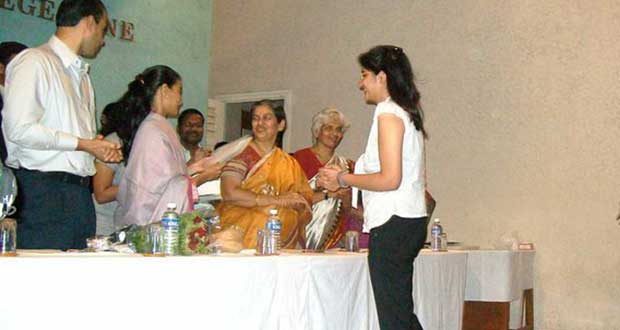
    rimali-batra-3

    ILS for me was a place of opportunities. Located in the heart of the city and walking distance from Symbiosis, ASCL, Ferguson College, FTII and Gokhale Institute of Political Science and Economics, it offered a vibrant student crowd and a bundle of opportunities. My learning was not limited to the classrooms of ILS. I participated in moots that enlarged my frame of learning, pursued diplomas in subjects that were not taught as a part of the academic curriculum and interned with NGO’s/human rights organisations in Pune. During college, I successfully completed diplomas in International Arbitration, Cyber Laws, International Business Laws, Securities Laws and Medical Law and Criminology. I was one of the speakers in the team that represented University of Pune at University of Oxford in the quarter-final rounds of the Oxford IPR Moot Competition, 2009. My first publication was on ‘domestic violence’ in the college journal (in 2007), followed by a piece on ‘separation of powers’ in the Ambedkar Law School journal (2009). During college, I also participated in cultural events like poetry writing and recitation, signing and painting. And of course I continued to play Basketball at the Deccan Gymkhana, since our college did not have a functional basketball court. I made some great friends at ILS. Overall, I believe I was able to paint my canvas with so many colours because I was in a college that gave me so much time and space to explore and go looking for opportunities, if they refuse to come to you.


    When people say “Law school”, they look no further than the National Law Universities. As a graduate of ILS, Pune have you faced any such bias? What would be your advice to students in ILS?

    I think the trends are changing a bit. Especially because of so many law colleges mushrooming across the country. ILS has a legacy of being one of the oldest institutions imparting legal knowledge. What ILS lacks is professional training. Meeting my counterparts from N-Schools, always encouraged me to imbibe in me the skills required to think, talk and approach life like a professional. Bias does exit but not all of us have to face it. ILS has a reputation for producing some good litigators however has not earned the same reputation in the corporate world, thereby making it difficult for kids in ILS to crack competitive corporate jobs. I recall an incident during my first job where a senior of my team, while praising my work, introduced me to be from NLS. On my prompting, he corrected himself and toned up his praises even more (considering he was surprised!). I would advise students from ILS to do additional courses and good internships because only studying law at ILS and getting a degree is not going to be enough.

    My advice to students of ILS would be two-fold

    (a) focus on academics in order to score well. Do not consider classroom teaching the end all of academics, that’s just the starting point; and

    (b) Make the most of the time at hand. Involve yourself in activities/course or additional degree’s that interest you. ILS makes space and time for you to incorporate that in your schedule. Most importantly, do both with the sole objective of learning.

    Students can consider requesting administration to take notice of events, moots and competitions that interest them and be rest assured the college will do its part. Student may also invite luminaries in the legal fraternity for lectures and seminars. Basically, what a student in ILS needs is the ‘instinct to initiate’ and ‘go towards opportunities’.


    Please describe the internships that you did in college.

    For internships, I always chose New Delhi, because this is where home was and logistics were easy to manage. My first internship was in the District Courts of Delhi where I read and researched on matters of criminal law and property related disputes. Thereafter, I did my second internship in Delhi High Court where I worked on matters on the original as well as the appellate side on various subjects. In my third year I did internships with Senior Advocates of Supreme Court. I then did an internship with litigation teams of two law firms and my final internship was with the Law Commission of India where I wrote a thesis (which retired into a book) on Constitutional validity of Medical Termination in India. I planned my internships and explored possible avenues for a lawyer in order to better understand my calling. By the end of five years, I was sure of being a litigator (at the least) not sure of the subject area that interests me.


    You worked as a Legal Manager at ICICI Bank. How does a typical day at ICICI work out? What were your main tasks and what responsibility did you undertake?

    ICICI Bank was my first employer. I was placed through college. I was based out of the Delhi office (I asked for Delhi as my location during my interview). I worked in no specific vertical, but was primarily doing litigation for/against the Bank. Anything and everything was a part of my profile. On a day I would be doing ECB lending, security creations and on another I would be researching and preparing written submissions for matters pending in the consumer forum or the Supreme Court and on yet another day I would be doing retail banking advisory. Having such a profile made it interesting to work in ICICI. I worked there for a year and a half, before I decided to do a masters.


    How did your appointment take place at ICICI Bank? What kinds of questions were asked at your interview for ICICI bank?

    ICICI follows a three step procedure, shortlisting on the basis of CV’s, followed by a Group Discussion and finally a personal interview. The Group Discussion revolves around a hypothetical problem relating to law of contracts and consumer protection. The personal interview is primarily based on the resume and a few HR based questions.


    Please tell us about your decision to do an LL.M and how you went about choosing the program and university.

    I decided to pursue my masters from Oxford ever since I visited the University in 2009 for an IPR Moot Competition. On my return, I pursued it like a dream. The advantages of doing a BCL are:

    (a) it offers the students to choose a suitable combination of subjects, based on their preferences as opposed to a custom-made LLM course. So, even though I read only four subjects as part of the BCL but at the same time the rigorous workload and timelines gave me the advantage of specialising in four subjects at one time,

    (b) Oxford targets on strengthening reading, breaking down complex material and articulating the same in form of legal writings/answers/tutorials. They say, don’t study BCL, you read for BCL.


    What do you think clicked in your favour during the selection process for Oxford? What are the scholarships you had applied for?

    I can’t answer this question with certainty. It has to be a combination of my academic performance in ILS, my statement of purpose and the write-up. Also, the fact that I assured my willingness to attend the course and pay for it, in case I did not get scholarships from Oxford, could have boosted my application. However, I did say that I will not attend if I had no scholarships at all. Other than that, achievements mentioned on my CV (like basketball, moots, diplomas etc.), my statement of purpose and my write-up may have added a little value.


    How do you think a law student can build up his profile to get through to top-notch universities like Oxford?

    It’s important to have a strong academic score. A rank in the law school adds value to the application. Apart from that, a student should be able to demonstrate inclination for engaging in theoretical and policy aspects of law. It is also advisable for students to have publications on their side. I remember interacting with the Dean of the University and inter alia, discussing the approach adopted by the University in considering applications from Indian law students. He talked about the law college’s ranking also being a relevant factor, apart from the academic achievements of the student.


    What was your area of study during your masters at Oxford? How was the academic pressure like and did you find time to engage yourself in other activities?

    I read Principles of Financial Regulations, Corporate Laws, Medical Law and Ethics and Philosophical Foundations of Common Law. The courses were rigorous and the readings ranged from being easy to intense and complex. However, I made time to be a part of the Oxford University Girl Basketball team after being shortlisted at the trials conducted at the beginning of the course. I played 4 or 5 inter-university matches and also participated in the legendry ‘Varsity Tournament’ played between Oxford and Cambridge every year.


    Please tell us about the scholarships you applied to and the procedure for each.

    I applied for all possible scholarships I stumbled upon during my research. I started looking for scholarships before making my application. I followed this website -governmentofindiascholarship.com. I specifically applied for Rhodes, Common Wealth Scholarship, KC Mahindra Trust, Jain Trust, Ox-Cam among others. I was awarded the KC Mahindra Trust Scholarship and the Ox-Cam Scholarships. The application procedure is a little detailed as the students need to prepare independent SOP for each and demonstrate availability of the balance funds (in case where the scholarship does not cover for everything).

    The interview rounds for KC Mahindra and Ox-Cam is fairly simple and questions are primarily targeted at (a) ‘Why oxford?’ and (b) ‘What after masters?’

    Additionally, I would suggest students to ask their employers or seniors they have worked with for financial assistance as some firms, seniors or employers are willing to offer funds with or without a promise from the student to come back and work with the said employer or senior.


    Please describe your experience at Oxford. What were the classes and professors like?

    Oxford was a scintillating experience for me. Especially, reading philosophy at Oxford gave me a deeper understanding of law, legal principles and concepts. Oxford has seminars (classroom teaching) which requires students to read before walking in. For my corporate law class I joined a group that was made by students themselves to discuss seminar questions before the seminar and help prepare better for exams.

    At Oxford I was exposed to a system that takes its readings very seriously. As a Masters student, we were required to not just read hundreds of pages every week, but, to also reflect on them during our seminars. I enjoyed this practice very much and it has allowed me to hone my writing skills in the process. A typical reading list will have at least 8-10 important readings (combination of articles, case laws and policy paper series from different jurisdictions, but primarily UK and US). Professors, at best, assist as students deliberate and discuss a topic. One more thing which I found particularly interesting was the presence of an economics, finance and corporate law professor at the same time during seminars for one of my courses, namely, principles of financial regulation.

    The tutorial system is quite unique. There are 4 tutorials for each subject and are spread over three semesters followed by a three hours written exam at the end of the course. I found the tutorials challenging but refreshing as they helped me assess my performance and understanding of the subject alongside attending seminars. They also helped me hone my skills of articulating my thoughts and understanding of the subject.


    You switched to a pure research based career after coming from Oxford. How did this change take place? How did you get to associate yourself with Jindal Global Law School?

    Academics is very close to my heart and still is. For as long as I can remember, teaching and educating has always fascinated me. When at Oxford, I heard about Jindal Law School and its dean, Dr. (Mr.) C. Raj Kumar who happens to be an alumnus of Oxford. I was given an opportunity to work as a Research Associate and lecture two courses ‘Property Laws’ and ‘Corporate Laws’. Honestly, one may see it as a switch in careers, but for me, academics fits in very well for an aspiring lawyer, especially after a masters. I also felt a dire need to re-apply and re-read my subjects, from the Indian law perspective – after I finished my masters.

    Though I chose to be a litigator, I haven’t lost touch with teaching and academics (and hopefully never will). I have conducted seminars and lectured at various law schools in India, ever since I left Jindal. I am a visiting faculty with Symbiosis Law School, Noida and often visit ILS Law College for conducting week long courses, as and when time permits.


    You had worked with Jyoti Sagar Associates and you are now working with Trilegal. Why this switch?

    After two very fruitful and enriching years at Jindal Law School, I decide to do join regulatory litigation. I was with JSA for a year and have been with Trilegal for 5 months now and having been working on laws in the energy sector, especially the power sector. With not much precedent in the sector, the practice is demanding and engaging.


    How is being a research associate or a legal manager at bank different from working at a top – notch law firm? Does the work load increase, how have you managed this transformation?

    When I was in ICICI, I assisted in consumer dispute litigations for/against the bank on subjects involving ‘corporate laws’, ‘banking laws and regulations’. When at Oxford I read ‘corporate law’ and ‘financial regulations’. When at Jindal, I taught ‘corporate laws and financial regulations’. When at JSA, I put together the knowledge and experience acquired from ‘corporate laws’, ‘regulations’ and ‘litigation’; and worked hard in acquiring sector specific knowledge. Electricity/Power sector is a super-niche sector and I find it thrilling and challenging. My work at JSA was very extensive and intense. At Trilegal, I continue working on matters in the power sector with the same intensity and I enjoy it immensely.


    How has the journey been so far? What are your long term goals?

    For me my journey that has been the best part. The people I met, places I visited, life experiences I picked on the way, all add to me being who I am today. For today and tomorrow, I am a litigator, learner and an observer and I aspire to be perfect at what I do.


    Lastly, what would be your message to a law student who wants to excel in the legal profession?

    Let me quote Abraham Lincoln’s message “If you are resolutely determined to make a lawyer of yourself, the thing is more than half done already.” I echo.

    When in law school, plan a little about your future. Immerse yourself in travel, cultural exchange, sports, parties and meaningful conversations, as much as possible. Don’t let your degree define your career limits. Don’t forget to explore and experiment. Take risks sometime, it adds a bitter-sweet flavour to your becoming a lawyer. If you do, then accept your failures as much as your cherish your victories.

    And most importantly, keep your imagination alive.
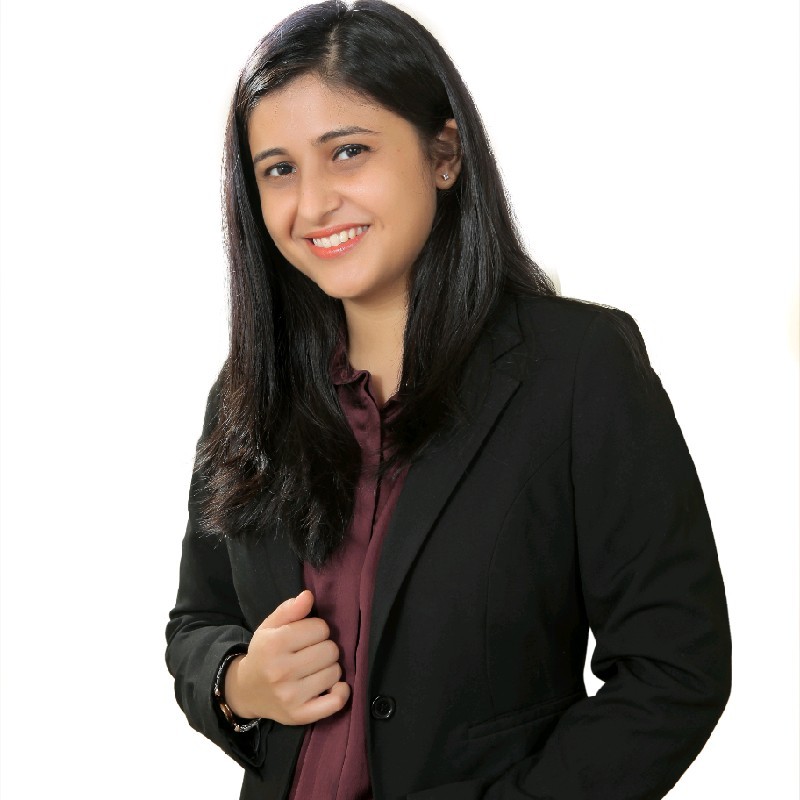
  • Ankit Sinha, Associate, Juris Corp, on LL.M from QMUL, and work experience in Banking and Finance Laws

    Ankit Sinha, Associate, Juris Corp, on LL.M from QMUL, and work experience in Banking and Finance Laws

    Ankit Sinha is one of the most diligent and illustrious scholars of the 2012 batch of School of Law, Christ University. He has a noteworthy academic record as he ranked in the top 5% of his batch during his college years. He had always planned to pursue Masters since his days in law school and therefore soon after graduation, he went on to pursue Masters in Banking and Finance Law from Queen Mary, University of London. After coming back to India, he started working at Juris Corp and is currently working as an Associate there.

    In this interview, he talks about:

    • Law school experience at School of Law, Christ University
    • LL.M experience at Queen Mary
    • Induction and work at Juris Corp


    How will you introduce yourself to our readers?

    The first question and I find myself lost for words. As human beings, it’s always so much more difficult to talk about yourself. Nonetheless, I’ll try. I come from a family of lawyers, tracing back to my great grandfather. I have lawyers on both my paternal and maternal side. Safe to say it didn’t take me long to fit into the scheme of things and the offerings of this profession. Outside the field of law, I’m like any other mid twenty year old- I love playing sports. I am a diehard Manchester United fan. In my spare time I love listening to music and am also an amateur photographer. I also sing and play the bass guitar.


    How did you gravitate towards law? Why law and not engineering or medical studies?

    Law wasn’t my first choice. Surprisingly, neither was engineering or medical. I loved Economics as a subject whilst I was in school. Unfortunately, as much as I loved Economics, I had an aversion towards Mathematics. Post my 12th board examinations, and once my results were announced, given that my result in Mathematics wasn’t good enough to secure a place in any Delhi University College, I decided to pursue law for a year. My father wasn’t okay with me dropping a year. My sister was pursuing law at the time, and hence I decided to follow suit.

    I appeared for a few entrance examinations, and landed up at Christ College. Within the first few years at law school, I had, during various internships, worked briefly in the field of Banking and Finance. I saw glimpses of Economics in banking and that’s where I developed my love for the subject. So much so that I went on to do my Masters in it as well. Was quite a journey from not wanting to do law, to ending up with a Masters in it.


    Tell us about your law school experience. Share some highlights from your college days that shaped you as a lawyer.

    Five years is a long time. I made some of the best friends and have some of the best memories of my life attached to law school. Like most teenagers, going to law school away from home meant freedom for the first time. Living alone and fending for yourself. In this profession, somewhere down the long winding path, you’ll find yourself stranded and alone. My five year stint at Bangalore made me independent. It made think on my feet. It made me realise that knowing that a problem exists isn’t good enough. Finding solutions was the key. Even today, the fact that I spent those years away from home, away from my parents, made me stand up on my feet. It made me see the world from a different viewpoint. I honestly believe one cannot learn the law, one can only prove to be prudent enough to find it. I developed my research abilities throughout my five years at law school and during my internships.


    How did you fare in your academics at Christ University? Would you say a great CGPA is a necessity to kickstart a good career in the legal profession?

    I ranked in the top 5% of my batch during my years at Christ College and subsequently ended up with a merit during my Masters. So safe to say I was good at studies. If it matters to kick-start your legal career, well, it does to some extent. Most law firms prefer students who excel in studies as it depicts sincerity. It’s not the only criteria, but it may help you land at interview with a prominent law firm. Once there, if you’re good enough, consider the battle won.


    Which subjects did you enjoy during your qualifying degree? What about co-curricular activities?

    Economics and Banking law! I didn’t so much so as have an iota of doubt in my mind that I wanted to pursue a career in Banking. I wasn’t interested in mooting to be honest. I spent a lot of my time playing cricket and football for the College team. In my 4th year I was appointed the convenor of the sports committee and I’m proud to say that under my stewardship, Christ College won its first ever law school sports fest when we visited NUJS, Kolkata that year. I was also an avid counter-strike fan and had the opportunity of being a part of the gaming team at Christ College as well.


    What was your motivation behind pursuing LL.M. right after your under-grad? How did you finally decide that you need to do masters?

    In my 2nd year itself I had made up my mind that I wanted to pursue my Masters in Banking and Finance. I had done my homework on the best Universities in UK for an LL.M. in Banking and Finance and had already sent across my applications by mid 4th year. Throughout law school I worked towards the requirements that each of the 5 colleges I had narrowed down on, stipulated, for an entry into their Banking and Finance programme.


    How did you choose Queen Mary, University of London over others? How did you go about choosing a university?

    I applied to five Colleges. Four of them were Colleges affiliated to the University of London. Queen Mary seemed to have the most concrete Banking and Finance programme and it fit my needs perfectly, making the final decision relatively easy.

    As a heads up to those who wish to pursue higher studies, make sure you do your homework. Rankings are attractive, but there’s a lot more to a Master’s abroad than just that. Don’t blindly follow the herd. Some colleges have better programmes than others. It’s important to narrow down the best Colleges as per your specific needs, the programme you wish to pursue and the professors conducting the relevant modules you intend to take up.


    How did you go about writing your SOP? Are there any key factors which one should keep in mind before writing the SOP?

    A statement of purpose is the driving force behind why you wish to undertake a specific programme at a specific College. It’s not meant to be a glorified version of your curriculum vitae. Keep it short and simple. Avoid flowery language. No one is judging your creative ability. Most College websites abroad specify the length of an ideal statement of purpose. Stick to the word limit. Also, and most importantly, if you intend to apply to more than one College, avoid writing a common statement of purpose. Each statement has to be specific to the College it is intended to be addressed to, keeping in mind the programme they are offering.


    How about recommendation letters? Who all recommended you to pursue LL.M?

    Two professors that I always admired at law school were more than willing to write a letter recommending me. Needless to say, one of them had taught me Banking law. If you’re planning to do a Masters, make sure at least two of your professors admire you.


    Tell us something about your LLM year at Queen Mary, London? How did this influence your career?

    It’s a different ball game altogether. In India the education system mandates that one learns the law instead of learning how to find and apply it. At Queen Mary you’re not expected to know the law, you’re expected to find answers to queries and apply the law as per the given situation at hand. This helped me immensely when I joined Juris Corp. I may not always know the law, but I know where to find it on most occasions and how to apply it appropriately.


    ankit-sinha-2

    What was your topic of research for LL.M? Why did you choose that subject for research?

    My dissertation was titled “Electronic Banking: Boon or Bane?”. During my stay at the United Kingdom I noticed how everyone would just book products online. No one really took the pain to go to a Sainsbury’s or a Tesco’s. Not during the winters at least! That’s how I ended up with a dissertation on electronic banking. My topic was a comparative analysis of the usage of electronic modes of banking by people in India and in the United Kingdom.


    After returning to India, you started working at Juris Corp as an Associate. How did you go about bagging this job?

    Juris Corp, as most know, has a very prominent banking practice. So the decision wasn’t very difficult. I sent in my resume and within a few weeks got a call from the HR department. That was followed by a series of interviews, some telephonic, some personal. The questions were primarily based on my LL.M. modules and my past internship experiences. Within two weeks I had landed myself a job at the firm, well before completing my LL.M.


    How was the job interview? Do you remember any of the questions asked to you? Please give our readers some tips to nail a law firm interview.

    I don’t remember exactly what was asked, but I do remember that a lot was asked from what I had mentioned in my curriculum vitae. Knowing your curriculum vitae inside out is of utmost importance! I was also asked specific questions on my LL.M. modules and my dissertation. The interviewer, who now happens to be the Partner I work under, kept taking lead from my answers while asking her next line of questions.


    How tough were the first six months at your workplace?

    Not at all! I am very lucky in that sense. I had a very welcoming and warm team. My Partner, who heads the Banking and Finance practice at the firm, is one of the most understanding and calmest people to work under. She has, from the inception ensured that I am at par with my peers. She along with a lot of others helped me during the initial few months. Within the first 3 months I was already in the thick of things. Tough is not a situation I experienced. It was challenging, but definitely not tough!


    What are your day-to-day responsibilities? What is the most challenging aspect of your job? How is the experience so far?

    There’s no set day-to-day responsibility. The only responsibility entrusted upon all of us is to ensure that we keep learning every day, widening our scope in the field of Banking and Finance and delivering to our client’s expectations.


    Your main practice area covers Banking and Finance Law. What prompted you to choose these practice areas? Please share with our readers.

    As monotonous as it may sound, I knew I wanted to pursue a career in Banking and Finance as early as 2008. Since then it’s been my dream and today I’m living that dream.


    How do you manage the workload and your personal life?

    That’s not always easy. Some days the workload is a lot more than on others. When you’re still new in the profession, the aim is to strive to be better and work hard. Having said that, once in a while your mind needs to take a break. We get Sundays and alternative Saturdays off. On those days I meet friends or go on road trips. That helps. Week days are all about work! On those few days when I leave office early, I prefer going home and watching television or listening to music.


    How do you keep yourself abreast with latest industry news and trends?

    We have internal FYI’s and bulletins circulated by all teams to help us keep at pace with the industry news and trends. In addition, on a weekly basis one or two associates make an internal presentation on the latest developments in their respective fields. All this helps keep at pace with the latest developments. I also track the Reserve Bank of India website on a daily basis. This further helps augment my knowledge in the field of Banking and Finance.


    What are the primary professional ethics you follow while at work? What has been your strategy to deal with errors and mistakes?

    There’s no replacement to sincerity. I make sure that I’m putting my 100% in every assignment entrusted upon me. I ensure I take up every task and perform it to the best of my ability. Errors and mistakes are inevitable. It makes us learn. It improves the way we think. Unless you really make a blunder, you’ll never end up really learning. Once I make a mistake, the next time round, while drafting that particular clause or opining on that particular aspect of law, I pay that much more attention to the finer details.


    Do you feel that higher education helps a person to have a successful legal career? What would be your word of advice to students who wish to go for higher studies?

    To each his own! There’s no sure shot formula to a successful career. Every individual has his or her own strengths, weaknesses and limitations. It’s best to abide by those because you know yourself best. As for me, yes the 18 month stint abroad did help me. Not just as a lawyer, but also as an individual. It made me a stronger person. More humble to my own shortcomings and towards life in general. So my advice would be, do what you think is best for you. Don’t follow the crowd. Be different, be unique, be yourself.


    What do you feel makes an intern stand out and is very important for him to do to have a chance of getting a call back or even a PPO?

    If I assign work to an intern, on most occasions I don’t expect him or her to find me the answer to my query. It’s not always a simple straightforward answer. For me what counts is the effort. If I’m convinced that a particular intern has the ability to learn and improve if nurtured, I always give him or her a positive feedback.


    The question that whether one should specialise in a particular area of law or be more of a general lawyer often comes up before law students. What is your opinion on the same?

    You must have heard the saying- jack of all trades, master of none! In this field and in my honest opinion, specialism is of vital importance. 10 years into the profession one will recognize you for the area of law you have a strong hold in. Having a forte is essential. The earlier you start, the better off you will be.


    What do you cherish most about the experience you’ve had over the past two years?

    I wouldn’t be able to pick one specific experience or moment. Every day has had its share of glimpses that are etched in my memory.


    Last but not least, what’s next for you?

    I’ve just started. It’s a long winding road ahead. Every day is a challenge. Every day is an opportunity to better yourself. The past is the past and the future is too far. I hope my present and every single day of it I have a new memory to cherish. I intend to take each day as it comes and strive to be the best at what I do. As once said by Steve Jobs- Stay hungry stay foolish!