Tag: Bharathiar

  • Chakradhar Varadarajan, Head-Corporate Legal in Godrej, roles and responsibilities as In-house Counsel

    Chakradhar Varadarajan, Head-Corporate Legal in Godrej, roles and responsibilities as In-house Counsel

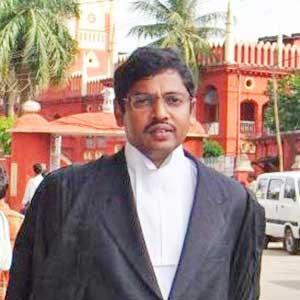
    Chakradhar Varadarajan holds a Bachelor of Law degree from the first batch of five-year law course (1983-’88) from the Government Law College affiliated to Bharathiar University, Coimbatore, Tamil Nadu, India. He is the Head-Corporate Legal in Godrej Industries Limited (GIL). He is also the authorised signatory for Godrej Consumer Products Limited (GCPL) and Nature’s Basket Limited (NBL).

    Chakradhar’s current role is to add value to the businesses as a trusted advisor, shape up and maintain a client-focused in-house legal team. His work areas engage him to manage and advice on risk analysis and mitigation including M&A, indirect taxation, brand protection enforcement, business advisory, compliance and regulatory aspects.

    In this interview, he speaks to us about:

    • His decision to choose a five-year law course at a very nascent stage of Indian legal education
    • The culture back in his college days.
    • His role and responsibilities as Head-Corporate Legal in Godrej Industries Limited (GIL).
    • The reason behind giving up litigation practice and accepting an in-house legal counsel role.


    How would you like to introduce yourself to our readers?

    I am a student. I continue to learn every day.


    What prompted you to choose a five-year law course?

    (The five-year law course was newly introduced at that time.)

    Most of my junior college buddies were focussed on graduating as either engineers or as doctors. A new engineering college was set up in our town back then and also a renowned Government medical college. Probably this contributed to many of them opting to becoming engineers or doctors.

    My upbringing in a middle class family of a State Government employee (my father) and the situation of two of my elder siblings already aiming then to become doctors made me think differently.

    Living in Kurnool town surrounded by an agrarian economy in a drought-prone region of the undivided Andhra Pradesh, I was more influenced by the agenda and focus set for social and industrial development by Telugu Desam, CPI & CPM.  I was keen to talk about the growth of industry & commerce in the region. Kurnool, Anantapur, Nandyal, Tirupati in particular started looking out for industrial and educational renaissance.

    Rayalaseema Paper Mills had just started production in those days, granite export industry was slowly picking up, Tungabhadra Industries Limited was producing vegetable oil products including Vanaspati locally and APIIDC was taking steps to create industrial parks.  Amidst such socio-political-industrial climate, the travel of my thoughts took direction of further studies in commerce and law.

    Had it not been for Justice Chandrachud (Retd) starting a five-year law course in the 4 law colleges of Tamil Nadu (Chennai, Trichy, Madurai & Coimbatore) during mid-1983, preceded by a newspaper advertisement issued by the Directorate of Legal Education, Tamil Nadu, I probably would have turned a commerce graduate in Venkateshwara University and opt for a 3 year law degree in Anantapur or Hyderabad.


    How was the culture back in your college days (1983-’88)?

    I joined five-year law in Coimbatore, a city that was fairly well industrialised in 1983 with many textile machinery manufacturing units & spinning mills (serving as the back office for the Mumbai mills).

    No other State (including Andhra Pradesh) started any such course in law by then and National Law Schools were not even established. The experience of being soaked in a completely different and industrially vibrant atmosphere as well as being in an educational hub of Tamil Nadu planted bigger dream of managing and leading legal services for companies, early in life.

    Our college being a Government Law College, resources for us were limited so, the students of 3 year law batch & five-year law batch both used to attend college in the same premises in morning and afternoon sessions respectively.

    India’s gender diversity efforts & girl child education were getting evident in the early ‘80s itself basis the statistics that in our own law class.  We were a total of 78 students of which 18 were girls.  Some of them are doing well now in the profession and practising law in courts today.

    Our five-year law curriculum being new, some of the books prescribed for study were not available in stores or our own college library, so we undertook visits to State and/or District libraries in different cities to gather material to study and used to share notes with other classmates.

    With no internet and Google, no online research tools, preparing for inter-collegiate debates, competitions or moots was a group activity with a lot of excitement peppered with visits to other educational institutions as well as local courts in search of willing seniors who could guide us regarding various topics.

    Our professors treated us more lovingly as we were seen as fresh and young buds who were enthusiastic to listen, be more regular to attend lectures and moots.

    Our initial law college studies also involved the experience of receiving guest lectures from professors of other colleges teaching liberal arts (Political Science, Sociology & Economics, History of India & developments leading to Constitution) as our 1st 2 years curriculum was mostly related to these subjects, apart from English, Logic & Reasoning, and Legal Writing in Tamil.


    How did you overcome your initial jitters in a courtroom full of experienced lawyers and judges?

    (He holds the distinction of being the first ever five-year law graduate to be enrolled as an Advocate in 1988 with the Bar Council of Andhra Pradesh, Hyderabad.)

    Preparing for the day of enrolment, wearing that black coat, tying up the white bands around neck and entering the High Court of A.P in Hyderabad with a gown on the shoulders had been a ‘dream come true’ (which actually was not so financially, as I experienced later in courts for about two and a half years but I had to go through that phase as part of the process).

    Joining a chosen senior’s office (after closely following up as to whom to join) and then getting paid Rs.750/-, a princely sum back then at the end of the first month (when no other senior counsel generally paid money to any junior) is a cherished high. A High Court judge and a District Court judge encouraging me to argue the senior’s brief and guiding me while I put across a defence. Such experiences probably are rare now due to paucity of time in courts today. The attention and time the judges gave for testing the skills of juniors like me, to observe and correct the preparedness was also a blessed high. When a District Judge advised me stoutly across the bench in an open court stating professional ethics demand that an Advocate should not visit a complainant’s home and talk of settlement on behalf of the client who engaged him was a low and as well as a learning moment.


    What lead you to give up litigation practice for accepting in-house legal counsel role?

    Prior to fully involving in active court practice, I attended a corporate internship in Hyderabad, a first for me in a reputed corporate group in Hyderabad. Almost 2 years later, I was blessed with an enquiry from them as to my interest in a vacant position of ‘Law Officer’. Based on the evaluation of my socio-economic background coupled with my own need for a stable income and a big dream of going in-house, I said yes to such an opportunity.  I consider myself lucky too that my joining as in-house counsel coincided with onset of liberalisation in 1991.  On personal front, the contributing factor to be unwavering in continuing to being in-house counsel was the loss of my mother a year later and then marital responsibility. There was no looking back after I joined in-house, though I did have a fair share of mirage of reflections to see myself as a practising Advocate to which I did not yield to!


    How are internships helpful for a law student? How was the scenario back in your days?

    Internship in an Advocate’s office and attending the courts were part of planned curriculum for our five-year law study.

    Our internship was for the entire five years of study. We would start by 8.30am in the morning in our assigned law office, work there first and move into Court and be present there until 1.00pm and later on, reach our Advocate’s office again by 5.00pm and remain there until 8.30pm. Such hours of internships for learning were possible since our classroom lectures were between 1.30pm to 5.30pm.

    The curriculum made it mandatory for us to attend a senior Advocate’s office, learn drafting,  observe client guidance by the senior as well as work of the court clerks, do case law research, know professional etiquette and ethics, observe and learn court decorum.  At the end of the year, we had to submit a project paper over the aspects learnt in our internship.  All our learning during such internship was assessed for marks as our internals by our college.

    I am happy that now, apart from internships in law firms, students of law also have the benefit of focussing on gaining knowledge through internships in corporates. Such internships are no doubt preparing the law students to be much more agile, employable and professional and learn a lot about crucial transactional non-litigation work which is a large share of corporate in-house roles.


    Currently, you are the Head-Corporate Legal in Godrej Industries Limited (GIL). What are your roles and responsibilities?

    Our team in Godrej Corporate Legal has about 11 in-house counsel and 2 paralegals. The team has 4 sub-function group heads. Sub-function head managers are there for (i) Contracts, M&A and business/category advisory; (ii) Brand Protection/IPR, category advisory & International business; (iii) Indirect taxes management and (iv) Litigation management.

    My role as strategic function business partner is to provide in-house legal services for the Consumer Goods, Chemicals, Retailing and Corporate HO. The role also partners with Godrej’s M&A team initiatives for inorganic growth of the consumer goods business in Indonesia, in Africa for about 14 countries, the USA, Chile & Argentina.

    An average work-day in Godrej is ‘a day to look forward to’ since the consumer goods, the most dynamic amongst all, sets up an agenda of good amount of in-house legal service activity both for India as well as overseas. At the same time, the work-life balance afforded to the employees by Godrej are of world-class standards offering us flexible working hours (core hours being defined as 10.30am to 5.00pm), well laid out policy on gender diversity and inclusion, a ‘work from home’ facility when required and approval for sick leave without a limit when such a situation arises.

    Godrej’s philosophy of human resource assessment relies on 3 key pillars (Leading Self, Leading Others, and Leading Business).Further, ‘the Godrej way’ makes it important to constantly remind myself about ‘Godrej way and the Purpose/Objective’, the importance of ‘Trust’, the characteristic to ‘Be Bold’, to undertake the best effort and ‘Create Delight’ for your customers and therefore ‘Own it’ to deliver, and simultaneously ‘Be Humble’ and ‘Show Respect’ to people as much as you expect from them.


    What are the qualities which Godrej looks for in one’s CV while applying for internship?

    GIL offers law students internships and the intake is limited to 2 students per annum at present.  The applications for such internships are received processed by our Corporate HR based on prior assessment and notification of such intern needs by the heads of the sub-function groups.

    Criteria in Godrej for assessment of any candidate’s CV are (i) individual’s Initiative, (ii) hunger to learn & improve, (iii) emotional and social awareness and (iv)positive mind-set for collaboration’.


    You were bestowed with “India’s finest in-house counsel” in 2016 .What is the success mantra?

    (This recognition is given by the Indian Corporate Counsel Association & the Ministry of Commerce.)

    Any bright young lawyer who is able to practise the following principles will definitely taste success and will himself amongst ‘successful in-house counsel in India’ :

    1) Believe in yourself; 2) Be humble to learn every day; 3) Be respectful of others; 4) Have patience to practise and persevere and (5) Accept to kiss & hug any change.
  • V. Mohana, Senior Advocate, Supreme Court of India, on the AOR exam, life in litigation and role of a Senior Counsel

    V. Mohana, Senior Advocate, Supreme Court of India, on the AOR exam, life in litigation and role of a Senior Counsel

    V. Mohana graduated from Coimbatore Law College (now GLC, Coimbatore) in 1988, India’s first batch of the five year law course. She joined the chambers of Mr. M. Panchapakesan as a junior after graduation, where she had also interned in her final year. Thereafter, she moved to New Delhi and worked with Ms. Indu Malhotra and Mr. C.S. Vaidyanathan, enriching her expertise in litigation. After successfully passing the Advocate on Record examination in 1996, she has been practising independently in the Supreme Court, Delhi High Court, National Consumer Commission, etc.

    She has worked on matters with eminent seniors like Mr. Kapil Sibal, Mr. K.K. Venugopal, Mr. P. Chidambaram, Mr. Arun Jaitley, Mr. T. Andhyarujina, et al. She was also a Panel Lawyer for the Government of India. She was designated as a Senior Advocate by the Full Court of the Supreme Court of India on 23rd April, 2015.

    In this interview, she talks about:

    • Being a first generation lawyer: college life, internships and interest in litigation
    • Moving to New Delhi and establishing her practice
    • Cracking the Supreme Court Advocate on Record examination
    • Her wide range of practice encompassing various courts, tribunals and as a Panel Lawyer
    • Being one of the few women Senior Advocates of the Supreme Court


    Please introduce yourself to our readers. Were you always interested in pursuing law? Are there any lawyers in your family who motivated you to join law school?

    I am a first generation lawyer, and I have been practicing for the past 27 years. From my school days, I was interested in debating, public speaking, theatre etc. I took an interest in law during my higher secondary education. The sole credit behind my motivation to do law goes to my Mother. There were no lawyers in our family until I finished law. Now there are more than three, and a few more in the making.

    You are a student of the very first batch of the five year integrated law course, introduced for the very first time in India. We would love to know about your college. Was there any confusion/mismanagement, considering it was a new concept?

    Yes, I belong to the very first batch (1983-88) of the 5-Year integrated law course after higher secondary, introduced for the very first time in India in the year 1983. Our college those days (Coimbatore Law College, Bharatiar University, Tamil Nadu) was run in a rented premises. There were very few classrooms during the first year since we were the only batch and the rest of them were three year law students. We had a small library and a very small room for sports activities.

    Our syllabus was structured similar to the present syllabus, but it was not very detailed. We also studied subjects like Sociology, Economics, Legal History, History and Legal Language & Legal Writing etc. during the first two years. The rest of the three years we had subjects like Family Law, Transfer of Property, Constitutional Law, Income Tax, Insolvency, IPC, Evidence Act, CPC and Cr.PC along with Drafting, Pleading and Conveyancing.

    There was no confusion or mismanagement and, of course, the infrastructure was limited. There were few teachers and we had hardly two to three classes a day and only one session either morning or afternoon. There was no hostel for girls and there were very few girls in the class.

    Were there any student activities and opportunities such as debates, moot courts et cetera? What was your typical day like? Did you also pursue any hobbies?

    There were activities and opportunities such as debates, dance competitions, quizzes, etc. which were conducted by other Arts & Science colleges in which we all participated. There were a few moot courts competitions as well that were conducted by colleges outside the city and state, so participation was difficult. Our typical day was very relaxed and had only two classes/lectures. We had a lot of free time to pursue any extra-curricular activities, but we did not have many opportunities. I was in a working women’s hostel and our timings were very restricted. I used to give tuitions for school children in my free time.

    Did you do any internships? What was the work allotted to you like?

    The concept of internships was not in vogue back then. However, we were regularly going to court in the morning since we had classes only in the afternoon. During my final year, I myself went and joined a Senior Civil Trial Lawyer Mr M. Panchapakesan who is one of the doyens in the Civil Bar in Coimbatore. After a short interview and after checking my aptitude, he agreed to take me as an intern and I started going to his office and court in the morning and after college hours. The work I was initially asked to do as an intern was to note the case diary maintained by the office clerk which reflected the entire list of cases on a day-to-day basis for the whole year. Every day we had to note down the date of the particular case in the diary and maintain it regularly so that we get ready in advance for a trial. This habit is something I follow to this day. Apart from that, my senior would dictate legal notices, plaints and written statements which would be taken down by the juniors. I was asked to re-write the same in big font with triple spacing on white sheets of paper and give it to the senior for his correction and editing. By this method, I learnt a lot about drafting and pleading. There was no concept of stenographers in our office those days. Every pleading, application and written submission used to be dictated to juniors. I got the benefit of directly taking the dictation from my senior very soon after I joined as an intern, due to the fact that I could write fast and my handwriting was legible.  I have acquired maximum advantage in profession due to this practice of taking dictation.

    How did you manage the internship with studies? How did the practical exposure compliment the theoretical knowledge imparted to you in college?

    My internship never disturbed my studies. It rather helped me in learning what was taught theoretically in college. For example, we had papers such as CPC, Cr.PC, Drafting, Pleading & Conveyancing in the final year. I feel that these papers should be taught only in the final year. Since I was going to the trial court in my final year and taking dictation in my office, I could practically learn the application of CPC, Transfer of Property, Partnership, Filing Suits, etc. due to the personal practical experience. Even today, it is that training which is helping me. The art of drafting sale deeds, lease deeds etc also helped me in my conveyancing exam.

    Did you consider pursuing higher studies after graduation? How important is it for a lawyer to go for higher studies? Were you inclined at any time, towards the civil services?

    Honestly, we could not think of pursuing higher studies after doing law. Those days, even a five year law course was a luxury and we could not afford to think of any further education, coming from a big family. It is good to go for higher studies if one can get a good scholarship or afford it. However, it is not compulsory if one is planning to do litigation in India. Of course, higher studies abroad gives you wide exposure and analytical approach so it is very helpful. I never thought of civil services at any point of time since I always wanted to practice in a court of law.

    You joined the office of Mr. M. Panchapakesan upon completion of your law degree, with whom you had interned as well. What was the scope of work?

    On completion of my law degree, I continued to work in the office of Mr M. Panchapakesan. Initially, the scope of work was the same as it used to be during my internship. Eventually, he would ask me to prepare notes for trial and involve me in discussions with clients and in taking down depositions of witnesses while it was recorded in the court room, in order to review it in the evening. We also drafted plaints in simple suits and some applications. The working hours used to be 8.00 a.m. to 8.00 p.m. He would allow us to go home on Friday evenings. On weekends we would work full days on Saturdays and half-days on Sundays. It was a pleasure working there and he would always take good care of us. All other juniors were elder to me and they would take very good care of me, being the only girl in the office. They were all like my elder brothers and till date we are in touch like a family.

    How was it to appear in the court for the first time? Can you recall any specific incident?

    It was quite comfortable for me. I was not nervous at any point of time since I have always been confident and had no stage fear even while in school. Of course, whenever my senior was likely to be present in court, I would get nervous. The courts were also very congenial even in those days. I have great respect and regards for courts and judges but I never got scared. Once, I was moving a temporary injunction with a very senior lawyer opposing me. When he was not getting his way, he started saying things like women should not be seen raising their voices in court and that their place is in the house, to which I replied by saying that if he has any point in the case he can argue and that such statements are quite immaterial to the merits of the case. The trial judge also took exception to what he said, but I never got annoyed or lost my temper. I succeeded in the case. He was a fatherly figure and a great lawyer. After a few days, he became very affectionate to me and we both developed a very cordial relationship at the Bar. I only feel that one should never lose their temper in a court of law and one should always respect one’s opponent. After all we are not fighting our personal cases!

    How did you decide to move to New Delhi? What difficulties did you face initially? Would you say Delhi provides more opportunities than any other cities?

    I was in the trial court till the summer of 1992. I had just then started getting a few cases of my own, but it was difficult for women in those days to get cases of their own, especially in small cities. At that time few of my married sisters and two elder brothers were living in Delhi and my senior advised me that if I wanted , I could try my hand in Delhi and was welcome to join him back at any time if I felt uncomfortable. At that point of time my parents also thought that since my sisters and brothers were in Delhi, it would be easier for me. I had no difficulties in Delhi, though I came very reluctantly. Through my very best friend and his contacts I joined the office of Ms. Indu Malhotra, Senior Advocate (then an Advocate-on-Record).

    Delhi provides lots of opportunities, definitely better than any other city. Because you have trial courts, high court, administrative tribunal, MRTP commission (now Competition Commission, Competition Appellate Tribunal), CESTAT, Army Tribunal, etc. and of course the Hon’ble Supreme Court of India. So there is a varied practice and scope for every field.

    How was the experience of working with Ms. Indu Malhotra? How did it feel to interact with and brief some of the best seniors of those days?

    It was a great experience working with Ms. Indu Malhotra. She was one of the busiest Advocates-on-Record doing a lot of private work from Tamil Nadu, Kerala, Maharashtra, Punjab & Haryana, Himachal Pradesh etc. She was also the then Standing Counsel for the State of Haryana in the Supreme Court. That gave me a lot of exposure and I learnt how to draft Writ Petitions and Special Leave Petitions, do research work and brief Senior Counsels. We used to get a lot of appearance in court and that gave me ample opportunity. It was great to interact with and brief some of the best seniors of those days: Mr Kapil Sibal, Mr. Arun Jaitely, Mr P Chidambaram, etc. All these seniors would normally allow us to give our view points in every briefing and also discuss the strategy to be adopted while arguing the case. It gave me lot of confidence and exposure.

    In fact, once in the beginning, I had briefed a senior counsel where we were to oppose a stay in a Special Leave Petition as caveators, and the petitioners were represented by a batch of seniors. Those days, a caveator would never get a Passover when matters are called if the advocates for the petitioner are present. Even today many courts follow this practice. When this matter was called, the battalion of seniors were present for the Petitioner and I was seeking a Passover for our counsel since he was in some other court. Ms. Indu Malhotra was also busy in another court. But, the Passover was refused and the petitioner argued the matter for the interim relief. Due to the conference and guidance of the earlier day, I was successfully able to oppose the petitioners’ counsel and averted an interim order. This instance gave me a lot of exposure and it was only due to the experience of working with Ms. Malhotra.

    You then joined the chambers of Senior Advocate Mr. C.S. Vaidyanathan. What prompted this shift? Was there a change in the kind of work that was allotted to you?

    In August 1993, I joined the office of Mr. C. S. Vaidyanathan, Senior Advocate. Though I was learning a lot and getting to appear in court, I thought I had learnt Drafting to some extent and I needed to sharpen my skills in complete legal research and counsel work. I wanted to work under a Counsel so I could learn how to prepare arguments and improve my research skills.. So, I shifted from Ms. Malhotra’s office to that of Mr. CSV. The nature of work was different in the sense that there was no work involving the drafting of SLPs, going to the registry and briefing other counsels etc. Instead, we had to read files, which would come for the Senior Counsel engagement from different AORs, and prepare notes for the case and do research. We would participate in the conferences and prepare a list of dates and events and case law notes. Sometimes the briefs would arrive at the last minute also, so it was a learning of a different kind.

    Could you share with us any interesting case that you were a part of? How did you strike a balance between family and work?

    Mr. CSV is a fantastic and an amazing Senior Advocate. He is quick in his uptake, has wide knowledge and is a brilliant lawyer. There were several reported cases between 1992 to 1996 that he had appeared in, when I was working under him. There were several interesting cases. Amratlal Prajivandas case (SAFEMA case: 9 judges matter), Mc Dowell case etc., Jain commission after the death of Rajiv Gandhi were all good  and interesting matters where I got opportunities to learn.  I got married in the meantime, so I had to balance both family and office work. But, our working hours were not so bad and we had the flexibility to adjust our office working hours. My husband helped me a lot in all domestic work and so I was able to manage in office and at home.

    Did you require any preparation to appear for the Supreme Court Advocate-on-Record examination? How was the experience? What would be your advice to lawyers appearing for it?

    Yes. One has to plan and prepare for the AOR exam. I had put in a few hours of study every night for a period of about three months. I was not able to study on all days or do it at a stretch. In fact my son was born in 1994 and he was very small when I started preparing for the exam, therefore, it was difficult to concentrate and study. So I feel that a long time planning for few hours everyday will help one to pass easily. I was appearing for exams after a gap, so I was nervous while sitting in the first exam. Thereafter, I became comfortable. My advice to all the lawyers who want to write that exam is to read regularly and attend the classes conducted by the Supreme Court for this purpose prior to the exam. Answer all questions carefully and you can easily pass.

    What was your experience like, to practice in the newly established disputes redressal system under the Consumer Protection Act, 1986? How was it different, in terms of procedure et cetera from practicing in the Supreme Court and the High Courts? Which other tribunals do you appear before?

    I started getting cases in the National Consumer Disputes Redressal Commission. This is the apex commission which has now the jurisdiction for complaints more than Rs. 1 crore and also for appeals from State Commissions and Revisions. This has a summary procedure and evidence in original complaints are by affidavits only. It gives a quick remedy in respect of consumer disputes. It was a very good experience for me. In exceptional cases, they do send interrogatories. It is very easy to practice there if you are thorough with the Consumer Protection laws and related subjects. I used to appear in MRTP (Now Competition Commission, and Appellate Tribunal), CAT, and CEGAT (Now CESTAT).

     You seem to have been a part of cases involving sensitive issues like custody of children of warring parents. Could you share with us any experience?

    I have done a few custody cases. But, as a Mediator in the Supreme Court I have handled these more. They are very difficult to resolve and are usually fought bitterly. In matters of custody between husband and wife, the welfare of the child is always the paramount consideration.

     What responsibilities did you have as a panel lawyer for the Government of India? What exactly does a panel lawyer do? What kind of cases did you handle as a panel lawyer?

    I have been in the panel for the Central Government for many years. The nature of work differs from one panel to the other. There are drafting panels and appearance panels, and I am in the Senior appearance panel. We get the matters and we have to always be ready to appear. In case the law officers are not able to attend we will have to argue. I have handled various subjects like civil, service, criminal, narcotics, prevention of corruption cases, and constitutional law matters etc. It gives a great exposure and wide range of work experience.

    Could you tell our readers about the pro bono and socio-legal work that you have done? Do you also have any academic interests?

    I have been a panel lawyer for the Supreme Court legal services committee and did a lot of matters during 1996-2013. Now, I appear pro-bono for accused in the criminal matters concerning murder appeals, etc. I have been appointed as an amicus curiae by the Hon’ble Court in several matters-both civil and criminal. Other than that, I am a mediator in the Supreme Court. I attend cases in mediation for resolving disputes when they have been referred by court. These are all pro-bono.

    I like to read a lot. I used to be an honorary editor for the Supreme Court Reports (SCR) earlier. Now they have their own editors.

    You were recently designated Senior Advocate by the Supreme Court. Please tell us a bit about the appointment mechanism for our curious readers.

    I was designated as a Senior Advocate by the Full Court of the Supreme Court of India on the 23rd of April, 2015. As far as I know about the mechanism, we have to apply stating our experience and range of practice in sufficient copies to be circulated to the Hon’ble Judges. Then there is a mechanism by which applications, which have some minimum number of recommendations from the Hon’ble Judges, are taken to the Full Court meeting. Then there is a voting procedure by which it is determined.

    What all do you think led to your appointment as a Senior Advocate? Are there any specific benefits of being a senior? Is there a radical shift in the workload?

    I think hard work, sincerity, dedication, and consistency are some of the essential requirements. You also need a lot of blessings from the Almighty, your parents and elders. J There are no specific benefits of being a senior. In fact the responsibility is even more now. Of course, the nature of work is very different. Now, I neither need to do any drafting, nor write letters to clients! My nature of work is to prepare and argue cases, give opinions, settle pleadings etc. Sometimes briefs come in the last minute, so work pressure varies.

    There are very few women Senior Advocates in the Supreme Court. What are your views?

    Yes, there are very few women seniors in the Supreme Court. I feel that the general tendency has changed now. People have started recognising women lawyers and their good work. But there should be more designations and elevations from the women’s section. Women should also work harder and continue to work with sincerity and dedication. I am sure there is scope for everyone with hope, hard work, consistency and dedication.

    How can students wishing to intern under your valuable guidance get in touch with you? What qualities will you look for in an intern?

    I encourage interns and they can always write to me on my email if they need an internship. I look for interns with positivity, willingness to learn and work hard and with some basic knowledge of the subjects which have been taught in college so far. Honesty and sincerity are some of the essential attributes I look for in any intern/lawyer.

    The quintessential question: the NJAC or Collegium for appointment of judges?

    I will not be able to answer since I have been a part of the team on behalf of the Central Government in that matter and the judgment is awaited.

    What is your message for our readers, especially those who aspire to do counsel practice? What hurdles should they expect and what are your tips to tackle the same?

    My message to the readers is: Learn your lessons in college well. Read regularly. Read law related books and articles whenever you get time. Work hard and be sincere. Develop your communication skills and improve your vocabulary.

    Being argumentative does not mean that you will be a good lawyer. You have to be clear in your thoughts, talk only when needed in court, read latest case laws and developments in the law. Be good to all colleagues and be respectful. Dressing well does not mean dressing expensive. Make a good appearance, be healthy, and maintain discipline. There is no short cut to success. The legal profession is highly competitive. In case one is very serious and hard working there is a lot of scope.

    More than winning the cases one has to be honest and sincere to the client, and the court, work hard and suggest the best possible solution for the clients. People don’t come to us overnight. It takes many years, so be patient. Even if there is only one case, one has to take it seriously and do their best. There is a lot of work out there and if one wants to excel there is ample scope.


  • Sibichen Mathew, Advisor (Joint Secretary level), TRAI, on the role of a Senior IRS officer and being an author

    Sibichen Mathew, Advisor (Joint Secretary level), TRAI, on the role of a Senior IRS officer and being an author

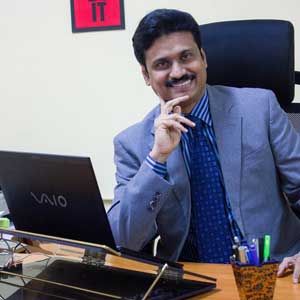
    Dr. Sibichen K Mathew is an Indian Revenue Service (IRS) officer of the 1992 batch. An alumnus of the Indian Institute of Management- Bangalore and the Jawaharlal Nehru University, he currently serves as Advisor to the Telecom Regulatory Authority of India (Joint Secretary Level). Apart from his role as a Senior Civil Servant, he is also a leadership trainer, blogger, author, sociologist, and a policy researcher.

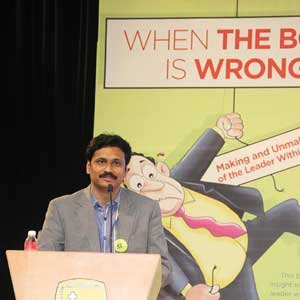
    He is the recipient of the UGC Research Fellowship and has been awarded gold medals from the National Police Academy and National Academy of Direct Taxes. He is the author of the books, “Making People Pay: The Economic Sociology of Taxation” and “When the Boss is Wrong”. He was also the college topper of the Bachelor of Law degree from the Karnataka State Law University.


    What brought you into legal studies after having extensive experience in Academics?

    (Sibichen holds a Bachelors in Chemistry, Masters in Sociology from Kerala University, an M.Phil from Jawaharlal Nehru University and a Ph.D from Bharathiar University, Coimbatore.)

    I believe that learning is a continuous process. It never stops if we are in search of wisdom. The more I learn, I understand that how ignorant I am. That shatters my ego.

    Of all the courses I pursued, one that gave me immense satisfaction was my LLB course. Law is one discipline which instantly gives the student a feeling of empowerment. I always felt that a formal schooling in law can give us tremendous confidence in dissecting the social reality sensibly and will give the necessary courage to fight for justice. Law and justice are inextricably intertwined.


    Being a topper in LL.B please give us a few actionable tips on scoring higher grades.

    (Sibichen has received his LL.B degree from Karnataka State Law University in 2012 where he was a college topper and a rank holder.)

    Once you enrol for an LL.B course, the first thing you need to do is to connect and approach whatever you see, read and hear with a legal perspective. Even when one reads the daily newspaper, an alert and keen law student would link the facts and incidents narrated there with the extant legal provisions and judicial positions he learnt. For example, a typical newspaper contains a number of reports about crimes happened across the world. An easy way to learn the discipline is by linking each such incident of crime with the corresponding sections of IPC, Cr PC, etc and other specific Acts. You will not forget the sections later-on.

    The second tip is to cultivate a habit of quickly glancing at the important decisions of the Supreme Court, various high courts and tribunals reported in the online and offline sources at least once a week if not on a daily basis. By subscribing to various news aggregators, you can get instant access to your chosen fields in your smart phones.

    Thirdly, liberally quote the case laws and the gist of the decisions while answering your questions during the examinations.

    Please note that there is no alternative to bare Acts. One has to read and understand every word used in a particular section. Commentaries can be read later. And, refer the guides only for revision. Prepare your own notes after reading the bare Acts and the commentaries. Include the latest case laws in the answers you prepared. Please quote connected incidents and the judicial observations reported recently by media to illustrate in your answers.


    sibichen-mathew-3

    Tell us about your B-School experience and also give some highlights of your course which you pursued from IIM-B.

    (Sibichen has also pursued a full-time post-graduation in Public Policy and Management (PGP-PM) from Indian Institute of Management, Bangalore (IIM-B).)

    The course at IIM-B really opened up my world view beyond what I learned and did before. It was a course that inducted me deeply to various areas such as international trade, global public policy, international regulatory institutions, public finance, decision making models, business laws, business process flow and human resources management. The teaching methods and evaluation were extremely rigorous but of very high quality.


    Was it a professional requirement to pursue courses in Public Policy and Taxation to enhance more in your career?

    (Sibichen has pursued courses on International Public policy and Corporate Taxation & Advocacy Skills from the Syracuse and Duke Universities respectively.)

    Though it was a professional requirement, I could use the opportunity to gather data on some of my pet subjects such as transnational tax evasion, money laundering and white collar crimes. I could interact with experts during my stay in the universities and there are vast resources available in the libraries of these universities. Law students should try to pursue a post graduate degree in any of the best universities abroad.


    Please comment on the quality and structure of these courses. How much practical knowledge did you gain from it?

    The learning happens in a very liberal academic environment. The process is not one way, from teacher to student. The students learn from each other. The teachers also learn from the insights shared by the students. The nature of evaluation is also based on the choice of the students. One can give weightage to the assignments, projects, written examinations and oral presentations as per their choice. The global exposure is essential for a law student in an increasingly globalized world where businesses and entities function without borders.


    After your graduation, which are the competitive exams you have taken?

    While pursuing my graduation, I started writing many competitive examinations. I qualified a few examinations for jobs offered by the state government. I qualified for the UGC-JRF in my subject and I was the only student to get the fellowship in my subject from my university that year. Though I started preparing for the Civil Services Examination after I completed my graduation, the real push came only when I got admission in JNU as I saw many students studying more than 16 hours every day for it.


    What motivated you to appear for UPSC? How was it cracking the UPSC in the early 90s?

    (Sibichen is an Indian Revenue Service (IRS) officer of the 1992 batch, he is now in the ranks of Commissioner of Income Tax.)

    To pass the civil services, one has to be jack of all trades, but master of none. That means, one should have some idea about all subjects under the sun. One has to open his eyes and ears to whatever happening across the globe. Read whatever you get. Have your own view on the affairs and policies of the institutions and the governments. Be systematic in the preparation. Be focussed while writing the answers.


    Tell us about your experience working with the Income Tax Department of Government of India, in various capacities starting from Assistant Commissioner of Income Tax, which was your first post.

    Indian Revenue Service offers challenging assignments to all the officers. There are diverse jobs within the career: Assessment, Criminal Investigation, Judicial roles, Administration, Systems Management, etc. One will get exposure to all types of businesses, tax laws, economic offences, innovative techniques of investigation, transnational tax practices etc. The job gives tremendous satisfaction and there is a culture of very high level of professionalism within the department. I could succeed in busting large rackets of organized tax evasion and received recognition from the Central Board of Direct Taxes, Ministry of Finance, Government of India consecutively for five years for contributing to the department by way of best practices at work.


    In the meanwhile, you have authored two books titled “Making People Pay: The Economic Sociology of Taxation” and ‘’When the Boss is wrong’’. Please give a brief insight of these two books to our readers.

    My first book, ‘Making People Pay: The Economic Sociology of Taxation’ is the result of about six years of research. My second book, ‘When the Boss is Wrong: Making and Unmaking of the Leader within You’ took about three years to write. It was difficult to get a good publisher for the first book, as it happens for any first time authors. The going was easy once the first book did extremely well in the market.


    Why do you think “Making People Pay” attracted the readers so much? What kind of feedback you are getting regarding this book?

    (Sibichen’s book “Making People Pay: The Economic Sociology of Taxation” has been reprinted thrice and very widely circulated across the globe.)

    It was not clear for me why a country with considerable tax elasticity and tax potentiality found it difficult to attract more people to its tax rolls and gain more money to the direct taxes kitty. So I started my search for the answers and I realized the need for a systematic macro analysis of the issues. I was in fact plunging myself to what many call ‘research’ on the subject. Is tax aversion unique to some countries? My analysis proved not. There are several historical, political and sociological factors that deter people from paying taxes globally. It is not just economic factors that determine tax compliance as it is widely thought off. Attempt in this book was to analyze those factors. It threw open certain valid questions. Why people in some countries comply better than others? Why tax evasion is not frowned upon in some countries and disgraceful in some other countries? Any theoretical analysis on the behaviour of people is incomplete without analysis of primary data. Therefore a unique attempt was also made here to understand tax evasion and tax enforcement through a study of tax evaders (or who were branded so) themselves.. The interviews and case studies with them have, without exception, cumulatively and intellectually enriched me as they helped me to understand the behavioural pattern, attitudes, perceptions and expectations of taxpayers in general.


    sibichen-mathew-2

    Are you planning to publish more books in future? Do you think your books will influence and attract young readers as well?

    (Sibichen’s books were appreciated by M.N. Venkatachaliah, Former Chief Justice of India, Mr. Cyrus P. Mistry, Chairman Tata Sons; Mr. N.R. Narayana Murthy, Chairman Infosys Ltd; Mr. Abhinav Bhaduri, Chief Learning Officer at Wipro Limited; Mr. Anand Surana, Director Micro Labs for your published books.)

    I have got appreciations not only from very eminent people but also from many young persons, students and retired people for both books. In the book, ‘When the Boss is Wrong’, I have presented 50 different dimensions of bad leadership and their ramifications for the people and the organization. There is also an attempt to suggest certain precautions and prescriptions for persons (both in their roles as a team member and a boss) and some precepts for the organizations concerned.

    I have a blog named ‘Cyber Diary’ and I will be focussing on writing more articles in that for popular reading. Many times, blog posts are more powerful than published books.


    How did you go about so many awards in your career?

    (Sibichen is the recipient of a Gold medal from the University of Kerala for topping the Post Graduate Examination, a Gold medal from the National Police Academy, a Gold Medal from the National Academy of Direct Taxes for extracurricular activities, for securing “A” Grade for the post graduate courses which he completed from Jawaharlal Nehru University and Indian Institute of Management, for recognition for his work at Central Board of Direct Taxes for five years consecutively, UGC Research Fellowship and he was also nominated for Commonwealth fellowship and ICSSR /ISEC Fellowship.)

    I don’t know. Maybe it’s a little bit of hard work, some strategic planning and a lot of blessings.


    How was your experience serving as a Deputy Commissioner of Coimbatore as well as the Deputy Director (Investigation), in the Investigations Directorate working in the Tamil Nadu cadre?

    The key duties in the above roles were to investigate tax evasion, detect black money and raise tax demands and penalties. I was successful in unearthing a few complex and organized tax evasion practices.


    Can you share any memorable or interesting experiences in your stint as a Senior Authorized Representative at ITAT?

    (Sibichen has worked mostly on money laundering and tax evasion cases while he was serving as the Senior Authorized Representative of the Department at the Income Tax Appellate Tribunal, Bangalore and as the Additional Commissioner of Bangalore (Investigations))

    More than the opportunity to defend cases for the government, I got benefitted from the unique experience as a counsel. It sharpened my skills in advocacy and acquisition of legal knowledge, and gave tremendous confidence in arguing cases against the submissions of acclaimed legal experts.


    What kind of cases you are dealing with at TRAI? Give some insights on those matters.

    (Currently Sibichen is working as a Regional Head and Advisor in the Telecom Regulatory Authority of India (TRAI).)

    My duties include monitoring of regulatory compliance by telecom, broadcasting and cable companies. I am also in charge of conducting regular meetings with all stakeholders in the states of Maharashtra, Goa, Karnataka and Kerala. Currently, the focus is on digitization of cable TV. We also collect feedback from the public on various policies and issues. Current discussions on platform services and net neutrality are some examples of such consultations with public.


    You have so many landmark achievements in your life. Now, tell us what have been your failures and successes? What were the biggest hurdles and challenges in your life till date?

    If I have failed anytime the blame should go to me only. Proper utilization of time, prioritization, sincerity and devotion to work, and goal setting are the keys to success. I feel that a person can become a successful individual and an acceptable personality in society by acquiring emotional intelligence, social intelligence, communication intelligence and cultural intelligence. These are the four pillars of success. I have mentioned this in detail in my latest book, ‘When the Boss is Wrong: Making and Unmaking of the Leader within You’.


    If someone does not go to a top law school, would you say he still has a shot at a great career in law? What should such a person do to develop necessary skills and profile?

    Please understand that the last time the name of the institution you studied your law matters is only when you get placed for the first time. From the second day of your career, your background is immaterial and irrelevant for all. They look at your: technical competence, professionalism, attitude, managerial and social skills and willingness to learn.

    I am sure, a student who is not from a top national law school can get recognized and excel with the above in right proportion. If you are not from a high ranking law school, you may try to participate in national level law seminars, debates and moot courts and also write a few research papers in national or international journals. You will definitely get good placements.


    What would be your advice to our readers who are budding lawyers and law students?

    Never stop reading articles that can not only enhance knowledge, but also inspire you to achieve your goals. Prioritize your time.

    My motto is ‘Promise Less; Deliver More’. I urge you also to earn a reputation of fulfilling the promises and sticking to deadlines.

    My contact details:

    FB: Sibichen Mathew

    Website: sibichen.in

  • Robin David, Equity Partner at Dua Associates on career in corporate litigation

    Robin David, Equity Partner at Dua Associates on career in corporate litigation

    Robin David is currently a Partner at Dua Associates, Delhi. He graduated in B.Sc from Loyola College and thereafter completed his LL.B from Bharathiar University in 1989. Right after his graduation he joined the Bar and had been independently litigating. His practice areas included Contracts, Company Law, Competition Law and other corporate matters.

    With an in-depth expertise in various corporate matters and prior experience of 12 years in litigation, Robin joined Dua in 2002 and had since been working there. With his formidable experience in litigation he was quickly elevated to the rank of a partner in 2004. In 2013, he was made an equity partner.

    We took this opportunity and requested him to share:

    • His experience of litigation as a fresh law graduate
    • Building reputation and clientele in litigation
    • The role of higher education in building an illustrious career
    • The journey from a law student to becoming a partner at one of the leading law firms in India


    How would you introduce yourself to our readers who are primarily budding lawyers? Did you belong to a family of lawyers?

    I am a practicing lawyer for about 25 years. Legal practice is a great and exciting challenge. The legal profession gives one the opportunity to learn and to adapt. Most importantly lawyers have a great opportunity to do justice. I believe that lawyers have a significant role to play in the justice delivery system. I am the first lawyer in my family.


    You are a B. Sc. (Physics) graduate from Loyola College. Could share with us any specific incident which motivated you to pursue law as a career?

    I initially wanted to study engineering or science. However, since my childhood my mother told me that I would make a good lawyer. She implanted and reinforced confidence in me. So I applied for law more out of [sociallocker]my faith in her belief. I qualified the entrance examination. After few years of practice I realised how right she was because this profession is definitely for me.


    Being a science graduate, did you face any difficulties in law school? A lot of students from science stream pursue law after their 12th and face a lot of difficulties in studying subjects related to law. Can you share with us certain tips to overcome this issue?

    I do not believe being a science graduate is a disadvantage to pursue legal studies. Nor do I think that students from arts/humanities will have a considerable edge over science students while studying law. The study of science encourages analytical thinking, which in my opinion is one of the vital ingredients for legal studies and practice. The most important phase of learning for a litigation lawyer is during the first few years in practice.


    robin-david-1Did you do any internship during the course of your studies? What kind of work did you come across during your internships?

    I did not have an opportunity to intern as a student. This was probably because there was no mandatory requirement to intern at that time.

    However, I believe internships today are important. Internships provide an opportunity for students to learn about the application of law and get insights into the legal profession. Interns will be well advised to take their internships seriously. Ideally, interns should be willing and open to learn and know more about legal practice.


    You were also in the cricket and hockey team of your college. How important is it for one to engage in other activities apart from academics and professional interests?

    I started paying cricket from the age of 2. I have always been interested in sports and sporting activities. I played a bit of cricket, hockey and table tennis during school and college. Now I play cricket for my firm. I play golf as well. I believe it is necessary to engage in sporting activities and activities apart from academics and professional work. Being physically fit is crucial. Lawyers would do well to invest time on fitness and physical well being.


    Did you ever think of joining the civil services after graduating? Which career options were available to a law graduate in 90s?

    Civil services did cross my mind albeit not seriously. As far as I can remember the openings/options available to young lawyers were mainly to:

    • work as a junior lawyer (with little or no pay)
    • to join as law officer in any organisation/bank
    • join civil services
    • go abroad for LLM or to study LLM in India


    When you started your practice in 1990, how was the court atmosphere? How did the judges respond to young and new lawyers like you? What were the major challenges faced by you in the initial years of your practice?

    The courts are much more crowded now. The first challenge was to decide where to start work. Another challenge was learning the court procedures and practical aspects of legal practice. I was fortunate to commence work in the Delhi High Court. All seniors and judges were generally encouraging and helpful. However, the process of learning procedural law and how to face the Court is something every practicing lawyer will have to figure out on their own. The legal community is based on the seniors wanting to teach and the younger members of the Bar being open to learn. The junior lawyers were always respectful to the seniors and the institution. I also faced financial challenges because I was initially given a small stipend but I believe that such hardships actually help and motivate aspiring lawyers to work harder and be better advocates.


    How did you build up your clientele? How many years of practice do you say it would require to build a firm clientele?

    I am not aware of a formula to build a clientele nor can you stipulate a time line. I do not believe there is a formula to build up clientele. However, I have learnt that building clientele requires hard work, honesty, time, result oriented thinking and several other factors. In my experience I have found that the clients trust honest and sincere counsel. Knowledgeable lawyers do have an edge, however they are expected to be sincere to the cause and be honest. Lawyers should build up a good reputation for themselves.


    You have experience in litigation of around 25 years. Can you share with us your experience as a practising lawyer?

    Lawyers are trustees of the legal system. A lawyer is responsible to act with integrity and maintain public confidence in the judicial system. To be a successful litigation lawyer one must belong to a court in addition to knowing the basics of law. Counsel must be aware about their court and keep themselves abreast of the changes and developments. Counsel must be involved in Bar Association and participate in the court and association activities. Counsel should contribute to court related activities such as legal aid, arbitration, mediation, etc. I have had the good fortune of working with some great lawyers. I have also been a lawyer for the Delhi High Court Legal Services Committee since 2008. Learning from watching and observing court proceedings is an essential part of being a good lawyer.


    As a practising lawyer how did you manage to learn the basics of court room practice? Did you have anyone to guide and mentor you during the initial days of your practise?

    No doubt one learns from the seniors and colleagues whom you work with. I leant a great deal from observing others and noticing the reactions from the judges.

    I believe a lawyer requires to have a mentor not only during the initial years of practice but also later on. Initially mentoring is done by seniors but later you have to become your own mentor. A very important aspect of legal practice is the ability to evaluate yourself. Even the Bar Council of India recommends mentoring and training by lawyers.


    If someone does not go to a top law school, would you say he still has a shot at a great career in law? What should such a person do to develop necessary skills and profile?

    Going to a top school per se does not make you a good lawyer. Honest effort and hard work make a good lawyer regardless of the school.


    How did you get an opportunity to work with Dua Associates? How is your work at Dua Associates different from your independent practice?

    I began my association with Dua Associates in 2002. At that time I put in about 12 years of hard work as a legal practitioner and was already known for my work as a litigating counsel.


    Having been at Dua Associates since 2002 as a manager in the litigation team, you were promoted into the equity partnership; what qualities do you think helped you to achieve this status?

    Though I joined as manager in 2002, I was made partner in 2004. I was made equity partner in 2013. It involved sincere hard work and time.


    When you hire interns under you, what kind of qualities do you look for? What should an intern do to get noticed in a positive way?

    Honesty, hard work and commitment to work are important qualities in interns. I see interns who are there only for the sake of putting it on their CV.


    What changes has being a partner brought into your life, do you ever feel that there is excess of work load on you? How do you manage to strike a balance between your personal and professional life?

    Ever since I have started work as an advocate I have put in many hours of work every day. Becoming partner did not have any significant change to my professional working style. Have realised the importance of team work and have the need to contribute to the larger cause. Law is a calling and not a job.


    Do you feel that great lawyering skills are sufficient for a person to become a partner? What separates the people who become partner from those who don’t?

    Partners’ skills should complement one another. Ideally, if one is good at business development then the other partner would be good in other set of skills. Further skills can be learnt. Though, in my opinion a law firm needs persons having different sets of skills. Partners are those with great sets of skills and also those who show commitment to the growth and development of the firm.


    Do you feel that higher education helps a person to have a successful legal career? What would be your word of advice to students who wish to go for higher studies?

    It would depend on what you are looking for. For an advocate, LL.B is sufficient because practical knowledge can only be gained on the ground.


    How is the work culture at Dua Associates? If an associate commits a mistake or an error what course of action do you follow as a partner?

    A partner is responsible. In Dua Associates the Partners are the team leaders and oversee the work of the team. For example, if a plaint is drafted for a client the draft would be carefully seen by a Partner before it is sent to the client.

    Associates who repeat mistakes or stop learning will at least be talked to.


    What qualities do you think one should possess to carve out a niche for himself in this field?

    I believe hard work, honesty and sincerity are important qualities. Always be ready and willing to learn. Additionally one must be aware of the system and surroundings.


    What would be your message to our readers who are budding lawyers and law students?

    • Justice is important. Lawyers have a great opportunity to play a role in the justice delivery system. Many prominent lawyers have played important roles and contributed to the Indian freedom struggle. Lawyers can have significant involvement in society and can set the standards. Legal practice is a calling and not a job.
    • Honesty and sincerity in counsel are traits that are always respected by the judges, clients, briefing counsel and even opposing counsel. A lawyer must conduct himself with dignity.
    • Building a good reputation is necessary. A lawyer should carefully guard his reputation.
    • A lawyer should always be conscious of his/her role as officers of the court.
    • Young court lawyers should read the briefs and be well prepared. Know your facts. I have seen many young lawyers who are in a hurry to go up the ladder and look for shortcuts to grow. There are no shortcuts.

     [/sociallocker]