Tag: BHU

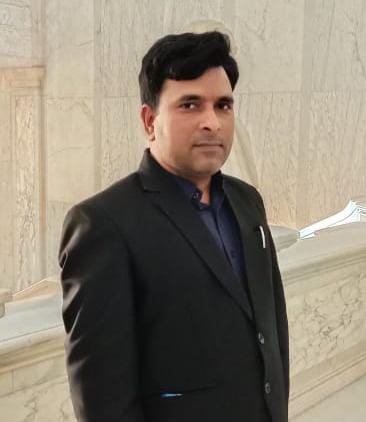
  • “By merging the vigour of young professionals with the wisdom of experienced advocates he emphasizes the importance of teamwork, open communication, and technological integration in achieving legal expertise” – Ritesh Ranjan, Head & DGM-Legal at Bihar Industrial Area Development Authority (BIADA), Govt of Bihar

    “By merging the vigour of young professionals with the wisdom of experienced advocates he emphasizes the importance of teamwork, open communication, and technological integration in achieving legal expertise” – Ritesh Ranjan, Head & DGM-Legal at Bihar Industrial Area Development Authority (BIADA), Govt of Bihar

    This interview has been published by Namrata Singh and The SuperLawyer Team
    Could you share with us a bit about yourself and your journey to becoming the Head & DGM-Legal at Bihar Industrial Area Development Authority (BIADA)? What inspired you to pursue a career in law, and what challenges did you encounter along the way?

    I am a first-generation lawyer born and brought up in West Champaran district of Bihar. After my B.A. (Hons.) from Faculty of Arts, BHU, I pursued LL.B. from Law School, B.H.U. and embarked my legal journey with challenges of not having the benefit of a well-trodden path or sage advice. My parents and my younger brother gave me their unwavering support in all my decisions. Guided by serendipity, I found myself at the BHU, Varanasi. I started practicing in Patna High Court and my erstwhile practice area involved a diversified spectrum of legal jurisprudence. After practicing for over three years in Patna, I moved to Mumbai, where I worked as Law officer of Transport Corporation of India Limited, Mumbai for handling all the legal affairs within the state of Maharashtra. Onwards  I worked as Examiner of TradeMarks in the Trade Mark Registry Mumbai. After which I joined Videocon d2h Limited, Mumbai, wherein I was also part of the team for  the  execution of the India’s largest Media Sector merger of Brand Videocon d2h into Dish TV. After merger, I migrated to Dish TV India Limited, Noida and successfully handled litigation and contract management for both brands d2h and dish TV.  

    After years of experience in broadcasting and distribution related to the DTH Industry, I joined Hathway Digital Limited a multisystem operator of Reliance Jio Group as a Senior Manager -Legal in Delhi. In this role I managed Pan India Litigations before TDSAT, Trial Courts, High Courts, Consumer Forums and Supreme Court.  Thereafter, I joined Micromax Group as head of Legal and finally joined as DGM-Legal in BIADA, Patna. During working with different organizations from a practising advocate, corporates and government sectors in different cities, I found that we need to adopt the work culture at earliest and you have to learn something from everyone as once my mentor has said everyone is your client except yourself. You have to create your own brand and for this you need to accept all the challenges with a smile.

    You’ve had a diverse career journey, from practicing law in Patna to working with major corporations in Mumbai and Delhi. What motivated you to transition from the corporate sector to a government role at BIADA, and return to your home state of Bihar and take on a role with BIADA?

    The diverse career journey had its perks but at the same time there was remorse in my mind that having reached the pinnacle of my career. I was never in a position to give it back to the society from where I belonged. Everyone has his or her perspective towards the way of contribution for a better and prosperous society, but from my spectrum of things this endeavour to join this government organization was to achieve a more industrialized and prosperous Bihar by removing the hurdles faced by entrepreneurs and streamlining the legal process attached to it.

    As someone deeply rooted in Bihar’s history and culture, how do you envision the role of BIADA in contributing to the state’s development and economic growth? What initiatives or projects are you most excited about? 

    BIADA has been envisioned to promote and augment industrialization and create awareness about the Industrial Policy of the state as well as creating an environment for consistent growth of Industries in the state. The management finds it highly important to change the way these units operate for a few reasons, such as Changing priorities of units, Enhancing the effectiveness of organizations, initiating new schemes, there is an enormous scope of things which could be improved considering the Industrial growth, Bihar is growing. The role as DGM, Legal is quite dynamic and varied as one has to juggle a lot between Courts and Policy decisions. I endeavour for transparent policy formulation whereby policies are fair, simple and comprehensive. Also, such policies are required to be formulated for instilling faith upon Corporate and at the same time better execution of such for the organization. At present, investors are coming to Bihar and a number of Industrialist and Start up have been seeded there huge investment in State with a vision for development of Bihar. Therefore, by my small contribution I am participating in the development of my state by use of my legal, strategy and advisory skills.  

    With the recent influx of investors and industrialists into Bihar, what are some of the legal challenges and opportunities that BIADA faces in facilitating economic development while ensuring regulatory compliance and transparency? 

    The fragmented land-holding and lack of large pool of land is a reality in Bihar yet by undertaking various persuasions have been in a position to make sufficient land available for the Investors and Industrialists. The biggest huddle which we constantly face is to get back the large chunk of land which was not used for industrialization and to allot the same to the prospective investors. There are innumerable stakeholders and to take everyone on board for the furtherance of development of Bihar is quite a task. At present the government is providing better policies and support for establishment and revival of industries in the state.

    As someone who has worked across different states and industries, what do you find most rewarding about working in the public sector, particularly in Bihar? How does it differ from your experiences in the private sector? 

    To be honest, in the last years or so with BIADA, I have evolved as a person who has made several required changes in the existing system based on prior experiences and current needs of the state. It was an enlightening experience to work within the multi-layered and complex structures learning nuances of executing and facilitating Industrialization in state. The perspective of being an outsider was a blessing in disguise as people believed that I had joined this organisation for a purpose and that it provided me with cooperation from everybody in the organization. 

    In your role as Head & DGM-Legal, what strategies do you employ to foster collaboration and synergy within your team of in-house legal professionals and panel advocates? How do you ensure effective communication and coordination? 

    Coordination between youth professionals and experienced minds to achieve better results is one of the mantras I work with. I am very privileged to have an in-house team consisting of law graduates from National law Universities and other reputed law colleges and as an icing on the cake there are experienced Advocates on our Panel and together we bring a diversified approach to the table for better and fast results.  With such a big team, it becomes very important to have open and transparent communication. It is very important to promote team members irrespective of their position in the hierarchy of the organisation to brainstorm ideas and communicate their opinions in regard to every case. Fortunately, I am blessed with a dedicated team and together we discuss and prepare notes of argument and strategy in each case. I cherished the participative work culture of the organisation wherein everybody gets to contribute something.

    Being from a corporate background, I tend to promote the modern work approach and use of technologies for better collaborations with cluster offices and our Panel Advocates in the High Court as well as in the Supreme Court. 

    With your experience in handling a wide range of legal matters, what are some common misconceptions about the legal profession that you would like to debunk for aspiring lawyers? 

    One of the common misconceptions about the legal profession is that there are limited prospects in the legal sectors. However, in this modern world, everyone needs the application of legal minds which opens a plethora of opportunities before the law students. In the era of globalization, even cross-border opportunities open up for the youths. Another misconception lies that law is not for women but here I would like to take this opportunity and say the legal field is gender neutral and 50% of my team members are female and they demonstrate relicense, time management and good analytical skills. 

    Apart from your professional endeavors, what are some of your personal interests or hobbies that you enjoy outside of work? How do you balance your personal life with the demands of your role at BAIADA? 

    For work life balance, I would like to thank my soul mate Sarika who wholeheartedly takes care of my two lovely daughters and family. The preoccupation in my current role doesn’t allow me to spare much time for personal interests or hobbies limited to watching news and outings beyond my work but quality time with my family instills me with strength, love, affection and peace. 

     Given your experience in both the corporate and government sectors, what advice would you offer to young professionals aspiring to build a successful career in law, especially in the context of navigating different work environments?

    I firmly believe in the famous quote that “there is no substitute for hard work”. Both corporate and public sectors have their own pros and cons, however it is important to set one’s priority straight why making a pick and one should not shy away from giving their best in whichever sector they choose. This brings out best performance helping the individual to excel in his/her career

    Get in touch with Ritesh Ranjan-

  • “Working across the country on various contracts and projects requires not only a better understanding of the task but also a team effort and leadership”- Archana Mishra Kaul, Founder, Vicis Corpus Juris

    “Working across the country on various contracts and projects requires not only a better understanding of the task but also a team effort and leadership”- Archana Mishra Kaul, Founder, Vicis Corpus Juris

    This Interview has been published by Pragya Chandni and and The SuperLawyer Team

    Can you share the story of how you embarked on your career in law? What initially drew you to corporate commercial law, litigation, and alternate dispute resolution?

    The prompt cause of getting into the legal profession is associated with my father who drew my attention towards this profession in my childhood. While I was growing up I witnessed my father working hard while being always surrounded by his clients and juniors, studying case files, researching All India Reporter, and giving dictation to his typist of cases till late at night. I think those were the facts that played a pivotal role in developing my deep interest in the legal profession.

    Immediately, after completing my law from Banaras Hindu University, I started practicing Criminal law before the Hon’ble High Court of Allahabad, at Allahabad Bench, and with the grace of God and my mother’s well wishes I soon presented my very first case and secured the desired order in the form of Direction given by the Hon’ble High Court of Allahabad which boosted my confidence as a lawyer and the journey never stopped after that. While I was practicing in Allahabad High Court, I had opportunities to handle a few corporate matters before the Apex Court which made me realize that I needed to explore my practice to other aspects of law which led me to practice in various Delhi Courts where I explored my practice into the Corporate side of law and matters related to Dispute Resolution since these are new in demand in our industry and becoming primary option of corporates. 

    Your profile reflects an extensive background in various legal domains, from real estate litigation to corporate litigation at the Supreme Court. How did you navigate these diverse areas, and what motivated you to explore such a wide range of legal practices?

    What best worked for me as motivation, is my willingness to learn which I have had from my childhood and I still have so much to learn and I am quite sure that learning will take me to a whole new level of my practice. The pursuit of learning and exploring different aspects of the law have kept me open to the matters of other different dimensions in my law practice where I could deal with the various nature of work including corporate matters such as finalizing Tender with government bodies including RFP/RFQ, LOI, Agreement assimilation, Criminal, Civil, RERA, Consumer matters, matrimonial cases, matter of NDPS, ARMS Act, Environmental issues and especially my Pro Bono works for the Labours. 

    With a core expertise in winning cases for your clients, can you highlight a specific instance or case that you consider a significant achievement in your career so far?

    There have been multiple significant cases that I consider as achievements in my career so far in the duration of the last 10 years, however, I would like to share one of my experiences which has been a milestone case for me till present. I once had the chance to represent a husband who was a victim of false charges under section 308 of IPC and was not able to get released on bail for a long time. Wherein I had the opportunity to Argue before the Hon’ble High Court, extensively based on the medical report of the informant elaborating Medical Jurisprudence related to the Court, and successfully secured the release of my client from jail by filing 3rd Bail Application. Another enthralling experience in the journey of my law practice so far has been pro bono cases that I have been doing across the country for construction laborers whose daily wages are illegally kept by their contractors and sometimes by their principal employer. 

    Balancing legal management, risk analysis, and project delivery across the country is no small feat. How do you manage such a diverse set of responsibilities, especially when it comes to litigation and arbitration for the company?

    I have been blessed with Balancing different dimensions of work with the help of my team in different roles and liabilities as per the requirement of the client. Working across the country on various contracts and projects requires not only a better understanding of the task but also a team effort and leadership. I would say, more than an individual, it is always a collective skill of my team who channelize their expertise and capabilities into their assigned task of legal management and risk analysis of various projects. 

    Reflecting on your journey from the Bar Council enrollment to your current role, how has your education, including LLB from Banaras Hindu University, contributed to your professional growth?

    A lawyer’s journey from the Bar Council Enrollment is always a roller coaster and mine as well is no different as it’s been more than a decade that has passed in this journey which has given me millions of experiences, be it better or worse, complex or simple, all it does is adds up value to my profession as more and more I polish myself into this profession. I still remember being a second-generation lawyer. I started practicing law with nothing in my hand and I kept struggling relentlessly for cases but I made it all meaningful when I got my first case. Even at present, I feel bound to give my best ever effort to every single case I represent before the Court. I would say most lawyers would actually agree when I say that what we study as law students in Law Schools is completely different from what we experience in reality but what remains embedded and enclosed to us during our entire professional journey is the spirit of being a lawyer that has brought us to this journey.    

    Throughout your career, you’ve worked on diverse cases, including real estate litigation and criminal matters. Can you share a challenging experience that provided valuable lessons and shaped your approach as a lawyer?

    In a decade’s journey of practicing law, I would say a few cases were challenging to the level that completely impacted my perspective. I had the opportunity to witness the remarkable change in the Consumer Protection Act while experiencing massive real estate exposure with cases against the Supertech Builders which started from NCDRC with only one client as a home buyer and ended up with a huge bulk of them against the builder before the Hon’ble Supreme Court leading the landmark judgment against Supertech.  

    Another challenging experience I would say was a pro-bono case when I was approached by a poor laborer for a matter of recovery of his daily wages that were maliciously kept on hold by the Contractor. I took on his case but later on, I started receiving requests from a massive group of laborers for the same issue which made me act on their behalf against not only one big-shot company but a lot of reputed construction companies which were beyond my expectation. Then I realized that the labor class needs representation before big companies for their grievances to get resolved by someone prudent at the ground level because not everyone can gather the courage to file a case before the court and contest it. As a lawyer, I deeply felt it is a big challenge for our fraternity to contribute our service to those classes who are important parts of our society and building our houses but are unable to feed their own family because of lack of knowledge and forced hunger on them.  

    Drawing from your experiences, what advice would you like to give to fresh law graduates aspiring to build successful careers in law, considering the diverse landscape of legal practice and the dynamic nature of the profession?

    Considering the diverse landscape of my legal practice, the only advice I would pass on to the fresh law graduates is that along with building their careers in the legal fraternity they must build up their personalities which reflect their smart work and prudency of the legal knowledge along with its better usage in the society. 

    Get in touch with Archana Mishra Kaul-

  • Ashutosh Pandey, Additional District Judge, Tripura, on preparing and cracking the judicial services exam

    Ashutosh Pandey, Additional District Judge, Tripura, on preparing and cracking the judicial services exam

    Ashutosh Pandey qualified in law from Banaras Hindu University in the 2005 Batch. He has been a practicing lawyer in all the six courts of Delhi since then. He started preparing for the judicial services in 2010 and finally cracked the Tripura Judicial Services in 2015, securing the single Additional District Judge vacancy in higher judiciary. In this interview he talks to us about:

    • His background and the impact on his values and beliefs today
    • His preparation for the Tripura Judicial Services
    • The syllabus and books referred to in order to crack the exam
    • His personal views on the values and inspirations that can lead to success in order to crack such an exam


    How would you introduce yourself, given that most of our readers are aspirants of law and services, law students and professionals?

    I am a native of Buxar, Bihar who has graduated from BHU Law School with a BA LLB in Geography (Hons.). In 2015, I cracked the Tripura Judicial Services exam where there was a single vacancy. I come from a remote area and coming from a background without any legal professionals in the family taught me that the only companion is hard work. I am an individual who believes strongly in the values of sincerity towards preparation and the fight to succeed amidst stiff competition while rectifying one’s weakness alongside.


    What was your life like after graduation and how did you begin focussed preparation in order to achieve your goal?

    I came to Delhi in 2005 and I practiced at the Delhi Bar Association for 7 years as an advocate in all six district courts, tribunals and also had the opportunity to represent in the Delhi High Court and the Supreme Court. Initially, I was simultaneously preparing for the Higher Judiciary along with the practice. I had observed a lot of my classmates who had successfully cracked the exams in order to secure the Magistrate position and were posted all over India. I was confident in my abilities in being selected as an ADJ.

    The chances of selection though are minute, because students from all over India appear for the exam and in huge numbers. Moreover, only 25% of all ADJ position holders are recruited directly from the Bar with 7 years’ experience despite the massive number of applicants while the rest 75% get selected through Departmental exam or promotions. The chances of selection also depend on the different marking criteria along with different syllabus which varies across states.


    Along with your hard work and capability, which individual would you like to accord credit to in your attaining your goal? For what reason did this person have such a massive impact on you?

    I would like to acknowledge my friends and batchmates of 2005 from BHU along with Akhilesh Kumar who also cracked the Rajasthan Higher Judiciary as an ADJ in 2015. The two of us were practising and simultaneously preparing for Judicial Services exams for various states. The two of us share the ideology that hard work coupled with meticulous planning and cooperation are a formula for success in the Higher Judiciary services.

    My father had faith and confidence in me as well and supported my journey to become a judge of Tripura Higher Judicial Services.


    akhilesh-kumar-2

    Did you undertake coaching or mock tests, or refer to any study material during your preparation?

    In my journey, self-study, text books, bare acts and the foundation and understanding of basics developed during my time in law school helped me to attain my goal and I personally believe that one cannot negotiate, or rather that there is no substitute for hard work.

    In today’s day, in my view, there are multiple commercial coaching centres and they are beyond the reach of the pocket of a normal student. I referred to no mock tests and undertook no coaching from any centre but for the purposed of cracking the interview, I took advice from my friends who had appeared for Judicial Services exams.

    I was in the process of serious preparations for the Judiciary since 2009 and was successful in cracking the exam and being selected on 2nd February, 2015 into the Tripura Higher Judicial services.

    I don’t believe in luck or dependence upon any individual or blaming someone else for my own results. What I do believe in immensely is hard work along with 3 important D’s- dedication, devotion and determination and unwavering focus upon the goal one has set out.

    My motto for life is my belief that if someone does hard work, it won’t go in vain, it shall always reap results and lead to success.


    How many hours did you devote towards the Judicial Services in terms of your preparation on a daily basis?

    In order to clear the Higher Judicial Services one requires deep knowledge and practise of advocacy alongside helps one to learn the law more. Apart from that, I used to spend around 5 hours daily on my preparation and study.


    What would be the syllabus and the major acts which should be read by an aspirant of the Judicial exams?

    The syllabus for Higher Judicial Services varies across different states. Moreover, it is lengthy and so a candidate has to prepare according to the syllabus of the concerned state.

    In procedural laws, one needs to be well versed with Criminal Procedure Code, Civil Procedure Code, Evidence Act and in substantive laws, Transfer of Property Act, Indian Penal Code, Negotiable Instruments Act, Family Laws, SC/ST Act, the Narcotic Drugs and Psychotropic Substances Act, the Arbitration and Conciliation Act of 1996 and the Prevention of Corruption Act. One must also keep referring to Supreme Court and High Court judgements and other State laws must also be referred and compared. While writing answers, one must also keep in mind to write them in line with landmark judgements and with comparative study of one act from another.

    One must also remember CSE law on a regular basis and in case, one doesn’t remember the same, the fact or principle held in the Judgements should be remembered.


    What are the books you would recommend in order to prepare for the Higher Judicial Services?

    The books I can recommend are all Bare Acts, all the college text books in general, S.N.Mishra for Indian Penal Code, J.N. Pandey for Constitutional Law, Takwani for Civil Procedure Code, Kelkar for Criminal Procedure Code and TPA as well as Evidence from Mulla and Mulla in particular.


    This interview was taken by: Abhinandan Pandey, III year, ICFAI Law School, Hyderabad