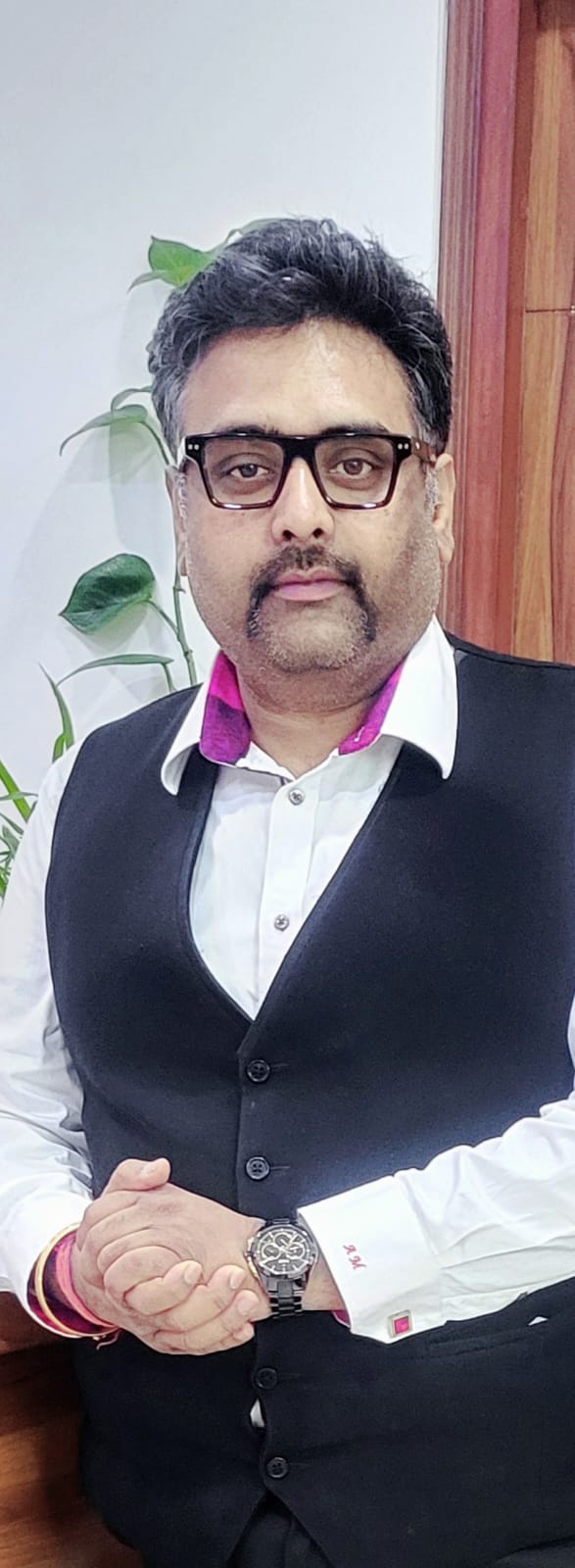
Tag: boutique firm

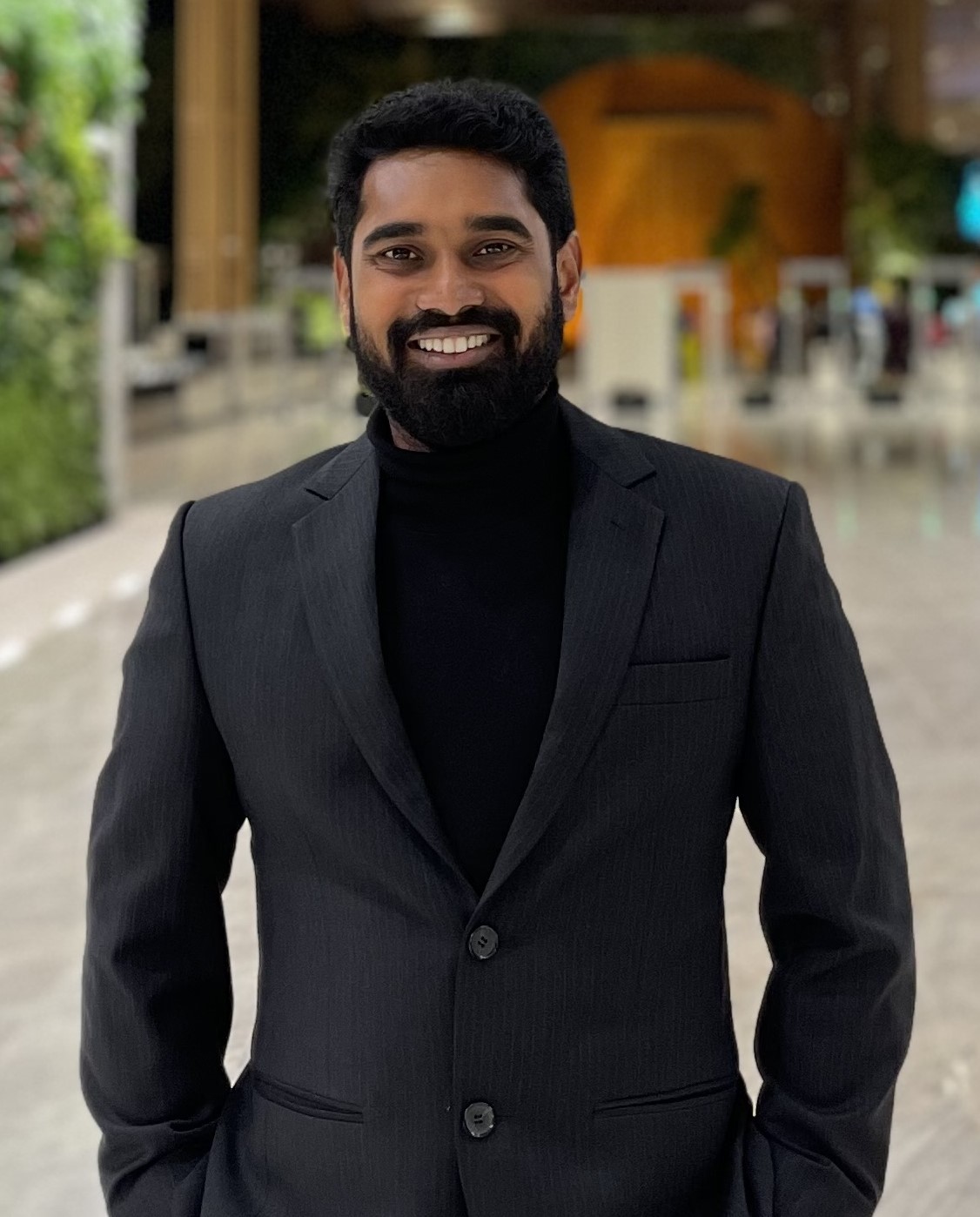
  • “Life as a lawyer is a test match, not a T-20. Keep putting your head down, work, and trust the process.” – Prashanth Shivadass, Partner at Shivadass & Shivadass (Law Chambers)

    “Life as a lawyer is a test match, not a T-20. Keep putting your head down, work, and trust the process.” – Prashanth Shivadass, Partner at Shivadass & Shivadass (Law Chambers)

    This interview has been published by Namrata Singh and The SuperLawyer Team
    Can you share what initially inspired you to pursue a legal career and how this journey has shaped your professional philosophy?  

    My introduction to law happened in my 7th or 8th grade (around 2002) – my father was arguing a matter before the High Court – I knew nothing about what a Court is, what a lawyer does or for that matter, even what a Judge did. I was curious because I wanted to know what my dad did for a living.

    It was a tax matter that he and his team were arguing – I didn’t quite understand the matter because I went on the 3rd day of their arguments, so a large part of the matter had been argued. But I understood the underlying transaction and the business model.

    This pulled me into reading newspapers, especially the business section, to understand the changing aspects of the business environment, new technologies etc. I decided then, that science and aspects of science, are not my cup of tea and to pursue arts and commerce, which eventually led to law (clubbed with my very menial academic scores). 

    Studying for an examination and/or interviews has never been a strong suit of mine, so cracking anything in the first instance was out of the question – which is why, I liked the concept of doing something with ‘practice’ – I played cricket when I was in school and university (under-graduation and graduation), so I know the impact of practising before a game. I think of law the same way, where a Courtroom is a beautiful playground where there is an interpretation of something in black and white against the backdrop of the kind of businesses – law catches up with changing business experiences.

    My philosophy for practising law is based on everyday practice and reading – there is no escaping hard work and long hours, no matter which generation relays this out – there is no denying that there needs to be a balance between work and life, but there will be many instances where work will take away many vacations and time away from life and family, so choose well.

    Your academic credentials include a Master’s degree in Competition Law from Queen Mary University of London. How has this international education influenced your practice, and what value do you think global exposure brings to a lawyer’s career?

    Interestingly, many seniors I spoke to during my law school days and the first two years of my practice, said a master’s degree in law was completely unnecessary to practice in Indian Courts. But 2 years into practice, I got so engrossed in work, with long hours and no breaks, and that was when I had a moment of realization that led me to think – I like working and the long hours, but the longer I stretch this out, the harder it will be to come out and become a full-time student with a lot of time on my hands.

    I then decided to maybe take a couple of years when I could (luckily with no financial and other obligations), to study something I wanted and also, see a part of the world, meet different people across the world, understand different cultures, learn different business models, firm models etc. To this day, I value and cherish my period in London and the connections I made then.

    I think a master’s degree abroad is good and valuable when you have a specific goal in mind – I wanted to study Competition Law (from an EU and UK perspective) and understand how the Magic / Silver Circle law firms work, how the ‘Chamber’ model works in the UK. Plus, I like driving and travelling, so there was no better place than the UK for me (even considering the cost, since it is significantly cheaper than the US).

    You have a rich background in various areas of law, including Competition and Antitrust, Corporate and Commercial laws, Taxation etc. Could you share how you developed such a diverse expertise, and what drew you to specialize in these specific fields?

    Antitrust was and continues to be my first love, I fell in love with it in law school because there is a very balanced economic approach to it. Unfortunately, I do not practice it as much as I would like, but I do keep up with its evolution. 

    The other intriguing area that is coming up and that has excited me for a while is data protection – especially, with the current growth of AI – it will be very fascinating to bring out a fine line between right and wrong, in this technologically advanced society.

    Tax for me is a much-liked inheritance – having started with despising the area because of its complexities, my growth in law has been because of tax matters. I have over time, grown into and loved tax, with these same complexities it creates. 

    I think coming to like a subject/area in law, is intensely personal. I know lots of friends, who love doing original civil and criminal work since it gives them a different kind of joy – muddled in facts and evidence, interpretation of a different area of law and procedure daily etc. – different Courts of practice (original, appellate, quasi-judicial), city of practice etc. also make for a decision. 

    But if I were to specialise in a certain area, I’d give myself a good 5 years, before I can even begin to think that I have a hold on the subject.

    Your firm, Shivadass & Shivadass (Law Chambers), is known for its work in Litigation (taxation, commercial etc.), Corporate Law etc. How do you approach building a specialized practice in these areas, and what advice would you give to young lawyers aspiring to excel in these fields?

    Building a practice is convoluted. Some factors are beyond control (time, place, resources etc.), but quality of work and staying updated with the law is always within one’s control. Sometimes, a pragmatic approach towards the question of law and the transaction goes a long way in assisting both the Client and the Court.

    I’ve also noticed that knowledge sharing by way of writing articles, and books, helps dissipate your point of view of a certain area or provision of law. This also gives people a chance to gauge their understanding of law and personality.

    Unfortunately, building a practice takes a long time. But should lawyers choose to build a core practice, my advice would be to let your growth in that area be ‘organic’ – it will be more credible that way. Avoid instant marketing and instant gratification, because as a field, instant gratification in law tends to break you more than you would think.  

    Having worked with top law firms and the office of the Solicitor General of India, how did these experiences shape your perspective on the practice of law, and what key learnings have you carried forward into your own firm? Please share your experience.

    For this question, I will consider my experience from both my internship and practice perspective – be it firms, companies or chambers (including the SG’s office). 

    You garner different perspectives of law when you either intern or work. Big law has never fascinated me much, but I’ve always wanted to learn how big law functions – administratively i.e., marketing, practice area development, quality of work and output, deadlines, team structure, management structure etc., as opposed to a chamber practice, where your quality is determined by your legal prowess and how you present the case before a Court – the marketing here, is your presentation and skills before a Court, which spreads more by way of word of mouth, often the older marketing tactic.

    Having become a lawyer and spent nearly 12 years so far, I have now come to terms with what areas I want to specialise in and how I want to take this forward. Therefore, while driving this ethos for our ‘boutique firm’, I draw a fine balance between a law firm model and a chamber model. It’s been a great learning and there is so much more to learn – but I don’t shy away from making mistakes because, for me, mistakes are the only way to test your ideas.

    As a trained Carnatic classical singer and a state-level cricket player, how do you balance your demanding legal career with your hobbies, and do you believe these interests contribute to your professional success?

    I honestly wish I’d kept up with my singing and/or my cricketing abilities – to date, I feel I’ve spent more time on work and law than my hobbies, which is not a good sign. Frankly, having a passion/hobby outside of law is of real benefit. 

    While people do say that work is passion etc., I must admit, there are situations in my very small career, where reading books, musical therapy (be it in the form of listening to new music styles or immersing yourself in age-old classics) or catching a small practice game or tapping a few balls in the nets, helps clear your mind off negative energy, which tends to be a lot more in this industry.

    We get stuck with trying to achieve a great deal, too soon, that we fail to realise that life as a lawyer is a test match (that ends on day 5 at 4.30 PM) and not a t-20 that ends in 3 hours. Teamwork and building a team (any team), is the fulcrum of any sport. 

    Music, on the other hand, brings out the creative energy and strength in a person, which helps in clear thinking and concentration. I often ignite my spiritual side with a little of MS Subbulakshmi and some Carnatic music daily, which then moves to some Indie-rock, classic rock etc. It also gives you a sense of calm in toxic situations and keeps your emotions in check.

    This has helped me in various ways to keep that balance and I genuinely encourage everyone, not just lawyers, to have these hobbies (and just think of them as hobbies and not ‘side hustles’). This keeps you grounded. 

    With your extensive experience, what do you consider to be the most important skills or qualities that a lawyer should develop to succeed in litigation?

    By default, every lawyer has to read – there is no escaping. You may have a team either giving their comments on an agreement or briefing you on a matter (post discussions with Clients) – but unless you pick up the draft or file to read and make your notes, it will never survive the quality you want to achieve and build a name for yourself. We have to read for life, so the sooner this realisation hits, the better. We must strive to constantly read, and there is enough for everyone who wishes to absorb. Reading also makes your life easy when drafting, presenting a case before Court or simply, comprehending a bulky file in a time-efficient manner.

    The second skill is to use simple but effective words and learn the art of presentation and speaking. A lawyer should never have visible ‘stage fright’ – you may be shaking with fear within, but strong oratory skills and clarity of thought, take you a long way.

    The third and rather important skill is to treat ‘time’ as a dear friend –‘time’ can make or break you. Usage of time effectively and efficiently is an art in itself and respecting time is another. We cannot strive to have a silk gown within 10 years of being an advocate and yet, not use 24 hours effectively and efficiently. 

    I take whatever pending work I have to Court, for instance – while waiting for a matter, I read up on new cases, correct opinions and other drafts and/or, watch proceedings and note down similar cases that are being argued, which can be used as a precedent for some of my cases. I trust the process and patiently wait for my time to shine, while choosing all along, to keep putting my head down and working.

    You’ve been involved with a wide variety of matters across different forums / Courts. How do you navigate complexities of different matters across these forums? 

    A few years ago, I was in Court as part of a batch matter and the leading Senior Advocate on the matter was sitting beside me. Out of curiosity, I asked him, ‘Sir, do you think the matter will end today?’. He smiled, looked at me and said ‘Just remember, every matter has its fate and destiny’. I’ve come to realise that line today when on certain days, the Bench is with you and then flips completely the very next day. There are also situations, where you may be close to a disposal of a matter, but the matter never reaches and is not picked up for the next 6 – 8 months.

    Amongst other things, which is reading the file (concrete factual aspects, the law and the application of law to facts), making your notes etc., some other things we keep in mind is the language of the Judge i.e., the Judge’s view on an area or subject of law, their insistence on procedure, decorum in Court, manner of presentation, grip and handle on the subject, etc. 

    We don’t realise it often, but Judges today are under the immense pressure of workload – it is never an easy task being a Judge; social media only brings out one side of it but there is a side that only arguing counsels know – on an average day, each Judge (of whatever position), works at least 16 – 18 hours. It is sometimes inhumane but that is the reality. If you keep this in mind, you know how to navigate in a Court viz., your facts, arguments and the law. Being always prepared is never a bad thing – 5 minutes is enough to turn a case around and get a positive order from the Courts.

    Given your extensive experience, what advice would you offer to young legal professionals aspiring to become litigating lawyers?

    I know this will be hard for many to read – but give litigation a chance. I do understand that the hard work and long hours with menial pay are not as attractive as the fancy pay and lifestyle of big law or a corporate law firm – but if one can push themselves, there isn’t a place to be at, other than a Court. The money, name/fame, and adoration, that you receive from Judges, peers etc., is unmatched.

    The second is to never take a file/matter, lightly – even if it is just for an adjournment/Passover or the fact that it is ‘just a matter at consumer court’ or ‘just a civil court hearing’. Every matter, of whatever nature, is absolutely important to your credibility as a litigator. 

    Third – find a mentor; a mentor who is willing to take risks with you, a mentor who not only guides you but allows you to fail and learn, a mentor who gives you opportunities. Unfortunately, such mentors may not be in a position to pay you much – but, when you have such opportunities, you can create your own brand, perhaps even get some of your cases to cover up the balance in terms of pay.

    Get in touch with Prashanth Shivadass-
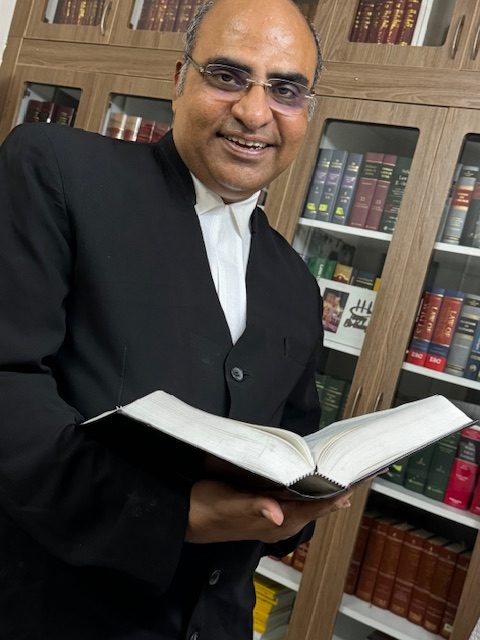
  • “A good cross-examination has the potential to turn litigation in your favor. Every day in a lawyer’s life is an experience and a learning.” – Rajesh Ramanathan, Partner, Factum Law

    “A good cross-examination has the potential to turn litigation in your favor. Every day in a lawyer’s life is an experience and a learning.” – Rajesh Ramanathan, Partner, Factum Law

    This interview has been published by Namrata Singh and The SuperLawyer Team

    What motivated you to pursue a career in law, and could you walk us through your journey from your early days in law school to becoming a partner at Factum Law? Additionally, could you share some of the challenges you encountered during the initial stages of your career and how you overcame them?

    The Question should be ‘Who?’ and not ‘What?”. I owe my professional life to my grandfather Mr. V.V. Ramanatha Iyer who was a prominent Lawyer in the Vellore District. As a school going kid, I used to accompany my grandfather to the Munisiff Court at Ranipet where he predominantly practised. It was his wish that I take after him. I joined Law School much against the wishes of my mother who like many others at that time thought that I would end up a Lier to be a successful lawyer. It took a while to convince her and she reluctantly agreed after I promised her that I will not Lie. It was my grandfather who sowed the seed in me to be a Lawyer and it was he who taught me that a Lawyer can be honest, truthful and successful. Legal education in those days were more theoretical unlike today and we hardly ever stepped into a Court during our Law School days. Of course there were quite a few exceptions to this and a few of my friends started interning quite early. 

    But I was a Reluctant Lawyer, when for the first time I set foot in Court almost 29 years ago.  Growing up, I was very quiet, reserved and had all qualities uncharacteristic of a Litigating  Lawyer. When I started my practise as a junior to my grandfather at Ranipet, I was just happily  going around the corridors of the Subordinate Courts as a privileged grandson but without actually knowing the fundamentals of being a Lawyer. I  felt I was in the middle of a jungle with  my eyes tied shut. I did not know what was happening.  I became a lawyer because of my  Grandfather and also because I did not know what else to do with my life.

    What inspired you to specialize in contentious and non-contentious litigation in areas such as IP, corporate, and commercial laws?

    When we started our careers as lawyers, we had only two options. Either to litigate or go inhouse. Since I followed my grandfather’s footsteps, contentious and non-contentious litigation was the obvious choice. But to sustain and keep up with that choice is a completely different challenge. I would say, Intellectual Property Rights and Commercial Laws chose me rather than me choosing them. A year into practice, my illustrious grandfather advised me to relocate and start afresh with a good Senior Practitioner at the Madras High Court. He felt that the Subordinate Courts were being bifurcated and it would be difficult for me to run around from one Court to the other in the Vellore District of Tamil Nadu. I am glad I took his advice and moved to the High Court where I was given the opportunity to join the chambers of Mr. V. Veeraraghavan, one of the most prominent Lawyers in the field of Intellectual Property Law in Chennai then.  It was more like an institution where we got to learn the practice of IPR and commercial Litigation. Mr. Veeraraghavan was instrumental in tutoring many other stalwarts like Mr. Prabhakara Reddy and Mr. Perumbulavil Radhakrishnan who were also my mentors and still continue to guide me in my journey.  All these mentors inspired me and continue to inspire me to do well. And IPR as a subject is so unique and different from all the other areas of laws, it is but natural to be drawn to this area of specialization.  

    We noticed you’re a senior panel lawyer for ‘The Institute of Chartered Accountants in India.’ How did this collaboration come about, and what does your role entail?

    I have been a Senior Panel lawyer for ICAI  the past few years. The collaboration started after a process of application and selection through an in person interaction. As a Senior panellist, I am entrusted with representing ICAI before the Madras High Court in select matters of complex legal issues. It has been both a learning and a rewarding experience representing one of the premier Statutory Bodies of the Country. 

    Given your extensive experience, what advice would you give to aspiring lawyers looking to specialize in intellectual property law?

    The Legal profession generally is a very noble profession which is also very satisfying and rewarding to all the genuine practitioners. I would most certainly tell all the youngsters who are looking at Law as a career, that honest, sincere hard work would make you very efficient and successful. It is imperative to believe that a lawyer is allowed to interpret a law but not facts. 

    Our profession has spread its wings far and wide now in terms of the avenues for a lawyer to get into. Earlier a lawyer had no other alternative but to either choose litigation or become an inhouse Counsel. But the options that are now available are much more. However,  It is my firm view that every lawyer on their enrolment should litigate in any Court of their Choice and convenience for a minimum of three years before choosing any other option. Because Litigation teaches us everything that one needs in life including Man Management. Right from just seeking an adjournment, to substantial arguments it is just an art. I always believe that the lessons a young lawyer learns from litigation in the first three years, would keep him/her in good stead for the rest of his/her life in whatever they choose to do.  So my first advice, if I may call it, is to gain experience as a litigator for a minimum period of three years before they decide to opt for any other avenues of the profession. 

    As for Intellectual Property Rights, this is the only area of law whose value stems from the public perception of such IPR (except Patents of course) and therefore every case would be different from the other. This is also a subject that just keeps evolving with every new invention and/or creative work. This to me is the unique aspect that makes it even more interesting than any other areas of law. The entry of AI now is taking to  different heights and it would be interesting to see where else it goes. 

    Can you share any insights into the legal landscape in India, particularly in terms of intellectual property rights and brand protection strategies?

    The Legal landscape is pretty promising as I believe that India of all the Major economies of the World has the best IPR protection in terms of Statutory Laws. Having said that, I also believe that we have to improve a lot in its implementation. Our Judiciary has been doing a lot to improve/ fasten the time for delivering Justice which by itself is no mean feat considering the population and the number of Judges we have. 

    As for strategies, I keep thinking that the brand owners take a long time to realise the potential value of their IPR’s and more often than not, the time delay in seeking Statutory protection by way of registering one’s brands or Patenting their new invention results in them losing value. Statutory protection of IPR’s should be the first on the agenda for a brand to be valuable. Registering a brand alone is not enough but maintaining it and protecting it from infringement at the right time is also equally important. In my little experience, I have come across quite a few brands losing their brand value just because they did not take action at the right time. It is also imperative for brand owners to understand that the cost and expenses for protecting and maintaining their brand is more of an investment than just an expense. 

    Looking back at your career journey so far, what are some key milestones or turning points that have shaped your professional growth and approach to law?

    Looking back, It just amazes me that I am able to sustain in this competitive field and quite well. I would like to think that the entire Universe comes to your aid if you just keep working without thinking about the result or the consequences. I take this opportunity to thank all my Seniors who nurtured/ mentored me and who still guide me in my journey. There are quite a few turning points since the day I started my career as a lawyer. I very vividly remember my Grandfather’s loving advice to relocate to the High Court and the day I joined the Chambers of my Senior Mr. V. Veeraraghavan who helped me transition into a High Court Practitioner. 

    The year I spent at the Franklin Pierce Law School in the USA would be the turning point or a milestone in my career. It is not only the Legal Skills I acquired there that made it a milestone, but the people I met there and the multi-cultural life that I was introduced to, changed me as a person. I went in as an Indian and returned as a true International. I still am in touch with most of my friends and teachers and I will always cherish my year at my alma mater. This camaraderie with all these people in a foreign Country for one full year taught me to be affable and friendly to all and guides me in my approach to the Legal Profession even today. Starting our own firm ‘Factum Law’ in the year 2017 was another key turning point in my professional life and with the right people to work with, this has been a very interesting and rewarding journey so far. 

    The International Trademark Association of which I have been a member since 2008, has also shaped my knowledge throughout. The Annual Meeting every year and the opportunity to meet thousands of IP practitioners from around the world in one place is always satisfying. This also helps me and my colleagues in keeping ourselves updated with all the developments of Law around the world. 

    None of this would have been possible if we did not have the right team to depend on. I am eternally grateful to all my team members for being with me through thick and thin. Thanks to them I am certain of many more milestones in my Professional life. 

    Reflecting on your time at UNH Franklin Pierce School of Law, could you share your experience and highlight any notable differences you observed between the educational approach there and the legal education system in India? How do you think these differences have influenced your practice of law?

    The life I spent at Pierce Law is the most memorable and life changing. I would be failing in my duty if I don’t credit Pierce Law for all of my achievements so far in my life and whatever I am destined to do more in this professional life. The Education system is more pragmatic whereas we in India still focus on theory. I am however told that it is changing here as well. There are no lectures in the US education system but only discussion. Which means you have to be prepared to be part of the discussion in every class. And you will be tested in the exams only on the discussion you had in the class. So it is imperative that you are well prepared even before attending the class and you get to participate in the discussion. This I believe is the most pragmatic way of teaching subjects and I hope Law Schools in India follow suit on this kind of pragmatic education. This has greatly influenced my thinking and my preparation for a case. 

    As a faculty member at EBC Learning and an alumnus of the Franklin Pierce Law Centre, do you incorporate your international experience and the teaching methodologies you encountered during your LLM into your approach to teaching? If so, how do you adapt these methods to suit the needs of your students and the legal education landscape in India?

    Whenever I get the opportunity to address  the students on some topic of interest, I make sure I follow the lessons learnt at Pierce Law. That of being pragmatic in my approach. So I try to make it an interactive session rather than just a lecture. This certainly aids in the students improving their thought process and their knowledge. This approach is imperative for Lawyers. I am also of the view that no Law school or college in India produces  Lawyers. They can only produce a good Law Student. It is the legal practice that moulds a student into a lawyer and that takes a minimum of three years. So a pragmatic approach would equip the students better in their transition to a professional lawyer. 

    Could you walk us through what a typical workday looks like for you, and how do you ensure you stay updated on the latest developments in the legal field amidst your busy schedule?

    Life of a lawyer is very demanding and unless we are prepared to sacrifice that ‘me time’, it will be very difficult to succeed. There are times when one feels overburdened but that comes with the territory. A typical day for me starts at 9.30 AM if not earlier. That depends on my Court work. Evenings are spent in preparing for the next day’s work and so on and so forth. Law journals and commentaries accompany me many times even in my travels. There can never be a day where a lawyer can say or feel he knows everything and the day one feels as such, would either be his last day of practice or after his retirement. Since Law is something that keeps evolving and changing with times, we as lawyers have to keep updating all the time. So I would only say ‘keep working’ to keep updated. 

    Do you remember the first time when you fought a case? Please tell us some anecdotes that happened in the courtroom.

    Very Vividly. That was my second day at the Madras High Court. I was asked to appear for a contemnor in a Trademark Infringement case against a formidable and successful lawyer who later became a Senior Counsel. I remember struggling to even mouth ‘May I please your Lordship” and the Judge had to lean forward to hear me. I was so nervous that I didn’t even know how I reacted in a room full of stalwarts. Within a few months, I became better at it and started enjoying my appearances in the High Court. Full credit to my senior who constantly encouraged me. It is those opportunities that I got from my seniors that exposed me to successful litigation early in my life. 

    Could you share with us one of the most interesting and challenging cases from your career that still resonates with you, and walk us through the complexities you encountered and how you navigated them? 

    There are quite a few. Particularly at the beginning of my career where I was assisting a Senior Counsel in a Trademark case. It was an appeal and the Senior Counsel appearing for the Appellant swayed the Bench completely in his favour. It looked as though we wouldn’t even have a chance to argue. 

    When it was our chance, all we did was to pick some errors in the Appellants documents and in no time the Division Bench turned in our favour. It showed me what presence of mind and a thorough knowledge of every single piece of paper filed in Court could do. That was a lesson I carried all through my life and I still make it a point to thoroughly study the files. You never know where the spark would come from. 

    I have also enjoyed my experiences in appearing in trial Courts and conducting cross examinations. One can never be fully prepared to cross examine a witness and a presence of mind is most essential to be a successful trial Lawyer. Conducting trials is an art by itself and every Law Student should expose himself/herself to the art of cross examination. A good cross examination has the potential to turn litigation in your favour. I will end by saying that every day in a Lawyers Life is an experience and a learning. I most certainly love the challenges that this profession throws at me every single minute.

    Thank you 

    Get in touch with Rajesh Ramanathan-

  • “Spending hours in a counsel’s chamber helps you develop a unique relationship with each counsel, learn their craft, and eventually shape your own style of argument.” – Sanchari Chakroborty, Founder and Partner at SC&A Legal

    “Spending hours in a counsel’s chamber helps you develop a unique relationship with each counsel, learn their craft, and eventually shape your own style of argument.” – Sanchari Chakroborty, Founder and Partner at SC&A Legal

    This interview has been published by Namrata Singh and The SuperLawyer Team

    Reflecting on your journey from your early days, could you share what inspired you to pursue a career in law? Additionally, what were some of the challenges you encountered during your initial days in the legal profession, and how did you overcome them to carve your path to success?

    Looking back, I can’t claim to have been an exceptional student in school or college. I couldn’t take my studies very seriously and often missed classes due to chronic asthma. My long absence from classes owing to my health conditions made it challenging to keep up with my studies. As I grew older and my health improved, my academic focus increased.

    I pursued humanities instead of science because of my health issues, and my parents never pressured me academically. Despite my humanities background, I always wanted to pursue a professional course. In 2004, during school counseling, I was introduced to the idea of a career in law. The growing importance of corporate law and the growing diverse role of lawyers made this path even more appealing.

    Around 2004 and 2005, the changing landscape in the Indian industry and the shift in macroeconomics globally led me to consider law as a career. Furthermore my personal experiences with family legal issues highlighted the need for proper legal guidance and the challenges faced by the common man. This motivated me to specialize in litigation.

    Starting my legal practice was challenging since I came from a family with no lawyers. I realized I had to actively seek opportunities rather than wait for them. I conducted research online to begin my journey. I listed around 10 to 15 law firms in Kolkata to approach driven by my anxiety before our final exams. Coming from a state university and with no guidance in this filed, starting a career in litigation can be befuddling.

    Alarmed by the situation, I realized it was time to take action. I started knocking on the doors of various law firms, forwarding my CV, and requesting internship opportunities. Among the 14 to 15 firms I approached, one offered me a full-time internship for a month or two in the year 2009.

    I wanted to start with District courts since most litigations in India take place there. I took two months of training in the district courts of West Bengal. In August or September of 2009, I secured an internship at Victor Moses & Co. a reputed law firm in Kolkata, where I would eventually spend seven years and assist the Senior-Most Partner, Mr. D.N.Mitra, who had been a great force behind me always.

    The initial challenge, as a first-generation lawyer, was turning the internship into a job opportunity. It’s crucial for young interns to understand that internships are the chance to demonstrate interest, perseverance, and resilience. During my internship, I sought out work, often staying until 7:30 or 8:00 PM, sometimes even later. It was about becoming an integral part of the firm and getting involved in important projects. This approach turned my internship into an opportunity to work in that Firm.

    As by litigation practice commenced, one of the most initial challenges we encountered revolved around timing. We had to attend late night conferences for the next day matters which often started at 10 .00 PM at the night and went on till late. The absence of modern conveniences such as Uber or Ola, coupled with the lack of a family vehicle, rendered late-night commutes a formidable task. Nevertheless, confronting these adversities served to fortify our resolve. Presently, the advent of technology and the prevalence of virtual conferences (VC) have considerably alleviated such difficulties. In fact Virtual Platform has become the norm today for late night conferences, however, during our time, such luxuries were non-existent, thereby instilling within us a profound appreciation for industriousness.

    Carrying physical copies of briefs, sometimes 10 to 12 volumes, and multiple books was another challenge. Nowadays, an iPad can hold all the necessary documents, but back then, it wasn’t an option. But I feel  these experiences made us tougher and erased any fear of hard work. The challenges we faced then make current tasks seem easier by comparison.

    Another advantage of those early days was building unique relationships with each counsel and their juniors and  clerks in the chambers. Spending hours in a counsel’s chamber allowed us to learn closely from their unique styles of argument and advocacy. This exposure to various schools of advocacy became a foundational stone for later success. It helped in developing my own skillset and the methods that my firm now uses in litigation.

    The initial grind in the litigation industry is a preparation phase that tests resilience and determination, which are essential for surviving in a dispute resolution profession. Once you pass through this phase, it becomes a journey of continual progress.

    As a member of various prestigious institutions like the Confederation of Indian Industry (CII) and Indian Women Network (IWN), how do you think being part of such networks has influenced your professional growth and the growth of SC&A Legal?

    As a lawyer and the founder of a law firm specializing in commercial litigation, staying updated on emerging policies, industry news, and trends is crucial. We must also understand new rules, regulations, and their economic rationale to guide our clients proactively. The Confederation of Indian Industry (CII) plays a significant role, offering a platform for lawyers to engage with key stakeholders across various industries. CII organizes events, conferences, and seminars, facilitating meaningful discussions with business leaders, policymakers, and fellow professionals, which fosters collaboration and knowledge exchange. Additionally, CII’s research reports and policy advocacy efforts keep us informed about emerging trends, regulatory developments, and business opportunities. This enables us to better serve our clients and stay ahead in a dynamic business environment. CII has significantly contributed to our professional growth, helped SCA expand its client base, and kept us updated on industry-specific challenges and opportunities.

    Furthermore, the Indian Women Network (IWN) wing of the CII has been instrumental in connecting me with inspiring women leaders who make exceptional contributions across various industries. As an entrepreneur, facing isolation in your growth path is common, and during such times, support from a community of motivators and inspirers is invaluable. Under the leadership of Sujata Guin, Senior VP of Apeejay Surrendra Park Hotels Limited, and Smita Chatterjee, CEO of Centreax, IWN is reaching new heights and positively influencing many lives.

    SC&A Legal specializes in dispute resolution. How does your firm differentiate itself in this competitive landscape, and what unique strategies do you employ to ensure client satisfaction?

    SC&A Legal believes that the first step in serving our clients is identifying potential disputes because litigation does not begin in the courtroom. It starts in your office, from the moment the seeds of litigation are sown, such as when you enter into a contract, a commercial transaction, or a deal. As specialists in commercial litigation, SC&A Legal’s uniqueness lies in our strategic partnership with clients. We advise them at every step, helping to build their case even when they haven’t yet identified the disputes. Our expertise and leadership in the industry allow us to recognize the early signs of potential conflicts.

    The sooner you identify potential disputes or causes of action, the easier and more effectively you can resolve them. We do not view litigation as an end in itself but as one of many strategies to resolve disputes. Whether through conventional litigation, mediation, or arbitration, our goal is also to give you a stronger bargaining position and achieve better settlements or deals in commercial matters which can be resolved without always burdening the Courts or waiting for the entire litigation span to be over.

    At SC&A, we prioritize complete transparency in our strategies. From day one, we plan the end game with our clients, providing clear information about timelines and costs. Our primary aim is to deliver cost-effective and timely resolutions to our clients’ disputes.

    With offices in Kolkata, Delhi, and Bhubaneswar, how do you ensure seamless coordination and communication among your team members across different locations, especially in the context of complex legal cases?

    I would like to express my gratitude for the advancements in technology and the global acceptance of video conferencing and virtual platforms, especially after COVID. This shift has greatly facilitated seamless handling and coordination among our three offices. Whether dealing with courts, clients, or councils, everyone has become increasingly comfortable with virtual platforms.

    We have conducted numerous arbitrations across various forums and cities in India and abroad using these platforms. Even arbitrators are now more open to holding witness sessions virtually. The litigation industry has experienced significant benefits from technological growth, allowing lawyers to manage multiple offices, litigations, and dispute resolution projects with ease and complete coordination.

    With your involvement in the Incorporated Law Society of Kolkata, how do you contribute to aspiring lawyers’ legal education and professional development? Are there any initiatives or mentorship programs you’re particularly passionate about?

    As a member of the Incorporated Law Society of Kolkata, I actively participate in various initiatives aimed at enhancing legal education and professional development for aspiring lawyers. This involvement not only contributes to the growth of the legal community but also fulfills my passion for encouraging new talents to join the fields of litigation and dispute resolution.

    With your background in real estate and infrastructure law, how do you foresee the legal implications of future urban development projects, especially in the context of sustainable growth and environmental conservation?

    Future urban development projects will likely face increased scrutiny and regulation concerning sustainability and environmental conservation. As awareness of climate change and environmental issues grows, there will be a stronger emphasis on integrating sustainable practices into urban planning and development.

    From a legal perspective, this implies stricter compliance requirements related to environmental impact assessments, zoning regulations, land use planning, and building codes. Lawyers specializing in real estate and infrastructure law must stay updated on evolving environmental legislation and regulations to ensure their clients’ projects meet these standards.

    Additionally, a greater focus will likely be on incorporating renewable energy sources, green building technologies, and eco-friendly design principles into urban development projects. Lawyers will play a crucial role in negotiating contracts, securing permits, and navigating regulatory frameworks to facilitate the implementation of sustainable practices.

    Furthermore, legal challenges and disputes may arise from conflicts between development interests and environmental conservation efforts. Lawyers will need to provide strategic advice and advocacy to resolve these conflicts while balancing the need for economic development with environmental protection.

    As a woman leader in the legal industry, how do you advocate for gender diversity and inclusion within your firm and the broader legal community? What strategies do you employ to ensure equal opportunities for all professionals regardless of gender?

    As a leader, I firmly believe that actions speak louder than words. Therefore, we actively encourage our female associates and team members to assume pivotal roles within our firm. We strive to provide them with a flexible environment that allows them to maintain a balance between their professional responsibilities and personal lives, while also ensuring they remain motivated to look forward

    Our female associates are remarkable advocates when it comes to representing our clients. We not only encourage them to engage in vigorous argumentation and advocacy before various competent forums, but they consistently deliver outstanding performances in these arenas.

    In your experience, how does cultural diversity impact dispute resolution, especially in cases involving multinational clients? Could you share a memorable cross-cultural negotiation experience and the valuable insights gained from it?

    Cultural diversity holds considerable sway over the course of dispute resolution, particularly in scenarios involving multinational clientele, as it inherently shapes communication dynamics, negotiation strategies, and conflict resolution methodologies. The comprehension and adept navigation of these cultural nuances stand as imperative prerequisites for achieving efficacious dispute resolution.

    To surmount these cultural disparities and foster a fruitful negotiation environment, it is paramount to engage in the process with a blend of sensitivity and adaptability. Typically, in these cross-border negotiations, we invest the necessary time to grasp the cultural heritage, communication predilections, and underlying motivations of each involved party. Furthermore, we employ an array of techniques, including active listening, reframing issues through a culturally attuned lens, and seeking common ground, all aimed at cultivating trust and rapport amidst the negotiating factions.

    Through the virtues of patience, empathy, and a readiness to tailor our negotiation methodologies to accommodate cultural variances, we have consistently achieved mutually beneficial resolutions that effectively address the interests and apprehensions of all involved parties.

    With the demanding nature of your profession, how do you unwind and maintain a work-life balance? Could you share some of your favorite ways to relax and recharge outside of your legal endeavors?

    As my years of experience have accumulated, I’ve come to appreciate the significance of practicing detachment in both personal and professional spheres as a means to fostering a balanced life. When engrossed in litigation or a project, dedicating undivided attention and focus is imperative. However, upon its conclusion, regardless of the outcome’s favorability, it’s essential to gracefully transition forward. Recognizing that life is an ongoing journey, we must refrain from being swept away by triumphs or dwelling on setbacks. Each new day presents fresh challenges to conquer.

    Moreover, it’s crucial to incorporate periodic breaks, during which one can fully disconnect from professional obligations and engage in pursuits unrelated to work. This allows for the replenishment of energy and enthusiasm, enabling us to approach tasks with renewed vigor each time.

    Given your journey from a young professional to founding SC&A Legal, what advice or key points would you share with students and young professionals who are just starting their careers in the legal field?

    My first advice to every young law graduate would be to definitely garner experience in a dispute resolution law firm, as that will give you a deeper understanding of various streams of law and thus build a strong foundation for a lifetime. Secondly, never give up on yourself. The legal profession will also give you back your rewards; it’s just a matter of time. Have faith and patience; you will succeed.

    Get in touch with Sanchari Chakroborty-

  • “Preparation and patience are the key virtues for any litigation lawyer. You may not get favorable orders every day, and therefore, you should carefully weigh all factors and avoid pushing your luck.” – Arjun Mahajan, Founder and Managing Partner at Expert Legal Services

    “Preparation and patience are the key virtues for any litigation lawyer. You may not get favorable orders every day, and therefore, you should carefully weigh all factors and avoid pushing your luck.” – Arjun Mahajan, Founder and Managing Partner at Expert Legal Services

    This interview has been published by Namrata Singh and The SuperLawyer Team

    Reflecting on your journey, what initially drew you to pursue a career in law, and what inspired you to choose this path? Could you share some of the challenges you faced during your early days in the legal profession and how you overcame them? 

    My first inspiration towards the legal profession came from my father who himself was a lawyer and practiced income-tax for a few years in Jammu and Kashmir. While my father’s initial footsteps were in law, he eventually transitioned to the family business of manufacturing high tension aluminum wires. However, he would always lovingly recount memoirs and anecdotes from his practice days and would consistently motivate me to take up law as a profession. From a very young age, I was exposed to the intricacies of the legal world through his work, experiences and stories. His influence remained a constant in my life, serving as a beacon of inspiration as I forged my own path in the legal profession. His commitment to integrity, diligence, and service instilled in me a deep respect for the law and a desire to become a lawyer.

    Entering the legal profession, I encountered a range of challenges typical of any newcomer to the field. One of the most significant hurdles was navigating the transition from academic halls of college to practical application of law in Courtrooms. The theoretical knowledge gained in law school provided a solid foundation, but applying that knowledge in real-world scenarios required a different skill set altogether. Be that as it may, I guess I always had the vision and belief in myself to navigate these challenges. Even though I come from a small town, Jammu, I decided to practice in the capital of the country, which offers the best exposure to fresh law graduates. I was never attracted to practice in the comfort of my hometown. 

    Another challenge was building credibility and establishing myself within the legal community. As a young lawyer, earning the trust of seniors, clients and colleagues was quintessential for success. I faced skepticism and uncertainty from some quarters, but I approached each interaction with unwavering professionalism, competence, and a commitment to excellence. Over time, through hard work and dedication, I earned a reputation for integrity and competence, gradually gaining the confidence of those around me.

    Despite these challenges, the inspiration that I drew from my father’s example kept me focused and motivated. His unwavering support and blessings and belief in my abilities gave me the strength to persevere during the tough times and celebrate the victories along the way. Reflecting on my journey, I am grateful for the foundation he provided and the lessons he imparted, which continue to guide me in my career as a lawyer.

    Your journey from Associate to founding your own full service law firm, i.e., Expert Legal Services is inspiring. What personal qualities or characteristics do you believe played a significant role in your career progression, and how do you nurture these traits in your team members? 

    Reflecting on my journey, I believe that humility, focus, hard work, attention to detail, approachability and giving precedence to the interest of the client have been the core tenets of my practice. I cannot single out any one quality that helped in my career progression and it is always the right mix of attitude, aptitude, luck and hard work that helps you grow.

    While mentoring my team members, I focus on their all-round development. I give them exposure to deal with clients independently under my supervision and to argue matters before various forums. This provides them with the much-needed exposure and also helps them in learning from their own mistakes and enables them to think on their feet. I always tell them to learn from their lows and to perform better. I am otherwise, in my peers’ view, an easy going and jovial person. This in my view helps them to perform without any stress and anxiety and to give their best in everything that they do. I also encourage open communication and constructive criticism. By fostering an environment, based on core values, we promote collaboration, respect, and continuous growth within our team.

    Given your expertise in litigation, could you share a memorable anecdote that exemplifies the dynamic nature of legal advocacy and the importance of quick thinking under pressure?

    I believe every day in court brings new lessons and stories. Through divine grace, I have been blessed with the opportunity to represent clients in diverse jurisdictions, providing me with first hand insight into the dynamics of these various courts across India. I believe that preparation and patience are the key virtues for any litigation lawyer. You may not get favorable orders everyday and therefore, you should carefully weigh all factors and avoid pushing your luck.  

    While there are many instances in my 17 years of practice, a recent incident that vividly comes to my mind, where a case demanded urgent interim protection for our client in securing a disputed amount. The opposing party was in the process of winding up their operations in the country and therefore, swift action was imperative. We immediately approached the court  and recognizing our urgency, the court directed the party to obtain prior permission before parting with their assets in India. At the end, we had a very happy and contented client. 

    Instances like these are the heartbeat of daily courtroom engagements, offering invaluable learning opportunities for legal practitioners at every level. In the realm of law, growth is perpetual, and each day brings forth new lessons to enrich our understanding.

    Your clientele includes renowned fortune 500 companies spanning different industries. What are some common legal issues or trends you have observed across these sectors and how do you tailor your approach to address their specific needs? 

    In my experience, serving a diverse clientele across various industries has exposed me to several  legal issues and trends. Every industry has its own set of issues and there is an overlapping legal trend as such. Consequently, there is no one-size-fits-all solution when it comes to addressing these diverse challenges. As a lawyer, it is our responsibility to tailor our approach to each unique situation, providing customized solutions that best align with the specific needs and circumstances of our clients.

    One requires a comprehensive understanding of both the legal framework and the practical realities of the business world, to successfully cater the needs of any client. At Expert Legal Services, we try to achieve the best possible outcome for the client while ensuring compliance with legal requirements and ethical standards. Cultivating an approach that prioritizes innovation, collaboration and problem-solving, has helped our clients succeed in an ever-evolving business environment. 

    Collaborating with esteemed legal professionals such as Senior Advocate Mr. Amarjit Singh Chandhiok, Senior Advocate Mr. Siddharth Luthra and Mr. Raian Karanjawala must have provided invaluable insights. Can you share a lesson or mentorship experience that significantly influenced your legal career?

    Certainly, being associated with esteemed legal luminaries like Senior Advocate Mr. Amarjit Singh Chandhiok, Senior Advocate Mr. Siddharth Luthra and Mr. Raian Karanjawala has provided me with invaluable experiences that have profoundly shaped my legal career. These experiences have instilled in me values of perseverance, decision making, hardwork and efficiency. From understanding the minutiae to grasping the broader legal implications, I have learned that attention to detail is of paramount importance. Moreover, the significance of punctuality has also been deeply ingrained in me. 

    One important lesson that I learnt from Mr. Chandhiok was that a good lawyer is one who is not impacted by the outcome of the case. One should always give their best and leave the rest to the judge. 

    As someone deeply entrenched in the legal domain, how do you maintain a work-life balance amidst the demanding nature of the profession? Are there any mindfulness practice or routines that you find particularly beneficial in managing stress and staying focused?

    Balancing work and life in the legal profession, especially in litigation, is indeed a constant juggle. While striving for equilibrium between professional demands and personal well-being, I’ve found that maintaining a structured approach to my workday helps manage this delicate balance. Each task is allocated a specific time slot, allowing for a more disciplined workflow.

    However, the unpredictable nature of legal practice means that flexibility is key. Clients may require urgent assistance at any hour, whether it’s seeking bail or filing a habeas corpus writ. In such instances, attending to these immediate needs takes precedence, often disrupting planned schedules. Nonetheless, amidst the demanding nature of the profession, I make a conscious effort to carve out time for personal pursuits and family. Engaging in hobbies or spending quality time with loved ones serves as a crucial counterbalance to the intensity of legal work.

    Your expertise in navigating anti-bribery and anti-corruption investigations is commendable. What proactive measures do you recommend to prevent such occurrences in businesses?

    To overcome illegal practices, I always advice clients to follow best practices and confirm to ethical standards. It is also important to introduce a system of checks and balances for early detection of any such occurrences.  Swift Action can help the companies to minimize the impact and nip such instances in the bud. Though, one cannot guarantee against any possible leaks but in my view, this shall considerably safeguard the exposure to a significant extent.  

    Beyond legal practice, you’re known for your philanthropic efforts. How do you integrate social responsibility into your professional life, and do you believe there’s a symbiotic relationship between community engagement and legal advocacy?

    Compassion, generosity and large heartedness are again virtues that I have inherited from my parents. Their dedication and persistent desire to help others has left a profound impact on me. I was always taught to help the poor and the needy. This is an extremely relevant trait that I also wish to pass on to my daughters. I also believe that being an advocate comes with a profound responsibility to serve the less fortunate, especially within the context of the legal system. 

    At our firm, we prioritize social responsibility and actively integrate it into our daily practice. We are committed to serving not only our well to do clients but also individuals and causes that may not have the means to afford legal representation. We are engaged in various pro bono matters, dedicating our time and expertise to assist marginalized communities, champion social justice causes, and address systemic inequalities. To give an example, we recently assisted a young boy who had been charged under POCSO and was languishing in jail and helped him in securing bail from the High Court.  I see a clear symbiotic relationship between community engagement and legal advocacy. Our involvement in the community fosters trust, builds meaningful relationships, and amplifies the voices of those who may otherwise go unheard. 

    You’ve been instrumental in mentoring young lawyers throughout your career. What advice do you impart to aspiring lawyers entering the field today, and what qualities do you believe are essential for success in the legal profession? 

    Certainly, mentoring young lawyers has been a rewarding aspect of my career, and I’m always eager to share insights with aspiring lawyers entering the field today. My advice to young lawyers is that success is not an overnight journey and requires considerable hard work, toil and burning the midnight oil. The key to success lies in developing expertise and being consistent and punctual in your work. Invest in your work and you’re bound to reap success. Also, it is important to realize that one should not get disheartened by adversities and remember that the castle of success is not built on victories  but on failure.   

    Get in touch with Arjun Mahajan-

  • Binoy Parikh- part of Katalyst Advisors, a boutique structuring & advisory firm focussing on Mergers and Acquisitions

    Binoy Parikh- part of Katalyst Advisors, a boutique structuring & advisory firm focussing on Mergers and Acquisitions

    This interview has been published by Tanmaya Sharma. The Interview was taken by The SuperLawyer Team.


    How tough was pursuing C.A. with additional professional degrees like B. Com & LL.B.?

    There are two parts to any academic journey, especially when it involves an extremely practical/on the ground kind of qualification such as pursuing CA – first is the academic or theoretical knowledge itself, which is not as tough as one would perceive since many concepts would overlap with B.Com and LLB. If the fundamentals of various topics are clear (at Foundation/Intermediate level), then the theoretical knowledge is relatively comfortable to maneuver.  

    However, the second one, which is more important and will result in long-lasting benefits is the “Articleship”. I started working when I was 17 and worked effectively, in three shifts – from 9 am to 11 am, in M&A/Corporate Tax Litigation, thereafter from 11 am to 6 pm in Audit and again from 6 pm to 9 pm in M&A/Corporate Tax Litigation. Of course, given the time commitment, one has to prioritize a lot and that does create additional pressure while pursuing other degrees. However, to manage the time and overall pressure, one does have to commit to a particular mission, and while on that the time management associated with it. 

    Many students feel that tax litigation is hard to follow, but the same amused you. How can corporate tax be learned in a fun way?

    My stint with corporate tax litigation was during my Articleship/Internship period – in this context, I was new to the field and found the concept of litigation fascinating since it tests the technical prowess of corporates (and their advisors) on one hand, and the might of the Income-tax authorities on the other. Further, complex issues involving corporate restructuring, interpretation of a particular exemption/deduction, etc. would have required in-depth planning and analysis before taking such a position in the return of income, and therefore, the fascination lies in the fact that one would have to defend such a position during litigation, which would have been analysed thoroughly in the past. To me, the learning and the associated fascination comes from the fact that each position or stand is not taken on a stand alone basis, but after considering the previous stands, impact on the future financials of the company involved, interaction and interconnectedness with other regulatory laws (such as corporate law, securities law, FEMA, IndAS, etc.) and therefore, to understand a particular issue under litigation is to again understand that entire gamut of analysis undertaken in hindsight, and what could have been done at that time so that the litigation scenario could have been obviated.

    Binoy Parikh

    Would you like to share your experience of any M&A transaction that shaped your career?

    Initially, I had started my career with KPMG Mumbai in their M&A Team at the age of 20. Then when a part of the team transitioned to PwC Mumbai, I got an opportunity to directly work with the India M&A Head of PwC at the age of 22. And it was at that time, I was handed the responsibility of conceptualising and executing the merger of Cairn India with Vedanta in a $2.9 Bn all-share swap deal. The concept itself dealt with a gamut of laws and regulations owing to a complex ownership structure – tax, corporate law, FEMA, securities law, stamp duty, etc. At that time, IndAS was just taking shape, and we had to figure out the overall impact of IndAS on standalone as well as consolidated financial statements of Vedanta, and without any specific guidance, it was a challenge to apply IndAS 103 and IndAS 110, dealing with business combinations and consolidation/control assessment. Dovetailing and interconnecting all the laws was a task in itself at a conceptual level. 

    In addition to that, corporate India was transitioning from a High Court based jurisdiction to a National Company Law Tribunal based jurisdiction. So, from an execution perspective, we had to unlearn the old procedures, re-learn the new ones, and then present to the NCLT the merits of our case, which was one of the first few to be sanctioned by the NCLT post its formation. 

    I think the key takeaway from this is that the tax and regulatory landscape in India are ever-evolving and one cannot work in a static environment. And I have learnt to rely on my fundamentals while applying the fundamentals to the constantly changing dynamics in the M&A landscape.

    You are a part of “Katalyst Advisors” (Mumbai), a boutique firm focusing on Mergers & Acquisitions. How has the journey been so far?

    The journey has been fantastic so far, to answer in one line. 

    To elaborate – when I joined Katalyst Advisors since its inception, our vision has always been to be a boutique firm, focussing only on M&A and related aspects, and with a limited team so that we can do justice to the matters at hand, especially when it involves complex commercial, regulatory and tax matters. 

    Today, in the era of “accumulation”, quality has been overwhelmed by the quantity, and therefore, our vision, since its inception 4-5 years back, has been to focus only on the quality of our advice, rather than the quantity or volume of clients. This has worked well for us as we have worked on some major deals in the last couple of years – major family separation of the TVS Group, divestment of Eureka Forbes by Advent International, acquisition of Thyrocare by PharmEasy, private InvIT structure between Singapore based GIC and IRB Infra, major fundraising-related structure for the Shapoorji Pallonji Group, etc. This has added a lot of value to our learning in addition to us providing value addition to the client. 

    Apart from the client work, the notion of building a firm right from the beginning – designing the website, newsletter, etc. has excited me a lot and has given me immense satisfaction as compared to my previous endeavours.

    How challenging has it been maintaining a work-life balance in this era of Work from Home?

    Well, we have been partially working from the office since June 2020 after the first complete lockdown – however, I must say that, as an M&A professional, the focus of clients on consummating any deal has increased, and in the last 1 year, as I mentioned, we managed to close three major deals – the TVS Family restructuring (a $7 Bn family separation), acquisition of Thyrocare by PharmEasy and acquisition of Eureka Forbes by Advent International, and therefore, the work pressure has certainly increased. Of course, with high stakes involved, the concept of 9 am to 6 pm workday, or Monday to Friday working week is not obliterated, but at the same time, I have consciously managed to take some time out to maintain my physical and mental health (through regular meditation and cardio), and the hobbies that I love (for example, playing the Tabla), given that in the times of such uncertainties and limited social interaction if one focuses on being mentally and physically fit, one has won half the battle. 

    I look forward to taking some mask-less vacations soon, but till then, the personal health regime that I have managed to maintain has helped me a lot over the last 15-20 months to cope up, and, be more effective at my work.

    What is your current role? Could you walk us through how a normal day looks like in your life?  

    I am into Mergers & Acquisitions at Katalyst Advisors presently. I handle promoter-related issues, such as family settlements, succession planning, pre-IPO planning, etc. corporate restructuring and deal/ transaction advisory related issues, certain specific regulatory-related and corporate/ international tax-related issues and deal with a whole host of laws such as income-tax, FEMA (outbound/ inbound/ debt investment advisory), securities’ law (LODR, ICDR, Takeover Code, AIF/ InVITs/ REITs/ etc.), corporate law, stamp duty, IndAS, competition law, etc.

    In this context, given that we deal with very interesting issues, involving interaction with a lot of tax and regulatory laws, a “normal” day differs from day to day, but largely, it involves conceptualisation of deals, which involves various laws mentioned above, and coming up with innovative ideas to achieve the commercial objective of the client, while keeping in mind the tax and regulatory fetters. Conceptualization becomes all the more challenging and interesting, if it involves listed entities or non-resident parties, etc. 

    From an execution perspective, given that any M&A deal would most likely have in place a Share Purchase/Subscription Agreement, Shareholders’ Agreement, Non-competes, etc. and if it involves a merger/ demerger, then the entire NCLT approval process in place for approval of a Scheme of Arrangement, it requires a thorough understanding of the commercial objectives of the client, and ensuring that the same is reflected in various transaction documents, as well as ensure that the regulatory approvals (NCLT/ RD/ RoC/ OL, etc.) come through based on the definitive agreement.  

    As a result, a “normal” day would involve interacting through meetings and calls with the clients, lawyers, valuers, regulators, etc., preparing decks, notes and emails capturing our advice, following through with the above to get our idea to the client, and finally negotiating and closing the deal with the other parties/ regulators to see the deal seeing the light of day!

    You have authored several articles in relation to the M&A field, rendered several seminars, and co-authored “Impact of GAAR on Holding Structures” published in Compendium of GAAR published by the Bombay Chartered Accountants Society. How important is it to publish legal articles for law students fundraising-related in their career?

    One needs to write articles. There are several reasons for this – firstly, providing an output in a limited number of words requires a combination of thorough research, understanding the issue at hand in-depth, and then paring out the “noise” to articulate in the best possible manner so that your readers understand the core issues. Therefore, writing articles not only help in the technical knowledge getting sharpened (through research) but also the articulation skills getting honed depending on the platform where one is publishing – for example, on a technical platform, one may want to discuss more intricate technical issues, while on a general platform (such as financial dailies), one may want to translate the technical issues into more commercial ones for a wider reach.

    Binoy Parikh

    As you are an expert on Mergers and Acquisitions transactions, would you like to advise anything specific to the like-minded aspirants?

    If one likes the M&A/deals space, then one needs to understand, in detail and thoroughly, the entire gamut of tax and regulatory laws, as mentioned previously. Once the fundamentals are cleared, one can easily traverse through the constantly changing tax and regulatory environment – however, if fundamentals are not clear, then one would be lost in a cyclone of the dynamic environment. In addition, and equally important, is for one to research the commercial aspects of a deal – what was the rationale of a particular deal, what were the valuation parameters, are there similar deals taking place in the same space, was it a distressed or a voluntary deal, what would be the impact on the overall group business as a result of the deal, what would be the impact on the promoters, etc. As I mentioned earlier, any deal is different from any other deal, a deal evolves constantly before its consummation, and therefore, each deal requires a “tailored fit”, which, in turn, requires one to understand the commercial, regulatory and tax matters in-depth and apply one’s knowledge to facilitate deal consummation.


    Get in touch with: