Tag: Calcutta

  • “The reality is that law isn’t about flashy suits or truckloads of money; it’s about resilience. The initial years are tough, but perseverance will always reward the committed” – Pinak Mitra, Partner at DMG India Law offices LLP

    “The reality is that law isn’t about flashy suits or truckloads of money; it’s about resilience. The initial years are tough, but perseverance will always reward the committed” – Pinak Mitra, Partner at DMG India Law offices LLP

    This interview has been published by Namrata Singh and The SuperLawyer Team
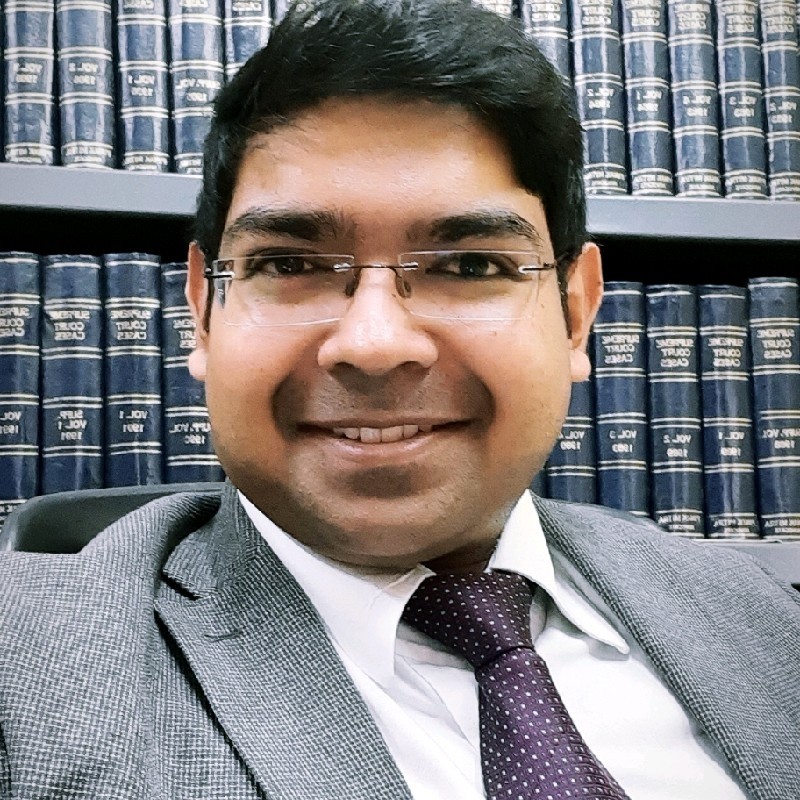
    Hello and welcome, everyone! The SuperLawyer’s team is excited to bring you yet another insightful session today. If you are seeking inspiration through diversification and unwavering dedication, look no further—today’s guest embodies both.

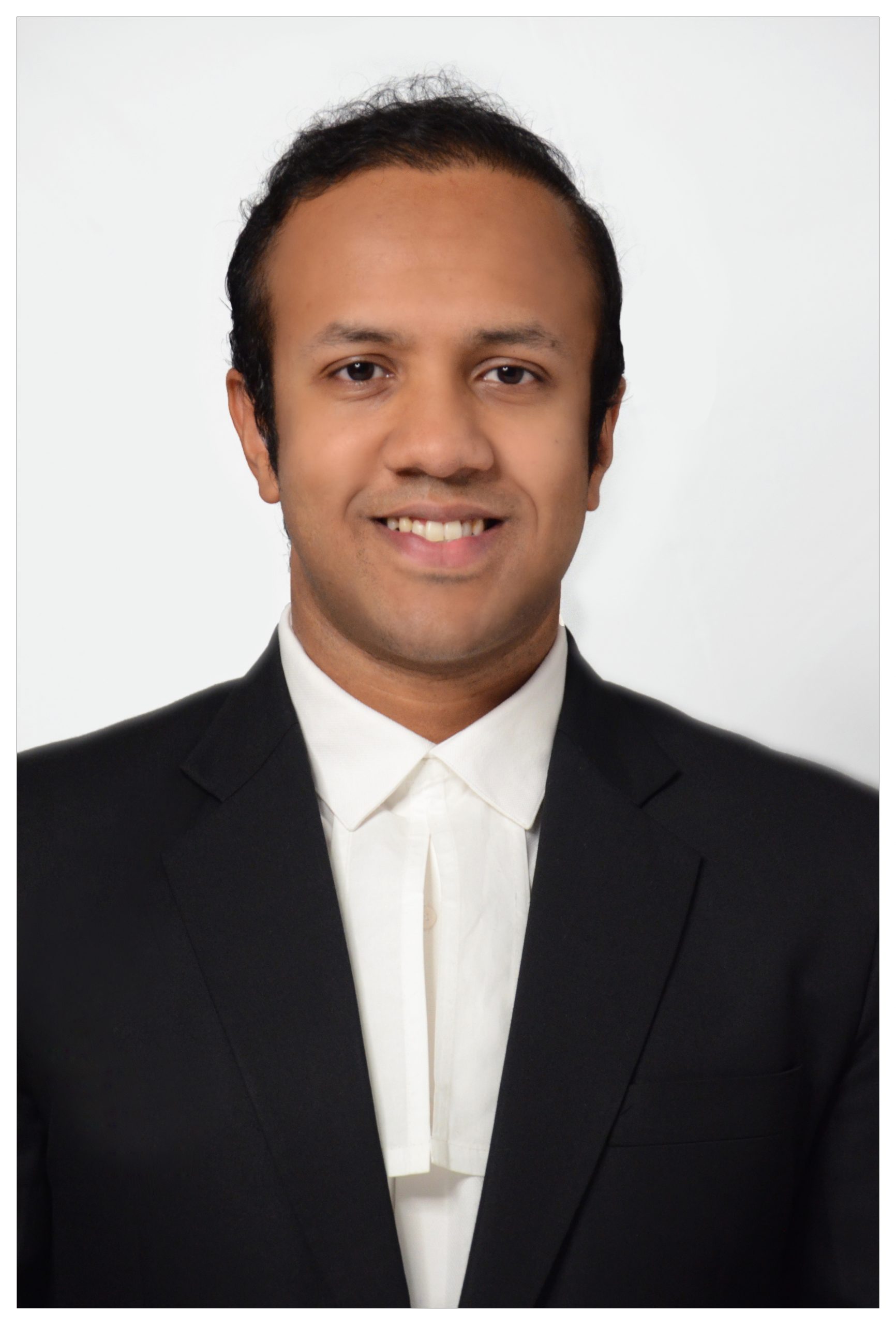
    We are honored to welcome Advocate Pinak Mitra, a respected figure in the legal community.

    For those joining us today, let me briefly introduce our esteemed guest. Advocate Mitra is a distinguished lawyer at the High Court of Calcutta, serving as Counsel for the State of West Bengal. He is a distinguished Member of the International Council of Jurists and a National Board Member of the Indian Lawyers Association—yet this is just the beginning of his impressive journey.

    With a dynamic practice spanning criminal law, constitutional law, consumer law, medico-legal issues, family law, and matrimonial disputes, Advocate Mitra’s legal expertise is truly vast. He continually upskills himself, delving into intellectual property law, and navigating the intricacies of economic offenses.

    We are thrilled to have you with us today, sir. Thank you for graciously accepting our invitation and joining us to share your knowledge. Welcome, Advocate Mitra!

    Thank you so much, Akash.

    Sir, let’s begin with a topic that resonates with many young lawyers. Litigation, as we know, is a challenging path, and it can feel overwhelming, especially for those just starting out.

    Given your remarkable achievements in this field, could you share with us how you navigated this journey and what drew you to pursue a career in litigation? We would love to hear about your experiences and the key insights that shaped your path

    Actually, for me, law was never my first choice. I wanted to study medicine and become a doctor. Law was my second option. The reason I chose between medicine and law was that I wanted to be a professional and not have a job where I worked under an employer. I didn’t want to be just another employee. That’s precisely why medicine and law were my two options. After failing to crack the medical exams, I shifted my focus to law.

    I managed to get into law, took the entrance exams—though without much preparation—and got into the Department of Law at the University of Calcutta for a five-year BA LLB course. Initially, it was very boring because we had several papers related to humanities, and I came from a science background. The first and second years were especially dull since we didn’t have semester exams at that time in Calcutta University. But once we started with the law subjects, things slowly became more interesting.

    After graduating and joining court, I realized the stark contrast between what I had heard, seen on TV, and the reality. It’s very different from the common notion that lawyers are flashy people earning truckloads of money. The reality is that it’s a tough nut to crack, especially in the initial years, where you need a lot of resilience to sustain yourself.

    I’ve seen many of my batchmates join court after graduating from law school, but within two or three years, their initial energy fizzles out. The struggle is real, especially when you see friends from other fields, like engineering or MBA, earning decent salaries, enjoying job security, buying cars, and investing. Meanwhile, someone who studied law and joined litigation finds it incredibly difficult, not just to sustain themselves, but even to ask family members for basic expenses to travel to court.

    It’s quite embarrassing to ask for small amounts of money just to sustain yourself when you’re 24 or 25 years old and should ideally be independent. And when you see your friends with steady salaries, negativity can easily creep in. It’s challenging not to get depressed or bogged down by these realities and to just keep going. This is why some people, despite their potential, eventually give up or lose the patience to hang on after a few years. That’s the biggest challenge anyone entering litigation has to face.

    Thank you, sir. Your insights are truly grounded in the practical realities that many face at the start of their careers. I believe the motivational mantra you shared at the beginning of this interview—to persist, remain resilient, and stay dedicated—will resonate deeply with everyone listening today.

    Now, moving on to the next question: Your career has spanned the judicial hierarchy, from the trial courts to the High Court and eventually to the Supreme Court. Could you share with us your journey through these stages? Any memorable experiences, key moments, or valuable insights you’d like to pass on from your progression through these courts?

    Yes, so I’ll tell you. During my five-year tenure in law school, I only did two internships. The first was as a judicial intern under a Supreme Court judge, and the second was in a trial court for three months. I didn’t have the chance to intern in the high court. There was a stark contrast between my experiences in the Supreme Court and the trial court.

    I really enjoyed my time at the Supreme Court, watching the stalwarts of law argue, and I learned a great deal from them. On the other hand, when I returned to the trial court, especially in West Bengal, I found it very difficult to understand what was happening. What I was reading in my books didn’t seem to align with the reality of the trial court. There wasn’t much synchronization between the two. I’ve even heard judicial officers mention that each trial court seems to have its own separate procedures, which, as a law student, was quite shocking for me to hear and witness.

    Now, that’s one side of the story. As far as the High Court and the Supreme Court go, particularly the Calcutta High Court, the standard there is exceptionally high and has been maintained over the years. Bengalis, as a community, are very academic in nature, which leads them to always engage in legal discussions and have a deep understanding of the nuances of law, both in letter and spirit.

    In my opinion, if you’re practicing in the Calcutta High Court, dealing with complex legal issues or arguing a matter in the Supreme Court becomes relatively easier because of the high standards upheld here.

    Now, coming back to the trial courts—without any offense, I have to say there are some brilliant trial court advocates in our state and across India. However, the problem is that their work often goes unrecognized because the judgments from trial courts are rarely reported. Even though they sometimes do a fantastic job, trial court lawyers don’t receive the recognition they deserve.

    That’s another side of the story. The second aspect is that a law student or candidate must decide early on which area of practice they want to pursue. For example, if someone is interested in constitutional law, then the trial court is not an option, and they must focus on building their practice in the High Court or the Supreme Court.

    On the other hand, if someone is passionate about trial court work, including examination and cross-examination, they should focus on trial courts or the original side of the High Court, where suits are filed and heard. So, it all depends on personal preference. One should first choose their area of practice and then make a decision accordingly. Also, gaining some internship experience in both trial courts and high courts is crucial to understand if they like the setup and environment because, ultimately, after graduation, they need to blend into that environment and become part of it.

    In order to make an informed decision, it’s important to get a heads-up about these things beforehand. Otherwise, one might spend three or four years practicing in the High Court only to later realize they prefer trial court work. In such cases, they could end up losing two or three years of their practical life, even though they would have gained valuable experience.

    That’s the problem. Experience-wise, they would certainly benefit, but in terms of establishing their own practice, they might lose those crucial years.

    Sir, how was your experience when you first argued, represented, or took on a matter in the Supreme Court? Could you share what it was like transitioning from the state level to the Supreme Court?

    During my internship at the Supreme Court, I had the unique opportunity to see a side of the Court that most lawyers don’t—working behind the scenes with a Supreme Court judge. This was especially insightful before the miscellaneous days, which are Mondays and Fridays. I saw firsthand how the research is done, and I gained an understanding of the level of preparation and efficiency involved when judges handle SLPs (Special Leave Petitions).

    Usually, these hearings last just a few seconds, and at that time, we had to prepare a short note outlining the legal point involved so that the judge could quickly frame his mind. Everything moves very fast, and this experience was incredibly valuable during my internship.

    The second significant experience was when I joined the bar at the High Court. At that time, the Criminal Motion Bench was headed by Justice Bagchi for a considerable period, and he was extremely fast. We had to be quick and precise in presenting ourselves, and that definitely helped me when preparing for SLP admissions as well. The way Justice Bagchi conducted motion admission hearings at the Calcutta High Court was very similar to how the Supreme Court handles SLP admissions.

    This experience proved invaluable. You must know your brief inside out because you won’t have time to fumble through papers during the hearing. Even in a heavy matter, you might only get one minute to present, and there are always super seniors in the field of law arguing.

    As a young lawyer, it’s particularly challenging to get an audience with a Supreme Court judge. You have to make an impact right away, like hitting a six on the first ball. That’s my approach to it.

    Thank you so much, sir, for sharing these insights. This discussion feels like a technical workshop with all the nuances you’re imparting. I’m certain that individuals in independent litigation practice who aspire to reach the highest levels will greatly benefit from the wealth of experience you’ve brought to this session today.

    Sir, your experience extends beyond India, encompassing both local and global perspectives. If your awe-inspiring trajectory were to be anchored in specific professional virtues, what would those virtues be? And would you be willing to share them with junior professionals?

    When it comes to professional virtues, I would highlight three key qualities. First is discipline. There is no substitute for discipline; you need to maintain a fixed routine and adhere to it. This principle applies across all fields—law, politics, Bollywood, and beyond. Successful individuals, regardless of their profession, follow a rigorous and disciplined lifestyle.

    The second quality is hard work, coupled with staying updated. Hard work is crucial, and it includes keeping abreast of developments in your field. Nowadays, we don’t wait for a Supreme Court bound volume to arrive; updates are provided through various websites and legal articles. Supreme Court decisions are reported within the same day. Embracing technology and staying informed is essential; otherwise, you risk being outpaced by your opponents if you aren’t up-to-date.

    The third quality is the ability to build good public relations skills. In the legal field, especially as a lawyer, connecting with people socially is vital. Initially, clients may come through your relatives, friends, or referrals from teachers. Your network grows over time through these connections. Just as in medicine, where a patient’s choice of doctor is influenced by reputation and referrals, the same holds true for law. Effective social skills help in client acquisition, which in turn drives your success.

    To summarize, discipline, hard work, and strong interpersonal skills are interconnected. Discipline ensures you stick to your routine, even on slow days. Hard work involves both effort and staying updated. Building social connections helps in gaining clients, which requires continued hard work. Each quality supports and enhances the others, creating a successful professional path.

    Given that you have continually upskilled yourself through various courses and degrees, and considering the current legal landscape with its transformative changes across sectors, what are your thoughts on the legal and technological upskilling of lawyers? How should they adapt to these changes, and how significant is this process within the legal profession?

    Regarding the integration of technology into the legal field, I believe it is no longer a choice but a necessity. Whether we like it or not, we have to adapt.

    For instance, I recently visited the Supreme Court, which has nearly gone completely paperless. In contrast, the Calcutta High Court still relies heavily on paper and bulky briefs. During my recent appearance at the Supreme Court, my advocate on record provided me with a digital copy of the SLP. Even though I have a tablet and a MacBook, I am accustomed to holding a physical brief. Nonetheless, I tried to go paperless and use the digital copy.

    It’s a matter of habit; initially, it was a bit challenging. I can only imagine the difficulties faced by senior members of the bar, who have been trained to handle physical books and documents. Personally, I still prefer having an SCC (Supreme Court Cases) in hand rather than reading judgments on a screen. It may be easier on the eyes, but we must embrace technology.

    Furthermore, technology helps us stay updated. Without it, we would miss out on current developments. For a lawyer to grow and evolve, accepting technology is essential.

    During the COVID-19 pandemic, courts adopted a hybrid model of physical and virtual hearings. After the pandemic, some high courts moved away from this model, but the Supreme Court mandated that hybrid hearings continue. This has been beneficial, though there is still some resistance to accepting virtual appearances. However, technology allows lawyers who are unwell or cannot afford junior lawyers to participate virtually and seek adjournments without harming their clients.

    Technology has also improved court processes. Orders are now uploaded to the high court servers and e-courts, eliminating the need for certified copies. Additionally, we can now view which cases are being heard in which courtrooms via our phones, which was not possible in the past. This advancement saves time and effort compared to earlier practices where one had to physically check courtrooms or rely on clerks.

    Another significant benefit of virtual hearings is that clients can observe their representation and proceedings. This transparency helps address issues where clients have been misled about hiring senior advocates or other concerns. Clients can now view hearings and understand the proceedings better.

    In summary, technology is crucial in the legal field today, and there is no way to proceed without it in the current age.

    Sir, what is the constant drive or motivating force that sustains you in your profession? Is there a particular philosophy or mantra that you believe in?

    I have been quite inspired by the story of Mr. Ram Jethmalani. He has been a guiding force for me. During my internship days, I saw him argue a case in the Supreme Court on the principles of bail, and I was awestruck by his aura. After that, I read about him—his struggles and his journey as a lawyer—and I was fascinated by how he transformed himself.

    Outside the realm of law, I would also say I have been inspired by the journey of Mr. Shah Rukh Khan. He has been a role model for me, not just as an actor but as a personality as well. His journey is incredible. These people have had a profound impact on my journey as a lawyer. They have motivated me, especially when I see how they faced failures and bounced back.

    If you look at the trajectory of any successful person, they go through ups and downs. Even Mr. Amitabh Bachchan, the legend of Bollywood, experienced highs and lows, and his transformation later in life is remarkable. Figures like these—successful individuals in their respective fields—should serve as a motivation for others. Whether it’s sports, Bollywood, film, politics, or the legal field, their journeys and the challenges they faced can guide and inspire aspiring individuals.

    Their stories have been a tremendous source of inspiration for me and have helped me in my own journey.

    On that note, sir, a demanding profession like law can certainly take a toll on mental health. How do you manage the pressure of work while maintaining your personal space? Are there any hobbies, interests, or general routines you follow to strike a balance that you’d like to share?

    Yes, law is very taxing. It is extremely demanding on our mental health as well, because it takes at least 14 to 15 hours of our daily life. Apart from that, you need time for your daily activities—sleep, rest, and spending time with your family. Unfortunately, if you’re in the field of law, especially as a litigating lawyer, you don’t get much time with your family. That is one of the hardest parts. You don’t get time to hang out with friends either.

    Initially, you might, but as you become busier, the profession consumes a lot of your time, so you won’t be able to do that. Sometimes it becomes overwhelming. You might feel like taking an evening off to watch a movie or go out with friends or family, but then you remember you have cases the next day and need to study. You’re forced to study, and it can become very difficult and, at times, even depressing. I wouldn’t say it doesn’t. That’s one aspect—if you’re busy.

    The other aspect is if you don’t have work, which many lawyers experienced during COVID. The pandemic was a huge eye-opener for everybody. Most courts weren’t functioning properly at first, though they eventually moved to a hybrid model and virtual hearings. But initially, it wasn’t like that.

    So, for almost two years, many lawyers didn’t have work. At that time, it was very depressing and mentally challenging for lawyers to sustain themselves and take care of their families. Our profession is already very uncertain. I might have a very busy week now, and the next week, I could be completely without work.

    During that free time, how you channel your thoughts is very important. It takes a huge mental toll on every serious lawyer because the insecurity looms large. As for me, I used to enjoy reading as a hobby. But after joining litigation, the profession has taken that hobby away from me. Now, in my free time, I hardly read books because I’m already reading so much during the day. So instead, I’ve taken to watching a lot of content on OTT platforms, which I enjoy.

    Another principle I’ve maintained during my 10 years of practice is not going to court during the vacations. Many people work through the vacations, but I’ve made it a point not to work during the three vacations we have in Calcutta. For the good part of that time, I spend it with my family.

    I love traveling a lot, so whenever I get the opportunity, I leave the city and go somewhere to spend some time. Traveling helps keep me refreshed. We have such an amazing country with so much to offer, and I love exploring the length and breadth of it. So, that’s how I unwind.

    Since you’ve been involved in various editorial and pedagogical activities, where you’ve interacted with both students and practitioners, how do you think this involvement has enhanced your legal acumen and expertise? Additionally, how much do you enjoy these activities alongside your primary role in litigation?

    Yes, actually, I would say it is very helpful, even for the growth of an individual as a lawyer. Let me share an anecdote: during my early years of practice, and even more recently during the COVID period, I used to mentor some law students, including my interns. Apart from them interning with me, I would teach them about the practical aspects of the legal field and different statutes that aren’t covered in their syllabus.

    I also gave them basic insights into how cases are filed, conducted, and so on. In addition, I was involved in editing journals for CHN at one point in time. This experience was helpful in two main ways. Firstly, for the purpose of editing, I had to go through judgments passed by various courts. In the process of reading those judgments, I was constantly updating myself as a lawyer.

    Secondly, reading judgments for editing purposes allowed me to cover a lot of material in a short span of time. This not only increased my reading speed but also improved my ability to quickly identify the key portions of a judgment.

    Thirdly, dealing with different aspects of law—whether with law students or fellow lawyers—helped me revise what I had learned earlier, either during law school or later in practice. For example, while I may have studied the Domestic Violence Act or the Negotiable Instruments Act thoroughly during my college days, in practice, we mostly focus on a few sections like Sections 138 to 143, 143A of the NI Act. However, when discussing the entire statute with a student or fellow lawyer, it forces you to revisit and refresh your knowledge of the full text.

    In a way, by teaching others, you’re also learning and revising. This helps to reinforce your understanding of the law and ensures you don’t forget important sections. So, it definitely aids in personal growth and keeps you sharp as a lawyer.

    Thank you, sir. As a concluding note, could you please share your long-term plans, particularly in light of your impressive involvement with various professional legal groups and associations? What are your long-term goals?

    This is a very difficult question for me to answer. In terms of long-term plans, as an individual, I aim to advocate for the cause of law to a certain extent. I also plan to author a few books in the field of law, which I will likely begin working on soon. These books will offer a more practical insight into certain aspects of law, focusing on topics that I choose. The goal is for these books to be beneficial not only for law students but also for legal practitioners.

    There are numerous books on various legal topics available in the market, but I’ve observed that some of them exist just for the sake of being there. They don’t provide a proper or meaningful insight into the areas of law they cover. That’s one side of it. On the other hand, I have a long-term plan to establish a legal institute that imparts practical legal training to students.

    When or how this institute will materialize, I can’t say. It may never happen, or it could happen in the near future, but I believe it’s very important. Many people who enter law school are not from legal backgrounds, and the five years of legal education often don’t provide sufficient practical knowledge. That’s my perspective on that.

    Additionally, many law colleges today focus on ensuring students complete a set number of internships, but it doesn’t necessarily mean that students are learning anything valuable during those internships. It has become more of a target-oriented task—complete the internship, get the certificate, and move on.

    However, in reality, interns who come to courts or law offices aren’t truly learning much. I regularly have interns at my law office, and it’s a practice in my office to interact with them after a week or so. I make sure to ask for their feedback on their previous internships—whether it was in someone else’s chamber or a law firm—and also about what they have learned while working with me. If they come here, they should leave with something productive that will help them in their careers.

    These are the aspects I want to focus on as part of my long-term plans in the field of law. So, let’s see where this journey takes me.

    A very big thanks from the entire team of SuperLawyer. Thank you so much. 

    Thank you, Akash, for having me. It was truly a pleasure to discuss various aspects of our day-to-day professional lives and to share a glimpse into how I maintain balance in my personal life as well. I’m confident that young lawyers will find value in this, as it will help them gain a better understanding of the practical realities in the legal field. Thank you once again for having me.

    Get in touch with Pinak Mitra-

  • It is seen that many fresh graduates being carried away with the burst of information and content on social media attempt to have their hands in everything but end up not having a meaningful impact in either-Shoumendu Mukherji, Advocate on Record, Supreme Court of India

    It is seen that many fresh graduates being carried away with the burst of information and content on social media attempt to have their hands in everything but end up not having a meaningful impact in either-Shoumendu Mukherji, Advocate on Record, Supreme Court of India

    This interview has been published by  Priyanka Karwa and The SuperLawyer Team

    Can you share your journey into the field of law and what motivated you to pursue a career in this field, including your experience at the National University of Juridical Sciences (NUJS)?

    I would say ‘Law’ happened by chance and it was not that I had planned for it for long. During Class 12, my parents came to know of law as a career from a friend of theirs. Once I started preparing for CLAT, the subjects that were offered grew on me, especially the sections on logical reasoning and current affairs. I enjoyed the preparations and was able to crack the exam that led me to my second home i.e. the City of Kolkata for the next five years. My parents were a constant source of encouragement during the preps. The only distant pre-existing link in my family with the field of law that I can think of is that my grandfather had been an Additional District Magistrate in the Bihar Civil Services.   

    Being at NUJS was an experience to cherish. For the first time I came into contact with peers from across the country. The different languages, foods, habits, it was an in-depth lesson in learning about the diversity of India. It was not too hard to make friends, as I was always an ardent participant in different extracurricular activities. There was a thriving atmosphere of Sports, Cultural events in college apart from moots and debates that developed the competitive spirit in all of us. NUJS was also popular in hosting the largest sports fest among law schools “INVICTA”. I had the honour of leading the fest in my 4th year as Convenor which also instilled a sense of leadership, and also won a national level moot court competition. These qualities did come in handy at the time of branching out with my independent practice.              

    As a first-generation advocate, can you describe the early years of your career? What were some of the challenges you faced, and how did you overcome them?

    The early years as an independent litigator were certainly challenging. There would be days when I would have no briefs in hand and I would wonder whether I took the right call to branch out this early (merely 2 years into my career). However, whenever you sense the overwhelming cloud of despair, every time there does emanate a beacon of hope from somewhere or the other which consolidates your belief to keep going further, into the path of uncertainty you’ve chosen. That beacon of hope may be from an entrepreneur friend who was looking for a lawyer to his start up, or the relative who had familial property issues to sort, or the acquaintance looking for advice on a will. The only way to overcome these initial challenges, in my experience, is to keep networking, and meet new circles of people. Social gatherings are also a healthy way to make new clientele, who knows what’s on the mind of a fellow invitee looking for quick and free legal advice!    

    For the initial two years after college, I had worked with a college senior of mine Mr. Ankur Sood, Advocate on Record. His office helped me inculcate nuanced drafting skills and the filing processes / preparation of a Petition thanks to his highly experienced clerk Sajid Ji, who would take me along to the various court registries to help me get a wind of what goes on behind the scenes of the glamour of the courtroom, and what all it takes to finally place a Petition on the Hon’ble Judge’s desk.  

    Your work spans a wide range of legal areas, from civil and criminal cases to intellectual property and arbitration. Could you share a few memorable cases or experiences from your career that have had a significant impact on you?

    I would say that being part of the Delhi Legal Aid Services (DLSA) initially at Saket District Court and handling cases as a ‘Legal Aid Counsel (LAC)’ for economically weaker litigants in the initial years in a way shaped me as an Advocate and emboldened my commitment towards the profession. The glee and the gratitude in the eyes of mothers on being told that their son had been acquitted or had got bail was very gratifying. Obtaining orders for domestic violence victims being awarded interim maintenance was also equally pleasing. It made me realize the social importance of our profession, and the impact it can have on the lives of thousands, that the long helping hand of law is not too far from any person in our society. 

    Obtaining a John Doe order for a multinational publishing house in the initial years from the Hon’ble Delhi High Court followed by raids on the infringing publishers at Daryaganj was my first brace with big ticket litigation and a memorable learning curve.   

    During the Covid pandemic, there was this huge controversy about reduction in school fees as no physical classes were being held. I was approached by an Association of 250 ISC / ICSE Schools from West Bengal for obtaining relief from Supreme Court as Calcutta High Court had passed an adverse order directing the schools to charge only tuition fees, which was impractical as schools also had to pay salaries, other running expenses for the upkeep of their infrastructure. The High Court had also ordered for showing of schools’ balance sheets and appointed a committee composed of the Petitioners’ Advocate to address grievances of parents. The controversy was fostered owing to an absence of a fee regulatory body in West Bengal. We were faced with an onerous 3 judge bench in the Supreme Court with Justice MR Shah on it. However, we managed to obtain a stay order from SC, and for the next 12 months were a roller coaster of a journey dealing with an unpredictable bench of the Calcutta High Court which was passing contradictory directions at every hearing date at a frequency of 2-3 months. I also had to make frequent trips to Calcutta to attend the Court-appointed Local Commissioners’ hearings on behalf of the school management. Ultimately the Supreme Court gave a quietus to the issue as Covid had passed and all the directions were kept restricted to the Covid years alone. 

    During my tenure as a Counsel for the Union of India I appeared for the Department of Atomic Energy before the Appellate Tribunal for Electricity (APTEL) at New Delhi. The matter pertained to a demand of Rs. 289.59 Crores under the head “Grid Support Charges’ ‘ made by Govt of Telangana. After hearing arguments, the Hon’ble Tribunal was pleased to stay the said demand in favour of the Union of India holding that under Section 184 of the Electricity Act, 2003 exempted the Ministry or Department of the Central Government dealing with Defence and Atomic Energy from applicability of the Act. 

    You’ve represented various Central Government Departments and have extensive experience in litigation. How has your role as Senior Panel Counsel for the Union of India shaped your legal practice?

    Being on the prestigious Senior Panel representing the Union of India has thrown open the window of opportunity to appear before the Delhi High Court on a daily basis before different benches. It adds to the sheer volume of briefs that you prepare for on an everyday basis and a rich experience to shape your future career. Each brief brings with it an unique point for consideration and the high stakes that come along with it. As a counsel holding a brief for the Union of India, you are expected to be on top of your game day in day out. The Hon’ble Judges expect you to be fair and well prepared as every new Petition on the Supplementary List starts with a Stay Application to oppose and the Government’s action to defend! Thus, one cannot afford to take any brief lightly. Usually, the new matters are marked to the Govt. Counsels the evening before, thus we only get that evening and next morning to take instructions from the respective Department and gear up for the admission hearing. It is thrilling, greatly satisfying and a big honour. 

    During the day in Court, we get to rub shoulders with Senior Advocates on the other side that adds to the challenge and gives you an added motivation to go to Court with your best prep forward. The sheer diversity of matters moulds one’s skill sets, one day it can be a Service Matter involving Promotion or Pension, on another day it may be Section 34 Challenge to an Arbitral Award, same day there may be a final hearing listed for a Miscellaneous Writ, on some days Tender matters, on some LPAs and Appeals against Tribunal decisions etc. Our younger crop of Panel Counsels also get enriched by the constant motivation and encouragement of our Seniors and Standing Counsels as well as Ld. ASG Sir who we keep crossing along the corridors of Delhi High Court and learning from their vast experiences.         

    You’ve been empaneled with organizations like GAIL (India) Limited, Delhi Development Authority (DDA), Council for the Indian School Certificate Examination (CISCE) and the Enforcement Directorate (E.D.). Can you discuss the importance of these empanelments and how they have contributed to your professional growth?

    One must realise that empanelments are only a push to give you volume of work, which you are eligible for only after 4-5 years into your practice. The initial years preceding that eligibility period you have to really grind it out. I would say that is the gestation period. Empanelments help you get a good grip on a specific type of subject area, and some empanelments with retainers ensure a fixed income per month securing you financially. But you need to keep performing and maintain the standards otherwise someone else will take your place.   

    How has Becoming an Advocate on Record further helped diversify your practice? 

    It has given a foot in the door for establishing an independent Supreme Court Practice. Not that I have not been working on Supreme Court matters earlier. Thanks to my college senior Mr. Kunal Chatterji, AOR who had given me a volume of Supreme Court drafting to do in my initial years when I had branched out independently. His clerk Sukanta Ji also taught me the nuances of SC Filing Procedures, I will be forever grateful to them. Becoming AOR is one thing, but getting those AOR briefs for filing is the second step that follows. For this, it is important to carve out a network of lawyer colleagues from different states who can send you those SLPs, Civil Appeals and Transfer Petitioners. During our first orientation organized by the Supreme Court Advocates on Record Examination (SCAORA), Justice Sanjay Krishan Kaul who had himself been a AOR gave us all a golden advice to not be merely postmen but to read and give finishing touches to drafts that came our way so that the knowledge gained during the AOR Exam preps can be put to good practical use. Justice Kaul advised us to refrain from filing Petitions without reading them which holds good in today’s times.   

    You have also been involved with certain matters of political nature. Could you throw some light on them and their professional benefits? 

    I would say these are our social responsibilities. In the aftermath of the West Bengal Vidhan Sabha Elections of the year 2021, there was large-scale violence that broke out targeting the members, workers, voters of the Bharatiya Janata Party (BJP) who had voted / campaigned against the ruling Trinamool Congress (TMC). As soon as the results were declared, there were murders, loot, arson, and even gang rapes. Although the State of West Bengal has a history of bloody elections and many would declare such violence to be ‘normal’, however at some point of time that ‘normalcy’ must be questioned. In all other States elections are held peacefully, then why an aberration in only this one State. I was part of the team that appeared for the victims in the Hon’ble Supreme Court and Hon’ble Calcutta High Court. I would put in all nighters to draw up the pleadings explaining the gruesome incidents and plight of the families. Finally, the Calcutta High Court ordered a CBI probe into the various incidents. 

    Earlier this year, after the Municipal Corporation of Delhi (MCD) elections and appointment of a new Mayor in Delhi there were separate elections held for the 6 positions of the MCD Standing Committee which is voted by Councillors. Owing to a fracas in the house and expecting an unfavourable outcome, the Mayor who was a Councillor elected on an Aam Aadmi Party (AAP) ticket cancelled the elections and ordered re-elections even though the process had been completed and only results were left to be declared. The Hon’ble Delhi High Court declared the Mayor’s action to be illegal and directed pronouncement of the results immediately. 

    Being involved with political matters provides one a hand to work for the betterment of our systems and appear for MPs, MLAs and various leaders of the said political party. It gives one a platform to interact with such elected representatives and public personalities to learn from their world view, perspectives. Moreover, such matters often attract a lot of media attention and it thus gives one an additional edge and experience of regularly appearing in such media-friendly ‘high profile’ matters. I also have had the opportunity of assisting the BJP during election cycles, both at the National and State levels pertaining to Election Commission compliances which has helped cultivate different kinds of skill sets.                

    Finally, as someone who has built a successful legal career with diverse experiences, what advice would you like to give to fresh graduates who are entering the legal profession today and aspire to make a meaningful impact?

    Foremost takeaway from what I have experienced, is to be patient and not be in too much of a rush. Yes, be ambitious but be practical as well. It is seen that many fresh graduates being carried away with the burst of information and content on social media attempt to have their hands in everything but end up not having a meaningful impact in either. The race is long and lawyers don’t retire. If one is sincere, dedicated and hard working, rewards will come, even if not today then certainly in the next few years down the line. What is essential however is to have in place a working culture and a disciplined lifestyle. Those abashed college years are over, in the real world a lot more is riding on every brief and your every appearance than just a few marks of a moot court competition! 

    Get in touch with Shoumendu Mukherji-

  • Women possess an innate ability to empathise, communicate and offer solutions to bridge gaps, which could immensely help professionals in the field of law- Suhrita Majumdar, Partner at S. MAJUMDAR & CO. , Patent & Trademark Attorneys

    Women possess an innate ability to empathise, communicate and offer solutions to bridge gaps, which could immensely help professionals in the field of law- Suhrita Majumdar, Partner at S. MAJUMDAR & CO. , Patent & Trademark Attorneys

    This interview has been published by  Priyanka Karwa and The SuperLawyer Team

    Could you share with us the journey of how you ended up pursuing a career in law and specifically in the field of Intellectual Property Rights (IPR)?

    Since childhood I aspired to become a lawyer. If I remember correctly, around the age of 14 or 15, I thought it would be most exciting to take up criminal law. Courtesy movies! However, as time progressed, I started taking interest in what my Father did. Having been in the practice of core IPR, my Father, Mr. S Majumdar, set up his firm in Kolkata, under the banner of S Majumdar & Co. at a young age.  

    Upon completion of my academics and trainings, I joined the firm in 2008 at the Head Office in Kolkata. Initially I focused on trade marks and had the liberty to expand the team, with his unwavering support. In 2011, I shifted to New Delhi to manage operations of the newly setup branch office. Since then, I have been based in New Delhi, with frequent work trips to other offices at Kolkata and Mumbai.

    Joining S. Majumdar & Co. in 2008, could you tell us about the initial challenges you faced ?

    Challenges are constant and manifold and as a professional, one has to be open to such challenges. In our practice, soon upon joining, I realised that to become a part of the team, I had to be more patient, perhaps because I was required to hear more and make my notes. Complying with internal deadlines was mandatory and it is still so. Therefore, I had to ensure that I complied with the various timelines set for each activity (including meetings, deadlines, other deliverables, or even casual lunch time chats).

    But I have realised that it is the initial challenges and how you deal with them which are critical to mould one’s outlook and also equip one to handle further challenges which come with additional responsibility entrusted to you by the firm or the client.

    Additionally, the field of IPR, especially litigation in IPR, has its own unique challenges.

    With over 15 years of experience in the field of law, could you share some interesting or memorable cases or clients that you’ve worked with?

    I take special interest in suits involving civil/criminal raids and each of them become memorable ones. Nevertheless, I can certainly not miss out on mentioning some of the worthy ones.

    Around 2009, I was fortunate to have had the opportunity to assist Mr. Majumdar in the first the then Intellectual Property Appellate Board (IPAB) case relating to staying operation of a patent. This was a dual sim mobile case, before the Customs Office, Delhi and the IPAB. In this case, the patentee managed to obtain a frivolous patent in respect of a multiple sim mobile phone. Basis such patent, he approached the Customs office for confiscating all dual sim mobile sets being imported to India by the leading mobile phone manufacturers. Consequently, all such manufacturers had to wait for a decision from the appropriate forum to ensure that such goods could be released and launched in the Indian market. The Indian Cellular Association (ICA) was actively involved in trying to provide relief to all these leading mobile manufacturers.

    Back in 2010, I was fortunate to be a part of the first GI litigation in India, concerning Darjeeling tea. The said litigation was initiated by the Tea Board of India against ITC Limited on the basis of their registered GIs including Darjeeling. The matter went on for years and was eventually decided in ITC’s favour. At the SLP stage, the Supreme Court did not get into the merits of the case and the matter was disposed of, with certain directions to the High Court.  In fact, the matter was to be decided by the Suit Court (in Calcutta) on the question of law of GI and Certification Trade Mark only, without going into a lengthy trial and examination of documents/ witnesses. The Judgement was pronounced orally by the Hon’ble Justice Sahidullah Munshi on February 2, 2018, dismissing the suit, and the lawsuit was decided in favour of ITC. The Court reiterated the findings of the interlocutory Court. The Court found that the Plaintiff’s registered GI and Certification trademarks are restricted to tea and the protection afforded by the same cannot extend to lounge services. The Court further observed that Tea Board had failed to establish a case of passing, dilution or unfair competition. The Court specifically held that Darjeeling being the name of a place cannot function as a regular trademark, and though Darjeeling may be famous for tea, Tea Board is not entitled to allege that Darjeeling cannot be used by any other traders for their own goods and services for goods/ services, other than tea.

    Referring to a couple of the recent decisions, in 2020, I was involved in a copyright infringement case concerning A Sirkar Vs B Sirkar, which was instituted before the Commercial Court, Alipore, Kolkata where about 7 jewelleries were copied in toto by the Defendants. We received favourable orders at all levels and eventually the suit was settled. This case was quite unique and interesting.   

    In another infringement case, before the Federal Court of Canada, through the local Counsels, we were successful in an infringement suit concerning the well-known trade mark AMUL. Amul was awarded damages of $10,000 for actions contrary to the Trademarks Act, $5000 for actions contrary to the Copyright Act and awarded costs of US$ 17,733, payable by the Defendants.  

    As an active participant in IPR awareness programs organized by various institutes in India, could you share some insights into the importance of raising awareness about intellectual property rights, especially in today’s digital age?

    Raising awareness has always been important considering that IPR is a powerful tool that stimulates innovation and creativity leading to economic development. It is essential that we are conscious of the efforts taken at the stage of innovation and creation, by this I mean is that before any IP is created, one has to ensure that there is no encroachment into the rights of a third party, especially in the digital age where we have access to a lot more content than before. Therefore, on the one hand, it is easy to copy and on the other, it is easy not to copy. For these reasons, awareness is important, especially amongst the younger innovators/creators, irrespective of the domain. Such discussions are always helpful, infact, in the process, we also get to learn so many new things happening around us.

    In fact, under the current regime, IPR is of very high importance, and we see a lot more happening in terms of spreading awareness, at all levels.      

    The field of law, particularly IPR, is constantly evolving. How do you stay up-to-date with the latest developments and trends in the industry to provide the best advice to your clients?

    Yes, considering that IPR is constantly evolving, it is important that we are updated with the latest decisions being passed by the various fora and follow various discussions on relevant platforms. Interacting with clients, attending various conferences, including global conferences, are important to help keep one updated with development and trends in the industry as well as the global scenario with respect to IPR. One after all needs to ensure they are able to keep pace with the rapid technological developments and in that context advise clients on the securing and enforcing of IPR.

    Recently, on August 5, SILF marked a significant milestone with the virtual inauguration of the SILF ladies group on the occasion of Lady Lawyers Day event. What is the scope of women lawyers in the profession?

    Recollecting words of Late Ruth Bader Ginsburg, “women belong in all places where decisions are being made. It shouldn’t be that women are the exception”.  

    Women possess an innate ability to empathise, communicate and offer solutions to bridge gaps, which could immensely help professionals in the field of law. Always remember, gender shouldn’t be a bar at any point in time considering that we have the same ability to deliver. In any case, irrespective of gender, the profession demands perseverance.

    I personally look up to some of the eminent lady Judges and lawyers who have greatly contributed to the profession. I also admire some in-house counsels I have personally worked with, who have been significantly contributing to the growth of the companies with their acumen.

    Referring to eminent personalities in the world of IP, Hon’ble Mrs. Justice Prabha Sridevan (Retd) and our current Hon’ble Mrs. Justice Pratibha Singh are great inspirations.  

    Hon’ble Mrs. Justice Prabha Sridevan (Retd) delivered some pathbreaking judgments during her tenure as the Chairman of the then IPAB.

    Hon’ble Mrs. Justice Pratibha Singh, with her extensive experience in IPR, has shown exemplary dedication in her judicial responsibilities. I am sure all IP practitioners acknowledge her untiring contributions to the creation of the IPD in Delhi High Court.

    Lastly, with your extensive experience and success in the legal profession, what advice would you like to give to fresh law graduates who are considering a career in IPR?

    IPR is vast and therefore, there are several opportunities available for law graduates. In fact, after having completed the IP course at the law school, one should consider IP internships to gather experience and also to see if the subject suits. Subsequently, one may choose a career in between Court and in-house practice.  

    Get in touch with Suhrita Majumdar-

  • The profession has given me so much and so much more, because of which I now firmly believe that our litigation practice truly makes you younger and braver and the more you practice, the more you learn new things- Rajdeep Lahiri, Advocate on Record

    The profession has given me so much and so much more, because of which I now firmly believe that our litigation practice truly makes you younger and braver and the more you practice, the more you learn new things- Rajdeep Lahiri, Advocate on Record

    This interview has been published by Priyanka Karwa and The SuperLawyer Team

    To start the conversation, please tell us what motivated you to pursue law as
    a career.


    Well, initially I was never inclined towards the practice of law, and rather was more interested to work in companies and become an In-House practitioner. Being a 3rd Generation legal professional, I knew the battle ahead to stay in the game. Plus I was [still am] an athlete and played a lot of professional matches, so time had to be matched equally between career and sports.
    Kolkata is where I was born and raised, hence, arguing and negotiating came quite naturally to me, much like all legal professionals from the city. Quite early on I was introduced to the world of litigation, policy brutalities, burgeoning stress of drafting, long hours of excruciating patience, hopping Court to Court, etc. as I used to accompany my mother and grand-father, who were a noted law practitioners in Kolkata.
    I would say that the experience was there [and it was surreal], which is fundamentally why I wanted to avoid it!
    However, with my abrupt migration to Mumbai in the year 2013, I swept my entire time and energy into commercial litigation and thereon, I never really
    looked back, so really the motivation never came early on, but rather stuck with me as I started litigation in Mumbai.

    Sir, you have completed a decade of practice in law. Has the profession given you what you expected out of it?


    Yes, indeed so. I have completed my graduation in the year 2012, then passing the AIBE in the year 2013, so it’s been more than a decade into the field.
    It has made me to travel across the country, representing disputes in their strangest and malignant forms, meeting a diverse group of people, charter me into international disputes and place me as an International Arbitrator and so much more.
    I never expected to have so much exposure to disputes when I was merely an angry young student of law, deeply involved in politics, sports and students’ movement in Kolkata.
    Quite candidly, I never wanted to be so involved too! The profession has given me so much and so much more, because of which I now firmly believe that our litigation practice truly makes you younger and braver and the more you practice, the more you learn new things.

    Our readers would like to know about your areas of practice and your interests over the last 10 years of law practice.


    I come from a generation of lawyers, politicians, and bureaucrats, so criminal law came quite naturally to me as I was fairly accustomed to the nuances of investigation and arrests.
    However, I started off with Winding Up matters under the Companies Act, 1956 [now repealed] and similar commercial disputes. Arbitration sounded
    fancy at the time and gave my hand on couple of ADR matters initially.
    But since being in the chambers of my Senior, who is a full practice litigation professional, it got me experienced in a host of matters, ranging from
    Municipality disputes, cheque dishonour, Suits, complaints, divorce, testamentary and what not!
    Being involved in so many types of litigation opened a Pandoras Box for me, unleashing the opportunity to at least master the practice and procedure [if not the law].
    Over time, I got involved in various other types of matters, involving labour disputes, cyber-crime, bails and trials, Penal sections, Admiralty, IPR, NCLT
    and IBC, etc. making me go places and expose myself to a varied gravy of matters.
    I keep one thing in mind, the basics of dispute is always the same and the principles to resolve any dispute is never complicated. Its more logic and
    reasoned.

    What is a Career in Alternative Dispute Resolution like, especially from an
    international perspective?


    ADR is the future. The facts speak for themselves. There is an indiscriminatory rise in litigation before various Courts and this
    exponential rise in matters, casts an unbearable burden on not only the Judges, but the Advocates, Prosecutors, Pleaders, clerks and the entire system along with it.
    We all have knowledge of ADR in Matrimonial disputes, and further it being
    introduced in the form of ‘Compulsory Mediation’ in Commercial Matters, however, if understood smartly, ADR can be used the same way as litigation, which is commonly used by almost all International Institutions as an effective method to conclude the disputes, by arriving at amicable settlements and charging for the same at pre-determined rates.
    The additional skill sets which will be needed are the necessary tools for effective research, razor sharp strategy and persuasive negotiation skills to effectively resolve disputes.
    I have clients wanting to end disputes, not win a matter for it to be overturned in Appeal, so I suppose ADR is the way forward and now with the extensive advent of technology, practice has never been more convenient and organized.

    Could you please tell us about the personal and professional challenges you
    encountered over the years, up until you established your own firm and
    thereafter?


    Well, it has always been pretty much hard work and putting in the hours of work towards it.
    I have always focused on positives and rarely been idle till date. I have constantly been on the move, shifting focuses and building experiences around disputes and people.
    There have been insurmountable challenges that I have faced along the way, but we always move forth, right? We all do. Professionally, I have worked with Counsels, Advocates and in a noted law firm, and from every such entities, I have developed various skills. Skills in people management, little bit psychology, legal strategy, learning the procedures, knowing more laws, defining my own argument style, knowing when to shut up and sit [or walk away], as I always preach everyone, law is common and everyone is expected to know, what matters is how to interpret it and to whom the same is being interpreted to. One must definitely know how to read the mind of another individual and be aware of the basics of psychology.
    Once I was convinced that I could finally walk on my own, I took the leap, almost impromptu and here I am, better by the day.

    How do You see the development of Alternate Dispute Resolution methods over the coming years?


    I foresee a complete overhaul of the existing system to place litigation in a symbiotic relationship with technology and a consequent yet systematic development of the entire ADR regime.
    Legal professionals will be more adapted to resolve disputes, either through Courts, which mandates the compulsory ADR process, via ADR Institutions or by Advocates engaging with the disputing parties to mediate and negotiate the disputes.
    In my years of experience, it is only recently that I have come across parties that are mediating and settling disputes, only through effective negotiations, at the final hearing stages, thus saving enormous stress on the entire system and its [breaking] parts!
    Final Resolution of disputes would mean an end to the dispute and by the look of it, who would not want to develop it? So as I see it, ADR will play a prominent role in the adjudication of disputes of all nature, without exceptions.

    There are many certifications, like the one given by CIArb (Chartered Institute of Arbitrators) to take up Arbitration as a career. Do you think taking such certifications helps along with practice?


    Education and being educated, are very different. For example, no one teaches you litigation, but you get educated along the way and educate yourself about the nuances of litigation and its practice.
    Similarly, you need to have life experiences to effectively negotiate and mediate. The purpose of any course is to have the empirical knowledge and discuss established principles, which is to be borne in mind when eventually resolving disputes.
    While I believe that by undergoing certification courses [an uncountable number done myself!] definitely aids you, it very important to have a sense of direction in what ones to do, else the certifications shall be only used to cover office walls.
    Think deep, in our profession, life experiences take the first preference. Then the education.
    ADR Institutions are having internationally acclaimed Trainers and Professors, hence, you will get first-hand experience in international disputes and scenarios. So yes, it will definitely help in some way.

    Lastly, what would be your advice for the fresh law graduates who are
    looking forward to opt for ADR?


    Put in the long hours. Dedicate yourself to a routine. Read the laws. Go to the roots of the laws on ADR and get enrolled with ADR Institutions and Advocates practicing ADR to have first-hand knowledge and being conceived with the nuances of practice and procedure.
    But be advised, ADR will outgrow and creep into all litigation domains, so it is very important and wise to practice all domains of law, keeping ADR as its base.
    Lastly, you break the walls down and you keep creating standards!

    Get in touch with Rajdeep Lahiri

  • Mehboob Rahman, Advocate, Calcutta High Court, on litigation, and his diverse experience

    Mehboob Rahman, Advocate, Calcutta High Court, on litigation, and his diverse experience

    Mehboob Rahman graduated in law from Symbiosis Law School, Pune, batch of 2008. He is an independent legal practitioner at the Calcutta High Court. With over seven years of litigation experience, he has handled matters pertaining to the Companies Act and Sections 9, 11 and 34 of the Arbitration and Conciliation Act, 1996 to Civil Revisions, Appeal Hearings(Civil), Criminal Revisions, Criminal Appeals – all falling under the Original and the Appellate Side jurisdiction of the Hon’ble Calcutta High Court.

    In this interview we speak to him about:

    • His litigation experience
    • Practising at the Calcutta High Court
    • His internship experience


    What would you like to say to our readers in the manner of an introduction of yourself?

    I have been a practicing lawyer for the past seven years at High Court, Calcutta. I have dealt with varied matters such as writs under various groups, criminal and original side suits. It is pertinent here to mention that my father is a senior advocate here at High Court, Calcutta and my mother was a police officer at Kolkata Police. Therefore terms like “law” and “court” were something which I was used to since childhood.  


    What inspired you to take up law? 

    You see, as a child sometimes I used to accompany my father at work and used to play around in his office. I was used to seeing law books, briefs, client conference, and everything else that I see today. All our good family friends were either lawyers or police officers. When I took up law, it was “quite expected” and a predictable move. The best part about Symbiosis Law School at that time was, It had offered the course B.B.A.,LL.B for the first time and mine was the inaugural batch. I had a commerce background in school so it was again a very predictable choice. I always knew that it is either going to be business or law after school. That’s how i ended up in Symbiosis.


    Tell us a bit about your time studying law as an undergraduate student at Symbiosis Law School, Pune.

    Studying Law at Symbiosis Law School was in my opinion the best five years in my life. By this I don’t mean only academics. I don’t think I need to rate Symbiosis on its academic parameters. We already know about it. Its more than that. It was the life there I am talking about. We made some lifelong friends there, friends who are still in touch and going strong. Moreover I did not feel that there is a rat race going on out there. Everyone of us was unique in our own way and being in Symbiosis only brought out the best in everyone. I believe I was a very mediocre student yet I never had any regrets about it because at the end of it I felt loved and co operated by my professors, friends and some exceptional seniors. Symbiosis used to be and still is more than just an institution or a degree, its about the time, about my friends from all over the country and also the city, Pune. My friends used to think that I must be having lot of support back home academically since I have a lawyer in the family. On the contrary when I used to tell my father that I am really panicked about Constitution paper the day after, I used to get replies such as “there is absolutely nothing there, absolutely nothing, simply study Article 226 that is very important and useful,”. I had to switch over to other topics such as finance and sustenance immediately because I knew the discussion is going no where.  During my time we had the opportunity to experience excellent faculties and during our principal’s lectures there used to be 100% attendance not due to fear or respect, it was because she was the best at it.


    Did you take part in co-curricular activities while in college? 

    Co-curricular activities are very important in law students life or for that matter any student’s life because it takes you out of the mundane clockwork routine and classes to something different. I took part in few moot courts though I was not into serious mooting. We had these regular symposiums and guest lectures where we interacted with eminent personalities and it dealt with many topics which was prevalent then. I was an active participant in the committees and the sub committees during an event of our college with the support of my seniors wherein you need to manage events or simply make things work! I was good at interaction and negotiating with people who could be anyone from a vendor to a guest whoever is necessary to make an event successful. Even in litigation the most important resource next to knowledge is people and therefore interaction and counselling plays an important part. Therefore its completely clear how the extracurricular activities plays an important part in ones life in what way.

    What were you areas of interest during your legal education?

    As a student I found the subjects on criminal law quite intriguing. I found it to be very closely related with different human behaviour. As a lawyer I never chose anything specific to specialise in. I have simply gone with the flow. I stick to what my father used to say that its never a lawyer who decides what he/she specialises in, its always the clients.


    Could you tell us about the internships you took up, and what you learnt from those experiences?

    The practical aspect of legal profession is indeed very different when we compare it with what we do during our college days. In real world, there is no syllabus and its not about making your teacher happy by sticking to doing exactly what is expected out of you. It is about making people happy, giving them relief of their misery. You might fail in that attempt but the effort should always be genuine. My internships were all based around litigation working under eminent lawyers. I spent a lot of time at the court listening to arguments and trying to follow court procedures. I realised then that what we learn post graduation in our professional scenario is far different than academics. Internships give you an insight in how to take things and from where, develop research skills, understand the profession better.


    At a time when most students are inclined to taking up corporate jobs, what influenced your decision to take up litigation?

    I believe its completely a personal choice. Both corporate and litigation are perfect in its own sphere and there is enough to learn in both of them. However I will tell you exactly what went in my mind while choosing litigation. Firstly like I mentioned earlier, I like work which are people oriented. In litigation you are constantly interacting with real people. Not just your clients and colleagues but you need to know lot of people within the various departments of the court in order to have a smooth flow of work. I realise now how heavily we depend on someone or the other somehow in litigation at every step. Secondly, I wanted to work for myself. Thirdly, I wanted to be the master of my time. Whenever I get an opportunity I travel, or at least travel to meet a friend probably. Life always happens outside work. One must never forget that.


    What advice would you give students in avoiding a decision paralysis? 

    I wouldn’t term it as a decision paralysis exactly. It’s a matter of objectivity. For example doing an LLM would really be helpful if you are into academics professionally. However it does not really give you an edge as a practicing lawyer. I should not be misinterpreted here, it is completely my personal opinion. Opinions do differ. I always support higher education and it is always enriching, opens up your mind and scope. Therefore it completely depends on what one wants exactly. I have completed a PGDHRM when I got time, taking a short break from work.


    From a law student to a lawyer, how will you describe the transition?

    It’s a metamorphosis actually. Being a law student and a lawyer is completely different. As a student our object was to pass in exams with good grades. At work you need to live up to your client’s expectations while adhering to all procedures. Time is not always in our favour as courts in India are clogged with pending matters and less number of judges to dispose the same, which we all know. As a law student a section, or a chapter of a law book was a tiny part of the curriculum. In court days might be consumed arguing on one application made on a single section. Drafting is again an integral part of litigation which is given very little importance at  a law school. One takes time to get a good hold on that too. As a student your mistakes will lead to a bad grade, as a lawyer your mistake will lead to a cost or consequence for your client. Therefore one can understand the diligence that is required.


    What is the nature of matters that you take up?

    I take up matters both civil and criminal in nature. At the High Court, I am mostly occupied with writs under various group heads such as land, municipality, service etc. I have taken up matters on dismissal/removal of employees of the Paramilitary Forces of India and other services under the state and central government including employees of public sector undertakings. Suits and criminal matters have been an important part of my practice as well, filing and dealing of which mostly takes place at the High Court and various District Courts in West Bengal. I also have a strong affinity for matrimonial matters and counselling. Non litigation work consist of Searching Land Title, Valuation, Conveyance and Registration before Registrar of Assurance and Additional District Sub-registrar. Drafting of various instruments/documents pertaining to Sale, Lease, Mortgages, Power of Attorney and Will.


    How do you manage your time between your professional and personal interests? 

    Personal interests are the ones which define you as a person, as a human being. You might be remembered how good you were professionally but you will surely be remembered how you were as a human. Life is always outside work. I am more of an outdoor person. Travelling is one of my primary interest. It makes you a better human being every time. One must explore places away from home in order to appreciate what we already have in hand. Trekking up a hostile terrain teaches you how comfortable we are back home and we shall never take things for granted. I am passionate about motorcycles and I often go on rides. Riding is extremely rejuvenating. I wouldn’t lie, I actually look for excuses to ride even if it is for a short while.


    How do you keep yourself updated about the latest developments in the law?

    Law is indeed an ever changing field. One must keep himself/herself updated with the new developments in their field through precedence, books, journal, circular, news and of course Google! It is not difficult now as it was before. We have online resources such as manupatra, scc online and airweb to name a few. Socialising with colleagues is surprisingly the fastest way to learn about new developments.


    What advice would you like to give our readers, who are mostly law students and young lawyers?

    To students, enjoy your college life as it is going to happen only once unless you are talented and may extend it. Make friends and make memories there as those are going to last a lifetime. I am not discouraging ambitious students but its okay to take it a little easy with studies as it is more than academics which is going to take you places in professional life. For young lawyers, patience and perseverance are the keys. Look for opportunity to learn at every step. Losing is also learning. Makes you stronger. Lastly love what you do, do what you love.


  • Shayak Chakraborty, Advocate on Record, Calcutta High Court on starting up with an independent litigation practice right after graduation

    Shayak Chakraborty, Advocate on Record, Calcutta High Court on starting up with an independent litigation practice right after graduation

    Shayak Chakraborty is an alumnus of Gujarat National Law University who graduated in 2013. During his school and college days he was very active in debating and started the Debating League at GNLU. He worked at the Calcutta Sessions Court under the aegis of the Chief Public Prosecutor before assuming a practice at the Calcutta High Court as an Advocate-on-Record. He is a certified mediator and focuses his litigation practice on civil, commercial and corporate, criminal and constitutional law. At present he has an independent practice. In this interview he talks to us about:

    • The required skills and the importance of mentors in litigation
    • The scope of ADR in the Indian judicial system
    • His experience working in the Calcutta Sessions and Calcutta High Court.


    What would be a brief introduction of yourself?

    I graduated from Gujarat National Law University in the year 2013, and I am currently practicing law in the High Court of Judicature at Calcutta. I used to practice criminal law in the lower courts here in Kolkata before making the shift to the High Court last year.


    Were there any activities you participated in that honed your skills as a litigator? How are they relevant now?

    I’d say the activity that helped me the most in litigation was debating. I used to be an active debater during my school days in La Martiniere for Boys, and continued that during my college days, where I founded the GNLU Debating Society in my 2nd year. Debating was a passion for me, although I wasn’t the best debater in my school (which had a fiercely competitive intra-school debating league), I was always an ace in extempore debates, where the skill of thinking on your feet and out of the box is all-important. Looking back, this is what honed my skills the most, because while every lawyer should be able research the law and frame the argument well, how one responds to arguments in Court with little preparation and dodges tough questions from the judge is what separates a good lawyer from the rest. So definitely debating was the most important activity which helped me in becoming a litigator, as it not only improved my speaking skills immensely (I was a very shy kid, and would find it difficult to talk to people before I started debating) but also prepared me to frame convincing arguments quickly.


    Was there anyone who particularly influenced you while deciding on litigation?

    Growing up, two of my father’s close friends encouraged me to take up law –  the late Justice Barin Ghosh, who retired as Chief Justice of Uttarakhand High Court before passing away last year, and senior solicitor Debasis Law. Right from a young age, they told me I had what it takes to be a good lawyer, and thus, right from my school days I always wanted to be a litigating lawyer, having never even heard of transactional practice before I started preparing for law entrance exams. I was very sure that Court practice is what I wanted to do, and so I never wavered in my decision to enter litigation despite being a first generation lawyer.


    Being a certified mediator and an active litigator, what do you feel is the scope of ADR in the judicial system?

    shayak-chakraborty-1As I have been trained in mediation, I am hopeful about its prospects in India. With the tremendous backlog of cases in our courts and the lack of adequate number of judges for a population like ours, more and more people are unwilling to resort to litigation to resolve their disputes. The ever-growing number of arbitrations in our country bear witness to this effect, as today a standard commercial contract will inevitably contain an arbitration clause. However, the real problem comes from land disputes, succession disputes and family matters since those aren’t usually covered by an arbitration agreement. In such cases, mediation can be a very effective way to bring about a resolution without resorting to the court process, and it is increasingly being recognized as such.


    How did you prepare for the bar in a span of a few months?

    The Bar Exam is easy enough to pass, provided you have actually done a reasonable job of studying for your LL.B. degree. It is kind of a refresher exam for your law syllabus, and if you have indeed studied decently for your law exams in college, the Bar Exam won’t give you much trouble.


    What was it like assisting the Chief Public Prosecutor in the Sessions Court?

    Mr. Tamal Kanti Mukherjee, Chief Public Prosecutor of City Sessions Court Kolkata, is a tremendously successful lawyer and a gem of a human being. When I started working in his office, I had no idea about Court practice and had no clue as to how to go about things. While I had done internships during college days, the month or so that one spends on an internship barely gives you even a glimpse as to what Court practice is all about.

    Tamal sir encouraged me a great deal, and helped me gain confidence in my abilities as a lawyer. He would encourage me to read every brief and prep every case for him, and had blind faith in my abilities even when I had no faith in them! With his encouragement and guidance, I learned a great deal about how trial works, and how criminal cases progress. Working for the Chief PP also meant that I interacted with police officers a great deal, and I learned a lot from my interactions with them too. However, I am tremendously grateful to Tamal sir for the constant encouragement he gave me when I was a nervous rookie lawyer. Such was the confidence he gave me that I was appearing on my own merely four months after enrollment!

    shayak-chakraborty-2I was briefed to argue for a de-facto complainant in a massive fraud case, where the value of the fraud was more than Rs 20 crore, and I was to argue against bail of two persons arrested on the very day I was briefed! I was tremendously nervous and excited at the same time, and when I walked into the Magistrate’s courtroom, I saw six lawyers appearing for the two accused! The lawyers argued strongly for bail, the Police Prosecutor opposed the bail in the normal fashion, when I asked for permission to make submissions for the de-facto complainant,  the defence lawyers started shouting that I had no right to make submissions when the Prosecutor was there. Now, Tamal sir never liked to raise his voice, but would never be afraid of shouting down an opponent who was being too aggressive. I shouted back at the defence that I was seeking permission of the Court and I didn’t need their permission. Possibly impressed by my confidence, the Magistrate gave me two minutes to make my argument. I summed up our position on the matter, to which the Magistrate nodded, and sent the accused to police custody for 14 days (the maximum possible time), something completely unexpected for me, as some other juniors had told me not to expect more than 7-8 days of police custody! It was at that moment I knew I could make it as a litigating lawyer if I continued to work hard and persisted with Court practice.


    What was the transition like, moving from work in a Session Court to the High Court? Did you prepare yourself for this change in any way?

    I always wanted to practice at Calcutta High Court, but I could not manage to find a senior’s chamber to join when I returned from GNLU. Now,  my father knew Tamal sir quite well, and when he mentioned to him that I was very confused as to where to start my career and thus had been doing nothing since returning from Gujarat, Tamal sir suggested that I join him for a few days to start with, to get an idea of the lower courts before joining a senior in the High Court.

    After working in the Chief Public Prosecutor’s office for a while, I wasn’t any closer to figuring out a chamber to join in the High Court, so I decided to carry on working in the City Sessions Court, where I was already used to the surroundings and already knew most of the people.

    However, my dream of going to the High Court never changed, and on several occasions I found myself wishing I could do more than just practice criminal law in the lower courts. I was granted a sudden opportunity when a corporate client of mine had a case dismissed in the trial court. They called me in to advise them about their options, and I recommended that they file a revision petition in the High Court. They asked me whether I would take care of the matter in the High Court for them, and I readily agreed! Mind you, I had absolutely zero experience in the High Court at the time, but I was confident enough that I’d be able to figure it out. I managed to find a clerk in the High Court who files matters in the Appellate Side, and took his help in filing that matter. When the case finally appeared in the cause list, I got a major thrill seeing my name alongside it as Advocate for the petitioner. I argued the matter, and it was admitted, and since then I’ve been going to the High Court!


    What are the challenges of being an advocate in the Calcutta High Court? Why did you choose an independent practice as a litigator and not work in a law firm?

    It wasn’t much of a choice, it simply worked out that way! If my client hadn’t entrusted me with the matter, I would probably still be in the Sessions Court looking out for another opportunity to make the shift. I didn’t consider working in a law firm because that entails having absolutely no freedom when it comes to the kind of matters you take up and the manner in which you go about a case, both of which are very important to me. However, it is tremendously tough to work on your own, especially when it comes to getting your own cases. I’ve been blessed by the fact that there are lawyers who have supported me and encouraged me a great deal…I definitely wouldn’t have made it so far without them.


    What are the main types of cases you focus on? How did you choose an area of specialty?

    I actually do all kinds of cases nowadays. While I started out as a criminal lawyer, I was never satisfied doing only criminal cases, although they are very interesting. I started working on civil and commercial matters, including suits, arbitrations and company matters as I went on in the High Court. Soon enough, there were some writ matters that came my way and I loved handling those cases as Constitutional Law has always been my favourite subject. So, I don’t really have a speciality as I have been doing extremely varied matters. I have even done transactional work such as drafting contracts. While there are many lawyers who specialize in their areas of practice, there are several others who do all sorts of matters.


    What is the most challenging case you have ever faced? Is there any case that changed your perspective on the judicial system?

    The most challenging case I have ever worked on is a suit matter currently pending in the High Court, in which I’m the juniormost counsel and I’m assisting reputed Senior Advocates of Calcutta High Court. It’s a Testamentary Suit involving immovable property worth several crores, and even though my role has been negligible in this matter, the sheer complexity of the facts and the stakes involved make me thank my stars that I’ve had the opportunity of working on it. It is also challenging because of the way system works. To even ensure the numerous old and dusty Court records of this suit (filed in 1994!) are available for reference during the trial is a massive task in itself!

    As for a case that changed my perspective on the judicial system, it is an arbitration matter (challenging the award of an arbitrator and a related petition seeking interim measures) long-pending in the Court. Here,  again, I am assisting heavyweight Senior Advocates, and this matter has been kept long pending purely because the State Government, which was the losing side in the arbitration, had adopted delaying tactics in order to avoid paying the massive award passed in the arbitration. I learned through this case how slow the wheels of justice can turn in our system, and how frustrating it can be for a litigant. Even though the arbitration had been resorted to in order to avoid the extremely slow progress of Court, the way our justice system works has ensured that the matter continues to drag on without any sight of coming to an end!


    You are an Advocate-on-Record for matters on the original side at the Calcutta High Court. How did that come about?

    As per the Original Side Rules of the Calcutta High Court, you have to register yourself as an Advocate-on-record with the Registrar of the Original Side in order to file matters and accept vakalatnama from clients in matters on the Original Side. There are certain conditions you have to fulfill in order to register yourself, including having an office within the boundaries set out in Chapter One of the Rules. I never knew about this till I started working at the High Court. A couple of years ago, I had met a senior solicitor, Mr Sarajit Mitra, who had encouraged me a great deal and had taken my advice on criminal matters on a few occasions. I drop in to his office whenever I’m free, as he is filled with excellent stories about the practice of law, and I have learned a great deal about the profession from him. Sarajit sir has also placed great confidence in me and the biggest cases I’ve worked on in the High Court have been the ones in which he has briefed me as junior counsel. When I found out about the fact that not every lawyer can file matters on the Original Side, I asked Mr Mitra about it. Sarajit sir took out an old leather bound volume of the Original Side Rules, and told me to read them. I found that I fulfilled the criteria for registering, and asked what should I do to register myself. Sarajit sir again pointed me to the Rules, and told me to apply in the manner given in the Rules. I did so, and since then, I’ve learned a great deal about the functions and responsibilities of an Advocate-on-record from Mr. Sarajit Mitra, which has helped me to work as an effective Advocate-on-record.


    Are there any suggestions you would like to give our readers especially aspiring litigators?

    Always observe your seniors carefully and learn whatever you can from them. Conduct yourself well, and people will help you out wherever they can. It can be very depressing and frustrating to be a junior lawyer, but you have to faith in yourself and your abilities, and you must have the patience to persist with the profession. Focus on the work, and always seek to learn as much as you can.