Tag: Cambridge

  • Working in the Supreme Court on a wide range of issues from various fields and areas of law requires a multidimensional approach, which is rewarding- Aditya Bharat Manubarwala, Counsel, Supreme Court of India

    Working in the Supreme Court on a wide range of issues from various fields and areas of law requires a multidimensional approach, which is rewarding- Aditya Bharat Manubarwala, Counsel, Supreme Court of India

    This interview has been published by Priyanka Karwa and The SuperLawyer Team

    Sir, could you please tell us a little about your background and how you first became interested in pursuing a career in law?

    I was born and raised at Mumbai before I finally shifted my primary base to New Delhi to practice at the Supreme Court of India apart from maintaining a dual practice in other regions of India particularly- Mumbai and Chandigarh. I hail from a quintessential family of Advocates and Solicitors. My mother is practicing as an arguing counsel at the Bombay High Court and other forums at Mumbai since the past 37 years while my father is an Advocate, Solicitor qualified from the Bombay Incorporate Law Society and Advocate on Record at the Supreme Court. This year (2023) he completes 50 years as a practicing Advocate. My elder brothers and their wives are Advocates as well. My father founded a full service law firm at Mumbai 45 years ago. I have subsequently established the litigation practice of the firm at New Delhi, Chandigarh and Ahmedabad with associate offices at Vijaywada, Chennai and Kolkata. Interestingly, my wife and her entire family including her parents and grand-father are also Advocates based at Shimla Himachal Pradesh. I have founded my own Litigation Chamber-set at New Delhi by the name –‘Chambers of Aditya Bharat Manubarwala’. My wife – Akriti A Manubarwala and I jointly operate the Chambers; our team includes four full time Junior Counsels as well as Six Of-Counsels at New Delhi and Mumbai.  Undoubtedly, being raised in a family of lawyers had its impact on me; my causal visits to my parents’ law firm, my interaction with their lawyer friends, my occasional visits to the courts, particularly the Bombay High Court made me develop basic knowledge and idea about the legal profession much more profoundly in comparison to my non-lawyer family background friends. However, despite this background, my interests as a child lay in becoming a Doctor; as a teenager I wanted to be a journalist.  My views changed completely after I got exposed to the lectures and interviews of Mr. Arun Jaitley, Senior Advocate, Supreme Court of India and former Finance Minister of India. I have been an ardent follower of Mr. Jaitley and a self-proclaimed fan since my school days. Since school days, it has been my deep desire to contribute to the growth and development of India. Initially I thought I could do so by being a doctor or a journalist, however, upon closely observing Mr Jaitley’s journey, I got inspired to practise litigation while concurrently dabbling in the field of public policy and politics. As a seventh grader, I was caught by parents mimicking an Arun Jaitley speech in front of the dressing table in my house. I feel, subconsciously, I continue copying and attempting to emulate him. He was truly Guru Dronacharya to me. He was a guru I never met, saw, or spoke with, but whose profound influence continues to shape my career and personality to this day and will almost certainly shape me until my death….

    Tell us about your journey from law school, to Supreme Court including your experience pursing the prestigious Master in Law (LL.M) in International Law Degree at the University of Cambridge?

    I graduated from Pravin Gandhi College of Law, University of Mumbai. Being from a conventional law college has its share of challenges in this NLU-driven legal education regime that we find ourselves in. Faced with this gargantuan challenge of proving my worth, I embarked upon my legal education in a rather structured manner thanks to the advice offered to me by Dr. Justice DY Chandrachud, Now Chief Justice of India, then Chief Justice of Allahabad High Court, who suggested I follow a theme-based model in relation to planning my internships. Themes suggested were – an NGO internship, a policy internship, judicial internship, litigation internship, etc. Apart from following the aforesaid model, I concurrently spent a significant amount of time and energy honing my public speaking skills by way of debates. I won fifteen national and international debate competitions and was even featured in The Indian Express for them. I wrote extensively, first in my own blog, then research papers in law journals and finally in newspapers and blogs. My habit of writing has continued, years after my graduation. I believe writing requires clarity of thought and precision derived from sound research. Writing regularly is akin to working out the mind, and this in turn has a direct positive impact on one’s speaking abilities. Regularly writing and researching has helped me develop my courtcraft as a counsel to a great extent. As of 18-10-2021, I have been published in newspapers and journals across nine countries, including the USA, UK, Belgium, Thailand, Bangladesh, Pakistan, India, Nepal, and Afghanistan. Even now I regularly contribute Op-Ed articles to prominent news papers like – The Hindu and The Indian Express    

    Looking back, it seems like quite a journey. My first brush with the Supreme Court was as a “Research Associate” in 2016 to Mr Justice F.M.I. Kalifulla, then a Judge, of the Supreme Court of India. I remember a rather funny anecdote. I was interning with Mr Justice Shantanu S. Kemkar, then a Judge of the Bombay High Court, in June 2016. It was my first judicial internship. Upon completion of my internship in June with Justice Kemkar, I informed him about my next internship as a Research Associate being in the Supreme Court of India in July 2016. Justice Kemkar in jest said that “you got promoted from High Court to Supreme Court in just a month, certainly much faster than me”. Although said in complete jest, his statements proved correct in a rather different sense. Upon commencing work at the Supreme Court, I grappled with vast, disparate laws. The breadth and sheer diversity of the work I experienced in the Supreme Court was far more than what I experienced in the Bombay High Court. It dawned upon me that practising in the Supreme Court is certainly difficult, but the experience and knowledge gained is insurmountable and unparalleled to working in any other court in India, or maybe the world.  My next brush with the Supreme Court was upon my selection as a Law Clerk-cum-Research Assistant to Mr Justice Vineet Saran, Judge, Supreme Court of India. I worked on one thousand cases whilst there. Working as a law clerk and subsequently as an Advocate at the Supreme Court of India has been one of the most enriching experiences of my life. Working in the Supreme Court on a wide range of issues from various fields and areas of law requires a multidimensional approach, which is rewarding.   As a law clerk, I provided significant research on on-going cases up for final hearing. Amongst other things, I also prepared short briefing notes which essentially summarised the entire special leave petition in 1 or a maximum of 2 pages. My ability to comprehend, process, and interpret vast, diverse, and frequently complex legal propositions grew significantly as well. One of the Judges of the Supreme Court of India once told me early in my tenure, that a lawyer, who can write well, is a lawyer who can speak well. I could not agree more with this. As a law clerk, a significant amount of time is spent reading paper books related to important cases, which is then processed and churned out into concise notes; a logical corollary of this is improved writing skills, which, in turn, significantly improves verbal communication. A clerkship serves as a great prepping experience for a lawyer attempting to build his/her life in litigation, especially as an arguing counsel.   Upon completion of my tenure as a law clerk, I pursued an LLM at the University of Cambridge. While there, I was offered a job as an associate by a top-tier law firm in London. However, all my life I viewed the law as a tool towards social transformation. I always believed in making a difference by being the difference. I deftly avoided succumbing to the temptation of a high paying “fancy” job in the UK and decided to return to India to play my small part in nation building. Once back in India, my experiences and exposure as a law clerk motivated me to commence practice at the Supreme Court of India as a counsel. I closely work on cases on behalf of the State of Maharashtra, State of Goa and State of Madhya Pradesh at the Supreme Court, apart from maintaining a commercial and corporate practice at the National Company Law Appellate Tribunal, New Delhi and Bombay High Court. I also appear on a regular basis before Arbitral Tribunals presided over by former Supreme Court and High Court Judges Apart from my life as a litigating lawyer, I also deliver guest lectures and speeches at national law universities, law colleges and professional bodies. I also work closely with the Parliament of India on issues of law and public policy. I have been appointed by the Union of India and the State of Madhya Pradesh as their Counsel at Supreme Court, making me one of the youngest Advocates representing them at Supreme Court.

    Kindly share with our readers your experiences as a young litigator at Supreme Court and share any advice you would like to young law students planning to join the field of litigation.

    I will not lie; initial years as a young litigating lawyer are tough. It is not a bed of roses. There is an assumption that having a legal background helps one get flooded with work. I beg to differ. Clients trust a lawyer by his own ability and more than anything else the results delivered. The best publicity in the legal profession is by word of mouth. It takes several years of hard work and consistent performance for ones practice to start developing. I have been fairly fortunate to have work coming to me from the word go. I initially joined the Chambers of Mr. Tushar Mehta, Solicitor General of India and concurrently worked as Of-Counsel to the then Mr. Arun Pednekar, Standing Counsel of Goa at Supreme Court (now Judge of the Bombay High Court.) Both my seniors were very encouraging, they helped me not only learn the tricks of the trade in terms of knowledge development and exposure but also gave me the freedom and confidence to develop my own private practice. I was advised by Mr. Soli Sorabjee who was our family friend that to survive at Supreme Court one needs appeals coming from at least two states regularly. I took these words very seriously and spent considerable amount of time developing my relations and networks in multiple Indian States including Maharashtra, Goa, Andhra Pradesh, Himachal Pradesh, Punjab, Haryana and Gujarat. Initially, I did not get much success but as time went by my work increased from all these States and now I have regular work flowing from these States. As my work started increasing, I would re-invest my earnings back in the profession by establishing my own office, dedicated team of staff and junior counsels. I believe that for optimal and sustained growth, young professionals should avoid saving money, they should re-invest what they earn back in developing their profession. For every amount invested in the profession, the profession gives back in leaps and bounds. It is important for a young lawyer to not get demotivated or dejected. The first five years in litigation are very demanding and most leave the litigation field due to lack of success. It is also important to not compare your financial growth with your peers in corporate law. The growth in litigation after initial years of struggle is multi-fold and much more than any possible increment in salary. A successful litigating lawyer is any day more well to do financially than a corporate lawyer. I also sincerely suggest young lawyers to never limit themselves to any one forum. I have been fortunate to get lot of work at Supreme Court initially but I am always open to going to other forums for work. Being a ‘Yes man’ is a mantra every young lawyer should master in relation to being open for work in other forums. It is also important to have your work coming from diversified sources. Being too dependent on one source can be very dangerous. For instance, I have not let any one source of work exceed 20% of my total work. This way even if one source of work stops, there is no devastating impact on ones work flow and income.    

    Can you share the type of work you do on a daily basis and the kind of cases you take up?

    I do a mix of commercial, corporate, criminal, service and civil litigation. I also appear on behalf of State of Madhya Pradesh and Union of India as their Counsel at Supreme Court. I also regularly appear before Hon’ble Supreme Court of India, New Delhi High Court, Bombay High Court, National Company Law Appellate Tribunal, National Company Law Tribunal, National Green Tribunal, Central Administrative Tribunal, National Consumer Forum, State Consumer Forum, Appellate Tribunal for Electricity. My area of practice broadly includes – Public & Constitutional Law, Banking law, Corporate laws, Insolvency & Bankruptcy Code, Civil and Commercial law, Energy law, Consumer and Insurance Law, White Collar crimes, Environmental law, Service and Labour law, Real Estate and Property

    Law, SEBI, Electricity laws amongst others.

    You have been in many international roles from the time you graduated-Advisory Board Member for Asian-African Chamber of Commerce and Industry, Global Peace Ambassador to India, Special Advisor to President of Afghanistan. What is the most challenging role you took up? And what is your most favourite role?

    All roles have had their share of challenges. I cannot single out one particular role, but the most unconventional role has been that of being Special Advisor to the Office of the President of Afghanistan, Ashraf Ghani. I assisted in working out a framework for the Afghan National Water Policy, focusing particularly on the international water dispute resolution mechanisms between Afghanistan and Pakistan and Iran. I also prepared a policy document on reforms to the courts and administrative system of Afghanistan adopting a comparative international approach, particularly studying the Indian, UK and American models.

    Get in touch with Aditya Bharat Manubarwala-

    Phone number- +91 98198 25338
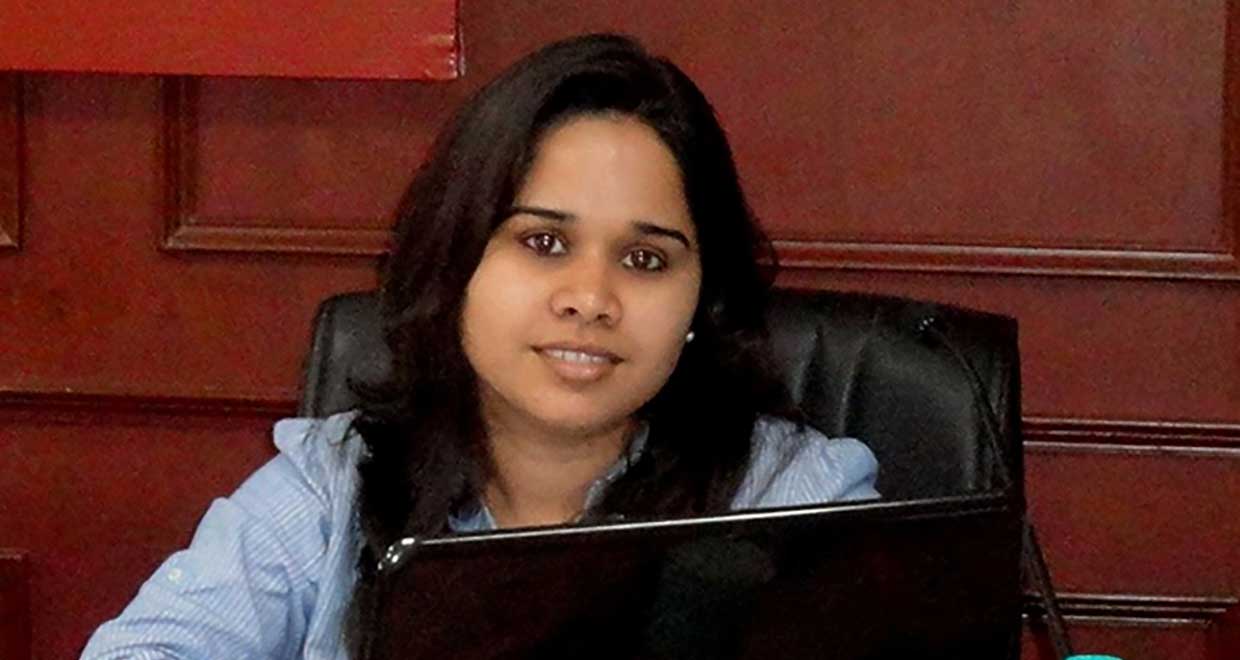
  • As India moves towards more open market, and many businesses also move outwards for opportunities exploring other markets in the world, the work for commercial disputes is bound to increase- Srikanth Hariharan, Advocate (India) and Solicitor (England and Wales)

    As India moves towards more open market, and many businesses also move outwards for opportunities exploring other markets in the world, the work for commercial disputes is bound to increase- Srikanth Hariharan, Advocate (India) and Solicitor (England and Wales)

    This interview has been published by Priyanka Karwa and The SuperLawyer Team

    With your wide range of practice areas, could you share with us how you developed such a diverse expertise in the field of law?

    I have been practicing as a litigating lawyer for just over 10 years now before the High court and National Company Law Tribunal and also International and Domestic Arbitration. I also do general corporate practice, as my firm is an authorized partner with Ras Al Khaimah Economic Zone Authority (RAKEZ) assisting companies to set up businesses in Emirate of Ras Al Khaimah.  When you are in litigation, it is very difficult to build an exclusive specialized practice from the start and it is equally very important, initially, to accept briefs or assignments in all areas of law, as it would also increase one’s horizon of knowledge and experience, which is a valuable asset. The practice at the High Court, generally involves knowledge of multiple enactments. One day you are advising and drafting a petition for interim measure in an international commercial arbitration for a client in Singapore and the next day you are representing a farmer from a remote village to obtain his just compensation in a land acquisition process from the government and the day after that you are representing a government employee in a service matter before the High Court or assisting a company to set up their business in Ras Al Khaimah. I had also advised Insurance Regulatory Development Authority on the draft of their health insurance regulations, which gave me an insight into manner of drafting of subordinate legislation and policy. I believe as  a lawyer, one should be able to any do any kind of work that the client has a requirement with initially and it is only in the later years, the market will decide one’s area of specialization. When you accept a variety of briefs, the word of mouth spreads about your competence. With the result and partly due to COVID and use of technology, I have business houses calling from remote parts of Maharashtra, Chattisgarh and West Bengal for advise on their commercial transactions and potential disputes.

    You have specialized in domestic and international commercial arbitration and insolvency and bankruptcy law. What drew you to these particular areas of law, and what experiences or cases have had the greatest impact on your career in these fields?

    My specialization in LLM program at Cambridge was in the field of International Dispute Settlement and International Commercial Litigation. Legal certainty and predictability is very important in commercial disputes, which enables businesses to make sound and informed decisions. Time is money for any business. The object of any commercial litigation is not to be to litigate and spend valuable resources on litigation but to find a way to amicably settle the dispute. It saves great amount of time and money for small and medium businesses. It is always exciting to strategize in commercial disputes as there can never be a one-stop solution for all commercial disputes. Each case is different. That is one of the exciting aspects of commercial disputes.

    Initially in my career, it was very heartening to see some small scale business owner trying to enforce his contractual rights against large corporations, as it would be a make or break situation for the small scale business and the survival depends on payments which are yet forthcoming from large businesses. Such cases give confidence and purpose to what I do. Over the years, as one’s visibility and ability to perform increases, the larger corporations also engage you in one of their disputes, perhaps keeping in mind your representations and arguments in a previous matter for small scale business owner.

    Could you tell us more about your time at Cambridge and how it shaped your career path?

    My time at Cambridge was one of the most memorable time of my life, which was enriching academically and was also a stepping stone for further opportunities. My specialization was in the field of International Dispute Settlement and International Commercial Litigation and Law of World Trade Organization. The academic environment created in Cambridge automatically propels one to perform. I was fortunate to complete my thesis in Investment Arbitration under the supervision of late Professor James Crawford, Former Judge of the International Court of Justice and secure first class in the thesis. The interactions and discussions I had with him are now part of my cherished memories. Thereafter, I also had an opportunity to assist Prof Peter Van Dan Bossche, Former Member, Appellate Body Secretariat, WTO in the drafting and research of the TRIPS Chapter of his book ‘Law and Policy of the World Trade Organization: Texts, Cases and Materials’. These little opportunities propelled my career path towards international arbitration or secure an internship with the WTO Appellate Body Secretariat.

    From your advocacy and advisory work to your internships at the World Trade Organization and Debevoise and Plimpton LLP in London, could you share some notable experiences or cases that have helped shape your approach to law?

    During my internship experience at the Appellate Body Secretariat, WTO, Geneva, I got first hand experience of how laws applied at an international level and how a member’s view or perspective has the effect on a ruling and how geo-politics also has an effect on how cases are viewed by members.  The AB Secretariat is assisted by several dispute settlement lawyers who assist the AB in preparation and research of the AB reports in the cases brought to it by member states. In one such issue, the issue was whose appeal is to be numbered first, if the appeals are filed on the same day. The nations at issue were two large economies of the world, one democratic and the other non-democratic. The representatives of both nations were at logger heads as to their appeal to be numbered first. Then it was decided by the AB that there will be a draw of lots and the first chit out of the box will have their appeal numbered first. A meeting was called for of the representatives and all the lawyers and staff were directed to be present. The next issue was who has to pick the lot. And lo behold, I was the person summoned to draw the lot as I was the junior most person in the room. I picked one. It gave me insight into how international rules are applied to see that disputes, howsoever trivial, are resolved. It gave me an insight into a realistic approact to application of the law to resolve disputes. Apart from that, I had also a chance to attend and witness meetings of the Dispute Settlement Body which are held on a regular basis and understand each member’s view point on a dispute pending before it.

    During my time at Debevoise, London, I was mostly assisting the arbitration team in investor state arbitration and international commercial arbitration. The firm was representing a nation state in a commercial arbitration dispute which was primarily with respect to construction of oil and gas pipeline in the Middle East. The case involved issues of law of nation state as well as applicability of public international law in respect of state responsibility. I had also a chance to work on a research paper as to the advantages and disadvantages of use of artificial intelligence in international arbitration. It was an open ended topic so I had a chance to be creative with thought provoking ideas.  I also had an opportunity to assist the team, which was advising a client on business integrity issues in respect of performance of contract with a contractor in a least developed country.

    As someone qualified to practice law in both India and the United Kingdom, how do you navigate the different legal systems and regulations in these jurisdictions? What challenges and opportunities do you encounter in your international legal practice?

    There are quite a few similarities between the English law and Indian law in field of commercial contracts and commercial disputes. Most of the aspects of law such as interpretation of contracts, law of damages and assessment of quantum of damages, which we see in India, have their basis in English law.

    Culturally, India is not a litigious society. As India moves towards more open market, and many businesses also move outwards for opportunities exploring other markets in the world, the work for commercial disputes is bound to increase. I see that lawyers in India are equally competent and competitive and foresee opportunities for them also increase. However, for over a century now, London continues to hold the preferred seat for arbitration and commercial litigation for cross border disputes and English law as the choice of law for such disputes, though the companies may have no physical presence in England. Possibly it is because of certainty, predictability and stability in the legal system that London has to offer. If an Indian Company has the option of engaging an English qualified Indian Lawyer, it would be easier for them in terms of comfort as well as cost. Infact,  I would like to see a foreign seated company engage a Indian law firm or an Indian lawyer for their international commercial arbitration outside of India. When it can happen in information technology services sector, why not in legal sector.

    The challenge the Indian legal system now faces, is one of pendency and effectiveness in terms of enforcement of judgements. Both reasons have grave effect on how foreign investors view the Indian Legal system to be a preferred mode of system for settlement of disputes. There are about 8-10 forums providing rights for creditor to initiate recovery proceedings like civil suit, commercial court, debt recovery tribunal, insolvency, winding up, MSME facilitation council, arbitration councils but still the last mile delivery of enforcement of the decrees before the decree holder actually sees the recoveries or monies in his account is very slow. That may create some anxiety in minds of few with respect to the effectiveness of the legal system.

    You’ve published several papers and articles in domestic and international law journals. Could you highlight one or two of your publications that you believe have had a significant impact or have generated interesting discussions within the legal community?

    Though the publications are on varied subjects, I believe the stand out to be one in field of nuclear liability, which was published in the International Energy Law Review. It was written just after the Fukushima nuclear accident.  The article was a comprehensive analysis of the international law and national laws in respect of regulations and laws with respect to nuclear safety and safeguards, rules governing the international trade in nuclear waste and rules with respect to transportation of radioactive material and the domestic and international law in respect of the liability regime in the event of nuclear accident. The object of the regulations is to attract private investments and also trade in nuclear fuel in a peaceful and environmentally sustainable manner. I had also argued that capacity building in nations and cooperation amongst nations is the primary requirement to have a peaceful mode of trade in nuclear fuel, which is essential peace, security and development of any nation state.

    You’re frequently invited to law colleges to judge moot court competitions and deliver guest lectures in corporate law and arbitration. What motivates you to engage with law students and young professionals in this manner, and what advice do you often find yourself giving to those entering the legal field?

    Moot Court competitions, guest lectures and webinars are good platforms for brain storming sessions and exchange of ideas, and is part of the learning curve and self-enquiry. It also keeps one abreast with latest updates of law and also understand perspectives, which may be difficult in regular rigmarole of litigation practice. As a lawyer, whether in litigation or general corporate practice, it is important to be updated with the new changes in the law and also updated with the latest judgements of the supreme court. Any judgement read, the judgement should be noted down in a ‘green book’ whereby it is very easy to again reference back to it when the need arises. I maintain a ‘green book’ which has a list of judgements subject wise, with the relevant citations. Though internet research is a very useful tool, it is important to have a personal database written as it is edged in one’s memory forever.  It is always important to read a wide variety of subjects apart from law, such as politics, economics, non-fiction, biographies, historical fiction, editorials which increases your horizon of knowledge, vocabulary and perspective. The more one reads on varied subjects including law the more one is confident to represent in court.

    Considering your vast experience and expertise, what advice would you like to share with fresh graduates who are just starting their careers in law? 

    The opportunities that are available to young graduates are endless. Aspire for excellence in law and never settle for mediocrity. It is important to have an open mind as to opportunities around you. There are several rural and marginal groups who lack knowledge to enforce their rights in a court of law, so that way the potential is unlimited.

    If one is planning to enter into litigation practice as a career option, it is important to bear in mind that one has to be ready for a grind which is for the long haul, and there is no option for a short term stint in litigation. The waiting period for recognition is now, perhaps, reduced to 5-7 years, which was earlier 15-20 years in the previous generation. Having said that, one is also required to put in long hours in the initial days, after which the existential and survival issues are taken care of. The variety and range of clients one meets, small, big, rich, highly educated, illiterate,  elite, poor and downtrodden and the variety of problems that one deals with in litigation and the privilege of having been given an opportunity to solve them is extremely gratifying. I do understand young graduates may have some anxiety about financial security, but they need not worry about that in litigation, as once one is established in practice, remuneration is not far away.

    Lastly, it is important to be brutally honest with your advice to the client, as the client is entitled to the best in you and in what you can offer. It is very important that in order to gain the trust of one’s client, the lawyer and client are on the same page at every step of the matter. Even if the client may not like to hear what advice you have to give, as a professional, one is required to be honest to the client.

    Get in touch with Srikanth Hariharan-

  • Chaitra Beerannavar, Research Fellow, Cambridge University, on getting a Ph.D, choosing academia, and her passion for teaching

    Chaitra Beerannavar, Research Fellow, Cambridge University, on getting a Ph.D, choosing academia, and her passion for teaching

    Chaitra Beerannavar graduated in law from  University Law College, Dharwad, in 2010. She went on to pursue her Masters from Symbiosis Law School, Pune, batch of 2012. She subsequently pursued her Ph.D from the same university. She is currently Dr. D. C. Pavate Fellow, Department of Politics and International Studies, University of Cambridge, U.K. Her area of research is “India and Its Experience with Bilateral Investment Treaties (BITs): Lessons From BRICS”.

    In this interview we speak to her about:

    • Her interest in academia
    • Being a prolific writer
    • Studying in Cambridge

    What motivated you to take up law?

    I knew many lawyers growing up. My father said I should take the judicial exam to make sure that I followed his suit. I didn’t want to do that but I really had no idea of what I did want to do, beyond choosing law because I was sure that  law as a career opens up the possibility of embarking upon one of the most dynamic and challenging careers available.


    How would you describe your time at ULC Dharwad?

    ULC Dharwad in many ways is self-contained. It focused on life outside the classroom along the themes of off-campus activities, leisure and the arts, and athletics. I had found respite from my studies in activities both solitary and social, on campus and off. During my time, it always focused on engaging with constituencies outside the law school. Alumni/ae and the local and state bar and judiciary were its obvious constituencies. We had an active clinic, which provided greater school outreach to the communities. This kind of non-lawyer support typically took the form of vouching for the law school’s value to the community.


    What are the parameters that must be considered in deciding what the next step should be after graduation?

    Opting for Masters will always broaden one’s horizon. A Masters of Law is internationally recognised, meaning you could study anywhere, and then move anywhere to make use of it. Obviously, there are sometimes limitations (you need to make sure you’ve studied law in the appropriate area). It’s a great opportunity to specialise – whether in taxation law, corporate law or something else entirely. The more obscure an area you’re interested in, the more beneficial you’ll probably find the LLM. If your interest in law lies outside of practising and more in teaching and In order to research and teach about law, you’ll almost certainly need an LLM.

    But when it comes choosing the right one, Students have to decide what matters to them:  scholarly caliber of the faculty?  Numerical credentials of their fellow students?  Clerkships?  Corporate law jobs?  They can narrow down the list of schools to which they’ve been accepted to those they ought to visit and investigate for themselves to see if they’re a good fit for their masters.

    Could you share with our readers some insight on how one can excel in academics and co-curricular activities alike?

    (Chaitra has been awarded with several gold medals right from her LLB days up to her Master’s including several scholarships.)

    Being successful means acknowledging the challenges, so you can deal with them the best that you can before you experience them. Perhaps the key to a successful academic experience is winning the law school mind game. Law school success can be defined in many ways—graduating, getting a job, good grades, creating lifelong relationships. Grades are just part of the equation. If you do not get straight A’s, there are plenty of other ways to make yourself an attractive job applicant. One way to move past bad grades is to acquire practical skills and practical experience. Your GPA is one line on your resume—you need more than that to stand out. If you can create a niche within an area of law—go for it. Independent research and writing classes are a great way to delve into an area that is not covered in class. If you are on law review or a journal, write about a hot-topic in an emerging area of law.


    What was your Ph.D thesis on?

    My Master and Ph.D. theses were based on the research problem of contemporary concern. My Ph.D thesis was on testing the feasibility of Reverse Mergers in Indian capital market. The study is of intricate nature which makes comparative analysis of Reverse Merger with IPO methods.


    When did you decide that teaching was your passion?

    My interest in becoming a law professor began while working as a Research Scholar at Symbiosis Law School, Pune. During my Ph.D., my rigourous doctrinal courses covering a number of fields, serving on law oriented student law journals and in depth intellectual and research relationship with my professors attracted me towards law teaching. Most of all, the relationships students form with their professors allow students to observe how to become and thrive as scholars.


    What do you enjoy most about teaching?

    As a law teacher, I enjoy thinking and talking about the law and working to make the law better and more equitable. Teaching at one’s alma mater can be difficult. Former professors become your colleagues, and you have to overcome the reluctance to challenge or contradict your mentors. You also have to confront suspicions about academic “incest” from outsiders. For me, the experience has been mostly positive.


    What tips would you give students and young lawyers who are inclined to research and academic writing?

    Throughout your career as a lawyer, you’ll be judged professionally on two main things: your interpersonal skills and your writing. Writing a paper engages so much of the lawyer’s art that no other predictor of likely success on the job comes close. A well-written, well-researched, thoughtful paper can clinch that law firm job or clerkship. It is indispensable if you aim to teach. Your pre-law-school writing experience and your first-year writing class will help prepare you for it, but only partly. It’s not easy to create an original scholarly work that contributes to our understanding of the law. So take advanced legal research. Most law schools offer some sort of advanced or specialized legal research course as an elective. But the truth is that there’s never enough time in a legal research class to cover everything. So have continuity in your publications.


    What is the academic environment like at the University of Cambridge? 

    I was a Pavate Fellow at Department of Politics and International Studies, University of Cambridge and also a Senior Member of Sydney Sussex College, UK in the year 2016.

    As far as the fellowship was concerned, it delivered in most aspects. I was adequately trained to read legal and economic articles critically and, write extended pieces coherently and persuasively. Supervisions at the department were also, for the large part, of high quality and I received close guidance from dedicated supervisors and my mentor Prof. James Mayall, Emeritus Sir Patrick Sheehy Professor of International Relations, University of Cambridge, UK.

    Cambridge has a rigid structure, which should, perhaps, come as no surprise, given how steeped in tradition Cambridge is. It tends to focus its course material in such a way that the student is more inclined towards academic thinking. If I could summarise my experience at Cambridge in three words, they would be ‘driven, fulfilling, and challenged’. It was during that time when I truly learnt how to discuss current legal issues and challenge opinions in my readings, essays and thesis, just like any other professional jurist.

    And as far as social life is concerned, I would say that Cambridge was a humbling eye-opener for me. I had the fortune of being friends with some internationally known jurists and scientists at Cambridge. I met some of the most brilliant (in all senses of the word, not just that which extends to intellectual prowess) people in my life and built strong friendships and networks with them.


    Did you have a mentor or guide during the formative years of your career? 

    The single most important thing you can do when you are at a law school is to find and work with a mentor. Ideally, this will be a Professor who teaches you the practice, both substantively and ethically, and serves as a role model.

    When I chose Symbiosis Law School, Pune, it lead me, finally, to Prof.Dr. Shashikala Gurpur, (Fulbright Scholar, Director and Dean of Symbiosis Law School, Pune) who is a legend in Indian Legal academia. This was one of the most impactful mentor relationships that I would ever have. I enjoyed each of her classes immensely, while also learning a lot. That is the greatest gift a professor can give a student, and Professor Gurpur did it repeatedly, not only for me but for so many others over so many years. Professor Gurpur has not only been and remains  a great mentor. I’ve had other great mentors throughout my career, but she was really the first and has guided my adult professional life. She is a tough act to follow but leaves a great legacy, which includes a standard for excellence and dedication that all Law students and professors can learn from.

    Chaitra with Prof. James Mayall, Emeritus Sir Patrick Sheehy Professor of International Relations, University of Cambridge, UK, one of the senior most professors at POLIS, Cambridge, and her mentor and guide.


    What are the challenges you have faced in building up your career as it stands today? 

    It required modest adjustments in what we teach and why we teach it. one of the best ways to learn a field is to teach it and engage in basic research, and this should apply to everyone getting a doctorate in law.

    Down the line, would want peruse my legal research and writing in a more prominent way.

    What books, judgements that you have read would you say have played an integral role in shaping your legal philosophy?

    My early days at law school were highly influenced by many legal philosophers who left their indelible mark on shaping rule of law. As a student of law it is very important to critically examine existing legal philosophies and decisions of courts and legislations from the point of philosophic principles. Most of such readings included William Blackstone’s Commentaries on the Laws of England, John Austin’s theory of sovereign law, Lon Fuller’s The Morality of Law, and Palkiwala’s We the People and We the Nation and few judgements which made the initial law school days more thrilling were that of National Judicial Appointments Commission judgment, basic structure etc.


    Do you feel that law schools have been successful in producing socially relevant lawyers and researchers? 

    Law schools in India have an obligation to produce socially relevant lawyers and researchers. A long way to go in this direction. The role of law schools and legal education must change with new realities of globalization. Most of the Law schools in India are limited in preparing law students to become lawyers, judges, or some other type of legal professional. But even this more limited perspective should recognize the contemporary environment and the coming changes


    What would be your parting message to our readers?

    My experience at law school was always educational. I wouldn’t want to trade those experiences or forget those lessons — they’ve shaped the writer, teacher, friend, and woman I am today.

    Law school is a process of self-discovery. Develop patience to arrive at what you are passionate about.


  • Vishavjeet Chaudhary, Assistant Professor, Jindal Global Law School and Barrister (Inner Temple) on LL.M from Cambridge and academic research

    Vishavjeet Chaudhary, Assistant Professor, Jindal Global Law School and Barrister (Inner Temple) on LL.M from Cambridge and academic research

    Vishavjeet Chaudhary graduated in law from University of Kent, Canterbury in 2011 and was called to the Bar in 2012. He went on to complete his Masters’ degree from University of Cambridge in 2013. During his time there, he pursued Criminal Justice, Philosophy of Criminal Law, History of Civil and Criminal Law, and Jurisprudence. Aside from his legal career, he is interested in Human Rights and their protection, poverty alleviation, Social Services, and Economic Empowerment.

    He is a Barrister (Inner Temple) and is currently working as an Assistant Professor at O.P. Jindal Global University’s Jindal Global Law School where he is also the Assistant Director of the Centre for Penology, Criminal Justice and Police Studies.

    In this interview, Vishavjeet talks about: –

    • What made him pursue a legal career;
    • His experience while studying in the UK;
    • His focus on pro-bono and Human Rights related work;
    • The importance of Public Speaking; and
    • The difference between the UK and India with respect to legal systems.


    How would you like to introduce yourself to our readers?

    I am a Barrister, currently working as an Assistant Professor. My areas of interest are criminal law, constitutional law and human rights. I am also a very keen traveller, horse rider and agriculturist!


    What made you get into the legal practice?

    I knew that I wanted to be a lawyer when I was five years old! It partly ran in the family but my decision was not influenced by that in the slightest.  Other than the odd (I have been into full time agriculture for some time!), this resolve has been unwavering. I think one can make a genuine difference in this profession as law is something that touches everyone’s life in one way or the other. Second, this profession allows me to pursue my interests- intellectual endeavours, public speaking and interacting with a wide variety of people. Third, the independence of this area really attracted me.


    vishavjeet-chaudhary-2

    What inspired you to pursue your LL.M at University of Cambridge?

    I chose my undergraduate university based on how liberal it was. The university allowed for tremendously wide multidisciplinary studies. A lot of my tutors there very kindly encouraged me to pursue Masters in Cambridge to gain deeper understanding of the law. Most of my courses were either in jurisprudence, history or crime.

    What made you focus primarily on Criminal Law?

    I find criminal law fascinating- this is an area where all facets of human social interaction are at play. It is also an area that studies the depths of human emotions- passions, insecurities (no pun), deceit and weakness. Human Rights play a pivotal role as well. As I was interested in all these areas, I focused on criminal law.


    While at University, what co-curricular and extra-curricular activities, if any, did you partake in?

    I gave everything a shot – from debating and mooting to Polo and American Football!


    How did they benefit your performance at University, academic or otherwise?

    Intellectual activities like debating helped me in organising my thoughts, developing public speaking skills and communicating my point in a clear and persuasive manner. Sports and other activities helped me in relaxing and letting off steam. Both were also great ways to socialise and get a well-rounded education.


    What does your work for the Centre for Penology, Criminal Justice and Police Studies entail? What purpose does this Centre serve?

    (Vishavjeet is currently serving as the Assistant Director of the Centre for Penology, Criminal Justice and Police Studies at the prestigious Jindal Global Law School)

    The CPCJPS offers cutting edge inter-disciplinary research in the areas such as victim protection, reparation, juvenile justice, police reforms, technically sound training in human rights complaint law enforcement and investigation. Our aim is to encourage dialogue between different players of the criminal justice system to contribute to this area.


    vishavjeet-chaudhary-1

    What made you get interested in Human RIghts? What is the importance of pro-bono work?

    (Vishavjeet has shown keen interest in protection of Human Rights, Social Services and pro-bono work since his University days)

    I feel a big part of human life is to help. I do not say there is anything heroic about that- someone has to do it! I also find it intensely satisfying and enriching to be able to make a difference. There are few things half as rewarding as putting your knowledge to good use for betterment, no matter how small the change!


    How is the role of a Barrister any different from that of an advocate in Indian Courts?

    I was called to the Bar by the Inner Temple. England and Wales have a dual system- a distinction between Barristers and Solicitors. To crudely put it and to crunch centuries of history – Barristers do more advocacy and solicitors do more paper-work, conveyancing, etc.


    What inspirations can the Indian justice system draw from that followed in UK?

    vishavjeet-chaudhary-3Our Justice System is excellent considering everyday challenges. We do however need to urgently address issues like delays, transparency and the occasional malpractice if the system is to enjoy legitimacy and authority. All sections- judges, lawyers, the civil society- all of us need to put our heads together and work out solutions that are sustainable.

     

    How important are activities like Public Speaking and Debating for a law student?

    (During his time at Kent, Vishavjeet was the Vice – President and the Co- Founder of the Kent Debating Society. Further, he was a member of the Speakers’ Committee at Cambridge and has always stressed on the importance of public speaking)

    Exceptionally important I think. The perception is that if you do not want to get into litigation, you do not necessarily need to train as a public speaker. Public speaking regardless helps in developing wit, confidence, succinctness, persuasive knack and the ability to think on your feet. I feel that these are essential skills for a lawyer, irrespective of the area of practice. There certainly are other ways to develop these, but public speaking is definitely one of the best!


    What got you interested in interdisciplinary studies with respect to law? How do you intend on connecting the various disciplines?

    (One of Vishavjeet’s primary interests is appreciating law as an interdisciplinary subject by relating it to other disciplines like Philosphy, Literature and History)

    I feel we should not approach law as an overly technical subject. Borrowing from other areas  like literature and philosophy helps tremendously in broadening horizons and innovating. It is great to break the drudgery sometimes as well!


    From your experience of teaching, what would you like to say about the newer generations of law students? How would you say their education and way of life differs from yours as a student?

    The similarities are striking! Students today have more access (and more distractions) depending on how you use the internet, ‘applications’ and the like. I also feel they make more calculated and informed choices now.


    Finally, what would be your message to our readers?

    Please ensure you are making the best of each day right from day one. Time flies in college! Do talk to as many people as you possibly can, try as many new things as you can and have fun! Learn the basics of law and principles behind it to create strong foundations. Some degree of stress is inevitable, but do not overly stress and remember to enjoy college life! Good luck!

  • Shriya Maini on choosing Oxford over Cambridge, Scholarships and the role of higher studies in Litigation

    Shriya Maini on choosing Oxford over Cambridge, Scholarships and the role of higher studies in Litigation

    Shriya Maini graduated first in class from Gujarat National Law University, Gandhinagar in 2013 with four gold medals, including that of Best Student. Thereafter, she joined the Litigation department of Amarchand Mangaldas & Suresh A. Shroff, New Delhi as an Associate in their Dispute Resolution Team. After working there for a few months, she paid heed to her calling and is pursuing the Bachelor of Civil Law Programme from Oxford on a full scholarship. In this interview, she talks about the difference in pedagogy between Indian and Foreign institutes and the relevancy of a traditional BCL degree for litigation practice.

    We took this opportunity to ask her about:

    • Experience working in the litigation department of Amarchand & Mangaldas
    • Importance of Internships
    • Choosing BCL from Oxford over LL.M from Cambridge
    • Writing a proper SOP for an LL.M
    • Applying for different types of Scholarships for high studies


    Tell us a bit about yourself. What motivated you to choose law for a career?

    If I were to answer this question absolutely honestly, I never really wanted to study law. Though, in retrospect, my family lineage reveals a close legal association (my grandfather retired from the Indian Home Ministry and my father is a practising lawyer), I don’t think I was ever motivated to make a career out of law as such. I was busy exploring the scientific world and was rather intrigued by it. I faired well in my A Levels and decided to follow my mother’s footsteps and pursue a career in medicine. Little did I know that future had something else in store for me! Over one of the many dinner table conversations, my grandfather casually mentioned how a centralized national level entrance examination called CLAT was being organized for the very first time for direct admissions to law school. I did not even know of the existence of National Law Universities until then and was reading their names for the first time on the examination brochure. To me this seemed very alluring, as a back up option, in the event that I failed my pre-medical tests. Besides, the examination (fortunately) had no negative marking. A week later, I was walked out of the hall, immensely proud of the fact that I had attempted every question on board, correct or not. Once the results came out, GNLU fell into my lap. I suppose I got lucky with my guesswork! Being a devoted daddy’s girl, I decided not to walk out on him, packed my bags and took the plunge. Hence, law happened purely by chance and not choice.


    How did you plan your internships? Were they all meticulously planned or did they just happen to you as you went through law school? Any tips you would like to share with people who want to intern at top-notch firms?

    As my vita indicates, I didn’t have a strict ‘to-be followed’ normative pattern of internships. However, I consistently endeavoured to intern at each and every place that I possibly could, be it chambers or law firms. I was sure that wherever I interned, I would substantially gain technical proficiency for my knowledge and experience, both were limited. In effect, I knew I had nothing to lose. Hence, on one hand, I thoroughly explored the corridors of the Supreme Court and Delhi High Court and on the other, I vacationed every year with commercial law firms, such as Amarchand Mangaldas & Suresh A. Shroff, Dua Associates and Jyoti Sagar Associates. Such a wide-range of internship opportunities helped me understand the everyday working and nuances of laws, be it civil, criminal or commercial.

    In the penultimate year of law school, I realized that my calling was only in Court. I was drawn towards litigation and the internships most definitely, opened me to a whole new world. I interned twice in the litigation team of Amarchand Mangaldas & Suresh A. Shroff, New Delhi under the guidance and supervision of Mr. V.P.Singh, one of the most dynamic partners of the firm. I had a fantastic experience interning with him. He had a galaxy of juniors assisting him who made the experience even more worthwhile.

    Likewise, by the end of third year, I advise all law students to have a fair idea of what they want to do. I believe the last two years are very crucial when it comes to painting career silhouettes, the so called deal makers or breakers. Hence, I strongly advise that if you haven’t already had some form of internship exposure, now is the time to get that on your CV. It would be a good idea to split the law school tenure of five years into a 3+2 structure and avidly apply for varied internship openings until the third year. Explore what you enjoy, much like the hit and trial method. I would also advise all law students to acquaint themselves with the backgrounds of firms, judges, lawyers and wherever they are making Internship applications, so that they can make an informed choice about joining them. The importance of a tailored CV cannot and must not be underestimated at any cost. I would also caution that the fourth and fifth year, being most important could be channelized towards improving one’s CGPA as much as possible. I can now affirm that though top-notch firms do not solely and specifically look for a high GPA, but it makes for a fine impression if your CGPA is more than respectable. It gives you that ‘added-edge’.


    Right after graduation you got to join the Litigation team of AMSS. How did the appointment take place?

    I secured a job with AMSS all thanks to GNLU’s Committee on Recruitment Affairs (CRA). As a core college body, CRA annually facilitates students and recruiters, on a rolling basis for on as well as off campus recruitments. I was one of the few lucky ones to grab an internship with the Litigation Team of AMSS, in my penultimate year of graduation. The selection was purely based on class rank. I vacationed once again during the winters and six months later, on the College’s zero day, I was offered a job in their Dispute Resolution Team (Litigation and Arbitration).


    What all came under your responsibility at AMSS? How was your first visit to court?

    I was rather lucky to work with some of the most hardworking people in the litigation practice at AMSS. My area of work encompassed commercial litigation and arbitration. Within the team, our supervising partner had allotted a couple of matters to each one of us. I was given an opportunity to work on an international commercial arbitration at a very early stage in my career. I worked under the leadership of some of the best people in the fraternity and handled these matters from scuff. I also drafted the first cuts of Rejoinders for a matter. On a lighter note, if I could pick one responsibility that truly came my way at AMSS, it was drafting e-mails. I learnt the significant skill of ‘written communication’, its necessity and nuances. Though challenging and interesting, these months made me actively re-think my options and pursuits. While I spent hours drafting legal documents and e-mails before a bare computer screen, some part of me began to miss the ambience and actual working of a Courtroom.


    Is it true that it is not possible to get a job in a top tier law firm without top grades and being in the top of the class?

    I am often asked this question. Being brutally honest, top tier law firms often filter students on the basis of class ranks and/or scores. Good grades most definitely matter, at least while securing internships. Unless you are offered a PPO based on your performance during an internship, even during recruitment, most top law firms are bound to take grades most seriously. This is purely due to the fact that a high CGPA depicts an academically consistent upward moving graph. However, I believe that moots and publications could also be an equally essential pointer when it comes to specialized interests. By this I mean that for a law student specifically interested in International Taxation, a paper publication or mooting experience at Nani Palkhiwala could silently speak volumes during a recruitment interview.


    What prompted you to decide to leave the largest law firm and venture out at as a sole practitioner?

    It was the same year, infact within a span of five months that I decided to leave AMSS and venture into entrepreneurial practice. Amidst sleepless nights and long office hours, I was at crossroads with my passion for ‘learning and living the law’. I would often feel academically stagnated while making document summaries, indexing compilations or drafting e-mails. One of those mundane Monday mornings when I had to report to the office at 8, I turned the wheel to reach Court instead. Yes, I admit that it was rather drastic and bold a call to take at such an early point of my age and career. Friends and family tried convincing me otherwise cautioning how hard-hitting litigation practice could be.

    Had it not been for the latter half of the year when I practised at the Supreme Court and Delhi High Court, I would not have been able to secure a scholarship for the BCL at Oxford. Hence, I firmly believe if you are true to your work, you shall most definitely reap its results, if not today then tomorrow.


    Would you say being from a family of lawyers helped you in forming your practice? How did you find your mentor? How important is a mentor in the field of litigation?

    After a brief stint at AMSS, I devoted the next 7 months to independent legal practice. It would be wrong for me to shy away from admitting that my father was the sole reason I could pivot my practice from the position at which I had left AMSS. I was fortunate to land a few cases, which were handed over to me by my father. They were a mixed bag of both, civil and criminal. He gave me a tiny working chair in the chamber apart from full freedom to not only strategize, draft and file matters but also argue them. Before I knew it, I was running a mini-office with 4-5 odd matters.

    So, I didn’t have to find a mentor! He was right there, my father. I think it is very important to have a mentor who would guide you through the myriad experiences of life, especially when we make the strategic shift from law school to the real world of practice, which can be very demanding. The two stages are immensely different and challenging in more ways than one. Law school demands academic mentoring where a guide’s role may be limited to ensuring his student performs well and steers on the right path of intelligible growth. However, at the professional level, especially in the field of litigation which is plagued with cut throat competition, it is rather difficult to perform without a mentor. My father would discuss each and every line of a case with me and always shadow me in Court, even if I was the one arguing. To him, the sole rules of survival in litigation practice were to consistently work hard, be true to your profession and never turn a client back. I hope the same would benefit some of you law students as well.


    Which universities did you apply for LL.M? How did you go about choosing which college to go to for your LL.M.? Did you ever consider Indian colleges for LL.M. now that they are also offering one-year course?

    When I began to practice, I realized that to deal with the complexity of legal and social issues, a mere Bachelors degree would not suffice. For law to evolve, it had to be understood and reasoned, not imitated and blindly followed. I decided to pursue my intellectual drive and made applications to three U.K. law Universities, including Oxford and Cambridge. I specifically did not apply to any of the U.S. law colleges for I was determined to stick to a common law background. It is ironical that now I read a lot of American case-laws, in particular contrasting the civil law approaches as opposed to the common law ones. Within the U.K., my most obvious choice was the Ox-bridge duo.

    Though I didn’t personally consider an Indian LL.M, I am sure it has much to offer. However, from my limited experience of studying my undergraduate degree at an Indian law school, I firmly believe that in terms of teaching methodology and content, we still have a long way to go. I understand that cost could be a pinching factor, but an international exposure with the most intelligent minds of the world is totally worth it.


    How did you plan your SoP? Please share your SoP with us. Please share some tips for a successful application.

    I’d like to first answer the second limb of the question. There is no set recipe of making a successful LL.M Application. A good idea could be to first zero down on a country and then pick colleges accordingly, depending upon your subject interest and of course, University reputation. You could easily find U.K. University ratings on weblinks such as http://www.topuniversities.com/university-rankings/university-subject-rankings/2014/law-legal-studies.

    These could be indeed helpful to begin with. Another piece of advice would be to filter about 5 Universities and make Applications to only those. On a personal note, I spoke to a lot of people, discussing and debating at length how the BCL was different from a conventional LL.M. Hence, I believe interacting with seniors could most definitely be an enlightening experience to help you choose a college.

    Coming to first part of the question now, an SoP should exactly be structured on the lines of the questions you have put forth in this interview. To elucidate, an SoP must explain why you’re applying to a particular University and not any other on the list. Akin matrimonial ads, SoPs in effect are intended to sell oneself in more ways than one, preferably subtle. A good head start could be to divide the SoP into three paragraphs, the first being a general introduction about who you are, where you’re coming from and what you do. The second could be about what you want to do in the future, perhaps stating a subject focus. I also suggest you add a personal touch to an SoP and include a life story or specific incident reasoning how the same prompted you to take up higher studies. For instance, there are a couple of people I know who wanted to specialize in Medical Law and Ethics and they applied to Oxford, describing at length in their SoP a heart wrenching medical story of losing a loved one.

    Another important thing to keep in mind is tailoring the SoP to suit each college. For instance, Oxford SoP must not run beyond two pages. So, an SoP for LSE or Cambridge could be fairly descriptive and detailed, but an Oxford SoP must be very crisp and coherent. You could end your SoP with a paragraph about how you could contribute as an Asian lawyer in the room.

    And yes, I would be more than willing to share my SoP with you all.

    Click here to download the Statement of Purpose


    You had decided to pursue BCL from Oxford University over Cambridge. Any specific reasons for that? How relevant would be a traditional BCL degree for your litigation practice?

    Yes, I was fortunate to have been admitted to both, the BCL (Bachelor of Civil Law) at Oxford and LL.M (Masters in Law) at Cambridge. After thorough deliberation and critical evaluation, I decided to pick the BCL over the Cambridge LL.M. Knowing that it is one of the most rigorous taught Masters in the world, I decided to challenge myself yet again. While the Cambridge LL.M is often picked by those interested in International Law or specifically Corporate Law, the Oxford BCL is definitely more litigation oriented. Hence, I naturally picked the BCL. There is another slightly less known course called the MLF (Masters in Law and Finance) which is jointly taught by the School of Business and Law at Oxford and those of you who are keen in a commerce background could definitely have a look at that.

    Another reason why I chose the BCL was the unique teaching method of Tutorials. Every term (we have trimesters at Oxford), our tutor discusses the erstwhile seminars and lectures with each and every student, in person, in effect clarifying and revising the course content. Students are given a list of questions prior to every tutorial, of which they must attempt one in writing and submit to their tutor a day before the personal session. Such an exercise is immensely helpful for students are well prepared to answer questions well in advance of the examinations. The tutorial system of teaching is unique to Oxford and hence, I would advertise the BCL even more strongly.

    I would be better equipped to answer the second question a year later. However, from hearsay sources and personal interaction with ex-BCL graduates, I can assure you all that the degree most definitely gives you a cutting edge, in terms of legal knowledge and presentation. It pushes you to think out of the box and to some extent challenge the existing laws, aimed at the formulation of ground-breaking legal arguments. Hence, the precedent based litigation practice in India could benefit multi-folds from a holistic and global degree, such as the BCL.


    shriya-maini-2

    What should one do differently in college if he wants to pursue higher studies after graduation? Would you suggest having a brief work experience before applying for LL.M?

    There is nothing particularly different that one must do as a prospective Masters student. However, in order to get a Scholarship/funding, it is essential that students keep the following in mind. Apart from consistently studying hard and smart for five years, maintaining high CGPAs and participating in a few moots or ensuring a couple of publications, one should apply well in advance if he or she intends to pursue higher studies. Applications open a year prior to admissions and in the U.K. Universities List, Cambridge is the first deadline to be met. Next is Oxford and then the others.

    Each Application has a scholarship column which all Applicants must tick in the affirmative. These ensure that wherever possible, University/college funding would automatically consider the Applicant’s request for scholarship or fees waiver. I was fortunate to have received the Dr Mrs Ambriti Salve Scholarship 2014-15 and the Bodh Raj Sawhny Memorial Trust Scholarship 2014-15 from the University of Oxford, Exeter College and hence, my studies are fully funded. In a nutshell, I would advice all law students to try and procure scholarships, researching well in advance the criteria for each, be it Inlaks, Aga Khan or the Commonwealth and accordingly, tailor your CV during law school.

    I personally believe a year’s work experience was the sole reason for me having made the cut for the Salve Scholarship. I definitely feel more confident, relaxed and sure of myself than I was when I stepped fresh out of law school. The whole Oxford experience could rather be very overwhelming and emotionally take a toll on someone who, fresh out of law school has not ventured into the real world so to say.


    Please tell us about how you applied to these abovementioned scholarships and ultimately got selected for them. What according to you is a good profile for scholarships like these?

    I was fortunate to have received the Dr. Mrs. Ambriti Salve Scholarship and Bodh Raj Sawhny Memorial Trust scholarship for the academic year 2014-15. Following a generous gift made by Mr Harish Salve, a Friend of Exeter College, University of Oxford, the scholarship is awarded each year on the basis of academic excellence to an Indian student reading for the BCL. The Salve Scholarship fully funds my tuition fees, besides granting me a cover for my living expenses.

    No, I did not make any separate Applications for the abovementioned scholarships. In fact, both of them are College linked, i.e. awarded by the Exeter College, University of Oxford. For such scholarships, you just have to tick the relevant box (affirming you want any and all type of funding available at Oxford) within the main Application that you make for the BCL. However, it would be a good idea to browse through the College websites and have a look at specific scholarships, course wise. These could require a separate application or additional documents. For instance, a useful link where you all could start from would be the official webpage of Oxford enumerating the funding options available –

    http://www.law.ox.ac.uk/postgraduate/scholarships.php.

    There is also a similar provision on the Cambridge GRADSAF for Commonwealth and Gates Scholarships, which you must apply for. No separate Application (only another SoP) is required for the same.

    The other kinds of scholarships are the ones offered by Indian organizations and donor trusts, such as Aga Khan, Narotam Sekhsaria etc. These are also worth applying for but require separate Applications to be made once you have received your offer of admission. Hence, call for such scholarships are usually doled out after March end.

    I guess I was lucky and blessed to have received such a mammoth funding award. I cannot pin point and say how the selection process exactly works but I could share with you some indicators, which could be of help.

    Firstly, it is necessary to have good grades and by this I mean, try and maintain a class rank within the first three of your batch. Secondly, it would be a good idea to pursue extra-circulars such as moots and publications in college. These look very attractive on a scholarship profile. I would also suggest that if the scholarship Application requires a write-up, play up your ‘need’ for funds factor.

    Lastly, you must be able to demonstrate why you wish to undertake studies in a particular subject specific to a College/University. I think preparing answers to these questions would be more than sufficient to organically create a decent scholarship profile.


    Given a chance to turn back the clock would you have done anything differently from what you’ve done?

    No doubt, I have taken some rather risky decisions to pursue what I truly believed in and felt was right for me then. However, I am very satisfied with each of those and stand by them even today. Having tasted the flavours of the commercial world, I am now actively involved in academia, living the law much closer than I could ever imagine. I am thoroughly enjoying and doing what I best like to – ‘studying’. Hence, even if I was given a hundred chances to turn the clock back and do things differently, I’d never do so.


    Lastly, what would be your message to a law student who is yet to decide his/her career?

    My only message to a law student who is at the brink of deciding his/her career would be to have the courage to follow your heart and grit to pull off your plan once you decide to do something different. Just because one of the paths at the crossroad appears financially alluring, it could prove to be rather professionally unpleasant. With age on your side, give yourself a complete gamut of experiences that a lawyer could have without regretting a single decision whatsoever.


    Photo Credits: Pratibimb

  • Nikhil Singal, Principal Associate at LKS, on all about a career in Tax Law and an MCL from Cambridge

    Nikhil Singal, Principal Associate at LKS, on all about a career in Tax Law and an MCL from Cambridge

    Nikhil K. Singal graduated from ILS, Pune in 2010. Soon after Graduation he started working at LakshmiKumaran and Sridharan as an Associate and then went on to pursue Masters in Corporate Law from the University of Cambridge, U.K. He is also a Company Secretary holding a Licentiate membership of the Institute of Company Secretaries of India. After returning back to India, he joined LKS as a Senior Associate and was promoted to Principal Associate in May, 2014.

    In this interview he talks about:

    • Law School experience at University of Cambridge
    • Interest and expertise in taxation law
    • Growing from an Associate to Principal Associate at LKS


    How would you like to introduce yourself to our readers who are mainly law students and lawyers?

    Hi! I’m Nikhil Singal and I’m currently associated with the Delhi office of Lakshmikumaran&Sridharan (LKS) as a Principal Associate. I graduated from ILS Law College in 2010 and joined LKS right after college. It has been a good journey so far, and I hope it remains the same in the future!

    Over the years, I’ve had the opportunity to work in different teams, handle some very exciting assignments, represent some of the biggest clients, as well as feel good about my personal growth and development. Currently, I’m handling work related to corporate advisory and commercial litigation, along with handling some important tax matters. For a brief period from 2012-2013, I went to pursue my Masters in Corporate Law (MCL) from the University of Cambridge, after which I came back and joined LKS again.

    As a lawyer, my approach has always been to expand my horizon and learn new things. I don’t like to restrict myself to one area of law or one domain. Of course, I understand that it is physically impossible to do everything, or to master everything, and I’m not aiming for that. Instead, I aim to diversify as much as possible and only after a few more years of practice, I will start specializing in a particular field. For me, change is necessary. It gives me a challenge to keep going and to keep exploring. Fortunately, LKS has been very supportive in this approach. As I mentioned, over the years, I’ve worked in different laterals of the firm and in different areas of law. So whether it be work relating to service tax, income tax, contract drafting, transactional work or dispute resolution in any forum in this country, I can very happily do it!


    When and how did you decide to study law? Which universities did you consider for your legal studies? How did you settle for ILS, Pune?

    I actually didn’t decide to study law. As a kid, I was always interested in doing something related to science. I spent three years in Tanzania where my father was posted as a diplomat. I studied in an international school there and loved their teaching approach. I loved all the science subjects. When I came back to India, I found it difficult to cram non-application based science subjects from voluminous books. That is not what I wanted. So I pursued commerce and thought I’ll end up doing Economics from a good college in Delhi. When I finished schooling in 2005, I had an option of going to Hansraj or Venkateshwara College in Delhi. At that time, my father also insisted that I fill up the forms for ILS and Symbiosis, Pune. So I did!

    Ultimately, I had all four options in my pocket and had to make a choice. After much counselling at home, I decided to go ahead with ILS. My parents persuaded me that law is a great field, and with my analytical approach, I would be happier being a lawyer. So honestly, the credit goes to my parents! Nevertheless, I haven’t regretted the choices I’ve made. ILS is a great college, has a great legacy, and personally I believe it was the right choice for me. I enjoy being a lawyer, and I owe a lot to ILS for who I am today.


    Do you think being from a non-NLU has ever proved to be a hindrance for you? Many non-NLU students complain that they feel being discriminated against during career opportunities. What has been your experience?

    Not really. I think what matters the most is what and whom you let influence you, no matter which college it is. ILS has the best of reputation, the best of faculty, and a very good mix of academic and non-academic focus. I admit that everything is not positive, but that is the same in every college or university. In ILS, I met some of the brightest individuals, some of the most dynamic, some radical, some conservative. All of them are doing very well right now, and not all of them have chosen to remain a lawyer. Personally, I believe if you can prove your worth, you eliminate, or substantially reduce your chances of discrimination. This is how my experience has been. I’ve met many Partners from firms in India as well as from London and New York, and all of them know and appreciate ILS as an institution.


    After graduating from ILS, you joined LakshmiKumaran and Sridharan as an Associate. How did the appointment take place? What comprised your work at LKS?

    I did two internships at LKS. The first internship was in the international trade division and the next one was in the service tax division where I focussed on GST. Both my internships were very fruitful. They liked my work and by the end of the second internship, I was offered a pre-placement offer. The placements in college had yet not started, so I was one of the first ones in my batch to get a job! I took the offer knowing very well that the work will be mostly tax oriented, of which I had very little knowledge (though it was interesting indeed).

    Initially, I was assigned to the tax litigation team and focussed on Service Tax and VAT matters. I did this for about a year. It was a good learning experience as the service tax law is still nascent and evolving. I dealt with some very challenging cases, and as any lawyer, there was a lot of grinding! But there was a lot of focus on knowledge enhancement and understanding the working of the law, rather than just doing something mechanically.

    In my second year of work, an option was given to the Associates to opt for shifting in other practices of the firm. I was the only one who opted for a change and I opted for Direct Tax where I spent another year. This was a great opportunity and a great learning experience. I was also doing some service tax work alongside. By doing this, I got the opportunity to understand Indian tax scenario holistically and in totality. This also helped me to understand why and how many commercial decisions are made in businesses around the world. On many matters, I worked directly with Mr. V. Lakshmikumaran and other Senior Partners and all of this ultimately paved my way to get to Cambridge to do my Masters!


    nikhil-singal-2

    Thereafter you went on to pursue Masters in Corporate law from University of Cambridge. Was it a professional requirement to grow expertise in your career? How would you describe your experience as?

    As I mentioned, my tax experience helped me to understand the working of businesses and the reasoning behind various commercial decisions being taken. I was very interested in understanding the rationale behind these business decisions as well as understanding the legal factors which affect the functioning of these businesses. I thought the best way to do this is to study further, and apply that knowledge in my working. I discussed this with Mr. Lakshmikumaran and though this was not a professional requirement, he encouraged me to apply and study further. I thought the time was right and with some professional experience, I went ahead to apply in select Universities in UK and US.

    Cambridge offered me the perfect course and the perfect platform for what I wanted. Ever since I was in ILS, I had it in my mind that I wanted to study in Cambridge for at least a year, and this became a reality! My year at Cambridge was one of the best years I’ve had. Every day was a learning experience, and I met some of the most intelligent and fun loving people from around the world. I don’t think I need to say anything about the quality of education and the faculty etc, as the reputation of Cambridge speaks for itself.

    The course was rigorous, VERY rigorous! The good thing about the course was its practicality. Many of the modules were taught by Barristers and Partners of law firms in London. We worked on live deals and cases. Not only was there a lot of personal development from Cambridge, but this course also greatly helped my transition to being a commercial lawyer, along with having a strong tax background.


    Thereafter you joined LKS as a Senior Associate and currently work as a Principal Associate there. What does it take to be appointed as a Senior Associate at LKS at that stage? How did your promotion happen?

    I had actually never given my resignation in LKS before going to Cambridge. My one year at Cambridge was considered as part of my job profile and was counted towards my work experience. LKS was very considerate in doing this. I met Mr. Lakshmikumaran and the HR upon my return and started working in the corporate advisory and commercial litigation division of the firm. Along with this, as I also do now, I also handled some important tax matters. This profile complemented my experience as a tax lawyer, as well as my academic qualification as a corporate lawyer.

    Therefore, to answer your question more specifically, my promotions were based on my past experience, my academic qualifications, as well as of course the fact that my work was appreciated by my Partner in charge as well as the senior management. The same criterion applies to all Associates in LKS. At times the promotions are “fast-tracked” depending on the performance of the individual, but that is ultimately the decision of the management. In all this, what is most required and appreciated is the hard work coupled with a positive outlook to learn!


    How do you say one can gain expertise in tax law? What does it take to be a good tax lawyer? Is the work significantly different from other transactional lawyers?

    Tax laws are vast and the jurisprudence relating to these laws is very extensive. Within the ambit of tax laws, you can specialize in Direct or Indirect Tax. Even within these categories, you can specialize in corporate taxation, international taxation, service tax, VAT so on and so forth. What is more interesting is that even within these specializations, you can super-specialize in one area. All these specializations and super-specializations are rewarding. In tax laws, it is generally understood and accepted that expertise can be gained by specialization in a particular area over a period of time. This is because each area has its own extensive background and jurisprudence. I’ve also seen and experienced that once you are able to deal with one area of tax laws confidently, dealing with other tax laws and areas becomes much easier. And once you are comfortable in dealing with different tax laws, dealing with non-tax laws becomes much easier. This has been my experience.

    Of course the nature of work done by a transactional lawyer and a tax lawyer is different, but that difference comes mainly at the level of the law and the procedure involved. I know many transactional lawyers who super-specialize in one area within a broad area, whether it be one leg of financing, or a specific type of private equity transaction. The same rules apply in both these contexts.


    How much of your work does involve litigation, if at all?

    Around 60 percent of my work is litigation, a lot of which is commercial litigation and as I mentioned, I am still handling certain important high value tax matters. The good thing here is that I get to do all kinds of litigation, in all forums, and at all levels. The other 40 percent is corporate advisory work.


    Tell us a bit about work culture at LKS and the life of a Principal Associate. What is your current work profile like? Please tell us about the responsibilities you are entrusted with.

    LKS has a good work culture, people are friendly and there is a lot of encouragement to junior Associates by seniors. One thing I appreciate the most in LKS is the ease of access and the open-door policy. Anyone can approach any person of the senior management, including Mr. Lakshmikumaran and Mr. Sridharan. Resources are ample, and people are always willing to help out. This is a big plus point of the firm.

    As I also mentioned above, I am currently dealing with corporate advisory and commercial litigation, along with handling some important tax matters. Many of these matters are dealt directly with Mr. Lakshmikumaran, and many a times with the guidance of Mr. Sridharan. Since LKS is now a full service law firm, the work varies a lot. I’ve handled matters ranging from tax to environment to electricity to competition. The clients I deal with are diverse, ranging from the world’s biggest social networking site to the biggest spiritual society, and LKS allows you to be the point of contact and deal with them directly relating to the matter. There is of course a lot of responsibility on the shoulder of a Principal Associate. Along with mentoring the juniors and ensuring the quality of work, you become responsible for any negative consequences also (though this is all a part of the profession!). There are times when tough decisions are required to be made, and even though LKS allows this freedom to a Principal Associate, the decisions may not always be correct. All of this is nevertheless looked at in positive light by the firm, and is part and parcel of growth process in the firm.


    You must have guided several interns. How would you say that an intern can generate a positive feedback in the limited time they have?

    The most important thing is dedication. You are right about the fact that there is very limited time which the interns have, but many-a-times the interns spend this time doing non-productive work. I’ve mentored interns who were not at all interested in working, no matter how simple the task or proposition was. On the other hand, there have been some interns who have gone a step further and taken the responsibility of the work. Ultimately, if the intern is able to demonstrate that he/she is a team player, willing to accept an assignment, and complete the assignment with diligence and good legal research, the fact that the intern has limited time does not matter.


    What has been your strategy to deal with errors and mistakes? How would you suggest a young associate to deal with them?

    One should always accept and own up to errors and mistakes. Making mistakes is part of the professional learning and without making mistakes you cannot grow in this profession. Nobody is born a good lawyer. But one must always learn from their mistakes, try and reduce the consequences (damage control is necessary!), and try and ensure that the same mistake does not happen again. Sometimes, mistakes in this profession can cost you and the client a lot, and therefore, one has to be extremely careful. This is one of the stress factors of the profession. Nevertheless, all this should be taken in a positive light and part of the growth process.


    People often complain about the highly skewed work-life balance at the top law firms. What is your workday like? How do you maintain your work-life balance?

    Regular work days are always varied, from answering to various clients at the same time to running between different Courts. Work is the only constant, and workhas considerably increased as I’ve progressed in the profession. I’ve definitely learnt to deal with it in a quicker and more efficient manner, and this has helped me to take time out for myself and my family. LKS as a firm also has a good culture of promoting a work life balance and spending time with your family. Of course there are many days when I don’t get to know when the sun rises and when it sets, but this is more than normal in a profession which demands precision and quick turnaround. I have to do some form of physical exercise at least once a day, without which my day is not complete. This keeps me more active at work also. I am also very spiritual and like to read books in this area. Apart from this, I love travelling and watching movies. I spend whatever time I get with my family and try and catch up with friends as often as possible, whom I prefer to be non-lawyers (makes conversations more interesting!).

    I’ve heard quite a few bad stories about different law firms in India, but I honestly think that even there a decent work-life balance can be maintained. Some firms look down at their Associates if they leave on time. This is quite discouraging! Work, if done efficiently and with focus, can be completed in half the time which one normally takes (the Germans are expert at this!). I think this can easily be emulated and unnecessary time wasted in office should be spent on personal development and on something more social and productive!


    What would be your message to our young readers who want to pursue a career in tax laws?

    Pursuing a career in tax laws may sometimes seems intimidating and sometimes boring. This is the impression which I have got from a lot of undergrads. This is actually not the case. On the contrary, it is a very interesting area of law and can be very rewarding once you cross the initial hurdle of understanding how the law works.

    There is a lot of procedure involved and the substantive questions of law are inextricably linked to the procedural part of tax laws. One should always consider this as a positive challenge. Also, as I mentioned above, once you become comfortable with practicing in tax laws, understanding the working of other laws becomes easier. Many of the best counsels in India started off their practice in tax laws and many of them still invariably take up important tax matters.

    Once you start off with your practice as a tax lawyer, there is always a scope for expansion. Even transactional lawyers cannot proceed without understanding the tax position from tax lawyers, and I’ve seen many deals being changed on this count. Tax lawyers are also highly sought after internationally.

    All in all, being a tax lawyer is a highly rewarding, and I highly recommend pursuing a career in tax laws!

  • Akansha Dubey, LL.M. candidate, Cambridge, on researching, publishing and editing for top-notch journals and being a competitor and judge at the Willem C Vis

    Akansha Dubey, LL.M. candidate, Cambridge, on researching, publishing and editing for top-notch journals and being a competitor and judge at the Willem C Vis

    Akansha Dubey is a graduate of 2013 batch of NLU, Jodhpur. She then went on to pursue her Master’s degree from Cambridge, with a specialisation in International Trade Law, Dispute Resolution, International Environment Law and Human Rights. She had success at the 18th Willem C. Vis and had also recently came across the opportunity to judge the moot as an Arbitrator. She has publications in renowned journals to her credit, and had also taken part in various international conferences and summer courses. She also holds a lot of experience interning in top-notch law firms and as a judicial clerk for Supreme Court judges.

    In this interview we speak to her about:

    • Researching, publishing and being an editor of academic articles in top-notch journals
    • Interning at the largest law firms and clerking under SC judges
    • An LL.M. from Cambridge in International Law


    How did you gravitate towards Law?

    It may sound a bit clichéd, but since my parents were judges inevitably the legal profession and its quirks were an integral part of my childhood. The dinner table conversations exposed me to the world of legal politics and procedure. Though initially my interest was limited, but with the emergence of novel legal avenues apart from the traditional ones I became highly inclined to pursue this field.

    To summarize my life at NLU, Jodhpur I would say it was hectic since I wanted to pursue a variety of interests and multi-tasked during my five years. From the beginning, I was interested in academics, moots and research work. Apart from participating in national and international moot court competitions I was also a part of various paper presentations and even secured national and international publications. As a part of the Centre for Research and Training in Arbitration Law (CARTAL) we introduced the flagship arbitration journal of NLU Jodhpur, Indian Journal of Arbitration Law, and I served as the Senior Editor and the Editor-in-Chief successively. Beyond the sphere of academics and co-curricular, I was a regular participant of the frequent legal aid/awareness camps as well.


    What does it take to be a great mooter?

    (Akansha has won the Friedrich Eismann Award at the 18th Willem C. Vis International Commercial Arbitration Moot, Vienna. She was also awarded Best Student Advocate and her team was chosen the Best team at Dip Chand Memorial Moot.)

    As far as these two successes are concerned the major contributing factors were the team-work, the long hours of research and the specific focus on prior practice of the oral rounds. Though the preparation for international and national moots differ the importance of an intricate factual scrutiny, exhaustive research, precise expression and innovative thinking cannot be undermined.

    Well, frankly, there is no formula to being a ‘great’ mooter. At the outset, it is essential that you pursue mooting as an interest and not merely as a CV-building exercise.

    With a passion for mooting the long hours of work and commitment become easier and enjoyable. To build the conventional research and oratory skills observation is a good tool. It may be through observing the varied mooting styles of your seniors, analyzing international teams through videos or browsing through winning memorials on the websites. Nevertheless, these should assist in finding your own mooting style.

    Personally, I believe it is better to transition from national to international moots and keep in mind that most of these competitions test not only research, knowledge and oration but also the understanding of the contemporary relevance of the concerned area of law. Such a comprehensive outlook to the moot problem makes the arguments more assertive, pertinent and impressive in a competition. Thus, this can help in building an inspiring and notable mooting style.


    How should one go about writing papers and getting the same published?

    According to me the most important steps are to narrow down the area of your interest and find a contemporary perspective to the concerned area or topic. Most of the international publications look out for current relevance, fluid language and originality. In case the student wishes to pursue certain specialised areas of law it is better to structure the publications within the framework of the current developments in these areas. Hence, prior publications will provide more credibility to the student as an author when their works are considered by reputed international journals.

    Another strategy could be to work upon the class room projects to develop them into papers and thus approach national or international journals. One important lesson I learnt was never to hesitate to approach journals, you never know when a topic may click with any of them. Since international publishers always go through the CV of the author it is important not to undermine a national publication, which may prove to be an asset when being considered by an international journal.


    What are the top three things you consider as sine qua non for a great research work?

    (Akansha has held positions like Editor-in-Chief for the Indian Journal of Arbitration Law, Editor, Cambridge Journal of International and Comparative Law in the past and presently she is a Legal Research Fellow at the Centre for International Sustainable Development Law.)

    It is difficult to enumerate the three most important characteristics since research work is dependent on various factors and circumstances. Nevertheless, as per my experience some things contribute more to a notable research work. First, the ability to conduct a focused research without deviating from the aim of the concerned work and the target audience. Secondly, even though the research is required to be focused it should not be restrained. A holistic understanding is required with the help of drawing links with other overlapping subjects and areas.

    Thirdly, I believe the research work should depict a present-day view which illustrates the practical application of the research and thus does not merely put forth a theoretical understanding. Until and unless the research work can be applied in the modern world to tackle the emerging needs and problems, it fails to make a mark in the field of academics.


    Do you think participating in extracurricular activities like MUNs, Debates, Seminars and Conferences proves to be of help to law students?

    (Akansha has attended a number of both national and international conferences like International Congress of Environmental Research in Mauritius, International Law Students Association Summer Conference in Istanbul, and a lot more.)

    There is no doubt that these activities lead to more exposure to new legal spheres, interaction with the global community of law students, academics and scholars and even prove to be an avenue to branch out of the legal arena. This can help students choose, create or strengthen their interest areas and give them a chance to see world issues from varying perspectives.

    As I mentioned before, if these activities are undertaken in areas of interest they can prove to be beneficial with respect to professional aspects as well. On one hand seminars and conferences may result in publication of selected papers and on the other MUNs are a great opportunity for networking. In case one wishes to pursue research, academics or even apply for higher studies these activities are seen as illustrations of the student’s focus area, awareness of world issues and work undertaken so far.


    How did you apply for the Summer Course in International Commercial Arbitration by the International Chamber of Commerce, Paris?

    During my internships and moots, I had worked extensively in the area of dispute resolution especially international commercial arbitration. Since I wished to pursue the subject further when I came across the opportunity to participate in an international summer course I was very much inclined towards it. I learnt about the summer course online while generally researching on the current developments under the subject area. The application procedure was simple which required me to send a ‘Statement of Purpose’ and my CV to be considered for the course. Once I was selected for the course I was intimated by the organisers who offered to waive off my tuition fee.

    The summer course was an enriching experience where the practicing arbitrators and counsels of the ICC discussed the contemporary issues with the students. Also, the diverse group of participants helped me understand their national viewpoints to different legal quandaries in the area of arbitration law.

    During the course we visited various key institutions including the OECD and learnt more about the functioning the ICC and its rules when conducting an arbitration hearing. Apart from the academic sphere this course fostered cultural and social exchange amongst the students involving developed and developing country debates to surface as well.


    Tell us about your internsip experience.

    (Akansha has interned with top tier firms and organisations like Amarchand, Trilegal, Competition Commission of India, and Parliamentary Research Services.)

    All my firm internships were through the Placement Committee in the college and primarily based on the shortlisting of the CV based on the CGPA. Since I was quite inclined towards legal research I endeavoured to look up different research-based internships wherein I applied individually. With the organizations like the CCI or the PRS a standard and uniform procedure is followed, CCI focuses on the contemporary relevance of the research proposal submitted by interns which they plan to pursue in the four week internship. In case of PRS, a rigorous procedure of a questionnaire and an interview is followed.

    I believe the key to securing research-based internships is to keep looking for new opportunities through legal websites, blogs and social media and apply in the areas of your interest. While most of the top tier firms follow a strict policy of receiving applications though the college Placement Committee itself, the research organizations welcome interested applicants based on their willingness and enthusiasm.


    How relevant did you find your law school education with the kind of work you were required to do at law firms?

    This is a difficult question since most of the law school work was theoretical with rarely any understanding of the practical implications. When I worked as an intern in a legal firm I had to change my theoretical notions of law to accommodate the challenges of the practical working of law. Undeniably, the theoretical understanding of the legal framework provided a foundation of my understanding but the internship required to build upon it extensively. Each law firm internship was a new experience which gradually depicted the lack of an application-based teaching methodology in the law schools of the country.

    Though all my internships contributed tremendously to my knowledge and experience, some of them made the most impression with respect to my career choices. First, the internship in the Competition Commission of India exposed me to the policy formulation and implementation in the sphere of national competition laws. As I worked upon a research report for three weeks, I realized my emerging interest and aptitude for research work and policy deliberation. Second, both my judicial clerkships helped me appreciate the role of policy implications while formulating and implementing the law.

    My discussions with the two sitting Supreme Court judges reinforced my beliefs of how law and policy need to simultaneously work together for the growth of a civilized society. Thus, as I felt this relationship was greatly neglected I wished to strengthen this under the Indian legal framework.


    What do you feel about the importance of a good CGPA & contacts when attempting to secure an internship?

    Well, I cannot deny the excessive reliance on both as tools to help secure internships with reputed firms, lawyers or even research organizations. A good CGPA definitely helps in securing internships through the college Placement Committee wherein it is treated as a benchmark of differentiation amongst the students. In the present times students do not hesitate to use contacts to secure internships as well. Nevertheless, the lack of these tools does not close all opportunities.

    Undoubtedly, the top law firms and lawyers rely on these tools to judge students but if one is willing to opt for the modest options the experience gained here proves to be of great value. The research-based internships also give more importance to the interest, enthusiasm and willingness of the students. Thus, the lack of these tools should not dishearten the students but encourage them to look for more avenues to gather valuable experience.


    Why did you choose to do a Judicial Internship?

    (Akansha was engaged as a judicial clerk under Justice Katju and also Justice H.L. Gokhale, in the Supreme Court during her graduation.)

    During my third year in NLU Jodhpur I was convinced that my aptitude and interest lay either in the field of legal research or litigation. A judicial internship embodies a rare opportunity to interact with the learned individuals presiding over the highest court of the country. Apart from the charm of the daily interaction with such stalwarts, this experience is much significant when applying for higher studies.

    Most of the reputed international universities attach high regard to any work done with the judges of the Supreme Court. In case one wishes to pursue litigation this can set the stage for being recommended by a sitting Supreme Court judge to a lawyer of your choice. This gives more credibility and experience to the application whether in context of higher studies or litigation.


    What kind of tasks were you given as a judicial intern?

    In my experience, it is not a difficult task to secure a judicial internship when applying from third year onwards. The standard procedure is to fill the application form available online on the website of the Supreme Court of India and send it along with the CV by post to the Supreme Court Registry. The only requirement is for the application to be made through the education institution and not by the candidate personally. The institution is intimated of the selected candidates and their dates a month before the start of the internship.

    Most of the candidates who apply are selected and thus allocated on a random basis to the judges. I believe, in my case the high academic performance and various moots as well as publications could have contributed to the selection process. As an intern the work given is similar to a judicial clerk. A judicial clerkship is a one year paid programme to assist a sitting Supreme Court judge after graduation.

    The tasks include summarizing the case briefs, participating in case discussions and researching on various points of law. Such an internship may involve assisting in drafting judgments as well. But the highlights of these internships are the interactions and discussions with the judges and understanding the factors considered by them when drafting judgments which serve as the law of the country.


    What was your motivation behind pursuing LL.M?

    Since I was very clear on pursuing either research or litigation in my third year of law I began considering the option of higher studies as well. During my internships I was strongly inclined towards the area of law and policy and thus started looking for related career opportunities. In this competitive field a higher degree provided the much needed edge to the applicant.

    Also, since I was increasingly interested in dispute resolution and undertook a specialization in international trade I decided to link these subjects to the area of interest. With this emerged the need and desire to pursue an LL.M degree in the future. Hence, it proved to be an amalgamation of my interest as well as a requirement for better prospects in my chosen career path.

    I wished to pursue an LL.M in pure international law subjects and thus applied to the universities known for the courses of my choice. Moreover, an LL.M abroad opened up a different level of academic, cultural and diverse experience at the international platform.


    Why did you opt for University of Cambridge?

    I wanted to undertake higher studies in the specialized regimes of international law especially trade and dispute resolution, therefore the aim was to apply for the reputed universities based on the course of my choice. University of Cambridge was ranked the highest in relation to the faculty and courses of international law and hence was a preferred choice.

    Other universities I applied to consist of traditional LL.Ms in the Harvard University, University of California (Berkeley) and specialized courses like International Business Regulation, Litigation and Arbitration in the New York University, International Economic Law and Policy LL.M (Barcelona) and Master of International Disputes Settlement (Geneva).


    What do you think contributed towards your candidature at Cambridge?

    With respect to my selection in the University of Cambridge I strongly believe that I was able to show a link between the focus of my research work and experience to the courses I wished to pursue. My long term goal of pursuing trade/economic policy was complemented by my specialization in International Trade, research publications and internships with respect to the same subject area.

    In order to get accepted as an LL.M candidate at one of the reputed international universities it is important to showcase high academic excellence accompanied with a strong interest in the courses the student wishes to choose. Also, the student’s ‘Statement of Purpose’ and CV should sufficiently depict the need for an LL.M to achieve the ultimate goal he/she desires.

    And lastly, an LLM candidate should depict a focused interest rather than an ambiguous desire to opt for higher studies with no set goal. These are essential characteristics to present an impressive LL.M application in the international sphere.


    How was the academic schedule? Was there a lot of academic work?

    University of Cambridge offers the LL.M students to undertake four courses of their choice and allows for an optional thesis/dissertation in one of them. The schedule consists of weekly lectures, seminars, supervisor meetings with respect to the thesis and guest lectures for the interested students.

    Like most of the LL.M degrees abroad the nine month long academic programme of the University of Cambridge was short and rigorous. Due to the short period of time there was always the pressure to finish the daily readings, work on the thesis/dissertation simultaneously and also attend the weekly lectures/seminars. Even though the examinations were preceded by a long holiday, the detailed analysis of the issues and high standards raised the expectations from the students.


    How has the experience judging moots been?

    (Akansha has been a Memorial Judge at the Willem C. Vis International Commercial Moot, Vienna and also a Judge at the Monroe E. Price International Media Law Moot, Oxford. )

    I found that working in the capacity of a judge in both the moot court competitions was an enriching experience filled with valuable insights. Being a memorial judge I looked for correct identification of the issues, formulation of the arguments, use of factual and legal knowledge and precise expression. As an oral round judge the focus was more on the comprehensive understanding of the subject area, usage of authorities, link between facts and law and the confidence, assertiveness of the speaker.

    The Oxford experience helped me interact with barristers, academicians and counsels from different legal arenas. Also, the moot participants were a diverse group as well.


    What are your long-term goals?

    As a professional I aim to pursue the field of legal research and policy essentially. After completing my LL.M course I will be joining the National Council of Applied Economic Research (NCAER) as a Special Assistant to the Director General in New Delhi. This is my very first step and I hope it proves to be a good experience for learning the practical implications and relationships of economic policy and law.

    In the coming years I aim to publish more regarding the new developments in the area of international trade, environment and dispute resolution. Also, I will be looking to undertake further research in the form of a PhD. Ultimately, I wish to join the United Nations Organization as a part of one of the specialized bodies concerned with the areas of my research work.


    Lastly, what would be your message to law students interested in going for higher studies from India?

    I would only encourage them to find a passion before they commit to a year of higher studies. With a clear idea of your inclinations and aptitudes an LL.M can prove to be an asset in not only the professional but also the personal development of the individual.

  • Deepak Raju, Masters in Law, Cambridge University, on the curriculum, scholarships and plans thereafter

    Deepak Raju, Masters in Law, Cambridge University, on the curriculum, scholarships and plans thereafter

    Deepak Raju graduated from WBNUJS, Kolkata in 2011. During his time in NUJS, Deepak has won the University Gold Medals in Administrative Law, Property Law and Corporate Law. He went on to work with Amarchand & Mangaldas for a period of ten months where he gained experience in the financial regulatory practice of the firm. Subsequently he was engaged with Clarus Associates for a period of five months where he worked on various aspects of international law including international trade law, international investment law, international environmental law, etc.

    In this interview we speak to him about:

    • Bagging the Shared Commonwealth Scholarship to pursue his masters in Cambridge
    • His curriculum in Cambridge and the university’s academic diversity
    • Deciding on his area of specialization


    Tell us about your experience at Cambridge. How would you say is it different from an Indian university?

    The experience has been wonderful for many reasons. First of all, having done my undergraduate education from NUJS, this is my first brush with a university in the traditional sense, which offers a variety of disciplines. One day I find myself listening to an art historian talk about the evolution of the printing press and the next day, it is a cancer researcher trying to make me understand what he is doing. The collegiate system in Cambridge allows students and researchers from different disciplines and backgrounds to exchange ideas and engage in the craziest discussions cutting across a large variety of topics.

    The faculty of law is amazing. The highlight of the experience is Professor James Crawford who was the International Law Commission’s Special Rapporteur on State Responsibility and an agent before the ICJ in a large number of cases. He has also been nominated by Australia for a position as a judge in the ICJ commencing in 2014. He teaches two of my subjects and listening to his background stories and in depth analysis of ICJ cases is a highly enriching experience. Every Friday, the Lauterpacht Centre for International Law hosts a lunchtime lecture on international law. Apart from the free sandwiches (if you ever attend one, go for the prawn sandwiches), the lectures feature some of the greatest names in international law – Sir Elihu Lauterpacht, Professor Malcolm Shaw, Professor Marcelo Kohen, etc. Most professors in the faculty are the leading authorities in their disciplines and some are great practitioners too.

    In addition to all this, Cambridge is a beautiful town that looks like a scene from Harry Potter. There are ancient castles and a vibrant young crowd everywhere. As I type this, I am sitting on Charles Darwin’s ancestral property (Darwin College), and the beautiful river Cam flows outside my window. Newton’s apple tree is rumoured to be in the botanical garden. Oliver Cromwell’s head is supposed to be buried in one of the colleges. King’s college boasts of 31 Nobel prizes and Darwin (my college) of 31 single malts… So Cambridge is not all about studies, it is a lot of fun.

    To top it all, I saw Stephen Hawking!


    You went to Cambridge on a scholarship. Can you tell our readers about available student aids and the procedure it entails?

    The major scholarships that Indian students coming to Cambridge can apply for are those offered by the Cambridge Commonwealth and Overseas Trusts and the Cambridge Gates Scholarship. The applications for these scholarships are made through the same online application system as the one for admission. Each scholarship has a different set of requirements and some have an earlier deadline for application. Hence, it is very important to check the details relating to each scholarship. There are also some smaller bursaries and awards that various colleges in Cambridge offer.

    In addition to these scholarships offered by Cambridge there are some India specific scholarships that applicants to Cambridge are eligible for. These include Inlaks and Chevening. The Indian government also gets to nominate a few students to the British government for the Commonwealth Scholarship. This process is administered by the Ministry of HRD and a notification comes out on the ministry website. But I have some reservations about the selection process for this nomination.


    Students can often be indecisive about the courses they want to take for their masters. How did you make this decision?

    An LL.M. is a very challenging intellectual exercise. It is also an expensive affair unless one has a full scholarship or a very rich parent. Given this, I would personally not embark on the journey unless I knew what areas I was interested in. I have always been interested in public international law. So, the choice of subjects was not difficult for me.

    Once one has a broad understanding as to what area(s) of law (s)/he wants to pursue, the selection of specific courses can be done once the classes start. Cambridge holds introductory talks on all the subjects and allows students to attend classes in any number of subjects they want before they finalise the list of subjects.


    deepak-raju-1

    What are your future plans after finishing your LL.M.?

    I am planning to consult Didi’s (Mamata Banerjee) astrologer who has reportedly been appointed to the executive committee of my alma mater (WBNUJS, Kolkata). On a serious note, I am not yet sure about what I will do immediately after the LL.M. The long term goal is a career that combines the practice of international law with academic research and teaching.


    What would be your advice for the students planning to pursue higher studies?

    There is no ‘one size fits all’ way to get into a reputed university or get a scholarship. At the LL.M. program here, we have an ex-cop, at least two ex-bartenders and a 50 something old ex senior associate at a reputed international law firm. They look for a diverse set of interesting and promising people. I feel the most important part of the application process is your personal essays where you describe why you want to do a specific program. It is important to highlight your interest/experience in your selected field and how the LL.M. will contribute to your future plans. The scholarships may also need you to demonstrate some social commitment. Write these essays well ahead of the deadline and have them reviewed by a few friends with excellent drafting skills.

    As I mentioned earlier, an LL.M. is a challenging and expensive affair. So, do not apply unless you are ready for it. I would personally discourage those who take a loan for an LL.M. since the job markets are bleak and the amounts involved are large.