Tag: Cardiff University

  • “Never give up! Embrace failures as learning opportunities… Success will follow with hard work and perseverance.” – Adv. Sudhir Reddy, Founder of Reddy & Reddy Law firm

    “Never give up! Embrace failures as learning opportunities… Success will follow with hard work and perseverance.” – Adv. Sudhir Reddy, Founder of Reddy & Reddy Law firm

    This interview has been published by Namrata Singh and The SuperLawyer Team
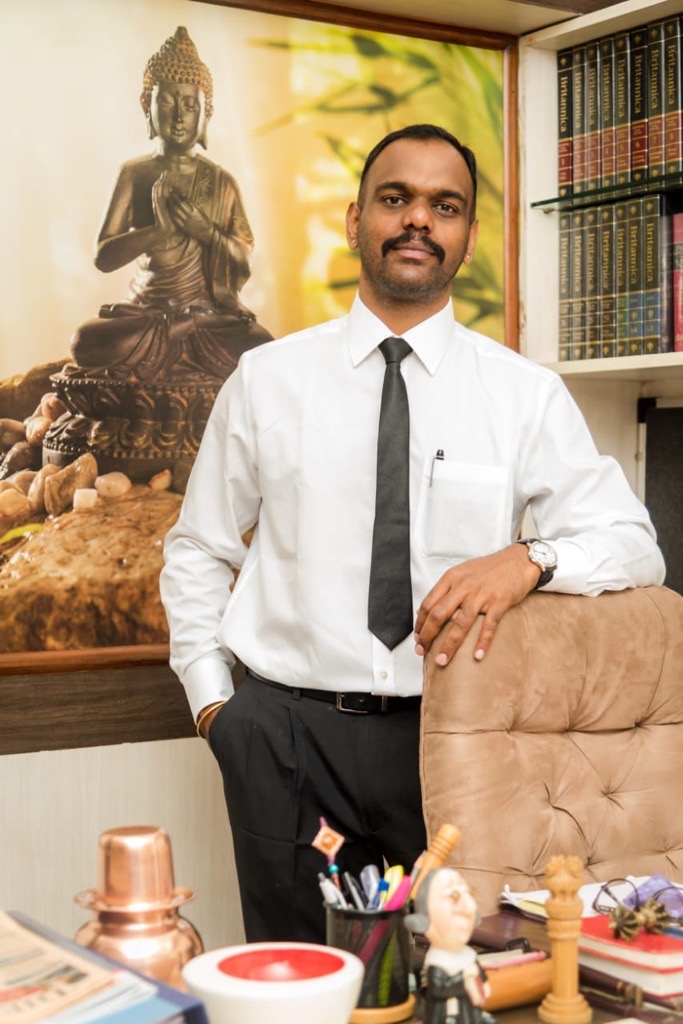
    Could you please walk us through your journey as to what inspired you to pursue a career in law?

    Law has always been something which I have seen at close quarters coming from a business family. It has intrigued me and given me an insight into its importance and the eminent role it plays in society.  Law is that facet of the society which keeps the citizens in check and gives society its balance. It also is the  very basis for the society to get justice and have fair practice in everyday life. This set me on a path at an early age to pursue a career in law. 

    What was the idea behind founding Reddy & Reddy Law Firm?

    Pursuing an LL.M. immediately after my LL.B. was a well-planned strategy to equip myself with a comprehensive understanding of the international legal landscape. Also, I have had an entrepreneurial flair from early days, and again business, negotiations, contracts, acquisitions is something that I have been fond of since early days. I hail from Pune, an Industrial city which was just beginning to blossom around early to mid 2000’s, and law firms were absent and individual practice was the order of the day, I saw this as an opportunity and  so founding a Law firm was a natural progression.

    You’ve dedicated a significant part of your career to dispute resolution. What is it about this area of law that captivates you?

    During my law studies, I was introduced to Dispute Resolution practice.To develop expertise in this area, I actively participated in relevant activities and eventually pursued my first specialised course in Civil/Commercial Mediation from UK, becoming an accredited mediator in 2014, which developed a deeper interest in the subject area leading to opportunity in providing set services in this domain, furthermore in the later years I undertook other various International courses and affiliations leading to my latest course in  February 2024 on Program on egotiations from Harvard Law School. The area of dispute resolution  has become the mainstream practice as it has been globally accepted at all levels of business and governments. It has been found to be a much holistic and easier medium for getting resolutions and so is the order of the day today.

     How do you stay motivated in the face of challenging cases?

    I have a natural aptitude for conflict avoidance and dispute resolution. In our profession listening is a key strength which I have and I use it well, so in every case the key motivation is listening to both parties well, which then helps me successfully resolve disputes. 

    The Indian Institute of Alternate Dispute Resolution is a significant achievement. Can you share the story behind its inception and your vision for its impact on the legal profession in India?

    It was at my course at Oxford in the UK where I saw the merits of  Mediation practice. It was also during the same time  some of my clients inquired about commercial mediators, I recognised an opportunity and decided to set up IIADR as a pivotal organisation which would lead in the area of ADR with members, knowledge center, courses and training’s which would equip the new legal advocates to pursue ADR as a career through this platform.

    With your extensive experience in mediation and arbitration, what advice would you give to clients or individuals who are torn between choosing litigation and alternative dispute resolution methods?

    There is never a black and white scenario in the legal space and there are various many factors which decide the course of legality. However, until now the only option has been litigation which at times is long, costly and arduous. Mediation and Arbitration come in as a very strong viable alternative solution to resolve conflicts amicably. It provides the client a chance to get a faster resolution, which can be cost effective too.

    Given your vast experience and success, what advice would you offer to young professionals spiring to make their mark in the legal field ?

    To young professionals aspiring to establish their own law firms, my message would be: Never give up. Embrace failures as learning opportunities, for they are crucial to personal growth and development. In my experience, there are four stages in the journey of starting out on your own in the legal arena / mediation :

    ∙ The first stage involves having no work and no money.

    ∙ The second stage brings work but no money.

    ∙ The third stage sees good work and good money.

    ∙ Finally, the fourth stage is characterised by less work but consistent income.

    While this may not be the exact path for everyone, it represents the holistic picture. The key is to remain confident and patient to take the leap when the opportunity arises. Success will follow with hard work and perseverance.

    Moving away from your professional life, do you have any hobbies or interests that you’re passionate about outside of work?

    Engaging in fitness activities, pursuing hobbies, or participating in sports can provide much-needed mental refreshment and balance amidst the rigours of legal practice. I am an avid fitness freak and train regularly, I am a trekker and do go out on weekends for long treks and do adventurous sports.

    With technological advancements and the increasing acceptance of online dispute resolution (ODR), where do you see the future of dispute resolution and law practice heading in the next decade?

    Technology acceptance in mainstream society is at its peak and technology today has touched every human interaction throughout a day of 24 hours. The Indian government themselves have introduced and have made digital payments a roaring success all throughout the country. Similarly, in the legal arena, government has launched a big initiative in the space of ODR and is taking active initiatives in this space.

    In fact, it can be said that technology is the mediator in our interactions and influence our actions in many ways, such as mediation of experience, influence on behavior and ethical considerations, Virtual Mediation will take central place. AI and Mediation is an emerging trend in technological advancements.

    I see a huge demand in this space of tech application in the legal world and we at Reddy and Reddy Law Firm are at the forefront of this where we are designing our own tech platforms to decimate knowledge, provide platform for interaction and help the society to reach out to us seamlessly.

    More important role of technology will be in the area of education and training skills for the next generation. So yes, I am very vocal and a strong pursuer of technology adaptation in the legal profession.

    Your Master of Laws (LLM) from Cardiff University in the UK provided you with international exposure. How do you think this experience differed from a purely domestic legal education, and what exceptional insights or perspectives do you believe students in India could gain from similar international exposure?

    International learning gives one an exposure to different cultures, mindset’s and systems. LL.M. in International Commercial Law at Cardiff University comprised a diverse range of subjects, including international banking, competition laws, international corporate governance, and the World Trade Organization. These topics were distinctly different from the regular curriculum taught in India, and the flexibility to choose optional modules allowed me to tailor the program to my interests.The education system in the UK is more interactive and knowledge driven, that is one of the primary reasons for total development of a student who is keen to pursue his career. Another important aspect that I learnt in the UK was attending the seminars and conferences that the University hosted which gave me an exposure to meet industry stalwarts and subject matter experts which helped me with holistic knowledge.

    You’ve also been involved in philanthropic efforts, notably with your NGO. Could you share with us the purpose of this organization and the inspiration behind its inception? What societal issues or causes does it seek to address, and how do you envision making a difference through this initiative?

    Raksha Seva Suraksha is the name of my NGO, it was formed in 2010. Right as I was finding my foothold in  my career. My parents come from a very humble background and at home i had always seen my parents make that extra space to help people, this inculcated in me a very strong purpose of societal ownership where  my parents took it upon themselves to ensure that help has to be extended whenever needed to the needy.

    Hence the day I passed out as a law graduate and decided to start my own law firm, the NGO was a natural progression. My NGO, as per its name Raksha Seva Suraksha, needs  Raksha (Protection), Seva (Service), Suraksha ( Complete Protection in all terms). We provide holistic care to the needy not restricted to legal aid, but even in the space of  health, education and family matters.

    This is a very small but very focused entity of our organisation and luckily every member of my organisation feels and participates here Pro Bono, and together we resolve as many conflicts as we can.

    Leading a team of 18 advocates requires effective communication and leadership skills. How do you ensure that everyone is on the same page and working towards common goals? Could you share some guidance on fostering collaboration and cohesion within a legal team, particularly in navigating complex cases or disputes? 

    Regular structured communication and key defined  processes are the cornerstones of having successful team efforts, especially when one is working with large teams on complex matters, as in the corporate world, at RRLF we breakdown the case into its relevant sectors and create team leads, I am personally a big fan of KPI’s and at the very outset we together as a team set our KPI’s(Key Performance Indicators) for each sub team and how we get there. Over the last 13 years of legal practice and leading small and big teams we have honed our processes to capture all the details. This then helps the team in defining and reaching their KPI’s which finally give the complete team its outcome which is the motto of the Law Firm a “HAPPY CLIENT’.

    Get in touch with Adv. Sudhir Reddy–

  • I have learnt the three important cardinal principles behind the making of a good advocate- knowledge,  perseverance and discipline- SS Ahluwalia, Managing Partner-Chambers of SS Ahluwalia

    I have learnt the three important cardinal principles behind the making of a good advocate- knowledge, perseverance and discipline- SS Ahluwalia, Managing Partner-Chambers of SS Ahluwalia

    This interview has been published by  Priyanka Karwa and The SuperLawyer Team

    Can you tell us about your journey and how you ended up pursuing a career in law? What inspired you to choose this profession?

    I belong to the family of lawyers. I am a third generation lawyer. My grandfather Sardar Kuldeep Singh started his practice from Lahore High Court and after 1947 he continued the practice in India. Thereafter my father Mr APS Ahluwalia Sr. advocate started his practice in 1971. Our chamber is almost a hundred years old in the legal profession. In order to continue the legacy I chose to be a lawyer. I qualified LLB in 2004; and after qualifying LLM from Cardiff University, United Kingdom in international corporate laws, I joined JSA in the team of general corporates and capital markets. I did many private equity transactions and IPOs during my three years experience at JSA. But my love for litigation had never ended. I always used to see the working of litigation lawyers at Ahluwalia Chambers that always fascinated me. Someday I had to make a decision to join my family office, to continue and pursue the legacy left behind by my grandfather. So I joined my father’s chamber known as Ahluwalia Chambers. 

    You have extensive experience in various areas of law, including commercial arbitration, corporate commercial and contract law, media-entertainment, property & succession laws, banking and recovery laws, fraud and white-collar crime laws, and constitutional disputes. How did you develop such diverse expertise, and what attracted you to these specific practice areas?

    I have almost 19 years of experience at the bar. As a lawyer, I have always learnt that one should never try to focus on a particular subject in the initial stages of practice. With the advantage of joining a family chamber I tried working on every case as and when it was required and it is required. According to me a lawyer is always a student of law who has to learn from everyday experience in the court. Having said that, the lawyer has to look for the opportunity to appear in as many legal issues which helps him build his practice and experience at the Bar. It is this experience by working on various legal issues the judicial mind starts working which is also the building of the court craft.

    Throughout your career, you have represented clients in the Hon’ble Supreme Court of India, Delhi High Court, and various tribunals and appellate authorities. Can you share some notable cases or achievements that you are particularly proud of?

    According to me every brief on the Advocate’s table is important. But at times there are certain cases which are labelled as landmark judgements. This experience is always in the career every practising advocate. This also helps in building a in him/her a true lawyer and a confident practitioner. Some of my noted judgements in which I had been able to get legal points establish as precedents such as Arun & ors. Vs State, NHPC vs. Patel L&T JV, Brig.Dhir vs. Parsvnath Developers Ltd, Aroon Purie vs. OP Bhola & Ors. ; IFCI vs Ceylon Biscuits, Sunil Sikri vs GHPS & Ors., Hargovind vs. State; And few more. But I think that every case has always been very important to me and I always try to put the best of my abilities. As an advocate, I am first officer of the court to assist the court for adjudicating the dispute. It is my duty that I do put the case before the court to achieve the success for my client. We can’t be emotional to any brief. To get the justice, an advocate is duty-bound to his client to do justice with his brief.

    You have represented a wide range of clients, including statutory bodies, PSUs, private limited companies, and infrastructure companies. How do you approach representing different types of clients with varying legal needs and challenges?

    Chamber practice is very different from the corporate firm practice. As a litigation lawyer. We don’t approach the client. The clients look for the lawyers suitable to them in the market as per their requirement. I also believe that good work is always recognised in the commercial world. There is always space for everyone but abilities are to be shown. Under the Advocates Act we have many restrictions. Primarily we cannot advertise ourselves so the only way to make yourself recognised in such a huge competitive world is to perform to the best of your abilities and the client will definitely follow. To some extent, networking and word of mouth by friends and existing clients also helps in building up the client base.

    As an advocate, you have been involved in high-stakes disputes involving substantial sums of money. Could you share some insights into handling such complex cases and the unique challenges they present?

    Every case has unique facts and legal issues involved. Not only that every case has its own line of action irrespective of the stakes involved. The sum of money doesn’t matter, what matters is the resolution to the problem. So as an advocate we have to get into the complexity of every dispute with the existing precedents. Without the application of proper law, it is not possible to convince the court. The most difficult challenge arises when the opposite lawyer is a senior advocate. Although it’s a learning experience, at the same time, it becomes more challenging to contest against someone who is designated by the court as a judicial expert. Nevertheless, such challenges help in making you a hard-working and laborious lawyer.

    Apart from your litigation practice, you also have experience in legal drafting and have several reported judgments to your name. How do you balance the different aspects of your legal practice, and what skills are essential for success in both litigation and legal drafting?

    A good drafting skill is inevitable for an advocate. Until and unless he/she doesn’t have the skill of putting the case properly in the pleadings, it is not possible for an advocate to put it before the court. Drafting and arguing are related to each other. Both the skills are learnt with the experience. There is no automatic or quick route to it. While preparing the case always remember to refer to the statutory provisions and the settled law. It is very important that a lawyer should be very conscious about each and every fact before preparing the pleadings. At the same time, this experience also helps in drafting, legal opinions, contracts and other legal documents. 

    You have been recognized for your professionalism, ethics, and pragmatic legal advice. Can you share some strategies or principles that guide your approach to client representation and legal advocacy?

    I think it is discipline. I have inculcated discipline while looking at my father; and the ethics he follows in the profession. It is very important that we always follow our respected seniors at the bar. They are the real mentors for the budding lawyers. Their experience guides us to become a good lawyer as well as the officer of the court. It is from that experience, I have learnt that I should always be honest to the client. False promises are always dangerous. Be true to your brief and guide the client within the legal perspective.

    Being appointed as amicus curae by the Hon’ble High Court of Delhi and serving as Standing Counsel for Delhi High Court Services Legal Aid Committee, you have been involved in civil and criminal cases from a broader perspective. How has this experience shaped your understanding of the legal system and the role of advocacy in promoting justice?

    It is very important as an advocate to serve the society. India is a huge country with various kinds of people in Indian society. As the litigation has become expensive. At times it is difficult for everyone to afford lawyers, especially good lawyers. The legal aid provides legal services at free of cost to the citizens who are not able to afford litigation. While working as a legal aid lawyer, it made me realise the sufferings of the needy. I also got the opportunity to appear in a variety of issues before the Hon’ble High Court. It is the true experience, where you put forth the case without any financial interest and that’s the passion needed in you to provide the best of the output. It gives immense satisfaction and of course the appreciation of the court. 

    As an advocate, it is an honour to be appointed as amicus curae. It is an opportunity for assisting the court as its friend. Any kind of assistance given by the lawyer is always appreciated by the court. So it is important to give the best as Amicus. 

    Given your vast experience and knowledge in the legal field, what advice would you give to fresh law graduates who are just starting their careers? What key lessons or principles should they keep in mind as they embark on their professional journey?

    I have learnt the three important cardinal principles behind the making of a good advocate- knowledge,  perseverance and discipline. Success in the legal profession is not overnight. My father always says that the youth of the lawyer is lost on the table. Spend maximum time reading the latest judgements, and update your knowledge. Always prepare the brief well in advance. While entering the court, a lawyer should always be ready with brief. Avoid seeking adjournment because every hearing is an opportunity. Always sit in the courtrooms and attend the court proceedings attentively. 

    Lawyer needs to have patience in order to establish himself as a litigation lawyer. This might lead to difficult days as well but the passion and sincerity towards the establishment of practice is the only driving factor for a lawyer. It is important that young lawyers should encash every opportunity and should not refuse any brief for the sake of fee.       

    It is important that a lawyer is socially strong. From the very first day while entering the profession Start working to Develop your goodwill amongst the members of the bar. Young lawyers should be respectful to the seniors and the court because one day you will also become a senior member of the bar.

    Lastly, with your involvement in legal conferences and your contributions to various media publications, could you share some insights into the importance of staying engaged with the legal community and sharing knowledge with a broader audience?

    Indeed, it’s a wonderful experience to share knowledge at conferences, not only that by listening to other speakers we also gain knowledge. Legal conferences also help you be introduced to potential clients. It also helps in building your social network. The client building process is very gradual- out of sight is out of mind. So it is necessary that an advocate continues to show his existence by way of writing articles or attending legal conferences as and when the opportunity is given.

    Get in touch with Sukhamrinder P. Singh Ahluwalia-

  • Lovejeet Singh- Managing Associate at Chandhiok & Mahajan, Alumni of Cardiff University UK, who paved his path in assorted parts of the law

    Lovejeet Singh- Managing Associate at Chandhiok & Mahajan, Alumni of Cardiff University UK, who paved his path in assorted parts of the law

    This interview has been published by Tanmaya Sharma. The Interview was taken by The SuperLawyer Team.


    Why does corporate law attract so much attention? What makes it so unique?

    The corporate sector in India is at a developing stage. The majority of the mid-size businesses in India are still not structured formally and are gradually moving towards formalization. Considering the aforesaid, there is a huge potential in corporate law practice. Further, there is a dearth of corporate lawyers in Tier II and Tier III cities including small towns. I think this is one of the key reasons that corporate law attracts more attention.

    The other aspect which makes corporate law unique is the financial aspect. Starting one’s legal journey in courts in India is still not financially viable, whereas, a career in corporate law with a law firm usually leads to a decent pay package even at the early stages of the career.  

    If we start from the beginning, were you ever dicey while choosing law as a career option? 

    I was never dicey while choosing law as a career option. As my father is a tax lawyer, I always had an inclination to be a lawyer from my school days despite being aware that it requires a lot of hard work and determination. I used to accompany him to tax tribunals at times during my school vacation. The courtrooms always intrigued me to be a lawyer. 

    However, I took time in choosing my practice area. I joined law school with a thought process that I will become a tax lawyer and join my father, however, later I realized my inclination towards corporate-commercial law. 

    You completed your LLB in 2008 from Panjab University and LLM (Commercial Law) in 2009 from Cardiff University, Cardiff (UK). How strenuous was it to get into Cardiff, a top ten university in the UK? Would you like to share your internship experience with a Kuala Lumpur-based law firm?

    I would say that completing Masters in Law at Cardiff University was more strenuous than getting into the university. As the Indian legal education system (when I completed law) was more subjective, getting a hang of the English education system (which focuses more on the practical side) took some time and effort in the initial days. Education at Cardiff University helped me to enhance my analytical and problem-solving skills which are much necessitated for a lawyer.  

    I had a delightful experience with Azmi & Associates, a Kuala Lumpur-based law firm. It was my first experience with a foreign law firm. I worked on corporate transactions and did advisory work during my internship. Perhaps, some of the assignments involved Indian parties so I also used to refer to Indian law. Further, the Contract Act and Companies Act applicable at that point of time in Malaysia were similar to what was applicable in India, hence adapting with work was not difficult. The Firm and its members were very supportive. I am still in touch with the Managing Partner and Corporate Partner of the firm.

    You assisted many renowned authors like Late Dr. Avtar Singh and were engaged in legal research while employed in LexisNexis. Immediately after that, you moved to CLG and dedicated almost 5 years. How has research work helped you in establishing your legal understanding at CLG?

    I think one of the important requirements for legal practice is that you should be aware of where the law is and what it says. Implementation of the law is a subsequent step. The research work done at LexisNexis helped me to gain an in-depth understanding of what the law says. Considering my interest in corporate-commercial law, I was always given the opportunity at Lexis Nexis to work on books relating to corporate-commercial law. 

    I would say that the research work gave me a foundation to practice law. At CLG, I worked in different areas of law including advice on corporate matters, regulatory aspects (in sectors like food processing and pharma) and disputes resolution. While I was not very keen to work on the disputes side, the Managing Partner at CLG persuaded me to have some experience of commercial litigation/ arbitration to have a holistic experience of legal practice. 

    You advise in assorted sectors like aviation, automobile, chemicals and fertilizers, food processing, manufacturing, IT, infrastructure, hospitality, and shipping. Which industry interests you the most? How does one handle advising all such evolving industries together?

    I find the transport industry (specifically aviation and shipping) more interesting in comparison to other sectors. I still remember my first assignment concerning aviation finance advice at Clasis Law. I found it challenging initially but, the aspects involved while advising on the assignment were fascinating. Subsequently, my secondment at Clyde & Co, Dubai in 2018 brought me closer to the aviation sector where I worked with the aviation team and got an opportunity to work on various aspects of aviation. I am currently advising on shipbuilding contracts and contracts relating to the procurement of equipment for shipbuilding.

    With regards to handling evolving sectors together, I think it is imperative to stay abreast with the legal developments in these sectors. As these are evolving sectors, the law keeps on developing from time to time and it is important to keep yourself updated to advise on such evolving sectors.

    What responsibilities do you carry out as a Managing Associate with Chandhiok & Mahajan (C&M)?

    At C&M, I handle transactional and advisory work. I have been working on assignments relating to aviation, automobile, chemicals and fertilizers, manufacturing, IT, and shipping. In addition, I am also gaining exposure to other areas of law such as insolvency and restructuring. 

    We often hear that a lawyer has a never-ending learning process. What is your next move to accelerate your career?

    Yes, learning is a never-ending process for lawyers and I believe it is important to upgrade your skills from time to time. 

    Going forward, I intend to focus on business development and further enhance my advocacy skills. I am currently exploring suitable study programs which can be taken up simultaneously with work to enhance my aforesaid skills. 

    Other than work, you are a fitness enthusiast and are involved in reading insightful books. How would you inspire a young mind to follow a healthy routine? 

    I think a healthy routine is not just for physical fitness, it also has an impact on your professional life. 

    For instance, following a regular fitness regime requires persistent determination and it keeps you more disciplined and focussed. Achieving fitness goals also boosts a person’s confidence. In my view, discipline, perseverance, a focussed approach, setting goals, and learning something new each day are a few of the key essentials for a successful professional life. I believe the advantages of a healthy routine and prerequisites for a successful career are interlinked.

    This connection can probably be a source of inspiration for young minds as everyone aims for a successful career. Further, reading insightful books keeps me motivated to keep going. I remember a quote from my recent read – Robin Sharma’s ‘5 AM Club’ which says “When you feel like surrendering, continue. Triumph loves the relentless.


    Get in touch with:

  • DANIEL ONAFUWA, PARALEGAL AT EVERSHEDS SUTHERLAND, CO-FOUNDER AT COMMUNITY LAW PROJECT UK LTD, ON PURSUING LAW FROM CARDIFF UNIVERSITY, BUILDING HIS ORGANIZATION NCLP AND WORKING ON BRIDGING THE GAP BETWEEN LAW STUDENTS & LEGAL PROFESSIONALS

    DANIEL ONAFUWA, PARALEGAL AT EVERSHEDS SUTHERLAND, CO-FOUNDER AT COMMUNITY LAW PROJECT UK LTD, ON PURSUING LAW FROM CARDIFF UNIVERSITY, BUILDING HIS ORGANIZATION NCLP AND WORKING ON BRIDGING THE GAP BETWEEN LAW STUDENTS & LEGAL PROFESSIONALS

    This interview has been published by Maaz Akhtar Hashmi and The SuperLawyer Team. The Interview was taken by Priyanka Cholera.


    It is famously said that when you save one person, you save the entire world; do you believe your personal goals of community service align with this?

    I believe that the work we do is imperative to our general community in the UK but also an initiative that should be taken aboard worldwide. We are all connected and should aim to work in unison as one species, yet there are so many factors that intentionally or unintentionally divide us.

    What does the word community mean to you, and what does it represent to you?

    The word community means united under one vision. I do not limit to geographical locations but a shared vision, goal or idea where a mindset is shared to partake in something together. It represents unison.

    You have recently embarked your journey at Barclays. How do you feel about progressing the direction of banking and financial services? Which is known to be your area of interest to pursue.

    I finished a two-month mentorship programme with them recently. A few weeks ago, I completed a week of legal work experience with them. It was such an enjoyable experience and a great way to see how financial institutions are so integral to the functioning of society in more ways than we realise. It is important for prospective law students to keep an open mind because you will experience multiple seats in a training contract. However, it is great that if you have an interest in a particular area of law that you keep up to date with what is going on in that legal sector as well as seek practical experience. A lot of practice areas are a very different experience when doing it in practice than when studying it at university.

    You have been associated with various law firms and legal enforcement agencies while pursuing your LLB from Cardiff. How did you balance work along with education?

    One of the many key skills for a lawyer is to be very organised. I was very proactive and made sure to note down all my responsibilities, including university classes and then prioritised. I would focus on getting my key work finished in the morning and afternoon. I would then spend my evenings visiting law firms on open days or setting key time aside to do research into said firms as well as the legal sector in general. I had many extracurriculars such as societies and sports clubs that I had to factor in as well. It is a good idea to keep a timetable that you can be flexible with.

    You were awarded with Student mentor of the year, where one of your students got admission to the prestigious SPARK SCHEME at Clifford Chance; how did it feel to fulfil another dream?

    It felt really fulfilling, and I had a great sense of accomplishment. I want to use my life to be a blessing to others and bring them on the right path using my experience. Ever since I can remember, I always had a passion for helping people. My mum used to see if you have the power, time or ability to help someone, then choose to be that blessing in that person’s life. My mentee reached out to me to help her with her application as well as with doing mock interviews, and we spent a lot of time in the library together to narrow it all down.

    You have been a massive advocate for pro bono SQE. Can you elaborate on how that mission will come to fruition, given the coaching and training expenses?

    The purpose of the SQE is to increase accessibility into the legal sector. This will be done by having the examination replace the expensive Legal Practice Course, which is around £17,000, most commonly in London, where many aspiring solicitors tend to flock to. This has been a significant blockade to many students who were not privileged enough to have access to the support or funds to pursue this almost necessary action to qualify as a solicitor. It could prove to be a financially detrimental investment for those who completed a law degree but are not sure whether to pursue a career in law and choose to do something else after completing the LPC. This includes those who take the financial plunge of doing the LPC but can’t get a training contract because of how competitive the process is. The SQE has come in effect to help alleviate that financial burden and improve diversity by allowing people from all backgrounds to afford to pursue their dream of becoming a solicitor. The SQE takes the form of two exams that is, in theory, open to everyone rather than an expensive year-long course. SQE 1 costs £1558, and SQE 2 costs £2422, so, therefore, it is a total cost of £3980, which is significantly cheaper. There is also the factor that the LPC route demanded that you complete either a law degree or do a law conversion course. So, if you decided after your non-law degree that you want to know to pursue a legal career, you would have to do the Graduate Diploma in Law (GDL) which costs:

    The total candidate fee for the new Solicitors Qualifying Examination (SQE) is £3,980.

    • SQE1 – £1,558
    • SQE2 – £2,422

    This is substantially cheaper.

    “Our mission is to take on the casework as paralegals that charities/firms/legal organisations cannot.”, how has the past year been for The National Community Law Project (henceforth termed as “NCLP”) and the team successfully contributed to this vision?

    The past year has been absolutely incredible for us. We have established an enormous community of over 300 members across the world, working together through our platform to be able to provide the support that is desperately needed that no one will take up. We have successfully helped over 60 clients and have secured over 15 partnerships with other organisations we constantly collaborate with, such as LawSikho. We have expanded our reach internationally, where we are now operating in places like Africa and India. It led to many great opportunities that I would not have been privy to before. For example, I was invited onto Radio Cardiff, where I recorded a Spotify podcast with Black Owned Minority Businesses UK. I was also a guest speaker on the Flex Legal ‘Humans of Law’ podcast and was featured in one of their articles as I was discussing the new qualifying regime in the legal sector. We got to be one of the main pioneers of entering this new era of the SQE in the law sector by providing this qualified work experience.

    How do you see NCLP growing and serving society in the coming years, given that it has already done paralegal work on behalf of 350 law firms?

    We generate partial income through a commission by having the 24/7 live chat service, which is operated by these 350 law firms. Now more than ever, especially with the pandemic, people still need a lot of help out there. We have recently set up two stores in Cardiff and have established both a welfare division and a fundraising team that focus specifically on supporting the disenfranchised on a more direct level. We look to keep growing even more exponentially and take on many more students to help them get their first step into the legal sector.

    NCLP has a large set of volunteers and paralegals around the globe; how do you keep your team inspired and motivated?

    The motivation is self-sustaining because we are all volunteers. This means that it is our strong passion to help those in need that make us work as hard as we do to make sure that they are taken care of. We have core values at NCLP that we make sure that all our members fully represent both within the teams and towards our clients when they are with us. We all look out for each other and support one another when work gets too stressful or complex, but we have achieved our own community where we continue to lift each other up and celebrate everyone’s accomplishments.

    NCLP has been established for bringing in change in society. The active topics have been feminism, refugee relief and all facets of human rights. How would you describe the impact it brings not only in the community but the students and paralegals who join on board?

    We have seen the impact quite clearly in the pandemic. It has widened the gap and ostracised the already marginalised communities from everyone else in terms of equality which these relevant topics all involve. As we are seeing the impacting effects at the forefront in real-time, it has led to an increase in volunteers who specifically want to go into law to work on issues like immigration which they come to us to facilitate.

    It is known to us that you are fond of playing the piano, drums and guitar. How has music been instrumental in your personal development?

    I have been a self-taught musician since the age of 6. I have always loved and have been passionate about it. I have almost 10 instruments in my flat right now, including a grand piano, a keyboard, and 2 guitars (electric and acoustic). It is important for everyone, especially in this sector, to have passions outside of work and a work-life balance that you know suits you. There have been many who have fused their passion for music with their law careers by being legal advisers for those in the music industry. It is good not to be consumed by your legal work but to set aside time to recuperate and enjoy yourself or learn a new skill. This mindset has allowed me to thoroughly enjoy the legal work that I do as I don’t allow it to burn myself out as I take breaks in between where I focus on other aspects of my life to overall become a more well-rounded person, which law firms are looking for.

    Your life mantra is “Achieve the destination but Enjoy the Journey, Work Hard and Stay Humble”, at the age of 21, where people usually unfold life. How did you welcome this enlightenment?

    I embedded this practice into my life when I finally found peace within myself. I discovered who I was and what I wanted out of life. I had ambitions that I wanted to achieve, and I made detailed personal/professional development plans on how to achieve them. From trial and error, as I developed as a person, I gained a deep understanding of how I work and subconsciously see the world. I learnt about my own strengths and weaknesses. I saw the biggest surge of my growth when I came to university, where I truly found myself and flourished into the being I am today. I built up a vast array of connections and support networks that I could rely on. I knew that I was no longer alone, and there were people who believed in me and were willing to invest in helping me achieve my vision for my life. That is when I was able to finally able to achieve the balance where I wouldn’t have to struggle on my own. I will work extremely hard and make sure I achieve what I set out for. However, because I have support, I don’t have to be self-obsessed with it and miss out on enjoying the opportunities that life passes at the moment because I was too focused on the big overall endgame.

    What advice would you give to students worldwide who want to contribute to the bigger picture in society and build a career?

    I would say to them my life mantra, as stated above. However, I would also say that whilst you need to work hard overall, you need to first take time to reflect and see what priorities you want out of life. You need to know who you want to help, why you want to help them and how you are going to do that. Once you have those goals penned down, you have a clear objective that you can break down into smaller objectives that are more manageable to achieve over a longer period of time. One of the most critical things young people can do right now in building their careers and changing society is to find those who have already embarked on their path and learn from their experiences. Seek out mentors who have gone down the road that you want to go on and let them navigate you through the obstacles so you can avoid all the mistakes that they encountered on their own journeys. They can also provide you with the connections that may multiply into even greater opportunities that you couldn’t even comprehend.


    Get in touch with:

  • Nakul Bhatnagar, Senior Consultant, on recruiting for various roles in the legal sector in India and across Asia

    Nakul Bhatnagar, Senior Consultant, on recruiting for various roles in the legal sector in India and across Asia

    Nakul Bhatnagar graduated from Cardiff University, U.K. in 2011. At present, he is a Senior Consultant at Aquis Search with responsibility for private practice and in-house legal recruitment services in India. He recruits for various roles in the legal sector in India and across Asia. He is interested in connecting with potential clients who have talent acquisition requirements and professionals looking for their next career challenge.

     In this interview, he talks to us about:

    • His experience at Cardiff University.
    • How interns can get positive feedback in limited time.
    • What law firms look for in potential candidates.
    • His advice on CV building.

    Most of our readers are young lawyers and law students. How will you introduce yourself to them?

    I am a lawyer by training and legal recruiter by profession. I was born and raised in New Delhi and spent almost all my life here. Post class XII, I pursued the B.Com (Hons.) course from Delhi University and after having dabbled in very different fields in the industry, I decided to pursue Law. I completed my LL.B from Cardiff University, U.K. in 2011 and after having worked with a few organisations (including a law firm and a trade law counsel). I made the switch to legal recruitment in 2014 and joined an Indian legal recruitment firm. I am currently working as a Senior Consultant with Aquis Search – Asia’s leading executive search firm with offices in prominent Asian cities. I focus on legal and compliance recruitments, across junior and mid-levels in India and the Middle East.The story continues…

    Having done B.com, what motivated you to choose law as a career? Or did it just happen?

    Doing law was a rather calculated decision for me and I believe I found inspiration to do law from the most unusual places. During my college days, I was actively following the Indian independent music scene and briefly performed in a rock band myself. Not to mention, I was a very confused child and tried my hand in so many different fields to try and come to a career conclusion – I interned in places like design studios, ad agencies and a music / events company as well. Post my graduation, I was pretty much convinced that I wanted to take up music management and for a year, I worked with a company which promoted independent original music, managed artistes and organized live concerts & festivals. During this time, I had the good fortune of interacting with musicians and a few lawyers who introduced me to several new concepts like Copyright, Performance Rights and Digital Rights Management. I was quite intrigued to see how the law worked with something as basic as a song or a performance. It was something that I never thought could work so well in an ecosystem that seemed completely disconnected. I started researching on what options I may have and I decided to try and pursue law. Not to mention, my father is a lawyer by training himself and always encouraged me to pursue a career in the field. Little did I know that the adventure was just beginning!

    Describe your experience at Cardiff University.

    The experience of studying at a foreign university was surreal. The methodologies, the faculty, course structures and support offered were very beneficial to every law student. Cardiff, being one of the top law schools in the U.K., was possibly the biggest learning experience for me. Constant development every step of the way, studying there made me the person I am today. Studying in Cardiff gave me immense exposure to global standards of legal education and a connection to a worldwide network of prominent lawyers. An additional advantage of studying there was that the University is recognized by the Bar Council of India and the transition of practicing in India was never tough. Many Indian students who graduated from there have moved back and are successfully practicing here (even as Partners at leading law firms).

    How do you say interns can get positive feedback in the limited time they have?

    Internships are probably the most valuable experience any budding lawyer can get. In one way or another, they are the stepping stones for a career in law. They show you the practical side of the profession and how the application of the law goes much beyond the course books.

    Pro-activity is possibly the most valuable skill that an intern needs to posses. Try and be actively involved with the partner / associates that you are working under. Remember, they get interns every month and recall value is definitely scarce. You have to make the jump out of the page for them to remember you. Especially final year students; if you wish to work with the firm post law school, you will have to walk the extra mile for them to offer you a PPO or a recommendation.

    Having worked in the legal recruitment industry what are the challenges you have faced?

    Challenges are as wide in this industry as any other. The point of working in a niche can work as an advantage and a challenge as well. The advantage of being a lawyer has helped me work my way into legal recruitment. I can understand the work that one does and has done in the past and how that experience can work well for a potential opportunity that one may be looking for. It is of utmost importance for recruiters to look at both sides of the spectrum. One needs to understand the needs of the lawyer looking at a potential job as well as the recruiter, looking to hire talent for his firm. The gap needs to be filled perfectly or it could pretty much lead to issues for the firm, as well as the young lawyer.

    Acquiring talent is a big task for any recruiter. Opportunities, whilst being seasonal, are usually always prevalent in the market. It is the right talent that can be scarce at times. Firms are usually very sure of the qualities that they want in a lawyer (law school, practice areas, experience wise). Getting them the perfect fit is the mark of a good recruiter. We have to remember that the level of trust, shown by a firm looking to hire and a lawyer looking to be placed, are utmost in a recruiter. Challenges are a part of everyday life but, just like any profession, they can be overcome.

    What do law firms look for in potential candidates?

    Here we go! (If I had penny for every time I was asked this question… you know how it goes.)

    Let’s get it straight. Firms are looking for someone who is with them for the long haul. Period! Firms (especially the big ones) in India are built on the core values of their name and legacy. They are looking for professionals who can be nurtured into taking that name forward.

    Professionally, the story isn’t very different from any other profession. A strong educational background, the ability to work hard and with a team, diligence, communication skills and of course, patience. The transition phase (especially the first 6-9 months) maybe tougher but the reward has its own charm.

    Strong on technicals – the main point of focus. For example; a prospective corporate lawyer should have the acumen for numbers, financials and a strong eye for detail and along with this good knowledge on topics like Contract Law, Sale of Goods Act, Company Law, SEBI Regulations, FEMA, FDI Regulations etc. Similarly, a professional, looking to build a name in the disputes practice needs to be aware of everything around him in the legal environment. Be prepared with important sections of the CPC, CrPC, Constitution, landmark judgments and recent developments in the legal biosphere.

    The basic quality that every lawyer needs to possess (and I cannot stress this enough!) is the eye for detail in everything that they read or write. Till date, I have seen so many professionals who are not proficient with drafting and tend to omit so many errors; it’s possibly one of the biggest grey areas for any law firm looking to hire. You need to start from the bottom of the food chain everywhere. Your firm will want to know everything that you are capable of.

    What advice would you give to law students / professionals interviewing for law firms?

    The one piece of advice that would be the most important (for lawyers across levels);KNOW YOUR CV. Know every word of every line of what you have put on there. For freshers, your internship details are of utmost importance. Know the names of the Partners / Associates that you worked under, the teams, the kind of work and your involvement. For laterals, any transaction / matter that you worked on, your contribution to the same and everything that you have put on your resume. You need to have your CV on your fingertips; if it is on your CV, get ready to be questioned. Keep yourself abreast with all legal developments in the market, especially the ones with a connection to any phrase mentioned on your CV. Apart from academic qualifications; your extra curriculars go a long way in determining your achievements. Moot courts, debates and other activities are equally important to show your development during law school.

    Apart from that, know what is happening in the market and of course, know the firm that you are interviewing with. You need to know details about key partners, latest deals and general structure of the firm as questions can be fired from any direction. You need to assure your interviewer that you are the right choice and your knowledge about the firm makes you want to be there. This is about going that extra mile to show your appreciation for their time and consideration. People always look for that spark that would separate you from the others. Be confident in what you answer and do not hesitate in accepting that you may not know something out of the plethora of questions, it is only natural. Be sure to tell them even if you don’t know or are unsure. Be sure to make a note of it and tell them you can research and get back to them with a sure answer. Surety goes a very long way. Be sure of yourself and what you know and you’ve already won half the battle.

    What must a law student do to get hired in a top-tier law firm? Any advice on CV building that law students must keep in mind?

    Before I answer that, we really need to address one thing for young lawyers and everyone else reading. The mentality of a ‘top-tier’ brand is changing in this ever evolving legal market of ours. Whilst top-tier firms still do rule the roost and deservedly so, many firms operating on a smaller scale (only in terms of number of people) are bringing in meaty work and good clients. These firms (bracketed as mid-sized or boutique firms) are coming up with a strong force and several of them have been started by and employ alumni from leading firms. In terms of quality of work, people employed and even pay-scales, they are very competitive with all other firms and will be a force to reckon with in the near future.

    Let’s face it; cut throat competition in the market as of now, is more than it has ever been. With more than 70,000 lawyers graduating every academic year, securing an interview can turn out to be quite a harrowing process. Most firms hire graduates directly from campus or make offers to their star interns. Firms that do come on campus will look for someone whose CV jumps right out of the page to catch their attention. Hence, building a strong CV is the first stepping stone to this process.

    On CV building, we need to remain concise. Academics are the foremost factor that people tend to look at on your resume. Your grades need to be consistent and will be considered on priority. Along with grades, a few other factors that may help go a long way:-

    Moot Courts – The first insight into a Court environment, the basic reason and intention of organizing moots is to help students develop their research and oratory skills. You should try to actively be a part of inter / intra college moot court competitions. The skills that are put to task here are the ones you need the most in this profession and one can develop them very well.

    Research Papers / Publications – Your knowledge on the latest developments in the profession are yet another tool in your artillery. Your knowledge on the information gathered here could easily be one of the biggest advantages in the interview

    Organisational Skills –The committees that you were a part of during college, the activities that you took part in. These show a sense of team work which every young professional can use to his / her advantage.

    How is the legal landscape in India changing viz a viz the talent needs?

    The landscape has changed hugely over the past few years since I have been following it. People are beginning to focus more on the person, rather than their pedigree (which has always been the growing trend). Firms are seeing severe competition in the market and of course, last year was probably one filled with the biggest surprises (and shocks for some) in the industry. Reasons like these alone, are completely twisting the landscape. Since any change can be positive or negative, depending on the perspective, the industry has learnt to adapt with its growing needs. Firms are getting bigger, business is on the constant rise and people are needed. At this point of time, hiring at the senior level is becoming more strategic and there is definite preference for those having their own book of business and good reputation and relationships in the industry. Another interesting point to note is that, at the junior and mid levels, firms are also investing heavily in BD and internal trainings.

    Lastly what are your plans for future? What advice would you give to law students wishing to work in the same sector as you?

    After having dabbled in so many sectors myself, I feel I found my niche in the legal recruitment business. The plan is to learn and grow with the system which is growing every step of the way. I am glad to have found a platform like Aquis Search, as it is the only search / recruitment firm in the legal and compliance industry in India has with an international network – in both the in-house and private practice space. I am happy to be able to leverage my network and relationships to hopefully bring a positive change in the Indian legal ecosystem.

    Guys, success and failure are a part and parcel of the game. Trust me, I’ve been there. Everyone is prone to mistakes and the best part is that it’s never the end of the world. Getting a law firm job or not shouldn’t be on your final list. The profession that we are in, is one of constant growth and learning. One literally can never stop learning here (even if it feels like things are stagnant). Keep making mistakes, learn from them, equip yourself better and move on. The recruitment business is on very similar lines. I feel that my experience in law practice has equipped me with the knowledge to be a decent legal recruiter. For anyone wishing to work in the same field, I’d only say that keep your eyes and ears open. Most importantly, build the best network that you can (a network is what makes or breaks a recruiter). You should enjoy being an all-round people’s person. The work is all about the trust that you gain with your clients and candidates alike so, keep the lines of communication flowing because after all, professionals are trusting you with their careers on the line.

    Lastly, as a lawyer or a recruiter, never lose hope. Be confident in your professional abilities and start! The world is out there. Good luck!