Tag: Christ Law

  • “Life as a lawyer is a test match, not a T-20. Keep putting your head down, work, and trust the process.” – Prashanth Shivadass, Partner at Shivadass & Shivadass (Law Chambers)

    “Life as a lawyer is a test match, not a T-20. Keep putting your head down, work, and trust the process.” – Prashanth Shivadass, Partner at Shivadass & Shivadass (Law Chambers)

    This interview has been published by Namrata Singh and The SuperLawyer Team

    Can you share what initially inspired you to pursue a legal career and how this journey has shaped your professional philosophy?  

    My introduction to law happened in my 7th or 8th grade (around 2002) – my father was arguing a matter before the High Court – I knew nothing about what a Court is, what a lawyer does or for that matter, even what a Judge did. I was curious because I wanted to know what my dad did for a living.

    It was a tax matter that he and his team were arguing – I didn’t quite understand the matter because I went on the 3rd day of their arguments, so a large part of the matter had been argued. But I understood the underlying transaction and the business model.

    This pulled me into reading newspapers, especially the business section, to understand the changing aspects of the business environment, new technologies etc. I decided then, that science and aspects of science, are not my cup of tea and to pursue arts and commerce, which eventually led to law (clubbed with my very menial academic scores). 

    Studying for an examination and/or interviews has never been a strong suit of mine, so cracking anything in the first instance was out of the question – which is why, I liked the concept of doing something with ‘practice’ – I played cricket when I was in school and university (under-graduation and graduation), so I know the impact of practising before a game. I think of law the same way, where a Courtroom is a beautiful playground where there is an interpretation of something in black and white against the backdrop of the kind of businesses – law catches up with changing business experiences.

    My philosophy for practising law is based on everyday practice and reading – there is no escaping hard work and long hours, no matter which generation relays this out – there is no denying that there needs to be a balance between work and life, but there will be many instances where work will take away many vacations and time away from life and family, so choose well.

    Your academic credentials include a Master’s degree in Competition Law from Queen Mary University of London. How has this international education influenced your practice, and what value do you think global exposure brings to a lawyer’s career?

    Interestingly, many seniors I spoke to during my law school days and the first two years of my practice, said a master’s degree in law was completely unnecessary to practice in Indian Courts. But 2 years into practice, I got so engrossed in work, with long hours and no breaks, and that was when I had a moment of realization that led me to think – I like working and the long hours, but the longer I stretch this out, the harder it will be to come out and become a full-time student with a lot of time on my hands.

    I then decided to maybe take a couple of years when I could (luckily with no financial and other obligations), to study something I wanted and also, see a part of the world, meet different people across the world, understand different cultures, learn different business models, firm models etc. To this day, I value and cherish my period in London and the connections I made then.

    I think a master’s degree abroad is good and valuable when you have a specific goal in mind – I wanted to study Competition Law (from an EU and UK perspective) and understand how the Magic / Silver Circle law firms work, how the ‘Chamber’ model works in the UK. Plus, I like driving and travelling, so there was no better place than the UK for me (even considering the cost, since it is significantly cheaper than the US).

    You have a rich background in various areas of law, including Competition and Antitrust, Corporate and Commercial laws, Taxation etc. Could you share how you developed such a diverse expertise, and what drew you to specialize in these specific fields?

    Antitrust was and continues to be my first love, I fell in love with it in law school because there is a very balanced economic approach to it. Unfortunately, I do not practice it as much as I would like, but I do keep up with its evolution. 

    The other intriguing area that is coming up and that has excited me for a while is data protection – especially, with the current growth of AI – it will be very fascinating to bring out a fine line between right and wrong, in this technologically advanced society.

    Tax for me is a much-liked inheritance – having started with despising the area because of its complexities, my growth in law has been because of tax matters. I have over time, grown into and loved tax, with these same complexities it creates. 

    I think coming to like a subject/area in law, is intensely personal. I know lots of friends, who love doing original civil and criminal work since it gives them a different kind of joy – muddled in facts and evidence, interpretation of a different area of law and procedure daily etc. – different Courts of practice (original, appellate, quasi-judicial), city of practice etc. also make for a decision. 

    But if I were to specialise in a certain area, I’d give myself a good 5 years, before I can even begin to think that I have a hold on the subject.

    Your firm, Shivadass & Shivadass (Law Chambers), is known for its work in Litigation (taxation, commercial etc.), Corporate Law etc. How do you approach building a specialized practice in these areas, and what advice would you give to young lawyers aspiring to excel in these fields?

    Building a practice is convoluted. Some factors are beyond control (time, place, resources etc.), but quality of work and staying updated with the law is always within one’s control. Sometimes, a pragmatic approach towards the question of law and the transaction goes a long way in assisting both the Client and the Court.

    I’ve also noticed that knowledge sharing by way of writing articles, and books, helps dissipate your point of view of a certain area or provision of law. This also gives people a chance to gauge their understanding of law and personality.

    Unfortunately, building a practice takes a long time. But should lawyers choose to build a core practice, my advice would be to let your growth in that area be ‘organic’ – it will be more credible that way. Avoid instant marketing and instant gratification, because as a field, instant gratification in law tends to break you more than you would think.  

    Having worked with top law firms and the office of the Solicitor General of India, how did these experiences shape your perspective on the practice of law, and what key learnings have you carried forward into your own firm? Please share your experience.

    For this question, I will consider my experience from both my internship and practice perspective – be it firms, companies or chambers (including the SG’s office). 

    You garner different perspectives of law when you either intern or work. Big law has never fascinated me much, but I’ve always wanted to learn how big law functions – administratively i.e., marketing, practice area development, quality of work and output, deadlines, team structure, management structure etc., as opposed to a chamber practice, where your quality is determined by your legal prowess and how you present the case before a Court – the marketing here, is your presentation and skills before a Court, which spreads more by way of word of mouth, often the older marketing tactic.

    Having become a lawyer and spent nearly 12 years so far, I have now come to terms with what areas I want to specialise in and how I want to take this forward. Therefore, while driving this ethos for our ‘boutique firm’, I draw a fine balance between a law firm model and a chamber model. It’s been a great learning and there is so much more to learn – but I don’t shy away from making mistakes because, for me, mistakes are the only way to test your ideas.

    As a trained Carnatic classical singer and a state-level cricket player, how do you balance your demanding legal career with your hobbies, and do you believe these interests contribute to your professional success?

    I honestly wish I’d kept up with my singing and/or my cricketing abilities – to date, I feel I’ve spent more time on work and law than my hobbies, which is not a good sign. Frankly, having a passion/hobby outside of law is of real benefit. 

    While people do say that work is passion etc., I must admit, there are situations in my very small career, where reading books, musical therapy (be it in the form of listening to new music styles or immersing yourself in age-old classics) or catching a small practice game or tapping a few balls in the nets, helps clear your mind off negative energy, which tends to be a lot more in this industry.

    We get stuck with trying to achieve a great deal, too soon, that we fail to realise that life as a lawyer is a test match (that ends on day 5 at 4.30 PM) and not a t-20 that ends in 3 hours. Teamwork and building a team (any team), is the fulcrum of any sport. 

    Music, on the other hand, brings out the creative energy and strength in a person, which helps in clear thinking and concentration. I often ignite my spiritual side with a little of MS Subbulakshmi and some Carnatic music daily, which then moves to some Indie-rock, classic rock etc. It also gives you a sense of calm in toxic situations and keeps your emotions in check.

    This has helped me in various ways to keep that balance and I genuinely encourage everyone, not just lawyers, to have these hobbies (and just think of them as hobbies and not ‘side hustles’). This keeps you grounded. 

    With your extensive experience, what do you consider to be the most important skills or qualities that a lawyer should develop to succeed in litigation?

    By default, every lawyer has to read – there is no escaping. You may have a team either giving their comments on an agreement or briefing you on a matter (post discussions with Clients) – but unless you pick up the draft or file to read and make your notes, it will never survive the quality you want to achieve and build a name for yourself. We have to read for life, so the sooner this realisation hits, the better. We must strive to constantly read, and there is enough for everyone who wishes to absorb. Reading also makes your life easy when drafting, presenting a case before Court or simply, comprehending a bulky file in a time-efficient manner.

    The second skill is to use simple but effective words and learn the art of presentation and speaking. A lawyer should never have visible ‘stage fright’ – you may be shaking with fear within, but strong oratory skills and clarity of thought, take you a long way.

    The third and rather important skill is to treat ‘time’ as a dear friend –‘time’ can make or break you. Usage of time effectively and efficiently is an art in itself and respecting time is another. We cannot strive to have a silk gown within 10 years of being an advocate and yet, not use 24 hours effectively and efficiently. 

    I take whatever pending work I have to Court, for instance – while waiting for a matter, I read up on new cases, correct opinions and other drafts and/or, watch proceedings and note down similar cases that are being argued, which can be used as a precedent for some of my cases. I trust the process and patiently wait for my time to shine, while choosing all along, to keep putting my head down and working.

    You’ve been involved with a wide variety of matters across different forums / Courts. How do you navigate complexities of different matters across these forums? 

    A few years ago, I was in Court as part of a batch matter and the leading Senior Advocate on the matter was sitting beside me. Out of curiosity, I asked him, ‘Sir, do you think the matter will end today?’. He smiled, looked at me and said ‘Just remember, every matter has its fate and destiny’. I’ve come to realise that line today when on certain days, the Bench is with you and then flips completely the very next day. There are also situations, where you may be close to a disposal of a matter, but the matter never reaches and is not picked up for the next 6 – 8 months.

    Amongst other things, which is reading the file (concrete factual aspects, the law and the application of law to facts), making your notes etc., some other things we keep in mind is the language of the Judge i.e., the Judge’s view on an area or subject of law, their insistence on procedure, decorum in Court, manner of presentation, grip and handle on the subject, etc. 

    We don’t realise it often, but Judges today are under the immense pressure of workload – it is never an easy task being a Judge; social media only brings out one side of it but there is a side that only arguing counsels know – on an average day, each Judge (of whatever position), works at least 16 – 18 hours. It is sometimes inhumane but that is the reality. If you keep this in mind, you know how to navigate in a Court viz., your facts, arguments and the law. Being always prepared is never a bad thing – 5 minutes is enough to turn a case around and get a positive order from the Courts.

    Given your extensive experience, what advice would you offer to young legal professionals aspiring to become litigating lawyers?

    I know this will be hard for many to read – but give litigation a chance. I do understand that the hard work and long hours with menial pay are not as attractive as the fancy pay and lifestyle of big law or a corporate law firm – but if one can push themselves, there isn’t a place to be at, other than a Court. The money, name/fame, and adoration, that you receive from Judges, peers etc., is unmatched.

    The second is to never take a file/matter, lightly – even if it is just for an adjournment/Passover or the fact that it is ‘just a matter at consumer court’ or ‘just a civil court hearing’. Every matter, of whatever nature, is absolutely important to your credibility as a litigator. 

    Third – find a mentor; a mentor who is willing to take risks with you, a mentor who not only guides you but allows you to fail and learn, a mentor who gives you opportunities. Unfortunately, such mentors may not be in a position to pay you much – but, when you have such opportunities, you can create your own brand, perhaps even get some of your cases to cover up the balance in terms of pay.

    Get in touch with Prashanth Shivadass-

  • Akshata Srinath, Associate (Foreign Lawyer), Dacheng Wong Alliance LLP, Singapore on Dual LL.M and work experience

    Akshata Srinath, Associate (Foreign Lawyer), Dacheng Wong Alliance LLP, Singapore on Dual LL.M and work experience

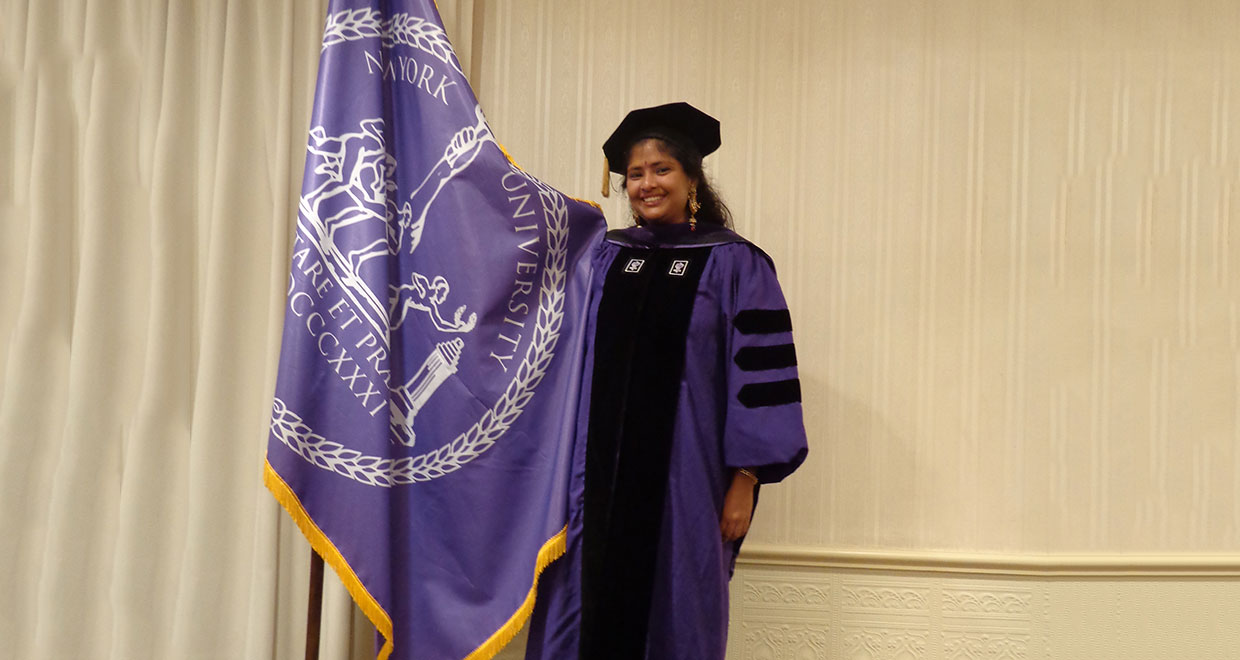
    Akshata Srinath graduated from Christ College, Bangalore University in 2011 and subsequently did a dual LL.M. course from New York University of Law (NYU) and National University of Singapore (NUS) in 2014. After having interned at several top legal firms of India, editing a journal at NUS and winning the Dean’s Award in her Master’s programme, Akshata is today working at the Dacheng Wong Alliance LLP, Singapore as an Associate (Foreign Lawyer).

    In this interview, she tells our readers about:

    • The importance of certificate and diploma courses for a law student
    • Her experience of successfully applying for a foreign master’s degree and getting the Dean’s Award at NYU-NUS
    • Working and writing for journals
    • Difference between the work culture in Singapore and India
    • Her views on entry of foreign law firms in India


    What was your motivation to study law? How did you come to choose Christ Law College for your law degree?

    I went through a lot of career seminars in secondary school to decide on what I really wanted to take up afterwards. Law seemed to be interesting and different. I attended few workshops for career counselling and realized law is not only about litigation (for me back then law meant going to the courts or being a judge), it showed me the corporate culture, NGO/pro bono work, legal editing work. Also at that time, my father was with ITDC Vigyan Bhawan where till date there are numerous events relating to different areas of law taking place. So he used to bring home materials, information and other details for me to read and therefore I was sure that I really wanted to pursue law as my career.

    Christ College Law was under Bangalore University at the time I joined. I did get in to a law school in Delhi, but going to Christ felt like coming out of my comfort zone which I still believe was a right decision. The campus is beautiful and a few friends who were already studying in Christ College, but in different departments, helped me take the decision. During my admission process, I also spoke to a faculty members which added to my motivation to choose Christ.


    You have interned with most of the top law firms in India. How did you go about securing internships at these firms? How was your experience with them?

    I have been lucky to have secured internships with some of the top law firms in India. I applied to the HR of the law firms, dropped reminder mails and few phone call follow ups to get the internships. My experience at every firm was different. I have interned with JSA in Bangalore and Gurgaon and was surprised to see how different the same law firm in different cities is. In Bangalore, the partner would directly come and give me work. I would be surrounded with lawyers so interaction level was surely high. But in Gurgaon office I found it impossible to reach the partner, because the number of lawyers was so much that you become less noticeable.

    I have always been given quality work, which involved drafting of few agreements and research work. I have made presentations for lawyers and attended few client meetings. I was given a good practical experience on how work is done in a law firm.


    Are there any extra-curricular activities you participated in during your 5 years at Christ?

    I did a couple of national and international moots but soon realized mooting wasn’t a good idea for me. I ended up taking part in parliamentary debates, Mock UN, presented papers in conferences and took part in national negotiation rounds. I have few publications in national and international journals. I also did some volunteering and legal aid work.


    Could you please describe to our readers the various Certificate and Diploma courses you studied, and the benefit you got out of them?

    I started doing certificate and diploma courses from my second year. I did diploma courses in corporate law and law of corporate mergers and acquisitions and certificate courses in dispute management and IP rights. I also attended the summer programme in international law by the Indian Society of International Law.

    Bangalore University law course is structured in such a way that we only get to read law subjects from the third year. So by doing these extra courses, you are clearer on a particular area of law. There is always a benefit in doing something extra. In my case, it helped me in bridging gaps in my knowledge. I knew a little more when I was making notes on research given to me in my internship. The extra knowledge also helped me in writing papers for publication, and a competitive edge. And lastly, resume for a fourth year or final year student looks good with extra courses.


    How did you secure a job upon graduation? What was the work profile like?

    (Upon graduation, Akshata joined as an Associate at the offices of KSB Partners)

    I applied to various law firms for job interviews and KSB Partners gave me this chance to work and grow with them. The work profile of KSB Partners was interesting. We did project finance and mergers & acquisition related work involving mostly drafting of agreements and preparation of due diligence reports including doing some research and giving legal opinions on the same. I couldn’t have asked for a better place to start working in the industry. This was because the areas of law were interesting and the Partners surely knew how to guide you through a particular task. I was fortunate to work with all the three Partners and receive knowledge and certain tricks from each of them.


    When and how did you decide to get a Master’s degree?

    I wanted to do Master’s but wasn’t sure when and how to go about it. One of my friends was applying to an architecture course in NUS for the year 2013-14 which made me think about Master’s. Also, I knew few friends who had been to NUS law so after getting information from them, checking few more details online, I discussed it with my parents and applied. I applied only to two law schools, one being NUS and the other being NYU Singapore.


    Can you please tell us about your experience applying for your Master’s degree? Do you believe it is more difficult for non-NLU students to get through into foreign universities?

    (Akshata pursued a dual LL.M. from NYU and NUS)

    Applying to NYU was a last moment idea and a hope that turned into reality. While researching for NUS Law School I did come across this unique course that seemed really fascinating. Submitting a statement of purpose was not required for NUS but in NYU they require SOP plus other documents like an essay for scholarship, a write up of experiences that you want to share with the admission committee, IELTS and TOEFL exams and the like. It was the most tedious fifteen days because I had to come up with a lot of documents. My parents played a huge role in this by reading every single document I was preparing for admissions. I asked few of my friends to read my SOP and I remember submitting the revised SOP no. 15 to the admissions committee.

    I don’t believe it is difficult to get into foreign universities for a non-NLU student. I have classmates, friends and juniors who are from non-NLU colleges but made it to elite institutions, some with scholarships. When it comes down to how to go about applying for universities, I believe it’s all up to how much you can open up to the admissions committee and how well you have spread your ideas in that one paged word document. As a very good friend and mentor for this process told me, “I don’t want to know what it is already there in your resume. I want to know what is beyond it, which is in your mind.”


    akshata-srinath-2

    Please describe to our readers the experience of studying at both these elite institutions.

    It was a great experience studying in both NYU and NUS. Our term started in May, so the first three months were purely for NYU subjects. The NYU faculties fly in to Singapore and the subjects we choose are taught for two or three weeks depending on their credit. It is a little intensive since the subjects are studied over these weeks without any break for three hours every day. In NUS, apart from the intensive subjects which follow the same pattern as those of the NYU, each course you choose is taught once a week for three hours. So the NUS way was a bit more relaxed.

    However, irrespective of the Universities, we have spent nights in the study room preparing for classes next day or finalizing papers for submission. I have been part of a week-long group paper submission, a 24 hour typed out exam, paper submissions, presentations, three hour exams, and even practical exams. I really learnt time management, prioritizing work and understanding how much was my capacity. Apart from studying, NYU and NUS celebrate certain festivals and occasions and arrange for guest lectures and alumni gatherings. Having classmates from all over the world helps you to develop personally, increases your patience and gives you lots of memories. In a nutshell, it was a great year of learning in every way.


    You have the experience of editing and writing for law journals. Please share your experience with our readers.

    (Akshata was the Student Editor at the Singapore Law Review)

    The Singapore Law Review (SLR) is managed exclusively by the students from the Law Faculty of the National University of Singapore. They have a two-step selection process which involves filling up of an application form along with submitting any article you have written. After being shortlisted they would call you for an interview. Being part of SLR mainly involved editing articles submitted by peers and also contributing write ups for their monthly newsletter. In India, I had never been part of an editorial board, I was always the one writing and submitting to the board. Therefore I can’t draw comparisons. However, it is more strenuous work than writing an article. Understanding and dividing the content of the paper as descriptive or analytic, grammar issues and citing concerns (most of us know them by the name of ‘bluebooking’), takes time and involves the need to understand what the writer has tried to convey through his paper.


    How valuable do you think the Master’s degree has been for you? How do you think it has added to you professionally and personally?

    Master’s has definitely been valuable for me. The whole experience changes your way to perceive and understand how a particular idea or in our case how a law works. Professionally I wanted to develop my career and my interest in corporate law, especially M&A, and this made me do my master’s.

    Master’s helped me to channelize the area that I wanted to expertise in. For me both my master’s degrees have indeed increased my knowledge, professional skills and even perhaps boosted my confidence. I gained a clearer insight into how the law firm industry works in Singapore, and through meetings with alumni I created invaluable contacts with some key people. You always end up learning something or the other from the university alumni meetings. Personally, I have made a lot of friends and learnt about various different cultures. It has changed my acuity and the way I look at things now is more logical and with a wider perspective.


    How did you go about achieving the feat of being awarded the NYU-NUS Dean’s Award?

    While preparing the documents for application, we had an option to apply for the scholarship as well by writing a scholarship essay. The NYU@NUS Dean’s Award is a merit-based award given to students who have demonstrated significant academic promise and/or achievement in their respective fields. With my offer letter, it was informed to me that I have been given the Dean’s Award. I am not in the position to explain how I was given this award, however, I believe with good scores one really needs to be involved in other co-curricular and extra-curricular activities. Whatever you do in the five years of law school definitely helps at a later stage.


    How did you join a reputed foreign law firm after your Master’s course?

    (Upon completing LL.M, Akshata joined Dacheng Wong Alliance LLP as an Associate [Foreign Lawyer]).

    I interned with Dacheng Wong Alliance LLP in the winter break. I continued doing some research work for the firm during my second semester with NUS. Due to my course structure, I had only three subjects that semester. This gave me enough time to continue with that work. And before the course got over, I was offered an opportunity to join DCWA. I now work for the South Asia practice of the firm.


    What is an average day like at a multi-national law firm like Dacheng Wong? Is work-life balance a problem?

    An average day in DCWA is involves attending to clients from Singapore and China and preparing draft agreements for ongoing transactions. Since Singapore is ahead of India in time, by afternoon after lunch, we need to cater to the Indian Clients. Most of the work is preparing agreements and providing legal opinion under Indian Law. Work-life balance is really not that difficult to maintain. The firm works on priority basis. So we try finishing most of our work during office hours, but if required, work has to be completed over the weekends.


    Do you believe that a Master’s is a must for lawyers seeking international exposure, and joining a foreign law firm?

    It is definitely one of the ways to seek international exposure but not the only way. For joining a foreign law firm, students in their final year can apply to foreign law firms under the training contract. However, to seek an international exposure study wise, doing master’s allows you to meet a variety of people, develop your understanding from a different view and gives you a wholesome development.


    How different is the work culture in Singapore from India? Are law firms in Singapore better managed?

    Work culture in both the countries is similar to each other. The difference is the fact that Singapore is open to international firms so this raises the bar for performance because of which there is a competition for giving out best results. Singapore also gives a wider scope in terms of involving a lawyer in laws related to other countries. I have myself been part of teams that work with the laws of most of the Asian countries apart from the laws of India.

    In Singapore, people are of different ethnicities, we not only dealing with Chinese clients, but also Malays and Indians along with Europeans and Americans. So work ethics differ from person to person. A person is expected to keep himself/herself updated. However, when it comes down to working, the 9 to 6 work hours are really not followed, which is something similar to the working style in India.

    Although international and domestic firms are organized and efficient in their deliveries and performances, the international law firms are better managed than the domestic firms in Singapore and India, since the headquarter is in a different country and managing the law firm worldwide needs specific staff with the right qualification. So the entire process becomes more crucial and highly scrutinized.


    What is your view on the entry of foreign law firms in India?

    Entry of foreign law firms in India is more of a tricky situation. I personally think it might be a loss for an Indian firm if a foreign law firm enters into the Indian market i.e. the foreign law firm is allowed to practice Indian law. There might be issues that established law firms in India could face starting with work culture. There is a basic difference on how transactions are handled in India as compared to other countries. I did find a difference in the training provided to me in India and the training I was given while working in Singapore. However, this is just my point of view. There might be a possibility that the foreign law firms actually help in the growth of the industry if they work together with the local firms.


    Would you have any parting words of encouragement for our readers who would like to follow your footsteps?

    My mom was the biggest inspiration during my testing times. She said one thing that I would like to share, “work hard for these five years, and then enjoy your remaining years.”

    Just do what you feel is correct. Explore your five years in a way that you don’t regret not trying any extra-curricular or co-curricular activities. One can utilize every semester break to intern, to do summer courses. Surprisingly, now I feel five years is less of a time to understand and achieve things. Law school is tough, it’s competitive but it is not impossible to utilize the time spent in law school successfully. It’s been a few years since I graduated from Christ College and now when I look back, I know I have come a long way. And the pain was all worth it.


    This interview was taken by: Amish Aggarwala, Advocate, Delhi High Court

  • Dharmendra Chatur, Advocate, King & Partridge, on choosing law over engineering, topping his batch in law school, and plans for the future

    Dharmendra Chatur, Advocate, King & Partridge, on choosing law over engineering, topping his batch in law school, and plans for the future

    Dharmendra Chatur graduated from Christ University School of Law, Bangalore in 2013, where he was class Valedictorian and was awarded  the Basant Kumar Sarala Birla Gold Medal for being the Best Outgoing Student. Currently he is an advocate at King & Partridge.

    In this interview we speak to him about:

    • His experience
    • Requisite skills for being an efficient litigator
    • How to apply for internship at King & Partridge  and research assistantships


    How would you like to introduce yourself to our readers?

    I’m Dharmendra Chatur. I’m currently working as an Advocate at King & Partridge, which is one of the oldest law firms in India (established in 1904). During law school, I was an active mooter and published a few articles in international and national journals. I had a brief stint with debating as well. Being interested in academic writing and research, I was involved in research on and continue to be interested in the fields of law and public policy. I currently follow developments in the areas such as legal and judicial reforms and health and medical law.


    dharmendra-chaturWhy did you decide to study law?

    Honestly, studying law was never a career choice during school. I took up Science in my 11th and 12th and had decided to do engineering (following the herd!). In fact, I enrolled myself into the Mechatronics Engineering programme at Monash University, Australia (Malaysia campus) and spent one month there (February-March 2008) before deciding to call it quits. The realization that I did not want to be an engineer dawned upon me only after I began my engineering courses! However, I had a great time being an international student at Monash – although for a limited time.

    After I returned to India, I did a bit of soul-searching and introspection and thought of giving law a try. Being a first generation college-goer (in any course), I was fortunate to have no family pressure to choose a particular course. The lack of pressure therefore allowed me to explore possibilities with my career choices. I joined LST for a one month crash course to see if I would be interested in law; and prepared for the first edition of the CLAT. Being unsure if I had done well in CLAT, I enrolled myself into Christ University mainly because of the excellent faculty and campus facilities there.


    According to you what are the qualities of a good lawyer?

    Speaking from my limited exposure to the legal profession, a good lawyer must have three qualities – at the very least – firstly, he/she must be sociable and polite; second, he/she must have a good grasp of legal knowledge (both theoretical and practical); third, he/she must aspire to be independent in thought, inclination and action to develop a dispassionate mind.


    What were your areas of interest while you were studying law?

    I was interested in public law generally and a few subject areas in private law especially company law, law of contracts and so on. In addition, I was also fascinated by public international law and conflict of laws.


    You are working with King and Partridge right now. What is a day at work like?

    As I am a practicing Advocate at King & Partridge, my work day involves preparation for and assisting my senior colleagues with appearances in the High Court of Karnataka/Civil courts/Arbitrations in Bangalore.


     What skills and attributes are important according to you to hold a job like yours?

    I believe three skills are important for any litigation job in an Advocate’s formative years: strong grounding in basic aspects of the law, immense patience to learn and grow and learning by observation.

    To law students, I would suggest that they must make consistent efforts to understand certain basic concepts in all areas of law – this will hold them in good stead when they begin (a beginner’s advantage, in a way). In addition, you must better your research, critical thinking and argumentative skills – all of which you can learn by mooting, debating etc. In essence, please utilize every opportunity law school provides you to become your own person – with a voice to be heard.


    What is the most challenging or stressful part of your job?

    The transition from law school to law practice is both challenging and illuminating. Challenging because law schools do not prepare students to face a practical world (which is why some Advocates shine without having attended many classes in law school). However, I believe that time well-spent at law school can only make one better equipped. My transition was illuminating because you get exposed to a very different world which requires strategic planning, execution among other things. Also, you figure that law and justice are ‘personal’, in the sense that from different judges, the same facts and circumstances may elicit responses. Therefore, a successful Advocate is, in my opinion, is a person who can gauge what a judge requires and prepares/presents a case accordingly.


    Is it easy to have a work-life balance in this profession?

    Successfully managing a work-life balance in this profession is very subjective as it is dependent on a variety of factors. These factors may be the firm’s environment, your commitments and so on.

    At King & Partridge, we are fortunate to have a culture that encourages a solid work ethic permitting enough time to rejuvenate so we can be enthusiastic to get to work every Monday morning.


    How do internships help law aspirants?

    Internships are essential to ascertain what kind of legal practice one would be suited to. Although figuring that out may take some time, pursuing a variety of internships will only help a law student decide his/her career options.


    Does your organisation take interns?

    Yes. The interns may apply to the following e-mail address: kingpart@vsnl.net with their CV and a covering e-mail for an internship. Based on availability of slots and an assessment of the profile of the applicant, internships would be confirmed. It usually takes a week to respond to internship applications/queries.


    How does a good academic background help in the profession?

    A sound academic background helps an Advocate in developing legal arguments from a variety of angles. Having said that, it is not necessary that only people will good academic backgrounds can succeed in the profession – because the skill set required to succeed is very different than mere academic merit.


    How important are extra-curricular activities for a legal career?

    (Dharmendra has won moots and published papers in various journals as a student.)

    Moots helped me get over my stage fear and develop confidence as a speaker. They are also helpful in developing research and argumentative skills which are skills useful in a legal career.

    Publications in journals helped me learn good legal writing and developing arguments in writing.

    Having said that, I believe that both moots/publications/ other extra-curricular activities are just ‘kick-starts’ and becoming a good Advocate is only possible by developing an attitude of constant learning and re-learning.


    How was the experience of being a Research Assistant at Centre of Law and Policy Research and Azim Premji University (Law, Governance and Development Initiative)?

    My Research Assistantships at both CLPR and AzimPremji University were an attempt to explore if I could develop an aptitude for law and public policy research. They are both great places to intern/work at if one is seriously considering a career in law and public policy analysis/research. The details for applying for internships/research assistantships are available on the respective websites of the organizations: http://clpr.org.in and http://azimpremjiuniversity.edu.in/lgdi


    What career goals have you set for yourself?

    I aspire to be a good and respected Advocate. I am aware that this will be long journey and perseverance is the key to be focused and never lose hope.


    Is there any success mantra that you follow which you would like to share with our readers?

    Doggedness. Diligence. Dispassion.