Tag: Civil litigation

  • A multifaceted lawyer managing diverse practices, as he shares tips on maintaining a work-life balance in the challenging realm of litigation. Gain valuable lessons on planning, preparation, and keeping calm amid the demands of a bustling legal career – Ankit Agarwal, Standing Counsel for the Election Commission of India & Advocate-on-Record at Supreme Court of India

    A multifaceted lawyer managing diverse practices, as he shares tips on maintaining a work-life balance in the challenging realm of litigation. Gain valuable lessons on planning, preparation, and keeping calm amid the demands of a bustling legal career – Ankit Agarwal, Standing Counsel for the Election Commission of India & Advocate-on-Record at Supreme Court of India

    This interview has been published by  Priyanka Karwa and The SuperLawyer Team
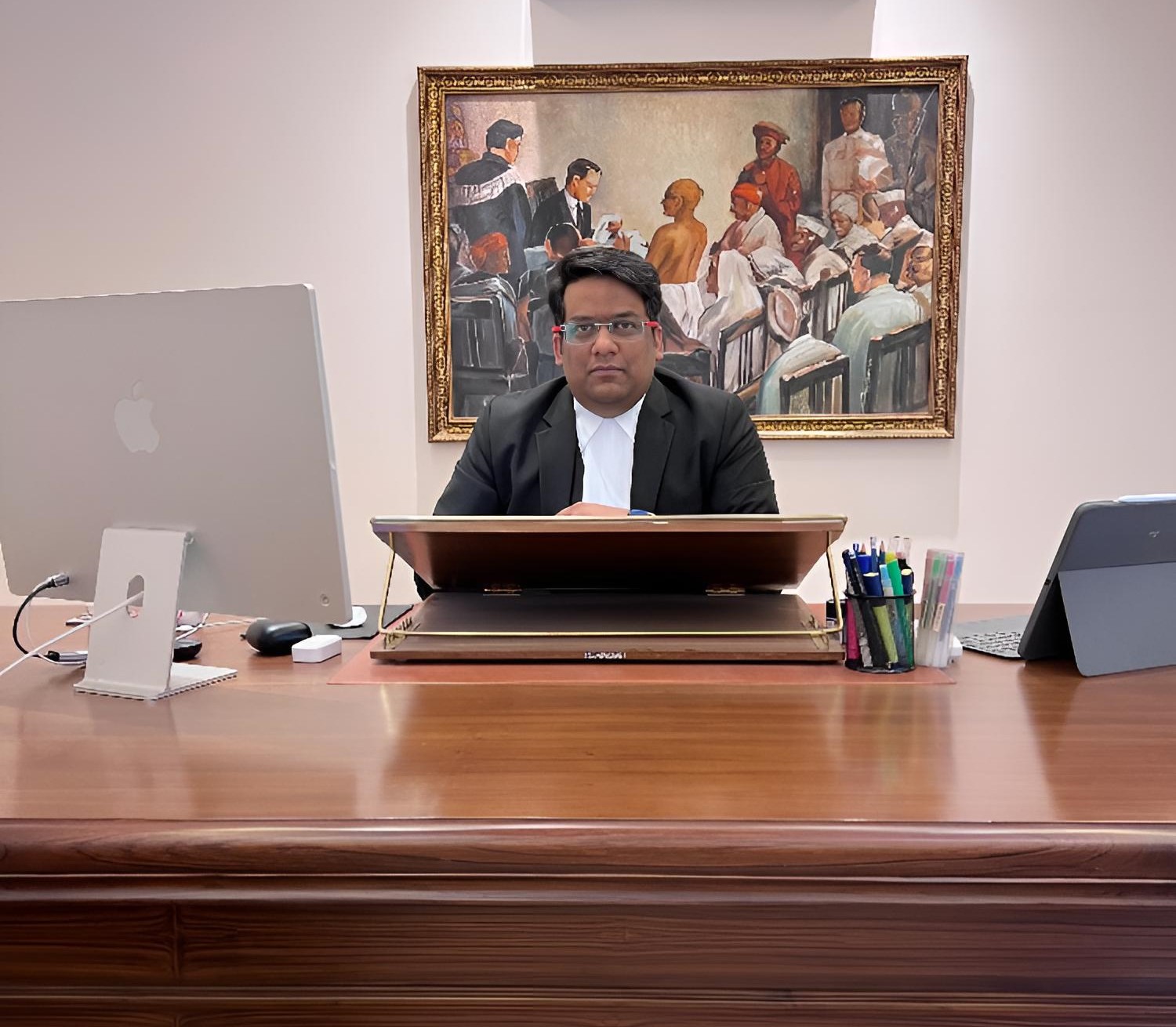
    Could you share a bit about your journey into law, especially being a first-generation lawyer? What inspired you to take this path?

    Well, this question takes me down the memory lane. I must admit that law was not the first career option I forayed into. I belong to a family of Chartered Accountants and it was expected that I also follow the footsteps of my father and eventually join the family firm. After completing my schooling, I did brush through the entrance exam for CA i.e., CPT exam. However, numbers never interested me. There was a subject in the syllabus for CPT exam – Mercantile Law which had topics like Contracts, Sale of Goods Act, Partnership Act etc. While reading the subject, I was intrigued. Thereafter, I started researching on law as a profession and gained more interest while reading about renowned seniors in newspaper articles and their interviews on TV, which helped me in taking the decision to pursue law.

    As someone managing a diverse practice, from private clients to standing counsel for Election Commission and various authorities, how do you maintain a work-life balance? Any unique strategies you’ve developed?

    Great Question! Managing work life balance is always a debated topic in any field of work. I must admit that initially it was very overwhelming for me but as a first-generation lawyer, I had the grit and determination to manage my work efficiently. Everyone has a different style of maintaining work-life balance. For me, better planning, thorough preparation and the ability to keep calm, even when there is are last-minute listing of cases or urgent drafting, is something I’ve learnt out of practice over the years. 

    Since my decision to litigate and develop my own practice was clear to me very early on in my career, I had accepted that the journey ahead would not be a cake walk. At the end of the day, the satisfaction I gain from my work is what pays off and makes me strive harder. 

    It would be wrong for me to paint a rosy picture and say that there is a good balance of work and life in the field of litigation. The balance does come, but not very early on in this path. One should always make the most out the moment. According to me, the best way to maintain work life balance is to unwind whenever one can and has time to. 

    Can you share a funny or memorable moment from your early days in the legal field that taught you a valuable lesson or made you laugh in hindsight?

    After completing my course in law, I was placed with the litigation department of J. Sagar Associates, one of the leading law firms in India. Being a fresher with zero work experience, it was a very proud moment for me and at the same time, it was nerve-wracking. Working in a law firm that to one of the leading law firms, you are expected to be professional and crisp with your work.

    In the first week of my joining the firm, I was given an assignment of drafting. According to me, drafting is something which nobody can teach you and you only get better at it with practice. So I had prepared a draft to the best of my ability and limited knowledge at the inception of my career. My reporting partner in the firm made me sit with him and explained that the synopsis which we make in the petitions is what makes or breaks your case. He explained that one should always make sure that the synopsis of the petition should ensure that your story reaches the Judge and it should be as short as possible. This valuable lesson which I got early in my career has helped me a lot while drafting petitions.

    Starting your career at one of India’s top law firms and then transitioning to individual practice is quite a journey. What inspired you to take the leap and start your independent practice, and how has the experience shaped your approach to the legal profession?   

    Coming from a family of Chartered Accountants, I was always expected to become one as-well. Albeit my interests were always aligned towards law and I never imaged joining the family firm. But being brought up in this environment I saw my father build his practice from scratch. This instilled in me the principle of working for self and building one’s legacy (or at-least making an honest attempt). I learnt that in order to achieve the same, not only did it require patience, but also consistency.

    Upon graduating I joined one of India’s top law firm’s only to realise that the structure, methods, and expectations were supportive/ aligned with the goal in my mind. Surely, I did learn a lot in the short span I worked in firm, but keeping in mind my ultimate objective, I pivoted and took a huge risk by going independent. This risk I took early on in my career was something I am thankful for today. Initially it was tough to develop clientele and I was surrounded by negativity. But with time it has only taught me that one needs to trust their instinct, stay consistent and put their best foot forward.

    As the Standing Counsel for the Election Commission of India and representing industrial development authorities, your work spans various domains. What’s a case or project you’ve worked on that you are particularly proud of, and why does it hold significance for you?

    To me, every case is important and challenging and has taught me something or the other which remains with me for a long time. Every case that I have done either before the Hon’ble Supreme Court of India or other High Courts are dear to me. It is difficult for me to pin point a specific case but I must tell you that being a Standing Counsel for the Election Commission of India comes with its own challenges. Why I say this is because Election Commission of India is a constitutional body which is entrusted with conducting the elections of the largest democracy in the world along with the legislatures of the States as well as the Hon’ble President and Hon’ble Vice President of India.

    Of late much has been said about the Election Commission of India in the social media, however, when you appear for the Commission before any Court, it is expected that that you represent the Commission fairly and independently. The Courts also take your word for it because at the end of the day, you are representing a body which is the watchdog of free and fair elections in the country.

    We know you’re deeply involved in legal matters, but when you step out of the courtroom, what’s Ankit Agarwal’s go-to way to unwind? Any hobbies or activities you indulge in to relax?

    For me the best way to unwind is spending time with my family. Whenever I get the time to unwind, I make sure that I go out with my family for a meal or a movie. One thing that the Covid-19 pandemic has taught me is that there is nothing better to spend time with your loved ones.

    For young aspiring lawyers looking up to your journey, what piece of advice would you offer to help them navigate the early years of their legal careers?

    My advice to the young aspiring lawyers will be hat the journey is difficult but it’s not impossible. You need a lot of patience, hard work and zeal but later on in your career, you reap the results of the hard work put in in the initial years of your career. Litigation is not only limited to drafting and arguing in court but knowledge and awareness of law plays a pivotal role. Do not succumb to fear of judgment and pessimism which is very common in our profession. Work hard, trust your instincts and try to be as consistent as you can.

    Get in touch with Ankit Agarwal –

  • “A Legal Maestro’s Journey from Army Aspirations to Intellectual Property Mastery” – Explore the expansive landscape of legal expertise, ranging from Intellectual Property Rights to general litigation, An In-Depth Conversation with Aditya Dhar, Principal Associate at Vaish Associates

    “A Legal Maestro’s Journey from Army Aspirations to Intellectual Property Mastery” – Explore the expansive landscape of legal expertise, ranging from Intellectual Property Rights to general litigation, An In-Depth Conversation with Aditya Dhar, Principal Associate at Vaish Associates

    This interview has been published by  Priyanka Karwa and The SuperLawyer Team

    Can you share a bit about what inspired you to pursue a career in law and how you ended up specializing in Intellectual Property Rights?

    As an adolescent, I was actually always inclined towards joining the army as I was fascinated with the uniform and the discipline that comes with it. I had plans to go to Rashtriya Indian Military College (RIMC) for schooling but fate had other plans and that took a backseat as I grew up. As time passed, I had a young man’s realisation that I was soft spoken but always wanted to put forth my point. Being a lawyer, I felt, would give me an opportunity to channelize this desire. Being a lawyer at that time, or so I thought, meant being aggressive. I had a different view though. I thought that if I blend two extremes I would rather grow as an individual. So to answer your questions, it was my desire to grow as an individual that inspired me to pursue law. As a first generation lawyer, I did not have anyone to look up to and follow the same path. Since my first day in this profession, I was more than happy to wear different hats and try out different fields of law. Having said that I was always interested in the litigation part of the profession because, as I said, my opportunity to grow as a person would, at least in my mind, come when I was appearing before a judge and thinking on my feet. While I was exploring different fields of law, one of my seniors in my early days, from whom I have learnt a lot, had specialization in IPR and gave me opportunities to explore the field.

    Beyond the courtroom, we hear you’re quite the legal wordsmith. What inspired you to start writing legal articles, and do you have a favorite topic you’ve covered so far?

    I was told in the beginning of my profession that litigation has three basic pillars which are drafting, research and appearance before the courts. Fromday one, I had an inclinationtowards drafting part of the profession and was always interested in writing. My seniors always pushed me to write articles as they always said that articles are the best way to reach people and educate those who are not from legal background. It is also a marketing tool. You can never pick one topic, but my idea of writing articles is focusing on the basic principles of law which are easy to understand from a layman’s point of view.

    Your expertise spans a wide range, from Intellectual Property Rights to general litigation. If you had to choose one area of law that you’re most passionate about, which would it be and why?

    I may get criticized for this but it will be unfair to choose one area of law. My passion lies where the client’s need is. If a client’s need is initiating an arbitration proceeding, I would have to go with that. If the same client wants to file a criminal complaint, it is my duty to pursue that recourse as well. But before going into different domains of law, the most important thing is to gain the trust of the client by giving the client the desired results. Having said that, it impossible to cater to every need of the client and you need to broadly identify your strengths. Since you have put the “passion” question, it would be safe to say that the commercial side of the profession whether it is a commercial suit including IPR or any branch of it like arbitration or white collar crimes interests me the most.

    Being in this profession for the last 10 years and being associated with Vaish Associates since 2018, you’ve seen the legal landscape evolve. What do you find most exciting about the current legal environment, and are there any upcoming changes you’re particularly interested in?

    Needless to say that the legal profession is ever growing. The current legal environment is more commercial driven. The advent of commercial courts act and commercial courts have proved that future is more commerce driven. However, since the world of commerce has economic advantages, the courts do not want to indulge in unnecessary litigations. For this purpose, it has become mandatory before filing a commercial case to try and settle the case by filing a pre litigation mediation application which filters out such unnecessary litigations. The courts have also been reasonable in doing away with such mediation application if the court is convinced that the case in hand is urgent and that such application would hamper justice.

    Since we are talking about the commercial era, one cannot forget about arbitration. Recently, it has been held that by the Apex Court in case of NN Global Mercantile v. Indo Unique Flame that an arbitration agreement cannot be acted upon if the stamp duty on the said agreement is not paid. This has led the parties entering into an arbitration agreement to pay the appropriate stamp duty which was many a times not paid due to N number of agreements with different parties, and if the same is not paid on the existing agreement, courts have the power to impound the agreement. However, a seven judge bench of Supreme Court is reconsidering the said judgment, wherein order is reserved and the same is awaited as on date.

    It is interesting to see that how after covid, the courts are more digital friendly. Lawyers today have the option to appear before a judge sitting in the comfort of their home. Digital courts are established for taking up cheque bouncing cases. Court filings are done digitally. Trademark hearings are conducted through VC. Having said that, one may also argue that the profession has lost its charm by being digital and attending hearings through VC.

    Your educational journey, from Apeejay School to being a first generation lawyer and becoming a Principal Associate at Vaish, is quite impressive. Along the way, were there any mentors or role models who significantly influenced your career choices or approach to law?

    I feel mentors are not just people. Even situations can be mentors to you. As far as people as mentors are concerned, I would say that there are different kinds of mentors. There may be people who unknowingly help you on the way. Sometimes difficult situations are created by difficult people, but the important thing is what you can take from those situations and learn from it and treat that situation as a learning experience. In this profession, if you are a first generation lawyer, you have to be your own mentor.

    Beyond the legal realm, what’s a passion or interest you have that might surprise people? How do you incorporate this into your life, especially during busy periods in your legal career?

    People say that I am a good singer. We had a band in my school days and I was the lead singer in that. But now it is just a hobby and a way to entertain friends and family. Besides this, whenever I get time, I love being in the mountains close to the nature.

    Finally, what advice would you give to recent law graduates who are just starting their legal careers? What lessons have you learned along the way that you believe would be valuable for them as they embark on their own journeys in law?

    Be thorough with whatever task is given to you. Remember devil lies in details. Choose your strength amongst the three pillars of legal research, drafting and court crafting and play with it. Do not take for granted the other pillars. Be soft spoken no matter what people say about how a lawyer should be. Never let anyone guess what is going on in your mind. Sincerity towards your profession and towards the task in hand can take you places. Lastly, it is important to understand that in the present world, unless you can market what you create, your creation may become useless.

    Get in touch with Aditya Dhar-

