Tag: Civil Matters

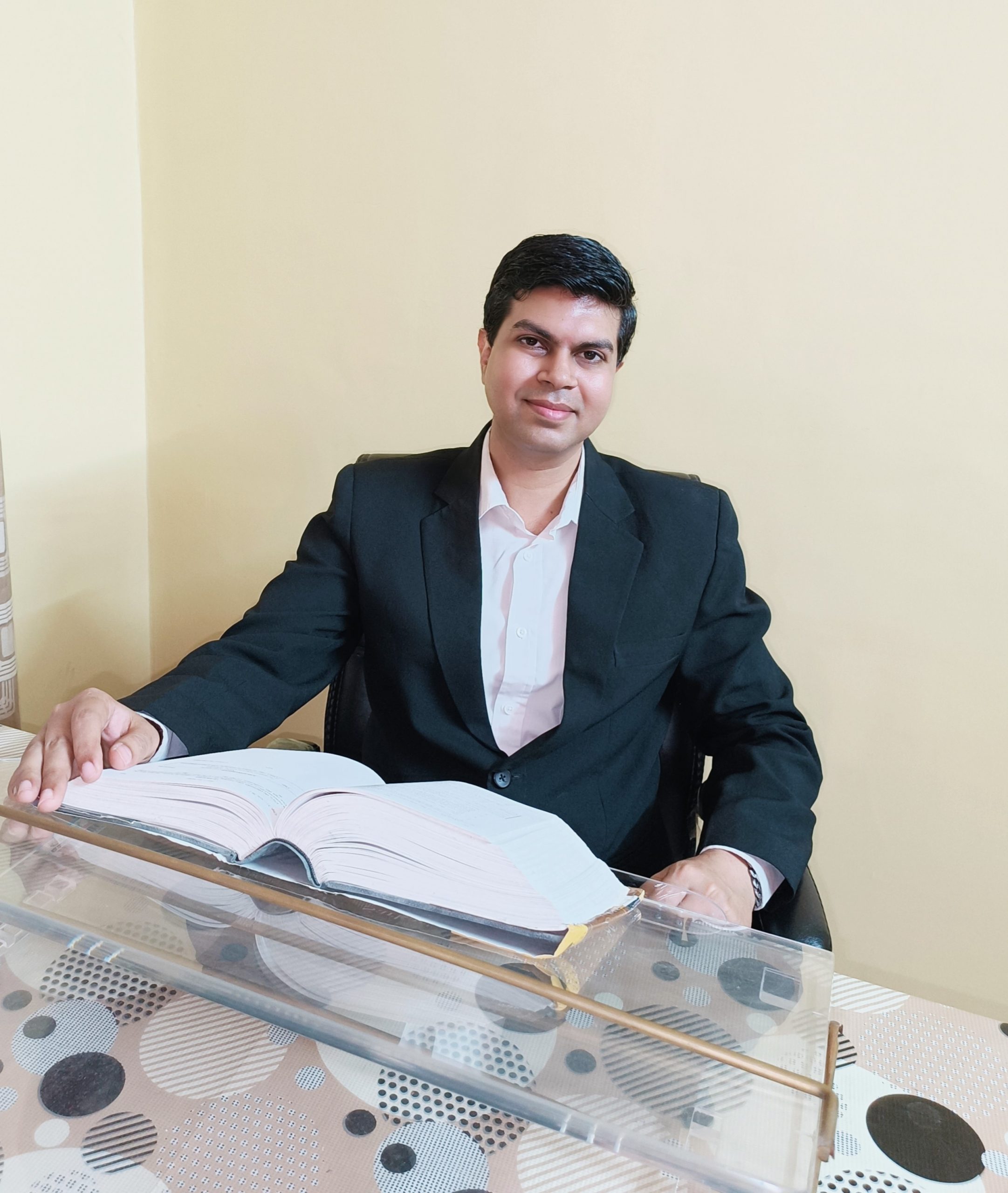
  • “As a first-generation lawyer, I was driven by a desire to make a difference. My passion for justice and service has always been my guiding force.” – Gaurav Sharma, Independent practitioner at the Supreme Court of India & High Court of Delhi 

    “As a first-generation lawyer, I was driven by a desire to make a difference. My passion for justice and service has always been my guiding force.” – Gaurav Sharma, Independent practitioner at the Supreme Court of India & High Court of Delhi 

    This interview has been published by Namrata Singh and The SuperLawyer Team

    What inspired you to pursue a career in law, and how did your journey begin at the National Law Institute University, Bhopal? 

    I was always inspired by a desire to make a difference, always had an interest in justice and fairness, and a passion for resolving issues. It either had to be civil services or advocacy for me! Starting law school at NLIU Bhopal was an exciting experience. I was all set to tackle law and life. However, initially, it is like being hit by a whirlwind of confusion, trying to get a hang of things. Eventually, you get used to the law school life, make friends, and, ironic as it sounds, they end up becoming your partners in crime! By the end of your time at NLIU, you’ll emerge not only as a legal professional but also as a treasure trove of memorable experiences and friendships that will last a lifetime. 

    When you first began your career in litigation, what were some of the key challenges you faced, and how did you overcome them? Additionally, how has your approach to handling complex litigation evolved over the years, given your extensive experience across various legal domains? 

    In the early stages of my litigation career, one of the main challenges was adapting to the high-pressure environment of court proceedings and developing the ability to think quickly and strategically. Building my reputation and gaining trust in such a competitive field also took time and effort. I focused on learning procedural law, improving my courtroom skills, and seeking advice from my seniors and other experienced lawyers. Taking on smaller cases helped me build confidence and experience. Over the years, my approach to handling complex cases has become more strategic. With more experience, I now focus on aligning legal strategies with my client’s long-term goals, managing teams effectively,  and navigating the complexities of challenging cases. My methods have evolved to be more thoughtful and aimed at achieving the best possible outcomes.

    Working with prominent figures like Mr. Sumeet Pushkarna and Ms. Jyoti  Mendiratta must have been enriching. What were some key learnings from these experiences? 

    Working with Mr. Sumeet Pushkarna and Ms. Jyoti Mendiratta was an incredible experience. These experiences were both, the founding and the building stones of my career in litigation. From Mr. Pushkarna, I learnt the importance of time and developed the ability to multitask. Working with him inculcated a sense of discipline and punctuality, which has helped me immensely in my professional life. Ms. Mendiratta, on the other hand, taught me the value of empathy and understanding in legal practice. She showed me how important it is to truly listen to clients and understand their concerns. Both of them emphasized the importance of maintaining integrity and professionalism in all aspects of the job. These lessons have been invaluable for me. 

    You handle a diverse range of cases, from civil and criminal matters to arbitration and consumer disputes. How do you manage such a broad spectrum, and what are the challenges and rewards of this diversity? 

    Juggling such a variety of cases is like running a legal marathon! It keeps my mind constantly engaged, and my days are anything but boring. The key is to stay organized and to keep learning. I make it a point to stay updated with the latest laws and rely on my network and colleagues for advice when things get challenging. The main challenge is balancing the demands of each type of case. Criminal cases can be quite urgent and intense, while arbitration involves more strategic thinking and patience. Despite the challenges, diversity is ultimately rewarding. It keeps me on my toes and allows me to help a wide range of clients, which I find not only satisfying but also fun. Each case teaches me something new and contributes to my growth as a lawyer.

    Could you discuss a few notable cases you have worked on, particularly those involving public interest litigations or significant legal challenges? 

    One notable experience that stands out for me in my litigation career was my first-ever arbitration case, handed over to me by my senior. It was a complex dispute, and I had the opportunity to handle it from start to finish. The arbitration award was in our favor, which was a significant win for our client. What made this case particularly memorable was the recognition I received not just from the arbitrator but also from the opposing counsel, who appreciated my work. 

    What advice would you give to young lawyers entering the profession today?  What key skills and attributes should they focus on developing?

    My advice to young lawyers in a single line would be: Brace yourselves for a wild ride and keep a sense of humour handy. Jokes apart, I would advise young lawyers to never stop learning. The legal field is constantly evolving, so stay curious and keep up with the latest developments. Networking is crucial, too. Build relationships with colleagues and mentors, they’ll be invaluable throughout your career. Additionally, I would advise them to work on their communication and to be respectful, empathetic and resilient. The legal profession can be demanding and unpredictable and it is important to be able to bounce back from setbacks. Finally, keep your passion alive. 

    Outside of law, what are your personal interests or hobbies? How do these activities help you maintain a work-life balance?

    Maintaining a work-life balance is of immense importance to me. I try not to bring my work back home and have a personal life beyond it. I usually turn to music and movies to unwind and enjoy catching up with my friends and family after work. These things help me maintain a work-life balance by providing a healthy distraction and keeping me refreshed. They remind me that there’s more to life than just work, which is essential for staying motivated and avoiding burnout. 

    Can you share your experiences with pro bono work? How do you choose the causes you support, and what impact do you hope to make through these efforts? 

    There’s something remarkably fulfilling about being able to help and give back to society. I would like to think that I try to do it to the best of my capabilities, not only legally but otherwise as well. I typically choose causes that resonate with me or where I feel I can make a positive difference, even if it’s small. 

    You have the unique experience of practicing in various courts, from District  Courts to the High Court and the Supreme Court of India. How do the experience and approach differ when handling cases in these different judicial environments, and what insights can you share about the nuances of working at each level? 

    Practicing in various courts and fora has shown me just how varied the legal process can be at each level and how each level has its own approaches and challenges. It makes you understand the importance of learning both the procedural aspects and the strategic elements of legal practice. In District Courts, the focus is on gathering facts and building the groundwork of a case. In High Courts, you need to be able to present clear and persuasive arguments and dive deep into legal principles. At the Supreme Court, the focus shifts to bigger legal questions. Practicing at each level has taught me to be adaptable and helped me grow as a lawyer. 

    As an experienced advocate, how do you mentor junior lawyers and interns in your chamber? What are the key lessons you emphasize to them? 

    Mentoring junior lawyers and interns is as rewarding as it is demanding. It involves guiding them through the practicalities of legal practice, fostering their professional development, and instilling core values. I’m anyway more of a friendly colleague than a tough taskmaster to them. I give complete freedom to my junior associates to take up independent work. Allowing independence while maintaining a supportive framework helps junior lawyers and interns develop essential skills and confidence, preparing them for more significant responsibilities in their careers.

    Get in touch with Gaurav Sharma-

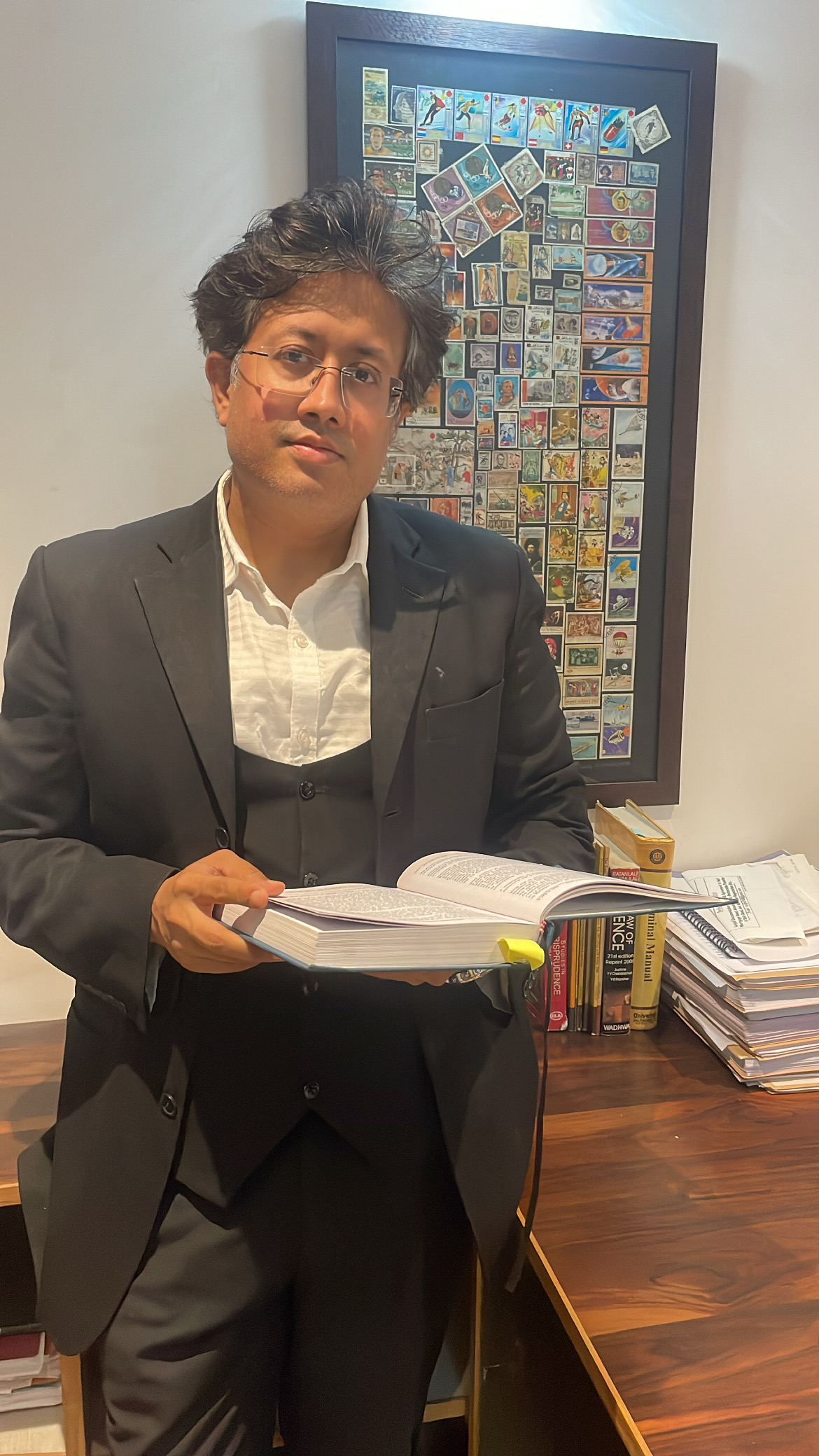
  • “From Mumbai Courts to High-Profile Cases: A Chronicle of Legal Excellence and Advocacy Leadership,” Also known for his unwavering commitment to justice, innovative approach, and diverse expertise – Advocate Hitesh Ramchandani

    “From Mumbai Courts to High-Profile Cases: A Chronicle of Legal Excellence and Advocacy Leadership,” Also known for his unwavering commitment to justice, innovative approach, and diverse expertise – Advocate Hitesh Ramchandani

    This interview has been published by  Priyanka Karwa and The SuperLawyer Team

    Hitesh your legal journey has taken you to various courts and forums, representing clients at a national level. If you were to encapsulate your advocacy career in a tweet length summary what would it say?

    Being a Second generation lawyer, I persuaded my family that I want to be a lawyer and make a good career in law. To be very frank, I must say the journey in this legal profession has been a roller coaster ride for me. Let’s dive back in time to know more about why and how I chose the legal profession as a career. In the year 2005, I did my schooling from St. Pius X High School.  I was least interested in accounts so it was easy for me to make up my mind about not pursuing CA/CS Course for sure. I always had dreamed to pursue Law from top law Schools either from KC Law College or Government Law College in Mumbai. With Parents Blessings, in the year 2010 I pursued my Law from KC Law College, Churchgate Mumbai and I graduated law in the year 2013. In the Year 2013, I was enrolled as an Advocate with the Bar Council of Maharashtra & Goa.

    I have dedicated my career to defending the rights of individuals and organizations across India’s diverse legal landscape. My unwavering commitment to justice has earned me a reputation as a formidable force in the courtroom.

    My Expertise spans a broad spectrum of legal domains, including corporate law, Criminal law, Family Law, Consumer law, Labour Law and constitutional law.

    A staunch proponent of the rule of law, I am renowned for my meticulous preparation, persuasive arguments, and unwavering dedication to my clients’ best interests. 

    Beyond the courtroom, I am actively engaged in shaping the legal landscape through my contributions to legal education and professional development initiatives. I am always a speaker and mentor, inspiring aspiring lawyers to uphold the highest standards of legal practice.

    My legal journey is an embodiment of unwavering commitment to justice and a deep-seated belief in the power of law to transform lives. I stand as a beacon of hope for those seeking legal recourse, demonstrating the transformative impact of a dedicated legal professional.

    Your practice covers a diverse range of legal areas. From Family courts to National company Law Tribunal. Is there a specific type of case or legal matter that you find particularly intriguing or challenging ? Could you share an experience that stood out in your career?

    One intriguing type of case in family court involves navigating complex child custody disputes in the context of international relocation. These cases often arise when one parent wishes to move abroad with the child, potentially impacting the other parent’s access and involvement in the child’s life. They entail multifaceted considerations, including the child’s best interests, maintaining relationships with both parents, cultural adjustments, and legal complexities across different jurisdictions. The intricacies of international law, cultural factors, and the emotional dynamics involved make these cases both challenging and fascinating from a legal standpoint. Finding a resolution that prioritizes the child’s welfare while addressing the rights of both parents within an international context requires a delicate balance and often involves creative legal arguments and mediation strategies.

    As someone who has conducted lectures and served as a judge in Moot court Competitions, what’s one legal misconception you’ve encountered that you find yourself debunking frequently.

    One legal misconception that often requires debunking is the belief that the law operates in absolute black-and-white terms. The reality is that the law is often nuanced and context-dependent, shaped by various factors including precedents, legislative intent, and evolving societal norms. Encountering the misconception that legal matters always have a clear-cut right or wrong solution is common. In educating aspiring legal minds, I emphasize the importance of understanding the complexities within the law, acknowledging that interpretations can vary, and advocating for the exploration of multiple perspectives to arrive at a well-reasoned and just conclusion.

    As the President of the Maharashtra Mediation Cell at IEFCI (International Economic Forum for Commerce and Industry), you’re involved in Alternative Dispute Resolution (ADR). What drew you to this field and how do you approach mediating disputes to achieve amicable settlements

    I am drawn to the field of alternative dispute resolution (ADR) because I believe it is a more efficient and effective way to resolve disputes than traditional litigation. ADR processes are typically less adversarial and more collaborative than litigation, which can help to preserve relationships between the parties involved. Additionally, ADR processes are often more cost-effective than litigation.

    When mediating disputes, I use a facilitative approach. This means that I help the parties to identify the issues in their dispute and to develop their own solutions. I do not impose my own solutions on the parties, but rather I help them to reach a mutually agreeable resolution.

    ADR’s appeal lies in its capacity to facilitate constructive dialogue and foster mutually beneficial resolutions outside the courtroom. My interest in this field stems from a belief in the power of mediation to empower parties in dispute by providing them with a voice in the resolution process. I approach mediation by prioritizing active listening, fostering empathy, and encouraging open communication. By creating a conducive environment for dialogue, I aim to identify common ground, encourage collaborative problem-solving, and guide parties toward crafting their own, mutually acceptable solutions, ultimately aiming for amicable settlements that address the interests of all involved.

    Handling cases involving Bollywood celebrities and public interest litigations against regulatory authorities is quite unique , Can you share a bit about experience of handling high profile cases and how do you navigate the intricacies that come with such cases?

    Handling such cases demands a unique approach due to media scrutiny, public interest, and often, heightened emotions involved. Maintaining confidentiality while managing public perception is key. Detailed preparation, strategic communication, and a focus on legal nuances are crucial. Building strong client relationships and ensuring clear expectations help manage the complexities. Navigating these cases requires a delicate balance between legal expertise, public relations, and a thorough understanding of the industry’s dynamics.

    Outside the legal realm, what hobby or activity that brings you joy and relaxation serving as a counterbalance to the intensity of legal proceedings?

    Outside the legal realm, one activity that brings me immense joy and serves as a perfect counterbalance to the intensity of legal proceedings is photography. Capturing moments through a lens allows me to immerse myself in the beauty of the world, offering a serene escape from the intricacies of the legal sphere. The creative aspect of composing shots and exploring different perspectives brings a sense of calm and rejuvenation, offering a much-needed balance to the demanding nature of legal work. 

    Your commitment to providing the best legal representation to your clients is evident Outside the courtroom, what’s one piece of advice you find yourself frequently giving to individuals facing legal challenges whether they are corporations or private parties.

    One recurring piece of advice I often offer to individuals, whether they’re part of a corporation or private parties, when facing legal challenges is to prioritize communication and documentation. Clear and open communication between all involved parties is crucial in navigating legal matters effectively. Documenting every interaction, agreement, or important detail ensures a comprehensive record that can be pivotal in resolving disputes or presenting a strong case in court if needed. Whether it’s emails, meeting minutes, or formal agreements, maintaining a detailed record significantly strengthens your position and can serve as a valuable asset in achieving favourable outcomes. In Legal matters, patience is a must. Legal matters can take time to resolve. Be Patient with your Advocate / Counsel and trust that they are working in your best Interest. The Parties should also consider the Alternative Dispute Resolution process to resolve legal disputes without going to Court. This can be a more cost effective and efficient way to resolve your legal issues. The parties should not panic in any situation, it is normal to feel stressed and overwhelmed when you are facing legal challenges. However it is important to stay calm and rational. I always advise everyone that if you think the legal issue is simple, it is always best to consult with an Advocate. An Advocate can help you avoid making mistakes that could jeopardize your case.  

    As a seasonal advocate how do you see the current generation of legal professionals contributing to the evolution of traditional legal practices? What advice would you give to young advocates navigating the modern legal landscape? 

    The current generation of legal professionals is actively reshaping traditional legal practice through technological integration, diversified skill sets, and a dynamic approach to client representation. Embracing advancements in legal tech, they’re leveraging AI-powered research tools, online platforms for case management, and virtual courtrooms to streamline processes and enhance efficiency. Moreover, this generation is recognizing the importance of interdisciplinary knowledge, incorporating business acumen, technology expertise, and communication skills into their legal repertoire. To young advocates navigating this modern landscape, I advise embracing technological advancements while maintaining a strong foundation in legal principles. Continuously upskill by learning about emerging technologies and their applications in law. Cultivate a diverse skill set, including negotiation, critical thinking, and adaptability. Building a strong network within and outside the legal sphere can also be pivotal for career growth and opportunities in this evolving legal landscape. One more thing, everything progresses at its own pace, so never feel frustrated/agitated if something is not happening at your whims/desires time and destiny will certainly make it happen for you if you are honest and keen about it.

    Get in touch with Adv. Hitesh Ramchandani –

  • No one with a defeatist or pessimist mentality or an irresolute mind-set can ever start their own practice- Founding Partner at THYNK CELS

    No one with a defeatist or pessimist mentality or an irresolute mind-set can ever start their own practice- Founding Partner at THYNK CELS

    This interview has been published by  Priyanka Karwa and The SuperLawyer Team

    What motivated you to start your own legal practice, and what areas of law do you primarily focus on? Could you please share more about your role as a Founding Partner at Cost Effective Legal Solutions (CELS)?

    I think the majority of advocates are motivated to start an independent legal practice by default. It’s more like a factory setting of the brain after clearing the bar exams. Mine was tuned even before I began studying law. The desire and motivation to go independent further grew in college. But once I stepped into the real world of practice, the scene changed. As a first generation lawyer, I realised that the ball was never in my court. The bubble shattered, after seeing the strength of the bar and the amount of advocates struggling to make a living. I learnt it the hard way. I realised I had to first grow in terms of knowledge. It took me four jobs and ten years to feel, I am sufficiently knowledgeable. I realised over these developing years that knowledge is not enough to keep me motivated so I developed the capacity to do laborious work. I steadily and slowly increased my patience level and self-confidence. It took a lot of mixing of all these emotions before I went independent in 2021 and started CELS. I realised only the ones capable of labour, patience, self-confidence and faith are welcome in this profession. No one with a defeatist or pessimist mentality or an irresolute mind-set can ever start their own practice. In 2021, I finally decided to not merely look to principles but have the readiness to act upon them. I put my art of persuasion to test developing clients in the field I was extremely confident about. 

    I started my practice at tribunals where the law application is quasi –judicial in nature/ sort of easy for any advocate to absorb in terms of procedure. I practiced at the NCDRC, DRT, DRAT, NGT and slowly shifted gears to civil, criminal and commercial trial courts. Now I primarily focus on business/commercial related disputes for Individuals, Corporates, Financial Institutions. The area of law practiced by CELS covers both civil and criminal statutes. As founding partner, I ensure that CELS always has business. We started with a team of two and now we have 25 people in our office in two years’ time directly and indirectly associated with us. 

    You’ve mentioned your extensive experience with Title Search Reports for financial institutions. Could you explain the importance of these reports and how they benefit organizations like National Housing Bank, Indian Bank, Bank of India, and LICHFL?

    We at CELS have rendered more than 15000 Title Search Reports for the above stated Institutions and more. TSR facilitates a buyer to help buy a property, a Bank / FI / NBFC determines the authenticity of a title. The Title Search Report made by CELS helps the Financial Institutions stated above deal with the crucial and imperative aspects of identifying an undisputed title. Identifying an undisputed title is important to all stakeholders involved, be it a buyer, seller, or a lending institution. Our reports facilitate the seeker/FI with an answer, as to whether a property is mortgage worthy as collateral or not. When I started working for the aforesaid FI’s I was put across several questions. Questions which had simple solutions yet no one had compiled the answers in a streamlined manner. CELS then published a hand book for its clients which not only gives its readers theoretical knowledge but practical knowledge which the reader can implement “tout de suite”, while dealing with a title. CELS has published the said handbook primarily keeping the documents, sub-registrar offices, the authorities, legislations, and other aspects which have direct application to the NCT of Delhi and its nearby territories (NCR). But the research base is such, that said fundamentals apply to the whole of India more or less.

    Your experience includes handling Commercial Court Cases. Could you share a challenging case that you worked on and the strategies you employed?

    Recently before the Patiala House Court, New Delhi, I had the opportunity to defend a case in which recovery of more than two crore inclusive of interest was filed against my client. All remedies under the Pre-Mediation and Settlement had been waived as my client had failed to participate. Now I was left to defend a massive recovery. I asked my client how much of the demand was legitimate. He admitted to me that the applicant / suing party is entitled to almost 80% of the amount mentioned in the suit. All though it is difficult to sum up in a paragraph as to what strategies were adopted. I’d say we went at everything from challenging the jurisdiction, to the absence of cause of action. We challenged the clause vesting jurisdiction on a Court which otherwise does not have jurisdiction. I relied on the judgement of Bahrain Petroleum Co., where the Hon’ble Supreme Court had held that neither consent nor waiver nor acquiescence can confer jurisdiction upon a court, otherwise incompetent to try the suit. It is well-settled and needs no authority that ‘where a court takes upon itself to exercise a jurisdiction it does not possess, its decision amounts to nothing. Further strategies adopted were challenging the facts on the basis of evidence available, an applicability of an expired contract etc, filing a detailed written statement. At the end the matter was settled we had to only pay a fraction of the suit amount. The court’s name was Anurag Sain DJ (Commercial Court)-01, CS(COMM)525/22. 

    NCDRC cases against builders on behalf of homebuyers are significant. Can you discuss the typical issues faced by homebuyers and the legal steps you take to address their concerns?

    NCDRC is the highest consumer forum available in India for relief against wrongs done by Builders. But after my experience at the NCDRC I’d suggest all consumers to approach RERA or NCLT. I am not suggesting that NCDRC is not an apt forum for relief, but the fact that the said forum is flooded with cases cannot be discarded. I had filed a class action complaint in 2019. And the matter has recently reached the stage of final arguments. All my home buyers were seeking a refund but had to eventually settle. Even though I was successful in getting them massive discounts, the fact that during the proceedings the builder started to go insolvent project by project, broke the home buyer’s spirits to seek refund with interest and they opted for possession with discounts. The typical issues faced by home buyers are delayed possession, unlawful demands in construction linked payment plan, forfeiture of booking amount, non – construction of Unit & builder / project being declared insolvent. These are some typical cases which are ongoing before the NCDRC. Once a favourable order is passed, the execution of the said order also takes a substantial amount of time. And one just has to keep his fingers crossed on the builder not running away from the country or being sent to jail or being declared insolvent. Hence as an advocate you have to be equipped with alternate remedies for your client. Ref: CC/912/2019

    You’ve also been involved in defamation cases. What is the most interesting or unusual defamation case you’ve handled, and how did you navigate the complexities of civil and criminal aspects in such cases?

    The most interesting defamation case I have had the privilege of filing was for a celebrity YouTuber against another less known You Tuber. The defamation was done vide an impugned video clip uploaded on YouTube and shared across Telegram. Whatsapp and other messenger applications. The statements made in the impugned video were made with the culpable and malicious intention to defame my client. The video was made to spread an untrue, false and scandalous imputation against my client that he is a fraudulent person who has misguided its subscribers. The scandalous, false and defamatory statements were explicitly intended to harm the reputation of my client and to malign him before the public. We argued before the Civil and Criminal Court that a person’s reputation is an inseparable element of an individual’s personality and it cannot be allowed to be tarnished in the name of the right to freedom of speech and expression because the right to free speech does not mean the right to offend. Rather, the object of guaranteeing constitutional protection to freedom of speech and expression is to advance public debate and discourse. However, speech and writings laden with harmful intent or knowledge of causing harm or made with reckless disregard is not entitled to the protection of Article 19(1) (a) since it does not serve any Constitutional purpose. We navigated the complexities by stating that the mental suffering caused to my client cannot even be calculated in terms of money. The words published and spoken on YouTube, the statements made and the video posted were made to cause and to bring my client into hatred, contempt or ridicule and to diminish the good opinion that people at large have of him and, therefore, we prayed before the court to punish the offender. We were able to get the video removed immediately and the matter is now pending adjudication for damages and punishment. Ref :Cc 726/2023 MM-1/NE/KKD and CS(OS) 207/2023 

    You’ve mentioned drafting and arguing a petition for a ban against TikTok before the Supreme Court. Can you walk us through the process and the outcome of this high-profile case?

    I had filed a Writ Petition in Public Interest under Article 32, requesting the court to issue order or direction, in the nature of Mandamus imposing a temporary ban on the mobile application/social media portal such as TIK-TOK and others those are capable of being misused till the Coronavirus / Covid-19 disease subsides in India and/or directing the concerned government authority/authorities to formulate and implement a proper statutory framework or adequate Rules, Regulations or Guidelines thereto in order to prevent the misuse of such platforms during the crucial times when the world is fighting against the pandemic. The videos uploaded back then were adversely promoting cultural, spiritual and theological dimensions, instigating a particular community to violate and not to follow the Rules and Regulations/Advisories for Health and Safety, set out by the Government of India amidst the havoc of Covid-19. The advisories as to social distancing appealed by the Prime Minister had been projected through these adult videos as being contradictory to what is entailed in the Quran. The circulated videos were full of misinformation and were meant to incite fear, hate, or prejudice among communities. Even Dr Tedros Adhanom Ghebreyesus, Director General, World Health Organisation (WHO), had stated as under: “We are not just fighting an epidemic; we are fighting an infidemic. Fake news spreads faster and more easily than this virus, and is just as dangerous. ” I along with adv.J. Sai Deepak had filed this PIL with the motive to upkeep the safety and interest of 227 Million active users of Tik – Tok in India along with a population of 130 crore (approx.) population that has access to such misinformed videos that were causing harm to the public at large. But the Supreme Court dismissed our petition. Thereafter, I went to all the authorities in the legislature such as counsel of states, house of the people, legislative departments and even the Prime Minister. Eventually I was permitted to submit my research to the standing committee of Parliament after which the Government banned the application along with several other Chinese apps in 2020.

    Your experience at HCL Technologies involved managing legal aspects of contracts. Can you discuss how you identify ?

    At HCL Technologies we treated IT risk management as a necessity. At HCL Tech a team of lawyers used to realign their IT risk management processes to meet the constantly evolving regulatory requirements. We ensured that their IT ecosystem struck a balance between cost-effectiveness and efficiency. At the same time, we ensured that the next generation innovation and transformational business went smoothly. As a team we used to discuss and understand the complex IT business ecosystem first. We used to Visualize and understand risk as our first steps. Then we went about assessing the same and once risk elements were identified, we used to try and quantify the impact levels of the same. We used to prioritize the High-impact like situations and manoeuvre by drafting our contracts which would lower the impact. 

    What advice would you give to the fresh graduates who aspire to start their career in the legal industry?

    As law students and fresh graduates, there must have been an era when you, as viewers of TV series, may have grown addicted to ‘Celebrity Lawyer’ shows such as Boston Legal, Suits etc. Furthermore, this begins to seem a reality within the approach when you read about lawyers repeatedly in newspapers every day. To add to this illusion, most of our Government Post from Politicians to Head of Government Organizations are holding a law Degree. Their fee(s) is often a discussion from classrooms to club rooms. But this notion holds true only for a handful. Not every lawyer is paid exorbitant amounts of money and as a fresher, one might even have to work for a mere 15K to 20k. Yes, it’s a rate existing in the inflated year of 2023. Furthermore, the profession reaches a new level of toughness, in small towns, such as Allahabad. Allahabad High Court may be having the biggest Bar strength in terms of numbers but this does not imply that every litigating lawyer is having a ball. One might come across lawyers stating “Cigarette ka kharcha nikalata hai”. Undoubtedly, with experience comes a better Salary/ Fee but it takes perseverance and patience to reach that level. Thus the moral of the story is not to get influenced by hearsay or by the life of a lawyer in glorifying and glamorous TV series. Sorry to disappoint you but, all that you see on TV is a script, which is not only well written, but a gimmick that plays illusions with lawyers wearing crisp suits, swanky shoes and nice hairdos. Law does have a price which we all should aspire not to go by the glamour it has to offer, but by the richness it can offer in terms of knowledge and life skills.

    Get in touch with Vibhor Gupta-

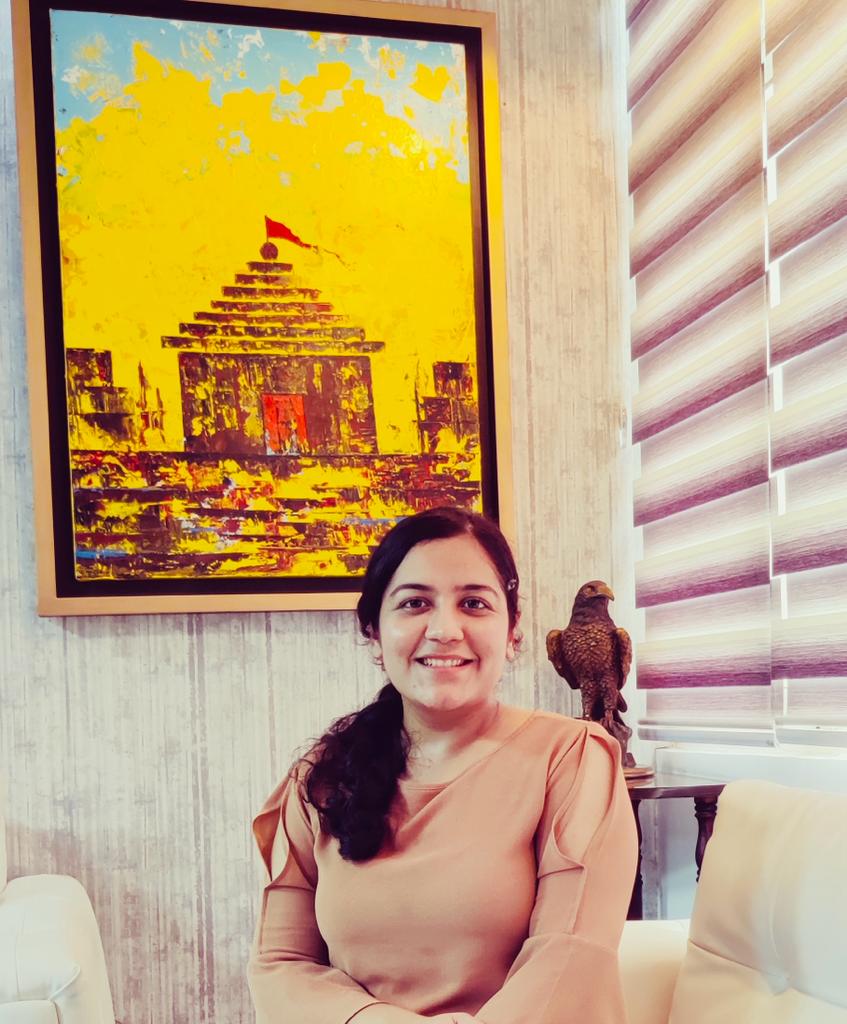
  • Aarzu Khattar, Advocate At Khaitan & Partners (SJK) Shares Her Knowledge On Client Counselling, Certain Aspects of Commercial Agreements & Opportunities In Arbitration

    Aarzu Khattar, Advocate At Khaitan & Partners (SJK) Shares Her Knowledge On Client Counselling, Certain Aspects of Commercial Agreements & Opportunities In Arbitration

    This interview has been published by Prabhjot Singh, Priyanka Karwa and The SuperLawyer Team

    What inspired you to choose law as a career? How has been the decision so far?

    My journey to choose law as a career dates back to the day when I accidentally met a judicial officer at one of my relative’s place. After interacting with him, I was fascinated by his personality and his love for the law. Immediately thereafter, out of curiosity, I researched about law. In great part, I wholeheartedly thank my mother, who motivated me to pursue law. Over the past few years, I gained first-hand experience by witnessing various court proceedings, which improved my procedural knowledge of the law hence, my overall journey has been incredible.

    What were the challenges that you faced in the beginning of your career?

    The insurmountable obstacle at the beginning of my career was my introvert nature. I overcame this by watching Suits, the famous American Legal Drama Television series. Another impediment was that I am a first generation lawyer with no Godfather in the profession. I overcame this by being consistent in my efforts. I sincerely believe that dedication and constant efforts are stepping stones towards success, hence, I ensured that I learn atleast one lesson of life/ practical application of law every day without losing hopes.

    How do you handle ethical dilemmas that may arise in your work? Could you highlight some ways to tackle the same?

    Answer – In order to address ethical dilemmas that arise at work place, I preach the principle of dispute avoidance. Ethical dilemmas occur in all facets of life and I believe it is essential to address them at a nascent stage so that majority of conflicts can be avoided. It is crucial to separate yourself from the problem and act neutrally.

    We lawyers do a lot of research in making our cases but the majority of the time, when an ethical dilemma comes, we skip the critical thinking and rush to make the judgment call. It is only at a later stage that we realise about the damage that has been done and that’s when we do the damage control exercise. However, if we look upon situations of ethical dilemma from a bird’s eye view, we can be a step ahead and act rationally.

    Ethical dilemma should not always been seen as something that brings negativity. It is a way to come up with more meaningful realizations.

    How far do you see the importance of Client Counselling?

    The importance of Client Counselling can be better understood by the quote from Lois McMaster Bujold – “The dead cannot cry out for justice, it is the duty of the living to do so for them”. Client counselling is an art that we, as lawyers learn as and when we interact with aggrieved litigants. When an aggrieved person approaches a lawyer and starts narrating their dispute, it is important for a lawyer to identify and segregate the who, what, when, where and simplify the dispute redressal mechanism for the Client.

    The Lawyer should listen to the Client without any mind-chatter and give their undivided attention to the Client. A good lawyer, by good counselling will always be able to get the best relief for their Client. Efficiently communicating with the Client is the bread and butter of a lawyer and it is important that the lawyers don’t think of the Client as a money-minting machine. While interacting with the Clients, we often have to wear the hats of a psychologist, while being in the shoes of a lawyer. Focus should be upon building connections with the Client, money will follow. Be like Harvey Spector from Suits, care for your Client and settle their disputes – be the best god-damn ‘Closer’.

    Aarzu, do you believe that somewhere the craze for litigation has been vanishing lately due to job security in corporate?

    Yes, I agree with you. Young lawyers don’t wish to continue into litigation for two main reasons, first and foremost, litigation is less rewarding in the initial years, not many seniors in the profession give good pay to sustain the expenses. Secondly and most importantly, one has to devote a lot of time in litigation as the incubation time for litigation is more as compared to corporate jobs in the legal fraternity.

    To quote Justice Joseph Story – “the law is a jealous mistress and requires long and constant courtship. It is not to be won by trifling favours, but by lavish homage”. Many young lawyers enter into the litigation entirely blinded by the charm of black coat and white collar band. However, the bitter reality is that more than 70% of young lawyers who enter into litigation, filled with confidence either leave or plan to leave litigation. Some of them have genuine responsibilities of family, others who are afraid to burn the midnight oil – leave litigation in peer pressure seeing their fellow friends earn good in corporate. Now, in litigation we are experiencing brain-drain. Hard-working and intelligent lawyers are leaving litigation to enter into the corporate arena.

    Our audience knows a little about commercial agreements, also is there a whole bunch of work in that segment, how interesting is that for any corporate lawyer?

    Commercial Agreements are fascinating to work in. Drafting of these Agreements commence at the stage when parties are negotiating, if the terms between the parties are not negotiated properly or when there is a grey area, the parties end up knocking the doors of the Courts. One must make the Agreements/ Contracts diligently after understanding the fulcrum of issues between the parties and must always identify the deal breakers.

    A good lawyer knows how to draft an air-tight contract, keeping in mind the intent of parties and leaves no grey area in it. One should draft well-articulated Contracts like Louis from Suits. He always captured the imagination and intent of the parties and drafted rock-solid contracts protecting the interest of his Clients .

    Between arbitration, contracts and agreements, liasoning, and civil matters, which sector will have more opportunities in coming times for lawyers?

    Human conflicts are relentless, so disputes are inescapable. Hence all the sectors will have nearly equal opportunities for lawyers in the coming times. However, the Indian Legal System is well known for delay in adjudication. It is a conventional fact that the Hon’ble Courts are over-burdened with pending cases and it is almost impossible to provide quick and efficient relief to the aggrieved parties, Alternate Dispute Resolution in India is an endeavour made by the legislators to attain the Constitutional Goal of achieving complete justice in India.

    In today’s era, we can see a constant increase in people resorting to various ways of Alternative Dispute Redressal Mechanism for resolving their disputes amicably. Even the intention of the legislature is to resolve the disputes amongst the parties. At any stage if the Hon’ble Court witnesses a chance of settlement amongst the parties, the matter is referred to any of the alternative ways of dispute redressal mechanisms i.e. Arbitration, Mediation, Conciliation, Negotiation or Judicial Settlement by Lok Adalat for speedy redressal.

    In many cases it is even mandatory to refer to any of these alternative ways of dispute redressal mechanisms at the pre litigation stage. For example, Section 12 – A of the Commercial Courts Act envisages a mandatory reference to mediation to attempt to resolve the disputes out of the court before a suit can be instituted. I am of the opinion that Arbitration sector will have more opportunities in the coming times.  

    Talking about work-life balance, there has been ample amount of discussion on health issues as a lawyer, what do you believe are the best practices to maintain the equilibrium? 

    I sincerely believe that a good laugh and 7 – hours of sleep is the best practice to maintain the equilibrium. However, people in the legal fraternity have a habit of overworking. Life is all about balance. One should know when to stop. If we keep on working in a monotonous routine, then we would not be able to perform efficiently and effectively in the long run.

    Apart from doing regular exercise and maintaining a healthy lifestyle, we need to find a hobby. Our profession is significantly serious in nature, if we don’t enjoy the journey, we will not have much good memories to share 5 years down the lane. Mind is the greatest asset for a lawyer and its important that we must find solace in our professional lives. Only then would  we be able to enjoy our personal lives and create an actual work-life balance.

    Few advices for our young law professionals?

    Explore all areas of law before you finally make a judgment call about your niche practice.

    Stop thinking about the opinion of the world, it’s all in your head and focus upon improving the quality of your work.

    It will not be easy. Grab every opportunity that you get. If that opportunity is not given to you, go and ask for it. Do not give up. It will be worth it.

    -AARZU KHATTAR

    Get in touch with Aarzu Khattar-