Tag: CLAT

  • Arnab Ghosh, Counsel, Beam Suntory, on in-house experience, practicing at Calcutta HC and teaching CLAT aspirants

    Arnab Ghosh, Counsel, Beam Suntory, on in-house experience, practicing at Calcutta HC and teaching CLAT aspirants

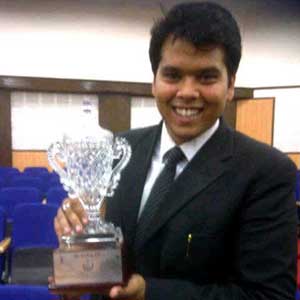
    Arnab Ghosh graduated from RGNUL, Punjab in the year 2013. An all-rounder, he has several accolades to his name in the field of mooting, editing, writing and sports. After working under a Supreme Court judge, Arnab took a detour and started teaching CLAT aspirants, inspiring them along the way and helping them find out whether they would be able to embrace the legal profession in the future.

    He has donned the hat of not just a teacher, but also a practicing advocate in the Calcutta High Court, and now, a legal in-house counsel for a company, Beam Suntory, Inc.

    In this interview, Arnab shares his experience about:

    • Teaching as a senior faculty member of a CLAT coaching center
    • Working under a Supreme Court judge and as practising advocateat the Calcutta High Court
    • Being the in-house counsel for a company


    What was your motivation to study law? Do you have any lawyers in your family?

    Law was actually an afterthought for me. I always had an inclination towards the social sciences and made up my mind about studying liberal arts abroad. However, coming from a stereotypical Bengali family, it seemed blasphemous to take up any other subjects apart from PCMB (Physics, Chemistry, Mathematics and Biology) for 12th standard board exams and I seemed destined for a degree in engineering.

    A friend told me about CLAT, which I managed to clear. It was only after landing up in National Law School did I realise that studying law was probably one of the best decisions I had taken. For this, I have to thank my parents who understood my aptitude better than the teenager I was at the time. My father is a lawyer himself. He decided to start practicing rather late in his life but his determination and tenacity to make up for lost time is remarkable.

    My first cousin is also a lawyer who is currently working with the WTO. We may not be a family with a “legal legacy” but I am hoping that will change in the coming generations.


    How did you prepare for CLAT? Did you take any coaching? How was your experience taking the exam the first time it was ever held?

    I never felt that there was an overwhelming need to take separate coaching for CLAT. The ISC curriculum and a general academic approach equipped me to tackle the GK, English and Math sections. I was obsessed with logic and had a thorough grounding in Logical Reasoning, especially in the realm of mathematics, for which I have to thank Sanjit, my math and physics tutor (he’ll hate the fact that I called him that) in classes 11 & 12. This moulded my intellect and approach and I realized that it helped me with CLAT as well. Given a set structure and pattern, I could draw logical conclusions. In order to prepare for the Legal Aptitude section, I solved model question papers and started using the tools of logic and reasoning to answer the questions. Initially, it wasn’t easy but having crafted the method myself, with time I became comfortable with the pattern and structure of the various entrance exams which were specific to the National Law Schools prior to the inception of CLAT.

    After the exam, I felt that CLAT was the most refreshing entrance exam that I had given, especially because it was sandwiched between the IIT-JEE, AIEEE and others of the same league. The first thing that struck me about CLAT is that first and foremost, one has to be diligent towards building their general knowledge, there are no short cuts to it, it can only be built over a period through sustained efforts. It’s ludicrous to even imagine that it’s possible to mug up all the yearbooks that are available in the market. The rest of the paper is actually based on aptitude (more often than not) and while people may improve over a period of time, the logical and “legal” bent of mind can only be honed and not created.

     

    arnab-ghosh-2

    You have interned with a few of the top law firms in India. How did you go about securing internships at these firms? How was your experience with them?

    Persistence. As a law student, I realized something quickly, my need was greater than the firms. Law firms, by and large, can do without interns. The onus was upon me to secure these internships. Initially, I was heavily dependent on the college and over the years, I made efforts to build a CV which would, at the very least, be looked at by the firms. However, one of my best internships was when I landed up at the firm, requested a partner to meet me and then convinced him to give me an internship. The trick is to be proactive and take out time to not only apply but also keep following up.


    How did you get an internship with a sitting Supreme Court Judge? How was the experience?

    I have to thank the Internship and Placement Committee of RGNUL for securing this internship. The setup of these internships is such that you get to work from the Judge’s house itself. Every evening, His Lordship took time out to talk to us and discuss certain aspects of litigation and court practice. He candidly shared his experiences for our benefit. As far as being able to list the things I learnt, first and foremost, it gives you a clear perspective on things from the other side of the Bench. Secondly, we had to brief His Lordship which entailed reading hundreds of files and various matters. Thirdly, His Lordship would discuss certain matters with us. As a student, that is the ultimate practical guide to litigation which no other internship can provide. You get to know the types of cases that are likely to get a favourable decision and the ones which don’t and the way judges think. Going forward, if litigation is the career path one wishes to adopt, an internship with a sitting SC Judge is invaluable.


    Are there any extra-curricular activities you participated in during your 5 years at RGNUL?

    I was an avid mooter and debater. In fact, mooting was a very big part of my college life. It started with the Willem C. Vis Moot, Vienna and ended with our team being runners up at the Juris Corp Corporate Law Moot, NLIU Bhopal. Even after graduating, I’ve been associated with the mooting activities in RGNUL, who had invited me to judge the Stetson Environmental Law Moot last year and the RGNUL Moot this year.

    Apart from these activities, I was an editor of the RGNUL’s monthly newspaper, “Carpe Diem”. I was also a part of the Internship and Placement Cell and took keen interest in organizing various events and activities for RGNUL.

    Apart from academic co-curricular activities, I was very interested in sporting activities, taking part in all the events held in college, especially cricket and football and was part of RGNUL’s football team.


    How was your experience teaching law school aspirants? What were the challenges you faced? What do you think legal aspirants need to be aware about before they become professionals?

    (Arnab taught as Senior Faculty at Career Launcher)

    In all honesty, I had applied to Career Launcher for a part time position. After the interviews, they were keen on me joining on a whole time basis and the job profile attracted me so I agreed to join them. By far, it was the most enriching and exciting engagement I’ve had. Dealing with students in classes 11 & 12, I took it upon myself to foster a sense of passion in them for studying law. A lot of people join the coaching with the incentive and hope to land top paying jobs and not many are well versed with the other aspects that the study of law has to offer. My focus was to make them understand that law, unlike other disciplines is not mechanical and can only be successfully pursued with a certain degree of fervor and passion, in other words, to get them to study law ‘for the right reasons’ and assuring them that if they do the basics right, money and its corollaries will follow.

    One of the most challenging parts was teaching the aspirants the basics of subjects like contracts, constitution and criminal law. I had to dig deep and find analogies from movies like The Dark Knight to get the attention of the students so that they could understand the nuances and basic principles. This, in turn, revived my love for law and also helped me sharpen my own understanding.

    However, one cause of mild alarm is that more and more students want to pursue law because it is a lucrative career option. This may be true but not many are ready for the challenges that come in the way. Not many understand the subjects or have an aptitude for it. There is a need to sensitize the students and make them aware of all the realities, especially the difficulties of the legal profession and also to provide counselling to ascertain their aptitude and find whether they are suited for law.

     

    arnab-ghosh-4

    What factors made you switch from teaching to practicing as a lawyer? How was your experience?

    (Arnab switched to practicing as a Solicitor in the Calcutta High Court after his stint at Career Launcher)

    After working with CL for 6 months, I realized that it wasn’t a long term career option and that I had more or less learned everything that the position had to offer. I enjoyed teaching thoroughly but I wanted to start teaching in colleges and universities. Thanks to a dear friend, RishabRaturi, I was able to work with the Center of International Trade and Economic Laws at Jindal Global Law School on a few projects. It made me realise that although a Masters degree is not essential, it is recommended and I decided that Career Launcher will not provide me the requisite work experience to pursue the same.

    Moreover, I had been advised to start working in my hometown in order to pursue a successful career in litigation. Coupled with other personal factors, it seemed like the right move at the time and it was a rewarding experience from which I learned a lot, not only about law but also about the things I can and can’t do in the profession.


    How is your present experience of working in a legal department of a corporate firm? What is your role in the firm?

    (Arnab is presently working as Legal and Secretarial Consultant at Beam Suntory, Inc. at their Gurgaon office)

    I am working in the legal department at Beam Suntory. 70-80% of my job involves drafting contracts and agreements, getting licenses and other requirements for running a liquor business in India and other compliance functions. All our day to day work is done in-house hence that widens the scope of this job immensely. We have to interact with various excise and other departments across the country, each being distinctly different from the other.

    The alcohol industry is heavily regulated with strict laws governing business and promotion activities. Almost all marketing and other promotions have to be approved by the legal department before being implemented by the company. One of our recent ventures has been to tie up with VH1 Supersonic through Jim Beam Music CDs (one of our brands), which is one of the biggest music festivals in India and which also happens to be a project I’m personally associated with. From the courts of Calcutta to the beaches of Goa, this indeed has been a fairytale transition.

    Hence, my role in Beam Suntory is primarily legal but it has a lot of scope for cross functional projects. Currently, I have been entrusted with taking a leading role in 3 such projects for the company which amalgamates legal and other functions. While working in a company, it is your skill set and talents that play a huge role along with the degree you hold.


    What are the challenges you face as an in-house counsel? How are they different from those you faced in court during your stint in Calcutta?

    One of the generic challenges, that one faces while working as an in-house counsel is the emphasis on coming up with solutions. It is imperative to understand that the biggest responsibility is enhancement and maintenance of the business. It is not enough to say that the law does or does not allow a certain activity. We have to find ways around in order that the business does not suffer. As an in-house counsel, my clients are the various departments within the company, such as IT, Operations, Sales & Marketing, HR, Finance, etc. It is important to understand these departments in order to render effective service.

    The alcohol industry adds its own set of challenges. Every state has its own set of laws and requirements since alcohol is an entry in the state list. Some states have a corporation market wherein we do business directly with government entities, some have a private market where we deal with retailers and some have mixed markets which means that we have to deal with multiple excise laws and policies. Alcohol is also regulated by the FSSAI, Legal Metrology, IPR, Companies Act and many other laws, all of which have to be complied with.

    Another challenge, probably the biggest that we face is that we are associated with an American company. Hence, we have to adhere to strict anti-corruption laws. Any lapse on our part can lead to irreparable consequences. No matter how pressing or urgent a matter is, we cannot take any short cuts or obtain favours (monetary or otherwise) from any private or public entities. We take pride in being a company with complete transparency. As an in-house counsel, it is my prime responsibility to ensure the same.

    The main difference between working in a Court and working as an in-house counsel is the sheer variety of laws that you have to deal with. In litigation, there is a certain degree of familiarity with the laws and procedures and exposure is limited to the courts. In a company, you have to deal with other companies, entities, business partners, associate companies (in case of group companies of an MNC), various government authorities, banks, law firms, lawyers, consultants, etc. We also have to coordinate and provide support to various departments within the company. There are more deliverables every day while working as an in-house counsel as compared to working in a Court.
     

    arnab-ghosh-3

    What are the skills that companies value the most in their in-house counsel? How does one go about the application process?

    Adaptability, business acumen, consistency, quick interpretation of laws, swift and effective problem solving skills, teamwork, and willingness to accept roles and duties beyond your job description, these are the most important qualities that an in-house counsel needs to have. First and foremost, you have to be very good as a lawyer. However, you should also possess the skills and willingness to discharge functions beyond your job description.

    A lot of companies advertise vacancies on various internet portals. One has to keep a track and be updated with that. In addition to that, one should try and intern with various companies. It helps if the college placement cell coordinates with major companies for securing placements and internships. The application process is not very different from any other job. Networking also plays a major role in securing positions as an in-house counsel.

    Taking up additional courses and getting additional qualifications such as being a Company Secretary is invaluable and I would sincerely advise every student desirous of working as an in-house counsel to get a CS degree at the very least.


    Is the work of an in-house counsel easier than that in a firm or in litigation? Is work-life balance an issue?

    At the risk of sounding like a boring diplomat, I would have to say that both the jobs have their own challenges and difficulties. The real question one needs to ask is whether they want to work in firms/litigation or in a company. One of the biggest peeves I had about litigation is that you had to stay in the Courts till about 4 in the evening and work only began at about 5. Sometimes, the days would get wasted without any cases coming up for hearing. Conversely, the work as an in-house counsel is more organized and structured. Also, the sheer variety of work ensures that it is not monotonous. Having said that, the thrill of arguing in a Court has its charm and appeal. As I said at the outset, there is nothing easy or difficult about law or anything for that matter, one has to put in a lot of effort into whatever they do.

    One of the best things about this job is the work-life balance. I get weekends off and the latest I’ve had to stay back in office was 8 p.m. We put our heads down and work hard from 9-6 but after that we are free birds. I get to take a swim morning and evening, party and cook on the weekends and even foster a dog. I don’t think any other job could have given me this much time and freedom.


    Would you have any parting words of encouragement for our readers who would like to follow your footsteps?

    Conventional wisdom says that you have to work hard and stick to whatever job or profession you take up. Hard work is absolutely essential. However, working hard for something that does not satisfy you is very counterproductive. At times it is essential to recognize that a certain job or role might not be suitable for you and at that juncture, one has to be bold and courageous enough to quit and move on. I was very lucky that I had the support of my family and friends, especially my parents. They stood by every decision I took.

    At times, I was rash and impulsive, but I was always true to myself. It is very important to be honest with yourself and do justice to your skills, interests and passions. Also, in the early stages of your career, the importance of a good senior/boss is incalculable. I have been very lucky to have Vandana Ma’am as my boss at Beam Suntory. Not only is she an excellent lawyer and boss but a great human being as well. It is imperative to not only find the right job but also the right mentor in the early stages of your career.

    To summarize, I’d say that it is very important to work hard and work towards a long term goal. However, it is also equally important to find a job which satisfies you, which makes you want to improve and give your 120% rather than constantly harbour thoughts of finding an opportunity to quit and switch jobs. Working with a lawyer, as a Senior Faculty, as a Solicitor, and now as an in-house counsel, I have been able to sample the various flavours the legal profession has to offer and in turn understand my skills and limitations better.

    Take as many risks as possible at the initial stages of your career and let your skills and interests, rather than degrees, specializations and marks, decide what is your perfect (or at least near perfect) job.

  • Deepu Krishna on starting up with DK Studs, cracking CLAT and authoring a book

    Deepu Krishna on starting up with DK Studs, cracking CLAT and authoring a book

    deepu-krishnan-1Deepu Krishna graduated from NLIU, Bhopal in 2006. Currently, he is the Director of DK Studs, a law entrance preparation coaching. He set up this institution after working with a law firm. We asked him about:

    • Starting up with and building DK Studs
    • Advice to law students who could’t make it to top NLUs
    • Skills to crack CLAT
    • Authoring ‘Lexis-Nexis/DK STuDs CLAT’


    The career of a lawyer in India is still just a backup option for most students. What motivated you to choose law as a career? Did your family and friends not suggest you to go for Engineering or Medical Studies?

    As a child hailing from a middle-class family, I was often commended by my parents for my ability to come up with prompt and witty conversational replies and reactions. This was indicative, according to them, that it was the black and white that was the uniform most apt for me. When I was in the 10th standard, I made one of the most rebellious decisions of my life, by opting for Commerce even though I had obtained good marks in Maths & Science.

    I remember being called by my cousins, who are from the IT sector and live abroad, threatening to disown me if I took up commerce. My decision was perhaps considered this rebellious since I belong to a traditional South Indian family which believes that “Engee’nears” are the most gifted creations of god on earth. However, being the stubborn lad that I am, I opted for Commerce because I knew I wanted to do Law and prove each of my disbelievers wrong. I researched extensively and a cousin of mine from Bangalore helped me prepare for the National Law School entrance exams. I remember now that the one thing that motivated me to study was the fact that one day I would to be my own boss and work in an office where I set the work culture and not be just a part of the crowd. I dreamt of owning an SUV before I turned 26.

    I planned to relieve my Father from all burdens after his retirement, which included not taking any financial aid form him for my higher studies. I even vowed to marry the girl that I had liked right from my childhood. My Friends called me too mature for my age of 17, but I had to just that after I lost my brother in an accident and. I knew that being an average student, I could achieve my goals only by pursuing Law. Today, I am proud to say that I accomplished all of them. I appeared for NLSIU and NLIU, and I was successful in getting admission in both. However, I opted for NLIU as I had lost my Brother the previous year, and my Mum wanted me to stay back in Bhopal, rather than go to Bangalore – the city where my adventurous personality had resulted in me breaking my limbs. This was the one time that I finally listened to them, unlike in the past.


    Tell us about your life at NLIU-Bhopal?

    In the first class I attended at NLIU Bhopal, our then Director, the legendary Professor V.S. Rieki bellowed in the class, his words of advice : Law is for smart students and those who feel they can handle pressure, however remember that you have to live the life of a hermit and work like a Horse”. Within months after understanding the curriculum and the set conventions inside the law school, I did decide that Prof. Reiki was right, however I would also enjoy my life like a law student. I take pride in saying that I have been taught by one of the best faculties in the history of NLIU Bhopal. Prof. V.S. Reiki, Prof. Moolchand Sharma, Dr. Ghayur Alam, Prof. Surya Deva, Prof. Rajiv Khare. Prof. Uday Pratap Singh, Raj Shekhar Sir to name a few who have not only shaped me as a law student, but also been a law mentor. I am nothing but an amalgamation of all these legends.

    I have no shame in saying that I do copy their style of teaching and I suppose that makes me whatever my students call me. If I have to sum it up in one word, I’ll call it “Renaissance”. It was a completely new “Me”. I came from an all-boys school and was totally shy, lacking both confidence and public speaking skills. My world started with Bhopal and had Bangalore in its dreams. My reasoning was confined to the then MTV and Zee classic shows. The Constitution and the Rights I had known till then was confined to what my Civics classes had taught me. In just 6 months, my Dad observed that there was this “Class” in me. From peer to parents, everyone recognised that I had transformed into someone everyone could now look upto.

    A remarkable incident was when my friend, a commerce graduate, called me to train him for his IIM GD-PI interview mock drill and asked me to train him. He was a graduate back then, and I was still an undergraduate but he was of the belief that my interpersonal skills had graduated much above him, and that I could train him to be like “Me”. This was the one moment when I got a hint that training was an alternate career I could consider. As a student, I was average student who used to score average marks in subjects I disliked, like CPC and exceptional marks in subjects I loved, like Constitutional Law, IPR, etc. Another major positive I gathered from my law school life was the politics and backstabbing in Law School, since it made me ready for the life ahead. I used to lament on my decision to take up law, since I had good friends in school, and here everyone was mean and selfish. But once out of law school, I faced bigger betrayals, not once, but thrice in my career. Things got ugly to the point where a cartel published a malicious, defamatory and paid article in a yellow paper, to shake the monopoly I held. They did achieve their objective, but they couldn’t break my spirit. My students used to ask me, “Sir, how do you handle these things and still work with all your might?”I would reply, “In Law school they trained me for these things as well, and even if I do get affected, I know how to bounce back.”


    Law school can be monotonous at times. What did you do to keep yourself busy? What activities did you participate in and how did they shape up your career decision?

    Well, I don’t agree with the statement that it can be monotonous. It may be true for those who want to remain only with books and spend the majority of their time in the library. My law school life was completely different, as I said, thanks to my mentors who told me that studying law is beyond books, and is more practical. I did most of my projects using the empirical method, which was fun and educative. I remember going to a red light area for one of my projects and coming back crying on achieved through the legal system. I realised how women in our country, though worshipped and idolised, still struggle to achieve equality, be it inside a house or a Multi-million corporate office. As I was fascinated by Corporate law. I remember taking assignments on Transnational validity of laws on Bankruptcy, Insolvency, Formation etc. I made a few friends from Harvard Law School and Yale through a conference on the same.

    Today, when I hear the Law ministry contemplating on these issues I do feel proud to have learnt and researched on those issues, which truly shaped my thinking. I never felt bored throughout the five years. Yes, I must not lie: when my friends from other courses were graduating when I was in the third year, there was surely this unnerving feeling that my graduation was so far away. Yet, I kept myself busy with many extra-curricular activities to subdue this agony. I am currently pursuing my L.L.M from JLU, and many ask me the reason behind this long break. Well, after getting placed and starting my own venture, I just felt that I needed to learn more and update myself. Thankfully, right now, I am working under very good patrons like Prof. Dr. C. Gurudutt, Prof. Dr. Yogendra Shrivastava and Dr. Shobha Bharadwaj Madam who have been rejuvenating my thinking. After graduation, I missed my law school and had decided to invest one year to upgrade myself and even now, I am involved with researching, and I plan to be a part of some seminars. This is almost an addiction for me now.


    What kind of internships did you do while you were a student? Are there remarkable experiences during your internships that shaped your career choices later?

    Well, they were largely Corporate in nature, barring a few that I did as a first year student with a few NGOs. I loved researching and advising, and in one of my Internships, I remember a senior advocate telling me that my interpretation skills are good. You can either be a good Judge or a Teacher. I used to observe a lot of things as a student and study their societal impacts. I had written an article on the Jessica Lal murder case, and one day, as an intern, I happened to meet Mr. D.P. Yadav, since the advocate whom I was interning with was counselling him. I still remember the interactions between both of them, since I witnessed how Law can make the powerful kneel before it.

    If you ask me about the most remarkable internship I had, it has to be the Judicial clerkship I did with Justice B. N. Shrikrishna. Sir is a legend. He is a Sanskrit scholar and each evening after work I remember sitting with him and discussing Constitution of India , the principles of Law, comparing and analysing them in the light of Upanishads, Bhagwad Gita etc. He had written an article on Maxwell v Mimansa, and I still use it in my constitutional law classes to give students the insight on the spirit of law. I had a deep interest in Hindu religious philosophy and Sir, being the scholar that he is, enhanced my curiosity. He used to teach us how a point of law is deliberated, discussed and decided.

    He told us why study of law is a power, a power to determine what is right and wrong in the society. He is such a good human being, He was so compassionate. He knew that we were living away from our parents, so he used to make us have lunch and dinner with him so that we didn’t spoil our health through junk food. I learnt a lot from him. I suppose that the mentor that students adore in me is because of the skill of being compassionate, considerate and warm hearted to a student’s curiosity, which is something that I learnt from Srikrishna Sir.


    What are the skills you have learnt at internships and you could not have learnt otherwise? Do they still feel relevant to you?

    Well, Internships do teach you a lot. Outside the office: Firstly, if you are in a cosmopolitan city like Mumbai, you learn how to be street smart. If you are in a Metro like Delhi, you learn how to handle pressure and power from people possessing it. Inside the office: well it depends what on the kind of associate you are assigned. One of the primary lessons that I learnt was that, in a firm, there is a reporting time, but the time out depends a lot not just on your boss’s mood but also upon the nature of work you have been assigned proportionate to the deadline given to you. Internships tell you specifically that law is more than what the book reads. Internships are your gateway to a job placement if you do them correctly and with diligence.


    You worked with a law firm before starting DK Studs. What made you make the jump?

    Well, in short- The creator of Law entrance prep in India- Sachin Malhan. I remember him convincing me over a coffee why it was his belief that I was not just a good teacher but also had good managerial skills. He told me how what we do is not just teaching but changing lives and giving children an option to explore the growing field of study.

    I would be lying if I said that I didn’t enjoy corporate litigation. Justice Ruma Pal had once praised me openly in the court room for my eloquence and clarity. I remember giving a tea party at the Supreme Court canteen to celebrate the feat. But if you speak about job satisfaction, I did that feel teaching pulled me towards it more. The decision to jump came after a case I won for my firm. Quite contradictory, but yes, because by winning the case, I rendered a female aged 60 homeless. The same day CLAT results came and the All India rank 2 holder was my student. The joy these students shared won me over and I decided that I always wanted to be on the winning side and never wanted people losing.


    Why did you decide upon opening a law test prep coaching? What motivated you to start DK Studs? What is the story of your start-up?

    I always resist the notion of people calling me an entrepreneur- I would rather call myself an Acadprenuer {I have coined it myself}. You can’t be a business man if you are a teacher, a mentor. Business is not what you do with students. I would rather treat each of my student as a family. This trend of start-up has started in this pious field because more and more businessmen are venturing into it. They do treat it as business. I somehow can’t agree with that. Flipkart could be a start-up; Alma Mater could be a start-up.

    When Sachin Malhan started law entrance prep, business was secondary for him. He quit Amarchand Mangaldas and was not a jobless person or from a family which owned a fortune. He quit it and started this entire industry because he felt for it. I remember him telling me that he likes teaching and each class gives him a different high. He knew his skills and the call from inside. I belong to that school of thought. I don’t have sales target, even a sales team to assist me. I don’t maintain relationships with the media or press and you won’t even see any of my ads screaming things which I can’t prove. Coming back to why I started “teaching and mentoring students at DK-Studs”, when I left LST, I remember it was because I had to attend to my dad’s health and a competitor was placing me as a National head with more jump in all forms in my home town. It was again Mr. Malhan who said “I would love to see you as a competitor rather than join one, you are like a brother, and joining the competitors goes against ethics and what I have taught you.”

    When I came down to Bhopal, a school friend of mine proposed that we both start a partnership. With the confidence I had, we opened up a venture and in a single year managed to give Madhya Pradesh its first NLSIU selection and a ratio of 89% selection. We even made Hindi medium students successful in CLAT. The high it gave me cannot be explained. Today, I am associated with CLAT possible for our CLAT training, and DK STuDs is basically now a major educational services unit which caters to different needs of law graduates.

    I am starting a programme “Lex Academia” specifically for those students who don’t get through CLAT; I feel they are similarly talented and just could not do justice to those 2 hours. This is my way of contributing to those who couldn’t clear CLAT directly or indirectly. I do hold myself responsible if they don’t, and this way, I can help them in becoming what they once dreamt of becoming-a good legal professional, even if not from a National Law School. If they decide to follow law as a career option, we have planned a course which shall train them in all the skills which make them a perfect law student, i.e. we shall train them on those skills which are required to survive in the profession. We shall also help them in placements and internships.

    I have a dedicated team who are graduates from Harvard, London School of Economics, Cambridge, University Of Edinburgh etc., helping me out in this programme. I have started a small mediation cell called “Proxy-Path”, which is basically a venture by me, along with my students who have passed out of Law schools-some of them who are in fact still pursuing their graduation, but keep doing the clerical work. And, believe me, I am not doing this as a start-up. These are all dreams and we are just making them real. A dream I once saw sitting at the last bench of my classroom in NLIU – of leading similar minded people.


    With so much of competition existing in the coaching and teaching field, what makes DK Studs different from its peers?

    From my viewpoint I don’t have competition because I belong to the genre which created this market. As one of my student put it – you are the market, they devise separate plans of marketing against you and that itself is evidence of your stature. Today we are in a position at DK-STuDs that we select our students -you can’t get into this academy just because you want to. We don’t fill in large chunks of no-hopes who are doing Law just because their friend is doing it, or they love the parties in law school. We have an interview system, a Psycho metric test and a two week trial class and the student has to undergo our trials and only then we allow admission to them. This command we have is because we have already undergone the stage they are in, and currently we are in a position where we can afford to be this choosy. I told you that we don’t have a marketing personnel or department. There are no calls made by us or schemes that we come out with, like they do in a business enterprise. We don’t give discounts, (the term surprises me because one cannot give a discount on education!) we have scholarships which we give to academically proficient students and students who are from weaker financial backgrounds.

    The scholarship is named after my late brother and so it is close to my heart. We are costly not because we want to be, but because I pay my faculties well and keep them content. There are institutes who are taking in large chunks of students and charging not even 50% of what we charge, and students do understand the difference when it comes to national ranking of CLAT possible in every mock test. Faculties with more than 9 years of experience with pan India fame teach them. Now the reason why DK-STuDs is different from its peers could be an unlimited number of things that I can boast about. However, I would just want you to deduce it from the fact that, when we started this firm, it was not as a business but as a craze, and a dream, something you will feeling every student and alumni of DK STuDs. Even the students that I have taught through my Youtube video are close to me.

    Our Alumni is the strongest in any National law School and the camaraderie they share can even be seen there. Today, my students call all Bhopal is irrespective of any coaching, a Dk-Stud by default, which is in itself the evidence of how we are placed. As I was giving you this interview, I just received this information that an Alumni of DK-STuDs has been chosen as Miss India-New Zealand. We are everywhere and all we do is appreciate what good others do, get shocked on their mistakes and boasts and just smile on the way they compete with each other. I feel it’s not about being different. It’s just about delivering what you promise and we do that each year. On a personal level too, I am the happiest amongst my competitors. I have a family, and I give time to them.

    I have a loving wife who helps me with my academy. When I return home, I have a 2 ½ year old son who welcomes me with selfless love. I am pursuing my Post Graduation with my own earned money. I do not belong to a business family and did not have a financial backing, but still made an academy out of my own hardwork, without anyone’s help. I never followed a trend, rather created trends in the market, which others follow, like we launched CLAT & Commerce under the same roof and people are trying to ape it already. I do everything I once dreamt of as a child, like owning portable gaming device, etc. Well, happiness and peace of the heart have been my biggest earning.


    deepu-krishnan-3

    What are your plans regarding DK Studs for the upcoming years? What are the top three things you would require to keep the growth sustained?

    As I have already told you, the name of DK-STuDs itself means “My Students and I”. There are plans which I have with my students when they graduate, and the ones who have graduated are already working on that area. We have collaboration with CLAT possible and that is now really working well with the pan India connect we have. I contribute to their growth with my goodwill and they do appreciate it. Together we have become very strong. The other two projects I have on my mind right now are on task list. Again – I am starting a new field, so I am so pepped up about it. It is me helping the students who saw failure in CLAT realise that irrespective of any law school you are in, you can work magic with acquiring these skills that we shall teach. In Proxy Path we handled 3 cases and managed to get 2 of them reconciled. By the age of 40, I plan to enter freelance teaching, giving these projects to the able students I have. I already have offers from University of Wellington; they made the offer after watching my YouTube videos. I would want to teach Jurisprudence and subject of law at University levels on a freelance basis. I am designing few lectures for the same and my research, too, is on the same field. I have a deep interest in philosophy and would want to come out with my own theories in Political science and Global Justice. As I said, when I chose teaching, it was not that I did not have anything to do. I knew what I was doing. I had already planned my dream ahead.


    Do you think CLAT scores are truly indicative of a student’s potential? What kind of aptitude do you think is necessary to crack CLAT?

    No. Some of my real good students have not managed to crack it and some of my very average students have got through the best. I feel it isthose2 hours and the temperament you keep that counts at the end of the day. I read a lot of metaphysics and think that if you train yourself in the manner required to give you your best in those two hours, it is one of the easiest exams. But then, it is very difficult to be that sharp, and sometimes you just realise that in one go. Inside the campus, I have met students who don’t understand how they got in and don’t know how to survive. They just performed better in those two hours and got through, that’s the reality. My Endeavour with my new course “Lex Academia” is banking upon this feature, as I already told you. To me, any student who wants to create a strong career is more important than the horde which opts for it just as an option or backup


    For GK and Legal Reasoning sections, how important is it to read the newspaper regularly? What sections should one focus on?

    General knowledge requires interest, you cannot just cram and go. They ask you questions which are basic in nature yet they have some questions which require you to have a good deep knowledge. Cramming up current affairs won’t help, or even merely reading the newspaper or appearing in some quiz. If you are reading the news, you should have the ability to research and critically analyse it. You can do this only when you know the history, the backdrop from the viewpoint of science in some respects. Your geography has to be good to understand world polity. All in all, as I said, it’s about interest. If you don’t have interest, generate it through discussions and writing essays on the same. Debate on the issues concerning world polity and do not just read from the newspaper, read it in a very diverse manner. I recommend my studs to read “India after Gandhi”, and then read history. We discuss the Spartacus struggle against Rome and then how Rome is still alive and we link it to the Israel –Palestine issue. There is a lot we learn, and not just cram.

    Legal Aptitude requires just a strong sense of power of application of logic, given to you in the form of principle. An ability to stick to the question at hand, and not getting deviated and answering it in the spirit of the question asked.


    Students who top CLAT often claim that they never studied a lot; however many students who have, miss out on a good rank. Do you believe CLAT is all about innate skills, then? Or that a particular approach should be applied to clearing it? If yes, what should it be?

    I already answered that it’s about those two hours and how you handle pressure. Students who read more than 8 hours tend to disturb their own inner peace- they have conflicts going on inside them and that takes a toll on them. Aspirited student is smart and he/she knows how to manage time, and not drain his/her energy in a futile manner. As I said- “Meta-physics”, you see. I don’t allow my students to sleep between 3-5pm (the timing of the CLAT exam) because I feel that they should be at their intellectual best during this time. It does work for the majority of time.


    deepu-krishnan-2

    Have you had students who were brilliant but still couldn’t make it to a National Law University? If yes, what is your message to those students?

    I did have. My only suggestion: Law is a profession. If you acquire good skills, you shall always succeed, no matter which law school you belong to. Coming from a National Law School, you do get an easy start but if you are good with your legal knowledge and your skills are apt, you won’t ever be let down by this profession.


    CLAT 2015 is probably going to be online; how do you think students should get themselves prepared for an online exam?

    It maybe a farce. I don’t think it’s possible for it to go online. They weren’t even able to enforce a proper online registration, now if the exam is done online, it’s going to be a much bigger issue. Undergraduate examinations, especially exams like CLAT, are better managed offline. However, even if it is online, we are well equipped, at CLAT possible, to handle it. So that won’t be an issue, with students accustomed to online testing.


    Do you provide any work opportunities for law students? Do you recruit undergraduate law students as part time faculty?

    Undergraduates in my academy only teach students how to crack CLAT and how to attempt questions like they did. They don’t take full length classes. These sessions help students interact with those who have been there, done that. Work opportunities for law students and graduates – yes, as I said, I have already recruited some of my graduated students and with time, we shall have an army of them. And that’s an additional advantage of being a DK stud -I trust them blindly.


    You came out with a standout compilation of study materials for students, which was one of the most sold books last year. How did you conceive the idea of the book?

    Yes, the book is called Lexis-Nexis/DKSTUDs CLAT study kit. The idea was conceived back in 2006. I was unable to find anyone who could understand what I had visualised. Lexis Nexis, with its young management team they, realised what I was hinting at. We wanted to tap into the unexplored area and give students something to learn from even while at home, without having to join any coaching institution. The book is different in many different ways, one of them being the “FAQ section”, where the student can actually obtain answers to questions he/she usually has problems with, related to some subjects. In the Maths module, we have answered questions like “When should I attempt Maths?” amongst others. This year we are releasing the 2nd edition and once again, there will be surprise for the students once they buy the pack. For confidential reasons, I can’t comment on the same, however the new addition is very productive for students of CLAT.


    What does it take to be an entrepreneur? What are the three great skills of an entrepreneur according to you?

    I already told you I am not an entrepreneur. I am an academician who knows how to create core value systems, mentor students and work out an academy with these values. I am alien to terms like Baniya, Gujju, Sindhi style, etc., which people usually use to define business in India. For me it has to a lot do with the mantra that if you love something – work for it, and achieve it. I read a lot of Richard Branson and Robin Sharma, and have learnt a lot from them. I cannot enumerate any three – I just feel that anyone in my profession should follow some simple things like, maintain ethics, and be a slave to them. Set principles and standards, and always stand by them. In this profession students tend to become like you. They follow you. You are effecting change, so it means a lot. Become a visionary to them, rather than making them business-minded. Give back something to the society in any form that you can, in a pro bono manner.


    Lastly, what would be your message to law students and young lawyers who want to pursue alternative legal careers or entrepreneurship?

    Law is an endless field. Once you take up law, you shall always remain a student. So if you seriously have this urge to learn things and always remain updated, you have chosen the right profession. If you think that it’s just a way to earn money and live your life easily, that is not true. Your real life will start post law school. Law school shall make you ready for it, but only if you are willing to learn. For alternate careers, Law shall surely increase your capacity to think, comprehend and create. It shall stimulate your communication skills and shall surely make a better manager out of you {managing grades, moots, project submission, series completion, etc. is tough, so you need to manage them}. Venture into anything only if you feel like doing it. You shall always succeed. Don’t do it because someone else is doing and he has found success in it. We all have our core specialities – it could be teaching, it could be music, it could be just about anything. Pursue it, and you shall always succeed.

  • Surabhi Modi on Clat Possible, CLAT 2015 and the mantra to successful entrepreneurship

    Surabhi Modi on Clat Possible, CLAT 2015 and the mantra to successful entrepreneurship

    Surabhi Modi is an outstanding Fulbright scholar from Delhi University. She is an ardent reader; research scholar in films and literature and a successful entrepreneur in the field of legal education. She is the managing director of Team Satyam, Clat Possible tutorials, which was conceived in Lucknow but is now a leading name in legal education and amongst tutorials nationwide.

    Surabhi talks about:

    • Her interests and journey as a scholar.
    • Her entrepreneurship in the field of law and the success of Clat Possible.
    • She discusses the viability of CLAT and her take on CLAT 2015.
    • Her mantra to law students in the area of entrepreneurship


    Please introduce yourself to the readers? Please tell us a little bit about your childhood and your background?

    Introductions are most difficult I must admit. I’m an educational entrepreneur and erudite. I’m currently the managing director at Clat Possible, which I must proudly admit is India’s fastest growing law test prep brand, currently at number 2 in terms of volume in its very young existence of just 4 1/2 years. I love studying which explains the fact that I’m doing that still, I’m a research scholar in films and literature. I’ve graduated from Hindu College, DU and received a Fulbright Scholarship from UC Davis in 2009. I’m an avid reader and promote reading through a small Reading Café. I’m also a movie buff and screen films for my students. I’m planning to start small film appreciation courses at various colleges as well.


    You have an exceptional background in English literature and have also been a recipient of the prestigious Fulbright scholarship. Tell us something about it.

    The funny thing is that I started out as a science student. I was a very curious case of misplaced love towards subjects and wrong career counselling; which is why I make a good career counsellor as well!! But eventually I had the good sense of pursuing this subject professionally and taking it forward now that I’m doing my PhD on it. Because I have always been a reader right from my school days, I always got 90 + in high school and intermediate I was comfortably able to switch to English. I loved classics and gender studies even when I did not understand the terms; so I had introduced myself to Doris Lessing, Mahasweta Devi and these helped me in getting my scholarship.


    Without much background, you decided to pursue your entrepreneurship in the field of law? What gravitated you towards law?

    Frankly, we were earlier only into PG entrances like CAT etc, when my friend from NLSIU brought to us his venture for law entrances. I agreed to take it up just because he was my very good friend and then I did not read much into basic details like what is market size of this product etc. We started extremely small with 8 students. all wards of lawyers or judges. Then there was no CLAT, all law schools held their own exam and we only looked at NLS, NALSAR and NUJS and also NLIU. We sent at least 7 to the NLUs from the 8 that we taught. It didn’t make business sense but the kids were very bright and it was a happy change. Next year we enrolled 17 students and that year 2005 I was even getting married so my family imposed a curfew on me for 2 months and you won’t believe these kids started coming instead to be taught by me. Now that really endeared us to this product and here we are today 4000 students plus and yet all very dear to us.

    Our passion is only fuelled further with the love these kids give us, for example this interview was requested by my very dear student Gargi. So each of us at CP would go the extra mile for these students, who in turn reciprocate our love and care. We are not perceived as coaching wala but as friends and mentors  and that’s my most prominent achievement. I’ve successfully broken the traditional ‘coaching’ mould.


    You are a founding member of Clat Possible. Please tell us about ClatPossible and its verticals. With so much of competition existing in the coaching and teaching field, tell us about your journey with Clat Possible so far.

    So I think I got carried away in the last question and really did answer it there, now that I see it had asked me only about how I started. Sadly, brevity surely is not my talent.


    In your opinion, what makes Clat Possible different from its peers?

    As I had mentioned earlier, which I reiterate; CP is not just a coaching centre. It has become (thanks to my supremely talented and highly qualified team) a mentorship program. The real reason being that each one of us has voluntarily opted for this career leaving behind great careers if I may say so or rather acceptable careers in mainstream education (which is me), FMCG sector (Satyam Sahai, Founder after his MBA) and my other colleagues who have come from Amarchand, Luthra etc. So our job doesn’t end at teaching reasoning, we help the children grow and gain confidence.

    We screen movies, hold talks on books, engage them in a parliamentary debate, hold mock parliaments, summits, policy summits. Now how these exercises one might ask are relevant to CLAT? Well, they are. The research involved would eventually help them in GK. A film might help them with language and their EQ and everything is relevant for learning which should be liberal and not skewed. Most of my colleagues are very well read and are national level debaters, researchers and mooters. Now that team can just not sit and teach a syllabus in a pedantic mould. Honestly most of us will die if we do not innovate and you see our results which are living examples of how are innovation and maverick style has helped do many students successfully join law schools and with such aplomb they are carrying themselves there. So we don’t just give the NLUs we provide them with confident students.


    Do you provide any work opportunities for law students? Do you recruit undergraduate law students as part time faculty?

    Not just part time- we are regular on the place com and recruit NLU talent for various roles where teaching is only one!! There is R & D, operations, franchise management, HR and even opportunities at business partnership. We are a regular firm with a proper hierarchy and roles.


    What are your views on CLAT and its viability and standard as an entrance exam for premier law schools in India?

    CLAT is a decent exam but has a lot of underutilized potential. Its undoing if ever there will be would be the fact that it is fraught with errors and ad hocism. It still needs a structure which needs to be followed sanctimoniously. There are also many question types to it that are obsolete and need revision. I really loved the question papers that came when there was no CLAT. Each law school had good questions and really did test aptitude in the true sense of the word. If CLAT could revert to that kind of questioning the exam would get into an international league.


    CLAT 2015 is most likely going to be Online; how do you think students should get themselves prepared for an online exam?

    The basic fundamental learning would not change. The only difference would come in in the platform where the paper would be supplanted by the screen. A much easier option I tell you. A computer based test is a very convenient thing for both the organisers as well as the students (if they are comfortable with on screen reading). Anyway nothing is sure now but it will happen one day for sure. As it removes a lot of hassle of printing and exam leakage and even costs.

    The students just have to practice a lot of taking exams from screens. They need a good interface and a great test engine to give them real time experience. But as I said the fundamental prep remains the same. We are now giving all handouts also on the student account of CP and the students have an option of writing both the mocks and other practice tests online. So there has to be loads of practice of sitting on the computer for more than two hours and continual reading with unwavering attention. Maybe aside from test taking students read their newspapers and magazines online to help them get into the momentum. Even books, good time to go Kindle.


    Being a law and CLAT mentor, any advice to students preparing themselves to give the CLAT exam and entering into law schools.

    The single most relevant advice to all CLAT aspirants and even otherwise is; start reading newspapers. Most of your career woes will end there. All issues regarding learning good English, GK, reading, concentration and even reading speed will enhance. So I’m not asking for the moon. It is just a small life style change from not reading the newspaper to reading one. After you’re done just come to CP and you’ll be mentored so thoroughly that an NLU would just be one of the benefits.


    What are the prime hurdles that a non-lawyer entrepreneur has to come across?

    In the lawyer world? None. Infact you are trusted more for the fact that you are not a liar….. sorry lawyer. Ha ha. But really none. And maybe that can be attributed to the fact that lawyers are a discerning people and when they see talent they respect it. I’m friends with so many lawyers and judges now, even VCs who appreciate my work, who want to work with me or who entrust me with the career of their wards.


    What does it take to be an entrepreneur? What are the three great skills of an entrepreneur according to you? What differentiates the best and the rest?

    Entrepreneurship is a big word and is even taught as a subject in B Schools. And I have no formal training in it which is just as well. Whatever I know today, I know from experience and more so from the whip learning from my husband who as the word goes is most intolerant of any shoddy work on my part. But yes, I’ve learnt a lot, had my share of struggles and now I can say each entrepreneurship experience is as unique as your DNA. Nonetheless it has some essential ingredients which from my experience I believe are:

    • Leading from example
    • Eye for detail
    • Knowing when to delegate

    And they are in their order of priority. Till date I have no qualms about doing ground sales, waiting for meeting principals and clients for hours each time we open our centre in a new city, eventually to be turned down or getting no audience with that principal. I have to do these things still because I know I do them best, I have resilience and also I’m the best sales pitch in the company. Now no one on my sales team can err or give up because they see me. I do not sit on a high chair saying it’s below me to meet individual clients and schools. As an MD and mentor most VCs welcome me and/or invite me and I have respect in my circles but the moment I become the business woman I get my share of ‘please come another day, the principal is busy.’ The beauty lies in this irony. I’m invited a judge or chairperson for a debate by the same institutes who would later reject my proposal.  Yes, there is a marketing team and a sales team but we all work together. Every new city sees me as the first face and we move on.


    Lastly, what would be your message to law students and young lawyers who want to pursue entrepreneurship?

    Please do so by all means, contact me at surabhi@clatpossible.com and let’s become entrepreneurs. It definitely has its shares of lows but then what doesn’t. but the sense of achievement the first 1000/- bucks you earn gives you may not come from the 1 lakh salary. Abstract as it may seem in thought it is just as tangible in experience. The joys of entrepreneurship are cathartic, however one should be ready to sweep one’s own room, shine the plate that says MD and then sit with aplomb in the room and play MD.