Tag: Clifford Chance

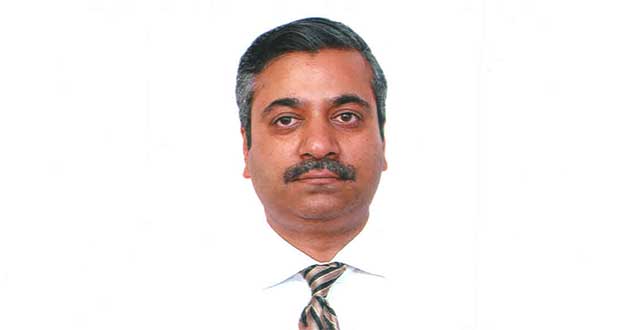
  • Sudipta Routh, Partner, SAMVAD: Partners, on Mergers and Acquisitions, Banking and Finance, and Debt Capital Markets

    Sudipta Routh, Partner, SAMVAD: Partners, on Mergers and Acquisitions, Banking and Finance, and Debt Capital Markets

    Sudipta Routh graduated in law from NLS, Bangalore, in 1996. After successful stints at ICI India (now part of AkzoNobel NV) and Trilegal, he went on to pursue his Masters at Queen Mary, Univ. of London, batch of 2006. Since then, he has worked with Clifford Chance, Luthra and Luthra Law Offices, and founded Agram Legal Consultants. He is currently Partner at SAMVAD: Partners, where his role entails Mergers & Amalgamations, Foreign Investments & Joint Ventures, Cross-Border Banking and Finance, Trade Finance, Debt Capital Markets (Domestic and International), Corporate Advisory.

    In this interview we speak to him about:

    • His internships
    • His extensive experience at Tier-I firms
    • His current role at SAMVAD: Partners

    What motivated you to pursue a career in the legal field?

    As a science student I did the usual things science students did back then, many entrance exams. It helped that my CET scores were mostly non-reportable. I was surprised when I came in thirteenth in the NLS entrance test (no CLAT back then). My grandfather was a lawyer, but during colonial times. He passed away when I was quite young. My dad used to be in the army and a metallurgist.  He neither inspired me to take up law, nor was he inspired when I did. Very few (except the NLS faculty perhaps) had any inkling of the influence NLS would go on to have on legal education and the preeminent stature of the institution today.


    Can you share some memorable experiences from you time at NLSIU?

    Too hard to choose any one. Mr. Soli Sorabjee’s speeches, Chief Justice E. S. Venkataramiah classes (he taught Constitutional Law 1 and 2 immediately after retiring from the Supreme Court), Mr. Ram Jethmalani’s classes (he took a sabbatical to teach us Criminal Law for a month or more), Chief Justice Ahmadi (gave me my degree certificate), stirring speech by APJ Abdul Kalam at that time he was SA to RM. We had no idea we were interacting with the greatest president India would ever have. He signed a photograph for me, squatting on the floor, building a rocket – I keep this really carefully.  We were fortunate to have a lot of greatness rubbing off on us. Many of us were blissfully unaware though.  Sometimes, in hindsight, it was a little surreal too. Dr. Manmohan Singh (Chairman of UGC back then) had come by to inaugurate a hostel block. Two of my best buddies considered it their national duty to entertain him then and there. Of all things, they sang “Comfortably Numb” (quite badly, but it could’ve been the sound system). I can’t say Dr. Singh was comfortable (he clapped feebly), he certainly looked numb. He went on to become Finance Minister next month, the magic of 1991 happened, then prime minister, the rest is again history – you make what you will of that, but if I hope those two rock stars are not reading this!

    Amidst all this, there are those in the faculty who have dedicated more than a quarter century of their most productive years, who are still there now, and who still know each of us by our names and misdeeds. I am still living off that.


    Did you pursue activities such as moots, debates and internships in law school?

    The mooting standards were spectacular. Even before the first batch had graduated, NLS teams had already won international competitions. I mooted, but was thoroughly overawed. I focused on paths of lesser resistance, debates, quizzes, and other literary events. By my second year, NLS was dominating the “culfest” scene.  I was born for sports and athletics. M.P. Ganesh, India hockey legend, then director of Sports Authority of India (which is close to NLS campus), gave us full access to world class facilities. That was heaven.

    My internships were in the High Court (Bangalore), chambers of a senior counsel, a PSU bank, an NGO, law firms in Bangalore and Mumbai, and two multinational companies in Chennai and Pondicherry. These internships were invaluable. They gave me a job, and the chance of coping with life experiences (in Mumbai, I would always run out of cash in the very first week, from Pondicherry I could send money home if I wanted, which I didn’t eventually. By the end of the fourth year, I had a career plan (and several Plan Bs). By the end of the fifth year, I had three offers on campus (not without anxious moments). The internships had however already prepped me for whatever was to come.


    Would you say law school prepared you for the real world practice of law?

    The programme was superbly designed, even for the most indifferent student. The internship program was only one aspect. Other than the tough curriculum (two tests plus a project and a viva for each of the 60 subjects – none of which you could score below 50), we had a retinue of occasional / vocational teachers from every walk of life, academicians, industry captains, scientists, politicians, ministers, activists, sportsmen even, who taught us a life-lesson or two every now and then. NLS was conceived by brilliant educationalists, it also had the backing of the entire Judiciary, the Bar Council of India, the Karnataka Bar Council, the Bangalore University and the Government of Karnataka. The Chief Justice of India was the Chancellor. The Chairman, BCI, was the Chairman of the GC. I guess the odds were heavily against the “real world” when we stepped out.


    What are your areas of interest? How did you discover such fields and cultivate your knowledge of them?

    Intense focus in any one subject I owe to Professor Pillai (he continues to teach at NLS even today). His question papers were legendary. They were excruciating but hugely satisfying (i.e. if you passed) – at least eight to nine pages long and labyrinthine. They were invariably open book (the more you carried in, the worse your chances). He would set information dense scenarios (deviously misleading) which would require extremely quick analyses and a sort of synthetic application of competing principles. It was possible to come to diametrically opposite conclusions and be assured that both solutions were equally right. He provoked thought and demanded only the ability to solve problems – not swotting his notes or reeling off citations. So Corporate Laws and M&A was where it all began for me. I guess Prof. Pillai was really trying to inculcate method and application. He left the “imparting knowledge” part to you. Much later I would tackle a Masters, banking and finance, debt capital markets and restructuring, using only his approach.


    As an expert in Mergers and Acquisitions, Banking and Finance, and Debt capital markets, can you tell our readers a little about the subjects and the nature of work they demands?

    Maybe they all require different mind-sets. M&A perhaps requires a certain “structuring” knack based on comfortable ability with the corporate laws, exchange control, tax and some sector specific laws. Banking & Finance, less of “structuring” but far greater technical ability distilled from in-depth knowledge of market practices. Debt Capital Markets (especially the cross-border variety), a deeper regulatory awareness and conversational fluency with international market practices. Perhaps the common thread is really an ability to solve problems rapidly and deal with complexities even faster. Sometimes the spin-offs can be startling. When you are able to use a run-of-the-mill old hat technique in one practice area, add some bells and whistles, and push it out as as a “brilliant innovation” in another. This cross-pollination will make you stand out – you mustn’t give the game away then, pretend it’s an original brainwave, you are naturally quick witted like that, and in an everyday matter of fact way. Accept the applause graciously.


    What was your first job out of law school and how did you secure it? 

    ICI India Limited (now Akzo-Nobel).  ICI was looking for an entry level M&A and corporate lawyer. I had gone through two rounds without breaking a sweat (I had just interned with an MNC). My final interview was with my to-be “super-boss”, sharp eyed and intimidating. He immediately picked up on the word “treaties” in an obscure paper I had unfortunately mentioned in my CV – “Economic Analysis of Indian Double Taxation Treaties” (My wife-to-be, NLS senior batch, had made a “serious contribution”. I had speed read the Indo-Mauritian DTA though, some months ago).  He asked me how many “treaties I had to analyse to write this “seminal, heavy duty paper”. I distinctly felt the rug slip. I blurted “all” (mostly by reflex) and looked surprised that he should even ask? That was it. He stopped his interrogation immediately. I saw a paternal smile which clearly said “You are hired!” Much later, I fessed up to him and my boss – I could hear the boss man laugh long and hard.


    What was your work profile at ICI Group? 

    ICI had just launched a take-over bid on Asian Paints. This was apparently the first bid under India’s first “takeover code”, freshly minted in 1994. I had two wonderful mentors – two bosses, one in Calcutta the other at Delhi. They gave me a free hand (but would always keep an eye, I didn’t know then). I ended up fronting 3 M&A deals all by myself (or so I thought back then) by my 3rd and 4th year at ICI. I left suddenly, on a whim, to join Trilegal – but ICI immediately followed as a client.


    How did you secure an appointment with Trilegal?

    The name would come a tad later. The founding partners were actually founders of three firms which they had started-up independently (at around the same time) in different cities. Sridhar and Karan (seniors at NLS) in Mumbai, Akshay and Anand in Delhi, Rahul and Prem (again, seniors at NLS) in Bangalore.  What I remember hazily is sometime in the winter of 2000 these gentlemen were in Delhi (possibly discussing Trilegal?). I was with ICI based at Delhi then and Sridhar caught up and asked if I would join Singh and Gorthi at Mumbai. I immediately did. Trilegal was christened very soon thereafter.

    I was an M&A partner. ICI had followed as a client, for an acquisition from Hindustan Levers (HLL). Then HLL hired us soon after for one other – they were across the table on that first deal. My two mentors at ICI (one of them had already moved on to a famous technology MNC as GC and the other would, a little later, as GC to a bellwether IT giant) stood by and referred a couple of acquisitions. I had not planned on leaving Trilegal. I went to London to complete my masters in Banking & Finance, to come back with perhaps an extra arrow or three in my quiver (or at least that was the plan). The LLM without the work experience would not nearly count as such. So therefore Clifford Chance –that stint continued longer than either I or Trilegal had planned.


    What motivated you to finish your masters? 

    This was planned for long time. I planned on doing my masters back in my fifth year. We were allowed a choice of either M&A or Banking & Finance for our 5th year clinicals. You couldn’t choose both for some reason. I, of course, opted for M&A with Prof. Pillai. So Banking & Finance was definitely on the cards for later.  Banking & Finance is also hugely driven by market practice, so this had to be a “practical” and working programme with an assured return on my investment (never bright enough for a scholarship). I picked a very specific programme (designed by Prof. Walker) at Queen Mary, CCLS after many months of painstaking research. As with the programme at NLS, this programme featured several partners from Magic Circle City firms – A&O, Linklaters, Clifford Chance, Freshfields, Chadbourne & Parke – the GC of World Bank and the redoubtable Philip Wood.

    The LLM would give me a new livelihood and a dual qualification in an international market. It is probably not enough to have an objective. You need a strategy (or two or three). Choosing a programme and the timing is part planning part luck. If you are pursuing a career in academics or with multilateral organizations, it is best you plan from your fourth year onwards and finish your masters as quickly as you can (the long slippery slope of an M.Phil / Ph.D lurks ahead, so Godspeed and good luck). Naturally, your choice of subjects will be simple and mostly driven by your forte. If you desire to augment skill sets, you should ideally hold until you have about four to five years of work experience. At this stage, your choice of universities and subjects will become increasingly complex as also your objective. An LLM without work experience is really a sabbatical – which is hardly a bad thing. Go out, enjoy yourself, take a break and come back enlightened to boot. Do it for the pleasure. Do not expect a payback. An LLM combined with work experience is not only force multiplayer, but you could cunningly weave in the “sabbatical” part. I saw a lot of UK and Europe on a shoestring while studying and working in the UK. You do have to fret about the “work experience” bit right up front though.


    How did you secure an appointment with Clifford Chance?

    I had completed my masters with an emphasis on leveraged finance. This was a high risk strategy given the Indian context – you still cannot structure PE deals in India using leveraged finance structures. Which meant, if I couldn’t secure a position in UK, the LLM would become a sabbatical (default setting – screensaver, I could have lived with it). The acquisition finance market was highly stratified at that time. The magic circle firms did the large (above USD 500m) and the mega deals, and the small and lower mid-market deals were the preserve of the silver circle firms. CC was at the centre of the centre of that universe. I planned my application well in advance, did tons of research, and wheedled several decent references. I did many interviews with other firms for practice. Enrolled with agencies. I keenly followed CC’s India plans on a daily basis. Made friends and tried to influence them –no stone unturned. Even then, when I got the call it seemed like the Lotto Euromillions numbers just tallied (I used to buy those tickets too). I was a senior associate with “50X” – as the CC banking and finance team was known back then. This was probably the best outfit for acquisition finance transactions. I did a lot of heavy lifting on headline grabbing international acquisition finance transactions, besides bilaterals and restructuring (finance). The work culture was truly world class. There were lawyers from all over the world with absolutely stellar partners. It is my second alma mater, a mothership, very close second to NLS.

    In September, 2008, Lehman Brothers collapsed, literally, in front of us. The European headquarters were located at Canary Wharf, very close to CC. I think it was a Monday when I turned up for work. I saw about 2,000 Lehman employees (some good friends too) cramped outside Lehman offices in Jubilee Park. That, for me was a graphic and symbolic snapshot from ground zero of the beginning of the 2008 crisis. Thereafter, the leveraged finance market simply fell off a cliff. Some in 50X shifted to restructuring, others moved on. I did restructuring for about 8-9 months, which was absolutely fascinating (especially whilst working with the Bank of England and Her Majesty’s Treasury) – but this was no longer a sustainable career option. I returned to India to pick up from where I had started, with those extra arrows in my quiver.

     

    How did your appointment as a Partner at Luthra & Luthra happen? 

    In mid-2009, Mohit Saraf was in London. We met over breakfast near Hyde Park. He asked if I would like to join L&L. It took nine months to return to India, but Mohit was more than patient. I joined as an M&A and Banking & Finance Partner at Mumbai.  Later, I would go on to develop the international debt capital market practice piggybacking on L&L’s superb ECM practice.  

    While at CC, I met with Vaishali Sharma, then Partner with AZB Mumbai. CC had tied up with AZB and she was in CC London in an ambassadorial capacity. Vaishali would return to India and later go on to found Agram Legal Consultants as a sole proprietorship in 2014. After nineteen years of doing everything (in-house, private practice, masters, magic circle…), what remained was the entrepreneurial plunge. In May 2015, I joined Agram.


    What was your role in founding Agram Legal Consultants? 

    We converted Agram to a partnership. I was now well and truly into the business of law from scratch, even doing IT and server maintenance by myself. Vaishali was already adept with both the practice and business of law and in addition proved to be an excellent administrator, bookkeeper, interior designer, HR and constant gardener.  The hurdles were many, but nothing loyal client following and good old fashioned project management couldn’t take care of.  As with the practice of law, the business of law, too, threw up more than one right answer. We looked at Agram’s growth from two different perspective. Vaishali focussed on the bottom line with quality as the primary driver and I was looking to grow the top line by adding partners and offices. Hindsight would prove us both right, but for that we needed two different platforms.


    You are currently a Partner at Samvad Partners? 

    I was looking for a larger platform around mid-2016. On account of a sporting injury I was admitted in Breach Candy. Harish (batch mate at NLS and old friend) and Vineetha (college mate from NLS and old friend), two of the three founding partners of Samvad came by for possibly the weirdest hiring decision Samvad has made to date. I had just undergone surgery, full of some potent IV stuff they were shooting (legally) – so I probably wasn’t too coherent, but over coffee and masala dosa (or idli?), at Breach Candy canteen I may have convinced Harish and Vineetha somehow. For me, the lifelong friends I made at NLS were yet again banding around me and it was an easy and natural choice. The transition was seamless. I continued with the very same M&A and Banking & Finance deals I was working on. Strangely, my clients didn’t seem to miss a beat (or may have pretended they didn’t) – not even when I was in hospital and these were large cross-border deals.  There were many law firms and many group email ids – so Agram servers were still being pinged. In one deal, Vaishali had to actually step in independently – that was hilarious.


    What hurdles have you faced in building your career as it stands today?

    Mostly my own pig-headedness and delusions of how clever I am.


    How have you overcome them and what lessons have they taught you?

    I have learnt to constantly double guess the calls I make. The lessons are: not to take myself too seriously; to remember that, success and failure are two sides of the same coin; and with luck (lots of) and planning (even more of), you will often win that toss (maybe, can’t really say for sure).


    What are the qualities one needs to develop to succeed in the world of corporate law?

    Do not depend on your knowledge and expertise with law alone. If you cannot understand your client’s business and financial imperatives, you would serve that client really well by not offering your services in the first place. And borrowing from my old mentor- “God resides in the detail”.


    What qualities do you look for while recruiting law students or young lawyers? 

    Problem solving. How I wish I had preserved Prof. Pillai’s question papers. CGPA may /may not / sometimes / depending / inter alia get you through, but then again, maybe not; yesno?


    How do you maintain a work- life balance?

    I look to squeeze the last drop of fun from out of every waking second, of every of minute of every hour. Rest of the time I sleep as long and as fast as my baby daughter. So far this has worked perfectly. This is more than a good bargain / balance / whatever this “work- life balance” thing be – at my age, I accept this with gratitude.


    What advice do you have for our readers who are primarily college students?

    Experience is a comb nature provides you with once you are bald. I am.

  • Chaitanya Ramachandran, Legal Counsel-India, Twitter, on technology and law, and his experience

    Chaitanya Ramachandran, Legal Counsel-India, Twitter, on technology and law, and his experience

    Chaitanya graduated from NLSIU in 2009. After a successful stint at Clifford Chance LLP, he went on to pursue his Masters at Stanford Law School, with a specialisation in Law, Science and Technology. He is currently Legal Counsel (India) at Twitter, where his role entails managing litigation in courts throughout India, drafting and negotiating commercial agreements for all Twitter products, services and partnerships, advising on Intellectual Property, Privacy and Data Protection law, developing and enforcing robust corporate governance policies, and developing and delivering training programs on Twitter policies and processes for both internal and external audiences.

    In this interview we speak to him about:

    • His time at NLSIU
    • Marrying law with technology
    • His experience at Twitter

    What would you like to say to our readers in the manner of an introduction of yourself?

    I’m a technology lawyer and work for Twitter, where I lead the Legal function in India.


    What inspired you to take up law?

    I was always interested in computers and technology, so as a senior school student I did briefly consider engineering. But I noticed that hardly anyone I saw studying engineering in India actually ended up becoming an engineer; the “engineers” all seemed to end up in finance, consulting, management, or pretty much anything other than actual engineering. So I quickly realized that it wasn’t for me. Around the same time (this would have been around the 10th standard), I started to become interested in law, largely owing to interesting and vigorous debates in the media about the controversial laws of the time (the Prevention of Terrorism Act being a notable one). I also knew a few seniors who had been admitted to the five-year law programs, and their accounts of law school life sounded very appealing to me! I’m not a first-generation lawyer, but my family was quite supportive.


    Tell us a bit about your time studying law at NLSIU.

    I have fond memories of my five years at NLSIU. I wasn’t particularly fixated on academics to be honest; it was the non-academic pursuits that captured my imagination. Quizzing was foremost – I have always been a quizzer, and NLSIU has a very rich tradition of quizzing. It was an honour to have been part of that tradition, and to have been part of Bangalore’s quizzing scene, which is India’s finest. Another interest that developed at NLSIU was writing – I wrote a few articles on technology law, and was involved with the publication of the Indian Journal of Law and Technology (IJLT) in its formative years. I also spent a LOT of time listening to music and discovering new artists and genres! Looking back, it was a fun, relaxed time when I was mostly free to explore whatever interested me.


    Could you tell us about the internships you took up, and what you learnt from those experiences?

    I don’t think I was very serious about my internships. I did one per year, which was the minimum amount required. Three of those were litigation internships in Delhi, where I experienced every level of practice from trial up to the Supreme Court. While I worked with some truly accomplished and supportive seniors, I realized that litigation as a career wasn’t for me. I didn’t enjoy the chaos and wastage of time that are an inescapable part of the day-to-day practice of litigation in India, nor did I see myself thriving in the increasingly aggressive milieu of the Bar. So more than anything else, my internship experiences steered me away from a potential career path – not that that’s necessarily a bad thing!


    What advice would you give students in avoiding a decision paralysis?

    Go with your gut. If you are reasonably engaged with what’s happening at law school, you should find your inclinations emerging naturally during the five years. As you learn what interests you, seek out more research, writing or internship opportunities in that field, and if you can, reach out to people in the field to learn more about what they do. Perhaps most importantly – don’t do something just because other people are doing it. That’s probably the single worst reason to do anything.


    Tell us about your early professional experiences at Clifford Chance LLP. 

    The transition was difficult. In addition to the transition from student life to working life, I also had to contend with the transition from India to a completely new culture. But my main motivation in signing on with Clifford Chance was to experience living and working overseas, so I met the challenge willingly. What appealed most to me about the big London law firms was that all trainees are required to rotate through three or four practice areas in the first two years, which gives you a pretty comprehensive overview of legal practice when you’re fresh out of law school. I also got the chance to spend half a year in Brazil on secondment, which was a fantastic experience. These experiences built my confidence in being able to do business across borders and cultures, which is central to what I do today. In retrospect, another thing I appreciate about these early experiences is that one tends to develop good working habits in the type of demanding work environment that firms like Clifford Chance offer, and these stay with you later, even if you eventually choose to move on to something different.


    Did you have a mentor or guide during the formative years of your career?

    I didn’t have a mentor, which I suppose isn’t surprising because I became interested in technology law when it was a brand-new, mostly unknown field, and nobody was making a career out of it, at least in India. It really took off in India only about five years ago, and today there’s no shortage of people in the field whom law students can seek out for guidance. Based on my experiences, I don’t think it’s necessary to have a mentor. What’s important is getting to know yourself and what makes you tick, and creating opportunities for yourself. A strong drive and quality work product will help you get noticed. I’ll also add that I’ve been very fortunate to have had some extremely supportive bosses at every stage of my career – at Clifford Chance, Amarchand Mangaldas, and now at Twitter – who have encouraged me to follow my chosen path and provided sound advice when I needed it.


    What motivated you to pursue an LL.M?

    Two things. The first was that I knew relatively early in my law school career that I wanted to make a career out of technology law, and a specialized degree seemed like a good way of embarking on that path. The second was that I wanted to experience a foreign academic culture and learn from the world’s leading minds.


    How did you keep up with the challenging academic rigor at Stanford?

    I think attending Stanford has been the single most important decision that I’ve taken in my career to date. “Rigor” is the right word – the LL.M. was a very demanding course for me. But staying motivated was never a problem; US law schools allow you to design your own LL.M. program, so I was only taking courses that I was genuinely interested in. “All killer, no filler!” In fact, the real problem at Stanford was that I was interested in more courses than I could realistically take during the LL.M. year, so deciding which courses not to take was a conundrum. Stanford Law School allows you to take courses outside the law school as well, so for the first time in my life I was able to experience a bit of non-legal higher education! Another standout part of the Stanford experience was that my professors were all world-renowned authorities in their field, and my fellow students were an extremely accomplished bunch, so the classroom environment was excellent. That encouraged me to put in the work to be able to come into the classroom and hold my own, day after day.


    How would you compare your LL.M experience with your under grad legal education in India?

    The difference is stark. The pedagogical cultures are fundamentally different. Five-year law schools in India are focused on classroom teaching. The vast majority of your time as a student in a US law school is spent in self-study, and you come into the classroom to both refine and question what you have learned on your own. US law schools make huge demands on your time with respect to reading, and focus much more on primary materials including case law and statutes. This helps greatly with the transition from studying to practice, as knowing your way around a judgment or statute is such a fundamental skill in practice.


    How did you come to work with Amarchand Mangaldas? 

    Having tossed my hat over the wall of technology law, I wanted to work with a practice that would allow me to specialize in this field. The team at Shardul Amarchand Mangaldas (which was still AMSS at the time I joined) was in the process of building out their technology practice (which was then housed within the policy and regulatory practice), and I saw this as a good opportunity to start the next phase of my career. Over two years at SAM, I got to do some very interesting work with a client base that included some of the world’s leading tech companies, and was also exposed to industry bodies and Internet institutions like ICANN and ISOC, which I remain engaged with today. I also had two incredibly supportive bosses in Mr. Shardul Shroff and Mr. Sandip Beri, who encouraged me to pursue my chosen path and gave me the opportunity to prove myself.


    How do you deal with the massive challenges of representing one of the most important social networking sites world over?

    (Chaitanya is Twitter’s first Counsel in India.)

    It never gets boring, that’s for sure! Twitter is a unique place, and I never cease to be amazed by the ways in which our users are constantly reinventing how they use our platform; to joke, to speak up (or speak out), to connect with like minded strangers, to share information at the speed of light, to stay connected with what’s happening in the world. I often have to deal with difficult legal issues where the law provides little to no guidance and there’s no ready solution, which is precisely the kind of challenge I thrive on. It’s also a privilege to work for a company that shares my own values – that free speech is valuable and worth defending. I always find my work engaging due to the inherent nature of Twitter; the legal issues I encounter are closely connected to current events in India and beyond. When work gets especially demanding, I stay motivated by remembering that what we are doing is giving every person in the world a voice –an idea that has gone from being absolutely unthinkable to indispensable reality within my own lifetime. That’s powerful stuff.


    On what parameters do you choose the projects you work on? 

    These days, as an in-house lawyer, I don’t have much room to choose – I have to deal with whatever crosses my desk! Though as someone who has always wanted to work in tech, I find most issues I come across at Twitter very interesting. In previous roles, I definitely tried to build up a corpus of work in my chosen field, and was fortunate enough to have access to clients that offered exactly the type of work that I wanted to do. I’ve learned that you must proactively seek out the type of work that you want to do – don’t count on it finding you. While fresh-faced graduates may not have a huge amount of choice right off the bat, this becomes easier to do with more experience.


    Could you take us through a typical working day at your office?

    I don’t think I’ve had a single day at Twitter that has gone perfectly according to plan! Nevertheless, to give you a representative example, I typically start work early and catch up on my inbox and the news. I try and reserve technical work like marking up an agreement or reviewing a litigation draft for this time of the day, when I’m at my freshest. I may have a Hangout scheduled for mid-morning with one of my internal business clients, where I’ll bring them up to speed on the current status of their ongoing deals, and learn about other deals that are in the pipeline. I may then move on to reviewing requests from various parts of the company that I need to approve; these could be anything from supplier contracts to press releases to creatives for an upcoming ad campaign on the platform. While my colleagues and I always talk about having a sit-down lunch at one of the many restaurants nearby, this mostly remains a pipe dream, and I usually only have time to grab something from one of my favourite shops or food trucks and catch up on Twitter or The Economist. Post-lunch, I may have a regular Hangout scheduled with one of my international counterparts in the Legal organization, after which I’ll usually try and check off the remainder of my list of goals for the day – perhaps complete a piece of legal research, respond to a customer or internal client, or work on an internal company policy or process that’s being updated. I’ll then try and beat the notorious NCR traffic on my way back home, where I’ll resume attacking my list and catch up on my inbox. Later that night, I may have a cross-time zone call with our headquarters team and outside counsel to set our strategy and prepare for an upcoming court hearing. I’ll hopefully end the day feeling that, while not everything may have gone to plan (there are always surprises and emergencies that you can’t account for), I made meaningful progress on my goals for the week.


    What books, judgements that you have read would you say have played an integral role in shaping your legal philosophy?

    I’d say my philosophy has been strongly influenced by the writings of three lawyer-statesmen: Thomas Jefferson, for his conception of individual liberties and their central role in society as well as his mastery of the written word; Jawaharlal Nehru, whose idealism and clarity of purpose shone through vividly in his writings; and Lee Kuan Yew, whose warnings about the essential fragility of civilization and the dangers of populism seem especially prescient in 2017.

    With respect to my day-to-day work, a book that has influenced me greatly is High Performance with High Integrity by Ben Heineman, which I was introduced to as a student at Stanford. It is essential reading for in-house counsel, and I strongly recommend it to anyone who is interested in this line of work.


    What are the key attributes that one must develop in order to excel in this industry?

    I think the key skill for in-house lawyers is being a good listener. The outcome that we are always pursuing is helping our business colleagues achieve their goals while simultaneously protecting the interests of the company. Listening well helps you identify potential risks and ask the right questions. An added benefit is that it helps you learn something new every day, especially at a large, diverse company where you’re surrounded by colleagues working on amazing stuff that’s well outside your comfort zone as a lawyer. The only way to develop this skill is to practice it everyday.


    How do you manage your time between your professional and personal interests? 

    I’ve learned that you have to make the time for the things you value in life – no one’s going to hand it to you. Music is my first love; when I’m not at work you’ll probably find me playing or tinkering with one of my guitars.


    How do you keep yourself updated about the latest developments in law?

    On Twitter!


    What advice would you like to give our readers, who are mostly law students and young lawyers?

    I don’t know how qualified I am to give advice, but since you’ve given me a soapbox, I’d encourage anyone reading this to be original and follow their own interests within (or outside) the law, wherever they may lead. I often turn to a great quote by Phil Knight that has pride of place outside the Stanford Graduate School of Business: “There comes a time in every life when the past recedes and the future opens. It’s that moment when you turn to face the unknown. Some will turn back to what they already know. Some will walk straight ahead into uncertainty. I can’t tell you which one is right. But I can tell you which one is more fun.”


  • Huzefa Ahmadi, Senior Advocate, Supreme Court, on an illustrious career in litigation and work experience at Magic Circle

    Huzefa Ahmadi, Senior Advocate, Supreme Court, on an illustrious career in litigation and work experience at Magic Circle

    Huzefa A. Ahmadi graduated from Law Center-II, University of Delhi. He joined the Bar Council of Delhi on 6th September ’91 and started litigating before High Courts and Tribunals. He briefly went abroad and worked with Clifford Chance on a work experience placement.

    Huzefa came back to join litigation in India. He practices before the Supreme Court of India in matters concerning Constitutional Law, Administrative Law, Tax, Civil and Criminal Law. A third generation lawyer, law came naturally to him and he never considered any alternate career choices at all. Huzefa has been designated as a Senior Advocate in November, 2012.

    In this interview, he talks to SuperLawyer about:

    • Being influenced by his father, who retired as the Chief Justice of India
    • Experience as a law student at Delhi University in the early 1990s
    • Importance and minimum requirement for the designation of Senior Counsel
    • Entry of foreign law firms in India and its impact upon Indian lawyers


    When did you get inclined towards law?Tell us a bit about your family.

    I had decided to do law while I was doing my graduation. I am a third generation lawyer. My grandfather was a judge in the subordinate judiciary under the erstwhile State of Bombay. My father retired as Chief Justice of India.


    Did your father motivate you to pursue law? How did you come to study law?

    My father did not try to influence my decision as to the vocation I would like to pursue. In hindsight, I feel that my lineage did subconsciously goad me to take up law.


    huzefa-ahmadi-1

    Which stream did you pursue your basic graduation in? Was the five-year course available to you?

    The five-year course was not introduced when I studied law. I did my B.A. with Psychology. I had no other plans but worked for a short time with HCL and sold computers for some extra pocket money.


    How was the environment in Delhi University in the early ’90s? What student activities were you a part of? How about internships?

    I did my law at the Evening Centre at Mandir Marg (CLC-II). Some professors were good but overall the course was neglected. You required an upper second in graduation to get into the law course. There weren’t too many student activities happening at the Evening Centre but classes were frequently disrupted by union activities. Most students were in Government service or over 40 years of age and did not seem interested in active practice of law.

    Internships weren’t introduced at that point of time. Internships now help in getting a broader insight of the profession. A lot depends on how keen the intern is towards the profession.


    Could you tell our readers about the first time that you appeared in court?

    (Huzefa began practicing at various High Courts and Tribunals soon after graduation)

    You always get a mixed bag of judges. Some were very helpful to young lawyers. I was fortunate to be in a chamber where I got a lot of opportunities to argue cases. My first appearance was before the C.A.T. where I argued the case of an Excise Superintendent against whom there was a disciplinary proceeding.


    Who were your mentors?

    Mr. M. Chandrasekharan, Senior Advocate and Mr. Maheshwer Dayal, Senior Advocate were my mentors in my initial days of practice. I was also inspired by my mother and father whose advice and guidance served as a beacon of light in the profession.


    Did you ever have any other plans other than litigation? What are your views on LL.M.? Do you think Indian Legal Education needs to improve?

    I never had any alternative plans.

    I think LL.M. helps in building a jurisprudential base. Legal education needs to improve at the middling level. There is a huge gap between the five-year courses and others.


    How did you get to work at a Magic Circle firm? When did you decide to come back to India?

    (Huzefa worked at Clifford Chance on a work experience placement)

    There was some work that I had done in India which led to my joining them on a work experience placement. The exposure was good as I saw the scale and expanse of an international law firm. I returned because I wanted to practice litigation in India and did not want to work with a corporate law firm.


    How does one become a Senior Advocate? Is there a lot of work owing to the designation?

    (Huzefa was designated as a Senior Advocate by the Supreme Court of India in 2012)

    It is necessary that you practice purely as a counsel at least for about 5-7 years before you apply to be a Senior Counsel. Designation can sometimes be a boon and sometimes a curse. If you are not up to it and aren’t briefed for the strangest of reasons you will be without work. As a Senior Advocate you get very less time to prepare as you are invariably briefed on the previous day.


    What are your views on the possibility of foreign law firms entering the Indian market?

    I think they should be allowed to enter but on a reciprocal basis. Their entry will ensure better terms for young lawyers.


    What would be your message and advice for our readers?

    Work hard and stay focussed on the profession. Have a hobby and other interests because there may be long periods of time when you may not have work despite doing your best.