Tag: company law

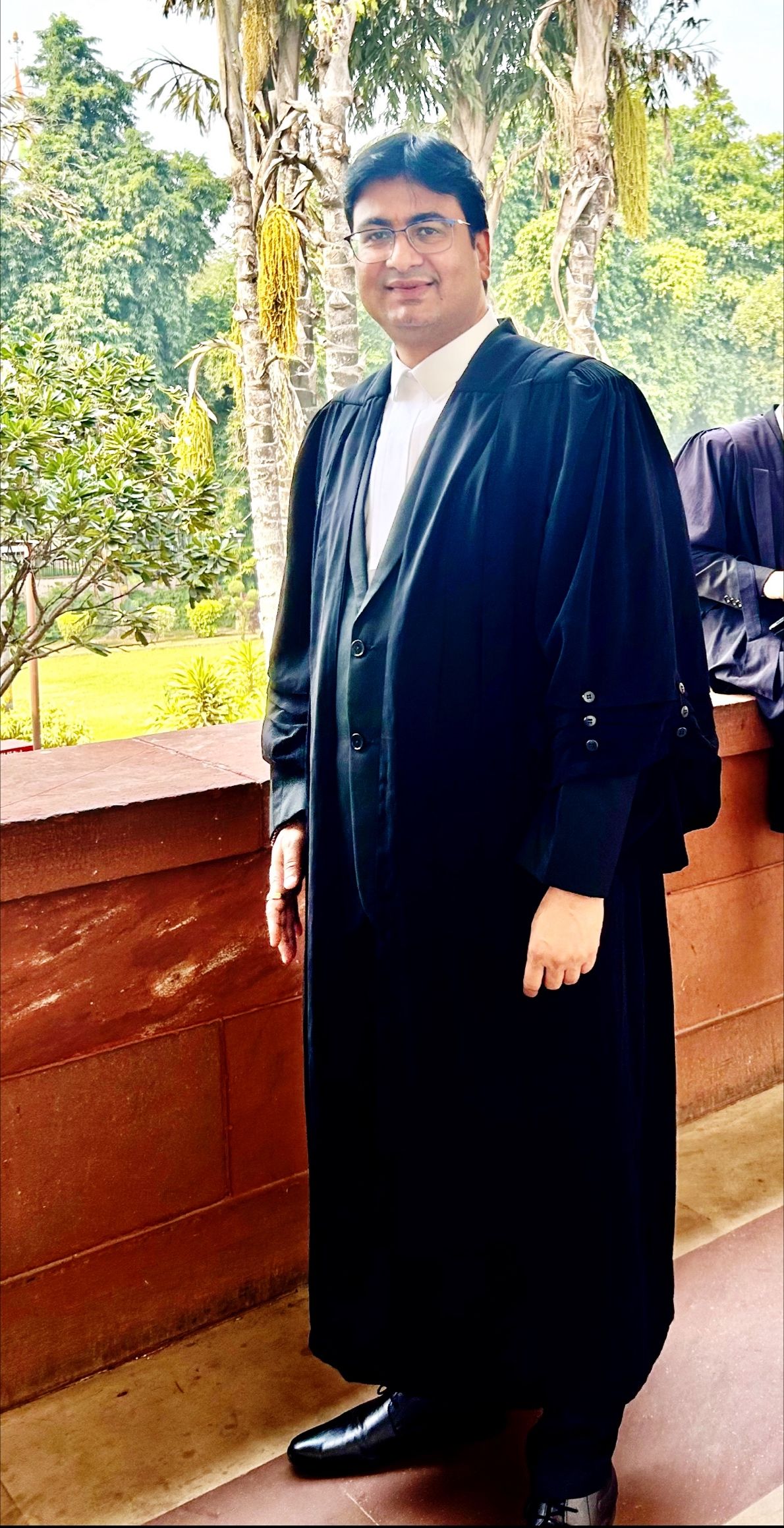
  • “It is one of the privileges of being a litigation counsel to have the opportunity to contribute directly to the evolution of the law through arguments addressed in court.” – Kumar Sudeep, Founder & Principal at Chambers of Kumar Sudeep.

    “It is one of the privileges of being a litigation counsel to have the opportunity to contribute directly to the evolution of the law through arguments addressed in court.” – Kumar Sudeep, Founder & Principal at Chambers of Kumar Sudeep.

    This interview has been published by Anshi Mudgal and The SuperLawyer Team
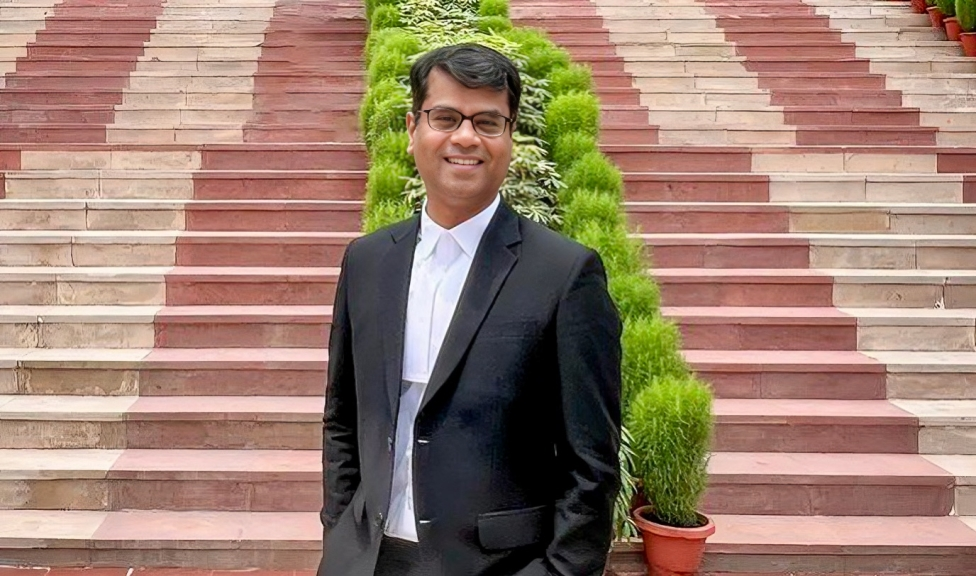
    Sir, your journey is truly inspiring. After completing a B.Tech in Computer Science & Engineering, you made a noteworthy shift to the field of law. What inspired this transition? 

    I finished schooling from Delhi Public School, R.K. Puram in 1999. At that point I had an offer for a B-Tech degree in Computer Science & Engineering from GGSIP University in New Delhi. Not being very clear about where I wanted to be in the long term, I decided to take up the offer and figure things out with work and life experience. Various opportunities came my way after graduation of which the most noteworthy was a startup called Montalvo Systems with offices in Bengaluru and Silicon Valley, California. This company was acquired by SUN Microsystems in 2008. The feeling of being a bird of passage in engineering came to a head for me at that point in time. I was not feeling very keen on repeating the technology cycle all over again. I joined Nvidia in Bengaluru and while working there started thinking from first principles about a long-term career best suited to my interests and inclinations. This process culminated in my returning to Delhi and joining Campus Law Centre, Delhi University for an LLB degree.  

    In school I rather enjoyed languages and the acts of reading, writing, and argumentation. It was a delightful and easy-going kind of engagement with the use of language; and  it never occurred to me that it could be the basis for any full-fledged career. It was like breathing. It is only after work experience and self-examination that I let these instincts guide me to law as my long-term career. The peace of mind that comes from working alongside, and not too far away from your natural inclinations, is priceless and an abundant source of mental energy. 

    How has your engineering background continued to inform or benefit your legal practice? How has your technical education influenced the way you approach complex cases before the Intellectual Property Division and Commercial Courts of the Delhi High Court?

    A technical degree in a subject like Computer Science or Electronics can enable one to appreciate and analyze a technical system in its entirety: from the top-level algorithm, to the software that implements the algorithm, through the hardware that executes the software, down to the circuits which constitute the hardware, and even the underlying semiconductor materials on which the circuits are etched.

    As a lawyer one can then pause at the required depth in this chain, depending upon the requirements of the case at hand, and synthesize and elucidate the matter in appropriate legal terms to assist the court in reaching a decision. Ultimately technology lawyering is a synthesis of the science of understanding and the art of communicating.

    Further, the general analytical rigour typically imbibed in the study of engineering and technology also seems to carry over naturally to law where precise and accurate analysis of legal and factual propositions is of value. 

    In the initial stages of your legal career, you must have encountered a variety of formative experiences. Could you share a few experiences that deepened your understanding of the law and shaped your approach?

    After LLB., I had the opportunity to work in the chambers of a very experienced and encouraging lawyer at the Tis Hazari courts. Thereafter I joined a law firm and came to the High Court of Delhi and practised primarily in IPR and media law related matters. In 2017 I moved out from the firm and helped set up a new law firm with some of my friends and colleagues from Bengaluru and Chennai —this was the genesis of my Supreme Court practice. I was appointed an Advocate-on-Record by the Supreme Court in 2020. Presently I work as an independent chamber counsel engaged by clients, lawyers, and law firms for their matters at the Supreme Court, High Court of Delhi, and the NCLT/NCLAT.

    Working in the trial courts as a fresh graduate, I recall, gave a feeling of both empowerment and emancipation: empowerment in terms of getting hands-on experience in practice, and emancipation in terms of a mindset shift that with due effort one could learn and practise any branch of the law in any forum available. I therefore usually recommend experiencing the trial courts to law students and lawyers starting out in the profession.

    Another formative experience was listening to other matters being argued in court while I waited for my own matter to be called. This was an easily accessible and enriching source of learning, and it improved my approach to the drafting of pleadings (it was sobering to see experienced lawyers sometimes being put on the spot by the judge for not having impleaded necessary parties, or not having pleaded the cause of action properly, jurisdiction etc.). It also taught me about speaking more, speaking less, and speaking to the point in court.  I still like to listen to the back-and-forth between the bench and the bar while waiting for my matters. 

    What motivated you to take the leap and establish your own legal practice? What were some of the significant challenges you encountered while building your Supreme Court practice, and how did your long-term vision help you navigate the journey particularly leading up to becoming an Advocate-on-Record?

    It was clear to me during LLB. that I wanted to have an independent chamber practice in due course. I was fortunate in getting the work experience and the work opportunities (which sometimes came through sheer happenstance) that enabled me to eventually graduate, as it were, into chamber practice. 

    It also helps to keep in touch with colleagues from the various High Courts who may call upon one for assistance with their appeals to the Supreme Court. Practising in New Delhi provides one the opportunity of being of service to lawyer colleagues from across the country.

    As a salutary reminder of the role of time and chance, along with human effort, I have this quote from Ecclesiastes written in my personal notebook of quotations:

     “I returned, and saw under the sun, that the race is not to the swift, nor the battle to the strong, neither yet bread to the wise, nor yet riches to men of understanding, nor yet favour to men of skill; but time and chance happeneth to them all.” 

    On a lighter note, some practice of writing with pen on paper helps in surviving the Advocate-on-Record examination. I had numb fingers by the end of each three-hours long paper!

     Which are some of the areas of law where you have had an opportunity to make a contribution to the evolution of jurisprudence through the matters you have handled so far?

    My practice has been primarily in commercial litigation, involving: appeals to the Supreme Court from the various High Courts; suits and petitions before the IP Division and the Commercial division of the High Court of Delhi; IBC and Company law matters before the NCLT/NCLAT (New Delhi).

    Accordingly, some of the reported judgements that come to mind also pertain to these areas of law.

    The High Court of Delhi decided a trademark matter where interpretation of the prior-use defence under S.34 of the Trade Marks Act, 1999 was at issue. The court explained the operation of S.34 and laid down elaborate tests for the applicability of the section in trademark disputes.

    In another commercial suit, the High Court of Delhi elaborated the law on the intersection of a counter-claim under the Civil Procedure Code, 1908 with the provision for moratorium under S.14 of the  Insolvency & Bankruptcy Code, 2016. 

    The Supreme Court in an appeal from NCLAT, New Delhi under the Insolvency & Bankruptcy Code, 2016 clarified the law that when a large number of invoices are unpaid by the corporate-debtor, and some of these invoices are older than three years, then the whole claim under S.9 cannot be dismissed as time-barred so long as the invoices that are within limitation together constitute the threshold amount for initiating insolvency resolution.

    A matter, somewhat atypical to my usual practice, was recently decided by the Supreme Court. The matter pertained to retrospective appointment of candidates as medical officers in the State of Karnataka. The court dismissed the appeal filed by the State of Karnataka against such retrospective appointments. I had the opportunity to address arguments as Advocate-on-Record and lead counsel for the respondent.

    There are various ongoing matters where interesting points of law are at issue, and where I am looking forward to the eventual pronouncements. It is one of the privileges of being a litigation counsel to have the opportunity to contribute directly to the evolution of the law through arguments addressed in court.

    What advice would you offer to budding lawyers, especially those looking to transition into the legal field from other professions? Are there specific resources or skills you would recommend they focus on to successfully make this shift?

    Law has traditionally been open to and accepting of graduates from many fields through the three-year LLB. courses. This is reflective of the importance that the field of law has placed upon different streams of knowledge and experience.

     It was only after the introduction of five-year integrated LLB. degrees that interested students had the opportunity to join a law college directly after school. I understand that one of the most reputable of such colleges offering five-year courses now also offers a three-year LLB. course open to graduates from various fields. This seems to me to mark the coming of a full circle in legal education. 

    The decision to transition into law ultimately is a personal decision driven by the individual’s aspirations and motivations. A thorough self-examination is necessary to determine these motivations and aspirations. As the Oracle of Delphi says: Know Thyself.

    In terms of studying the law and then practising it, I only remind the interested of the three-step classical formula which, in my subjective opinion, leads to good outcomes: 1) attentive reading, 2) careful reasoning, and 3) lucid communication —both written and oral.

    Litigation can be mentally and emotionally taxing. How has your long-standing involvement in martial arts, particularly its focus on discipline and mental resilience, helped you maintain balance, composure, and clarity under pressure in your professional life?

    I have trained actively and intensively in the martial arts from the age of eight. I hold a black-belt in Karate, and used to teach pro bono in self-defence workshops during halcyon undergraduate days, and also later, when finding free time used to be easier. More than delivering blows it is a particular kind of mental resilience that comes from the practice of martial arts that I encourage people to explore. I have personally found it beneficial in many aspects of life.

    Sports generally seem to have a good effect on building discipline and mental resilience. Hobbies too are a great source of engagement, entertainment, and the occasional succour when circumstances may seem too much. In due course everything passes, and it is largely about staying busy and positive in the meantime! 

    Get in touch with Kumar Sudeep –

  • “Knowledge, reputation and success are built slowly, case by case, argument by argument.” – Tejasva Mehra, Practicing Advocate at Supreme Court of India.

    “Knowledge, reputation and success are built slowly, case by case, argument by argument.” – Tejasva Mehra, Practicing Advocate at Supreme Court of India.

    This interview has been published by Anshi Mudgal and The SuperLawyer Team

    With almost a decade of experience and an established practice today, what initially inspired you to pursue a career in law? Was becoming a lawyer always part of your plan, or did you come to it gradually over time?

    I decided to pursue law relatively early in life because I always felt a deep desire to do something meaningful for the society at large and to create a real impact. I grew up witnessing my mother devoting 16 to 18 hours of her day in public service. I would wake up every morning to find our drawing room full of people who had come to discuss their concerns and problems. Watching her tirelessly listen to them and help them find a way forward left a profound impression on me. It taught me the value of empathy, responsibility and standing up for others.

    Although I am a first-generation lawyer and had no direct access to the legal world, I was fortunate to interact with some of the finest lawyers in the country. I was always in awe of their distinct personalities and eloquence, their command over the law, awareness of the social issues and the sheer force of conviction with which they carried themselves. Their work inspired me and somewhere deep within, I knew this was the path I wanted to pursue. 

    But perhaps what sealed my destiny was my Nanaji, who always dreamed of seeing me as a practicing lawyer. He was a great admirer of Sh. Nani Palkhivala, and he often spoke of his brilliance, his courtroom charisma and the respect he commanded. That admiration became a seed that grew within me. It aspired me to follow in the footsteps of those who use the law not just as a profession but as a powerful instrument of change. 

    After completing your law degree, you pursued a Master of Laws (LLM) at the University of California, Los Angeles, specializing in Entertainment, Media, and Intellectual Property Law, along with Pretrial Criminal Litigation. What motivated you to choose UCLA and these specific specializations? How did your education there differ from legal education in India, and were there any challenges you faced during the application process?

    I chose to pursue Intellectual Property and Entertainment Laws for my master’s because these areas of law have an increasing global importance and have a universal character, often protected and harmonized through mutually signed international treaties. Its global relevance and increasing demand particularly appealed to me. 

    I chose Criminal Pretrial Advocacy as my minor because I have always been deeply interested in understanding the criminal justice systems across different jurisdictions. It gave me an insight to the jury system followed in the US and for our assignments, I also got a chance to visit the LA County Superior Court to witness trials of the ongoing cases. 

    As for my choice of UCLA School of Law, the decision was significantly influenced by the advice of my Guru, Hon’ble Justice A.K. Sikri. He guided me to prioritize the strength of the faculty of an institution. UCLA offered exactly that – an exceptional faculty with real world experience, especially in the fields of IP and Entertainment Laws. Being located in the heart of Hollywood, UCLA provides unparalleled access to professors who have worked with major studios and production houses, offering a practical and industry-oriented education. It also offered unique networking and internship opportunities. 

    In terms of education, there was a significant difference from India. I felt that the curriculum and teaching at UCLA emphasised more on critical thinking, in depth research and practical application than the rigid curriculum followed in India. The lectures at UCLA were more interactive with active participation of the students, critical analysis and continuous assessment through assignments, mock trials and presentations. Also, the strictness towards plagiarism is something which I feel needs to get implemented in our Indian education system. 

    The early stages of a lawyer’s career often shape one’s understanding of the law. Looking back at your journey, whether as a legal researcher/ law clerk under Justice A.K. Sikri at the Supreme Court of India or as a Legal Associate at Shakti Vahini NGO, what are some of the pivotal experiences that helped form the foundation of your legal career?

     I feel blessed and honoured to have worked under Justice A.K. Sikri as his law clerk/ legal researcher. The experience was not just professionally enriching, but deeply transformative on a personal level as well. Other than the fact that I got to work on some of the most sensitive and high profile cases at the time, I learnt a lot about being humble in life and honest towards your work. Justice Sikri carries a rare blend of deep legal wisdom and an open inquisitive mind. Despite his towering stature in the legal field, his extremely hectic and intense work schedule, he was always approachable and would often encourage a discussion and be open to an independent thought. He fostered an environment where I felt valued and confident even though I was fresh out of law school. I truly believe that my time working as a judicial clerk under Justice Sikri was the perfect start to my legal journey – a rare combination of rigorous legal work, inspiring mentorship and invaluable interactions. My time working under him really helped me boost my confidence and learn the most important lessons of life – work hard and be humble. 

    As I said, I always wanted to serve the society and make an impact, Shakti Vahini helped me to achieve that and the experience I got was profoundly transformative. Shakti Vahini is working towards strengthening women and child rights in India. During my tenure working at Shakti Vahini, I got an opportunity to work on several cases involving minors who were trafficked in Delhi from all parts of the country and exploited for prostitution, child labour and child marriages. I provided legal assistance and representation to these victims once they were rescued and also got an opportunity to be a part of various rescue operations, their counselling sessions and rehabilitation process. I also engaged in legal research and authored papers assessing the shortcomings in our legal system and proposed reforms aimed at making the justice system more efficient, accessible and sensitive to the needs of these minor victims who are extremely vulnerable. I had just returned from the US after completing my masters when I decided to commit my time to pro bono work and got this opportunity. This was a real eye-opener. It reshaped my perspective and exposed me firsthand to the disturbing realities faced by society’s most vulnerable, deepening my commitment to justice and reform. 

    During your time as a Senior Associate at Rajiv Mohan Law Offices, you were involved in high-profile criminal cases. Could you share some of the most challenging aspects of handling one such complex case, particularly with respect to the legal intricacies of laws such as the IPC, NDPS Act, PC Act and PMLA?  

     During my time working under Sh. Rajiv Mohan, I received hands-on training in the nuances of criminal trial practice which included right from preparing for bails, arguments on charge to crafting effective cross-examinations and strategically developing a defence throughout the course of a trial. I also got an opportunity to work on appeals in several high profile cases where the accused were convicted of most heinous offences. His meticulous approach to each stage of a criminal case gave me an invaluable foundation in trial advocacy. One of the most enriching aspects of this experience was the open discussions and brainstorming sessions every evening. The evenings before witness examinations were spent drafting and refining questions often dictated by him with great precision and purpose. It was during these sessions that I truly grasped the art of cross-examination. He often emphasized: “Always know what not to put to a witness.” That single line has stayed with me and shaped the way I think about courtroom strategy. His deep knowledge of medical jurisprudence added another layer to the learning. As a former Senior Special Prosecutor, he brought with him a rare insight into how the prosecution builds its case which helped me learn how to analyze a case not just as a defence lawyer, but from the perspective of the State as well. This dual perspective greatly sharpened my analytical abilities. Mr. Rajiv Mohan also mentored me in navigating cases involving special statutes and complex areas like bail under NDPS Act for commercial quantity or under PMLA, helping me understand how to overcome the stringent twin conditions laid down under Section 37 and 45 respectively. Additionally, as the jurisprudence around the PMLA was evolving at the time, he explained the developing bail laws and the strategic nuances involved in those cases. 

    Among all the cases, it was the murder trials or appeals that intrigued me the most. Observing and participating in the cross-examination of eye witnesses, medical and forensic experts, and investigating officers gave me a deep appreciation of how facts, law and courtroom psychology converge in a trial.The four years that I spent working under Mr. Rajiv Mohan taught me that in the courtroom, it is not just about law, it is about human behaviour, precision and above all, preparation.

    Would also like to mention and thank Mr. Abhimanyu Kampani for playing a pivotal role and trusting in me.

    Having worked with various legal entities, what ultimately drove you to establish your own legal practice? What challenges did you face when starting out, and how did you overcome them?

    Starting my independent legal practice was undoubtedly one of the toughest decisions I have made in my professional journey. In the legal field, there is no clear benchmark that tells you when the “right time” to branch out on your own has arrived. I feel in our profession the decision is highly personal and often requires you to look inward, trust your instincts and take a leap of faith.

    For me, the decision came after a lot of careful thought and self-assessment. I was fortunate to have built a decent clientele base and had secured a couple of clients on retainer basis, which provided a much-needed cushion of financial stability. This base was extremely important because it gave me the confidence that I would not be starting from absolute scratch as I had work that could sustain me as I navigated the uncertainties of independent practice.

    That being said, the journey has not been without its hardships. There were times when I was appearing only two-three times a week in contrast to two-three times a day while I was working with Mr. Rajiv Mohan. There were moments of real struggle and self doubt. However, I have come to realise that the only way forward is to believe in yourself, stay honest and work hard. 

    I firmly believe that the support of one’s family, particularly that of my mother and my wife has been absolutely crucial. Their unwavering encouragement, emotional support and constant belief in my abilities have provided me with the confidence and clarity needed to pursue this challenging path. Their presence has not only been a source of personal reassurance but has also allowed me to remain focused and resilient at times of professional uncertainties.

    Another major factor that encouraged me to take this step was my appointment as a Legal Aid Counsel on the Sessions Court panel with Delhi State Legal Services Authority (DSLSA). I genuinely feel that this appointment was a game changer. Not only did it allow me to gain access to a wide variety of cases including many heinous and high-stakes matters but it also gave me the invaluable opportunity to serve those who truly needed help but lacked the resources to hire legal representation. Representing underprivileged litigants added a new dimension to my practice and brought a deep sense of purpose to my work.

    Looking back, I realize that starting my independent practice was not just a professional move but it was a test of belief in myself. At some point, you have to back yourself, trust in the foundation you have built and have the courage to step into the unknown. It hasn’t been easy but it has been deeply rewarding.

    In cases involving the Prevention of Children from Sexual Offences Act (POCSO), what are some of the most significant challenges you’ve encountered while addressing the complex legal aspects of such sensitive cases?

    Defending a POCSO (Protection of Children from Sexual Offences) case is extremely challenging and demands high emotional quotient. One of the primary reasons is the statutory reverse burden of proof under Section 29 of the POCSO Act. This provision presumes the guilt of the accused once certain foundational facts are established, thereby shifting the burden onto the defence to disprove the allegations. This is a significant departure from the general principle of criminal law where the burden of proof always lies on the prosecution to prove the guilt beyond resoluble doubt. As a defence lawyer, this reversal requires you to strategize your case very differently which means every piece of evidence, every inconsistency and every contradiction must be highlighted with utmost precision.

    Moreover, POCSO cases involve victims who are minors and that brings its own set of sensitivities and responsibilities. Cross-examining a child witness is one of the most delicate tasks a lawyer can undertake. Unlike regular cross-examinations where a more aggressive or confrontational approach may be employed to test the credibility of a witness, here, you have to strike a fine balance. You must be extremely respectful and gentle in your demeanour while still being assertive enough to bring out inconsistencies, contradictions or improbabilities in the testimony. It requires a heightened level of alertness which means that you need to listen very carefully to the nuances of the child’s statements, their body language and the overall circumstances under which they are testifying. Further, courts are also far more protective of minor witnesses, and rightly so. Thus, every question must be carefully framed, keeping in mind the emotional and psychological vulnerabilities of the child. Working on such cases requires not just sharp legal skills but also a great deal of emotional intelligence, patience and empathy.

    As Senior Panel Counsel for the Union of India, you’ve represented various ministries before the Delhi High Court in several legal proceedings. What are some of the most complex legal issues you’ve faced in this role, and how do you manage the intricacies of government representation?

    My appointment as a Senior Panel Counsel is a relatively recent and significant development in my career. It also marks my formal debut into civil litigation. Most of the matters I handle in this role are service-related cases i.e. disputes pertaining to appointments, promotions, transfers, disciplinary actions, pensionary benefits and other service related disputes involving government employees.

    Engaging in civil litigation, particularly service matters, brings with it a whole new dimension of legal practice. These cases require a deep understanding not only of legal principles but also of administrative procedures, departmental rules and government policies. Preparing for these matters involves careful scrutiny of service records, government orders, circulars and applicable service rules. Every case demands a meticulous approach. What makes this responsibility even more serious is that, as a Senior Panel Counsel, I am representing the Government of India and hence it carries immense responsibility and expectation. Every appearance, every submission and every argument must reflect the highest degree of professionalism, preparedness and integrity because it is the sovereign that you are representing. You are expected to defend the government’s actions wherever they are legally sustainable and also to fairly advise when a case ought to be conceded or settled in the interest of justice. 

    One of the unique aspects of this engagement is the presence of departmental officials from the concerned Ministry or Department who are often present to assist during the preparation and hearings. Their assistance is invaluable as they provide important background information, factual clarifications and access to departmental records which might otherwise be difficult to obtain in regular litigation. At the same time, as counsel, I have to exercise independent judgment in assessing the strength of the case, guiding the officials and ensuring that the position taken before the court is legally tenable. This new role has been both challenging and exciting.

    With your background you’re committed to serving the people of India in alignment with the principle of ‘Satyameva Jayate.’ How do these values influence your approach to legal advocacy? Additionally, what advice would you give to aspiring young lawyers who hope to achieve similar success in the legal field?

    In a profession where the pressures are immense and the temptations to take shortcuts can be strong, staying true to the pursuit of truth ensures not only professional integrity but also personal satisfaction and long-term success. Hence, my belief in the principle of “Satyamev Jayate” (which translates to “Truth Alone Triumphs”). It is the very foundation upon which I approach every case, every client interaction and every argument in court.

    To all young and aspiring lawyers, my sincere advice is simple yet uncompromising: there are no shortcuts in this profession. Legal practice demands a tremendous amount of patience, perseverance and hard work. Knowledge, reputation and success are built slowly, case by case, argument by argument.

    Be humble, Be honest and work hard. 

    With your demanding professional commitments, how do you maintain a healthy work-life balance and prioritize your personal well-being while managing such a wide range of responsibilities?

    Maintaining a healthy work-life balance is something that is crucial, especially in a profession as demanding as law, where we have frequent long work hours and constant deadlines. It is essential to understand that while dedication to your work is important, your well-being is the foundation that supports everything else including your performance, your relationships and your long-term success.

    To be honest, at this point in my career, I have not been able to maintain the kind of balance I would ideally want. Building an independent practice, handling sensitive matters and representing clients to the best of my ability have often meant that personal time, fitness and mental relaxation have taken a back seat. However, with time and experience, I have realized that burnout is real, and without consciously making space for your own health both physical and mental it becomes difficult to sustain the level of excellence we all aspire to achieve. I am now committed to prioritizing myself and my well-being more consciously which means setting clearer boundaries. I recognize that nurturing my health is not just good for me but also essential for the quality of work I deliver.

    Get in touch with Tejasva Mehra –

  • “There are many roads to the same destination- so if you are a young lawyer, explore more and find that aspect of law which excites.” – Shwetambara Mani, Global Counsel – Commercial, Legal Operations & Privacy at Integrated DNA Technologies.

    “There are many roads to the same destination- so if you are a young lawyer, explore more and find that aspect of law which excites.” – Shwetambara Mani, Global Counsel – Commercial, Legal Operations & Privacy at Integrated DNA Technologies.

    This interview has been published by Anshi Mudgal and The SuperLawyer Team

    With 15 years of experience and leadership across six continents managing legal operations, what initially sparked your interest in law, and what continues to drive your passion for the field today?

    I cannot think of that one aha! moment, when I decided to be a lawyer, but I think the spark was lit by my mother. She saw something in me, long before I could recognize it myself. I was in class 7 when my cousin asked me what I wanted to be when I grew up. I thought for a bit and said maybe a journalist. My mother was sitting across the room and said, “Why not a lawyer, you do love to argue”! That sentence sat with me, and interest slowly turned into curiosity and learning, and then into my goal and journey. 

    The first few years of my career, I was pulled in different directions, and this was a quite confusing time for me. My masters, followed by relocating to South Africa and moving in house reignited my passion for law. I enjoyed being curious again and realized that the constant learning and variety of being an in-house counsel excites me. My job gives me a chance to add value and enable outcomes, while meeting many brilliant minds while doing so! This drives me and makes me look forward to my work every day. 

    After your time at a top-tier law firm in India, you decided to pursue a Master’s degree from UCLA School of Law, USA. What prompted this decision, and how did your experiences at UCLA shape your career path? How was the experience of being awarded the Dean’s Tuition Fellowship Award?

    2 years into my first job, I felt the hunger to learn and explore. While I enjoyed the comforts of having a stable job- it became increasingly clear that I wanted to step out of my comfort zone. I was eager to explore the world and felt it was time to be a student again. I applied to a few law schools in the US and Europe and was grateful to be accepted into UCLA School of Law. UCLA has a well-rounded Masters Program in Business Laws, Media and Technology Law- and it was the best fit for me. The Dean’s Tuition Fellowship is awarded to students based on merit and need and is a straightforward application process. Being awarded the fellowship came as a blessing and eased the financial burden of pursuing the degree. 

    Pursuing further education is an investment in yourself- it is resource intensive and expensive. However, like all good investments, value is reaped not immediately but in spurts, and over a long period of time. The academic curriculum of the LLM degree built on the skills I had acquired in my Bachelors and became a strong point in enabling a career outside of my home turf. 

    However, what has continued to positively impact my career path is the softer skills I acquired such as cultural awareness and adaptability- which was facilitated by the larger educational experience of meeting so many people from different cultures, countries and backgrounds.

    What early experiences in your career helped shape your legal expertise and set you on the path to success? After working with several law firms in India, you transitioned to working with the Corporates in South Africa. How did you adjust to the cultural shifts between these environments, and how did you navigate those differences?

    After my stint in law firms, I spent 6 months teaching at Christ University, School of Law before moving to South Africa. What began as a journey to teach ended up being a journey of learning. I loved working with the young energy my students brought to the table, their curiosity became a way for me to sharpen my own skillset. My students taught me that preparation gets you closer to success, and good communication gets you there! This lesson became the biggest enabler for my transition into South Africa. 

    My move to South Africa was a leap of faith, hoping that it would all work out. It was incredibly humbling to be in the job market in South Africa- where the firms I had worked for or the university I graduated from did not carry the weight it carried on home ground. I had to up my game, learn new skills and explore the flavor, politics, laws and people of the country. I volunteered at a few organizations and networked with several professionals in the quest for my next step. It took time to let go, relearn, unlearn and adjust. I landed a job at CNBC Africa about 1 year after my move! By that time, my heart and mind had grown to embrace South Africa, and South Africa embraced me back!

    When you are in a law firm, you are the external neutral party bringing in your wisdom and expertise. As an in-house lawyer, you are more like a one-stop shop for all legal solutions- you facilitate outcomes and provide guidance. I had to develop a deeper understanding of the business, the product and the people. Reading, researching and preparation for my daily tasks helped. I had to use my knowledge of familiar systems like India and the US and transfer it to a South African context- conceptually compare them and find real life and real time solutions! It was very exciting and offered a sharp learning curve in legal and people skills.

    In your current role, you’re responsible for implementing global privacy strategies. What strategies do you employ to cater to compliance with the diverse privacy regulations across regions? Additionally, can you share an example of a legal dispute you’ve managed relating to privacy compliance and the factors you took under consideration to effectively manage it?

    Privacy has emerged as a consistent stream of work, and most in-house teams are now upskilling their resources or getting onboard talent to effectively address this area of work. Another area we have noticed traction in the past couple of years is laws relating to AI. 

    While the global network of privacy laws has rapidly increased after the enactment of the GDPR, the principles they embody and the efforts they require from an organization are largely similar. Our approach is to assess these legislations and measure our compliance with the most stringent standard. Of course there are times when we have to customize our approach based on the jurisdiction and issue at hand. 

    A well-built privacy program for a company deals with both proactive and reactive efforts. Our teams proactive efforts include training high touch point teams, awareness campaigns, privacy impact assessments for vendors, diligence and risk assessments for vendors and customers, and data protection agreements. Reactive efforts include things like managing data incidents and addressing data subject requests. 

    In my experience reactive efforts in managing data privacy and addressing data incidents are a delicate balance between speed and cautiousness, a difficult mix! We manage to navigate complexities through collaborative efforts with teams such as IT, Information Security and Governance and Risk, subject matter experts, external counsel and tools for tracking and monitoring. While there can be a standard approach, it is also critical to customize your approach based on the facts which are unique each time around. 

    Given your extensive experience managing intellectual property matters across diverse regions such as India, Africa, and the Netherlands, how do you approach the protection of IP assets in these varying legal frameworks? Could you share a specific example of an IP infringement case you’ve encountered, and how you navigated the legal complexities in those different jurisdictions?

    Over the past six years my team has relied on specialized IP teams and in house subject matter experts to protect our assets, and my role has been to facilitate their guidance and support. However, during my time with CNBC Africa & Forbes Africa protecting our IP portfolio within my role- and it was interesting because Africa is such an active landscape for IP law, issues and litigation. Being in the media industry, infringement had 2 angles- we had to ensure that our brand was not being infringed, including the content we were putting out every day; and we had to ensure that we were not infringing copyright and other IP rights in the content we created and curated on a real time basis. So there never was a dull day!

    My first day at CNBC Africa & Forbes Africa involved finding legal representation in the High Court of Nairobi for a copyright allegation we were defending. I remember reading the paperwork and spending a nerve-wracking night converting my IP law classes in NALSAR and UCLA to the Kenyan context. It was much like a suspense thriller, where I found the right representation and guidance just at the nick of time. 

    As an in-house counsel covering IP among other tasks, I relied on local counsel and subject matter experts to provide me with in-depth guidance and representation. My value add was in translating this guidance into the context of the business and giving the business a strong assessment of the facts, the risks, timelines, costs and impact on the product and organization, to enable them to make decisions. 

    As a woman in a leadership position, have you faced any hurdles while managing and motivating a global team of commercial counsels and paralegals across regions? Additionally, what is your idea of supporting and empowering other women in your team to thrive in the workforce? What is one piece of advice or principle that you live by that continues to influence your work today?

    While workplaces can present hurdles in terms of navigating complex people and cultural dynamics- the biggest hurdle was often my own self-doubt. When you conquer the conversation in your head about yourself, it breaks you free to do things with confidence. Confidence in myself, helps me add more value to people’s lives at work and home. 

    I am fortunate to work at an organization where diversity, equity and inclusion forms a part of the social fabric of our work life and is integral to our ethos as a team. Our team actively encourages us to bring our whole selves to work. Supporting and empowering others around you becomes easier when the entire organization and work culture backs you to do it. 

    Support and empowerment are powerful words but are so human and can be achieved through simple things. A few years ago, I was tired and anxious about a new project, it didn’t help that my daughter was teething, and the sleepless night routine seemed endless. In the middle of the mania, there was an unexpected parcel on my desk! It was a present from my manager which had a teething necklace for my daughter and a scented candle, with a note “relax, you’ve got this”! I was moved by her act of kindness. What struck me is that she had listened to me, listened to what I was telling her, and to the things I was not really telling her. With this small act of kindness, she showed me she cared, she supported and empowered me all at the same time!

    I have the honor of working with many strong women across different countries, in different age groups, with different backgrounds and unique perspectives, my way of supporting and empowering them is by showing that I care- this can mean hopping on a call on short notice, sending the contract a day ahead of time, helping on a tough assignment, giving someone an afternoon off, or giving a new mother or grandmother flexibility, pet sitting, or sending a teething necklace! 

    Women and men have many roles to play outside of their employment, they are parents, caregivers, pawrents, children, siblings and friends. Allowing them to embrace all these aspects of their life allows them to bring their best to work, be more productive and find value in their work. The principle I live by is ‘be kind to the person in front of you, you do not know the battle they fought to be here today’!

    What advice would you give to law students or young lawyers aspiring to pursue an international career in legal compliance and advisory? What resources or strategies would you recommend for staying current on the latest global legal trends?

    There are many roads to the same destination- so if you are a young lawyer, explore more and find that aspect of law which excites. An international career often begins with a good education or career at home- the Indian law degree is incredibly versatile and prepares you well to understand, compare and transition into common law countries. The core principles which you learn also help in navigating complex legal systems with higher compliance risks. 

    Please take a chance and explore areas of the law which get you curious, even the less popular ones. You can build on your education and experience by doing an LLM or MBA abroad, joining a multinational company which offers exposure to other jurisdictions, secondments at an international law firm or Indian law firm with offices abroad. 

    Based on the path you choose, or the path which chooses you- there is no shortage of resources available. From online literature, information groups to resources which specialize in international careers. It is important to find a good mentor in the field of your choice – so invest in connecting with people who have a career graph you aspire to have. 

    International taxation, laws related to data privacy and AI, international dispute resolution and trade compliance, are some areas which can help with transitioning your degree and experience into an international context. 

    After taking a parenting break, how did you navigate your return to work, particularly in a leadership role? What strategies or support systems helped you balance your professional responsibilities with your personal life, and how did the experience shape your approach to leadership moving forward?

    Before I had my first child, I underestimated the demands of caring for a little human being! I thought I would head back to work in a few weeks. But after my daughter was born- realization hit home that I wanted to be a part of her journey and give her more time. So, I did not rush back- but when the day to head back came around, I still remember being very anxious! I was constantly looking at my phone, waiting for it to ring! 

    Support systems can come in many forms- mine turned out to be family and flexibility! Since I was far from home, my husband and I had to rely on each other as a support system. We juggled our days and calendars and made sure one of us was around with the little ones. My husband remains my strongest support network- and much of what I do would have been impossible if not for him. My parents and brother pitch in with emotional encouragement, advice and humor- indispensable emotional support!

    Flexibility continues to give me the support system I need- my manager and teammates are considerate and provide me with the much-needed flexibility to make it work. 

    The only strategy I continue to use to help me balance is I let go of my fear and ask for help- from my partner, my family, my employer and manager, my colleagues and friends. Most times people always are willing to help! 

    To a new parent heading back after a break, please know that it is always scarier in your head! When the day finally comes – whether it is the first day back at work, or having to wear your baby for a meeting, or when you must reschedule your life because work or your child needs you, you find the strength!  Don’t be afraid to be transparent and let people know what you need. Most people at work or around you, want to help, but don’t know how they can set you up for success- so ask for what you need, be it flexibility, change in hours or the longer lunch break. 

    Some skills are life earned and may not always find a place in your CV, but the impact is still there! After several months of consecutive all-nighters and nappy changes- I discovered a newfound confidence in myself. Becoming a parent was the biggest turning point in my life, it impacted me deeply both personally and professionally. I found that I had more compassion, humility and empathy. My passion for work, focus, my ability to prioritize and efficiency improved greatly- making me a better teammate and leader. Overall, my children really have brought out the best in me!

    Given the demanding nature of your work, how do you manage to unwind and maintain a healthy balance between your professional responsibilities and personal interests?

    Over the years I have learnt the importance and strength of saying no! I try not to spread myself too thin with multiple commitments and social engagements. I try to keep my focus simple for each day, between work and the kids. Even with that, balance looks different on different days- so I truly take it one day at a time. 

    My personal interests have evolved over time, and at this phase of my life most of my own interests be it theatre, music, staying fit or reading is customized to a child friendly format! We also end our day together through a fam-jam session with music and a meal as a family- which is the best part of my day! 

    I believe life has phases, and in this phase of my life, my children are small and enjoy my company- I have been told that this doesn’t last forever, so I am trying to make the most it! Me time during this phase is also ‘we time’ with the kids, so a 20-minute workout, a bicycle ride (since I live in the Netherlands)! or reading. As this phase changes, my definition of balance and me time will also change, so I look forward to more adventurous experiments on balance in the seasons to come! 

    Get in touch with Shwetambara Mani –

  • “I would advise the young lawyer not to take shortcuts and wait till your time arrives till then he should keep working hard.” – Syed Fahim Ahmed, Managing Partner at SFA LEGAL.

    “I would advise the young lawyer not to take shortcuts and wait till your time arrives till then he should keep working hard.” – Syed Fahim Ahmed, Managing Partner at SFA LEGAL.

    This interview has been published by Anshi Mudgal and The SuperLawyer Team

    With nearly 18 years of experience in law, what initially drew you to the legal profession? Was there a particular event or experience that influenced your decision to pursue this path?

    My father was an Engineer and he was always attracted towards law. While he was posted At Lucknow working as Junior Engineer in Public Works department and completed his law from Lucknow University while in service. He always said that a lawyer is a person who is always wanted by society. After completing my 12th from Boys High School  at Allahabad I got admission in I. L.S. Law College Pune, which was one of the best Law Colleges in India in 2000. 

    During your time working with Senior Advocate Mr. Anurag Khanna, what were some of the key lessons or insights you gained that significantly impacted your approach to law?

    My time working with Senior Advocate Mr. Anurag Khanna was very fruitful and a learning experience. The most significant lesson I learned was sincerity, perseverance and honesty. My senior while going through any  file of a case would always look for the best legal point available to get the case admitted on first hearing and obtained a favourable order in favour of the client. His approach was to look for the one bullet point in the case that will force the Judge to pass an order in favour of the client. 

    After gaining valuable experience under the mentorship of a senior advocate, what inspired you to branch out and start your independent practice? What were some of the initial challenges you encountered, and how did you overcome them?

    After working for around 8 years under the mentorship of the Senior Advocate I started feeling that 8 years is a sufficient time to get the insights as a junior and I should start my own independent practice. Once I started my own independent practice initially the work load was less as I had few briefs but slowly with sincerity and perseverance I was able to get more briefs. This profession needs a lot of patience and hard work. That it is really tough for first generation lawyers, who have no background in law. 

    You’ve worked on petitions under Section 391-394 of the Companies Act. Could you share your perspective on the complexities involved in such petitions and some of the challenges you’ve faced? Additionally, in your experience with liquidation matters, what do you consider to be the most common obstacles companies face in these situations?

    The provision relating to amalgamation and mergers or restructuring debt was earlier covered under section 391-394 of the Companies Act, which is now being dealt with by National Company Law Tribunal. The most interesting part was the meetings which were to be conducted of shareholders of the companies, wherein 75% voting was required to be in favour of the scheme then only the scheme of merger or amalgamation could get through. The meetings were conducted in some other cities for which we have to travel. I have participated in such meetings in Jaipur, Mathura, Agra as Chairman and alternate Chairman. The Liquidation matters are the most complex and lengthy litigation which goes on for 10-20 years without being concluded. Sometimes the companies which are in liquidation can also be revived if they have a feasible revival plan. 

    You’ve been involved in land acquisition cases for authorities like NOIDA and handled cases under the Land Acquisition Act. What legal and ethical considerations do you think are crucial in these matters? Could you share an example of a particularly challenging case you’ve worked on?

    The land acquisition matters mostly relate to the land of the farmers which are acquired by Noida and other Authorities for different purposes including Plant Industrial Development. The land acquisition cases are very fulfilling for a lawyer as the Advocate has to fight for the farmers’ rights. Recently I am working on a case wherein illegal classification was made by the Noida Authority between farmers themselves for two categories Pustaini and Gair Pustaini meaning ancestral and non ancestral land owners. The classification has been held to be illegal in the case of Ramesh Chandra Sharma by the Hon’ble Supreme Court but in spite of the judgment of the Hon’ble Supreme Court is not giving the benefit to the farmers for which we have filed various petitions on behalf of farmers and hearing is going on since past one month. 

    Your experience includes dealing with labour disputes under the Provident Fund Act and Industrial Disputes Act. What are the most common labour-related issues companies face today, and how do they typically navigate these challenges?

    The Labor Laws in India are welfare statutes tilted in favour of the laborers. That the companies are being burdened with false cases which are being initiated by the laborers against the company. The most common tactics is to work for more than 240 days in a company and thereafter leave the company to get another job at a higher salary in another company and thereafter raise labour disputes and get benefits under various Labour Laws and also demand back wages. 

    In your role assisting with high-profile criminal cases, such as the Aarushi Talwar case, what are some of the major challenges you’ve encountered in criminal law, particularly with regard to public perception and media coverage?

    In the Indian Democratic system, the media nowadays plays a very vital role as far as high-profile cases are concerned. The best part is that judges are not affected by the media coverage. While assisting Senior Advocate Mr. Anurag Khanna in the Aarushi Talwar case for the Central Bureau of Investigation. I had a chance to work for the prosecution. We were opposing the cases filed by Aarushi Talwar’s parents. The Division Bench of Allahabad High Court gave a verdict in favour of the parents of Aarushi Talwar. It was a great learning experience.

    As technology continues to play a larger role in the legal field, how do you believe it is impacting corporate litigation and legal practice overall? Looking ahead, what trends do you think will become more prominent in the next five to ten years, especially in corporate law and litigation? How do you keep up with emerging legal trends?

    Technology has been playing a very important role in law as one click we can search through lakhs of judgment. Chat GPT and AI will probably become more prominent in the next 5-10 years in corporate law and litigation. Due to technology the judges and lawyers are more updated and are aware of the judgment which is being pronounced every day by different courts throughout India. The technology cannot overtake the legal profession completely and the lawyers, clerks and judges will always be there to take forward the legal system. 

    Finally, what advice would you offer to young lawyers who aspire to make a lasting impact in their careers, particularly those with an interest in corporate and litigation law?

    The young lawyers are the light for tomorrow. I see young lawyers to be very well versed in law and technology but they are lacking patience which is the most important aspect of litigation. I would advise the young lawyer not to take shortcuts and wait till your time arrives till then he should keep working hard. 

    Get in touch with Syed Fahim Ahmed –

  • “I think multi-jurisdictional careers are going to be the norm. It is very doable and in fact, some jurisdictions in the US, such as California, enable foreign trained lawyers to apply to the Bar without further education.” – Chidambara Sastry Sarva, Dual Qualified Lawyer and Advocate at the High Courts of Telangana and Andhra Pradesh. 

    “I think multi-jurisdictional careers are going to be the norm. It is very doable and in fact, some jurisdictions in the US, such as California, enable foreign trained lawyers to apply to the Bar without further education.” – Chidambara Sastry Sarva, Dual Qualified Lawyer and Advocate at the High Courts of Telangana and Andhra Pradesh. 

    This interview has been published by Anshi Mudgal and The SuperLawyer Team

    Reflecting on your extensive experience of over a decade, what initially inspired you to pursue a career in law, and what was your journey like during law school at NLU Jodhpur?

    I’ve always been fascinated by how the law shapes societies and protects individual rights. Growing up, dinner conversations always revolved around legal and political issues. My father’s stories about his day at Court or a case often left an impression on me. However, it was not until Class 12, that I finally decided to pursue law. Preparing for the Common Entrance Test with Mrs. Sheela Reddy, who trained a handful of students pro bono, cemented my interest in law. She followed a Socratic method of teaching which I came to appreciate even more when I was at UC Berkeley. She would often quip that training with her, we had already covered all the subjects that would be covered till the third year of law school. She was not entirely wrong. 

    Choosing NLU Jodhpur was a turning point—it was challenging, exciting, and rewarding in equal measure. The curriculum was rigorous, and opportunities like mooting and journal editing pushed me to think critically and hone my legal acumen. Brief Writing for Moot Court Competitions gave me an opportunity to really experiment not just with legal writing but also with legal research. Although, when I look at those Briefs now, they seem silly, they have played a huge role in exposing me to various facets of advocacy. I was always clear that I wanted to pursue Litigation, probably because that is all that I had seen growing up. 

    Having completed your LL.M. at UC Berkeley, California, what led you to choose this institution and specialize in areas such as Constitutional Law and International Commercial Arbitration? How did the teaching methodology at Berkeley differ from what you experienced in India?

    Berkeley popularly is known for its IP program. However, I wanted to study with Professors like Erwin Chemrinsky and Neil Popovich who are well known in the fields of Constitutional Law and International Commercial Arbitration respectively. During my time at Berkeley I also opted for some IP course which focused on Federal Litigation which helped me a great deal when I later worked in the US. One Senior Advocate I worked with used to refer to Constitutional Law as the divine law. I agree with him. For me the genesis of any legal system flows from its constitution and constitutional theory. Even during law school, constitutional philosophy appealed to me a lot. The socratic approach of dissecting seminal Constitutional Law cases at Berkeley, gave me new insights into constitutional philosophy and the critical approach to  reading any case law. I also had the opposite to explore the field of Administrative Law, an offshoot of Constitutional law during my time at Berkeley. Comparing the evolution of Administrative Law in India and the US gave me a new perspective about how Indian Courts dealt with this subject. The compare and contrast approach along with the socratic approach, I believe has a lasting impact on anyone who studies as such institutions. The exposure the Institution offered is unparalleled. The multi national perspective you get to experience aids one in thinking from different perspectives as well.

    As a dual-qualified lawyer in both India and California, how has this qualification shaped your practice? How do you handle multi-jurisdictional disputes, particularly those involving private international law?

    Being qualified in both jurisdictions allows me to work seamlessly on matters in both jurisdictions and also cross-border matters, especially in cases involving overlapping jurisdictions. Like Courts in India, most Courts in the US have also gone digital during the COVID-19 pandemic. That change has further helped me appear virtually in matters in the US. Doing cases in both jurisdictions simultaneously offers me a unique way to compare both the systems, the laws, the manner of interpretation, and the approach. This has helped me in doing multi-jurisdictional matters as well. I am able to anticipate how different aspects could play out in the two jurisdictions.

    Managing each multi-jurisdictional dispute is unique. For instance, in a corruption case involving Indian and foreign entities, understanding the nuances of both legal systems was crucial. Managing such disputes often involves coordinating with subject experts, local counsel, and understanding the  differing legal frameworks. One has to anticipate how any stance taken in one jurisdiction may impact the other jurisdictions. 

    In your litigation practice in India, you’ve worked on intricate cases in Administrative Law, Company Law, and Constitutional Law. Could you share an example of a particularly challenging case and how you navigated it?

    I was fortunate to work on a few white collar offences and was successful in defending the independent directors of the Company. However, as an offshoot of the main offence, the SFIO had initiated proceedings before the NCLT against all the directors. Ultimately, it took us close to 14 years to have the matter resolved. All through this period, the case was heard by different benches of NCLT – some time in New Delhi and then in Hyderabad. Navigating the voluminous record running into several thousand pages each time we had to argue the matter and then to have the matter placed before a different bench was initially disheartening. Several other directors, considering the time it was taking, admitted their guilt and agreed for the punishment. However, we advised our client not to take such a plea and to fight it out. Ultimately, our client was the only one who was successful in defending the charges and the case was dismissed against him. The case was a learning experience not just on the skill of advocacy but also on the overlapping legal issues between criminal law and Company law. 

    Transitioning from the Indian legal system to the U.S. must have presented its challenges. What were the key differences in litigation practices between the two systems, and what were the most difficult aspects of passing the California Bar exam?

    While I noticed a lot of similarities between the two systems, the biggest difference I noticed is the approach to Litigation. All the stake holders in a dispute, including the Lawyers and Judges always try to settle the matter either before going to court or before trial begins. The attempt to settle disputes is not limited to civil matters but extends to criminal matters as well in the form of plea bargains. The other aspect that I noticed is the time it takes to get a dispute / case heard. There have been occasions where we would complete a trial in half a day and the judgement is also delivered immediately. 

    The most difficult part about the Bar exam, especially for foreign lawyers, is to be able to study for 14-16 hours a day for at least 50-60 days. That is the amount of time it takes to go over the 14 odd subjects that you get tested on. Most courses for the preparation are designed keeping in view this requirement. If one were to put in the long hours without giving into exhaustion, then clearing the exam is not that difficult. I think lawyers with some amount of practical training fare better in the exam because they are able to compare and contrast the systems to make it easier to remember a large amount of information.

    In both the corruption case and shareholder dispute you handled, you faced complex, multi-jurisdictional issues. How do you manage the intersection of domestic and international law in such cases?

    These cases require a fine balance between understanding the specifics of domestic law and the broader implications of international treaties or foreign regulations. In one of those instances, we had to attend court proceedings in three different jurisdictions carefully monitoring the stand being presented to avoid adverse results in any other jurisdiction. Trying to coordinate with lawyers from two other jurisdictions was very enriching in the sense that it gave us an opportunity to understand how they viewed and dealt with such disputes. Sometimes, the discussions would see no end as we differed on the strategy to be adopted in each jurisdiction. Thankfully those were very few instances.

    Can you elaborate on your role and the specific challenges you face while representing institutions like the Tirumala Tirupati Devasthanam (TTD) before the Andhra Pradesh High Court?

    While representing institutions like TTD a nuanced approach is required that takes into account the complexities of the case and the specific context of religious institutions. One of the primary challenges is balancing the legal aspects of the case with the deep religious sentiments of the millions of devotees associated with TTD. 

    When addressing legal issues, it’s crucial to be sensitive to the cultural and spiritual importance of TTD, as any decisions made can significantly impact the faith and emotions of the community. This requires not only legal expertise but also an understanding of the social and religious dynamics at play.

    Additionally, I focus on looking at the larger picture. This means considering the long-term implications of legal decisions, not just for TTD, but for the broader community and the heritage it represents. It’s important to advocate for solutions that not only resolve immediate legal challenges but also promote the greater good and ensure the continued functioning of the institution in a way that respects and upholds the values of the devotees.

    Overall, navigating these challenges requires a careful balance of legal strategy, cultural sensitivity, and a commitment to the wider implications of our work.

    What advice would you give to law students and professionals who aspire to build a career like yours, with a focus on international practice and successfully clearing the California Bar Exam?

    I believe that going forward there would be a globalisation of the legal industry. Lawyers with training in other jurisdictions are needed in all fields of law. For instance, when we represent Indian origin clients in the US, the client and the lawyers there prefer to have an Indian lawyer on the team. This would ensure a more robust representation for the client. I think multi-jurisdictional careers are going to be the norm. It is very doable and in fact some jurisdictions in the US enable foreign trained lawyers to apply to the Bar without further education. California is one such jurisdiction. 

    For those preparing for the California Bar, practice is key—focus on understanding patterns and writing concise, analytical answers. Legal writing is what most candidates find difficult.

    With your numerous professional commitments, how do you manage to maintain a balance between your personal life and your demanding legal practice?

    Balancing a demanding legal practice with personal life is indeed very difficult. One of the key strategies I employ is setting clear boundaries. This means making a conscious effort to separate work from personal time, ensuring that I dedicate specific hours to my legal practice while also carving out time for my personal life and family.

    Additionally, I maximize my time in court. Court appearances can be time-consuming, but I use that time efficiently. By preparing thoroughly and organizing my schedule around court dates, I can minimize the amount of time spent on related tasks outside of court, which helps free up more time for my personal commitments.

    Overall, while the challenge of maintaining this balance is significant, being disciplined about boundaries and strategic about my court-related time helps me manage both my professional responsibilities and personal life more effectively.

    Get in touch with Chidambara Sastry Sarva –

  • “I firmly believe that by embracing these two principles: maintaining patience during the foundational years and being open to diverse cases, young litigation lawyers can build a successful and fulfilling career in law.” – Amit A. Tungare, Managing Partner at Asahi Legal.

    “I firmly believe that by embracing these two principles: maintaining patience during the foundational years and being open to diverse cases, young litigation lawyers can build a successful and fulfilling career in law.” – Amit A. Tungare, Managing Partner at Asahi Legal.

    This interview has been published by Anshi Mudgal and The SuperLawyer Team

    You completed your Law degree while also pursuing a CS qualification. What inspired you to undertake both of these courses simultaneously and how has CS qualification helped you in your career?

    My interest in corporate law first sparked during my 12th standard commerce studies, specifically through the organization of commerce subject. But the real turning point came during my law school admission day at ILS Law College. While waiting in the long admission queue, a chance conversation with a fellow aspirant introduced me to the Company Secretary (CS) program and its potential to enhance a legal career. This serendipitous encounter proved to be life-changing.

    What made pursuing both qualifications simultaneously possible was the supportive environment at ILS Law College, which actively encouraged students to pursue additional professional qualifications. My hostel mates who were also pursuing their CS qualification became my support system and study partners. Their presence and mutual encouragement created an atmosphere of healthy competition and motivation. Looking back, I realize that the company you keep during your academic journey plays a crucial role in achieving your goals.

    The combination of these qualifications has proven invaluable in my litigation practice. I draw upon my CS knowledge almost daily while handling corporate cases. For instance, in one significant case, I had to cross-examine a company director regarding shareholder interests. My CS background provided me with deep insights into directorial duties and corporate compliance, enabling me to conduct a thorough and effective examination. In another case, I successfully defended an independent director by demonstrating that they weren’t involved in day-to-day operations, leveraging my understanding of corporate governance structures and directorial responsibilities.

    Today, I view both my law degree and CS qualification as equally vital to my career. They complement each other perfectly, providing me with a comprehensive understanding of both legal principles and corporate governance, which has significantly enhanced my effectiveness as a litigator.

    After enrolling as an advocate, how did your early career experiences help you navigate the challenges of becoming a prominent legal professional?

    After enrolling as an advocate, I made a strategic decision to first gain experience in a corporate legal environment before committing to litigation. This led me to join ESSAR’s legal and company secretarial department, where I simultaneously completed my mandatory 15-month company secretary articles. This dual experience proved invaluable, as it provided me insight into the workings of an in-house legal counsel while fulfilling my professional requirements. My time at ESSAR actually reinforced my original inclination toward litigation, with my senior colleagues strongly encouraging me to pursue this path despite its initial challenges.

    Following my stint at ESSAR, I began my litigation career under the mentorship of my father, Mr. Atul Tungare, who has established a respected practice in civil and criminal law at the Mumbai City Civil Courts. Working alongside him, I gained comprehensive exposure to both civil trials and criminal law. This apprenticeship was instrumental in teaching me the nuances of case management – from gathering client instructions and developing litigation strategies to representing clients from trial through appeal. Perhaps most significantly, working directly with clients from day one helped me understand their expectations and taught me an invaluable lesson: sometimes, the best service we can provide isn’t necessarily litigation, but rather counseling clients and helping them find alternative dispute resolution methods they might not have considered.

    What factors have motivated you to establish your own practice and what were the initial challenges you faced while establishing Asahi Legal?

    My journey as an independent practitioner has been deeply rewarding, particularly because it has allowed me to pursue a diverse range of legal matters without being constrained by conventional fee structures. This flexibility has enabled me to expand my expertise across multiple domains – from criminal and civil litigation to corporate law and cooperative societies.

    While I’ve thrived as an independent practitioner for the past decade, the decision to establish Asahi Legal stemmed from a desire to provide my existing clients – including corporate NBFCs, banks, and individuals – with comprehensive, tier-one legal services through a structured firm environment. In fact, the impetus to transition from an individual practice to a law firm came largely from my existing clients, who recognized that a formal firm structure would enhance the professional services they were already receiving.

    Looking back at the six months since establishing Asahi Legal, I realize this transition could have been made earlier. However, I’m gratified to see how the firm has evolved exactly as envisioned. With the invaluable support of my team and colleagues, we’re successfully meeting the needs of our growing clientele while maintaining the high standards of service that have always been central to my practice.

    You have significant expertise in handling cases under the Insolvency and Bankruptcy Code (IBC). Could you discuss one of the most challenging cases you’ve worked on in this field and the strategies your team employs to navigate the complexities of the IBC?

    One of my most challenging cases involved representing a Resolution Professional in the early days of the IBC, around 2016-17. The case centered on a resolution plan that had been approved by the Committee of Creditors but included several unusual requests – specifically, relief and concessions from prosecution by various government authorities.

    The primary challenge we faced was the relative novelty of the IBC at that time. With minimal precedent to draw upon – there were few reported judgments from either appellate benches or coordinate benches in other cities – we had to craft innovative legal strategies. This scarcity of case law required us to think creatively about how to present our arguments.

    Our breakthrough came when we decided to deeply examine the parliamentary debates that preceded the IBC’s implementation. These debates proved crucial in demonstrating Parliament’s true intent behind the legislation. Our key argument was that denying these concessions would effectively revert us to the previous Companies Act regime, where government dues took precedence over creditors’ claims – precisely the situation the IBC was designed to reform.

    Initially, we faced considerable skepticism from the bench, as courts were traditionally reluctant to grant such broad concessions. However, we successfully demonstrated how approving these reliefs aligned with the IBC’s core objectives of maximizing asset value and ensuring efficient resolution. We also emphasized the potential precedential value of this decision for similar cases across the country.

    Ultimately, the NCLT approved the resolution plan with all requested reliefs and concessions intact. This case was particularly significant for my team, as it later became a valuable reference point for similar matters we handled before the NCLT.

    This experience reinforced a crucial lesson in legal strategy: when dealing with novel legislation where precedents are scarce, parliamentary debates can serve as powerful tools to illuminate legislative intent. Sometimes, the most compelling arguments lie not in the letter of the law, but in understanding and articulating its underlying purpose.

    Given your experience with the Companies Act, how do you approach corporate disputes and regulatory matters, especially when dealing with large corporate entities? Could you share a case where your legal strategy resulted in a significant outcome for your client?

    In my legal practice, I maintain a fundamental principle: every client deserves equal dedication and professional expertise, regardless of whether they’re an individual from a modest background or a listed corporate entity. This approach has been crucial in building trust and delivering consistent results.

    My methodology for handling corporate disputes and regulatory matters follows a structured approach. First, I conduct a thorough analysis of each case’s merits and challenges. I believe in absolute transparency with clients from the outset. Before taking on any case, I ensure the client fully understands the potential outcomes, legal precedents, and applicable regulations. This upfront honesty serves two purposes: it allows clients to make informed decisions and enables me to proceed with complete ethical clarity.

    Let me share a particularly illustrative case. We handled an appeal for a corporate client where the stakes were significant. What made this case successful wasn’t just the favorable outcome, but our approach to it. Because we had established clear expectations with the client from the beginning, our team could focus entirely on the legal merits without the burden of managing unrealistic expectations. This strategic transparency allowed us to channel our entire energy into developing and executing a robust legal strategy.

    I’ve found that this approach – combining thorough preparation, transparent communication, and unwavering professional dedication – consistently leads to optimal results, whether we’re dealing with complex corporate disputes or regulatory challenges. It allows us to maintain both ethical integrity and peak performance throughout the litigation process.

    As an advocate with experience in both civil and criminal law, how do you balance representing clients across such different legal domains, and how do you stay updated with developments in each area?

    In my experience, civil and criminal law are more complementary than different. While there are distinct procedural aspects to master, having expertise in both areas has actually enhanced my ability to develop comprehensive litigation strategies for my clients. This dual perspective often allows me to identify innovative solutions that might not be apparent when viewing cases through a single lens.

    I often hear from law students who believe they must choose between civil and criminal practice. However, I strongly disagree with this perspective. As a litigation lawyer, having a thorough understanding of both areas is invaluable. A narrow focus on just one domain can potentially limit the solutions we can offer our clients, preventing them from achieving the best possible outcomes.

    As for staying current with legal developments, the digital age has made this task significantly more manageable. Our firm subscribes to several national legal publications, and I actively encourage our associates to make use of these resources. Staying informed about the latest precedents isn’t just good practice – it’s essential to effective advocacy. Missing a recent ruling relevant to a client’s case could significantly impact the outcome, regardless of how strong the underlying position might be.

    With the wealth of legal information now freely available online, there’s really no excuse for not staying current, whether you’re a seasoned practitioner or a newly qualified lawyer. I believe this commitment to continuous learning is fundamental to providing excellent client service and maintaining high professional standards.

    Having represented clients at some of the most prestigious forums in the country, what personal values and principles have guided your career, and how do you ensure that these values are reflected in the work done by Asahi Legal?

    When I began my litigation practice, my primary motivation wasn’t financial gain but rather the opportunity to gain diverse experience across various legal forums. I deliberately kept my fees minimal, just enough to cover costs, because I was driven by the chance to represent clients in different jurisdictions and forums across the country. I’m deeply grateful to my clients who trusted me with their cases, as these opportunities have been instrumental in building my practice.

    This fundamental value – prioritizing experience and growth over immediate financial rewards – is something I actively instill in every associate at Asahi Legal. We emphasize that regardless of a client’s size or the fee structure, each case presents a unique learning opportunity. As litigation lawyers, we believe that the chance to appear before a new forum or handle a novel type of case adds invaluable experience to our professional growth, something far more precious than immediate monetary compensation.

    This philosophy continues to guide our firm’s approach today. At Asahi Legal, we remain enthusiastic about taking on unusual or challenging cases, including matters in forums where we haven’t previously appeared. We view such opportunities as chances to expand our expertise while delivering favorable outcomes for our clients. This openness to new challenges, combined with our commitment to excellence, has been crucial in shaping both our firm’s culture and our success in the legal field.

    What advice would you give to young law students and aspiring lawyers who wish to excel in the field of law?

    Based on my experience, I believe patience is the most crucial attribute for young lawyers starting their careers in litigation. Whether you’re practicing independently or working under a senior lawyer, it typically takes 4-5 years to truly gain mastery over your field. These initial years can be challenging, but it’s essential to embrace this period with optimism because it fundamentally shapes your entire career trajectory.

    During this phase, you might notice your peers in corporate law or working as in-house counsel earning significantly higher compensation. However, maintaining faith in your chosen path is crucial. Once you successfully navigate this learning period, litigation becomes an incredibly rewarding career. Unlike more routine legal work, litigation offers the excitement of handling diverse cases daily, challenging you to think creatively and keeping you intellectually stimulated.

    Additionally, I strongly advise young litigation lawyers to diversify their case portfolio, even if some cases don’t offer substantial fees initially. Each case, regardless of size, provides valuable courtroom experience and opportunities to develop your advocacy skills. Often, these seemingly modest cases can lead to connections with larger clients and more lucrative opportunities. Therefore, I encourage young lawyers not to dismiss cases solely based on immediate financial returns, provided they cover basic costs.

    I firmly believe that by embracing these two principles – maintaining patience during the foundational years and being open to diverse cases – young litigation lawyers can build a successful and fulfilling career in law.

    Get in touch with Amit A. Tungare –

  • “Stay focused, work hard, and build discipline as a core habit. Success comes from commitment, perseverance, and consistently applying these principles in both practice and life.” – Tariq Ahmed, Co-Founder of Ahmadi Law Offices.

    “Stay focused, work hard, and build discipline as a core habit. Success comes from commitment, perseverance, and consistently applying these principles in both practice and life.” – Tariq Ahmed, Co-Founder of Ahmadi Law Offices.

    This interview has been published by Anshi Mudgal and The SuperLawyer Team

    Your legal career spans a wide range of practice areas. What inspired you to pursue law as a profession, and what led you to specialize in Corporate Law at NLU Jodhpur?

    My journey into law was deeply influenced by my early childhood experiences. Growing up in a household where my father, both a law graduate and government officer, instilled a profound respect for the legal system, I developed a natural gravitation toward the profession. His influence, combined with my inherent desire to pursue justice, solidified my decision to study law during my school years.

    During my time at Aligarh Muslim University, I was fortunate to learn from distinguished law professors who shaped my understanding of legal principles. 

    A particularly transformative experience was my exposure to Nehru studies, which opened my eyes to the crucial relationship between economics and law. This course helped me understand how even minor policy oversights could significantly impact market dynamics and national growth. A pivotal moment in my academic journey was my introduction to Eric Posner’s groundbreaking work on law and economics. His analytical framework and insights into how legal rules affect economic outcomes resonated deeply with me and ultimately shaped the trajectory of my legal career. Looking back, I see how this exposure laid the intellectual foundation for my current approach to my practice.

    These experiences naturally led me to pursue a specialization in Corporate Law at National Law University, Jodhpur. The robust curriculum in the course, with its strong emphasis on foreign trade and corporate governance, perfectly aligned with my growing interest in the legal framework that emerged in the wake of India’s transformative 1991 liberalization policies. This has proven invaluable in my practice, enabling me to better serve clients navigating the complexities of modern corporate law.

    Having worked alongside senior advocates like Mr. Irshad Ahmed and Mr. A. Samad, what were some key lessons or insights you gained during your early practice that have shaped your approach to law?

    My early legal career began under the mentorship of a senior law officer of Uttar Pradesh, which provided an excellent foundation in legal practice. While those initial years were enriching, I soon recognized that staying within my comfort zone would not serve my professional growth. This realization prompted me to pursue a more challenging path in economic offenses and white-collar crimes.

    A defining moment in my career was the opportunity to work with Mr. Abdul Samad, whose visual impairment never hindered his exceptional legal acumen. His mastery over money laundering laws, indirect taxation, customs, DRI, and financial fraud matters was remarkable, which I had the privilege to observe and imbibe first-hand. What truly set him apart was his meticulous attention to detail and unwavering professional discipline. Under his guidance, I had the privilege of working on diverse cases across India, from Guwahati to Bengaluru, including complex corporate matters and cases under COFEPOSA. 

    After spending nearly six years working as an associate with senior lawyers, what motivated you to start your own practice? What were some of the initial hurdles you encountered in that transition?

    After two enriching years with Mr. Samad, I began to recognize that independent practice would allow me to fully embrace the challenges and responsibilities of the legal profession. The timing proved fortuitous – as the market began recovering from the second wave of COVID-19, my elder brother, Mr. Shariq Ahmed, and I established Ahmadi Law Offices, which is a registered Advocate on Record Firm based in Delhi.

    While we faced the typical challenges that first-generation lawyers encounter, our journey was thankfully smooth, thanks to our strong foundation and support system. My brother’s unwavering faith in divine justice and constant encouragement were instrumental in our success. I must also acknowledge the invaluable guidance of Ms. Vibha Datt Makhija, Senior Advocate, whose mentorship has been crucial in our professional development.

    As stated earlier, our background had equipped us with the mental fortitude necessary to overcome professional obstacles, and this resilience has been key to our firm’s growth. Looking back, what might have seemed like hurdles were actually stepping stones that helped shape our practice into what it is today.

    With over a decade of experience, you’ve regularly dealt with complex Money Laundering and FEMA matters. Could you share details of one particularly challenging case, and how you approached its preparation?

    White collar crimes and economic offences particularly those involving Money Laundering and FEMA, represent some of the most challenging areas of legal practice. The sensitive nature of these cases, combined with constantly evolving jurisprudence, demands exceptional attention to detail and precision in deploying the appropriate legal strategy.

    In my experience handling these matters, I have learned that no two cases are identical, as each presents its unique set of complexities and challenges. The stakes are invariably high, and the margin for error is effectively non-existent.

    For me, each case is a child I nurtured, requiring careful preparation, from researching relevant precedents to crafting precise legal arguments. While every case has been uniquely challenging, success consistently depends on meticulous planning and effective presentation. The key lies not only in understanding the law but also in anticipating its application to each distinctive situation.

    Handling cases that intersect environmental, industrial, and corporate law can be challenging. How do you ensure a smooth workflow while effectively managing your practice?

    My answer might seem clichéd but success in legal practice follows a compound effect which means that one well-handled case leads to many opportunities. The practice of law, especially when dealing with intersecting areas, requires more than just technical knowledge. It demands unwavering confidence and self-belief to effectively manage both the practice’s growth and workflow complexities. I have found that maintaining strong organizational capacity while staying adaptable to changing circumstances is key to handling these cases effectively.

    Given the high demands of your role, particularly Independent Practitioner and Co-founder Ahmadi Law Offices, how do you manage personal obligations? What strategies do you employ to recharge and stay motivated in your legal career?

    Maintaining work-life balance is crucial in our demanding profession. I make it a point to spend quality vacation time with my family, and always outside Delhi, to truly disconnect from work. While weekends tend to sometimes blur into workdays due to professional commitments, I ensure we maximize our vacation time. 

    To stay grounded, I find solace in literature and arts – reading biographies, enjoying poetry in Hindi, Urdu, and English, and listening to Ghazals.  I am particularly drawn to Satyajit Ray’s work, especially “The Apu Trilogy.” The way he portrayed human relationships and societal transitions in films like “Pather Panchali” resonates deeply with me. They are a constant reminder of the human elements that underlie our professional work.

    Given your broad experience across different legal domains, what advice would you give to young legal professionals who aspire to have a corporate practice as you?

    My advice to law students and aspiring lawyers is very straightforward: maintain unwavering focus and work consistently toward your goals. Remember that no challenge should shake your confidence. Success in this field is built on the fundamental pillars of commitment, hard work, patience, and perseverance. Most importantly, make discipline your core habit – it is not just about managing your practice, but about making it an integral part of your life. This discipline will naturally reflect in your work quality and professional relationships.

    Get in touch with Tariq Ahmed-

  • “The prosecutor’s job is not always to secure convictions of the accused at all costs, but to place before the courts all such evidence to enable them to decide the cases appropriately in the interest of justice and equity.” – Bharat Toodi, Company Prosecutor at Ministry of Corporate Affairs.

    “The prosecutor’s job is not always to secure convictions of the accused at all costs, but to place before the courts all such evidence to enable them to decide the cases appropriately in the interest of justice and equity.” – Bharat Toodi, Company Prosecutor at Ministry of Corporate Affairs.

    This interview has been published by Anshi Mudgal and The SuperLawyer Team

    Your legal journey began after completing your education at NALSAR University of Law. What motivated you to pursue law, and how did you get started in your career after graduation? 

    It was in the year 2003 when I completed my 12th class schooling. Thereafter, my orientation towards preparation for the civil services exam made me pursue Bachelor of Arts (B.A.) in a college at Hyderabad. It was during such time, where my inclination for pursuing Law degree course from the recognised National Law Schools in India made me to prepare for writing competitive entrance exams for each of the National Law Schools in India which enabled me to secure a Rank in Nalsar University of Law, Hyderabad in the year 2004 after discontinuing the graduation in Arts course. So, my basic motivation to pursue law was for one reason, to have a demanding and captivating career by having a graduation degree in law thinking it can also be useful for practicing law as a career and for the second reason that at the same time it can be used for preparation of Civil Services Examination through UPSC by taking Law as one of the optional subjects. 

    It was in the year 2009, I graduated with B.A., LL. B(Hons.) from Nalsar University of Law, Hyderabad and got enrolled as an Advocate in the year 2009 in the Bar Council for the State of Andhra Pradesh (Now State of Telangana). I had joined as an Associate in a law firm at Hyderabad in the litigation team. During that stage, my keen interest towards corporate litigation practice developed and my drafting abilities for preparation of various memos, petitions and counter affidavits for writ petitions were learnt including the observation of court proceedings in different judicial forums and arbitrations. 

    You have worked on a wide range of cases under the Companies Act and received commendations for achieving convictions. Can you share a memorable case that had a significant impact on your professional growth? 

    There are around three to four specific cases which were dealt by me under the Companies Act in which I have successfully achieved convictions with imprisonment, and they were claimed to be one of the rarest of rare cases as well under the Companies Act. One such interesting prosecution was related to a case filed under Section 628 of the Companies Act, 1956 where the Managing Director and a Director of a Company were impleaded as the accused on the basis that they were the signatories to the Balance Sheets which were uploaded online to the jurisdictional Registrar of Companies (ROC), and that case was proved by concluding that the Balance Sheets filed by the Company were false statements / false documents under Section 628 of the Companies Act, 1956, in which the Hon’ble Special Judge for Economic Offences Court at Hyderabad has sentenced the said accused with imprisonment and with fine.

    As someone who handles corporate frauds and violations, what have been the most challenging aspects of prosecuting such cases, and what insights have you gained that you think every legal professional should be aware of? 

     When the Going Gets Tough, the Tough gets Going. Every prosecution is in itself a very challenging task, as the prosecutors never know on which point a defence counsel can challenge the whole case for it to be proved as a false case initiated and achieve acquittal of the accused. Sometimes, though the case has been properly conducted by the prosecutors, the end results don’t seem to have achieved the required result which disappoints us. However, it is stated that winning a case or losing a case should not be the priority but rather such results should enrich our knowledge thereby leading to improve our work experience in future times. Nevertheless, the prosecutor’s job is not always to secure the convictions of the accused at all costs but to place before the courts all such evidence to enable the courts to decide the cases appropriately in the interest of justice and equity. To be honest, a prosecutor’s job is tiring / stressful and is never appreciated. It is under these circumstances, when appreciation letters from the Government of India Ministry of Corporate Affairs were issued to me with the kind cooperation and supporting roles from the higher authorities of the office of ROC and the Regional Director, made me relieved with such stress and made me to be more responsible, diligent and furthermore to work hard. On the other hand, I would also like to state that there are various persons in my life since the time that I have joined the law course who have made me a complete person of what I am today. So, my gratitude towards such persons whether from family or friends or relatives is always heartfully indebted. 

    One of the challenging aspects of prosecuting cases where corporate frauds and violations are observed is about making ourselves equipped with the knowledge of latest precedents and apply the same to be fitted into the facts of each case. As the Companies Act is an evolving law day by day and is being amended with a view to strengthen corporate governance with the ‘ease of doing business’ for making the companies to be incorporated, the prosecution gets tougher to prove a case because non-compliance under the provisions of the Companies Act is not about always having elements like ill motive / malafide intention to defraud the public at large which includes public interest (non-compoundable offences) but rather it is also about technical in nature for the companies to comply certain mandatory compliances within stipulated time periods given under the law (compoundable and adjudicable offences). 

    What really matters is not only about how the prosecution is dealt with and conducted by a prosecutor or by an advocate being the defence counsels to defend their clients but to know the art of court craft / tactics to enlighten the Hon’ble Courts with the new set of precedents and on the new interpretations of law set by various judicial forums and to know for their applications in the times of need. It is important to enlighten the Hon’ble Courts with the exact interpretation of laws and the provisions available to enable the Courts to arrive at a just decision of a case. This skill also includes to immediately refer to the relied citations or draw the Court’s attention to the relevant document(s) on the point of alleged issues, so as to be clarified to the Hon’ble Courts when sought for. 

    Could you share some of the most significant challenges and learning experiences you’ve encountered as a Company Prosecutor in the Central Government service, and how these experiences have shaped your approach to corporate litigation and prosecution under the Companies Act? 

    I am a first-generation lawyer nor was there any first-hand experience at the time when I was recruited as a Company Prosecutor through the UPSC, to deal with prosecutions under the Companies Act. Therefore, each case dealt by me in the initial days was with a fear that I had in my mind that I should not commit any errors or mistakes while conducting trial proceedings like marking of each document as exhibits which also included the task to produce additional documents as exhibits to be marked wherever required, or by re-calling the prosecution witnesses / defence witnesses whenever required, etc. That thought of mind made me study the cases with attentive mind with the importance of the prosecution documents relied during trial and put forth in my final arguments before the Hon’ble Courts that the prosecution case on hand is a fit case to be prosecuted for making the accused punished in accordance with law beyond all reasonable doubt. My significant challenge or the learning experiences was when I needed to prepare for cross examination of the defence after Section 313 Examination of the Accused was completed. The questions that I prepare and pose during the cross examination of the defence emphasized on the allegations of the prosecution relevant to the facts of the case i.e. ‘the art of cross examination’ and at the same time to make the defence to admit the suggestions being put forth while referring to the exhibited documents, which made / makes my job easy during hearing of final arguments. 

    Therefore, my outlook towards corporate litigation is all about mandatory compliance of the Companies with the laws within stipulated time periods. On other hand, the Prosecutor should make sure that the prosecution is launched within the limitation period in order to realize that the accused or the defence side does not have an extra edge to get an acquittal / discharge based on the very technical issue of the prosecution complaint being barred by limitation. In other words, it means Vigilantibus Non Dormientibus Jura Subveniunt – “The law assists only those who are vigilant, and not those who sleep over their rights.” So, wherever I felt there was a necessity to file an application for delay condonation for filing the prosecution complaint before the Hon’ble Court of law, I made sure that the prosecution complaint was calculated with the exact number of days being delayed in filing the same before the Hon’ble Court and with a prayer being made before the Hon’ble Court on the grounds elicited in the petition so as to condone the delay in the interest of justice and equity. Merely an application for filing of Condonation of Delay is filed on behalf of the Prosecution, it does not mean the Hon’ble Courts will always accept the said Application. Therefore, it was one of the challenges that I specifically faced to apprise the Hon’ble Court that the delay being sought to be condoned on various grounds as requested does not make the defence / accused to be prejudiced and pray that it is also a matter of fact that public interest is involved so that the Company and its Directors are prosecuted rightfully in the interests of justice. 

    You have published legal articles and won accolades for your writing. How important do you believe legal research and writing are for a successful legal career, and what role have they played in your journey? 

    During my law school days, we used to have project works for each subject in each of the semesters. It was during those days, my interest for writing legal articles developed with my initial research work in projects. As law students we need to also undertake internships during semester breaks in various academic / government institutes, organizations, advocate offices, law firms, etc. When I started writing legal articles it was all about making my resume look better to draw the attention upon my resume on such skills I possessed with interest. For example, one of my project works in Law and Poverty course had made me to publish an article about the child labour issues which was related to an internship in an NGO that I underwent during 1st year law student. Later the said project work was further improvised with the concepts studied in Law and Poverty course and thereafter it was published in one of the leading journals of the Indian Institute of Public Administration (IIPA), New Delhi. I won the first prize in the best-case study competitions conducted by IIPA, which was an article written based upon the practical exposure that I had undergone during my internship and as well as by application of concepts that I learnt in the Law and Poverty Course. This was one such instance, where I can say my drafting skills and legal research were improved. As learning is a continuous process, I am still striving to continue with improving my skills wherever possible. In today’s scenario, writing and drafting skills are also helpful in all my court crafts while preparing for the written arguments to be submitted before the Hon’ble Courts. 

    Definitely, legal research and writing skills makes one life easier in terms of litigation practice when the advocates issue legal notices, file their petitions / applications / affidavits etc., before the Hon’ble Court of Laws by praying for the causes for which such applications are filed and seek for Orders. So as to reiterate once again, one has to keep themselves updated with the overall developments and legal precedents which can be useful for their cases in future. So writing skills or legal drafting skills helps once self to critically evaluate the issues in hand of a case and makes us think about concluding the issue with the application of provisions of law at the right stage and right point of time including providing the actual suggestions to improve the current situations in hand. Such skills can make one think about pursuing other professional plans in their career as well. 

    Your career journey has taken you from private law firms to a significant government role. How has this transition shaped your understanding of law and governance, and what advice would you offer to lawyers considering public service? 

    As stated earlier, my career plans were altogether different for the purposes of choosing law as a course subject during my graduation. So, my destiny made me pursue law which enabled me to join the Central Government Services as a Prosecutor under the Companies Act, though my action plan for the career was different. To be honest, it was only after joining as a Prosecutor that I can say that I fulfilled my dreams of getting into a Government Service though it was in a different field. By having stated the same, when my career with a private law firm was started, I was not confident enough in the litigation practice. It was only when the role of prosecutor’s job was undertaken before the Designated Special Court under the Companies Act, I feel I have improved my understanding of law, its true interpretation with its application to the facts of each case and then my argument skills were developed to impress upon the Hon’ble Courts for the desired results. Therefore, according to me, one can do their best when their performance of the task is done with whole heartedness and with passion towards it seeking for the end results as anticipated. 

    What has worked for me may not work for everyone pursuing law so that they may end up in Government Services. However, I can surely advise the younger lawyers to keep their options open when deciding about their future plans for litigation practice, that being in Government Services (whether State of Central) by conducting prosecutions as a Prosecutor can also fulfil their dreams of having a litigation practice from the Government’s perspective. This type of trail court practice enables one to understand the Government’s policies, Governance and application of law from the Government’s view. Therefore, one may also consider entering into public services, if interested, as one of their litigation practice plans by becoming Public Prosecutors / into Judicial Services etc. 

    As a mentor to upcoming lawyers and legal professionals, what advice would you give to those who aspire to specialize in corporate prosecution and arbitration? What are the key skills they should focus on developing? 

    Qualities like Focus, Priorities, Dedication and Determination (FPDD) are essential for the upcoming lawyers to be developed within themselves. One must firstly choose a field in which he/she is interested to pursue in their career. Based on such a chosen option, one must give priority to that chosen field to get the best results out of it by way of keen practice and acquiring knowledge on the chosen subjects. That can be possible by focusing on such priorities, without any unnecessary deviations in the mind set. Finally, it is only with utmost dedication and determination that those priorities focusing on end results can successfully be achievable. 

    Corporate Laws are one of the law subjects which have been evolving rapidly and amendments to various laws are being taken place by the Government of India with an intention of making Companies / LLPs to be incorporated ‘with an ease of doing business’. All the upcoming lawyers or legal professionals must keep themselves informed with such latest amendments by regularly updating themselves through legal references like law journals, newspaper articles etc. One must also have the practical exposure to appear before different judicial forums especially before the trial courts, as trial courts are the first and foremost important forums where the applicability of basic knowledge of laws studied during the study of law courses at graduation level are applied practically. For these purposes, all law students should try to participate in the moot court competitions that are being carried out as a part of their curriculum during their law course. This will enable them to articulate their ideas into expressions without any hesitation or vanish their stage fear and at the same time they inculcate the habit of learning about how to acknowledge the crux of the issues involved in a case by implementation of law provisions into the case on hand. Therefore, one should not only be involved in just study of law subject as a course in itself but must also jump into the practical field work for getting the true essence of being a lawyer by practicing law, right from doing internships during their law study etc. For such work experiences, one must need a source of inspiration from their friends or family or any senior professionals / colleagues who can be their guide throughout their career, which in turn can help them to get the in-depth work experiences as may be required. 

    As someone deeply involved in corporate prosecutions, what emerging trends in corporate law do you foresee, and how do you think legal professionals should prepare to address these new challenges? 

    Corporate Social Responsibility included as a part of Corporate Governance is one of the emerging trends in Corporate Laws. Further, important topics like acceptance of deposits by the Public, Corporate Frauds including related party transactions, oppression and mis-management, mergers and amalgamations under the Companies Act, Dissolutions and Voluntary Liquidations under IBC provisions are few important topics among others to mention a few, for which every legal professional interested to pursue litigation in corporate laws must be thorough with. One must comprehend that they advise their clients based on their own legal due diligence on what makes their corporate decisions to be good for their companies rather than doing an act which only appears to be good on paper but not in accordance with the true spirit of law. Further, I also advise that any legal opinions / advice to their clients must always ensure that their clients respond to the Notices issued from any Government body / agency for alleged non-compliance of laws, if any, by way of a reply to be issued within a stipulated period mentioned in the said Notices. The clients should be also advised that they should not ‘refuse’ nor ‘un-claim’ those Notices addressed to them from the regulatory / administrative bodies. By doing so, they will not welcome any unnecessary litigation that may crop up by side-lining the real concerns related to the companies concerns. Therefore, it is not only the requirement for the companies to be vigilant in compliance with the laws in a time frame but also the legal professionals to be watchful enough to oversee their client’s requirements with correct advice to be given at the right time to avoid any unforeseen legal complications. The duty of the lawyer is to make sure that their client’s grievances are addressed before the appropriate courts of law timely who are seeking for justice, whenever the proposed cause of action will arise or ought to have arisen.

    With such a demanding career, what do you do in your free time to unwind and maintain a healthy work-life balance? 

    I travel with family, I like to paint and draw, I spend time with friends and watch movies during free time. I also like to focus on my physical and mental well-being / appearance by way of maintaining a fit body with exercises and walking / running.

    Get in touch with Bharat Toodi-

  • “Each step has been instrumental in defining my approach to legal challenges and contributing to the growth and success of the organizations I’ve been a part of”- Mehak Gupta, Senior Legal Counsel & Insurance Counsel at Infosys

    “Each step has been instrumental in defining my approach to legal challenges and contributing to the growth and success of the organizations I’ve been a part of”- Mehak Gupta, Senior Legal Counsel & Insurance Counsel at Infosys

    This Interview has been published by Pragya Chandni and The SuperLawyer Team

    Can you tell us about your journey into the field of law, from your early education to your current role as Senior Legal Counsel at Infosys Limited?

    My journey into the field of law has been both deliberate and transformative. Initially, I embarked on a path in Chartered Accountancy alongside pursuing Bachelor of Commerce (Honours) program at Delhi University. However, it was during this time that I realized my passion lay more in the realm of company and business law rather than accountancy.

    This revelation prompted me to take the entrance exam for law, and I was fortunate to secure a place at Campus Law Centre, Delhi University. This educational shift allowed me to delve deeper into my newfound interest, laying the foundation for my legal career.

    The academic rigor I experienced at law school made me realize that I enjoyed legal research and the discipline that comes with academic writing. I therefore decided to pursue a master’s degree in law and was fortunate enough to get accepted into one of the world’s best LL.M. programs at the University of Cambridge, United Kingdom. 

    At Cambridge, I had the opportunity to delve into a diverse range of subjects, from International Taxation to IP rights and Corporate Financing. This international exposure broadened my horizons and equipped me with a comprehensive understanding of global legal frameworks and practices.

    Upon completing my education, I joined Vaish Associates, where I honed my practical legal skills. Working on complex matters related to the Income Tax Act, 1961, I had the privilege to collaborate with renowned legal professionals such as Mr. Harish Salve, Mr. P. Chidambaram, and Mr. Kapil Sibal. These experiences not only enriched my legal expertise but also instilled in me the importance of diligence, teamwork, and taking ownership of tasks.

    Transitioning to Panasonic as the legal counsel for their Innovation Center was another significant milestone in my career. Here, I was responsible for providing end-to-end legal advisory for cutting-edge technology platforms. My role was multifaceted, encompassing everything from conducting compliance seminars to drafting policies on vendor procurement, social media, anti-bribery, and privacy law.

    Now, as a Senior Legal Counsel at Infosys, I continue to navigate the dynamic intersection of law and technology. My journey from studying Commerce to choosing law has been a continuous learning experience, shaping me into the lawyer I am today. Each step has been instrumental in defining my approach to legal challenges and contributing to the growth and success of the organizations I’ve been a part of.

    With such a diverse educational background, including law and commerce, what drew you specifically to pursue a career in law?

    During my studies in commerce at Delhi University and chartered accountancy at ICAI, I found myself increasingly intrigued by the intricate legal frameworks that govern business transactions, corporate structures, and regulatory compliance. This curiosity led me to explore law as a potential career path.

    Further, the dynamic nature of the legal profession, coupled with its potential to influence business strategies, drive innovation, and promote ethical practices, resonated with my aspirations and values. I was particularly attracted to the interdisciplinary nature of law, which allows me to integrate my background in commerce with legal expertise to provide holistic solutions to complex business and regulatory issues.

    With my diverse educational background in both law and commerce, it has undoubtedly shaped my perspective and enriched my skill set. While commerce provided me with a strong foundation in financial and business principles, it was my growing interest in the legal aspects of business operations and corporate governance that ultimately drew me towards a career in law.

    Your work experience spans across different sectors, from legal counsel at Panasonic to your current role at Infosys. How has this variety of experiences shaped your approach to legal practice?

    At Vaish Associates, I had the invaluable opportunity to gain field-level exposure as a lawyer, focusing on tax litigation and arbitration. This experience was instrumental in enhancing my understanding of the functioning of the court, the mindset and interpretation of judges, and the intricacies of commercial and tax laws /regulations. I learned to navigate complex legal issues, anticipate potential challenges, and develop effective strategies to advocate for clients and protect their interests.

    Transitioning to Panasonic’s in-house legal team and subsequently to Infosys, I applied the insights and skills gained from my litigation experience to navigate the complex regulatory landscapes and provide strategic legal counsel across different sectors. My ability to analyse complex legal issues, identify creative solutions, and communicate effectively with diverse stakeholders has been greatly enhanced by my deep understanding of litigation.

    Further, at Panasonic, I had the opportunity to work as a legal counsel with its Innovation Center. This provided me with a unique opportunity to immerse myself in the world of technology and innovation. As the lead counsel of the Panasonic Innovation Centre, I was responsible for providing end-to-end legal advisory for cutting-edge technology platforms, conducting compliance seminars, and drafting comprehensive policies. This experience taught me the importance of staying abreast of technological advancements, understanding industry-specific regulations, and effectively communicating complex legal concepts to non-legal stakeholders.

    Transitioning to Infosys, has further broadened my horizons and refined my approach to legal practice.

    As a lawyer with a mix of litigation and in-house experience, it equipped me with a multifaceted skill set, enabling me to become a more rounded lawyer and cultivate a proactive, solution oriented, and forward-thinking mindset.

    Could you share some insights into the challenges you’ve faced while navigating the legal landscape in both corporate and commercial settings?

    One of the primary challenges I’ve faced is staying abreast of the ever-evolving regulatory frameworks and industry-specific regulations across different sectors. The legal landscape is dynamic, with laws, regulations, and compliance requirements frequently changing in response to technological advancements, global trends, and socio-economic developments. Keeping up with these changes requires continuous learning, proactive research, and a deep understanding of the nuances and complexities of each sector.

    Another challenge I’ve encountered is balancing legal rigor with practical considerations and business objectives. In corporate settings, legal counsel often plays a strategic role in guiding decision-making, managing risks, and facilitating business transactions. It’s crucial to align legal advice with organizational goals, foster cross-functional collaboration, and develop tailored legal solutions that support innovation, growth, and compliance while mitigating risks and protecting the interests of the organization and its stakeholders.

    Your expertise includes areas like corporate finance, intellectual property, and international taxation. How do you stay updated in such dynamic fields, and how do you apply this knowledge in your day-to-day work?

    One of my key strategies for staying updated is to cultivate a diverse and extensive professional network, comprising colleagues, peers, and mentors across different sectors, industries, and jurisdictions. It’s essential to actively participate in industry conferences, seminars, and engage in professional associations, and collaborate with external advisors and experts to exchange insights and share best practices.

    Additionally, I leverage a variety of resources and platforms, including legal publications, journals, newsletters, and online databases, to access up-to-date information, case studies, and regulatory updates. I also engage in continuous self-directed learning, professional development, and skill enhancement through online courses, certifications, and training programs- the most recent courses completed by me are Anti-bribery and Corruption, M&A Regulation and Compliance, and Concept of Privacy by Design. 

    Applying this knowledge in my day-to-day work involves analytical skills, and practical experience to address complex legal issues and develop tailored legal advice for stakeholders, and cross-functional teams. I strongly believe that one of the essential elements of being an in-house counsel is to collaborate closely with colleagues and stakeholders to understand their needs, and objectives, and accordingly develop innovative, pragmatic, and ethical solutions that align with business goals. 

    Furthermore, I have always taken every opportunity I’ve had to share the information, knowledge, and experience that I have gained during my years navigating the multifaceted and complex work undertaken by me as the in-house legal counsel for two separate Fortune 500 companies, to other members of the legal community either through presenting my learnings in conferences or conducting trainings for various departments within my organization. I actively mentor and train the Infosys’ Legal Process Management (LPM) Team which comprises young lawyers and routinely help them understand the deeper nuances of technology, IPR and Data Privacy Law, along with advising and guiding them on honing their drafting and negotiation skills.

    In essence, staying updated in dynamic fields requires a proactive, multidimensional, and holistic approach to learning and professional development.

    As someone deeply involved in contract negotiation and management, what are some key strategies you’ve developed for ensuring successful outcomes in complex agreements?

    During my 10-plus years in the legal profession, navigating complex contract negotiation and management has been a critical aspect of my role. I’ve had the opportunity to participate in and lead several ‘first of their kind’ transactions in the IT Services sector. These transactions inter alia involved, advising on innovative structures to provide IT services, negotiating complex high-value software development and licensing agreements, as well as advising on and representing my organization in private and public tendering processes.

    One of the key strategies according to me is to conduct comprehensive due diligence, identifying potential risks, challenges, and identifying creative and innovative, solutions to complex legal, commercial, and regulatory issues, and develop flexible, and adaptive, contract structures, terms, and conditions that align with business goals, support innovation, mitigate risks, and provide clarity, certainty, and predictability for all parties involved.

    A crucial aspect of this approach is the importance of understanding the business and project well to be able to negotiate effectively. By gaining a thorough understanding of the business objectives, market dynamics, competitive landscape, regulatory environment, and the specific requirements, goals, and constraints of the project, I am able to align legal advice and contractual terms with business goals, support innovation, mitigate risks, and provide clarity, certainty, and predictability for all parties involved.

    Additionally, effective collaboration with various internal and external stakeholders to successfully close the time-sensitive transactions is an essential part of being a commercial contracts counsel.

    Your achievements include awards for legal excellence and contributions to data governance programs. In your opinion, how significant do you believe receiving awards and recognition is for legal professionals, and how have such accolades influenced your career trajectory and professional development? 

    While awards and recognition in the legal profession may not always translate directly into monetary gains, their importance, in my opinion, should not be understated. 

    These accolades serve as invaluable markers of expertise, dedication, and contributions to the legal field, bolstering credibility and enhancing reputation among peers, clients, and potential employers. 

    Such awards have been instrumental in shaping my career trajectory and professional development in ways that go beyond financial incentives. They have opened doors to new opportunities, such as networking events and speaking engagements, which have enriched my professional network and professional growth. 

    Moreover, awards and recognition act as motivational milestones, driving me to continually strive for excellence, innovation, and they instill a sense of pride, accomplishment, and responsibility, inspiring me to uphold the highest standards of professionalism and ethics in my legal practice.

    Lastly, considering your journey and accomplishments, what advice would you offer to fresh graduates aspiring to pursue a career in law?

    Reflecting on my journey in the legal profession, I have several pieces of advice for fresh graduates aspiring to pursue a career in law.

    Firstly, prioritize continuous learning and professional development. The legal landscape is constantly evolving, so staying updated by attending workshops, seminars, and training sessions is essential.

    Secondly, focus on building a strong professional network. Networking with peers, mentors, and industry professionals can open doors to new opportunities, provide valuable insights, and offer support and guidance as you navigate your career path. Remember, relationships built early in your career can serve as valuable resources throughout your professional journey.

    Thirdly, seek out diverse experiences and opportunities to gain hands-on experience across different areas of law. This will not only help you discover your passion and areas of interest but also make you a more well-rounded and versatile legal professional, capable of adapting to different challenges and opportunities.

    Additionally, maintain a strong work ethic, integrity, and commitment to excellence in all aspects of your work. Building a reputation for reliability, professionalism, and ethical practice is crucial for long-term success and credibility in the legal profession.

    Lastly, and perhaps most importantly, don’t be too hard on yourself. Achieving your goals and building a successful career takes time, persistence, and patience. Set realistic expectations, celebrate small victories along the way, and remember that setbacks and challenges are opportunities for growth and learning.

    Get in touch with Mehak Gupta-

  • “As Inhouse counsel, I have learnt how to mitigate the Legal risk, and started thinking like a Business man so that transactions can be materialized in a legal framework, also Team handling is a major learnings which came over the period of time”- Akhilesh Kumar, General Counsel at MBD Group

    “As Inhouse counsel, I have learnt how to mitigate the Legal risk, and started thinking like a Business man so that transactions can be materialized in a legal framework, also Team handling is a major learnings which came over the period of time”- Akhilesh Kumar, General Counsel at MBD Group

    This Interview has been published by Pragya Chandni and The SuperLawyer Team

    Can you share with us your journey into the field of law? What motivated you to pursue this career path, particularly focusing on corporate and securities laws?

    It was continuously new learning every day and at every stage of my journey in the field of Law. After my law college and enrolment at Bar Council my first Guru is Sr. Advocate Mr. Kamal Nayan Choubey. He is one of the best Sr lawyer and legal luminaries practicing at Patna High Court. I have learnt a lot from him. He taught me court crafting and also taught me how much dedication is required to practice the law. During Practice I have also worked as Advocate Member at Mobile Lok Adalat under Bihar Legal Services Authority, also while practicing as a junior advocate associates with Sr Advocate Mr. K.N. Choubey I was thinking and dreaming about the in-house counsel’s/Legal Managers role in the corporate houses who earns well and dresses well, although my senior K.N Choubey ji was not in favour me to join any corporate houses.. as he used to say and pass comments on me jokingly that what In house counsels earn monthly you can earn more than that daily. But I had decided to join corporate house so started as Legal Manager at Pacific Development Corp Limited (Pacific Group, Delhi),  then joined Treasure World Developers Pvt Ltd at Indore M.P, then returned to Delhi again and joined Omaxe Ltd. as Chief Manager Legal, then GM Legal as SGS Group and presently working as Head of Legal at a large conglomerate MBD Group, it is clarified here that while you work as Head of Legal team then you have to have good knowledge in all field of Law, not specific. However, during my journey additionally, I did LLM in Corporate and Securities Law, Diploma in Cyber Law, PG Diploma in Human Rights, which helps me while dealing with the matters pertaining to the respective laws.              

    With such a diverse educational background ranging from botany to law, how do you think your interdisciplinary knowledge has influenced your approach to legal practice, especially in the realms of corporate law and litigation management?

    In the initial days, after my 10th I wanted to become a Scientist who has knowledge of plants/medicines so that I can formulate life saving drugs and Plant tonics, hence in 12th course taken Biology and thereafter in graduation Botany Hons. However, a litigation in my family changed my journey from Scientist to Lawyer/In House Counsel. Certainly the knowledge of Science always helps me in thinking systematically and with utmost patience in finding the right solution to any situation, because study of science requires a systematic approach and patience for the end result.      

    You’ve worked with various esteemed organizations in different capacities such as GM-Legal, Corporate Counsel, and Chief Manager-Legal. Could you elaborate on how each role has contributed to your growth as a legal professional?

    Fortunately , I always got the lead role in the Legal Team in my past organizations since starting as Legal Manager in Pacific till Legal Head in MBD, but yes each role has contributed to my skills and experience whatever I have at present time. Every organization has its own working style/process and each organization teaches something new, Like, while I was appointed first time Legal Manager then I learnt how to work in the corporate culture which is altogether different from working with a law firm or designated Sr Advocate. Nature of work is also different. As inhouse counsel you work as a Client who knows the Law/court procedure and deals with the matter through external counsel. As Inhouse counsel, I have learnt how to mitigate the Legal risk, and started thinking like a Business man so that transactions can be materialized in a legal framework, also Team handling is a major learnings which came over the period of time.    

    Having handled litigations across a wide spectrum including commercial disputes, arbitration, consumer forums, and more, what do you consider as the most challenging aspect of litigation management, and how do you navigate through it effectively?

    I have learnt that for proper management of any litigation of any nature the main thing is the collating the documents and relevant information pertaining to the case, management of case files, means one should must have grip on the facts of the matter and complete documents handy in the court , what and when to be presented before the court that is called court crafting and handling of litigations. Proper management of facts and documents increase 80% chances of winning the case and 20% merit in the matter. You do not require to explain to the Court what is Law but require to present your matter/facts events wise with all the supporting documents/information.   

    Your expertise extends to drafting a myriad of legal documents and agreements. Could you walk us through your approach to drafting and vetting contracts, ensuring clarity and legal compliance?

    I personally enjoy drafting, vetting and negations on the terms of the Agreement and drafting/vetting of the Legal Documents. It is an art and comes gradually when you practice more and more. While drafting I start visualizing the events and consequences of the things not covered in your drafting. For example, if I draft any Construction Agreement on behalf of the Owner who desires to build a building on his plot, then I place myself in the place of Owner and think like Owner and start visualising the consequences of not covering in the Clause of the specific events which eventually shall take place.         

    As a legal head, you’ve been involved in mergers, acquisitions, and other corporate transactions. What strategies do you employ to ensure smooth legal processes in such complex endeavors?

    I try to understand the exact requirement of the Management/Stakeholders and then start collating the data/information and documents. Thereafter we make a team of professionals who shall perform the work in a legal framework and achieve the desired goal.        

    Over your 16+ years of experience, what have been the most significant shifts or developments in corporate law and litigation management, and how have you adapted to these changes?

    There are several changes taken place and still going on day by day, like some Acts/Law changed such as Company Law, amendments in Arbitration, RERA law introduced, forum changed like Company law board to NCLT,  new RERA and Tribunal introduced, also some new Acts introduced like Insolvency and Bankruptcy Code and for litigation management changed from manual management to digital management. Legal profession requires regular updates and demands one should be always adaptive with the changes either in law and technology.  

    Finally, considering your vast experience and achievements, what advice would you offer to fresh law graduates aspiring to embark on a similar career path in the legal field, particularly focusing on corporate law and litigation management?

    I would suggest being dedicated and focused on the subject, because it is not a part time job. He or she has to read apart from basic course materials all the subject related to corporate/commercial such as Company Law, Contract Act, Securities Law, SEBI Guidelines, Consumer Law, Arbitration, Competition law, IT Act, Data Protection Law, Cyber Laws, Partnership Act, Specific Relief Act, Bankruptcy & Insolvency Law, SARFAESI,  Tax Laws, Employment Laws, T.P Act, RERA, PMLA, etc.    It is also pertinent to mention herein that during study of law at least basic requirements of this profession should be well prepared.. such as command over the English language, knowledge of basic computer knowledge, knowledge of words, excel, power point, video conferencing ..means he or she should prepare him/herself to be well versed with the Technology/tools and systems used in the court proceedings.  Reading habits of Judgements/orders and case study shall help in increasing the understanding of the delivery of judgement/order and thinking of the court on the subject matter. One should also visit the court to understand the business of courts.    

    Get in touch with Akhilesh Kumar-