Tag: company secretary

  • “Your attention is your most valuable asset, Focus on mastering corporate law and industry knowledge; it’s the cornerstone of expertise in handling complex cases.” – Tanu Priya Gupta, Advocate-on-Record at the Supreme Court of India and Founding Partner of Sarvagya Legal

    “Your attention is your most valuable asset, Focus on mastering corporate law and industry knowledge; it’s the cornerstone of expertise in handling complex cases.” – Tanu Priya Gupta, Advocate-on-Record at the Supreme Court of India and Founding Partner of Sarvagya Legal

    This interview has been published by Namrata Singh and The SuperLawyer Team
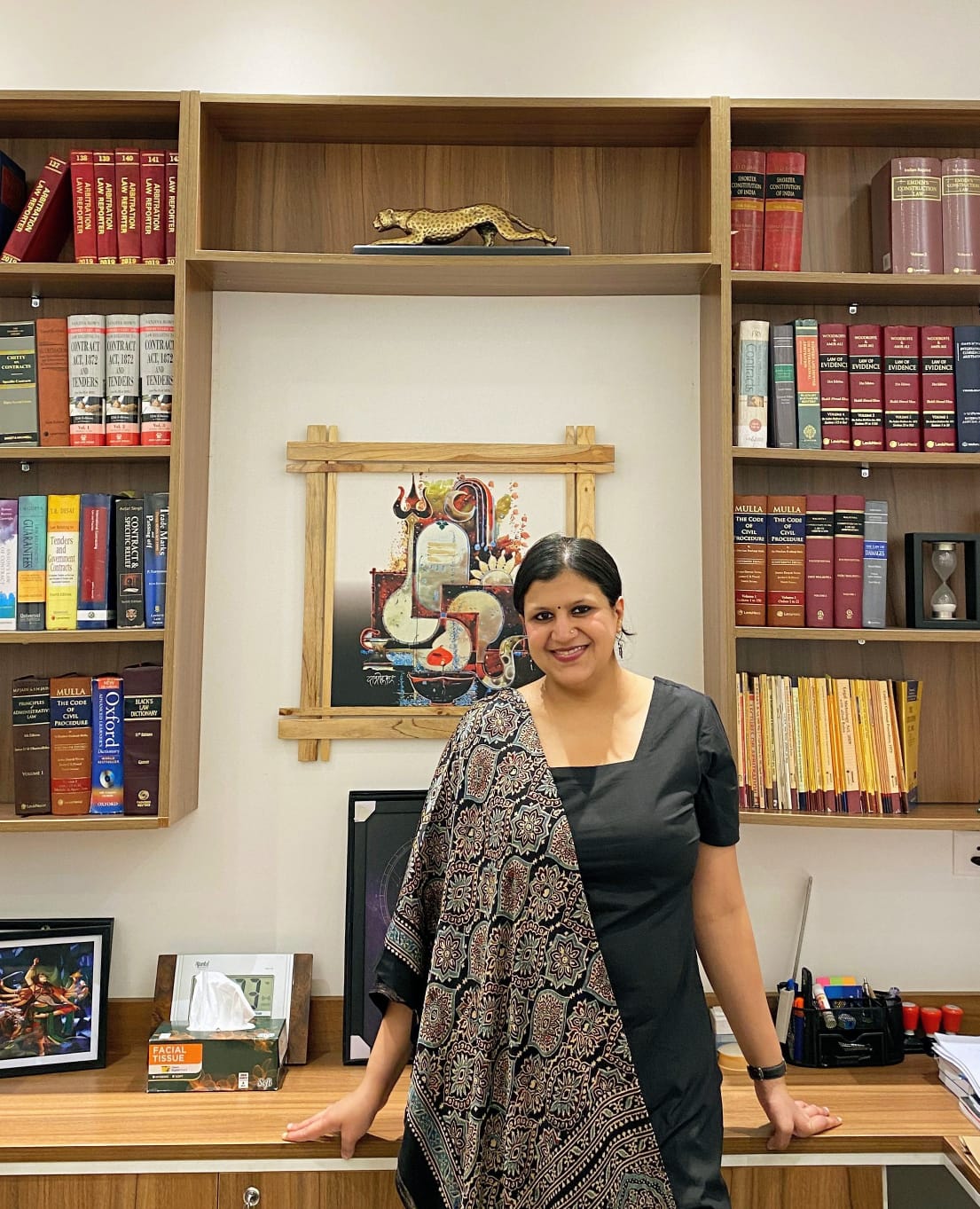
    Can you take us through your journey from college to becoming an advocate-on-record at the Supreme Court of India? What inspired you to pursue this path and take the Advocate on Record exam, and what challenges did you encounter during the initial stages of your career?

    Law was not an obvious choice, and in fact, I didn’t really fully comprehend what it entails when I opted to study law at CLC, Delhi University. My friend’s father was a sitting judge in Tis Hazari Court. His encouragement to take the DU Law entrance, along with my active involvement in DU student politics, paved the way for my legal career. After this, I can say that I pursued my career in law with the utmost loyalty, and the journey has been fulfilling and enriching so far. 

    College internships provided practical insights into the legal profession and a glimpse of courtroom procedures. While my peers gravitated towards the lucrative corporate world, I naturally gravitated towards traditional litigation. After completing my law degree, I joined reputed litigation firms, where I had the opportunity to work on diverse cases and regularly and independently appear before courts and tribunals. In late 2016, I decided to go on my own and continued so until last year, when I, along with two other partners, decided to join hands and form a law firm.

    Regarding my decision to become an AOR, I can confidently say that almost every lawyer, including myself, aspires for the privilege to appear before the highest court of this country. As my professional trajectory advanced, I decided to become an AOR so that I could independently represent my client and do the filings in my own name.

    As far as encountering challenges in the initial stages of my career, I must state that working in law firms has its own set of advantages. Consequently, apart from meeting deadlines and managing court cases with diligence and effectiveness, I encountered no typical initial challenges, especially those concerning sustainability. Having said that, there are challenges that are inherent to this profession, such as the constant need to perform, obtain relief, look out for your client’s best interests, and strive for legal excellence. These challenges are timeless, and I still face them today, every day, and in every matter. 

    As a co-founder of Sarvagya Legal, what inspired you to establish your own law firm, and what unique perspective do you bring to the table?

    I have come from a law firm culture and have always felt most at ease in an environment where people collaborate, a structure is in place, roles are defined, and responsibilities are shared.

    After going independent and facing some initial resistance and hiccups, I was able to establish a comfortable practice. However, I still missed the camaraderie and support network that come with being part of a firm. This led to the need to look out for my comrades. Besides this, I have first-hand witnessed the difficulties that individual lawyers face when navigating legal matters. This experience, together with my personal preferences, strengthened my resolve to have a firm that unites like-minded people who prioritise legal excellence and professional ethics. Sarvagya Legal is all I really hoped for. Plus, Mr. Abhishek Birthray and Ms. Reeta Mishra, my partners, have a great deal of experience and expertise. Though Sarvagya Legal is only a year old, I believe the noteworthy standing of its partners is the reason our Firm has already gained a lot of credibility in the fraternity, and I couldn’t be prouder. 

    One of the unique perspectives I bring to the table is a rational approach to legal representation. I believe that the integration of legal proficiency, client-centricity, and a practical mindset leads to successful outcomes. 

    With your forte in infrastructure and construction arbitration, could you share a memorable case that taught you significant lessons about navigating such disputes?

    For me, each case was memorable and had its own set of learnings and takeaways. One case taught me that in construction arbitration, which is primarily document-driven and involves admitted inordinate delays and cost overruns, a thorough cross-examination of cost overrun claims can reveal duplications and discrepancies. This, in turn, can aid in the huge reduction of overrun claim amounts.

    Large-scale construction arbitrations generally involve a multitude of documents and contributory breaches by parties. There, the devil lies in the details. Thus, familiarising oneself with this multitude of documents is crucial. 

    I have also realised that even though in arbitration one is able to extensively introduce and argue its case and cite innumerable documents, it is a story that sticks. Therefore, introduce your case as a story and then substantiate it with supporting documentation.

    Being an advocate-on-record at the Supreme Court of India, what challenges do you face in representing clients before such a prestigious institution, and how do you overcome them?

    The first and foremost challenge is that there is intense pressure to secure a favourable outcome for your client, as it is generally the last resort. Clients often have high expectations when their cases reach the Supreme Court. It’s important to manage client expectations realistically and communicate clearly about the legal process and potential outcomes.

    The Supreme Court has high standards of advocacy. Every minute that the Supreme Court provides is valuable. Thus, keeping arguments persuasive and succinct is often challenging, especially considering that a case that has already travelled this far involves complex issues and a gamut of facts. 

    To overcome this challenge, I ensure that I have a thorough understanding of the facts and legal principles involved, so that I can crystallise relevant issues in the simplest form possible. In addition, I attempt to mentally prepare myself to respond to difficult inquiries by practicing potential answers.

    You’ve been actively involved in academia, speaking at law colleges and conducting online courses. How does this blend of academic engagement enrich your legal practice?

    Maintaining a lifelong commitment to learning is critical, and being actively involved in academia helps me achieve it. Engaging with law students and professionals from non-legal backgrounds allows me to delve deeper into legal propositions from different perspectives. Moreover, these engagements allow me to contribute to the profession in my own little way.

    Given your extensive experience, what advice would you offer to young lawyers aspiring to build a successful career in corporate-commercial litigation?

    Your attention is your most valuable asset. So pay attention to developing a solid understanding of corporate law and industry knowledge. This foundation will serve as the basis for your expertise and confidence in handling complex cases.

    Pay attention to the facts and legal principles involved in the matter. Precision and accuracy are crucial in corporate-commercial litigation, where even small errors can have significant consequences.

    Pay attention to maintaining high ethical standards, and remember that trust and respect in the fraternity will be your professional legacy.

    Lastly, pay less attention to the noise around you, and remember that there is no strait jacket formula for success; there is no singular definition of success. We all have different paths; what matters is whether we gave it our all.

    Could you share a pivotal moment or mentor who significantly influenced your journey as an advocate-on-record?

    It’s difficult to narrow down any particular pivotal moment or mentor who significantly influenced my journey. However, I have been fortunate enough to work closely with brilliant professionals and legal luminaries. Their wealth of experience, strategic insights, and dedication to the profession left a lasting impact on me. Their guidance continues to influence my journey, reminding me of the profound impact mentorship can have on one’s career in law. Perhaps that is one of the reasons that I actively dedicate my time to the world of academia.

    With your involvement in various government organizations and public sector units, how do you navigate the intersection between legal intricacies and bureaucratic procedures?

    While representing government organisations before constitutional courts is a matter of prestige, it comes with its own set of challenges owing to bureaucracy. Therefore, navigating this intersection requires a nuanced approach that involves understanding the organisational workings and a realistic approach, keeping red tapism and bureaucratic barriers in mind. Over the years, I have come to understand that maintaining records of everything in writing, effective communication, and conducting consistent follow-ups are the most effective approaches.

    Considering your role as a guest faculty member, what fundamental skills or knowledge do you believe the current generation of law students should focus on to excel in their careers?

    I believe the current generation of lawyers is far more committed to the profession, which helps them hit the ground running right after their law college. I was recently extended an invitation to serve as a judge in an international moot, and the calibre of advocacy exhibited by law students was tremendously impressive. Even in my engagement with law students as a guest faculty member, I can see how their legal acumen has evolved given their access to a huge digital database. Considering the availability of such an abundance of information, my advice would be to stay inquisitive and think critically and analytically. Also, read and understand Bare Acts first before delving into the ocean of articles, blogs, research papers, reels, etc.

    Beyond your professional endeavors, what personal hobbies or interests do you pursue to maintain balance and rejuvenate?

    Outside of my professional endeavours, I prioritise maintaining a healthy work-life balance. As I prefer to start my day at least by 6 a.m., my constant endeavour is to finish my work by 7-8 p.m. Morning strolls, reading literature from different genres, listening to podcasts, and travelling allow me to unwind. Whether it’s a weekend getaway to a nearby destination or an international adventure, I believe that experiencing the world outside of my professional sphere enriches my overall well-being and keeps me motivated.

    Get in touch with Tanu Priya Gupta–

  • In conversation with Rohit Jain- An Advocate, a former Legal Journalist, and a qualified Company Secretary, who is currently working as an Account Director at Adfactors PR

    In conversation with Rohit Jain- An Advocate, a former Legal Journalist, and a qualified Company Secretary, who is currently working as an Account Director at Adfactors PR

    This interview has been published by Sonali ParasharOjuswi Sahay and the SuperLawyer Team


    Could you please share with us your inclination towards law and tell us why you decided to pursue this discipline?

    First of all, thank you for this interview opportunity. Before starting on what made me pursue this discipline a little bit about myself. 

    I come from the small town of Dhule, Maharashtra where I completed my education till the eighth grade. Post that, I shifted to my current home town of Nashik where I completed my junior college (11th and 12th). I chose to pursue Bachelors of Computer Applications as computers were a rage those days. Post that I completed my MBA with Finance specialisation which helped me in getting my first job. 

    It will be slightly wrong if I say that law was always my first choice. Since my school days, I have had a multi-disciplinary approach towards studies and consuming knowledge in general. Until the 10th grade, I was deeply interested in mathematics and science. During graduation, it shifted towards finance and technology. 

    My interest in law evolved over a period of time. One of the first encounters with something purely legal that I can clearly remember was the starting copyright notice of this fantastic NES game – Captain America and The Avengers that I used to play during the early 2000s. The game starts with a copyright notice “Captain America, the Avengers and distinctive likenesses thereof”...During my bachelor’s, I enjoyed the coding as well as reading EULAs and software legal disclaimers that are embedded in these software. 

    My interest in law became even stronger once I cleared the Company Secretary examination. This coupled with my drafting skills, unquenchable appetite for reading and ability to understand complex things helped my transition into the legal sector. 

    You hold a degree in MBA in Finance and you also went on to pursue CS. What motivated you to pursue a career in the corporate sector?

    At the start, I was more inclined towards getting a government job or joining the civil services. Unlike the freshers of today, I knew of no other choice other than a corporate or a government job. Startups (as a choice as they are today) were non-existent then and NGOs were not the talk of the town. 

    My efforts in applying for government jobs bore fruit more than once. But I got rejected in the final rounds which dissuaded me from moving further. Once I got my first job with Axis Bank and then Deloitte USI, it was never looking back. I believe that if a person is good at the work that he/she does, the sector can never be a constraint. I have seen people transitioning from corporate to academia and then public services also. 

    Multiple factors work together in shaping your choice at any point in time. 

    You began your career working as a Legal Analyst for Deloitte US India Offices. Can you please tell us about your experience there? 

    I was part of the Office of General Counsel in Deloitte USI, which is the Indian subsidiary of the US-based Deloitte Consulting LLP. Our team handled the core legal functions pertaining to the Deloitte USI entities. 

    To put it in a nutshell, my work involved drafting, vetting and negotiating contracts, legal research, handling corporate secretarial compliances and providing counsel on legal matters. This would range from traditional areas such as employment laws to emerging areas like data privacy and taxation.

    Having worked there for nearly 5 years, I can say that Deloitte USI has one of the best environments that one can work in. The learning and development opportunities were immense – we had access to some of the top-notch legal training databases that may otherwise be reserved only for seniors in other companies. 

    I was lucky enough to have a wonderful and supportive team which was equally exuberant in the interests that I had. 

    You also worked at Bloomberg Quint as a Legal Correspondent reporting and writing on corporate, taxation, insolvency, securities and, indirect tax laws. What was working with a news portal like and how did it shape your career?

    My stint as a journalist helped me in enhancing my writing skills, although I do not agree with some of the writing conventions that journalists follow in general. Anyways, the stint as a journalist helped me in being more expressive of what I felt insofar as law and policy are concerned. I became more active on social media, especially LinkedIn. As a journalist, you can write in a more expressive manner. Inhibitions go away. 

    I was lucky enough to shift to journalism at a time when the Insolvency and Bankruptcy Code was slowly gaining momentum. Because of this, I got the opportunity to visit the High Court, SAT and the NCLT and listen to the arguments on an almost daily basis. Being from a legal background, I could relate to the arguments and developments even more. This also provided me with an opportunity to know a few practising lawyers who have now become good friends. 

    Being a part of the Strategic Communications group at Adfactors PR, India’s largest public relations company, how important do you believe communication and people skills are in one’s career, and how did law help you in developing these skills?

    Communication and people skills are an absolute must in one’s career. 

    From a public relations perspective, communication determines the state of relation between an inanimate object – a company – and its external stakeholders, who are animate.  A plethora of case studies has shown that a crisis situation could have been totally avoided or handled in a much better and smoother manner if the communication was properly done. Good communication skills equally matter for an employee as she/he climbs up the career ladder. 

    People skills also hold equal importance. We are living in changing times. The world is moving towards a flatter organisational structure, breaking unnecessary hierarchies and stereotypes that hitherto existed. People skills are thus very imperative for all, especially managers. It can be as simple as making a person feel welcome on her/his first day of work or being accommodative towards your colleagues. The way a person treats and behaves with others stays in the mind forever. So, people skills are equally important.

    You hold a PG Diploma in Cyber and media laws. What interested you the most in this and how should one go about making a career in these fields?

    Cyber law as a term has become a slightly out of date term now. Today, it is rather known as tech law, data privacy law etc. One must note that a 3 year or 5 years LLB program is a mix of different laws but nothing offers you specialisation. For instance, Patent and Copyright laws are so vast, yet they are mixed together in just one module (Intellectual Property) in a law school. The focused approach towards cyber law and media law interested me the most.

    The legal field of today demands specialisation. If you see the new practices being set up in law firms, one may notice areas such as technology, data privacy, blockchain and crypto etc. To gain a foothold in such areas, one needs a mix of solid work experience and academic knowledge. It is at this juncture that PG Diplomas help you. 

    We must remember though. Merely doing a Diploma as an additional course will not land you the dream job.

    Many legal professionals aim at pursuing CS. What are the aspects that one should keep in mind according to you, to prepare themselves in this regard?

    The Company Secretary course requires intense study. Lawyers who are working in law firms may find it difficult to devote adequate time to study because of their long working hours. Those who work in corporate law will find it easy as the syllabus will match their working area. They may face a challenge with the finance and accountancy modules though. 

    When I attempted the CS professional module, I remember quoting real-world, recent and relevant details in my answer sheet. For instance, I would have written about the IL&FS crisis w.r.t corporate governance if I was attempting my answers now. While the relevance depends on the invigilator, there is a good chance that you will get commensurate marks.

    In my opinion, lawyers who wish to become compliance officers must pursue the CS course. In general, the LLB syllabus of a 5-year course from a good law school is more than enough. 

    Finally, a word of advice for professionals leaping into communications and related fields?

    Public relation is an exciting field. Not many know about this industry because it is mostly based out of the top 3-4 metro cities. It is much more than just advertising. The lines are blurring though. 

    As a start, professionals intending to switch over to comms/ PR must develop a bandwidth to track what is happening in the world of media, what journalists are writing about, what are the topics being talked about etc. Like any other field, PR also involves specialisation. So a person from an engineering background who is good in communication skills can add much value to a client requiring advisory on ESG, mobility or allied areas. Comms and PR is an exciting domain where a long term play can be really rewarding. 


    Get in touch with Rohit Jain –

  • Kalpit Khandelwal, Principal Associate at Vaish Associates on venturing into law from a business background, the value of mentorship, and focusing on the present 

    Kalpit Khandelwal, Principal Associate at Vaish Associates on venturing into law from a business background, the value of mentorship, and focusing on the present 

    This interview has been published by Sonali Parashar and the SuperLawyer Team


    Coming from a business background, how did you gravitate towards the law? What other career would you have chosen, if not law? 

    From my early days, I was intrigued by the corporate world and wanted to be a professional instead of continuing my family business. As part of career counselling, law was identified as one of the professions’ I had the skill set for, maybe, due to my problem solving and persuasion skills. My parents always encouraged me and gave me full freedom to pursue any career of my interest. They supported me in all ways when I decided to pursue law as my career. Since my childhood, I was inclined towards computer games and also had an imaginative mind. So, if not law, I would have enrolled myself in a game designing course.

    It is said that getting a mentor is the first step towards attaining success. How true do you think the saying is? Do you think a mentor plays a crucial role in the growth of a person? What type of mentor would you suggest for a law student?

    I completely concur with the above saying, indeed I was lucky enough to get mentors in my life who had seen more talent and ability in me than I myself would have seen and helped in bringing out the same. They gave me an opportunity to work and assist them on big-ticket and complex transactions at a very early stage. I was made part of each and every phase of the transaction from the very beginning of my career so that I could learn in its entirety. I truly believe a saying that mentoring is a brain to pick, an ear to listen and a push in the right direction. In my view, every law student should have a mentor who is approachable, non-rigid, a good listener, non-judgemental, eager to invest in others, able to give honest and direct feedback. I am also fortunate enough to become a mentor for other law students now by becoming a mentor at Mentorology.     

    Litigation is notoriously time consuming and unpredictable. What changes according to you should the litigation sector imbibe to truly turn into the fundamental learning place for an advocate? Is struggling in the litigation sector worthy of effort? 

    In my view, one of the perennial reasons for excessive delay in delivering judgements is the ease of adjournments. Although Supreme Court had advised and Civil Procedure Code has enough provision for the imposition of realistic costs for every adjournment, costs are rarely imposed and therefore, litigants and their counsel think nothing before asking for an adjournment. Further, the registries of the courts are tasked with the judiciary’s administrative functions. Administrative support functions needed by the judiciary, identification of process-related inefficiencies and advisory on legal reforms, should be delegated to a specialised professional agency that has administrative expertise, specialisation, modern management practices and technologies. Also, a massive house-cleaning exercise in every single court to identify cases that are infructuous or not worth pursuing will surely reduce the pendency of legal cases. Indian legal system is also required to adopt technology and artificial intelligence in every phase of functioning. 

    Most of us struggle with pursuing different courses at a time but you pursued the Company Secretary course and Master in Business Laws while you were pursuing your law graduation. How did you manage to pull it off? Can you tell us a bit about your study pattern, and would you like to share a few tricks to ease the learning?

    The mantra I always used to sing while studying is to read as much as possible and re-read it at regular intervals. Always remember, play when you play and study when you study. Being focused in every moment is very important and challenging at the same time in today’s age of cell phones and tablets. Underlining keywords with different colours and complementing the study notes with mind maps will surely reduce the time in memorising the legal concepts. One should also inculcate a habit of reading bare acts, being the holy water of law, and judgements from college time itself. 

    You worked for almost 9 months as a Paralegal at ARA LAW, a boutique law firm and later you were handed a PPO. Can you share about your job responsibilities of both while you were a Paralegal and later on when you landed the job?

    I was never a morning person until I joined ARA LAW and used to reach the office an hour early. Every day before office hours began, I used to read the latest updates to existing laws, important judgements, legal news, etc. and used to discuss the same with my seniors, as keeping abreast with the rapidly changing corporate legal environment is essential for any lawyer. As a paralegal, I also used to research, attend and take notes of the calls/meetings, proofread agreements and make summaries of agreements/documents provided by the target entity for due diligence purposes. I have always believed in doing work diligently and sincerely without thinking much of the outcome. My work spoke for me and as a result, I was offered PPO by ARA LAW. As a lawyer, I used to assist my seniors in drafting and revising the transaction documents, preparing the due diligence reports, drafting legal opinions, etc.   

    Can you tell us a bit about your current job role and responsibilities? 

    As a transactional lawyer, I wear several hats in the process of working through a deal i.e. an advisor, mediator, negotiator and drafter. I provide advice on matters relating to M&A, strategic alliances, regulatory aspects, etc, prepare reports and opinions on diverse corporate matters relating to Companies Act, FEMA, SEBI regulations, stamp duty, etc., handle legal due diligence exercise, negotiate the transactional documents, drafting, vetting and execution of all the transactional documents. One of the biggest challenges and at the same time, most exciting aspect of M&A practice is that your schedule is exceptionally uncertain and highly variable in terms of intensity. I am fortunate enough to lead a team of associates who are extremely capable and flexible enough which makes my life easy when we are faced with an accelerated deadline. 

    You have led several acquisition deals like Patanjali’s acquisition of Ruchi Soya, acquisition of Innov8 by OYO, Lemon Tree’s acquisition of Keys Hotel and more. What were your key experiences/takeaways from these acquisitions?

    The sound understanding of commercial and business complexities besides the legal intricacies of a long-drawn M&A transaction and precisely communicating the same to the client as well as the other side while negotiating the deal is a bedrock skill that cannot be dispensed with. Further, a corporate lawyer is expected to think and reach with the same sense of adventure as that of his client as in the corporate world, there is no decision making without an element of risk. At times, in M&A transactions, you are faced with seemingly insurmountable obstacles wherein you have to train yourself to not merely focus on the specific issue at hand but also you have to consider every possibility, never being dismissive of anything and think out of the box to steer your client through the M&A deal. Further, we need to be highly responsive to clients and comfortable with interweaving work and personal life because of the technology we have today.

    What will be your parting message to our young lawyers?

    I have heard several times from young lawyers that they ‘do not understand’ their seniors or ‘have no idea what is going on’. Bizarrely on the same knot, they also shared that they do not address their queries and issues with their seniors. Establishing an open channel of communication with seniors would certainly help you in setting the work environment straight. These seniors can also show you the ropes and take you under their wings. As young lawyers, we are often driven to learn as much as we can and as fast as we can. Blinded by the thirst to improve, often we find ourselves volunteering to take on voluminous tasks which we may not be able to execute effectively. In case you find yourself in such a position, speak to your superior in advance, instead of attempting to move mountains in a short span of time. At the same time, remember always that the grind in the early years will pay off in the long years ahead in your practice. Focus all your energy on working hard. Attention to detail is also indispensable for any corporate lawyer as small mistakes could significantly cost a lot to your clients (and your organisation) and therefore, it is an absolute must for you to work on this quality from the start. 


    Get in touch with Kalpit Khandelwal:

  • SRINIVAS KOTNI, FOUNDER & MANAGING PARTNER AT LEXPORT, FROM BEING A CS TO A CORPORATE LAWYER, ON ESTABLISHING HIS LAW FIRM AND SHARING HIS EXPERIENCE OF OVER TWO DECADES IN THE LEGAL PRACTICE

    SRINIVAS KOTNI, FOUNDER & MANAGING PARTNER AT LEXPORT, FROM BEING A CS TO A CORPORATE LAWYER, ON ESTABLISHING HIS LAW FIRM AND SHARING HIS EXPERIENCE OF OVER TWO DECADES IN THE LEGAL PRACTICE

    This interview has been published by Maaz Akhtar Hashmi and The SuperLawyer Team. The Interview was taken by Priyanka Cholera.


    Did any particular incident, interest, or influence prompt you to think of pursuing law? What other options would you have considered for your career, if not law?

    I am a commerce graduate from DU and have taught computer science and worked in the data processing department of a listed company. Although I enjoyed working in IT, I used to get stuck to my screen with minimal human interaction. I remembered the charming subjects of mercantile/business law and taxation law during my university years which triggered my interest in studying law. I thought a legal career associated with commercial enterprise would be tempting. As a qualified Company Secretary, I could appear before all tribunals and courts besides the High Court and Supreme Court. As someone without any legal background, I believe it was my destiny that allowed me to change tracks swiftly.

    Reminiscing about your college days, are there any anecdotes you would like to share?

    The jam-packed life became the norm for me. After my BCom and IT degree, I worked as a computer instructor. The same was true during my time as a law student when I used to work from morning till evening and then attend college. As a working student, I couldn’t take preparatory leaves for my exams, so I adjusted my timetable accordingly. I decided not to pursue academics after the age of 26/27. Even with a fear of burnout, I was willing to go the extra mile and become an able and self-reliant person. My CV was decorated with my working experiences and educational qualifications.

    One should be abreast with what’s happening around. It will change the way you look at things, and the world will become a better place to live and work. I was never a textbook person; the course material was enough for me. People generally lose a lot of time in reading unnecessary stuff, whereas everything in the exams is based on the study material and past question papers and trends.

    You had started your career as a professional working with management information systems, data processing and other company secretarial functions. Could you describe this transition from being a Company Secretary to a Corporate Lawyer?

    During my CS, I learnt about industrial law, HR law, economic legislation etc., and this was the primary reason for doing the course. Although I was interning as a CS, I was still inclined towards the legal profession especially, because of the research, drafting and presentation aspects involved in law. The qualification of CS definitely helped me in developing a macro perspective on the legal field and familiarize myself with the legislative and legal ecosystem.

    After spending half a decade at Lakshikumaran & Sridharan, you set out to establish your firm, Lexport, in 2000. How did your initial years in the practice shape your outlook? What were some of the challenges that you faced while setting up your firm?

    This is a very nostalgic question for me. I was 27 and was determined not to approach the clients I previously worked with. I wanted to work with integrity. I was broke and did not have money in my pocket but had ideas and an utter zeal to do well.

    When you start afresh, getting clients and work is arduous. The first problem was to reach out to clients. I decided to be patient, and with a chair, table, scooter and address I began my journey. Eventually, I started getting a few assignments and met people through events or professional conferences. I am a social person, so even if I meet people for a brief moment, I make sure to establish a connection. People’s perception is extremely important. If they find you competent, they would be more likely to offer you work.

    Could you please share with our readers your journey of over two decades with Lexport. What piece of advice would you like to give to people aspiring to establish their firm?

    I shaped my career in a manner that both my academics and professional experience would be used. I had 5-years of experience before starting Lexport, and in those 5 years, I have put as much effort as people put in 15 years. I gave my 200% to everything I did. At 27, even if you’re competent, you tend to get underpaid. Eventually, we get better at our jobs, build credibility and start attracting bigger roles. Whatever makes you happy gives you peace, and things that do not make you lose love for others are enough to stay happy. The monetary aspect of it is definitely important, but it isn’t something you should lose sleepover. A massive space with a good seating arrangement is unimportant since nothing would be enough, and people’s needs would never end. These days youngsters look at work commercially. I’ve seen some very bright people do routine/repetitive work for an extra buck at random places. While some are built for that field, others just chase it for money. It is about stability and consistency, so be there for 3 or 5 years, you will surely learn something. Money will eventually come and go, but satisfaction, pride and happiness will make you a complete person.

    The Cryptocurrency and Regulation of Official Digital Currency Bill, 2021, has been tabled and will most probably be taken up for discussion in the monsoon session of this parliament. What is your opinion might be some of the tax implications if Cryptocurrency were to be regulated and brought under the Indian tax regime?

    Technology keeps on changing, starting from the earlier era until today; we have seen our lives changing in one aspect or another. Today, the IT revolution has emerged. Being from an IT background, I have seen the change from a dumb PC to what it is today. The concern here is data integrity, and it needs to be secured. Logically, you can only have physical security or some systematic security like passwords etc., and all these can be breached.

    Before coming to the concept of Cryptocurrency, we need to understand blockchain. It is a distributed ledger technology, where your data is residing in bits and pieces in different systems and hard disks around the world and each bit/piece is pointing/cross-referencing towards the other thereby creating a web structure for a database. If you hack into one computer, you would not have access to complete data. So as a database, security and storage concept, I believe it is a path-breaking technology. Thus, many applications came based on this distributed ledger technology and finally the Japanese gentleman Mr. Sutaki I think used this technology for establishing a digital currency. There are several different concepts, it is just a digital currency, and the underlying assets are being traded against that currency based on its value. It is interesting to note that this currency is not physical. This is a logical currency residing in your machine.

    The moment Cryptocurrency emerged and people started honouring it, the countries were threatened, as their domain of monetary policy through their central banks was being taken away. Therefore, some countries adopted it, and some were skeptical. If you look at the RBI circulars, they are non-committal. They are neither saying it is illegal nor banning it. At the end of the day, the Government wants to regulate cross-border transactions and levy taxes.

    In some countries, there are even ATMs where you can withdraw money from the cryptocurrency account. Therefore, formal and informal systems are shaking hands. In India, we should regulate this, but if we kill the idea of Cryptocurrency, then India would lag behind. In a global economy, you cannot do much, and if it’s a system or technology that has to work, it will work. If you want to regulate something, go for it. Nobody knows about its existence and true nature; it’s just an enigma. It is an interesting subject which is here to stay. The country should accept and regulate it but shouldn’t prohibit and/or over-regulate it. Don’t ban or prohibit the idea of Cryptocurrency because if you do so, people will move out. At the end of the day, what matters is whether we want to be a secluded economy or an integrated economy. Don’t kill the hen, which lays golden eggs.

    Taking insights from your illustrious career in the legal profession, what is one essential skill or trait that you believe every lawyer should adapt to?

    Make a choice and stick to it. We have a habit of over-thinking, and we keep on shifting, and eventually, we realize that the first thing we picked up was the best. Being ambitious is fine, but don’t be over-ambitious or impractical. Your skills are your driving force, not your qualification or what others are doing. Different people have different skillsets, backgrounds, tastes and professionalism, so never compare yourself with others. Find out what your strengths and weaknesses are and plan accordingly. You should learn how to communicate with people. Try to improvise your skills and then choose your subject area wisely. You will eventually come across an interest, which will become your passion. Otherwise, be a lawyer and do whatever comes your way. Don’t be rigid and try to mould your life in a positive manner by seeking and accepting good opportunities. There is a lawyer in every family; though it is good, there is limited scope in this area. You need to be good; otherwise, you will waste your opportunities.

    How did your IT and other experiences come together as an aid?

    As an intern in a law or consultancy firm, I was well acquainted with PowerPoint and other similar software back in 1995. Therefore, I could be involved end-to-end in every presentation and was even given the opportunity to present, keeping me much ahead of my peers as far as my learning was concerned. Furthermore, graphics and pictorial presentations helped me to explain complex matters with a small diagram, which would otherwise take a thousand words to explain. And back in the days, I could make such graphical representations even in respect of court matters. Furthermore, programming requires a structural and logical approach and is similar to writing a pleading, where you need to take step after step, first the title, then facts, grounds and finally the prayer. So that systematic approach helped me in my legal profession.

    How do you ensure that your employee’s mental health is in check during this pandemic?

    In the beginning, the lockdown was a little harsh since nobody was used to working from home. Some employees had issues coping up with the arrangement; therefore, we tried to fill the gap with happiness programs, made more interactions and even got a few motivational speakers. I tried to counsel a few who brought their problems to me, assured them that they need not worry, and asked them to discuss their difficulties. If people don’t confide in me, I wouldn’t be able to help, and therefore both the person and the work would suffer, hence creating an unhealthy and unhappy environment.

    The pandemic has affected people, work, businesses, etc., around the world. How did you cope with the challenges entailed?

    At the beginning of the pandemic, the entire workflow and money inflow stopped. Managing daily chores became an issue with people forced to stay at their homes. Fortunately, a couple of years back, we moved all our data to Microsoft one drive. We were also using software for workflow management. We replaced the desktops with laptops and had software packages, which helped us keep up with the assignments and meetings. After an initial 2 to 3 months shock, we got used to the arrangement. We weren’t using our office much and therefore shifted to our own premises to reduce infrastructure costs. Today we have a very flexible work policy, where people have to master their work, need to perform well and meet deadlines. Even the clients are happy to meet online, making it a very comfortable situation by working from home. People have to complete their assignments on time, and if there is not enough work, they can learn new skills sitting at home, which will help them grow in the profession.

    Lawyers have to consider themselves as professionals first. They have to keep in mind the interests of the clients at all times and also keep abreast with new learnings every now and then. Their growth needs to be continual. If they are not working harder, their journey might be tough ahead.

    What advice would you have for law students & young lawyers who want to set off in a similar direction?

    Be very clear about your priorities. Pick a profession only if you are interested in that area, and refrain from showing off things. You should do your work passionately and sincerely and not just for mere name and fame. Do not rush after things because it takes time to become successful.

    Work sincerely and inculcate good ideas into your daily life. Try to stay humble and grounded, as these will help you reach new heights. Overconfidence and overthinking kills people’s time and efforts. Set goals in life and work towards fulfilling them with your heart and soul. Things may take time to come on the right track, but nobody would want to lose you if you are good at your work.

    Get in touch with