Tag: Competition

  • Anupam Sanghi, Founder, Anupam Sanghi & Associates, on Competition Law, her pro-bono work, and plans for the future

    Anupam Sanghi, Founder, Anupam Sanghi & Associates, on Competition Law, her pro-bono work, and plans for the future

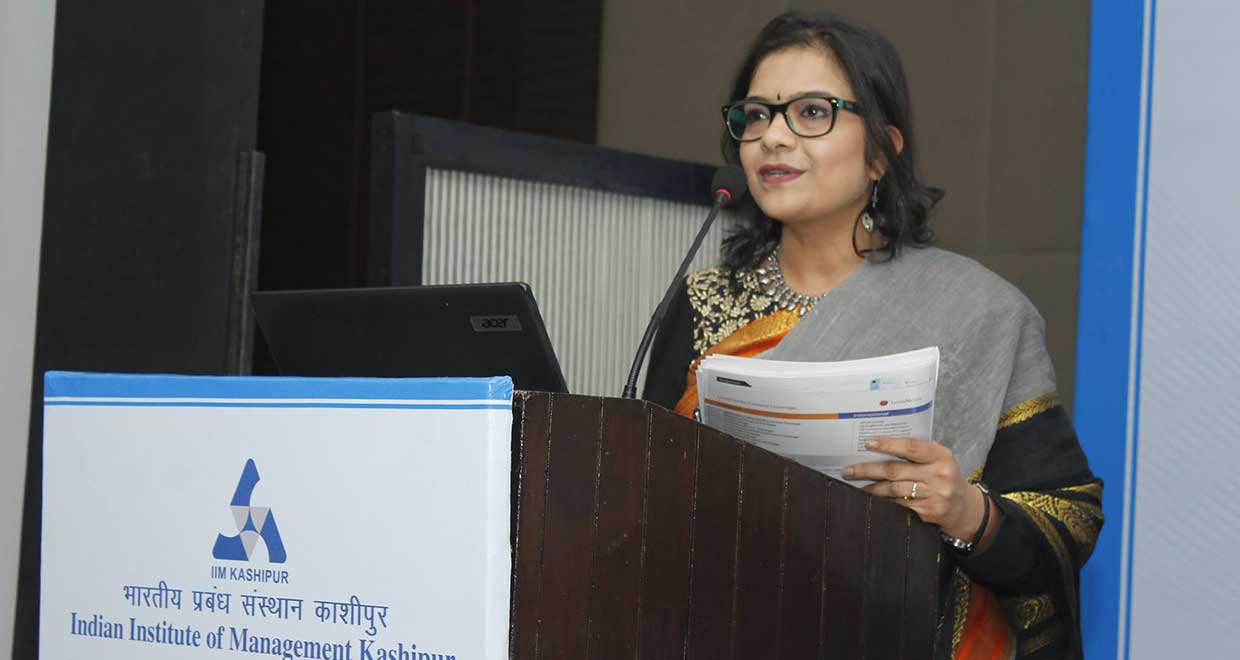
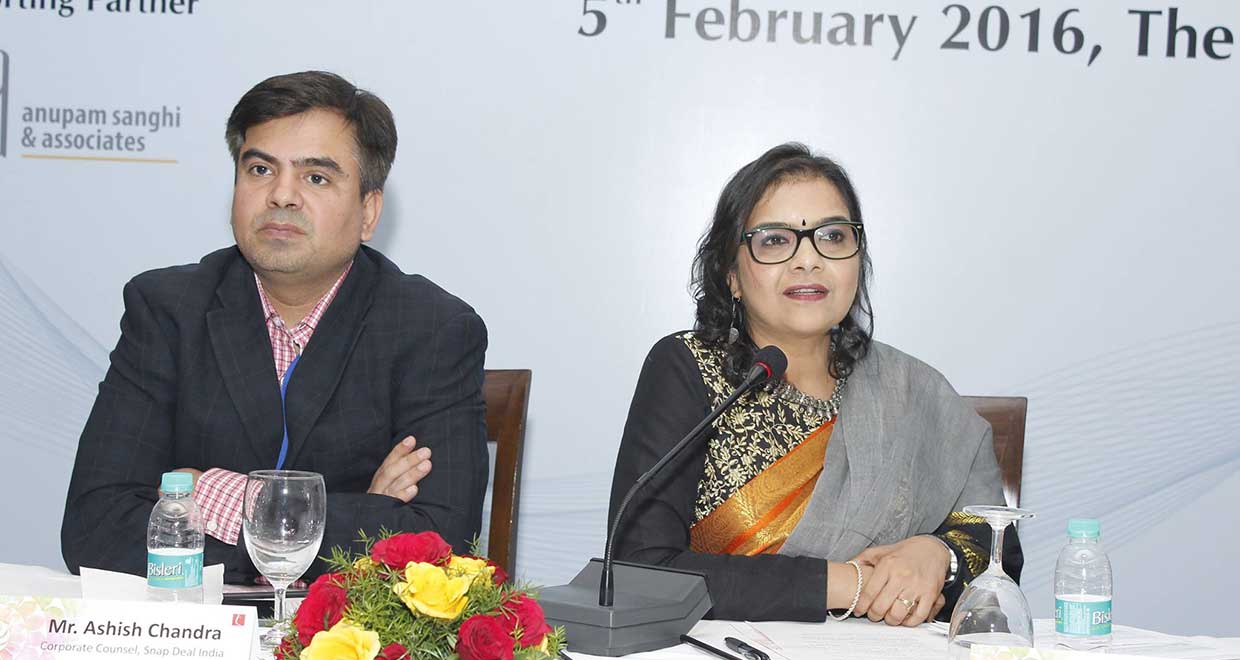
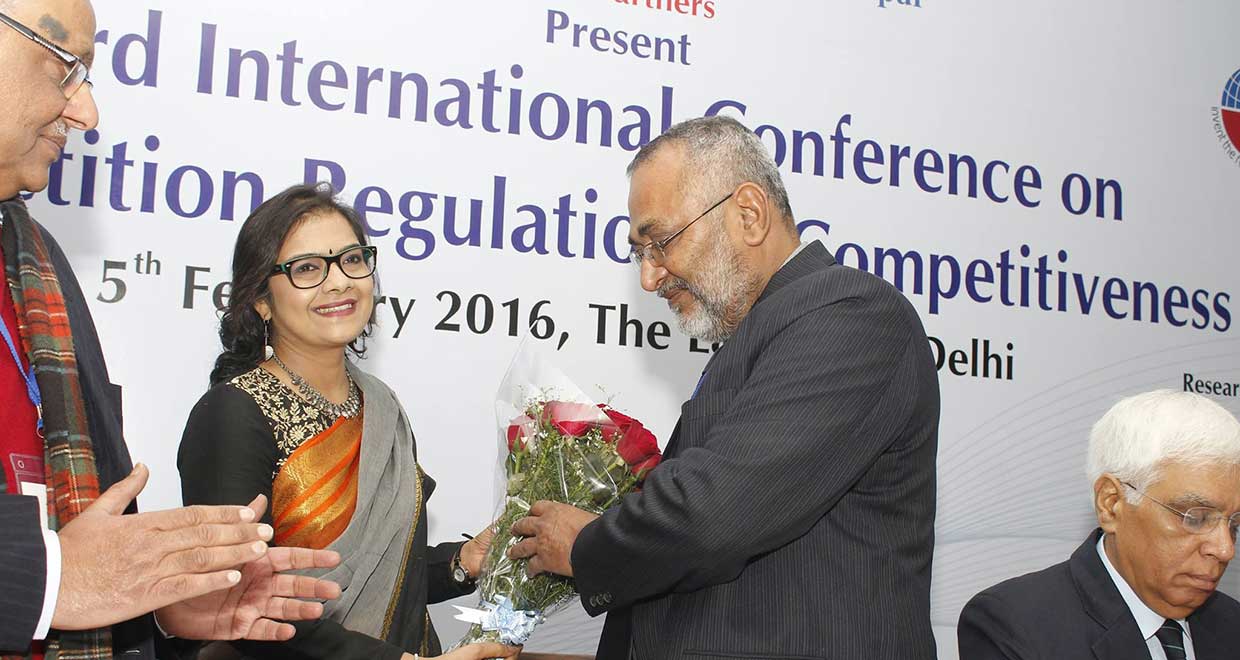
    Anupam Sanghi graduated in law from Nagpur University in 1997. She then went on to pursue her Masters in Competition Law from Kings University, in 2010. Anupam is the Founder and Managing Partner of Anupam Sanghi & Associates (ASA), and heads the TMT, Competition/Antitrust and Regulatory Practice. She has pioneered in these areas for the last eighteen years of practice, advising MNCs and SMEs on every aspect of legal & regulatory strategy, M&A transactions, compliance & training, intellectual property rights and dispute resolution / arbitrations. She is also a frequent writer, speaker and presenter at national and international conferences and seminars.

    In this interview we speak to her about:
    • Her experience in competition law
    • Her pro-bono work
    • Starting independent practice

    How would you like to introduce yourself to our readers? 

    Hello Superlawyers, to all those who consider themselves so! I initially wanted to be a CA, and law was the second option in that list. But it’s turned out to be the best choice I’ve made. I find the legal profession exciting and creative as it has the potential to transform society and move us towards a growth trajectory.  

    What motivated you to take up law? 

    I am actually a third generation lawyer. My grandfather, Late Vishnu Kumar Sanghi, was a leading lawyer, practising at the Nagpur Bench of the Bombay High Court during the period of 1940 to 1990. My uncle, Late G.L Sanghi, was a Senior Advocate, practising in the Supreme Court of India between 1957 and 2006. My grandfather inspired me to study law. He wanted me to pursue law even if I didn’t intend to practise it in the future. Though I had enrolled in the CA/CFA programme initially, I decided to pursue law soon after. As a final year law student, I worked in the chambers of Mr. Rajiv Nayyar where I got a chance to learn drafting Intellectual Property and Commercial Litigation matters. Once I started to work, I was more and more inclined to making this my career and soon found myself jumping into it like a fish takes to water.
    Did you take part in co-curricular activities while in college?

    As a student, in school as well as college, I was interested in co-curricular activities and participated in music and sports. I am trained in Indian classical music. I have participated in table-tennis championships. My love for sports made me play other games like squash and lawn tennis. In my opinion, co-curriculum is a very important aspect in a student’s life. These activities have helped in shaping my personality as a person who loves to take challenges and never gives up. A very important life lesson that sports teaches one is to accept defeat graciously and never give up. The defeats have in fact motivated me to do better. I feel it is a must for students to be part of co-curriculum, to take challenges and to realise that winning and losing is part of the learning curve. Engaging in sports, debates and other hobbies would certainly help students and fresh graduates to get a holistic perspective of life, deal with their pressures more positively and not get overwhelmed with the competitive atmosphere they face.  


    What books, judgements that you have read would you say have played an integral role in shaping your legal philosophy?

    In the beginning of my career I had picked up Nani Palkivala’s We The People. His speeches on the Indian economy were illuminating. He elaborated on the advantages of de-control and modernization in his budget analysis. In my opinion, the fundamentals of capitalism discussed by him in the book are very relevant in today’s time and would help budding entrepreneurs understand the economy better. He dedicated his time meticulously to work, as best exemplified by his success in the case of Keshavananda Bharati, one of the landmark matters he  argued in the Supreme Court. Interestingly, as a man of such sharp intellect, he also enjoyed reading self-improvement books (especially those  by Peter Drucker).

    The other legal luminary who has immensely inspired me is Soli Sorabjee. Besides the books he has authored, I used to be thrilled to read “Soliloquies”, his column published in the Indian Express. The way he made even inane matters seem humorous left me in awe of his staggering wit. 

    My Uncle, Late G. L. Sanghi, who was a Senior Counsel in the Supreme Court also had a very powerful mentoring effect on me. He was deeply perturbed by the the rampant human rights violations all around. However, he was always optimistic and truly believed that the legal profession would play a significant role in finding a solution. He felt deeply about the role of law societies (like LAWASIA where he was a past President) in these changing times. He also encouraged me to attend seminars from the very beginning of my career. I have been part of various seminars, in India and overseas, and am an active member of LAWASIA. At the LAWASIA conferences, I have met various brilliant jurists from all over the world who are like family to me today.

    In practice, all my seniors have played a crucial role in shaping me, both as an individual and as a professional. I was fascinated to meet Mukul Rohatgi, who was my first senior. He would argue in fifteen to twenty matters one after the other. Working with him, I learnt court craft and brevity. I am still learning how to be precise and make sharp arguments like him. After about a year I joined my dream firm, the erstwhile Amarchand & Mangaldas & Suresh A Shroff & Co. At the Firm, I was drafting and handling clients and court matters, dealing with senior counsels, billing, and so on. I was a part of all the activities required to run a practice. I was fortunate to handle big litigation matters in emerging areas like Telecom and Arbitration. I single handedly worked on the matters, used to report to Pallavi Shroff or Ritu Bhalla. They were extremely demanding as bosses and they brought out the best in me. For me, every day was a new test and a new incarnation of she-who-must-excel. I would have never learnt so much if I would have stayed under the family umbrella. In AMSAS, I also got a chance to work with Shardul Shroff in a couple of advisory matters and it was at this firm that I harboured dreams of one day setting up my own practice independently.

    In order to further polish my skills as a practitioner, after three years in AMSAS, I joined the chambers of Neeraj Kaul when I was also appointed as a Counsel for the Central Government. With him, I learnt court strategy and how to think on my feet. Besides sharpening my skills as a litigator, he made me take inspiration from my work and to work harder rather than questioning the sluggish legal system.


    Could you tell us about the internships you took up?

    Before I graduated as a lawyer, I interned with EY and learnt accounts, cost auditing and also a fair bit of accounting standards. I also worked in the Chambers of the present Attorney General, Mukul Rohatgi. There I learnt court strategy and case research. In those times research wasn’t as convenient as it is today. We didn’t have sites like SCC online and Manupatra to assist us. In order to get the relevant judgment, one had to understand the proposition to be argued and also the applicable legislation and provisions. Today, even non-lawyers can mindlessly do a keyword research and get relevant judgments. Knowing the exact point in issue is an art, which I learnt while working in the chambers of Mr. Rohatgi. I consider myself very lucky to have had such an opportunity.

     

    From a law student to a lawyer, how will you describe the transition?

    A part of me is still a student. It keeps my enthusiasm and the eagerness to learn more alive. To be a good lawyer, it’s imperative to be a good learner. My journey has been very fulfilling and enriching. I took the learning path by first joining the chamber of a senior counsel to know and understand the law well, then a law firm to apply the law and to learn to manage a legal practice. Then I went on to develop myself as a professional and as an independent arguing counsel and finally as a specialist in niche areas. My transition has been enlightening and I hope I can inspire my juniors to find their niche practice and polish their knowledge and skill sets in the same.


    Given the dynamic nature of the field you practice in, how do you keep yourself updated about the latest developments in the law?

    I wake up early morning for a walk and before going to courts or meetings, I must sit and read some case laws or articles on current issues for an hour. In the beginning of my career, I inculcated the practice to read a lot and to reflect the same in my work.

    I have been sharing my insights on new developments in Competition law on various social media platforms like Linkedin, Facebook, etc. It has the advantage of getting responses and knowing the viewpoints of others.

    I have been part of the LAWASIA network since 2003 where I participate in seminars on different areas of law every year. Since the enforcement of competition law in 2009, I have had the opportunity to speak in antitrust / competition law events organized by other forums around the world.

    What are the causes you feel strongly about? 

    I like to guide and support senior citizens with their legal issues and wills, especially when they are torn between their children who are too busy in their lives to care about their parents. Another segment which I think needs help is juvenile delinquency. I have been involved with the cause, whether it’s relating to their legal issues or overall development. I am also part of Project Abhimanyu where we provide free guidance and mentoring to law students. Lately, I have been involved in guiding young Indian entrepreneurs who lack awareness of legal and regulatory matters for their startups. I truly believe that it is not possible to have a sustainable business in an unsustainable policy environment. All business models rely on certain external conditions. Most important among these are a country’s economic policy and regulatory framework.

    There is a yawning communication gap between the government and businesses. With the right mindset, this gap can be bridged and doing business can be made a lot simpler. The economy needs to grow steadily to ultimately alleviate disparity and poverty as well. Creating a competition culture by proper enforcement of competition law will surely enable this.
     

    Tell us about your early professional experiences at Amarchand & Mangaldas. 

    Before I joined AMSAS, I was already working till midnight in the chambers of my uncle who was a Senior Counsel (Late Mr. G. L. Sanghi) in the Supreme Court. I used to be delighted to work with him, I would read and research with him till late night, post dinner. I used to enjoy getting an insight into issues that came to his mind at real time. However, in senior counsels’ chambers, Friday evenings were sacrosanct and there was always a pre-planned dinner or outing with other lawyer friends.

    Though I already had long working hours, at AMSAS, the pressures were different – it was more about client handling, team work, drafting and filing matters. I had to give up on Friday evening plans and even work through weekends. But at the end of the day I was happy and satisfied with the work, so the long working hours never bothered me.

    What were the challenges and learning opportunities that you faced in establishing Anupam Sanghi & Associates?

    One major challenge that I faced while developing my clientele is that managers in the corporate sector often look at small term solutions. Although I would show them the importance of looking at a long term solution to mitigate legal and regulatory risks, they cannot look beyond temporary corrective measures. If stakeholders appreciate the need to seek strategic advice, follow compliances before legal issues arise, a lot of knee jerk litigation can be avoided resulting in smooth functioning of their business plans. It gets very challenging to explain this to some business managers, especially those managing the Tech Start-Ups who need to safeguard their investments the most. However, they are beginning to see the benefit of my approach with the funding drying up and fire fighting not helping them in their litigation strategy.

    Also, the legal field is getting so competitive that we lawyers tend to get caught up in the rat race. Since I was finding this frustrating, I focused on developing my practice in a few niche areas. Thankfully, I could overcome this challenge as I resisted the rat race and stayed focused in specializing in niche areas, like competition and regulatory law.

    Building a team was also difficult as a hard task master. Now I can say I have been lucky enough to work with a dedicated and hardworking team that enjoys working on emerging issues. I feel in this day and age of social media distractions, it’s important for budding lawyers to be disciplined and to be molded into thorough professionals from the very beginning of their careers. The attractive salary packages being offered by big law firms also pressurizes them to target on earnings while they lose their formative years of knowledge building.

    Can you tell us about your experience interacting with legal stalwart Prof. Richard Whish?

    (Prof. Whish’s book on Competition Law is followed as part of the curriculum in almost every college, globally, and Anupam has had the opportunity to attend training sessions by him.)

    While doing telecom litigation, I would be looking for solutions to bring about a level playing field as DoT & PSUs like BSNL / MTNL have policy better policy benefits compared to the private players who were sinking in huge funds only to be at risk in an uneven playing field. I found that competition law did have the solution as it can be a great leveler. I enrolled at King’s College for their Postgraduate Diploma in EU Competition Law to add to my knowledge base. Prof. Richard Whish made the subject so easy and interesting that I would not blink in the entire session from 9 AM to 5 PM. The course was never ending as the latest case until the date of examination had to be studied, analysed and applied. Even for a lawyer, competition law as a subject  is not easy to understand theoretically. However, I treated Prof.  Richard Whish’s book like the Bible and what seemed like a complicated subject with more of economics became interesting. The college does have a great faculty, the other professors who took some modules were also quite good and made the subject interesting for us. I think I would never be able to understand the real philosophy behind competition law if I had did not gone through the program. It has helped me to wear two hats – one as a lawyer and the other as an economist.

    I used to enjoy studying  macro economics and costing while studying CFA (from ICFAI) prior to law. So, I think I found what was closest to my heart by studying competition law at Kings, London.
    How do you feel about the present competition law regime in India? 

    The Competition Regulator, Competition Commission of India (CCI) has created an impact in several sectors by fining for anti-competitive business conduct. For instance, the CCI has imposed a penalty of around Rs.6300 Crores on the cement cartel for price fixing, Rs.250 Crores on the LPG cylinder cartel for bid rigging, Rs.2500 Crores on car manufacturers for exclusive dealerships, Rs.630 Crores on DLF for abusing their dominance by unilateral agreements, and so on. The CCI has also come down heavily on PSUs such as Coal India for abusing their dominant power by forcing one sided terms in their Fuel Supply agreements with SEBs.

    These are record breaking fines making headlines since 2011 and by now CCI has created a fear amongst managers who are conscious of getting under the CCI scanner.

    Some of the other giants under CCI investigation are Ola, Google, Monsanto & Ericsson. In the last seven years, CCI has made its presence felt well. Though there is still a long way to go as most of these orders imposing penalties are challenged before the Delhi High Court, questioning the jurisdiction of CCI, the appellate tribunal COMPAT has remanded back cases to CCI to comply with principals of natural justice. Few matters are also before the Supreme Ccourt on issues regarding CCI’s jurisdiction and to decide on the method of calculation of the penalty. So, the courts would hopefully further evolve the law enabling in creating a competition culture. The characteristics of online markets are quite different compared to the traditional markets and free pricing / predatory issues arise. So, although the key prohibitions that violate competition law would be the same, the market data has to be analysed with a different approach as technology has changed the way the market works. Due to lack of sophisticated market definition and economic analysis, in the earlier years, CCI passed some inconsistent and / poorly reasoned orders, with two different approaches to market definition in similar markets. Advocacy for a level playing field at the policy level, following international jurisprudence and trends set by competition authorities from developed jurisdictions would help develop this sector.

    On what parameters do you choose the projects you work on?

    I have been focusing my work on evolving regulatory issues in the TMT space. So, I consciously developed a practice around Telecom, ICT / Technology sector. Competition regulation is an overarching law. Further, as a complete / holistic lawyer, it’s imperative to deal with dispute resolution. Therefore, I have developed a corporate / commercial law practice involving litigation & advisory in niche areas.


    How do you manage your time between your professional and personal interests? 

    Work keeps me wired in all the time but I do snatch out time for my love for concerts and music jams, going to the sports club on weekends, reading good humour by witty authors like P. G. Wodehouse and Oscar Wilde, Bill Bryson who depicts his traveling so hilariously. There is no other way but to somehow squeeze in these activities in my agenda.


    Where would you like your career to take you five years down the line?

    I would like to contribute to the development of competition law as a practitioner and academically as well. Actually, I would like to spend more time visiting universities sharing practical guidance with students and corporate managers, organize more events for students as a mentor in Project Abhimanyu. Hopefully, I will be working on a Artificial Intelligence (AI) project to further simplify my legal practice.


    What advice would you like to give our readers, who are inclined to developing a proficiency in Competition Law?

    Competition law is an emerging field. It is going to take some time before every firm develops a particular team for Competition law. Lawyers/freshers who want to develop a career in competition law will have to be patient to get work opportunities. It is imperative to focus on learning and research and finding solutions to every grey area in the field. Also as competition is a niche area the cases are limited as compared to general litigation. Having said that, every year the practice is evolving and is becoming more demanding. It is important for the lawyers to be focused at this stage, as this field will certainly gain an edge over other practices.

  • Avaantika Kakkar, Partner, Competition Law, Khaitan & Co., on challenges and landmarks of a career in corporate law

    Avaantika Kakkar, Partner, Competition Law, Khaitan & Co., on challenges and landmarks of a career in corporate law

    Avaantika Kakkar, a 2003 graduate of Indian Law Society’s Law College, Pune, is currently a Partner at Khaitan and CO., heading its Competition and Antitrust Law practice. Soon after graduating, she published her book, “A Perspective on Product Liability Law and Consumer Safety”, and she continues to take active interest in academia, especially if it is linked to Competition Law. In this interview, she tells us about:

    • The passion for indulging in research and how it helps build character;
    • Getting one’s work published;
    • The challenging path to success in a niche area like Competition law;
    • The nature of a corporate job; and
    • The importance of balancing personal and private life (with some great musical recommendations to help students find the crucial balance).


    How would you like to introduce yourself to our readers?

    Simply, I am Avaantika.


    What would you like to share with our readers about your time spent at ILS Pune, both within and beyond the classroom? How did the city itself play a part in your legal education?

    ILS Pune has a fantastic library – that was my favourite hang-out. It’s a college that allows you to be what you want to be and in my time, at least, we had a very supportive and encouraging faculty. We had visiting professors who were practicing lawyers with superb independent reputations, and they allowed us glimpses into what it would be like to practice law.

    One may miss the perpetual ‘internships’  that colleges in other cities offer, but at ILS, the good part is that you have all that time for a real, college life, and you use your vacations for internships and practical exposure.

    About Pune – what can I say? I love the city and keep going back! It accommodates my beautiful Alma Mater, in the heart of the city, with its own scenic hill-side (which students and teachers of the college along with the residents of Pune have to defend against the occasional threats of flyovers and by-pass roads!).

    I lived on what constituted both sides of the city back then – ILS and CAMP area (the cantonment). The city has expanded, and too much has changed, however there is always FTII, MG Road, East Street, Marz-O-Rin and THoaks (Thousand Oaks, for the uninitiated)!


    During your time spent there, what, if any, extra-curricular or co-curricular activities did you take up? How did the same affect your learning experience and prepare you for the legal sector?

    Moot courts and debates, of course. But what I enjoyed most was writing – I finished my book on product liability in India while I was in college. Of course, I felt it was ahead of its time and was never the bestseller that I had intended it to be but, yes – writing it, editing it, and finally, getting it published was a great learning curve. This has helped in moulding the writer in me, and I remain deeply involved with the publication initiatives at Khaitan & Co, and I type really fast!


    Did you always have a passion for research or was it an acquired taste? What specific experiences or circumstances lead you to write your book on product liability and consumer safety?

    I always had a passion for research – still do.

    I guess I wrote on the subject because, in my naïve-student-mind, I felt that this was a subject on which very little had been written, and I was inspired with all that sparkle in the law of torts.


    What advice would you give our readers looking to enter academia and publish their own work?

    It really depends on what you are looking to publish. There are many opportunities now, with online publications for short essays and articles that make it easier than it was. I had managed some publications in international law journals that solicited legal writing by students. There is also self-publishing, whether through e-books or traditional methods (but I would use that after exhausting all other options). Law book publishers are always on the look-out for more subjects and good writing. In fact, they still receive, read and respond to unsolicited manuscripts. Then, there is the Big 6 (or whatever the number is now) and the option of publishing great reference texts or non-fiction through them, but these would have to be extremely meaningful and insightful works that interest the publisher commercially.


    How would you say research publications impact one’s understanding of the law and the legal system? Further, how does the same impact one’s employability or desirability to prospective employers?

    Research publications help one dive deep into the subject – you become alert to nuances and learn to articulate your thoughts. I think that ours is a field that will always value clear-thinking individuals who are able to get to the depth of a problem (and also out of it!). Quality publications (or writing) are often an ask of almost every practice, including Khaitan & Co. and Nishith Desai Associates (where I worked for a brief period).


    avaantika-kakkar-2

    Given your extensive work with Competition Law in India, what would you like to share with our readers about the same as a relatively newer area of law in India?

    Competition Law is exciting because it’s a developing law in India. We are a nascent jurisdiction and it is great to be so deeply involved in the creation of precedent. The really challenging (and thrilling) aspect of competition law is that it puts you in direct touch with the conduct of, and incentive for, businesses across sectors. It’s a great practice area for lawyers who like research – one aspect of this law is that both the regulator and the practitioners look for precedent from jurisdictions that have been around much longer.


    About antitrust and competition law in general, what experiences, internships, or other activates would you say are essential to anyone looking to specialise in this field, during or after law school?

    It helps to have studied the subject extensively (this is true for most practice areas, actually). The challenge is that the subject is not always formally taught in Law Schools so one has to look for online courses or specialised short courses, which are a good start.

    I also think that a background in M&A, general corporate and commercial laws, or litigation experience, goes a long way in making a comfortable transition into this super-specialised field.


    How do you see the future of competition law in India as, and what would you advise those looking to enter the same field? To what extent do you see it as a niche area within the general sphere of corporate practise?

    Yes, competition law could be a niche practice, but I think that the general sphere constitutes an overlap of corporate practice (of course) as well as litigation, commercial laws, data protection, and intellectual property laws, at the very least. I actually see the practice of competition law as rather a melting pot of all of these practice areas. Also, it is already becoming a standalone practice across the firms that were first movers in this area and in the future, I see it as a very important constituent of full service law firms. I also see a future for boutique competition law firms – in the more distant future.


    When and how did you identify competition and antitrust law as your specialization? How did your career path or trajectory change after that?

    (Avaantika worked earlier at Udwadia & Udeshi in their general corporate advisory, and later moved on to broader corporate and commercial matters at Nishith Desai Associates)

    My varied background and diverse experience with complex corporate structuring, advisory work on the commercial side, transactions on the secondary market, my exposure to listing work as well as going private (delisting transactions) and the time that I spent on structured finance and the contentious matters that I was involved with, have all helped me work as a competition lawyer who has some value add.

    I know that today, there is a strong emphasis on specialisation from the day that students graduate – I think this is an unfortunate development of our times, and I was lucky that I had mentors, great guidance and the opportunity to choose specialisation when I had had at least 6 years of varied experience across practices.

    My career path is largely in line with what one may expect. Competition law allows for intellectual satisfaction and deep academic fulfilment.


    What would you like to share with our readers about the general work environment and the demanding nature of a corporate sector job?

    (As a partner at Khaitan & Co Avaantika has led multiple mergers and acquisitions, and acted as an advisor on many transactions and joint ventures, etc.)

    It’s the same everywhere, really. I don’t know of any job that does not demand a deep mental and physical commitment from you. It helps if you let this great profession define who you are. At some level, it impacts who you are as a person, which is not always a bad thing.

    Take some time off, read, get some exercise (or, watch a movie!), spend time with your family, but be equally focussed and committed to your profession.

    I haven’t really found the answer to how one copes with the demanding nature of a job – the truth is, you just have to find balance whenever you can, and it isn’t a very precise scale that you weigh your experiences on!

    It is obviously great to cultivate hobbies and have interests outside of work but there will be days, in fact, weeks and sometimes a few months, when it will be maddening! This is also where the organisation that you work with comes into play – do they care?


    What would you like to say about the trade off, if any, between a personal life outside the office and effort required to make it as an advocate?

    Law is a bad wife. But, she makes a good mistress, right? You have to be there for her!

    The law, the practice of medicine and at least a few other jobs (rather professions), do require us to be on our toes, work hard, work smart and do what it takes to stay relevant. This is a constant, unending process (I am sure most senior, successful doctors and lawyers would vouch for this).

    It helps to surround yourself with family (and friends) that support your passion and your ambition – this is often tougher than finding balance at work (because we don’t always get to choose our families!).

    Having said this – prioritise your work. Prioritise your life. I don’t think that we can lead a life without regrets, but regret is an avoidable circumstance! Some things are pretty obvious – I, for instance, would take no pride in describing how I missed out on important moments in my life or with my family. But, at the same time I take great pride in my work and am unapologetic about its excruciating demands – my work defines who I am – this is who I hold myself out to be – there is therefore, no scope for any misrepresentations!


    Finally, what would be your parting message for our readers, most of whom are law students and young lawyers?

    Work hard, work smart – most of all, enjoy what you do. Give in to the effort that it requires, don’t feel sorry for yourself and try not to take yourself too seriously.

    I love advising students to read (possibly listen to) Baz Lurhmann’s words. Also, listen to The Gambler by Kenny Rogers – let it play in your head and guide you as you make the choices that will come to define you, as an individual and as a professional.

  • Prachi Gupta, Legal Adviser, Competition Commission of India, on work experience and building expertise in Competition Law

    Prachi Gupta, Legal Adviser, Competition Commission of India, on work experience and building expertise in Competition Law

    Prachi Gupta graduated from Guru Gobind Singh Indraprastha University, Delhi in 2006. Soon after Graduation she started working as a Law Researcher at Delhi High Court. She has also worked as Secretary (Legal) Review Committee at Ministry Of Home Affairs. She is currently working as a Lawyer at competition commission of India. She has expertise in dealing with standard essential patents, real estate, e-commerce, mergers, wholesale and retail distribution of  drugs and medicines, transportation, mining of coal and minerals and matters related to intellectual property etc.

    In this interview, she talks about:

    • Building a career in competition law litigation
    • Working at competition commission of India
    • Importance of academics, internships and moots


    How would you introduce yourself? Tell us a bit about your pre-college years. When and how did you decide to study law?

    I am a second generation lawyer in my family. My motivation to be a lawyer is of course, my father who has been actively practicing for the last 40 years. As a child, his black coat and gown always fascinated me. When I was in my 12th standard, Guru Gobind Singh Indraprastha University started the LL.B (H) degree, which was the first 5 year law degree program in Delhi at that time. I guess I was destined to be a lawyer.


    What activities were you involved in at Law school? Looking back, is there anything you wish you had done differently?

    Law school at Guru Gobind Singh Indraprastha University was a young institution at that time and apart from academics, students were encouraged to participate in different activities. I was part of teams involved in organising external moot court competitions, Lok Adalats, debates etc. to name just a few. I was also on the editorial board for the law school journal. Law school was one of the most fun yet fulfilling experiences of my life. I don’t think I could have asked for anything more.


    Tell us about your internships which you undertook during your graduation?

    In the legal profession, law schools teach only the theoretical part of law, everything about the procedural aspects has to be learnt on the job. So, it’s always better for a law student to start young. Internships are probably one of the most enriching experiences that a law student goes through. Besides honing researching and drafting skills, internships teach soft skills like time management and prioritising, which, I believe, hold a lot of value in our profession. I did my internships with litigating lawyers since I wanted to get acquainted with the basics and technicalities of the profession.


    How was your experience working as a Law Researcher at Delhi High Court?

    Working as Law Researcher at Delhi High Court was one of the biggest learning experiences for me. I was fresh out of law school then and initially the whole experience of assisting a High Court judge was a bit overwhelming. Within a few days, after I became accustomed to the way things work, I started enjoying the work assigned to me.


    Please tell us about the requisite soft skills which are essential for a young lawyer to build a successful career?

    I think one of the most essential personality traits for a good lawyer is ability to communicate well with everyone. For a litigation lawyer, it helps to effectively communicate with his clients and successfully present his case before the court. For an in-house counsel, getting along well with colleagues and superiors is equally necessary. Apart from excellent communication, every young lawyer should also focus on their drafting and research skills.


    prachi-gupta-2

    Please tell us a bit about your work profile at Competition Commission of India.

    My work profile at the Commission involves a number of things like assisting the Commission on the informations filed, which primarily involves research and analysis of relevant markets, market trends, different players in different sectors, analysing allegations of anti-competitive conduct, studying different sectors for any probable violations, looking into litigation matters of the Commission etc. Work at the Commission is never predictable. One day, I am assigned a case with anti-trust issues in real estate and the next day, there can be a case about allegations of cartels in another sector. The fact that competition law jurisprudence is still evolving in India makes my work more challenging.


    What are the primary essentials of a competition lawyer? How do you say a fresh graduate can work on building these skills?

    The primary essentials of a good competition lawyer are no different than that of a good lawyer i.e. good communication skills – written and spoken. Competition Law is a relatively new law in India and the jurisprudence is still evolving. Indian competition law has adopted certain concepts from other jurisdictions. A law student who wants to pursue a career in competition law should keep himself/herself updated about the decisions of the Competition Commission of India and COMPAT. All the orders are easily available on the official website of the Commission. Developments in anti-trust law in other jurisdictions especially EU and USA will also help young lawyers to gain an in-depth understanding of the competition law.


    When the Indian Competition Law regime is compared to that of the UK / USA Competition Law regime, do you think that there is a lot of headspace for progress in India?

    As I already said above, competition law is a relatively new law in India and the jurisprudence is still evolving, compared to EU and USA where anti-trust laws have been in place for many decades. In USA, anti-trust law came into being in the last decade of 1800. Indian competition law is still evolving but we have the advantage of learning from other jurisdictions. Commission by its recent decisions in several strategic areas like real estate, cement, tyre, coal etc. has made it apparent it will come down heavily on disruptive trade practices. Several trade associations and industry giants already adopted elaborate competition compliance measures to ensure that their activities are in compliance of the Competition Act, 2002


    Do you believe branding of college is something that’s very relevant/ important at any stage in a law student’s career?

    There has been a rise of few elite law schools that focus and prepare students only for a career in top notch law firms. Every law school should focus on a robust curriculum comprising of major substantive and procedural laws. Every law student and young lawyer should have a fair idea about the laws that govern the country, especially the common man. The elite tag may help students secure placements in top law firms and MNCs but few years down the line, the kind of professional exposure and experience one has gained really matters. Law schools should not be about good placements but wholesome legal education. Besides, there is no dearth of good legal education and professors with a passion for academics are there at every law school. I was taught by some of the best teachers at law school.

  • Radhika Seth, Associate, Competition Law, Saikrishna & Associates on pursuing law after B.Com

    Radhika Seth, Associate, Competition Law, Saikrishna & Associates on pursuing law after B.Com

    Radhika Seth completed a B. Com from Delhi University and got placed at KPMG, but having enjoyed studying a few legal subjects during under-graduation, she enrolled herself at the Campus Law Centre evening classes for the three-year law course. She participated in moots, was a part of the student body at DU and made time for numerous internships. Upon graduating, she started working at Saikrishna & Associates in the competition law department.

    Here, she talks about:

    • Comparing the three-year course with the five-year course in law
    • How to manage time between extra-curriculars and academics at law school
    • Being President of the Student Union at Delhi University
    • The field and scope of competition law in India


    How would you like to introduce yourself?

    I am a struggling lawyer who aims to be a specialist in competition law. I am currently working as an Associate with the competition law vertical at Saikrishna & Associates.


    When and how did you decide to study law? Which universities did you consider for your legal studies? How did you settle for LC-II, DU?

    Law really happened by chance for me, or to put it more philosophically, I feel I was destined to be a lawyer. I wanted to study commerce after school and so I took up B. Com (Hons) at Delhi University. At my under-graduate level, I studied various subjects like business management and accounting but more importantly, mercantile and company law.

    Surprisingly, I got more interested in the law related subjects than the typical commerce related subjects. It was then that I started experiencing a change of heart for law. It so happened that during my third year of B. Com(Hons), I was the first to be placed at KPMG from college and was almost convinced by everyone around me to join it, out rightly. And I did exactly that! But I also, fortunately, gave the law entrance at Delhi University for Faculty of Law during the same year to explore my interest for legal studies.

    I got a good rank to be able to opt for a college of my choice and so I chose Law Centre-II, which is the evening Centre of Faculty of Law, as it allowed me to work at KPMG and simultaneously attend classes in the evening. I pursued both Audit (at KPMG) and Law (as a student in Faculty of law) for six months. This was my transition period when I actually weighed life of an Auditor or someone working as an MBA vis-a-vis the life of a lawyer. And for me, I chose the life of a lawyer for the excitement and the rush that it brings.

    So, frankly, I didn’t consider going to any other college as for a three year law course, Faculty of law is one of the few good options available in this country apart from Government Law College, Mumbai or ILS, Pune.


    As a graduate of Delhi University, have you faced any comparison with the NLUs? What would you say to the future graduates of DU regarding this?

    Amongst the alumni of National Law Universities, one would generally feel a bias. They’re sometimes given preference for internships or even jobs. But in the end it’s your work which determines your worth. Of course, National Law Universities provide better opportunities in terms of better funding, infrastructure, exchange programs etc. but if you have the zeal to achieve something and the knack to learn, then no such bias would come in your way. Delhi University has its own charm and different learning opportunities. It sets you free and allows you to think out of the box. I would say, discover these opportunities and make your own way.


    How was your first year after graduation? How did you learn the ropes and what were the biggest challenges you faced?

    Generally, first year after graduation seems like a sea change from the college atmosphere that one is used to. For me, it wasn’t that difficult. I started working at KPMG right after B. Com (Hons) and interned all along my law school. By the time I graduated from law school, I was already aware as to what is expected out of a first year law graduate.

    I always took my internships pretty seriously and would try to intern for more than two months at one particular place. This really helped me to work on a particular case thoroughly. As a first year Associate, you’re definitely expected to be a good researcher, a swift learner, someone who is able to adapt to the work environment quickly. In my view, if you take your internships seriously, your first year of work would be the best year.


    You were the President of the Student Union at DU. What skills did you hone while managing such a responsibility?

    It was a life changing experience for me! I learnt a lot about people during that period. I organized various programs and events in college during that time, some of them were first-time initiatives. During the process, I interacted with all kinds of people coming from various parts of India and even the world. As a lawyer, it is very important to be able to understand your clients, your seniors and the judge. Being at the highest post a student can hold in Delhi University, made me understand the importance of going to the root of a problem or a given case. This always helps in devising better solutions to a given problem at hand.


    How important do you think are extra-curriculur activities in shaping the career of a law student?

    I feel these are pivotal to the development of a law student. While mooting and debating allows a budding lawyer to hone his/her public speaking skills, publications and research papers help in developing researching and reading skills. They also help in getting in-depth and out of textbook knowledge about a topic. These are some qualities which always come handy to a lawyer.


    How did you manage to keep up your grades? What are the tips and strategies you would like to share with mooters?

    I always chose those moots which were at least a month before or after my exams. Choosing a moot court competition which has a case problem related to your course curriculum also helps. I am also almost obsessed with pre-planning things. Making a moot calendar and preparing for the exams before-hand would obviously help.


    Soon after graduation, you joined Saikrishna and Associates as an Associate. How did your appointment take place? Tell us about the interview process and how did you prepare for it?

    After my graduation, I applied at various places including Saikrishna & Associates. I got interview calls from various places including Saikrishna. I gave one round of interview and was selected to work with the competition law vertical of the firm. For interview preparations, I would just brush up my memory for the core subjects of law such as constitutional law, the CPC and laws pertaining to my areas of interest which are IPR and competition law. During an interview, it’s always much easier if you be yourself, be confident of what you know and be honest in case you’re clueless about a particular question.


    What does your current work profile at Saikrishna and Associates consists of? How is a typical workday like?

    I am working as an Associate in the competition law vertical of the firm. My day starts by 10 am and generally doesn’t end before 8 pm. It also sometimes extends to working from home at night. As of now, I have been doing different types of tasks every day. Sometimes, it consists of drafting of an opinion for competition law compliance, giving information, defending your client at the CCI or attending client meetings etc.


    radhika-seth-3

    Are there new challenges everyday or has work settled into a predictable pattern?

    In fact, taking from the previous question, I would say there is no typical workday at Saikrishna for me. Almost every day I am learning something new. This is also because competition law is relatively new in India and everyone is grappling with its practical applicability to the evolving nature of business transactions.


    What are the primary professional ethics you follow while at work? How do you deal with mistakes or errors?

    I always try to be punctual and geared up for work. It helps me be up-to-date and meet regular deadlines. I keep my seniors informed about the progress of the work and also about any delay before-hand. Replying promptly to e-mails and being honest with your boss always helps in building a good relationship. I try to always concede and own up whenever I make mistakes or errors and I make a note of them on my pin board so that I don’t repeat it again.


    Would you say your undergraduate B.Com degree has been helpful in your career?

    Yes, definitely. I still believe that a three year law program is a better call to make. For e.g. in my B.Com degree, I studied about business management, planning and other tools which help in business decision making. As a competition or a corporate lawyer, it is very important to understand the rationale of a particular business decision to further comment upon its legal validity. My B.Com studies have helped me a lot in reading financial statements and understanding decision making techniques.


    What kind of internship applications do you think stand out positively and enjoy a much higher likelihood of being accepted?

    I think the CV should reflect some productive activities which the candidate has been doing through law school. It does not necessarily need to be all subject related, it could be some organisational experience or even extra – curricular activities. Participation in moot courts, debate competitions, definitely gives extra brownie points. One is not expected to be consistent in the types of internships, e.g. litigation or corporate, but it is necessary that the CV reflects an effort on the part of the candidate to learn new things.


    If you could re-live your 3 years in Law school, is there something you would do differently?

    Not really. It’s the best time of your life and I enjoyed it thoroughly. If anything, I would say I should have enjoyed it even more than I did.


    radhika-seth-2

    Where do you see yourself ten years down the line? Do you aspire to be like somebody from this field?

    As I said, I am struggling to be a specialist in Competition law. After ten years, I would like to introduce myself as a specialist in competition law. I like the way Justice Krishna Iyer writes his judgments and I like the swiftness with which Mr. Salve argues. It would be a great achievement for me if I am able to be even a small part of what they are.


    What would be your advice to students interested in competition law?

    It is an emerging law in India, very interesting and intriguing. One has a huge scope of growth in this law in India. IPR and competition law make an interesting intersection which is worth studying. Law students interested in competition law should read a lot about the emerging concerns and possibly intern with competition law verticals of firms.

  • Arshad (Paku) Khan, Exec. Director, Competition Law, Khaitan&Co., on his expertise and building a global practice

    Arshad (Paku) Khan, Exec. Director, Competition Law, Khaitan&Co., on his expertise and building a global practice

    Arshad (Paku) Khan graduated from the Vanderbilt Law School in Nashville, Tennessee, USA in 1991. He is currently the executive director of the competition/antitrust law team of Khaitan & Co, one of the largest and most experienced practices in India. Paku is a highly experienced competition lawyer with nearly 25 years of real-world experience with key roles in all aspects of Indian, EU, Irish and US competition/antitrust law.

    We requested him to share his insights on:

    • Starting out a legal career in the U.S
    • Work at the Irish Competition Authority and other European firms
    • Establishing a new practice area for an Indian law firm


    Please tell us a bit about your pre-law life.

    My parents – both of whom have, sadly, passed away – moved to the US in the 1960’s, and that was where I was born, raised, and educated, living there for the first 35 years of my life.

    Nobody in my family was a lawyer – only doctors or scientists. This meant that I had to learn law all by myself, with no one in the family to guide the way. However, my parents supported me by putting an extraordinary premium on education and reading, and that has been tremendously helpful in my career. Since I had no prior knowledge of the law, my mom suggested that I serve as a law firm runner/courier, to gain experience in whatever way possible.  I did that in the US in the late 1980’s. That was loads of fun, and was my first taste of the law.  I was also extremely fortunate to have some mentors early in my career who were fantastic lawyers, fantastic people, and fantastic teachers. This was vital in my early days of being a lawyer in the US, when I graduated in 1991.


    What made you gravitate towards a legal career after a degree in Sociology?

    At first, like almost everyone else in my family, I was going to be a doctor. However, in my third year of university, after taking, frankly, a horrible semester of organic chemistry, invertebrate biology, biochemistry, genetics, and neurobiology, I realized that I wasn’t really cut out to be a doctor because I never enjoyed science. On the other hand, subjects like language, history, literature, and other “arts” came naturally to me. My mom always – and very correctly – told me that I was better suited to be a lawyer than a doctor. Changing my career choice, even if it was at the last minute, has been one of my best decisions.

    I guess I can also say that heroes of mine like Mahatma Gandhi and Abraham Lincoln, who were both excellent lawyers, made me think that a career in the law, rather than in medicine, was much more up my alley.

    In terms of competition law (which is referred to as antitrust in the US), I  sort of was selected by it rather than my selecting it.  But when I got involved in the area in a substantive way, I realized that that was something I really loved. After my first year of law school, I clerked/interned at the antitrust law department of a law firm in Nashville, Tennessee.  My boss there was a former senior in the Antitrust Division of the United States Department of Justice, and he was enormously helpful in teaching me the art of being a competition lawyer.  I didn’t know anything about competition law at the time, but really enjoyed reading cases about predatory pricing.  I never knew that companies did such things, me being quite naive!

    After several years of private practice in antitrust, I become an Assistant Attorney General for the State of Tennessee and had a five-year stint as the in-house counsel at a large US bank holding company where I did a great deal of hands-on M&A work. This experience of working in private practice, in-house, and as a regulator, was tremendously beneficial to me. It gave me the ability to see the law from various perspectives (and often these are exceedingly different perspectives). It also gave me an opportunity to learn about how to think on “both sides of the table.”  It’s very important to understand the other side’s thoughts and motivations.


    What was your scope of responsibility during the tenure of your work at the Irish Competition Authority?

    It is because of India that I came to Ireland, and it was ultimately because of Ireland that I came to India. Let me explain.

    I had actually wanted to move to India in 1997 after having been a lawyer for six years in the US. I wanted to do what my parents did, when they left India in 1964 to come to the United States. I had basically lived my entire life in the United States, except for visits to my grandparents in Bihar and Kerala, and a few trips to Europe. So, I wanted to see what living overseas was like. In the autumn of 1997, I came to New Delhi and met lawyers from many law firms, went to hear some Supreme Court hearings, talked to legal institutes in New Delhi, and was very close to moving here. However, because my dad got sick, I put those plans on hold.

    A few years later in 2002, one of my friends became a senior member of the Irish Competition Authority in Dublin, Ireland and mentioned to me that they had positions available for lawyers. I had to go to Dublin for a competitive interview, and was lucky enough to finish first in the panel.  So I got an offer from the Irish Competition Authority. I thought I would give it a try for one year and that this would cure the wanderlust that I had.  India frankly dropped off the radar screen for me when I moved to Ireland because I thought I would have a short one year stint in Dublin and then head back to the US.

    That one year became seven years in Ireland. I spent three of those years at the Irish Competition Authority, never having done EU competition law before. However, my experience in US antitrust law helped me make the adjustment reasonably quickly.

    The time at the Irish regulator was a tremendous experience for me. For example, I got front-line experience in dealing with cases on cartels and abuse of dominant positions as well as merger control matters. One of the great highlights of my time at the Irish competition authority was that I served as the Rapporteur for the EU Member States in the European Commission’s 2004 abuse of dominance decision against Microsoft, which was a case that the entire antitrust world (as well as non-lawyers) paid attention to. It was a real career highlight for me. Another really interesting thing I got to do at the Irish Competition Authority was dawn raids. Dawn raids are basically surprise investigations by the regulator. In the context of those investigations (I think I did about 20 or so), I gained experience regarding forensic technology and was appointed as the Irish representative to the EU/national competition authority forensic technology task force.  In today’s day and age, that is an invaluable skill that I was lucky enough to obtain back then.


    How different was it to work as a solicitor after working with a government authority?

    (Mr. Khan worked as a senior solicitor at A&L Goodbody.)

    I must say that working in a European law firm in the competition law practice was exceedingly busy.  You had to juggle a lot of matters simultaneously to produce effectively flawless results, both substantially and linguistically, with little time on several cases. It was also a lot of responsibility.  For example, I had one filing before the European Commission on a very well-known merger control matter, namely, Ryanair’s hostile takeover of the Irish flag carrier Aer Lingus.  My colleagues and I worked from 8 AM to 4 AM, Monday to Sunday, for an entire month.  I had to repeat the exercise several times in the case. That clearly taught me the value of time management and of thinking carefully about your case in order to anticipate roadblocks.


    Any time management or work-life balance tips for our readers?

    The number one technique that I have for case management is planning ahead as much as possible.  The moment you receive a case or matter, think ahead about every issue that you will confront, from the beginning to the end.  Of course, in many cases, there will be unexpected issues to deal with, that will always arise. There is nothing you can do about those, except deal with them as they come up.  However, if you have visualized in your mind’s eye the case from start to finish, I guarantee that you will always have much better results than merely being bounced around from issue to issue and making things up as you go along.

    In terms of time management, I have never been a believer in putting in “face time” to impress people, either when I was being supervised or when I was supervising.  I’m happy to pull an all-nighter if it’s necessary, and sometimes it is indeed necessary.  However, what I found in my professional career of nearly 25 years is that planning ahead, including planning each day in the morning, is a great way to manage your time.  Many of those all-nighters or even late nighters are really not necessary if you have effective planning and real teamwork and communications with your colleagues.  Some people think the phrase “work smarter, not harder” is silly. I think there is a profound philosophy encapsulated in those words.

    Above all, put your family first.  They are simply irreplaceable.  It is very, very easy to get immersed in work, and forget about your loved ones. But, if your work causes your personal life to suffer, that’s going to have a negative influence on your work.  The work will always be there.

    I am very lucky to be in a firm like Khaitan & Co that values this work-life balance greatly.  Because it is a great place to work, you feel a deep sense of pride in what you do.


    What circumstances lead to your move to India?

    I was recruited to come to India in April 2009 by another law firm (Amarchand Mangaldas, where I served as Director of the competition law practice) because portions of the Competition Act were going live in May 2009.  I was living in Dublin, Ireland, when I first got the query about coming to India. When I started realizing the immense potential in India, which was a country where I had always wanted to live, it became obvious that moving to New Delhi was the right move.  I am a big believer in the concept of ‘one world’, and India is an integral part of this global economy.  The chance to be a part of that was an offer I couldn’t refuse.

    I must say that the fun and adventure in moving to India was even more special given that I had to move our family of four (including a newborn).  That was a challenge in its own right!

    In terms of the working environment in India, I have really relished the opportunity of working with some outstanding young lawyers whom I’ve had the privilege of knowing.


    What does your role as Executive Director of Competition/Antitrust law at Khaitan & Co. entail?

    As Executive Director of Khaitan & Co’s competition/antitrust practice, my role is to consider how competition law matters in India would be treated under EU and US competition/antitrust laws.  Competition law is very much an international law, and the experience in the US and in Europe has been invaluable to understanding how the Indian competition regime will, can and should work.


    How does the Indian Competition Law Regime fare against that of the UK or the USA?

    It’s very important to understand that India is one of the last of the major countries to implement a competition law regime.  Accordingly, India is fortunate to have the “last mover advantage”, as it can look to the mistakes and successes of other jurisdictions to improve its own regime.  Simply stated, there is a large amount of synergy between Indian competition law and the comparable laws in other jurisdictions like the US and EU.  The laws are not identical, but they are more similar than they are different.  There’s a lot of exceedingly useful guidance that can be found that is often very relevant to the Indian regime.

    For example, the United States had its antitrust law in 1890, and the EU has had its competition laws for decades. In contrast, with respect to the Competition Act, 2002 (as amended), the prohibitions in Section 3, dealing with anti-competitive agreements (including cartels) and Section 4, dealing with abuse of a dominant position, have only been in effect for a little more than five years.  Indian merger control has an even shorter lifespan of only three years.  In my view, by any definition, India is still in its infancy with respect to competition law.  However, that’s not a bad thing, because India can take that vast amount of experience in the rest of the world and use that to help fashion the people of India, from the richest to the poorest and from the strongest to the weakest.

    That’s emphatically not to say that what happens in the US or the EU is merely going to be “rubberstamped” in India.  Competition law is much more sophisticated than that.  For example, market conditions in Mumbai are very different than they are in Manhattan or Montevideo.  A good competition lawyer has to consider those market dynamics, apply the law to those facts, and use international precedents in the correct fashion to understand how other jurisdictions have looked at the issue.


    What advice would you like to give to a law student who wishes to make a career in competition law?

    There’s absolutely no reason why a new lawyer shouldn’t go right into competition law.  But I think it’s very important to understand that even though the substantive provisions of the Competition Act are very short, the law is incredibly complicated, involving a mix of law, economics, and market conditions.  There is a tremendous amount of artistry that is involved in being a great competition lawyer, as the same set of facts in one industry can result in a totally different outcome in another industry. The key to being a great competition lawyer is understanding what that mix is.


    What would be your advice to a law student or young lawyer who is indecisive about their area of specialisation?

    Law students or newly-inducted lawyers should try to immerse themselves in as many areas of law as they can. It first starts in law school, where you have the luxury of learning many different aspects of law.  The reality of the situation, however, is that if you don’t use that knowledge, you lose that knowledge.

    As I stated earlier, I have been lucky enough to have been a private practitioner, in-house counsel, and a regulator in multiple jurisdictions. I’ve had the opportunity to also do complex litigation and M&A work. All of those experiences have been important to my career.

    To be a great lawyer, you need to be a great peacemaker and find a way to bring resolution and closure.  The experience you get from being knocked down by mistakes, and facing defeat but learning from them and rising to fight yet again, is essential and is something you only get over time.  These, to me, are the hallmarks of a lawyer who will indeed go far.


    Finally, what would be your parting message to our readers?

    You must love what you are doing.  It is as simple as that. Money and fame are things that may or may not follow you in this life; however, none of those things are worth anything if you don’t love what you do. The fact of the matter is that I love being a lawyer. I sort of fell into the profession by happenstance, and it was one of the very best things that could’ve ever happened to me.

    I like to fix things that are broken, and I like to see injustices cured.  I like to be deeply involved in my matters and try to treat each matter as if it were my own. Taking ownership of a matter and treating as if it were your own, and being sensitive to a client’s needs, will take you a very long way.