Sir, you’ve built an impressive and diverse practice, spanning corporate, commercial, and dispute resolution matters. What inspired you to establish your own firm, and what has been the most defining challenge in leading it?
The decision to establish my own firm was born out of a deep conviction that law should be practised with independence, integrity, and an unwavering focus on client trust. I always envisioned creating a practice that was not only about providing legal advice but also about becoming a trusted partner in my clients’ journeys, helping them navigate complexities with clarity and confidence. This dream was not easy to pursue—it meant stepping out of my comfort zone, taking risks, and proving myself in a market already dominated by established players and multi-generational professionals.
The most defining challenge was earning credibility in those initial years. With limited resources and no big name to lean on, every client I secured was through persistence, sleepless nights, and consistent delivery of results. It was a struggle marked by countless rejections, long hours, and sacrifices. Yet, these challenges shaped me into the professional I am today—resilient, determined, and deeply committed to excellence.
You dropped out of Chartered Accountancy after giving 4 good years to it before pursuing law. What motivated you to transition into law, and how has your strong commerce background shaped your perspective and strategy in handling complex commercial disputes?
Dropping out of Chartered Accountancy (CA) was a nightmare for my family. After giving 4 long years pursuing CA, one fine day I decided that my calling is into Dispute Resolution and the very fact of appearing in court, preparing arguments and representing the other side of the dispute motivated me to transition into law. Accountancy background gave me a strong foundation in numbers, corporate structures, and financial regulations, but I realised early on that the “why” behind every transaction lay in the law. I wanted to go beyond balance sheets and immerse myself in the world of contracts, disputes, and advocacy, where strategy and persuasion could alter outcomes. The transition was not easy, but it felt natural. I was drawn to the dynamic nature of legal practice, where every case presented a new challenge and an opportunity to make an impact.
My commerce background has been invaluable in my legal career, and pursuing one of the toughest accountancy courses prepared me for the hard work that is required in the legal profession. It allows me to see disputes not just as legal problems but as business realities. When handling complex commercial matters, I can dissect financial nuances while aligning them with legal strategy. This dual perspective gives me an edge in cross-border disputes, shareholder conflicts, and regulatory advisory, where understanding the commercial heartbeat is as crucial as the legal framework.
In the early phase of your career, which experiences were most formative in laying the foundation of your practice, and what advice would you offer to students who are in that phase?
The early phase of my career was defined by struggle, humility, and relentless hard work. I vividly recall handling matters that brought in little financial reward but demanded every ounce of preparation and commitment. Those small victories—whether drafting pleadings late into the night or representing clients who had no one else to stand for them—taught me the real meaning of responsibility and the power of trust people place in their lawyer.
To students, my advice is simple: there is no shortcut to success, and neither is there any alternative to hard work. Never cheat your client and always be honest. Believe in yourself, focus on building your skills and resilience in the early years, rather than chasing titles or monetary gains. The foundations you build now: discipline, diligence, and the ability to think critically, will carry you throughout your career.
This profession rewards patience and persistence far more than instant success.
As an empanelled attorney for multiple foreign consulates and high commissions, you handle roles that require immense precision and discretion. How do you balance these legal nuances, and what challenges have you encountered in representing such esteemed clients?
Being empanelled with a few of the foreign consulates, high commissions, and foreign missions in India itself is an honour and privilege, as very few practising advocates and firms get this opportunity and not all. Representing NRI clients in their legal disputes itself is challenging and a responsibility that goes beyond routine practice. Every communication, every piece of advice, has to be meticulously crafted, knowing that the stakes often extend beyond the client to international relations and reputation.
The greatest challenge has been balancing urgency with accuracy. Foreign clients and NRIs operate on strict timelines, and there is no room for error. I have often worked overnight to deliver outcomes that meet both the legal requirements and the client expectations. These experiences, though demanding, have shaped my ability to remain calm under pressure and deliver with unwavering focus.
Having made significant contributions to dispute resolution and commercial law, what emerging trends do you foresee in cross-border disputes and arbitration involving Indian companies over the next five years?
In the coming years, I foresee arbitration becoming the preferred mode of dispute resolution for Indian companies engaged in cross-border business. The global push for speed and enforceability, coupled with India’s growing recognition as an arbitration hub, will make this trend even stronger. I also anticipate a rise in disputes around technology, data, and e-commerce as businesses continue to expand into digital markets.
Another trend will be the increasing need for companies to become contract-conscious. Too often, businesses treat contracts as formalities rather than safeguards. In cross-border contexts, this can be catastrophic. The future belongs to companies that proactively manage risks, draft robust agreements, and embrace arbitration as a tool to secure their interests.
Your commitment to legal education through judging moot courts and client counselling competitions is commendable. Which skills do you believe law students should prioritise to stay future-ready and uphold the high standards expected in today’s profession?
The profession today demands much more than just knowledge of statutes. The most future-ready lawyers will be those who can think critically, research deeply, and communicate with clarity. In a world where technology is advancing rapidly, adaptability and tech-savviness will be key. Students must be prepared to embrace new fields such as fintech, AI, and compliance law, while still mastering the fundamentals of litigation and arbitration.
Above all, integrity is the cornerstone of this profession. Skills can evolve and be learned, but values remain constant. A lawyer who is trusted for their honesty, dedication and commitment will always stand apart, regardless of the changes the profession undergoes.
Looking back at your career, could you share one of the most challenging cases you’ve handled so far? What were the key complexities involved, and how did you navigate them?
One of the most challenging cases I have handled in my career involved a transnational child custody dispute, where I was appointed by a City Council in the UK to represent the interests of a 14-month-old child who was placed under foster care. The case was uniquely sensitive—not only did it involve intricate questions of international jurisdiction and child welfare, but it also carried an immense emotional weight. My role was to secure an interim order for the safe transit of the child to India, which required balancing legal precision with humanitarian urgency.
Convincing the District Court of First Instance to hear the matter on an urgent basis was no easy task. The odds were against us—procedural hurdles, the complexity of cross-border custody laws, and the natural caution courts exercise in such delicate matters. I vividly recall preparing the case under extraordinary time pressure, knowing that every moment’s delay had real-life consequences for a child’s future. The hearing was conducted on a working day between Diwali and the New Year, a period when courts are generally overburdened, which added another layer of difficulty.
What made this matter truly defining was the responsibility it placed on me—not just as a lawyer, but as a human being. I had to persuade the court that this was not just another legal dispute but an urgent humanitarian concern that required immediate judicial intervention. Ultimately, the case taught me that persistence, empathy, and the ability to rise above procedural roadblocks are what define a lawyer in moments of true challenge. It remains etched in my memory as a reminder of why I chose this profession—to make a tangible difference when it matters the most.
As a registered trademarks attorney, your expertise in intellectual property is widely recognised. How do you see IP laws evolving in India and globally, and what guidance would you give students aspiring to excel in this dynamic field, both in terms of skills and professional values?
Intellectual property is one of the most dynamic areas of law today, both in India and globally. With the rise of digital markets, I foresee stronger frameworks for online infringement, greater protection of trade secrets, and increasing international harmonisation of IP laws. India, too, is rapidly maturing in this space, and the opportunities for young professionals are immense.
For students aspiring to specialise in IP, my advice is to go beyond statutes and cultivate an understanding of industries like technology, pharmaceuticals, and media. IP law is about protecting innovation, and one cannot protect what one does not understand. At the same time, cultivate patience and precision—IP is often a long game where persistence and values matter as much as knowledge. Read landmark judgments on IP laws and get a hold of the principles decided by the courts in such judgments.
Reflecting on your journey from studying law at Gujarat University to becoming a trusted advisor for consulates and leading corporates, you’ve taken on highly varied and demanding roles. How do you balance these professional responsibilities while maintaining your personal life and well-being?
Balancing professional responsibilities with personal life has been one of my greatest struggles. In the early years, work consumed every waking hour, and personal time was a luxury I could not afford. But over time, I realised that sustainability in this profession requires more than just hard work—it requires balance, discipline, and self-care.
Today, I consciously prioritise three things: utmost discipline in managing my time, delegation to empower my team, and detachment to ensure I don’t carry every professional battle home. My family has been my strongest anchor, reminding me of the importance of perspective. At the end of the day, success has meaning only when it is achieved without losing oneself in the process.
While you reflect on your diverse career you are certified as a PoSH trainer, also a certified mediator, policy consultant, analyst, and IPR enthusiast, as you have done your PhD in that what was the reason behind you choosing law as your career? And while you were doing so, while you were pursuing your legal career, how did you plan on becoming such an ardent academician as well as legal researcher? We would love to hear that.
I guess this journey is more of a cinematic type of journey.
The reason for taking up law—and I’ve said this on various forums, I guess that’s how my first introduction usually goes too—is that I come from a family of lawyers. My blood group is LLB positive. And the reason for saying this is very clear: I’m a fifth-generation lawyer. I’m a first-generation academician. So, from my great-great-grandfather to everyone else, my father is currently practicing in the Gorakhpur district courts—it’s been more than 42 years of his practice.
My brother is in the Allahabad High Court; he’s practicing. So that was the first step for why I took law. I guess the answer is very plain, clear, and simple. And yes, as everybody thought—being the youngest in the family, with my father in the district court, elder brother in the High Court—Deevanshu’s gateway to the Supreme Court was already opening by the end of his final years.
But that made me take a point: okay, everybody in my family has done this. And being the youngest, it was like what everybody’s doing, and it came to me as a baggage itself—oh, you’ll have to practice because your father is there, your elder brother is there. Your way is too easy for those things.
And then I came to know of this subject called intellectual property rights in my fourth year—thanks to my teachers then. At that time, I was the first in my entire family to pursue an LLM. So I wrote my CLAT examinations for the PG and I got an All India Rank of 49, and, at that rank, I was able to get into top nationals
But the reason for opting for NLIU Bhopal was because I had already spent five years in Bhopal for my graduation, and the subjects of intellectual property rights were very much fascinating to me. As I said, during my graduation, I was inspired by the articles and words of Professor Shamnad Basheer Sir, who unfortunately, is no longer with us physically.
But I guess his way of teaching, how IPR took a place, is something that still stays with us. And that helped me take up IPR in NLIU Bhopal under the guidance of Professor Dr. Ghayur Alam sir, another stalwart of IPR. And that is how I felt fortunate to be under the guidance of Professor Alam and Professor Dr. Mona Purohit Ma’am, under whom I pursued my PhD in intellectual property rights. These are the two people who not only inclined me toward intellectual property rights but also toward becoming an academician. The purpose of law, as we all say, is only to convince.
Rather than being the king, it’s better to be the kingmaker. So now, with so many years—more than a decade—coming up on that, I can proudly say that there isn’t a district court left in Madhya Pradesh or in Uttar Pradesh where my students are not present—as advocates, judges, or legal officers.
So through them, I relive this particular domain, and intellectual property rights are again one thing I still say I am a student of. I can never say that I am an expert in IPR, but being a student has helped me not only to do research but to understand the nuances of how even in the coming times, technology is evolving and how these things are developing.
All these things come together.
You’ve been deeply involved in IPR, AI, and cyber laws—fields that weren’t as prominent when you started. What challenges did you face in choosing such a niche area at that time? How did you handle the uncertainty around whether to go into practice or academia? What helped you stay confident in your choice despite limited awareness and acceptance of the field? How did you convince both yourself and your loved ones that you could succeed in this path?
Thank you so much for that question. I could just say one thing: what majorly turns out to be a challenge, I guess in my case, was more of an opportunity. I guess no law school in our country is left out of the scenario where, in your third year or fourth year, one of your professors comes in really pissed off at the entire batch for making noise or not doing something, and they say, “You know, each year 10,000 advocates come out of the country. Where do you see yourself?” and all those things.
So I’ll tell you honestly, by that time I was deeply and madly in love with IPR. This was, again, during my two years of LLM—and in my days, it was a two-year LLM. I guess I was part of the second-last batch before the two-year LLM was on the verge of being phased out.
By then, research had already taken a hold of me. I felt that research and IPR were going together. And the best part—my PhD in IPR, in law—was titled Online Infringement of Trademarks. I’m talking about having chosen this topic in 2013–2014. Now imagine that online Infringement of Trademarks makes sense to everyone in 2025.
Back in 2013–2014, everyone was like, “Okay, this topic hasn’t yet been taken.” I said, “Thank you so much for validating that. Okay, my PhD topic is good to go.” Second thing—I did a comparative study. This comparative study was on the US, India, and China. By the end of 2017, I submitted; by 2018, I was awarded.
By 2018, I was very clear about the laws relating to online infringement of trademarks—a provision that is absent in the Indian Trademark Act of 1999. There isn’t much talk about online infringement. This is similar to how there’s no express provision for e-contracts under the Contract Act of 1872.
They say we are guided by the same principles, wherever the contract happens. And the same thing was told to me—that wherever trademark infringement happens, whether it’s online or offline, the rules remain the same. Now, this was the point where I felt out of the league because I wasn’t taking constitutional law or criminal law.
So that was one thing—and a very funny story I’ll share with you: there were only five students in my LLM specialization of IPR and Business Law—just five. Out of a batch of 60 students, only five took this. The rest were in criminal law or constitutional law.
So I’d say 90% of my batchmates were either in criminal law or constitutional law. And the rest? “Okay, IPR? Are you sure?” And believe me, the syllabi at that time for the two-year LLM—that’s why I’m still a big advocate for keeping the two-year LLM—was comprehensive and beneficial.
Then came the journey of PhD with research. It helped me understand the laws of countries we are already engaging with. As we say, China and the US are nearly 15, if not 20, years ahead of where India currently is. So, this helped me work on something we knew would eventually come to India, because the US, EU, China, and other countries had already adopted it.
As always, something that comes to the world first reaches India later. But I guess the perspective is changing. Today, at par, when I look around—that foundation helped me. Even recently, as we speak, I completed my second arbitration, which was in the domain of IPR.
So IPR has always been the core, and I’ve kept aligning everything else around it. This is also one of my messages to all of you out there: never feel that just because you’ve chosen one domain, you can’t explore others. This was something I told my students the year before last, when the three new criminal laws were introduced in our country.
They asked, “Sir, what will happen to us? We haven’t studied them.” I said, why are you seeing it as a challenge? Why not see it as an opportunity? A 20-year senior lawyer who studied IPC, CrPC, and the Evidence Act is now on the same footing as you when these new laws are enforced.
So, it’s not about the laws—it’s about how well you’ve understood the jurisprudence behind them, and how well you’re going to take that forward. Anything that is posed as a challenge—if you are capable enough to identify an opportunity in it—I guess you’re already in the right place, irrespective of where the crowd is going.
So, don’t follow the crowd. Stand at a point where the crowd will follow you. And that, I guess, would be the best way to conclude my answer.
You’ve clearly shown how IPR aligns with many fields, and your academic journey reflects that.But while doing all this, you also became the founding head of the Jagran School of Public Policy and International Affairs.How did that transition happen from a core legal and IPR background into public policy?What key challenges did you face as a lawyer stepping into the public policy space?
Sure, I’ll just tell you one thing very clearly. For me personally, I’m saying this—there were only two positives out of COVID. One was that I took the headship of the Public Policy School, and the second one was online platforms, which I generally say, thanks to COVID—Zoom interactions and other things increased significantly at that point.
And as I said in my previous answer, I’ll relate it here as well. I’m not saying that I’m ahead of time. I’m just telling you that 2019 was the first time I came across the concept that there is something called a think tank. Now, a think tank for me at that particular time was a very fascinating term.
The reason is, I’m a very big fan of arcade games, PS5, and playing assassination games and all those things. So I said, “Okay, think tank—well, tanks do not think.” And then I came to know about law and public policy. That’s how I came across PRS Legislative, the LAMP fellowships, and other things.
I was too late for it. But as a teacher, you are never too late. The reason is very clear—because I get to relive that through my students. And I’ve always been a follower of one particular statement in my entire life: you should be the version of yourself that you want to be with. So whether it’s a PhD, whether it’s any small IPR subject to be understood, whether it is good eating joints, whether it is good places to move around, things to do in Banaras, places to eat there—whatever it is—be a person who, if I was alone at that place, could help myself out.
So with this, when it came to think tanks and public policy, I thought there is a very, very close-knit relationship. I wouldn’t even call it a first cousin—it’s more like a sibling to what law as a domain entails.
And even today, if you look at the major think tanks in our country—you name them, you’ll find vacancies—and the people working there are majorly from political science, law, or economics backgrounds. Major assistance given to Members of Parliament today comes from people with these academic profiles.
Because we’ve all studied that a law exists. But the question always popped up for me—why do we need a law? And that’s how the policy angle always came into play. For example, there’s a debate today about revamping colonial laws and introducing new criminal laws with desi Hindi names.
What about students from the South who can’t even pronounce those names? A good friend of mine, when she was an HOD at Central University in Tamil Nadu, mentioned a new act called Bhartiya Vayuyan Adhiniyam. And she asked, “What is this all about?”
She questioned why they couldn’t include both names, or alternative English terminology. If you look at Article 1 of the Constitution, it says “Union of India, that is Bharat.” So they were giving similar formats. Yes, Hindi is one of the prominent languages of our country, but we must acknowledge there are nuances. I’m not getting into the language debate or what Tamil Nadu thinks about Hindi, but the key is understanding where these things are coming from.
As law students—and this is my message again—you need to understand the context. For example, it’s always said: to understand why something was made a fundamental right, read the Constituent Assembly debates. That will absolutely help you.
That’s why, when we saw the Waqf Amendment Bill being introduced and a late-night debate happening in both houses, these debates held importance to understanding the text. The reasoning behind them is often mentioned in Supreme Court judgments.
This helped me understand how laws are made—identifying a problem and reaching the root cause—and that’s where public policy comes into play. So it was an opportunity for me.
By that time, I was already immersed in the legal domain. But with public policy, the major challenge—especially in Central India—was that people didn’t consider it a proper subject. They thought public administration was fine because it’s an optional in UPSC. But public policy? “You’ve created your own subject,” is what some parents told me.
In response, I reformulated the course. At the undergraduate level, the course was called BA in Public Policy and Administration. My way of explaining it was: in one course, I’m giving you two degrees—public policy and public administration. That’s the advantage of being in a private university, I would say.
The master’s course was an MA in Public Policy and International Affairs. Both these courses were unique in Central India. No other university or institution in Madhya Pradesh, Chhattisgarh, Uttar Pradesh, or Uttarakhand was awarding these degrees.
That’s how it started. Yes, it began in July 2020, during the first phase of the pandemic and lockdowns. It was affected, but I’m proudly saying this today: when the first batch graduated and the first postgraduates completed their course, the students were either serving with the government or pursuing higher education abroad.
These efforts helped them. We also introduced a very important component—something we, as law students, know as a dissertation in the final year. We introduced, for the first time, a capstone project. This project involved identifying a root problem and formulating a policy to address it.
It was majorly a fieldwork-based study, and the students learned these intricacies before moving forward. That’s how I transitioned into public policy, and then eventually returned to law. That’s how things unfolded.
Now that you’ve started as the Dean and Founding Dean of GL Bajaj, do you think India is ready to allow academicians to actively practice law and practicing attorneys to take up full-time teaching roles, not just as visiting faculty? In developed countries, this dual role is common and beneficial. Wouldn’t such a model greatly enrich student learning and bridge the gap between theory and practice? Given your experience launching innovative programs, do you foresee such a shift happening soon? Especially now, with rapid changes in law due to AI, IoT, blockchain, and other disruptive technologies?
Okay, so I would like to answer that, I’m not going to tell you something that has not been happening.
So all credit, and I’ll just take you back with something called as the National Education Policy. We all have been hearing this NEP 2020, if not many, then once in a day. That comes across to our ears as well. Also, I’ll really compliment what you just asked me, that I’m not the first person to answer that.
UGC, the University Grants Commission, has introduced a concept of professor of practice. There is an entire portal which is available on UGC’s site and there are two particular sub-tabs to it. First, any professional who has completed a minimum of 15 years—one five years—of his practice in the field, which excludes teaching.
So this automatically, like for example, I’m an academician. I have retired after serving for more than 30 years. Now I cannot go back as a POP to an educational institution. Completely banned. But what has been there is that a person who has been in the industry—and this industry can be private practice, served as a judicial officer, served as a legal officer in any of the companies, served as a corporate lawyer in any of the law firms—with a minimum of 15 years of practice can enroll on that portal as a professor of practice, and major universities can adopt them with that particular thing.
As a professor of practice, the POP thing that comes onto, number one. Number two, now you asked me the flip side of the question was that you being an academician, don’t you feel like, so I’m also telling you that I have seen, and a couple of my teachers have been, and I’ll name one who’s presently the Vice Chancellor of National Law University Delhi, respected professor, Dr. G.S. Bajpai, sir, he served as an amicus in one of the Delhi High Courts. So what I’m trying to let you know is that this venue is also getting open now. And one critical thing that I’ll say on that point, for example, any advocate, I’m just giving an advocate because I posed this question to my own father who has been practicing for more than four decades now.
So more than 40 years, 43 years on the civil side. So I have seen him put a bookmark without any note on it. And I have my own library where I put a bookmark and I scribble a note on it. Okay, why am I putting this bookmark here? Is it a case law? Is it something valuable? And he puts a blank bookmark even today.
And I just randomly said, why a blank bookmark? Because I know what is written on that page. I said, is it? So he says, Yes. So it’s just a blank page that I can remember why you’re seeing the AIR of 1978. This is why I would’ve taken that. Now, I asked him, why don’t you come and teach them? My law students will require you.
And he is like, look, I only have 24 hours in a day, where I’m spending more than 12 hours or nearly 10 hours in the court and then coming to my chamber and spending more than 4 hours there, you give me more than 24 plus anything hours, I’m ready to come and teach for that plus hours in your law school.
So it’s not like I can’t, I have to sit with my client. I have to study the file. And as I’ve been always saying to my young people who are in their 11th and 12th and are planning to take law and medical, the only answer is why are these practices called as a practice—because you never become with this practice as a perfect, and you have to study your entire life, whether it’s medical, whether it’s legal, so whether it’s case laws, whether it’s new law books, whether it’s precedents.
You name it, you’ll have to study it. So I’ve seen my father, even after having his dinner late, he goes back to the chamber. I see my elder brother. Okay, no, I have to prepare a brief for tomorrow and it should go like this. And I guess that is also one of the ways I’m answering that will AI change the perspective and you’ll not be requiring—the answer is a big no.
So the only perspective to see that if a successful advocate, whether it’s in a corporate law firm, whether it’s a private practice, asking them to come back to the law school, they can only dedicate a small time because they cannot leave their plan A first. And that is why they have earned that stature where we are requesting, yes, retired judges, a lawyer never retires.
So this is one thing that my father has always told me. I have asked him various times. Look, now your son is a dean, your elder son is a practicing Advocate in Allahabad High Court. You leave your practice, you come and live with us. And he said, no, no, no. I have more cases than what you people would combinedly ever have.
I still have that. And that’s how the point is very clear that yes, if you are growing, the purpose of introducing such a system by UGC is yes—to bridge that gap between industry and the academic colleges. And this is not merely limited to law, but open, inclusive of law, which includes engineering, management and all those things.
So yes, it is already prevalent and I’m pretty confident next five years you will find more of it. And I’m so happy. A couple of my very good friends in the law firms today who are at a senior partner level and they’re like, Deevanshu, enough of what we have done, now we’d like to come. Your life is very easy.
We’d like to become an academician. I said, the grass is always greener on the other side. I would like to live a life of a law firm partner as well. So they say, yeah, we understand that payment-wise we might be on a very higher scale, but ask us—is it the payment or, in the end, the relaxation or the comforting thing that we come onto?
We generally do a thankless job, but you are surrounded by gratitudes and other things. And that, I guess, is something that we require in our lives as well. So answering your query and to cut it short again, to conclude—yes, the opening of professors of practice, and not merely as guest faculties, adjunct professors and all those things.
Even the Bar Council of India has allowed us that we can have the people from the local bar, from the bench, to be part of our law schools. And that definitely is not only shaping up a good law student but also a young lawyer for that particular perspective.
The UGC has introduced many reforms, but real change is needed at the grassroots level, especially in a populous country like ours. Moving on, I’m curious how you managed to publish 43 papers and present at over 60 conferences. Your topics are cutting-edge and highly informative—how do you tackle and anticipate these challenges? Since foresight is your strength, especially in your niche PhD field, how do you maintain this momentum? And how many more papers and books do you have in the pipeline?
Again, one thing I’ll say that every time you pose a question, which is revolving around challenges, I’ll answer you as an opportunity with that.
So I’ll tell you honestly, the base of writing a good research or base of doing a good research, I have said it, and I know many of your viewers who have been my students or who have heard me at various forums. Would re-agree to me by saying, if you read well, you write well. Plus whenever I get a newspaper in my hand and I still get a newspaper in this era of digital, where all my apps are there, so I have a Times of India app as well. I have all my apps ready, but I still get a newspaper in my hand. That’s the first thing that I would really want and I search as I was told, and I recall again, an IPR thing.
So I was told by my professor, which was surrounded by IPR, right in the morning, the toothbrush and the toothpaste that goes in your mouth is an IPR. And by the time you go back to your sleep and you switch on your AC, it itself is an IPR. So you are surrounded by it. I urge and I request young minds, young legal fellows here to have this habit of searching law right at the front page news to even the sports news.
To even the editorials that you wrote and you missed out. I’m now writing more of the editorials for newspapers. Now this is helping me because I have to read it, I have to read it well, I have to understand, I have to curate it well, and then I need to focus that particular thing ahead as well. So if you read well, you get these ideas, don’t just stop it there.
Have that habit of jotting down those ideas. And sooner or later, today or tomorrow, you might get to expand those particular ideas as well. So this helps me to write, parallelly I’ll be very honest, and if you’ve asked me how many are in pipeline, so I’ll tell you honestly, this afternoon itself, I presented a paper.
And it’s not like I have become a dean. I should do that. I guess this is only and I recall that I’m still a student. Don’t let that student and a young researcher inside you ever die. So the moment I’ll see, okay, I’ve already done this, what’s the need of it? So I’m not presenting in conferences for certificates.
I’m not presenting that thinking I should write that in my CV. But I’m presenting because I get peers. I get some ideas from my peers who are presenting. I get some wonderful chairs to share those ideas. And I get some critical analysis as well.
One more, and a very special request to all of you out there. Be open to criticism and do not take it as how dare somebody tell me, okay, I’m a dean and he’s an assistant professor here and he told me that I should incorporate this, what he thinks or what she thinks. No, take it gracefully and you should ideally thank them that he or she has given you that idea.
That can be a next research paper or a research idea for you. And as it has been said, nobody copyrights the idea. It’s the expression of the idea which is copyrighted. So parallelly you and me might be thinking on the same idea, but the expression of Divya ma’am and expression of Deevanshu, would be completely too copyrightable items on our table as well.
So read well to write well, and just don’t read and do not write. So when you’re reading whatever idea is coming to you, and I have said this thing as a researcher as well, that the easiest thing to start for a young law student as a research is to write a case comment. And why I’m telling you this is that gives you a leverage, that you can criticize based on reasoning that this judgment could have been a better one.
Borrow the minority judgment. Read the entire judgment, not half of it. Read the entire judgment. Nowadays, the young lawyers are blessed with apps like Live Law and Bar & Bench, and I do not take any such thing. They’re doing a fabulous job in what is happening at Supreme Court at 2.30 is being reported at 3.30 or 4.
What else can we ask for? It’s not like us where we have to report that when the SCC or AIR would come, then only I’ll come to know for that particular matter. So that is very, very helpful. The e databases like Manupatra, LexisNexis, be it Supreme today with AI versions of it, have enhanced the researchers as well.
So time is being saved, things are getting onto, I even promote usage of AI. So believe me, there is hardly any AI app, which I have not used in my personal life. You name it. And I have been using it at all above level, like Chat GPT 4.0. Perplexity, Gemini, you name it, I have used it all. So the purpose is when I go and teach that thing in the classroom, I need to be up to date.
And I have always said it. And with your forum, I’m also utilizing it, and I know you are a big fan of AI, so I say it is a tool and let it be a tool. Do not let it become your master. It’s not like you’ve given the command. Whatever output comes, you copied and you pasted it. Don’t do that. Take ideas from it.
Okay? And that is what I’m saying. It gives me varied opinions. Okay. On this line, I can also think on this line, I can also think, and on this line, I can also think. So read well and write so that you can write well. And that is the basic motto for me to do these researches. And I don’t count with numbers, it’s just one point.
I know major of them have not been reflected in my CV as well, so it’s not about putting numbers in the CV, it’s more of how and what I’m learning about it.
Thanks for the insightful response! As a policy consultant for Cyber Peace Foundation, how do you see emerging fields like cybersecurity and digital law shaping public policy in India? Given rapid global developments, how do you ensure these advances are integrated into both theory and practice? How effective are Indian think tanks compared to international ones in influencing legislation? And how do you bridge this gap to prepare students for real-world challenges?
Thank you so much for that particular question because the answer that I’m going to tell you is exactly what we have been practicing.
So the entire thing that I’ve told also in the past or in the coming time is not that I’m just a creature for that particular matter, it’s all have been practiced and been taken around. Now just understand, I’ll take a minute to make people understand the concept of think tanks is what I have seen.
So think tanks are the catalysts. Think tanks are basically research agencies. And what are the basic two objectives? Number one, is to do that ground research about something, to something that I call a base of a policy, and to bring it ahead, number one. Number two is to create awareness. So these are the two majors of what a policy or a think tank is generally revolving around.
Now, it’s not merely the legislative that is taking on. Now, why I’m saying this, yes, the think tanks submit their report, which is taken by a member of parliament, whether it’s opposition, whether it’s from the government. The new trend in India is that even these prominent think tanks reports are cited by the judiciary as well.
Now, this is something when in a judgment, the base of such a thing is being done. So think tanks are, as I used the word catalyst, and we all know what catalysts do. Catalyst just enhances the reaction in a faster time. And that is what these important think tanks in our country are doing.
And to name a few, they have identified their areas. Now, I was a consultant with the Cyber Peace Foundation. How institutionalized and why they are getting educationists as a part of their think tanks as well is number one, how these awareness would be gone. And I’ll tell you small examples. For example, the maximum number of cyber frauds.
And one small thing as a caller tune, which was a very well acknowledged initiative by TRAI that you’ll get these things have created an awareness, talking on those things that these are the new ways how these things are being taken up. Now what I’m trying to tell you is that these think tanks alongside institutions are also launching.
And we have launched, we have done international conferences. We have done international working paper series, podcasts. And launch certificate courses in addition to law and other perspectives. So at my institution, it’s not merely a BA LLB or an LLB that a student would get, but during the tenure of that five years or three years, in the case of a three year LLB, the student is also earning two certifications in each semester.
And that is an all choice based thing. So I know that is not possible. But if Divya is coming as a student to me, I know her inclination is towards IPR and AI. And in her three years law course, she can have an LLB course plus a difference of six certifications in the parameter of six semesters that you can have, number one.
Number two, if she’s not interested and it’s more of a criminal law and other perspective, how additional certifications in the criminal law perspective can be given . So the think tanks are in collaboration and all have to work not in silos, but in collaboration. So think tanks in collaboration with academic institutions, think tanks in collaboration with NGOs and together how they are bringing it on.
Nowadays, the think tanks have also collaborated with national law schools to establish a dedicated center for research at their law school itself. And these are the small initiatives which are on the verge of togetherness, they are bringing a change of practical changes, which no law school is teaching.
The Bar Council of India and I must acknowledge and applaud the efforts of The Bar Council of India, in May, 2024 they came out with a regulation, which is a mandate to all law schools, to teach subjects like AI and tech law and financial laws, FinTech laws. Their law schools. I understand, and I know that smile on your face is so they came out with a regulation, but how many law schools in the country have actually followed it?
And my answer to you Divya for that would be one step, even as I say in my classroom as well, when I go and teach a subject in a batch of 60 students. And even if six have grasped and they’re on a good path, I guess my role as a teacher gets fulfilled. Similarly, not all but few who will do and believe me, it’s not many times the teacher or the body who will be directing and the people who do it, but it is always with the peers.
So out of 1800, if 18 institutions in the country follow that regulation or that compliance from The Bar Council of India and couple of years down the line, they come out as the Centers for Excellence in this particular matter. Out of the major 1800, at least 180 would again be inspired to do and to bring that thing.
And you see, forensic labs. So the National Forensic Science University, a great initiative again by the government of India. Each state should have one. They should have a forensic law lab, something we would’ve never thought of. I was very happy in seeing that In FBI, there was a series that used to happen, way back when no Netflix and other things were there and I was very inspired.
Oh wow. And then we had the Indian version of CID happening. So our aspiration was not of that of forensic doctor. You are a good example again that from an engineer background doing law and then taking AI law or FinTech law, I guess that’s the best example that I can cite right now in front of me as well.
So similarly, the newer avenues, the bodies like The Bar Council of India, who are the parent body for legal education, I would say they are the guardians of legal education in our country. And the establishment and the way they’re taking it up is something which is commendable. I know major law schools in our country are lacking, but I’m on a very hopeful and a very positive approach that yes, coming years are going to be where we are going to have unified systems of teaching.
Couple of things are coming on a very good prospect for legal education. These things are no more, something that will be kept on a background, but something that the student would demand on his own. So while choosing a law school, it’s not merely an LLB course or a BA LLB course, but how well the industry driven certifications and add-ons, skill add-ons are given to a law student should also be taken.
And I guess where think tanks would be coming above the catalyst role and would be an equal partner in disseminating these particular subject knowledge.
Your clear explanations could transform at least 10% of law schools, creating a more international and skilled legal workforce. This shift will likely encourage greater global collaboration and intervention. As you mentioned, it’s not just about think tanks, but also understanding why lawyers need these tools to enhance their practice. The Supreme Court’s adoption of AI, thanks to the former Chief Justice, is a great example. This progress reflects how technology is becoming integral to the legal field.
I’ll just add, sorry, I’m pausing you in between. So I came across this, so I’m a big, big fan of DYC. And it’s been like four occasions where I’ve met him, such a down to earth person. Now one very important instance that I’m sharing, yesterday, he rolled out a junior associate and in brackets, it’s written retainership , for his own office. So it’s the office of DYC. And I’ll tell you, a junior associate, Divya, guess the salary. The salary is one lakh rupees per month. And you know it, I know it, his tenure at the Supreme Court, the young researchers, something that we used to call it the Articleship, the legal clerkship thing.
They were young and number of publications that were out. Whether it is the Supreme Court handbook on addressing women, what words should not be used , even for that smallest thing that I’ll say. And he shared that thing. I was a part of it last month itself, and he said even addressing the issue of women washrooms at the Supreme Court, he was one of those particular things, the standard of food items at the Supreme Court.
He made sure that those things were there. The corridors had chairs for juniors to sit there. Now, as a chief justice, if he’s thinking about junior advocates, I guess something, if all of us can imbibe onto to that particular thing, and I’ve learned it, I might be the dean and other such things, but I still see, okay, if my student is walking, it’s very warm, like it’s on 41 right now in Delhi. Can I have a closed path for them to walk from the gate to my building? Now I know this is not a big thing, but yes, this is making you apathetic. This is making you humble and this is making you think about the future and you’re raising it through your teaching itself. I am sorry that I interrupted you in between, but I guess this was one point whenever DYC’s name comes, with all respect, like, I can say a fanboy moment again, for me, when it comes with Justice DYC, for that matter.
I’m a huge fan, not just for his work but for his focus on gender sensitization, which is essential for everyone. Despite his legacy as a 5th generation lawyer, he remains grounded and humble. How does he ensure his messages truly impact not only lawyers but also everyday people who often don’t know their legal rights? In India, awareness of the Constitution and rights is limited, so how does he address this gap? Lastly, how does he stay calm and humble while handling such diverse responsibilities?
Okay, so I’ll answer that part first. How to keep yourself humble and calm. So I’ve always been a big advocate of a fact that there are only two teachers, which a student generally faces.
So first of all, you’ll have to believe you are a student. The moment you start believing, okay, I have crossed this age, I’ve crossed that student thing, I guess your learning stops. So for me, I was blessed. To have teaching both with my parents and my elder brother. And I really like to mention my elder brother because what I see today, myself as a dean or as a student of law, and the best part, we share common among me, my elder brother and my father.
We have our own libraries and we hate sharing books. So each book, the moment it comes, the first thing that we used to do is to put an OM on it and write our names there. So that’s one thing because we hate it, like it’s my book. It needs to be there in my library. And the reason is I have my own habit of underlining and reading.
And his books are very neat and clean. He said, why to make the books dirty. And I said, this is not dirty. It’s like, I’ve read this book. So that’s how, so we disagree. So what I’ve learned is from my parents, my elder brother and my teachers, and the lot that I took the name as, and many more to add to that, they are all humble.
And so what I have learned is what I was trying to tell you, that not all things are taught with textbooks. Some things are by your gestures as well. Fortunate enough, when I started teaching, fortunate enough, the law firms that I went for my internships, I met people who were very humble.
They’re still, I just mentioned about DYC, that why am I a fanboy thing? It’s not like I’m a regular practitioner to the Supreme Court. But there would be hardly any judgment of his, if it’s his name, I’ll have to read it. This is as simple as this. He has always said, and I will quote him again.
He was speaking and he said, I know you all would love to buy the books, and I can see at your background as well, you love to buy the books of your own choice. We all have our own genres to read. This type of book is something I want, this, that, and all those things. But always have this habit of what somebody’s gifting you as a book.
Because it is, and this is where I’m putting a base of my next answer, the second part of your question as well, how you make things understand to people, whether it’s legal, whether it’s non-legal or something like that, is when somebody gives you a book, he actually is giving his particular genre to you, which is an area for you to explore because you have already cleared and mastered your own genres.
And you asked me what is the best way to understand a person’s perspective, so I’ll be very honest and these questions were not pre shared with us that we are trying to script it up and bring it out. These things are not paid enough by either part of us.
So the point which is very clear, is that the questions that Divya, you are posing to me. I am trying to step into your shoes to make you understand that answer and that satisfaction with a smile on your face is something that I’m achieving as well. Now this, whether it’s my student around the table corner, it’s my elder brother, it’s even his daughter.
When she asked me why this Disney character has longer hair and why I do not have that long hair. I’m standing at the first floor of my balcony and my ponytail should go at the ground floor. Now these are exactly the things are, and then the other day she was watching my favorite cartoon Popeye.
And so she asked me why Popeye is called Popeye. Now, this is where my research would come into place. I said, look, his eyes popped out and that is why it’s Popeye. And she was convinced. And this exactly is where I’m not made that cartoon favorite of mine, only because of the fact that it is my favorite.
But I have to research about it. So interested in those particular things. And my answer would be the same. So whenever you are asked something, try to step into the shoes of that particular person, whether it’s your client, whether it’s your student, whether it’s your friend, whether it is anybody for that matter.
And humility and humility I guess, goes hand in hand. So it is nothing like, it is one dinner that I had and I’m more humility, or I can mix it with Horlicks milk in the night, drink and in the morning I’ll become a humble person . So be humble is, again what I’m saying, it’s not by learning from me or you, but we have grades in our country.
In legal domain one again is again, I’ll repeat his name,Justice DYC . So these are people who are existing and being on the top position of the country. And even if you meet him today, if it is not that crowded, he’ll not hesitate to shake hands. He’ll come sit right next to you without any such thing.
And that speaks volumes about him. And again, one thing I’ll tell you, and this was one challenge that I faced when I was a POSH trainer and I got my certification. I went for my first training. Everybody was like, you are a male, and will you be a good POSH trainer?
And I said, okay. So where it is written that only females can be a POSH trainer. No, I know your reaction is saying everything to me, Divya. But again, this is where the point was coming on, and this is where I’m answering the third part of your question: that I was a student in my class eight.
We had compulsory subjects like civics, which was clubbed with history at that particular time. And civics was nothing but preamble, the constitution, part three, part four. And that is how law was something that we’ve taken off. Even today, I ask each of my students who all remember the preamble. And this is, again, I could have posed this question to you Divya, as well.
So you need not open a book and tell me the preamble. And this is simple. So it’s not about the people of India. There is one wonderful line that I’ve always like I have opened that line clearly to everyone, is the liberty of thought, expression, belief, faith, and worship. Now, as an English student let’s say liberty of thought, expression, belief, faith, and worship.
So belief, faith and worship are synonymous terms. And in law we do not have synonyms. So when the words are used, they are used for a proper intent. And tell me, and this is again, I’m giving some homework, as a good teacher, even if my interviews do not have homework, I guess I’ll not be a good teacher.
I just want the students to understand what is this expression of thought, belief, faith, and worship. So they need to understand why this particular thing is there. And the preamble uses the term liberty. The entire constitution lacks the term liberty. This converted into freedom. Now, what’s the difference between liberty and freedom for that matter?
Now these are small things that we as law students should dive into. Okay? If this word is used, why this word is used? And my advice to all young law students out there, two books that I would definitely recommend. One, please buy a Government of India legal Glossary. Don’t buy a legal dictionary.
And there is a difference between a glossary and a dictionary. Glossary never gives you the meaning. Glossary would put you to the place where the word is defined. For example, consideration, which is in Hindi and the best part of legal glossary, government of India, gives you the exact legal Hindi out of it, which is helpful for my students who are preparing for their main exam for judiciary, where you get a Hindi English translation.
So consider, the meaning is pratiphal in Hindi. And it says Section 2D, Indian Contract Act 1872. So as a law student, you know that you need to open the Indian Contract Act, section 2D to understand the definition of consideration, and this is exactly how the glossary and dictionary differs. So answering all the three parts, I guess I have answered all three parts for you as well.
You are being a true academician, true teacher, professor, doctor, everything. Amazing! I’m loving the interview with you. One last curious question. How do you nurture your students not only better and good professionals, but the best human beings as well?
Number one, I never ask my students to follow what I am saying.
I know I might be criticized on this particular line, but we at law schools, we are a buffet provider. A buffet of what is kept on the table and where I know all my 60 students in one particular batch, that’s a maximum that I’m talking about are not of the same likings.
And this is also one of my messages to all my young students. Don’t just take it up because your best friend is taking it up, and think okay we are going to the same intern place so that one month we can be together. No, try, see what suits you and what doesn’t suit you. And this again, as I say, we see our favorite actors wearing a particular outfit.
We go, we try the same outfit on our own and we are not satisfied. That was looking good on that particular person. Now you need to identify your own path. The only thing that I create to my students is whichever path you are taking. And I have said that if I wouldn’t have been in an academician, and as rightly said at our times when we were scolded by our parents, that if you can’t do anything, at least run a samosa stall..
I’m telling you very honestly, if that would have been my career objective, I would have been the best samosa sales person in my entire locality. Now, the reason I’m saying this is only to achieve your excellence, whichever domain it is. Whether it’s criminal law, whether it’s civil law, whether it’s IPR, whether it’s, I do not know what new laws are coming up as well.
Today anything that we are talking about will involve a law. And I came to know, somebody asked the other day on aviation, it was a good talk that birds fly. There is no law governing them. When humans fly, there is a law governing them.
And he said, wherever you’ll find humans, you’ll find a law, simple. Now, when I say this, what I mean is very clear that if it is human anything that we as humans see books, water, air, laptop, technology, whatever it is, it would be accompanied with a law. Just identify your domain. There is no obsolete domain in law.
Law can never be obsolete and there is no thing which many are taking. Even if many are taking, you are the competitor. And that’s where I conclude by saying we only practice in the legal domain. Whether it’s forty years of practice, whether it’s five years of practice, whether it’s one year of practice.
If you practice it well, you can practice well. So that would be all from my end.
Get in touch with Prof. (Dr. ) Deevanshu Shrivastava –
You’ve built an impressive legal career over the years, beginning your journey at the Chhattisgarh High Court alongside your father. How did that early mentorship influence your legal perspective and shape your advocacy style?
Being a second-generation lawyer, I was fortunate to learn the basics of litigation from my father, Shri Prakash Tiwari. At home, I was his son—but in the office, I was treated like any other junior, and I always referred to him as “Sir.” From the very first day of my legal career, I felt the responsibility of carrying forward his legacy. So, I made sure every brief I held on his behalf was thoroughly prepared. That discipline helped shape both my drafting and advocacy skills.
Early in your career, you argued the landmark Aditya Tiwari vs. State of Chhattisgarh case. What moments stood out during that experience, and what were some key challenges you faced in handling such a high-profile constitutional matter?
When the Ordinance was promulgated by the Hon’ble Governor of Chhattisgarh—raising the reservation in government jobs from 52% to 82%—several petitions were filed, including Aditya Tiwari vs. State of Chhattisgarh. Many of them were led by some of the most prestigious Senior Counsels practicing in the High Court. But seeing my enthusiasm and excitement, they allowed me to lead the challenge.
The subject of “reservation” is complex, sensitive, and incredibly important—so the stakes were high, and there was no room for error. I had just three days to prepare the entire brief. I was guided through the drafting by Learned AOR Kaustubh Shukla (Supreme Court), whose mentorship was invaluable.
On the day of the hearing, I was both excited and nervous—especially being the youngest lawyer in the courtroom. That nervousness intensified when I saw who was on the other side: Senior Advocates Vijay Hansaria and Manish Singhvi. But I composed myself and began my arguments, which I continued for about 45 minutes. After I concluded, I turned to my Senior with a nod—and in return, he and two other Seniors gave me a “thumbs up.” That was a moment I’ll never forget. Later, Sr. Advocate Manish Singhvi placed a hand on my shoulder and said, “Well argued, young man.” That’s something I’ll always carry with me. The Ordinance was eventually struck down.
In 2022, you assumed prestigious roles representing the Union of India, SECL, the State Bar Council, and most recently, the Competition Commission. How have these shaped your legal approach?
These appointments—especially my role as Central Government Counsel and as Standing Counsel for SECL—exposed me to a whole new side of litigation, where I primarily had to “defend.” This helped me understand how public institutions function and the protocols that must be followed. It wasn’t just about gaining designations—it was about learning how to operate within structured frameworks. I was also introduced to newer areas of law like Land Acquisition and Mining Law, which broadened my legal understanding beyond service law.
Service law has become a major focus in your practice. What initially attracted you to this area, and how do you view its evolution today?
It was my Senior who introduced me to Service Law. He holds a substantial number of briefs in this area and possesses a deep understanding of its nuances. Whether it’s about promotions, reservations, pensions, terminations, or departmental inquiries—he guided me at every step. While I don’t claim to know everything about this vast subject, I know where to look, and I know whom to ask. That guidance has shaped my confidence in handling service matters.
Your public interest litigations have covered areas from internet accessibility to environmental protection and road safety for animals. What motivates these efforts?
Being a lawyer isn’t just about representing clients—it’s also about serving your surroundings. That may sound cliché, but it’s true. Many young lawyers aspire to land big clients early on, and there’s nothing wrong with that—but we must also remember the voiceless.
For example, in the Fly Ash PIL: Chhattisgarh is among the top states in power generation from coal, leading to widespread and illegal dumping of fly ash near thermal plants. While urban residents can avoid these areas, villagers are forced to live with the consequences—health hazards, pollution, and more. I had to fight for them.
The cattle-on-roads PIL is still sub judice, so I can’t comment much, but I strongly believe the state must adopt a robust mechanism and a zero-tolerance approach toward stray cattle. Too many lives—human and animal—have been lost due to administrative apathy.
Establishing LexLoft Legal Advisory LLP and stepping into Media and Entertainment Law, especially from a tier-two city, is unique. What inspired that journey?
My passion. I’ve always loved music. In fact, I was once a DJ and music producer during college—infamously known as “DJ Palash.” Some of my songs are still floating around on Spotify and other platforms. That passion inspired me to stay connected to music, but from a legal perspective.
Interestingly, the contacts I made during those early days helped me a lot when I started. And over time, many of my clients came through referrals—people liked how the firm functioned. While we’re based in Bilaspur, most of our clients are from Mumbai. Of course, sometimes I lose out on potential clients due to the “proximity factor,” but at the end of the day, I know I’m on the right path—doing what I love.
Not to mention, my Partner, the other co-founder “Prasoon Agrawal” has always stood along with me whenever, in any situation – boldly.
Having worked with artists and events like MTV Hustle and BMW Joytown Festival, what are the recurring legal challenges in entertainment law?
The most common challenge is getting the other party’s legal team to agree even on basic terms. I believe most media lawyers face this—statements like “Sorry sir, this can’t be changed, it’s company policy” are all too familiar. The frustrating part is that neither side truly “wins”—because in the end, the client or commercial team just wants the deal closed “as soon as possible.” Navigating that deadlock is where the real skill lies.
You’ve managed to balance high-stakes litigation with running a growing law firm. How do you maintain focus, energy, and time across these roles?
That’s probably the hardest question! Honestly, I dedicate most of my time to the profession—and I’m incredibly grateful to my wife, Nidhi Purohit and mother Gayatri Tiwari for their unwavering support. My workday includes not just two but four major areas: my individual practice, daily matters from institutions like SECL, Railways, and Legal Aid; cases assigned by my Senior; and then the law firm itself.
It gets hectic. In fact, my wife has strictly banned me from touching my laptop on Friday evenings! But I’m actively working on building better time management.
Looking ahead, what are your goals for your practice and for LexLoft? What advice do you have for young lawyers blending traditional and modern legal fields?
As a lawyer, I’ve always aimed to give my best and carry forward the legacy my father and Senior built. There’s no “end goal” in this profession—it’s a constant journey.
But when it comes to LexLoft—I’m greedy! I want it to grow into one of the most recognized names in Media and Entertainment Law. And for starters, I’d love to see “LexLoft” mentioned in an aftermovie’s end credits.
To young lawyers: This profession may look glamorous from the outside—but it truly tests your patience. It’s not about just one big client or one case—it’s a slow, consistent process. If you remain loyal to the profession, all your hard work will eventually pay off. Just be patient and continue doing the work with consistency.
As one of the youngest and most innovative minds in your firm, looking back, do you feel that law was always your intended career path, or was there a particular experience or influence that steered you toward this profession? Looking back, I feel that law was always destined to be a part of my journey. As a fourth-generation lawyer, I was immersed in an environment where discussions about justice, strategy, and advocacy were part of daily life. While my parents never pressured me to pursue this path, the legacy of law within my family naturally drew me in.
My grandfather deeply inspired me, Mr. Krishna Gopal Bansal, and my father, Mr. Shravan Kumar Bansal, whose unwavering commitment to justice and innovation left a lasting impression on me.
Accompanying them to their office as a child, I was captivated by their meticulous approach to every case and the respect they garnered from peers and clients alike. These experiences shaped my understanding of the legal profession as more than just resolving disputes; it’s about shaping lives, empowering communities, and upholding justice.
This profound sense of purpose motivated me to embrace the profession wholeheartedly. Today, as one of the younger members of my firm, I strive to honor this legacy while bringing a fresh, innovative perspective to an evolving field. My goal is to bridge the richness of tradition with the dynamism of modern legal practice, creating a meaningful impact for those I serve.
What initially drew you to Intellectual Property Law, and what motivated you to pursue an LL.M. (Pro.) in this area? How has your specialization in IP law contributed to your professional growth and success?
My interest in Intellectual Property (IP) Law was rooted in both family legacy and a personal fascination with the intersection of creativity, innovation, and legal protection. My great-great-grandfather once advised my grandfather to delve into IP law, planting the seeds for what has become a multi-generational practice in our family. Growing up in this environment, I witnessed how IP law empowers creators, safeguards innovation, and fuels economic progress, sparking my own curiosity and passion for this field.
Pursuing an LL.M. (Pro.) in Intellectual Property Law was a natural step in deepening my expertise. The program offered me a comprehensive understanding of the intricate frameworks governing IP law, from international treaties to emerging trends and strategic enforcement mechanisms. It also broadened my perspective, exposing me to global practices and equipping me with the tools to address the complex challenges of a rapidly evolving domain.
Specializing in IP law has been a cornerstone of my professional growth. It has allowed me to collaborate with innovators, businesses, and creators, helping them protect their ideas and transform them into impactful realities. This focus has not only strengthened my legal acumen but has also enabled me to carve a unique niche in a competitive legal landscape. It continues to offer diverse opportunities to contribute meaningfully to the intersection of law, creativity, and innovation.
With your extensive experience handling IP-related matters, could you share your journey from Trainee Associate to Managing Associate? How have your roles evolved over time at United & United, and what key lessons from your early years have had the most lasting impact on you today?
My journey from Trainee Associate to Managing Associate at United & United has been enriching and transformative. As a Trainee Associate, I was introduced to the foundational aspects of intellectual property law—conducting meticulous research, drafting applications, and assisting in litigation. Those early years were instrumental in shaping my understanding of the field and building a strong work ethic.
As I progressed, my responsibilities evolved significantly. As an Associate, I began managing cases independently, engaging directly with clients, and devising strategies to address complex IP matters.
Transitioning to a Senior Associate role further broadened my perspective as I took on mentoring responsibilities and played a more active role in developing firm-wide strategies.
As a Managing Associate, I oversee teams, handle high-stakes IP portfolios, and contribute to the firm’s vision of fostering innovation and excellence. Each role has brought new challenges and opportunities for growth, allowing me to refine my skills and leadership abilities.
The key lessons from my early years have left an indelible impact. I carry everyday principles such as attention to detail, clear communication, and continuous learning. Most importantly, I’ve learned that building strong relationships—with clients, colleagues, and industry stakeholders—is the cornerstone of long-term success in the legal profession.
Having represented leading brands in trademark and design matters, how do you adapt your legal strategies for clients across diverse industries? What unique challenges do you face when protecting trademarks for fashion and consumer goods brands specifically?
Representing leading brands across diverse industries requires a deep understanding of not only the law but also the unique market dynamics and creative nuances of each sector. My approach involves tailoring legal strategies to align with the client’s business goals, market position, and competitive landscape. By immersing myself in the specific industry’s trends, challenges, and consumer behaviour,
I can craft solutions that resonate with the brand’s identity and long-term vision. When it comes to fashion and consumer goods brands, the challenges are particularly distinct. These industries thrive on creativity, rapid trends, and high consumer engagement, which make their trademarks and designs both highly valuable and vulnerable. Protecting trademarks in these sectors often involves addressing issues like counterfeit goods, fast-paced design replication, and maintaining exclusivity in a saturated market.
Additionally, fashion and consumer goods brands frequently operate on a global scale, requiring vigilance against cross-border infringement and navigating varying legal frameworks in different jurisdictions. The challenge lies in ensuring comprehensive protection while enabling the brand to evolve and expand without unnecessary legal constraints.
To address these challenges, I focus on proactive measures such as securing robust IP portfolios, continuous monitoring for potential infringements, and leveraging technology-driven tools for enforcement. I also prioritize fostering strong client collaboration, ensuring that my legal strategies not only protect their rights but also enhance their market presence and brand equity. Ultimately, my goal is to help clients thrive in their respective industries by ensuring their creative assets are safeguarded and strategically positioned for sustained success.
Your expertise in international trademark law is highly regarded. What challenges do you face when securing global brand protection for clients, and how do you manage cross-border trademark disputes or registrations? Can you share a particularly challenging case that tested your skills in this area?
Securing global brand protection involves navigating a complex web of legal frameworks, cultural nuances, and market-specific challenges. Each jurisdiction has its own set of laws, procedures, and timelines, requiring a tailored approach to ensure effective trademark registration and enforcement. One of the primary challenges lies in harmonizing these diverse legal standards while maintaining consistency in brand identity and protection strategies.
Cross-border trademark disputes further amplify the complexity. Issues such as conflicting trademark rights, bad-faith registrations, and parallel imports often arise, particularly in regions where trademark squatting is prevalent. Managing such disputes requires a combination of strategic foresight, meticulous research, and collaboration with local counsel to ensure compliance with jurisdiction-specific rules while aligning with the client’s global objectives. One particularly challenging case that tested my skills involved securing a global trademark for a tech company launching an innovative product line. The brand name faced conflicting registrations in multiple key markets, including the U.S., Europe, and parts of Asia, where trademark squatters had preemptively filed for similar marks.
The case required not only legal acumen but also diplomatic negotiation skills to resolve disputes amicably and cost-effectively. In some jurisdictions, we pursued opposition proceedings and cancellation actions, leveraging evidence of bad faith and non-use. In others, we negotiated coexistence agreements to establish boundaries for trademark usage while protecting our client’s interests. Meanwhile, we implemented a robust monitoring system to prevent future infringements and bad-faith filings. This case underscored the importance of proactive planning, thorough due diligence, and creative problem-solving.
By strategically combining legal action with negotiation, we successfully secured the brand’s global footprint, enabling the client to launch their product line seamlessly. Ultimately, challenges in international trademark law demand a balance of legal expertise, strategic adaptability, and cultural sensitivity. My experience in this field has honed my ability to address these complexities while ensuring clients’ brands are well-positioned to thrive in the global marketplace.
Given that IP law is constantly evolving, how do you see the Indian legal landscape adapting to global changes? What is your opinion on the effectiveness of initiatives like the AI and ML-based Trademark Search Technology and IP Saarthi launched by the CGPTM and DPIIT?
Intellectual Property law is inherently dynamic, evolving in response to technological advancements, global trade practices, and the increasing significance of intangible assets. As a rapidly growing economy and innovation hub, India is adapting well to these global changes by modernizing its IP framework and aligning with international best practices.
Initiatives like the AI and ML-based Trademark Search Technology and IP Saarthi, launched by the CGPTM and DPIIT, are commendable steps toward enhancing the efficiency and accessibility of the Indian IP system. For instance, the AI and ML-based Trademark Search Technology has significantly streamlined the trademark registration process, reducing the time and effort required for preliminary searches. It reflects a forward-looking approach, leveraging technology to address challenges like backlog and accuracy in trademark examinations.
IP Saarthi, aimed at creating awareness and guiding stakeholders, can bridge the gap between innovators and the IP system, particularly benefiting startups and small businesses. It underscores the government’s commitment to fostering an IP-friendly environment by empowering creators with knowledge and resources.
While these initiatives are promising, their effectiveness will depend on consistent updates, widespread adoption, and adequate stakeholder training. The continued integration of advanced technologies and robust policy frameworks will ensure India remains competitive globally. As someone deeply invested in this field, I am optimistic about the transformative potential of these initiatives and look forward to seeing their long-term impact on the Indian IP landscape.”
In addition to your legal practice, you contribute to the legal community through seminars, publications, and mentoring. How do you view the role of legal education in advancing trademark law, and what advice would you give to young lawyers who want to specialize in this field? Can you also share some resources that students can refer to for staying updates on the latest legal trends in IP?
I firmly believe in the transformative power of knowledge, particularly in advancing trademark law and strengthening the intellectual property (IP) ecosystem. Education plays a crucial role not only in shaping the next generation of IP professionals but also in empowering key stakeholders to safeguard the rights of creators and businesses effectively. To that end, my team and I actively organize seminars, webinars, and training sessions, particularly for customs authorities and police personnel. By equipping them with a thorough understanding of IP law, we enable them to play a vital role in enforcing brand protection and combating counterfeiting. These efforts help ensure that government authorities are well-prepared to uphold the rights of brand owners. Equally important is our engagement with students and young lawyers who are eager to specialize in intellectual property law. Through mentorship programs, guest lectures, and interactive workshops, we aim to inspire and guide them to explore the immense opportunities within the IP sector. This field is not only a cornerstone of innovation and creativity but also a driver of economic growth in an increasingly knowledge-based global economy.
To young lawyers aspiring to specialize in trademark law, my advice is threefold:
Develop a Solid Foundation: Master the basics of IP law, including trademarks, patents, copyrights, and designs, as well as the intricacies of jurisdiction-specific regulations.
Stay Curious and Updated: IP law is constantly evolving due to technological advancements and globalization. Stay informed about new legal precedents, international treaties, and emerging trends in industries like AI, fashion, and technology.
Cultivate Practical Skills: Beyond academic knowledge, focus on skills like negotiation, litigation, and client management, which are crucial in real-world practice.
For students seeking resources to stay updated, I recommend:
WIPO (World Intellectual Property Organization): A treasure trove of international IP resources, reports, and case studies.
IP Blogs and Journals: Resources like SpicyIP, LiveLaw, barandbench and Manupatra are a great source of IP Blogs, case studies and latest news.
Professional Networks: Engaging with IP-focused organizations like INTA (International Trademark Association) or participating in IP-related conferences is invaluable for networking and learning.
Books: Fostering the habit of regularly reading case laws, bare acts, and staying updated with the latest news is essential for delving deeper into the field of IP law.
By fostering knowledge at all levels—whether among government authorities, businesses, or students—I aim to contribute to a stronger and more secure IP ecosystem where brands, innovation, and creativity can flourish.
As the Managing Associate at your firm, you likely have significant responsibilities. How do you maintain a steady workflow while also balancing personal commitments and obligations?
As the Managing Associate at my firm, maintaining a steady workflow while balancing personal commitments requires a combination of organization, discipline, and clear prioritization. The key to managing both professional and personal obligations lies in setting realistic expectations and creating structured routines. In my professional role, I rely on effective time management tools and techniques, such as setting clear daily goals, prioritizing tasks based on urgency, and delegating where possible. This allows me to stay on top of deadlines, manage client expectations, and contribute to the growth of the firm. However, I also understand the importance of personal time for overall well-being and productivity.
I ensure that I set boundaries by dedicating time for personal commitments, whether it’s spending time with family, pursuing hobbies, or maintaining a healthy lifestyle. I’ve learned that balance doesn’t come from overloading one aspect of my life but by managing them in harmony. Maintaining this equilibrium also requires flexibility; there are days when work demands more time, and other days when personal priorities take precedence. What’s most important is remaining adaptable and staying grounded in both my professional goals and personal values. Ultimately, by fostering a disciplined approach to work and committing to self-care, I’ve found a rhythm that supports both my professional aspirations and personal happiness.
Throughout your law degree, you gained valuable experience through significant internships. What initially motivated you to pursue a career in law, and what specifically drew you towards Intellectual Property Rights (IPR)?
Every journey begins with a spark – an event, an experience, or sometimes just an insatiable curiosity. My journey into the field of law or more particularly intellectual property began during my 5th Grade – when the first live-action Spider-Man movie hit the screens and left me ensnared in a web of intriguing questions.
As a comic enthusiast with a keen interest in the Marvel Comic Universe, I felt a surge of curiosity when the Sony Pictures logo appeared at the beginning of the film, with only a fleeting reference to Marvel. As I explored the details further, my father (the guiding light) stepped in to clarify that Sony holds the movie rights. This revelation ignited a ‘flame’ in me – a desire to uncover how Sony came to own the rights to my beloved Marvel superhero and trying to decode the complex arrangements of intellectual property licensing and assignments.
As I progressed through my life, I was exposed to various branches of law including criminal, property, marriage, company regulations, etc. However, what truly set my heart racing was the realm of Intellectual Property Rights (IPR). The world of IPR is a fascinating intersection of law, creativity and innovation. It offers the unique opportunity to protect the fruits of human creativity – be it a catchy tune, an imaginative work of fiction, a brilliant invention, or a ground breaking brand.
In an endeavour to gain insights, I interned with various companies and leading law firms such as Khaitan & Co., IREO, Sagar Chandra & Associates, AMC Law etc.
What drew me specifically to IPR was the dynamic nature of the field. In a world dominated by rapid technological advancements and the internet, the landscape of intellectual property is constantly evolving. Each case is unique, presenting an exciting puzzle to solve. I felt a sense of purpose in helping artists, inventors, start-ups, and global corporations safeguard their innovative ideas from infringement, allowing them to flourish creatively and economically.
Starting your career at Shardul Amarchand & Co. must have been a formative experience. What were the most valuable lessons you learned there, and how did that experience shape your legal career?
Entering the professional world can be a daunting yet exhilarating experience, especially when it involves stepping into a field as complex as law. My first job at Shardul Amarchand Mangaldas & Co. (SAM) not only marked a significant milestone in my career but also provided invaluable lessons that shaped my understanding of legal practice. In this role, I was exposed to the intricacies of legal research, client interactions, and the daily operations of a dynamic office environment. The experience illuminated the importance of attention to detail and the impact of effective communication, both essential skills for any aspiring legal professional.
Further, observing seasoned attorneys navigate difficult cases further reinforced my desire to pursue a career in law, revealing the profound responsibility lawyers hold in protecting and enforcing the rights of clients. Through my experience at SAM, I developed a range of skills that will be invaluable throughout my career. One of the most critical abilities I honed was my capacity for effective communication, both written and verbal. Drafting correspondence and legal documents required clarity and precision, ensuring that complex legal concepts were accessible to clients and colleagues alike. Furthermore, I learned the importance of digital literacy in a legal context, as many tasks involved using specialized software for case management and research.
The experience of working at SAM served as a profound catalyst for both my personal and professional growth. Engaging with intricate legal cases exposed me to the complexities of the legal system, enhancing my analytical skills and critical thinking. Additionally, my role involved collaborating with diverse stakeholders, fostering effective communication and teamwork. Also, the primary focus in the formative years should be developing dependency and trust. As soon as you secure your first position, the paramount focus should be cultivating a sense of self-reliance and taking charge of your responsibilities.
Developing the invaluable skills of ‘being ever-ready to lend a hand’ and ‘committing unwavering effort‘ will undoubtedly elevate your professional prowess. While you may not be the sharpest mind in the room, your ability to outwork your peers is entirely within your control. In fact, every critique should be embraced in the most constructive manner. It is expected that one will be a novice, and thus, the occasional misstep is permissible. The most crucial point is how one overcomes their vulnerabilities and emerges stronger from each error.
Ultimately, these formative experiences not only solidified my aspirations within the legal field but also instilled a strong sense of confidence in my abilities to navigate professional challenges, contributing significantly to my overall development trajectory.
After working with top-tier law firms, you chose to establish Blaze Legal. What were the key factors that motivated you to venture into your own practice, and what challenges did you encounter in the early stages?
The decision to establish Blaze Legal was fuelled by a potent mix of passion, vision, and the allure of independence that danced in my mind like fireflies on a summer night. Having navigated the intricate corridors of top-tier law firms like SAM and Archer & Angel, I found myself captivated by the prospect of creating something uniquely mine—an ecosystem where innovative legal solutions merged seamlessly with genuine client relationships.
One key factor in this venture was the desire for creative freedom. Within the structured entities of larger firms, I often felt confined by the established processes and conventional practices. I envisioned Blaze Legal as a dynamic space where fresh ideas could flourish, where each case could be approached with a blend of ingenuity and empathy, allowing us to truly serve our clients’ needs rather than merely ticking boxes. Another motivating force was the ambition to prioritize accessibility. In my experience, I witnessed too many individuals and start-ups feeling alienated by the legal world – a realm often seen as intimidating and unapproachable. With Blaze Legal, I aimed to break down those barriers, offering a welcoming atmosphere where clients could engage openly and collaboratively. I wanted to usher in an era where legal counsel was not just a luxury for the affluent but a resource available to anyone seeking guidance.
However, the journey was not without its hurdles. In the early stages, I grappled with the challenge of building a brand from scratch. Establishing credibility in a saturated market demanded not just legal acumen but also strategic marketing and networking efforts. The initial months were a delicate balancing act – juggling cases while cultivating relationships, all while needing to demonstrate that Blaze Legal was a formidable player in the legal landscape.
Financial uncertainties loomed large, too. Transitioning from the stability of a well-established firm to the unpredictable tides of entrepreneurship tested my resolve. There were sleepless nights spent poring over budgets, forecasting cash flows, and tapping into my savings with a mix of hope and trepidation.
Then, there were the lessons learned through trial and error—navigating the intricacies of technology, streamlining operations, and moulding a team that shared my vision. Each challenge was a spark igniting growth and resilience, shaping Blaze Legal into a beacon of innovation and integrity.
In retrospect, launching Blaze Legal was akin to stepping into an uncharted wilderness. It demanded courage, creativity, and countless cups of coffee. Yet, every triumph – no matter how small – felt monumental, lighting the path ahead and affirming that this venture, born from ambition and the desire to make a difference, was indeed worth every effort.
Blaze Legal provides services related to trademark, copyright, and patent filings. What are some of the unique challenges you face when dealing with IP offices in jurisdictions like Bangladesh, Nepal, Sri Lanka, and others, and how do you navigate these complexities?
Dealing with Intellectual Property (IP) offices in the Southern Asian jurisdictions such as Pakistan, Bangladesh, Nepal, Sri Lanka, Maldives, etc., presents a unique set of challenges that require a blend of cultural understanding, local expertise, and strategic ingenuity. For starters, the IP registration process in these countries often involves intricate bureaucratic steps that can be time-consuming and opaque – which adds 30-40% extra time to expected timelines. To tackle such issues, we have established strong relationships with local agents or attorneys who are familiar with the nuances of the local bureaucracy. Their insider knowledge can expedite processes and help in navigating red tape efficiently.
Further, in some of these jurisdictions, the technological infrastructure for IP registration and enforcement may not be as advanced, leading to delays and inefficiencies. Preparing all documentation meticulously and in advance, and maintaining hard copies as backups – can help dealing with any pitfalls. Also, regular follow-ups through both digital and physical means can ensure that your filings are progressing without unnecessary delays.
Separately, since each jurisdiction has its own set of IP laws and regulations, which can differ significantly from one another and from international standards, conducting thorough legal research and staying updated on changes in local IP laws can be beneficial. Lastly, for protecting IP once registered, we have developed comprehensive and tailored IP enforcement strategies that includes local legal action, public awareness campaigns, and collaboration with local authorities.
Accordingly, navigating the complexities of IP management in Bangladesh, Nepal, Sri Lanka, and similar jurisdictions requires a proactive and well-informed approach. By leveraging local knowledge, maintaining rigorous documentation, and adopting a culturally sensitive stance, you can successfully manage and protect your intellectual property across diverse legal landscapes.
Can you share an example of a particularly challenging cross-border IP case you’ve handled, and how you navigated the legal landscape?
Navigating the complex realms of international law has been one of the most intellectually rewarding and challenging experiences in my legal career. One particular case stands out in my mind, encapsulating the intricate nature of cross-border trademark disputes and the necessity for a nuanced approach.
The case involved a multinational company that specialized in luxury cosmetics. After years of operating under a specific brand name in Europe, the client decided to expand into emerging markets in Asia. However, upon entering these new territories, the company faced a formidable obstacle: a local competitor had registered a similar trademark in Bangladesh & Nepal that not only created confusion among consumers but also threatened the established brand’s reputation. The stakes were enormous, not only for the financial investment in this expansion but also for the brand’s identity and market position.
Understanding the gravity of the situation, I led a team that included attorneys specialized in intellectual property law within the jurisdictions involved. Our first step was to conduct a comprehensive trademark audit. We examined existing trademarks in both Europe and Asia, paying close attention to the potential for conflicts and the likelihood of confusion among consumers. This required an in-depth understanding of both the nuances of trademark law in different countries and the cultural perceptions associated with brand names.
One of the key challenges we faced was the disparity between jurisdictions regarding trademark registration and enforcement. To approach this challenge effectively, we decided to implement a dual strategy. First, we initiated negotiations with the local company that held the conflicting trademark. Understanding the significance of relationships in many Asian cultures, we engaged a local law firm to help facilitate discussions. Highlighting the potential benefits of coexistence was key; we proposed licensing agreements that would allow both parties to operate without infringing on each other’s market presence. This approach not only showcased our commitment to enforcing our client’s rights in the concerned jurisdictions but also resolving the matter swiftly and amicably.
Simultaneously, we prepared for litigation as a backup plan. This involved gathering evidence of our client’s prior use of the trademark in Europe and building a case that demonstrated the risk of consumer confusion should the status quo continue. We also conducted market surveys in the Asian territories to gauge consumer perceptions regarding brand recognition and confusion. This data would serve as vital support in a potential courtroom battle. Over several months, negotiations fluctuated with moments of tension and progress. Our collaborative efforts eventually yielded a breakthrough: the local competitor agreed to cease all use of the infringing mark and cancelling the registrations – which allowed our client to smoothly expand and use the trademark in specified regions while recognizing our client’s legal rights. This resolution not only avoided a protracted legal fight but also strengthened the client’s position in the new market.
Reflecting on this experience, I recognize that successful navigation of cross-border trademark cases hinges on a multifaceted approach – combining legal expertise with cultural sensitivity and strategic negotiation. It reinforced the importance of adaptability and thorough preparation in overcoming the hurdles presented by diverse legal systems.
What advice would you give to young lawyers who are looking to specialize in IPR and litigation?
As a young Mike Ross or Racheal Zane, embarking on a career into IPR law and litigation, you are entering a dynamic and evolving field that merges creativity with legal acumen. This dual discipline requires not only a firm grasp of complex legal principles but also a keen understanding of the ever-evolving nature of technology and business.
First and foremost, a comprehensive understanding of IPR law is paramount. Young lawyers must immerse themselves in the foundational doctrines of intellectual property – copyright, trademark, patent, design and other unconventional IP laws, as each area has its own set of regulations and implications. To navigate these complexities, I recommend pursuing an advanced degree or certification specifically related to IPR. Engaging with esteemed institutions that offer specialized programs showcases dedication and equips young lawyers with theoretical knowledge and practical applications crucial for their future practice. Understanding both domestic and international laws is crucial, given the globalization of business and the internet’s impact on IP.
Secondly, seek mentorship from seasoned professionals in the field. Surrounding yourself with experienced practitioners can provide invaluable insights that textbooks cannot offer. A mentor can help you refine your skills, advise you on best practices, and introduce you to networks within the industry. Take the initiative to attend industry events, where you can meet potential mentors and gain exposure to various aspects of IPR and litigation. Additionally, gaining practical experience is paramount. Look for internships with legal practitioners and firms that specialize in IPR laws. This hands-on experience will not only enhance your understanding of the legal processes involved but also develop your analytical and advocacy skills. Engage in pro bono work related to IPR cases as it can provide you with unique experiences while contributing positively to the community.
Furthermore, staying abreast of technological advancements and emerging trends in IPR is essential. The rapid evolution of technology – be it artificial intelligence, blockchain, or biotechnology, continually reshapes the IPR landscape. Young lawyers should engage in continuous learning through seminars, webinars, and workshops. Actively participating in discussions surrounding innovation can enhance one’s ability to anticipate and respond to new legal challenges. Reading prominent journals and following influential thought leaders in the field will provide insights into current issues and emerging best practices, further reinforcing their expertise and credibility.
Lastly, emotional intelligence plays a significant role in successful legal practice. Developing the ability to empathize with clients, understand their concerns, and communicate effectively can set aspiring lawyers apart. Active listening fosters trust and enables lawyers to tailor their services to meet clients’ specific needs. Moreover, handling the emotional weight of contentious litigation requires resilience and composure. Young lawyers should seek opportunities to cultivate these skills, whether through formal training or simply through reflective practice in their everyday interactions.
In conclusion, specializing in IPR and litigation offers an intellectually stimulating and rewarding career pathway. By committing to ongoing education, honing litigation skills, building a strong professional network, maintaining an adaptable mindset, and cultivating emotional intelligence, young lawyers can establish themselves as proficient advocates in this dynamic field. The journey may be challenging, but with perseverance and passion, they can carve out a distinct niche as leaders in intellectual property law. As they embark on this exciting road, let them remember that their contributions to the protection of innovation not only shape industries but also drive societal progress.
What inspired you to pursue a career in law, and what led you to specialize in intellectual property (IP), particularly in trademarks and copyright and designs?
Getting into law school was a decision guided by my mother, who is an English teacher, and who made sure I had an excellent grounding and appreciation of the language, which has helped me in the field to a great extent. In my fourth year in college, I was lucky enough to work at an internship at a leading New Delhi law firm – Lall & Sethi. My internship at Lall & Sethi was an eye-opening experience, and seeing the practical aspects of advising brands on their trademarks, copyright and designs was a career shaping occurrence. Since then, intellectual property law has been a passion which I have pursued.
Even today, after years of practice, the study of this field of law still excites me, since there is so much happening in terms of developments. Almost everyday there is something new in the field, which challenges practicing professionals to re-think how laws are shaped and interpreted. For example, the rising challenge of artificial intelligence is the most immediate and daunting challenge for IP lawyers, since it is a complete game changer in terms of how the law is practiced and implemented.
The boundaries of intellectual property law touch almost each and every aspect of our lives today, from brands making sure we have safe food and medicines, to e-commerce providing us with almost everything delivered to our doorsteps, to characters and streaming platforms shaping how we entertain ourselves, to our how we earn our livelihoods and more.
You began your career working with law firms in Delhi, handling intellectual property management for both multinational and Indian clients with global business interests. How did this early experience shape your understanding of IP, and in what ways did it influence the development of your practice?
I have been fortunate enough to receive the opportunities to work in firms with global clients which has immensely added value to my career growth. I have also had the chance to gain invaluable experience through cross-border collaboration with multiple legal teams. Every company has its tailored methods of working, and as external counsel, learning and adapting to their style is important to be able to provide clear and actionable guidance.
While the basics of IP remain the same, each and every client has its own distinct way of functioning, meaning that even a straightforward scenario can have unexpected outcomes. In one instance, we were advising the client to take enforcement action against a particularly slippery third party. However, despite our repeated advice, the client did not seem willing to go forward, leading to damages to their local business. It took a call with their senior leadership to understand and overcome their reluctance, which was stemming from a particularly bad case they had handled earlier in another country.
Working with multinational companies teaches the importance of legal advice that extends beyond an India-centric perspective, to calculate the implications in the other countries that the company operates / functions. For Indian clients expanding abroad, practical advise which works well here in India does not always work well in other countries. In India, there are some deadlines which we know are extendable, in practice, but when we were advising on a deadline in Australia, it turned out to be a couple of weeks shorter than our estimation, due to an early holiday season, leading to a panicked last-minute filing for the Indian client.
Can you share your experience working on the Trade Marks Manual project with the Controller General of Patents, Designs, and TradeMarks (CGPDTM) and International Trademark Association (INTA), and how did it contribute to deepening your expertise in IP? What were some of the key challenges you faced, and how did you approach resolving them?
The Trade Marks Manual project, although it still remains incomplete, is a mammoth project on its own. This required distilling decades of office practices, condensing legal procedures, and mapping future changes to the practice, which is likely the reason why a final version has not yet been published by the Indian Trade Marks Registry. Even today, a draft version is available on the IPIndia website, to serve as a guide or a starting point, but it is not binding on its officers.
My involvement with the project in its early stages meant working with teams of lawyers having experience in similar projects in various countries, and there was much to learn from their guidance. The INTA organisation has a very effective set of professional committees which are meant to share knowledge and advance the study of trademark law worldwide. I highly recommend young lawyers to try and join such committees, and making the most of such collaborations, since the committees are invaluable in terms of practical knowledge and mentorship opportunities. I am glad to say that my participation in the entire process gave me a lot to learn in terms of collaborating on a massive project.
I do hope that the project is finalised in the near future, since it will serve as a guiding light for trademark practice for future lawyers, who can refer to the manual as a guide for common queries, and perhaps advance the study of this niche field of law.
Having advised clients on trademark filing strategies in over 25 countries, what are the most important factors you consider when crafting a global filing strategy for international trademark protection?
An effective filing strategy envisages multiple aspects which are important to a brand and a company, including cost, identifying risks, forecasting solutions, and practical, on-ground advice, and these aspects can generally require years of experience to get them right.
Even so, it is quite impossible to predict any and all legal challenges which may arise, and quick and effective solutions, require close monitoring and actions. Assignments across multiple jurisdictions are generally very tricky to get it right, particularly when time is of the essence.
Prior to 2013, filing trademarks outside India meant engaging local counsel. Since India acceded to the Madrid Protocol in 2013, this opened an entirely new avenue of trademark filings in other countries. Initial usage of the Madrid Protocol was low, and this in my opinion, still remains an area of growth in future. Even today, Indian companies can effectively utilise this system for quick and effective registrations abroad. This does not mean that this system is devoid of any risks, and proper legal advise should be sought before considering expanding a trademark portfolio abroad.
Your success in trademark opposition cases across countries like the USA, Brazil, the EU, and the UK is impressive. How do you approach the preparation and defense of trademark opposition cases in such diverse legal landscapes?
The creation of a worldwide legal strategy for Indian brands is a tough challenge, but must be done to ensure success in new markets. Each country has its own set of legislations, market forces, and pitfalls, which must be navigated for any brand. In my opinion, the most important step in ensuring success for a brand in a new country would be choosing a trusted local expert. I am glad to say that I have worked with brilliant lawyers in such countries which ensured that I was able to handle legal risks and challenges with positive outcomes for clients.
I assisted a large Indian IT services company for their worldwide filings which led to a lot of challenges, particularly in navigating legal procedures of countries with advanced legal systems like the US, UK, EU, Brazil, Japan, Australia. The set of deadlines meant keeping constantly in touch with local counsels across multiple time zones and tracking deadlines across countries. This also meant anticipating needs in advance, and keeping multiple solutions forecasted, in case the local business decided that they needed to change their strategy.
Working with multinational companies means that their brand identities and market strategies are already well-defined, however, working with Indian companies expanding internationally requires extensive groundwork to ensure success in foreign markets. An effective brand strategy which identifies, and balances risk means that solutions to looming problems can be thought of well beforehand. Trademark law stems from international treaties, which means that preparing defense of opposition cases can be done quite consistently. However, practical guidance from local counsel is absolutely indispensable. Brazil, for example, has a completely different procedure for trademarks, as compared to India, and opposition proceedings required extensive research and in-depth studying of local laws. The European Union, requires that adverse parties conduct settlement talks before starting opposition procedures, which is designed to reduce the backlogs on the EUIPO.
You helped create a Geographical Indications (GI) training module for FICCI. What do you believe are the most critical elements of GI protection, and why is it especially important for India to focus on this area?
Back when I was assisting in creating a knowledge module for Geographical Indications with FICCI, the act was fairly under utilized, and there was much work to be done in this field. I am glad to see that there are currently about 600+ registrations for various products since the inception of the act, for protecting GIs. India has an immense wealth of knowledge when it comes to products originating from various regions within the country. From Darjeeling Tea, which was the first registered GI, to Basmati rice, Lucknow Chikan Craft, Kullu Shawls, and more, each product is steeped in history and represents unique opportunities for communities to commercially exploit such products for the benefit of the entire region as a whole. Protecting the product ensures that the community reaps the benefits, consumers can identify the GI, leading to increased knowledge and development of the GI itself.
There are still additional challenges to be overcome, in this field, as shown by the European Union, and China, which currently lead in the number of GIs registered worldwide. The European Union has shown the way in protecting and commercially exploiting their food & beverage products, which are protected under local laws, leading to immense commercial benefits to the producers of such products, particularly in export markets worldwide. I believe that there is an immense scope of expansion of Indian origin products, particularly to international markets, and this can start with the first step of seeking registration under the GI Act.
The Indian Department for Promotion of Industry and Internal Trade (DPIIT) is currently in the process of amending the GI Act, which will be a welcome improvement for the legislation.
With such a demanding professional schedule, how do you unwind and maintain a work-life balance amidst your high-level commitments?
Work life balance is very difficult to achieve, especially in the early years. This does not mean that one should not strive for it, but it may not always work out in the way that you expect. I think that this depends on a lot of circumstances, but most important is the kind of team that you work with. The times when I have been able to rely on my teammates have been good periods of time in terms of work life balance, and similarly, when their schedules demand it, I have stepped in to take over and manage work for them. Your team is quite important in terms of what it takes to have a good work life balance, since you cannot do everything on your own.
Even then, working in law firms, there are certain days in which much more is expected, since work flow can be quite unexpected. There have been more than a few instances of all nighters, since deadlines need to be met, as well as calls in the wee hours, to accommodate schedules of people from around the world. Slowly you get to learn and understand what to expect, and you can predict busy or lean weeks / months to plan and manage your schedule well.
My wife has been a blessing in managing my schedule and making sure everything gets done, no matter how busy it gets. She also has a job which is sometimes unpredictable, so we try and split responsibilities between us.
What advice would you give to young professionals aspiring to follow your path and build a successful career in intellectual property law?
During the beginning of my career, I had to devote long hours to research and learning. Whenever I came across something new, which was almost everyday, I made it a point to learn about it from whichever sources I could find information, such as bare acts, commentaries, caselaw, blogs, etc. My advice would be to learn about anything new by reading as much as possible. It may not make sense at first, but gradually the pieces start to fit together a few years later. IP law is about intuition and instinct, and not so much about memorisation or rote learning.
IP laws may differ from country to country, but overall the concepts and fundamentals remain the same. Reading on blogs about practice in the US like TTABlog or EU such as IPKat or other countries also helps build your perspective on how the law should be practiced. Indian court decisions are becoming increasingly sophisticated, but reading foreign decisions is quite interesting, to see how each country’s jurisprudence is evolving.
Another piece of advice is that every client offers a unique learning experience, and there is no piece of work which is too small at the beginning. Some of the most interesting cases I have worked on have been from start-ups. Advising a small client who relies on you completely requires a certain amount of teaching, and to teach anything is the best way to learn, since you are yourself applying the concepts into practice.
In about 2015, I had the chance to study a foundational course in copyright law – covering not just the way it is implemented, but also why it was created. I would recommend that anyone who is interested to check out the course called CopyrightX, which is designed by the Harvard professor William Fisher, and is offered online, once a year to anyone. The course, although offered with a US based perspective, offers fascinating explanations on why the field of IP law was created, and what benefit does IP offer our society as a whole.
After completing your law degree, you pursued an LLM in Intellectual Property & Technology Law from the National University of Singapore. What motivated you to specialize in this field, and what aspects of IP law drew you to it specifically?
During my undergraduate studies, I had the opportunity to intern in various areas of law. It was in my fourth year that I opted for Intellectual Property (IP) law as a specialization and completed my first IP internship at Remfry & Sagar. I thoroughly enjoyed the experience and realized that IP law was where my passion lay, leading me to specialize in it for my career.
What particularly appeals to me about IP law is that it is a field where creativity and innovation are protected. I find it rewarding to be part of the process that helps individuals and businesses build and safeguard their brands. It’s fulfilling to contribute to the growth of creative endeavors and ensure that these efforts are legally protected, allowing them to thrive in a competitive market.
Could you share your experience pursuing your specialization in Intellectual Property & Technology Law at the National University of Singapore? What advice would you give to students wishing to pursue a master’s degree? Additionally, what was the process like for you in applying and gaining admission to the university?
I had a highly rewarding experience specializing in Intellectual Property & Technology Law at the National University of Singapore (NUS). The program provided me with invaluable opportunities to develop key skills, particularly in research paper writing, where I saw significant improvement.
NUS also offered intensive courses taught by visiting faculty from prestigious institutions. I was fortunate to learn not only from the esteemed NUS professors but also from one professor from Harvard Law School and another from an esteemed Italian university, which was a truly enriching experience. One module that particularly stood out to me was The Fulfilled Life and the Life of the Law, which offered profound insights.
The coursework was rigorous, with a significant amount of reading material, which required great discipline to stay focused. My advice to students considering a master’s degree at a foreign university is to form study groups early. Dividing assignments and teaching each other different sections is an effective way to manage the workload and stay on track.
For the application process, I submitted a resume, personal statement, degree transcripts, official TOEFL score report (you can also take IELTS and a waiver can also be requested), and two letters of recommendation. I am deeply grateful to my professors for providing me with glowing recommendation letters.
With the unwavering support of my parents and family, I was able to turn my dream of pursuing a career abroad into a reality. I was also fortunate to have a dear friend, who was pursuing her PhD at NUS, guide me through the entire application process and my journey at the university.
You started your career at a leading firm like Remfry & Sagar. What were some of the most important lessons you learned in the early stages of your practice, and what inspired you to develop an international career?
One of the most important lessons I learned in my early career days was the critical nature of managing deadlines, as IP law is particularly deadline-driven. I had to adapt to prioritizing tasks and staying organized under pressure. This process involved considering various factors, such as critical deadlines, client-set timelines, time zones, and the estimated time required for each task. Ultimately, there is no one-size-fits-all approach; it requires navigating different permutations and combinations to ensure that everything is completed efficiently and on time.
I also realized that working smart is just as important as working hard. It’s essential to optimize your approach, streamline processes, and focus on efficiency without compromising quality.
Additionally, I learned the importance of maintaining a mindset of continuous learning. The legal landscape, especially in IP, is constantly evolving, and being open to new ideas and approaches has been crucial to staying relevant and delivering the best outcomes for clients.
Another key lesson was the importance of delegating effectively. As a professional, it’s essential to recognize when tasks can be shared with others to maximize efficiency. Delegating responsibilities not only helps manage workload but also fosters teamwork and collaboration, which are crucial for success in any profession.
My decision to work in an international setup was driven by my interest in how global legal frameworks intersect with diverse industries and cultures. From the outset of my legal career, I realized that the challenges and opportunities in today’s interconnected world often span multiple jurisdictions. This realization sparked my desire to expand my expertise beyond national boundaries.
Additionally, working with international clients and understanding the complexities of cross-border legal issues was something I found both intellectually stimulating and professionally rewarding.
As the head of a department at Mirandah Asia (Singapore) Pte. Ltd., managing trademark portfolios across six continents, how did you navigate the complexities of different legal systems?
Navigating the complexities of different legal systems requires a solid understanding of each country’s IP laws, procedures, and practices. For example, while Letters of Consent are not accepted in Thailand, they are typically acceptable in Singapore. Therefore, it is essential to be aware of these regional differences before developing a strategy to overcome potential objections and ensure compliance with local requirements. Over time, I became familiar with the IP laws of different jurisdictions, but it helped to consult local experts from time to time to clarify any nuances.
With experience in both the Indian and Singapore IP Regulations, what do you see as the key differences between the two? How do these differences impact your practice when managing international trademark portfolios?
The Singapore IP regime is relatively faster compared to the India one. With respect to trademarks, in Singapore, a trademark application with no objections can proceed to registration in 6-9 months while in India it can take about 18-24 months.
When it comes to the inherent registrability of marks, the approach in Singapore and India differs regarding the stylization of marks. In Singapore, stylizing a mark can often help avoid absolute objections, even when the mark includes descriptive terms. In contrast, India tends to be more rigid in its approach. Even if a mark is stylized, it might still face objections if it contains descriptive terms.
Another important difference is the approach to citing earlier marks. In Singapore, it is rare for earlier marks to be cited as obstacles unless they are highly similar or identical. However, in India, the Registry has been known to cite even far-removed marks as potential conflicts, making the process more complex.
These differences impact the management of international trademark portfolios, as brands operating in both regions must prepare for longer timelines and more complex objection handling in India, whereas Singapore offers a relatively smoother and faster registration process.
Vis-à-vis copyright, while for both countries copyright is automatic upon creation, there is no formal system of registration of copyright in Singapore while there is one in India.
As an Intellectual Property Manager, what challenges do clients face in global markets when it comes to trademark registration, and brand protection? Could you share a specific example of a case you’ve handled in this regard?
One of the main challenges clients face in global markets when it comes to trademark registration and brand protection is that many countries have different trademark registration practices.
Southeast Asian countries, in particular, can present significant hurdles.
For example, Indonesia operates under a first-to-file system, meaning the first person to file a trademark application gains exclusive rights to it over the person who uses it first. As a result, trademark squatters often register well-known brands’ trademarks before the rightful owners do. Since trademark rights are territorial, these squatters demand compensation to withdraw or transfer the trademark to the legitimate brand owner.
I have dealt with numerous such cases, often filing oppositions on behalf of clients. Fortunately, Indonesia accepts bad faith as a ground for opposition, which is helpful in cases involving well-known brands. However, for lesser-known brands, proving bad faith can be more challenging.
Given your international practice across various global markets, how do you stay up to date with the latest trends in IP law and how do you incorporate these trends into your own practice?
I keep myself informed by staying in touch with industry experts through conferences, networking on platforms like LinkedIn, and being an active member of IP organizations such as the International Trademark Association and the Institute of Singapore Trademark Agents.
These resources provide valuable insights into the latest trends and developments, which I then incorporate into my work to ensure that clients receive the most current and effective advice. This is achieved by reviewing and adjusting my strategies to align with emerging developments.
For example, if new regulations or rulings affect trademark protection, I make sure that clients are aware of these changes and adjust the strategies accordingly.
As a mentor in the Law Alumni Mentor Program, what advice would you offer to younger legal professionals who aspire to build a successful career in Intellectual Property law?
My advice to younger legal professionals aspiring to build a successful career in IP law is to first and foremost enjoy the subject, which will keep one motivated in the long run.
Additionally, I recommend pursuing additional certifications or graduate programs to deepen one’s expertise, which can help specialize and stand out in the IP landscape.
Finally, it’s important to balance work with enjoyment. IP law can be demanding, so finding time for hobbies or social activities is essential for maintaining a healthy work-life balance, which will ultimately support long-term success and satisfaction in career.
Given the high demands of your legal career, how do you balance your professional responsibilities with personal obligations? What strategies do you use to recharge and stay motivated in your work?
Balancing professional responsibilities in a high demand legal career with personal obligations requires effective time management. I make sure to prioritize my tasks and set realistic goals for both work and personal life.
One of the key factors that helps me is having a strong support system, including family, friends, and colleagues—and I consider myself fortunate to have all of these. Having people to rely on for emotional support and a sense of community is crucial.
Additionally, engaging in some physical activity helps to stay recharged. My personal favorite is playing badminton or cycling which help clear my mind, helping me during demanding times.
Lastly, sometimes, a little getaway is all you need to recharge.
Can you share how you started your legal career, and what motivated you to pursue this legal field? Please allow us to walk through your journey.
My legal career was motivated by the influence of my father, who was a practicing lawyer before the Hon’ble High Court. His work and dedication inspired me to follow a similar path. I started my legal career at Crawford Bayley & Co. as a litigating lawyer, practicing before the Hon’ble Bombay High Court and the Mumbai City Civil Court. During my time in litigation, I was particularly drawn to the aspect of legal research, which sparked a new interest in me. This led me to decide to pursue a deeper focus in research, prompting me to embark on my doctorate degree. In the first year of my doctoral studies, I took a complete break from practice to focus on clearing my pre-PhD examination and finalizing my thesis topic and synopsis. During this phase, as I delved deeper into research, I became increasingly fascinated by Intellectual Property Rights (IPR), which eventually became the central focus of my Ph.D. thesis topic. This newfound interest in IPR motivated me to explore this field professionally. In 2017, I joined Krishna & Saurastri Associates LLP in their Pune office as a Junior Associate in the trademark team. I had the privilege of working under the mentorship of Adv. Anand Mahurkar, who was not only the head of the Pune office but also a partner at the firm. His guidance shaped much of my professional growth. After almost two years with Krishna & Saurastri, I moved on to AM Legal Associates as an Associate Advocate, seeking further opportunities for professional development. After three rewarding years with AM Legal, I was honored to be elevated to Partner in November 2022. This progression reflects the invaluable experiences and mentorship I have received throughout my journey, and I am grateful for the opportunities that have shaped my career in the legal field.
You began your career in litigation and contract drafting before moving to IPR in 2017. How did this transition influence your perspective on legal practice, and what unique insights have you gained from your earlier roles?
The transition from litigation and contract drafting to Intellectual Property Rights (IPR) in 2017 was both a natural evolution and a transformative shift in my legal career. My earlier experiences in litigation and contract drafting provided me with a solid foundation in the practical aspects of law. In litigation, I developed a keen understanding of legal strategy, client management, and the importance of thorough legal research. These skills were invaluable when it came to analysing cases and building arguments. Contract drafting, on the other hand, taught me the critical importance of precision in language and attention to detail, which are crucial in the drafting and enforcement of contracts. When I moved into the IPR field in 2017, under the mentorship of Adv. Anand Mahurkar at Krishna & Saurastri Associates LLP, my perspective on legal practice expanded significantly. IPR, including but not limited to trademarks, copyrights, patents and designs, is a highly specialized area that blends legal knowledge with an understanding of business strategy, innovation, and market dynamics. This field is inherently dynamic, constantly evolving due to technological advancements and changes in international law, which made my work in IPR feel more forward-thinking. The transition gave me unique insights into the intersection of legal practice with commercial interests. I learned how intellectual property is not only about protecting the rights but also about safeguarding brand value and market positioning. Moreover, working in IPR helped me appreciate the importance of proactive legal measures, such as registrations and enforcement actions, versus the reactive nature of litigation. My earlier roles, particularly in litigation, have equipped me with a deeper understanding of how legal protections can be tested and challenged in courts. This experience has been particularly useful in my IPR practice, as I approach IP disputes with a practical mindset, always considering how theories will hold up in a legal battle. In short, my transition to IPR has broadened my legal horizons, allowing me to appreciate the diverse applications of law while the skills gained from my earlier experiences continue to inform my approach to legal practice in this evolving field.
With your vast experience in handling contentious and non-contentious matters, can you share a few memorable cases that taught you significant lessons about IP law?
Throughout my career, I’ve had the privilege of working on a variety of contentious and non-contentious IP matters that have significantly shaped my understanding of IP law. A few memorable cases stand out, each providing me with valuable lessons that continue to influence my practice today.
Trademark Infringement and Passing Off Case: One particularly memorable case involved a trademark infringement and passing off dispute, where we represented a well-known brand in the real estate industry. The defendant had adopted a confusingly similar mark, which led to a real risk of consumer deception wherein consumers had rendered the services of the Defendant thinking those belong to my cline. What made this case particularly significant was the challenge of proving the likelihood of confusion in a crowded market. The key lesson here was the importance of facts and research with regards to the judicial precedents which in turn helped me securing a favourable injunction order in favour of my client restraining the Defendants from using my clients registered trademark till the final the disposal of suit;
Non-Contentious Trademark Registration: On the non-contentious side, I worked on a trademark registration for a major brand. While this may seem like a routine matter, it taught me an invaluable lesson about proactive legal protection. The brand was already in market, but they had not secured registration which was worrisome for the management. This is where my firm was briefed, and the matter was listed for Show Cause hearing for the 3rd time. I appeared for the Show Cause Hearing and argued that the subject mark is a part of an already registered trademark and thus the Subject Mark shall be accepted as the same is associated with my client and the said mark was Accepted which as on date stands registered. This process reinforced the importance of pre-emptive action in IP law—registering trademarks early on, conducting thorough clearance searches, and understanding potential risks before market entry. It highlighted that securing intellectual property rights upfront can save significant resources and avoid future litigation; and
Copyright and Digital Content Protection: A more recent case involved protecting digital content for an individual. The case required swift action to take down infringing content from various international platforms. The lesson from this case was about the importance of timely enforcement in the digital age. The fast pace of the digital world means that IP owners must be vigilant and ready to act at a moment’s notice to protect their rights. Additionally, the case reinforced how quickly IP infringement can spread across the internet, and how critical it is to stay up-to-date with evolving digital rights management tools and online platforms.
All of these cases aught me important lessons about the dynamic nature of IP law, making me more adaptable and better equipped to handle the complexities of both contentious and non-contentious IP matters.
You’ve worked across different organizations and mentored juniors along the way. How do you approach mentoring young lawyers in your firm, and what do you emphasize most in their professional development?
Mentoring my juniors and fellow juniors who are not directly involved with my firm as always been a rewarding aspect of my career, and I approach it with a focus on both professional development and personal growth as taught by my mentor. My first focus when mentoring junior lawyers is ensuring they have a good grasp of legal fundamentals. I encourage them to understand the core principles of law and how to apply them in real-world scenarios. While knowledge of statutes and case law is important, it’s the practical application of that knowledge that truly matters. I emphasize the importance of attention to detail, especially when drafting documents or filing trademark applications or drafting responses or analysing legal issues, as even small errors can have significant consequences in legal practice. I also place emphasis on understanding the client’s perspective and I always encourage my mentees to think beyond the letter of the law and consider how our advice impacts a client’s business or personal interests. I believe that developing a client-centric mindset is crucial in fostering strong relationships and providing high-quality service. Lastly, I believe that the most effective mentorship happens through leading by example. I strive to demonstrate professionalism, integrity, and diligence in all my work, and I believe that young lawyers learn a lot by observing how we handle both successes and challenges. I encourage them to approach each task with the same level of commitment and care, regardless of its size.
Ultimately, my goal as a mentor is to empower young lawyers, providing them with the tools and confidence they need to grow into skilled, independent professionals who can contribute meaningfully to the firm and the legal community at large.
Your Ph.D. focused on digital copyright. How do you think digital platforms and the rise of user-generated content have reshaped copyright enforcement, and what challenges do you foresee in this area?
Firstly, the rise of digital platforms and user-generated content has dramatically reshaped the landscape of copyright enforcement. As digital content becomes more accessible and easily shared across platforms like social media, streaming services, and content-sharing websites, the challenges related to copyright protection and enforcement have multiplied. One of the most significant changes has been the increased volume of content that is uploaded and shared daily. With millions of videos, images, and text being posted by users globally, it becomes increasingly difficult for copyright holders to track and enforce their rights, and this has made it essential for copyright owners to rely on more automated tools (such as content recognition systems) and platform-specific reporting mechanisms to identify and take down infringing material. Secondly, the growth of user-generated content (UGC) has led to new challenges, particularly when users remix or modify existing copyrighted works. Market leader platforms are filled with content that may incorporate copyrighted music, videos, or images. While these platforms have made strides in facilitating copyright enforcement, this has often resulted in debates around fair use and fair dealing exceptions and therefore I feel that this has created a legal grey area that copyright holders must navigate, balancing the protection of their rights while not stifling creativity and freedom of expression. Thirdly, the most important factor is the growing scrutiny on the role of platforms themselves in copyright infringement. These platforms increasingly monetize user-generated content, there is a growing call for platforms to take a more active role in monitoring and preventing infringement. The challenge here lies in balancing the responsibility of platforms to curb infringement with the free speech rights of users.
To conclude, the intersection of digital platforms, user-generated content, and copyright enforcement presents a complex and dynamic challenge. As a result, ongoing innovation in both legal strategy and technology will be crucial in shaping the future of digital copyright protection in India.
Success in legal practice is not always about winning cases. Can you share an example where success for a client was achieved through strategic negotiation or an innovative legal solution rather than a courtroom victory?
I completely second you on this. In a classic case where my client had adopted a brand name which contained a well-known trademark wherein, I had advised my client to not include the well-known mark as part of the proposed brand. However, my client was ready to accept the risk and went ahead with the filing of the application. The application was examined and subsequently Accepted and Advertised in the Journal. The proprietor of the well-known trademark filed opposition against my client’s application, and we communicated the same to our client. Our client asked for our opinion was to how do we tackle this as our client wasn’t well equipped monetarily to stand against the proprietor of the well-known trademark that is where I advised my client that we shall initiate dialogue with the registered trademark owner stating that we shall delete the device which was in question and our clients agreed to the same. Pursuant to our clients’ instructions, we initiated the dialogue stating that we shall delete the device and proposed to amicable settle the matter. The other side agreed to our proposal, and we filed a request for amendment to delete the device from our client’s trademark. This case taught me that strategic negotiation and creative solutions can often be more effective than litigation, especially in matters where brand value, business relationships, and long-term goals and finance are at stake. It reinforced the importance of thinking outside the box, being attuned to the client’s needs, and finding the best path forward by way of negations, even if it doesn’t involve a courtroom victory.
Startups often face challenges in protecting their intellectual property with limited resources. What advice do you have for new businesses looking to secure their IP while balancing growth and innovation?
While advising startups on protecting their intellectual property (IP) while balancing growth and innovation, I always emphasize the importance of being proactive, strategic, and resource efficient. Startups often operate with limited resources, so it’s crucial to focus on the most valuable aspects of their IP and protect them in a way that aligns with their business goals. Here’s the advice I typically offer viz., identify and prioritize core IP assets, file for registration of the identified IP, enter into appropriate agreements with partners, investors, contractors, or even potential employees, push and enforce your rights and keep good records. While protecting IP might seem daunting for startups with limited resources, taking proactive, strategic steps can go a long way in safeguarding their innovations and setting them up for future growth. It’s about focusing on the most valuable IP assets, taking advantage of protection methods, and using strategic legal solutions that align with the business’s goals. By taking these steps early on, startups can ensure that they have the foundation for both innovation and long-term success, all while minimizing risks associated with IP infringement
In your opinion, how can Intellectual Property laws be better leveraged to protect cultural heritage and traditional knowledge, especially in a diverse country like India?
Intellectual Property laws can be better leveraged to protect cultural heritage and traditional knowledge (TK) in India by adopting a multifaceted approach viz., recognizing collective ownership, creating a Dedicated Legal Framework, Strengthening Documentation and Databases, Geographical Indications (GI), Customary Laws Integration, Benefit-Sharing Mechanisms, by spreading and creating awareness, International Collaboration, Preventing Misappropriation and Cultural Sensitivity in IP Laws. All implementing these factors, India can better safeguard its rich cultural diversity and traditional wisdom while promoting their sustainable use.
With such a demanding and dynamic career in Intellectual Property Rights, how do you unwind and recharge? Are there any hobbies or activities you enjoy outside of the legal field that help you maintain balance?
Maintaining balance in a demanding career like Intellectual Property Rights requires intentional effort. The main factors that help me unwind and recharge are listening to music, playing Xbox, travel with family, get together and hang out with friends, reading blogs on IP and last a most favourite going on long rides with my wife. Such hobbies not only provide relaxation but often inspire fresh perspectives, essential in a dynamic career like IPR.
What advice would you give to young lawyers entering the field of Intellectual Property Rights? Are there any specific skills or knowledge areas they should focus on?
According to me I would recommend the following to young lawyers entering the field of IPR viz., develop a strong foundation by strengthening the basics during your law school by understating basic concepts of IP law, build good analytical and research skills by reading blogs on IP, keep up a track the on current and more recent judicial precedents with regards to IP, stay updated about the global IP trends, explore drafting and take lessons on negotiations by engaging into internships, try to gain practical knowledge during your internships, learn to navigate national and global IP databases, stay updated with recent technology and industry trends, network with professionals through LinkedIn, focus on soft skills, and last but not the least continue to learn. By honing these skills and remaining adaptable, young lawyers can excel in this dynamic and rewarding field.
Looking at your educational background you initially pursued B.Com from Delhi University and thereafter a Masters in Finance & Control. What motivated you to transition to a career in Law, particularly in Intellectual Property?
My academic journey began with a focus on commerce, which led me to pursue B.Com and later a Masters in Finance & Control. During this time, I joined a top-tier law firm as a Trademark Assistant, where I was introduced to the dynamic world of Intellectual Property (IP) law. This exposure sparked my interest in IP, as I began to appreciate its vital role in brand protection and innovation. Inspired by the field’s unique impact on business and creativity, I decided to pursue an LL.B. and dedicate my career to IP.
Transitioning into IP law has been immensely fulfilling, enabling me to work at the intersection of law, business, and creativity. This path allows me to guide clients through complex legal landscapes, helping them safeguard and grow their brands in an increasingly competitive market.
You began your career with Top-Tier Firms which provided you with a strong foundation in IP fundamentals and allowed you to gain extensive experience. Can you take us back to your key learnings from the period that played a pivotal role in shaping your career?
Starting my career at a top-tier law firm was invaluable in shaping my path in IP law. Those early years provided a solid grounding in the fundamentals of IP, from understanding the nuances of trademark registration to managing the complexities of opposition and enforcement. Working on a diverse array of cases allowed me to understand the strategic role IP plays in protecting and advancing business interests.
One of the key leanings was the importance of precision and attention to detail. IP law demands meticulous attention to both procedure and strategy, as a single oversight can significantly impact a client’s rights. I also gained a deep appreciation for balancing legal rigor with commercial insight. Early exposure to high-stakes cases taught me to think about IP from a business perspective, a skill that continues to shape my approach today.
Finally, attributes like hard work, discipline, determination, self-reflection, and honesty have been pivotal in shaping my professional journey.
As a Partner at RNA, Technology and IP Attorneys you oversee various domains such as Trademark Prosecution, Opposition, Litigation etc. What in your experience has been the most interesting case you’ve come across in your vast practice and how do you prepare for such a challenging case?
Throughout my practice, I have handled a variety of complex and compelling IP enforcement cases. One such case involved trademark and copyright infringement, where a third party was mixing counterfeit products with genuine ones and selling them in packaging that closely imitated our client’s. The primary challenge was tracing the source, as these products were not sold online or stored at any physical outlet, making detection difficult. Moreover, the necessary lab testing sometimes confirmed product authenticity due to the blending of genuine and counterfeit products, further complicating the case.
This case required innovative legal strategies, extensive evidence gathering through in-house investigations, and close collaboration to refine our arguments. We carefully assessed both sides’ positions, developing a robust plan while maintaining clear communication with the client to keep them informed and engaged. Through detailed research, strategic planning, and strong teamwork, we successfully navigated the complexities of the case to protect our client’s interests.
As someone involved with the Trade Marks Journal and TM Watch Projects, what are the key challenges you encounter in this area? Additionally, how effective do you find the recently launched AI and Machine Learning-based Trademark Search Technology Portal by the Ministry of Commerce & Industry?
We currently employ a third-party AI-powered tool to streamline the review of Trade Marks Journals, conduct comprehensive clearance searches, and enhance our trademark watch services. A key challenge in these projects is managing the extensive volume of data that requires thorough review and analysis. Ensuring consistency and accuracy in further refining the system-generated results is crucial, as even minor oversights can lead to significant implications for our clients. The team’s meticulous attention to detail is essential in filtering and verifying these reports to uphold the high standards our clients expect.
The AI and machine learning-powered Trademark Search Technology, introduced by the Union Minister of Commerce & Industry on September 18, 2024, became publicly accessible recently on October 28, 2024. Although its full capabilities and effectiveness are still being assessed, this innovation is anticipated to significantly improve the accuracy and speed of trademark searches, creating a more efficient process for stakeholders and examiners alike. As with any new technology, some refinement may be necessary over time, but I believe that, as it evolves, this tool will become an invaluable asset to IP professionals.
With more than 15 years in the legal field and your extensive expertise in IP management and strategy, what key changes do you believe the government should implement in the IP landscape to benefit all stakeholders?
Enhancing IP awareness, particularly among startups, SMEs and law enforcing agencies, is essential. Streamlining IP registration processes to minimize delays and fostering cross-border IP collaboration would significantly benefit stakeholders. Further, integrating advanced tech tools like AI-driven analytics for faster IP clearance and infringement detection could make IP protection more accessible and effective. Strengthening enforcement mechanisms would also provide more robust protection, reinforcing India’s IP infrastructure and making it a stronger player on the global IP stage.
You mentioned that you participated in the “JPO/ IPR Training Course for Practitioners Specialising in Trademarks” conducted by Japan Patent Office (JPO) and were awarded a Certificate of Appreciation. Can you share with us what that experience was like and what are the key differences in your opinion in the workings of JPO and Office of the CGPDTM?
The training at JPO was an enriching experience that deepened my understanding of trademark law, especially from an international perspective. The JPO stands out for its remarkable operational efficiency and its forward-thinking use of advanced technology to streamline key processes, including trademark registration. While both the JPO and the Office of the CGPDTM share the goal of safeguarding intellectual property, the JPO’s use of AI in processing applications is a notable difference. Incorporating similar AI-driven solutions at CGPDTM could lead to significant advancements in process optimization and user satisfaction.
As a Partner, you handle multiple areas, including IP management and strategy, domain name and company name disputes, as well as data privacy and protection laws. How do you balance your demanding workload with your personal life?
Balancing a demanding workload with personal life requires disciplined time management and a clear prioritization of tasks. I have found that setting boundaries for work and dedicating time to personal interests—such as exercising, meditation, and travel—helps me stay grounded. Additionally, having a strong support system and a talented team at RNA enables me to delegate effectively, ensuring that both my work and personal life receive the attention they deserve.
As a guest speaker at numerous IP training workshops, what advice would you offer to our young readers who aspire to become successful IPR attorneys like you in the future?
My advice would be to embrace learning, stay adaptable, and focus on building a solid foundation in IP fundamentals. Understanding the broader implications of IP law on business and innovation is crucial. Equally important is to stay informed about technological advancements and evolving legal landscapes. Finally, developing soft skills—such as communication, resilience, and ethical integrity—is invaluable in this field, as it enables you to connect with clients effectively and grow as a trusted advisor.
Can you share what inspired you to pursue a career in law and how you embarked on this journey?
Growing up, I always had a keen interest in understanding the intricacies of systems, whether economic, social, or legal. However, after completing my Economics Honors degree, I was still determining my next steps and decided to take the Delhi University LLB exam. The decision to sit for the Delhi University LLB exam was initially driven by practical considerations; law seemed like a vocational course with promising career prospects.
However, as I delved into my law studies, I developed a keen interest in commercial laws, particularly in the area of Intellectual Property (IP). This interest was sparked during internships at leading IP firms, where I witnessed the importance of trademarks and other IP elements in protecting business identities and innovations. My enthusiasm for law translated into academic success; I consistently ranked among the top 5% of my batch, which comprised around 800 students. My dedication led to an opportunity with Anand & Anand, a prestigious IP firm, which marked the beginning of my professional journey in law. What started as a pragmatic decision evolved into a fulfilling career focused on the intricate and impactful field of IP law.
You’ve managed high-stakes litigation for leading companies. Can you describe one of the most challenging cases you’ve handled and the key takeaways from that experience?
In my career, I’ve been involved in several trademark litigations, successfully enforcing rights related to brand names, logos, trade dresses, copyrights, and other similar IP rights. One of the most challenging cases I’m currently handling is an ongoing appeal at the Delhi High Court in a patent matter. The dispute centers around the appropriate jurisdiction for filing an appeal against a refusal order issued by the Delhi Patent Office, despite the patent application being initially filed in Mumbai. We contend that the Delhi High Court should have jurisdiction since the refusal order was passed in Delhi.
The case took a complex turn when a single judge bench at the Delhi High Court declared the appeal non-maintainable. We have now escalated the matter to a division bench, seeking a reconsideration of the jurisdictional issue. This case is particularly intriguing as it could set a precedent for similar jurisdictional disputes in IP law. The outcome will significantly impact the strategic considerations for patent litigation in India. The ongoing appeal is a testament to the complexities and nuances involved in IP litigation and underscores the importance of jurisdictional clarity in legal proceedings. [FILO EDTECH INC. Vs UNION OF INDIA LPA 375/2024]
As an expert in Intellectual Property Law, what do you consider the most critical elements when managing trademark prosecution and litigation?
In managing trademark prosecution and litigation, I find that the most critical elements revolve around preparation, strategy, and adaptability. First and foremost, comprehensive research is key. Before filing a trademark, it’s crucial to conduct thorough searches to ensure the mark is distinctive and doesn’t infringe on existing rights. This groundwork helps avoid potential conflicts and sets a solid foundation for the trademark’s protection.
Another important aspect is strategic planning. Anticipating challenges whether, during the prosecution phase or in potential litigation, allows us to develop a proactive approach. For instance, being prepared for opposition or knowing when to negotiate versus litigate can significantly influence the outcome.
Communication also plays a vital role. Clear and persuasive communication with clients, examiners, and even opposing parties can make a big difference. Whether, it’s drafting responses to office actions or presenting arguments in court, articulating our position effectively is crucial.
Lastly, I believe in staying adaptive and informed. The landscape of IP law is constantly evolving, so keeping up with the latest legal developments and industry trends is essential. This not only helps in staying ahead of the curve but also in providing the best possible advice to clients.
Overall, it’s a mix of thorough preparation, strategic thinking, clear communication, and continuous learning that I find most critical in managing trademark prosecution and litigation.
What emerging trends in corporate and intellectual property law do you believe will shape the future of legal practice, and how should legal professionals prepare for these changes?
Emerging trends in corporate and intellectual property law are increasingly shaped by advancements in technology, particularly AI. AI is revolutionizing how we draft legal documents, from contracts to IP pleadings, by streamlining the process and handling repetitive tasks more efficiently. This shift is exciting because it allows us to focus more on the strategic aspects of our work and provides clients with faster turnaround times. However, while AI can handle many routine tasks, we legal professionals must remember that the nuanced understanding and strategic insight we bring to the table can’t be replicated by machines.
To prepare for these changes, we need to embrace technology and stay updated on the latest tools and trends. Learning how to use AI effectively will enhance our productivity, but we should also focus on developing skills that complement these tools, such as critical thinking and personalized client interactions. By combining technological proficiency with our unique legal expertise, we can continue to add significant value and remain indispensable in a rapidly evolving legal landscape.
You developed an online certificate course on Copyrights for Lawctopus. How do you see the role of online education in shaping the future of legal training?
Online education is revolutionizing legal training by making valuable knowledge more accessible and affordable. Platforms like Lawctopus, where I developed a course on Copyrights, exemplify how online courses provide keen learners with the opportunity to dive deep into specialized areas of law without the constraints of traditional, lengthy, and costly degrees. For me, online courses have been a game-changer. When I wanted to expand my practice to include complex corporate law assignments such as multi-jurisdictional M&As, advisory on equity structures, cross-border transactions, and corporate restructuring, these well-crafted courses allowed me to gain the necessary expertise efficiently and economically.
The beauty of online education lies in its ability to offer flexible learning options that cater to various levels of expertise and interest. It empowers professionals to stay current with evolving legal trends and deepen their knowledge base, all from the comfort of their own homes. This democratization of education not only enhances individual careers but also contributes to a more knowledgeable and agile legal community.
Outside of your professional life, do you have any hobbies or interests that you feel contribute to your legal thinking or problem-solving skills?
Outside of my professional life, my hobbies play a significant role in enhancing my legal thinking and problem-solving skills. I’m an avid reader with a broad range of interests, including fiction, history, and philosophy. Additionally, I have a strong interest in personal development literature, which offers valuable insights into human behaviour and decision-making. This diverse reading habit sharpens my critical thinking and helps me approach legal issues from multiple perspectives, enriching my problem-solving abilities.
Travelling is another passion that complements my legal work. Exploring different cultures and engaging with people from various backgrounds provides me with unique viewpoints and approaches to problem-solving. This exposure fosters a more adaptable and open-minded approach, which is essential for tackling complex legal challenges. Both reading widely and travelling allow me to bring fresh insights and innovative solutions to my legal practice.
As someone deeply involved in the legal aspects of emerging technologies, what do you see as the most pressing IP challenges in areas like AI and cybersecurity?
In the realm of AI, one major challenge is defining and protecting intellectual property rights for innovations that are driven by machine learning algorithms. Determining ownership of AI-generated inventions or works can be complex, especially when AI systems are creating novel solutions without direct human intervention. This raises questions about patentability and copyright, and whether current IP frameworks are adequate for these advancements.
In cybersecurity, the challenge is ensuring that our intellectual property is safe from cyber threats. One notable example was when I was involved in a case where a company’s proprietary encryption algorithms were compromised during a sophisticated cyber-attack. The breach not only jeopardized their trade secrets but also raised complex questions about the effectiveness of their security measures and their legal obligations to protect their IP.
A key technical challenge here was understanding the intricacies of how the encryption was bypassed. This required working closely with cybersecurity experts to assess the vulnerability and determine how it could have been exploited. We had to delve into the specifics of the encryption technology, analyze the breach, and then figure out how to fortify the IP protection moving forward. This experience highlighted the need for a legal approach that’s deeply integrated with the technical aspects of cybersecurity. It’s not just about having legal protections in place but also understanding the technology to ensure that our IP safeguards are robust and adaptable to evolving threats.
Considering your diverse experience, if you could create a new area of IP law to address future challenges, what would it be and why?
If I could create a new area of IP law, it would focus on AI-generated innovations and Ownership Rights. As AI technology advances, it’s increasingly capable of generating new inventions, designs, and creative works autonomously. However, current IP frameworks are struggling to keep up with these developments, particularly in defining ownership and protection for AI-generated outputs.
The new area of law would address several key issues: establishing clear guidelines for determining ownership of AI-generated inventions, defining the role of human contributors versus AI systems, and creating a framework for protecting AI-created intellectual property. This would involve setting standards for patent and copyright eligibility when an AI is the primary creator and resolving disputes related to the rights of the developers versus the AI itself.
This proposed IP domain is crucial because it would ensure that as AI continues to innovate, the legal system can adequately protect and manage these advancements. It would help address the gaps in current IP laws and provide a structured approach to the future of creativity and invention in the age of AI.
You’ve witnessed the rise of digital platforms and their impact on IP. How do you envision trademark and copyright law evolving to address challenges in the digital space?
On the trademark front, online counterfeiting is a significant menace that demands more effective legal measures. In the digital landscape, where brands are prevalent across social media, online marketplaces, and app stores, companies face persistent issues with unauthorized use of their trademarks. This often involves numerous counterfeiters operating anonymously or under false identities, making it challenging to address each instance individually. Therefore, trademark law needs to implement more robust policies and practices to combat these widespread infringements efficiently. Instead of pursuing multiple litigations against individual offenders, we need a streamlined approach that can address these issues comprehensively and proactively.
As regards copyright, the digital revolution has made it incredibly easy to copy and distribute content, which complicates enforcement. I’ve dealt with cases where copyrighted materials were pirated across multiple platforms, making it a daunting task to track and address infringement. The law will need to evolve with better digital rights management tools and more effective takedown procedures. Additionally, as user-generated content becomes more widespread, we need to rethink how copyright law balances protecting original works by accommodating the way people build upon and remix existing content. This may involve developing new legal frameworks that both safeguard the rights of original creators and support the collaborative and adaptive nature of digital creativity.
As someone who’s navigated law firms, what insights can you share about the different dynamics and challenges in these environments?
Navigating law firms across different cities has given me a unique perspective on the varying dynamics and challenges in these environments. While the essence of law firms remains consistent—a client-driven focus aiming to provide top-notch services and build strong portfolios—there are notable differences influenced by local practices and court systems.
For instance, I’ve observed distinct operational nuances between law firms in cities like Delhi and Mumbai. The Delhi High Court and the Bombay High Court, for example, have different procedural practices and court cultures. Understanding these regional variations helps law firms tailor their strategies and services to better meet local demands and navigate the specific challenges of each jurisdiction. It also highlights the importance of adaptability and local expertise in providing effective legal solutions across different cities.


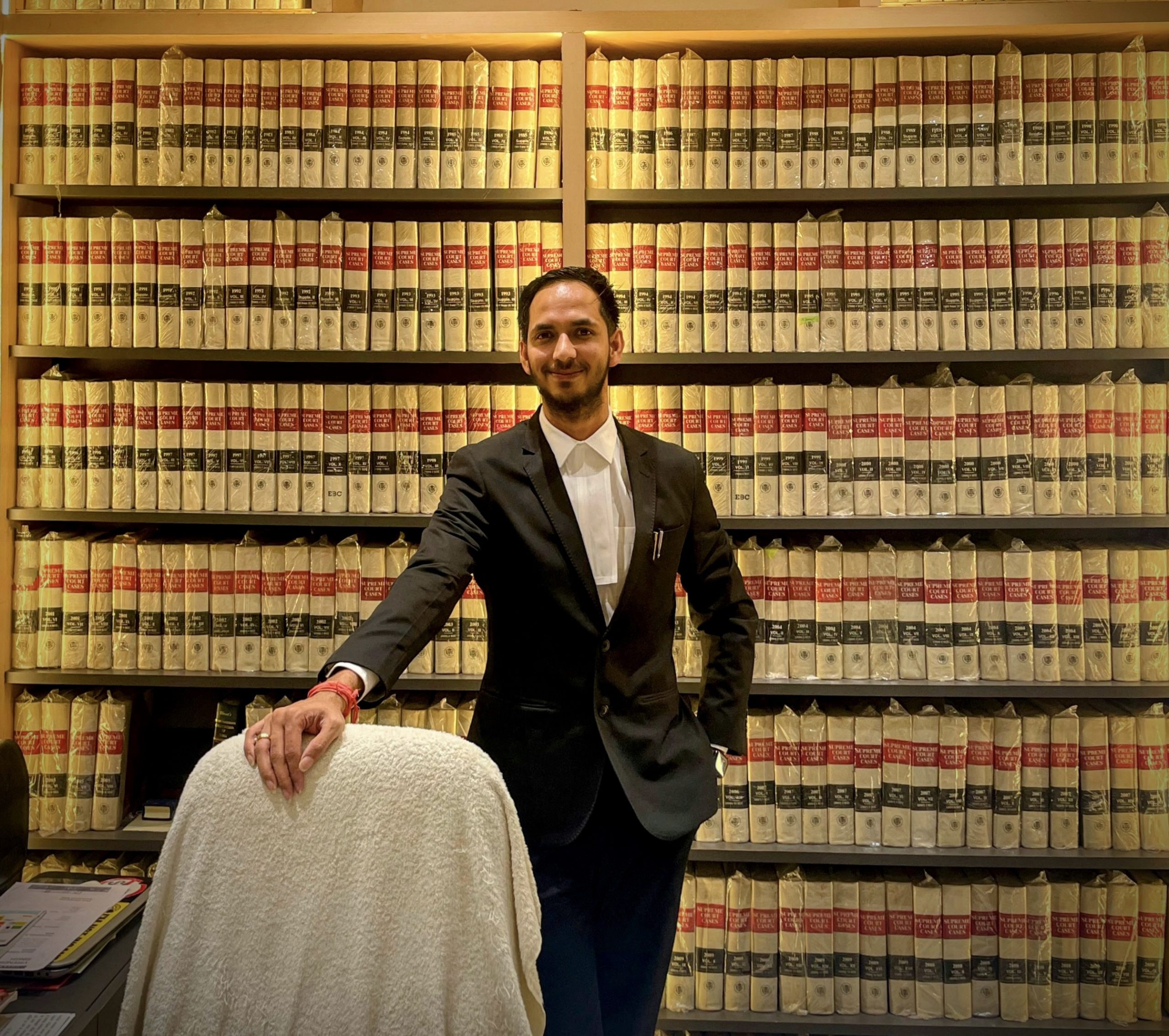











 Allow notifications