Can you walk us through your journey into the field of law? What inspired you to pursue a career in law, and could you share some insights into your college experience and how it shaped your professional path?
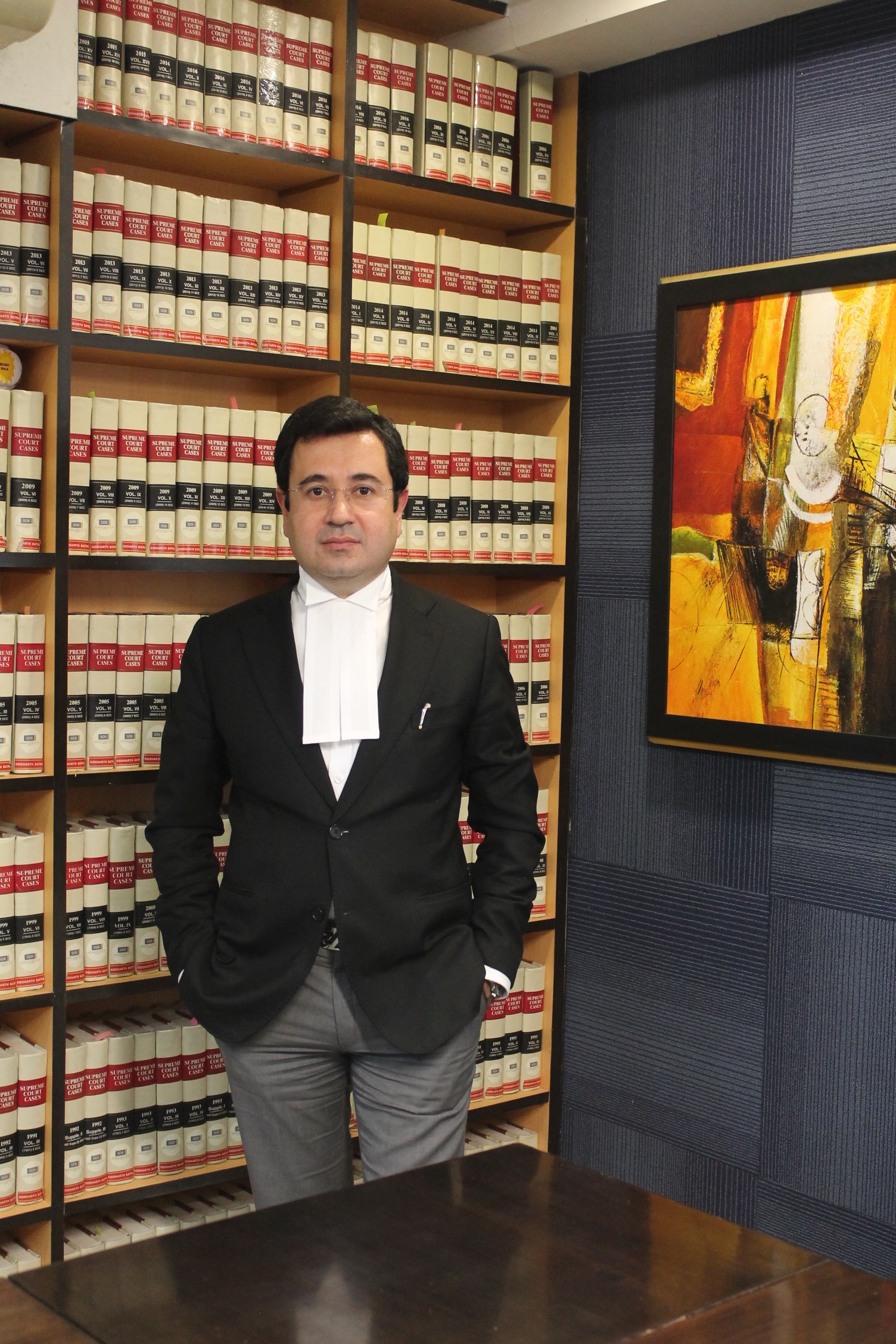
Since my 8th standard I always wanted to be a Lawyer. My father is in the uniform job, hence serving the nation and the community in the best possible way runs in my upbringing and in my blood. I am an Alumni of Guru Gobind Singh Indraprastha University. Law college no doubt is the first step into our legal journey and it is not a common Graduation that we pursue, it is a professional degree hence the approach should also be professional. I was fortunate enough to get the best faculty in the city and that too through my 5 year programme. Till date my professors are torch bearers in the legal field as well.
As someone who has pursued diverse disciplines in law, what sparked your interest in becoming a mediator and arbitrator alongside your practice as an attorney?
ADR I would say is not the Alternative Dispute Resolution Mechanism, rather is the Appropriate Dispute Resolution Mechanism System. Serving my clients with their legal battles for years and seeing them suffer emotionally, financially, physically sometimes (irrespective of the outcomes or reliefs they get from the Courts), ADR is the swiftest way to resolve disputes. Cases that take decades in courts can be resolved in a few months through Mediation or Arbitration. Being a Mediator or an Arbitrator satisfies not only the pocket but the soul as well! (On a lighter note!)
You’ve delved into various areas of law, from matrimonial disputes to trademark matters. Is there a specific field that you find most fulfilling, and if so, why?
I feel a perfect lawyer is the one who is a Master of all the fields. He should be able to serve his client with all principles intact. I find Matters pertaining to women to be most fulfilling. Since then, the legislative has made several laws purely for the protection of women. Hence, striking the balance of their rights and duties towards their families and spouses etc. and proceeding with them in the right direction is really challenging and fulfilling at times.
As a former prosecutor and now an advocate, what advice would you give to aspiring legal professionals who aim to make a positive impact in society?
One who knows the law well knows how to use it to suit his client. Sometimes it may go against the lawyer’s ethics. In such circumstances one must listen to their heart and proceed. As a young prosecutor, there were many challenges before me, such as dealing with the police machinery etc, but when you know the law and your cases well, no one can mess it up against you. One should always keep the head and the heart in Sync-mode and you become an asset to the society.
With your expertise in alternative dispute resolution, what role do you see technology playing in shaping the future of legal proceedings?
With the coming up of the Online Dispute Resolution ( ODR-ADR) mechanisms, disputes can be resolved at any place and at any time. AI apps like Peacegate etc. help in resolving disputes in a smarter way and the disposal rate is absolute. Post COVID technology has served several purposes, even hearings are being done virtually which saves a lot of time and money.
As someone who has judged various moot court competitions, what qualities do you look for in aspiring lawyers and mediators?
One must be sound in various fields of law and must be willing to serve the society. Sitting across the table with an open head and heart and helping the parties to navigate the disputes to resolutions is the only skill a Mediator should ace!
Outside of your legal career, what are some of your favorite hobbies or activities that help you unwind and recharge? How do you find balance between your professional and personal interests?
Being a mom of two young daughters is my hobby! And beyond that I love to meditate. This helps me rejuvenate energies and help me find balance in life. I love to travel, I have travelled to several countries, different cultures, and people attract me a lot. It helps me recharge and find a purpose in life.
Reflecting on your educational journey, how pivotal were your internships in shaping your understanding of the legal profession? Could you share a particularly impactful experience from your time as an intern? Also how important is internship in shaping anyone’s career path?
Internships are indeed an integral part of the legal curriculum. It is through these internships that I could locate my interest in the legal field. The best of my internships was in my second year, where I worked with the Delhi Legal Service Authority at the Tihar Jail. I got the opportunity to
interact with the inmates and help them with their cases. This helped me to dream about becoming a Prosecutor and represent the State.
Balancing multiple roles as a legal practitioner, mediator, arbitrator, and trademark attorney must require excellent time management skills. Could you share some strategies or routines you employ to effectively manage your time and responsibilities?
It is indeed difficult and you get exhausted at the end of the day but effective time management is the key and above that a team of equally efficient and trained lawyers to work beside you is an asset. I am fortunate enough to have such people associated with me and hence working alongside becomes easier. Also fixing days for specific forums or courts can prove to be helpful too.
From your diverse experience in the legal arena to your recent recognition with the ‘BW 40 Under 40’ award, can you share a bit about what motivates you in your legal journey?
My journey in the legal field has been fueled by a combination of factors. At its core is a deep-seated passion for justice and equality, using the legal platform to advocate for these values in individual cases and broader policy realms. The legal profession’s intellectual demands and ever-changing landscape provide ongoing challenges and learning opportunities, which I find stimulating and rewarding.
The impact of legal work on society is a significant motivator for me, as I aim for excellence and integrity in all my endeavors, understanding the substantial influence my work can have on people’s lives and societal norms.
The recognition and achievements, such as the ‘BW 40 Under 40’ award, validates my efforts and propel me to continue contributing meaningfully to the field.
Being part of a community of legal professionals and mentoring emerging talents enhances my journey, helping to shape the next generation of lawyers. This amalgamation of personal passion, intellectual curiosity, societal impact, professional recognition, community engagement, personal growth, and advocacy for change continues to drive my legal journey.
You’ve had an extensive legal career, from district courts to the Supreme Court. How has your approach to cases evolved over the years, and are there any experiences from your early days that significantly shaped your legal philosophy?
Reflecting on my extensive legal career, which has spanned from district courts to the Supreme Court, I have noticed significant change in my approach to legal cases. I moved to the Supreme Court in 2014 before which, I was at the Punjab and Haryana High Court at Chandigarh for 10 years. I essentially started my practice in 2004 at the District Courts Rohtak and later moved to Chandigarh when I got the opportunity to become an Assistant Advocate General in 2005. I left the office of the Advocate General in 2008 to start my own private practise and became retainer to the Haryana Urban Development Authority. In 2011, I became Additional Advocate General, Haryana.
In my early days, my focus was primarily on learning and applying basic legal principles. However, as I delved deeper into the intricacies of law, my understanding and approach became more nuanced, especially when arguing before the Supreme Court.
One of the most profound changes has been in my analytical skills. Initially, my approach was straightforward, centering on the direct application of the law. But with time and experience, I’ve shifted towards more complex legal reasoning and constitutional interpretation, considering various legal precedents.
Moreover, my legal philosophy has evolved considerably. Landmark cases and mentorships in my early career significantly shaped my views.
I treat every new case with a new perspective and fresh outlook. My first major trial as a young attorney remains an experience that has definitely shaped my legal philosophy. It taught me the importance of thorough preparation and the profound impact of the legal system on an individual’s life. My father’s advice – “a good lawyer is not one who knows the law, rather one who knows where the law is” captures a profound truth about the practice of law. Over time, I realised that what mattered more was developing the skill to research efficiently, understand the context of the laws, and apply them appropriately to different scenarios. It is not just about what you know, but how you use your knowledge to find solutions.
You have worked as an Additional Advocate General for the State of Haryana in the past and presently you have an independent counsel practice at the Supreme Court. What do you think is the difference in both the kinds of practice? Would you go back to being a government counsel?
Transitioning from being an Additional Advocate General (AAG) to an independent counsel practicing at the Supreme Court in India marks a notable shift in roles and responsibilities within the legal profession.
As an AAG, my primary focus was on representing the State’s interests in various legal matters. It involved offering legal advice to government departments, handling constitutional issues, and representing the state in litigation proceedings. Working closely with government agencies, providing legal opinions, and defending the government’s stance in court were key aspects of this role.
In contrast, as an independent counsel at the Supreme Court, I’ve had the opportunity to represent private clients or organizations across a wide spectrum of cases. This entails a broader range of legal issues spanning constitutional law, civil matters, criminal cases, and public interest litigations. The autonomy to select cases and clients and the diversity of legal subjects have been enriching aspects of this practice.
The transition has brought about a shift in focus and clientele. While government counsel primarily revolves around serving the state’s interests, independent practice offers a more varied landscape, allowing me to choose cases aligned with diverse interests and work across multiple areas of law.
The decision to return to government counsel or continue as an independent practitioner depends on various factors. While government service offers a sense of duty and the opportunity to serve the public, independent practice provides flexibility, a wider scope of cases, and personal career growth. My decision would be guided by a balance between these factors and my aspirations within the legal profession.
As a legal professional with a commitment to growth and development, how do you balance your role as an Advocate-on-Record with your position as a Visiting Faculty and your involvement in various professional and academic bodies? How do these diverse roles contribute to your overall professional fulfillment?
Balancing my roles as an Advocate on Record with my position as a Visiting Faculty and an active membership of various professional and academic bodies is indeed challenging but immensely fulfilling. Each role complements and enriches the other. As an advocate on record, I deal with complex legal issues firsthand, which I then bring into my role as a Visiting Faculty, making my lectures more relevant and dynamic. On the other hand, interacting with students keeps me abreast of fresh perspectives and emerging legal theories, which informs my practice. My involvement with various professional and academic bodies allows me to keep myself updated with the latest legal development and professional standards. My diverse roles provide me with opportunities for networking with legal professionals, academicians and students. At times, these interactions lead to collaborative projects, thereby enriching my professional experience and contributing to my growth. Juggling these roles is not just about career advancement; it’s deeply fulfilling. Teaching allows me to give back to the legal community, shaping future legal minds. My court practice keeps me grounded in the practical realities of law, and my involvement in professional bodies lets me contribute to the legal profession’s evolution.
Beyond the courtroom, you’ve been recognized as a BW 40 Under 40 Best Lawyer and Legal Influencer. How did it feel to receive such an award, and what does this recognition mean to you personally and professionally?
I remember quite vividly that I received the email stating that I had won the BW 40 under 40 at 1:30 am at night and I felt extremely elated and joyous. I remember feeling extremely grateful for people who have supported me throughout my career and have pushed me in the right direction. Receiving an award of high stature indeed brings numerous rewards, including recognition and visibility, both personally and professionally. On a personal level, such an honor serves as a validation of my hard work and dedication. It’s a tangible acknowledgment of the countless hours, effort, and perseverance that I have put into my legal career. This recognition goes beyond mere professional achievement; it resonates with my commitment to excellence and the values I uphold in my practice.
Professionally, an award of this nature symbolizes the high standard I have set as a lawyer. It enhances my credibility and reputation in the legal community, signaling to peers, clients, and the industry at large that my contributions are significant and impactful. This visibility can open doors to new opportunities, collaborations, and professional growth.
Moreover, such recognition can serve as an inspiration to others in the legal field, especially emerging lawyers who may see in my journey a path to aspire to. It is a reminder that dedication and quality work are noticed and appreciated.
In essence, while the award is a personal achievement, its implications extend far beyond, enriching my professional journey and potentially influencing the broader legal community.
Your involvement in the Indo-French Chamber of Commerce & Industry highlights your connection to international matters. How do you navigate the legal landscape when working with French companies, and what unique challenges or rewards does this bring to your practice?
My involvement with the Indo-French Chamber of Commerce & Industry indeed adds an international dimension to my legal practice, particularly in navigating the legal landscape when working with French Companies. Working with French companies requires an appreciation of cultural differences in business and legal practices. This includes understanding formalities, negotiation styles, and the general approach to contracts and disputes. Being culturally sensitive and adaptable is key to building strong professional relationships and trust. This provides an opportunity to work on diverse and often complex international legal matters, enhancing my expertise and broadening my professional horizon. It also allows for significant networking opportunities fostering a global perspective.
Outside the legal realm, what activities or hobbies do you engage in to unwind and recharge? Is there a particular hobby or interest that you find complements your legal profession in unexpected ways?
Outside the legal realm, I engage in several activities and hobbies that help me unwind and recharge.
I used to be captain of my University Lawn Tennis Team at the time I was pursuing BA LLB. I really enjoy playing sports, whether it is Lawn Tennis or Cricket or Badminton. I regularly take part in SCBA Cricket Tournaments.
One of my favorite pastimes is reading. Delving into various books, without any specific genre preference, allows me to explore a wide range of ideas, cultures, and philosophies. “Tuesdays with Morrie” by Mitch Albom is a personal favourite of mine. It’s narrative is centered around Morrie’s reflection on life as he confronts ALS, and it provides invaluable lessons on the essence of human existence and relationships.
Apart from this, I greatly enjoy watching movies. They offer a complete escape into different worlds and narratives, providing a mental break from the rigors of law. My favourite movie is The Godfather.
Each of these hobbies, in their own unique way, complements my legal career. They provide balance, enhance skills relevant to my profession, and keep me grounded and focused.
With over two decades in law, what advice would you give to young lawyers starting their journey in the legal field, especially those who aspire to make a significant impact?
The best advice I would give someone who is just starting their legal journey is that there is no substitute for hard work and there is no shortcut to success. A legal professional should always work hard and have faith in what he/she does.
Arguing in court is what every law student strives for. However, initially the focus should be entirely on honing your drafting skills and developing the skills of doing extensive and exhaustive research. In law, learning never ends. Even today, after practicing for 20 years, I continue to learn something new every single day. Law is constantly evolving and changing and you should try to keep yourself updated. Whether it is through legal news apps such as SCCOnLine or LiveLaw or following your mentors and senior lawyers on LinkedIn or through conferences and seminars.
When it comes to arguing in court, it’s okay to stumble occasionally. Everyone has ups and downs. The goal isn’t always to be the best but to make your point clear. Judges often understand and are patient with newer lawyers. Prepare well and present your case in simple terms. A solid grasp of the relevant law and case facts is essential.
Can you tell us about your journey into the field of law? What inspired you to pursue a career in law, and how did you get started in the legal profession
Being a first generation lawyer, I persuaded my family that I want to be a lawyer and make a good career in law. To be very frank, I must say the journey in this legal profession has been a roller coaster ride for me. Let’s dive back in time to know more about why and how I chose the legal profession as a career. In the year 2007, I did my schooling from Cambridge School Noida. I was least interested in accounts so it was easy for me to make up my mind about not pursuing CA/CS Course for sure. After that decision, I decided to pursue a BBA Course and appeared in the entrance examination for 3 continental BBA courses from Amity University Noida. Although I was selected, I was not satisfied at all whether to pursue it or not. Later I came to know, accountancy is also included in the BBA Course, and I couldn’t deal with the accounts subject so decided to move ahead and quit this course. Just like 3C BBA, at that point of time, the 5 years integrated BA.LL.B(Hons) course was gradually evolving. I pursued law with Amity law school, Noida and graduated in 2012. Furthermore, I did my masters from O.P. Jindal Global University, specialisation in Corporate Law in the year 2014.
INSPIRED BY WHOM –
Succinctly to say that, inspirations are so many luminaries of our legal profession, but one person who inspired me was the late Sh. Ram Jethmalani Sir. In the first year of law, I came to know about the Jessica Lall murder case wherein in 2006, the trial court had acquitted Manu sharma in that case. The first time I heard about Ram Jethmalani sir was in the aforementioned case who was defence counsel of Manu Sharma. I did a little bit of research later on. He was noted for his legal acumen and expertise.
Also for the parents, Selecting/Choosing a career option on behalf of their child is one of the major decisions that they undertake in the initial stage of commencement of their child career.
REASON WHY I CHOSE CRIMINAL LITIGATION OVER CORPORATE/IN HOUSE LAW PRACTISE –
By the time I jumped to fourth year in law, I had interned in a few corporate law firms including IP firms such as Sai Krishna and Associates. Prior to that, I already had interned for a month under tutelage of Senior advocate Rakesh Dwivedi Sir and K.K. Manan, Sr. Advocate, chairman of Bar council of Delhi . By this time, I had partially decided that I would go for litigation. It was the year 2012 where I interned for 3 months under tutelage of Advocates Subhash Gulati Sir and Sima Gulati Ma’am (Gulati and Associates), who were and still are my first mentors in this legal profession. These 3 months were fruitful for me as an intern which aided me in taking the right decision of which area of law to practise in coming years.
They have been doyens of the legal profession and have nurtured so many successful lawyers. I feel honoured to have been a part of that law firm (G&A).
You have an impressive and diverse background, working in various areas of law, including criminal trials, original side practice, and corporate matters. Can you share some of the key experiences or cases that have had a significant impact on your career and expertise
In mid-year 2012, I initiated my career in the field of criminal law for 2 years straight and got associated with the law firm of Gulati and Associates. I had a short yet effective stint as a junior advocate for Subhash and Sima Gulati . Having worked under Subhash Gulati and Sima Gulati (Sir and Ma’am) all this while, proved to be beneficial for me as very closely, I learned the tricks, tactics and specially the art of cross examining the witnesses in criminal trials. In fact, for a few months, I started assisting seniors in criminal matters listed in district courts. To name the few it includes dowry related case, dowry death case, murder case and 2G Scam case. For beginners in this legal profession, reading, researching the case laws, interpretation of the laws/provisions and putting all of it in drafting are few of climbing the ladder of district court practice. Next comes the oral advocacy , i.e. to say mastering the submissions/oral arguments before the court, that I learned at much later stage.
So, initially I started appearing in all district courts in Delhi and sought Passovers in complaint matters, heinous crimes /non heinous crimes (both pre trial and post trial stages matters) as well. A person is bound to make a mistake in his /her commencement of his trial litigation and that’s exactly what I did. The one thing I learned from the seniors , at the very beginning in starting 6 months, appearing before MMs (Metropolitan Magistrates) or ADJs/DJs (Additional/Assistant District Judges/District Judges) is that never ever lose your patience during arguments, the ability to handle the situations, be crisp on law and facts and one should know when to counter/rebut the arguments on the questions asked put forth either by the opposite party counsel/Hon’ble Judges.
I can tell you the first trial case I was involved in was of dowry one. In that case, we were representing husband. Senior told me to prepare the tabular chart by highlighting the general allegations and specific leveled against the husband and other family members and accordingly find out the relevant judgments on the issue . I attempted in searching the judgments day and night, on the proposition related to dowry law ,i.e. 498a, but couldn’t find it in our favour. Patience is the key. Then next day, I restarted researching on ratio ,found out the judgments and Just before At the stage of final arguments, cited the relevant judgments before the court, that lead to an acquittal. That was the pride moment for me in assisting senior and in adjudicating the matter.
It is undoubtedly a fact which cannot be ignored that apart from senior lawyers, in an advocate’s life Role of clerk also plays a vital role in building up the career of a lawyer. Clerks are invaluable.
They inculcate practical knowledge pertaining to court filing procedures/inspection of files in courts /High Court/ Supreme court inter alia. I remember Jitendra Kumar (who is now an advocate) is one such person who throughout has aided me in this particular field .
ROLE/ IMPACT OF SENIOR COLLEAGUES IN MY LIFE –
I always keep the relationship with my seniors at the beginning of my career at a high pedestal. No matter how many times you seek help from them, they will clarify your doubts in every possible manner. I discovered it’s essential to be enthusiastic and open to learning new skills, asking for more work and being curious to learn and ask questions. I thank my seniors and acknowledge their indisputable efforts namely as Advocates Sugam Puri, Shikha, Kunal Raheja, Navneet, Khan, Shammy, Rahul, Jatin Sapra for rectifying my mistakes in drafting and other consequential areas.
Post 2015 and till 2021, I had worked with other seniors namely Advocate Vikas Arora, Ardhendumauli kumar Prasad (AOR) (AAG, UP), Sr. Adv S.R. Singh (Former Justice of Allahabad High Court), Advocate Arvind Kumar Shukla gaining abundance of experience in land , service, appointment, education, excise matters ,criminal , landlord tenant arbitral disputes, property matters. I cannot thank my seniors enough for giving me the opportunity to argue independently in various forums/courts.
The regular bail granted to my client I defended in the POCSO case is one of the major takeaways of my litigation that I cherish the most.
Not to forget the landmark judgment of supreme court in Swiss Ribbons case v/s Union of India that upheld the validity of IBC Code in 2018, A separate writ was filed from our office and that was tagged along with several other petitions) and the fate of the judgment decided in the main petition decided in other cases including ours. So, by virtue of the judgment delivered by the 3 judges bench, the matters tagged were disposed of, technically without listening to the side of petitioners, to which I think it shouldn’t have happened.
There are numerous cases which I can’t mention all of it here. So keeping it in short.
You mentioned working with Dr. Pradeep Kumar Rai, Vice President of the Supreme Court Bar Association. What were some of the most valuable lessons or experiences you gained during your time with him, and how did it shape your legal career?
Since I already had experience working with Senior Advocate and briefing seniors on earlier occasions, prior to joining him, it was like a cherry on cake for me. Before becoming Advocate on record, I worked there as a senior associate and handled a variety of matters of the Supreme Court, District Courts, Tribunals as well. One of the memorable experience with him was that as soon as I joined his office in the year 2021, I got the opportunity to brief a criminal matter before Vikas Singh, the then President of Supreme Court Bar association, led by Pradeep Sir. It was an enthralling experience to assist and brief Vikas Sir in the criminal matter. As a young lawyer, it is the duty of him/her to rise to the occasion and see to it that the faith and trust of the Senior should not be shaken. Briefing and assisting senior is two different aspect altogether. The sharpness of mind, argumentative skill, confidence, organized, persuasive, intelligentest are the components of becoming a sharpened advocate.
Amongst so many valuable lessons taught by Pradeep Sir, one of them out of so many of them was:
‘Never do work half heartedly, do it wholeheartedly and with confidence’, Such words motivates you to do better in the longer run. Some of the things that I have learned from him would play a vital part in my long journey in the field of litigation. Essential things before briefing a senior advocate
For E.g. Reading the facts in a crisp manner, make sure to note it down if you are not capable of grasping it initially, note down the provision/law, if any involved pertaining to that case, qua the judgments in your favour or against you, make yourself aware about the day to day judgments of various High Courts/tribunals/forums and of course, of apex court, briefs has to be shorter, highlight the main ground of the case and so on so forth. It is true to say that recognition as a lawyer in the legal field is the prominent one. The face value and the recognition that I had received as a junior of Pradeep Sir is invaluable. It is something which doesn’t last but you have to create your own name to sustain in this profession and that is exactly what happened after working with sir and post clearing advocate on record examination in 2023.
One of your recent achievements is becoming an Advocate on Record at the Supreme Court of India. Can you tell our listeners about the significance of this accomplishment and the responsibilities that come with it?
As a first generation lawyer, It is a matter of pride, honour, privilege to become a reputed part in the highest court of country
Nowadays, the debacle of professionalism and ethical standards dropping day by day in Advocate on records has seriously concerned the judges of supreme court. AOR has much more onus rather than merely signing of the petition. On behalf of the party, an Advocate on Record can file a petition, draft an affidavit, file a Vakalatnama, or any other application at the Supreme Court. A registered clerk assists AOR in procedural aspects.
The court not only requires AORs physical presence but effective assistance from AOR is also required. He is a seeker of justice for citizens of this nation. An AOR is much more accountable than a senior advocate , who is responsible for whatever is written and pleaded by putting his appearance to maintain solemnity of court records. The institution of Aors is to facilitate working of court as mentioned in Order IV Rule 6 of Supreme court Rules.
For the first time, as an intern I entered the premises of Supreme court in the year 2011, at the time of pursuing law (4th year), vacation bench was presiding In the court no.1 where bench of former CJ S.H. Kapadia and J. Altamas Kabir were taking up the urgent matters, I was awestruck seeing the arguments by some of the senior lawyers at that time and then I had decided in my mind that I will soon practise here.
Let me tell you firstly about the Advocate on record examination. Every year the Supreme Court of India conducts an Advocate on record exam for the lawyers who want to establish his/her own practice in the Supreme Court. It is one of the toughest examinations in the fields of law attempted by numerous lawyers. Precisely to say every year around a thousand lawyers/aspirants having an experience over five years or more, so, write this lengthiest exam. And only a few could crack this examination. Consecutively, in Successive years 2021 and 2022 examination approx. 500 lawyers have become advocates on records, prior to this, the numbers were very minimal. At Personal level, the Significance of this accomplishment becomes imperative for two majorly reasons :- Firstly, a non- legal background lawyer cracking this examination, Secondly, it was essential for me to make my name and register it in the Supreme court, by hook or by crook and I did it in the 3rd attempt. Failing in the last two attempts given in 2018 and the post covid, in 2021 were depressing years. Then I found a ray of hope and flushing out all my negative approaches, appeared again and cleared the AOR Examination in my 3rd attempt. They say ‘TRY TRY UNTIL YOU SUCCEED’.
Could you share some insights into your daily work routine and the challenges you face as a legal professional, especially when dealing with cases in the Supreme Court and High Court?
From the past year, I am into independent practice, the timings are a bit relaxed. Prior to this, it was bit hectic and as it should be since a fresher/junior during commencement of his/her practise either in litigation or at corporate, whatsoever the field may be, is supposed to do constant hard work, to be persistent in carrying out various tasks of various courts in order to succeed in legal profession and that’s exactly just like others I had followed the same.
I wake up, have breakfast, drop my kids to school and then rush to the court in early hours as I don’t want my cases listed to get automatically Passover and then to wait for the whole day for my matter to reach. By this way, reaching the court, either its High court or Supreme court or any other district court, I avoid traffic congestion. You have your whole day once I am done with my matter. This is the kind of work I learned at the initial stage of my internship and then carried it off in my early stages of litigation practice.
Above all this, Fitness plays a significant role in shaping my legal career. I have become more focussed, punctual, more energetic, less impulsive after doing some workout in late evening.
Our routines become ingrained in our brains. They are made up of a series of habits. Changing your work routine is difficult, for it requires tackling many habits.
In your extensive career, you’ve handled a wide range of cases and legal matters. Are there any particular cases or moments that stand out as particularly memorable or challenging for you?
From 2012 till mid 2023, I have had encounters with multiple cases in criminal side, civil side, corporate side as well, both at district, High Court and Supreme court. My memories with each case are very special because of which I grew as a lawyer and as an individual , I not only thrived for social justice but also embraced life long learning.
I find matrimonial disputes and child custody cases are the most challenging ones, since you have to fight tooth and nail to defend your client whether it’s a husband or a wife, or the case relates to custody of a child. Mediation plays a vital role in settling the disputes between the parties. There was such a peculiar case where I was representing husband, a retired IAS Officer in multiple cases filed against my client by his wife who was also an retired IAS officer, that is to say, maintenance u/s 125 CRPC, Domestic violence case under section 12, and FIR was already lodged u/s 498a. They were into court battles for so many years and the remedy I could see was through mediation. However, in a number of dates fixed for mediation, the matter could not be solved and it went back to court again and now its sub-judice. So many sittings in mediation and yet marital conflict- issues involved between both aged parties remained status quo and didn’t sorted it out.
For instances some of the cases I assisted and as independent counsel argued for are listed below : –
Acquittal of husband/client in false dowry demand case (u/s 498a, Sec 2/3 DOWRY Prohibition act)
12 Writ Petitions before Delhi High Court against setting aside ex parte order of labour court, filed on behalf of management company to reinstate services of labour from date of their termination along with back wages – notice was issued and Settlement arrived between both management and employees at Later stage.
Statutory Bail granted under POCSO Act
At present, I am handling various arbitration matters with land acquisition, both at district level and high court level, which is a bit complicated but intriguing also.
Given your experience in the legal field, what advice would you offer to law graduates or young lawyers who are just starting their careers in law? What key principles or values have helped you succeed in your journey as a lawyer?
Nowadays, a career in law opens up a plethora of possibilities. Firstly, the law graduates/young lawyers should explore career options and must be decisive in their choice of practise whether its litigation practice, (civil side or criminal side), law firm, corporate practise, judicial services , academics and research, Public prosecutor, Judge Advocate General (JAG ) Officer.
Learning to practice law can be daunting sometimes and it takes some time for junior lawyers to comprehend the technicality and procedural court work. Don’t disheartened, discourage and lose your heart if you are unable to understand the functioning of the courts. You will get it through your sheer hard work, by dint of persistence, self determination. Moreover, read the judgments of supreme court, High courts, Tribunals etc. to enhance your knowledge on various laws discussed in several judgments. Any case, in a free time, if you don’t have anything to do, or not in a mood to research, then peruse constitutional law judgments. Establish your IQ more on constitutional aspects. By reading judgments, you merely not only improve your legal vocabulary, it gives you a better understanding of the law and the legal idioms/ phrases that is being used in the judgments, you can learn it also by continuously reading it. All these you can put it in drafting and in your communication skills which further cultivates in honing your argumentative skills before the court.
You can regularly read whether from online legal search engines or from journals, depending on your preference. In this age of technical advancement, one can now easily access and also learn the art and craft of legal arguments/submissions made by legal luminaries in constitutional hearing matters.
I have come a long way from being a mediocre law student to a lawyer holding the highest position in the Supreme court. I have always been a keen learner, enthusiastic, and determined person. Giving the best in your profession and Being an honest to your profession has been my primary goal. Time management is the key to success. Value the time. I valued the time at each interval of my litigation practice. My next advice would be ‘value the time, don’t waste it. Time won’t come again. Take baby steps at once and keep working hard, success will come your way, if not today, then in coming years.
“AT ANY STAGE, DO NOT UNDERVALUE YOU, UNDERESTIMATE YOURSELF, UNDERMINE YOUR SELF BELIEF, UNDERMINE YOUR SELF DETERMINATION”
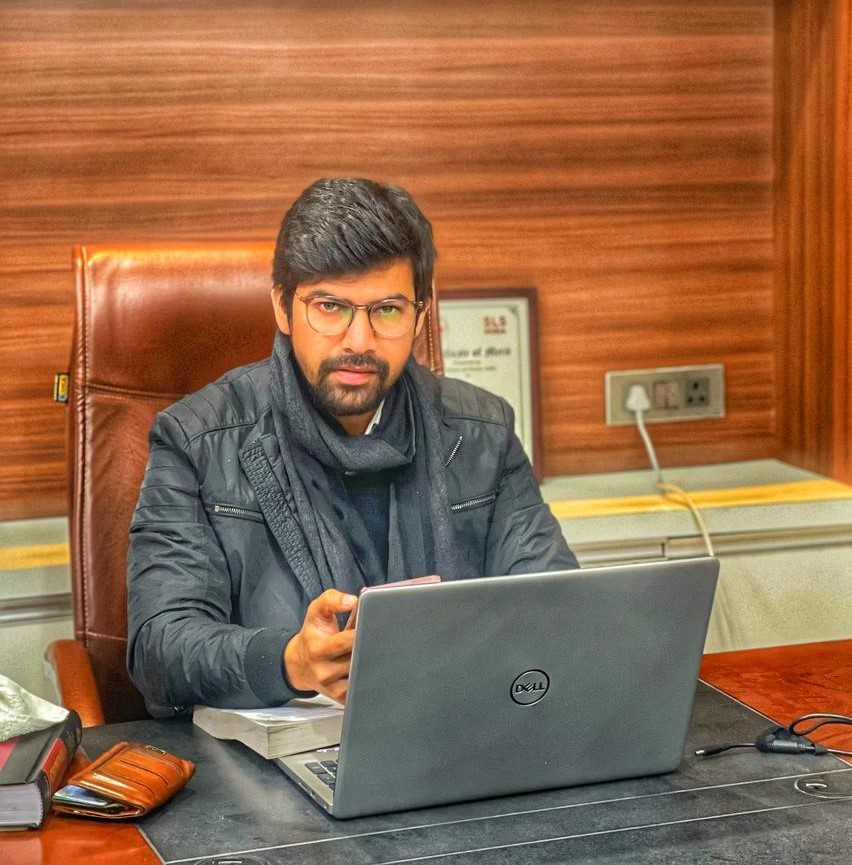
As the founder of your own law firm, “Chambers of Kunal Yadav,” what motivated you to start your practice, and what are your goals and vision for the firm’s future?
I am sure that every law student / graduate lawyer has this huge dream of having his/her own law firm. Mostly , some of them initiate the setting up of a law firm, right after graduation , some of them don’t start them at all. While few of them start a bit late. In today’s competitive environment, it’s a challenge for even the most qualified lawyers to maintain and grow a successful law practice in India.
I have quite an experience in various law firms based in Delhi and after witnessing the positive growth of associates , working under a good leadership, thus in a positive environment and working cultures of those litigation law firms, I took the decision of having my own firm. Who doesn’t want to be his own boss , right ?
I had thought of establishing and commencing my own firm some day. Before leaving the last office where I worked, I had completed 10 golden years in the legal profession. As of now It has just been a year as an independent practitioner, let’s see how and where this wind goes .
I always believe that a healthy environment in the law firm should sustain rather than a toxic environment.
As a founder of my new firm, I am looking for new avenues, new recruits which would aid in taking the firm to greater heights.






 Allow notifications