Tag: CU

  • Rajendra Misra, Senior VP-General Counsel, Taj Hotels Palaces Resorts Safaris, on IPR, and his diverse experience

    Rajendra Misra, Senior VP-General Counsel, Taj Hotels Palaces Resorts Safaris, on IPR, and his diverse experience

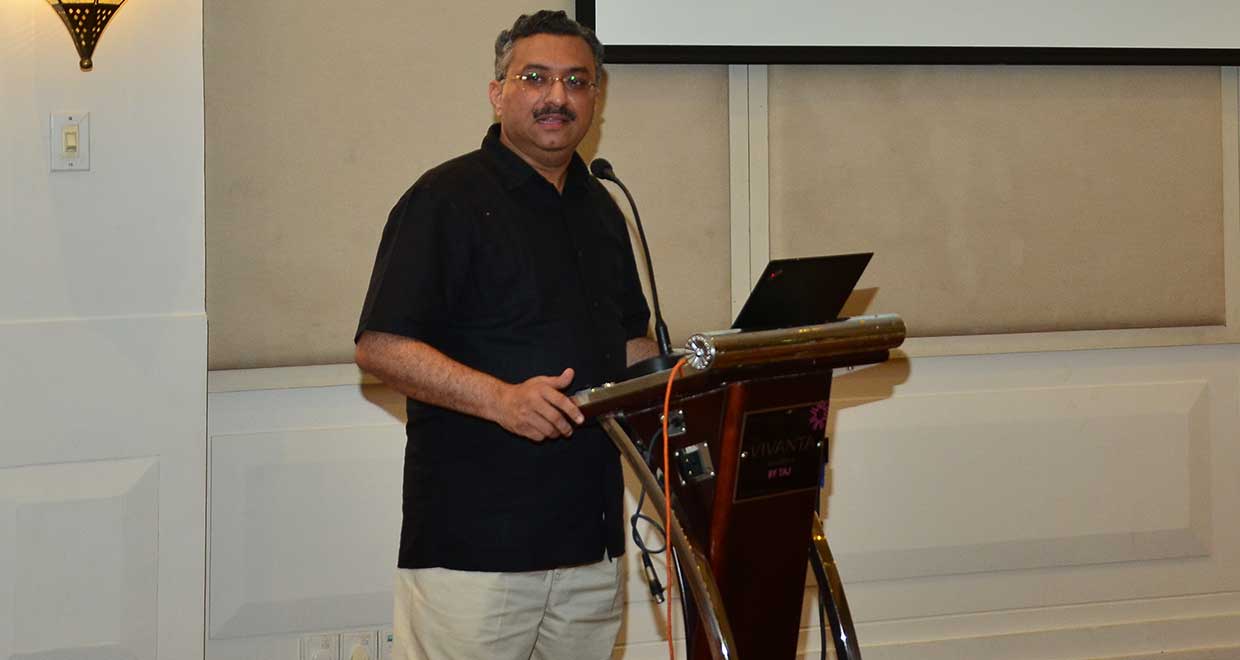
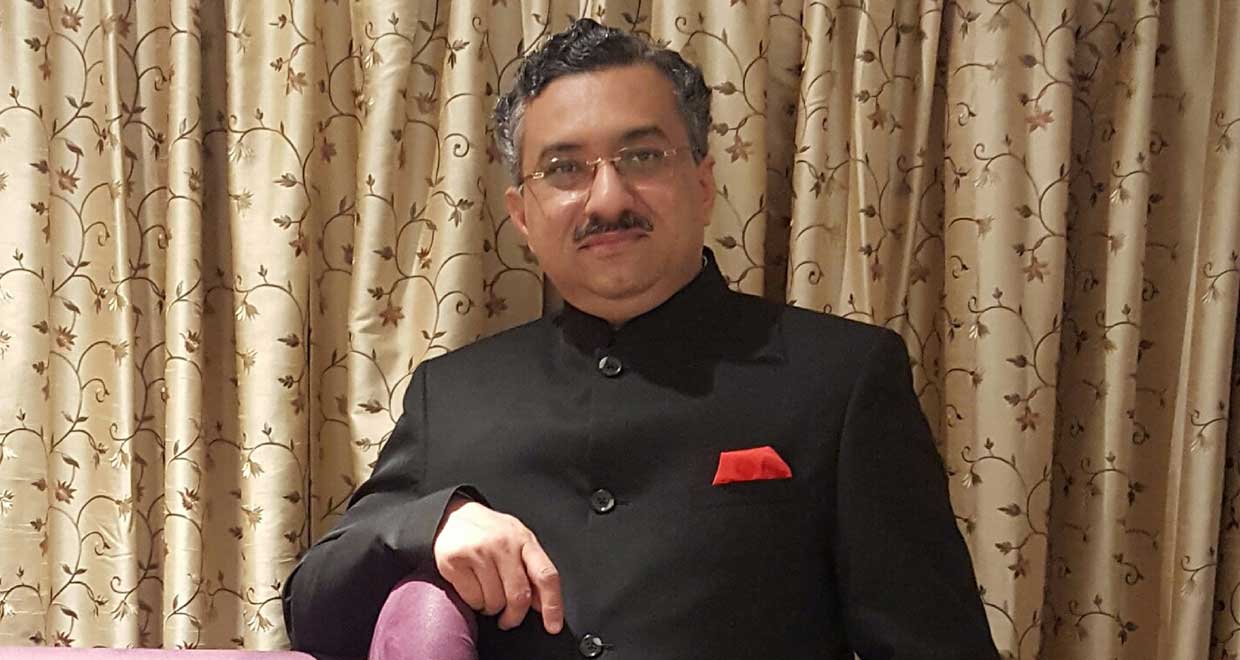
    Rajendra Misra graduated in law from University of Calcutta, in 1991. After successful stints at Indal, Dunlop India Limited, ITC Limited, and Hindustan Unilever Limited, he is currently Senior VP-General Counsel at Taj Hotels Palaces Resorts Safaris. Mr. Misra is the chief legal advisor to the CEO and Board, advising on legal implications of business issues, proactively spotting prospective legal issues, counselling the executive management on legal and regulatory aspects etc. His role encompasses Strategic Litigation planning, Litigation management, selecting and supervising outside counsel, driving strategic initiatives to achieve business objectives while also ensuring adequate protection of legal rights of the organization, building strategic partnerships and alliances with outside counsel and attorneys, Risk minimization and Risk management, developing a Compliance culture, Corporate governance, process improvements, using technology as a tool for efficient management of the function, and developing and managing the team.

    In this interview we speak to him about:

    • His role in ushering in crucial reforms at Taj
    • Receiving accolades such as “GC Powerlist: India 2016″, “Trailblazers: India’s Finest In-house Counsels” by the Indian Corporate Counsel Association, among others
    • His illustrious experience spanning 26 years

    Given that most of our readers are law students and young lawyers, how will you introduce yourself to them? 

    I come from a family of lawyers. My father started his law practice in Kolkata. My sister is a practising lawyer at the Calcutta High Court. I have several relatives as well practising law. I consider myself to be a student of law. I have spent 26 years in the legal field; however, the field is vast, law is ever evolving, and every day one is learning new things. The quest of knowledge is unending, and I am always keen to learn more.


    What was it that got you interested in the legal field? 

    Even before I could understand its true meaning, the expression “Possession is nine points of law” fascinated me! I probably heard it from my father. I think it is the discussions between my father and my sister on legal issues which got me interested in law. Gradually, as my interest in law grew, I decided to make it my career. And once I made the decision, I pursued it seriously.

     

    How was your experience in law school? 

    We were one of the initial batches of the integrated five year law course. Typically, the law schools teach you basics of law, laying the foundation. The other thing which you are introduced to is analytical thinking, debating etc., all of which help one later in life. During law school days, Constitutional Law, Contracts and Conveyancing were my subjects of interest. I believe it is extremely important for the students to supplement the knowledge from law school with practical experience gathered through internships. Even as I was studying law, I used to regularly attend the chamber of a Senior Advocate in Calcutta as a trainee. I used to make it a point to attend college, and then attend court post lunch, followed by attending chamber in the evening. Watching the proceedings in court was a great learning. Carrying on research work at the chamber was also a learning experience. I learnt early on the merits of being precise while drafting, that it always pays to say less and be precise, rather than say more and be rambling. Even before completing my law course, I had the privilege of assisting my senior in a case of copyright infringement. I had not read up on copyrights earlier and IPR was not in our curriculum. I researched the subject and found it interesting – very different from the regular property, inheritance and other civil cases. I think that exposure resulted in my interest in Intellectual Property Rights later.


    Was the decision to work as an in-house counsel as opposed to working at a law firm a conscious one? 

    I was always interested in a counsel practice, as opposed to working at a law firm. As such, I never really considered the option of working in a law firm. I firmly believe that the decision whether to work in a law firm, or as a counsel or as an in-house counsel is an individual decision, and each one should decide on the basis of his/her interests.

    So how did the movement from counsel practice to in-house counsel happen? Fairly early in my law career, Indian Aluminium Company, Limited (Indal) was looking to recruit an in-house counsel to handle their major legal cases. My father suggested I should consider applying. While initially I was a bit hesitant, he encouraged me to explore. I must say that I had never done an internship in an in-house legal department, and as such this was like walking into the unknown, taking a leap of faith. But I did take the plunge, and have never regretted it. It perhaps helped that Indal wanted me to handle its major legal cases. Therefore, I was never far away from litigation, courts and counsel. Gradually, of course, other aspects of the in-house counsel role also grew on me.


    You undertook the Hawkesmere course on IPR in London, and have a Postgraduate Diploma in Patent Law. Can you tell our readers about this course?

    Both these courses were part of the effort to continuously upgrade professional knowledge, and were extremely relevant at the respective point of time.

    A couple of years into my career in ITC, I was given additional responsibility of supervising the IP Cell. Following this, I had gone to London for the Hawkesmere Course on International Intellectual Property Law. Hawkesmere used to conduct such courses aimed towards Continuous Professional Development of executives. This was a two day intensive course, and gave a great insight into various aspects of international IP law, which was very relevant at a time when the IP laws around the world were evolving following the TRIPs agreement.

    Around 2005-06, ITC began diversifying into the Personal Care business. While I was heading its IP Cell, we were mainly into Trademarks and Copyrights. But with the diversification into the Personal Care business, we also began filing patent applications. So I decided to take up the Post Graduate Diploma in Patents Law course of NALSAR. This course was a mix of proximate education and on campus sessions. It was a wonderful way of undergoing training in patents law while working. The faculty was good and experienced. One got a great insight into patents. We had to research and submit two papers on patents as part of the PG Diploma course. The tough part, of course, was balancing work and learning. That was compounded by the fact that I was taking up studying nearly twenty years after having left college. Our professors had sound words of advice for those of us who were taking up studies after a long time – apart from training us on patents, we were also advised to practise handwriting, because twenty years after college, one tends to lose the practice of writing by hand, and it is not easy to write a two hour exam without first building up writing speed!


    What got you interested in the field of IPR?

    My introduction to the world of IPR was through a copyright infringement case on which I assisted my senior during my internship. We did not have Intellectual Property law as part of the law curriculum, and hence, this was then a totally alien field for me. But I enjoyed researching and working on this case. Later, when I began heading the IP Cell of ITC, my interests in this field of law grew further. The late 90s and early 2000s were momentous years for Intellectual Property Law in India, with India overhauling its IP laws after acceding to the TRIPs agreement. This is when the IP law really evolved in the country, and companies began putting greater focus on management and protection of their intellectual property. This field of law is really fascinating. Protecting brand names and logos is now extremely common place. However, with the new Trademarks Act, the ambit of trademarks has really expanded, and it is possible to protect sound, 3D marks, colour combinations etc. as trademarks. There is enormous scope to do innovative work in this area, and I believe that the potential of unconventional trademarks is waiting to be realised, particularly for FMCG companies, media organizations etc. who are extremely focussed on protection of their IP. Another interesting area is of Geographical Indications. I had a great exposure to this subject several years back in ITC when we were embroiled in a litigation relating to the GI Darjeeling, where the plaintiffs tried unsuccessfully to stop a hotel lounge by the name Darjeeling. The awareness of this new area of IP is increasing day by day, and recently I was delighted to find that a society of weavers in Kasaragod had registered a GI for Kasaragod sarees! The other area of IP which has great potential is patents. However, a good grasp of scientific knowledge gives a distinct advantage in this field. We must remember that at this point of time, the Indian economy has the potential to become the world’s third largest economy by the next decade, and one of the two largest economies by mid-century. The International Monetary Fund describes the Indian economy as the “bright spot” in the global landscape. As the economy grows and businesses expand, IPR will continue to become more and more important, and this will give tremendous opportunities to lawyers and law students.
     

    What would be your advice to our readers undecided about pursuing higher education? 

    Life is a process of continuous learning. My advice would be not to lose any opportunity of learning. If there is an opportunity of pursuing higher education in a field of interest, I would earnestly urge the readers to avail it. Particularly, if you get it before the start of, or early on in the career. I acknowledge that it may not be easy to pursue higher education later in the career. But, as they say, if there is a will, there is a way. My courses undertaken in mid-career were extremely relevant to my roles, and hence, I benefited greatly from undergoing the courses. I guess the key in such cases is relevance and interest.

    What was your first job after law school? 

    Even as I was attending law school, I used to attend the chambers of a senior counsel in Kolkata, interning and learning the ways of courts. So post qualifying, I commenced going to court. In 1993 however, Indian Aluminium Company, Limited (Indal), a subsidiary of Alcan, Canada was looking for a legal resource to handle their major legal issues, which were till then being handled by a Dy. Company Secretary, who was due for retirement. I remember going for the interview in the most casual manner – straight from court without any preparation and wearing only a jacket and no tie – only to find to my horror several candidates immaculately dressed in suits and ties, seriously reading business newspapers and waiting to be called for the interview. I don’t know what my interviewer and future boss saw in me, because out of the many candidates, he chose a greenhorn like me for the assignment. God bless him for that choice, because thus began my journey as inhouse counsel in some of the topnotch companies.

    It was a blessing in disguise that a few months after my joining, a library-full of files landed on my head – all relating to the major legal cases of Indal. These were high value litigations relating to electricity laws and mining laws. The best of legal brains of the country were appearing for Indal in these matters, and very early in my career I came to interact with them, initially with a sense of awe, but followed quickly by confidence, even as I saw and learnt from their discipline for this great profession. Several months down the line, Indal went for a Euro issue, and that pitched me in front of US lawyers, defending the major litigations of Indal and assuring them that all was under control and that Indal had good merits in these cases – something which I did with confidence, earning the Managing Director’s special award in the process. I handled my first merger transaction at Indal, when we merged a power generation company, which was a subsidiary of Indal, with the parent company.

    Given that Indal was my first job, apart from learning about corporate law, I also learnt corporate language (very different from the language used in pleadings!), corporate behaviour and corporate dynamics at Indal. The early experiences in Indal transformed me from a counsel to a corporate lawyer. I learnt the importance of dispensing with legal jargon and talking/writing in simple language which is understood by business/non-lawyers. The Indal stint also introduced me to the fact that as in-house counsel, I should be looking at the business aspect of an issue apart from its legal aspects – the fact that legal manager has two facets – ‘legal’ and ‘manager’ – and the in-house counsel has to consider both legal and business aspects in order to arrive at a fine balance, serving the business interests of the organization while remaining within the boundaries of law.


    Can you tell us about your time at ITC?

    It was during 1997 that ITC was looking to augment strength in their Legal Department. I was then based out of Kolkata, and for any legal professional in Kolkata, ITC was a dream job. Therefore, when they offered to recruit me, without batting an eyelid I joined them. The ITC journey was a tremendous one. Fairly early in my ITC stint, I began partnering the Tobacco business, the largest business of ITC. Over time, as they spun off newer businesses, I got the opportunity of advising the newer businesses as well, helping them find their feet the right way, ensuring legal compliance even as the businesses grew, acquiring new brands, manufacturing facilities and companies for the organic and inorganic growth of the new businesses. Thus began my association with the Foods business, the Personal Care business, the Lifestyle Retailing business, the Matches & Agarbatti businesses, and the Stationery business – very diverse businesses. Even while doing so, I continued to partner the Tobacoo business, which had its own set of challenges, Tobacco being a heavily regulated industry.

    ITC takes IP management very seriously, and it was my privilege to lead their IP Cell too. While during the Tobacoo/Foods/LRBD days, management of Trademarks and Copyrights was the dominant theme, the advent of Personal Care business also brought with it experience in handling Patents management. The most interesting thing was that with newer businesses being spun off, we also learnt on the job. Overall, it was a great time, with huge learnings. In many ways, we used to operate as an in-house law firm. We used to do a lot of drafting in-house – agreements as well as pleadings. We also used to do a lot of research in-house, and ITC had an excellent library of legal journals, law books, as well as legal research software like Manupatra, SCC Online, Excus, PTC, etc. to enable research. And, we used to take an active part in briefing counsel in our legal cases. With our drafting and research, we used to support our counsel and solicitors in a big way, something which was well appreciated by them.

    The Tobacco business came up with innovative ways of advertising – it was the role of the Legal function to ensure that the business always remained within the four corners of law. Being a highly regulated industry, the Tobacco business took compliance with legal requirements extremely seriously, and the Legal voice was heard with respect. With the new businesses, I got the opportunity of creating and protecting new brands, acquiring new brands, negotiating and closing with new manufacturing facilities, sometimes buying new manufacturing facilities. The best part was the acquisition of a bio-technology company which was into production of seed potatoes, with manufacturing facilities in multiple countries. Due diligence in multiple jurisdictions, and structuring the transaction was extremely challenging. I distinctly remember the night prior to Closing, when we stayed up the entire night finalizing the transaction documents, to seal the deal at 10 o’clock in the morning. It was a tremendous experience.

    As the years went by and my responsibilities increased, so did my levels. I moved on from being Asst. Manager – Legal to Asst. Solicitor to Associate General Counsel. From a solo start, the ITC stint gave me the experience of managing a team. I had a great time working with fantastic business leaders, excellent mentors, fine peers and a great team. Finally, after spending 14 years in the organization, I had a feeling that I had done all that was to be done in Kolkata and in ITC. I got an urge to spread the wings and fly away out of Kolkata, all the way to the western shores of the country – to its commercial capital. I was looking out when HUL called. And that was a dream assignment, too difficult to refuse.
     

    How did your appointment at HUL happen?

    Unilever is a great organization. It is the king of marketing in the country. In 2011, HUL was looking for a senior legal resource for heading its legal team partnering the personal care and homecare businesses, the largest of its businesses, representing more than 75% of its turnover. It was my privilege that they selected me for the role. I became a part of the HUL Leadership team and the Legal Leadership team. Unilever is a powerhouse of great leaders. It would not be wrong to say that Unilever “manufactures” leaders, some of whom occupy some very senior positions across the industry today. It was a great time at Unilever, working and collaborating with some of the finest brains in the business today.

    Over time, my role in Unilever grew. In addition to leading the legal team partnering the personal care and homecare business, I also got the charge to supervise the Legal team of Lakme Lever Ltd., a subsidiary of HUL. Later, the Water business and Kimberly Clarke Lever Ltd. also got added to my profile. Over time, in addition to my above responsibilities, I also became the Global Legal Counsel for Lifebuoy and Fair & Lovely, two iconic brands of Unilever, apart from discharging the role as Brand Development Counsel for the entire South Asia region. I must say that I thoroughly enjoyed my role in Unilever. The learnings were immense. Interacting with the best legal brains across the Unilever universe, one picked up global best practices, and came to learn about new and upcoming fields of law. The business teams in Unilever are demanding and one has to be nimble to manage them, and it was a joy working as a team. One of the most important things which Unilever experience brought out was the risk-taking appetite, something extremely crucial for the business. The best part was that Unilever gives you complete freedom in your job profile – the canvas is yours to paint. Another fantastic thing was that I had a young, energetic and dynamic team. Interacting with such a young and dynamic group was great and challenging at the same time. It kept you young and contemporary, but at the same time you also had to be several steps ahead of them. It was a joy mentoring these bright young legal minds.

    At Unilever, I had the opportunity to look at, frame and defend some cutting edge product claims and advertising. The most memorable was a comparative advertising, where we showed the competitor’s product and claimed that our product was better than theirs. It was risky, but it was a calculated risk we took, and one which was worth taking, given that our product was truly cutting edge and better than competition. Therefore, the claim was factually correct, through it ran the risk of a competitive challenge. During the planning stage, I advised the business group that we should expect the competitor to take the battle to courts. I made intelligent guesses, and was able to accurately anticipate the court where they could file the legal challenge, and prepared counsel in advance so that we were in a position to defend our claims. My forecast proved correct, and we got locked in a fierce competitive battle with the competitor. We succeeded in defending our claims and in keeping the comparative advertising going for a long period of time despite the competitor’s attempts to shut us out. This campaign is a landmark in the history of comparative advertising in the country.

    The other memorable piece of work was acquisition of a natural ayurvedic medicine brand and product for Unilever. With the rise in demand for natural products, and growth of new competitors in this field, Unilever set about acquiring this natural ayurvedic medicine brand and product line, and I was in the thick of due diligence and negotiations with the promoters of the product/brand, and we worked out a great deal for the company. Unfortunately, before we could ink the deal, I quit to move on to Taj, but it gave me immense satisfaction when the deal was finally concluded soon thereafter. It is a matter of pride to see the product on the shelf. Incidentally, this was not the first brand/product line purchase for me. I had done quite a few in ITC as well. And, today when I see these products on the shelf in retail stores, I feel immense pride in having been associated with these acquisitions, and have great stories to tell about them to my children.

    Towards the end of 2015, Taj was looking to appoint a Senior Vice President – General Counsel on its Executive Committee – the highest executive body just below the Board of Directors of the company. When Taj gave me an offer to join their Executive Committee, reporting to the Managing Director, and overseeing the Legal & Secretarial functions, it was a great offer. During my professional career, I have always valued professionalism and high moral standards in an organization. Both Unilever and ITC are extremely professional companies, with high ethical standards. Taj and the Tata group are universally admired for their great professionalism and high ethical standards. Therefore, the organizational profile was a perfect fit. The role was also very interesting and challenging. Apart from supervising my function, sitting on the Executive Committee also gives me a great experience in understanding and analysing business issues, appreciating legal issues in a business context, prioritizing legal issues accordingly, and taking risk calls for business growth. Therefore, I decided to take the plunge and join Taj – a decision which I haven’t since regretted. Today, apart from being a member of the Executive Committee of Taj, I am also a Director on the Board of TajGVK Hotels & Resorts Ltd., a listed company which is a joint venture between Taj and GVK group.


    Can you give our readers some insight into the reforms you brought in Taj during your time there?

    At the Taj, we deal with a lot of contracts, under which we have valuable rights in respect of our 100 plus hotels. Contract management is an important area for us. In the modern world, contracts tracking on Excel sheets is sub-optimal and does not work. With advancement in technology, it was important that we use technology to our advantage in managing our important contracts. Hence, I deployed a Contract Management software at Taj. It serves as an archive of all our hotel management contracts and other important contracts, and also tracks contract renewal dates and auto-generates alerts for the team, ensuring timely renewals, and risk mitigation.

    The next issue was ensuring uniformity of contracts across the organization. My team is spread over multiple locations. It is crucial that everyone in the team follows standardized contract templates, instead of digging into personal drives and using different contract formats. Hence, I constituted a Task Force to standardize about 25 of our main contracts. We spent a lot of time discussing and debating the changes to these contracts. And, we did this inhouse because we believe that being closest to the business, we were the most equipped to standardize our contracts keeping in mind our business requirements and challenges. Once standardization happened, we uploaded the standard versions of the contracts on the Contract Management software so that everyone uses the same format, regardless of location. This ensures consistency of contracts, and has minimized risks for the organization.

    Laws impact everyone in the organization, and increased legal awareness leads to greater compliance and lesser risk exposures; hence, it is important to spread legal awareness within the organization. Here again, I decided to use technology to our advantage. We have developed e-learning modules (Learning Management System or LMS) for our employees on five crucial subjects – Data Privacy & Protection, POSH, Competition Law, Insider Trading, and Related Party Transactions. These are interactive e-learning modules which will explain legal topics in very simple terms and with examples for the non-legal employees.

    The Taj group had deployed a Compliance Management system at its units. I have now commenced Gap analysis, which is in the nature of an audit that will help us identify and fill up gaps, if any, in the compliance management by individual units. This will further strengthen the compliance management within the organization.

    Similarly, Taj was in the process of deploying Litigation management software and Intellectual Property management software. We went full throttle in order to operationalize them on priority basis. All Taj litigations and IPR have now been uploaded onto the Litigation management software and the Intellectual Property management software, leading to better management of litigations and IPR.

    I believe that with all the above measures, people in the organization can sleep better, assured that we are doing the right thing, in the right way and that our risks are getting minimized.

    You pioneered an initiative which led to the Taj Mahal Hotel building in Mumbai being India’s first building to secure a trademark for the image of the hotel. Can you tell our readers about how you achieved this?

    The image trademark registration was a result of a combination of many factors, my fascination with unconventional trademarks being one. The other was the constant feeling of what more one can do to protect the rights of my organization, and how can I ring fence it better. Yet another was the desire to create value for the organization, because I believe that the Legal Department is not just a cost-centre, it can also create value for the organization. The Taj Mahal Palace, Mumbai is the iconic flagship of Taj Hotels Palaces Resorts Safaris, and is a defining structure of Mumbai’s skyline. The distinctive red-tiled Florentine Gothic dome of the hotel, which crowns the elegant Indo-Saracenic arches and architraves of the iconic hotel, sits 240 feet above street level. Since 16th December, 1903, when the hotel first opened its doors to guests, its striking dome has been the triangulation point for the Indian Navy to guide them in the harbor. It is widely recognised as the temple of hospitality. I do not need a signboard on this iconic property for the public to know that it is the Taj hotel. One look at the property and you know that it is The Taj Mahal Palace, representing the finest in Indian hospitality traditions. To my mind, that is exactly what a Trademark is. Therefore, I went about securing this image trademark registration. After conceiving this idea, I presented it to the Managing Director and my peers at the Executive Committee, who enthusiastically supported it. We got the trademark applications filed through Anand & Anand, the top notch intellectual property law firm in the country. The applications were pursued on top priority, and we were able to secure the registration in 7 months. I must say that a stellar role was played by the Trademarks Registry and by Anand & Anand in prosecuting the applications and securing the registrations. Often, people who are part of a historic moment do not realise that they are creating history, and I daresay that most of the people who participated in the process may not have realised the significance of the moment. But history it certainly was – we had become the first Indian building to have secured image trademark registration. Only a few iconic buildings across the world have been able to secure such registration – the Empire State Building, the Chrysler Building and the Sydney Opera House to name some. With this image trademark registration, the iconic Taj Mahal Palace, Mumbai became a member of this unique and elite club – the first Indian building to do so. As an Indian, that swells my heart with pride. As an employee of The Taj group and Tata group, it makes me immensely happy that I have been able to get such a unique protection and status for our legendary hotel. This is a very unusual and unconventional trademark, and the outcome of a pioneering effort. Many organizations register brands and logos as trademarks. However, the scope of “trademark” is much beyond mere brands and logos. Sound, images, colour combinations, 3D images etc. can also be registered as trademarks. Such unconventional trademarks can create great value for organizations, representing its USP. And, being beyond the conventional, they can become great talking points for organizations.


    Can you tell our readers about IBHA’s role in the industry? 

    (Mr. Misra has been the chairman of Indian Beauty and Hygiene Association.)

    IBHA is the premier industry association representing reputed personal care/beauty/FMCG companies in the country, viz. HUL, P&G, L’Oreal, Marico, Dabur etc. IBHA plays a key role in advocacy on behalf of the industry with the government. I was Chairman of the Legal Committee of IBHA, and used to play a very active role on various industry issues. We made representations to the government on various issues impacting the industry. I strategized and handled several legal issues/litigations on behalf of the personal care industry. In my capacity as the Chairman of its Legal Committee, I was the Legal advisor to the Executive Committee of IBHA, which comprised of the Personal Care Director of HUL, COO of L’Oreal, MD of Godrej Consumer Products, CEO of ITC’s Personal Care business etc. It was most wonderful interacting with these industry captains, advising them on the legal issues impacting the industry.


    You have often been recognised as one of the finest in-house counsels in India. What are the qualities required to succeed as an in house counsel? 

    It has been an honour to have got recognition from such leading organizations as The Legal 500 and the ICCA. To succeed as an in-house counsel, one needs several qualities. First and foremost, one needs to have an analytical mind, and should be capable of making dispassionate analysis of issues. Together with legal knowledge, one should have a good understanding of the business of the organization. Risk-taking appetite is an extremely important quality which an in-house counsel should have. An in-house counsel should be solution-oriented, providing the business with solutions to their problems rather than raising the red flag on everything. It is also extremely important that he should be able to speak out his mind without fear or favour, keeping the interest of the organization and all stakeholders over everything else. Above all, an in-house counsel should have the ability to balance the business and legal aspects, and achieve the optimum balance which will ensure that the organization achieves its business objectives without compromising on legalities.


    What are the challenges you have faced in building your career as it stands today?

    One issue which readily comes to mind is the growth challenge in Kolkata. As I mentioned earlier, after 14 years in ITC, I had a feeling that I had done everything possible in ITC and in Kolkata. I was born and brought up in the city, and always worked there. However, at that point of time, I was faced with the situation that if I had to grow my career further, I had to leave my city of birth and move to unknown pastures. Having spent 40 years in a city, that is not an easy decision to take. However, I took the bold decision to quit my job at ITC, and leave my city of birth to move to HUL in Mumbai. At that point of time, it was very unsettling. However, in retrospect, I am glad that I took the decision to move out. My movement to different organizations has given me the opportunity to expand my knowledge and experience. Over time, I have learnt that change is a constant. There is always risk in change; however, as they say, “A ship is safe in harbour, but that is not what ships are meant for.”


    How do you stay up to date about the recent developments in all the fields you work in and have an interest in?

    It is extremely important to stay updated about the latest developments in the legal field. I once came across the statement ,“If the rate of change outside is greater than the rate of change inside, then you become redundant”. That to me underlines the importance of keeping oneself updated with the latest. The world today is changing faster than ever, with new developments coming about everyday. It is important that our knowledge keeps pace with this fast-paced development all around us. Keeping oneself updated also enables one to correctly analyse a situation and advise in any given scenario. Latest changes in the legal field can be gleaned from various sources, viz. the media, professional social media, legal journals, Manupatra alerts, Google alerts etc., as also from participating in various professional knowledge-sharing groups. I also attend conferences and seminars on topics of interest in order to keep myself updated.


    What advice do you have for our readers who are primarily college students?

    A career in law is a great one to take up. Knowledge is the most important asset of professionals. My advice to college students would be to keep increasing their bandwidth of knowledge. Do internships at good organizations and keep gathering new experience.

     

  • Bijetri Roy, Associate, Banking and Finance, Orbit Law Services, on LL.M from Queen Mary and studying law at Calcutta University

    Bijetri Roy, Associate, Banking and Finance, Orbit Law Services, on LL.M from Queen Mary and studying law at Calcutta University

    Bijetri Roy graduated from Department of Law, Calcutta University with B.A. LL.B (Hons.) in 2013. During her law school days, she wrote more than eight research papers. After graduation, she pursued an LL.M from Queen Mary, University of London, where she was also a member of the Editorial Board of the Queen Mary Law Journal. She currently specializes in banking and finance laws among others at Orbit Law Services, Mumbai. In this interview he talks about:

    • Studying at Department of Law, Calcutta University with B.A. LL.B (Hons.).
    • Application, SOP and Recommendation Letter for Queen Mary, University of London.
    • Recruitment and work at Orbit Law Services, Mumbai.


    Given that most of our readers are law students and young lawyers, how will you introduce yourself to them? What motivated you to choose law as a career?

    I am Bijetri Roy, a Bengali by birth, brought up in the royal Awadh city of Nawabs, Lucknow. My father has a transferable job and I have had the opportunity of staying at many beautiful places (most of them being famous for their food and culture!). London became my home away from home in just a year. I currently live with my parents in Mumbai and I am working as a Banking and Finance Lawyer at Orbit Law Services.

    I am the first lawyer in my family, belonging to a household of a banker and economist father and an English teacher mother. I started reading Perry Mason at the age of 12 and the sleuth-attorney influenced my young mind to take up law. Law became my first choice and my parents encouraged me to take it up seriously. I completed my ISC in 2008 and took the Calcutta University entrance examination in May 2008, secured a good rank and enrolled at the Department of Law.


    Tell us about your law school experience at Calcutta University. Share some highlights from your college days that shaped you as a lawyer.

    Though a lot of people warned me against studying law at a traditional university instead of an “elite NLU”, I decided to take my call on the matter, and it was the best decision of my life to enrol at a simple law school. I agree we didn’t have the “right” infrastructure, no placement cell and too many people cramped in each batch (we were 200 people in the 2008-13 batch), but despite these issues, the five years at the law school gave me the some of the best days of my life. Classes were irregular at times, but interesting and regular lectures by Prof. S.S. Chatterji (IPC, Contracts) and Dr. J.K. Das (Constitutional Law, Human Rights Law) made me forget the drawbacks of the college. The high point of my law school days was getting selected for Honours after 2nd year (my average of 3rd to 5th year shot up to a good first class). The selection was purely on merit basis and there were only 50 seats for honours in a batch of 200. Getting to study a wide variety of subjects ranging from Law and Child, Criminology and Gender Justice to Law and Public Servants and Legislative Drafting was an enriching experience for me.


    What do you feel about the perception that students of certain ‘elite’ NLU’s have a much easier time in kick-starting their career as compared to law students from other colleges? Is this true at all?

    I would not like to comment much on this because it is quite a subjective perception. Though a certain “class” of students easily get internships and jobs at the top firms and organisations (as per hearsay – I don’t know many people from the NLUs so I am not sure about it), it is ultimately merit, basic foundation and most importantly, interest in that area of practice that matters. But yes, if one goes by the current market trends, top tier firms and big companies prefer to hire the “elite” ones! But then again, trends are never constant, right?


    Are you still involved in research and writing papers? Which are the latest ones you have submitted and where?

    Till now, the count is over 12. Last month I submitted a research paper titled “Financial Inclusion in India: Policy Framework for Inclusive Growth” for a forthcoming conference at IIM-Bangalore. This month I submitted an abstract for my research paper titled “Corporate Governance and Investor Protection – Importance of Legal Audit” for the India Finance Conference to be held at IIM-Calcutta.

    I have presented more than 8 papers during my BA-LLB days including at conferences at the top NLUs like NLIU Bhopal and NALSAR Hyderabad. Recently, I presented 2 papers, one at ILS Pune at the National Conference on Revisiting Freedom of Religion and Personal Laws from Liberty and Equality Perspectives and the other one at the International Conference of Jurists and Writers which was held in Mumbai.


    bijetri-roy-1

    What was your motivation behind pursuing LL.M. right after your under-grad? How did you finally decide that you need to do masters?

    During my 3rd year, I decided I wanted to do my masters in law immediately after my undergrad. I took this decision because I did not want to have any gap in my academics and once you take up a job, it is very tough to take a break and pursue higher studies.


    How did you choose Queen Mary, University of London over others? How did you go about choosing a university?

    I applied to Queen Mary, University of London based on its rank in UK for law (when I went there in 2013, it was among the top 10, currently it is ranked number 3 in UK right after Cambridge and Oxford, and number 1 in London – The Guardian 2014-15, 2015-16 rankings for law). I had decided from day 1 that if I study in UK, it has to be in London University. By the time my 4th year results were out, I had offers from Queen Mary, Westminster University, Birkbeck School of Law under London University and Brunel University (these were the only places I had applied to – I was lucky enough to bag offers, including an unconditional offer from Westminster University even before getting my final BA-LLB result!). I had my dream come true moment when I got an unconditional offer from the place of my choice – Queen Mary.


    How did you go about writing your SOP? Are there any key factors which one should keep in mind before writing the SOP?

    SOP (Statement of Purpose) is nothing but an essay about yourself. I used the first paragraph to talk about myself in general, then moved on to my academic achievements and extra-curricular activities. Next I laid emphasis on why I wished to study LLM, why UK, why London and why Queen Mary. I used the last paragraph to talk about my career goals (try to be as honest as possible; do not inflate your goals while writing the SOP).


    Please tell us about your recommendation letters.

    While most colleges ask for 2 recommendation letters, Queen Mary is flexible with it. I was able to manage only 1 letter during my application process and that did not hinder my offer from Queen Mary in any way. A professor wrote my recommendation letter.


    Tell us about your LL.M year at Queen Mary, London. How did this influence your career?

    My experience at QMUL was the best I could have ever dreamt of. Professors are very approachable because they do not follow the age old notion of differentiating teacher from students.  During my study, I had the opportunity of regular interaction with world class professors like Dr. Rafael Leal Arcas,  Dr. Alexandros Ntovas, Dr. Gomula (a visiting professor from Cambridge), Prof.Spyros,  Prof. Anne Flanagan to name a few.

    My specialisation was public international law. Queen Mary offers a wide range of modules to choose from. I took up modules which mainly belonged to other specialisations. I studied International Economic Law, International Law of the Sea and Climate Change Law and Policy. Apart from academics, a lot of emphasis was laid on overall development; I was suddenly all over the place, working as a Media and Communications Coordinator for the QMUL School of Law, attending meetings and sharing ideas (and pizzas!) with the academic and non-academic staff as a member of the Student-Staff Liaison Committee, as a postgrad member of the QM Law Journal to name a few.

    Classes were 2 hours thrice a week, so I got the opportunity of exploring the beautiful city of London and places around London. When I wasn’t exploring places (and trying out different cuisines!), I spent my time at the Institute of Advanced Legal Studies (IALS) Library and the QMUL Mile End campus.


    What was your topic of research for LL.M? Why did you choose that subject for research?

    I did my dissertation on the topic “Trade Liberalization and the Poor – a policy framework with special emphasis on India”. I chose this topic because it gave me the chance of researching beyond the syllabus of WTO in the Economic Law module. I had the opportunity of doing my dissertation under Professor (QC) Geraldine Van Bueren. . I scored pretty well in it too!


    bijetri-roy-3

    How difficult was studying abroad in terms of finding accommodation, finances and settling in?

    I was lucky enough to get a food inclusive accommodation at the London University intercollegiate halls (Hughes Parry) just a few blocks away from Kings Cross station. I am not very fond of shopping so I saved almost all the money I had taken with me (the only things I spent on were text books, boots, eating out and for my trips to places within and outside London).


    How was your experience as a member of the Editorial Board of the Queen Mary Law Journal?

    As a member of the Editorial Board of the Queen Mary Law Journal, I was able to get a clear idea of how papers are peer reviewed and selected. I had the opportunity of reading some of the best research papers and articles by masters and PhD level students from different countries and various universities.


    After returning to India, you started working at Orbit Law Services as an Associate. How did you go about bagging this job?

    I was looking for boutique law firms specialising in banking and finance and came across the website of Orbit Law Services. I applied by sending a cover email and my CV, and I got a call from the partner within 3 days (this was like an indication from Lord Ganesha that I was almost in there!). I was called for an interview which was conducted by 4 partners, and after a day I was informed about my selection. The selection process is very transparent. The firm prefers to give opportunity to graduates from traditional universities over NLUs.


    Tell us about your current work profile and why did you choose to work with Orbit Law Services?

    I am an Associate at Orbit Law Services, Mumbai. I always wanted to join a boutique law firm which specialises in Banking and Finance laws, and for me this is the best place to start and grow professionally.


    What are your main practice areas?

    My main practice areas are Banking laws, Project Finance, Infrastructure,Power projects, Energy projects, Corporate and legal due diligence (I recently conducted a 3-days legal audit at an asset reconstruction company in Mumbai on behalf of my law firm).


    bijetri-roy-4

    How is your experience so far? What is your workday like? Are there new challenges every day or did work fall into a predictable pattern?

    The best thing about Orbit is the fact that Partners personally guide me. All 5 partners have decades of experience and have been associated with well-known banks and big corporate houses.

    Apart from the usual “lawyer” work, I am involved in business development and knowledge enhancement work as well. So along with learning the core work areas, I am also learning overall entrepreneurial management. Due to the encouragement of the partners, I have been able to whet my research and writing skills further (I regularly write articles for our firm’s internal news circulation and discussions with everyone during lunch time).

    Every day is a new day in terms of work; I get the opportunity of learning new things on a daily basis, whether through core legal matters and assignments which come my way from clients (mostly big banks, NBFCs and authorities etc.) or through research suggestions by partners for my personal development.


    What are your future plans? Where do you see your career in the next 5 years?

    I plan to continue here at Orbit for the next 4-5 years. I see myself as an expert (and maybe a Senior Associate by then!) in Banking and Finance laws by the time I am 30!


    Lastly, any suggestions for aspiring first generation lawyers like yourself?

    Take up law only if you want to, not because your peers or seniors have taken up law! Law is a vast ocean, and whatever is taught during undergrads is merely a few drops! Choose your law school wisely. During your undergrads, attend at least 2 to 3 conferences and present papers, the claps that you get from the audience comprising professors and stalwarts will be like a boost for your confidence. Even for your postgrads, choose the course, institution and country (in case you wish to study abroad) wisely, don’t hurry with your selection.

    All the best to all the readers, and thank you Super Lawyer!

  • Subhradipta Sarkar, Assistant Professor, ITM Law School, on research acumen and being an academician

    Subhradipta Sarkar, Assistant Professor, ITM Law School, on research acumen and being an academician

    Subhradipta Sarkar graduated from Calcutta University with a BA LL.B degree in 2003. He then specialised in Human Rights Law while pursuing his Masters at National Law School of India University, Bangalore. His internships include the National Human Rights Commission as well as the United Nations High Commissioner for Refugees. Before becoming an academician, he worked as a Law Research Officer at People’s Watch, a human rights NGO where he worked for around two and a half years. He also had the opportunity to work as a Lecturer at BILS and as Assistant Professor at MATS Law School.He is currently teaching at ITM Law School, while pursuing a Ph.D from NLSIU on Crisis/Emergency/Disaster Management.

    In this interview he talks about:

    • Specializing in Disaster Management and Human Rights
    • Working at People’s Watch
    • Being a teacher and academician


    Tell us a bit about your childhood and pre-college life as well as educational background.

    I hail from Balurghat, a small town in West Bengal. I am the only child of my parents. Incidentally, my father is a lawyer who has a long experience of practice in the District Court. My mother was a strict disciplinarian and was very concerned about my studies and future. And today whatever I have achieved, I owe a great deal to my mother’s sacrifice and tenacity during my school days. I went to a Bengali medium Government High School. During my school days, my reasonably decent academic achievements might have prompted my mother to dream of me becoming a doctor. To be honest, coming from a small town with no concept of career counselling I am not sure whether I was geared up for a career as a doctor. However peer pressure and family pressure compelled me to go ahead. Fortunately and expectedly, I failed to clear the medical entrance exams. Otherwise I could have never gotten the opportunity to study law.


    How did your interest gravitate towards law?

    I never found interest in the core science subjects even though I continued to score marks. I was more interested in debates and reading newspapers/magazines for enhancing general knowledge. I always wanted to utilise my interest in pursuing my studies. Of course, I never got encouragement from home in pursuing law despite coming from a lawyer’s background. I remember when I first expressed my wish to become a lawyer, my mother started crying. My intuition told me that I would enjoy this course and I went ahead on my chosen path. Since then, I have never regretted for that decision.


    Having graduated from Calcutta University and pursuing LL.M from NLSIU what were your areas of interest? How did you go about developing expertise and knowledge in these areas?

    My graduation from Calcutta University is B.A.LL.B. without any specialisation. However, I found interest in IPR and Corporate Law. After clearing NLSIU Entrance Exam for LL.M., I got myself registered as a Corporate Law student. While doing a book review as an assignment in Research Methodology in the first semester, accidently, I picked up Neera Burra’s book Born to Work: Child Labour in India and that changed my interest and vision altogether. This book prompted me to read more books on Human Rights. My interest in Corporate Law diminished and I wrote to the PG Council to change my specialisation to Human Rights Law. Subsequently, I went on to have invaluable experiences interning at National Human Rights Commission and United Nations High Commissioner for Refugees. Particularly, the UNHCR internship provided me with practical exposure to deal with human rights issues including interviewing Afghan refugees through interpreters. This was something I have always treasured. In fact, my LL.M. dissertation is on refugee law.


    Before becoming an academician, you worked as a Law Research Officer at People’s Watch, a Human Right NGO. How was the experience?

    Excellent. Working at People’s Watch gave me an edge which many of my counter parts in academics never got. While doing my LL.M., I wanted to work with UN agencies and for that I wanted to start in the real world with Human Rights NGOs. Professor Vijayakumar recommended me to People’s Watch. Hence, it was kind of campus placement for me. I ended up in Madurai. I was extremely fortunate to work under the guidance of Mr. Henri Tiphagne, who is the Executive Director of the organisation. He is an extremely good strategist, with superlative oratory and writing skills and one who knows the law very well. I am thankful to him for shaping my early career. I had the opportunity to work with some socio-legal issues like the STF (constituted to nab Veerappan) violence, caste atrocities, custodial violence, post tsunami relief and rehabilitation, etc. Had I not gone for that job, I would never have the opportunity to witness the actually working of law in the real world.


    subhradipta-sarkar-2

    How did you decide to go into academics?

    After working for a couple of years with People’s Watch, a few things were bothering me as I was increasingly getting annoyed at the donor driven agendas of NGOs. Secondly, eulogising hardcore criminals and advocating for their protection of human rights were somewhere pricking my conscience me as I believed that it was a partial view of the entire truth. Furthermore, I was also not visualising long term growth in my career by confining myself to Madurai as I neither had roots nor knew the local language. I was getting suffocated by work with predetermined agendas and wanted to express myself more freely and independently. Those things prompted me to leav Madurai and migrating to Bangalore to join academics. Additionally, I always felt that many teachers cared little for our issues/problems from our perspective rather they imposed theirs on us. They did not travel an extra mile in making studying law easier. I wanted to change this attitude and that is only possible if I take up teaching.


    What do you like best about teaching at ITM Law School? Which subject(s) do you teach? Which one interests you the most? Why?

    ITM is a very professional organisation. There is always a pressure to achieve more as they always push you to go further in enhancing your academic capabilities. There is academic freedom with accountability. I teach Law of Torts and Jurisprudence. This semester I am offering a course, namely, Disasters, Development and Human Rights, to LL.M. I like teaching Jurisprudence.

    This is a subject which law students generally hate and I like the challenge to make an all out effort to make them love the subject. I feel that if one can understand the fundamentals of law then understanding any kind of law will never be a problem. I am glad that every year I have been successful in influencing a bunch of students to study the issues analytically utilizing legal theories of various jurists. I even started a Facebook group called ‘Jurisprudence for Fun’ where I post many legal news and opinions. I encourage students to comment on them. I also have a Whatsapp group with students where I discuss about many legal problems outside the class hours. They help me to stay connected with them.


    You have authored various papers in many reputed Law journals. What role do publications play in the life of an academician?

    I strongly believe in the saying for academicians: ‘Publish or Perish’. This is more appropriate for law teachers and researchers. Unlike our counterparts in engineering or medicine, we do not have labs or equipments for demonstrating our research skills; and therefore, publication is arguably the best method to demonstrate our novel ideas. One example I may provide from my own experience. In 2006, I published a critique of the Disaster Management Act, 2005 in Economic and Political Weekly. This was well-taken by many and brought recognition to me because at that time very few scholars had researched in this emerging area from legal point of view. The article was even cited by the 2nd Administrative Reforms Commission in its report on ‘Crisis Management’. It enhanced my interest in the area too. Subsequently, I was asked to do a book review and write monographs in disaster management. I did my M.Phil. in the area and now I am also pursuing my Ph.D.


    What, in your view, are the few most important skills that law students should strive to acquire in order to write research papers effectively?

    Good oratory and writing skills are sine qua non for a good law student. When you write you tend to think logically in an organized manner and endeavour to make others understand and appreciate your contribution. Keep those things in mind when you write a research paper. You can write in any area of law you have interest. Just don’t write for the sake of writing or to add a line in your CV. The reason is that if you have interest in an area, you tend to undertake elaborate literature review to find the missing links to contribute. Then focus on one problem in the area and go ahead with the same. That’s the way you develop expertise. I have come across academicians who write in numerous areas – from space law to land law. They add up to their publication number list but I don’t find them in contributing meaningfully in any area and they are not considered as ‘experts’ in any of them. So limit your areas of research and expertise because that is actually feasible for most of us.


    In the meantime, you managed to pursue Master of Philosophy in Crisis/Emergency/Disaster Management from NLSIU. When did you realise the importance of an M.Phil. in your professional profile?

    M.Phil. happened to me by accident. I was involved in various field researches in post-tsunami context. At the same time, law and policy regime in India regarding disaster management was in its nascent stages. So, Prof. Vijayakumar of NLSIU advised me to put down all the work I was doing in form of academic work. I went on to comply with his advice. M.Phil. helped me in numerous ways. Besides adding an academic degree, while undertaking the research, I read significantly about various aspects which certainly enhanced my knowledge. It also laid the foundation and encouragement for further research including my Ph.D.


    At present, along with teaching at ITM Law School, you are a Doctoral Candidate at NLSIU. What made you pursue a Ph.D.?

    Most importantly, Ph.D. is essential for promotion in academics as per UGC norms. There is also a demand for good law teachers with Ph.D. Besides career advancement, I wish to make a genuine contribution in disaster management – an area in which I have developed keen interest. Moreover, there is no book available in India from the law and policy perspective. I aspire to become one of the earliest and meaningful contributors in this regard.


    What is your topic of research for Ph.D.? What was your motivation behind the selection of that topic?

    Natural disaster management and implication of international law. As already explained, I have worked in coastal areas of Tamil Nadu after the Tsunami of 2004, wrote research articles and monographs on this issue, and pursued my M.Phil. in this area, so it became an obvious choice.


    How do you manage your research for Ph.D. with your work?

    It was a bit difficult and stressful. I try to utilize the time after a day’s work. Working for few hours every day is helpful. I have certain plans to do some empirical research during the holidays of the university.


    Describe an outstanding teacher. What do you think makes this educator outstanding?

    The most important quality of an outstanding teacher is command over the subject. Essential qualities includes excellent oratory skills, ability to explain very difficult concepts in a lucid manner, approachable, good understanding of students’ psychology, and fiercely impartial in judging students’ affairs. He must be an inspiration for the students to follow in their lives. I have come across few teachers, especially Prof. Vijayakumar, Prof. M K Ramesh (both from NLSIU), Prof. Shanthakumar (my mentor), whom I consider as outstanding. May be each of them did not possess all the qualities that I have mentioned but indeed I learnt a lot of things from them and I have endeavoured to put them in practice in my case.


    Do you think students should behave with the professors like friends, or is it necessary to maintain a disciplined environment to create a good classroom environment?

    Both are important. While friendly relationship is required in facilitating the students in asking questions and clarifying their doubts without any inhibitions, maintaining a disciplined environment is also important. Students have to realize that probably a true teacher is the only person other than their parents who selflessly strive for their successful future. The only thing we look forward to in return is respect.


    What do you think is wrong with public education today?

    Where is public education? Everything has become private. Be it school or college, it has become so expensive that public cannot afford it. Despite being state institutions, even the National Law Universities charge through the roof. I would have expected the State to pump in more money in education so that more and more students from the middle class get an opportunity to get the highest quality of education. Otherwise in a wrong run, we will lose many smart brains only because of enormous educational fees.


    Also do you feel any changes need to be introduced in the current legal education system of our country? What do you, as a law professor feel has scope for improvement?

    More emphasis should be given to the component of clinical legal education in all subjects. Teachers must be given credit hours of teaching for their involvement in such activities and students should be assessed for their part in such activities. As of now, Drafting, Pleading and Conveyance, and Professional Ethics are considered as clinical subjects which essentially become taught courses. Besides, the simulation exercises are included which are not concerned with real cases. Rather, I would prefer students being attached with legal services authorities assisting the courts, consumer forums, government departments, public bodies in dealing with legal problems or even paralegal works in various fields and that would have a social impact. Otherwise, whatever we do in the law schools have no impact outside the boundaries. And if we can formally integrate them in the course curriculum, then it would not be left to few enthusiastic students but the whole student community would be involved.


    Any important things which law school didn’t teach you but ‘teaching’ did?

    Law school helped me to comprehend any legal topic for my own consumption alone but as a teacher, I have to put myself in the shoes of almost all the students including the worst student in the class. Now I have a responsibility for the performance of the entire batch.


    What are your long-term goals? What do you plan to accomplish in the coming five years?

    First of all, I aspire to complete my Ph.D. Then I would prefer to leave academics for a while and go and work in the field for any governmental/non-governmental/UN organizations dealing with disaster management. Subsequently, equipped with considerable practical knowledge, I want to come back to the classes. I guess such amalgamation of theory and practice would make my lecture delivery more meaningful and real.


    What would be your advice for law students who want to take up the profession of teaching?

    Take up teaching only if you have a passion for it. You should be prepared to learn throughout your life and study systematically for that. Well-read teachers are revered the most by the students. No part of the subject which you are going teach can be earmarked as more or less important. Students may ask you anything to quench their thirst of knowledge. Be bold to admit that you don’t have an appropriate explanation for a student’s enquiry. Come out of the class and try to find the answer. Relax, you are not God but a human being after all. Don’t try to trick the students through elusive explanations. They will soon find out the truth and paint a negative picture of yours. Remember, teaching is a unique job where you will primarily be apprised all your life by people who are junior to you in all aspects. You need to be an efficient manager to control a diverse group of students who are in the class for varying reasons. If you fail to manage the class, you will always be a failure despite all the knowledge you may possess. And never hesitate to act in just and fair way, even if it makes you unpopular for time-being, you will always gain in a long run.

  • Avik Ghatak, Advocate, Criminal Law, on Litigation and LL.M in Human Rights Law from Univ of Exeter

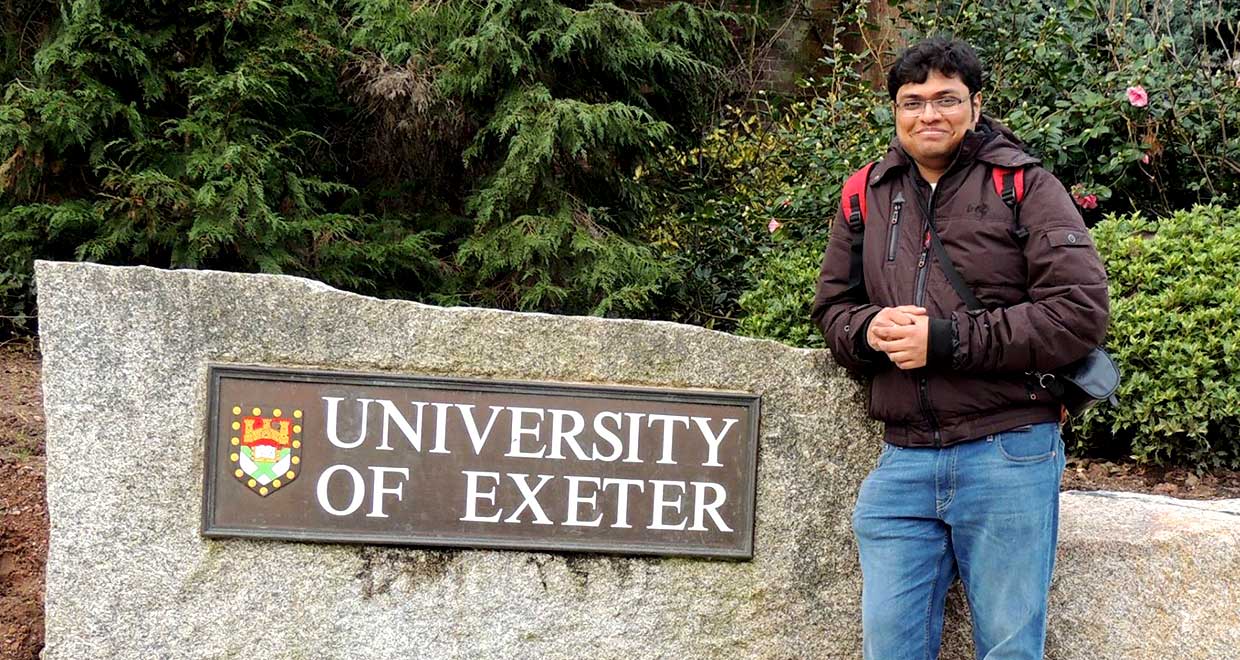
    Avik Ghatak, Advocate, Criminal Law, on Litigation and LL.M in Human Rights Law from Univ of Exeter

    Avik Ghatak graduated from Jogesh Chandra Chaudhuri Law College, Kolkata in 2011. He started his legal career as an Advocate in the Sub-Divisional Court of Asansol and District Court of Burdwan. Thereafter he pursued Masters from University of Exetor, Devon in International Human Rights Law. He also attended the Certificate Course on International Humanitarian Law organized by the Instituto Internazionale di Diritto Umanitario in San Remo, Italy and Geneva. He has also published numerous papers and currently practises at the High Court at Calcutta.

    In this interview he talks about:

    • Law college experience at JCC Law College, Kolkata
    • Masters at University of Exeter, Devon
    • Publishing various papers
    • Building a career in criminal law litigation at the Trial Courts


    Please introduce yourself to our readers. Tell us a little bit about your childhood and your background?

    A warm hello to all the readers of SuperLawyer. I am Avik Ghatak and I am an Advocate at the Hon’ble High Court at Calcutta. It gives me immense pleasure to be able to reach out to all the readers of this forum and share my views and experiences with them.

    I was born and brought up in Asansol in the state of West Bengal. I studied at St. Patrick’s Higher Secondary School till class X and completed my higher secondary from Burnpur Riverside School.

    After that, I had gotten through to Symbiosis Law School, Pune for my LL.B., but decided to pursue my graduation from Jogesh Chandra Chaudhuri Law College, under the aegis of the University of Calcutta..

    I started my career as a junior advocate at the chamber of Mr. Somenath Chattaraj at the Sub-divisional Court at Asansol.

    Occasionally, I also had the opportunity to appear before the District Court at Burdwan, West Bengal. After a year of practicing as a litigator, I got through to the University of Exeter in the U.K., from where I completed my LL.M. in International Human Rights Law. After completion of the same, I re-joined the profession and started practicing at the Hon’ble High Court at Calcutta.

    While being able to give relief to clients gives me an immense satisfaction as a litigator, academics too, continues to interest me to no end. After having completed a Diploma in Cyber Laws through the distance mode, I was fortunate enough to be able to get the opportunity to attend a short certificate course in International Humanitarian Law last year.


    Do you have lawyers in your family? Would you say your parents were instrumental in your decision to pursue law?

    I am the 4th generation in a line of advocates. There is no dearth of advocates on my mother’s side too. My mother is also an advocate while her elder brother is an Ex-Judge of the High Court at Calcutta and his elder daughter, i.e. my cousin and her husband are advocates too.

    As interesting as it may sound, neither of my parents wanted me to pursue law as a career. In fact, I had decided on leaving Symbiosis Law School after getting through to the same, and joining the University of Calcutta, since I thought that Kolkata would be a better place to prepare for the engineering entrance exams that are held in the state. However, fate had other plans in store for me. By the end of the 1st year of LL.B., I was so interested in the subject of law, that changing my stream was no longer an option for me.


    Your father, Mr. Moloy Ghatak is a prominent lawyer & former Law Minister of West Bengal. How did he influence your career as a mentor? Did you get to hear legal discussions right from your childhood days?

    Considering the fact that almost my whole family is comprised of advocates, including both my parents, there is no denying that I did in fact, come across legal discussions and terminology from a very young age.

    Ever since joining practice, my father has been a source of constant support for me, whether as a senior to consult or a mentor to guide me through the times when I have come under duress. He has always been my idol as a human being. Now, his success as a counsel is also something that I look up to and would like to replicate in the days to come.


    Your father is also an MLA and a member of All India Trinamul Congress party (TMC). Did you ever think of joining politics?

    Like in advocacy, my father is not the first politician of our family. Politics in our family, to the best of my knowledge, goes back even further than advocacy. Inspired, as most young minds are during their college days, by such a background and charged with thoughts of revolutionising the prevalent scenario, I did dabble in college politics for a couple of years before realization dawned on me that politics is most certainly not my cup of tea.


    How would you describe your time at Jogesh Chandra Choudhuri Law College (affiliated to Calcutta University)? Please share some memorable experiences of your college life.

    In two words, it was life changing. I went to J.C.C. Law College as someone who was more interested in preparing for the engineering entrance exams next year. At the end of the 5 years there I was convinced that I would have had committed the greatest blunder of my life had I not decided to pursue a subject as interesting as law. The credit of making someone pretty disinterested in the subject to actually start loving the same goes completely to our professors and lecturers.

    There are probably too many memorable experiences to write home about. Among them, the experience of organising an art and craft competition for the students, re-launching our College’s law journal after a gap of a few years and winning the Moot Court Competition at Hazra Law College, would probably take the cake. Also, our very first class at college, where we were given a lecture by the then Principal of J.C.C. Law College, Dr. Manik Bhattacharya, remains a memorable experience for me. His statement that those coming from families having legal backgrounds ought not take success for granted since expectations from them would be sky high and almost impossible to meet and his quip that ‘A successful advocate barely ever enjoys his life and it is rather his children who do so’, shall remain etched in my memory for a long time to come.


    In Calcutta, universities are always charged up with a political atmosphere. How was your experience in such an atmosphere?

    Yes, I was indeed engulfed by such a political atmosphere and activism till I called quits sometime later. It is perhaps better to enter politics when we have something to give to politics rather than the other way round. The best example that comes to my mind is my father, who established himself professionally before taking the plunge. Another person from our very own High Court would be Mr. Kalyan Banerjee, who rose to the pinnacle of success as an advocate before deciding that it was time enough for him to become a legislator from a litigator.

    My experience in the midst of such an enlightened community of people, as I stated earlier, was very enriching, not only academically but also through the lessons of life that I had the opportunity to learn during my years at the University of Calcutta.


    You have nine publications in various renowned journals. How should one go about writing papers and getting the same published?

    The first and foremost thing that one should keep in mind when one intends to write a paper is whether the question that he/she seeks to answer through his/her research work or the topic he/she wishes to deal with is feasible or not. Being over-ambitious is of little help since choosing a vague or a wide ranging topic would pose significant problems for the author of the paper in collecting primary data. More importantly, to be able to collect and collate such a huge amount of information within the restricted number of words, as most journals tend to have a word limit for the submissions that one makes to them, would become that much tougher if the topic is not precise and focussed. A research paper also needs to be structured in the sense that one needs to be able to clearly define what one wants to say through the paper. The cardinal rule while writing a paper is to always remember that each line and each paragraph in the paper must be related to the question one is trying to answer in the paper.

    Also, last but not the least, there is no use in giving a long winding introduction or in merely compiling existing information vis-a-vis the topic you have chosen. What is rather of more importance is to be able to do some analysis of your own and preferably coming up with some suggestions on how to improve the law and/or the policy dealt with in your paper so that the law/policy is better adapted to the needs of an ever changing world/ society.


    After your graduation in graduating in 2011, you have started your criminal law practice at the Sub-Divisional Court of Asansol and also practised at the District Court of  Burdwan. What did you gather from your experience at the trial courts?

    On seeing most of my friends joining the High Court directly, I had been a bit averse to joining the lower court before making the switch to our state’s only constitutional court. It was on my father’s insistence that I went back to my hometown to start practicing as an advocate at the sub-divisional court situated there. And now I realise that it was a very good decision since when practicing at an appellate court, like the High Court, it is very necessary for you to be having a clear idea about the procedures of the trial court. And that is exactly what you gain if you practice at the lower courts, at least for some time, before making the switch to the higher courts, whether at the state or at the federal level.


    What influenced your decision to start your criminal practice just after graduation?

    Criminal law has always fascinated me. Not surprisingly, it had been my forte at college as well. Also, both my parents were criminal law practitioners. It is perhaps a combination of the above stated factors that influenced me to take up criminal law practice immediately after graduation. I would, however, also like to state that I consider these divisions in legal practice to be very artificial. This is especially true in the backdrop of the fact that at the graduation level we study all the major laws and as advocates, we are supposed to have a basic understanding of all or at least, most of them, even if we cannot claim to hold sway over all of them.


    avik-ghatak-2

    At what point did you decide to pursue your Masters at the University of Exeter? What was your motivation?

    It was after spending some time in legal practice that I had a lingering feeling that I still had some academics left in me. A few publications, especially a couple of them in a law journal published by the reputed and respected Common Law House publishers in Kolkata, further fuelled my thoughts in this regard. Aniket Mukherjee, one of our family friends and also a senior at J.C.C. Law College, who had himself completed his masters from the U.K., inspired me to go for an LL.M. One thing led to another and I landed up at the University of Exeter pursuing my Legum Magister.


    How was your experience at Exeter University?

    The experience at Exeter was vastly different from anything that I had come across in India during my graduation days. To begin with, there were no written exams for the subjects (referred to as modules therein) and hence no concept of buying the last ten years question papers and memorizing the answers . However, the absence of written exams did not mean unlimited free time since we were required to submit research essays in all the subjects we had chosen. Legal education over there depends much more on research work and analysis than over here. So, in a way, there weren’t too many shortcuts or last night studies. The path to success lay in the library, if I may say so.

    The library was absolutely fantastic with law journals from all major legal jurisdictions and systems, including those from India. Students over there are also given access to the best online journals available over the internet. I literally had almost the whole legal world at my fingertips while studying as a student at the University.

    A multi-national teaching staff, including among their ranks, a Special Rapporteur of the United Nations Secretary General and also a Refugee Status Determination Officer of the United Nations High Commissioner for Refugees, and a similarly diverse student group, further enhanced the knowledge exchange process. That is something that is available at only very few law universities in India.


    Why have you chosen International Human Rights as your specialization for LL.M?

    Most of whom I know to have done their LL.M., have pursued International Business Laws or International Commercial Laws. Perhaps it is more lucrative in terms of job prospects. But somehow, interest in this particular branch of law continues to elude me till date. International Human Rights Law was thus, pretty much an obvious choice since international law and human rights had been as close to my heart as criminal law.


    How difficult was studying abroad in terms of finding accommodation, finances and settling in?

    I shall begin with the last issue put forth in this question. Settling in was never a problem in the U.K. since they have a multi-cultural society with people from various countries and cultures residing therein for a long period of time. Racism is down to a near zero. All my concerns regarding whether I would be able to integrate into the society over there or not, were laid to rest pretty soon after my arrival at the University.

    Finding an accommodation hadn’t been a problem since I had put up at accommodation provided by the University.. However, when I decided to move out, it proved to be a tough task since as per the agreement with the University, one has to get someone who, at that point of time wasn’t staying at any of the University provided accommodation, to take your place or to continue to pay the entire fees for the University accommodation for the whole year. Fortunately, I did not have to wait for long to get such a replacement. However, my suggestion to anyone reading this and contemplating to pursue his/her LL.M. abroad, would be to decide beforehand as to whether one would like to stay at University provided accommodation or at an independent accommodation because once you ink the accommodation agreement with the University, the way out of the same could be very tough and not everyone could get as lucky as I did in getting a replacement who matches the terms of the agreement.

    Lastly, it is a known fact that studying in the western countries is a much costlier proposition than studying anywhere in India. Hence, prospective students would be better advised to look for scholarships, if the same is on offer. Over and above the same, perhaps putting up at a shared accommodation and not spending too much on travelling, a natural attraction for anyone going abroad for studies, should do the trick as far as the finances are concerned.


    avik-ghatak-3

    You were as one of the 50 professionals from around the world to attend a Certificate Course on International Humanitarian Law organised by the Istituto Internazionale di Diritto Umanitario in San Remo, Italy and also in Geneva. How was the overall experience? What was this course all about?

     I had been fortunate enough to be sent, along with 15 others from my University to attend the 82nd session of the United Nations Committee on the Elimination of Racial Discrimination and the 54th session of the United Nations Committee on the Elimination of Discrimination Against Women at the United Nations Office at Geneva in February, 2013. It is over there that I came to know about the Istituto Internazionale di Diritto Umanitario in San Remo, Italy. The Institute primarily deals with the military personnel from around the world, training them in the rules of engagement in accordance with International Humanitarian Law. In order to achieve their aims in this regard, they work in close collaboration with the likes of the International Committee of the Red Cross and has operational relations with the likes of the European Union and the N.A.T.O. They also organise a handful of courses for civilian personnel and I was fortunate enough to be selected to one such certificate course on International Humanitarian Law.

    The experience of being able to come into contact and converse with military personnel, diplomats, professors, personnel from the UN and other international organisations such as the International Committee of the Red Cross, Amnesty International, Caritas etc. and lawyers drawn from a pool of countries spanning over all the continents on earth is something that perhaps cannot be expressed in words. Understandably, it was a very enriching experience.
    The course was on Humanitarian Law wherein the functioning of the same was explained to us by various military personnel and jurists, including Special Rapporteurs of the United Nations Secretary General and Judges of international courts, at times, through exercises resembling real life decision making inside the battle command centres. Also, the relation that Humanitarian Law shares with Human Rights Law, International Criminal Law and as well as International Refugee Law was explained at length, over the course of two weeks.


    You currently practice at the Appellate side of Calcutta High Court. How is the work atmosphere at the High Court presently?

    As time progresses, our society is faced with newer challenges that are to be overcome. And in an attempt to do that, new laws are enacted by our legislatures or amendments are made to the existing ones. More the number of laws more would be the number of litigations though there may be certain exceptions. Hence the scope for private practice at the High Court is better than ever before and I am of the firm belief that the best days are yet to come. So, under no circumstances would I say that it has become more difficult for a fresher to be successful.
    As far as the atmosphere is concerned, having practiced at other lower courts in the past, I have found the High Court at Calcutta to be much friendlier to new comers than most other places. Most seniors are more than willing to help out the juniors when the juniors find themselves on a sticky wicket. And it is not as if they do so with an expectation of getting briefed by the junior concerned. I, for example, have been fortunate to have had worked with a senior who not only allowed me to brief other senior advocates, if the clients so wished, but also to appear against him in matters where, by a stroke of fate, we ended up representing opposite parties in the same case.

    It would be advisable for a fresh graduate to not expect a huge amount of money in his bank account at the end of every month, at least for the first few years of his practice career. Advocacy surely isn’t the place where one can rake in the money right from the word go. One would do better to do away with any vanity or air of superiority and get his head down into becoming a good clerk to begin with. In the words of my senior at the Asansol Court, ‘One has to first become a good clerk if one is to become a successful advocate later on.’ Basically, one would have to know the procedure of the Court inside out before concentrating on the laws since knowing the procedures himself/herself would make him/her less dependent on others in basic matters such as those relating to the filing of a case, for example. Next comes the knowledge of law and the finesse of arguing a matter in the court, both of which one learns over a span of a life time. There are barely any last minute quick fixes or short cuts to success in this profession.


    Many law students prefer corporate jobs over a career in litigation. What is your take on this? Is it better to work in the corporate sector for a few years before starting litigation?

    A High Court Justice had once famously quipped that he is proud that his college produces eminent lawyers and jurists instead of producing ‘corporate slaves’. An ex-Supreme Court Justice, while in conversation with a representative team from our college had stated that he felt that the corporate lawyers contribute nothing to the legal field in terms of legal jurisprudence and interpretation of the laws.

    Such views, though, are generally restricted to our previous generations. Being someone from a generation, a good chunk of whose members have gone into the corporate sector or into law firms, I don’t possess such a traditional view in this regard. In fact, I do understand that in the initial days, a corporate job does seem to be much more lucrative. We are also in an age when most of our friends who go into other streams, especially engineering, get corporate jobs immediately after graduation and their lifestyle and economic stability does appeal to students of the legal field too.

    Also, some students may actually need the economic support in the form of salary that one would get on joining a corporate job or a firm after passing LL.B. That is something that advocacy, by and large, would fail to provide you with during the initial days. Also, some may not want the daily hassles and the schedule less life that comes along with a career in litigation. Hence, corporate jobs for those in the legal field is also a necessity in today’s age, as it provides an additional career option, and a pretty good one at that, to the law graduates.

    I do not have any previous experience of either interning or working in the corporate sector and hence I may not be the best person to be speaking to in this regard. However, to the best of my belief, I do not think that working for a few years in the corporate sector before starting a career in litigation would make much of a difference, especially since the nature of the work that one does at the corporate sector is vastly different from the work that one would be required to do in litigation. One’s experience in the corporate sector is useful for a career in litigation or not, would perhaps depend on how much exposure one gets to the proceedings of the courts during one’s work as a corporate lawyer. However, the experience relating to the drafting of legal documents that one would be required to undertake in the corporate sector is surely going to come in handy even in litigation.


    How did you get to connect with your clients? How many years of practice do you think would be required to build a firm clientele?

    I believe that working at the lower courts at Asansol, Durgapur and Burdwan went a long way in increasing contacts among the advocates practicing over there. And once I shifted to the High Court, advocates from these places found someone they knew and had worked with, to send their cases to, if and when they needed to send some matter up to the High Court. I also make it a point to visit the lower courts in and around Kolkata on a periodic basis, if and when an opportunity to do so presents itself before me. Such visits however, are never at the cost of my work at the High Court since that is my primary place of work.

    As far as direct interaction with the clients is concerned, one has to remember that most of them come to us only when they are in distress and hence, they may seem to be a bit repetitive with their questions at times and at other times, they may seem not to be able to understand your point of view due to a multitude of reasons including their general lack of legal knowledge. One would do better to keep one’s calm under such circumstances. Ultimately, no matter what one says, even the clients understand that you may lose a matter after all. What matters is that they should be able to see in you the intent to give it your best. Good behaviour with clients is a must because our very profession, after all, is in existence to help them out with their legal problems.

    As far as the number of years it would take someone to build a firm clientele is something that would vary from advocate to advocate and there is no straitjacket answer in this regard.


    How is your experience so far? What is your workday like? Are there new challenges every day or did work fall into a predictable pattern?

    My experience at the High Court has been exciting, complete with its share of ups and downs.
    I tend to reach court a little early, i.e. within 9:30 to 10:00, a habit that was inculcated in me by my senior, Mr. Debasish Roy, when I had joined the High Court. After completing Court in the evening I tend to be able to come back home if there are no conferences and dive headlong into studying for the cases scheduled to come up for hearing on the next day or draft documents that are to be filed in the days to come. If however, I am required to meet some senior for any conference then the time by which I am able to return home completely depends on the timing of such a conference.

    Once in this profession, one has to be ready to attend conferences that are held at the convenience of the seniors, whether they are held at midnight or before sunrise in the morning. Life, effectively becomes schedule less. But then, that is part and parcel of advocacy.

    My grandfather used to say that every day is a battle for an advocate. Quite obviously, when you are engaged in a battle on a daily basis, things would not tend to be predictable at all. Two cases may be similar but no two cases are ever the same and hence predictability is not something that one can come across in this profession since each case requires individual care due to its uniqueness, thereby throwing a new challenge at the advocate handling the same. The only thing predictable about a day in an advocate’s life is perhaps that it would be unpredictable.


    What would be your parting message to law students who want to litigate just after graduation?

    Hard, though intelligent work, an indomitable appetite for legal and as well as other related knowledge, loads of patience and humility can and is bound to lead to a success story after a certain point of time. Those coming into litigation must keep in mind that it is not for nothing that we are referred to as ‘Learned’ advocates from day one. We have to behave and act as learned people if we are to do justice to our profession.

    Having said that, I would like to wish all the best to all the law students wishing to become legal practitioners after graduation.

    Last, but not the least, I would also like to say, in the words of my mentor Mr. Protik Prokash Banerjee, ‘Welcome to the Glorious Uncertainty’.


  • Subhojyoti Acharya, Team Manager at Credit Suisse Trust on work with Clutch Group, LPOs and HSBC

    Subhojyoti Acharya, Team Manager at Credit Suisse Trust on work with Clutch Group, LPOs and HSBC

    subhojyoti-acharya-2Subhojyoti Acharya graduated from Faculty of Law, University of Calcutta in 2008. He is a Certified LPO Professional (CLPOP) from Lawave. He is also a Certified Anti-Money Laundering Expert (CAME) and Forensic Accounting (CFAP) from Indian Forensic. Additionally Subhojyoti is member of ACFE (Association of Certified Fraud Examiner, TX, USA) and member of ACAMS (Association of Certified Anti Money Laundering Specialist, FL, USA). He is also member of Indian Council of Arbitration (ICA) and Bar Council of India (BCI).

    He started his career with Clutch Group LLC in Due Diligence services, Legal Research and Compliance, Legal Off-shoring, Document & Contract Review, Contract Management, Legal and Compliance Research & Writing, Litigation Support, ediscovery, Document Redaction, KYC research, Due Diligence and Legal & Regulatory Compliance Services, Competitor Analysis, Anti-Fraud Investigations and AML compliance.

    Later, he joined HSBC ‘s Global Banking & Markets acting as Senior Associate in Due Diligence & Regulatory Compliance Service (KYC) on behalf of HSBC Bank globally.

    Now he is associated with Credit Suisse’s Private Banking Wealth Management Division catering Credit Suisse Trust as Team Manager. He is responsible for Legal Research, Market intelligence, regulatory, legal and tax environments, AML and Anti-Fraud Analysis.

    He is familiarized with Legal and Regulatory Compliance (KYC / Due Diligence) norms, Legal & Regulatory Research and Analysis. Anti-Fraud and Anti Money Laundering monitoring, Customer Due Diligence (CDD), Sanctions Reporting, PEP Screening etc.


    Tell us a bit about your childhood. How did you decide to study law? Did you have lawyers in your family?

    I belong to a closely-knit Bengali family in Kolkata, I have always fancied the idea of becoming a wildlife photojournalist contrast to any sort of corporate captive, not to mention my keen interest in the outdoors and nature’s wonders. However, my ideas changed with time and maturity. I was enlightened further by an article ‘Career in Legal Industry’ sometime when the national law schools were making their way into the legal education system – I was hugely motivated by the fact that studying law not only meant a career in litigation in the courts, it’s far beyond, it’s open and high-minded.

    I will also like to include here my grandfather who was a renowned advocate in the Calcutta High Court which, I assume, to have further contributed to my thin line of inherited passion for the subject eventually leading to a career choice.


    Do you think having family members or mentors with a legal background help in this profession?

    Strictly speaking having a strong legal background, although is not a condition precedent to excel in this industry, nevertheless it is always a cushion of comforts for the individual planning to embark on an independent practice to have a legacy to fall back on, in terms of knowledge, exposure and ready-reckoners during the initial rough days. Standing at this juncture of time, I strongly feel that the time has come when law is not just a profession; it is a challenging career option requiring demonstration of high entrepreneurial abilities and resourcefulness.


    You have graduated with B.A. LLB.(Hons.) degree from Calcutta University in 2008. Tell us about your law school experience. Share some highlights from your college days that shaped you as a lawyer.

    Like any other govt. funded institute, Department of Law, University of Calcutta had its own pros and cons. But I had been extremely fortunate to rub shoulders with rather a few well-versed lecturers and some highly ambitious and well-informed fellow mates who were keen to explore the diverse career opportunities after graduation from a global stand point.

    As a student, I voluntarily pursued a number of internship opportunities in various environments, like, law firms, NGOs, corporates, IP attorneys and finally in the Supreme Court of India. This not only provided me with the required level of perceptibility and confidence but also helped me to align myself to a specific career objective that I was not too certain of, until then.


    What do you feel about the perception that students of certain ‘elite’ NLU’s have a much easier time in kick-starting their career as compared to law students from other colleges? Is this true at all?

    Even in the era known for the thriving presence of various National Law Schools, I consider myself privileged to be part of Department of Law, University of Calcutta. There were definitely challenges with regard to infrastructure, quality of academics, overall growth and development as compared to National Law Schools or any privately managed institutes; conversely these have always helped me in becoming a thoroughly self-motivated, highly innovative and painstakingly diligent – I could discover myself having stupendous entrepreneurial abilities at a grass root level.


    After graduating from University of Calcutta, you joined Clutch Group as a Legal Associate. How did the appointment take place? What comprised your work at Clutch Group?

    After graduation I had almost made my mind to be a part of the dynamic corporate world and to achieve this I was looking for a global brand, something that would provide an exposure and some networking opportunities with legal attorneys outside India.

    In 2008, LPO was still a developing concept in India but I thought to take a plunge and taste the untasted. One of the project leaders of Clutch had come across my profile in LinkedIn and put up a call with me for an evaluation discussion which resulted into her being persuaded by my enthusiasm, interest and hunger to learn.

    In Clutch, I started with document reviewing, much later, I shifted to contract management, legal research and quality analysis of perennial projects as a part of pre-litigation motions in US court of Law.

    It was my first company and I was overwhelmed with the opportunities to work closely with US licensed attorneys (as I initially thought, or rather dreamt) and I was learning to understand their code of professional ethics and culture.


    Thereafter you worked as a Senior Associate in the Due Diligence & Regulatory Compliance Service at HSBC Bank. What was the nature of your work over there?

    HSBC was a giant leap – indeed a turning point of my career, which in due course mended ways for me to venture into the world of regulatory compliance and Anti Money Laundering framework – something I find hugely interesting.

    The business, at that point of time, required a legal expert who could leverage upon his analytical and logical reasoning skills requiring a lot of decision making in the end. The role demanded attention to details, strong networking abilities, unparalleled risk assessment skills, a thorough understanding of various international and well as local policies, rules, legislature and global economy.

    My role revolved primarily around Client Due Diligence, KYC Screening, AML Checks and Risk Analysis for the investment banking clientele of the bank. The clients included a diverse list of body corporates, FI, NBFC, ministries, funds, SPV, trust, partnerships, charitable units and etc. across various jurisdictions.


    In the meantime, you have pursued two Diploma courses. One is from NALSAR, Hyderabad with a Post Graduate Diploma in Media Laws and another is from Symbiosis, Pune with a Post Graduate Diploma in Business Administration. What is the reason behind pursuing these courses? Was it a professional requirement to enhance more in your career?

    In short, as a professional from a dynamic industry, one always needs to constantly update and upgrade his skills, level of specialization and expertise in order to fit into any competitive environment and from a business perspective, to maintain a consistent edge over the others. A modern day business demands a multitasker along with specialised and diversified knowledge.


    You did couple of certificate courses throughout your career. Do you think these certifications have sharpened your skills more as an LPO professional? You are also a Certified Anti-Money Laundering Expert. Please tell us something about this certification in to our readers.

    Any certifications have two fold objectives. Firstly, it upgrades your basic knowledge to a specialised skill and secondly it presents one’s specific potentials under an acceptable standard to the rest of the world.

    LPO certification was achieved during my last leg of graduation which I believed to have provided some kind of superiority at the time of my on-boarding procedure in the very first organisation.

    I am a Certified Anti Money Laundering Expert (CAME) from India Forensic and also I hold individual membership at Association of Certified Anti Money Laundering Specialist (ACAMS) from the U.S. This is closely related to what I do now and it has helped me developing my improved understanding on the subject.


    subhojyoti-acharya-3Currently, you are pursuing a Certificate course in Wealth Management. Please tell us about this certification to our readers.

    I have completed my Certification in Wealth Management from the Association of International Wealth Management of India (AIWM).

    This certification may help the professionals (who are part of NBFC or Banking Industry) to understand the financial market and the nature of various products that are on offer, regulated and used from a general standpoint in order to be familiar with the wealth planning industry and requirement of HMWI/UHNWI.


    You thereafter left HSBC to start working at Credit Suisse in their Legal & Regulatory Compliance Research, Private Banking & Wealth Management as Legal Head. What prompted this switchover?

    As mentioned earlier I was catering to the Investment Banking sector in HSBC and was curious to understand the Private Banking landscape of a global financial service sector. As all know Credit Suisse is world’s most admired private bank hence I considered myself blessed to get an opportunity to exploit the area, to know the spirit and functioning of a Swiss Bank and the legal and regulatory environment in which the business operates.

    This was again a calculated risk to relocate from Bangalore to Mumbai, which eventually paid off in style.


    What does your current work profile at Credit Suisse consists of? How is a typical workday like?

    Currently, I lead a team of lawyers from Mumbai office of Credit Suisse Trust, which is wholly owned subsidiary of Credit Suisse Group head quartered in Zurich, Switzerland. Credit Suisse Trust a is part of Private Banking and Wealth Management Division of the bank which provides tailor made inheritance and tax planning services to its HNWI/UHNWI clientele.

    The team collaborates with trust lawyers and legal & compliance officers of the bank and supports them with complex tax research, AML alerts, trust legislation updates, data protection and privacy laws monitoring, FATCA (Foreign Account Tax Compliance Act) legislation implementation and in the area of AEOI (Automated Exchange of Information).


    You are a certified LPO professional. Would you say that the work environment at an LPO is completely different from a Law Firm?

    LPO is a complete different set up as compared to a regular law firm and therefore drawing a comparison chart between these two industries will be unfair and unjustified. A young law graduate before choosing from either of these two dimensions needs to decide how he or she wants to shape up a career in law. A frequent switch between these industries may make one’s career foundation frail, therefore not advisable.


    Any plans for an LL.M abroad? What are your long term goals?

    Right now I don’t have one as my current area of expertise and specialities may not demand the requirement of a LL.M degree, but I have kept the option open for future and would love to do that from a foreign university, but of course on a distance learning mode.


    Lastly, what would be your message for our readers?

    Well, from whatever I learnt and experienced from my six plus years of professional career is if someone can identify what he loves doing and if he can transform that dream to reality as a source to earn his living hood then sky will be the limit for him and happiness would know no bounds.

  • Protik Prokash Banerjee on dealing with success and challenges of a litigator, mettle of law students and opportunities at the Calcutta HC

    Protik Prokash Banerjee on dealing with success and challenges of a litigator, mettle of law students and opportunities at the Calcutta HC

    protik-banerjee7Protik Da talked to us earlier on studying law, career of a litigator at Calcutta High Court and building clientele. This time we requested him to delve more deeper into the nuances of the legal profession. Success, failure, challenges and how he took them on his stride.

    In this interview he shares his insights of:

    • Dealing with challenges and successes
    • Having a few landmark judgments to his credit
    • Difference between the regular and the ‘elite’ law students
    • Opportunities at the Calcutta High Court for an young lawyer


    It is 19 years of your illustrious practice at the Calcutta High Court. You must have encountered difficulties few and far between your successes. What were the most taxing challenges you ever faced? And how did you overcome them?

    The worst challenge I faced was in my early years. I had to appear to argue a Second Appeal before a Division Bench presided over by a very conservative Judge who had, before elevation, a roaring civil practice. The gentleman was so old school that he believed that no junior should argue a second appeal at the stage of Order 41 Rule 11, Code of Civil Procedure unless he had at least ten years’ practice; by that time of course, you were not a junior anymore. He also felt that juniors should lose in his Court at least thrice before they were entitled to an order. The first might have been justified considering the difficulties involved in arguing a second appeal at the Order 41 Rule 11 (popularly but wrongly called ‘admission’) stage, but the second was really tyrannical. I was constrained to argue the matter because the client was standing in the Court room and did not want me to take an adjournment on the ground of the absence of the learned Senior Advocate who had been briefed to lead me.

    The Hon’ble Division Bench first asked me whether I wanted an adjournment; naturally I said I would argue, though I was led by a Learned Senior Advocate. The Judge became very irritated and asked me whether as a Junior I thought I knew enough to argue on a substantial question of law. When I persisted politely, he visibly gnashed his teeth and asked me to begin. He did not look at me or the brief but kept staring out of the window. After gamely going on for an hour, I stopped. He asked me if I had anything more to say. I naturally said that I had completed. He dictated a judgment which did not reflect anything I had argued. It was a rather brief Order by which my second appeal was dismissed on the ground that no substantial question of law was involved. He was the Senior Judge. The Hon’ble Junior Judge, as is customary unless there is strong reason to dissent, indicated his agreement. I came out of the Court Room almost in tears. My client went to Supreme Court. He won there.

    Another time was when I confessed before a Court that my client really had no point on merit but only technical grounds to justify his refusal to allow his tenant to have a separate meter in his name. My client had issues with the tenant and wanted to evict him. The Court became livid since according to it, I was no one to judge whether or not my client had any point on merit, but that it was his duty as a Judge. He recorded my submissions and allowed the writ petition (where I was the private Respondent) and ordered that my client was to pay costs assessed at Rs.5 lakhs each to each of the Respondents and the writ petitioner.

    There were eight respondents apart from my client and one writ petitioner so in effect it was an order for payment of Rs.45 lakhs. This was in the year 1999. It was a big sum in those days. I came out of the Court room stunned, and sat down on a chair outside. I was still dazed when a learned Senior Advocate of our Court, Sri Bikash Bhattacharya, put a hand on my shoulder. I jumped up, to offer him the seat but he forced me to remain sitting. “It’s a blessing in disguise”, he said “now you will easily get a stay from the Division Bench. You can’t just appeal against costs so you will have to appeal against the entire order. Normally with your case you would have lost anyway. Yet now the amount of costs will make the Division Bench be sympathetic.” It worked out exactly in that way.

    My difficulties – then and now – can be summarized in two words. Bad habits. These have ruined my health. Working without sleeping, sometimes without eating and mostly eating the wrong sort of food at odd hours have made it impossible for me to attend Court as regularly I would have liked. Then again, because of my late hours and the consequential effect on the offices of privy, I do not always come to Court on time. These made many learned advocates feel chary about briefing me. Perhaps the worst thing was my substance abuse. I used to drink very heavily and there were times till 2001—2002 when I drank a litre of single malt every day and two litres on Friday evenings. I used to work on, but naturally people get very anxious if they come to brief a lawyer and find him reeking like a distillery. Together these things brought my practice down to nil thrice in these last nineteen years. The fourth time was deliberate, when I became the Standing Counsel for the State of West Bengal. I took a conscious decision to limit my private practice to drafting pleadings, petitions and affidavits in matters where the state government or its agencies were not parties. These three years the challenge was subsisting on the meagre amounts that the government paid, very irregularly, without bringing down my accustomed standard of living. My bank account took a huge blow from which it is yet to recover!


    You became a Govt. Counsel in 2011. What does it take to represent the Govt.? What were the main areas of your expertise you were banking on as a Govt. Counsel?

    I do not claim expertise in anything at all. I am a competent draftsman, and I can speak in English. I read a lot. These are what any lawyer would require to practise law. I had some experience in banking law and interlocutory matters (applications made while a suit is pending, seeking receivers, injunctions and various other interim reliefs and relating to the suit) and I had done some arbitration and winding up proceedings, and I had appeared in quite a number of writ petitions, but these were not what I banked upon. I relied upon my basic honesty and the willingness to learn from anyone.

    I do like the complex laws relating to land in West Bengal. I was briefed in matters of various types, but of these I liked to do land matters most. At one point of time I was briefed in almost all the important land matters of the day. I was also involved in a lot of police inaction or police harassment cases where in my own way I tried to ensure that justice was done and even the writ Petitioners accepted that the State was fair in its treatment.

    To represent the government you need to develop the ability to work for very long hours without getting paid, working on sketchy instructions given by pen-pushers to whom either nothing matters or who are so committed that they stay awake night after night trying to help counsel though they do not get paid anything extra for it. You need to have patience and good manners so that the officer who has come to brief you and who may be your father’s age, does not feel insulted by your behaviour. He calls you sir because your position demands it, but you should also show him the respect that a man of his age or designation is accustomed to. Many of my colleagues working for the government took pride in the fact that they treated Secretaries of Departments and Directors of Directorates like dirt. The way they behaved with lower division clerks – who in most cases know more about the law relating to their department than qualified lawyers – would make you puke. I tried, during my tenure, to treat them exactly as I treated any other client or client’s officer from my days of representing corporates. Perhaps it helped.

    When I left my government position I was humbled by the number of people who expressed their regrets – from my juniors in the government panel of lawyers to the high officers of State whom I had represented and even the staff of the Advocate General’s and Standing Counsels’ offices. This is what I carry with me – the good wishes and blessings of those with whom I have worked. In the end – apart from character and providing for your family – perhaps it is all that matters.


    You have a few landmark judgements to your credit. One which I can readily recall is about amenability of arbitration to the High Court. How does it feel to have a landmark judgment to your credit? Do you think achievements like this can change one’s recognition drastically?

    Landmark judgments do not do much for the client except immortalize his name. Most of the landmark judgments result in a loss for the petitioner. Look at Keshavnand Bharti, Maneka Gandhi or even Olga Tellis. In each of these cases important principles of law were laid down, extolling the Rule of Law, Natural Justice, Basic features and the right to livelihood. Yet after laying down these principles which are vital for any libertarian democracy – the petitioner lost the particular case. Maneka Gandhi’s grievance was held to be one which could be redressed by a post-decisional hearing, the eviction of the squatters was upheld in Olga Tellis and even in Keshavnand Bharti, in the ultimate analysis, I think the Petitioners lost. That is my view.

    The one you referred to is Unik Accurates—v—Sumedha Fiscal. It was the first time that a High Court decided that an arbitral tribunal is amenable to the jurisdiction of the High Court under Article 227 of the Constitution of India. Of course now it has been modified somewhat by the larger Bench of SBP—v—Patel Engineering, where the Supreme Court has laid down that so long as the arbitration proceeding is pending High Courts ought not to intervene due to the existence of an alternative remedy and the statutory scheme, but that does not take away the principle of law settled by the High Court, that under the Arbitration and Conciliation Act of 1996 an arbitral tribunal is a tribunal for the purposes of Article 227 of the Constitution of India, therefore the arbitral tribunal ought to be so also.

    So far oft cited judgments where I appeared are concerned I’d rather not talk about them. They are there online and in law-reports and I am sure if anyone is interested they can be found. I remember fondly only one of them, the case of Labonyamoyee Chanda where a widow of a country doctor was refused treatment and admission by a reputed government hospital on the ground of lack of ‘bed’ though she was in a moribund condition as certified by that hospital while a lady referred by an important politician was admitted immediately, just half an hour later without any bed having been vacated in the meanwhile. My client survived due to charity of people who contributed enough money to have her treated in a private establishment. What made my blood boil was that this lady’s husband, while alive, had given up a lucrative medical career in the city and had devoted his entire life as a doctor in a government hospital treating the poor and indigent but after his death without issues, his wife was treated like a pariah.

    I argued that ‘passing the patient’ was not a game that any hospital could play particularly when she was in a moribund condition and if beds were not available, she ought to have been accommodated on a trolley bed and treated immediately. We won, not merely compensation but also the price of the pace-maker that had to be installed. We were also awarded costs.

    I do not feel particularly different just because a matter which I argued later on became celebrated or is cited very often not just in Calcutta but elsewhere. I will not lie, they make me very happy – but let me make one thing very clear: celebrating reported judgments as landmarks by the lawyer who argued them is like resting on one’s laurels – and that is not the part of the body on which laurels were meant to be worn.


    protik-banerjee5

    You have indiscriminately mentored a lot of students and provided invaluable guidance to many. What are the differences that you found between students of the ‘elite’ law schools and students from other law colleges and traditional universities?

    Those who come from ‘elite’ law schools are also divided into two parts: CLAT and non-CLAT. Those from other law colleges – such as mine – feel that they have a lot more to prove and when they do internships, by and large they are far more open to new ideas and think out of the box. They are taught very little in their colleges and so they know that there is a lot to learn. They keep on ruing that they do not get well paid jobs immediately after graduation, but they are eager to practise for a few years so that ultimately they are picked up by law firms and bodies corporate who want experienced junior litigators to look after procedural matters.

    The students of CLAT law schools, by and large, are very well up on the theory of law. I have had the honour of teaching successive fourth and final year students at the NUJS and have had students from almost every national law school intern with me over the years. Most of them are very good at researching principles of law and cases, even when doing their 3rd semester. This year I wanted to see how their first year students do and though it’s too early to comment, most of them have that brightness in the eye which I want to see in every student. The one thing that I do dislike in the CLAT law school students, though, is their unconscious assumption of superiority just because they have qualified in the CLAT. As I keep on saying an examination is only a test of what you could remember and write on that day. Law as a profession demands consistent excellence every day in the year and not just one day for four or five hours. A lawyer must study. Studying is what you can do equally well while doing a correspondence course so long as you are online. Yes it is true that CLAT law schools have the best libraries I have seen. I am fascinated by the NUJS library which has both reference and text books and journals and which also has a lot of the literature of law. The students are enriched.

    The non-CLAT elite law schools leave me perplexed. Some of them charge almost what a High Court judge makes a year, boast of certifications and collaborations from foreign universities and have their own entrance examinations. They are comparatively new. I know for a fact that their faculty is usually of sterling quality but to afford the fees either you have to be uber-rich or hock your patrimony! I have trained a few students from those law schools and despite the innate goodness of children – for that is how I think of them – I have either smelt the crass stink of easy and new money or the desperation that arranging for student loans entails. I keep asking them, why do you choose to study in those places where neither top-tier jobs nor excellence in practice is certain? They really have no answer.

    I cannot conclude my answer without taking two names: Arun Krishna Dhan, whom I taught in 2006, from NUJS and who knows more Constitution of India and precedents than I did then or would ever know; Koushik Layek, also from the same batch who was the most complete (though a bit of rogue) lawyer I have ever seen. Both showed rare courage in first taking very highly paid jobs in one of the top-tier law firms in Delhi, achieving great heights of both salary and position and then remembering what I had told them about private practice, paying off their student loans, and chucking the jobs to start a private practice. Both are doing well, by God’s Grace.

    Please do not think I am partial to NUJS. I started out hating all National Law Schools, coming as I do from a law college which has a storied past but is nowhere now compared to these law schools. Yet after I went to teach at NUJS as a guest lecturer, I saw these kids first hand, participated in their joys, sorrows and aspirations…and I found something terribly strange: law students the world over are the same; unsure of the step they have taken, the so called glorious uncertainty which can change so quickly into utter failure and mediocrity. Yet they persevere. This experience made me look at National and in fact all law schools in the present light. They are what you must go through to become a lawyer and you cannot be too harsh, for life is short and as Joan Baez sang, nothing is given to man.


    What do you look for in your interns when they apply for a position to work with you? If there is someone who wants your guidance, what should she do?

    Very briefly, I do not like interns who think that they will be able to contribute to my practice or think that they know this field or that very well or want to use this opportunity to hone their skills. I like honest, brief curricula vitae (which I rarely read) and an impression that he or she wants to learn. I want my interns to work very hard when I work hard or ask them to, to play even harder when we are not working, to enjoy internship and think of chambers as a second home. It helps if they mail me or send a private message on Facebook telling me about themselves because ultimately it is a student and a teacher relationship and unless we can respect each other, there would be no process of learning as from a Guru.

    I may not answer telephones but I answer all electronic mails and Facebook and text messages. Sometimes, if the work load is brutal, it might take a few days, but I answer everyone personally. If someone has a query, and it is something I can help them out with I answer questions online personally; they do not have to intern with me for that. Yet with each intern I demand two commitments which persist even after the internship is formally over: they must keep in touch with me so long as I am alive and keep me posted about their work and they ought never to disclose what happens in chambers outside, even to their parents or best friends. This is because critical, confidential and often matters of state importance are discussed in my chambers and except for matrimonial cases I ask my interns to sit in on the conferences. If these leaked out then my clients – especially in high stake matters – would be compromised. Thankfully each of my interns – even those who did not part with me on pleasant terms – has kept this covenant.


    There have been quite a few booms and busts in the legal industry. What do you think about the future of legal education in India? How do you say a student can manage to stay ahead of the ‘rat race’?

    I do not accept that there is a legal industry in India. There is only a profession. A profession is a perennial stream. There is neither a boom nor a bust. There are only professionals who painstakingly and conscientiously do their best for their clients while jealously and vigilantly guarding the rule of law. Those who call themselves lawyers but do not do this, or are only interested in the money have no business being in this river. For them I have only contempt and disgust. These profiteers and speculators in law are the detritus and decay that every institution generates. Let them be relegated to the garbage dump of experience.

    Naturally, in the light of what I feel, the question of staying ahead in a rat-race does not arise. A student must study and acquire and assimilate knowledge. He or she must do a lot of internships to learn the practical side of law. Depending upon proclivities, the student may choose to do more corporate internships or more litigation based internships. The work that a student does imprints itself on the person who checks that work. If the work is good and the student is not obnoxious, the student will get good certificates, good recommendations and most importantly, help which is very important to a young graduate starting out on his career.


    How is the work atmosphere at the High Court presently? Do you think it has become more difficult for a fresher to be successful? What would you advise a fresh graduate as he enters the world of litigation today?

    The opportunities today in the High Court at Calcutta are tremendous and far more than before. Judges accept with good grace juniors submitting before them even on high stake matters. Youth has been given encouragement by our Full Court this year by designating several lawyers with less than 20 years practice as Senior Advocates. All that a fresher needs to know is procedure and there are many older lawyers who are helpful and will guide the junior. For this they neither charge fees nor demand a brief. I guess it is because we all know that freshers are the future of our profession and if we cannot train youngsters to be better than us then the profession as a whole would lose its lustre.

    I would advise him to read and follow knowledge like a sinking star, and perhaps to catch up with it; to learn the procedure and watch as many cases as possible to learn court craft. It would be very helpful if he devilled with a senior in chambers for a year because he would have the benefit of a guidance which I lacked. He should never put on airs, before a Judge or otherwise, but state his case simply and with conviction. If he decides to practice as an advocate on record, it is imperative to work with a solicitor/advocate on record whether a sole practitioner or a law firm, for at least an year or two and follow the solicitor’s clerk to the Department and learn the procedures of filing and taking steps first-hand. I would ask him to analyze all drafts he can get his hands upon to learn the different styles and formats for different proceedings. I would ask him, most importantly, to have patience and not lose faith. Things will work out in the end.


    You must have considered trying out different legal avenues? What are your thoughts about becoming a judge or an arbitrator?

    I have been part of an arbitral tribunal on many occasions. Sometimes I have been a sole arbitrator. Arbitration is a useful way of resolving disputes though being a lawyer in an arbitration is more lucrative than being an arbitrator. I will not recommend becoming an arbitrator by profession. It is something that a lawyer does as part of his profession but it cannot be the only profession of a practising lawyer. Retired judges make very good arbitrators since they are used to judging between man and man.

    A judge is not something one chooses to become in this country. One is asked if one is considered to be worthy. I have no thoughts of it at present except that if asked it would be an honour.


    What would be your advice to all the law students and lawyers regarding success?

    Success is relative. Everyone I know measures success in different terms. Most find success in money, some in fame and a few more in the number of people whose lives they have touched. I can only share with you my life’s lesson: read as much as you can, work hard and do your best even if it be at the cost of your health – leave the rest to God.

    In te Domine speravi non confundar in aeternum.


    You can always reach out to Protik Da on Facebook

  • Protik Prokash Banerjee, Advocate, High Court, Calcutta, on litigation, and his diverse experience

    Protik Prokash Banerjee, Advocate, High Court, Calcutta, on litigation, and his diverse experience

    protik-banerjee3Protik Prokash Banerjee had graduated from Calcutta University in 1994. Thereafter he joined the Calcutta High Court. With two decades of experience as Advocate, Protik Da, as he is fondly addressed by peers and juniors, has several landmark judgments to his name.

    In this interview we spoke to him about:

    • His career as a young lawyer at the Calcutta High Court
    • Learning from his father
    • Studying in Calcutta University


    We had far too many questions to ask him, we have published the rest of the interview here: Protik Prokash Banerjee on dealing with success and challenges of a litigator, mettle of law students and opportunities at the Calcutta HC


    What motivated you to pursue law?

    My father and mother were both lawyers.  Normally this would have been an incentive to follow in their footsteps but in my case they did not want me to be a lawyer at all.  My father wanted me to fulfil the dreams he had abandoned in order to provide for his family – father, mother, brothers and sisters.  He wanted me to be a doctor.  Like Walter Mitty, I wanted to be a Nobel Prize winning author, the Prime Minister of India, an Indian Kal El, the man who won the Nobel Peace Prize by fostering disarmament, a scientist who found the cure for cancer, AIDS and the million ills a flesh is heir to – I had also wanted to be a pilot, an engine driver, an athlete (though my immensely uncouth obese body precluded anything that physical almost at the outset) and on certain occasions both Captain Ahab and the Whale simultaneously.

    From the time that I found myself, and that was a very long time ago, I had wanted to be a professor of English Literature.  I wanted to teach English, its nuances, the stories of the world and its civilization, the fascinating myths that make up humanity and somewhere along the line I had wanted to write.  I wanted to read everything that had ever been written, etched, sculpted, typed or printed.  All of that needed money.

    My father, a Senior Advocate of the Hon’ble High Court at Calcutta, told me in Class X that I could do all of that, of course, but while he would leave me something, it would never be enough to fuel a lifestyle that could afford all of those things unless I did something sufficiently remunerative. He pointed out that a professor did not really make much money – we are talking about 1986, when it was still a Congress Majority, Rajiv Gandhi led government – and what I wanted to do needed a lot more than a salary.

    He had always wanted to be a doctor, but for financial constraints had studied law instead, and law was a good living but he did not want me join law; he said that this profession was a graveyard of many talents, and that there were few other places where there were so many educated beasts.  He wanted me to be a doctor or an IAS officer because in those days the perquisites of the latter allowed a pleasant lifestyle.

    I took a deep look at myself and found that there were only three things that I could actually do – read, write and speak in English.  All of these, including the debates I used to revel in, told me that I might make a go of a career in law.  So I decided, way back in 1986 when I was still in Class X, that I would study law and become a lawyer and practise in the High Court.

    I never told my parents this, because my father had his heart set on a medical career.  I went on to qualify in the West Bengal Joint Entrance and was just about eligible to make it to some small Medical College in the boondocks (in those days all were government colleges here) but ultimately did not submit the form at the time of counselling.  My parents ranted and raved, but I persuaded them that law was what I wanted to do and I would not have been happy as a doctor.


    How did your father’s career influence yours?

    My father practised essentially in the civil and constitutional writ jurisdictions in the High Court at Calcutta.  He was a Senior Advocate.  He met my mother in Court where she practised in the civil side and after six years of courtship they got married and she left the profession and became a homemaker.

    There are so many things that I remember about my father, as a man, as a father, as a professional (though I did not have the opportunity to work with him except in two cases), that it is difficult to choose one memory over the other.  My father’s watchword was “Maaliker Daya” (The Grace of God) and this was his favourite greeting and his answer to anyone who asked after him.

    As a father, I always thought he was the best that a boy could have.  He was a busy advocate, but in my childhood, I never found that to be an obstacle to doing things with him.  He would always keep Friday evenings free for us; that would be an evening when he would take us for a show, whether a play, a show, a music recital or motion picture, and dinner.

    When we came back, he would sit up with me and tell me stories from the books he had read.  He read quite a lot even outside law.  In fact, my long term love affair with books started because I wanted to read the originals of those fascinating stories he would tell me.  The originals were always pale copies compared to the rich tapestry that my father, a story-teller of almost Bardic imagination, would weave for me.  He would adapt the toughest of books, the most adult of themes, to a one person audience: his son.  Saturdays he would work through, but Sunday afternoons he would play cards with his friends.  He regaled us with stories about court-room battles at the breakfast table and dinner and I picked up words like ‘interim order’, ‘status quo’ and ‘caveat’ and when we fought I would say ‘You have no jurisdiction to say this’ or that “I have a right to be heard”.

    He never worked beyond 1 AM, and would, almost religiously, read fiction and philosophy, every night until 3 AM, till 2004.  Nevertheless he would be awake every morning by 5 AM, go to the market and still be in Court by 10:15 AM.  He had three passions apart from his family: books, travelling and going to the market every morning.  Later on, when he had stopped going to Court, he still kept on going to the market, but once a week instead of every day.

    For a man who idolized his father, and who in the ultimate analysis (as I understand now) chose law because he wanted to be like his father and not just for fueling a lifestyle (yes I know that I contradict myself, but I am human and what seemed to be the motivation when I was sixteen or seventeen years old, is not what I found was the real inspiration behind what I became) what happened between my eighteenth year and my thirty second?  I do not know.  For some reason, that is unclear to me even today, though my love for him did not diminish one bit, the distance between our minds grew.

    For these fourteen years, though we shared the same roof and table and went out together and shared space, it seemed to me that he did not love me.  After becoming a lawyer, he threw me out of his chambers within two months, I am sure for just cause, and refused to work with me on any brief; he refused to recommend me to anyone and in fact asked learned advocates on record who wanted to brief the two of us together to take back one of the briefs.

    His most tender comment to me, in those days, when I was hurting after having lost a case or having been lambasted in Court, and knowing that there would be no sympathy still I would grudgingly ask him where I was wrong, was not an analysis of the case and what I should have done, but a seemingly unfeeling “It’s your profession and your case.  You find out what went wrong”. He would of course blandly say what he said to everyone else “When I came to the profession, I had a skin.  Now I have a hide.  Develop a hide.”

    I thought in those days that this was rejection.  Now I know it was not.  He wanted me to make it on my own.  For a long time I thought I had.  Then I re-discovered that every breath I took, I owed to him, and not just my flesh and blood.  I discovered that the books I had read I had first found in his Library.  I discovered that the principles of law I researched and that I argued, I had first heard and retained in my sub-conscious at the dinner table; I did not really have an identity.  To most people I was still “Mukul Da’r chhele” (Mukul da’s son).  I used to resent it then.  I am proud of it now.

    I never heard a word of praise from him till 2001.  In 1998, when I had been practicing for only three years he stopped attending Court regularly, saying that he had worked enough and now it was my turn;  but from 2002 he hardly attended Court and after 2004 when he had his first heart attack, he never visited the High Court again.

    I resolved my issues with him on May 26, 2001.  I remember the date.  That too, was his gift to me.  It was he who initiated the process that brought his prodigal son back to him.  The first word of praise I heard from him was the greatest.  In September 2009, the West Bengal State Unit of the Indian Law Institute was kind enough to award me the Advocate General’s Trophy for Outstanding Emerging Lawyer.  My father had been too ill to attend so I came back with the trophy and showed it to him, ready for some disparaging remark.  The frail old man, my father, rose unsurely from his bed and embraced me.  He said “You have made our family proud.”  There were tears in his eyes.  This was the best, the highest and the most treasured compliment.

    His words of advice were “Read your brief, do not mislead the Court, do your best and the rest is upto the Court.”  I have tried my best to live by these three principles and though, unlike him, I do not refuse a case because the client is not morally in the right, I have always tried, as I once said to an opposing counsel who was elevated later on, and who accused me of only defending bad men and their acts, “My client may be a bad man, but even a bad man is entitled to equal protection of the laws.”

    Lawyers like him are rare.  A gentleman with the same humane treatment for everyone, and an unshakeable sense of what was right, with an integrity that was incapable of being dented and who never supported what he thought was unjust, in life or in law.  I know I can never be like him nor acquire one tenth of his professional stature or status.

    It was only years later that I understood that he had done all this so that I could develop on my own and not have to worry about being in his shadow.  I know now, that I can never be out of his shadow and frankly, I do not want to be.  I’d rather have him alive, casting those long shadows, than be without him.


    You graduated from Calcutta University in ’94. What was the legal profession like back then?

    The High Court at Calcutta was a wholly different place in 1994.  No junior advocate, whether he started out in the Appellate Side or Original Side, would dare to embark on his professional journey without having attended Senior’s Chambers as a pupil for at least two to three years.  Most stayed on for at least five years and did not open their mouths to argue cases until the end of that time, contenting themselves with seeking adjournments and pass-overs of matters for their Senior.

    They spent their time in the Chambers reading law from the law-reports and the text books and bare Acts, working out the cases in which their Senior had been briefed (including preparing a List of Dates, jotting down the page numbers where the material facts were pleaded and the material documents were annexed, and attempting to summarize the points of law involved and the case-laws on the point) for the first five years; if they were devilling with a learned Advocate on Record they usually accompanied the Clerk to the Department to get to know the procedure first hand.  Otherwise, they would attend Court with their Seniors and stand to one side and follow the proceedings or assist him if he so chose.  The present trend where young law graduates enroll themselves, crack the AIBE, put on their bands, morning coat and gown (most do not use wing collars like we do) and accept arguing briefs or cases from the first day, or expect to get cases from the first day and to earn from day one, was unthinkable. For me it still is.

    None of our law-schools or colleges teaches the practice of law.  They only teach the theory and in some cases the law itself.  Litigation cannot be taught in class room.  It is a profession and thus must be learnt by following the practitioners in real life.  One month long internships are not sufficient though they are a start.

    Of course as usual I did not practise what I now profess.  Since I was thrown out of my father’s chambers within 2 months of enrollment (as I wrote in the answer to an earlier question) I had to shift for myself.  I took on cases, shocked seniors with my precociousness and the arrogance of ignorance, made mistakes, got bawled out by Judges and other advocates alike, but corrected them myself after reading the law.

    In 1994 there was another thing that was different from today.  By and large the Original Side of the High Court comprised people who practised exclusively in the Original Side and those who practised in the Appellate Side tended to do so exclusively.  Of course there were glorious exceptions, but from what I saw it was very difficult for a junior lawyer to get briefed in an Original Side matter as junior counsel unless he practised exclusively as counsel in the Original Side or a junior lawyer to get briefed in the Appellate Side as junior counsel unless it was his case and he had signed the vakalatnama.

    I remember only the warm welcome that I received when I, having no background in the Original Side, started appearing in suits and interlocutory matters briefed by a young advocate on record who had just become a member of the Incorporated Law Society.  I would like to flatter myself that I was part of the change that happened.  Now the distinction between the sides and the practitioners has blurred so much that we are all advocates first.  This is a welcome change.

    Another thing that has changed is the plight of first generation lawyers.  As you may understand, law reports, journals and law books are very important for a lawyer to train himself.  Those who have lawyers in their families tend to have it easy because their forbears or relatives already have a rich library.  In 1994, those who did not come from such a family had no access to such books, often rare and very old (such as Indian Appeals of the late 19th century) and there only hope was to find chambers which allowed juniors access to the library even for their personal work.

    These were not rare, but getting into them was difficult.  Now, with the internet and legal software and most particularly Indiankanoon (no they did not pay me to endorse them!) it is no longer a problem.  So long as a young man is prepared to work hard and go through the documents and the digital records, he can access almost any judgment, any case and any principle of law that has been uploaded and most have been, in one archive or another.

    I do not have friends.  I used to have them when I left school but I was the only boy from my batch in Calcutta Boys’ School who had chosen law in 1988.  As I wrote in the answer to an earlier question, I had made it very clear from 1986 that I would study law to become a lawyer, and so my friends were not surprised.  They were surprised though that I adhered to my decision even after cracking the West Bengal Joint Entrance Examinations in the medical stream, however lowly my rank was.

    Very frankly, in the preliminary years of law college I thought that the Code of Civil Procedure which I kept on reading was the most boring thing on the world and the Constitution of India was a very presumptuous document ‘copied-pasted’ from foreign sources by overbearing lawyers with a colonial hangover and chips on their shoulders to try and show-off before the world “See how civilized, liberal, secular and enlightened we are.”  With time my ideas have undergone a change.  I now understand that they were trying their best to guide a largely disempowered multitude from the centuries of forced darkness into light.  I now feel that the Code of Civil Procedure is the most fascinating labyrinth which can exercise our minds.  Apart from the Original Side Rules, that is to say!

    My initial ambitions?  I wanted to be the best arguing lawyer in the country.  To help bring justice to those who could not afford it.  I understood that drafting was important only after an year!


    How was your experience as a student of Calcutta University in the midst of an enlightened community of people?

    The atmosphere in the University College of Law (Hazra Campus) was politically charged but hardly violent.  This is because we had only one party – the Students Federation of India, which ran the Union and for most of my college life, got candidates it supported, elected unopposed.  All our festivals and programmes were given a definite Leftist political slant and while India was facing a balance of payment crisis and was debating entering the open market, we were still discussing the merits of the education system in Cuba over that of USA.  We were discussing the imperialistic aggression of the Allied Forces against Iraq but hardly bothered about the fact that because of V.P. Singh and his ill-judged attempt to create a mark on history, people were burning themselves over reservation for “Other Backward Classes”.  I consider the politics of those days to be puerile, immature and ultimately pointless.

    By and large students participated in politics because they had to and because it allowed them to taste the gravy train of attendance percentage without attending classes, get cheap recognition when they had done nothing to deserve it, because they were friendless and in some cases because they wanted a career in politics and this was the stepping stone.  I was no exception. I mouthed the platitudes, tried to avoid going out in ‘processions’, but used the union connection to get my percentage of attendance without actually attending all the classes.  Those things have ended, now.

    Now, I am told that the administration has become very strict and unless you actually attend classes, you are not shown to have been present. I will not call the community of people at College enlightened.  Some of them were, as they are everywhere, but most were ordinary people like you and I.  It was nothing like your national law schools with the high drama and passion play and moots and what not.  We just served time till we got our degrees.  We learnt very little at College except about University life.  I used the time for binges, orgies and having fun.  Studies were for one month before the examination.  That was sufficient. Of course, I kept on reading a lot throughout college life, not necessarily law.


    What were your plans after graduation?

    I always wanted to practise law. My plans were to join my father’s chambers and start practising in High Court.  Both my plans came true.  However the first ended in two months as I have answered you before.  The second is still continuing.  I never thought of doing anything else.

    In 1994 a fresh law graduate could practise law in the courts or the fast burgeoning tribunals.  He could gather a few years’ experience and sit for his judicial service examinations and become a judge in the subordinate judiciary. He could also sit immediately for the Civil Services examinations where he would get exemption in the law papers. He could become a law-officer in a government concern, but in those days that needed a few years of experience.  He could also take a job in the legal department of business-houses and corporates, but normally these were based on recommendation and contacts and not on merit.

    Of course he could take a job in a solicitor firm (they were not called law firm in those days and most lawyers looked down upon them, yes, even the top tier law firms of today were just ‘solicitors’ to most advocates) but the pay was not very high in those days.  By and large people studied law to become lawyers and practise law and not sit behind desks and get a salary while they specialized in doing research for partners or clients without ever having to argue in court.

    You did not do a ‘fee quote’ or get mandates from your client; your client engaged or retained you and executed a vakalatnama in your favour or wrote a letter retaining your services and paying you an initial retainer or conference fees.

    You yourself took responsibility for what you did and did not hide behind paragraphs of disclaimers and the anonymity of a team.  You learnt procedure and did what lawyers do instead of knowing the theory and hunting around desperately for someone to tell you how to write a petition for adjournment in the lower court.


    Back in ’95 just out of college, how did you manage to get a mentor for yourself?

    As I said, I started out with my father.  That ended two months into my profession.  So that is how I found my mentor and lost him. Thereafter my only mentors were my books and the learned Seniors I was briefed with.  You might say that I was more of an Eklavya than an Arjun.

    Seriously, I think that the only things that distinguish a senior from a junior are knowledge and experience, the latter including court-craft.  Experience you cannot gain without actually putting in those long years of work and doing a lot of cases.  Yet knowledge is something that both seniors and juniors get from the same books.  So long as you have access to books I think you can get by, given the calibre and high quality of law students today.

    In retrospect, I could have done much better if I had a mentor.  If I had devilled under someone like Mr. Anindya Kumar Mitra or Mr. Saktinath Mukherjee, learned Senior Advocates, today I could have been a complete lawyer.  I take those names only as examples, iconic though these learned Seniors are.  In my formative years, I worked a lot with Mr. Bimal Kumar Chatterjee (presently the learned Advocate General of West Bengal), Mr. Pratap Chatterjee, and then Mr. Anindya Kumar Mitra, learned Senior Advocates and Barristers-at-Law.

    After a few years experience I also worked with Mr. Shyama Prasanna Roy Chowdhury and Mr. Ashok Banerjee, learned Senior Advocates and after ten years of practice, with Mr. Kalyan Bandyopadhyay, learned Senior Advocate.  I guess if I had been fortunate enough to have any of them as mentors today I would have a far better grounding in law, court-craft, etiquette and the profession.

    You need a mentor to guide you in the profession, to protect you from the consequences of your mistakes, both in your cases and in the profession.  If you are a first generation lawyer you need a mentor to show you the way in which a case is to be approached, the way in which strategies are formulated, and the manner in which a point of law is formulated and even for the law-resources such as rare law reports, text books and journals.

    Sometimes it is as basic as knowing the format for a draft.  A mentor, a Senior as we call them, in the profession is like a Guru of ancient times.  Junior lawyers must learn how to sit at his feet (figuratively if not literally) and learn from him, what he does and how he does it.  There should be absolute humility, obedience and surrender.  Reminds me of an album by some of my favourite artistes – “Love, Devotion, Surrender”.  Remember, unless you can approach your Teacher with absolute humility and consciousness of your own ignorance, you will never learn; if you are already too full of yourself and what you think you know, nothing new will percolate.

    Remember, litigation means appearing before an adjudicator.  He is only human.  It is the Mentor, with his vast experience, who can guide you and teach you how adjudicators can be lawfully persuaded and what are the ways in which you can train yourself to do it instinctively.

    These are the reasons why a Mentor is still indispensable in the world of litigation.


    How valuable would you say your legal education was at Calcutta University?

    All my theory I learnt from books, some of which I read while at the University.  All of the knowledge of law, the practical field of litigation I learnt while practising in High Court, observing others and from my own mistakes and while doing cases.  I must confess that I learnt almost nothing of law at the University College of Law – not because there was nothing to learn, but because except for a learned Advocate who took us in Legal Language and Drafting, none of our teachers of law actually knew much about what they were teaching.

    Our legal language and drafting lecturer was a practising solicitor of some reputation and he could teach us Conveyancing without referring to any book whatsoever.  He did refer us to one book, De Souza’s Conveyancing, which was an invaluable treasure.  The others just read out notes or from the bare Act which we could have done by ourselves sitting at home.  So I would say that the only reason why the University was important was because I had to go through it to get a degree which enabled me to enroll myself as an Advocate.  I would tend to agree with the people who say that all they have learnt is in their years of practice – with one caveat.  They must have studied in institutions like mine.


    protik-banerjee1

    How was the court atmosphere back then?

    We must make one thing very clear.  Litigation is not about oratory.  It may have been in the years of Cicero and Caesar but not now, not here.  Judges are there to adjudicate cases and lawyers assist them.  Our job is to present the facts of our case as concisely and completely as possible, indicate the questions of law which arise, show the law and precedents if any, on the points and urge why our client should have judgment entered in his favour.  The opposing counsel does the same, while trying to rebut the points we have taken.

    Of course it is important to articulate and to speak in such a manner as would not detract from its content – for example very few lawyers speak English (the official language of our High Court) like an Englishman and many of them speak with a decidedly Indian or Bengali accent but that does not prevent the Judges from understanding them; again, most lawyers in our High Court speak English indifferently, giving scant respect to the rules of grammar and syntax. Yet as long as the Hon’ble Judges understand them justice is usually done.  It is only when someone speaks in such an idiosyncratic manner that it becomes painful or amusing that the delivery starts to damage the content.

    Of course it does not hurt if you speak very well, but you should take care that your flight of oratory does not irritate or bore the Judge who after all has several cases to hear and dispose of, and so your oral submissions should not be so long-winded that they become repetitious or monotonous. I guess the golden mean would be to speak fluently, pleasantly and grammatically, if possible, without putting on any airs.

    Judges took kindly to any advocate who spoke sensibly, briefly and to the point in those days.  They still do.  Sometimes, when it has been a long day and the Court has been listening to similar type of cases all day long, it pays to enliven the tedium by digressing into literature, anecdote or even by presenting the facts of your case in a novel manner, which requires a degree of oratory. Normally the Judges welcome this from lawyers with some standing in Court but discourage it among juniors, since they are afraid that encouraging light-heartedness from those yet to earn their spurs could lead to facetiousness or flippancy, as one Hon’ble Judge (now retired) actually said to me.  It was a company case and my client, an intending auction purchaser, was seeking inspection of the assets of the company being wound up.  The Official Liquidator’s department, which had custody of the movables, was notorious in those days for carelessness and allowing pilferage.

    So, when His Lordship seemed inclined to refuse my prayer and asked me “But they are in the custody of the Court through the Official Liquidator, so why are you bothered?” and I responded with lightning speed, “But that is precisely the reason for my client’s apprehension, My Lord”.  For a moment the entire court was dumbstruck and then everyone broke out in laughter, including the Hon’ble Judge.

    However, in a moment His Lordship turned somber and menacing and said “This Court does not appreciate facetiousness from counsel”.  I was suitably abashed and tendered my apology.  I got the order I wanted after that.  The lesson to be drawn is that the Court understood what I said was perfectly correct and would have probably accepted it in that form if I had been a little more senior, but expected that a junior counsel would rephrase the submission.

    My experience in the first few sessions was ghastly.  The first time I spoke in Court, I choked up for a moment.  This was despite the fact that I had done a considerable amount of public speaking and the Presiding Judge was someone who had been affably chatting with me the evening before, at a soiree, where I had been mixing the music for the performers.  He was the guest of honour.  I ought not to have been afraid.

    Yet the atmosphere, the feeling of being in robes, stiff, wing collars, bands and with the Judges looking down upon you from a great height, the high ceilinged rooms, almost like cathedrals, these create an ambience that is intimidating, to say the least.  It got better after that, but even today, when I rise to speak for the first time in a case, I feel a familiar tingling in my palms, sweat on my brow and a slight trembling of the knees.


    How did you build up your client base?

    I do not have a client base.  I was briefed by learned advocates on record who had a client base.  These advocates on record briefed me because they liked the way I submitted in Court – effective but also cost effective because in those days the others who spoke like I did charged much more than I did.  In our Court there is an understandable but wholly erroneous impression that if you argue well you must also know how to draft well.

    So, I got drafting briefs.  I drafted very quickly, typing them myself, so the solicitors got their work on time without the trouble of stenographers delaying or making mistakes which were required to be corrected.  So they gave me a lot more drafting briefs.

    The more drafting I did I got better at it, until I became, in my estimation, a competent draftsman.  Once it was found that I could draft and speak, those who had briefed me once, continued to brief me.  Yes, many a time my eccentricities, moods and half crazy working style, my irregularity in Court drove my solicitors away.  It once got so bad, I had no case at all for a month, just a few months after my daughter had been born.  It was all savings for a few months.  Then for a few years I gave up private practice and was retained by the Government of West Bengal as its Standing Counsel.  I came back to private practice in March, 2014.  I again started getting briefed by a new generation of lawyers, who had seen me arguing for the government and had heard of me from their seniors.

    A firm clientele base is something that is very enviable and I do have a few clients who keep on coming back to me for everything – whether it is a draft, a conveyance, a case in Court or just an opinion.  These are usually clients who had some business related case where their learned advocate had briefed me once and by God’s Grace we had succeeded in it, and thereafter they insisted that I be briefed in everything that concerned them.

    This therefore is a result of results – in other words, if you work hard and your lay-client appreciates it, chances are that he will ask his learned advocate on record to go on briefing you.  There is, therefore, no hard and fast parameter of any number of years of practice for building up a client base – there is only work that you have do and give your best; my advice would be, forget about getting a client base, and do whatever work you get as well as you can.  The rest will follow.


    protik-banerjee4Did you build everlasting relation with your clients?

    Everlasting relation with my clients!  Are you mad!  If you build an everlasting relation with your clients, better make him your friend and do his work for free.  Why do you think a client does not usually do his case himself?  He knows the facts of his own case better than any lawyer ever can or would.  If he is educated and intelligent he can read the same cases and research the law on the internet.  Arguably, apart from intricacies of jurisprudence, he can put up as good a fight as any lawyer, yet he engages advocates.

    He does this because as a client he is indelibly imprinted with the justice of his own cause and try as he might, he always sees the facts from his own point of view and allows his emotions to cloud his perception about the facts or the defence of the other side.  A lawyer is trained to be dispassionate.  Of course he ought to believe in the merits of his client’s case, but that does not mean identifying with the client.  Yet, if you have an everlasting relation with your client (like a friend of the family so to speak) you lose that element of dispassionate analysis which alone sets you apart.  Besides, as they say in Hindi ‘ghoda ghaas se yaari karega to khayega kya?’

    It is possible for a counsel to build a long term relationship with his advocate on record but that is based on mutual respect and the results that each produce.  Personal friendship is a wholly different matter, and happens between and among people and not necessarily between lawyers and clients.

    I discourage personal relations with my clients.  Yet I treat each client in the same manner as I would treat any other person of his age.  I maintain a line, a very thin line yet a line nonetheless between them and myself.  That is the line which protects the dignity of the advocate from over-familiarity on the client’s part.  Take an example – imagine the same set of clients are briefing you over a period of years because you have worked hard for them in the past and produced results.  In time they have come to know of your daughter’s birthday, your birthday and your anniversary (because you politely declined to sit for a conference with them on those dates), your health and the plans for your vacation.

    So they bring you a cake for the birthday, an expensive sari and a suit-length for your anniversary and three air tickets, business class for your vacation.  You will be perfectly justified in accepting the first, demurring at the second but accepting them with a caveat that this should not be repeated and refusing the last.  If you do accept a gift, make sure that you present something in turn, as you would do in case of any other social occasion.  If they bring you gifts of rare alcohol, do not refuse them.

    Make sure that you send them something good that they appreciate. If they invite you to a wedding in their family, humbly accept the invitation, promise to turn up but do not – repeat, do not – make some excuse, send your juniors or even your most trusted junior along with gifts, but do not yourself accept such invitations.

    You may think that this will be impolite or even alienate your clients, but please remember, they do not fraternize with you or want to socialize with you because of your fascinating personality or your singing voice.  In the final analysis it is your talent and acumen as a lawyer they treasure, and so long as you have that and give every work they bring you the best that you can, they will gladly be with you forever.  They will ultimately end up respecting you for your principles.

    Do not even make the mistake of thinking, because of the above, that you are a service provider such as a driver or a milkman or a cook.  You do not serve your client, if you are a lawyer.  He does not even hire you.  He engages you by the hour or for particular assignments or work, for fees that he pays you or your learned advocate on record and he does it because you are a professional.  It is a profession as defined by the Hon’ble Supreme Court and it is not a part of any service industry.

    Even the government appreciates this distinction by leaving individual practitioners outside the dragnet of service tax.  It is the businessmen of law – the law firms – who render service.  Counsel and individual advocates do not.  We do our clients a favour by accepting their briefs.  The taxi-cab rule does not apply to us.  Come to think of it, the taxi-cab rules do not apply even to taxi-cabs in Calcutta.

    Being an advocate is a very heavy responsibility.  As you grow older you will appreciate it does not consist only of wearing a black coat and bands and doing “Judge Saab” like Sunny Deol in a Bollywood blockbuster or rushing to the police station with a bulging brief case to bail out your gangster client.  It requires a dedication to the rule of law, the ineffable yet ineradicable principles of justice and a commitment to the dignity of the most impartial wing of government, the last bastion of liberty and democracy in an age of increasing commercialism, capitalism and authoritarianism – to the judiciary which is forever a sentinel on the que vive.


    We have published the rest of the interview here: Protik Prokash Banerjee on dealing with success and challenges of a litigator, mettle of law students and opportunities at the Calcutta HC