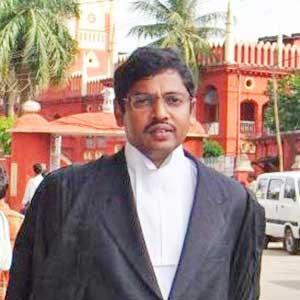
Tag: Dua

  • “Focus on building a strong foundation by gaining practical experience and learning from every case and client interaction, proactive engagement and continuous learning are key.” – Juhi Chawla, Partner at Dua Associates

    “Focus on building a strong foundation by gaining practical experience and learning from every case and client interaction, proactive engagement and continuous learning are key.” – Juhi Chawla, Partner at Dua Associates

    This interview has been published by Namrata Singh and The SuperLawyer Team

    You’ve had a remarkable career spanning over a decade in Civil & Commercial Litigation, Arbitration, and Protection of Intellectual Properties. What initially drew you to pursue a career in law, particularly in these specialized areas?

    Reflecting on my journey, it’s incredible to see how far I’ve come since my early days. My interest in law began in an unconventional way. As a science student, I realized that engineering wasn’t my path, supported by my teacher’s advice to explore other options. This pivotal moment led me to law school, where I found myself torn between corporate law and litigation. Ultimately, my passion for the dynamic and strategic nature of litigation drew me in.

    During my time with Justice Rajiv Sahai Endlaw (Retd.), I had the privilege of observing numerous court proceedings. This experience deepened my appreciation for the intricacies of Civil & Commercial Litigation, Arbitration, and Intellectual Property laws. The strategic thinking required in these fields captivated me, particularly the dynamic nature of the work, which allows me to serve a diverse client base. Working on matters deeply entrenched in business operations demands meticulous examination, precise contract interpretation, and strategic planning. This complexity and the need to understand different business operations truly cemented my decision to specialize in these fields.

    My journey in litigation truly began when I found myself managing several matters in a litigation chamber. The immense challenge pushed me to my limits and beyond, but it also provided vast growth opportunities. Winning independent cases built my reputation and boosted my confidence.

    Joining Dua Associates marked a significant milestone in my career. Here, I found a place that resonated with my values and aspirations. Each dispute I handle presents unique challenges with intricate questions of fact and law. I thrive on the intellectual rigor required to navigate these complexities and derive immense satisfaction from crafting innovative legal solutions that align with my clients’ best interests.

    You’ve been involved in a wide range of high-stakes cases, from defending Fortune 500 companies to representing public sector undertakings. Could you share with us one of the most challenging cases you’ve handled and how you navigated through it?

    One of the most challenging cases I handled was defending a Fortune 500 company against an injury claim that arose from a chemical disaster. The brief provided in the case was very unique and extremely challenging, posing very peculiar factual and legal questions for determination—questions that had not been previously considered or dealt with. This one-of-a-kind case involved multiple jurisdictions, requiring an in-depth review and examination of a voluminous record dating back nearly three decades.

    The case also necessitated a thorough study and examination of key principles concerning jurisdictional arguments, particularly from the US standpoint. I played a key role in developing the strategy, coordinating with external counsels, and managing the litigation process. My approach was meticulous, ensuring that every detail was scrutinized and every possible defence explored.

    This experience taught me the importance of strategic planning and thorough preparation. Ultimately, our team secured a favourable outcome for the client, which is now one of the leading cases of the Constitution Bench of the Supreme Court. This outcome was a testament to our rigorous and coordinated efforts, and it reinforced my belief in the power of teamwork and meticulous legal strategy.

    Your profile highlights your involvement as Amicus Curiae with the NCDRC and your recommendation by Legal 500 Asia Pacific Guide. How have these experiences influenced your approach to legal practice and your career trajectory?

    Being appointed as Amicus Curiae by the NCDRC was a significant milestone in my career. Having the privilege of working on several consumer disputes, this appointment was a testament to my consistency before the forum. It allowed me to provide impartial advice and support on complex service-deficiency appeals, enhancing my understanding of consumer protection laws and judicial processes. This role honed my analytical skills and reinforced the importance of ethical practice. I hope to make a significant impact on consumer jurisprudence through my continued efforts in this area.

    Similarly, being recommended by the Legal 500 Asia Pacific Guide for ‘Dispute Resolution-Litigation’ was a recognition of my expertise and dedication. I am grateful for the springboard provided to me by SKV Associates and the platform Dua Associates, which have both played crucial roles in honing my skills. Recognition such as this helps enforce the belief in one’s abilities. But I firmly believe that wins, whether big or small, do not necessarily equate to favourable outcomes. Often, an acknowledgment from the presiding judge, adversary counsel, or positive client feedback can be equally gratifying.

    Dispute resolution often provides instant gratification, whether it comes from a favourable ruling or a simple nod of respect from peers and clients. These moments keep me motivated and committed to my work, driving me to pursue excellence and integrity in every case I handle.

    With such extensive exposure across different courts and tribunals in India, including the Supreme Court, what have been some of the key lessons you’ve learned about effective litigation management and strategy?

    One of the key lessons I’ve learned is the importance of preparation and adaptability. Effective litigation management requires a deep understanding of the case, meticulous preparation of evidence and arguments, and the ability to adjust strategies as proceedings develop. Collaboration with clients and colleagues is crucial to ensure all perspectives are considered and the team works cohesively.

    Being thorough with the facts is essential. Detailed notes and a list of important dates, especially in extensive briefs with multiple orders, assist in memory recall and guide the presentation of correct facts before the court. Clear and concise communication, written and oral is vital for presenting compelling arguments and ensuring the court understands the case’s nuances.

    Sound and comprehensive pleadings must be backed by thorough legal research. While legal arguments can evolve, their foundation should be in the pleadings. Pursuing litigation with vigilance and attention to detail is crucial, as some cases are won on finer points. It’s important to focus on research, know the case against you well, and be prepared to distinguish facts if necessary. Always run an authority check before citing cases.

    Strategically, it’s crucial not to lose sight of the long-term objective while pursuing interim reliefs. Always know the end goal from the client’s perspective while developing your strategy. Adapt strategies as proceedings develop, and don’t reveal all your arguments at once. Hold back some arguments for the right stage in the proceedings. Learn from setbacks and remain practical.

    These lessons have been instrumental in achieving favourable outcomes for my clients and have reinforced my commitment to excellence in litigation management and strategy

    You’ve also delved into trade remedy laws and anti-dumping investigations, securing significant outcomes for your clients. Can you explain the intricacies of these areas of law and how they impact your clients’ business operations?

    Trade remedy laws and anti-dumping investigations are critical for protecting domestic industries from unfair trade practices. These areas involve complex legal and economic analysis to determine whether imports are being dumped and causing injury to the domestic industry. This specialized field requires a deep understanding of legal frameworks and industry dynamics.

    Anti-dumping duties are imposed when foreign companies sell goods at prices lower than their home market or production cost. These duties typically last five years but can be extended or revised if a review investigation finds the conditions for duty imposition continue to exist.

    In any anti-dumping investigation, a proactive approach is essential for exporting companies to defend their interests, mitigate risks, and maintain their competitive position in the global marketplace. The concepts of dumping and injury are central to assessing the impact of imports on the domestic industry and determining the need for anti-dumping measures to restore fair competition and protect domestic producers.

    Dumping occurs when a foreign company sells its goods in an export market at a price below the price it charges in its home market or below the cost of production. “Injury” refers to the harm or adverse effects suffered by the domestic industry as a result of dumped imports. When determining whether to impose anti-dumping duties, the authority assesses whether the domestic industry has been materially injured or is threatened with material injury due to the dumped imports.

    To evaluate injury, the authority examines various economic parameters of the domestic industry, including production, sales, market share, and profitability. The third relevant criterion for recommending duty is the causal link between the dumped imports and the injury.

    My role involves representing clients in investigations, preparing detailed submissions, and regularly appearing before the authority. Favorable outcomes, such as duty waivers or reduced duties, significantly impact my clients’ business operations by protecting their market share and viability.

    Trade remedy investigations and appeals are not just about legal principles but also involve detailed facts, data analysis, and presentation. An in-depth understanding of production processes, industry-specific dynamics, and the ability to gather material information by closely working with clients on data assimilation and analysis is crucial.

    Being part of the actual investigation process provides an edge in cases where appeals are filed before competent Tribunals and higher courts. Navigating these intricacies demands meticulous legal and economic analysis, a thorough understanding of the client’s industry, and strategic thinking. By mastering these complexities, I have helped my clients achieve favorable outcomes and protect their business interests in a highly competitive global market.

    Transitioning from an Associate to a Partner at Dua Associates is a significant achievement. What advice would you give to young lawyers aspiring to advance their careers in law firms, especially in competitive fields like litigation and arbitration?

    For young lawyers, proactive engagement and continuous learning are key. To build expertise in your chosen field, dedicate yourself to tackling challenging cases and stay updated with the latest developments through regular reading. Take advantage of technology for efficient research even during court waiting time.

    Specialization is increasingly important today. Identify your area of interest early and seek mentorship from experienced colleagues. Stay current with legal trends and enhance your skills through practical experience. Consistency, a strong learning attitude, and initiative are vital.

    Networking and fostering professional relationships are equally critical. Showcase your value with consistent, high-quality work and reliability. Balancing professional growth with personal well-being ensures sustained success and fulfilment in your legal career.

    You’ve published articles on Intellectual Property Rights, Arbitration, and Trade Remedies Laws. How important has thought leadership and staying updated with legal developments been in shaping your professional journey?

    Thought leadership has been crucial to shaping my professional journey. Publishing articles on Intellectual Property Rights, Arbitration, and Trade Remedies Laws has kept me abreast of legal developments and enabled me to engage deeply with emerging trends in my fields of expertise. This commitment to staying informed allows me to provide cutting-edge advice and innovative solutions to complex legal challenges for my clients.

    Moreover, my thought leadership has cultivated a strong passion and enthusiasm for the intersection of technology and law. Areas such as data privacy, navigating challenges within current criminal laws in the context of artificial intelligence, responsible adoption and policy frameworks for AI, and the interplay between intellectual property and AI, including gaming laws, have become focal points of interest for me. This exploration fuels my continuous learning and enhances my ability to contribute meaningfully to the evolving legal landscape

    Finally, for fresh law graduates entering the legal profession today, what advice would you offer based on your own experiences and the evolving landscape of legal practice?

    To fresh law graduates, I would say that the legal profession offers immense opportunities for those who are passionate and dedicated. Focus on building a strong foundation by gaining practical experience and learning from every case and client interaction. Embrace the evolving landscape of legal practice, particularly the integration of technology and data analytics, which are becoming increasingly important. Develop strong research, analytical, and communication skills, and be open to continuous learning. Networking and building professional relationships will also play a crucial role in your career. Most importantly, uphold the highest standards of ethics and integrity, as these principles will guide you throughout your career. I’ve learned that success often arises from unexpected situations and that embracing change is a vital part of growth. To all the young lawyers and aspiring legal professionals out there, remember that your path may not always be clear, but every step forward, no matter how uncertain, is a step in the right direction. Embrace the challenges, seize the opportunities, and keep moving forward with unwavering determination. Your journey may surprise you in the most wonderful ways.

    Get in touch with Juhi Chawla-

  • Amit Cowshish, Partner, Dua Associates, on practicing in Defence Law and serving as a Financial Advisor (Acquisition) in the Ministry of Defence

    Amit Cowshish, Partner, Dua Associates, on practicing in Defence Law and serving as a Financial Advisor (Acquisition) in the Ministry of Defence

    Amit Cowshish, served the Indian Defence Accounts Service in various capacities and retired in 2012. Having studied M.A. and M.Phil in Political Science from the Jawaharlal Nehru University, and qualified in Law from Delhi University, Amit had also received a Diploma in Alternative Dispute Resolution from the Indian Law Institute.

    amit-cowshish-2Amit went on to serve on deputation with the Ministry of Defence, first as Under Secretary and later as Additional Financial Advisor & Joint Secretary and Financial Advisor (Acquisition) & Additional Secretary. He also served as Commissioner for Departmental Inquiries on deputation with the Central Vigilance Commission. He is a presently a Distinguished Fellow with the Indian Institute for Defence Studies and Analyses, and is presently a Partner with Dua Associates, Advocates and Solicitors.

    In this interview, he talks to us about:

    • Working in the arena of Public Administration;
    • His work with the Defence Accounts Department;
    • His responsibilities with the Minsitry of Defence; and
    • His post-retirement transition to a life in corporate law.


    What influenced you to choose law as your profession? Where did you pursue the same?

    Law runs in the family. My father was a lawyer, and so was his father. Both my daughters are lawyers, as well. I had great admiration for the profession right from my early days in school. Destiny took me elsewhere, but after retirement I have returned to the fold, as it were.

    I studied law at the evening centre of the Delhi University while I was in service.


    You hold a pre-degree diploma in the Russian and Persian languages. How did you develop an interest in learning languages?

    Apart from Hindi and English, we were taught Punjabi at school.  I picked up Urdu as it was the language used by a large segment of the local population, and used in the courts. That got me interested in languages. So, when I got an opportunity, I decided to learn a couple of foreign languages as well.


    What steered you into the area of public administration?

    These are institutes where serving government officers are sent for mid-career courses. I was fortunate to have been sent for the courses run by IIPA (Indian Institute of Public Administration) and NDC (National Defence College).


    Do tell us about your journey as part of the Defence Accounts Department.

    I got the opportunity to serve at different stations; travelled far and wide within India; gained vast experience in financial management in defence.


    What were your main responsibilities as the Controller of Defence Accounts?

    Controllers of Defence Accounts are responsible for various functions related to accounting, payment, audit and financial advice in relation to the military establishments located within the jurisdiction of the organizations they head.


    What was the biggest challenge you faced in your role?

    Being a finance person is, in itself, the biggest challenge in any organization!


    What were the different tasks involved in the posts of an Under Secretary, Additional Financial Advisor & Joint Secretary, and Financial Advisor (Acquisition) & Additional Secretary?

    As Under Secretary, I was responsible for matters related to pension policy for the armed forces. As Additional Financial Advisor, my work was related to financial matters concerning the organizations assigned to me as well as defence planning and budget.

    As Financial Advisor (Acquisition), I was associated with all capital acquisitions for the armed forces and the Indian Coast Guard.


    How did you come to be associated you with the drafting of the Defence Procurement Manual 2009? Did having a legal qualification help with the same?

    This task was assigned to me, probably because at that point of time I was associated with revenue procurements. Yes, my legal qualifications did help.


    amit-cowshish-1

    How is it that you came to join Dua Associates as a Partner?

    I joined Dua Associates after my retirement from the Indian Defense Accounts Service in 2012, to keep myself engaged in meaningful work.


    Was it difficult to adapt to a corporate firm after having worked for long in public administration?

    The transition was smooth; I did not face any difficulty.


    Defence being a very niche sector what would be your advice to young lawyers working in defence matters?

    There is not much of a difference as regards keeping abreast of the latest developments whether one is handling the defence sector or any other sector. To make a beginning, one has to develop general familiarity with the subject, study the existing policies and procedures, follow the developments reported in the media and law journals, keep an eye on the official announcements, and pay special attention to the judgements concerning one’s areas of interest. Attending seminars and other events related to defence matters also helps.


    Do you work only on defence related projects at Dua?

    No, the work I do is not confined to defence related projects.


    amit-cowshish-1

    Would you consider taking a few lectures on Defence law and material procurement if invited?

    Certain statutes like the Army Act, the Air Force Act, the Navy Act and the Armed Forces (Special Powers) Act are specific to the armed forces. There are other statues, rules and regulations like the Industries (Development and Regulation) Act, the Companies Act, and policies concerning FDI and exports, etc., which also have a bearing on legal issues concerning the defence sector. However, there is no specific law concerning defence procurement/acquisition by the Ministry of Defence. Defence purchases are primarily governed by the Defence Procurement Procedure and Defence Procurement Manual.

    I would be happy to talk on defence procurement policies and procedures of the Indian Ministry of Defence.


    Being a very niche sector what would be your advice to young lawyers working in defence matters?

    Broadly, legal professionals can contribute with regard to service and contractual matters. It is important that those who are interested in these areas not only keep themselves updated about the applicable laws, rules and procedures, but also acquire a good understanding of the organisational ethos of the armed forces, coast guard, border roads, etc., as well as acquaint themselves with the functioning of the defence industry.

  • Robin David, Equity Partner at Dua Associates on career in corporate litigation

    Robin David, Equity Partner at Dua Associates on career in corporate litigation

    Robin David is currently a Partner at Dua Associates, Delhi. He graduated in B.Sc from Loyola College and thereafter completed his LL.B from Bharathiar University in 1989. Right after his graduation he joined the Bar and had been independently litigating. His practice areas included Contracts, Company Law, Competition Law and other corporate matters.

    With an in-depth expertise in various corporate matters and prior experience of 12 years in litigation, Robin joined Dua in 2002 and had since been working there. With his formidable experience in litigation he was quickly elevated to the rank of a partner in 2004. In 2013, he was made an equity partner.

    We took this opportunity and requested him to share:

    • His experience of litigation as a fresh law graduate
    • Building reputation and clientele in litigation
    • The role of higher education in building an illustrious career
    • The journey from a law student to becoming a partner at one of the leading law firms in India


    How would you introduce yourself to our readers who are primarily budding lawyers? Did you belong to a family of lawyers?

    I am a practicing lawyer for about 25 years. Legal practice is a great and exciting challenge. The legal profession gives one the opportunity to learn and to adapt. Most importantly lawyers have a great opportunity to do justice. I believe that lawyers have a significant role to play in the justice delivery system. I am the first lawyer in my family.


    You are a B. Sc. (Physics) graduate from Loyola College. Could share with us any specific incident which motivated you to pursue law as a career?

    I initially wanted to study engineering or science. However, since my childhood my mother told me that I would make a good lawyer. She implanted and reinforced confidence in me. So I applied for law more out of [sociallocker]my faith in her belief. I qualified the entrance examination. After few years of practice I realised how right she was because this profession is definitely for me.


    Being a science graduate, did you face any difficulties in law school? A lot of students from science stream pursue law after their 12th and face a lot of difficulties in studying subjects related to law. Can you share with us certain tips to overcome this issue?

    I do not believe being a science graduate is a disadvantage to pursue legal studies. Nor do I think that students from arts/humanities will have a considerable edge over science students while studying law. The study of science encourages analytical thinking, which in my opinion is one of the vital ingredients for legal studies and practice. The most important phase of learning for a litigation lawyer is during the first few years in practice.


    robin-david-1Did you do any internship during the course of your studies? What kind of work did you come across during your internships?

    I did not have an opportunity to intern as a student. This was probably because there was no mandatory requirement to intern at that time.

    However, I believe internships today are important. Internships provide an opportunity for students to learn about the application of law and get insights into the legal profession. Interns will be well advised to take their internships seriously. Ideally, interns should be willing and open to learn and know more about legal practice.


    You were also in the cricket and hockey team of your college. How important is it for one to engage in other activities apart from academics and professional interests?

    I started paying cricket from the age of 2. I have always been interested in sports and sporting activities. I played a bit of cricket, hockey and table tennis during school and college. Now I play cricket for my firm. I play golf as well. I believe it is necessary to engage in sporting activities and activities apart from academics and professional work. Being physically fit is crucial. Lawyers would do well to invest time on fitness and physical well being.


    Did you ever think of joining the civil services after graduating? Which career options were available to a law graduate in 90s?

    Civil services did cross my mind albeit not seriously. As far as I can remember the openings/options available to young lawyers were mainly to:

    • work as a junior lawyer (with little or no pay)
    • to join as law officer in any organisation/bank
    • join civil services
    • go abroad for LLM or to study LLM in India


    When you started your practice in 1990, how was the court atmosphere? How did the judges respond to young and new lawyers like you? What were the major challenges faced by you in the initial years of your practice?

    The courts are much more crowded now. The first challenge was to decide where to start work. Another challenge was learning the court procedures and practical aspects of legal practice. I was fortunate to commence work in the Delhi High Court. All seniors and judges were generally encouraging and helpful. However, the process of learning procedural law and how to face the Court is something every practicing lawyer will have to figure out on their own. The legal community is based on the seniors wanting to teach and the younger members of the Bar being open to learn. The junior lawyers were always respectful to the seniors and the institution. I also faced financial challenges because I was initially given a small stipend but I believe that such hardships actually help and motivate aspiring lawyers to work harder and be better advocates.


    How did you build up your clientele? How many years of practice do you say it would require to build a firm clientele?

    I am not aware of a formula to build a clientele nor can you stipulate a time line. I do not believe there is a formula to build up clientele. However, I have learnt that building clientele requires hard work, honesty, time, result oriented thinking and several other factors. In my experience I have found that the clients trust honest and sincere counsel. Knowledgeable lawyers do have an edge, however they are expected to be sincere to the cause and be honest. Lawyers should build up a good reputation for themselves.


    You have experience in litigation of around 25 years. Can you share with us your experience as a practising lawyer?

    Lawyers are trustees of the legal system. A lawyer is responsible to act with integrity and maintain public confidence in the judicial system. To be a successful litigation lawyer one must belong to a court in addition to knowing the basics of law. Counsel must be aware about their court and keep themselves abreast of the changes and developments. Counsel must be involved in Bar Association and participate in the court and association activities. Counsel should contribute to court related activities such as legal aid, arbitration, mediation, etc. I have had the good fortune of working with some great lawyers. I have also been a lawyer for the Delhi High Court Legal Services Committee since 2008. Learning from watching and observing court proceedings is an essential part of being a good lawyer.


    As a practising lawyer how did you manage to learn the basics of court room practice? Did you have anyone to guide and mentor you during the initial days of your practise?

    No doubt one learns from the seniors and colleagues whom you work with. I leant a great deal from observing others and noticing the reactions from the judges.

    I believe a lawyer requires to have a mentor not only during the initial years of practice but also later on. Initially mentoring is done by seniors but later you have to become your own mentor. A very important aspect of legal practice is the ability to evaluate yourself. Even the Bar Council of India recommends mentoring and training by lawyers.


    If someone does not go to a top law school, would you say he still has a shot at a great career in law? What should such a person do to develop necessary skills and profile?

    Going to a top school per se does not make you a good lawyer. Honest effort and hard work make a good lawyer regardless of the school.


    How did you get an opportunity to work with Dua Associates? How is your work at Dua Associates different from your independent practice?

    I began my association with Dua Associates in 2002. At that time I put in about 12 years of hard work as a legal practitioner and was already known for my work as a litigating counsel.


    Having been at Dua Associates since 2002 as a manager in the litigation team, you were promoted into the equity partnership; what qualities do you think helped you to achieve this status?

    Though I joined as manager in 2002, I was made partner in 2004. I was made equity partner in 2013. It involved sincere hard work and time.


    When you hire interns under you, what kind of qualities do you look for? What should an intern do to get noticed in a positive way?

    Honesty, hard work and commitment to work are important qualities in interns. I see interns who are there only for the sake of putting it on their CV.


    What changes has being a partner brought into your life, do you ever feel that there is excess of work load on you? How do you manage to strike a balance between your personal and professional life?

    Ever since I have started work as an advocate I have put in many hours of work every day. Becoming partner did not have any significant change to my professional working style. Have realised the importance of team work and have the need to contribute to the larger cause. Law is a calling and not a job.


    Do you feel that great lawyering skills are sufficient for a person to become a partner? What separates the people who become partner from those who don’t?

    Partners’ skills should complement one another. Ideally, if one is good at business development then the other partner would be good in other set of skills. Further skills can be learnt. Though, in my opinion a law firm needs persons having different sets of skills. Partners are those with great sets of skills and also those who show commitment to the growth and development of the firm.


    Do you feel that higher education helps a person to have a successful legal career? What would be your word of advice to students who wish to go for higher studies?

    It would depend on what you are looking for. For an advocate, LL.B is sufficient because practical knowledge can only be gained on the ground.


    How is the work culture at Dua Associates? If an associate commits a mistake or an error what course of action do you follow as a partner?

    A partner is responsible. In Dua Associates the Partners are the team leaders and oversee the work of the team. For example, if a plaint is drafted for a client the draft would be carefully seen by a Partner before it is sent to the client.

    Associates who repeat mistakes or stop learning will at least be talked to.


    What qualities do you think one should possess to carve out a niche for himself in this field?

    I believe hard work, honesty and sincerity are important qualities. Always be ready and willing to learn. Additionally one must be aware of the system and surroundings.


    What would be your message to our readers who are budding lawyers and law students?

    • Justice is important. Lawyers have a great opportunity to play a role in the justice delivery system. Many prominent lawyers have played important roles and contributed to the Indian freedom struggle. Lawyers can have significant involvement in society and can set the standards. Legal practice is a calling and not a job.
    • Honesty and sincerity in counsel are traits that are always respected by the judges, clients, briefing counsel and even opposing counsel. A lawyer must conduct himself with dignity.
    • Building a good reputation is necessary. A lawyer should carefully guard his reputation.
    • A lawyer should always be conscious of his/her role as officers of the court.
    • Young court lawyers should read the briefs and be well prepared. Know your facts. I have seen many young lawyers who are in a hurry to go up the ladder and look for shortcuts to grow. There are no shortcuts.

     [/sociallocker]

  • Manoj Menon, Partner, Dua Associates, on skills which transform an associate to a partner

    Manoj Menon, Partner, Dua Associates, on skills which transform an associate to a partner

    Manoj Menon is a graduate from NLSIU, batch of 1996. He was recruited into a Chicago based firm called Arthur Andersen LLP considered as one of the ‘Big Five’ in Accounting after his graduation. Thereafter in 2004 he became a partner at Dua Associates. After working there for sometime he founded Tatva Legal along with some of his colleagues. In 2013, he moved back to Dua Associates.

    In this interview we speak to him about:

    • Working at an US based accounting firm
    • Becoming a partner of Dua Associates in a short time
    • What it takes to become a Partner from an Associate

    Tell us something about your life before law school.

    I grew up in Cochin and went to high school there. My father and my brother are doctors though I did have a couple of uncles who were practicing lawyers.


    The image of a lawyer back in ’91 was neither inspiring nor attractive for most students. What motivated you to choose law as a career?

    While I was growing up, we were made to believe that the only career options available were medicine or engineering. Law was something of a back-up option that you pursued if you did not make it to medical or engineering school! I was nudged into considering law as an option by my uncle who told me about National Law School. NLS was about three years old then and yet to have a graduating batch. It seemed like a good idea at that time and so I went with the flow.


    How important do you think mooting is for law students?

    While I wasn’t a mooter in NLS, in retrospect I think mooting can be very useful in helping you hone your research skills as well as to help you analyse issues in a manner you would be required to once you start practicing law. It also forces you to think on your feet and gives you a feel of what litigation could be all about.


    If you see that a person you are considering to hire is good at mooting, debating and has a few publications, does it influence your decision to some extent?

    It definitely does not hurt to have additional skill sets and these could be differentiators while evaluating two otherwise well matched candidates. However, I feel that work experience is the most important aspect of your resume and could be the difference between whether you are hired or not. Personally, it is very important that the person I am hiring fits in with the culture of the firm and sometime you have to go with your gut on that one!


    Now that you are on the other side of the table, what do you think a fresher should do in order to get hired?

    Andersen was one of the firms that recruited from campus. They had recruited from campus the previous year and so I had friends who had already spent time there and loved the place. Recruiters for Andersen looked beyond just grades and tried to gauge potential of the candidates through various rounds of interview and luckily for me, they saw something in me that they liked. I’m grateful for the opportunity to have worked in Andersen because of the amazing work culture and for the solid foundation that I believe it gave me.


    What would you say helped you join the ranks of a partner?

    A partner of a firm is someone who can add value to the firm and help grow the practice. Normally, it involves ability to execute work efficiently as well as to bring in new work. The firm gives you an opportunity to grow your own practice within the umbrella for the firm w ith minimal interference and this helped me grow as a lawyer and make the natural progression towards partnership.


    What kind of effort should a young associate put in to work to get it appreciated?

    What I look for in an associate is the willingness to learn and the desire to get better at what they are doing. If you have that, everything else falls into place. Taking responsibility is a huge part of the learning process and when you see that in an associate, you naturally end up pushing good work towards that person and relying on that person.


    What does a partner at a Law Firm like Dua Associates do?

    A partner typically starts and ends his day worrying about billing and recoveries! While there is no typical work day, the responsibility extends to sourcing work and ensuring that the work is executed effectively. Keeping your team happy or in the very least content, is the key to sleeping well at night!


    When you hire lawyers under you, what kind of skills and profile do you look for?

    Like I said, I look for someone who I feel can learn fast and who fits in with the ethos of the firm. More often than not, you get a feel of the person when you meet him/her and from there on you hope for the best! With working lawyers, work experience is a key factor. With fresh graduates, while internship experience matters, I basically look for a bright person who I feel can learn fast on the job.


    How important is it for a law firm partner to be good at business development, or are great lawyering skills enough to become a partner?

    Traditionally, a partner is expected to generate billings for the firm. However, firms adopt different models where certain partners could be rainmakers while others would concentrate more on servicing the work so generated. Partners could also concentrate on specific aspects such as business development or administration of the firm depending on the way a firm is structured. It is important to identify ones specific strengths and work in an organisation where such skill sets are considered relevant while evaluating eligibility for partnership.


    Dua Associates have offered internship opportunities to a lot of law students. What would you look for in a cover letter and a CV?

    We typically look for students doing their third year of law or more. While prior internship experience helps, an interest in a particular branch of law or some exposure to the same like attending seminars or publishing articles on the subject would be helpful.


    How do you think interns can get noticed in a positive way in the limited time they have?

    Unfortunately, interns are often plied with drudge work. However, if they take initiative and show an interest in taking on work, it surely helps.


    Do you think higher studies can be a necessity for a successful legal professional?

    While I don’t think that higher studies are an absolute necessity for a successful career, it makes for some great exposure which can add value to a professional. I believe it is a matter of personal choice but having said that, if you have the opportunity, I would definitely recommend that you grab it.


    How does one strike a work-life ba

    I believe how you manage your life is a matter of choice and once you figure out your priorities in life, you will find a way to maintain your work-life balance. An important aspect of the same would also be to work for an organisation which shares your values and which respects the fact that you are entitled to a personal life outside work.


    Lastly, what would be your message to law students and young lawyers who aspire to become a partner at a top-notch law firm?

    Be careful, what you wish for!


  • Chintan Chinnappa, Senior Associate, Dua Associates, on law, litigation, and taking time out for his music

    Chintan Chinnappa, Senior Associate, Dua Associates, on law, litigation, and taking time out for his music

    Chintan Chinnappa graduated from M S Ramaiah College of Law, Bangalore in 2009. He is currently a Senior Associate at Dua Associates. While being a Senior Associate at a top tier litigation firm, Chintan also plays cricket for a club in Bangalore, manages a booking agency for artists, and never gave up on his passion for music. He is currently the lead guitarist at Inner Sanctum which is a Death/Thrash metal band from Bangalore, India.

    Chintan talks about:

    • Law school experience and Internships
    • Work at Dua as a Senior Associate
    • Taking time out for Inner Sanctum and other passions


    What brought you into studying law?

    I was born to a family of lawyers. My dad was a Judge in the High Court of Karnataka, my brother and sister-in-law (who incidentally also belongs to a family of lawyers) are practicing lawyers and my mom studied law, but never practiced. Surprisingly though, there wasn’t too much law at home while I was growing up. I am not really sure if that was intentional or whether my family just didn’t like bringing work home but I hardly heard them discuss matters or legal issues. To a large extent that gave me sufficient headroom to decide what I wanted to do with my life and take an independent decision. Cutting the long story short, I grew up, unlike most other kids, with immense respect for the profession and with a belief that lawyers saved lives. I was quite oblivious to the fact that this belief of mine was more or less solitary, in the sense that the rest of society didn’t seem to share the same feeling. This was thrust upon me once I had made my decision to study law but that didn’t really prompt to rethink my decision.


    Did you ever take part in moots when at college or indulge in academic legal writing?

    As a student I was quite focused about becoming a litigation attorney. I didn’t have any qualms about possibly having to work with/in less than ideal clients or work environments. So it was quite natural for me to moot in college and I loved it! I mooted for several years and was extremely passionate about it, and at times the passion bordered on insanity.
    I was quite fortunate to have a constant team through college and we skipped classes to work on a moot which was months away and have heated discussions in the library which would more often than not result in a few of us getting reported for causing a riot. Mooting left me with no time to indulge in academic legal writing. Honestly, that didn’t interest me as much. I preferred moots and internships and no matter how much value an article would have added to my CV I couldn’t convince myself to do something I wasn’t passionate about. That should probably answer the second half of your question as well. Students should be given the discretion to decide the activity that they would like to participate in. I would have resented giving up precious moot preparation time for an article that I didn’t wish to write. Compulsion causes more harm than good.


    Tell us something about your internship experience.

    Like I said, litigation was my calling and therefore all my internships were litigation centric. I didn’t feel the need to do a corporate internship. I interned with all the top litigation law firms/ offices in Bangalore such as Dua Associates, Poovayya & Co., Indus Law etc. I also interned with Mr. Aditya Sondhi and a few senior advocates, Mr. Udaya Holla and Mr. Naganand. In my final year, I did a clerkship with Justice Raveendran just after he was elevated to the Supreme Court.


    How different is getting hands-on experience at an internship, from learning legal theory in the university?

    There was a clear disparity between what I was made to learn in college and what I needed to learn to survive an internship. I personally believe that most universities haven’t figured out the purport of legal education. In fact, the only way to sort this out is for the universities to include in their training course (if there exists one) a compulsory three to six month internship for all professors in law firms and law offices. That’s the only way to bridge the gap.


    What kind of work did you typically find yourself doing as an intern?

    Primarily research work and drafting, not to mention the court visits and the complimentary illicit appearances before tribunals and lower courts.

    There was a huge disparity between internships in so far as the quality and quantity of work assigned to interns. A few offices understood the value of an extra hand and a few were just eager to hand over the ready to print certificate. It’s a mixed bag! But what was fascinating to me was that each office seemed to handle and structure their work differently. This was enormous learning for me and I spent most of my internships figuring out how I could finish the most amount of work in the least amount of time. The internships in effect gave me a peek into the functioning of a law office and helped me enormously in deciding which office to apply to after graduation, none of which I could have figured out just sitting in college.


    What do you feel about certain law colleges being supposedly more ‘elite’ than the others?

    I don’t really see the point of an ‘elite’ tag. All universities have the good and the bad graduating every year and this is more often than not the result of each student’s efforts in personal development. I have worked with students who have graduated from different universities, elite or otherwise and I don’t really see a sufficient difference to warrant the use of an elite tag.


    chintan-chinnappa1How do you take time out for your music?

    In addition to being a lawyer, I play cricket for a club in Bangalore, manage a booking agency for artists and also play guitars for a metal band called Inner Sanctum. It’s a Jekyll and Hyde situation on steroids! I have no idea how I manage all of this but I just love everything I do and I squeeze in as much as I can everyday to ensure I do enough justice to each of my passions.


    How do you feel the work life balance is working at law firms?

    I worked for a year, right out of college at Poovayya & Co. in Bangalore. Though it was and continues to be an excellent law firm, I didn’t see myself fitting into the overall scheme of things there and I decided to leave them in Aug, 2010. I immediately applied to Dua as I was extremely serious about litigation in Bangalore and Dua Associates is renowned for quality litigation work and a great working environment.  I joined them in Oct 2010 and it has been a good four years! The team is excellent and the firm accommodates and encourages the associates to pursue their passions and maintain a healthy work-life balance. That’s how I manage to keep my band alive!


    What does a usual day at Dua look like for you?

    Like I said, I am part of the litigation team in Dua and therefore all the work associated to litigation I am required to do which includes appearing in courts, drafting, briefing senior counsel etc. As a Senior Associate, the firm expects me to perform certain additional functions in relation to team building and team leading. Honestly, that isn’t too hard because we are fortunate to have an excellent team.


    What do you feel makes an intern stand out and is very important for him to do to have a chance of getting a call back or even a PPO?

    Confidence and the ability and desire to learn. If an intern has this, it most often than not results in a PPO.


    Picture Credits: Prateek Biswas